








Stories

Qantas To Increase Regional Service

QantasLink Bombardier Dash 8. Source: Qantas

Regional airline QantasLink this week announced it will be expanding its services to the regional Australian town of Broken Hill. The move, which will begin on June 21, 2022, will see Qantas’ regional arm add a third-weekly Sydney-Broken Hill service to its current twice-weekly.

Having started the service in April this year, QantasLink aims to eventually increase the service to five-weekly return flights by November 1, 2022. Utilizing its fleet of Dash 8 Q300s, the airline has allowances for up to 50 passengers per flight, following what it calls “strong support from locals and visitors.” Flights to the outback town of 18,000 have already been booked out, with QantasLink CEO John Gissing stating, “Our bookings looking ahead are great which gives us the confidence to add in another service to offer more convenience for both locals and visitors.”

QantasLink will also look to add additional flights for local events and the September school holiday period, with an eye to cement the routes with the town. “We are proud to serve Broken Hill and as a regional airline born in the outback, we understand the importance of connecting remote communities with major centers. We’d like to thank our customers in Broken Hill for giving us a go,” Gissing said.

Australia’s Regional Routes the New Battle Ground

The route, already serviced by its competitor Rex, is the latest battleground in what appears to be a regional-route rivalry. Rex, a long-time provider of Australian regional services, offers its own Sydney-Broken Hill service with five weekly return flights – a number which QantasLink aims to match.

Having already closed several other regional routes – citing, in part, what it calls Qantas’ “unconscionable” behavior – Rex has been unable to maintain some long-held routes after Qantas recently added its own service to nine of Rex’s. The regional expansion by Qantas, increasing competition with Rex, comes off the back of Rex’s own domestic expansion and new partnership with US airline Delta.

Purchase of Alliance Under Scrutiny

In addition to Rex’s claims of Qantas’ anti-competitive actions, Australia’s competition and consumer watchdog is considering submissions regarding Qantas’ purchase of Alliance Airlines. Despite already owning 20%, Qantas plans to buy the remaining shares of Alliance Airlines, leading some to question the outcome of the deal and its impact on airline competition in Australia.

Alliance, which primarily operates charter flights, also leases aircraft, parts, and maintenance services to other Australian operators. The purchase, if approved, could be a strong step in the direction of the Qantas-dominated domestic airline industry.

The watchdog, the Australian Competition and Consumer Commission, seeks to understand whether sufficient competition in Australia can be maintained. It will also investigate the impacts on price and quality of services, and the “impact if Alliance were to cease providing aircraft leasing or associated aviation services to other airlines after the proposed acquisition.”

Submissions to the ACCC closed on June 3, with the Commission to announce its findings by the provisional date of August 4, 2022.


Mike Mangano

Mike’s love affair with flight and mechanical objects in the sky began at an early age, fascinated by space documentaries and the vintage Flight Simulator ’95. He currently works as an instructor for UAVs and is training to receive his Private Pilot Licence with the goal of working in manned flight instruction. An avid reader of all things aviation and manned space flight, Mike stays close to developments in aerospace while reminiscing and sharing the rich history of flight with others. He loves writing, engineering and science.

Five Iconic Indonesian Airlines That Eventually Went Bankrupt

Batavia Air A319

In the aviation industry, competition is fierce. Specifically, the issue with airline services and facilities. Some Indonesian airlines have been successful in expanding its international schedule. However, some of them were forced to close because they were unable to compete with other airlines. Here are the insolvent Indonesian airlines, as reported by merdeka.com from a variety of sources: What factors are contributing?

Adam Air

Adam SkyConnection Airlines had become the most popular flight due to its low price. On 19 December 2003, the airline began operations with a flight to Balikpapan using two chartered Boeing 737s. They claim to use a “new Boeing 737-400,” but it turns out to be a charter plane that is 15 years old.

However, numerous accidents befell this airline. The government issued the airline a warning. According to the results of the ranking released on March 22, 2007, Adam Air was ranked third, indicating that it only meets the minimum safety requirements and that several unimplemented requirements have the potential to reduce flight safety.

In response, Adam Air was issued administrative sanctions that were reviewed every three months. After three months of no performance improvement, Adam Air’s Air Operator Certificate was subsequently revoked.

Batavia Air

Yudidiwan founded PT Metro Batavia in 2001. On January 5, 2002, the airline began operations with one Fokker F28 and two Boeing 737-200 aircraft. Prior to beginning commercial operations, Batavia rented aircraft.

Batavia Air was once Indonesia’s premier airline. They lead to a market with standard middle-class services that are neither inexpensive nor executive. Due to its high safety guarantee, the airline was also permitted to fly in the European Union. This permit is also held by Garuda Indonesia and Lion Air.

Since its founding ten years ago, Batavia has had only eight minor accidents that did not result in any fatalities. Ultimately, Batavia was unable to develop and closed.

Bouraq Airlines

The airline was founded by Jarry Albert Sumendap in April 1970. This family-owned business also owns Bali Air, which is no longer in operation.

Initially, the airline used Douglas DC-3 aircraft. The Hawker Siddeley HS 748 turboprop entered service with Bouraq in 1973.

Both airlines ceased operations in 2005 due to protracted financial difficulties. The final Bouraq flight was expected to occur in July 2005. In 2007, the operator’s license was revoked.

Sempati Air

Sempati Air is an Indonesian airline owned by Suharto’s friends and family (former President of Indonesia). The airline was founded as PT Sempati Air Transport in December 1968.

In March of 1969, Sempati made its first flight using a DC-3 aircraft. Initially, Sempati only provided transportation services to oil company employees. However, following the acquisition of additional DC-3 and Fokker F27 aircraft, Sempati began regularly scheduled service to Singapore, Kuala Lumpur, and Manila.

In 1996, the company’s name was changed to Sempati Air. When the 1998 financial crisis hit Indonesia, Sempati Air was forced to sell or return its aircraft, but the company was still forced to cease operations in June 1998. This airline has ceased operations as of June 5, 1998. SpiceJet, an Indian airline, currently uses the IATA code formerly employed by Sempati Air.

Mandala Airlines

On April 17, 1969, this airline, also known as Tigerair Mandala, began operations. In 2006, it was acquired by Indigo Partners and Cardig International.

However, the airline was forced to cease operations on January 12, 2011, due to debt issues. In June 2011, Mandala resumed operations after creditors agreed to restructure its debt into shares in the same year.

In accordance with the restructuring, the majority shareholders are PT Saratoga Investment Group (51%), Tiger Airways from Singapore (33%), as well as former shareholders and creditors (16 percent). Nonetheless, Mandala ceased operations on July 1, 2014, due to deteriorating market conditions and rising operating expenses caused by the depreciation of the rupiah.

Putu Deny Wijaya

Putu Deny Wijaya was always an aviation enthusiast by heart, growing up in Indonesia where air transport is very vital. His first love is The Queen of The Skies, serving the trunk routes between Jakarta and Denpasar. He brought along this passion with him throughout college by conducting his bachelor study abroad in the Netherlands for the purpose of experiencing a nonstop 14-hour long-haul flight. For Putu the sky's the limit when talking about aviation. He hopes that he would be able to combine his passion for aviation and knowledge of finance at the same time.

Frontier Adds Four Las Vegas Routes This Summer

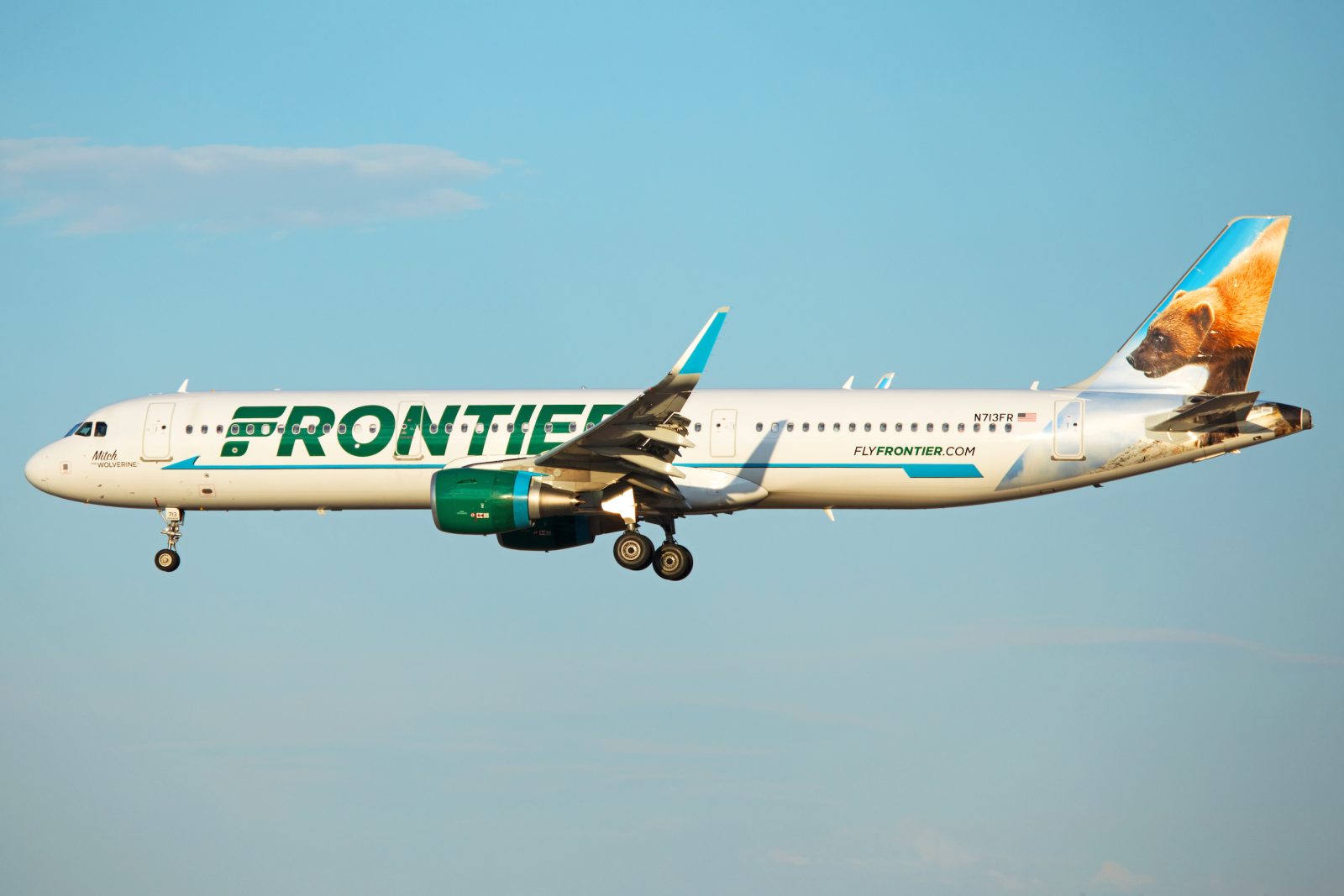
A Frontier A321 in Las Vegas (Photo: AirlineGeeks | William Derrickson)

Frontier Airlines is launching nonstop service to four additional cities from Las Vegas’s Harry Reid International Airport. The announcement comes as travel begins to take off for the summer season.

Beginning August 9, Frontier will begin flying daily routes to and from Baltimore, Buffalo, Hartford, and Kansas City.

The Denver-based ultra-low-cost carrier is becoming a very popular choice amongst guests traveling to and from Las Vegas. The carrier will now serve 57 cities from the airport, only behind Southwest Airlines, which serves 63 cities, and Allegiant, serving 61 cities.

Las Vegas remains Frontier’s third most popular city behind its Denver base and Orlando.

Frontier will not only compete head-to-head with Southwest Airlines on both the Baltimore and Kansas City routes but also with Spirit who is in a bidding war with JetBlue for Frontier.

Additionally, Frontier will compete with Southwest once per week round trip Buffalo trip. Currently, Frontier remains the only carrier with nonstop service to and from Hartford. Introductory fares for the routes start as low as $89 to Kansas City and $99 to Baltimore, Buffalo, and Hartford.

The carrier is currently in a bidding war with competitor Jetblue for a merger with Spirit Airlines. In early February, Frontier Airlines and Spirit Airlines announced a $6.6 billion merger that would give Frontier a 51.5% controlling interest in a combined airline that will become the fifth-largest carrier in the country and the largest ultra-low-cost carrier (ULCC).

Spirit Airlines announced on Wednesday that it has decided to delay a meeting that was due to take place this Friday where shareholders were to vote on the proposed merger with Frontier.

Chase Hagl

Chase Hagl grew up in Twin Falls, Idaho. His love and passion for Aviation landed him in Orem, Utah where he obtained a B.S. in Aviation Management with a minor in Business Management from Utah Valley University. Chase currently works as a flight attendant in Charleston, SC and is also the primary Inflight ASAP ERC representative for startup airline, Breeze Airways. His experience in the aviation industry spans back four years, working in areas including agriculture application, customer service, maintenance, and flight ops. In his free time, Chase enjoys road biking, astronomy, and flying.

Korean Air to Recommence Three Long-Haul Routes in July

Korean Air 787-10
A Korean Air 787-9 being delivered at Boeing's North Charleston, S.C. facility (Photo: AirlineGeeks | Hisham Qadri)

Korean Air announced Thursday that it will recommence three long-haul operation destinations from July. The South Korean carrier had suspended long-haul flights at the beginning of the Covid-19 pandemic over two years ago. As a country, South Korea had very strict lockdown procedures, inbound travel and quarantine restrictions. The mandatory quarantine for fully vaccinated travelers was lifted in March and a seven-day self-isolation requirement was lifted on Wednesday.

The news is a positive step for the airline as it resumes long-haul operations to three destinations from Incheon airport. Korean Air will operate a thrice-weekly service to Vienna, Austria beginning on 01 July. A few hours later the airline heads for Milan’s Malpensa airport in Italy with services that depart on the same days as the Vienna flights.

On July 10, flights resume to Las Vegas with a similar three flights per week service departing on Wednesdays, Fridays and Sundays, the same days as Milan and Vienna. The Las Vegas and Vienna services will be operated by Airbus A330-200 aircraft and the Milan Malpensa flight departing on July 1 is currently scheduled as a Boeing 787-9.

According to Yonhap News, Korean Air will add more destinations as passenger demand increases. In the recently published Q1 2022 report, the airline stated: “The recovery of passenger demand will vary by route and region, and the airline will closely monitor and flexibly respond to the market and changing quarantine policies of its network.”

The carrier posted a record quarterly operating profit of 788.4 billion Korean Won ($651.1 million) for Q1 2022. This figure was a 533% increase year on year with a strong cargo operation contributing significantly to the result. However, the airline did indicate that factors such as the war in Ukraine and the continued lockdown of major cities in China will have an uncertain effect on future earnings. Other external factors cited that may further impact operations included global supply chain bottlenecks, reduction in capacity on European routes and the continued rise in fuel prices.

To better prepare Korean Air for the recommencement of passenger services across a network that served over 130 domestic and international destinations pre-pandemic, the airline significantly reduced its debt ratio. The report stated: “At the end of 2019, the airline’s debt ratio was 814 percent, but as of the first quarter of 2022, the number decreased by 559 percentage points to 255 percent, the lowest debt ratio since 2011, when International Financial Reporting Standards (IFRS) were introduced.” Yonhap News Agency notes that the carrier is currently serving 7 domestic and 41 international routes.

The airline also announced that it had secured over 4 trillion Korean Won ($3.18 billion) in cash and cashable assets to “flexibly respond to various market uncertainties.”

John Flett

John has always had a passion for aviation and through a career with Air New Zealand has gained a strong understanding of aviation operations and the strategic nature of the industry. During his career with the airline, John held multiple leadership roles and was involved in projects such as the introduction of both the 777-200 and -300 type aircraft and the development of the IFE for the 777-300. He was also part of a small team who created and published the internal communications magazines for Air New Zealand’s pilots, cabin crew and ground staff balancing a mix of corporate and social content. John is educated to postgraduate level achieving a masters degree with Distinction in Airline and Airport Management. John has held the positions of course director of an undergraduate commercial pilot training programme at a leading London university. In addition he is contracted as an external instructor for IATA (International Air Transport Association) and has been a member of the Heathrow Community Fund’s ‘Communities for Tomorrow’ panel.

South Korea Quarantine Rules Come to an End as Airlines Hope for Relief

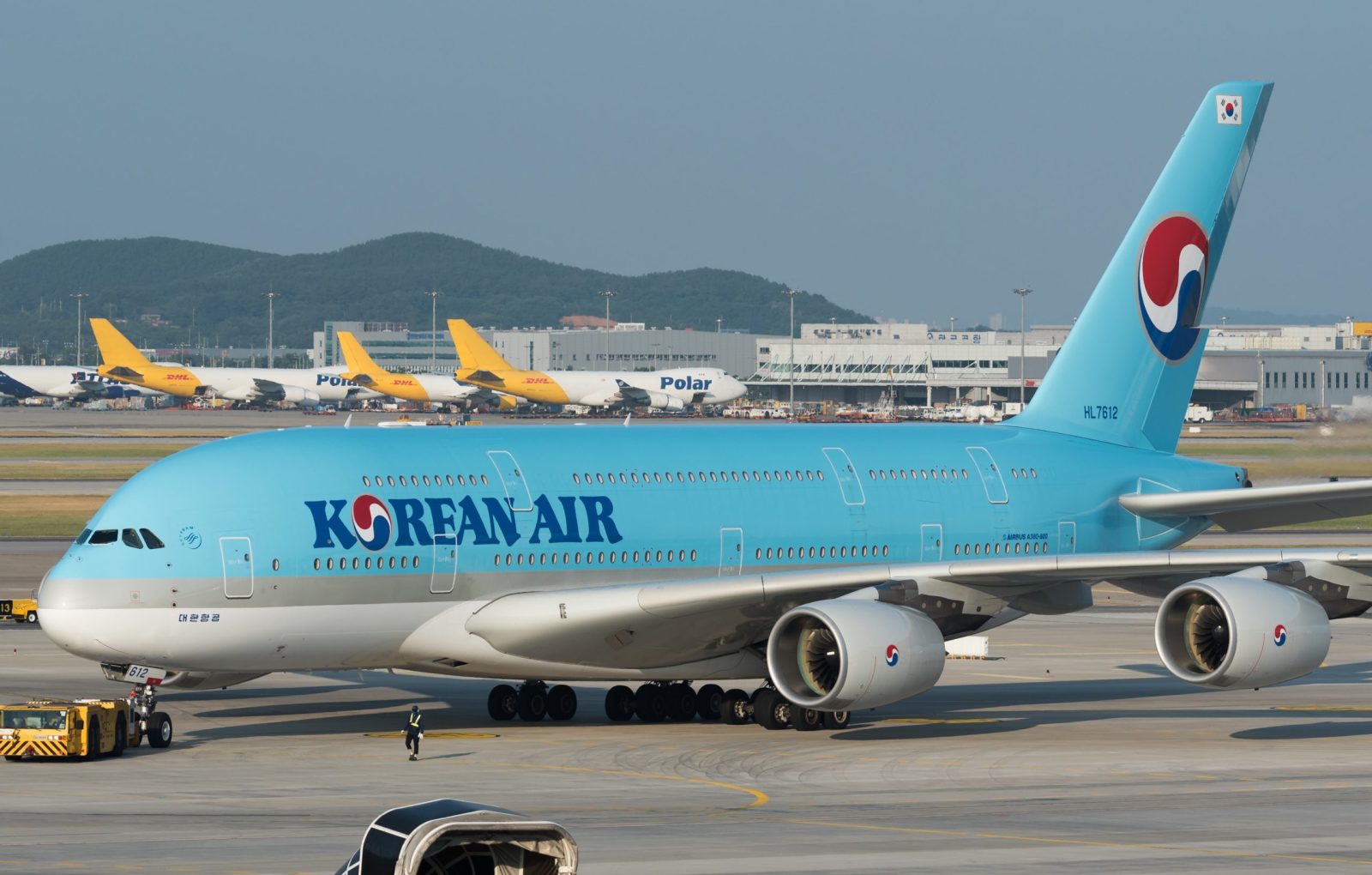
A Korean Air A380 in Seoul.
A Korean Air A380 in Seoul. (Photo: AirlineGeeks | Ben Suskind)

South Korea has gradually reopened its border after two years of the pandemic. The decision has come after the flattening of the coronavirus curve in the country. Starting this week, the country will drop its quarantine rules and welcome foreign arrivals regardless of the travelers’ vaccine status. The travelers need to provide a negative result of a coronavirus test before 72 hours of arrival.

Incheon International Airport, the gateway to the country, will resume to a 24 hours operation. In addition, the capital’s airport is maximizing its capacity to pre-pandemic levels, allowing 40 flights to operate every hour. Since the pandemic has begun, the airport banned flights from operating between 8 pm and 5 am.

The country has seen a demand surge following travel restrictions being scrapped, Incheon International Airport handled nearly 45,000 passengers last weekend, the highest number since the pandemic. But the situation is yet to return to normal; Incheon handled over 200,000 passengers daily before the pandemic.

The lifting of travel restrictions will be welcomed by budget carriers as well. Two mainstream airlines, Korean Air and Asiana Airlines, have been benefiting from the demand surge in the cargo services during the pandemic. However, the budget carriers have more than their fair share due to lack of cargo services.

Koreans have started returning to the skies since this year, but the low-cost carriers have been experiencing a slow start. According to the South Korean Government, the number of international passengers on budget carriers, such as Jeju Air, T’way Air, Jin Air, Air Seoul and Air Busan, in May were 60,717, an increase of 86% compared to the previous month, thanks to the resumption to Guam and other Southeast Asian destinations. However, the figure has shown only 3% to pre-pandemic levels. The passenger capacity of Korean Air and Asiana Airlines was 288,194 and 212,224 respectively.

Bolster its flights to Japan

Meanwhile, South Korea keeps bolstering its connection to Japan. The country is going to resume flight services between Seoul’s Gimpo International Airport and Tokyo’s Haneda Airport in June. According to Korea Airport Corp, the operator of Gimpo International Airport, Jeju International and other 12 airports across the country, Korean Air, Asiana Airlines, Japan Airlines and All Nippon Airways, will provide 16 flights every week in June.

“This year is not a time for recovery to pre-Covid-19 levels but a time for a leap forward in the new aviation industry.” Yoon Hyeong-Joon, President and CEO of Korea Airports Corp said.

Korean Airport Corp has expected 2.52 million passengers flying from domestic airports, only 12.4% of the pre-pandemic levels. Meanwhile, Jeju International Airport will start operating new routes to Singapore and Bangkok this month.

Air China to Acquire Controlling Interest over Shandong Airlines

Shandong Airlines Boeing 737-800 taking off (Photo: Lei Yan)

On May 30, Air China released a statement that the company is seeking to acquire additional shares of Shandong Airlines and gain controlling interest over the company. Shandong Airlines is a mid-sized carrier headquartered in Jinan, China. Air China currently owns 43% of Shandong Airlines by direct and indirect ownership, which makes the flag carrier of China the largest shareholder of Shandong Airlines.

The action to gain controlling interest over Shandong Airlines is interpreted to help the swamped airline improve its liquidity.

About Shandong Airlines

Shandong Airlines was established in 1994, and currently operates a fleet of 127 Boeing 737 series aircraft, serving 60 destinations in China and nearby countries. Since the pandemic, the company has struggled to break even with its operations, and the carrier was officially insolvent in 2022.

Shandong Airlines mainly operates flights in and out of airports in Shandong Province, China, where the airline is headquartered. It also has a hub in Xiamen, China, one of the first Special Economic Zones in China. Since the 2010s, the carrier is challenged by the competition with high-speed rail, as Shandong Province is one of the most connected areas in China by high-speed rails.

Air China’s Dilemma

As the profound influence of the pandemic drags on, Chinese carriers are suffering from a sluggish market both at home and abroad. A new round of Covid-19 uptick reduced the domestic flight services to only 20% of what it was in 2019; international services are still extremely low and limited to selected carriers.

Shenzhen Airlines, another subsidiary of Air China, is on the brink of insolvency. Based in the southern economic and innovation center of China, Shenzhen Airlines operates 200 Boeing and Airbus aircraft, mainly narrow body ones.

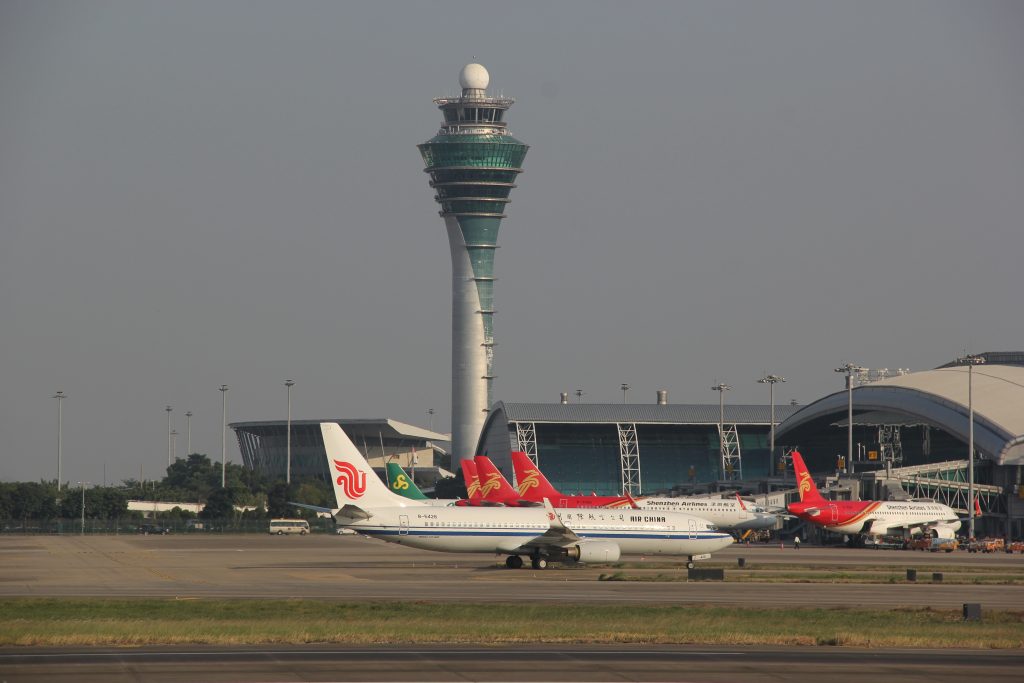
Air China and Shenzhen Airlines aircraft in Guangzhou’s Baiyun Airport (Photo: Lei Yan)

The advantages of basing in major cities are now curses for a carrier. The climbing operating costs at major airports, and low-hovering ticket prices are draining airlines’ liquidities. Air China, the parent company, is now facing the same difficulties as its subsidiaries, but only worse. However, Air China still has the obligation to save its subsidiaries from bankruptcy. Apparently, the company made its first move to help Shandong Airlines.

What’s Next?

Although the statement released by Air China is merely mentioning a plan to acquire controlling interest over Shandong Airlines, the public view this as a done deal. If the action were to fail, it is almost certain that Shandong Airlines would be bankrupt.

Sources say that Air China is planning to “deeply merge” Shandong Airlines’s operations into Air China’s operation. By integrating the operations, Airlines may save some money in labor, operating costs, and taxes, while maintaining their current services with higher agility. Neither Air China nor Shandong Airlines have commented on the plan moving forward.

As other subsidiaries of Air China are also facing financial difficulties, the carrier may take additional steps to save them from bankruptcy. As of this moment, no state-owned airlines in China have made any layoffs. However, aviation professionals are still suffering from pay cuts due to reducing work hours.

More aggressive measures to release travel restrictions for both international and domestic travel are imminent to help airlines and airports to regain their momentum. Experts are concerned about the negative effect on aviation safety and future growth potential due to prolonged depression. Authorities say that they are constantly improving policies and committed to ensuring the long-term healthiness of the industry.

Lei Yan

Lei is from Inner Mongolia, China, and now lives in Guangzhou. He grew up in an aviation family, where his passion began. During his time at Penn State University, he studied Industrial Engineering specializing in operations research, and he graduated with an honor’s thesis on airport gate assignment optimization. Now, he is a Purchasing Manager with Procter & Gamble. In his free time, he enjoys flying, reading, and wandering around the city.

Emirates Converts Passenger Aircraft into Freighters

An Emirates Boeing 777F departing Los Angeles. (Photo: AirlineGeeks | William Derrickson)

Dubai, the United Arab Emirates-based Emirates will convert six more of its Boeing 777s into freighters which will serve to provide capacity growth, according to Cargo Facts. The Gulf carrier will decide which units to send for conversion based on “a number of factors” but declined to identify specific airframes according to Cargo Facts.

Emirates SkyCargo — with its dedicated cargo division — was a launch customer for the Boeing 777F, and the airframe has been at the heart of the carrier’s operations since 2009. The aircraft’s range and payload capabilities allow time and temperature-sensitive shipments to be transported rapidly and efficiently from origin to destination.

The airline still had eight reconfigured Boeing 777-300ER passenger freighters in operation, and according to multiple reports three already earmarked for conversion will not return to passenger configuration. The oldest unit currently in the fleet, the 2006-vintage unit, is still flying without its seats.

Together with the four 777-300ERSF conversions with Israel Aerospace Industries (IAI) that Emirates announced at the Dubai Airshow in November 2021, the carrier’s freighter fleet will now include ten converted 777s. 

Emirates recently took delivery of a 777F — its first new freighter delivery since 2015 — from Boeing in May. That aircraft arrived in Dubai, the United Arab Emirates on May 28 — joining a fleet of ten other 777Fs and will be followed by another new 777F to be delivered in June.

The airline said in a statement that it expects to have a fleet of twenty freighters by the end of 2026, with the two new production units and the ten incoming conversions.

Nabil Sultan, Divisional Senior Vice President, Emirates SkyCargo said, “Our newest freighter adds welcome capacity to our operations, which have been running at full steam throughout the pandemic to serve our customers and keep global supply chains moving. We are scheduled to receive delivery of a second 777F in June. In 2023, we will begin a program to convert four-passenger 777 aircraft into freighters and all of the converted aircraft will be re-delivered by the end of 2024.”

The carrier’s conversions will be among the first to move through the Israeli aerospace and defense company’s conversion line in Abu Dhabi, the United Arab Emirates.

“These investments reflect our commitment to serving our customers with the best possible assets, as well as to enabling the movement of vital goods and trade flows through Dubai. Emirates SkyCargo will continue its journey as one of the world’s largest and best air cargo airlines, by investing in our fleet, our global network, technology, and world-class logistics infrastructure at our Dubai hub,” Sultan added.

Other ex-Emirates 777-300ERs will soon be born anew as freighters with AerCap, a co-investor in IAI’s “Big Twin” program, having sent two units (32788 and 32789) to Tel Aviv, Israel for conversion with IAI. It plans to return two of the B777-200Fs leased from DAE Capital as the converted 777-300ERs start delivering to reach a target freighter fleet size of 20 units.

The first four converted B777-300(ERSF)s are scheduled to deliver between 2023 and 2024; the incremental six will continue delivering through 2026.

Victor Shalton

Victor Shalton's love for aviation can be traced to when he was 11-years-old. As a seasoned aviation writer, he takes pride in providing the best aviation coverage around the globe and is passionate about advancing his skills in the aviation space. In addition, he loves travelling, writing, arts and while his speaking engagements have taken him around the world, he is proud to call Nairobi home.

Skykraft Collaborates with Fiji’s Airports to Grow Island Connectivity

A Skykraft SmallSat, one of a constellation of 210. (Photo: Skykraft)

Skykraft — the Australian space services company — has officially commenced a new collaboration with Fiji Airports, as part of Skykraft’s commercial Air Traffic Management (ATM) space constellation development, having made the announcement last week.

Skykraft Chairman, Air Vice Marshall (retired) Mark Skidmore, along with Fiji Airports General Manager Air Traffic Management & Operations, Amit Singh, signed a Memorandum of Understanding (MOU) to work together as Skykraft demonstrates its Proof of Concept activities. In a statement, Singh said: “This MoU will allow Fiji Airports to explore opportunities to understand space-based Air Traffic Management and further develop our working relationship with Skykraft.”

Launching its first satellites in October this year, the Canberra, Australia-based company will demonstrate the applications of space-based surveillance and communications in commercial aviation, with Fiji Airports playing a significant part in verifying and validating its ATM system. The system — designed to provide increased safety and international air travel efficiency — will enable continuous ATM coverage for aircraft in all altitudes and locations.

In a recent statement, Skidmore said, “Skykraft’s space-based solution allows real-time communications between air traffic controllers and pilots, allowing for the reduction in separation between aircraft over oceanic airspace, enhancing efficiency and delivering environmental benefits. Our satellite constellation will be a world-first, proudly out of Australia.”

SpaceX’s Affordable Space Access

The Australian company — which specializes in the design, manufacture and operation of so-called ‘SmallSats’ — is capitalizing on the reduced costs of space access, citing SpaceX as a key driver in that cost reduction. As such, Skykraft will be launching with SpaceX after signing a contract in 2021.

Speaking of its launch agreement with SpaceX, Skidmore said: “Skykraft is very pleased to ride with SpaceX, the most reliable and effective launch provider in the world, to deploy our Air Traffic Management constellation. We also congratulate the SpaceX team on their transformative approach to small satellite launch and the rapid cadence of their rideshare opportunities.”

Aiming to commence commercial operations in 2024, Skykraft’s ATM service will utilize 210 satellites as part of its space constellation. The first satellite alone will break Australian records, weighing 300kg, becoming the largest Australian manufactured object in space. The satellite will carry multiple early-phase ATM SmallSats, while simultaneously exceeding the sum of all Australian space objects launched to date.

The Company’s Rapid Development

SkyKraft has made rapid development, opening a new manufacturing facility in Australia’s capital city of Canberra. Based at the UNSW Canberra City campus, the facility opened on March 21, 2022.

Creating potential for new career opportunities and Australian space-sector growth, Skykraft has set ambitious targets for satellite manufacturing. Aiming for five new satellites by June 2022, production will increase to 12 for the second half of 2022, and jump to 45 and 120 satellites for the first and second halves of 2023, respectively.

Canberra, Australia has a long space heritage, including hosting the Honeysuckle Creek station that received the moon landing footage and NASA Deep Space Communication Complex.

Mike Mangano

Mike’s love affair with flight and mechanical objects in the sky began at an early age, fascinated by space documentaries and the vintage Flight Simulator ’95. He currently works as an instructor for UAVs and is training to receive his Private Pilot Licence with the goal of working in manned flight instruction. An avid reader of all things aviation and manned space flight, Mike stays close to developments in aerospace while reminiscing and sharing the rich history of flight with others. He loves writing, engineering and science.

FedEx Boeing 727s: Where Are They Now?

A Fedex 727 (Photo: Eric Prado, CC BY-SA 3.0 , via Wikimedia Commons)

Federal Express operated the Boeing 727 for 35 years. It took delivery of the first aircraft in 1978. Initial acquisitions were from other carriers before the Memphis, Tenn.-based airline purchased new aircraft from Boeing. In fact, they took delivery of the very last 727 built in 1984. Line number 1832, registered N217FE.

Now as the world’s largest express transportation carrier for cargo and freight, the airline operated up to 170 727s at any one time. At one point it was the world’s largest operator of the 727 which became the workhorse for the company. Now, FedEx serves over 650 airports in more than 220 countries and territories.

Now known as FedEx Express, it began retiring its 727-200 fleet in 2007 with the last flight on June 13, 2013. It replaced the narrowbody freighter with more modern Boeing 757 aircraft, later followed by Boeing 767s. It currently has 119 757s and 114 767s with 13 more on order, as the company’s aircraft modernization strategy comes to an end.

A crew member for 35 years at the time said, “The 727 was a mainstay aircraft and one of the most dependable we ever had in our fleet. More importantly, it was the plane that really put FedEx on the map as an overnight express carrier,” concluding with, “It’s the end of an era, but it’s only natural because of changing technology that improves the fuel and operational efficiencies of today’s new aircraft.  The 727, for many pilots, will always be the airplane that really brought the airline industry into the jet age.”


N136FE Mohawk Valley Community College, Rome Griffiss Airport
N136FE was donated to Mohawk Valley Community College, Rome Griffiss Airport. (Photo: AirlineGeeks | Mark Evans)

So what happened to them? A few found their way to other carriers while many found their way to storage yards like Victorville, Calif. and eventually broke up. However, FedEx saw the potential to give back to the aviation community. Upon retirement, It was kind enough to donate many of the aircraft to aviation schools, colleges and local communities.


N151FE Big Band Community College, Moses Lake, WA
N151FE was donated to Big Band Community College, Moses Lake, WA. (Photo: AirlineGeeks | Mark Evans)

They can be seen throughout the U.S. supporting school curriculums that are developing the next generation of aviation professionals. The donated aircraft are also being used for training by emergency response teams at local airports and fire departments. A few have even found homes in other countries.

It is reported that FedEx donated 84 727s, almost half of the fleet. I have a list of 62 that may remain, although it’s clearly subject to change as they don’t survive forever. I know the aircraft donated to Kalamazoo and Jacksonville Cecil Field have been broken up in recent years. Here is a list of where you can find them:

N479FEAlbany – Albany Airport Authority

N485FEAlbuquerque – Albuquerque Aviation Department

N492FEAnchorage – University Of Alaska Merrill Field

N488FEAppleton, WI – Fox Valley Technical College

N234FEAtlantic City – FAA

N487FEAustin – Bergstrom Fire Department

N258FEBattle Creek, MI – Western Michigan University College Of Aviation

N468FEBillings – Logan Fire Department

N275FEBoise – National Interagency Fire Center

N276FEBrunswick, GA – Federal Law Enforcement Training Center

N268FEBuffalo – Niagara Frontier Transportation Authority

N257FEChicago – O’Hare Fire Department

N107FEColumbus – State Community College Bolton Field

N272FEDallas – Fort Worth Fire Department

N221FEDayton – Sinclair College

N493FEEverett – Everett Community College Aviation School

N511FEEverett – Everett Community College Aviation School

N467FEFairbanks – University Of Alaska

N135FEFayetteville, AR – Arkansas Aviation Technologies Center

N235FEFort Lauderdale – Fort Lauderdale Aviation Department

N149FEGreensboro, NC – Guilford Technical Community College

N236FEGreenville, SC – USAeroTech Institute

N181FEGreenwood, MS – Mid America Transportation & Aviation Museum

N494FE – Helena, MT – Rocky Mountain Emergency Services Training

N150FEHollywood, FL – Broward College North Perry

N483FEKansas City – Kansas City Airport Authority

N188FELake Charles, LA – Southwest Louisiana Technical Community College

N265FELakeland – Florida Air Museum

N495FELiberal, KS – Mid America Air Museum

N160FE – Memphis – Children’s Museum of Memphis ( Purchased by FedEx but Registration not taken up and never actually flew for them. Previously N7025U with United. Forward Fuselage preserved)

N267FEMemphis – Mid South Community College, West Memphis Municipal Airport

N510FEMemphis – Tennessee Technical Center

N277FEMiami – George T Baker Aviation School

N491FEMojave – LA Police / SWAT Trainer

N151FEMoses Lake, WA – Big Band Community College 

N117FEMurfreesboro – Middle Tennessee State University

N114FENew York – Aviation High School JFK

N233FE – Oakland – College Of Alameda

N279FEPlattsburgh, NY – Plattsburgh Aeronautical Institute

N266FERiverside – California Baptist University

N136FERome, NY – Mohawk Valley Community College Griffiss Airport

N191FERoswell – Eastern New Mexico University

N466FESacramento – Sacramento City College McClellan Airport

N223FESacramento – Sacramento Mather Fire Department

N270FEShreveport, LA – Southern University Shreveport Louisiana

N246FESioux City – Mid-America Transportation & Aviation Museum

N264FESpokane – Spokane Community College

N288FESt Louis – Cahokia Fire Department

N489FESt Paul – Minnesota Association Of Women In Aviation, Holman Field

N287FEThief River Falls, MN – Northland Community & Technical College

N486FETucson – Pima College Technical School

N115FETucson – Pima College Technical School

N464FETulsa – Spartan College Of Aeronautics & Technology

N478FEWatertown, SD – Lake Area Technical Institute

N199FEWichita – Kansas Aviation Museum McConnell Airport

N465FEWilliamsport, IA – Pennsylvania College Of Technology

N127FEWinnipeg – Red River College

N219FEChina, Tianjin – Civil Aviation University Of China

N469FEEL Salvador, San Salvador – University Don Bosco Ilopango Airport

N166FEFrance, Paris – Musee De L’Air Et De L’Espace, Le Bourget

N482FETrinidad & Tobago, Port of Spain – Civil Aviation Authority

N269FETurkey, Eskisehir – Anadolu Universites

Mark Evans

Mark has been interested in aviation since the age of eight when he first went plane spotting at Manchester Airport, England. Trips around various European airports in the following years and then to the USA as a teenager furthered his desire. This led to Mark wanting to work in the industry and at the age of twenty one was accepted to train as an Air Traffic Controller. After training and working for several years in England, Mark moved to Bahrain in the Middle East where he worked for six years. He then moved to Sydney, Australia where he resides today after twenty years in the profession. Mark's pursuit to see planes has seen him visit over 140 countries and territories, including places, like North Korea, Sudan and Iran. He has flown over 1,100 times, visited over 700 airports and can always be found researching his next trip.

Aeroflot Resumes Flights to China

An Aeroflot A321 in London (Photo: AirlineGeeks | William Derrickson)

Aeroflot restarted its once-weekly service to China between Moscow and Guangzhou on June 6, 2022. The service resumption follows the flight resumptions to India and Turkey in May.

Since early March 2022, many western countries have banned Russian carriers from their airspace following Russia’s invasion of Ukraine. The Moscow-based airline suspended all international flights citing “unfavorable conditions” on March 8 before restarting international services to friendly countries on April 9. In May, the airline further expanded its global service to include India and Turkey.

The airline initially planned to resume its China service between Moscow and Shanghai simultaneously with New Delhi and Istanbul flights. Despite selling flights to Shanghai through travel agencies in April, they did not materialize due to the COVID lockdown in China. The airline hasn’t revealed any revamped plans to resume service to Shanghai yet.

Sanctions and Violations

Russian airlines have minimal choices when it comes to international flying. Besides the airspace restrictions and export control on spare parts, almost the entire country’s planes saw their flight certificate suspended by the Bermuda Civil Aviation Authority.

The suspension prompted Putin to enact new laws for nationalizing foreign aircraft. Most Russian airlines followed suit to re-register the country’s fleet to retain airworthiness. As a countermeasure, the U.S. Department of Commerce identified a list of U.S.-made airplanes to further prevent those airplanes from flying illegally.

However, the sanctions did not deter Russian operators from continuing to fly these airplanes and, in some cases, internationally. China has been a popular international destination for the western jets. According to data from FlightRadar24, all five of Aviastar-TU’s Boeing 757-200 cargo airplanes on the sanction list have flown to Zhengzhou, China in May. They have likely refueled in China to complete the 5900 miles flight from Moscow to Novosibirsk, Russia, with a cargo stop in Zhengzhou. The refueling service would have been a clear violation of the U.S. sanctions on the Chinese part.

However, the situation will change as pressure tightens on the sanctions. Russian media RBK reports the Chinese Aviation Authority has closed its airspace to the dual-registered airplanes. The Chinese Foreign Minister denied any knowledge of this matter as the policy is not publicized. However, Aviastar-TU has swapped the 757s with the Russian-made Tupolev Tu-204 jets, indicating the news might be authentic. According to the report, Turkey also issued a similar policy around the same time.

Aviastar-TU’s flights between Moscow and Zhengzhou, China (Photo: Flightradar24)

The latest bans from the Chinese and Turkish regulators are the countries’ way to avoid picking sides. Both countries would like to stay in good standing with the international aviation community by not rejecting a lessor’s bid to repossess stolen airplanes. Therefore, it is easier to ban the stolen assets from flying into their territories.

Russian Foreign Relations through Aeroflot’s International Operations

Apart from challenges generated by the sanctions, the heavily-sanctioned airline also faces potential repossession of leased airplanes under the Cape Town Convention. According to Aeroflot’s 2020 annual report, the company’s entire fleet is on lease as of 2020.

Narrowbody

An Aeroflot A321 (Photo: Aeroflot)

The company uses the Airbus A320 family for narrowbody international operations exclusively. This predominancy is likely a result of the U.S. sanction. Twenty-one of the carrier’s 37 Boeing 737 family jets are on the sanction list, and none of the 737 has flown internationally since April. The A320 family jets operate Belarus, Iran, and Kyrgyzstan flights.

Kyrgyzstanis a signatory of the Cape Town Convention, and it is obligatory to assist lessors in repossessing aircraft when necessary. Therefore, Aeroflot has only sent aircraft owned by either Russian or Chinese lessors to the country. It is unlikely that lessors from either country will impound the planes due to the close ties.

On the other hand, both Belarus and Iran are under heavy sanctions by western countries. Therefore the risk of them seizing Russian airplanes is even lower. Hence the Russian flag carrier has been liberal about its airplane usage on those routes.

The Airline’s Widebody Aircraft

Like the narrowbodies, widebody international routes are confined to Airbus jets, specifically the Airbus A330-300.

Nineteen out of the carrier’s 22 Boeing 777-300ER are on the sanction list on the Boeing side. Therefore the entire fleet is only flying domestic routes. The Russian flagship carrier also has 12 A330-300s and 7 Airbus A350-900s in its fleet. The A330s operate international flights exclusively, while the A350s are on domestic routes.

The state-owned carrier purchased 8 of the A330s off finance leases after the EU created exemptions to remedy the sanctions’ impact on European lessors. The remaining four are on operating leases which will return to the lessor after contract conclusion. Two of these four airplanes are owned by Dublin-based AerCap, while the other two belong to Russian lessor VTB leasing and Hong Kong investor-owned Goshawk Aviation.

The two AerCap A330s fly the Moscow to Colombo, Sri Lanka route. Aeroflot was not afraid of its airplane getting impounded here because Sri Lanka did not partake in the Cape Town Convention. However, the Colombo High Court detained one of the airplanes on Jun 2 after receiving a complaint filed by Irish company Celestial Aviation Trading Limited, which is affiliated with aircraft lessor AerCap – the owner of the detained aircraft. The court initially scheduled a hearing for June 8. However, the Russian government summoned the Sri Lankan ambassador on June 4 and forced the airplane’s release on June 6. In the meantime, the airline announced it had suspended the flight until further notice.

Goshawk Aviation’s headquarter is in Dublin, but its investors are from Hong Kong. Its sole A330 in the Russian carrier’s fleet only flies to Kyrgyzstan, similar to operations of the Chinese and Russian-owned A320s.

The eight A330s now owned by the airline fly to Turkey, Uzbekistan, Maldives and India. The first flight to China was on RA-73782, which is within this group of aircraft.

Fangzhong Guo

Fangzhong grew up near an OEM airport in northeastern China, where he developed his enthusiasm for aviation. Taking upon his passion, he's now working as an aircraft interior design engineer. Besides working in the aerospace industry, Fangzhong enjoys trying out different types of airplanes and seeing how airplane interiors have evolved. So far, he's flown on over 80 types of aircraft. He also planespots in his spare time. His rarest catches included the 747 Shuttle Carrier Aircraft and AN-225.
Sign-up for newsletters & special offers!

Get the latest stories & special offers delivered directly to your inbox

SUBSCRIBE

Uh-oh! It looks like you're using an ad blocker.

Our website relies on ads to provide free content and sustain our operations. By turning off your ad blocker, you help support us and ensure we can continue offering valuable content without any cost to you.

We truly appreciate your understanding and support. Thank you for considering disabling your ad blocker for this website