Stories

Qatar Airways, American Grow Partnership Following New JFK-Doha Service

American began service to Doha over the weekend (Photo: Hamad Airport)

American Airlines started regular service to Doha from New York this past weekend. The flight will operate daily with a Boeing 777-300ER aircraft. This marks the first time the airline is flying to Doha and its latest service to the Middle East along with Delhi and Tel Aviv.

American has attempted to aggressively expand its international network but has been severely hampered by delivery delays of Boeing’s 787 Dreamliner aircraft. The flight to Doha is one of the many that American had announced but one of the few that is able to launch given the delivery delays.

Regular flights to Doha however are a strategic move the airline has made with its alliance partner Qatar Airways. American Airlines has steadily strengthened ties with Qatar Airways and this move shows a commitment to the partnership. There were some concerns initially with the route announcement about the viability of the route since Qatar already offers twice-daily service to JFK.

The route announcement did come as a surprise to many since it’s been quite some time since a U.S. carrier has had regular service to the United Arab Emirates or Qatar. Previously, there were no significant codesharing agreements to help funnel traffic from the Americas to Doha and beyond.

It was recently announced that the two airlines are taking a big step in strengthening their partnership by entering into a new codeshare agreement that allows American Airlines passengers to book Qatar Airways flights from Doha to 16 new countries. The 16 new countries are Ethiopia, Indonesia, Kenya, Malaysia, Maldives, Oman, Pakistan, Seychelles, Singapore, Sri Lanka, Tanzania, Thailand, Uganda, Zambia, and Zimbabwe.

American terminated its codeshares with Qatar in 2017 due to a long-running dispute between the big three U.S. airlines and the Middle Eastern carriers over Open Skies violations. This was then settled and codeshares resumed in 2020 and have just been further expanded in light of the Doha service.

As the world begins to live with the pandemic, it is refreshing to see a return of international expansion and cooperation. In 2020, the world saw a significant curtailing of international travel due to the COVID-19 pandemic. It returned in some form in 2021 but even now flights haven’t returned to pre-COVID levels. It’s unlikely that we’ll see the level of interconnectivity across the globe that we were used to for quite some time, especially in Asia.

Hemal Gosai

Hemal took his first flight at four years old and has been an avgeek since then. When he isn't working as an analyst he's frequently found outside watching planes fly overhead or flying in them. His favorite plane is the 747-8i which Lufthansa thankfully flies to EWR allowing for some great spotting. He firmly believes that the best way to fly between JFK and BOS is via DFW and is always willing to go for that extra elite qualifying mile. Hemal's opinions are his own and do not reflect those of his employer.

First of Last: Atlas Air Takes Delivery of Boeing 747-8F, 3 Remain to be Built

Atlas Air 747 aircraft in Miami (Photo: Atlas Air)

U.S. cargo and charter airline Atlas Air took delivery of the first of four Boeing 747-8Fs (freighters) it plans to add to its fleet during 2022. The aircraft will operate on behalf of its Chinese customer Cainiao, the logistics arm of Alibaba Group, as part of a previously announced long-term agreement.

The aircraft will increase capacity on routes between China and the Americas; especially, in the United States, Brazil and Chile. In this regard, Atlas Air highlighted its payload capacity, 20% higher than that of its predecessor, the 747-400F. It also highlighted the model’s efficiency, since it consumes 16% less fuel compared to the previous version.

“The iconic Boeing 747 program has been in operation for over 50 years and will continue to play a critical role in keeping global supply chains moving for decades to come,” the company stressed in a nod to the aircraft’s rich history.

Production of the “Jumbo Jet” in both passenger and cargo versions is coming to an end. The four units for Atlas Air will be the last to leave the factory. This will mark the end of more than half a century of production history of one of the most iconic aircraft in aviation history.

The first Boeing 747-100 flew for the first time in 1969. A year later, the model started commercial operations for its launch customer: the now-defunct Pan Am. The aircraft revolutionized the concept of intercontinental travel and ushered in a new era in the industry. In recent decades and, following the emergence of more efficient and economical long-range twin-engine aircraft, the “Queen” gradually began to be dropped from the fleets of many operators.

However, the paradigm shift also offers an act of revenge: today, cargo airlines are experiencing an upswing in demand for their services, boosted by the growth of e-commerce and the transport of supplies. The trend is expected to continue over the next few years. The 747-8F, an aircraft with modern features and high capacity, offers itself as a high-value solution in that context.

“These four new 747-8s allow us to offer our customers significant growth opportunities to capitalize on strong demand and deliver value on what we consider among the best and most versatile widebody freighters in the market,” said Michael T. Steen, Executive Vice President and Chief Commercial Officer of Atlas Air Worldwide.

This story was published in syndication with Aviacionline, originally written by Agustin Miguens.

AirlineGeeks.com Staff

AirlineGeeks.com was founded in February 2013 as a one-person blog in Washington D.C. Since then, we’ve grown to have 25+ active team members scattered across the globe. We are all here for the same reason: we love deep-diving into the fascinating realm of the airline industry.

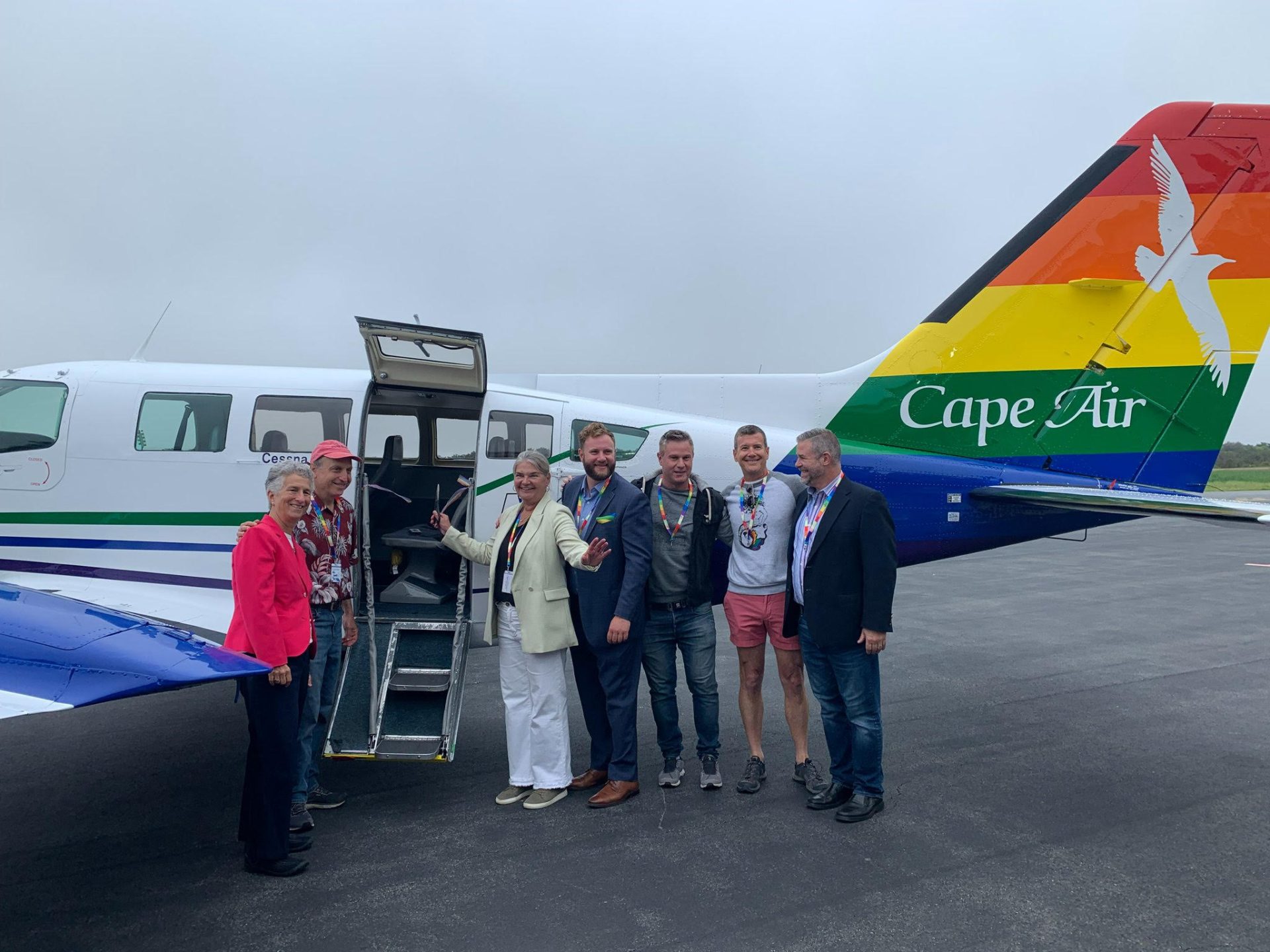
Cape Air Unveils Pride Plane

Cape Air's new Pride themed aircraft (Photo: Cape Air)

Massachusetts-based Cape Air has unveiled a pride-themed aircraft. First reported by local news website CapeCode.com, the airline has decided to make a livery that will “recognize Cape Air’s commitment to equality”. The livery is on one of the airlines’ many 8-9 seat Cessna 402 aircraft they operate, which carries the tail number of N247GS for those wanting to track it. Although it was announced on CapeCode.com on the morning of June 3, 2022, the first photos didn’t come out until that afternoon via the airline’s Twitter account.

The unveiling event in Provincetown, Mass. (Photo: Cape Air)

According to an interview between CapeCode.com and the airline’s marketing manager Ryan Stanton, the livery for the aircraft was designed in a contest. The aircraft features a rainbow tail with the Cape Air logo overlapping, a purple and blue colored engine cowling, and a green-blue, and purple line running down the side of the aircraft. The word “PRIDE” covers the top of the right wing along with another rainbow, and will also have the same feature along the underside of the aircraft.

The right-wing of the aircraft (Photo: Cape Air)

Cape Air is the second airline to have a pride-themed livery in the United States, the first being Alaska Airlines which unveiled its special pride livery last year in June of 2021 on an Airbus A320 with the registration of N854VA.

At the time of writing this article, the aircraft is based within the airlines’ Northeastern route network. This means the aircraft could be at any of Cape Air’s 14-destinations in the northeast, two of which are major hubs; Boston and John F. Kennedy in New York City.

June is pride month, but the airline has said the livery will stick around beyond this month and they have no plans to get rid of the livery anytime soon. They also said it is very likely this aircraft will look like this until the end of its usable life with the airline. So you will have plenty of time to catch a photo of it before the aircraft is retired.

Joey Gerardi

Joey has always been interested in planes for as long as he can remember. He grew up in Central New York during the early 2000s when US Airways Express turboprops ruled the skies. Being from a non-aviation family made it harder for him to be around planes and would only spend about three hours a month at the airport. He was so excited when he could drive by himself, the first thing he did with his driver's license was get ice cream and go plane spotting for the entire day. He graduated from Western Michigan University in 2022 with a B.S. in Aviation Management & Operations and a Minor in Business, and currently works for a major airline in his hometown.

Breeze Airways Eyes Long Beach Service in the Fall

Breeze Airways Embraer 190 at Palm Beach International Airport. (Photo: AirlineGeeks | Vanni Gibertini)

On June 2, Long Beach Airport, an airport in Southern California, announced its newest airline set to launch in the fall. Due to the reorganization of two slot pairs, Long Beach awarded a slot pair to Breeze Airways, a budding U.S. low-cost carrier. Southwest Airlines received the other slot pair as part of Delta Air Lines’ relinquishing its two slots. 

Breeze Airways has not announced the destination it will serve from Long Beach, though the route will be flown daily presumably. Depending on the flight length and demand, the low-cost carrier can utilize its Airbus A220-300, Embraer E190 and Embraer E195 aircraft. Breeze Airways transcontinental-capable Airbus A220-300 features 36 first-class seats in a 2-2 configuration and 80 economy seats in a 2-3 configuration, some of which host extra legroom.

As mentioned in a prior interview with Breeze Airways CEO David Neeleman, the Embraer E190 and Embraer E195 are preferred on flights with a shorter stage length. Both are configured in a 2-2 configuration, but the former showcases 108 seats, while the latter holds 118 seats.

In a statement, Long Beach Airport Director Cynthia Guidry states: “Our airport is in a strong position to retain and attract airlines such as Breeze Airways that connect our great city to visitors and new, exciting destinations.”

Change in Long Beach

Breeze Airways joins four other carriers in serving Long Beach, including American Airlines, Delta Air Lines, Hawaiian Airlines and Southwest Airlines. Long Beach receives service to fifteen destinations, where American Airlines and Delta Air Lines fly to their respective hubs in Phoenix and Salt Lake City, while Hawaiian Airlines connects Long Beach to Honolulu and Kahului. 

Due to noise-control restrictions, the airport is limited to 53 aircraft slots a day, a majority of which are held by Southwest Airlines. Formerly, JetBlue grew a focus city at Long Beach, which operated transcontinental flights to New York-JFK and Boston. The exit of JetBlue in 2020 in favor of Los Angeles allowed Southwest Airlines to double its slot holdings from 17 to a current 38. Currently, Southwest Airlines operates to a vast array of 14 destinations across the Midwest, Texas, and the Western U.S.

Western Breeze

Breeze Airways serves three other airports in California, two of which are in Southern California. Specifically, the Provo, Ut.-based airline will add Los Angeles and San Bernardino, slated for a summer launch. As the airline targets underserved or unserved routes, Los Angeles will see five new destinations, four of which are unserved. Meanwhile, Breeze Airways is San Bernardino’s first airline, seeing service to San Francisco. However, a SCASD grant application filed with the U.S. Department of Transportation reveals Breeze Airways could target a new flight to Sacramento from San Bernardino. 

In the Western United States, Breeze Airways also serves Las Vegas and Provo, Utah. Provo, Utah is connected with Las Vegas, Los Angeles and San Francisco, while Las Vegas will operate ten flights primarily to East Coast destinations. 

Breeze Airways was launched in May 2021 as a venture by David Neeleman – the founder of Azul and JetBlue – to target underserved markets and destinations in the United States. Initially, the Provo-based carrier announced 39 routes and 16 destinations, tripling its route portfolio to a planned 90 routes and doubling its destinations to 31 over a year. On May 25, 2022, Breeze Airways commenced its first A220 flights from Tampa to Richmond and onto San Francisco, a major milestone. The Airbus A220 is an integral part of Breeze Airways’ plans as it looks for more transcontinental opportunities and potential international expansion.

Winston Shek

Ever since Winston was a toddler, he has always had a fascination for airplanes. From watching widebodies land at Washington Dulles to traveling the world, Winston has always had his eyes towards the skies. Winston began aviation photography in 2018 and now posts his photos occasionally on his Instagram account. He previously wrote for a blog. In his free time, Winston loves to play chess, do recreational activities, and watch sports. Looking into the future, Winston plans to service the aviation industry.

Canadian Transportation Agency Clears Runway For Flair Airlines

A Flair Airlines 737-400 (Photo: Flair Airlines on Facebook)

After several months of uncertainty, the legal future of Canada’s Flair Airlines has been determined by the Canadian Transportation Agency (CTA). On Wednesday, the CTA ruled that the Edmonton-based low-cost carrier had satisfied concerns raised in a Preliminary Determination issued on 03  March 2022. The preliminary determination finding stated that ‘the influence of 777 Partners LLC (777), a non‑Canadian, over Flair was dominant and that 777 may have control in fact of Flair and consequently Flair may not be Canadian, as defined in subsection 55(1) of the CTA.’

In its summary of the findings, the CTA stated, “The Agency finds, after considering all of the facts, that the changes implemented since the Agency’s Preliminary Determination, including to the Unanimous Shareholder Agreement (USA) and Promissory Note, have addressed the concerns raised by the Agency in its Preliminary Determination. Accordingly, the Agency finds that, as Flair meets the incorporation and voting interest requirements and that Canadians control in fact Flair, Flair is Canadian, as defined in subsection 55(1) of the CTA.”

Regarding Flair’s shareholding, the CTA advised that ‘the voting interests in Flair are owned and controlled 58.3 percent by Canadians and 41.7 percent by non-Canadians.’ The determination acknowledged that Flair had made changes to address the agency’s concern. In one of the points, the agency stated that: “Flair now has the ability to acquire aircraft from suppliers of its choosing, as 777 can no longer unilaterally veto aircraft acquisition decisions.” The agency did state repeatedly that Flair Airlines was ‘financially dependent’ on 777 Partners for the leasing of aircraft and continued funding of the airline’s operations.

Stephen Jones the chief executive officer of Flair Airlines spoke to the media on Wednesday and said, “The decision that has come out today is very clear, it’s black or white: Flair is Canadian.” CBC News reported Mr. Jones said that the airline had gone “line-by-line” to address the concerns of the CTA. One aspect of this will be to expand the number of seats on the airline’s board of directors to nine and to ensure that at least seven of those seats are filled by Canadians. Mr. Jones did acknowledge that “on reflection, the governance document when it was written in 2018 could have been written more clearly about all those things we added.”

In an op-ed piece for National News Watch published a day before the CTA determination Mr. Jones took aim at what he called ‘Big Air Carriers’ in particular WestJet after an article titled ‘Don’t reward rulebreakers: WestJet’s perspective on possible Flair Shutdown’. A war of words between Flair and other Canadian airlines had escalated in recent months after the publication of a statement by industry bodies representing Flair’s competition. Citing the recent op-ed by WestJet executive Andrew Gibbons, the Calgary-based airline’s Vice President of Government and Regulatory Affairs, Mr. Jones stated that “they (WestJet) try to steamroll Ultra Low-Cost Carriers like Flair Airlines because Canadians saving money and having more options is a threat to their high-price status quo.”

In response to the CTA’s determination Mr. Jones declared, “Together, we can make the dream of showing up to your office with a suitcase and a plane ticket for an affordable, after-work, long-weekend jaunt to another city, or country a reality. We can help more people see all that this wonderful country has to offer. But we can only do this by breaking Big Air’s stranglehold and fostering a thriving, competitive and innovative airline industry that delivers affordable airfares and greater choice for Canadians.”

John Flett

John has always had a passion for aviation and through a career with Air New Zealand has gained a strong understanding of aviation operations and the strategic nature of the industry. During his career with the airline, John held multiple leadership roles and was involved in projects such as the introduction of both the 777-200 and -300 type aircraft and the development of the IFE for the 777-300. He was also part of a small team who created and published the internal communications magazines for Air New Zealand’s pilots, cabin crew and ground staff balancing a mix of corporate and social content. John is educated to postgraduate level achieving a masters degree with Distinction in Airline and Airport Management. John has held the positions of course director of an undergraduate commercial pilot training programme at a leading London university. In addition he is contracted as an external instructor for IATA (International Air Transport Association) and has been a member of the Heathrow Community Fund’s ‘Communities for Tomorrow’ panel.

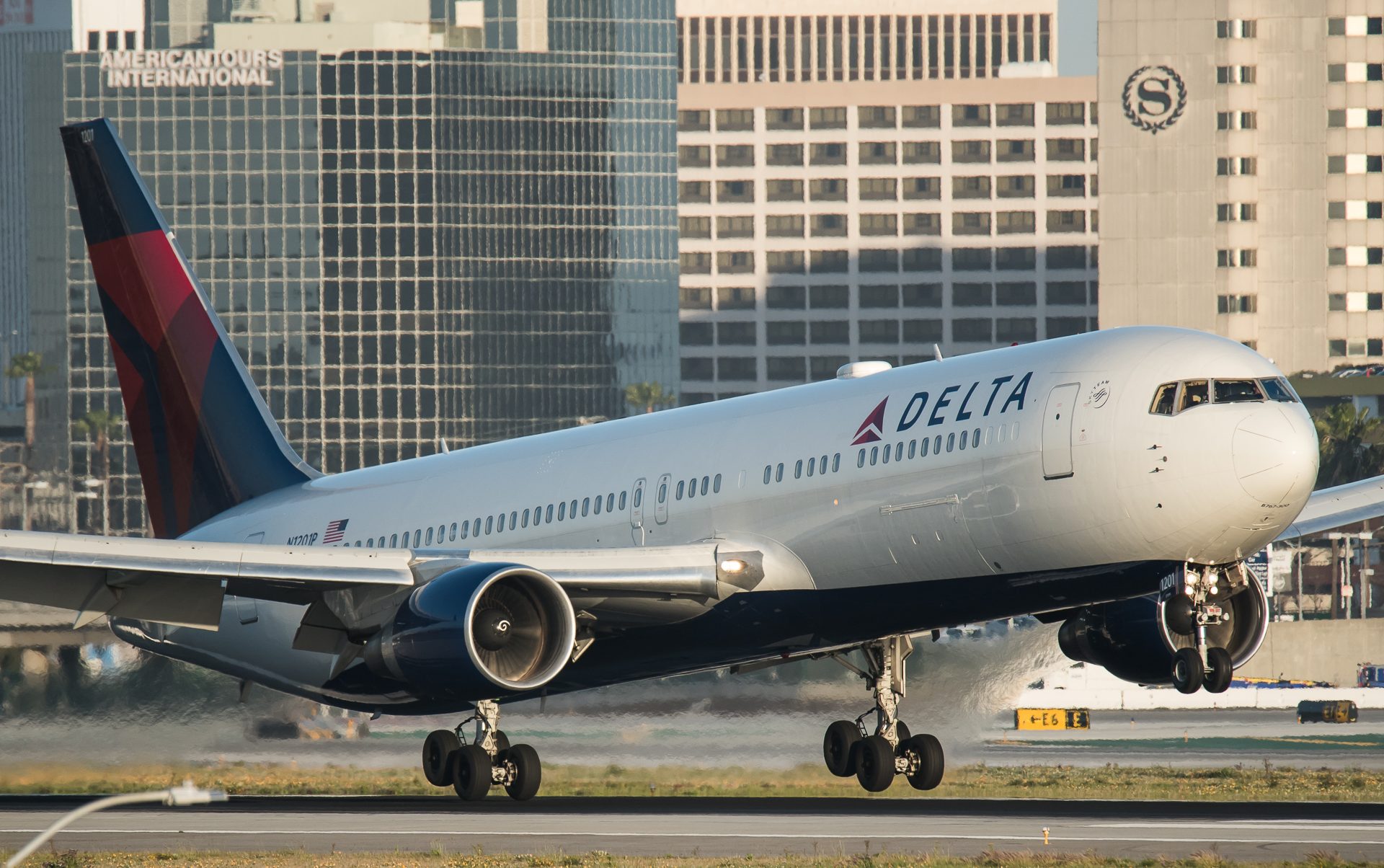
Delta Canceled More Than 700 Flights Over Memorial Day Weekend

Delta Boeing 767-300 LAX los angeles landing
A Delta Boeing 767-300 lands in Los Angeles. (Photo: AirlineGeeks | Ben Suskind)

In what was yet another scheduling blunder for airlines in the United States, Delta Air Lines, the Atlanta-based carrier was forced to cancel hundreds of flights over Memorial Day weekend. 

Flight tracking website Flight Aware reported that Delta canceled more than 250 flights or 9% of the airline’s scheduled services on Saturday. The troubles continued into the rest of the weekend as Delta canceled over 150 flights on Sunday. The airline claims poor weather and air traffic control issues were the main cause of delays but it is more likely that this was once again the result of compounding staffing shortages with many airline employees calling out sick as COVID-19 cases rise in the United States.

Delta told the Associated Press the cancellations on Saturday were a result of “air traffic control actions” and bad weather though Delta was well aware of the issues that would cause the scheduling mishaps in the days leading up to the weekend. 

The airline had been warning customers leading up to Memorial Day weekend that there could very well be an unusual number of cancellations due to staffing shortages. 

Delta Air Lines’ Chief Customer Experience Officer Allison Ausband said in a post on May 26 that “more than any time in our history, the various factors currently impacting our operation – weather and air traffic control, vendor staffing, increased COVID case rates contributing to higher-than-planned unscheduled absences in some work groups – are resulting in an operation that isn’t consistently up to the standards Delta has set for the industry in recent years.”

It’s not just Delta

Airlines around the United States have struggled to meet ambitious schedules as a result of staffing shortages. Alaska Airlines says they are beginning to get back on track after a disastrous spring in which the airline was unable to meet its own schedules while United and Delta have had to scale back summer plans to avoid further disruptions as the airlines head into what will be a very busy summer season. “In recent months, we’ve made a number of adjustments to minimize disruptions and bounce back faster when challenges occur.

And that’s why we’ll be taking additional steps in the coming days and weeks to strategically decrease our flight schedule this summer. From July 1-Aug. 7, we’ll reduce service by approximately 100 daily departures, primarily in markets in the U.S. and Latin America that Delta frequently serves,” Delta Airlines said in a post on May 26th. Reducing daily departures will be the best way for airlines to manage their operations and provide service up to their standards at a time when it just is not possible to operate at full capacity.

Ezra Gollan

Ezra Gollan is a student, photographer and aviation enthusiast based in New York, New York. He has spent over half a decade around New York City’s airports as a photographer.

Condor Reveals New Design For A330neo Cabin Interior

Condor A330
Condor A330neo "Island" themed aircraft. (Photo: Condor)

On Wednesday, German leisure airline Condor revealed its plans for newly designed cabin interiors on its Airbus A330neo aircraft. The preview comes just months after the airline announced plans for colorful new liveries which feature vertical stripes along the entire fuselage, a design inspired by parasols, bath towels, and beach chairs, an attempt to distinguish the airline as the “vacation airline.”

Four of Condors five new striped liveries (Photo: Condor)

Passengers can expect to see the new interior in fall 2022. From there, the airline will receive approximately one Airbus A330neo per month, replacing the current Boeing 767 long-haul fleet. The neo will then take off on long-haul routes later in the year around winter in 2022. The first destinations include the Dominican Republic, Mexico and Seattle, USA.

The interior of the aircraft will mimic the aircraft’s livery, utilizing those unique colorful stripes that are prevalent on headrest covers in Business and Premium Economy Class, a recurring theme throughout. The interior colors will consist of Condor’s “Condor Marina” and “Condor Earth”.

“With the new cabin design, we are focusing on modern elegance and the color set creates a clear reference to our new brand identity. Our guests’ holiday begins with boarding and continues with the distinctive Condor product and first-class service,” stated Ralf Teckentrup, CEO of Condor. “With that, our well-established product is complemented by an unprecedented, coherent interior design, with the highest level of comfort, the most diverse and largest in-flight entertainment program to date with an interface for your Bluetooth headset, as well as high-speed internet connectivity for everyone on board.”

Three Class Configuration

The aircraft will feature a three-class configuration totaling 310 seats. The configuration includes 30 Business Class, 64 Premium Economy Class and 216 Economy Class seats.

Condor’s new Business Class features 30 fully lie-flat seats in a 1-2-1 configuration with direct aisle access for all guests. To create a better experience for its guests, the seat converts to a 1.99-meter lie-flat as well as extra-large foot space, ultimately making for better sleep for guests inflight. Business Class guests have access to the latest movies, series, podcasts, and games, all accessible on the minimum 17.3-inch screen in 4K mode, with a touchscreen and remote control.

Fully lie-flat seats in Condor’s Business Class (Photo: Condor)
Condor’s 17.3″ in-seat 4K monitor in Business Class (Photo: Condor)

Premium Economy Class guests can enjoy more personal space thanks to the extra seat pitch of almost 15 centimeters, compared to Economy Class and a greater backrest angle of up to 15 centimeters. In addition, the multi-adjustable headrest and footrest at every seat ensure a significantly more comfortable flight experience.

Economy class seating features 76 centimeters of pitch, 66% larger hand luggage compartments, 4-way adjustable headrests and 8.5° tilting backrests Both the Premium Economy Class and Economy Class seats have 13.3-inch in-seat 4K monitors with touchscreens, which can be used to enjoy the in-flight-program. Both Economy and Premium Economy use a 2-4-2 seating configuration.

Condor’s 2-4-2 configuration utilized on both Economy and Premium Economy Class (Photo: Condor)
Economy class seating utilizing 13.3″ 4K monitor (Photo: Condor)

In addition, Condor’s A330neo offers high-speed broadband internet, a USB A/C connection and a socket for each seat, and there is also a separate holder for mobile devices. Guests can listen to Inflight Entertainment on either our onboard headphones or your own wireless headphones via the Bluetooth function.

The cabin features mood lighting that can be individually adjusted for all booking classes to suit the time of day. This helps guests aboard to fall asleep easily and wake up more relaxed.

Chase Hagl

Chase Hagl grew up in Twin Falls, Idaho. His love and passion for Aviation landed him in Orem, Utah where he obtained a B.S. in Aviation Management with a minor in Business Management from Utah Valley University. Chase currently works as a flight attendant in Charleston, SC and is also the primary Inflight ASAP ERC representative for startup airline, Breeze Airways. His experience in the aviation industry spans back four years, working in areas including agriculture application, customer service, maintenance, and flight ops. In his free time, Chase enjoys road biking, astronomy, and flying.

Avianca Adds New Premium Seating Option

An Avianca Brasil A320 (Photo: Rafael Luiz Canossa [CC BY-SA 2.0 (https://creativecommons.org/licenses/by-sa/2.0)])

Avianca has long anticipated the entrance of its new cabin configuration in its subsidiaries, bringing a new setup with the three new seat types: Premium, Plus and Economy.

As previously mentioned, during the ALTA Airline Leaders Forum 2021, Avianca presented the three new seating configurations.

Now, Avianca revealed its Premium seats, an exclusive design that offers more comfort to its travelers.

Avianca enhanced onboard seating (Photo: Avianca)

The first aircraft with the complete offer of seats, which includes Premium, Plus and Economy seats, began operating this week.

The Premium seat is a design made by Recaro, which is available in the first three rows of the plane and offers a wider seat with more recline.

It has a central console with individual compartments and customers will always be able to charge their personal devices.

By October of this year, Avianca will have more than 50 Airbus aircraft with Premium, Plus and Economy seats.

The new aircraft interior design also includes Airbus’ SpaceFlex, a module that optimizes space at the rear of the aircraft, consolidating galleys and restrooms, which allows Avianca to increase seating capacity.

Avianca Includes New Rates for International Flights

As of October 1, Avianca passengers will be able to personalize their flights to 64 destinations in America, with the 4 sizes that the airline will offer: XS, S, M and L.

Likewise, travelers will have the option to choose and add more than 15 services or products according to their needs.

It is important to remember that this model has already been implemented on domestic flights in Colombia and Ecuador.

The details of each size are as follows:

  • XS: Personal item, check-in by web/app/kiosk
  • S: Personal item, 10 kg. carry-on baggage, check-in by web/app/kiosk, and mileage accumulation.
  • M: Personal item, 10 kg. carry-on baggage, 23 kg. baggage, check-in by web/app/kiosk, mileage accumulation, economy seat selection.
  • L: Personal item, 10 kg. carry-on baggage, 23 kg. baggage, check-in by web/app/kiosk, itinerary changes and refund, mileage accumulation, economy seat selection.

According to Manuel Ambriz, Avianca’s CCO, “Thanks to the changes implemented in the aircraft cabins, we reached the same levels of seats offered in 2019 in the Colombian domestic market.”

The Colombian carrier also specified that flights to and from Europe will continue to maintain the option of 5 sizes: S, M, L in economy class and XL and XXL in business class.

Juan Pedro Sanchez Zamudio

The three things Juan Pedro loves most about aviation are aircraft, airports, and traveling thousands of miles in just a few hours. What he enjoys the most about aviation is that it is easier and cheaper to travel around the world and this gives you the opportunity to visit places you thought were too far away. He has traveled to different destinations in North, Central, South America and Asia. Born, raised and still living in Perú, Juan is a lawyer, soccer lover, foodie, passionate traveler, dog lover, millennial and curious by nature.

Interview: Airservices Australia on Training and Maintaining Its Air Traffic Controllers

Melbourne ATC. Photo: Airservices Australia

There’s a saying that air traffic controllers exist for one very important reason: pilots also need heroes. True or not (the reader shall decide), ATC is undeniably a necessity. The very purpose of air traffic control – ATC – is to organize the traffic of the skies in a safe, efficient manner. While the skill of the pilot is usually the most visible aspect of the larger aircraft management system, it is the air traffic controller who guides and choreographs the vast volume of flights that we take for granted.

While the educated reader or aviation professional appreciates the role of ATC, one question lingers: who are these phantom heroes? AirlineGeeks asked Airservices Australia, the civilian air traffic control authority of Australia, what makes an air traffic controller, and what steps are taken to ensure controllers maintain peak performance both now and in the future.

The Beginning – A Very Good Place to Start

It is obvious that air traffic controllers are not born to be pilots’ heroes, nor do they arrive at the control tower from a flying crane; they start out as trainees. But, in the unlikely event that the reader isn’t convinced of this truth, we asked an Airservices Australia spokesperson for some more information.

AG: What characteristics are you looking for in ATC trainees?

AA: We are always on the lookout for top talent to recruit – exceptional people from diverse backgrounds, from all walks of life.

Trainees need to be sharp, highly organized and calm under pressure.

No aviation experience is required. Airservices provides all the training an individual will need, so if they’re over 18, and they want to be a guardian of the Australian sky – They can apply via Air Traffic Control careers.

It’s a fast-paced and dynamic career for the future – so long as there are planes in the sky there’ll be controllers on the ground.

They’ll get paid while they learn and receive a nationally recognized qualification.

AG: Many employers are looking only for experienced workers. Does Airservices Australia have a target to meet with the employment of trainees?

AA: We welcome up to 140 trainees per year, delivering courses in Enroute, Approach and Tower Control.

AG: What is the process for a trainee to qualify as an air traffic controller?

AA: The training program varies at our Airservices Training Academy in Melbourne, but may take up to 18 months.

Training delivery is face-to-face and consists of theory and practical components, with practical training undertaken in air traffic control simulators. A large amount of effort and study is required throughout the training program and each stage of training has a critical milestone which must be successfully completed in order to continue training. During training, you will work towards the AV150115 Diploma of Aviation (Air Traffic Control) [3]. This is a nationally recognised qualification, developed specifically for the Australian aviation industry.

On successful completion of the AVI50115 Diploma of Aviation (Air Traffic Control), you undergo on-the-job workplace training for three-to-six months. This is the final phase of your training, after which you may be eligible to obtain an Air Traffic Control Licence. Completion of the AVI50115 Diploma of Aviation (Air Traffic Control) can provide credit transfer entitlements for further higher education studies.

The School of Simulation

The aerospace industry is no stranger to simulation. Airservices Australia utilizes world-class simulation technology to train and maintain a professional corps of air traffic controllers.

AG: Where does the simulation training take place?

AA: Our air traffic controllers are instructed at the Airservices Training Academy in Melbourne – trainees must be able to relocate.

We welcome up to 140 trainees per year, delivering courses in en route, approach and tower control.

AG: What makes the training facilities world-class?

AA: Expert air traffic control instructors provide training – using our state-of-the-art technology, including Control Tower Visual Simulators (CTS), a 360-degree Melbourne Tower simulator and Eurocat simulator for enroute and approach – to prepare students for their own careers as guardians of the Australian sky.

These simulators can be reconfigured to deliver different training and testing scenarios to allow trainees to perfect their craft.

AG: Do you have simulator pilots working for the ATC training?

AA: Our training is facilitated by Simulator Support Officers who perform the role of a simulator pilot and simulator air traffic control, while also providing coordination with other agencies.

The Future of ATC

With automated, unmanned aviation a growing reality, it only makes sense to wonder if ATC as we know it will continue to play the same role. Where does Airservices Australia see itself in the future?

AG: There are always developments in any sector of aviation. How does Airservices Australia keep up with those developments?

AA: Airservices is investing in the projects and technologies that represent the future of Australian aviation; the aviation industry is evolving quickly and we’re evolving with it. Visit UTM & Drones Archives – Airservices (airservicesaustralia.com)  for more information.

Airservices is also at the forefront of exploring new technologies to make our services faster, more efficient and more valuable for those operating in Australian skies.

Long-term projections indicate that by 2035, there will be more than 235 million passenger movements each year at Australian capital city airports (source: IATA).

We’re experiencing accelerated growth of new airspace users and new aircraft types, all with different performance capabilities — automation, digitization and intelligence systems.

We’re partnering with world-leading companies, the aviation industry, regulators, and other government agencies to integrate unmanned aerial vehicles and deliver a contemporary and national air traffic management system.

We will continue to facilitate sustainable aviation, balancing industry efficiency, community interests and operational performance.

AG: During COVID, many in the aviation sector found themselves not working, only to re-train as we return to pre-Covid flight volumes. How has Airservices Australia kept its ATC staff competent?

AA: Airservices Australia was deemed an essential service during the pandemic and as such we have continued to provide air traffic management services throughout, so our ATCs have not stopped working.

Airservices has always strongly supported our ATCs to maintain their specialized skillsets during and despite of the ongoing pandemic by offering extra simulator time to maintain their expert skills.

Ongoing support also includes CASA requirements, such as annual exam papers on the knowledge required for the role, and every six months a formal, on-the-job check assessment is conducted by a trained specialist to ensure our air traffic controllers meet the high standards to continue to control.

The Humble Hero

For the average passenger, the closest understanding of ATC is likely from what is seen in films like Sully. The standards are high, the training rigorous, but the product? If one can sleep while they fly, they are experiencing the organization and safety that only ATC delivers. ATC exists because pilots need heroes too, the air traffic controller is the quiet achiever of global aviation — a humble hero, however unsung.


 

Mike Mangano

Mike’s love affair with flight and mechanical objects in the sky began at an early age, fascinated by space documentaries and the vintage Flight Simulator ’95. He currently works as an instructor for UAVs and is training to receive his Private Pilot Licence with the goal of working in manned flight instruction. An avid reader of all things aviation and manned space flight, Mike stays close to developments in aerospace while reminiscing and sharing the rich history of flight with others. He loves writing, engineering and science.

Ethiopian Airlines Increases Presence in India, Expands Cargo Fleet

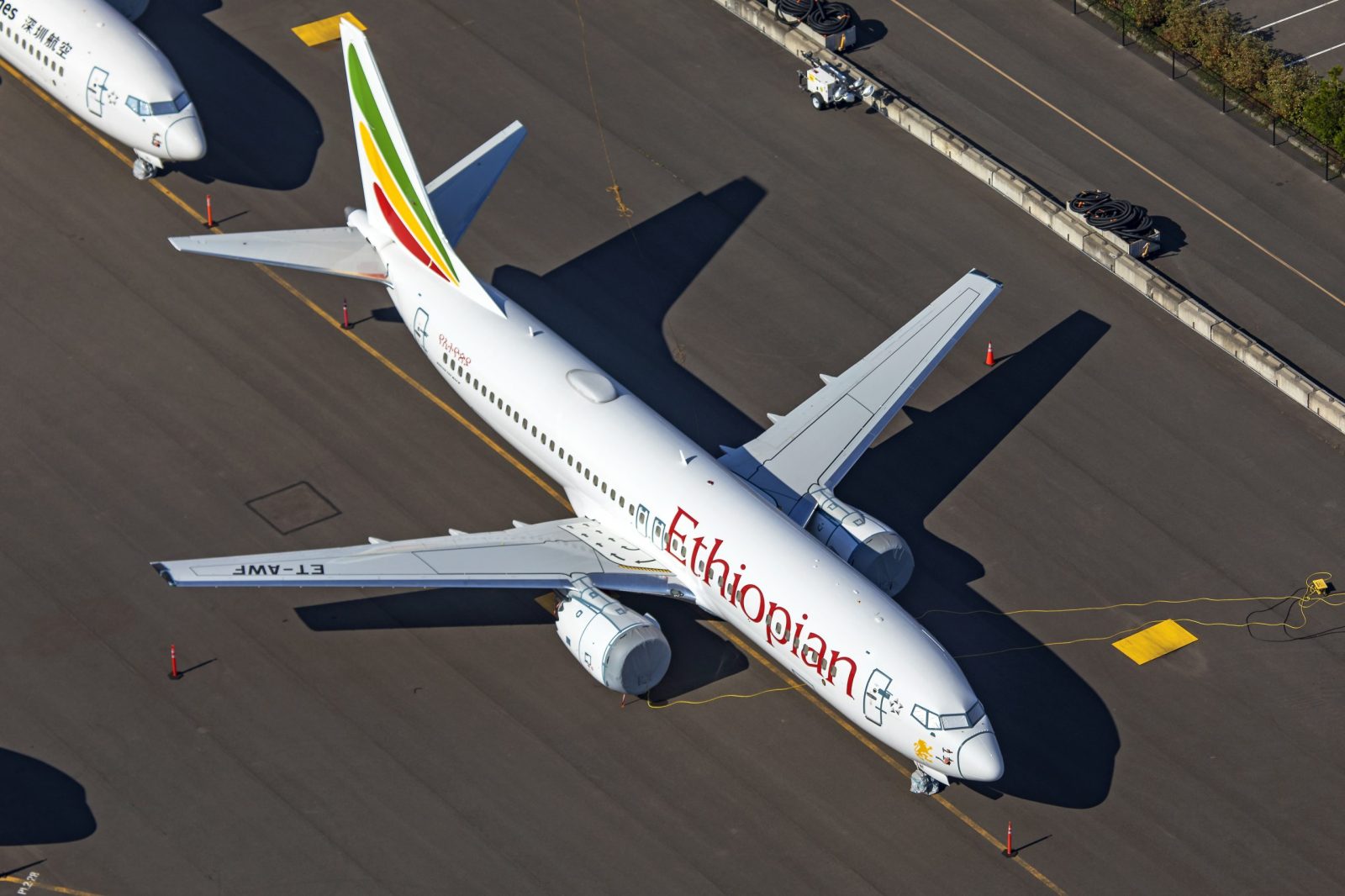
Ethiopian 737 MAX
An Ethiopian Airlines 737 MAX 8. (Photo: AirlineGeeks | William Derrickson)

On July 2, Ethiopian Airlines will commence twice-weekly flight operations to Chennai, India — which will join the vast Ethiopian network as the fourth destination in India after New Delhi, Mumbai, and Bengaluru, India.

Ethiopian started its service to India with a debut flight to New Delhi in 1966 — just 20 years after the airline was founded. Ethiopian pioneered the air transport linkage between Africa and India.

Recently, Ethiopia marked its 50th anniversary of uninterrupted service to Mumbai — the commercial capital of India.

Flights to Chennai will fly a Boeing 737-800 aircraft on the Addis Ababa-Chennai, India route.

Ethiopian Airlines Group CEO Mesfin Tasew said, “I am excited that we are getting closer to our customers with our signature service and global connectivity options. We have been connecting Asia and Africa for 55 years now facilitating trade between the two continents. The addition of Chennai as a fourth passenger destination in India is a testimony of our resilience and unwavering commitment to serving our customers in India and the continent at large. We will continue to serve India with enhanced frequency and more destinations in the future. “

Chennai, India is a modern cosmopolitan city and the most prominent cultural, economic and educational center of South India. Ethiopia has been serving India without any interruption even during the pandemic, cementing the longstanding bilateral relationship between the two countries.

In addition to the opening of a new route, Ethiopian Airlines’ flight frequency to the cities of Mumbai and New Delhi will increase to double daily and ten weekly flights, respectively,  from July 2022.

India is one of Ethiopian Airlines’ key destinations in the Asian continent and Ethiopian currently flies to three passenger and five cargo destinations with its enhanced services and modern fleet.

The Airline’s Cargo Market

Boeing and Ethiopian Airlines last week announced that the East African carrier is expanding its all-Boeing freighter fleet with an order for five 777 Freighters as the airline eyes opportunities in a buoyant cargo market.

The order was previously an unidentified order on Boeing’s orders and deliveries sheet.

Disclosing the order on Wednesday, Group CEO Mesfin Tasew said that “The addition of these five B777 Freighters into our cargo fleet will enable us to meet the growing demand in our cargo operation. While cementing our partnership with the Boeing Company with new orders, the growth of our freighter fleet takes the capacity and efficiency of our shipping service to the next level. We always strive to serve our customers with the latest technology aircraft the aviation industry could offer. Our Africa’s largest cargo terminal coupled with fuel-efficient freighters and well-trained cargo handling professionals will enable our customers to get the best quality shipment service. Customers can rely on Ethiopian for wide-ranging cargo services across five continents.”

The airline operates a fleet of nine 777 Freighters, utilizing the model’s range of 4,970 nautical miles or 9,200 km and a maximum structural payload of 107 tonnes or 235,900 lbs to connect Africa with 66 dedicated cargo centers throughout AsiaEurope, the Middle East and the Americas.

“We value the trust that Ethiopian Airlines places in the 777 Freighter to support their cargo ambitions which will provide them with increased capability and flexibility to their operations,” Ihssane Mounir, Boeing’s senior vice president of Commercial Sales and Marketing, said. “Additional 777 Freighters will enable Ethiopian to capitalize on near-term cargo demand while positioning the airline for further expansion in the future.”

In early March 2022, Boeing and Ethiopian Airlines announced a Memorandum of Understanding (MOU) for the carrier’s intent to purchase five 777-8 Freighters. The carrier also operates three 737-800 converted freighters, as well as a combined passenger fleet of more than 80 jets, including Boeing 737s, Boeing 767s, Boeing 777s and Boeing 787 Dreamliners.

Victor Shalton

Victor Shalton's love for aviation can be traced to when he was 11-years-old. As a seasoned aviation writer, he takes pride in providing the best aviation coverage around the globe and is passionate about advancing his skills in the aviation space. In addition, he loves travelling, writing, arts and while his speaking engagements have taken him around the world, he is proud to call Nairobi home.
Sign-up for newsletters & special offers!

Get the latest stories & special offers delivered directly to your inbox

SUBSCRIBE

Uh-oh! It looks like you're using an ad blocker.

Our website relies on ads to provide free content and sustain our operations. By turning off your ad blocker, you help support us and ensure we can continue offering valuable content without any cost to you.

We truly appreciate your understanding and support. Thank you for considering disabling your ad blocker for this website