Stories

IAG Finalizes Agreement For Up To 150 Boeing 737 Aircraft

A British Airways 737 MAX in storage on the ramp. (Photo: AirlineGeeks | Katie Bailey)

International Airlines Group (IAG) has announced on Thursday that they have reached an agreement with Boeing to order 25 737-8200 and 25 737-10 aircraft. The announcement also advises that the parent group of British Airways, Iberia, Vueling, Aer Lingus and LEVEL have the option for a further 100 aircraft in the future subject to shareholder approval. Reuters reported that the total deal could be worth $6.25 billion at Boeing’s official list prices though an order of this size would certainly be subject to a discount.

Luis Gallego IAG’s chief executive said: “The addition of new Boeing 737s is an important part of IAG´s short-haul fleet renewal. These latest-generation aircraft are more fuel-efficient than those they will replace and in line with our commitment to achieving net-zero carbon emissions by 2050.”

IAG had previously placed an order for 200 Boeing 737 MAX aircraft in 2019 but that order had lapsed as a result of the coronavirus pandemic. The aircraft ordered this week are expected to be delivered between 2023 and 2027 for use across any of IAG’s airlines though the larger 737-10 variant has yet to receive certification.

According to Boeing ‘the 737-8-200 will enable IAG to configure the airplane with up to 200 seats, increasing revenue potential and reducing fuel consumption.’ The manufacturer adds that the ‘737-10 seats up to 230 passengers in a single-class configuration and can fly up to 3,300 miles. The fuel-efficient jet can cover 99 percent of single-aisle routes, including routes served by 757s.’ The Financial Times (FT) cited industry sources as saying the aircraft ‘is most suited to operations at London’s Gatwick airport that do not require containers for cargo.’

This week Ryanair Group chief executive Michael O’Leary criticized Boeing for delays in aircraft deliveries and certifications. The FT reported that Mr. O’Leary suggested that Boeing seek to replace management in the commercial aviation division to overcome the problems. The FT also reported industry sources as saying that IAG ‘continues to negotiate with Airbus for an order of roughly the same size.’ However, Lufthansa chief executive Carsten Spohr came to Boeing’s defense at a meeting in Washington on Thursday stating that “Boeing as a symbol of America will get back to its feet” and adding that “it’s a good time to negotiate prices with Boeing right now.”

The deal with IAG has been lauded by the American manufacturer with Stan Deal president and chief executive of Boeing Commercial Airplanes saying that: “Today’s agreement for up to 150 airplanes, including 100 options, is a welcome addition of the 737 to IAG´s short-haul fleets and reflects our commitment to support the Group’s continued network recovery and future growth with Boeing’s unrivaled family of airplanes.”

Mr. Deal also added that: “With the selection of the 737-8-200 and larger 737-10, IAG has invested in a sustainable and profitable future, as both variants will significantly lower operating costs and CO₂ emissions.”

John Flett

John has always had a passion for aviation and through a career with Air New Zealand has gained a strong understanding of aviation operations and the strategic nature of the industry. During his career with the airline, John held multiple leadership roles and was involved in projects such as the introduction of both the 777-200 and -300 type aircraft and the development of the IFE for the 777-300. He was also part of a small team who created and published the internal communications magazines for Air New Zealand’s pilots, cabin crew and ground staff balancing a mix of corporate and social content. John is educated to postgraduate level achieving a masters degree with Distinction in Airline and Airport Management. John has held the positions of course director of an undergraduate commercial pilot training programme at a leading London university. In addition he is contracted as an external instructor for IATA (International Air Transport Association) and has been a member of the Heathrow Community Fund’s ‘Communities for Tomorrow’ panel.

Tibet Airlines A319 Skids Off Runway

A Tibet Airlines Airbus A320. (Photo: Airbus)

On May 12, a Tibet Airlines Airbus A319 performing the Chinese domestic flight TV9833 from Chongqing to Linzhi skidded off the runway after aborting its take-off.

The aircraft was severely damaged with engines and landing gears ripped from its fuselage. All 122 passengers and crews evacuated before flames consumed the lift side of the aircraft, though there were 36 people lightly injured during the evacuation.

At the Scene

As passengers recalled after the accident, the plane was vibrating severely and never made off the ground”. Based on the image of the site, the aircraft skid to the lift of the runway and passed a gutter way and a taxiway, and stopped on the grass. The crew quickly executed an evacuation, and all passengers left the aircraft before the fire crews started to put out the fire.

The aircraft performing flight TV9833 — registered with fail number B-6425 — was a nine-year-old Airbus A319, that joined the airline in 2011. Tibet Airlines operates 38 Airbus aircraft, 27 of which are Airbus A319s, a model that is fitted for high altitude operations. The carrier mainly operates at high-altitude airports within Tibet. The airline is an Air China subsidiary, with the nation’s flag carrier owing 40% of Tibet Airlines.

Based on the image from the accident site, the aircraft lost its landing gears and engines, possibly at the location where it passed a gutter way. The rear of the aircraft is almost detached from its fuselage, and the front left side was severely burned by fire. Experts commented that the aircraft was damaged beyond repair.

Investigation Underway

The cause of the accident is yet to be determined. Civil Aviation Administration of China (CAAC) and Airbus have all released statements that an investigation will begin immediately.

The accident caused Chongqing Airport to be closed for about an hour, though the airport operation resumed to normal afterward.

This accident came merely 52 days after the deadly crash of China Eastern flight MU5735. The anxiety of the public will further hold back the slowly recovering Chinese aviation market.

The Airline

Tibet Airlines was founded in 2011, and it is an Air China subsidiary with 40% of the company owned by the flag carrier of China. The airline is headquartered in Lhasa, China, the capital city of Tibet. The destinations of Tibet Airlines are mostly high altitude airports located in Tibetan Plateau, and all the top five highest airports in the world are located in this area. The airline flies mostly the routes that connect those high altitude airports with the rest of China, especially the two of the biggest cities in western China, Chengdu and Chongqing.

Despite the harsh operating condition, the airline managed a perfect safety record from the beginning. This accident is the first time Tibet Airlines has had an accident that caused a loss of property. Luckily, no lives have been taken in the accident.

Lei Yan

Lei is from Inner Mongolia, China, and now lives in Guangzhou. He grew up in an aviation family, where his passion began. During his time at Penn State University, he studied Industrial Engineering specializing in operations research, and he graduated with an honor’s thesis on airport gate assignment optimization. Now, he is a Purchasing Manager with Procter & Gamble. In his free time, he enjoys flying, reading, and wandering around the city.

FAA Clears 52 United 777-200’s to Fly, Bolstering Airline’s Fleet Before Busy Summer

A United 777 at Dulles International Airport. (Photo: AirlineGeeks | Craig Fischer)

United Airlines said on Tuesday that the Federal Aviation Administration has cleared 52 of United’s Boeing 777-200 aircraft operating with Pratt & Whitney PW400 engines after over a year of standstill after the type was grounded following an accident in February 2021. 

On Feb. 20, 2021, a fan blade inside a PW400 engine on a United 777-200 operating from Denver to Maui failed, causing the engine cowling to come off and come crashing down in areas surrounding Denver, nearly striking a home. The aircraft fortunately was able to return safely to Denver Airport with everyone onboard shaken but unharmed. 

What It Means for United

United chief commercial officer Andrew Nocella said at a Bank of America conference, “The planes represent 10% of United’s capacity, so it’s really, really material.”

The 777-200 with the PW400 engine configuration is a crucial piece of United’s domestic operations. Used on many of United’s U.S. mainland to Hawaii routes as well as high density business routes such as New York (Newark) to Chicago O’Hare, the airline features prominently in the airline’s operations, or at least it had until 2021.

For United, the return of the domestic 777 is monumental in their push to meet their summer objectives and remain competitive in the United States domestic travel sector. United was forced to announce some summer flight reductions earlier in the month due to a lack of capacity and it’s clear from Nocella’s remarks that this could not have come at a better time.

According to Reuters, in an effort to speed up the process that the FAA underwent to recertify the aircraft as airworthy, United made a push to lawmakers stating that over 1 million passengers could be affected over the course of the summer as United ramps up capacity. The summer months of 2022 are likely to be some of the busiest on record in recent years as much of the world looks to rebound from the COVID-19 pandemic that at one point nearly brought air travel to a complete halt. 

United’s High Density 777s

These domestic 777’s are configured in an unusual configuration for a legacy carrier like United but they serve a similar purpose to American Airlines’ domestic widebody fleet: move large numbers of people from one major destination to another with few frills. United’s domestic 777’s feature 336 economy seats with 234 in standard economy and 102 in United Economy Plus. At the front of the aircraft are 28 of United’s domestic first class seats.

This premium product is in fact United Airlines’ old flagship first class seat seen more commonly in the early years of the 777 and Boeing 747. While United has retrofitted these aircraft with more modern economy seats with a 3-4-3 configuration, they have chosen to leave the first class product untouched.

While it may make for a much better premium experience, especially on flights to and from Hawaii, it is clear that the domestic 777-200’s are all about density and less about passenger experience. 

Nocella says United will restart operations on the aircraft as soon as May 26, 2022. 

Ezra Gollan

Ezra Gollan is a student, photographer and aviation enthusiast based in New York, New York. He has spent over half a decade around New York City’s airports as a photographer.

ATR Announces Next Generation EVO Aircraft

A rendering of the ATR EVO. (Photo: ATR)

French regional aircraft manufacturer ATR announced on Wednesday its plans for the development of a next-generation version of their best-selling turboprop aircraft. Through the addition of hybrid technology, the aircraft looks to run on 100% sustainable aviation fuel and is scheduled to enter service in 2030.

The aircraft manufacturer is committed to addressing the impact and consequences of climate change, and therefore is doing its part to find sustainable solutions. The ATR EVO aircraft will feature a new powerplant with hybrid capability. The new innovative technologies look to improve performance, economics and sustainability, making the aircraft a viable option for customers in the less-than-90-seat market.

“Our next generation of aircraft will be a step forward in responsible flying through further incremental innovation. When it enters the market, the new ATR ‘EVO’ will pave the way towards a decarbonized future for aviation,” said ATR CEO Stefano Bortoli in a statement. “Key benefits include a 20% overall fuel improvement and 100% SAF compatibility. This means that the aircraft will emit over 50% less CO2 than a regional jet when powered by kerosene. When using 100% SAF, its emissions will be close to zero.”

The Toulouse-based company will work with airlines, engine manufacturers and systems providers in the coming months with the aim to launch the program by 2023.

The incorporated technologies developed by these companies look to help the already successful aircraft stand out that much more to customers, customers in an industry that is continuously pushing towards a more sustainable future.

“The ATR ‘EVO’ will be even more economical, with double-digit operating cost savings achieved in particular through 20% lower fuel burn and 20% overall maintenance cost reduction. This means airlines can serve thin routes more profitably, and communities can benefit from more connectivity, more essential services, and more economic development,” Fabrice Vautier, ATR Senior Vice President of Commercial, said in a statement. “Our aim is to continue to offer customers and society ever more inclusive and responsible air transportation.”

The ATR EVO will also feature an improved cabin, utilizing lighter, bio-sourced materials.

Leading Regional Aircraft Manufacturer

The manufacturer has been developing models of its highly-successful ATR 42 and 72 turboprop aircraft since the ’80s, having a presence all across the world. The largest passenger operator of the aircraft in the US is Fort-Lauderdale-based Silver Airways. The carrier currently has 17 ATR 42/72 in service.

The turboprop aircraft has a bit larger presence in the US among cargo carriers with Coeur D’Alene, ID-based Empire Airlines operating 17 ATR 42/72 aircraft, and Denver-based Mountain Air Cargo operating 16 ATR 42/72 aircraft.

In total, the aircraft has been chosen by 200+ companies in 100 countries around the world. According to ATR’s website, ATR aircraft open more than 100 new routes on average every year. The company attributes the aircraft’s popularity to its sustainability and competitive fuel burn: 40% less fuel and emits up to 40% less CO2 than regional jets.

Chase Hagl

Chase Hagl grew up in Twin Falls, Idaho. His love and passion for Aviation landed him in Orem, Utah where he obtained a B.S. in Aviation Management with a minor in Business Management from Utah Valley University. Chase currently works as a flight attendant in Charleston, SC and is also the primary Inflight ASAP ERC representative for startup airline, Breeze Airways. His experience in the aviation industry spans back four years, working in areas including agriculture application, customer service, maintenance, and flight ops. In his free time, Chase enjoys road biking, astronomy, and flying.

Australia’s Central Coast Airshow Captivates Crowds

Grumman Avenger at Warnervale, Australia. (Photo: Airlinegeeks | Mike Mangano)

During the weekend, on May 14 and May 15, the small airport of Warnervale, Australia on the Central Coast transformed into “AvGeek” paradise as the Central Coast Airshow came to life. The event — supported by AirlineGeeks — was flocked to by those thirsting for a display of heritage aircraft and high-speed aerobatics and left few disappointed.

The airport — approximately one and a half hours north of Sydney —managed to provide a clear Saturday and an overcast-yet-dry Sunday, defying the incessant wet-weather brought by La Niña. Pilots from all backgrounds, including one Qantas First Officer, demonstrated the capabilities of historical warbirds and trainers, aerobatic biplanes, and a finale of the latest F-35 Lightning II. Accompanying the aerial action was a static display of GA aircraft, food stalls and the ever-present souvenir from the rains in the form of four inches of mud.

An Australian Collection of Aircraft

On entry, there was one port of call with the highest priority — the apron.

The variety and value of the aircraft were world-class, with some aircraft the rarest in Australia and, indeed, the world. Lining the apron on arrival was a magnetic collection of airplanes sized both substantial and slight, most notably a beautifully maintained Grumman Avenger complete with wings folded as if it were on a carrier. When the aircraft was completing a flight, the coordinated turns produced some graceful motions for the avid photographer to capture.

A Grumman Avenger on the apron with wings folded. (Photo: Airlinegeeks | Mike Mangano)
A Grumman Avenger flies past the spectator stand. (Photo: Airlinegeeks | Mike Mangano)

Sitting right next to this immaculate specimen was another, more modern machine: a pristine Pitts Model 12. Built around a 1940s Russian Vedeneyev M14P, 9-cylinder engine, the Model 12 later thrilled the crowd with its high-performance aerobatics.

A Pitts Model 12 parked at Warnervale. (Photo: Airlinegeeks | Mike Mangano)

The presence of perhaps a lesser-known display team composed entirely of civilian pilots from Paul Bennet Airshows. Any formation flight is always captivating, but this team of four flew with precision comparable to any military display team. Flying tight, there was little margin for error as the team proved that ‘you don’t need to be a fighter pilot’ to awe crowds.

AirlineGeeks up close to Paul Bennet Airshows’ aircraft. (Photo: Airlinegeeks | Mike Mangano)
Paul Bennet Airshows’ Display Team. (Photo: Airlinegeeks | Mike Mangano)
A line up of Paul Bennet Airshows’ display team aircraft. (Photo: Airlinegeeks | Mike Mangano)

It was a further surprise to learn that the pilot of a PAC CT/4 Airtrainer – a variant of the Victa Airtourer (yes, the Australian lawnmower Victa) – was flown by the pilot of an Australian airline giant. Bryan Greenfield, a Qantas Boeing 787 Dreamliner First Officer, performed some great maneuvers in the bright yellow CT/4, telling AirlineGeeks that “flying the 787 is my hobby”. The Airtrainer makes no mistake in sporting some pearly whites. They were purchased several months ago by a local dental surgeon and pilot, Ned Restom, who was taught to fly by Greenfield himself.

AirlineGeeks asked the veteran airline pilot just how he ended up as a part-time aerobatic pilot.

“I’ve been flying the CT/4 at Warnervale for two years,” Greenfield said. “I’ve always looked at flying as a hobby”.

Greenfield credited his grandmother with introducing him to flight at the age of five, flying on a Qantas 707. In a full circle, Greenfield related his experiences in flying for regional Australian airlines before joining Qantas as a Boeing 747-400 Second Officer to advance all the way to the Airbus A330 and, currently, the Boeing 787 Dreamliner as a First Officer.

Now inspiring others to fly, Greenfield started working as an advanced flight instructor for Central Coast Aero Club at Warnervale when COVID brought most of the aviation industry to a screeching halt in 2020. For this writer, it was just another incredible story of pilots helping pilots in a period of uncertainty. Concluding the discussion, AirlineGeeks posed the pilot with the age old question of which aircraft he preferred. Greenfield was blunt: “Boeing all the way!” – this writer concurs.

Ex-Royal New Zealand Air Force PAC CT/4 in a steep climb. (Photo: Talon Eder & Jason Griffiths, Central Coast Aero Club)
Qantas pilot Bryan Greenfield flies inverted in a PAC CT/4 Airtrainer. (Photo: Talon Eder & Jason Griffiths, Central Coast Aero Club)
PAC CT/4 Airtrainer. (Photo: AirlineGeeks | Mike Mangano)

Despite the great lineup, there were some last-minute changes to the program, meaning a visit from the CAC Mustang – a variant of the P-51 – was canceled. While that was disappointing for some, the cancellation was outshone by a performance of two other World War II icons: a Mark IX Spitfire and a Curtis P-40 Kittyhawk. For the alert spectator, the Kittyhawk fly-by was serenaded by the score from the film Pearl Harbor. 

For the lover of heritage warbirds, there was another magnificent sight – a flight by the world’s only flight-worthy Lockheed Hudson. Graceful in motion, it performed a few lazy turns and provided some great opportunities for photos. It would appear that one individual (one may wonder who) forgot a bigger lens to capture such shots, however, he shall remain safely anonymous. The reader will be grateful he caught this shot below, and will not remind this anonymous individual of his silly mistake, which several others generously did on the reader’s behalf.

The world’s only flying Lockheed Hudson flies overhead. (Photo: AirlineGeeks | Mike Mangano)

AirlineGeeks was spoiled for choice when it came to lunch. What did this writer choose? Well, lunch actually found him. A Vietnamese food truck and its crew, Hi Chef, happily provided a hungry writer with a fantastic sweet-and-sour, flavor-explosion on a bread roll for free (perhaps due to sympathy). The mud-pit grounds meant it was impossible to access the food outlets without swimming in four inches of mud, but watching the wise stomp their boots next to those who preferred to take their shoes off altogether made for great entertainment.

HiChef Vietnamese provided AirlineGeeks with the lunch. (Photo: AirlineGeeks | Mike Mangano)
Heavy rain produced thick mud. (Photo: AirlineGeeks | Mike Mangano)

The Royal Australian Air Force Roulettes — making their first display since COVID-19 — made an appearance later in the program in perfect formation. Composed of pilots from all areas in the RAAF, the team displayed what the six-week intense training is all about – precision piloting. Joining the commentators in the ‘tower’, a scaffolded stand above the crowds, this writer enjoyed the formation with an unofficial mascot who has made their way around every Australian air show since 2017.

Australia’s airshow mascot – Cookie Monster has been to just about every airshow in Australia since 2017. (Photo: AirlineGeeks | Mike Mangano)
The Royal Australian Air Force Roulettes in formation over Warnervale. (Photo: AirlineGeeks | Mike Mangano)

The finale for both days was a display from a RAAF F-35 Lightning II, complete with pyrotechnic charges parallel to the runway. The display, deafening in the best way possible, was heart-stopping to say the least. Spectators were privy to the high-performance characteristics of the new fighter, witnessing the rapid climb rate and, despite the lack of thrust vectoring, sharp turning capability.

The Sunday afternoon finale, to the disappointment of many, was briefly interrupted by ‘traffic’. Although unidentified (possible just radio chatter), the jet rapidly left the airspace until the area could be confirmed as clear. After a display of its maneuverability, the new aircraft flew directly overhead of the crowd, with a the fireballs of pyrotechnics producing a closing bang to follow the roar of a Pratt and Whitney F135, 40,000 lbs thrust power plant.

A Royal Australian Air Force F-35 flies past the spectators at Warnervale. (Photo: AirlineGeeks | Mike Mangano)

A Destination Drawing More Pilots

As the informed AvGeek well knows, there is no destination too obscure to visit; if there are planes, there are planespotters. The Central Coast, however, offers the luxury of planes and polished accommodation. Of great significance is the Central Coast Aero Club. The club, staffed with experienced flight instructors, looks set to grow in the next few years thanks to Sydney’s newest airport.

The Nancy-Bird Walton International Airport — more widely known as Western Sydney Airport — is being constructed in close proximity to the same airspace where nearly all Sydney flight schools train the students. On completion, Sydney flight training will be impacted by increased costs as students travel further from their flight schools to new training grounds, with many such schools based at the south-western Sydney airport of Bankstown, Australia. The Central Coast is in a unique position to absorb many student pilots as they pursue more affordable options without traveling too far from Sydney.

While this writer does not know what to expect at the next Central Coast Airshow, one thing is for certain: he will be returning for more. Just as birds of migration journey to their breeding grounds, AirlineGeeks will join the swarms of other Aviation enthusiasts, as they migrate to the next year’s airshow at this unique location.


Mike Mangano

Mike’s love affair with flight and mechanical objects in the sky began at an early age, fascinated by space documentaries and the vintage Flight Simulator ’95. He currently works as an instructor for UAVs and is training to receive his Private Pilot Licence with the goal of working in manned flight instruction. An avid reader of all things aviation and manned space flight, Mike stays close to developments in aerospace while reminiscing and sharing the rich history of flight with others. He loves writing, engineering and science.

Southern Airways Express Expands Again with New Merger

Southern KingAir 200 in Chadron, Nebraska. (Photo: Southern Airways Express)

Palm Beach, Fla.-based Southern Airways Express has been growing immensely since its founding in 2013, with its most recent rapid growth being only two months ago in March of 2022 when it acquired Air Choice One. This recent news will be its sixth merger or acquisition as it was announced today in a company memo that the airline would be merging with Los Angeles-based company Surf Air Mobility.

In addition to this merger with Southern Airways Express, Surf Air Mobility has announced another merger with Tuscan Holdings Corp. II on Wednesday. This new combination of the three companies means they will be going public this coming fall, subject to satisfaction or waiver of certain closing conditions.

But have no fear, in this merger, the Southern Airways Express name will live on along with their Mokulele Airlines affiliate in Hawaii. The current CEO of Southern Airways Express, Stan Little, will continue to run the airline post-merger and will now serve as the president of Surf Air Mobility. In addition, Surf Air Mobility plans on upgrading Southern’s current fleet of Cessna 208s to hybrid-electric aircraft using technology developed by MagniX and AeroTEC.

In addition to the news of another merger, the Palm Beach-based airline has also announced via a social media post that it will be more than doubling the company’s fleet, with the purchase of 100 brand new Cessna 208 Grand Caravans.

A Southern Airways Express Cessna 208 (Photo: AirlineGeeks | Joey Gerardi)

This will bring the total number of aircraft in its fleet up to over 150 aircraft, with 140 of them being Cessna 208s. The new Cessna 208s will begin delivery to Southern hopefully this fall and will happen at a rate of three per quarter.

Joey Gerardi

Joey has always been interested in planes for as long as he can remember. He grew up in Central New York during the early 2000s when US Airways Express turboprops ruled the skies. Being from a non-aviation family made it harder for him to be around planes and would only spend about three hours a month at the airport. He was so excited when he could drive by himself, the first thing he did with his driver's license was get ice cream and go plane spotting for the entire day. He graduated from Western Michigan University in 2022 with a B.S. in Aviation Management & Operations and a Minor in Business, and currently works for a major airline in his hometown.

Tijuana International Airport Unveils New Transit Facility for Prospective Long-Haul Flights

An Aeromexico B737 MAX 9 jet prepares for a flight to Mexico City at Tijuana International Airport. (Photo: AirlineGeeks | Albert Kuan)

Last Monday, Tijuana, Mexico’s International Airport expanded its terminal space,  opening a new passenger processing facility that will further facilitate the transit of Tijuana Airport travelers between Mexico and the United States. The new facility consists of 52 check-in counters, 6 security screening lanes, 2 boarding gates and 6 immigration booths.

The new 430,000 square foot facility — coined the “Nuevo Edificio Procesador” (or New Processing Building) — was built in a record time of less than 24 months at a cost of 5,690,000 Mexican Pesos ($300 million). The Nuevo Edificio Procesador is aimed at accommodating the exponential growth of travelers the airport expects to see in the coming years.

Built in a record time of less than 24 months at a cost of 5,690,000 Mexican Pesos, the Nuevo Edificio Procesador is aimed at accommodating the exponential growth of travelers the airport expects to see in the coming years. The airport has its sights set on long-haul service to Asia and South America. (Photo: State of Baja California)
The Nuevo Edificio Procesador adds 52 check-in counters, 6 security screening lanes, 2 boarding gates and 6 immigration booths to the growing international airport. (Photo: State of Baja California)

The facility is also part of greater plan by Grupo Aeroportuario del Pacífico, the airport authority for Tijuana Airport, to establish an international hub in Tijuana, as a gateway to different destinations in Mexico. The airport authority is targeting bringing more international service to the airport and already has its sights set on long-haul service to Asia and South America.

Currently the airport is only served by domestic flights within Mexico. The Governor of Baja California, Marina Del Pilar Ávila Olmeda, pointed out the return of international routes is already in the works.

“We are going for more flights and to recover those that go to Asia that could not continue due to the pandemic,” said Ávila Olmeda. “We are working with the Ministry of the Interior to make modifications to the migration law that allows us to have more traffic.”

Tijuana Airport has one of the greatest connectivity in Mexico with more than 37 direct flights to destinations across the country. . The airport authority is targeting bringing more international service to the airport and already has its sights set on long-haul service to Asia and South America. (Photo: AirlineGeeks | Albert Kuan)

Tijuana Airport is a binational airport located immediately south of the U.S. border and is connected to San Diego by Cross Border Xpress (CBX) — an enclosed pedestrian bridge that allows travelers to cross easily between the Mexico and United States without needing to leave the airport. The bridge has been in operation since 2015 and has seen an exponential growth in users, resulting in increased waiting times for check-in, security and immigration for travelers in both directions.

Cross Border Xpress (CBX) is an enclosed pedestrian bridge that allows travelers to cross easily between the Mexico and United States without needing to leave the airport. The bridge is expected to be used by at least four million people during 2022. (Photo: AirlineGeeks | Albert Kuan)

With no travel restrictions for foreign travelers to Mexico during Covid-19, more than 2.7 million travelers used CBX in 2021, according to CBX. Travel restrictions for foreigners traveling by land to the United States were lifted by November 2021. According to the CBX, the bridge is expected to be used by at least four million people during 2022.

To strengthen Tijuana Airport’s growth transition into an international hub, hotels and restaurants are in the works for the surrounding area of the CBX terminal in San Diego. This will also include a business center with offices and conference areas, an on-site car rental facility and more spaces for parking.

By 2034, it is estimated that more than 17 million passengers will fly through Tijuana Airport. More than 3,757,000 passengers traveled through the airport during the first four months of 2022, a growth of 36% over the same period in 2019. 30% of those travelers arrived through CBX.

The airport has one of the greatest connectivity in Mexico with more than 37 direct flights to destinations across the country.

Volaris is currently the airline with the largest presence in Tijuana, with VivaAerobus and Aeroméxico having second and third largest presence respectively. Aeromexico operated services to Tokyo and Shanghai from Tijuana, Mexico, originating in Mexico City, before phasing them out for a direct, non-stop service with the delivery of their Boeing 787 Dreamliners. Hainan Airlines operated flights from Beijing to Tijuana, Mexico for a short period from 2018 to 2020, but international service ended with Hainan’s departure from Mexico during Covid-19.

Albert Kuan

Most people hate long flights or overnight layovers, but Albert loves them. The airport and flying parts of traveling are the biggest highlights of any trip for him – as this avgeek always gets a thrill from sampling different airline cabin products and checking out regional developments happening at local U.S. airports. He’s flown on almost every major carrier in the U.S. and Asia Pacific, and he hopes to try out the new A350s soon. Albert recently completed his undergraduate studies in Business Accounting at USC in Los Angeles and he is currently recruiting for a corporate analyst position at one of the U.S. legacy carriers. During his college years, he interned at LAX for Los Angeles World Airports working behind-the-scenes (and on the ramp) in public relations and accounting. Outside of writing for AirlineGeeks, he enjoys trekking the Hollywood hills, visiting new hotspots throughout SoCal, and doing the occasional weekender on Spirit Airlines.

Trip Report: Three Major U.S. Ultra-Low-Cost Carriers

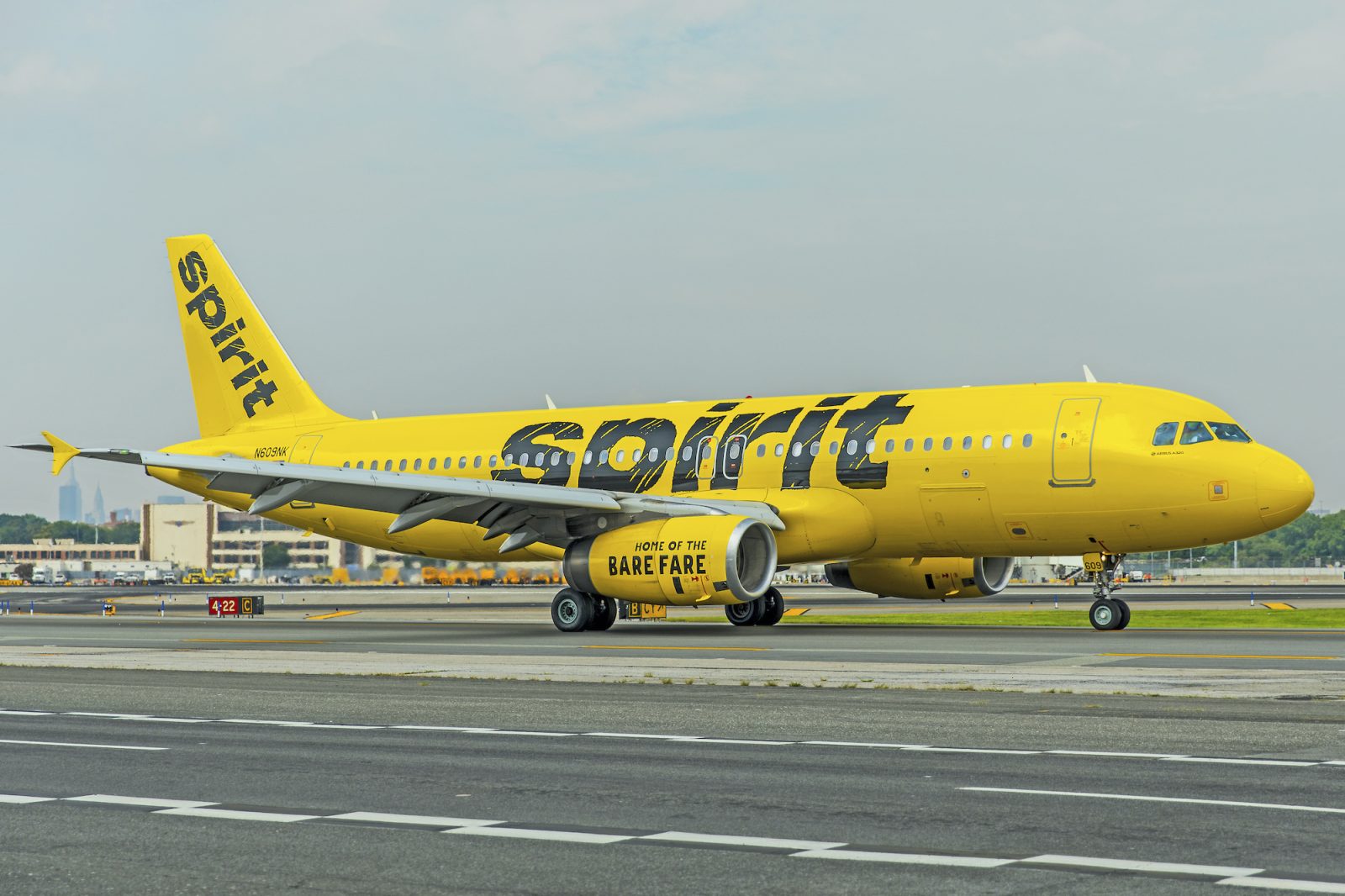
A Spirit A320 in New York. (Photo: AirlineGeeks | William Derrickson)

Ultra-Low-Cost Carrier (ULCC) refers to a carrier that doesn’t offer any amenities or services with their fares. ULCCs often receive harsh and significant criticism here in the U.S., and I have made every effort to avoid traveling on them until this point. However, I have been curious about why people disliked them and how they have survived the market. Therefore, I set out to fly on as many of them as possible in a single day to understand what they are and which one is the worst of the worsts.

I flew Frontier, Allegiant and Spirit on individual, separate occasions between Las Vegas and Santa Ana, Calif. in early May 2022. I chose these three carriers because they all operate the Airbus A320 Family exclusively and are comparable in fleet size on this route.

This report will discuss the best ways to book these flights, the seats, onboard experience and the overall impression of flying on a budget.

Booking

I booked all my flights through each carrier’s website and spent about the same for each flight. The booking process is very similar across all three websites. They all made multiple attempts to remind you of all the À la carte options. The Spirit flight has a ‘Book on Google’ option, which saves you the trouble of navigating all the up-sale attempts. However, the option only provides the ability to reserve a seat. Anyone who wants to purchase luggage allowances will miss out on the discount offered on the carrier’s website.

Despite providing the same À la carte options, the three ULCCs priced them very differently.

Seat Reservation

All three carriers charge a fee for seat reservations. If a passenger chooses not to pay for seating, they will be assigned a seat at check-in. The three ULCCs all offer some level of premium seating. While Spirit has the famous Big Front Seat, the other two airlines only offered seats with slightly more legroom. For consistency in the comparison, my travels stuck to each airline’s most basic seats.

Seating charges are priced differently depending on many factors, such as route, location, etc. Since all three of my flights are on the same day, same route and were booked simultaneously, I thought it’d be interesting to see how the seating fees stack up against each other.

Since I did not pay for seat reservations when I booked the flights, I was able to see the seating charge change as my flights drew near. Despite stating they are offering the best rates at booking, Frontier and Spirit dropped prices on seats until check-in. Allegiant’s charges were consistent from the time of booking to check-in. I missed checking Frontier’s pricing at check-in because its app does not automatically show the seat map.

Allegiant’s option provides the most affordability and range. One can avoid a middle seat for as low as $6 or reserve a middle seat in the rear for $1 on the Las Vegas-based carrier’s metal. In comparison, the cheapest seat on Frontier was $43. However, the seats on the Denver-based carrier are wider than those on the other two. The airline also charges a premium for their middle seats because they provide even more width.

Spirit’s Big Front Seat looks like a steal as far as premium seating is concerned. It’s comparable in pricing with the other two airlines’ offerings but offers a real premium experience by domestic flight standards.

Allegiant Spirit Frontier
Main Cabin Seat – at booking $1-$21 $18*-$27* $43-$78
Main Cabin Seat – two weeks before flight $1-$21 $15-$23 $22-$34
Main Cabin Seat – at check in $1-$21 $9-$10 Unknown
Main Cabin Seat – after check-in NA $28 Unknown
Premium Seat – at booking $24-$25 $    34 $ 102
Premium Seat – two weeks before flight $24-$25 $    32 $61-$62
Premium Seat – at check in $24-$25 Unknown Unknown
Premium Seat – after check-in NA $ 45 Unknown

Baggage

As you’d expect from a ULCC, none of the carriers has free baggage allowance beyond one personal item. All of them provide some level of discount when you pay for bags at booking. Carry-ons are more expensive than checked bags since they’ll slow down boarding. On the day of my flights, Allegiant offered the best deal for baggage.

Allegiant Spirit Frontier
Carry-on Bag – at booking  $    15.00  $    36.00  $    59.00
Carry-on Bag – at check-in  $    45.00  $    51.00  $    63.00
Carry-on Bag – at gate  $    50.00  $    65.00  $    60.00
Checked Bag – at booking  $    25.00  $    30.00  $    54.00

Other Fees

Flexible Booking

All three airlines’ flexible booking option waives a one-time flight change fee. Allegiant’s option stands out among the three because it allows changes up to 1 hour before the departure.

Agent Fee

Unlike traditional airlines, most ULCCs will charge you for agent services at the airport. While Frontier charges a fee at most airports, the agent assistance at Las Vegas was free for my flight.

Pet Fee

Allegiant’s booking system promoted its Pet in Cabin option. Unlike most carriers that charge a per direction fee, the Las Vegas-based carrier charges $50 per pet per flight. It is a good option for traveling with a pet if there’s a nonstop flight on the airline.

Allegiant Spirit Frontier
Flex Ticket $    29.00 $    45.00 $    19.99
Priority Boarding $       8.99 $       5.99 $       8.99
Agent Fee NA $    10.00 $     10.00*
Pet $    50.00* $ 110.00 $    99.00

Preflight

I used each airline’s app for checking in. All three apps offered similar experiences as the websites. Allegiant’s check-in seems stricter than the other two players since it won’t allow any further changes to either seat or baggage once checked in.

Spirit’s app made another last-ditch effort to sell the Big Front Seats an hour before the flight. The notification worked well since all the seats were filled by the time I boarded the airplane.

Frontier’s boarding pass automatically popped up when I arrived at Las Vegas airport. I thought that was a nice touch from them.

Boarding

All three airlines have assigned seating, so the boarding areas are similar to the mainline carriers’. Frontier’s boarding area stands out from the three, with multiple banners reminding passengers to pay for carry-on bags in the app. Spirit and Frontier stated they would strictly enforce personal item sizes in the pre-boarding announcements.

The ULCCs are notorious for up charging carry-on baggage fees at the gate. However, they also thrive on fast turnover times. Therefore, I was interested in seeing the balancing act from the three carriers. I did not see anyone get checked for personal item size. In all fairness, most people seem to follow the personal item rules well. At the same time, there are certainly a small number of bags that are very unlikely to fit under the seat on each flight.

My backpack was oversized for the Allegiant flight, because I failed to check Allegiant’s requirements and packed my bag based on Frontier’s and Spirit’s requirements. Allegiant’s item limit is 16 x 15 x 7 inches, much smaller than the limit of 18 x 14 x 8 inches from the other two airlines. While my bag is oversized in two dimensions by the Las Vegas-based carrier’s standard, it would fit under the seat. I can only assume that’s why the gate agent let me board without any issue.

The three airlines use a similar boarding methodology. Passengers with carry-ons or priority boarding will board the airplane first. The rest of the passengers are generally divided into groups, with the rear, boarding earlier than the front.

The Denver-based carrier seems to have the fastest boarding time among the three, boarding roughly ten people per minute, even though it has the narrowest aisle. The Miramar-based carrier is a close second at nine people per minute. However, the Las Vegas-based carrier was only on par with the mainline carriers, which boarded around six people per minute.

I measured the boarding time from the start of boarding until no continuous stream of passengers boarding the airplane. Therefore, the numbers above are rough estimates rather than scientific measurements. However, it appears the higher baggage fees are deterring people from bringing carry-on bags which accelerated boarding.

Overall, the Denver-based carrier is the best in setting expectations for passengers and boarding speed. Another thing to note is that the crews on all these flights are friendly. I saw all of them assisting people and helping customers with seating arrangements.

Cabin

The three carriers’ cabins look largely indistinguishable, except for the orange-colored strips underneath the luggage bins on Allegiant’s airplane. Based on the overhead panel design, the Las Vegas-based airline likely carried over the bins from the plane’s original operator, easyJet. Both carriers shared a similar shade of orange in their paint schemes, so it made sense for the used-plane owner to forego refurnishing the bins.

Interestingly, the company’s new airplanes inherited this look. Spirit also introduced a new cabin look that showcased its color scheme in the seam underneath luggage bins. However, the aircraft I was on did not feature the new branding components.

In contrast, mainline airlines usually have custom-designed partitions near the entrance area and between different classes of services. The lack of character shows how little effort the ULCCs have spent to stand out from their competitions. It is in line with Allegiant’s CEO’s comment that their customers do not care about their interiors.

All three airlines have lavatories in both the front and back of the cabin. The lavatories in front are identical. Frontier and Spirit use the space flex lavatory, which consists of two toilets in the back. Allegiant only had a single more spacious lavatory. However, the single lavatory configuration was on a smaller airplane than the latter. The space-saving design has become very popular among mainline carriers as well. The experience is similar to what one would get from flying on a full-service airline.

Seats

Both Frontier and Spirit have debuted upgraded seats in the main cabin in recent years. Unfortunately, none of the aircraft I flew on featured the new seats. All three flights carried Acro Series 3ST seats, and none of them have in-seat power.

While the pitch on all of them is identical and significantly smaller than traditional airlines’, one doesn’t necessarily feel cramped. The slim seat cushion and the pre-reclined seatback give more space to the passenger. The legroom is 10 inches at the narrowest point. Still, the actual space matched my most recent flight on Delta, because the seat curvature provides nearly two inches of extra room.

As many people have mentioned before, slim cushions are bearable for short hops but not enjoyable on longer flights. I started feeling uncomfortable on my second flight, because there was not enough cushioning between me and the seat shell.

Surprisingly, none of the airlines applied any branding component on the seats. The seams on Allegiant’s and Spirit’s seats are even identical.

Unlike tray tables on traditional seats, the tray tables on the Acro seats are aluminum. It provides the needed joint strength and reduces the part count. The weight penalty is negligible since the tables are smaller than the mainline seats’. The tray tables also printed safety messages on the tables rather than using labels to save more weight.

Even though the base seats are essentially the same, the three carriers customized the seats slightly differently. There are clear impacts on the experience from these customizations.

In-flight Service

Pre-flight announcements and checks are professional and on par with regular airlines. On the day of my flights, the Spirit crew appeared to be the most energetic. They also put some personal spin on the announcement.

The Florida-based carrier’s crew mentioned the flight had WiFi connectivity during the pre-flight announcement. However, I did not remember to check WiFi since there were no other reminders of WiFi connectivity onboard or announcement in-flight. Other trip reports have suggested the internet option is reasonably priced and fast.

All beverages and snacks come at a price on the no-frills airlines. You can find a hard copy of the menu on Allegiant and Frontier flights in the seat pocket in front, while Spirit removed paper menus for weight savings. Digital menus are available on each airline’s apps except on Frontier’s.

The beverage and snack offerings on all three flights are comparable, with minor differences in pricing. In comparison, Southwest’s beer options are between $6 – $7, while all three US majors sell beer for $8.

Allegiant Spirit Frontier
Soda $       3.00 $       3.50 $       3.25
Beer $       8.00 $       9.00 $       9.00
Snack $       4.00 $       4.50 $       4.50


The three airlines also took different approaches in selling the products on these short hops. Spirit was the only one that took a galley cart out to make the most sales. Both Allegiant’s and Frontier’s crew announced the service once we reached our cruising altitude and made a few sales on demand by asking people to press the call button. While Spirit is the most aggressive in pursuing extra revenue from in-flight services, they managed not to do it obnoxiously. I did not feel bothered as I have on other LCCs.

Other Factors

ULCCs are also infamous for flight delays and cancellations. I flew on a fair-weather day in and out of the carriers’ focus city, so my flights were on time. However, the airlines schedule the airplanes’ turnover times incredibly short. One delay can quickly ripple through the schedule. My first attempt to fly on these three airlines fell through because no suitable replacement was available when Frontier canceled the first leg of my trip.

Post Flight

I was expecting this report to an end after completing my flights. However, it’s worth mentioning Allegiant sent a promotional email with various discounts for a future flight/vacation package. The discounts were valid for 72 hours from the day after my flight and can be applied to travels two months from my travel date. It is an interesting gesture to get people flying more with the airline.

Summary

I set out on this trip expecting disorganized boarding processes, cramped seats and constant in-flight sales. I came off these flights without feeling very different from any other of my travels. There is unease about whether the gate agent will check my backpack for size. And the seats are by no means comfortable. However, there shouldn’t be any major surprises when you don’t expect to get services such as flying first class.

Overall, the ULCCs provide a viable option for traveling short routes. If I ever fly with them again, I would pay for luggage at booking and maybe wait to select my seats if I’m traveling alone.

One more thing

I started planning this trip before Frontier and Spirit announced their plans for a merger. My objective changed slightly to see what the market would lose should the merger go through after that announcement. It turns out that not much will change. The two airlines already offer very similar products. Their pricing for add-ons is more aligned with each other than with Allegiant or another airline. Additionally, they both have some of the youngest fleets in the country. A merger between the two can avoid a lot of the operational chaos experienced by other companies and may create a true market-disrupting force.


AirlineGeeks.com Staff

AirlineGeeks.com was founded in February 2013 as a one-person blog in Washington D.C. Since then, we’ve grown to have 25+ active team members scattered across the globe. We are all here for the same reason: we love deep-diving into the fascinating realm of the airline industry.

Qatar Civil Aviation Authority Chooses Frequentis to Enhance its Airspace Communications Ahead of FIFA World Cup

Qatar Airways A350-1000
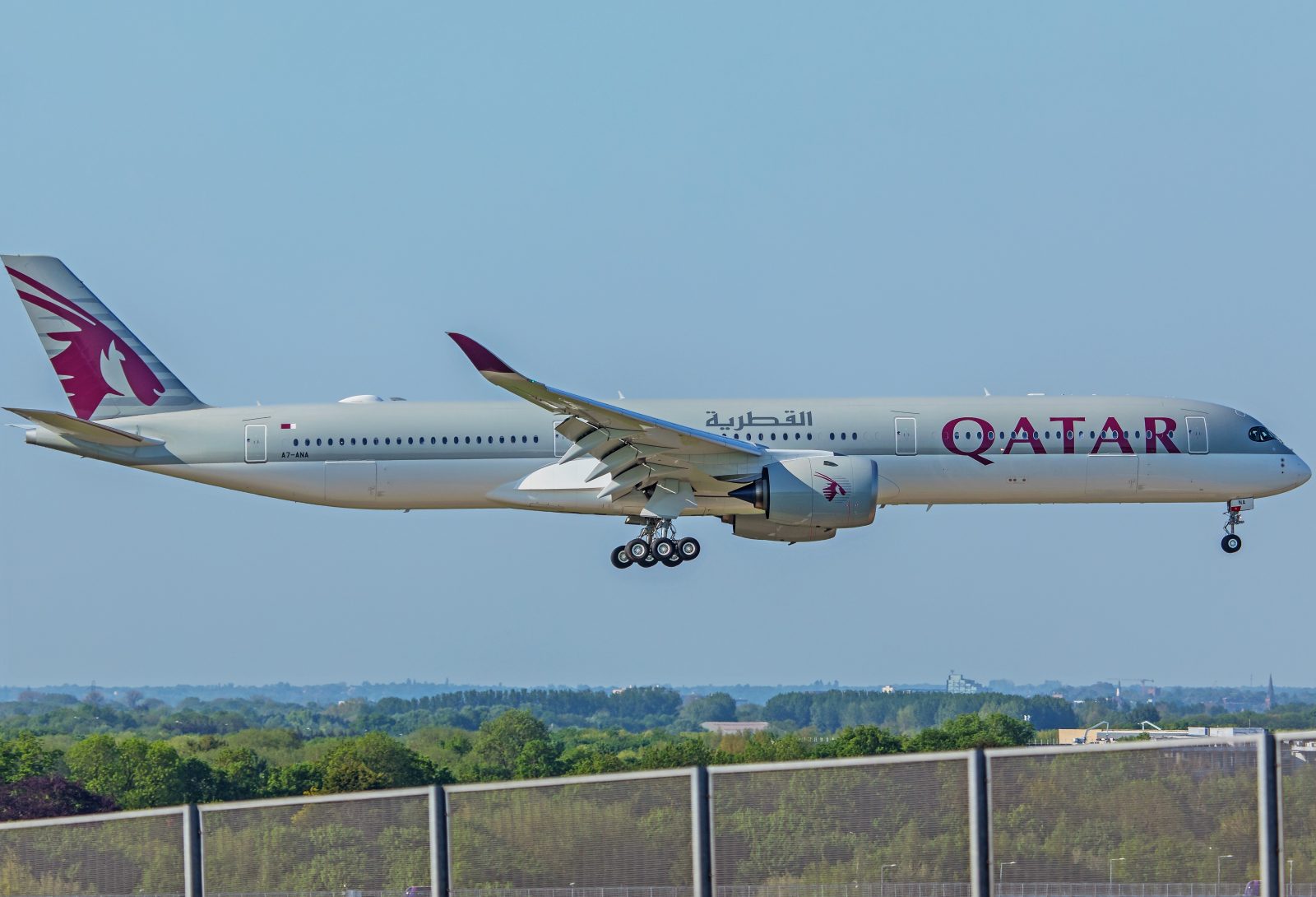
A Qatar A350-1000 in London (Photo: AirlineGeeks | William Derrickson)

FIFA World Cup is around the corner and as preparations continue in Qatar, the state’s Civil Aviation Authority (QCAA) has selected Frequentis to upgrade its existing voice communication system (VCS) and modernize its air traffic control towers.

This is to help meet air traffic demand resulting from the World Cup in the country in 2022. The tournament expects to significantly increase the number of visitors to the region, with daily air traffic numbers anticipated to increase from 700 to 1800 movements.

QCAA is upgrading both its main and back VCS systems to enhance airport operations and maintain safety as airspace demands change. The backups will benefit from Frequentis’ next-generation VHS, X10, to increase resilience. In addition, QCAA will also implement Frequentis electronic flight strips in air traffic control facilities to support air traffic controllers ineffectively managing the increased workload and maintaining safety during peak air traffic movements.

“Frequentis has provided QCAA with reliable ATM systems since the 1990s. Our electronic Flight Strips integrated with the ATM system marks the next generation of tower automation, which will allow QCAA to handle the expected, significant air traffic increase,” noted Josef Kutschi, Managing Director Frequentis Middle East.

Both the digitalization of paper strips and the implementation of the IT-based VCS, X10, fulfill the latest demands for tower digitalization, paving the way for automation and efficiency and improving controllers’ situational awareness and workflows.

“The X10 architecture allows for a flexible, scalable, and modern approach to air traffic management and smart strips an essential tool to support controllers in their challenging role,” says Hannu Juurakko, Frequentis Vice President ATM and Chairman of the ATM Executive Team said in a press statement. “We are pleased to be working with QCAA on this modernization the added benefits of X10 will fully prepare QCAA for its upcoming airspace demands.”

Headquartered in Vienna, Frequentis, is a global supplier of communication and information systems for control centers with safety-critical tasks.

Victor Shalton

Victor Shalton's love for aviation can be traced to when he was 11-years-old. As a seasoned aviation writer, he takes pride in providing the best aviation coverage around the globe and is passionate about advancing his skills in the aviation space. In addition, he loves travelling, writing, arts and while his speaking engagements have taken him around the world, he is proud to call Nairobi home.

JetBlue Urges Shareholders to Vote Against Frontier’s “Inferior” Offer

A series of JetBlue tails (Photo: JetBlue)

On Monday, JetBlue set in motion a second attempt to merge with Spirit — the ultra-low-cost carrier — through the means of a hostile takeover. This is the carrier’s second attempt to win over Spirit’s shareholders.

The move from JetBlue comes just weeks after their initial offer was rejected by Spirit’s Board of Directors due to the “unacceptable level of closing risk” highlighted by the carrier.

The Long Island, N.Y.-based carrier’s new offer proposes $30 per share in cash, an offer equivalent to $3.2 billion, to Spirit stockholders. The most recent offering has a reduced price due to Spirit’s unwillingness to share financial information. Although lower, JetBlue said its April 5 offer of $33 per share is still available and states they are open to “negotiate in good faith a consensual transaction at $33, subject to receiving necessary diligence.”

JetBlue’s initial $3.6 billion bid was rejected by Spirit’s board on May 2, as it was unlikely that the deal was capable of clearing antitrust regulators. The merger also faces scrutiny from the ‘Northeast Alliance’ pursued by JetBlue and American Airlines. This alliance is under the microscope of the U.S. Government which has since sued to stop said deal from happening.

Spirit said its board would “carefully” review JetBlue’s offer with plans to inform shareholders of the board’s decision within 10 business days. In the meantime, Spirit has encouraged its shareholders to take no action at this time.

JetBlue remains in a bidding war with Frontier Airlines. Spirit shareholders are scheduled to vote on June 10 on the Frontier bid, which is favored unanimously by the Spirit board. Compared to JetBlue’s current $3.2 billion offer, Frontier’s cash-and-stock offer was valued at $2.9 billion when initially announced in February, however, Frontier’s shares have dropped 30 percent since, reducing the value of the deal.

Amid the hostile takeover bid for Spirit, JetBlue asked shareholders of the low-cost carrier to reject a proposed acquisition by Frontier.

In a letter to Spirit shareholders, JetBlue’s CEO Robin Hayes said, “JetBlue offers more value — a significant premium in cash — more certainty, and more benefits for all stakeholders. Frontier offers less value, more risk, no divestiture commitments, and no reverse break up fee, despite more overlap on nonstop routes and their own regulatory challenges.”

Hayes goes on to state, “Acquiring Spirit has been a strategic objective of JetBlue for many years and, as such, we were disappointed that the Spirit Board of Directors (the “Spirit Board”) elected not to have any discussions with us prior to the announcement of Spirit’s transaction with Frontier Group Holdings, Inc. (“Frontier”).”

In a rather interesting attempt to make a case to Spirit shareholders, JetBlue launched a website, giving individuals the opportunity to vote against the Frontier deal. Through overuse of the words, “Inferior” and “Superior”, the question still remains whether or not this will be effective for JetBlue’s efforts in taking over Spirit.

Chase Hagl

Chase Hagl grew up in Twin Falls, Idaho. His love and passion for Aviation landed him in Orem, Utah where he obtained a B.S. in Aviation Management with a minor in Business Management from Utah Valley University. Chase currently works as a flight attendant in Charleston, SC and is also the primary Inflight ASAP ERC representative for startup airline, Breeze Airways. His experience in the aviation industry spans back four years, working in areas including agriculture application, customer service, maintenance, and flight ops. In his free time, Chase enjoys road biking, astronomy, and flying.
Sign-up for newsletters & special offers!

Get the latest stories & special offers delivered directly to your inbox

SUBSCRIBE

Uh-oh! It looks like you're using an ad blocker.

Our website relies on ads to provide free content and sustain our operations. By turning off your ad blocker, you help support us and ensure we can continue offering valuable content without any cost to you.

We truly appreciate your understanding and support. Thank you for considering disabling your ad blocker for this website