








Stories

Southwest Airlines Announces WiFi Changes, In-Seat Power Additions To Come

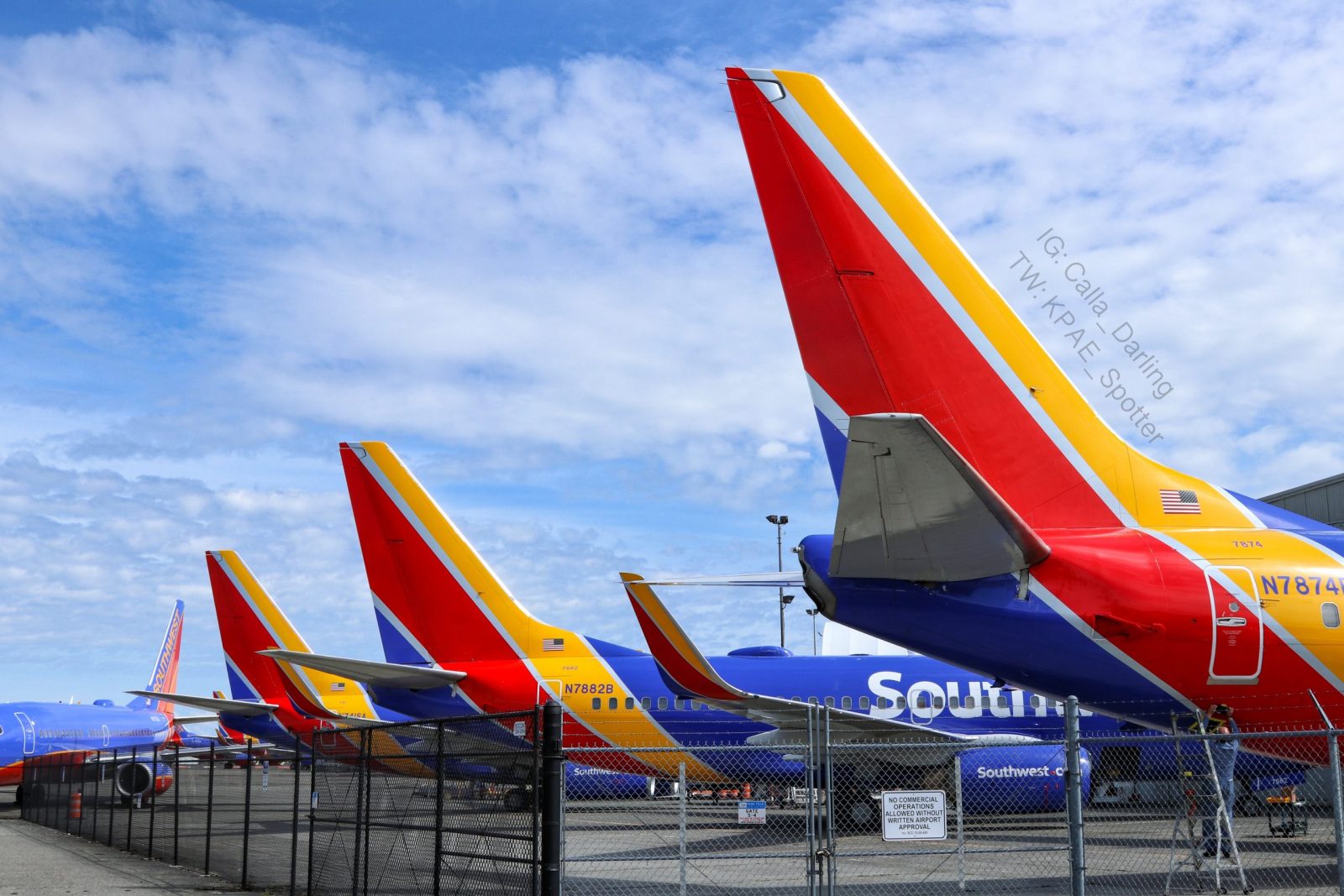
Southwest 737s
Southwest Boeing 737s at Paine Field. (Photo: AirlineGeeks | Katie Zera)

Southwest Airlines on Wednesday announced plans to enhance the customer experience for its passengers moving forward, providing a long list of upgrades to come soon. The plan comes at a hefty price tag of two billion dollars and will incorporate changes to things such as Wifi, overhead bins, power ports and other pieces of the onboard product.

Southwest Airlines has trailed behind its competitors for some time now when it comes to the modernization of its cabins. Passengers have quickly come to learn to charge their phones and surf the web before their flight with the Texas-based carrier, because one could expect a questionable WiFi connection and no access to in-seat power. However, Wednesday’s announcement pledges to fix that by providing its guests with notable upgrades.

“You can never stop working to get better, and as our beloved Founder Herb famously said, ‘If you rest on your laurels, you’ll get a thorn in your butt!’ We have a long and proud history of offering Legendary Customer Service and warm Hospitality, and we have bold plans and significant investments to modernize and enhance the Southwest Experience,” said Southwest Airlines Chief Executive Officer Bob Jordan.

At the forefront of their to-do list, Southwest looks to enhance inflight connectivity. The carrier began testing inflight Wifi on its aircraft in 2009, through a partnership with Row 44, a company that specialized in the offering of broadband internet systems for airplanes but was bought out by Global Eagle Acquisition Corp.

“Top of our list is giving our Customers reliable connections in the air to those things that are important and accessible to them on the ground,” said Southwest Senior Vice President and Chief Marketing Officer Ryan Green in a statement. “We’re investing in our onboard connectivity and bandwidth available to each Customer with upgraded technology that’s now installing across our existing fleet, a strategy to diversify our WiFi vendors on upcoming aircraft deliveries, and plugging Southwest Customers into in-seat power to keep them charged while in the air.”

In partnership with legacy connectivity provider Anuvu, testing is already underway. Southwest looks to immediately double the current bandwidth offering on some of their aircraft and up to 10 times the bandwidth on 350 aircraft by the end of October.

Another selling point for the carrier will be the long-overdue addition of in-seat power ports on their aircraft. Starting with their Boeing 737 Max, Southwest will begin adding both USB-A and USB-C power ports to every seatback, starting early next year.

“The ability to keep your devices charged while you are connected inflight is a request that we’ve heard consistently in ongoing conversations with our customers,” said Tony Roach, the airline’s Vice President of Customer Experience and Customer Relations, in a release. “With so much that our Customers love about doing business with Southwest, we’re constantly listening to our Employees and our Customers for improvement opportunities, and we’re excited to share some additional news and updates on this ongoing work.”

A less distant change passengers can expect is the enhancement of in-flight entertainment options. The airline has plans to double its selection of movies as well as introduce an improved flight tracker with “3D and cockpit views.”

Through Southwest’s unique boring process, it is not uncommon for guests in boarding group C to be left with little to no overhead bin space for their carry-on luggage, leaving them with no other option but to check it. The carrier looks to fix this problem through larger overhead bin space, a change that will accompany aircraft deliveries beginning early next year.

One last notable change is the new alcohol options onboard. It will include a Bloody Mary mix and new options for Hard Seltzer and Rose. The additional options will be rolled out in September, later this year.

“We listen to our customers, and their insights help us deliver on and exceed their expectations,” Jordan said. “Behind these commitments stand the legendary People of Southwest Airlines—ready to welcome Customers onboard with warmth, Hospitality, and LUV.”

Chase Hagl

Chase Hagl grew up in Twin Falls, Idaho. His love and passion for Aviation landed him in Orem, Utah where he obtained a B.S. in Aviation Management with a minor in Business Management from Utah Valley University. Chase currently works as a flight attendant in Charleston, SC and is also the primary Inflight ASAP ERC representative for startup airline, Breeze Airways. His experience in the aviation industry spans back four years, working in areas including agriculture application, customer service, maintenance, and flight ops. In his free time, Chase enjoys road biking, astronomy, and flying.

Avianca, GOL Set to Become Part of Same Holding Company

A GOL 737-800 landing in Porto Alegre, Brazil. (Photo: AirlineGeeks | João Machado)

In a statement issued the morning of May 11, the main shareholders of Colombian airline Avianca and the controlling shareholder of Brazilian airline GOL announced the signing of an agreement to create an air transport group under a holding company structure called Abra Group Limited, which will bear the trade name Grupo Abra.

The agreement, subject to regulatory approval and certain closing conditions, is expected to be finalized in the second half of this year.

As a result of the recently completed transaction between Avianca and Viva, the Group will also have the economic rights to the latter’s operations in Colombia and Peru but will not control them.

In addition, the group also incorporates a minority interest in SKY Airline, with a loan convertible into shares in 2026.

The group will be co-controlled by the main shareholders of Avianca and the majority shareholder of GOL, and will be led by Roberto Kriete, who will serve as Chairman of the Board of Directors, and Constantino de Oliveira Junior, who will serve as Group CEO.

An Avianca A320neo. (Photo: AirlineGeeks | Ben Suskind)

Adrian Neuhauser, currently President and CEO of Avianca, and Richard Lark, currently CFO of GOL, will serve as co-presidents of the Group and will retain their current positions at their companies.

Roberto Kriete, Chairman of the Group’s Board of Directors, said, “Our vision is to create an airline group capable of meeting the challenges of the 21st century and enhancing the flying experience for our customers, employees, partners, and the communities in which we operate. Our customers will benefit by having access to the best fares, more destinations, more flight frequencies, more convenient connections, and the ability to earn and use points through airline loyalty programs. In addition, they will be able to enjoy better benefits and access to superior products and services.”

Constantino de Oliveira Junior, CEO of the Group, said, “This agreement puts Abra’s airlines in a unique
Abra airlines in a leadership position in the region’s air transport market, serving a population of more than one billion people and a GDP of close to US$3 trillion – generating capacity and revenue growth opportunities. Our particular and unique company structure will allow each airline to pursue its results while maintaining the independence of its brands, talent, team and culture; and it will provide employees with more opportunities for personal and professional growth at every stage of their careers.”

This article was written by Pablo Díaz for Aviacionline.

Parker Davis

Parker joined AirlineGeeks as a writer and photographer in 2016, combining his longtime love for aviation with a newfound passion for journalism. Since then, he’s worked as a Senior Writer before becoming Editor-in-Chief of the site in 2020. Originally from Dallas and an American frequent flyer, he left behind the city’s rich aviation history to attend college in North Carolina, where he’s studying economics.

Airline Geeks Invites You to Join Us at the Central Coast Airshow

A Paul Bennet plane in action. (Photo: Duncan Fenn)

Across the globe, AirlineGeeks and you – our community – are joined by one love: the love of flight. That love takes many forms, from airlines to aerobatics. For this reason, we are thrilled to announce we will be supporting on of Australia’s biggest air events this year – the Central Coast Airshow.

For two days, May 14 and 15, Airline Geeks will have their eyes glued to the Central Coast skies as heritage fighters share the sky with the newest of their kin. We expect incredible aerobatics, formation flights, and fast flyovers from Australia’s newest F-35 Lightning II.

But we want more: we want you to join us for this incredible event. As our first Australian sponsorship, we want to celebrate Australian aviation and this AirlineGeeks milestone with you.

As part of the Central Coast Airshow line-up, there will be classic fighters, including variants made just for Australia. These include the iconic Spitfire, the CA-18 Mustang, an improved Australian version of the P-51 Mustang, used in post-WWII Japan for Royal Australian Air Force occupation duties, the P-40 Kittyhawk, immortalised for their response to the attack on Pearl Harbour, the Grumman Avenger, and the CAC Boomerang – an Australian fighter produced rapidly to fill an Australian fighter gap and without a single prototype.

Another heritage favourite, the Lockheed Hudson, will also make an appearance. It’s role in anti-submarine patrols and armed reconnaissance was essential to Australian defence in World War II.

Moving forward, we see the development of more modern trainers, with action from a T-28 Trojan and an L-39 Albatross – a contrast of trainers from both sides of the Cold War. Joining these trainers will be the highly-manoeuvrable Zivko Edge 450 and the Paul Bennet Airshow SkyAces – a civilian display team of the highest standard.

The highlights, for many, will be the Royal Australian Air Force Roulettes – the one and only RAAF display team – and the Lockheed F-35 Lightning II. The new Australian fighter, replacing the now retired F/A-18, will be demonstrating its performance, speed and volume in the first exclusive display since the F/A-18 retired at the end of last year.

AirlineGeekse will be sharing photos, interviews and reviews with our audience.

With the weather mostly forecast as clear, it should be a fantastic weekend with planes, noise, and that intoxicating smell of jet fuel. If you can make it (we extend this invitation to those beyond Australia), we’d love your company as we lift our eyes ever upward and share in our true love – our love of flight.

AirlineGeeks.com Staff

AirlineGeeks.com was founded in February 2013 as a one-person blog in Washington D.C. Since then, we’ve grown to have 25+ active team members scattered across the globe. We are all here for the same reason: we love deep-diving into the fascinating realm of the airline industry.

Royal Air Maroc, Emirates Anounce Codeshare Partnership

Royal Air Maroc's first 787-9 Dreamliner. (Photo: AirlineGeeks | Katie Bailey)

Royal Air Maroc and Emirates Airlines have signed a codeshare partnership that aims to boost flights between Dubai, Casablanca, and other destinations.

The agreement announced on May 10 in Dubai will be valid from the end of the month, and will cover a total of 209 combined destinations, “providing more travel possibilities and choice of air connections to customers of both companies on their flights connecting Dubai Airport and Casablanca-Mohamed V, as well as to other destinations,” according to the airline.

The agreement will allow passengers to benefit from “more competitive fares, seamless connections and easier transfer of luggage to their final destination,” the statement continued.

Emirates customers will have access under the EK code to 17 Moroccan destinations other than Casablanca, as well as to 63 international destinations “including a vast network in North Africa, West Africa, and Central Africa covering 25 metropolises.”

An Emirates A380 at San Francisco International Airport (Photo: AirlineGeeks | Parker Davis)

Royal Air Maroc customers, on the other hand, will be able to access a vast Emirates network under AT code in addition to the Dubai hub, which has more than 130 destinations including 60 cities in the Middle East, the U.S., West Asia and East Asia.

“We are very pleased to conclude this important partnership with Emirates which will strongly contribute to the strengthening of our air traffic and will offer our passengers a wide range of destinations as well as a better customer experience thanks to optimized connections and end-to-end check-in. end, with international airport assistance within the networks of the two companies,” Hamid Addou, Chairman and CEO of Royal Air Maroc, said in the statement.

For his part, Adnan Kazim, Commercial Director of Emirates Airline, said he was “delighted to strengthen our partnership with Royal Air Maroc through this code sharing and thus offer our customers a very wide selection of destinations across Morocco. , as well as a large choice of destinations in Africa. This will help strengthen our network connectivity, and provide business and leisure travelers with greater choice and convenience when connecting between our two airlines. We are determined to expand our collaboration to deliver greater benefits to our customers  .”

This new codeshare agreement coincides with 20 years of Emirates service to Casablanca, which has carried more than 3.4 million passengers between Dubai and Casablanca since 2002, “supporting the country’s tourism industry, developing trade routes, and making Moroccan culture and traditions known to the whole world”.

With Morocco reopening its borders in February, the country has regained 100% of its network in Africa — 21 destinations — and currently operates eight weekly flights to Casablanca.

In line with the carrier’s summer objectives, African passengers flying Royal Air Maroc will soon get complimentary language options as the company amplifies efforts to attract African customers onboard by making cabin announcements in certain African languages as well as recruiting African cabin crew whole offering African gastronomy, and incorporating it into everyday business.

Air Maroc will launch “very soon” a direct line linking Casablanca to Dubai, with four frequencies per week.

Victor Shalton

Victor Shalton's love for aviation can be traced to when he was 11-years-old. As a seasoned aviation writer, he takes pride in providing the best aviation coverage around the globe and is passionate about advancing his skills in the aviation space. In addition, he loves travelling, writing, arts and while his speaking engagements have taken him around the world, he is proud to call Nairobi home.

Contour Airlines Adds Service to Two EAS Cities Vacated By SkyWest

Contour Airlines
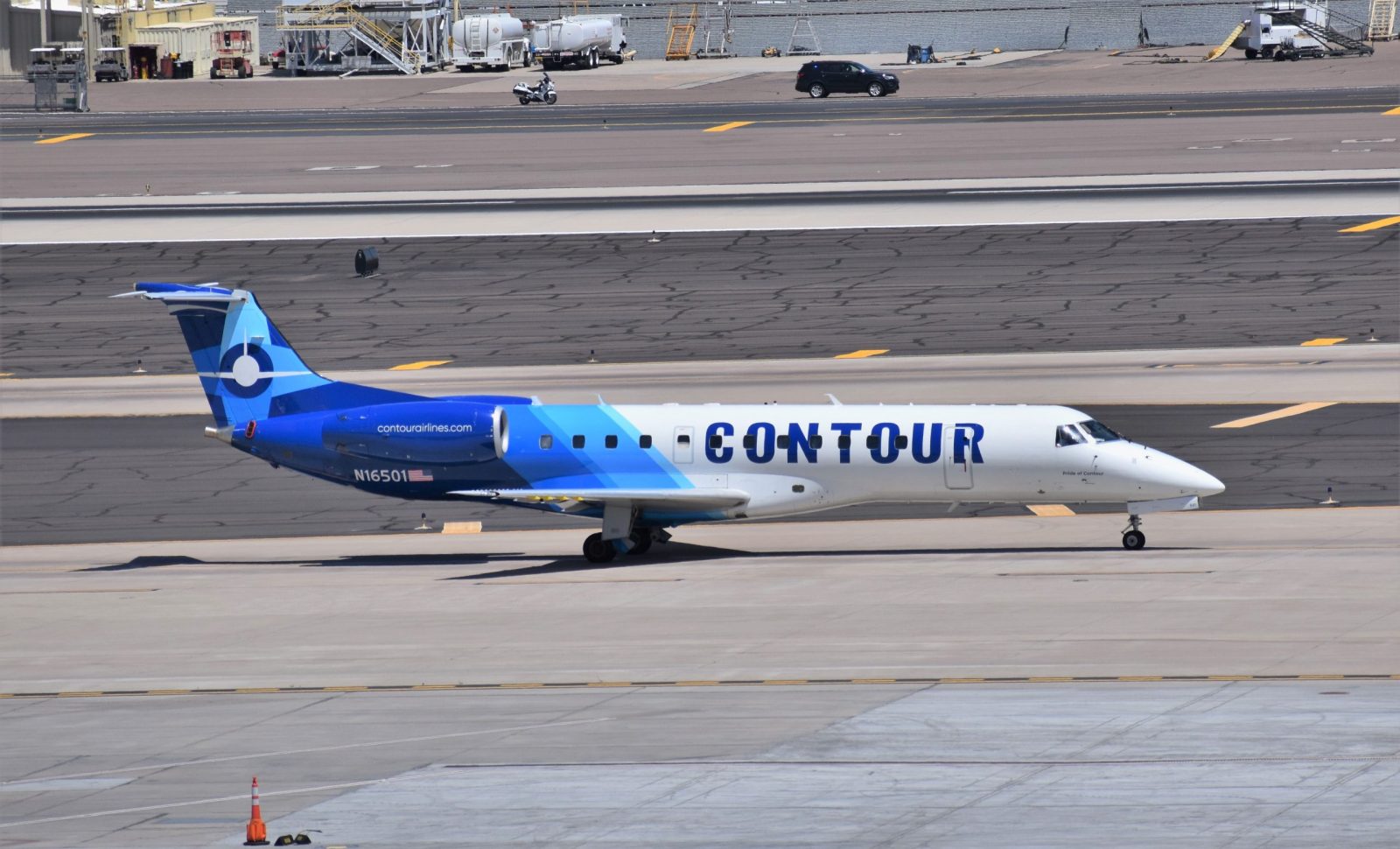
A Contour Embraer E135 nicknamed "Pride of Contour." (Photo: AirlineGeeks | Joey Gerardi)

The U.S. Essential Air Service has seen some strain recently as three airlines — the most recent carrier being Cape Air — requested to terminate at least two of their contracts before they were due to expire.

As a result, the government has been forced to look for other operators to fill those voids. It began to make progress on that front on Tuesday, as it was announced that Smyrna, Tenn.-based Contour Airlines has been awarded two former SkyWest contracted cities; Plattsburgh and Ogdensburg, both of which are located in northern New York. These two cities have had quite a turbulent past five months.

Back in January 2022, these were the first two communities SkyWest announced it would like to terminate, and its EAS bidding process began. Boutique Air was the only bidder for Ogdensburg, and Cape Air was the only bidder for Plattsburgh. Both communities rejected the bids as they failed to meet minimum seat requirements and would significantly reduce the number of available seats out of their respective communities.

The terminal building in Ogdensburg, N.Y. (Photo: AirlineGeeks | Joey Gerardi)

Both communities announced they would be looking into Alternate Essential Air Service (AEAS) options. The two programs are essentially the same except for a few key points. Perhaps the most important difference is that with AEAS, instead of awarding a contract to the airline and the federal government paying for the service, the government gives a grant to the community, and it’s up to them to pay the carrier and manage that relationship. There is also a lot more freedom in terms of route variability, and the airline can work directly with the community to meet their needs, rather than going through the government and submitting a proposal to make adjustments to the service.

Under the new proposals, each community will be receiving nonstop service to Philadelphia — which will also be a new city for Contour — onboard 30-seat Embraer E135s. The service to both communities is contracted to begin on July 1 and run until Sept. 30, 2024. Although the contract doesn’t say how frequently the flight will operate, it is assumed to be between 12 and 14 weekly flights as the communities have mentioned in the past.

In Plattsburgh, the subsidy will not exceed $4,187,568 for the first year, $4,271,320 for the second year, and a prorated portion of $4,271,320 for the remaining three months of the contract from July to September 2024, which will be $1,067,830. In Ogdensburg, the subsidy will not exceed $4,931,190 for the first year, $5,029,814 for the second year,
and a pro-rated portion of $5,029,814 for the remaining three months of the contract from July to September of 2024 which will be at a cost of $1,257,453.

With these three new airports, this will bring Contour up to a total of 19 destinations, 10 of which will be AEAS communities. Passengers in Plattsburgh and Ogdensburg will be able to enjoy American Airlines hub connectivity as the carrier offers interline and baggage agreements with the carrier.

This means neither community will lose the connection opportunities of a large airline. Rather, they will just be switching hubs from Washington D.C.’s Dulles International Airport to Philadelphia International Airport, with the principal connecting airline switching from United Airlines to American. This will be the third EAS/AEAS contract out of Philadephia, as American operates EAS flights to another northern N.Y. community from the Philadelphia hub, Watertown, located only 55 miles from Ogdensburg.

Joey Gerardi

Joey has always been interested in planes for as long as he can remember. He grew up in Central New York during the early 2000s when US Airways Express turboprops ruled the skies. Being from a non-aviation family made it harder for him to be around planes and would only spend about three hours a month at the airport. He was so excited when he could drive by himself, the first thing he did with his driver's license was get ice cream and go plane spotting for the entire day. He graduated from Western Michigan University in 2022 with a B.S. in Aviation Management & Operations and a Minor in Business, and currently works for a major airline in his hometown.

Airports in U.K. Encounter Increased Passenger Travel Demand, Long Queues

A Virgin Atlantic Boeing 747 taxis past Terminal Two at Manchester Airport (Photo: Manchester Airport)

Britons have started dusting off their passports and returning to the skies after the travel restrictions were lifted in March. However, the long queues at the airport have left the travelers frustrated.

According to local media, Manchester, U.K. Airport — one of the busiest airports in the country — has seen the long queues on Monday morning

The long queue on Monday morning was a sense of déjà vu for the airport. Manchester Airport has first seen the travel chaos in mid-March after the U.K.’s travel restrictions were scrapped. Karen Smart, the managing director of Manchester Airports Group, has stepped down as a result.

In March, frustrated passengers were forced to queue in the car park for passport control, security checks and check-in. Some passengers have waited for five hours to board a flight. In the early phase, the airport has admitted “the shortage of staff and recruitment challenges at present” and expect the situation couldn’t be solved for several weeks.

Airport staff across the country lost their jobs during the pandemic. Since the travel rules have been lifted, the airports have been struggling to hire new employees. Moreover, the new employees need to be trained before joining the operations. After the restrictions were eased, other airports in the nation such as London’s Heathrow Airport, London’s Gatwick Airport, London’s Stansted Airport and Bristol, U.K.’s airport have seen the long queues as well.

According to the Manchester, U.K.’s airport, 60 new employees have joined the operation in April, with a further 200 new staff starting working in May. Also, the airport said the security waiting time is improving with 90% of passengers taking less than 30 minutes to get through security checkpoints in the last two weeks.

Return to the Skies

“We want to make sure that customers get away on their travels, so everyone at Manchester Airport is focused on bringing in the extra resources we need to continue operating our full flight schedule,” Ian Costigan, Interim Managing Director of Manchester Airport said.

The passengers have been advised to arrive three hours before their departure flights but mentioned not to arrive earlier than three hours, it will cause the extra queues.

The airport also reported that the passenger volumes have returned to 79% of pre-pandemic levels, serving around three times more passengers each week than in January.

Also, Manchester Airport will carry out temporary measures to solve the current problems, including reopening Terminal Three, allowing additional overtime payments to employees, hiring hundreds of temporary staff and a new customer communication campaign.

In the meantime, Birmingham, U.K.’s Airport has been spotted the long queue outside the airport on Monday morning too. According to the airport, 15,000 passengers are expected on Monday, half of the passengers have booked flights departing around its “busy dawn peak”.

Republic Airways Requests Exemption From 1,500-Hour Rule To Address Pilots Shortage

Aircraft on the move at New York's LaGuardia Airport.
Aircraft on the move at New York's LaGuardia Airport. (Photo: AirlineGeeks | William Derrickson)

The airline industry has been worrying for many years about a possible upcoming shortage of pilots to fly all the aircraft needed to cover the networks of all carriers. With all the “baby boomers” approaching their retirement age, it was feared that there would not be enough new pilots to replace the ones ending their careers, as training programs are becoming increasingly expensive and requirements to step onto the seniority ladder in the cockpit are getting stricter.

In the U.S., a new requirement imposed by the Federal Aviation Administration (FAA) in 2009 increased the minimum number of flight hours needed to be completed by would-be commercial pilots from 250 to 1,500 as a result of the findings from the investigation of the 2006 Colgan Air crash just outside Buffalo.

This caused the training process to be much more time-consuming, increasing the time between the enrolment of candidates in a training program and the moment they can finally start earning money for the airlines.

In order to get some relief from this conundrum, U.S. regional carrier Republic Airways required an exemption from the FAA to allow their trainees to begin their careers in the cockpit after completing only 750 flight hours.

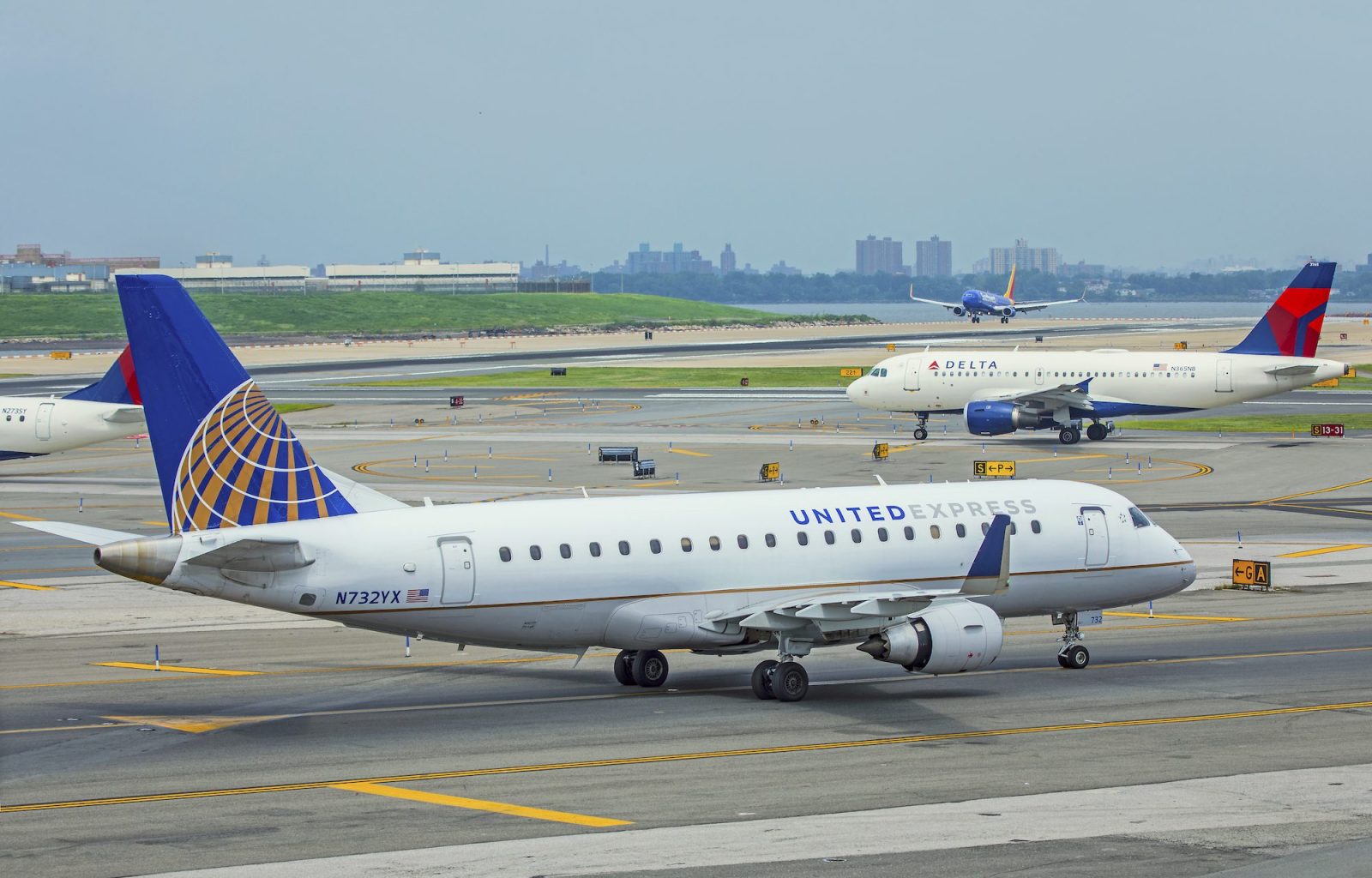
Republic Airways is an Indianapolis-based regional carrier operating services under Capacity Purchase Agreements for American Eagle, Delta Connection and United Express. Its fleet is composed of 218 Embraer 170 and Embraer 175 aircraft each capable of carrying 76 passengers or less, as is generally required by pilot union regulations governing the scope of operations performed by regional carriers on behalf of major airlines.

The rationale behind the request lies in an exception that is already allowed for former military pilots wanting to transition to a career in commercial aviation: these pilots are allowed to start piloting commercial aircraft under a restricted airline transport pilot certificate (“R-ATP”) after completing only 750 hours of flying, due to the rigorous nature of the training they had to undergo during their experience in the military.

“Republic Airways training is designed to meet or exceed the safety of the military R-ATP”

“Republic Airways is seeking an exemption […], which allows current or former U.S. military pilots to apply for a restricted airline transport pilot certificate (“R-ATP”) with a total of 750 hours. Specifically, Republic is asking that pilots who graduate from the rigorous closed-loop training program outlined are granted the ability to also apply for the R-ATP […] The exemption would allow a safe and more diverse group of aviators to enter the industry by providing an additional opportunity for underserved communities and demographics,” writes the letter from Republic.

The airline claims the structure of the training, described in great detail in the filing, “is designed to meet or exceed the safety of the military R-ATP. In addition, this program will support aspiring aviators from underserved communities and diverse backgrounds to pursue careers in aviation.”

Republic Airways, as well as other regional carriers operating under the same model, have advised in recent weeks they will need to cancel hundreds of flights and terminate services to dozens of remote airports due to their inability to staff flights properly.

There are no other countries in the world that impose a similar level of flying experience for prospective commercial pilots. The rule has been loudly criticized by stakeholders in the aviation industry: Jonathan Ornstein, chief executive of Mesa Airlines, another regional carrier operating on behalf of the U.S. major airlines, is among the loudest critics of the 1,500-hour rule. On May 9, he called it an “ill-conceived, ill-advised and politically motivated” rule “that by most independent accounts [has] nothing to do with the enhancement of safety,” Flightglobal reported.

The rule is also considered largely ineffective at providing pilots meaningful experience in managing complex situations in multi-engine aircraft since most of the time those 1,500 hours are logged flying as instructors on single-engine piston aircraft. Other countries around the world have embraced radically different approaches such as the Multi-crew Pilot Licensing (MPL), allowing pilots to obtain their commercial licenses through a combination of simulator practices and flying hours exclusively in an environment where there are multiple individuals in a cockpit as it always happens on large commercial aircraft.

Vanni Gibertini

Vanni fell in love with commercial aviation during his undergraduate studies in Statistics at the University of Bologna, when he prepared his thesis on the effects of deregulation on the U.S. and European aviation markets. Then he pursued his passion further by obtaining a Master’s Degree in Air Transport Management at Cranfield University in the U.K. followed by holding several management positions at various start-up carriers in Europe (Jet2, SkyEurope, Silverjet). After moving to Canada, he was Business Development Manager for IATA for nine years before turning to his other passion: sports writing.

Azul Reports 25 Percent Revenue Increase in Q1 2022

An Azul Embraer 190 lands in Campinas.
An Azul Embraer 190 lands in Campinas. (Photo: AirlineGeeks | João Machado)

On Monday, Azul presented its Q1 2022 report, which it showed a significant increase in revenue when compared with the same period in 2019. This comparison reflects the outstanding performance of the company, as 2019 is the last year of growth before the pandemic hit the industry.

When compared with Q1 2021, the revenue difference is 74,9% with a 26,4% increase in capacity. The first quarter of 2022 is the second consecutive quarter with revenues above the pandemic levels: an impressive result, as the Omicron variant hit the first part of the period.

Azul’s EBITDA reached R$592.7 million (USD 115 million) in the quarter, representing a margin of 18.6%. Excluding the impact of the Omicron variant, EBITDA would have been close to R$900 million, or USD 175 million.

The company states that considering the current demand, fuel, and exchange rate scenario, it expects to generate a record EBITDA of R$4 billion (USD 780 million) in 2022, even with the impact of the Omicron variant in the first quarter.

Azul also projects an EBITDA of R$5.5 billion (USD 1,07 billion) in 2023, compared to our previous record EBITDA of R$3.6 billion (702 million) in 2019.

The carrier said that total capacity is expected to grow 10 percent in 2022 when compared with 2019, and with a significant recovery expected in the business traveler segment, as it is already at 71% of pre-pandemic levels.

The cargo market has reached R$300 million (USD 58 million), a 37.8 percent higher than Q1 2021 and three-folding the results of Q1 2019. Boosted by pandemic conditions, cargo operations proved to be impressively relevant.

This story was originally published by Pablo Diaz on Aviacionline in partnership with AirlineGeeks

AirlineGeeks.com Staff

AirlineGeeks.com was founded in February 2013 as a one-person blog in Washington D.C. Since then, we’ve grown to have 25+ active team members scattered across the globe. We are all here for the same reason: we love deep-diving into the fascinating realm of the airline industry.

Lufthansa Adds More Long Haul Aircraft as 777-9 Delivery Woes Continue

A Lufthansa 787-9 mockup (Photo: Lufthansa Group)

The Lufthansa Group on Monday decided to move forward with the decision to purchase over a dozen more long-haul widebody aircraft with both passenger and cargo additions to its already extensive fleet. 

Prompted by continued delays in the delivery of the group’s expected Boeing 777-9s, Lufthansa’s Supervisory Board approved the purchase as they were advised that further delays would have the group receiving its first Boeing 777-9 aircraft in 2025 and then following into 2026.

Lufthansa was originally scheduled to receive the 777-9 type in 2023 but certification issues with the Federal Aviation Administration (FAA) has meant slow production and considerable frustration from some of the program’s customers. 

Lufthansa has decided to solve this issue by ordering an additional seven 787-9 Dreamliner aircraft along with seven 777-8F freighters and three 777-200F aircraft. Boeing has agreed to rework parts of the delivery plan with Lufthansa and the group will now start receiving 787s in 2023 when the 777-9s were supposed to arrive. Lufthansa’s first 787 has reportedly rolled off the line in South Carolina but the group may have to wait for an extended period due to ongoing delivery delays. 

This vote of confidence from Lufthansa should help to give Boeing the boost it has desperately needed after what has been one of the worst multi-year stretches in its history. Lufthansa Group CEO Carsten Spohr said in a press release, “We continue investing in more fuel-efficient, quieter and more economical aircraft that emit significantly less CO2 . This enables us to drive our fleet modernization. By purchasing these state-of-the-art aircraft, we again underline Lufthansa Group’s ability to invest in and shape the future. Once again, we are again taking the initiative and expanding our leadership role as well as taking responsibility for the environment – with premium products for our customers and a sustainable fleet.”

The new aircraft will sport the new Lufthansa business class that was recently introduced aboard the Airbus A350. The premium product features a 1-2-1 configuration with every seat having direct aisle access, something Lufthansa’s previous design notoriously did not feature. 

The airline is currently flying the new business class product on routes from Munich to the Canadian cities of Montreal, Vancouver and Toronto though more aircraft are expected to offer the new interior in the coming years. 

Ezra Gollan

Ezra Gollan is a student, photographer and aviation enthusiast based in New York, New York. He has spent over half a decade around New York City’s airports as a photographer.

ITA Airways Participates In SkyTeam Sustainable Flight Challenge

An ITA Airways Airbus A320 with the new livery at Leonardo Da Vinci International Airport. (Photo: ITA Airways)

ITA Airways, the Italian national airline, will participate in the Sustainable Flight Challenge organized by the SkyTeam alliance. ITA Airways, joined SkyTeam on Oct. 29, 2021, continuing the tradition of the former Italian flag carrier, Alitalia (which joined in 2001 as one of the first members).

SkyTeam, founded on June 22, 2000, by Aeroméxico, Air France, Delta Air Lines and Korean Air, is an airline alliance based at the World Trade Center Schiphol Airport near Amsterdam-Schiphol Airport in Haarlemmermeer, Netherlands.

The Sustainable Flight Challenge (TSFC) was created to stimulate the airline industry by accelerating innovation towards a sustainable future. Sixteen airlines participate to this friendly competition scheduled between May 1-14, 2022 and they will implement their most sustainable solutions. The objective is that the series of environmental protection initiatives will become the norm for a future of green aviation, with the involvement of operators and travelers.

There are two categories, long haul — for flights over 5,000 kilometers — and medium-haul  —flights between 1,000 and 5,000 kilometers. SkyTeam members can participate in both, but operating only one flight in each category, using an existing route.

The challenge begins at check-in and ends when passengers pick up their luggage at their destination. So, it’s not just about optimal flying, but also sustainable solutions for cargo, supplies and food. For each airline, the “biggest CO₂ reduction” will be evaluated. This measurement will be obtained by taking as reference the same type of aircraft, the same distance and the same flight, operated with “traditional” methods. Participating airlines can choose to offset any residual CO₂ emissions, such as the use of alternative fuels, sustainable catering, or waste recycling. The goal is to share all sustainability innovations and decisions made with all participating airlines from SkyTeam and beyond.

Despite rumors that ITA Airways is moving closer to Star Alliance (beyond its only one-year contract with SkyTeam and the proposed purchase of the Italian national airline by Lufthansa) this competition is an important example for all airlines towards a more sustainable future. ITA Airways. The Italian airline is already in negotiations with several companies for the sale and has already opened its data room to MSC, Lufthansa and Certares.

It can be read on ITA Airways website that the flight, for medium-haul category, left yesterday at 2:05 p.m. from Rome Fiumicino Airport to Amsterdam Airport Schiphol (flight AZ 110) operated with an Airbus A320. ITA Airways participates also in the the long-haul category, with flight AZ 608, on the intercontinental route Rome to New York operated on May 14 by an Airbus A330 departing at 10:15 a.m. from Fiumicino and arriving at New York’s John F. Kennedy International Airport at 2 p.m. Furthermore, ITA Airways took part in some reforestation projects in Africa and South America to compensate the carbon footprint of its flights.

Vincenzo Claudio Piscopo

Vincenzo graduated in 2019 in Mechanical Engineering with an aeronautical curriculum, focusing his thesis on Human Factors in aircraft maintenance. In 2022 he pursued his master's degree in Aerospace Engineering at the University of Palermo, Italy. He combines his journalistic activities with his work as a Reliability Engineer at Zetalab.
Sign-up for newsletters & special offers!

Get the latest stories & special offers delivered directly to your inbox

SUBSCRIBE

Uh-oh! It looks like you're using an ad blocker.

Our website relies on ads to provide free content and sustain our operations. By turning off your ad blocker, you help support us and ensure we can continue offering valuable content without any cost to you.

We truly appreciate your understanding and support. Thank you for considering disabling your ad blocker for this website