









Stories

China Eastern Boeing 737-800 Crashes in Southern China

China Eastern 737-800
A China Eastern Boeing 737-800 (Photo: AirlineGeeks | Lei Yan)

Editors Note: This is a developing story. We will provide updates as more information becomes available.

On the afternoon of March 21, a China Eastern Boeing 737-800 flying domestically from Kunming to Guangzhou crashed in a mountainous of Southern China. According to official sources, the aircraft had 123 passengers and 9 crew members on board flight MU5735. As of the time of publishing, local authorities have not provided any more information regarding the crash.

The aircraft went down in the Guangxi province, which lies on the country’s border with Vietnam, outside the city of Wuzhou, at approximately 06:22 am UTC.

According to the data from Flightradar24, flight MU5735 flew normally during the first hour of flight. Then, the aircraft experienced a violent descent from 29,000 feet down to 3,000 feet within three minutes. After that, the signal of the aircraft was lost.

The aircraft, a Boeing 737-800 registered B-1791, was delivered to China Eastern in 2015 and had a paint scheme with a special peacock livery, a symbol of the Yunnan province. The Boeing 737 was configured as a two-class cabin with 150 economy class seats in a 3-3 configuration preceded by 12 business class seats in a 2-2 format.

China Eastern is one of the three state-owned airlines in China and has rich experience operating the Boeing 737-800. According to data on planespotters.net, China Eastern Airlines Group operates 291 of this type of aircraft.

Based on the images and videos posted on social media, there appears to be a large area on fire at the ridge of a mountain. Officials said that the rescue team is gathered and on its way to search for survivors.

Last month, the Civil Aviation Administration of China (CAAC) celebrated 100 million continuous safe flight hours since the nation’s last major accident in 2010. At this time, the clock will almost certainly be reset.

The United States Federal Aviation Administraiton, FAA, released a statement saying, “FAA is aware of reports that a China Eastern Airlines Boeing 737-800 plane crashed this morning in China. The agency is ready to assist in investigation efforts if asked.”

Thus far, China Eastern and Boeing have not provided any comment. China Eastern changed its website to black-and-white shortly after the accident, as did the Boeing China website.

Lei Yan

Lei is from Inner Mongolia, China, and now lives in Guangzhou. He grew up in an aviation family, where his passion began. During his time at Penn State University, he studied Industrial Engineering specializing in operations research, and he graduated with an honor’s thesis on airport gate assignment optimization. Now, he is a Purchasing Manager with Procter & Gamble. In his free time, he enjoys flying, reading, and wandering around the city.

Frontier Shelves Wichita Service For Immediate Future

A Frontier Airlines A320neo at the gate in Denver. (Photo: AirlineGeeks | Tom Pallini)

Wichita Airport will once again go without Frontier Airlines as the ultra-low-cost carrier announced that was going forward with suspending all service to Wichita. The airline had previously expected to resume Wichita-Las Vegas service using Airbus A320neos on April 1, but now says that a lack of available aircraft will prevent that from happening.

The airline had peaked in late 2020 and early 2021 when services to both Las Vegas and Denver were conducted from the Kansas city. The airline has been servicing Wichita since flights to Denver, which it started in August 2018.

However, the routes that Frontier operated were already served by a plethora of competitors. The airline initially went head-to-head with United in 2018, decreasing Denver-going passengers’ airfare by 29% when the low-cost airline arrived on site. However, since then, Southwest utilized the market shifts caused by the period of fluctuating demand resulting from Covid-19 to launch its own Denver to Wichita flight, which didn’t help Frontier and created a surplus of capacity as a result. Frontier would exit the Denver to Wichita market in September as a result of that increased competition.

On the Las Vegas route, Frontier had actually used the Covid-19 period to its own advantage launching the additional Wichita going service. However, this route would only be seasonal and would face low-cost competition from Allegiant Air and Southwest Airlines, who had both operated the route prior to the pandemic’s start.

Wichita Airport Authority Air Service and Marketing Manager Valerie Wise noted the loss, saying, “We certainly are disappointed that Frontier is leaving, especially now that passenger demand is increasing and more seats are needed.”

This marks the second time that Frontier has exited the Wichita market, following the November 2012 departure of the airline citing lack of demand. Back then, the airline served Wichita with two daily flights using Lynx Aviation Bombardier Dash 8-Q400s. The airline had excited with only United left as the serving connection between the two cities.

The removal of Frontier still leaves Wichita with some low cost carrier service and competition on both the Denver-Wichita and Las Vegas-Wichita. Allegiant and Southwest continue to provide service to Las Vegas and Southwest continues to challenge United to Denver as well as offer flights to Phoenix and St. Louis. Allegiant continues to serve additional flights to Phoenix/Mesa, St. Petersburg (FL) and seasonal service to Destin, Los Angeles and Orlando-Sanford.

The remaining airlines are the traditional legacy three of American, United and Delta with services to their respective hubs. Alaska rounds out the airline listings, with one daily flight to Seattle. Despite the loss of Frontier, Wichita continues to show a strong recovery as January passenger traffic increased 74.87% in year-over-year performance in 2022. The airport hosted 93,307 passengers and saw the number of scheduled flights also increase by 31.7% with 801 departures over the calendar month.

Frontier notes that they will maintain hopes to return when aircraft are available for the carrier to use on routes out of the city.

Ian McMurtry

Although Ian McMurtry was never originally an avgeek, he did enjoy watching US Airways aircraft across western Pennsylvania in the early 2000s. He lived along the Pennsylvania Railroad and took a liking to trains but a change of scenery in the mid-2000s saw him shift more of an interest into aviation. He would eventually express this passion by taking flying lessons in mid-Missouri and joining AirlineGeeks in 2013. Now living in Wichita, Kansas, Ian is in college majoring in aerospace engineering and minoring in business administration at Wichita State University.

Jet Airways Optimistic About Resuming Operations In the Coming Months

A Jet Airways Boeing 777-300ER (Photo: Uday Bararia via Wikimedia Commons | https://commons.wikimedia.org/wiki/File:Jet_Airways_India_.jpg)

Jet Airways has provided an update on how far it has progressed in resuming operations. After a new set of promoters – the Jalan-Kalrock Consortium – injected capital into the bankrupt airline, the carrier’s second stint is anticipated to begin this year. Jet officials are working to obtain the essential clearances and are optimistic that scheduled flights will begin soon.

On March 17th, the Jalan-Kalrock Consortium issued an official statement stating that Jet Airways’ relaunch efforts are “progressing nicely.” Jet’s staff is stated to be collaborating closely with the Ministry of Civil Aviation (MoCA), the Government of India, and the Directorate General of Civil Aviation (DGCA) to ensure that all essential approvals are obtained.

The carrier is preparing for the requisite proving flight to obtain the AOC. Obtaining clearances from the appropriate authorities can take a long time, and Jet’s statement attempts to illustrate the complexities of the procedure, saying, “Restarting an airline is a complex exercise that must be done meticulously, in coordination with the Regulatory Authorities and we are well underway with this process. The timeline reflects the typical duration of an AOC process however we fully expect to have the proving flight and AOC well in advance of the filed timelines.”

The airline has set a March 22 deadline for revalidating the AOC. It marks the end of a 270-day period that began on June 22, 2021, when the National Companies Law Tribunal (NCLT) approved its resolution process.

The Extension

According to a report in the Business Standard, insiders familiar with the situation said the procedure has taken longer than expected due to delays in aircraft leasing. Initially, they planned to lease the planes through GIFT City in Gujarat, but this proved to be more expensive than leasing them abroad.

The airline, on the other hand, has stressed that the extension has nothing to do with the aircraft’s registration, saying, “Further, there is no regulatory requirement of taking an aircraft outside India for the purpose of re-registration. We are working with multiple aircraft lessors as well as aircraft manufacturers to source aircraft that will be inducted into the Jet Airways fleet over the next three to five years.”

The Timeline

Jet Airways has been in the process of being resurrected for some time. In April of this year, the airline filed for bankruptcy in a dramatic manner. Jet Airways’ Committee of Creditors, led by the State Bank of India, proclaimed the Jalan-Kalrock consortium the airline’s new owners in October 2020, as efforts to bring the crashed carrier back to life gained traction.

The NCLT approved Jet’s restoration proposal in June 2021, and since then, its promoters have been striving to put the broken parts back together in order to resuscitate the airline. Jet’s management team has been meeting with important airports to discuss slot allocations and to consider issues such as the location of its future headquarters.

Much has happened in the last few months alone, from planning fleet development and debt settlement ahead of the launch to opening employment applications and selecting a new CEO. While restarting the airline was never going to be easy, many former Jet fans are wanting to see it resurrected as soon as possible.

Putu Deny Wijaya

Putu Deny Wijaya was always an aviation enthusiast by heart, growing up in Indonesia where air transport is very vital. His first love is The Queen of The Skies, serving the trunk routes between Jakarta and Denpasar. He brought along this passion with him throughout college by conducting his bachelor study abroad in the Netherlands for the purpose of experiencing a nonstop 14-hour long-haul flight. For Putu the sky's the limit when talking about aviation. He hopes that he would be able to combine his passion for aviation and knowledge of finance at the same time.

The New Italian Airline Aeroitalia

Drawing of a Boeing 737-800 in Aeroitalia livery. (Credit: Aeroitalia).

Today there are only three Italian airlines with an Air Operator Certificate (AOC), ITA Airways, Air Dolomiti (part of the Lufthansa group) and Neos Air. At the beginning of 2020, there were six active Italian airlines, but difficulties linked to the pandemic and crises that have never been resolved led to the suspension of the AOC for Air Italy (as of Aug. 25, 2020), Alitalia (as of Oct. 15, 2021), EGO Airways S.p.A. (from Jan. 4, 2022) and Blue Panorama Airlines (from Mar. 10, 2022).

In this disastrous scenario for Italian commercial aviation, however, there are still those who believe in it. This is the case of Francesco Gaetano Intrieri, a former consultant of the Italian Ministry of Infrastructure and Transport from 2018 to 2019, who has a dream to bring forward his airline, called “Aeroitalia”. Intrieri will have the role of CEO and the airline will focus at first on Italy starting as a charter company and then in 2023 make long-haul flights to South America, the real goal of the airline. The fleet soon will consist of six Boeing B737-800 aircraft, the first of which has already been delivered and repainted with the airline’s livery that recalls the colors of the Italian flag along the entire fuselage. The other aircraft are expected to arrive next summer.

The company’s headquarters are in Rome and Aeroitalia’s hub could be Rome Fiumicino airport. At the moment the employees would be fifty, mostly coming from Alitalia and Air Italy. The aim is to help those who have lost their jobs and are former employees of Italian airlines that have now gone bankrupt. According to the CEO at the end of 2023, the goal is to hire about 2,000 employees.

But how do you marry a fleet of only B737-800s, for short/medium-haul, to reach South America in the future? According to Intrieri, Aeroitalia will not be a low-cost company, but it will pay particular attention to the costs of its business, without “any waste and carrying out everything in a transparent way”.

The South America objective is clear looking at who is financing the Aeroitalia project, namely German Efromovich, former owner of the Colombian national airline Avianca and the French banker Marc Bourgade, active in the field of leasing and financing in air transport. The initial investment seems to be about 180 million euros for the next three years and the airline is expected to start flight operations between spring and summer 2022. Therefore, the take-off, initially scheduled for March, has been postponed as the release of the AOC will presumably take place, not before April.

However, some doubts remain about the figure of Efromovich who, despite the great merit of having bought and restored the Colombian airline Avianca in receivership in 2004 was involved in 2017, in the Panama papers scandal and at the end of May 2019 was ousted from the Avianca group, after the it was taken over by United after the default. The Efromovich family’s assets are estimated at $1 billion.

Vincenzo Claudio Piscopo

Vincenzo graduated in 2019 in Mechanical Engineering with an aeronautical curriculum, focusing his thesis on Human Factors in aircraft maintenance. In 2022 he pursued his master's degree in Aerospace Engineering at the University of Palermo, Italy. He combines his journalistic activities with his work as a Reliability Engineer at Zetalab.

Update: Australian Senate Inquiry Report Further Delayed

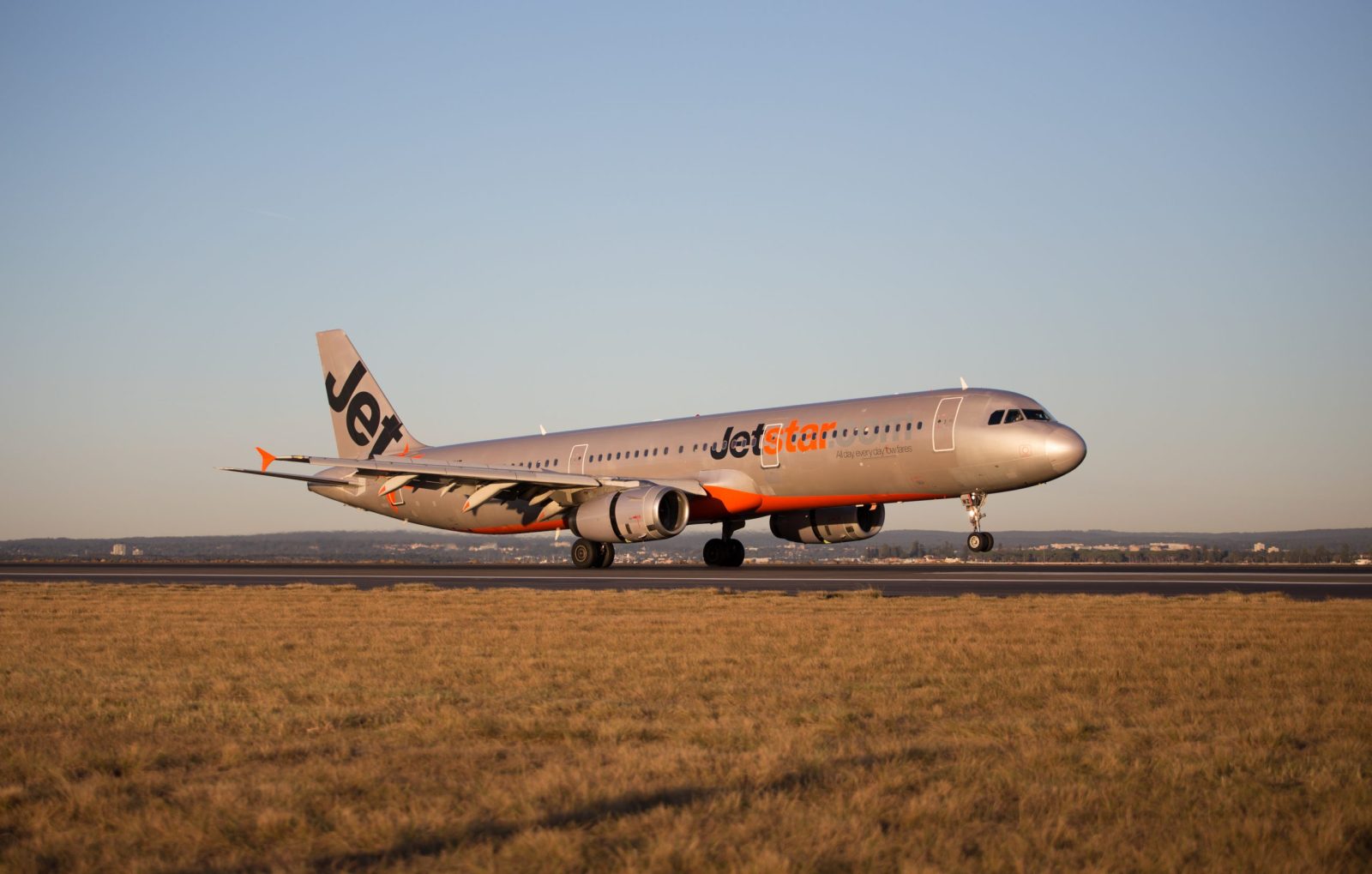
A JetStar A321 in Sydney (Photo | AirlineGeeks | Hisham Qadri)

Update on March 18 at 10:30 a.m. ET

On March 16, the Australian Senate delayed further the release of their report to Oct. 20, citing no reasons, but this time committing to the release of its interim report on March 30. The decision to delay the report’s release was made on March 16, the very day before its expected release. The delay is the second since the inquiry began on Dec. 2, 2019.

Original Story

The Australian Senate Rural and Regional Affairs and Transport Legislation Committee were due to release the report on March 17, 2022, having originally been allowed an extension from the original due date of November 30, 2021. Although it’s hoped this report will conclude a multi-year inquiry into the current state of Australia’s general aviation industry, the pattern of delays is beginning to suggest the conclusion will not be so soon.

The inquiry has given particular attention to aviation in rural, regional, and remote Australia, considering the operations, effectiveness and impact of the Civil Aviation Safety Authority (CASA) as well as other similar agencies, such as the Australian Transport Safety Bureau (ATSB).

CASA and ATSB Under Scrutiny

For many years, CASA has been at the receiving end of much criticism from Australia’s aviation sector, with notable complaints toward its safety regulations as being excessive and leading to increasingly expensive costs that plague the industry. According to the Senate Committee website, the report will address the committee’s view of the effect CASA’s aviation safety framework is having on the Australian GA industry, including whether the regulations are fit for purpose, as well as the economic impacts on the sector.

The ATSB has also been receiving heavy criticism for perceived unfairness and biased outcomes.  Its investigation into the South Australia June 2017 fatal accident involving a charity Angel Flight SOCATA TB-10 Tobago was labeled “demonstrably wrong” by Angel Flight CEO Marjorie Pagani after its report claimed that charity flights from the organization were up to seven times more likely to end in a fatality as compared to other private operators.

Ms. Pagani defended the charity stating “we had three experts look at this — two of Australia’s top statisticians and an analyst — all of who conclude that it is grossly, demonstrably wrong,” adding “they have counted less than half our flights in order to arrive at this statistical conclusion.”

The ATSB admitted to not interviewing any Australian pilots who have flown for Angel Flight, despite suggesting organizational pressure on pilots contributed to the accident. It relied solely on information obtained from the United States despite the differences in both regulations and operations of Angel Flight.

Australian Industry Disappointed with CASA

In Nov. 2020, a five hour public hearing on the state of Australian GA heard evidence from nine groups, including the Aircraft Owners and Pilots Association (AOPA) Australia, which portrayed CASA as failing to keep aviation in Australia safer than countries with simpler safety systems, such as the United States and Papua New Guinea, despite the heavy and complex regulations of CASA.

Additionally, during the same hearing, it was alleged that CASA’s liaison with the industry amounted to little more than show, with Phil Hurst, CEO of the Australian Aerial Application Association (AAAA) claiming the consultation process with CASA as an “appalling window-dressing”, adding “the consultation consists of CASA telling you what they’ve decided and then you trying to talk them down off the high building.”

An interim report released on December 10, 2020, released no comment on the inquiry, stating that due to the COVID-19 pandemic “the inquiry has not progressed as far as the committee had intended. The committee, therefore, submits this letter to satisfy the committee’s commitment to reporting back to the Senate”.

It is hoped by many in the industry that the final report, if not further delayed, will finally address the perceived shortcomings of CASA and begin a process of simplifying regulations, reducing maintenance and safety-related costs, thus making it easier for aviation in Australia to grow.

Mike Mangano

Mike’s love affair with flight and mechanical objects in the sky began at an early age, fascinated by space documentaries and the vintage Flight Simulator ’95. He currently works as an instructor for UAVs and is training to receive his Private Pilot Licence with the goal of working in manned flight instruction. An avid reader of all things aviation and manned space flight, Mike stays close to developments in aerospace while reminiscing and sharing the rich history of flight with others. He loves writing, engineering and science.

More Countries Welcome Vaccinated International Air Travelers Without Restrictions

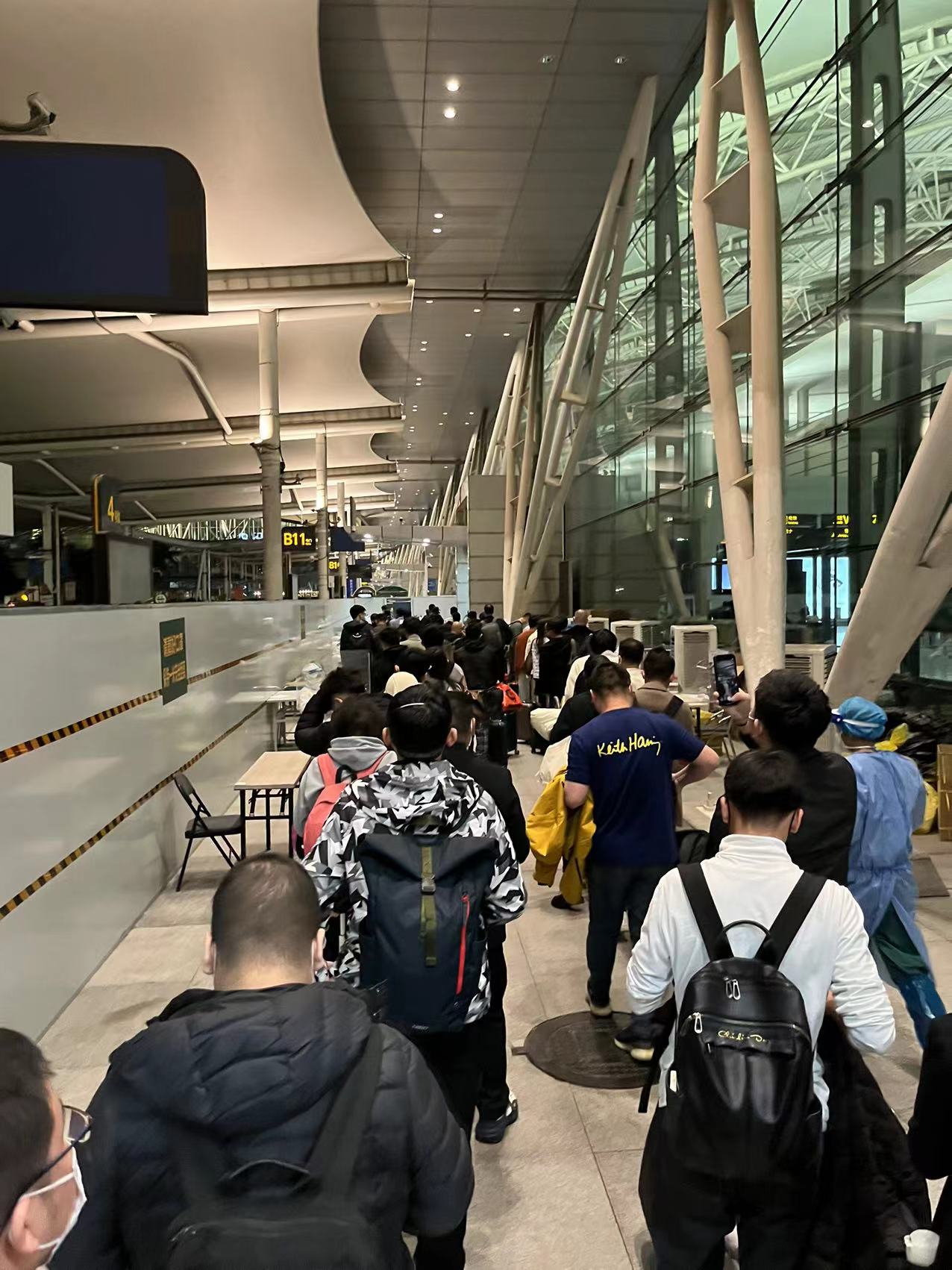
COVID-19 Testing Line at Guangzhou Airport (Photo: Lei Yan)

There are continuing positive signs that the international air travel market is on its way towards pre-pandemic levels albeit at differing rates in different regions. This week the U.K. announced the lifting of all travel restrictions and countries such as Canada and New Zealand are easing quarantine and testing requirements in the coming weeks. The airline industry advocacy group IATA (International Air Transport Association) has reported that vaccinated travelers are benefitting from the continued removal of restrictions.

“The world is largely open for travel,” stated IATA director-general Willie Walsh in a press release on Thursday. “As population immunity grows, more governments are managing COVID-19 through surveillance, as they do for other endemic viruses. That is great news for a growing number of destinations that will receive a much-needed economic boost from the upcoming Easter and Northern Summer travel seasons,” said Mr. Walsh. Testing and quarantine restrictions have been cited in numerous surveys undertaken by IATA as barriers to travel.

The survey by IATA of the world’s top 50 air travel markets (comprising 88 percent of international demand in 2019 as measured by revenue passenger kilometers) identified that travel restrictions for vaccinated travelers are decreasing. Results of the survey show that vaccinated travelers face no quarantine measures or testing requirements in 25 markets representing 38 percent of 2019 international demand.  This compares to 18 markets with no quarantine or testing in mid-February representing 28 percent of 2019 international demand.

Further analysis of the IATA survey results shows that 38 markets representing 65 percent of 2019 international demand are open to vaccinated travelers with no quarantine requirements. This is an additional increase of 10 markets from mid-February that represented 50 percent of 2019 international demand.

The relaxation of quarantine measures for vaccinated travelers differs in regions around the world that have markets in the top 50. With 100 percent of the Americas (9 markets), the Middle East (4 markets) and Africa (2 markets) having no quarantine requirements for vaccinated travelers. Europe has quarantine measures in place for vaccinated travelers in only 2 out of the 20 markets in the top 50.

“Asia is the outlier,” according to Mr. Walsh. The region has 16 markets in the top 50 but only 6 without any quarantine requirements as at the time of the survey. The region was down 88 percent of pre-pandemic levels in 2021 compared to North American and European international travel that saw levels down by 42 percent as measured by revenue passenger kilometers (RPKs).

Mr. Walsh did sound a further note of optimism by stating, “Hopefully, recent relaxations including Australia, Bangladesh, New Zealand, Pakistan, and the Philippines are paving the way towards restoring the freedom to travel that is more broadly enjoyed in other parts of the world.”

John Flett

John has always had a passion for aviation and through a career with Air New Zealand has gained a strong understanding of aviation operations and the strategic nature of the industry. During his career with the airline, John held multiple leadership roles and was involved in projects such as the introduction of both the 777-200 and -300 type aircraft and the development of the IFE for the 777-300. He was also part of a small team who created and published the internal communications magazines for Air New Zealand’s pilots, cabin crew and ground staff balancing a mix of corporate and social content. John is educated to postgraduate level achieving a masters degree with Distinction in Airline and Airport Management. John has held the positions of course director of an undergraduate commercial pilot training programme at a leading London university. In addition he is contracted as an external instructor for IATA (International Air Transport Association) and has been a member of the Heathrow Community Fund’s ‘Communities for Tomorrow’ panel.

Washington Dulles International Airport Set to Go Solar 

Volaris Costa Rica's inaugural trip to Dulles arrived early on Wednesday evening (Photo: AirlineGeeks)

Dulles International Airport is making strides towards a greener tomorrow with the approval of their large scale solar-farm project. Approval for the project was granted by the State Corporation Commission (SCC) of Virginia on Tuesday. If built, the project will make Dulles the largest airport generation and storage facility in the United States. 

Covering an area of 835 acres, the airport’s solar farm is projected to provide an output of 100 megawatts, enough solar electricity to power more than 16,000 homes. The project is projected to be completed as soon as two years. 

“Airports make a lot of sense for siting of solar,” said Princeton’s Policy Research on Energy and the Environment Professor, Jesse Jenkins. “They’re usually close to where we consume electricity near our urban areas. The land is already reserved-large areas of land – with security perimeters around them already, and that makes them a really logical place to develop solar.”

Part of a bigger project

Spearheading the project is a company based in Richmond, Virginia, called Dominion Energy. A company that looks to achieve net-zero greenhouse gas emissions. The Dulles solar project was one of 15 sites that were approved on Tuesday by Virginia’s State Corporation Commission. Additionally, Dominion Energy’s project includes 11 new utility-scale solar projects, two distributed solar installations, one energy storage project and a solar-plus-storage project. In total, the energy company has acquired nearly 100,000 acres of land for future solar development.

“This is another significant milestone in Virginia’s transition to energy independence,” said Ed Baine, president of Dominion Energy Virginia.

“These projects will support thousands of good jobs and hundreds of millions in economic activity in communities across Virginia. This is a positive step forward for our customers, the environment and Virginia’s economy,” he continued.

The 15 projects will not only benefit the individuals utilizing the energy directly but will also create nearly 4,200 jobs and generate more than $880 million in economic benefits across Virginia.

Utilizing energy from the sun, the solar sites combined will provide nearly 1,000 megawatts of carbon-free electricity, enough to power roughly 250,000 Virginia homes at peak output.

Acceptance for the proposal came after airport managers recommended that the project be approved following many hours of research into the project. However, it still needs to be reviewed by the Federal Aviation Administration and other federal authorities before it can be built.

Construction of the 15 Dominion Energy Virginia projects is expected to. The projects are expected to be completed in 2022 and 2023 and will add approximately $1.13 to the typical residential customers’ monthly bills.

The project not only benefits Dulles International Airport by achieving self-sufficiency but will be of huge benefit to the state of Virginia and the communities within. This move comes at a time when the country heavily considers its carbon footprint and alternative energy sources available. As a result, many of the nation’s airports are turning their unused land, roofs and parking garages into solar farms. 

Chase Hagl

Chase Hagl grew up in Twin Falls, Idaho. His love and passion for Aviation landed him in Orem, Utah where he obtained a B.S. in Aviation Management with a minor in Business Management from Utah Valley University. Chase currently works as a flight attendant in Charleston, SC and is also the primary Inflight ASAP ERC representative for startup airline, Breeze Airways. His experience in the aviation industry spans back four years, working in areas including agriculture application, customer service, maintenance, and flight ops. In his free time, Chase enjoys road biking, astronomy, and flying.

Australia Reports No 5G Interference

Virgin Australia Boeing 737-800
Virgin Australia B737-800 Departing Sydney

The Australian Civil Aviation Safety Authority (CASA) has recently released an airworthiness bulletin stating that “CASA has not confirmed any RA (radar altimeter) system failure from 5G interference but continues to monitor this situation.” This is despite the international attention of 5G telecommunication interference with radar altimeters, with Boeing 737s being singled out.

The bulletin, released on March 4, 2022, reasons Australian telecommunications companies are currently operating at frequencies and power levels lower than those in the United States, with Australian licenses permitting frequencies no higher than 3.7GHz at power levels of 63 Watts. By contrast, 5G towers in the US can operate at frequencies between 3.7Ghz and 3.98GHz at power levels of 1584 Watts. This means that Australian 5G frequencies do not operate at those of many radar altimeters. This is in contrast to those in the US,

Regarding the future of Australian 5G networks, CASA and the Australian Communications and Media Authority (ACMA) are aiming to pursue a policy of “co-existence” between radio frequency services. At this point, CASA will not publish NOTAMs for Australian airspace restricting operations due to 5G interference.

Multiple Causes for Radar Altimeter Interference

Although CASA finds no evidence of 5G radio altimeter interference, it acknowledges some reported discrepancies could be caused by Terrain Awareness Warning Systems (TAWS) or factors other than 5G. Following up on several of these reported issues, CASA says that these types of failures are “generally not repeated again through ground testing.”

One such occurrence, with the aircraft type withheld, involved the disengagement of an Autopilot A on a final approach at 2300 feet when the Captain’s RadAlt1 froze at an altitude of 2640 feet for 11 seconds. This prompted the Captain to fly until Autopilot B was engaged and operations continued normally.

Another incident, again with the aircraft type withheld, occurred on approach passing 400 feet when a radar altimeter froze at 547 feet for 47 seconds, only returning to normal after touchdown.

Despite the suspected interference of these and other occurrences, CASA believes that “smaller commercial operations, general aviation and rotorcraft” may be more susceptible to such radar altimeter interference, making particular reference to the possibility of older radar altimeter systems as the primary victims of interference.

CASA Continues to Monitor US Interferences

CASA  says it hasn’t been ignorant of potential 5G interference in the US, requiring Australian pilots and aircraft to comply with Federal Aviation Administration (FAA) directives when operating in US airspace.

Additionally, CASA and the Australian Transportation and Safety Bureau (ATSB) have encouraged Australian pilots to report any suspected 5G radar altimeter interference through its online form on CASA’s official website.

Mike Mangano

Mike’s love affair with flight and mechanical objects in the sky began at an early age, fascinated by space documentaries and the vintage Flight Simulator ’95. He currently works as an instructor for UAVs and is training to receive his Private Pilot Licence with the goal of working in manned flight instruction. An avid reader of all things aviation and manned space flight, Mike stays close to developments in aerospace while reminiscing and sharing the rich history of flight with others. He loves writing, engineering and science.

LATAM Sees Mixed Results in March

A LATAM Airlines Boeing 787-9 departing LAX (Photo: AirlineGeeks | James Dinsdale)

Within the context of international uncertainty that has resulted in high volatility in fuel prices, LATAM Airlines Group has estimated its operation for this month.

It is important to remember that in February 2022, LATAM Airlines Group’s passenger traffic (measured in Revenue Passenger Kilometers – RPK) was 60.6% in relation to the same period in 2019, based on an operation measured in ASK (available seat kilometers) of 63.7% compared to February 2019. As a result, the load factor reached 79.8%.

Regarding cargo operations, the load factor was 61.5%, which corresponds to an increase of 9.2% compared to February 2019.

The carrier has estimated a passenger operation of up to 67% for March (measured in available seat kilometers – ASK) compared to the same month of 2019. With this, LATAM is continuing a trend of operational stability that has been shown in recent months.

It is forecast that the domestic operations in Colombia and Brazil will drive the recovery compared to pre-pandemic levels, with estimated operational increases of 165% and 101% respectively.

Increased Schedules

One of the highlights of this month is the operations resumption from Santiago to Auckland and Sydney. LATAM plans to operate approximately 1,029 daily national and international flights during March, connecting 135 destinations in 20 countries.

Cargo operations from its subsidiaries are projected to reach levels equal to those prior to the global health crisis, with a 100% operational estimate for March. The cargo business has almost 1,200 cargo freighter flights scheduled with a level of utilization 7% higher on average than the same period in 2019.

These projections are subject to the evolution of the COVID-19 pandemic, especially the latest new cases and infections in the countries where the group operates.

Finally, despite the fuel crisis, LATAM Airlines Group continues to project an exit from the Chapter 11 process this May.

March 2022 Projections

Juan Pedro Sanchez Zamudio

The three things Juan Pedro loves most about aviation are aircraft, airports, and traveling thousands of miles in just a few hours. What he enjoys the most about aviation is that it is easier and cheaper to travel around the world and this gives you the opportunity to visit places you thought were too far away. He has traveled to different destinations in North, Central, South America and Asia. Born, raised and still living in Perú, Juan is a lawyer, soccer lover, foodie, passionate traveler, dog lover, millennial and curious by nature.

Canada Launches Probe into Flair Airlines’ Foreign Investor Control

The new Flair Airlines livery seen on one of the airline's 737-400s. (Photo: Flair Airlines)

Following an extensive review of the distribution of board seats and foreign capital investment, the Canadian Transportation Agency moved forward with a second stage of an investigation that aims to clarify Flair Airlines’ compliance with laws that regulate foreign investor maximum share in an operator based in Canada.

Canadian law forbids for foreign capital to exceed 49 percent of total stake or 25 percent for an individual. 777 Partners, a Miami-based investment firm, stated that it reached that maximum share, but what’s being investigated is Flair’s board composition, as the US firm owns three of the five seats.

Flair was born in early 2021 and announced major expansion plans, aiming to reach a fifty aircraft fleet by 2025. Coincidentally, 777 Partners has leased at least thirteen of those aircraft, and was expected to participate in an incremental expansion that was announced last December.

According to The Globe and Mail, board composition and 777 Partners’ aircraft leasing agreements generate a conflict with the law, as main decisions for a Canadian operator are not being made by nationals.

The Globe and Mail cites John Gradek, a former Air Canada executive that states that «The mind of the organization has to be in Canada and Controlled by Canadians». For the Transportation Agency, evidence is sufficient to advance into a new investigative stage.

In a statement, the company defended itself: “Flair is completely compliant with all applicable airline regulations, including those dealing with Canadian control.”

The statement concludes by saying that “Flair is a private company, and while we have always and will continue to co-ordinate with all regulators as necessary, our shareholdings and financial affairs are confidential.”

It is not the first time that Flair is accused to be controlled by foreign interests: the company’s former finance director, Jocelyn Harris, filed a lawsuit for wrongful dismissal. Also, the company has an ongoing litigation with its largest Canadian investor, Prescott Strategic Investments.

Should the agency conclude that there is in fact a violation, the regulator can impose fines or suspend Flair’s AOC.

This article was written by Pablo Díaz for Aviacionline.

Parker Davis

Parker joined AirlineGeeks as a writer and photographer in 2016, combining his longtime love for aviation with a newfound passion for journalism. Since then, he’s worked as a Senior Writer before becoming Editor-in-Chief of the site in 2020. Originally from Dallas and an American frequent flyer, he left behind the city’s rich aviation history to attend college in North Carolina, where he’s studying economics.
Sign-up for newsletters & special offers!

Get the latest stories & special offers delivered directly to your inbox

SUBSCRIBE

Uh-oh! It looks like you're using an ad blocker.

Our website relies on ads to provide free content and sustain our operations. By turning off your ad blocker, you help support us and ensure we can continue offering valuable content without any cost to you.

We truly appreciate your understanding and support. Thank you for considering disabling your ad blocker for this website