LATAM Airlines Group showed considerable progress in its operation in the 2022 fourth quarter. The 2021 was a challenging year for the carrier, since it has had to fight against new variants, infections, restrictions, and measures.
Despite all the difficulties, the Chilean carrier has been able to overcome all the complications that have arisen and continue its way out of its reorganization process.
LATAM Airlines Group released its financial results corresponding to the 2021 fourth quarter, which show the continuous improvement in air traffic levels.
During the 2021 last quarter, LATAM’s total operating income totaled $1,995.9 million, that is, 30.5% below 2019 levels, but 51.9% higher than the 2021 third quarter.
And for the first time since the COVID-19 pandemic, the LATAM Airlines Group posted a positive operating result, amounting to $73.4 million during the 2021 fourth quarter.
The Group’s total revenues for 2021 reached $5,111.3 million, representing a decrease of 51.0% compared to 2019.
LATAM Airlines Group’s operations reached 63.5% of 2019 levels during the 2021 fourth quarter (measured in ASK), corresponding to a capacity increase of 29.6% compared to the 2021 third quarter.
As in previous 2021 quarters, LATAM’s cargo operations continued to show a solid performance, with revenues that increased 66.0% compared to the same period of 2019, amounting up to $464.8 million.
Total operating expenses were $1,992.4 million in the 2021 fourth quarter, representing a decrease of 23.7% compared to the same period in 2019.
The group is aiming to get out of Chapter 11 bankruptcy proceedings during the second half of 2022, closing a stage of important transformation.
This new LATAM Airlines will be a renewed organization, more agile, with a solid balance sheet, a competitive cost structure and a good level of liquidity.
During 2021, LATAM Airlines Group not only simplified processes, redesigned fleet strategies, renegotiated contracts, and restructured costs, but also took a fundamental step for the future projection of operations.
LATAM Evaluates to Reduce or Suspend Destinations
Amid the Chilean carrier’s operations recovery after the COVID-19 pandemic and Chapter 11 reorganization process effects, a new struggle affects the airline.
The increase in oil prices, which have reached record levels because of the conflict between Russia and Ukraine, is leading LATAM to analyze the possibility to reduce flight frequencies or temporarily suspend destinations to reduce costs.
According to La Tercera, LATAM consumes approximately 2.8 million barrels per month, and the price of fuel two days ago was $50 lower than what we are seeing now.
The Chilean carrier is adapting its offer to this context, so there are many scenarios, and it is difficult to specifically comment on how much LATAM will be flying in the next May or June, since the fuel price is volatile, and the carrier is adapting its capacity based on what is happening in the markets.
Although it is true that LATAM expects to exit the Chapter 11 process in May, if this fuel price crisis continues, it is possible that the long-awaited exit will not take place in the time estimated by the Chilean carrier.
The three things Juan Pedro loves most about aviation are aircraft, airports, and traveling thousands of miles in just a few hours. What he enjoys the most about aviation is that it is easier and cheaper to travel around the world and this gives you the opportunity to visit places you thought were too far away. He has traveled to different destinations in North, Central, South America and Asia. Born, raised and still living in Perú, Juan is a lawyer, soccer lover, foodie, passionate traveler, dog lover, millennial and curious by nature.
United Express Requests Termination of 29 EAS Routes
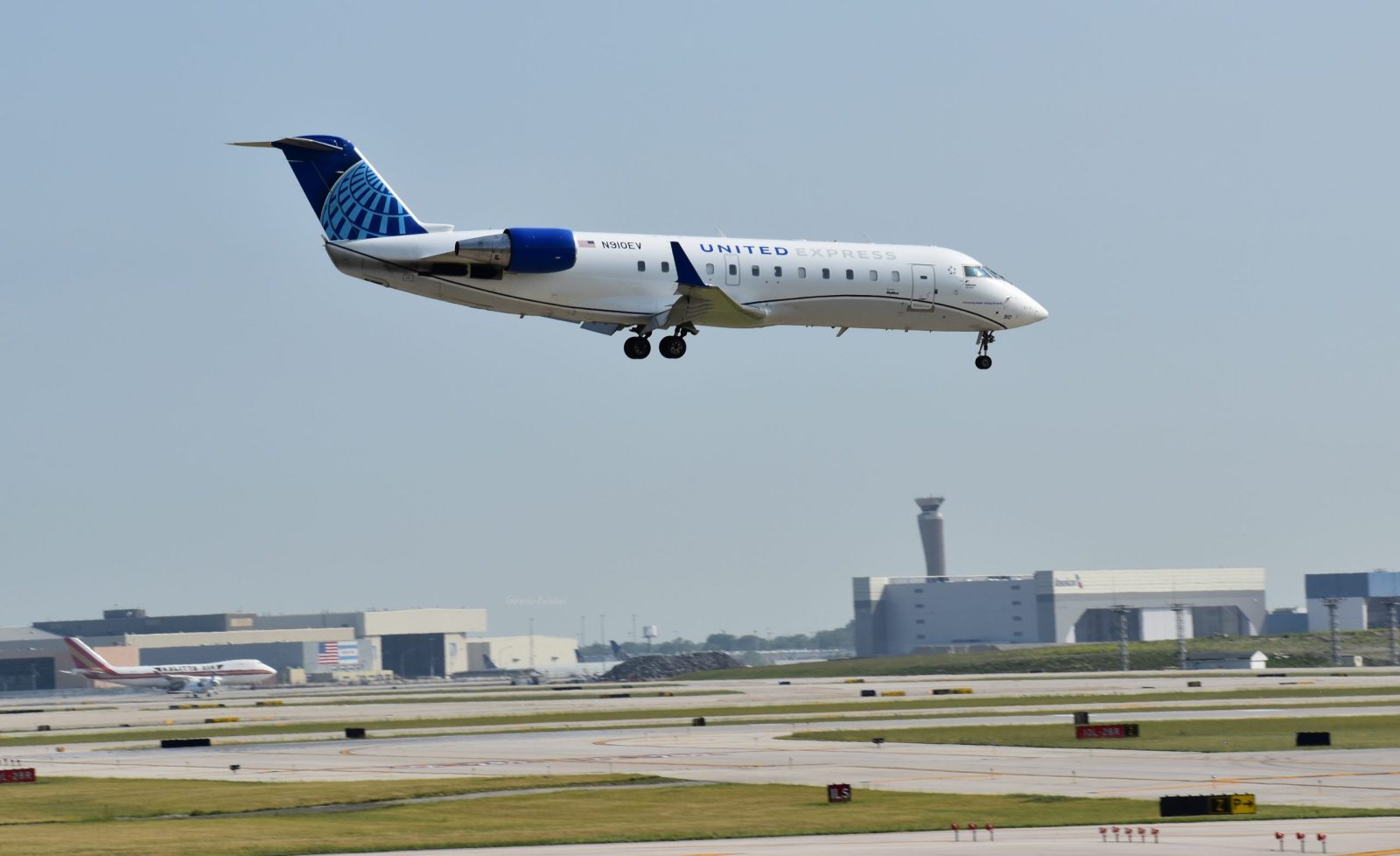
A United Express CRJ-200 arriving into Chicago O'Hare. (Photo: AirlineGeeks | Joey Gerardi)
While the aviation industry is on the rise from the pandemic, pilot shortages are now facing carriers in full stride. But one area is being hit the most: small communities. Back at the beginning of January 2022, United exited 11 small cities all of which were served by small 50-seat regional aircraft, either the Embraer E145 or the CRJ-200.
More recently, in the middle of January 2022, SkyWest announced the request to terminate two smaller Essential Air Service (EAS) cities in upstate NY; Plattsburgh and Ogdensburg.
This month, Skywest, under the United Express brand, is now requesting to terminate 29 additional cities, all of which are in the government-funded EAS program. This is the full list of cities they are requesting to terminate:
Alamosa, Colo.
Pueblo, Colo.
Fort Dodge, Iowa
Mason City, Iowa
Sioux City, Iowa
Dodge City, Kansas
Liberal, Kansas
Salina, Kansas
Paducah, Kent.
Decatur, Ill.
Houghton, Mich.
Muskegon, Mich.
Cape Girardeau, Missouri
Fort Leonard Wood, Missouri
Joplin, Missouri
Meridian, Miss.
Hattiesburg, Miss.
Devils Lake, N.D.
Jamestown, N.D.
Kearney, Neb.
North Platte, Neb.
Scottsbluff, Neb.
Johnstown, Penn.
Victoria, Texas
Shenandoah, Vir.
Eau Claire, Wis.
Clarksburg, W.V.
Lewisburg, W.V.
All of the routes to the communities above are operated using 50-seat CRJ-200s and the airline is citing pilot shortages as the reason they are requesting termination.
United Airlines CRJ200 operated by SkyWest at Muskegon-County Airport (Photo: AirlineGeeks | Joey Gerardi)
The document posted on regulations.gov from Skywest says they are giving a “90-day notice” in all of the above communities. But, most of the cities are still in the middle of their EAS contract term and some have just recently started in the past 12-months. Similar to Plattsburgh and Ogdensburg, the DOT will most likely deny the request until a new carrier is found and start the EAS bidding process immediately.
It is interesting to note that the only cities SkyWest is terminating are operating under the United Express banner, they are not ending any of the 15 cities that they operate on behalf of Delta Connection at this point in time.
A Delta Connection CRJ-200 in the EAS city of Butte, Mont. (Photo: AirlineGeeks | Joey Gerardi)
If they are all approved, that means that the United brand will have left 42 cities in just over six months. All of them are small, underserved or government-funded communities on 50-seat jets.
This will be the end of all EAS contracts under the United Express banner east of Wyoming, with the exception of Presque Isle, Maine. The only remaining EAS cities that will still see scheduled service on a United branded aircraft are Presque Isle, Maine; Laramie and Cody, Wyo.; Dickinson, N.D.; Prescott, Ariz.; Vernal and Moab, Utah and finally West Yellowstone, Mont. during the summers only.
Joey has always been interested in planes for as long as he can remember. He grew up in Central New York during the early 2000s when US Airways Express turboprops ruled the skies. Being from a non-aviation family made it harder for him to be around planes and would only spend about three hours a month at the airport. He was so excited when he could drive by himself, the first thing he did with his driver's license was get ice cream and go plane spotting for the entire day. He graduated from Western Michigan University in 2022 with a B.S. in Aviation Management & Operations and a Minor in Business, and currently works for a major airline in his hometown.
Interview: The Southern Airways Express Saab340 Unveiled
Southern Airways Express first Saab340 (Photo: Southern Airways Express)
Southern Airways Express — a Palm Beach, Fla. based commuter airline — operates an impressive fleet of over 35 Cessna 208s and over 200 daily flights across 37 destinations on the U.S. Mainland and Hawaii. The airline merged with Hawai’i-based Mokulele Airlines and operates the Hawaiian flights under the Mokulele brand.
During the early days of the pandemic, Ohana by Hawaiian ceased operations due to decreasing demand for inter-island travel. In June 2021, AirlineGeeks had a chance to interview Stan Little, chairman and CEO of the airline, who said the carrier would be receiving 19-seat Beech-1900’s to fill in the gaps left by Hawaiian Airlines. Now, nine months later the new aircraft is finally out of the paint shop, but not the Beech-1900 like originally planned, but a Saab340.
A rendering of the Beech-1900D with the Southern livery, the originally planned newest addition (Photo: Southern Airways Express)
AirlineGeeks once again had the chance to interview the carriers Chief Market Officer, Keith Sisson, about the newest addition to the Southern Airways Express family.
AirlineGeeks (AG): In an interview with SAE last summer, it was discussed that Mokulele/Southern would be getting Beech-1900s. Why did the airline make the switch to the Saab340?
Keith Sisson (KS): In the months following that interview, we determined that the Beech-1900 would not be the optimal aircraft for the mission. Instead, we decided to go with Saab 340s. These aircraft are equipped with 30 seats and will operate scheduled service under DOT 380 rules. In addition to scheduled flying, they will provide needed lift for local sports charters. (It may be hard for people to understand, but when Molokai High School has a football game, they can’t get on a bus…they have to fly to another island for the competition.) There is not enough demand on the smaller islands for large aircraft on a daily basis. There are only about two peak travel times during the week. These aircraft will supplement our Caravan schedule during those times. The extra 10 or so seats (relative to the Beech-1900) were a driving factor, but also aircraft quality and availability were important factors, as well. We looked at a dozen available 1900s and we just couldn’t locate any that were up to our standards. On the contrary, the Saabs we acquired are in “flagship condition.” People will really enjoy flying on these planes! We expect the first one to arrive in late April of this year.
(AG): When might we be seeing the first of those emerge from the paint shop and be put into service?
(KS): The first one is completing its new livery at the paint shop (which has since been completed). From there it goes to our DuBois, Pennsylvania maintenance base to undergo conformity and begin its proving runs. We are hoping to bring it across the ocean (to Hawai’i) in late April.
Southern Airways Express first Saab340 (Photo: Southern Airways Express)
(AG): Will the Saab340 be painted in the SAE livery, similar to the plan for the Beech-1900?
(KS): Great question! The Mokulele brand is nearing its 30th anniversary in Hawaii. We are going to keep the legacy of that brand alive for the 9-seat operation (Cessna 208’s). As a way for people to easily identify which aircraft type they will be buying seats on, we are going to operate the Saabs under the Southern Airways brand. The livery between the two brands is similar. So, on a ramp, the average person will be able to notice that the aircraft livery, while different, is similar enough to show that the brands are related.
(AG): How many Saab340s will be based in Hawai’i for inter-island flying?
(KS): We will be starting with two Saabs. We think that it will give us plenty of lift to meet the demand. As international visitors return, we are prepared to increase this investment, if needed.
(AG): Kaua’i is the only major Hawaiian island you don’t currently fly to, do you see the airline adding flights to this island with the Saab340?
(KS): We are limited by single-engine (Cessna 208) rules from flying to Kauai with the Caravan. We fully intend on serving that island, though not with the Saab. Instead of the main city of Lihue, we are hoping to provide scheduled flights to an unserved airport on the other side of the island, Princeville. For this, we have looked at a few different options, including the King Air Super 200. We have also taken a close look at the Tecnam Traveler and even took a demo flight near our Palm Beach, Florida headquarters. The Traveler may be a good solution for this service. No decision is made, but hopefully, we may be able to make an announcement this fall.
(AG): The Cessna208 that you currently fly are 8/9 seats so they fall under a different PART of the FAA regulations, not requiring them to have a TSA check-point. The Saab is significantly larger than that at 34 seats, does this mean Saab340 flights will operate out of the main terminal as they require security screening? or will you operate them as ‘public charter flights’?
(KS): We will operate these as public charter flights under DOT 380. We will remove four seats to comply with the regulation. These flights will operate non-sterile, just as the Caravans.
(AG): Will you have any of the Saab340 on the mainland?
(KS): At this point, the initial Saabs are designated only for Hawaii. We’ll make future plans as market conditions dictate. Having hired over 200 new pilots in the last 12 months, we certainly have the crews to support them.
(AG): What will be the registrations of these new Saab340s?
(KS): The first one will be N95SA, The Phil Lefevre. The second will be N79SA, The Phil Trenary.
(AG): Who are the individuals you’ve named the aircraft’s in honor of and why are they significant?
(KS): Phil LeFevre was our long-time Chief Operating Officer who earlier this year lost his battle with cancer at the age of 49. Phil had been in aviation his entire life, with long stints at Gulf Stream and Silver, where he developed their Saab program. Phil was very well-liked and respected in the airline community. We felt it was only fitting to name our first Saab in his memory since he spent so much of his career growing Silver’s Saab network. Phil served Southern Airways as Director of Operations and Chief Operating Officer for the last six years and worked full-time at our Palm Beach headquarters until the week before his death in January. He was a close personal friend of both of Southern’s founders.
The other Saab (N79SA) that is going to Hawaii is also named for a “Phil”, Phil Trenary. Phil was the founder of Lone Star Airlines in 1984 and was the CEO of Pinnacle Airlines in Memphis at the time of the Northwest merger with Delta in 2012. As we were starting Southern Airways in Memphis in 2013, Phil was extremely supportive and became a great friend. His life also ended prematurely when he was murdered in a street robbery in downtown Memphis in 2018 at the age of 64. At the time of his death, he was the Executive Director of the Memphis Chamber of Commerce and is known as one of the most respected business leaders in the history of that city. Before flying The Phil Trenary to Hawaii, we plan on commissioning it in Memphis and inviting his friends, family, and various community leaders to the event.
Both of “The Phil’s” had a significant impact on aviation and the success of Southern Airways. We are proud to offer this lasting tribute to each of them.
Thank you Keith Sisson for talking to AirlineGeeks about Southern Airways Express’ brand new aircraft type to its fleet. Stay tuned later this week as I have an interview with him regarding the airline’s unique inter-island operations with Mokulele.
Joey has always been interested in planes for as long as he can remember. He grew up in Central New York during the early 2000s when US Airways Express turboprops ruled the skies. Being from a non-aviation family made it harder for him to be around planes and would only spend about three hours a month at the airport. He was so excited when he could drive by himself, the first thing he did with his driver's license was get ice cream and go plane spotting for the entire day. He graduated from Western Michigan University in 2022 with a B.S. in Aviation Management & Operations and a Minor in Business, and currently works for a major airline in his hometown.
Alaska Airlines, Horizon Air Launch Ascend Pilot Academy
An Alaska 737-800 at Reagan National Airport (Photo: AirlineGeeks | Craig Fischer)
Alaska Airlines and Horizon Air — the Seattle-based carrier’s regional partner — have teamed up to launch their Ascend Pilot Academy (APA), aimed towards providing pilots with a simple, more affordable path to becoming commercial pilots. Participants in the program will eventually land themselves in the right seat at Horizon Air, with the opportunity to further advance to Alaska Airlines after specific requirements are met.
The program ultimately aims to aid the company in the hiring of pilots amidst the ever-growing pilot shortage that currently plagues the industry.
The two airlines have partnered with the Hillsboro Aero Academy — a Pacific Northwest flight school — to train upwards of 250 cadet pilots per year. Pilots in the program will be eligible for a $25,000 stipend to help cover the cost of their commercial pilot license, including an opportunity for low-interest financial aid assistance. Along the way, cadets will have access to mentorship from existing Alaska Airlines and Horizon Air pilots.
Following the completion of ratings, and after receiving the required 1,500 flight hours, graduates will receive a conditional job offer at Horizon Air. Having reached the flight deck at Horizon, and looking to advance with Alaska, Ascend Pilot Academy graduates may apply for quarterly openings with the airline’s pathway program, which could lead to the standard interview process with the airline.
“Launching the Ascend Pilot Academy addresses a critical need to build a larger and more diverse talent pipeline and remove historical barriers to entry for aspiring pilots,” Joe Sprague, said, Horizon Air president. “Our goal is to create a program that enables students to complete an intensive training and time-building program, with a clear and established path toward flying for Horizon as a first officer.”
Ongoing Pilot Shortage
The pandemic played a large role in the industry-wide pilot shortage as it pushed many pilots into early retirement amongst major air carriers. As a result, airlines have turned to programs similarly designed like the Ascend Pilot Program to help tackle the growing problem. In 2022, it is projected that upwards of 10,000 pilots will be hired by mainline airlines, up 50 percent from 2019, prior to the pandemic. Alaska and Horizon combined will hire an estimated 500 pilots per year till 2025.
“We’re taking a number of steps to actively recruit pilots at both Alaska and Horizon, including enhancing our existing Pilot Development Program and launching a robust marketing recruiting campaign,” Sprague added.
About Hillsboro Aero Academy
Prior to this program, Horizon Air and Hillsboro Aero Academy had already been established partners — helping students gain employment following the completion of their training.
The Pacific Northwest flight school has two campuses, the main one located in Hillsboro, Ore. and the other in Redmond, Ore. Hillsboro’s campus operates a fleet of 95 aircraft equipped with modern avionics.
Many Alaska and Horizon pilots started their careers flying, instructing or both at the Hillsboro campus.
“Through this program, an aspiring commercial pilot will be able to realize their dream of learning to fly, and work toward becoming a captain at Alaska Airlines,” Nik Kresse, Hillsboro Aero Academy’s Vice President of airplane flight operations, said. “Enrolling in Ascend Pilot Academy is the first step of what we hope will be a long relationship with Horizon Air and Alaska Airlines. We’re eager to work with students through their entire journey and provide world-class training and dedicated pilot mentorship along the way.”
Ascend Pilot Academy not only benefits its cadet pilots by providing them with the tools and resources needed for success, but it also helps the carriers fill cockpit seats with pilots they know came from a trusted flight school.
Chase Hagl grew up in Twin Falls, Idaho. His love and passion for Aviation landed him in Orem, Utah where he obtained a B.S. in Aviation Management with a minor in Business Management from Utah Valley University. Chase currently works as a flight attendant in Charleston, SC and is also the primary Inflight ASAP ERC representative for startup airline, Breeze Airways. His experience in the aviation industry spans back four years, working in areas including agriculture application, customer service, maintenance, and flight ops. In his free time, Chase enjoys road biking, astronomy, and flying.
Ethiopian Airlines Expands Air Cargo Fleet with Boeing Agreement
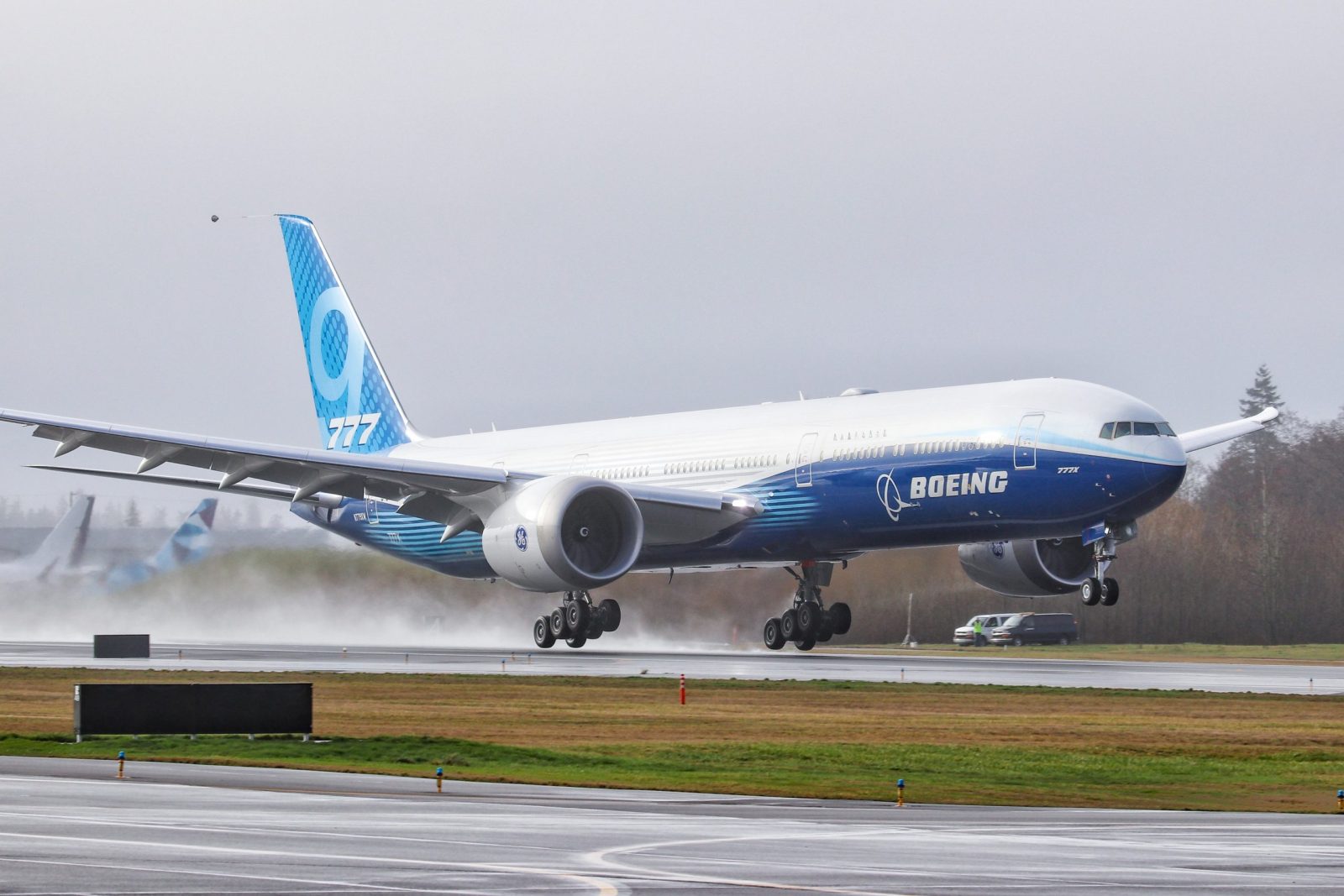
Boeing's 777X departs on its maiden test flight (Photo: AirlineGeeks | Katie Zera)
Ethiopian Airlines has agreed to buy up to 5 of Boeing’s new 777X freighter jets — with the carrier launching the plane during a boom in air cargo.
The airline will also become the second carrier to operate the recently launched freighter and Boeing’s newest plane whose development has faced delays, declining customer orders for the passenger model and regulatory snags amid airlines’ broader shift toward smaller jets designed to fly on longer, direct routes.
The order will enable Ethiopian Airlines to meet expanding global air cargo demand from its hub in Addis Ababa and position the carrier for long-term growth.
Tewolde Gebremariam, Chief Executive Officer of Ethiopian Airlines Group, said, “In our vision 2035, we are planning to expand our Cargo and Logistics business to be one of the largest global multimodal logistics providers in all continents, to this effect, we are increasing our dedicated freighter fleet with the latest technology, fuel-efficient and environment-friendly airplanes of the 21st century. We have also started the construction of the largest E-commerce Hub Terminal in Africa.
Ethiopian Airlines currently operates nine 777 freighters. The carrier’s fleet also includes three Boeing 737-800s converted freighters and a combined commercial fleet of more than 80 jets including Boeing 737s, Boeing 767s, Boeing 787 Dreamliners and Boeing 777s.
“The new 777-8 Freighters will be instrumental in this long journey of growth agenda. Today, our air cargo services cover more than 120 international destinations around the world with both belly hold capacity and dedicated Freighter services,” Gebremariam added.
Boeing launched the new 777-8 freighter in January with Qatar Airways as the launch customer. Qatar Airways ordered 34 of the aircraft with options for a further 16 in a deal that is valued at more than $20bn based on list prices.
According to Boeing, their 777-8 twin-engine freighter features advanced technology from the new 777X family and the performance of the 777 freighters. With payload capacity nearly identical to the 747-400 freighter and a 30% improvement in fuel efficiency, emissions and operating costs, the 777-8 freighter is expected to enable a more sustainable and profitable business for operators.
International Cargo Transport
Ethiopian Airlines has partnered with International Djibouti Industrial Park Operation (IDIPO) and Air Djibouti as it looks to develop sea-air operations between China and Africa.
Based on a strategic agreement signed between the parties, cargo will be transported from China to Djibouti Free Zone by sea and will then be transported to Djibouti International Airport for onward transportation by air. Typically, Sea-air services are pitched as being less expensive than a pure air cargo operation but faster than pure sea transport.
According to Ethiopian, the new multimodal logistics solution will enable African businesses, multinational companies, Chinese companies and other business people to enhance their supply chain management system with the best combination of speed, cost and quality services.
“The markets of China and Africa are highly complementary and the partnership has huge potential in facilitating cost and time-efficient logistics solutions for African traders,” the carrier said. “As the world’s production base, China is the largest supplier, while Africa with a population of 1.3bn people has huge market demand. China has been Africa’s largest trading partner with a trade volume of $254bn in 2021.”
Victor Shalton's love for aviation can be traced to when he was 11-years-old. As a seasoned aviation writer, he takes pride in providing the best aviation coverage around the globe and is passionate about advancing his skills in the aviation space. In addition, he loves travelling, writing, arts and while his speaking engagements have taken him around the world, he is proud to call Nairobi home.
A Volaris Airbus A320 taxiing at the carrier’s hub at Tijuana International Airport in Mexico. (Photo: AirlineGeeks | Albert Kuan)
Volaris — the Mexican ultra-low-cost airline — ended 2021 as the main carrier in Mexico by transporting the largest number of passengers more than Aeroméxico and Viva Aerobus.
Volaris transported 7.3 million passengers in the last quarter of 2021, increasing by 27% compared to the same quarter of 2020. Domestic passengers and international increased 29% and 19%, respectively.
For the full year 2021, Volaris reported an operating income of more than $2.09 billion, representing an increase of 29% compared to 2019 levels. This performance demonstrates Volaris’ ability to increase its offer, while improving load factors and unit revenue, despite the changing environment of demand throughout the year — due to the different COVID-19 waves and variants.
During 2021’s fourth quarter, the ultra-low-cost Volaris added seven new Airbus A320neos aircraft to its fleet.
At the end of 2021, the Volaris fleet was made up of 101 aircraft: 6 Airbus A319s, 79 Airbus A320s and 16 Airbus A321s — with an average age of 5.4 years.
On November 15, 2021, Volaris signed a new purchase order with Airbus for 39 A321neo aircraft. In addition, the ultra-low-cost carrier agreed with Airbus to convert 20 aircraft from its contract current order from A320neo to Airbus A321neos.
This year things have started just as they ended last year, with Volaris leading the Mexican aviation market with 2.3 million passengers carried in January: 1.86 million in domestic operations and 481,000 in international. Viva Aerobus carried 1.45 million passengers, with 1.27 million in domestic and 185,000 in international, and finally, Aeroméxico transported 1.27 million passengers in January.
Considering the numbers reported by Volaris in January and its current capacity, the new leading Mexican airline is expected to grow around 50% compared to the first quarter of 2021. The ultra-low-cost carrier began the year with solid traffic results — stimulating demand in major markets for leisure travel and visiting friends and family.
Volaris expects to continue with its disciplined growth strategy for the rest of the year. On the other hand, the ultra-low-cost carrier expects to end 2022 with approximately 115 aircraft.
Volaris Costa Rica Announces New Route to Lima,Peru
This year, Volaris is betting on increasing its network of international destinations as well as strengthening its subsidiaries.
Volaris Costa Rica announced its arrival to South America with direct flights from Costa Rica to Lima, Peru, starting June 3.
This new route will operate 3 weekly flights, on Tuesdays, Fridays and Sundays. With this new route, the airline will contribute to consolidating the recovery of the air market in Peru, through leisure travel and commercial exchange by the demand of business travelers.
Volaris Costa Rica currently operates 4 direct routes from San José, Costa Rica. Lima is the carrier’s fourth destination from San José, after San Salvador, Guatemala; Cancún, Mexico and Mexico City. Since its start of operations in 2016, Volaris Costa Rica has transported more than 2 million passengers.
The three things Juan Pedro loves most about aviation are aircraft, airports, and traveling thousands of miles in just a few hours. What he enjoys the most about aviation is that it is easier and cheaper to travel around the world and this gives you the opportunity to visit places you thought were too far away. He has traveled to different destinations in North, Central, South America and Asia. Born, raised and still living in Perú, Juan is a lawyer, soccer lover, foodie, passionate traveler, dog lover, millennial and curious by nature.
Mexico City’s New Felipe Ángeles Airport To Open Without Fixed Ground Transportation Services
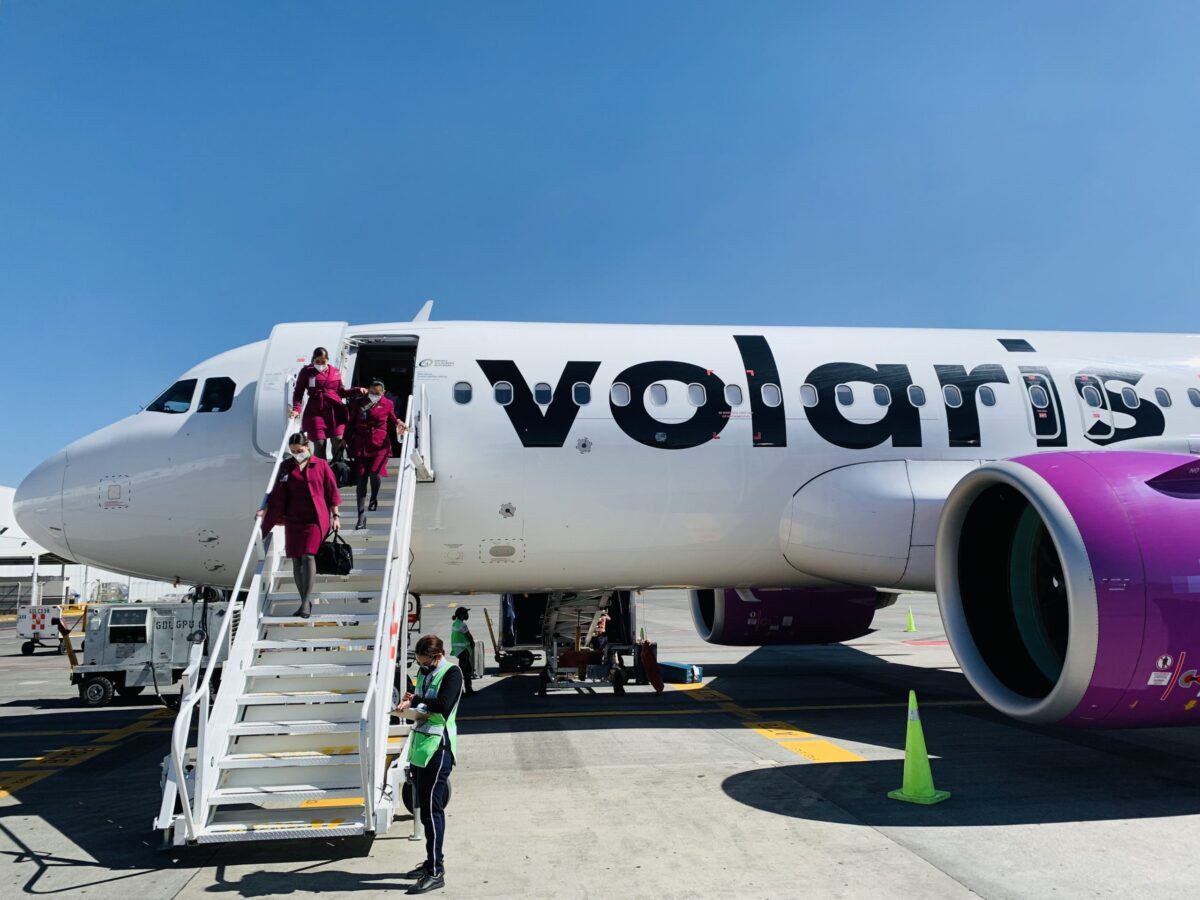
Volaris flight crew deplane an A320neo jet at Guadalajara International Airport. (Photo: AirlineGeeks | Albert Kuan)
One of the most speculated issues regarding Mexico City’s newest airport, Felipe Ángeles Airport (AIFA – Aeropuerto Internacional de Felipe Ángeles) is its ground connectivity with the country’s capital. This is the main challenge facing the new international airport located more than 25 miles away from the city center. Unfortunately, when the airport opens later this month on March 21, no formal public transportation services will operate to and from the new airport.
Instead, a transportation company contracted by the airport is expected to provide service to and from the airport via buses and vans. Services are expected to be provided from nine different points across Mexico City: Centro Comercial Perisur, Centro Santa Fe, Auditorio Nacional, World Trade Center, Benito Juárez Airport, Indios Verdes metro station, Ciudad Azteca metro station, Mundo E Shopping Center and Cuautilán Izcalli city.
Airport officials say fares for the services would range between 50 and 150 Mexican Pesos per trip (two to eight U.S. Dollars). Despite being a few weeks before the airport’s opening, many details on the contracted service are still unknown – neither the name of the contracted company nor the frequency and operating schedule of the services.
A contracted company is expected to provide ground transportation services to and from AIFA from nine points across Mexico City, including Benito Juárez Airport. Schedules and operating times of the supposed service are still unknown. (Photo: Albert Kuan | AirlineGeeks)
The airport will eventually be served by a commuter rail service (Tren Suburbano) and bus rapid transit (Mexibús), however, despite the speedy progress towards the airport’s completion, these ground transportation projects won’t be up and running in time for opening day. Both projects are scheduled to begin operations in 2023, a year after opening.
The new international airport was expected to be served by Mexibús service upon opening, but upon investigation by local journalists last month, the bus rapid transit system’s stations were found to be still under construction. The government of the State of Mexico, the operator of Mexibús, originally promised to deliver a service connecting the airport to Ciudad Azteca metro station, a few miles north of Mexico City’s city center, in time for the airport’s inaugural flight.
Construction work on the intercity highway where Mexibús would operate the service has seen little progress, and furthermore, existing stations on the Mexibús network were found to be lacking security and in states of disrepair. Journalists also found existing fixed routes in the bus network to be overcrowded with unreliable headways.
Even popular rideshare services in Mexico such as Uber and Didi won’t be able to provide services to travelers. Rideshare services have been banned from picking up travelers from Felipe Ángeles Airport, although dropping off is permitted. This is because, as with most Mexican airports, the grounds of the new airport is deemed federal property.
As with most airports in Mexico, AIFA is located on federal property where Uber and Didi are not allowed to pick up travelers. Most travelers are able to find workarounds to avoid overpriced airport taxis by walking away from federal zones, but this would be much harder to accomplish at AIFA. (Photo: Albert Kuan | AirlineGeeks)
Transportation services require a government permit in order to operate on federal property, although many travelers often find workarounds to walk off airport grounds. This would be nearly impossible for travelers at Felipe Ángeles Airport as getting outside this zone requires miles of walking.
Felipe Ángeles Airport will be the second airport to serve Mexico City, along with the more centrally located Benito Juárez Airport (commonly referred to as Mexico City International Airport, or AICM – Aeropuerto Internacional de la Ciudad de México). The new airport, which will have a total cost of 3.5 billion U.S. Dollars, is planned to relieve congestion at Benito Juárez Airport.
Mexico’s three largest carriers, Aeromexico, VivaAerobus and Volaris, will be the only carriers to operate scheduled flights from the new airport on opening day March 21. Mexico’s flag carrier Aeromexico will launch service to Mérida and Villahermosa from the new airport, while low-cost carrier Vivaaerobus has scheduled two flights to Guadalajara and Monterrey, and low-cost Volaris will operate service to Tijuana and Cancún. All flights announced to date are domestic within Mexico.
Despite persuasion from the Mexican government, a number of foreign carriers have confirmed Felipe Ángeles Airport is not in their expansion plans in the immediate future. Many airlines cited its lack of structure and feasibility, with ground connectivity being one of the main concerns. American Airlines, Air Canada, Air France, KLM and Lufthansa have confirmed they would continue to serve their markets operating out of Benito Juárez Airport.
The only airline scheduled to operate international service from the airport thus far is Conviasa. The Venezuelan airline begins flying to Caracas in May 2022.
Mexico’s three largest carriers will operate scheduled services out of AIFA. All flights announced to date are domestic within Mexico. (Photo: Albert Kuan | AirlineGeeks)
The Mexican government declared this past Friday, a few weeks before the opening of Felipe Ángeles Aiport, a new cap would be imposed on flight numbers at Benito Juárez Airport due to both its terminals reaching overcapacity, When the flight cap will be implemented is still not certain.
Such a move would send a message to airlines that they will have to move operations to Felipe Ángeles Aiport in order to continue growing in the greater Mexico City market. The airport authority has also been instructed to revise landing and take-off schedules to guarantee its optimal operation
VivaAerobus’ Chief Executive Officer, Juan Carlos Zuazua, whose airline was one of the first to announce operations at Felipe Angeles airport, highlighted a few months ago that the airport would be a success as long as it has convenient and cheap ground transportation to the city center. Zuazua explained the airport needs to be very well connected with Mexico City’s subway in order to ensure passengers can get in and out of the airport very easily.
The Tren Suburbano, one of the transportation projects that will bring more travelers to Felipe Ángeles Airport, will provide a direct rail connection with Buenavista Train Station in the city center once it opens in 2023. The trip is expected to take less than 45 minutes and cost 50 Mexican Pesos (approximately 3 U.S. dollars).
Most people hate long flights or overnight layovers, but Albert loves them. The airport and flying parts of traveling are the biggest highlights of any trip for him – as this avgeek always gets a thrill from sampling different airline cabin products and checking out regional developments happening at local U.S. airports. He’s flown on almost every major carrier in the U.S. and Asia Pacific, and he hopes to try out the new A350s soon.
Albert recently completed his undergraduate studies in Business Accounting at USC in Los Angeles and he is currently recruiting for a corporate analyst position at one of the U.S. legacy carriers. During his college years, he interned at LAX for Los Angeles World Airports working behind-the-scenes (and on the ramp) in public relations and accounting. Outside of writing for AirlineGeeks, he enjoys trekking the Hollywood hills, visiting new hotspots throughout SoCal, and doing the occasional weekender on Spirit Airlines.
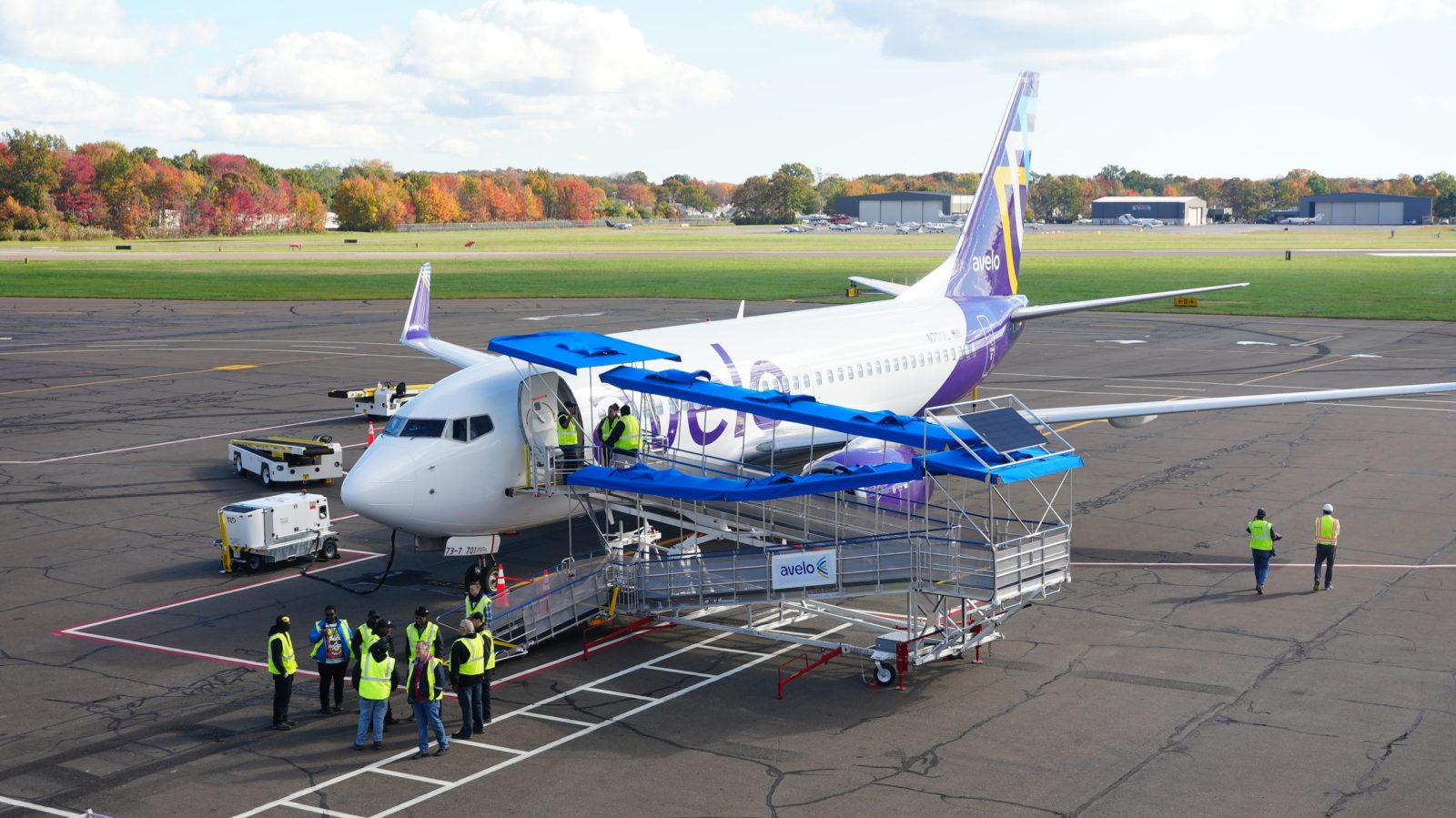
An Avelo Airlines Boeing 737-700 at Tweed-New Haven. (Photo: Avelo Airlines)
On Tuesday, Avelo Airlines announced three new routes from their popular east coast base in New Haven, Conn. The new routes will connect southern Connecticut with popular tourist and business destinations. The airline will launch flights, starting in late May — just in time for the summer travel season — from New Haven to Baltimore, Chicago’s Midway Airport and Raleigh, N.C. The new destinations will bring Avelo and the Tweed-New Haven Airport up to 13 cities served.
Growth in New Haven
Avelo has seen great success since launching service at Tweed-New Haven. The airline recently passed 100,000 passengers in four months of service. The carrier is the sole operator at the small southern Connecticut airport and takes advantage of the convenience of highway and rail access — making it convenient for travelers across New York and Connecticut. The three new destinations announced today come shortly after the airline announced a four-city expansion beginning in early May. The airline currently operates to six destinations from New Haven, Conn. — all in Florida.
The three new destinations are all scheduled to begin on May 26. All three will be operated five times a week — with no flights scheduled for Wednesdays or Saturdays. New Haven has previously had flights to Chicago and Baltimore in the 1990s and early 2000s. Avelo will utilize their Boeing 737-700s with 147 seats on the new routes.
Attracting New Clientele
Avelo’s expansion outside of their typical leisure markets shows their attempt to expand to a potentially lucrative business market. For business travelers on the southern Connecticut coast, the travel options are limited. A journey to New York City’s airports could take over an hour and then congestion can add on even more to the travel time. Hartford, Conn.’s Bradley International Airport — the state’s primary commercial airport — is an hours’ drive inland from the Tweed-New Haven Airport.
Avelo also maintains a west coast base from Burbank — serving 18 destinations across the west coast. The airline found a niche in providing low-cost air service to under-served communities. At the beginning of the year, the airline announced that it was able to secure another $42 million in capital funding — helping to fuel future expansion and new aircraft orders. The airline leans heavily on its company culture and a dedicated staff focusing on the travel experience for the customer.
Daniel has always had aviation in his life; from moving to the United States when he was two, to family vacations across the U.S., and back to his native England. He currently resides in South Florida and attends Nova Southeastern University, studying Human Factors in Aviation. Daniel has his Commercial Certificate for both land and sea, and hopes to one day join the major airlines.
A Singapore Airlines Airbus A380 in New York. (Photo: AirlineGeeks | Hemal Gosai)
Singapore Airlines is determined to resume its services after the pandemic, announcing its full London services will resume to pre-pandemic levels in June. The carrier currently operates two flights to London, adding the third flight on Apr.1.
Singapore Airlines will operate four times a day services to London in June, using Boeing 777-300ER, A380 and A350 aircraft. Meanwhile, Loganair, a regional airline in the U.K. has reached an interline agreement with Singapore Airlines, making its customers can travel overseas from London and Manchester on a single booking.
The travelers from Aberdeen, Inverness, the Isle of Man, and Teesside, U.K. also benefit from the new agreement.
“Singapore Airlines is delighted to announce its new interline partnership with Loganair, giving our passengers greater connectivity and flexibility with their travel options.” Mohamed Rafi Mar, Singapore Airlines’ U.K. & Ireland General Manager said in a statement.
In addition, Singapore has expanded its Vaccinated Travel Lane (VTL) program to eight Indian cities. Under the VTL program, travelers can go to Singapore without quarantine. Singapore Airlines has welcomed the decision.
Meanwhile, the flag carrier will bring the superjumbo back to India, unveiling that the A380 will operate the Singapore – Mumbai from Mar. 14 and Singapore – Delhi to be expected in the coming months.
Also, Singapore Airlines has announced that it will enhance its service to Australia by recommencing services to Cairns and Darwin, Australia on Mar. 28 and Mar. 29 respectively. The carrier is going to operate the Boeing 737 on these new routes. After adding the new routes, the airline operates nearly 100 flights to Australia from Singapore a week.
In the meantime, Singapore Airlines will start services to Penang, Malaysia, and Denpasar, Indonesia, after revealing the pairs are eligible for the VTL program. Also, travelers coming from Greece and Vietnam could avoid quarantine from Mar. 16.
After two years of the pandemic, Singapore Airlines has more than its fair share of problems due to lack of domestic travel. Singapore is carrying out a “living in covid” policy, meaning the carrier could rebound quickly after the pandemic.
However, the government is considering abolishing the VTL program, despite the country recording over 10,000 cases daily.
“Instead of having vaccinated travel lanes with selected countries that we think are low risk, we should actually (quarantine-free) travel for vaccinated travelers or fully-vaccinated travelers, from all countries.” Ye Kung Ong, Health Minister of Singapore said.
But Ong didn’t reveal more details and timeline on abolishing VTL. Currently, travelers coming from the U.S., U.K., Canada, etc. are eligible for the VTL program.
A Bombardier CRJ Series aircraft. (Photo: AirlineGeeks / Fabian Behr)
Sun Group, a real estate and entertainment corporation, has founded Sun Air, Vietnam’s first luxury airline, offering private jet management and air charter services, as well as tourist trips using helicopters and seaplanes. Sun Air is the first airline in Vietnam to cater completely to the luxury travel segment, primarily targeting domestic and international jet setters and high-fliers who desire ‘the best of the best’ when flying. On March 2, it was granted an aviation business license by Vietnam’s Ministry of Transport.
Sun Group Chairman, Dang Minh Truong stated that the airline’s launch is part of the company’s long-term development strategy, adding a new product to its high-quality ecosystem and motivating the expansion of the high-end segment in the Vietnamese aviation sector.
Sun Air will join Sun Group’s resort-entertainment-real estate businesses with its charter flight and sightseeing services using helicopters and seaplanes to produce Vietnam’s first near, safe, luxury, and exclusive service.
Its Fleet
Sun Air will operate Gulfstream G650ER and G700 business jets, the world’s fastest, high-altitude, long-range jet aircraft with ranges of up to 51,000ft (15,545m) and 7,500 nautical miles (13,890km). The jets have a top speed of 1,142km/h, which means they could fly nonstop from Hanoi to Los Angeles in roughly 12.5-13 hours.
Whether going for business or pleasure, or a little of both, Sun Air customers will undoubtedly travel in style while relaxing in a Gulfstream G650ER or Gulfstream G700, the type of cutting-edge business aircraft favored by billionaires such as Elon Musk and Jeff Bezos.
Sun Air will operate two Gulfstream G650ER jets, each capable of carrying 11 to 18 passengers, beginning in the third quarter of this year, according to its schedule. The airline intends to put four Gulfstream G650ERs, one Gulfstream G700, one helicopter, and two seaplanes into operation between 2023 and 2025.
A Sun Air business jet (Photo: Sun Air)
To create exceptional experiences for customers, the airline is working with companies like Agusta, Airbus, Sikorsky, De Havilland Canada, Cessna, and Textron. Sun Air has also opted to collaborate with the world’s premier flight service providers, such as Gulfstream Aerospace and Jet Aviation, in order to elevate customers’ flying experiences to the next level.
Growth of Private Aviation
The airline’s inauguration comes at a time when there is a growing global demand for more exclusive travel experiences, a trend driven by the two-year-long COVID-19 pandemic. Private aviation has rebounded faster than many other industries, according to a market study analysis by aviation consulting firm ARGUS International. Indeed, private jet travel has increased by 15% compared to the pre-pandemic period.
“We’re extremely excited to launch Sun Air, which will be a pioneer for luxury air travel in Vietnam and across the region,” says Dang Minh Truong, chairman of the board of directors at Sun Group.
“It will be a key part of our ecosystem of ‘Quality – Excellent – Distinguished’ products and services and further contribute to the development of the luxury travel segment in Vietnam, a country which now attracts wealthy tourists from all around the world.”
Sun Air will connect all of the best products within Sun Group’s ecosystem of luxury resorts, entertainment complexes, and real estate products, according to Truong.
Its Gameplan
The airline will be based at Vân Đồn International Airport in Qung Ninh Province and will have an initial capital of $4.37 million. Sun Group constructed Vân Đồn, Vietnam’s first privately funded airport.
Its passenger markets include Vietnam, Thailand, Singapore, Hong Kong, Taiwan, China, South Korea, and Japan, with flights intended at capitalist practitioners who require flights for project surveys, medical treatment, sightseeing, tourism, or luxury resort excursions. Sun Air also plans to deploy larger, long-haul business jets from Boeing and Airbus in the future, though the timeline is uncertain.
It will join Vietnam’s six existing domestic carriers, which include Vietnam Airlines, VietJet, Pacific Airlines, VASCO, Bamboo Airways, and Vietravel Airlines, which was the market’s last newcomer. Sun Air’s long-term goal is to raise high-end air travel in Vietnam while flying the flag for the country’s premium tourism sector.
Kalai has always wanted to work in the aviation industry, having been fascinated by its inner workings since he was a child. In pursuit of his dream, he obtained a diploma in aviation management and is currently interning with a low-cost airline, under in-flight policies. In his free time, he loves to engage in recreational activities, and watch sports. In the upcoming years, Kalai intends to pursue his degree at a business school before working as an executive for a global airline around the world.
Sign-up for newsletters & special offers!
Get the latest stories & special offers delivered directly to your inbox