








Stories

American, United Report Net Losses, Project Capacity Again Lower than 2019

A United Boeing 757 departing Los Angeles. (Photo: AirlineGeeks | William Derrickson)

U.S. airline industry earnings season continued Thursday morning as rival legacy carriers American Airlines and United Airlines released figures from the fourth quarter and all of 2021. The pair of airlines followed competitor Delta Air Lines’ lead with a beat on the top and bottom lines.

United reported a total load factor — a measure of the number of passengers flown divided by available seats — of 72.2% for the full year 2021, falling behind 2019 by almost 12 percentage points. American during the same period posted a load factor of 75.3%. Both significantly lagged Delta, which last week said it had managed to fill approximately 78% of its seats.

The industry continues to reel from the Covid-19 pandemic, and a surge of the Omicron variant in the fourth quarter throughout the U.S. and the rest of the world, alike, hampered their goal of returning to sustained profitability. On an adjusted basis, United posted a net loss of $600 million during the fourth quarter, which after adjusting for one-time items remained a net loss of $500 million. Its Fort Worth, Texas-based competitor announced a $931 million net loss, adjusted to $921 million excluding special items.

Both airlines echoed Delta in warning of sustained downward pressure on load factors through the beginning of 2022, though expressed optimism for a busy spring and summer travel season, both in domestic and international markets. Passengers hoping to book international itineraries, however, may have to yield to travel restrictions in some parts of the world.

“The United team has been fighting through unprecedented obstacles to, once again, overcome the new and daunting challenges that Covid-19 is bringing to aviation, and I am grateful to each one of them for their commitment to taking care of our customers,” said United Airlines CEO Scott Kirby in a statement. “While Omicron is impacting near-term demand, we remain optimistic about the spring and excited about the summer and beyond. We look forward to beginning to return the Pratt & Whitney 777s to service this quarter and getting the full airline back to normal utilization — as we ramp up along with demand this year.”

Incoming American CEO Robert Isom expressed a similar sentiment in a press release shared before the markets opened Thursday. American, historically the legacy carrier with the most debt, is specifically looking to change that moving into the new year.

“We’re very proud of the way our team delivered throughout 2021,” Isom said. “Looking forward, our focus in 2022 will be to continue running a reliable airline, returning to profitability, and delivering on our long-term plan to deleverage the balance sheet.”
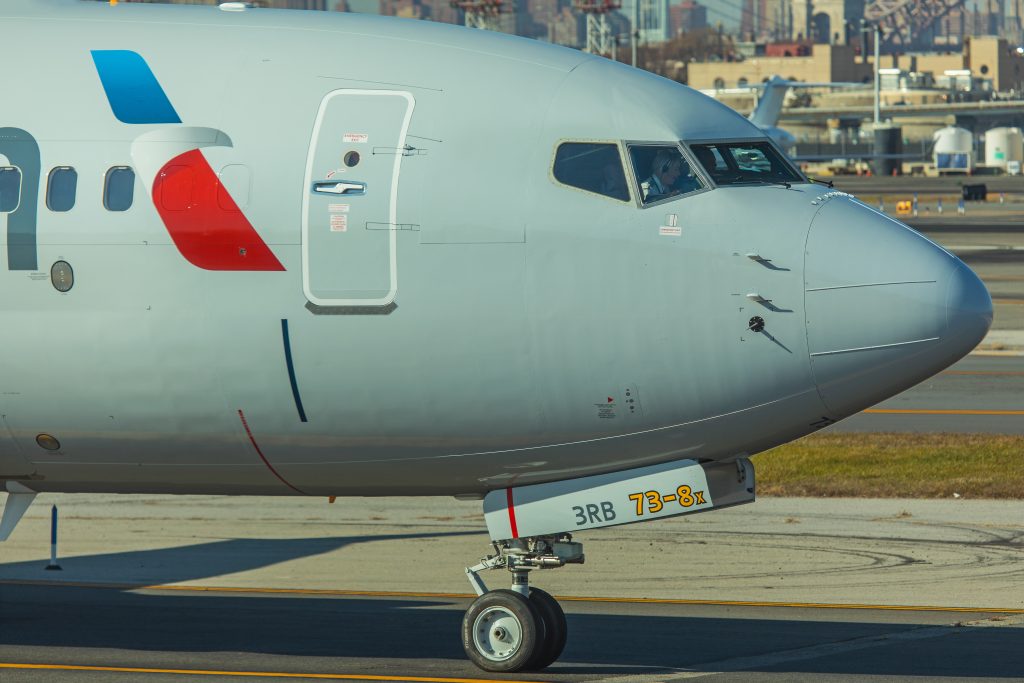
An American Airlines 737 MAX taxies at LaGuardia. (Photo: AirlineGeeks | William Derrickson)

United also put specific focus on its 52 Boeing 777s using Pratt & Whitney engines, which it grounded after an uncontained engine failure on an aircraft leaving Denver in 2021. The airline said that, as it gradually ungrounds the aircraft moving into the first half of the year, it will experience significant aircraft utilization improvements.

United also said the airline expects to fly lower capacity — measured in available seat miles — in 2022 than it did in 2019. American did not make similar full-year guidance but said investors should look to first-quarter capacity being 8-10% lower than the same period in 2019.

Eyes now turn to American’s crosstown rival, Southwest Airlines, which will share its 2021 traffic and financial figures Jan. 27. With a more domestic-focused route network, Southwest will provide a different look at the industry than the one the three large legacy carriers have given in the past week.

Allegiant Air, another low-cost carrier with a domestic focus, shared recently its December and full-year traffic numbers, which showed the airline was flying more seats — measured by available seat miles — than at the end of 2019. The airline had similar struggles when it came to load factor, which declined nearly 4% compared to the same period two years prior.

American Airlines hosted its earnings call at 8:30 a.m., while United has its call at 10:30 a.m.

Parker Davis

Parker joined AirlineGeeks as a writer and photographer in 2016, combining his longtime love for aviation with a newfound passion for journalism. Since then, he’s worked as a Senior Writer before becoming Editor-in-Chief of the site in 2020. Originally from Dallas and an American frequent flyer, he left behind the city’s rich aviation history to attend college in North Carolina, where he’s studying economics.

Allegiant’s December 2021 Traffic Numbers Exceed 2019 Levels

Allegiant A319
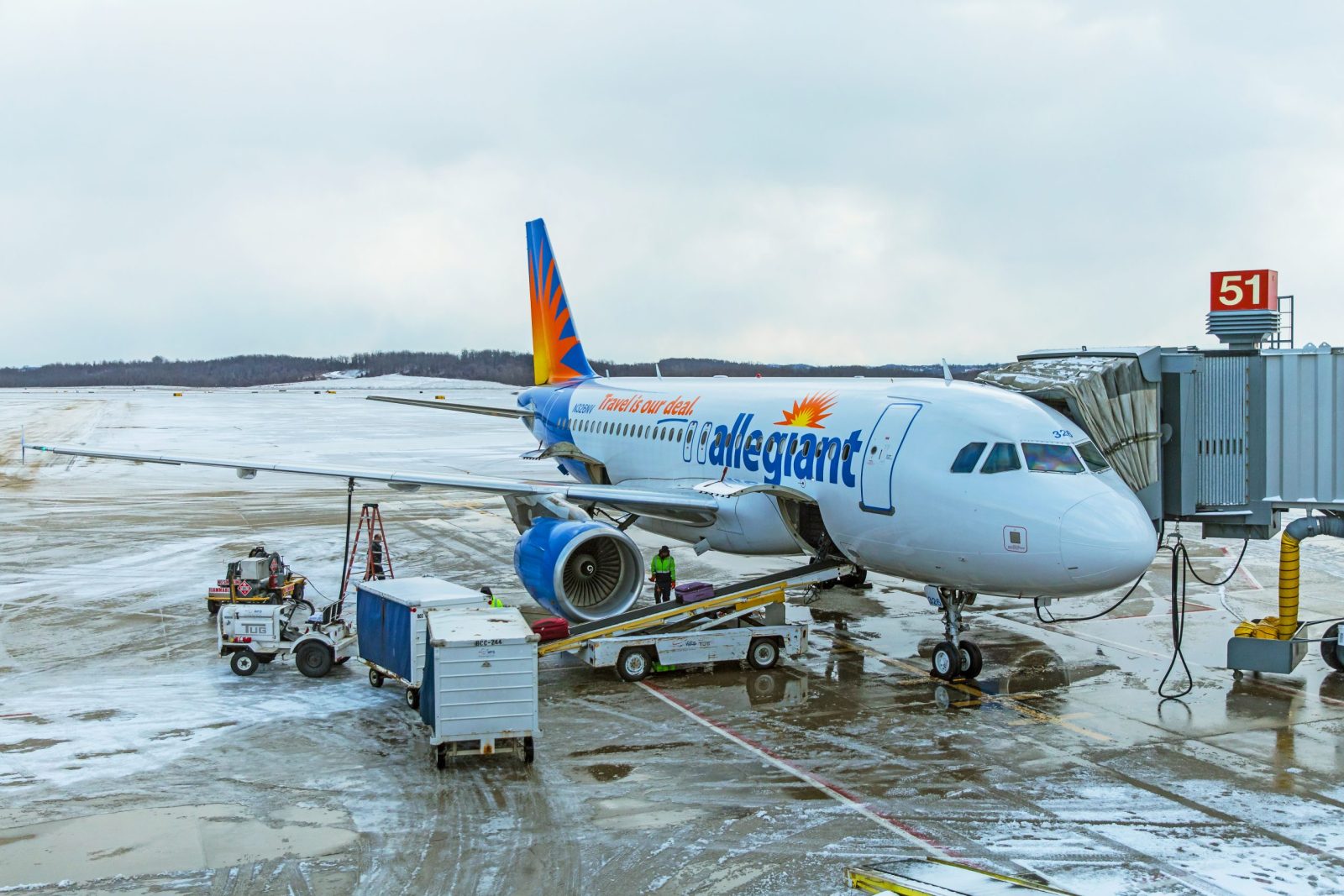
An Allegiant A319 in Pittsburgh. (Photo: AirlineGeeks | William Derrickson)

Las Vegas-based Allegiant Air recently announced its December 2021 passenger numbers as well as its overall passenger traffic for 2021. Passenger numbers for the month exceeded the same month in 2019. This was despite operational difficulty over the holiday period mostly related due to crew shortages from the Omicron variant of Covid-19. The airline also managed to post a profit for the third consecutive quarter since the Covid-19 pandemic began. 

Passenger Numbers Rising

Passenger numbers for December 2021 were up 0.9% compared to December 2019, with 1,320,403 flown on the Allegiant system last month versus 1,308,341 two years earlier. Year over year the airline saw a 96.2% increase in passenger numbers, helped by the reduction in restrictions and the wide availability and uptake of the Covid-19 vaccine.

The airline also operated more flights last month than in December 2019, seeing a 4% increase. Despite the higher total passenger numbers, the load factor was down over 2019 by 3.8 points, with an average load factor of 78.8% last month versus 82.6% for the same month in 2019. 

Throughout the month passenger bookings consistently outperformed bookings in 2019, despite passenger cancellations due to the rise of the Omicron variant. The bookings led to revenue of $458 million for the airline for the month of December. With the increase in schedule disruptions, the airline did spend $23 million in irregular operations costs, due to cancellations and crew shortages. Full financial results for the fourth quarter of 2021 and the yearly results will be released at the beginning of next month. 

Substantial Growth

Overall, the total 2021 traffic numbers substantially exceeded 2020. Passenger numbers were up 58.1% and departures were up 33.1%. 13,367,405 people traveled across the Allegiant system in 2021, compared to 8,623,984 in 2020. Compared to 2019, passenger numbers were still down for 2021 by 9.2%, but departures were up by 5.9%. There were 15,012,149 people that traveled across the Allegiant system in 2019. 

Allegiant and other leisure-based carriers have fared much better during the pandemic compared to their business travel-oriented competitors. They have been able to expand service during the pandemic as people sought outdoor destinations to escape indoor lockdowns. Allegiant added multiple destinations over the course of the year, as well as opened two new crew bases in the Midwest.  The airline also resumed construction of its in-house resort in Port Charlotte, Flo. 

As a sign of their recent growth, Allegiant recently announced a large aircraft order for 100 new Boeing 737 MAX aircraft. The order is the first the airline has made for new Boeing aircraft and is also the first new order for next-generation aircraft. The airline previously made an order for new aircraft from Airbus but this was for the older generations, Airbus A320ceo aircraft. The airline also previously operated pre-owned Boeing 757s for short-lived service from the West Coast to Hawaii. 

Daniel Morley

Daniel has always had aviation in his life; from moving to the United States when he was two, to family vacations across the U.S., and back to his native England. He currently resides in South Florida and attends Nova Southeastern University, studying Human Factors in Aviation. Daniel has his Commercial Certificate for both land and sea, and hopes to one day join the major airlines.

Virgin Atlantic Signs Codeshare With LATAM

Virgin Atlantic 787-9
A Virgin Atlantic 787-9 departing London Heathrow. (Photo: AirlineGeeks | William Derrickson)

Transatlantic flights are certainly always in season and are considered the backbone business for long-haul airlines, as passengers are always looking for a quick, direct flight or a connecting flight to their favorite destination. Thus, several airlines have consistently made the effort to increase their transatlantic flight operations.

The United Kingdom — with its strategic location, rich culture, shared language — has many airlines that have been holding the podium for transatlantic flights within the European market. As a result, it is an advantage for other carriers to gain through codeshare connections, such as Alaska Airlines and Kenya Airways who have done agreements with British Airways.

British Airways has competitors, especially since the U.K. holds the crown, in terms of popularity and profitable opportunities.

Interline Agreement

Virgin Atlantic — a competitor that has been on the heels of the flag carrier’s radar — had only just recently announced a healthy competition for the London-Austin, Texas route, which is welcoming come-back to the U.S for Virgin Atlantic, but a rival threat to British Airways.

And if one threat for the month is not enough, Virgin Atlantic proves to deal yet another as it signed a codeshare agreement with LATAM Airlines, offering passengers the opportunity to connect effortlessly to Brazil as Virgin Atlantic will be placing its code on LATAM Airlines London-São Paulo Guarulhos route.

This agreement allows for Virgin Atlantic to gain access to 12 airports in Brazil which includes Belo Horizonte, Brasilia, Curitiba, Florianopolis, Fortaleza, Goiania, Londrina, Porto Alegre, Recife, Rio de Janeiro, Salvador and Vitoria.

“We’re incredibly excited to launch this new codeshare partnership with LATAM Airlines. We also see opportunities beyond Brazil and look forward to expanding our relationship even further to serve destinations throughout South America including Peru and Colombia,” Chief Commercial Officer at Virgin Atlantic, Juha Jarvinen, said. He also adds that Virgin Atlantic is expecting “to capture demand from corporate travel heading to São Paulo, the commercial capital of Brazil as well as other key business hubs in South America.”

Branching Out

Whilst Virgin Atlantic will be branching out in Brazil and in the hopes of beyond, LATAM Airlines will look forward to branching from the U.K into destinations such as Delhi, Hong Kong, Tel Aviv and beyond.

The Santiago de Chile-based airline is looking to grow back its capacity this month, with the addition of Neiva, Colombia, and Loja, Ecuador being added to the airline group’s network this month — all alongside the resumption of its seasonal service on the Santiago-Punta del Este,Uruguay route. By the end of this month, the LATAM Airlines Group will connect approximately 132 destinations in 18 countries.

Previously, LATAM Airlines had a long-term partnership with British Airways before it was ended rather prematurely by regulators. Currently with winds blowing from a different direction, LATAM Airlines is partnered with Delta Air Lines instead — the U.S carrier that Virgin Atlantic is also coincidentally partnered with. It simply goes to show just how powerful and profitable this agreement could be for both Virgin Atlantic and LATAM.

Charlotte Seet

Fascinated by aircraft from a very young age, Charlotte’s dream was to work alongside the big birds one day. Pursuing her dream, she went on to achieve her diploma in Aviation Management and is currently working on her degree in Aviation Business in Administration with a minor in Air Traffic Management. When she’s not busy with school assignments, you can find her aircraft spotting for long hours at the airport. In Charlotte’s heart, the Queen of the Skies will always be her favorite aircraft.

Emirates Suspends 9 U.S. Routes Citing 5G Rollout Uncertainty

Emirates 777-300ER
An Emirates 777-300ER. (Photo: AirlineGeeks | Katie Zera)

In view of the launch of 5G C-band mobile networks in the U.S. scheduled for Wednesday and the growing concern about the impact it will have on the safety of air operations in certain scenarios, Emirates will suspend its flights to nine airports.

The Dubai-based airline issued a statement informing that flights to and from Boston (BOS), Dallas/Fort Worth (DFW), Newark (EWR), Houston (IAH), Orlando (MCO), Miami (MIA), Chicago (ORD), Seattle (SEA) and San Francisco (SFO) will be suspended ‘until further notice.’

This communication also instructs bases around the world not to accept passengers with destinations to these airports, while only those with confirmed tickets to New York/JFK, Washington (IAD), or Los Angeles (LAX) will be able to travel to the United States.

The company said it ‘regrets any inconvenience caused’ and that it is ‘working closely with aircraft manufacturers and relevant authorities to alleviate operational concerns’ and hopes to resume service to the United States soon.

Emirates joins a growing list of global airlines suspending some U.S. flights, including All Nippon Airways (ANA), Japan Airlines, and Air India.

Major U.S. telecommunication firms AT&T and Verizon have agreed to temporarily slow 5G rollout in some regions pending additional research per MarketWatch.

This story was originally published on Aviacionline

Ryan Ewing

Ryan founded AirlineGeeks.com in February 2013 and has spent more than a decade covering the airline business. His work has been featured by CNN, WJLA, CNET, and Business Insider. His aviation experience spans airport operations, Part 135 regulatory compliance, and airline crew workforce planning, along with time behind the yoke of a Cessna 172 and interviews with airline executives. Ryan now serves as Group President of Firecrown Media’s Aviation Group. He holds a B.S. in Air Transportation Management and an MBA from Arizona State University and teaches Airline Management at Embry-Riddle Aeronautical University.

Malaysia’s Airports Observe Surge in Passenger Traffic

A Malaysia Airlines 777-200 similar to the one involved in MH370 (Photo: Aero Icarus from Zürich, Switzerland [CC BY-SA 2.0 (https://creativecommons.org/licenses/by-sa/2.0)], via Wikimedia Commons)

Malaysia Airports Holdings Berhad (MAHB) — the operator of managing 39 airports including Kuala Lumpur, Malaysia’s International Airport and Istanbul, Turkey’s Sabiha Gokcen International Airport — has revealed its passenger capacity for December. The airports in the two countries have reported a total of 5.35 million passengers. The airport in Malaysia has a capacity of 3.11 million passengers, while Istanbul handled 2.23 million passengers.

The international passenger movement in Malaysia has skyrocketed by 114%, thanks to the resumption of Umrah travel or Islamic pilgrimage and the Vaccinated Travel Lane (VTL) program between Malaysia and Singapore, allowing both citizens to travel without quarantine. The domestic traffic in Malaysia also increased by 30% to 2.8 million passengers, compare to November.

In addition, MAHB has seen a 21 percent increase in aircraft movement from November to 40,147. International flights also increased by 15% to 6,582 flights. The traffic figures for December were 41.6% of pre-Covid-19 levels.

In December, Kuala Lumpur International Airport — the gateway to the country — saw a sign of recovery. Myanmar Airways resumed its services from Yangon, Myanmar, to Kuala Lumpur, Malaysia last month.

“Looking at the demand generated by the VTL program, as evidenced by the sold-out flights, it is obvious that such programs will be the catalyst for air travel recovery,” Dato Iskandar Mizal Mahmood, the new Managing Director of Malaysia Airports, said.

Malaysia and Singapore have been facing a setback. In response to the Omicron variant, the VTL program is suspended effective from Dec. 23 to Jan. 20.

Langkawi Travel Bubble 

However, there is not every program could make a success. Following the success of the domestic Langkawi travel bubble. Malaysia introduced the scheme to international travelers — welcoming foreigners to the tourist hotspot of the country. Due to the Omicron variant, the travel scheme fell short of attracting leisure travelers to visit Langkawi. The number of international travelers arriving in Langkawi, Malaysia since Nov. 15 was only 15% as the pre-covid levels.

“We have seen a favorable response to Scoot Air’s direct flight from Singapore to Langkawi in the earlier stage, but we are bracing for the numbers to slow down due to the Omicron scare,” Ardi Bahador, the President of Langkawi Tourist Guide Association said.

In the meantime, Malaysia is trying to reach VTL agreement with Brunei during the pandemic, allowing both citizens to the countries without quarantine. According to local media, arrivals from Brunei has plummeted 99.7% in the first half of 2021.

In addition, Malaysia is determined to avoid closing its border despite the threat of Omicron. Hajah Nancy Shukri, Minister of Tourism, Arts and Culture highlighted how the high vaccination rates could help leave the border open.

Meanwhile, MAHB revealed the passenger movements of Istanbul, Turkey’s Sabiha Gokcen International airport remained two million above the levels from last June As a result of the high vaccination rate and the lifting of interstate travel restrictions.

Ethiopian Predicts Higher Passenger and Cargo Capacity For 2022

Ethiopian A350
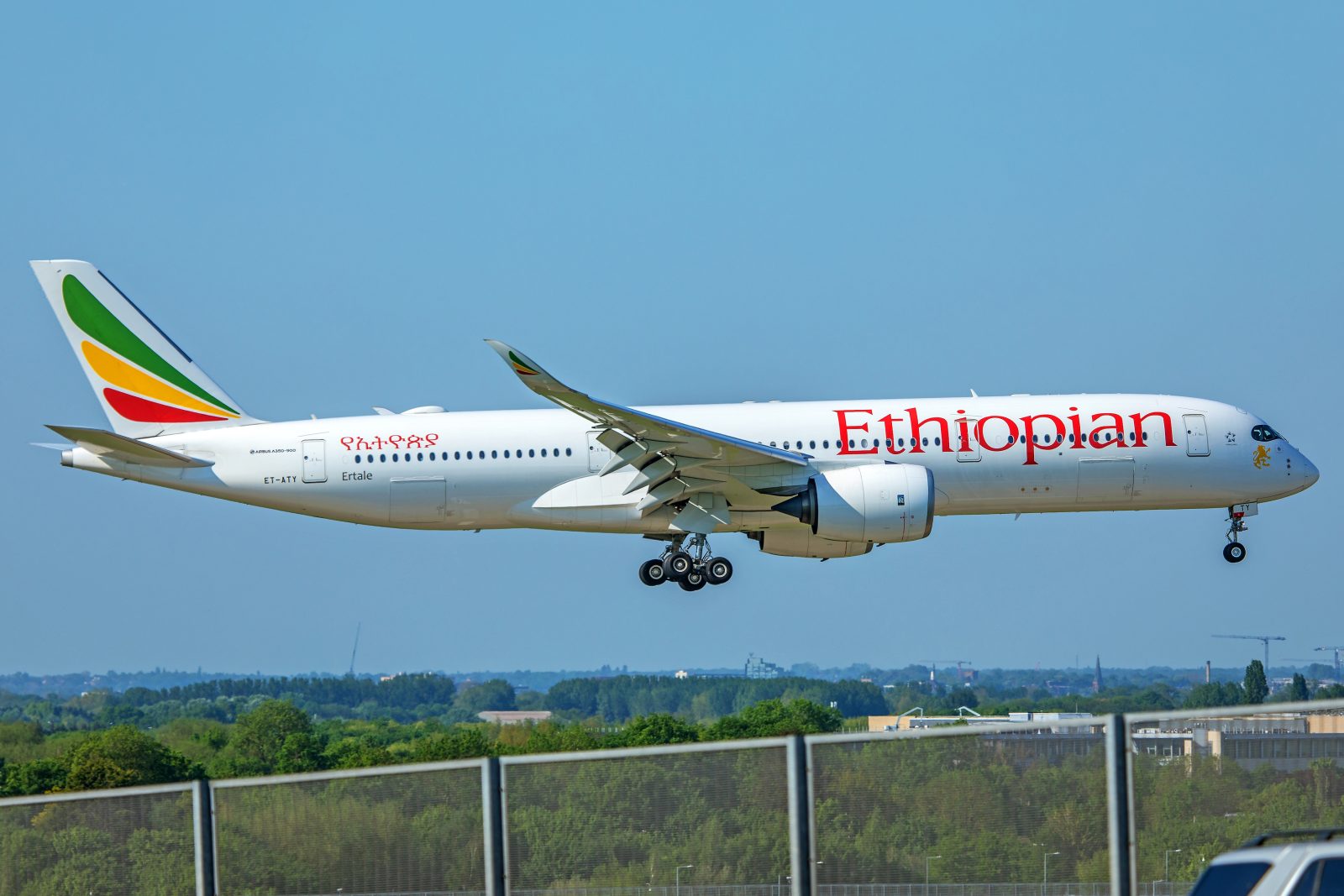
An Ethiopian Airbus A350-900XWB. (Photo: AirlineGeeks | William Derrickson)

Ethiopian Airlines — Africa’s largest carrier — is struggling with its passenger operations,  but the airline could make a full recovery by the end of this year, according to the airline’s CEO Tewolde GebreMariam who spoke at a Dubai Expo event on Jan. 11.

As the airline emerges from the devastating Covid-19 downturn, the airline’s s chief acknowledged that he “wouldn’t say that we will fully recover,” this year, but the carrier’s capacity is likely to rise from 70 percent of pre-Covid today to “80%, 90% maybe 100%.”

The projection may be more optimistic than those of other airline chief executives, with most CEOs noting that passenger capacity is unlikely to reach pre-covid capacity until 2023.

However,  according to GebreMarian, cargo operations has been instrumental during the covid crisis period with the split between cargo and passenger operations becoming somewhat of a ‘tale of two cities.’

Rising Cargo Numbers

Surging increase in air cargo business has steered Ethiopian through greater heights above of many peers in its recovery, with GebreMariam reiterating that the Addis Ababa-based carrier is “cash-positive and profitable,” having “not taken any bailout money”.

The carrier’s employees have received salary increases and bonuses, at a time when many carriers have focused on reducing their workforces.

“You see a clear demarcation between airlines that are well diversified into the cargo business and airlines which didn’t have a strong presence in the cargo business pre-Covid”, GebreMariam said.

An Ethiopian Airlines 737-800 in Nairobi (Photo: AirlineGeeks | Parker Davis)

2022 might bring “slightly lower” air freight demand than that seen in 2021, GebreMariam observes, “But still enough for airlines that have pivoted into the cargo business such as Ethiopian Airlines”.

According to GebreMariam, that is crucial when “the tourism part of travel is not yet recovering as much as expected”.

The Star Alliance cargo strategy, therefore, continues to involve the use of passenger jets for freight-only flying, GebreMariam states, including those temporarily converted into freighters.

Digitization of Air Freight

The airline — through its cargo division — recently launched an online cargo booking portal at cargobooking.ethiopianairlines.com.

“We are pleased to offer our customers convenience in their experience of air cargo booking. We are committed to starting walking the long walk of taking out paper from the entire air cargo process by digitalizing the logistics value chain. Taking out paper from logistics value chain is not only convenient and hassle-free service for customers but also it delivers more efficient operational excellence and achieves long term sustainability goals,” GebreMariam said.

Ethiopian Airlines Cargo customers can use the new online system and sign in for booking access to the carrier’s freight network conveniently using the mobile app — available for Android and IOS. On the Mobile App, customers can check flight schedules, submit inquiries, receive notifications when the shipment is ready, book charter flights and track shipments.

“Our online booking platform will be crucial in empowering direct cargo customers and forwarders with reliable access to our cargo capacity inventory. Besides, our cargo division has proved to the world that it is a genuine partner in times of dire need by delivering lifesaving PPE’s (Personal Protective Equipment) and hundreds of millions various vaccines to all major continents of the world,” he added, when describing how the new technology will be convenient and hassle-free for customers.

The operator has reconfigured around 25 passenger aircraft of various types into freighters during the pandemic, in addition to operating its 10 Boeing 777-200Fs and three 737-800SFS. Ethiopian Cargo has also extended its reach to more than 70 destinations globally, versus 10 pre-pandemic, the airline says.


Victor Shalton

Victor Shalton's love for aviation can be traced to when he was 11-years-old. As a seasoned aviation writer, he takes pride in providing the best aviation coverage around the globe and is passionate about advancing his skills in the aviation space. In addition, he loves travelling, writing, arts and while his speaking engagements have taken him around the world, he is proud to call Nairobi home.

Avianca Announces Seven New Routes As It Continues Rapid Growth

An Avianca A320 in Miami (Photo: AirlineGeeks | William Derrickson)

The strongest air network in Colombia and one of the largest in Latin America continues to grow. After inaugurating 17 new routes during 2021, Colombian carrier Avianca this week announced seven new routes and the reactivation of two more beginning in March.

In this way, its passengers will be able to travel non-stop from Colombia and Costa Rica to destinations in the U.S., the United Kingdom and Ecuador.

Regarding the new domestic operations, beginning on March 29, Avianca will start flying between Medellín, Colombia and Riohacha, Colombia, and from May 16, the Colombian carrier will start the route from Bogotá to Ipiales, Colombia.

Internationally, starting March 27, Avianca will fly from Medellín to San José, Costa Rica, from Cartagena, Colombia to San José, and from Cartagena to New York. Then, from March 29, the Colombian flag carrier operate services from Medellín to Orlando.

Concerning Avianca’s operations in Central América, the carrier will be flying from March 28 a route between San José and Quito, Ecuador. Finally, Avianca revealed that from March 27, it will be resuming operations on its route from Cartagena to Miami, and from March 28, from Bogotá to London.

The carrier also announced that its Cali, Colombia to Orlando route, one of the most successful direct international routes inaugurated during 2021, will cease to be seasonal and will be part of the permanent offering of its network.

“In 2021, we set out to inaugurate 50 new routes in the next 3 years and we are getting closer to achieve it,” Ana María Copete, Avianca’s Director of Sales, said in a statement. “We continue to provide more and better point-to-point and non-stop connectivity opportunities to our customers so that they can travel to their preferred destinations in America and Europe.”

Avianca Changes the Way to Earn Miles

This year, LifeMiles, Avianca’s frequent flyer program, will update so that more members reach an Elite level thanks to the reduction of the requirements to maintain their status. In addition, the carrier is changing its mileage accrual scheme, allowing miles to be earned based on the size of the ticket purchased.

From this year, Avianca has established that the requirements to achieve and maintain an Elite status will be reduced by up to 41%. The carrier also reported that 25% of the miles that are accumulated with LifeMiles credit card consumption are eligible for Elite Status.

From Feb. 1 and in line with the “Vuela a tu Medida” fare scheme that Avianca implemented last year, LifeMiles members will accumulate their miles according to the size of the ticket they buy for their trip.

With the XS fare, the passenger will not earn miles; with the S fare, three miles will be earned for every dollar; with M and L fare, five miles for every dollar; and, with the XL and XXL, five miles for each dollar spent.

Juan Pedro Sanchez Zamudio

The three things Juan Pedro loves most about aviation are aircraft, airports, and traveling thousands of miles in just a few hours. What he enjoys the most about aviation is that it is easier and cheaper to travel around the world and this gives you the opportunity to visit places you thought were too far away. He has traveled to different destinations in North, Central, South America and Asia. Born, raised and still living in Perú, Juan is a lawyer, soccer lover, foodie, passionate traveler, dog lover, millennial and curious by nature.

What’s To Come for ITA Airways in 2022

An ITA Airways Airbus A320 with the new livery at Milano Linate International Airport. (Photo: Francesco Zangari – lin_planespotting)

On January 12, 2022, ITA Airways President Alfredo Altavilla and CEO Fabio Lazzerini attended a hearing at the Transport Commission of the Italian Chamber of Deputies. During the meeting, they presented the 2021 results of the airline and the future prospects of the Italian flag carrier in 2022.

After approving the business plan in July 2021, the Italian Newco bought the Aviation branch of the former national airline to start flight operations and acquired the Alitalia brand only so that no other airline could use it. To comply with the discontinuity imposed by the European Commission, after the acquisition of the brand, it started flight operations on October 15, 2021, under the name ITA Airways. The inaugural flight AZ 1637 departed from Milan Linate and landed in Bari at 7:35 AM operated with an Airbus A320 in Alitalia livery. On the same day, there was the launch of its own “Volare” loyalty program, as ITA did not purchase Alitalia’s MilleMiglia loyalty program, because of the discontinuity required.

According to the airline’s data, the 52 aircraft in its current fleet in 2021 flew about 23,000 hours and carried 1.26 million passengers. Right now there are about 230,000 members subscribed to the new loyalty program and revenues amounted to 86 million euros, 50% less than those forecast in the business plan. This was due, according to Chairman Altavilla, above all to the pandemic, which negatively affected international routes, and to the fact that ITA Airways’ advertising campaign suffered considerable delays and consequent ticket sales suffered.

The Italian flag carrier, however, ended 2021 with more than 400 million euros in cash, a figure higher than the business plan forecast of 250 million. This came about, the president says, thanks to correct investments and sound service contracts. The airline’s punctuality in 2021 was 90% and Completion Factor 99.8%, making it one of the top airlines in the world.

ITA Route Network

The main hub will remain Leonardo Da Vinci airport in Rome Fiumicino and the second will be Milan Linate. As regards the domestic network, where the new “Superior” class is already active, unprofitable and non-strategic routes have been reduced. From Rome, there will be, in summer 2022, 17 destinations to Northern and Southern Italy, with particular attention to the preservation of routes where there is no competition from low-cost carriers. From Milan, with a similar strategy, there will be 11 domestic routes to Southern Italy.

Regarding the international network with medium-haul routes in Europe and North Africa from Rome and Milan, there will be a total of 45 point-to-point routes, with a reduction in non-profitable routes.

With regard to the intercontinental network, ITA Airways currently only operates the Rome-New York flight. From the beginning of May 2022, ITA Airways will introduce more routes to North America, Boston, Miami and Los Angeles, to South America with Buenos Aires and San Paulo and finally to Tokyo Haneda.

The Fleet

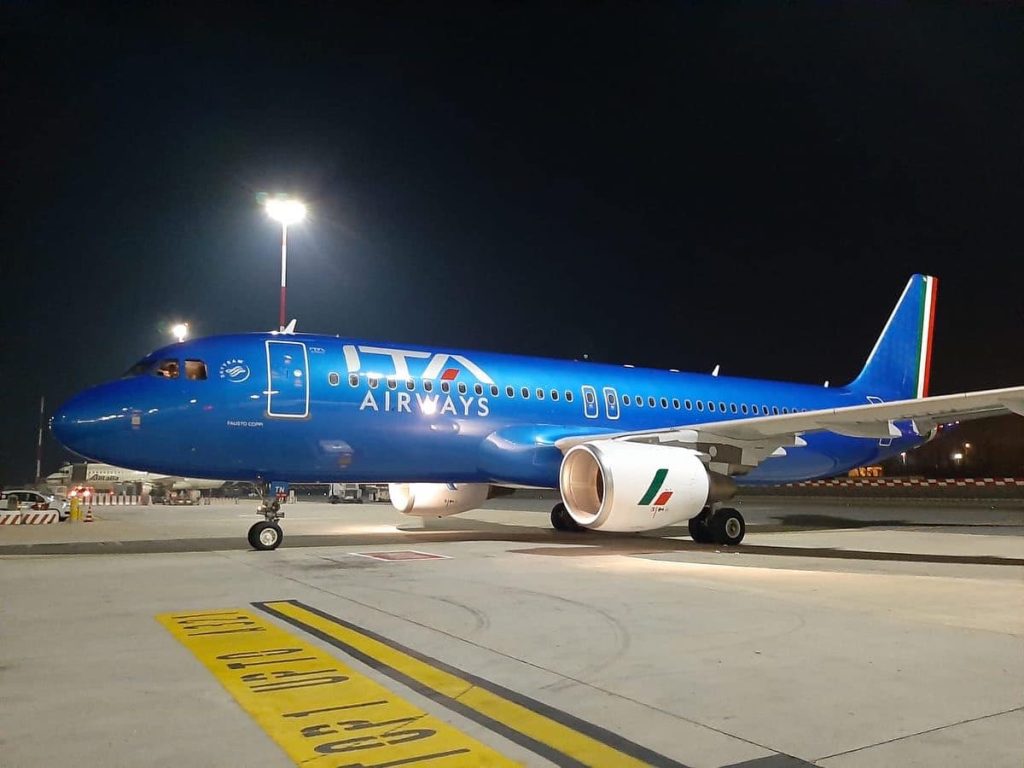
At the moment, the new blue livery has been inaugurated on only 3 aircraft. The first, an Airbus A320, was dedicated to the 1982 Italian world champion footballer, Paolo Rossi, the second, an Airbus A319, was named after Olympic champion Pietro Mennea, while the third, which landed at Fiumicino last night, an Airbus A320, was named after Italian cycling champion Fausto Coppi. 

ITA Airways has also recently signed an agreement with Airbus for 28 new-generation aircraft to renew its fleet, including 7 Airbus A220s, 11 Airbus A320neo and 10 Airbus A330neo. The company finalized an agreement with Air Lease Corporation (ALC) for 31 aircraft, including 5 Airbus A330neo, 9 Airbus A321neo, 2 Airbus A320neo and 15 Airbus A220 for regional routes. The Italian airline has also chosen to lease 6 Airbus A350s for the long haul, to complete the modernization of the fleet and thus pursue the green objective of cutting fuel consumption and CO2 emissions by 25%.

At the end of 2025, the fleet will therefore consist of 17 owned aircraft and 88 leased aircraft. In 2028, 11 Airbus A320neo are expected to be added, so ITA Airways will own 28 aircraft.

An ITA Airways Airbus A320 with the new livery named after “Fausto Coppi” at Leonardo Da Vinci International Airport. (Photo: ITA Airways)

Employees and Cargo

The average age of ITA Airways’ employees is under 50. This average will be further lowered by the entry of young pilots from the ITA Airways Academy, assures Altavilla. If the fleet and network growth assumptions are consistent with the economic scenario envisaged in the business plan, the airline forecasts that it will be necessary to hire around 1,000 new employees in 2022. Among these new hires will be 300 captains and first officers and over 600 flight attendants, to be followed by a large investment in their professional training.

Compared to passenger traffic, Cargo traffic is growing strongly. This counter-trend is obviously due to the pandemic, which has greatly reduced passenger flights and led to the use of many aircraft in “Preighter” configuration, i.e. aircraft whose seats have been removed to make more room inside the passenger cabin. However, this choice is short-term, as ITA Airways will base at Milan Malpensa 2 Boeing 777-200ER aircraft in wet lease available from mid-January until July 2022, with the aim of obtaining 50 million euros in revenues from “full-cargo” operations.

The Italian Transport Commission Is Not Satisfied

ITA Airways underlines President Altavilla, which is not large enough to stand alone in the market and offer extensive coverage of its network. It is necessary to integrate the airline within an alliance to guarantee growth and positive economic results in the long term. SkyTeam agreement has a duration of only one year and therefore ITA Airways can leave it by December 2022 without penalty, by giving at least 6 months’ notice. 

The Chairman of ITA Airways confirmed negotiations have been carried out with both European and non-European operators and that the process of selecting an industrial partner will be completed by the first half of 2022.

Following the hearing and at the end of the PowerPoint presentation, however, there was no shortage of controversy on the part of members of parliament who expressed their dissent over certain unjustified decisions made by the Italian airline. First of all, the “loss” of territorial continuity with Sardinia. This has contributed to the loss of revenues compared to what was foreseen in the business plan, given that the connections with the Peninsula have ended up under the control of the Spanish low-cost company Volotea. Finally, what was highlighted as “offensive” was the failure to deliver the official business plan for the second consecutive time. The 2022 Business Plan is still “always presented in a very quick and confusing way by the management of ITA Airways and the slides cannot be a substitute for a real business plan documentation”. Therefore, the committee requested a third hearing to be held next Wednesday.

Vincenzo Claudio Piscopo

Vincenzo graduated in 2019 in Mechanical Engineering with an aeronautical curriculum, focusing his thesis on Human Factors in aircraft maintenance. In 2022 he pursued his master's degree in Aerospace Engineering at the University of Palermo, Italy. He combines his journalistic activities with his work as a Reliability Engineer at Zetalab.

Norse Atlantic Airways Preparing for Launch After Receiving US DOT Approval

Norse Atlantic Airways Boeing 787-9 Dreamliner.
Norse Atlantic Airways Boeing 787-9 Dreamliner. (Photo: Norse Atlantic Airways)

Starting up an airline from scratch is no easy feat, especially amidst a worldwide health crisis that has the stability of the aviation industry in its grasp — as the world has once again witnessed with the ongoing Omicron variant wave hitting various countries, causing several airlines to carry out mass cancellations of flights.

The uncertainty in the aviation industry has not once stopped newcomer long-haul, low-cost carrier Norse Atlantic Airways – which has been progressing towards its launch without much of any turbulence. Having only just signed for its initial fleet of Boeing 787-8 and 787-9 Dreamliners in August last year, the airline had already received its first aircraft in December and nicknamed it “Rondane.”

Tailwinds have been driving the airline’s progress even further as it was granted a year-end’s present in the form of an Air Operator’s Certificate by the Norwegian Civil Aviation Authority in late December, which solidifies Norse Atlantic Airways as an airline that has all the assets, personnel and systems in place to meet the expected safety standards and will be allowed to commence commercial flight operations.

Finishing Touches

It would seem that Norse Atlantic Airways is on final approach to commence flying operations as the airline received approval from the U.S. Department of Transportation for its transatlantic flight application.

“We are thrilled by the Department of Transportation’s approval of our affordable transatlantic flights. This significant milestone brings Norse one step closer to launching affordable and more environmentally friendly service to customers traveling between Europe and the United States. We appreciate the USDOT’s constructive and prompt approach, and we look forward to working with them in the months ahead,” said Norse Atlantic Airways CEO and Founder Bjørn Tore Larsen in a prepared statement.

Once operations have commenced, the airline is planning to fly between Oslo and Fort Lauderdale, Fla.; Ontario, Calif. and Stewart, N.Y. Additionally, Norse Atlantic Airways then has plans to expand to more states in the U.S. and perhaps even to cities in Europe in the future.

Growing Community

Besides progressing the airline’s operation commencement, the approval from the Department of Transportation also opens up a variety of jobs in the U.S for roles such as cabin crews, travel and tourism.

“Our people will be our competitive advantage. We are building a high-performance culture and creating an environment where we value diversity, ensuring that all colleagues feel a sense of belonging. We look forward to start recruiting our new colleagues in the U.S.,” Larsen said.

This goes hand in hand with Norse Atlantic Airways goal of building a community as back in May last year, the airline had reached a historic pre-hire agreement with the U.S Association of Flight Attendants that provided an initiative to create at least 700 positions in the U.S. Ultimately, Norse Atlantic Airways is looking to bridge a positive socio-economic impact for both Norway and the U.S.

The first flights are expected for take-off in the coming spring with the probability of tickets going on sale soon seeming as high for now, but so is the possibility of a delayed or even aborted take-off for Norse Atlantic Airways as the effect of the Omicron variant still lingers within the industry.

Charlotte Seet

Fascinated by aircraft from a very young age, Charlotte’s dream was to work alongside the big birds one day. Pursuing her dream, she went on to achieve her diploma in Aviation Management and is currently working on her degree in Aviation Business in Administration with a minor in Air Traffic Management. When she’s not busy with school assignments, you can find her aircraft spotting for long hours at the airport. In Charlotte’s heart, the Queen of the Skies will always be her favorite aircraft.

Opinion: The U.S. Should Reconsider How it Handles Unruly Passenger Incidents

American's Boeing 737-800 aircraft at Washington Reagan National Airport (Photo: AirlineGeeks | Ryan Ewing)

As a country, the U.S. needs to seriously re-evaluate how it deals with the rise in unruly passenger cases onboard flights nationwide. An astonishing 5,981 cases of unruly behavior onboard commercial aircraft were reported to the Federal Aviation Administration (FAA) in 2021. Despite this high number, 350 enforcement actions were issued by the FAA’s investigations office.

Only 6% of these unruly passenger cases were enforced by the aviation regulator in 2021. This is a classic example of agency bureaucracy getting in the way of meaningful action and the sharp rise in unruly behavior onboard commercial airliners is teetering on the edge of a broader aviation safety issue.

A Recent Incident with Little Accountability

On Tuesday, an American Airlines flight from San Pedro Sula, Honduras to Miami was scheduled to leave on time until a passenger decided to rush into the flight deck at the gate, damaging several critical flight controls. The male passenger then proceeded to try and exit through one of the cockpit windows before the pilots stopped him.

An unconfirmed image following the incident showed significant damage to the throttle quadrant, making the Boeing 737-800 no longer operational. As a result of this brief incident, the airline ferried an empty aircraft to San Pedro Sula to rescue stranded passengers. According to one airline source, the damage will require significant time and cost to repair, not to mention the original cost of ferrying an empty airplane to South America.

But what happened to this individual you may ask? Next to nothing. Per an Associated Press report, the man was released by the Honduran authorities, who said the airline did not press charges.


“He was freed because the airline did not press charges,” said Security Secretary spokesman Edgardo Barahona to the AP. “The aggression toward the pilot and the crew of the airline was not serious.”

On the contrary, an airline spokesman confirmed to the AP that they will press charges, though it is unclear how it’ll go about that given the complexity of international jurisdiction and Honduras’ civil law legal system.

To me, this incident points to a clear safety and security issue. What if the individual were to have done the same thing inflight? Attempted flight deck breaches have occurred in the past year among U.S. carriers.

In this case, it’s more than likely the man will face any legal action or charges. At most, he’ll be blacklisted by the airline. However, this lack of prosecution in these types of cases is all too common.

Why Now?

In the past and prior to the COVID-19 pandemic, unruly passenger incidents that made their way through the news cycle were few and far between. Now, they’re overtaking it. But why?

The days of the TSA PreCheck lines being longer than general screening are long gone as business travel continues to dip. Selectively lower fares and cabin fever has driven people to fly who otherwise wouldn’t. Leisure travelers make up the majority of passengers these days.

Generally speaking, these types of passengers typically do not travel often, and the added stress of being told what to do constantly only fan the flames. And then, throw mask requirements in the mix.

FAA data indicates that 4,290 of last year’s reported incidents were mask-related, over 70%. The polarization regarding mask-wearing and the different requirements per state certainly isn’t helping the case.

Who Regulates What?

There are tons of regulatory agencies and law enforcement agencies involved in U.S. aviation. From the TSA, FAA, FBI, and local law enforcement to name a few, the enforcement of unruly passenger incidents has turned into a game of regulatory hot potato.

Agencies like the FAA and Transportation Security Administration (TSA) are specifically enabled by Congress to enforce certain incidents. Their scope can often be wide, but agency inspectors are often careful about stepping out of bounds. And – in my opinion at least – checks and balances on these agencies is a very good thing.

Nevertheless, talking about the two primary U.S. commercial aviation regulators – the TSA and FAA – it can get murky involving bad behavior onboard flights. The TSA is authorized under 49 USC 114 and the FAA under 49 USC 106. Neither of these agencies has direct criminal enforcement authorization and can usually only assess enforcement actions, which may or may not come with a civil penalty.

The TSA and FAA often default to their fellow government agencies to pursue criminal enforcement. If their respective chief counsel or inspector general’s office deems it appropriate, cases will be referred over to the DOJ, or the FBI (which falls under the DOJ), for criminal charges. In the case of disruptive passengers at least, only 37 cases were referred by the FAA in 2021, according to CNN.

The TSA will more than likely refer cases to local airport law enforcement, which is what happens when an individual is found to possess a firearm at a screening checkpoint. Indeed, the individual might get a slap on the risk depending on state laws and a so-called Notice of Violation (NOV) from TSA headquarters in the mail, but that’s about it. Transportation Security Officers (TSO) are not empowered to arrest or charge an individual.

That is why airport police are seen in videos removing disruptive passengers at the air carrier’s request. Often, the offender will be charged, booked, but released later. This all boils down to state and even municipal laws.

Aviation is well-protected under U.S. Code (i.e. 49 USC 46504 – Interference with flight crew members and attendants). Statutes such as this one allow for criminal charges, but pursuing those can often be tricky with too many agencies involved. Nonetheless, when these cases are actively pursued, they can yield full accountability.

For example, in December 2021, Vyvianna M. Quinonez, a Sacramento, Calif. resident, pled guilty after assaulting a Southwest Airlines flight attendant, sending her to the hospital with three chipped teeth and several other injuries. This high-profile will go to sentencing in federal court in March.

So, What’s The Solution?

The solution to this surge of onboard unruliness ultimately falls on the private sector. Regulators are tripping over their own red tape and it’s time for the industry as a whole to take aggressive action. This should start with a unified blacklisting database among operators to bar anyone who doesn’t comply with crew instructions or acts out of line.

In addition, airline lobbying groups should push harder for increased criminal penalties against offenders. Indeed, even with measures in place, passengers will still act out, but basic actions and a solid public-private partnership will significantly reduce onboard incidents.

The essence of a foundational aviation safety culture centers around the totality of the operation. This includes passengers onboard an aircraft, especially when the way in which they behave harms the flight’s safety profile. Aviation regulators and operators need to take a proactive, rather than a reactive approach to this ongoing issue before an unruly passenger event takes a more serious turn.

Ryan Ewing

Ryan founded AirlineGeeks.com in February 2013 and has spent more than a decade covering the airline business. His work has been featured by CNN, WJLA, CNET, and Business Insider. His aviation experience spans airport operations, Part 135 regulatory compliance, and airline crew workforce planning, along with time behind the yoke of a Cessna 172 and interviews with airline executives. Ryan now serves as Group President of Firecrown Media’s Aviation Group. He holds a B.S. in Air Transportation Management and an MBA from Arizona State University and teaches Airline Management at Embry-Riddle Aeronautical University.
Sign-up for newsletters & special offers!

Get the latest stories & special offers delivered directly to your inbox

SUBSCRIBE

Uh-oh! It looks like you're using an ad blocker.

Our website relies on ads to provide free content and sustain our operations. By turning off your ad blocker, you help support us and ensure we can continue offering valuable content without any cost to you.

We truly appreciate your understanding and support. Thank you for considering disabling your ad blocker for this website