









Stories

European Carriers Suspend Asia Flights Amid Ukraine Crisis

A Finnair Airbus A350-900 XWB approaching. (Photo: Antti Lehto)

As the conflict between Russia and Ukraine continues escalating, more countries are closing their airspace to Russian carriers and Russia-registered aircrafts. In return, Russia closed its airspace to those countries to retaliate. As most of the routes between Europe and Asia pass through Russia, the result of those sanctions forced multiple European airlines to cease their operations to Asia, including Air France, KLM, and Lufthansa.

The British Government was the first authority to impose restrictions on Russian aircrafts. Since then, the entire EU, the United States, and Canada have imposed the same restrictions as a reaction to Russia’s military actions in Ukraine. The restriction forced Aeroflot, the biggest international airline in Russia, to cancel all of its westbound flights to Europe and North America.

As a countermeasure to the resections imposed by the west, Russia closed its airspace to those nations as well. Major carriers in the US, such as United Airlines, American Airlines, and UPS, announced that they will reroute or cancel the flights that are using Russian airspace. The influence of restrictions is only on flights between the U.S. and South Asia, such as India and Singapore.

On the other hand, the impact of restriction was far worse on European Airlines. On top of suspending flights to Russia and Ukraine, Airlines are forced to take significant detours or even cease operations to their Asia destinations due to the unavailability of Russian airspace.

Air France announced on Feb. 28, that, due to the ongoing conflict between Russia and Ukraine, the airline will cancel all flights from Europe to China, Japan, and Korea until further notice. Today, the airline updated that announcement and resumes its operations from Pairs’ De Gaulle Airport to Beijing, Shanghai, Seoul, and Tokyo. The flights will fly via Turkey, Uzbekistan, Kazakstan, and China to avoid using Russia’s Airspace. The reroute is expected to add more hours to the journey.

Under the same roof as Air France, KLM, however, is still working on its solutions to resume flights between Amsterdam and its Asia destinations.

Lufthansa Group — with Lufthansa, Swiss International Air Lines, and Air Austria — is maintaining its operations in Asia. However, flights have all been updated with two more hours on the journey, due to the detour to avoid Russian airspace.

A Two-Continent Problem

From the Asia side, no airspace restrictions have been imposed from East Asian countries to Russia at this moment. At the moment when this reporting was authored, a number of aircrafts from China, Korea, and Japan are flying over the Russian airspace as usual.

The restrictions came in a bad time for airlines as the international oil price hits a record high. The detour and cancellation will further trim Airlines’ profitability, as they are recovering from the impact of the Covid-19 pandemic. Meanwhile, passengers may face high fares and a reduced supply of seats between Europe and Asia, making the slow recovery of flights stagger.

As the military conflict in the region goes on, further impacts are expected on a global scale.

March 4 at 2:15 p.m. ET: Correction — an earlier version of this article misstated the name of a member airline of the Lufthansa Group. It is Swiss International Airlines, not SwissAir.

Lei Yan

Lei is from Inner Mongolia, China, and now lives in Guangzhou. He grew up in an aviation family, where his passion began. During his time at Penn State University, he studied Industrial Engineering specializing in operations research, and he graduated with an honor’s thesis on airport gate assignment optimization. Now, he is a Purchasing Manager with Procter & Gamble. In his free time, he enjoys flying, reading, and wandering around the city.

South African Government Concludes Sale Agreement for South African Airways

A South African Airways A340 pushing back at Washington Dulles
A South African Airways A340 pushing back at Washington Dulles International Airport. (Photo: AirlineGeeks | Ben Suskind)

The South African government said last Thursday that Takatso consortium will now take up 51% of the South African Airways’ shares after a sale agreement was concluded — marking eight months since the consortium. The agreement that consists of Global Airways, owners of low-cost airline LIFT and an infrastructure investment firm called Harith General Partners was announced as the preferred shareholding firm.

According to an announcement by the Ministry in the Presidency following a Cabinet meeting on February 23, “The Sales and Purchase process has now been concluded and signed by the Department of Public Enterprises and Takatso Consortium. The next step involves the approval of this transaction by various regulatory bodies.”

It is expected that the new partners will pump up to $194 million onto the airline project over the next 3 years. In a statement to Fin24, Takatso said it is “confident that the relaunched SAA has strong growth prospects domestically, regionally, and internationally.”

“The consortium is working with the DPE to fulfill the conditions of the transaction timeously” and that “All matters related to the Business Rescue process of SAA will be resolved during this time.”

According to CH-Aviation, South African Airways will introduce long‐haul commercial flights during the second half of 2022. The flag carrier resumed limited commercial operations in September 2021 in line with plans for a conservative re-entry into domestic and regional markets following a protracted business rescue process started on December 5, 2019, following years of continuous losses.

While in business rescue, the carrier defaulted on 890 million South African Rand (USD.58.5 million) of revenue owed to former franchise partner Airlink from South Africa. It still owes Comair also from South Africa, 750 million South African Rand as part of a South African Competitions Tribunal settlement.

Harith General Partners – the majority shareholder in the Takatso Consortium which has been leading the negotiations with the government – is 30% owned by South Africa’s state-owned Public Investment Corporation (PIC). It manages the Government Employees Pension Fund (GEPF), which continues to be “well funded and financially sound”, according to the 2022 Budget Review. “At the end of March 2021, the GEPF had a net cash flow position of ZAR34 billion (USD2.2 billion),” the document states.

Delivering his 2022 Budget Speech in Parliament on February 23, Finance Minister Enoch Godongwana did not mention any allocation to SAA but warned of “tough love” for state-owned companies going forward. According to Godongwana, the future of state-owned companies was under review by a Presidential State-Owned Enterprises Council. “Their future will be informed by the value they create and whether they can be run as sustainable entities without bailouts from the Fiscus.”

“Some state-owned companies will be retained, while others will be rationalized or consolidated. To reduce their continuing demands on South Africa’s public resources, the National Treasury will outline the criteria for government funding of state‐owned companies during the upcoming financial year,” he said.

Victor Shalton

Victor Shalton's love for aviation can be traced to when he was 11-years-old. As a seasoned aviation writer, he takes pride in providing the best aviation coverage around the globe and is passionate about advancing his skills in the aviation space. In addition, he loves travelling, writing, arts and while his speaking engagements have taken him around the world, he is proud to call Nairobi home.

Frontier Opens New Crew Base in Phoenix

Frontier A320neo
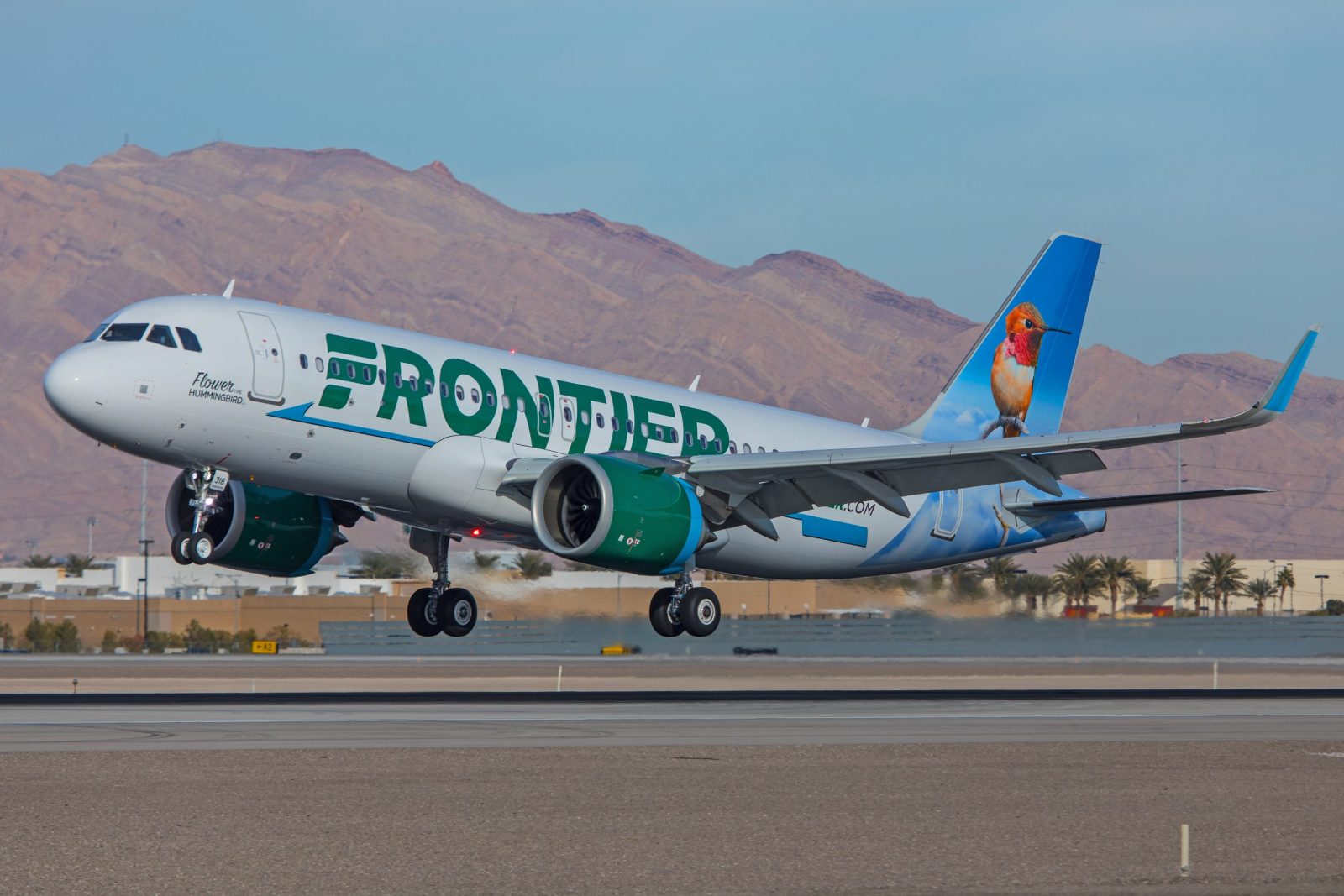
A Frontier Airbus A320neo in Las Vegas. (Photo: AirlineGeeks | William Derrickson)

On Tuesday, Frontier — one of the U.S. major ultra-low-cost carriers —  announced plans to open a new crew base at Phoenix’s Sky Harbor International Airport. The crew base is set to open in November, later this year and is expected to be a base for 180 pilots and 275 flight attendants during the first year of operation.

Tuesday’s announcement comes just four weeks after Frontier and Spirit Airlines announced their $6.6 billion merger — creating the country’s largest low-cost carrier and the fifth-largest airline.

Currently, the Denver-based carrier operates 14 nonstop routes from the airport, with additional flight connection opportunities through the company’s broad network. The already large presence in Phoenix and the addition of a crew base give the carrier that much more potential to expand its network outward from this location.

Another indicator of Frontiers’ extensive growth is their fleet size. The carrier currently operates 110 Airbus A320 family aircraft, with that number set to triple by the year 2029 — thanks to the addition of 230 Airbus aircraft that are on order. 

“We are currently the third largest airline at PHX based on a number of destinations served and we anticipate continued growth as our fleet and route network further expand,” President and CEO of Frontier Airlines, Barry Biffle, said. “Phoenix is a highly desirable place to live and our crew has been asking for a base at PHX for some time. Whenever we add a new crew base to our network, it creates more flexibility for our team members and greater opportunities for career growth.”

The crew base in Phoenix will be the airline’s eighth pilot base within the U.S. and its ninth flight attendant base. The move will not only benefit the carrier, but it will also be of great economic benefit for the city of Phoenix through the creation and addition of jobs — adding to the already 57,432 jobs supported by the airport. The crew base will also increase Sky Harbor’s $12.3 billion contributions in economic activity

“With our ultra-low fare business model that caters to leisure travelers, Phoenix is well poised to benefit from our continued growth at PHX as well as the economic gain derived from additional jobs and residents contributing to the local economy,” Biffle said. “We are extremely pleased to become an even stronger part of the greater Phoenix community and we thank our partners at Phoenix Sky Harbor International Airport for their continued support and collaboration, which has made today’s announcement possible.”

In addition to Phoenix, Frontier’s focus cities also include Trenton, N.J.; Tampa, Fla.; Orlando, Fla., Atlanta, Chicago, Denver, Las Vegas, Miami and Philadelphia.

“We look forward to welcoming the new crew base members and sharing the vibrant quality of life these new residents will enjoy in this community, “Phoenix Mayor Kate Gallego, said, in a news release. “This is a great advancement in Frontier’s continued growth and success in Phoenix.”

Chase Hagl

Chase Hagl grew up in Twin Falls, Idaho. His love and passion for Aviation landed him in Orem, Utah where he obtained a B.S. in Aviation Management with a minor in Business Management from Utah Valley University. Chase currently works as a flight attendant in Charleston, SC and is also the primary Inflight ASAP ERC representative for startup airline, Breeze Airways. His experience in the aviation industry spans back four years, working in areas including agriculture application, customer service, maintenance, and flight ops. In his free time, Chase enjoys road biking, astronomy, and flying.

Lessors Look To Repatriate Aircraft From Russia

Aeroflot A320 taxiing to the gate at Berlin Brandenburg. (Photo: AirlineGeeks|James Dinsdale)

The rapid evolution of the conflict between Russia and Ukraine has seen wide implications for commercial aviation, from the complete closure of airspace above Ukraine and Moldova to the strict limits imposed on Russian-registered aircraft by Western countries and the similar retaliatory measure put in place by Russia.

However, one area that is going to be profoundly affected by the new scenario full of restrictions emerging in Russia is the aircraft leasing market, in particular those companies that own the aircraft being operated by Russian companies. The European country most exposed to this risk is certainly Ireland. According to the Irish Times newspaper,  the leasing company Aercap owns 149 aircraft operated in Russia and SMBC Aviation Capital has 34 jets leased to Russian operators.

These are just a fraction of the Boeing 777 leased aircraft currently being operated by Russian airlines, according to aviation data firm Cirium. 515 are owned by foreign firms for an estimated market value of $10 billion.

The Irish press is reporting that these companies are setting up specific task forces to repossess their assets and bring them out of Russia so that they can be repurposed to other operators. In fact, the present situation will most likely force most Russian carriers to ground a number of aircraft given the practical impossibility to fly international routes, and this is going to affect their ability to generate enough revenue to keep up with leasing payments. “You’re talking about roughly $100 million being paid out every month by Russian airlines to Irish-based leasing companies. If the banks that these airlines use are sanctioned, it’s going to be very difficult to make payments,” said Tim O’Connell, a Grant Thornton Ireland partner specializing in aviation advisory to the Irish Times.

Russia’s Banking Restrictions

The cash situation of Russian carriers will also be further hampered by the restriction affecting the financial services. The European Union and the U.S. have decided to exclude select banks from the global SWIFT system used by banks to exchange messages related to financial transactions. As a result, this will make it considerably harder, if not impossible to move funds in and out of Russia. Furthermore, this sanction imposed on the Russian banking system is expected to have a devastating effect on the exchange rate between the rubles and the U.S. dollar, which is the currency in which most if not all leasing contracts are regulated.

According to preliminary indications of the currency markets that were closed last weekend, the Russian ruble should lose more than half its value against the dollar, which in turn means that airlines will see their leasing bills double almost overnight — together with a number of other expenses.

The lessors are also faced with more complicated matters, as these leasing contracts may have as collateral a letter of credit from a Russian bank. However, if these banks are unable to honor these letters due to the sanctions this may lead to an unwanted exposure that may convince the lessor to repatriate their assets.


Vanni Gibertini

Vanni fell in love with commercial aviation during his undergraduate studies in Statistics at the University of Bologna, when he prepared his thesis on the effects of deregulation on the U.S. and European aviation markets. Then he pursued his passion further by obtaining a Master’s Degree in Air Transport Management at Cranfield University in the U.K. followed by holding several management positions at various start-up carriers in Europe (Jet2, SkyEurope, Silverjet). After moving to Canada, he was Business Development Manager for IATA for nine years before turning to his other passion: sports writing.

Aero California’s McDonnell Douglas DC-9s, Where Are They Now?

An Aero California DC-9 in Mexico City (Photo: Aero Icarus from Zürich, Switzerland)

Aero California — an iconic low-cost Mexican airline — has been missing from the skies since 2008. Its yellow, orange and red cheatline were arguably one of the best liveries around. It operated 35 McDonnell Douglas DC9s in total and amazingly nearly 14 years on, most of them can still be seen parked up in various places.

Founded in 1960, the airline didn’t actually start scheduled services until 1982 when the first DC9 joined the fleet. It wasn’t until 1988 that the airline started significant expansion. The original DC9 was disposed of and 10 more DC9s joined the La Paz, Mexico-based carrier by 1991. There was further expansion in the mid to late 1990s with the acquisition of another 12 DC9s. In 2005, it acquired another 11. The remaining DC9s it operated was on lease from Aeromexico but this lasted less than three months during 1997 before being returned.

After retiring a couple of the older machines and one of them being written off in 2004, Aero California had a fleet size of 30 DC9s in its heyday. 

Unfortunately, it seemed this last major fleet growth was a step too far for the carrier from Baja California. The airline was suspended for alleged deficiencies of administrative and operative nature in April 2006 and forced to ground its fleet. The Mexican airline was reinstated but left 13 of its DC9s in storage. Unable to recover the airline was once again suspended in July 2008 for an alleged debt with Mexican Air Traffic Control. It was unable to overcome the suspension this time and the remaining 17 DC9s joined the others.

Where Are They Now?

The original DC9 was XA-BCS. Appropriately registered after the airline’s home state of Baja California Sur. Since it left in 1988 it was mostly operated by Evergreen in the USA. However, the aircraft found its way back to Mexico in 2020 with Aeronaves. The only one of the 35 DC9s is still in service.

XA-TFO, which was the short-term lease from Aeromexico has been preserved on a private ranch a couple of hours southwest of Mexico City near the town of Teacalco, Mexico. It can be seen on google earth at Rancho Joan Sebastian Alejandra.

Aero California registered a second DC9 XA-BCS shortly after the first one left the fleet. Its fate was sealed in 2004 when it overran the runway at Mexico City. It has remained there ever since and was joined by a further 5 aircraft when the airline ceased operations. They can be seen on wasteland just to the east of the airport boundary:

XA-BCS, XA-SWG, XA-UDF, XA-UDH, XA-UDS, XA-UEI 

Eleven migrated to the USA and ended life at Mojave. Unfortunately, these are gradually being broken up, but it looks like at least eight of them can still be seen in some sort of disrepair:

XA-AGS, XA-CSL, XA-GDL, XA-LAC, XA-LMM, XA-RNQ, XA-RKT, XA-RRY, XA-RXG, XA-SWH, XA-SYQ

The rest of them are scattered around Mexico and can be seen on the latest google earth images. All of them look to be complete airframes still.

Two at Guadalajara:

XA-UDD, XA-UDE

Seven at Tijuana:

XA-ADA, XA-SYD, XA-THB, XA-TNT, XA-UDC, XA-UDG, XA-UEG

One at Ciudad Obregon:

XA-ACZ

Six remain at its hometown of La Paz:

XA-ADK, XA-TAF, XA-TBQ, XA-THC, XA-UDA, XA-UDB

Mark Evans

Mark has been interested in aviation since the age of eight when he first went plane spotting at Manchester Airport, England. Trips around various European airports in the following years and then to the USA as a teenager furthered his desire. This led to Mark wanting to work in the industry and at the age of twenty one was accepted to train as an Air Traffic Controller. After training and working for several years in England, Mark moved to Bahrain in the Middle East where he worked for six years. He then moved to Sydney, Australia where he resides today after twenty years in the profession. Mark's pursuit to see planes has seen him visit over 140 countries and territories, including places, like North Korea, Sudan and Iran. He has flown over 1,100 times, visited over 700 airports and can always be found researching his next trip.

Bamboo Airways Eyes International Route Expansion

A Bamboo Airways 787 departs from Hanoi for its inaugural flight to the U.S. (Photo; Bamboo Airways)
A Bamboo Airways 787 departs from Hanoi for its inaugural flight to the U.S. (Photo: Bamboo Airways)

Bamboo Airways — a  Vietnamese leisure carrier — hasn’t stopped expanding its route map during the pandemic. Recently, the carrier announced the launch for flight operations between Ho Chi Minh City, Vietnam and Sydney on March 30. The new route is subject to government approval. The announcement has come days after launching the new route of Ho Chi Minh City, Vietnam to Melbourne, Australia.

“We are thrilled to be the first new international airline at Sydney Airport soon after Australia lifted international travel restrictions,” Dang Tat Thang, CEO of the airline said.

Last week, Australia reopened its international border to fully vaccinated travelers. The airline will provide twice-weekly services and is expecting to increase the frequency to four times a week by the end of this year.

The new route is supported by Government’s Aviation Attraction Fund. In the wake of the pandemic, Australia’s state of New South Wales rolled out the Aviation Attraction Fund — attracting airlines to re-commence flights to Sydney last October. The program is open to all airlines servicing international and domestic routes. NSW government has invested 60 million Australian Dollar in the fund and believed the program could benefit the state after the pandemic.

“Our airports are the gateway to our state, so supporting the return of airlines to them through the Aviation Attraction Fund is key to our recovery roadmap and achieving our goal of making NSW the premier visitor economy of the Asia Pacific,” Stuart Ayres, Minister for Enterprise, Investment, Trade, Tourism and Sport for Western Sydney said.

Geoff Culbert, CEO of Sydney Airport, has welcomed Bamboo Airways. “Vietnam is an incredibly popular destination for Australian leisure travelers and with a big Vietnamese diaspora in Sydney it makes sense to build greater connectivity between our two cities.”

New South Wales’ government revealed that over 123,000 Vietnam visitors arrived in Australia before the pandemic. According to the Vietnam National Administration of Tourism, more than 383,000 Australian tourists traveled to Vietnam in 2019. Australia has the largest Vietnamese community in the world outside Vietnam.

New Services to Europe

The carrier will operate this route with Boeing 787-9 Dreamliners, featuring 26 business class seats, 21 premium economy class and 247 economy class seats. Bamboo Airways is expected to provide 60,000 seats on this route annually.

In the meantime, Bamboo Airways and Sydney Airport signed a memorandum of understanding (MOU) to stimulate tourism, economic growth and opportunities for cultural exchange between the two cities.

Bamboo Airways is not only focused on the Australian market. Meanwhile, the airline has expanded its network by adding new services to Europe. The route Hanoi, Vietnam to Frankfurt has launched last week. Bamboo Airways provides two flights per week in the early stage and considers increasing its frequency if the demand surges. Also, the airline is looking forward to expanding its route map to other cities in Germany, such as Berlin and Munich.

In addition, the airline is set to launch flights between Hanoi, Vietnam to London in March — hoping to expand to nearly 40 international routes in 2022.

Russian Airline Aeroflot Violates Canadian Airspace

An Aeroflot 777-300ER at JFK (Photo: AirlineGeeks | Shaquille Khan)

Canada issued a warning after Russian airline Aeroflot violated a restriction on using Canadian airspace on Sunday.  The infringement occurred on the same day that Canada and Europe announced they would block their airspace to Russian airlines in retaliation to Moscow’s invasion of Ukraine, putting pressure on the U.S. to do the same.

“We are aware that Aeroflot Flight 111 violated the prohibition put in place earlier today on Russian flights using Canadian airspace,” Transport Canada said in a tweet late on Sunday. According to FlightRadar24, Aeroflot Flight 111 took off from Miami, Fla. to Moscow at 3:12 p.m. on Sunday. Following the infringement, Transport Canada announced that it will initiate an investigation into the actions of Aeroflot and Canada’s air-traffic control service provider, Nav Canada.

There are no direct flights between Russia and Canada, although numerous Russian flights every day have previously gone through Canadian airspace to other nations, according to a representative for Transport Minister Omar Alghabra.

“We will not hesitate to take appropriate enforcement action and other measures to prevent future violations,” the Canadian regulator said.

Nav Canada confirmed to Reuters that Aeroflot did enter the Canadian airspace. According to the report, the aircraft operator identified the flight a humanitarian flight as it approached domestic airspace, which requires special handling by air traffic control under normal conditions.

Canada and the EU’s Response

“We are currently cooperating with Transport Canada to investigate the occurrence, and are working with neighboring Air Navigation Service Providers to support rerouting of aircraft prior to them entering Canadian-controlled airspace,” Nav Canada said in a statement.

Alghabra announced on Sunday that his country would close its airspace to all Russian flights in order to hold Russia accountable for an unprovoked attack on its neighbor.

“We will hold Russia accountable for its unprovoked attacks against Ukraine,” transport minister Alghabra wrote in a Twitter post. “In response, we have closed Canadian airspace to Russian-owned or operated aircraft. The Government of Canada condemns Russia’s aggressive actions and we will continue to take action to stand with Ukraine.”

According to European Commission President Ursula von der Leyen, the European Union will close its airspace to planes owned, registered, or controlled by Russians, including “oligarchs’ private airplanes.”

“They won’t be able to land in, take off or overfly the territory of the EU,” von der Leyen added.

Impact to Aeroflot

As more airlines canceled flights into and out of Russia, and an increasing number of nations barred Russian airlines from operating, the US embassy in Moscow urged American residents in Russia to consider leaving the country immediately.

Meanwhile, Delta Air Lines has terminated its code-sharing agreement with Aeroflot, under which the airlines sold seats on each other’s flights.

“We have removed our code from Aeroflot-operated services beyond Moscow’s Sheremetyevo Airport, and Aeroflot’s code has been removed from Delta-operated services from Los Angeles and New York-JFK. Customers who will be impacted by these adjustments will be accommodated,” Delta stated in a statement on Friday, adding that it does not fly to Ukraine or Russia.

Aeroflot has also been barred from entering British airspace. Poland and the Czech Republic also announced that Russian airlines would be barred from using their airspace, while airlines such as IAG-owned British Airways and Virgin Atlantic began rerouting flights around Russian airspace.

Canada, in conjunction with the U.S. and other nations, has slapped heavy penalties on Russia, specifically targeting Russian President Vladimir Putin and Foreign Minister Sergei Lavrov.

Kalai Raajan

Kalai has always wanted to work in the aviation industry, having been fascinated by its inner workings since he was a child. In pursuit of his dream, he obtained a diploma in aviation management and is currently interning with a low-cost airline, under in-flight policies. In his free time, he loves to engage in recreational activities, and watch sports. In the upcoming years, Kalai intends to pursue his degree at a business school before working as an executive for a global airline around the world.

A Brief Intro to ADS-B, the Technology that Makes Planes Visible to Everyone, Everywhere

BAW1 and VS3's routes across the North Atlantic (photo: FlightRadar24)

The Russian invasion of Ukraine has set the world on edge. People are tuning in to minute-by-minute updates of what’s happening on the ground. Avgeeks, while keeping up with the events on the ground, are also looking up to the skies.

Ukrainian airspace has been cleared of civilian aircraft, and all that is really seen on popular flight tracking services like FlightRadar24 are military aircraft. We’ll do dive into what exactly is the technology that lets us see these aircraft movements.

Automatic Dependent Surveillance-Broadcast

Civilian aircraft and military aircraft use automatic dependent surveillance-broadcast (ADS-B), a technology onboard an aircraft used to determine its position and periodically broadcast it. Anyone with a receiver set up can pick up these broadcasts and determine a wealth of data about the flight.

This technology is making its way across the globe to the point that the overwhelming majority of commercial aircraft can be tracked this way. The U.S. requires all commercial aircraft to be equipped with an ADS-B transponder. Many other countries have the same rule, though it is not yet universal.

Benefits

ADS-B is the preferred method of surveillance for air traffic control as a number of countries for a variety of reasons, the most notable ones being safety and efficiency.

ADS-B allows for greater situational awareness among pilots, as it allows them to see other traffic operating in the airspace. In addition, the more accurate aircraft tracking gives air traffic controllers a more a better and more reliable understanding of where the aircraft is. This works hand in hand with traffic alert and collision avoidance systems to greatly increase safety.

While safety is most important, an extra side benefit of ADS-B is increased efficiency. Since air traffic controllers have a clearer understanding of where aircraft are, they can better guide aircraft in less time and distance. This results in immediate reduction in fuel consumption and emissions.

These transponders broadcast a plethora of data, all designed to significantly enhance aviation safety. Broadcasts are sent out at a varying rate depending on the type of message being sent but it’s always fewer than ever couple of seconds. The information in these messages include latitude, longitude, pressure, altitude, callsign, as well as track and ground speed.

Military Aircraft

The fun part here is when it comes to military planes. For commercial aircraft it’s a requirement among different governments that transponders must be on and broadcasting information. It’s a huge benefit to aviation safety and air traffic control efficiency after all.  The story changes with military aircraft.

Military aircraft are allowed to fly with their ADS-B position reporting turned off. This allows aircraft to conduct sensitive operatives related to homeland security, law enforcement, defense, warfare, surveillance and more without transmitting compromising information about the aircraft’s position.

The air-based military operations currently seen on flight tracking programs in and around Ukraine are there because they want to be made known as a show of force. Military refueling planes are often seen in the skies around Ukraine, it’s a not-so-subtle way of showing everyone who may be watching that there other things in the air that these tanker aircraft are providing support to.

There are other ways militaries around the world track enemy aircraft, but shows of force like these are a tried and true battlefield tactic.

Hemal Gosai

Hemal took his first flight at four years old and has been an avgeek since then. When he isn't working as an analyst he's frequently found outside watching planes fly overhead or flying in them. His favorite plane is the 747-8i which Lufthansa thankfully flies to EWR allowing for some great spotting. He firmly believes that the best way to fly between JFK and BOS is via DFW and is always willing to go for that extra elite qualifying mile. Hemal's opinions are his own and do not reflect those of his employer.

Ukrainian Government Confirms Destruction of AN-225, the World’s Largest Aircraft

The Antonov An-225 takes off in Toulouse, France. (Photo: Laurent Errera via Wikimedia Commons | https://commons.wikimedia.org/wiki/Category:Antonov_An-225_take_offs#/media/File:Antonov_An-225_Mriya_Antonov_Design_Bureau_(ADB)_UR-82060_-_MSN_13102_(2973322821).jpg)

After a morning in which many crossed versions circulated regarding the final fate of the Antonov AN-225, the Ukrainian government, through a publication made at 3:45 p.m. UTC on its official Twitter account, confirmed the destruction of the aircraft.

“The world’s largest aircraft ‘Mriya’ (The Dream) was destroyed by Russian occupants at an airfield near Kiev. We will rebuild the aircraft. We will fulfill our dream of a strong, free and democratic Ukraine,” the account said.

A post from Ukraine’s official Twitter account confirming the destruction of the Antonov An-225. (Photo: Ukraine via Twitter)

The aircraft was at Gostomel airport at the time it came under attack by invading Russian troops last Thursday. It has also been the scene of further fighting since then.

Alarms among the aviation community were raised this morning when the OSINT_Canada account posted an analysis of satellite imagery and ground photos of the airfield, showing the AN-225 hangar in flames and a silhouette underneath it that resembles that of the aircraft.

Radio Svoboda quoted two anonymous Antonov sources and the mayor of Bucha, a town near Gostomel airport, who assured that the aircraft was destroyed during the attacks.

In response, the Antonov Company, the parent company of Antonov Airlines, which operates the AN-225, said on its Facebook page, “There is a delay in the confirmed information on the status of the aircraft at Gostomel Airport as there is still fighting there. Please await the official announcement on the status of the aircraft.”

Antonov Airlines chief pilot Dmitry Antonov also posted on his Facebook account, “There are many rumors about the condition of the Mriya. Until there is no reliable information we do not believe in anything.”

Looking Forward

In any case, the outlook for the aircraft’s future became gloomier when at 2:50 p.m. UTC, Ukrainian Foreign Minister Dmytro Kuleba posted on his Twitter account a message hinting at the destruction of the AN-225.


“This was the largest aircraft in the world, AN-225 Mriya (‘dream’ in Ukrainian). Russia could have destroyed our Mriya. But they will never be able to destroy our dream of a strong, free, and democratic European state. We will prevail!” Kuleba said.

But finally, the government publication seems to put an end to the versions. Now it only remains to wait for the first images of the site to emerge.

This article was written by Edgardo Gimenez Mazó for Aviacionline.

AirlineGeeks.com Staff

AirlineGeeks.com was founded in February 2013 as a one-person blog in Washington D.C. Since then, we’ve grown to have 25+ active team members scattered across the globe. We are all here for the same reason: we love deep-diving into the fascinating realm of the airline industry.

Virgin Atlantic Announces Return of Full Complement of US Destinations

A Virgin Atlantic 787-9 at London Heathrow Airport. (Photo: AirlineGeeks | James Dinsdale)

Virgin Atlantic has announced that from April it will reinstate its full portfolio of destinations in the U.S. The return to a number of U.S. airports and an increase in frequency to others has been driven by a 50% increase in passenger demand from 2021 in light of relaxed travel restrictions.

“Following the relaxation of travel restrictions, we’ve seen demand increase to many of our global destinations, but particularly to our heartland in the USA. Our customers can’t wait to return,” Virgin Atlantic Chief Commercial Officer Juha Jarvinen said in a statement.

The airline will increase services to New York, San Francisco and Atlanta in coming weeks and in April will add a third daily flight from London’s Heathrow Airport to Los Angeles. Last month, Virgin Atlantic announced that Austin, Texas would be its first new U.S. destination in seven years with a four-times weekly service beginning on May 25. The carrier will also be recommencing operations to Seattle and Washington D.C. as early as next week.

“The restart of our Seattle and Washington D.C. services mark an important milestone, as we move into recovery and welcome our customers back on board to all the destinations they’ve missed.  We’re simply not Virgin without the Atlantic and our growing transatlantic portfolio demonstrates why we’re the airline of choice to the USA,” Jarvinen said.

The Seattle service will recommence on March 2 with five-times weekly service aboard Boeing 787-9 Dreamliner. An Airbus A330 will operate between the U.K. and U.S. capitals five times per week from March 5. Both destinations have traditionally been associated with strong business travel passengers giving access to the tech and political hubs of the U.S. to British travelers.

Hopes and Concerns Lay Ahead

Leisure travellers will be well catered for by Virgin Atlantic’s announcement that the airline will be the U.K.’s leading operator to Orlando, Florida. The theme parks of Orlando will be receiving U.K. visitors from Virgin Atlantic’s four gateway cities of London, Manchester, Edinburgh and Belfast.

Aviation analysts have predicted that business travel would be slow to return after the impact of the pandemic so Virgin Atlantic’s announcement is a positive sign. However it is unknown how the developing situation in Europe involving Russia’s invasion of Ukraine may impede the resurgence of premium air travel.

To give passengers further confidence in booking travel Virgin Atlantic has extended its policy of unlimited free date and flight changes for new bookings for travel through the end of 2022. For those travelers who may need to change their new or existing bookings, the airline has also extended by eight months the time by which they can rebook new flights until the end of 2023.

John Flett

John has always had a passion for aviation and through a career with Air New Zealand has gained a strong understanding of aviation operations and the strategic nature of the industry. During his career with the airline, John held multiple leadership roles and was involved in projects such as the introduction of both the 777-200 and -300 type aircraft and the development of the IFE for the 777-300. He was also part of a small team who created and published the internal communications magazines for Air New Zealand’s pilots, cabin crew and ground staff balancing a mix of corporate and social content. John is educated to postgraduate level achieving a masters degree with Distinction in Airline and Airport Management. John has held the positions of course director of an undergraduate commercial pilot training programme at a leading London university. In addition he is contracted as an external instructor for IATA (International Air Transport Association) and has been a member of the Heathrow Community Fund’s ‘Communities for Tomorrow’ panel.
Sign-up for newsletters & special offers!

Get the latest stories & special offers delivered directly to your inbox

SUBSCRIBE

Uh-oh! It looks like you're using an ad blocker.

Our website relies on ads to provide free content and sustain our operations. By turning off your ad blocker, you help support us and ensure we can continue offering valuable content without any cost to you.

We truly appreciate your understanding and support. Thank you for considering disabling your ad blocker for this website