Stories

FAA Referring Disruptive Passengers for Criminal Prosecution

Traveler mask airport
A passenger with a mask waits at an airport. (Photo: Pexels)

The FAA has begun referring cases of disruptive passengers to the FBI and Department of Justice for prosecution. The agency has referred 37 cases of disruptive passengers to the FBI since August. The number of disruptive and unruly passengers has been on the rise this year due to pushback from onboard Covid-19 prevention requirements. A majority of disruptive passenger incidents this year have been due to an unwillingness to comply with the federal face mask mandate. 

Civil Fines and a Rise in Disruptive Passengers

Currently, the FAA can only impose civil penalties for disruptive passengers. This includes thousands of dollars worth of fines that have been imposed on disruptive passengers. With the FAA passing the cases on to the FBI, the cases can be further investigated and the passengers involved could potentially face criminal penalties. So far the FAA has had 227 cases that have required enforcement action such as fine. 

Overall airlines have reported 5,000 unruly passenger incidents this year. Not all of these lead to investigation or action by the FAA and even less will be passed on to the FBI. According to FAA administrator, Stephen Dickinson, only the most egregious cases will be based along for federal prosecution. Of the 5,000 cases, 950 have led to an investigation by the FAA.

Over 3,500 of the unruly passenger incidents this year have been related to noncompliance with the federal mask mandate. The 950 investigations this year is the highest since the FAA began tracking in 1995, on average there are only 136 investigations per year. Flight attendant unions have been pushing for the creation of an industry-wide no-fly list of disruptive passengers. Currently, it is up to the individual airline to ban a passenger from traveling, meaning a disruptive passenger may still be able to travel on another airline. 

Ban on Alcohol as Stop-Gap Measure

Airlines and flight attendants have pointed to the return of alcohol service on board as a contributing factor to the rise in disruptive passengers. Both American Airlines and Southwest Airlines have banned the sale of alcohol to most passengers on their domestic flights. As well as banning onboard sales, airline crew members are stepping up the enforcement of a ban on the consumption of alcohol brought on to the flight. Federal regulations prohibit the consumption of alcohol on board a flight unless it is served by a crew member. 

The decision to escalate disruptive passenger cases to the FBI is a significant step towards reducing their numbers. The threat of a fine, the highest penalty that the FAA can impose, has only put a slight dent into the number of disruptive passengers. The threat of federal prosecution, including possible jail time, will likely make disruptive passengers think again before becoming a problem in flight. 

Daniel Morley

Daniel has always had aviation in his life; from moving to the United States when he was two, to family vacations across the U.S., and back to his native England. He currently resides in South Florida and attends Nova Southeastern University, studying Human Factors in Aviation. Daniel has his Commercial Certificate for both land and sea, and hopes to one day join the major airlines.

Play Records Loss in Its First Full Quarter of Operations

A PLAY aircraft rendering (Photo: PLAY Airlines)

Play Airlines, the Icelandic low-cost carrier start-up, has posted its quarterly results for the period ending in September; it is the company’s first results announcement that comprises three full months of flying, with the company having started its operations in June. As expected, the company posted a net loss of USD10.8 million.

The result, the company says, was expected, as its routes mature and its name gets known, and as it still has a very limited network. While the scope of the airline will be Transatlantic flying with a hub in Iceland, this project is only going to be rolled out next year; Play, now, is focusing on an Iceland-centric operation, connecting the Icelandic public to major destinations in Europe.

As such, the operational loss, measured by its EBITDA, was at USD5.6 million this quarter, a number that looks small if we look at the big groups’ billion figures, but a large loss if we take in consideration that Play’s revenue for this quarter was USD6.71 million.

Play currently serves five destinations from its base in Keflavik, which serves Iceland’s capital, Reykjavik.

Play’s route network out of Iceland

The airline carried 42.3 thousand passengers in the quarter, with a load factor of 46.4%. The figure continuously improved from month to month, going from 41.7% in July to 46.4% in August and 52.1% in September, and while the number is out of the quarter, Play said its load factor was at 67.7%.

In a statement, Play’s CEO, Birgir Jónsson, recognized that,” PLAY is still in a startup phase, and our results will reflect that for some months or until we reach a certain scale in our operation and launch our hub-and-spoke network next spring.”

Nevertheless, the company’s net cash flow from operating activities was at mere USD300 thousand, and the company sat over USD62.7 million in cash at the end of the quarter.

Play’s fleet is currently composed of three Airbus A321neos, with another unit of the aircraft on order and five Airbus A320neos also expected.

This article was written by João Machado for Aviacionline.

Alaska Airlines Launches Flights to Miami

An Alaska Airlines Boeing 737-800 in Los Angeles. (Photo: William Derrickson)

Alaska Airlines plans to grow its Seattle hub network by adding its 100th destination from the airport: Miami, Florida. The route marks the carrier’s farthest in the continental United States, entering its partner American Airlines’ hub after a 10-year absence, while maintaining its portfolio from its second South Floridian gateway, Fort Lauderdale.

New Route

From June 16, 2021, the Seattle-based carrier intends to commence a daily flight to Miami using its Boeing 737-900, showcasing 16 first-class seats, 24 premium class seats and 138 economy class seats. As Alaska Airlines 305, the six-hour flight will depart Seattle in the morning at 7:15 A.M. and arrive in Miami at 4:15 P.M. On the return as Alaska Airlines 708, the flight will depart Miami at 5:40 P.M. and arrive in Seattle at 9:15 P.M.

In July 2012, Alaska Airlines shifted its daily services from Miami to Fort Lauderdale, allowing for the launch of American Airlines’ services between Seattle and Miami. Now, the Alaska Airlines services launched will pair with American Airlines’ services from Seattle to Miami, which have a similar departure schedule from Miami to Seattle, but provide a red-eye departure from Seattle to Miami.

In addition, the Alaska Airlines services will allow passengers to connect with several of Alaska’s Oneworld partners, including American Airlines, to destinations in the Caribbean and Latin America, such as São Paulo or Buenos Aires, Argentina.

In a statement, Brett Caitlin, Alaska Airlines’ Vice President of Network and Alliances, states: “We’ve landed on a perfect location for our 100th nonstop from our home airport in Seattle. Miami is a cultural hub for travelers around the world with its incredible nightlife, art, music, architecture and food. With our new daily nonstop launching in June, we’ll be connecting two cruise capitals just in time for summer while teeing up easy fall getaways to South Florida, the Caribbean and beyond.”

Meanwhile, Alaska Airlines’ second gateway to South Florida, Fort Lauderdale, will see two daily nonstop flights to Seattle during the summer, in addition to winter-seasonal services to Los Angeles; Portland, Oregon; San Francisco and San Diego.

Alaska Airlines and Miami Growth

The new flight signifies a string of new endeavors for the Seattle-based carrier in recent months. Last week, Alaska Airlines unveiled an expanded network of flights to Ohio, including a new flight to Cleveland. In addition, the airline announced two new routes from its growing base in Boise last month, including flights to Las Vegas and Idaho Falls, Idaho. 

Furthermore, Alaska Airlines has strengthened and grown its codeshare partnerships with its Oneworld members, including British Airways and Iberia. Since its entry into the Oneworld alliance, the Seattle-based carrier added 188 codeshare routes, an increase of 39 percent, to its growing codeshare network.

Alaska Airlines is one of many U.S.-based carriers to start services from Miami since the COVID-19 pandemic. Spirit Airlines launched its first flights in October, becoming the second-largest carrier at the airport with 31 routes. Meanwhile, Southwest Airlines established a presence of fourteen destinations during the pandemic with plans to add a new connection to Pittsburgh this winter. Moreover, JetBlue launched five destinations from Miami during the pandemic. 

All of these carriers are growing outside of their portfolios in nearby Fort Lauderdale. Both JetBlue and Spirit Airlines hold focus cities at the airport, while Southwest Airlines maintains a sizable presence in Fort Lauderdale.

Winston Shek

Ever since Winston was a toddler, he has always had a fascination for airplanes. From watching widebodies land at Washington Dulles to traveling the world, Winston has always had his eyes towards the skies. Winston began aviation photography in 2018 and now posts his photos occasionally on his Instagram account. He previously wrote for a blog. In his free time, Winston loves to play chess, do recreational activities, and watch sports. Looking into the future, Winston plans to service the aviation industry.

Trip Report – Alaska Airline’s Milk Run Flight 65

Alaska 737-700
A Boeing 737-700 in Wrangell, Alaska (Photo: AirlineGeeks | Joey Gerardi)

Alaska Airlines Milk Run is an AvGeek dream trip, it’s a multi-stop journey along Alaska’s southeast panhandle, flying between mountain passes onboard a Boeing 737-700. Along with United’s Micronesian Island Hopper, this trip is usually at the top of any AvGeek’s bucket list. The airline operates six Milk Run flights a day within the state of Alaska, three southbound and three northbound. The six routes carry the flight numbers AS61, AS62, AS64, AS65, AS66, and AS67.

While each route is unique, they all operate a variety of route variations using the same nine cities; Anchorage, Cordova, Yakutat, Juneau, Sitka, Ketchikan, Wrangell, Petersburg, and Seattle. The start and endpoint of every single Milk Run is either Seattle or Anchorage, Alaska. No matter how many stops the aircraft makes en route, it will carry the same flight number from the start of its trip until it the end. There isn’t any variation in the flight schedules from day to day, so it feels more like a city bus schedule than an airline flight, and the locals certainly treat it as such.

Four of the cities along the Milk Run are part of the Essential Air Service, or EAS, program; Wrangell, Petersburg, Cordova and Yakutat. Due to the timing of all the flight’s on a normal day where all the flights are on time, it is impossible to hit every city along the Milk Run in a single day. I opted to do the northbound sector of Flight 65 from Seattle to Juneau, with stops in Ketchikan, Wrangell and Petersburg along the way. I then stay overnight stay in Alaska’s capital, Juneau, and do the northern sector of Milk Run Flight 61 the next morning.

Even though I stayed overnight to get the most out of my trip, I still didn’t make it to one of the cities along the panhandle. I recommend staying the night in Juneau to try and hit as many stops as you can to make the most out of your trip by doing so, especially if this part of the country is a long way from where you live like it was for me.

Due to the timing of flight 65’s departure from Washington state, I opted to arrive in Seattle the day before so as I didn’t risk missing the flight that was scheduled to leave at 8:30 A.M. As with any flight the route will cost more or less depending on the time of year when you decide to fly on it, I chose to fly on it during the first week of May. The weather could’ve been a lot better, so to anyone that does end up trying the route I recommend doing it in the summer months versus the spring or fall to save a couple of extra bucks. That being said, any day could be cloudy as this part of Alaska has such unpredictable weather, it is just so hard to pick a day where it’s clear at every single stop, but the further into summer you are the more likely it will be clear. Nonetheless, I was still very happy with the way my trip turned out.

Day of the trip

The morning of my flight, I was up nice and early with the excitement of doing a trip I had always wanted to do. I arrived at the airport two hours before the 8:30 A.M. departure time, which ended up helping out as even the TSA PreCheck line was super long at Seattle-Tacoma the morning of my flight.

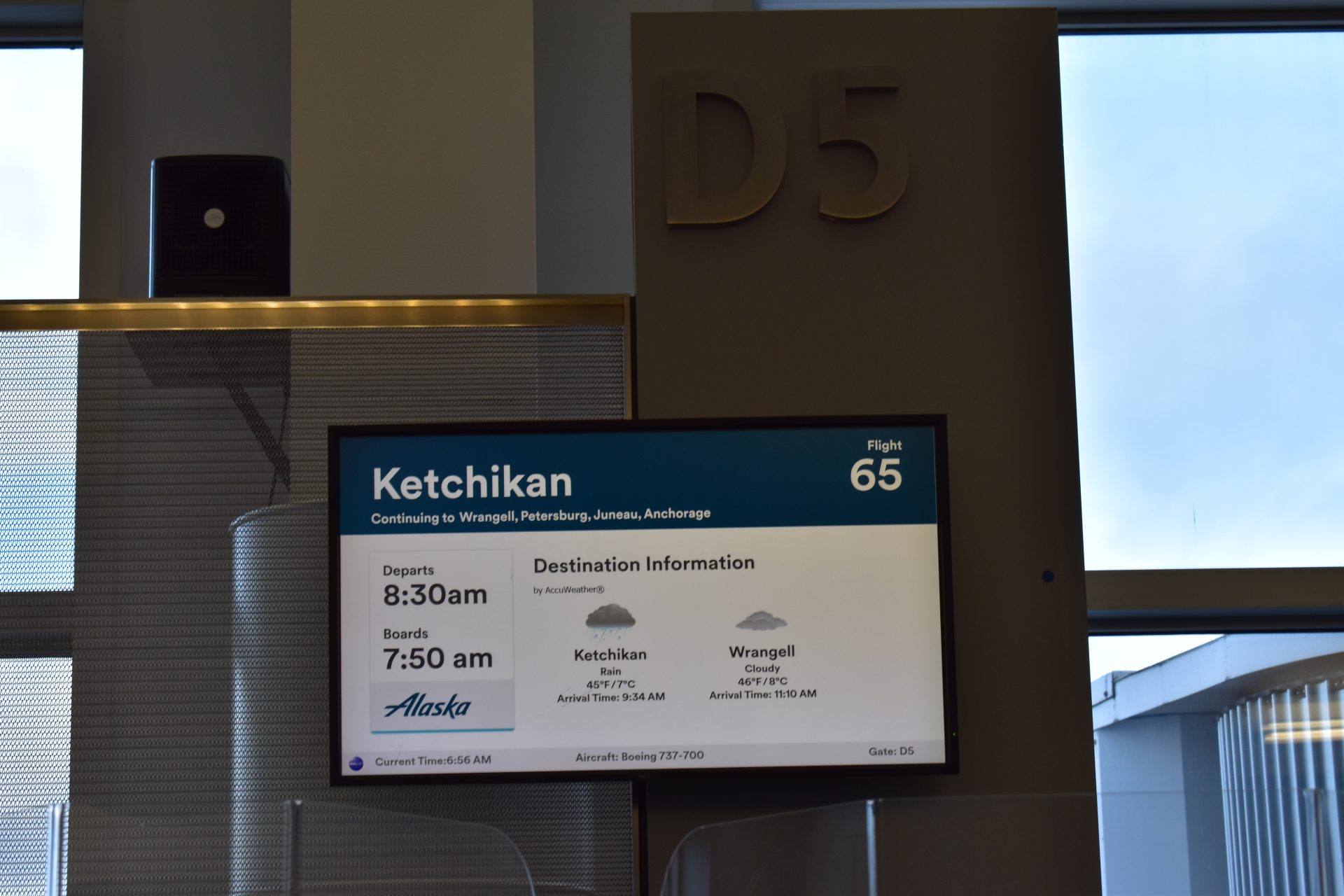
D5 would be my departure gate out of Seattle for the Milk Run (Photo: AirlineGeeks | Joey Gerardi)

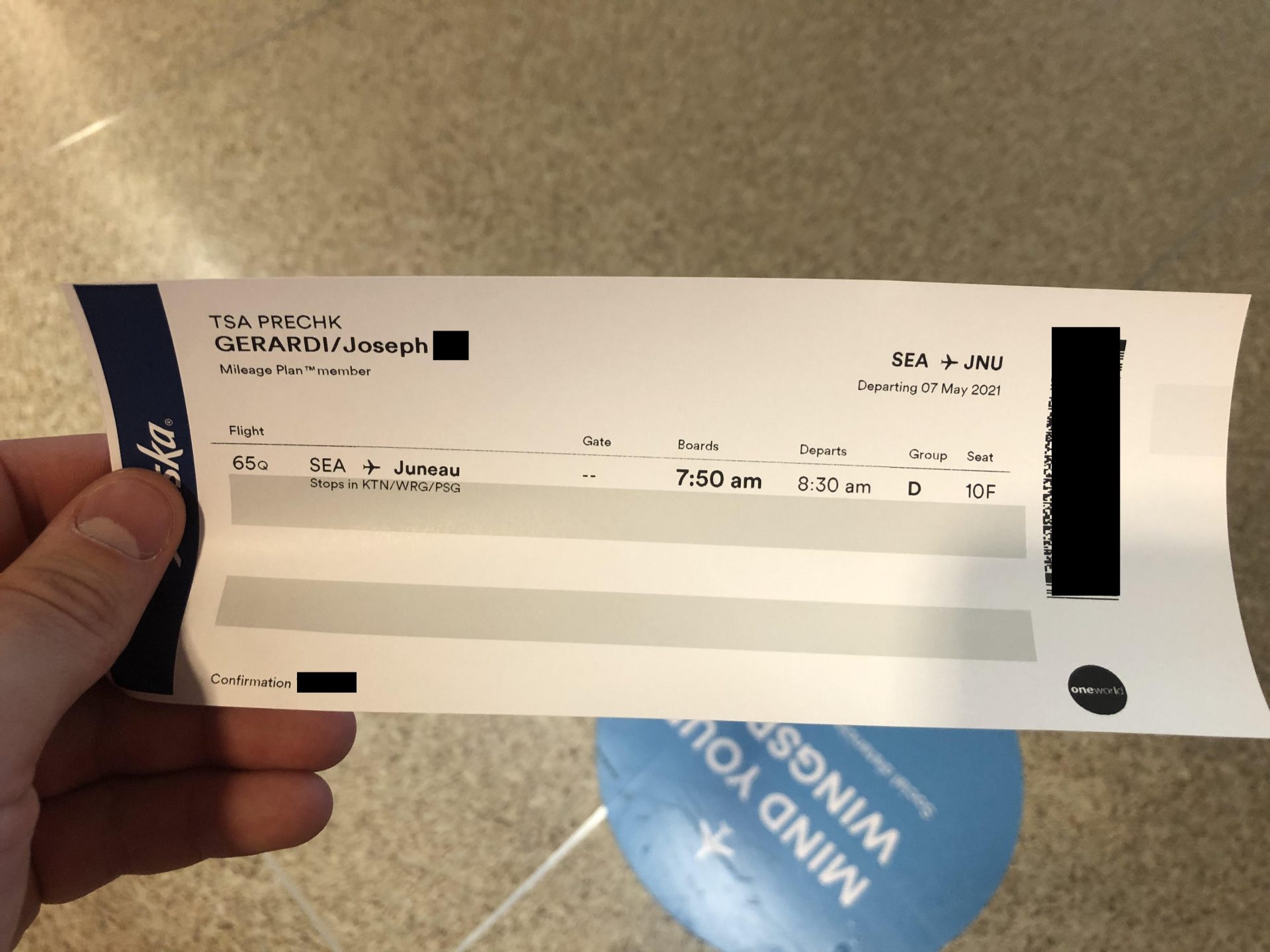
My gate for the first flight would be D5, and while the departure board did primarily show the first stop of Ketchikan, it also showed which cities it continued onto just under it in smaller font. My boarding pass also showed each stop in smaller print as it primarily showed that I was going all the way to Juneau.

My boarding pass for the first day of my Milk Run trip (Photo: AirlineGeeks | Joey Gerardi)

Not knowing how full the flight would be, I selected my seat back when I booked the trip to get a good window seat for the journey, and I opted for 10F, which was printed on my boarding pass. But do beware, due to the ventilation system running up the side of the aircraft on Alaska’s Boeing 737-700’s, some of the ‘window’ seats don’t have windows and instead have just a wall. I contacted Alaska Airlines on Twitter before I booked my trip and they were very informative on which seats were affected by a windowless window seat and even knew the exact seats not to sit in on the different types of aircraft.

40-minutes before departure we boarded the aircraft, just like any Alaska Airlines flight, and I took my seat in 10F. I got lucky as not only did I have a window, but I had two, both of which gave me spectacular views of the wing and engine. Another luck of the draw, I didn’t have any seatmates for any of my four flights up to Juneau, meaning I had two extra seats to stretch out on and put my backpack under.

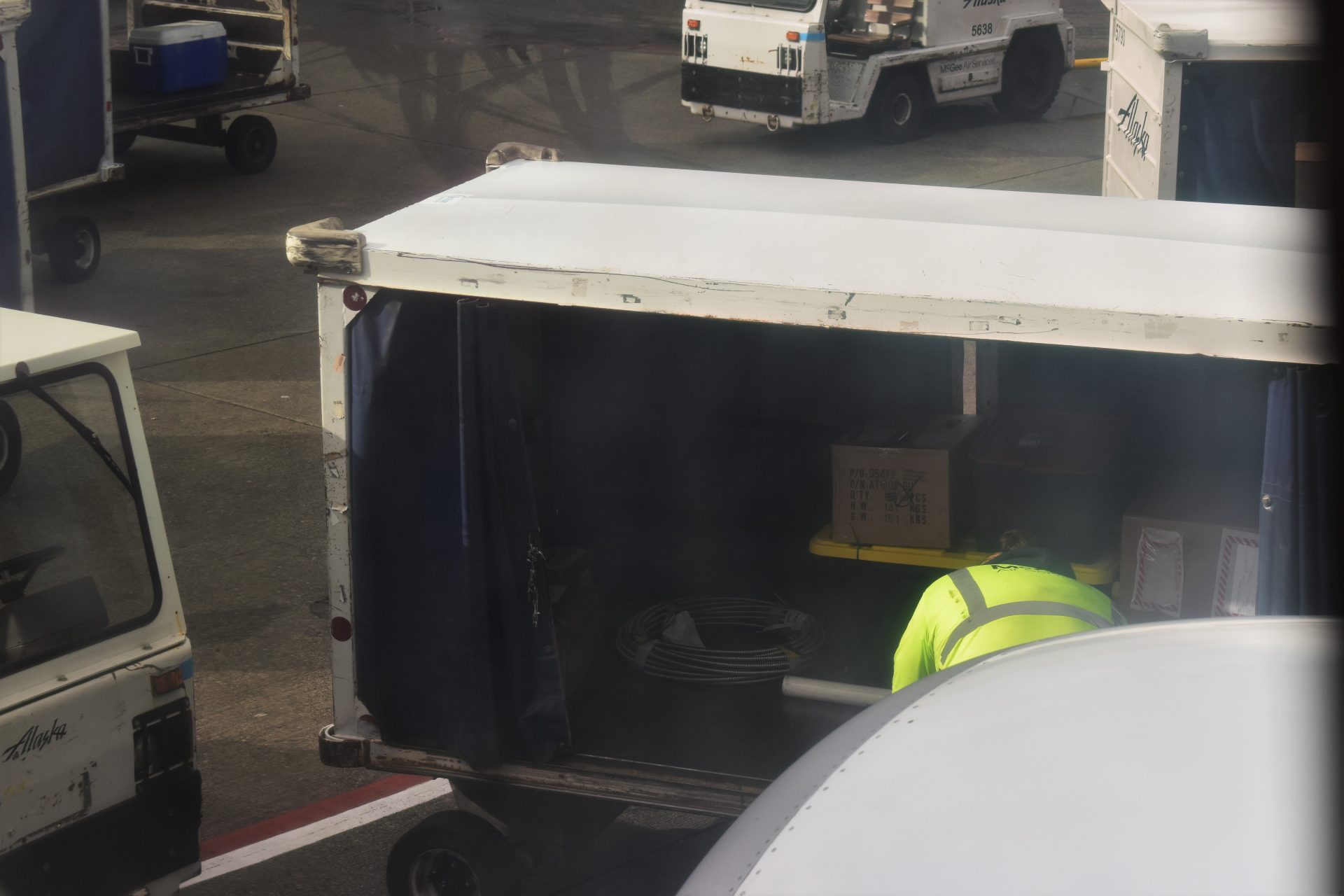
You know the old saying “everything but the kitchen sink”, well as this flight is the only way into and out of many of the cities, you could see almost anything loaded onto the aircraft, from coolers to a coil of copper wires, and even a full-sized kitchen sink which I did see loaded off at one of our stops.

Items that were loaded onto my aircraft (Photo: AirlineGeeks | Joey Gerardi)

There were only about 51 total passengers on the first leg of this journey up to Ketchikan, although it was impossible to tell which passengers were getting off at each stop. We didn’t push back from the gate until just after 8:40 A.M., and with an 8:30 departure time, it meant that we were leaving a little bit behind schedule. This flight does tend to run behind schedule sometimes according to the Alaska Airlines website, but considering it was the same aircraft taking me all the way to Juneau, I didn’t look at the scheduled arrival and departure times for the rest of this day as there was zero risk of missing a flight.

After push back, we taxied to the runway, just like every other flight at Seattle-Tacoma, and from the outside, we looked just like any other Alaska Airlines flight. But from a passenger standpoint, I knew we were much different than the rest of the planes departing during the rush hour bank.

At 8:47 A.M., 17-minutes past scheduled departure time we blasted off from Seattle-Tacoma’s runway 06L and turned north towards our first stop, Ketchikan, Alaska.

Just after departure from Seattle-Tacoma (Photo: AirlineGeeks | Joey Gerardi)

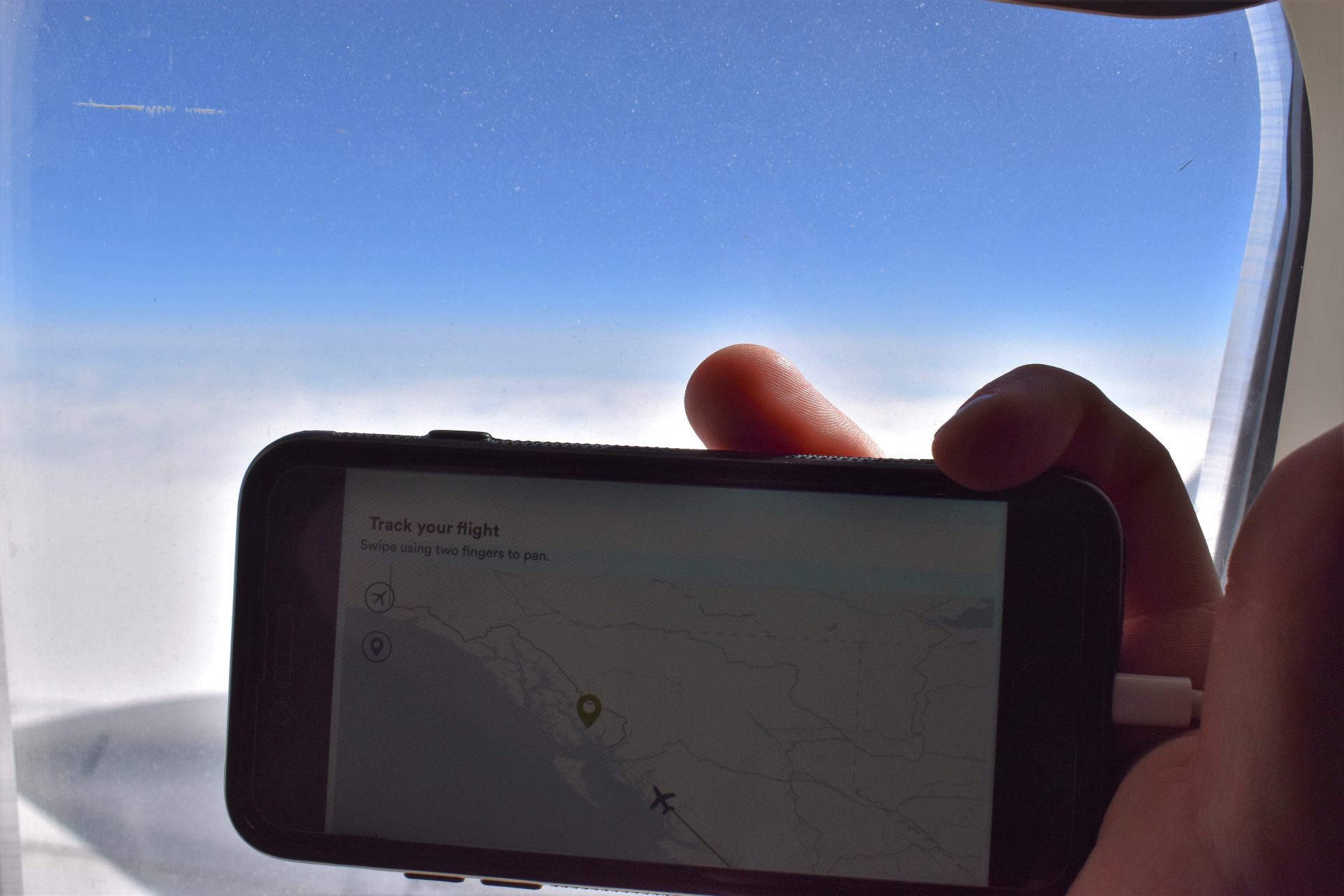
After departing, it was just like any Alaska Airlines flight, accented up to our cruising altitude of 40,000-Feet and the cabin service began. I would also like to point out that this was the only leg of my Milk Run journey where I received any snack or beverage service, as all of the remaining legs were too short. This was also the only leg where I was able to connect to the inflight Wifi, including the interactive flight map.

The interactive flight map on my phone (Photo: AirlineGeeks | Joey Gerardi)

In the true spirit of an AvGeek, I chatted with the flight attendants about my trip and how I wanted to try to get a picture of me outside at every single stop. Usually, for passengers continuing to the next destination, this is seen as a big no-no as they’d be required to clear security again. While they couldn’t promise anything, they did say they would ask the ground crew at each stop if they could help me out with my endeavor. Ketchikan Airport also has only 2 gates, one with a jetway and one without, so it was a 50% chance I would be able to get my photo in front of the terminal.

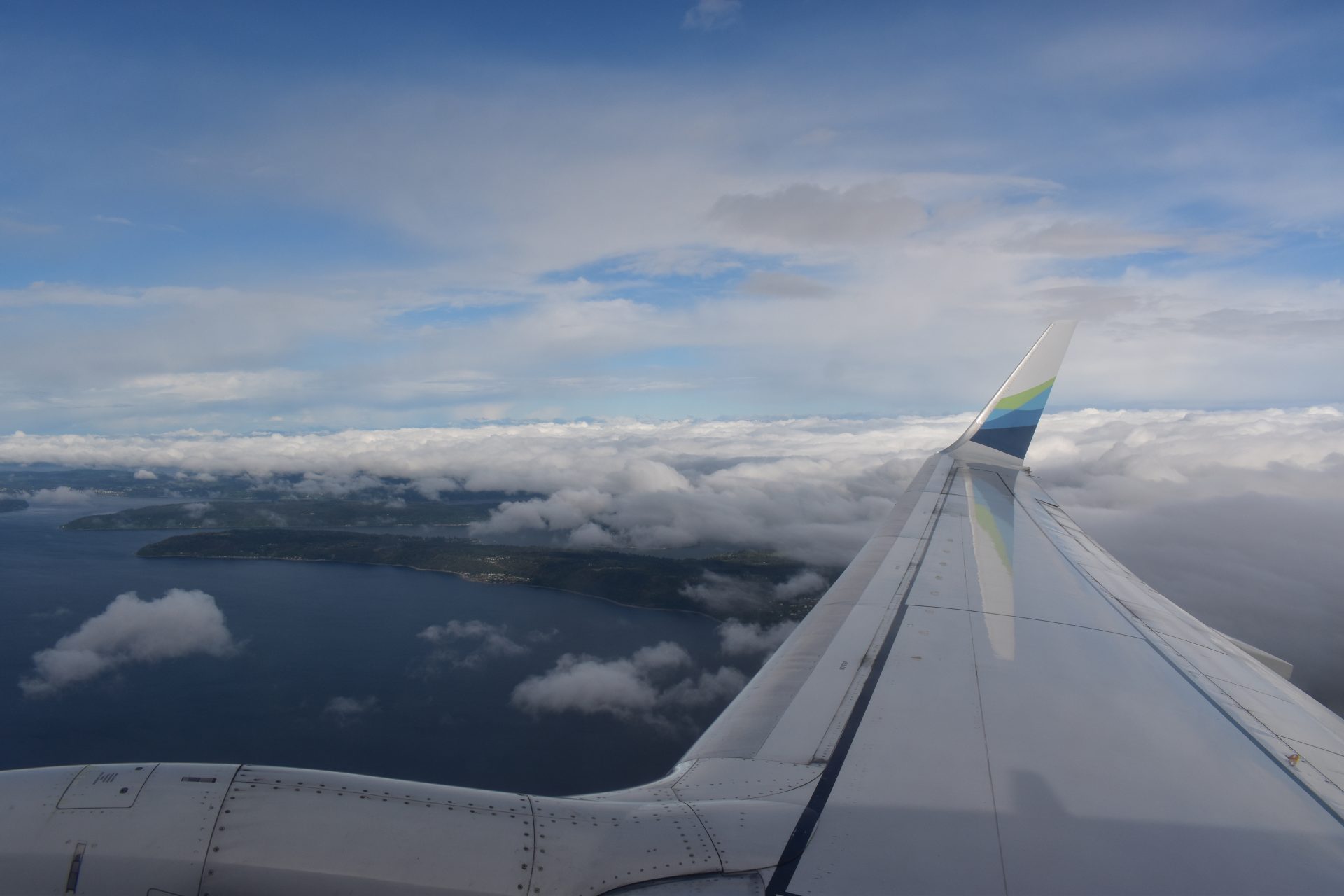
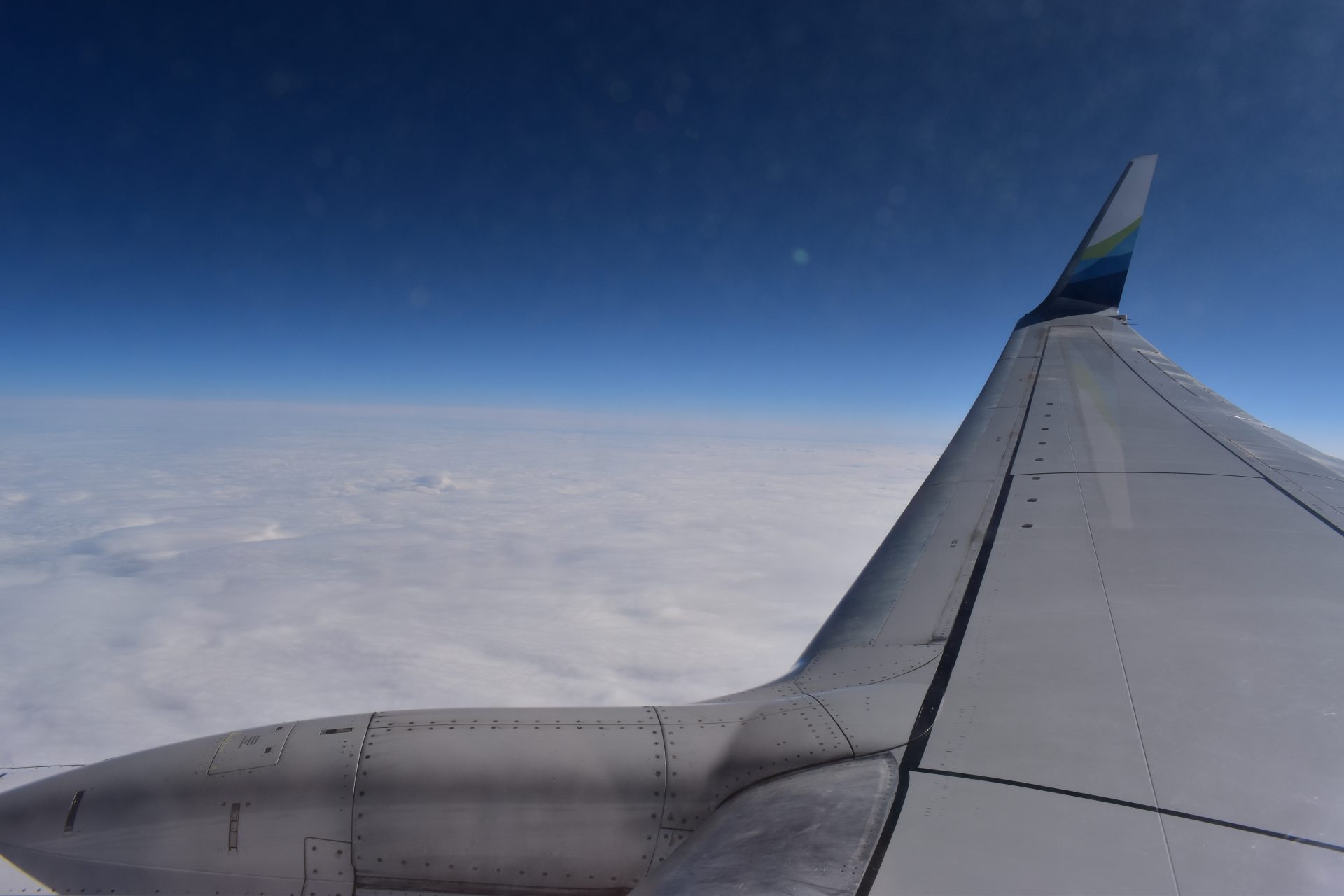
The rest of the first leg was uneventful, the cabin service concluded and I settled in to watch some television using the airline’s spotty internet service as we flew over nothing but clouds. This is one of the examples where had the weather been clearer, it would have led to stunning views of the mountains along Canada’s western coastline.

A thick cloud layer at our cruising altitude of 40,000-Feet (Photo: AirlineGeeks | Joey Gerardi)

Roughly 40-minutes before we landed, the crew had the flight attendants take a seat as we were due to have a rather bumpy approach into Ketchikan. Luckily it wasn’t very turbulent at least from my point of view, but we were required to go into a holding pattern while an Alaska Cargo 737-700 was landing at the airport. Due to this hold, our flight time for the first leg ended up being 1-hour and 51-minutes, longer than the average 1-hour 30-minutes that it usually takes for this leg.

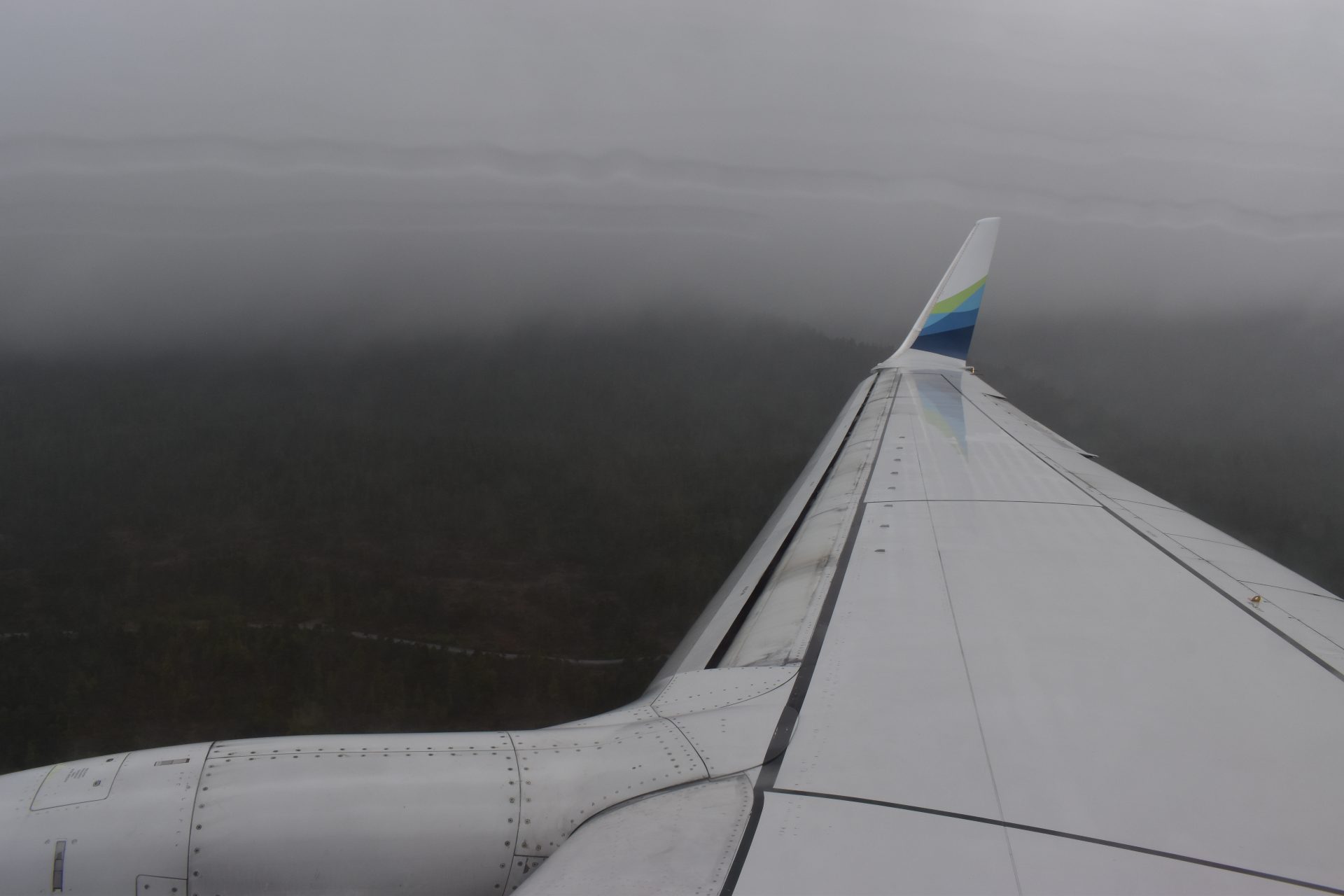
The approach into Ketchikan was less than spectacular, rainy, windy, and a thick cloud layer that went down basically to the runway. At this point of the trip, I was afraid that this is all I would see my entire journey, lucky I was proved wrong but that will be shown later.

On final to Ketchikan Airport in Alaska (Photo: AirlineGeeks | Joey Gerardi)

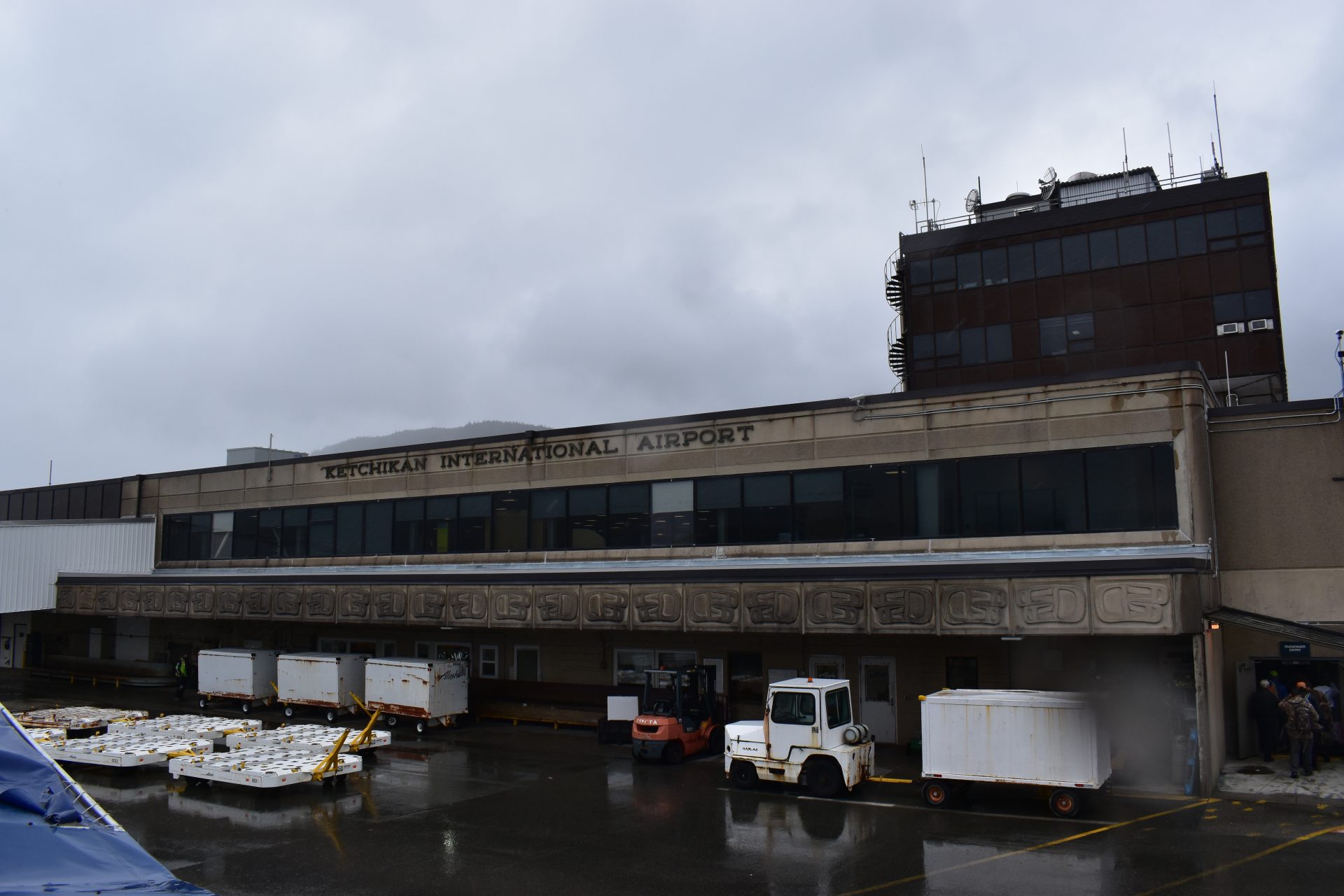
After landing, I held my breath until we parked at the gate waiting to see if I would be able to get my picture with the terminal. Luckily another flight hadn’t left yet the gate with the jetway so we parked at the ground boarding gate. Although since this airport was a bit busier than the rest along the panhandle, they said walking around the ramp wasn’t a good idea, but they did let me stand just outside the main door on the ADA ramp to get some shots of the airport.

Ketchikan Airport (Photo: AirlineGeeks | Joey Gerardi)

Since the stop at each city is roughly an hour and continuing passengers aren’t allowed to get off, I used this time to talk with the flight attendants and pilots about their experiences flying in Alaska and especially along the Milk Run. It turns out this trip isn’t given to new flight attendants or pilots and you will usually find the more experienced ones flying the route, they pick it cause they enjoy it and that usually leads to the same crews working for these flights a lot, and knowing certain passengers by name as well.

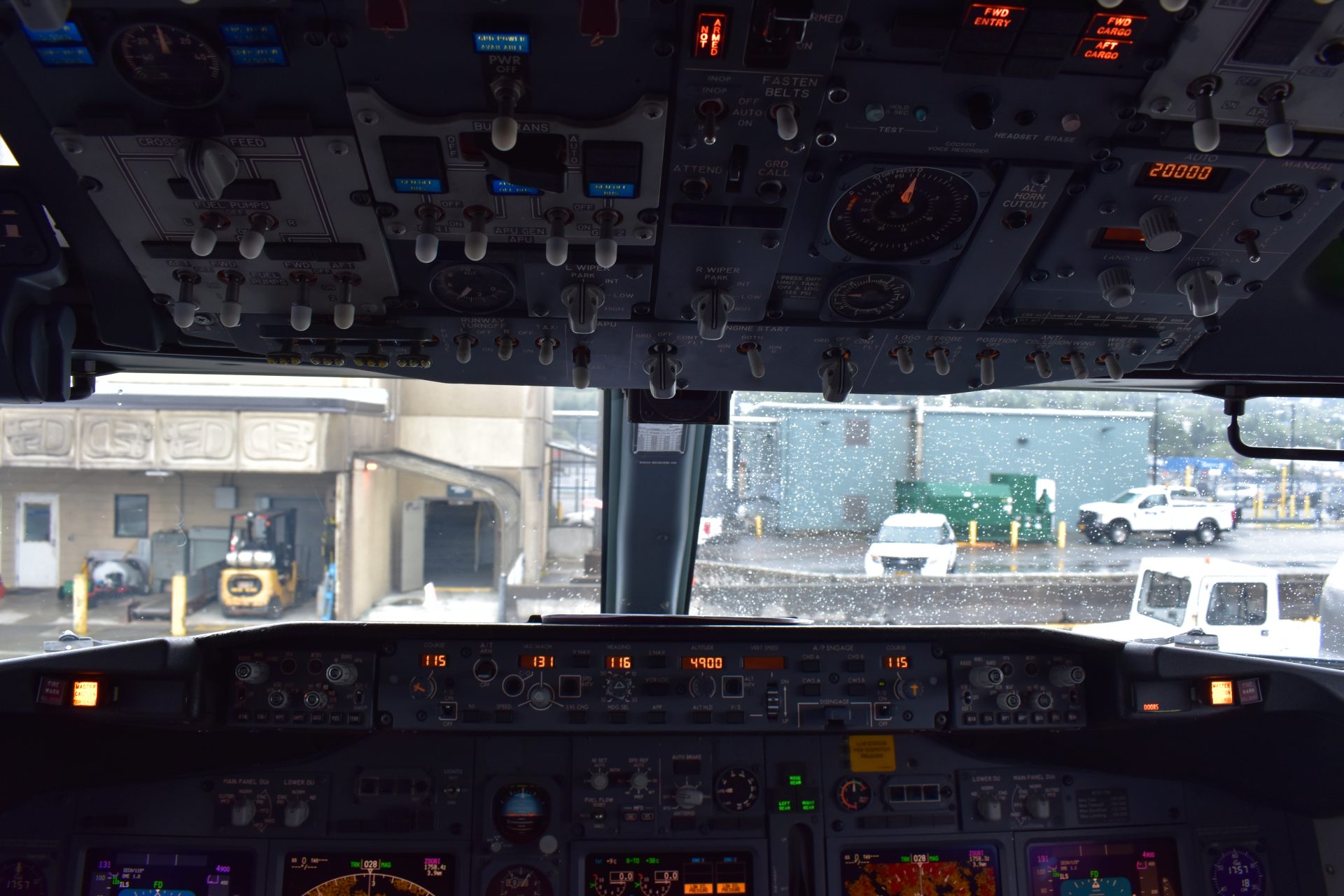
In the cockpit of the 737-700 in Ketchikan (Photo: AirlineGeeks | Joey Gerardi)

After a fun 40-minutes of talking with the crew, I was asked to take my seat as the next group of passengers was about to board. Like I said before, this flight is used as a bus service for the locals between the various cities along the panhandle, a local high school baseball team boarded the flight and would ride it for the next two legs up to Petersburg. By now the rain had grown stronger and it was difficult to see out of the windows of the aircraft, but luckily that didn’t stop the crew from performing a smooth takeoff out of Ketchikan, next stop Wrangell with 65 passengers on board.

Departing out of a rainy Ketchikan (Photo: AirlineGeeks | Joey Gerardi)

This flight was uneventful, a quick climb up to 14,000-Feet and no cabin service due to the short duration of the flight. But as the flight progressed there was one thing I began to notice, the clearing of the cloud layer. The closer we came to our next stop during the short 26-minute flight, the more clouds began disappearing.

The clearing cloud layer as we approached Wrangell, Alaska (Photo: AirlineGeeks | Joey Gerardi)

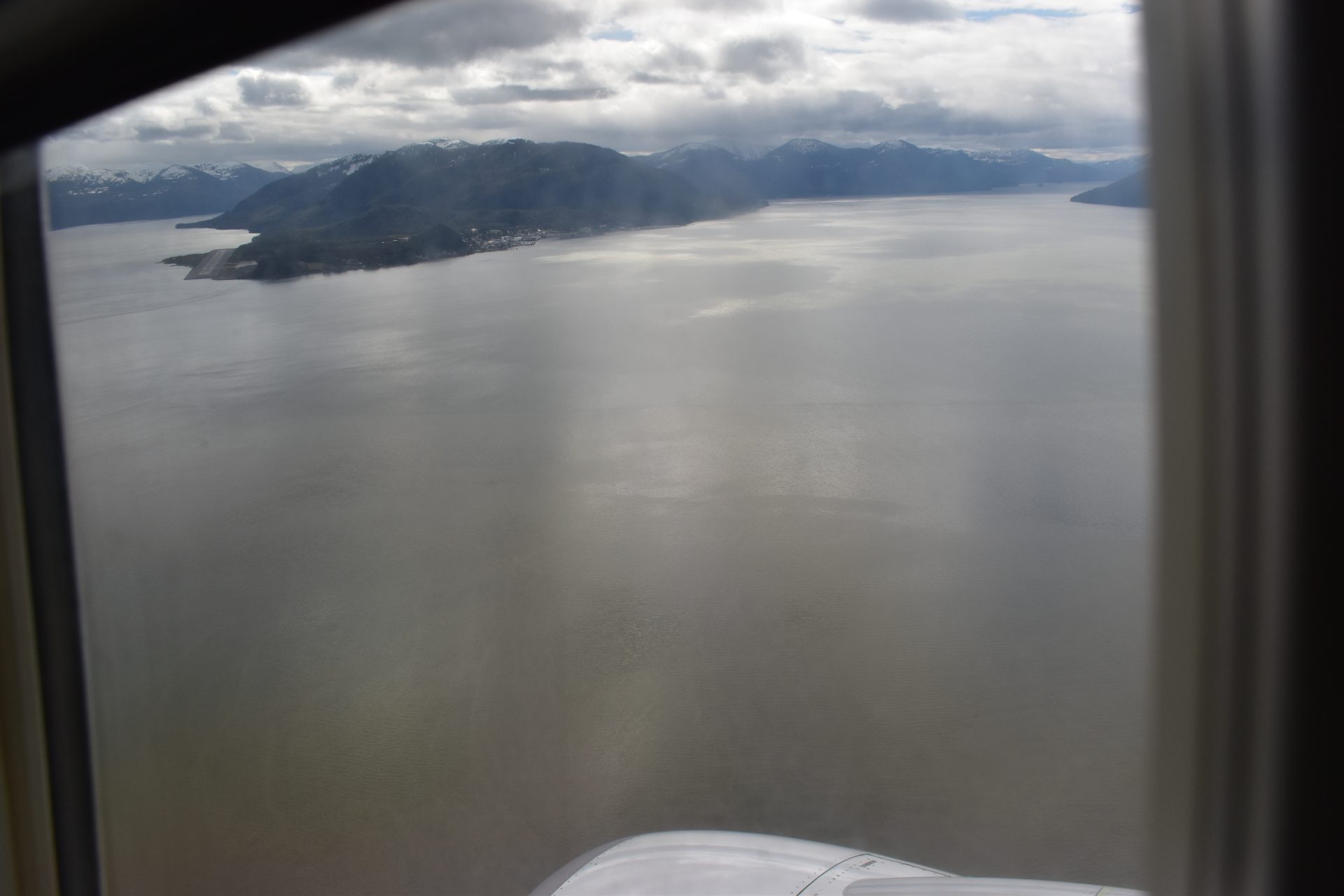
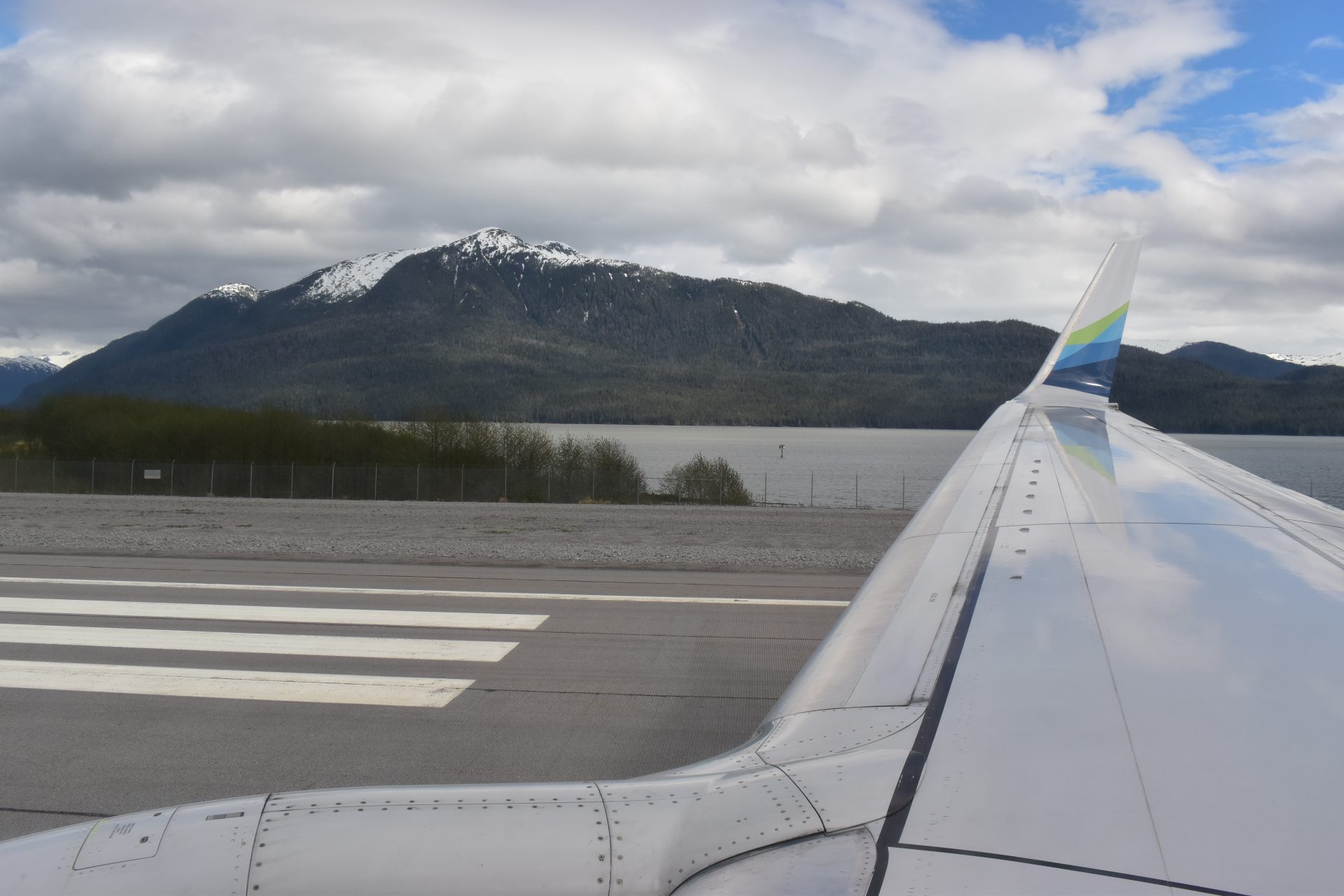
By the time the runway at Wrangell came into view, the clouds had almost completely cleared which was a huge relief to me as up to that point I figured every stop would be rain. The runway in Wrangell is on the shorter side of the spectrum for a jet this sized at 5,999-Feet but the crew had no problem handling it. We began to make a slow turn to the right, and in the distance, I could see the airport as well as the entire community of Wrangell Alaska.

Wrangell Airport and the town of Wrangel in the distance (Photo: AirlineGeeks | Joey Gerardi)

Once the community came into view we began banking to the right for our final approach and descending at the same time, and it began to feel more like the end of a rollercoaster ride than a commercial flight on a jet. It was truly a feeling like none other, landing a jet this sized in a community this small in the middle of nowhere.

Despite having only a 26-minute flight and 82-miles between the two destinations, the difference in weather between Ketchikan and Wrangell was astounding and is just another example of how unique this part of the country really is.

The stunning scenery in Wrangell, Alaska (Photo: AirlineGeeks | Joey Gerardi)

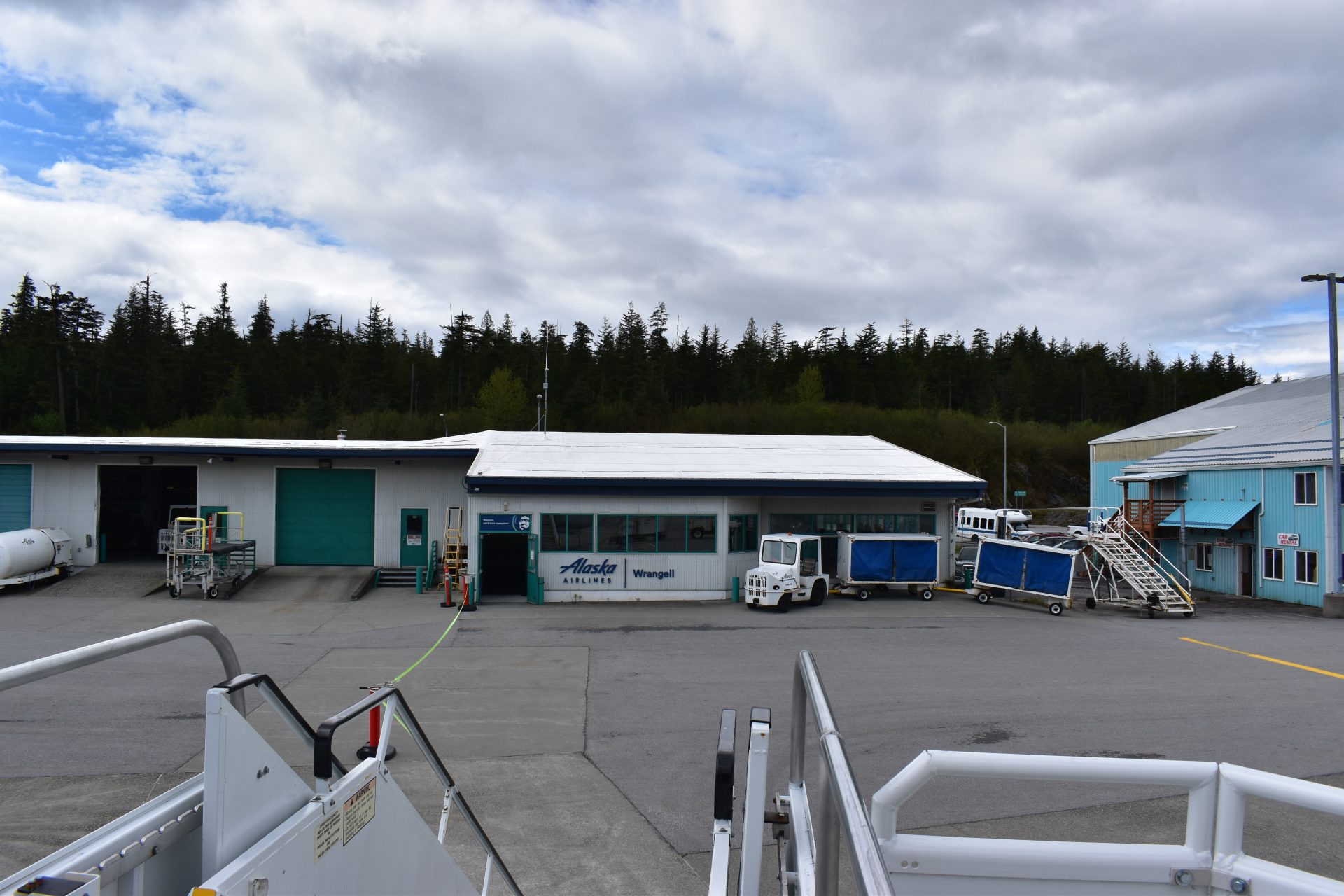
Wrangell is one of the four EAS airports that I would encounter along my trip and they only receive two flights a day, the northbound and the southbound Milk Runs. Another unique fact, unlike at most airports where airlines rent or lease gates from the airport, Alaska Airlines owns the terminal building here in Wrangell which looks more like a shed than an airline terminal. I was also completely off the grid as my cell phone didn’t have any service at Wrangell, there was a local Alaskan cell provider that does have service here, by I wasn’t part of that phone network.

The airport building in Wrangell, Alaska (Photo: AirlineGeeks | Joey Gerardi)

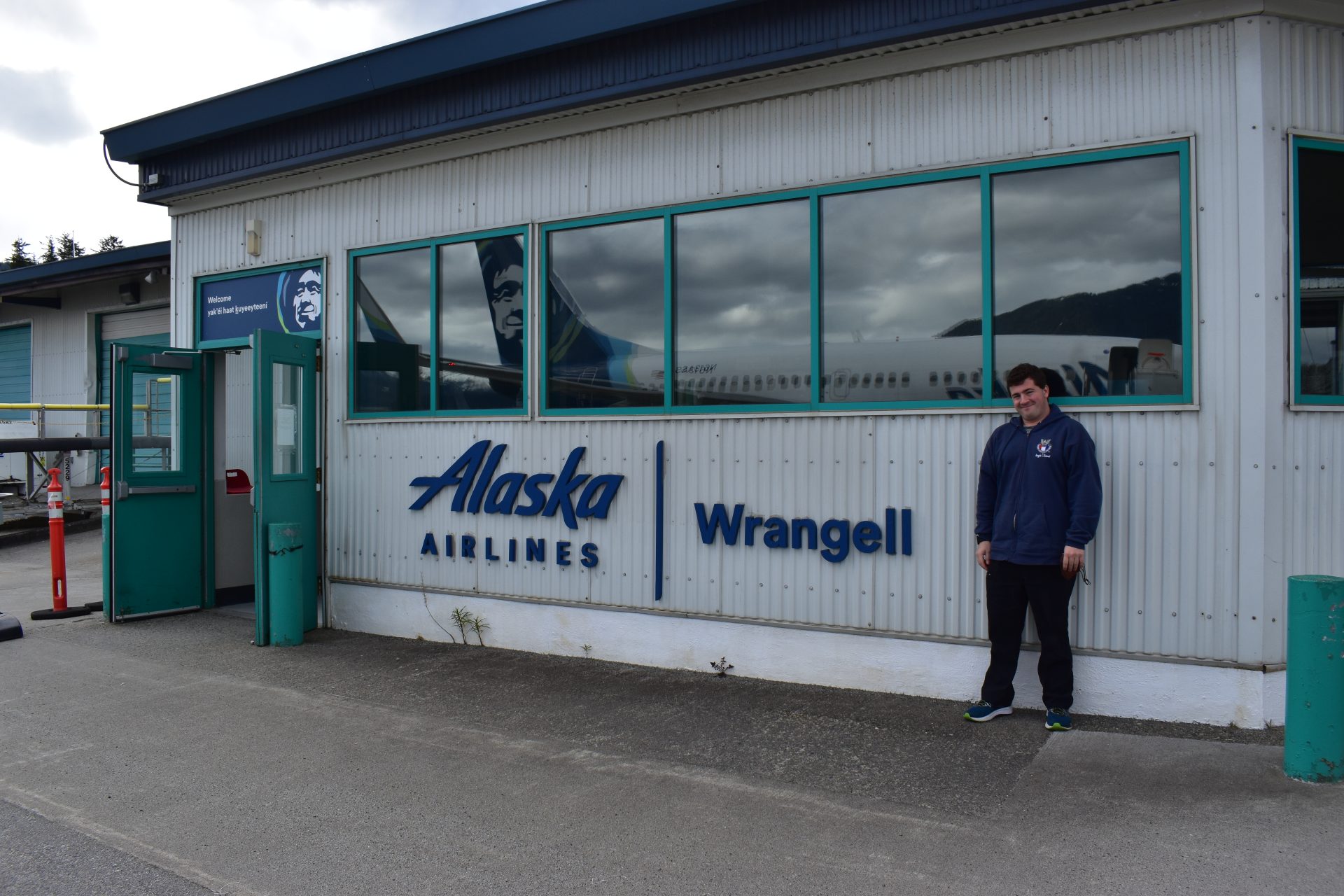
After all the Wrangell bound passengers got off, the flight attendant gestured to me to come up to the front and said they had arranged for one of the ground staff to stay by my side while I got a picture in front of the terminal building here in Wrangell. This was outstanding and I thanked them many times, usually as soon as someone touches the pavement they are required to re-clear security again.

Me, smiling from ear to ear in front of the terminal in Wrangell (Photo: AirlineGeeks | Joey Gerardi)

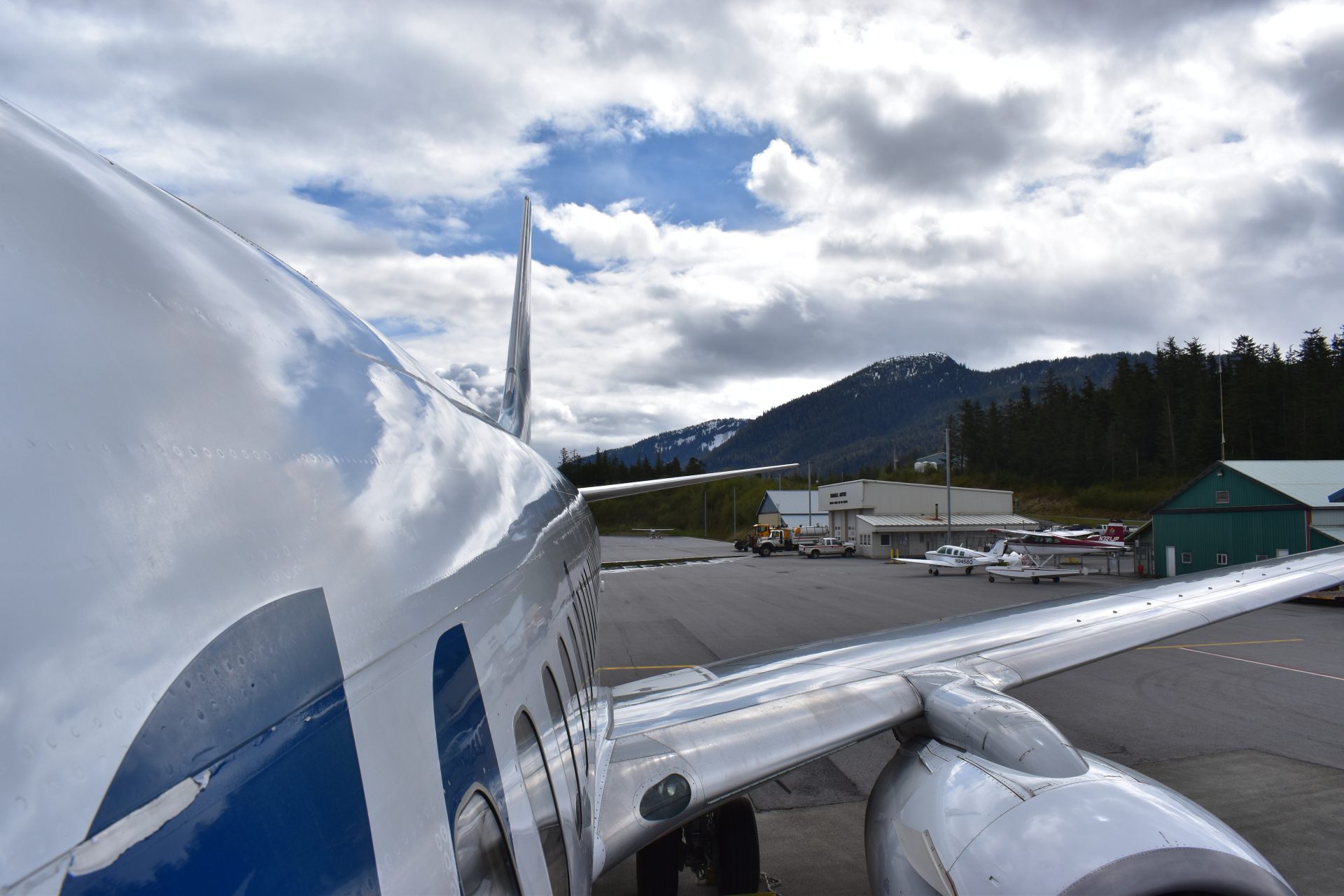
The weather at this stop was the best out of all my stops on the Milk Run, and the lighting didn’t disappoint either. But all great things must come to an end eventually, and I snapped my last couple shots in Wrangell before heading back onto the aircraft for my shortest leg of the trip.

Getting a few last shots in Wrangell before heading back on the aircraft (Photo: AirlineGeeks | Joey Gerardi)

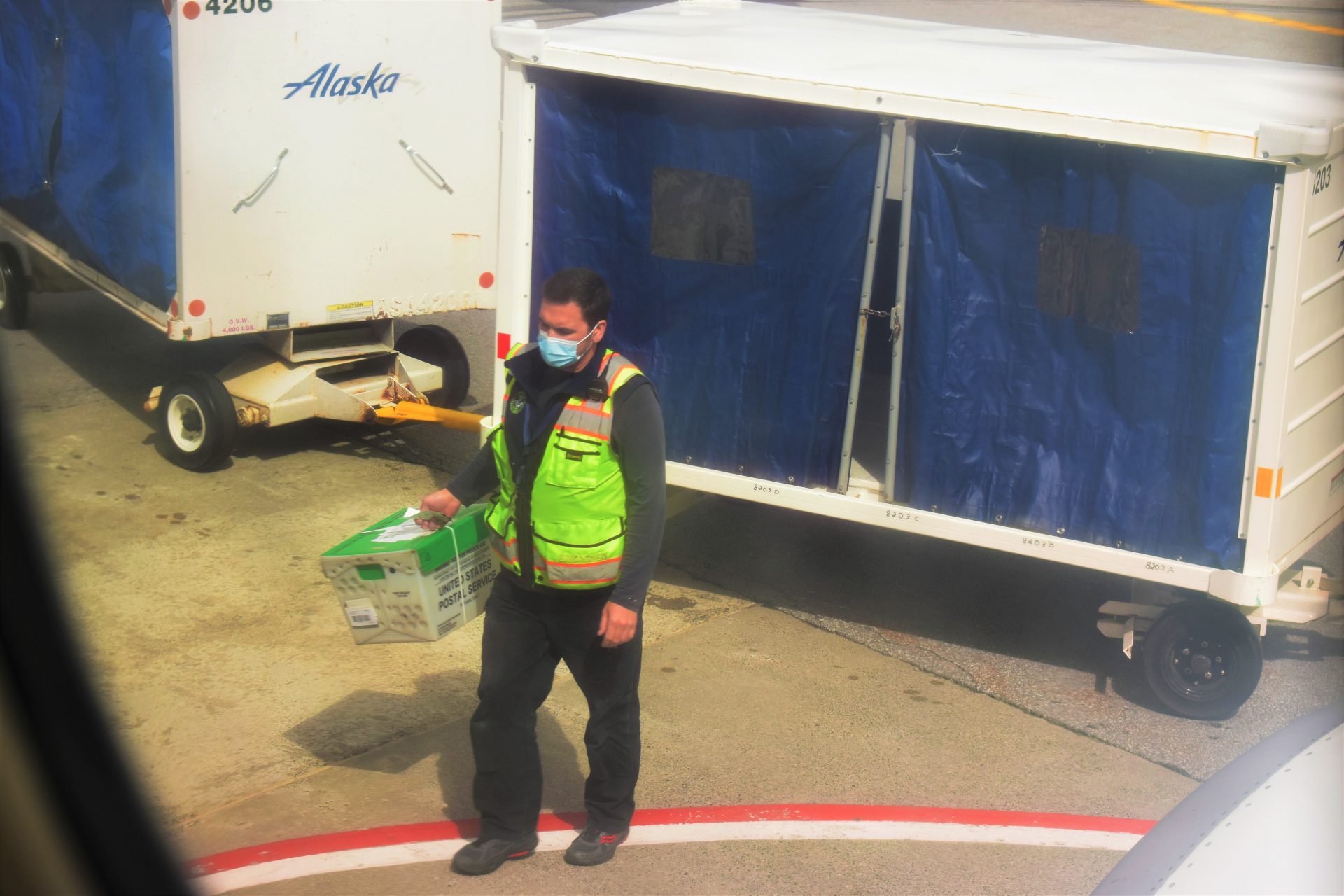
As the normal boarding announcements were going on I noticed the mail being loaded onto the aircraft. Remember these two daily flights on Alaska Airlines are the only chance to get any items, packages, people, and the U.S. Mail in and out of communities like this. There were 65 passengers on this third leg of the flight to Petersburg.

The U.S. Mail being loaded onto the Milk Run flight (Photo: AirlineGeeks | Joey Gerardi)

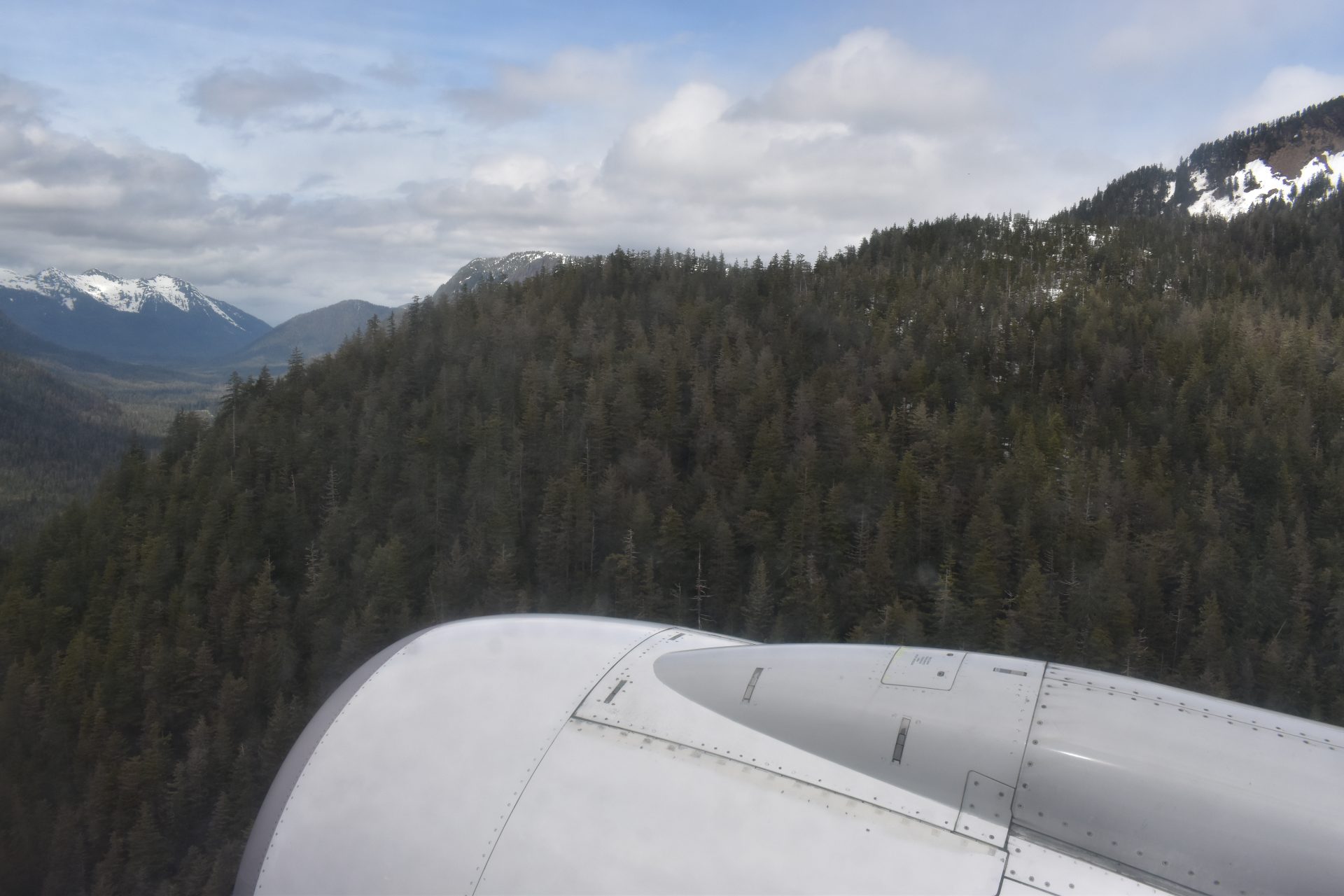
This next leg would be the shortest of my multi-flight trip and in fact, the entire leg from Wrangell to Petersburg only lasted 11-Minutes and 19-Seconds from takeoff to touchdown. The flight to Petersburg from Wrangell is the closest you’ll ever get to bush flying in a jet this size, cruising altitude was only 1,500-Feet and we passed through a small mountain pass and got relatively close to nearby terrain as we approached the next airport.

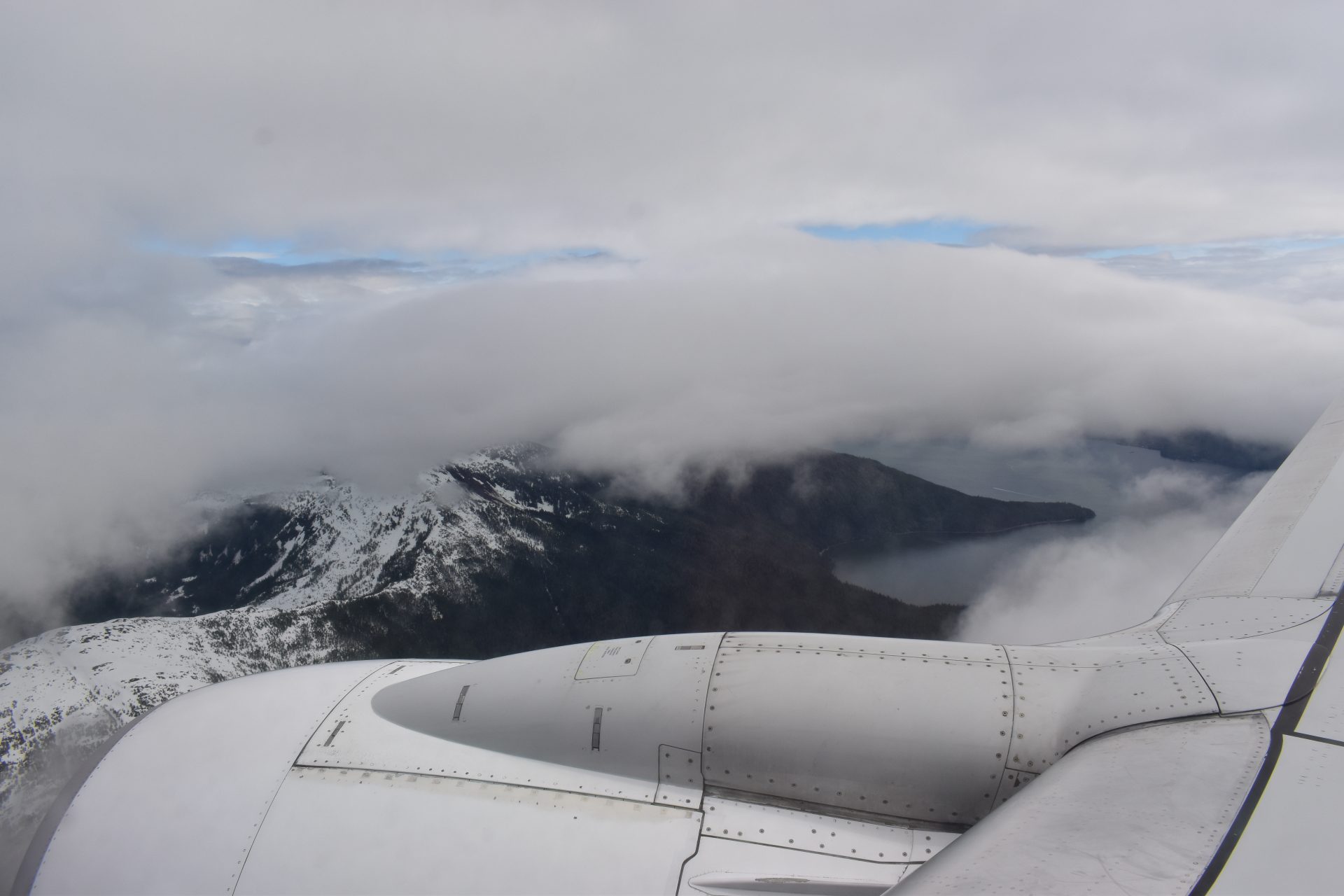
As you’d imagine there isn’t much that could happen on a flight that lasted less than 12-minutes, we took off to the south and turned northbound for the flight as we quickly climbed to 1,500-Feet. It was neat seeing glaciers and the vast wilderness as we flew over. Weird to think that most of the area below the aircraft is uninhabited, and the few people that live in these places are clustered in the small communities we land in. I even made a video for just the Wrangell to Petersburg leg of the trip and will be located at the end of this article. But here is a picture from our close, but not too close encounter with a mountain en-route.

Passing by a mountain en-route from Wrangell to Petersburg (Photo: AirlineGeeks | Joey Gerardi)

I talked to the pilots just before we took off on this leg, and they said that they rarely talk to Air Traffic Control between these two destinations as they are usually low enough where they don’t need to. And unlike most parts of the country, these landings are usually flown entirely by hand versus using autopilot for portions of it.

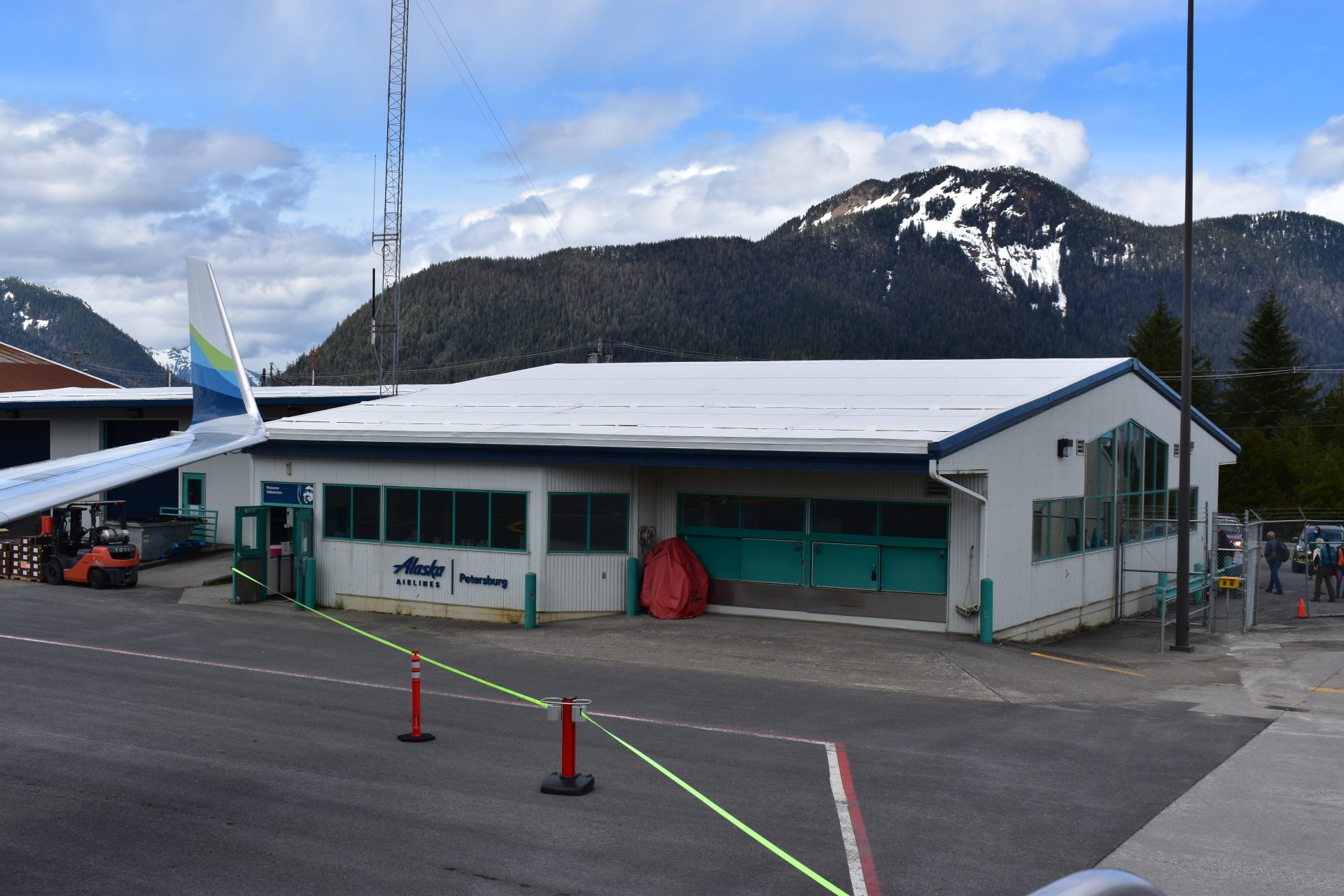
Just like in Wrangell, Alaska Airlines owns the terminal in Petersburg and it looks nearly identical to the prior as well. These two cities have many similarities as well as the terminal look; Petersburg is also an EAS city, there was no cell service for my cell network here either, and the weather is usually pretty similar being the two communities are only 31-miles apart as the plane flys.

The ‘terminal’ in Petersburg, nearly identical to the building in Wrangell (Photo: AirlineGeeks | Joey Gerardi)

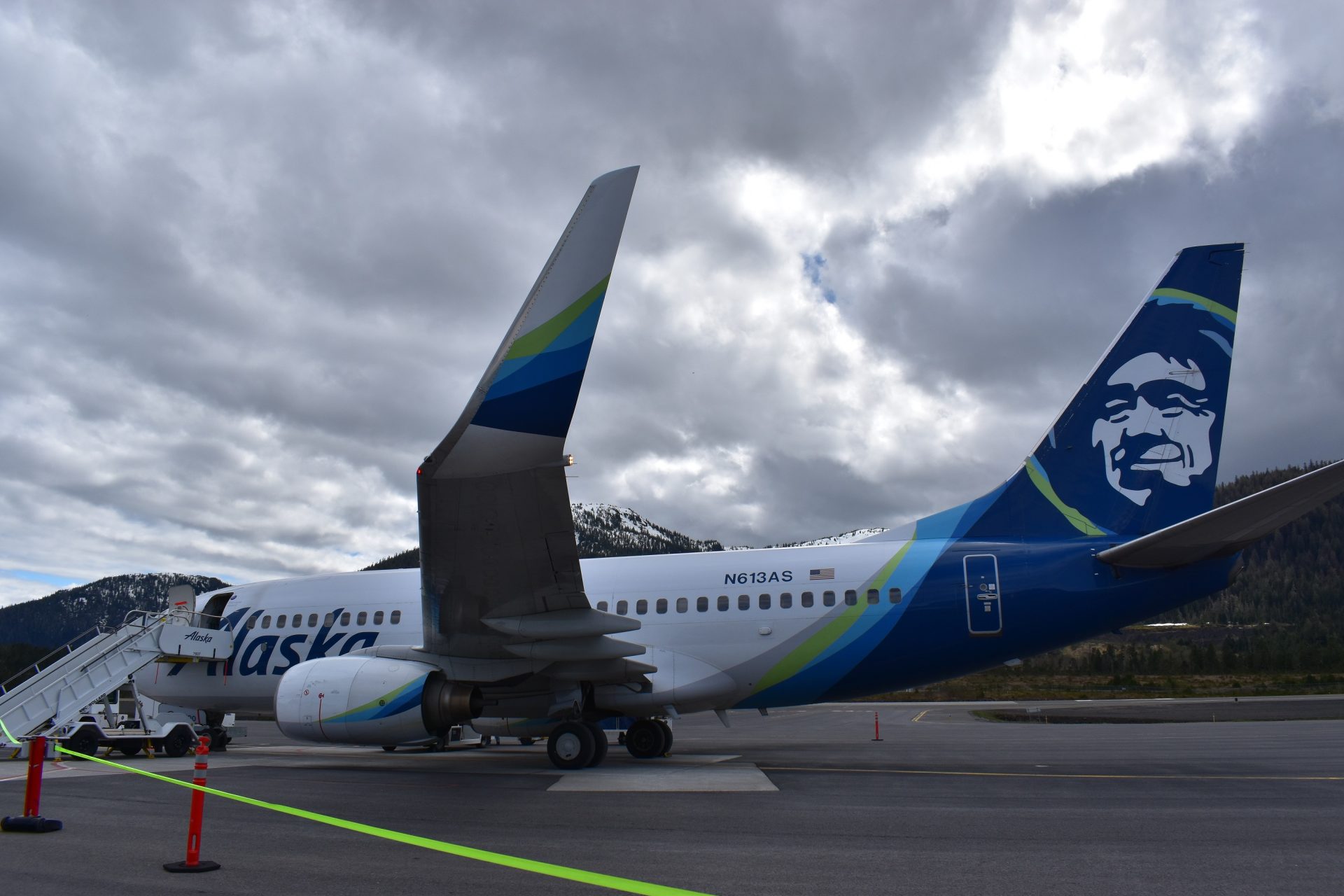
Here in Petersburg, I was again summoned to the forward galley but this time by ground staff. They informed me that someone in Wrangell called ahead and told them I would like to walk around outside for some pictures, again with supervision and an escort. Again I am truly thankful for the warm and welcoming crew on my flights as well as the ground staff in Wrangell and Petersburg. It is truly the luck of the draw with the crews, as not all are accepting and welcoming to pictures or people wanting to walk around between stops.

Our aircraft in Petersburg, Alaska (Photo: AirlineGeeks | Joey Gerardi)

After a fun time exploring the ramp with my ramp guide, it was time to head back inside the aircraft for my final leg of the day. This leg to the Alaskan state capital of Juneau would have 69 passengers on it, and just like the previous two legs, would be too short to have any kind of service.

Entering the runway in Petersburg for my final flight of the day (Photo: AirlineGeeks | Joey Gerardi)

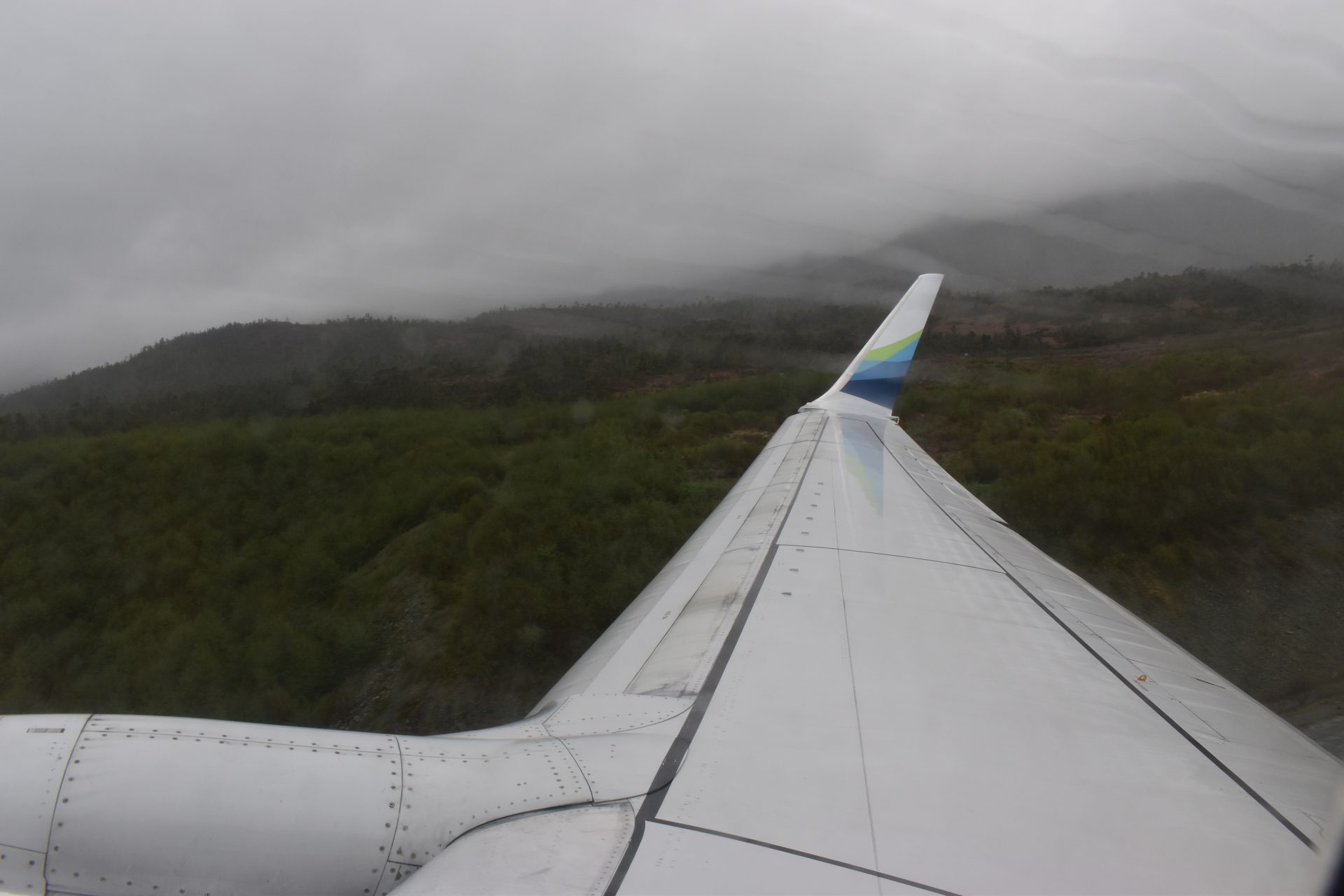
After departure, we quickly climbed to our cruising altitude of 20,000-feet, and a thick cloud layer once again began covering the ground below.

Clouds begin to form as we approach Juneau, Alaska (Photo: AirlineGeeks | Joey Gerardi)

This was another short flight and lasted only 27-minutes from takeoff to touchdown. Another uneventful flight along the Alaska Milk Run, someday I do hope to try it again during the summer months when the cloud cover is hopefully a little less. But nonetheless, the weather was spectacular along the shortest leg between Wrangell and Petersburg which led to some amazing views.

On approach to Juneau International Airport (Photo: AirlineGeeks | Joey Gerardi)

When we landed in Juneau it was again raining, although I did expect it as this part of Alaska is a rainforest climate. Fun fact about landing in Juneau, due to the terrain near the end of the runway, aircraft cannot come straight in and are required to make a slight right turn when they are only 500-feet above the ground when using runway 08.

A map of the path flights must take into Juneau when using Runway 08 (Screenshot: FlightRadar24)

I would like to give a big thanks to the flight attendants for helping me get pictures of myself at each stop of this flight and also giving me the exact passenger load number on each of the flights I was on. Flight number 65 does continue from Juneau nonstop to Anchorage but I didn’t book that flight, I opted for an overnight in Juneau so I could complete the northern sector for the Milk Run the next morning, but flight 61 is for the next article.

The Juneau International Airport (Photo: AirlineGeeks | Joey Gerardi)


Trip Report Video from Alaska Airlines Milk Run Flight 65:

Video of just the Wrangell to Petersburg sector:

Joey Gerardi

Joey has always been interested in planes for as long as he can remember. He grew up in Central New York during the early 2000s when US Airways Express turboprops ruled the skies. Being from a non-aviation family made it harder for him to be around planes and would only spend about three hours a month at the airport. He was so excited when he could drive by himself, the first thing he did with his driver's license was get ice cream and go plane spotting for the entire day. He graduated from Western Michigan University in 2022 with a B.S. in Aviation Management & Operations and a Minor in Business, and currently works for a major airline in his hometown.

Singapore Airlines Strengthens Partnership With United Airlines

A Singapore Airlines Airbus A350-900 XWB departing from San Francisco. (Photo: AirlineGeeks | Parker Davis)

For the aviation industry in Singapore, the effects of the Covid-19 were certainly slightly devastatingly felt, even for well-awarded flag carrier Singapore Airlines and its sister low-cost subsidiary Scoot.

The lack of a domestic market, alongside the prolonged grounding of the majority of its fleet, had the aviation industry in Singapore crippled, with the various terminals of Changi International Airport feeling a lot more emptier than usual.

Recovery for the Singapore Airlines Group and its base hub have seemed a far-out possibility even in recent months despite the initial reopening of several international borders, as the quarantine requirements and additional hassles have seemed to turn passengers away.

As a result, the news of Vaccinated Travel Lane flights was greatly welcomed, with the exclusion of quarantine being seen as the main factor for the Singapore Airlines Group receiving massive loads of bookings for these specific flights.

Enhancing Connectivity

Starting from mid-November, Singapore Airlines hub airport will be seeing more passenger traffic as the Vaccination Travel Lane flights commence, but it could also be seeing a lot more passengers from the U.S. soon. This follows the signing of a memorandum of understanding (MOU) between Singapore Airlines and United Airlines, agreeing to work on further deepening the connectivity between Singapore and the U.S.

As part of its strategy to not just build, but also to maintain partnerships with major airlines worldwide, the agreement is aimed at helping boost connectivity to and through Singapore, aiding well in recovery.

Through the agreement, both airlines — who are both members of Star Alliance — will be able to codeshare on each other’s services from Singapore and the U.S. The codeshare agreement would allow for passengers to benefit from either airline’s frequent flyer or corporate travel program, once again benefitting both airlines and passengers alike.

“This milestone signals the start of a deeper partnership between both airlines, which could offer enhanced options and benefits for customers in line with the applicable laws and regulations,” said Singapore Airlines in a statement.

Short-term, it goes without saying that the agreement could then allow for Singapore Airlines to add in more options to the U.S for the Vaccinated Travel Lane scheme in the future. And for the long-term possibilities, the two airlines say the agreement could help in lowering prices, and might even aid in the future addition of more flights between the two countries.

Currently, Singapore Airlines only has non-stop daily flight services to three destinations in the U.S.: Los Angeles, New York and San Francisco. As for United Airlines, the agreement would allow it to resume its non-stop San Francisco-Singapore flight service, which was unfortunately paused due to low demand and border restrictions.

Singapore’s Codeshare Power

Updated in September 2021, Singapore Airlines has a total of 34 codeshare partners, allowing it access to more than 200 more destinations through these partnerships. The national carrier also has three partnerships that are still pending regulatory approval, namely with ANA, Vistara and Malaysia Airlines.

Notably out of the 34, the most significant partnerships ties in Air New Zealand and Lufthansa, as the codesharing goes above and beyond to include cohesion in areas such as coordination of schedules and even revenue sharing, which would make one wonder, how far could the new agreement with United Airlines go besides just enhancing connectivity and the possibility of lower airfare prices.

And should the collaboration be deemed a success, there is also a possibility that it might be extended to Scoot at a later time, which would be a significant change for the low-cost carrier as it currently does not serve any U.S destinations.

Charlotte Seet

Fascinated by aircraft from a very young age, Charlotte’s dream was to work alongside the big birds one day. Pursuing her dream, she went on to achieve her diploma in Aviation Management and is currently working on her degree in Aviation Business in Administration with a minor in Air Traffic Management. When she’s not busy with school assignments, you can find her aircraft spotting for long hours at the airport. In Charlotte’s heart, the Queen of the Skies will always be her favorite aircraft.

Further 8 Canadian Airports to Receive International Arrivals from Nov. 30

WestJet & Air Canada side by side at YXX (Photo: Wikimedia Commons | YXXOps)

In a further easing of travel restrictions, the Canadaian government has announced that an additional eight of the country’s airports can receive international travellers from Nov. 30. Those joining the 10 airports currently receiving international arrivals will be St. John’s International, John C. Munro Hamilton International, Region of Waterloo International, Regina International, Saskatoon John G. Diefenbaker International, Kelowna International, Abbotsford International and Victoria International.

Currently, the following Canadian airports are able to receive international arrivals: Halifax Stanfield International, Québec City Jean Lesage International, Montréal-Trudeau International, Ottawa/Macdonald–Cartier International, Toronto Pearson International, Billy Bishop Toronto City Centre, Winnipeg James Armstrong Richardson International, Edmonton International, Calgary International, and Vancouver International. At the height of the pandemic, international passenger arrivals were restricted to only three airports: Vancouver, Toronto Pearson and Montréal-Trudeau.

In a prepared statement, Minister of Transport Omar Alghabra stated, “Increased vaccination levels have allowed us to safely re-open these additional Canadian airports to international passenger flights. This measure will help ensure that travellers are able to access more regional airports for their international travels this winter while continuing to support the Government of Canada’s measured approach to re-opening our border.”

The announcement was welcomed by Canadian airlines with Andy Gibbons, vice-president of government relations for WestJet, saying that producing month-by-month schedules was challenging for airlines. Gibbons told CTV News that “airlines need certainty, and today’s certainty is going to help with that for sure.”

Air Canada advised that the airline plans to increase its fourth-quarter 2021 available seat miles (ASM) capacity by about 135% from the same quarter in 2020. Though when compared to the same period in 2019, fourth quarter ASM capacity is expected to decrease by about 47%. On Tuesday the airline announced a third-quarter operating loss of 364 million Canadian dollars ($293 million).

News of eighteen airports being able to accept international passenger flights was not good news to London International Airport. The airport’s chief executive officer Mike Seabrook had expected his airport to be added to the list alongside the neighbouring John C. Munro Hamilton International and Region of Waterloo International airports. Mr Seabrook told Global News “in our minds, it’s absolutely unfair that Kitchener and Hamilton have been included in this and we haven’t. We have Air Transat and Sunwing operating out of here this winter that they’ve got to sell tickets on these flights, and if they can’t get the tickets sold, they’re going to cancel the flights.”

The statement from the Canadian government stipulated that more airports may be able to receive international arrivals “as conditions dictate, based on demand, operational capacity, the epidemiological situation in Canada, and recommendations from the Public Health Agency of Canada.”

John Flett

John has always had a passion for aviation and through a career with Air New Zealand has gained a strong understanding of aviation operations and the strategic nature of the industry. During his career with the airline, John held multiple leadership roles and was involved in projects such as the introduction of both the 777-200 and -300 type aircraft and the development of the IFE for the 777-300. He was also part of a small team who created and published the internal communications magazines for Air New Zealand’s pilots, cabin crew and ground staff balancing a mix of corporate and social content. John is educated to postgraduate level achieving a masters degree with Distinction in Airline and Airport Management. John has held the positions of course director of an undergraduate commercial pilot training programme at a leading London university. In addition he is contracted as an external instructor for IATA (International Air Transport Association) and has been a member of the Heathrow Community Fund’s ‘Communities for Tomorrow’ panel.

Etihad Returns To Medina, Broadens Aeroflot Partnership

An Etihad A330-200 in the carrier's newest paint scheme in Dusseldorf. (Photo: AirlineGeeks | Fabian Behr)

The re-opening of international borders has re-allowed the influx of business and leisure travellers, and slowly but surely, passengers travelling for religious significance are allowed as well.

In mid-October, the Prophet Mosque for Medina announced the suspension of social distancing requirements and has since allowed for full-capacity attendance.

Additionally, non-resident travellers flying to Saudi Arabia no longer need to quarantine if they are full vaccinated.

Return to Medina

Such good news of lesser restrictions is just what Etihad needed to resume flights to Medina.

It would be just in time for Etihad to provide religious, leisure and business travellers with convenient flight connectivity to major cities in the Indian Subcontinent and Asia for those travelling to and from Medina through Abu Dhabi.

The Abu Dhabi-Medina route was first introduced in 2014 and was Etihad’s fourth destination in Saudi Arabia after Dammam, Jeddah and Riyadh.

Unfortunately, the route was temporarily paused during the past 19 months due to the travel restrictions following the Covid-19 pandemic.

Expressing delight of the resumption, Fatma Al Mehairi, Vice President Sales UAE at Etihad Airways, said: “We look forward to reconnecting Abu Dhabi with Medina, a city of enormous historic and religious significance for Muslims around the world. Our flights will support the growing demand for religious travel and strengthen the existing air links between the UAE and Saudi Arabia, a key travel market for Etihad Airways.”

Starting from Nov. 7, the Abu Dhabi-based carrier will operate flight services from Abu Dhabi to Medina on a three-times-weekly schedule, on Tuesdays, Thursday, and Saturdays.

Considering that the flight time between Abu Dhabi and Medina is just three house, Etihad is planning to utilize its two-class configured Airbus A321 – which is the fleet primarily used for short-haul flights within the Gulf states.

Changing Bases

On the other side of the globe, Etihad is also making moves by transferring all Russian operations to the brand-new Terminal C at Moscow Sheremetyevo Alexander S. Pushkin International Airport.

The first departure to the airport will be a rather special one, as it is scheduled to take place on the 13th anniversary of Etihad’s first direct flight service to Moscow in December of 2008.

In addition, the big move will be accompanied by daily flight services between Abu Dhabi and Moscow, further enhancing the already-strong connectivity.

The daily flights will be operated using a mix of both narrow-body and wide-body aircraft, including Etihad’s flagship jet, the Boeing 787 Dreamliner.

And that’s not all. The Gulf carrier’s big move will also be complemented by the launch of a broader partnership with Russia’s national airline group, Aeroflot.

Set to start from Nov. 13, Aeroflot will launch its first-ever services to Abu Dhabi on a three-times-weekly schedule.

“We are proud to announce Etihad will be moving to Moscow’s Sheremetyevo International Airport, and broadening our relationship with the national carrier, Aeroflot,” says Alex Featherstone, Vice President Network Planning and Alliances, Etihad Airways.

He also adds that the big move additionally reinforces Etihad’s commitment to the Russian market, which continues to experience continuous progressions and strong demand from business and leisure travellers.

Charlotte Seet

Fascinated by aircraft from a very young age, Charlotte’s dream was to work alongside the big birds one day. Pursuing her dream, she went on to achieve her diploma in Aviation Management and is currently working on her degree in Aviation Business in Administration with a minor in Air Traffic Management. When she’s not busy with school assignments, you can find her aircraft spotting for long hours at the airport. In Charlotte’s heart, the Queen of the Skies will always be her favorite aircraft.

The All-Boeing XiamenAir Welcomes Airbus A321 Fleet

A Xiamen 787 taxis in Amsterdam. (Photo: AirlineGeeks | Fabian Behr)

XiamenAir announced that starting January 2022, the airline will introduce 15 new Airbus A321s into its fleet. The airline is currently the largest carrier with only Boeing aircraft in China. There have long been discussions about XiamenAir intending to introduce Airbus jets into its fleet, and now, with the Boeing 737 MAX still grounded in China, Airbus jets will be used for the airline to expand its domestic network.

The airline is a subsidiary of China Southern, the second-largest Airbus A321 operator in the world. According to Planespotters.net, XiamenAir currently operates 165 Boeing jets, and it has 17 Boeing 737 MAX parked in the U.S., ready to be delivered. The mid-sized carrier’s plan to add 15 Airbus A321s will fill the gap caused by the delayed handover of its 737 MAX aircraft.

Swift Moves

XimanenAir is a subsidiary of China Southern, and the parent company is expected to provide strong support, so that its subsidiary can start the A321 operations in 2 months. XiamenAir has had no addition to its fleet since March 2019, when the Boeing 737 MAX was grounded globally. Nowadays, as the pandemic continues to soar around the world, and international travel is limited in-and-out of China, XiamenAir is placing its bet on China’s domestic markets for its growth.

The news would be inspirational for Airbus, as the company successfully made the sale to an airline that was loyal to its competitor since the beginning. For Boeing, however, the news is another blow for the company to convince the Chinese government to get its 737 MAX back in the air. The Boeing 737 MAX is still grounded in China, after almost three years since devastating crashes involving the jet occurred in Indonesia and Ethiopia.

Diversification Trend

As XiamenAir chooses the Airbus A321 to join its fleet, there are news about other major all-Boeing and all-Airbus carriers in China working to diversify their fleet. Shandong Airlines, an Air China subsidiary that operates 134 Boeing 737 series aircrafts, was reportedly considering adding Airbus A330 to its fleet before the global pandemic. Shandong Airlines was the largest airline in China without wide-body jets. Another major airline, Sichuan Airlines, based in Chengdu, China, currently only operates Airbus aircraft, and was considering Boeing 777F for its freight operations. However, the carrier eventually chose the Airbus A330F to move forward, for lower operating costs.

Airbus A321 are highly acclaimed by Chinese carriers. The three largest carriers, Air China, China Southern, and China Eastern all operate sizable A321 fleets, and hold A321neo orders on hand. As Chinese carriers adopt a point-to-point network instead of a hub network, aircraft with medium capacity and long range is desired by carriers to expand their network. Airbus A321 is a perfect candidate for the task. The Boeing 737 MAX posed a strong competitor with the Airbus A321 in China’s market, however, Boeing has not made any sales of its most popular single-aisle aircraft since the grounding. In the future, the Boeing 737 MAX will also face the challenge from the Airbus A220 family, as Airbus is actively advertising its new product to Chinese carriers.

Lei Yan

Lei is from Inner Mongolia, China, and now lives in Guangzhou. He grew up in an aviation family, where his passion began. During his time at Penn State University, he studied Industrial Engineering specializing in operations research, and he graduated with an honor’s thesis on airport gate assignment optimization. Now, he is a Purchasing Manager with Procter & Gamble. In his free time, he enjoys flying, reading, and wandering around the city.

Alaska Airlines Expands Existing Codeshare with British Airways 

An Alaska Airlines E-175 receives a water canon salute after arriving at Paine Field as the airport's first commercial flight. (Photo: AirlineGeeks | Katie Zera)

Alaska Airlines announced in a press release that it has enhanced its codeshare agreement with major European carrier and fellow oneworld alliance member British Airways. Tuesday’s announcement strengthens the carrier’s long standing relationship by adding 16 additional markets.

As the industry moves towards normalcy again and the airlines continue to operate in a post-Covid-19 environment finding and implementing different strategies for recovery. Joining a global airline alliance and establishing relationships within the alliance was one way for Alaska Airlines to continue moving towards pre-pandemic levels.

“We’re excited to deepen our partnership with British Airways,” stated Nat Pieper, senior vice president of fleet, finance and alliances at Alaska Airlines. “Alaska guests have valued access to London and Europe with British Airways for years, and the additional pathways announced today will make it even more convenient.”

The 16 additional markets extend beyond Alaska’s main hub in Seattle, but still include Seattle, connecting British Airways’ markets from London Heathrow to the popular West Coast markets of Los Angeles and San Francisco. 

Since joining oneworld alliance earlier this year on March 31, the carrier has increased its codeshare network by 39%, totaling 188 routes. Being a part of the oneworld alliance, Alaska passengers are able to reach up to 1,000 destinations world wide. Additionally, passengers can expect to earn and redeem points through the Alaska Air Mileage Plan eligible for flying on the 20 oneworld partners throughout the world. 

The additional 188 routes go beyond the British Airline routes and include agreements with Qatar Airways that began on July 1 and Iberia Airlines, as well as increased collaboration with existing partners such as American Airlines, Cathay Pacific and Finnair. 

Alaska Airlines operates its fleet of 173 Boeing 737 aircraft, 36 Airbus A320’s, 32 Bombardier Q400’s and 62 Embraer 175 serving 120 destinations across the United States and to Mexico, Canada and Costa Rica and is recognized as the fifth largest carrier in the U.S.

Third Quarter Results

The Seattle-based airline recently posted its third quarter results for 2021. The carrier reported a net income of $194 million in profit or $1.53 per share on $1.95 billion in revenue. Since the beginning of the pandemic, this was the first time Alaska posted a profit without government aid since the pandemic started, marking notable strides towards a full recovery. This time last year the company had reported a net loss of $431 million or $3.49 per share. 

“We are thrilled to return to profitability this quarter, leading the industry with a 12% pretax profit margin,” said CEO Ben Minicucci. “Thanks to each one of our employees for running our operation and showing remarkable care for our guests, and credit to the leadership team for laying out a measured plan and executing it with discipline. We’re all feeling the momentum and look forward to building on our strong foundation for growth in 2022 and beyond.”

The carrier continues to look towards the future and is making significant strides in the search for success in the post-pandemic environment. The enhanced codeshare agreement with British Airways will help the airline establish itself within the airline alliance and help maintain a competitive advantage among carriers.

Chase Hagl

Chase Hagl grew up in Twin Falls, Idaho. His love and passion for Aviation landed him in Orem, Utah where he obtained a B.S. in Aviation Management with a minor in Business Management from Utah Valley University. Chase currently works as a flight attendant in Charleston, SC and is also the primary Inflight ASAP ERC representative for startup airline, Breeze Airways. His experience in the aviation industry spans back four years, working in areas including agriculture application, customer service, maintenance, and flight ops. In his free time, Chase enjoys road biking, astronomy, and flying.

Part 1: DFW’s EVP of Global Strategy and Development Discusses Post-Covid Growth

American Airlines jets on the ramp at DFW. (Photo: AirlineGeeks | William Derrickson)

Going forward after a pandemic that devastated the airline industry, the role of airports are greatly underestimated.

During the World Routes 2021 event in Milan, however, airports made clear that they want to be an active player in the recovery, and Dallas-Fort Worth was not an exception.

AirlineGeeks had the chance to sit down with the airport’s Executive Vice President of Global Strategy and Development, John Ackerman. The half-hour talk will be divided in two parts. Here’s the first part of our discussion.

AirlineGeeks (AG): How has COVID changed your operations?

John Ackerman (JA): Wow that’s a good question. So just from a flight buy-in perspective, like all the other airports in the world our passenger volumes dropped precipitously, you know, almost overnight.

In April, we were down about 92% for passengers [versus 2019], in April of 2020. But since then the passenger volumes have actually recovered fairly strongly. We’ve recovered faster than almost any airport in the world, so we’re very, very grateful for that.

AG: There [were] no passengers. So how do you attract customers?

JA: Well, I mean, the passenger demand has come back. We were very fortunate the United States market on the domestic side actually stayed.

In summer of [20]20, just like everything else it dropped, but the domestic market actually came back fairly strong in the US, our Mexico market stayed very strong. In this year, our domestic traffic has been very, very, strong. Our international traffic on the other hand is still down quite a bit. As far as attracting, what we did to attract customers in the airport; we knew that if the customers didn’t feel safe, they would be less likely to travel. So we have installed UVC technology and UVC light sterilization technology.

We have that in all of our terminals are fully UVC [covered] now. So you’re breathing much healthier air. We were the first airport to get the GBAC certification, which is the Global Biorisk Advisory Council, I believe; and it’s an international standard for sanitization and cleanliness.

We knew that we couldn’t just say “hey, DFW says that we’re clean” because, you know, who knows? I mean, everybody’s going to say that. So we wanted an independent international standard to validate it. So we did that like everybody else, you know, we made sure that there were, you know, distant social distancing markings and things like that, but we did everything we could to tell our customers that we’re keeping [them] as safe as possible. So we worked very hard at that to try to restore the consumer trust and the consumer confidence in air travel.

AG: What about the airlines? How do you attract new airlines?

JA: Well, the airlines we attract with the strength of our market. I mean, actually the pandemic in some ways has helped us there because as I mentioned earlier, we recovered faster and stayed stronger than almost any other airport in the world.

I mean, we’re one of only two airports in the world that has more net destinations now than we did before the pandemic. So I think the airlines look at the demand, they look at the local economy, they look at a number of different factors and by almost any measure, DFW has again done better than most airports in the world. So that’s been a huge advantage for us. So we’re selling the strength of our market and our market has remained very strong.

AG: So is your job easier than others’ in any sense, compared to other airports’?

JA: You know, I think all the airports worked very hard to attract traffic. I think that the facts base that we have, give us an advantage over some of our competitors, but everybody’s there, there’s many great cities and great airports around the world.

We’ve done very well during the pandemic, but we don’t want to be arrogant. We don’t want to be cocky, you know, we did well because we just didn’t do as badly as everybody else. So it’s not something that we’re celebrating, you know, it’s still a tough business. And we also know that even when we see, when I say that our traffic is back, what we also know, and this is really important, is that the airlines may be getting their passengers back, but the yields are still depressed.

So for an airport I really just need the passenger because then I could sell them food, they could shop in my stores, they could rent cars, they can park. So the passengers [are] the same to me before the pandemic or after the pandemic; for the airlines, they need the passenger to be paying 2019 yields, a raise as opposed to 2020 or 2021 with yields.

So we recognize our recovery is not the same as the airline wreck, the underlying airline economic recovery. So [to say] “you are almost fully recovered”… No, I would not say that, we’re still down this year, this month we’ve forecasted that we will be down maybe 10% to 20% compared to 2019.

We’re getting close but we’re not fully recovered yet. We think our domestic network will be fully recovered by next summer, more or less, and we think international long haul is one to two years away from a fully recover.

AG: In financial terms, you are already profiting.

JA: We received government assistance, so we stayed very strong, financially. And we were actually able to, this year, we just closed out our fiscal year that ends on Sept. 30. So we just closed it out a couple of weeks ago and we did a lot better than our budget, and we were actually able to take some of the extra money that we earned.

And actually, for the month of September we had no landing charges for the airlines. So it was about a $9 million benefit that we just returned to our airline partners because we did better than we expected and the airlines are still suffering. So we wanted to help out our airline partners as much as possible.

AG: For you guys, is it a blessing or a curse to depend too much on one airline? I mean, American Airlines in your case.

JA: You know the business professors would tell you that having more than 80% of your eggs in one basket is a risky thing – and there is some truth to that, just in general.

But we consider American Airlines to be a major blessing; without American we would not have the route network that we have. We would still have a very strong network, we’re Dallas-Fort Worth, the fourth largest Metro area in the United States ,and we’re the fastest growing. So we believe we’d have a strong market and network anyway, but there’s no question that American Airlines operating their biggest hub and their headquarters at DFW is a tremendous advantage for us.

AG: But at the same time, you want more airlines. So how do you see the advance of ultra low costs into the major airports in the US?

JA: You know, what we’ve seen is that when some of the carriers come in, they’ll stimulate the market. So there’s extra people flying so that the pie gets bigger for everybody. So we think that the DFW market is a big enough market in a rich market – and a strong enough market.

There’s plenty for everybody, I guess you could say. I mean, people forget [when] we talk about DFW Airport [that] we have another great airport, right in Dallas, Dallas-Love Field; that airport, pre-pandemic was [at] 17 million passengers [a year]. So that’s a big airport just by itself that’s just 15 miles away from us.

AG: But is there some sort of conflict of interest? Let’s say Spirit increases their operations in Fort Worth, but American is concerned about it, I suppose. How do you deal with these things?

JA: We don’t have anything to do with airline pricing and the way the airlines compete. The airlines work that out amongst themselves and they compete, they all compete vigorously against each other. So we don’t have anything to do with that. When a new carrier comes into another’s market there’s usually a competitive response and the competition kind of settles down, but we don’t, we don’t take a position on that.

What we do do, though, since we’re at [World] Routes, I think this is important. Many airports offer service incentives, for starting new service. And we do the same. We have a very generous incentive program, but many airports will go for an incentive to everybody who flies a given route. We’ve taken the position that if you’re an airline who wants to start a new route, we provide an incentive and you are successful on that route and you prove that that market works and you grow that market and stimulate that market.

When another airline come, [it] says, “Hey, that’s a good market, now I see that’s a good market, I want to fly it.” Many of the airports will give an incentive to the second airline. We have taken the position that if you’re an airline that has the vision to recognize a new market and take a risk on that new market and you develop the market, then if I pay your competitors to fly that market, I’m not being a very good partner to you.

I mean, you flew the market, you took the risk, you did all the work. And as soon as you make it work, someone else jumps in and I give them incentive as well. That doesn’t make it. I don’t think it makes any sense for an airport, to be honest with you, but it certainly doesn’t make any sense for the airlines incentive strategy work.

So we offer incentives for any unserved market. We have target markets that are strategically important to us that we actually offer a 25% bonus incentive on top of our normal incentive. You can get 25% additional for certain target markets. And we publish those on our website. Everybody knows what they are – so if there’s a big enough market, it may need more than one flight per day and may need two flights per day. But in general, we only provide incentive for unserved or underserved markets if the market’s already established, and there’s no reason to pay an incentive for it. And again, it just harms the existing carriers.

AG: So you work more on a route-to-route basis, rather than attracting new airlines. You are more interested in a new city pair that in a new airline.

JA: We want both usually, but no, the city pair is, I think what’s most important. We don’t look at an airline and say, “Wow, we’d like to have [it] yeah”.

Or, you know, SAS, we don’t look and say, we want SAS. We might look into – and I’m just offering an example here – Stockholm to DFW. If we looked at that market, what we first did was we looked at a market and we say, okay, does the market work? And then once we figure out that the market works, then we look at who would be the best carrier, who would be the most likely carrier to fly that.

So in my example of Stockholm-DFW, we would talk to American because they might want to fly it. We’d also talk potentially to SAS, you know? So we look at a market, a city pair, and then we look at the airline to see which airline best fits that market.

AG: So when you go pitch to an airline, a new market, you just say, “oh, hey, we want this route”, or you say, “oh, we want this route and we offer this, this and that incentives”?

JA: Yes, we do both. When we work with a new airline, typically we have a professional airline relations team. So we typically have at least some relationship with many, many airlines.

I mean, dozens and dozens of airlines we’re already acquainted with, and we know people in their planning departments and their strategy teams. But we would go to them and we would say “we have data.” We’re very big on data. I have an entire data team. So we go in with the data because you can tell all the stories you want, but when you talk to a network planner, they want data.

They’re very quantifying people. So you have to have the numbers. So we go in and we will show them all the data and prove to them why that market would work for that carrier. And then as part of that presentation, we would also tell them that if you’re willing to try this, we will put some of our money in.

We want to have risk as well. We want to be taking risks with our money because the airline is taking, you know, it’s a big investment for an airline; there’s risk in starting new routes. It’s a multi-year maturation process for the economics of that route.

So we would talk about the incentive with them, but we talk about the incentives only at the end. It’s very deliberate. We first talk about the underlying route economics and the data. And then we talk about the incentives because there’s no airport in the world that can afford to completely subsidize a route.

The incentive is designed to help in the riskiest phase, the startup phase. And it’s also designed to signal to the airline that we’re putting our own money into this, so it is important to us as well, that we want the airline to succeed.


João Machado

João has loved aviation since he was six-years-old when he started visiting his home airport in Porto Alegre, southern Brazil. As he always loved writing, in 2011, at age 10 he started his very own aviation blog. Many things have happened since then, and now he is putting all his efforts into being an airline executive in the future. João currently lives in Siena, Italy, where he studies Economics and Management at Unisi.
Sign-up for newsletters & special offers!

Get the latest stories & special offers delivered directly to your inbox

SUBSCRIBE