The 777X on the taxiway.
(Photo: AirlineGeeks | Katie Zera)
On Nov. 9, Boeing reported that deliveries fell to 27 aircraft in October, while Boeing’s 787 Dreamliners remained on the shelf. However, the prominent American aircraft manufacturer took advantage of robust air cargo demand by gaining an order for two Boeing 777 cargo freighters for Maersk’s Star Air.
The U.S. retracted a pandemic travel restriction on visitors from 33 countries on Monday, and international travel bookings are currently on the rise. Widebody aircraft deliveries have been halted for the better part of a year after Boeing revealed several production issues and required additional time to check its planes.
American and United are two carriers who have outstanding orders for the Dreamliner. Both airlines — keen to make up for two years of low demand for overseas travel — plan to increase international flights next year, owing to the pandemic and a slew of other limitations.
According to highly regarded corporate figures issued on Tuesday, October deliveries were down eight than September but up 14 than the same time last year.
Performance & Specifications
The 787 Dreamliner and the Boeing 737 MAX are critical to Boeing’s ability to recover from the pandemic and a safety controversy resulting from two tragic disasters. There were 18 737 MAXs delivered last month, six of which were for European low-cost carrier Ryanair. Boeing also said it delivered two Boeing 737-800s — configured for business — to an undisclosed customer and two P-8 maritime patrol planes to the US Navy.
According to the aircraft manufacturer, the remaining five planes were bigger widebodies with cargo capacity: a Boeing 747 freighter for United Parcel Service (UPS), a 777 and a Boeing 767 for FedEx, a 777 freighter for Taiwan’s EVA Airways and a 767-based tanker for the US Air Force. Many airlines were compelled to idle empty passenger planes during the pandemic while increasing demand for cargo capacity on specialized freighters at a time when e-commerce was a lifeline for many. Cargo aircraft and air freight capacity have been in high demand during the pandemic, amid supply chain issues and a loss of belly capacity from other passenger planes.
Of the sales this year, 212 were for its 737 MAX, which returned to service in late 2020, after a near two-year safety ban. On the other hand, Boeing is still dealing with structural flaws with the larger 787 Dreamliner, which has forced it to reduce production and delay deliveries.
Last month, Boeing’s President and Chief Executive Officer, Dave Calhoun told analysts, “We have a good line of sight to the phases ahead,” in regards to resuming deliveries for the 787 Dreamliner. In the absence of regulatory permissions, he did not provide a definite date.
Following cancellations and cases when a customer switched orders for one type of aircraft to another, Boeing sold seven aircraft in October. It had ten gross orders, including eight 737 MAX planes for an unnamed customer and two 777 freighters for Maersk’s Star Air. In October, Air Lease Corp canceled two Boeing 787-10 aircraft orders, while Aviation Capital Group canceled one 737 MAX purchase.
Boeing has delivered 268 aircraft so far this year, including 241 in September. In the first ten months of 2020, it delivered 111. This is considered a significant improvement.
Kalai has always wanted to work in the aviation industry, having been fascinated by its inner workings since he was a child. In pursuit of his dream, he obtained a diploma in aviation management and is currently interning with a low-cost airline, under in-flight policies. In his free time, he loves to engage in recreational activities, and watch sports. In the upcoming years, Kalai intends to pursue his degree at a business school before working as an executive for a global airline around the world.
Air Transat Announces Expanded Summer 2022 Schedule
An Air Transat A321 featuring a special "Kids Club" sticker on its livery. (Photo: AirlineGeeks | William Derrickson)
Air Transat — the notable Canadian leisure airline — recently announced an expanded schedule for next year’s lucrative summer season. The Montreal-based carrier which specializes in flights and tour packages to leisure destinations will be seeking to serve 44 destinations with over 250 flights per week at the height of summer 2022.
“We are actively rebuilding our network with a modern and versatile fleet that will enable us to meet the increased demand expected in 2022, “Annick Guérard, President and Chief Executive Officer, Air Transat, said. “We will be returning to almost all of the destinations served before the pandemic, in addition to offering Canadian travelers major new destinations.”
According to the airline, brand new flights from Montreal to Los Angeles and San Francisco — both deemed as some of its ‘major new destinations’ — will operate three times weekly and twice a week, respectively. Quebec City’s Jean Lesage Airport will also receive a nonstop service to London’s Gatwick Airport each week for the first time, in addition to thrice-weekly services to Paris.
Leveraging domestic growth also features in Air Transat’s planned summer schedule with expanded services between key Canadian markets. For the peak season, the airline is scheduled to operate fifteen weekly flights between Toronto, Canada and Montreal, along with Vancouver, Canada-Toronto and Vancouver-Montreal which are both scheduled for ten flights per week.
Air Transat had recently been the target of an attempted takeover bid by Air Canada, but this was called off earlier this year after the European Commission’s antitrust concerns. Furthermore, the carrier’s summer 2022 schedule will not just solely include more domestic flights.
Expansion Beyond Canada
The airline will also attempt to strengthen its post-Covid-19 position from Montreal in European markets with seven flights per week to London and 14 weekly services to Paris. In addition, there will be four weekly flights from Toronto to Paris and a further fourteen services to London from Canada’s most populous city. Amsterdam will also be added to Air Transat’s network from Montreal with three services per week adding to four being operated from Toronto.
Additionally, Air Transat bolstered its offering to cities all across Europe, operating to a total of 19 key destinations, including cities in France such as Bordeaux, Lyon, Marseille, Nantes, Nice and Toulouse. The airline’s summer schedule will include flights to Porto, Portugal; Lisbon, Portugal; Barcelona, Spain; Malaga, Spain; Madrid, Spain; Venice, Italy and Rome. In addition, Air Transat will also serve other key European destinations in Croatia, Greece, Ireland, Belgium and Switzerland.
Popular escapes to warmer climates in the south also feature heavily in the summer 2022 schedule. Air Transat will continue to serve Fort Lauderdale, Fla; Orlando, Fla and Miami — three consistently popular, leisure destinations in the Sunshine State — in addition to several cities in Mexico, Cuba, Haiti, Jamaica and the Dominican Republic.
John has always had a passion for aviation and through a career with Air New Zealand has gained a strong understanding of aviation operations and the strategic nature of the industry. During his career with the airline, John held multiple leadership roles and was involved in projects such as the introduction of both the 777-200 and -300 type aircraft and the development of the IFE for the 777-300. He was also part of a small team who created and published the internal communications magazines for Air New Zealand’s pilots, cabin crew and ground staff balancing a mix of corporate and social content.
John is educated to postgraduate level achieving a masters degree with Distinction in Airline and Airport Management. John has held the positions of course director of an undergraduate commercial pilot training programme at a leading London university. In addition he is contracted as an external instructor for IATA (International Air Transport Association) and has been a member of the Heathrow Community Fund’s ‘Communities for Tomorrow’ panel.
Throwback Thursday: Zuliana De Aviacion and A Venezuelan Scrapyard
Zuliana's fleet remains in a scrapyard at Maracaibo. (Photo: AirlineGeeks | Mark Evans)
Zuliana De Aviacion was a Venezuelan airline formed in 1985 and based in the city of Maracaibo, Venezuela. Initially starting out as a cargo airline, it later started passenger flights. In addition to several domestic routes, the airline expanded into Colombia as well as started international flights to the U.S. with a route to Miami. Unfortunately, the airline ceased operations in 1997, unable to keep enough revenue coming in to cover mounting expenses.
Amazingly, almost a quarter of a century later, seven of the airline’s planes still remain mostly intact in the country’s second-largest city. They have been stripped of useful parts, but the shells of the aircraft are generally intact and easily identifiable in full color schemes.
The name of the airline was derived from the state of Zulia, of which Maracaibo is the capital. It’s located in the northwest corner of the country, close to Colombia and the Caribbean sea.
Zuliana operated a total of 13 aircraft, including three Douglas DC-8s, five Douglas DC-9s and five Boeing 727s. Records suggest that eight remained at the time the airline stopped operating. The seven aircraft that remain at Maracaibo are:
• YV-458C Douglas DC-9 31
• YV-459C Douglas DC-9 31
• YV-495C Douglas DC-9 31
• YV-496C Douglas DC-9 32
• YV-497C Douglas DC-9 32
• YV-499C Douglas DC-8 54F
• YV-464C Boeing B727 227
Zuliana B727 WFU at Maracaibo. (Photo: AirlineGeeks | Mark Evans)
Another aircraft, Boeing 727 YV-465C, was flown to Miami for storage and broken up several years later.
The first two DC-9s were built in 1971, originally flying for Ansett Airlines Australia for 10 years. They then moved to the U.S. with Midway Airlines, finally joining Zuliana in 1993. The other three DC-9s all started life in Italy operating with Alitalia or ATI before moving to Venezuela between 1994 and 1995.
YV-464C was delivered to Braniff in 1970. It remained in the U.S. operating for Northwest and Pan Am, until finally joining the South American carrier in 1992. YV-499C started operations in 1964 with Air Canada. A more adventurous life followed in Zaire and Liberia, returning to the Americas with Zuliana in 1994.
All seven remain in derelict state in a small scrapyard on the north side of the main ramp, and have been joined by a few Boeing 737-200s in recent years. Two of these belong to another local airline, Venezolana.
Undeterred by Zuliana’s failure a few years earlier, Venezolana started operations out of Maracaibo in 2001 as RAVSA, rebranding in 2007. However, from 2009 the airline encountered financial problems leading to most of its aircraft becoming unairworthy. By 2014 the airline was grounded before being purchased by a group of private investors. It still flies today with a reported fleet of just two 737s and two McDonnell Douglas MD80’s.
One of the Venezolana aircraft, however, was not granted the same luxury as the Zuliana aircraft. YV287T has been chopped up into several pieces. Piles of wreckage are scattered around the scrapyard along with an unknown Rutaca 737. YV296T does, however, remain mostly intact.
A Venezolana 737 broken up at Maracaibo. (Photo: AirlineGeeks | Mark Evans)
Based on data from Google Earth images, it appears that the scrapyard has been extended onto the northern end of the ramp. Five aircraft have remained in the same position for several years, and the latest images show what looks to be many parts of the aircraft placed on the ramp surrounding them. These aircraft include two more Venezolana B737s, which likely once carried the registrations YV515T and YV535T, assuming the aircraft were never moved around. The other three aircraft should be:
• YV497T Boeing 737-200, which flew for Estelar
• YV529T McDonnell Douglas MD83, which operated for Perla Airlines
• HP-1754CTWBoeing 727-200, which once flew for PanAir Cargo
All the aircraft mentioned were seen on a visit in February 2017. None of them appear to have moved, remaining in the exact same positions on several google earth images since, the most recent being from July 2021.
PanAir Cargo B727 WFU at Maracaibo. (Photo: AirlineGeeks | Mark Evans)
Mark has been interested in aviation since the age of eight when he first went plane spotting at Manchester Airport, England. Trips around various European airports in the following years and then to the USA as a teenager furthered his desire.
This led to Mark wanting to work in the industry and at the age of twenty one was accepted to train as an Air Traffic Controller. After training and working for several years in England, Mark moved to Bahrain in the Middle East where he worked for six years. He then moved to Sydney, Australia where he resides today after twenty years in the profession.
Mark's pursuit to see planes has seen him visit over 140 countries and territories, including places, like North Korea, Sudan and Iran. He has flown over 1,100 times, visited over 700 airports and can always be found researching his next trip.
Chinese Airlines Struggle While the World Slowly Reopens
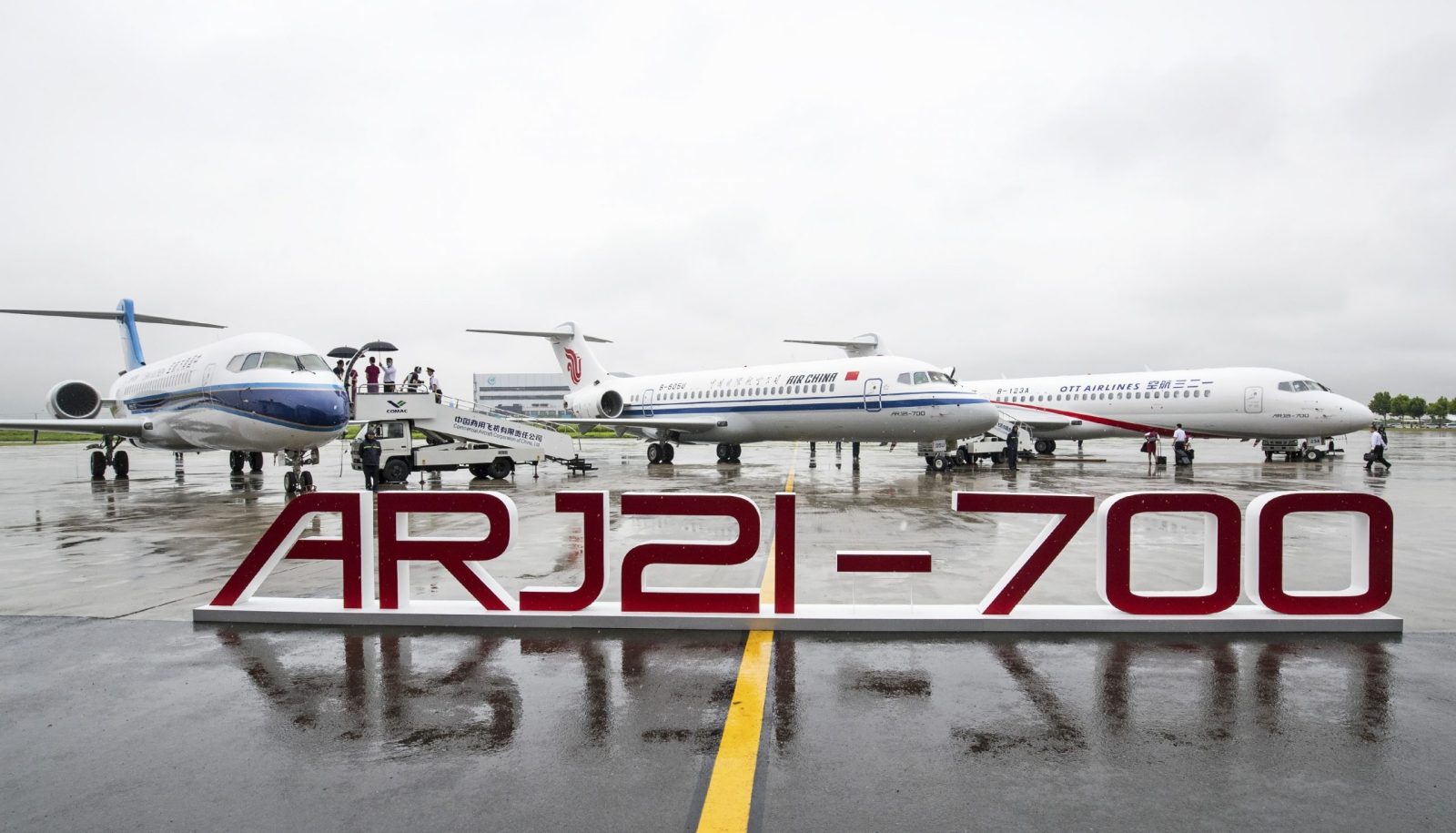
The Comac C909, formerly known as the ARJ21. (Photo: COMAC)
On Nov. 8, as European airlines celebrate the reopening of the U.S., their peers in China are worrying about how to survive through the pandemic. Airlines released their third-quarter earnings in the past week, and only Spring Airlines, a budget airline based in Shanghai, turned a profit over the quarter. The three major state-owned airlines — Air China, China Southern and China Eastern — are leading the board on losses.
Carriers attributed the subpar performance to the repeated appearance of Covid-19 cases in China and rising oil prices over the past months. The year 2021 is turning to be worse than 2020 for some carriers.
Air China’s 777-300ER taxis at Dulles (Photo: AirlineGeeks | Craig Fischer)
Limited Travel
Domestic markets are the main focus for Chinese carriers since international travel is still limited by the government with frequency constraints for airlines and mandatory quarantine for passengers. However, due to the resurfacing of Covid-19 cases in China, airlines are forced to reduce flights due to low demand.
Since early October, a new round of Covid-19 has swept through 21 provinces, adding nearly 1000 cases. As a result of the situation, people are holding back travel plans, and the number of flights to-and-from cities reported Covid-19 cases dropped to 10% to 30% of normal operating days.
China Eastern’s flagship Boeing 777-300ER at Shanghai’s Pudong Airport (Photo: AirlineGeeks | Albert Kuan)
Skyrocketing Oil Prices
Increasing oil prices is also hurting airlines’ profits. Crude oil price is at its highest point since 2018, priced at $84 per barrel as of the time of writing. The oil price is closely linked with airlines’ operating costs as fuel cost takes a large portion of an airlines’ operating cost.
According to a study formulated by International Civil Aviation Organization (ICAO), the fuel cost for a Boeing 757-200 can be as high as $543 per hour. Based on the number, for an airline with a fleet of 500, each aircraft flying 11 hours a day, the fuel cost per year can be as high as $3 billion.
Authority is granting more public aid to airlines. Starting Nov. 5, all domestic will pay a fuel charge on top of fares and taxes. The charge will be 20 Yuan ($3.1) for flights over 800 kilometers — approximately 500 miles — and 10 yuan for shorter flights. This measure has been deployed multiple times as the international oil prices fluctuate over time.
Olympics May Not Help
The Beijing Winter Olympics Games are currently slated to get underway on February 4, 2022. However, very few viewers will be granted tickets to watch the games on site. The local authority has also put in place strict guidelines to create distinct boundaries between Chinese society and athletes coming from overseas.
As China still maintains a zero-tolerance policy toward Covid-19, travel restrictions will likely remain throughout and after the Olympics. As such, airlines throughout the country are not optimistic about the potential travel boost brought by the Olympics.
Expanding Airports
In another subsector of the aviation industry, airports are seizing the opportunity that lower traffic numbers have brought on to take on renovation projects or accelerate some that were already planned in early 2020. A satellite terminal in Shenzhen, China, a new terminal each in Haikou, China, and Guiyang, China will welcome their first passengers before the end of 2021. Across the Pacific, Denver International Airport just completed phase one of its great hall project, revealing a futuristic new look to the aged main area.
Los Angeles Airport and New York’s LaGuardia Airport also have their own ambitious renovation projects going on. Both projects have garnered much anticipation by the traveling public.
Unlike airlines, many of the airports are state-owned enterprises, which would have more resilience against headwinds. The continuance of those major projects shows the public and authorities are still optimistic about the future of the aviation industry.
The new airport already has some tenants including Air China and China Eastern, with more scheduled to arrive at the airport next month. (Photo: Hufton+Crow)
Airlines in China are looking forward to the upcoming year-end travel season, as well as the Chinese New Year peak, to begin near the end of January 2022 and run through the beginning of February 2022. While the Covid-19 pandemic is still developing daily in China, many of the cities that are cleared with cases are gradually ramping up flights connecting elsewhere in the country. Hopes and opportunities still exist for Chinese airlines to survive and grow over the course of the next few years, though their prospects may be bleaker there than elsewhere around the world.
Lei is from Inner Mongolia, China, and now lives in Guangzhou. He grew up in an aviation family, where his passion began. During his time at Penn State University, he studied Industrial Engineering specializing in operations research, and he graduated with an honor’s thesis on airport gate assignment optimization. Now, he is a Purchasing Manager with Procter & Gamble. In his free time, he enjoys flying, reading, and wandering around the city.
Gulfstream Announces Development of Sustainable Aircraft Service Facility at Phoenix-Mesa Gateway Airport
Gulfstream's new service center at Phoenix-Mesa Gateway Airport Rendering (Photo: Gulfstream Aerospace)
Gulfstream Aerospace Corporation announced on Tuesday that they will begin construction on a new aircraft service center at the Phoenix-Mesa Gateway Airport. The new facility will cover a 225,000-square-foot area, with a price tag of $70 million — similar to the list price of the company’s new G700 aircraft. The facility will sit in the northeast corner of the airport, near the beginning of runway 30R.
Scheduled to open for operation in 2023, the American aircraft manufacturing company’s new service facility will create more than 200 jobs in the area and will expand the company’s maintenance, repair and overhaul capabilities.
“We are thrilled Gulfstream has chosen Mesa for their sustainable Customer Support facility,” stated Arizona Governor Doug Ducey in a press release. “By opening this facility, Gulfstream is coming to a state with a long and storied history with aviation. Gulfstream’s expansion further cements Arizona as a national aerospace and defense leader, bringing hundreds of skilled jobs to Mesa. My thanks go out to President Mark Burns and the entire team at Gulfstream for choosing Arizona and Phoenix-Mesa Gateway Airport.”
The service center will better help Gulfstream accommodate its large customer base consisting of 3,000 active aircraft in service worldwide. The facility will join Gulfstream’s list of recent expansions in Savannah, Georgia; Van Nuys, California; Fort Worth, Texas; Palm Beach, Florida; Appleton, Wisconsin; and Farnborough, England.
“In the past decade, as our fleet has grown, we have invested to create a network of modern facilities to provide our customers with outstanding service and support when and where they need it,” said Mark Burns, president, Gulfstream. “How Gulfstream serves our customers is just as important to us as how our aircraft perform. The addition of our new service center in Mesa gives us an additional facility in the Western U.S. and represents our commitment to ensuring that our customers not only purchase the best in the world, they also receive the best service in the world.”
Not only will the facility accommodate the aircraft being worked on in its hangar space, it will include back shops as well as employee and customer offices.
Sustainability In Mind
Gulfstream has sustainability in mind with the development of this project. The company anticipates that they will achieve Leadership in Energy and Environmental Design (LEED) Silver certification, verifying that it was designed and built using strategies aimed at sustainability, water saving, energy efficiency, materials selection and indoor environmental quality — in effect, it becomes a Green Building.
The facility will include a fuel farm with allocated sustainable aviation fuel (SAF) supply; low-flow plumbing fixtures; LED lighting; building management systems; and an energy-efficient HVAC system. Some less significant, yet relevant items that will be incorporated are a white roof to reflect heat, sensor-controlled lighting, native plants and landscaping requiring a low water demand.
Gulfstream’s sustainable effort will help contribute towards the industry’s goal of net-zero emissions by 2050. As well, the company will be able to better accommodate and provide customer service to its customer base wherever they need with its continuously expanding network of modern facilities.
Chase Hagl grew up in Twin Falls, Idaho. His love and passion for Aviation landed him in Orem, Utah where he obtained a B.S. in Aviation Management with a minor in Business Management from Utah Valley University. Chase currently works as a flight attendant in Charleston, SC and is also the primary Inflight ASAP ERC representative for startup airline, Breeze Airways. His experience in the aviation industry spans back four years, working in areas including agriculture application, customer service, maintenance, and flight ops. In his free time, Chase enjoys road biking, astronomy, and flying.
Qantas’ First A380 Returns Home, Expands Its Regional Brand
The Airbus A380 — regarded as the long-haul, flagship aircraft in the Qantas fleet — was initially planned to be returned home in Australia by mid-December and prepared for operations in the next year.
As Australia accelerates its reopening, Qantas wants to further cut the superjumbos’ hibernation period and get them back into the skies sooner than initially planned, while expanding its regional operations.
Home Run
Registered as VH-OQB and nicknamed Hudson Fysh, flight QF6023 was the first A380 flown back to Sydney on Nov. 9. It touched down in Sydney at 15:08 UTC.
The aircraft was previously stored in a purpose-built A380 hangar at Los Angeles International Airport, before it was flown over to Dresden, Germany for maintenance. VH-QOB is currently back home in Sydney where it will undergo routine inspections and possible cabin refurbishments, then it is expected to return to operational services by April 2022 at the earliest.
Given that Qantas is currently observing high demand for its long-haul flights from Sydney to Los Angeles and London’s Heathrow Airport, it is quite likely that VH-QOB would be scheduled to fly on either route. The remaining 10 of Qantas’ A380s continue to soak up the sun rays in California’s notable Mojave Desert. Eventually, the airline plans to return eight back home for scheduled service, whilst sending two to retirement.
Emphasis For Regional Operations
QantasLink — the carrier’s regional brand — is also ramping up operations with the recent announcement for direct flights between Adelaide and Newcastle.
Newcastle is the second-largest city in New South Wales, but QantasLink initially did not operate flight operations, leaving the city out of its route map. As a result, the city was considered one of the largest unserved markets.
However, circumstances might have changed, and Newcastle might have finally appeared on the airline’s radar when the pandemic hit, potentially prompting other airlines like QantasLink to seek new flying opportunities.
The airline scheduled the new flights to begin on March 28 and will operate three times a week. The Embraer E190 — introduced to the regional airline’s fleet earlier in May — will operate the flights on a route that will possibly attract both business and leisure passengers.
Expressing delight for this new route, QantasLink CEO John Gissing said, “We know that many of our customers are flying between Adelaide and Newcastle via Sydney and we’re delighted that we’re able to offer this direct service for the first time.”
More Direct Flights
Additionally, QantasLink will also start operating direct flights between Brisbane, Australia and Wagga Wagga, Australia in Queensland.
For nearly four years, the route has not been flown by any airline, allowing for QantasLink to bring quite the comeback with the three-times-weekly return service. Coincidentally, the new route is set to commence on March 28, using its Bombardier Q400 turboprop aircraft.
The airline’s strategic decision to give Riverina residents more one-stop connections to other cities across the airline’s extensive Queensland network will play a significant role in making the province a prospective holiday destination.
“As Australia’s largest regional airline, we know we have an important role to play keeping regions connected and driving tourism. This service will make it easier for Queenslanders to catch up with family and friends and explore the beautiful Riverina region,” Gissing added. “As we look forward to our domestic borders reopening, the launch of such services is made even more special, and we have no doubt these services will take off with people looking to reconnect with family and friends and visiting new parts of our beautiful country.”
Fascinated by aircraft from a very young age, Charlotte’s dream was to work alongside the big birds one day. Pursuing her dream, she went on to achieve her diploma in Aviation Management and is currently working on her degree in Aviation Business in Administration with a minor in Air Traffic Management. When she’s not busy with school assignments, you can find her aircraft spotting for long hours at the airport. In Charlotte’s heart, the Queen of the Skies will always be her favorite aircraft.
British Airways and Virgin Atlantic Synchronize Departures to Celebrate U.S. Reopening
Virgin 3 and Speedbird 1 lifting off Heathrow's runway's at the same time. (Photo: James Oates @speedbird_uk)
More than 600 days after the U..S.’s travel ban was introduced aimed to reduce the spread of coronavirus infections, arch-rivals British Airways and Virgin Atlantic momentarily put rivalries aside as both airlines departed from London Heathrow to New York’s John F. Kennedy Airport, symbolizing the end of restrictions on travel to the U.S.
At 8:50 a.m.”Speedbird One” and “Virgin Three” both lined up on runway 27L and 27R respectively at the same time, and on the countdown from Heathrow Tower, commenced their take-off roll at the same time, giving viewers both at the airport and online a spectacular view of the two Airbus A350-1000s lifting into the sky at the same time in a historic moment.
And to add a bit of fun to the special day, the two airlines decided they would race one another to see who will land in New York first, with British Airways deciding to take a more northerly route across the Atlantic via Manchester and Northern Ireland. Whilst Virgin decided to maintain a southerly routing to the north of Cardiff, Wales, and then Shannon, Ireland, before “crossing the pond.”
BAW1 and VS3’s routing across the Atlantic, with the former taking a more northerly routing (Photo: FlightRadar24)
7 hours and 58 seconds after departure, “Virgin 3” touched down on JFK’s runway 04R at 10:50 a.m., ahead of its rivals “Speedbird 1″ which landed 10 minutes later. But regardless of who won the race, everyone can count themselves as a winner with Monday’s travel restrictions lifting.
Sean Doyle, British Airways Chairman and CEO was onboard the flight, commenting, “After more than 600 days of separation, today is our moment to celebrate the UK-US reopening. We’re setting aside rivalry and for the first time ever, British Airways and Virgin Atlantic aircraft will be seen taking off together to mark the vital importance of the transatlantic corridor.”
“Transatlantic connectivity is vital for the UK’s economic recovery, which is why we’ve been calling for the safe reopening of the UK-US travel corridor for such a long time. We must now look forward with optimism, get trade and tourism back on track and allow friends and families to connect once again,” he said.
In response to the re-opening of travel to the U.S. for fully vaccinated passengers, German flag-carrier Lufthansa reported that its 31 flights to the United States are fully booked, with Virgin’s 98% full.
Shai Weiss, Virgin Atlantic Chief Executive, remained in London but said in a statement, “Today is a time for celebration, not rivalry. Together with British Airways, we are delighted to mark today’s important milestone, which finally allows consumers and businesses to book travel with confidence. The US has been our heartland for more than 37 years and we are simply not Virgin without the Atlantic. We’ve been steadily ramping up flying to destinations including Boston, New York, Orlando, Los Angeles and San Francisco, and we can’t wait to fly our customers safely to their favorite US cities to reconnect with loved ones and colleagues.”
Under the new rules that came into force, travelers who have received two doses of a vaccine and show proof, as well as having a negative test result taken within 72 hours before arrival are eligible. Any unvaccinated Americans and children under 18 may still enter but must take a test within 24 hours of travel.
A British Airways 747 in Las Vegas (Photo: AirlineGeeks | William Derrickson)
After negotiations with the Unite union, the main labor union representing more than 10,000 cabin crew and ground workers of British Airways, the carrier has moved a step closer to launching a low-cost airline to operate short-haul routes from London Gatwick Airport.
Sean Doyle, the chief executive of British Airways said the plan of the new airline is “progressing well” and “it looks like to that we will be up and running to fly the summer schedule.”
Earlier, the airline has reached an agreement with the pilots. It is believed that the new carrier will own a fleet of 17 A320s and hire 160 pilots, and hundreds of cabin crew. Last year the airline made more than 400 pilots redundant and put another 300 fleet-less pilots on non-operational pay, as well as, making thousands of cabin crew redundant in an effort to curtail costs from the shut down of the aviation industry.
Unite said the new carrier could create jobs at the airport and the tourist industries will benefit from the new airline as well.
British Airways unveiled the plan of a new budget carrier at Gatwick to operate European routes in August, letting its base becomes “profitable and competitive” after many years of losing money on European flights from Gatwick.
As a result of the prolonged pandemic, Gatwick has lost its second place in the country, London’s Stansted Airport became the second busiest airport in the U.K during the pandemic, thanks mainly to Ryanair operating hundreds of flights a week at discounted prices to drive the recovery of passenger numbers. However, Gatwick is considering expanding its facilities by adding the second runway, the consultation is underway.
In the meantime, IAG, British Airway’s parent company has reported a loss of £2.1 billion ($2.83 billion) in the first nine months of 2021 and expects a £2.57 billion ($3.47 billion) loss this year. IAG also revealed its debut had reached £10.6 billion ($14.3 billion).
Luis Gallego, the CEO of IAG, was optimistic about the future. He has noticed the recovery of long-haul flights, the main sources of income, are faster than the short-haul flights. Also, Gallego is seeing the business travelers are returning to the skies, the booking between corporate hubs in the U.K. and Europe and the east coast of the U.S. have surged.
Pivotal Moment
“There’s a significant recovery underway and our team is working hard to capture every opportunity. We continue to capitalize on the surge in bookings when travel restrictions are lifted.” He added.
Meanwhile, the reopening of the U.S border is paving the way for recovery. Gallego mentioned that it is a “pivotal moment”.
The U.K’s aviation industry celebrated the reopening of the U.S. border on Monday with British Airways and Virgin Atlantic making history as both airlines’ Airbus A350s departed from Heathrow’s runways simultaneously to New York’s JFK Airport.
In response to the reopening of the U.S. border, the U.K. government said it was “delighted to see flights return in time for Thanksgiving and Christmas.”
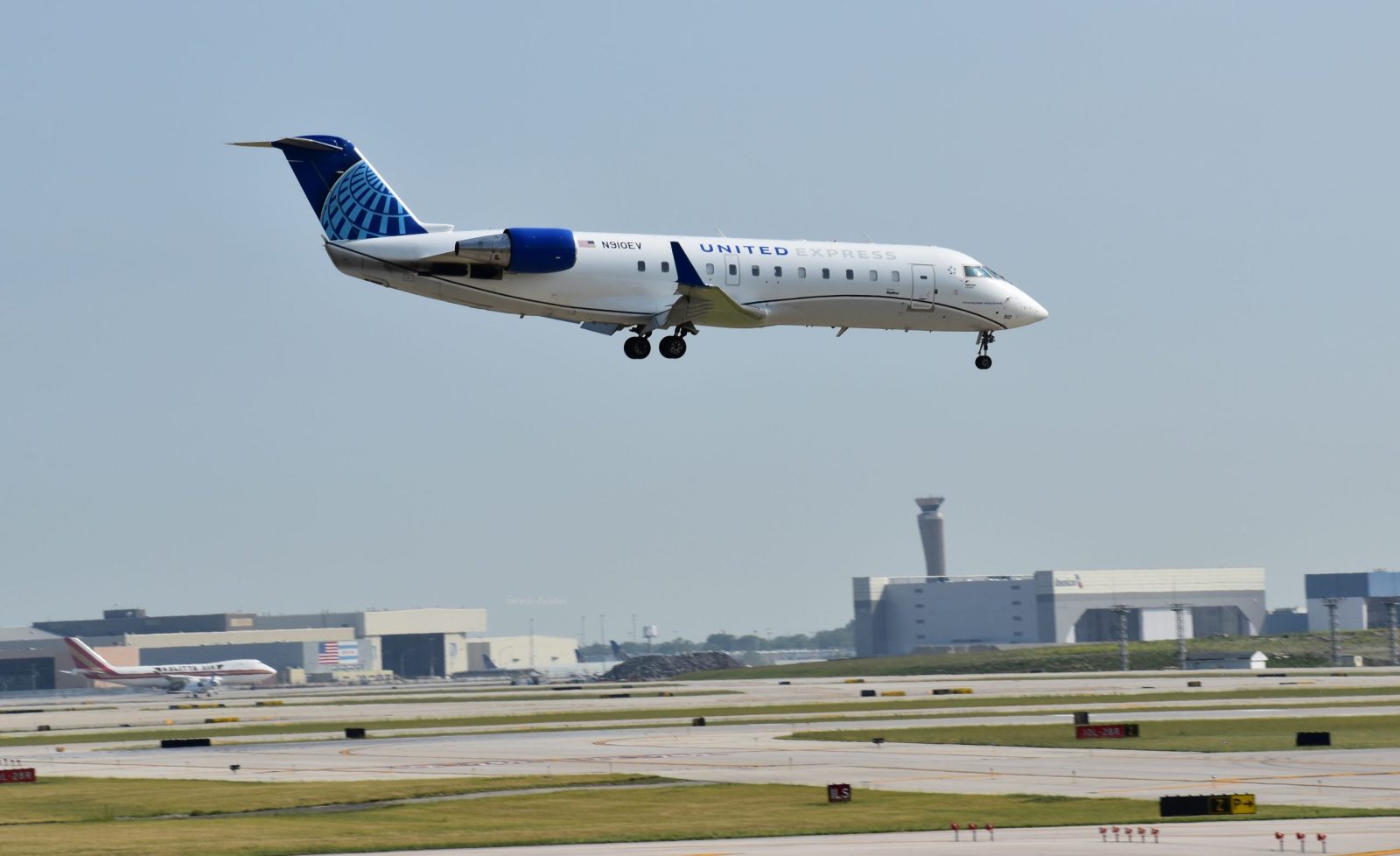
A United Express CRJ-200 arriving into Chicago O'Hare. (Photo: AirlineGeeks | Joey Gerardi)
The U.S. domestic market’s passenger numbers have returned to levels very close to those experienced before the beginning of the pandemic in March 2020. Traffic still remains more leisure-driven and the heavy limitations that are still stifling demand on international routes affect traffic flows throughout the networks of all major U.S. carriers.
For these reasons, airlines are continuing to review their services and a lack of demand in certain markets is forcing network planners to take action. United has decided to cancel services to a number of regional airports that are currently served by United Express flights.
“Due to changes in the long-term sustainability of several of our regional routes, United will end service to eight cities at the start of the new year. We will work with impacted customers to help them make alternate plans,” a spokesman for the airline told AirlineGeeks in an email.
United Airlines has confirmed that two communities in Michigan, including the capital city Lansing, will lose their connection to Chicago O’Hare, as well as three more towns in neighboring states. Here is the complete list:
Kalamazoo, Mich
Columbia, Mo.
Wausau, Wis.
Evansville, Ind.
Lansing, Mich.
In addition to that, two more destinations in Texas and one in Louisiana will no longer be served by United from the airline’s Houston hub:
Killeen, Texas
Monroe, La.
College Station, Texas
However, according to Cirium scheduling data and additional reports, there are also some other regional airports that are due to drop off United’s destination map in January 2022. In South Dakota, the capital Pierre and Watertown that are now connected to the carrier’s Denver hub with daily services will no longer be served by United Express’ regional jets, and the town of Twin Falls, Idaho will also experience the same fate as its daily connection to the Mile High City will be discontinued at the beginning of the new year, per a recent Boise State Public Radio report.
The affected airports were not immediately available to comment on the upcoming service changes.
Vanni fell in love with commercial aviation during his undergraduate studies in Statistics at the University of Bologna, when he prepared his thesis on the effects of deregulation on the U.S. and European aviation markets. Then he pursued his passion further by obtaining a Master’s Degree in Air Transport Management at Cranfield University in the U.K. followed by holding several management positions at various start-up carriers in Europe (Jet2, SkyEurope, Silverjet). After moving to Canada, he was Business Development Manager for IATA for nine years before turning to his other passion: sports writing.
Vietnam Airlines vs. Bamboo Airways: The Quest to Launch Direct Flights to the US
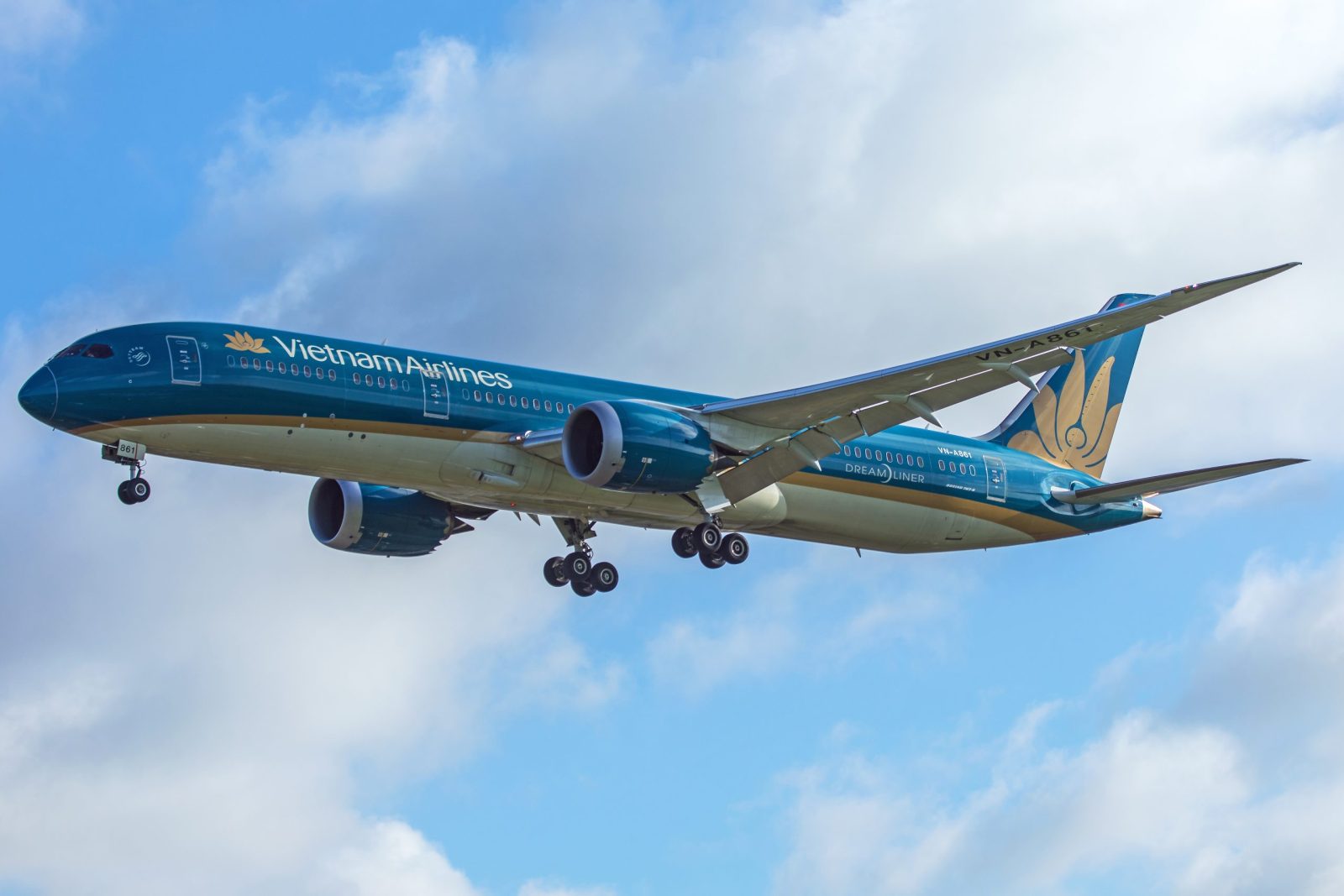
A Vietnam Airlines Boeing 787 Dreamliner on approach into London's Heathrow Airport.
(Photo: AirlineGeeks | William Derrickson)
Vietnamese flag carrier Vietnam Airlines and newer local competitor Bamboo Airways are scrambling to finish processes to get permission from U.S. agencies to begin running scheduled direct flights to the U.S.
On Saturday, Vietnam Airlines filed permanent commercial flights from Ho Chi Minh City to San Francisco, paving the way for the first permanent nonstop connection between the United States and Vietnam. These flights will operate twice a week on Sundays and Wednesdays from Nov. 28, utilizing the carrier’s Airbus A350-900, per theaeronetwork.
Last month, the Hanoi-based carrier received Transportation Security Administration (TSA) approval to operate scheduled commercial operations from Vietnam to the U.S., leaving Federal Aviation Administration (FAA) regulatory approval as its final obstacle before adding service to the U.S. In August 2019, Vietnam Airlines received Department of Transportation approval for a foreign air carrier permit and flight rights from Hanoi or Ho Chi Minh City to Dallas, Los Angeles, New York, San Francisco and Seattle via possible intermediate points in Osaka, Japan; Nagoya, Japan or Taipei.
The Skyteam carrier’s inaugural commercial flight to the U.S. will be operated with a Boeing 787 Dreamliner, though it is unclear whether Vietnam Airlines will operate the flight with its Boeing 787-9 or Boeing 787-10 variant. Vietnam Airlines Flight 98 departs Ho Chi Minh City at 8:40 p.m. and lands in San Francisco at 7:30 p.m. On the return leg, Vietnam Airlines Flight 99 departs San Francisco at 10:00 p.m. and arrives in Ho Chi Minh City at 6:40 a.m., two days ahead of the initial departure.
Currently, these flights are filed through the end of March 2021, per schedule data from their website. Additionally, as of the time of writing, these flights are not available for reservation.
In August, in an interview with Bloomberg, Vietnam Airlines CEO Le Hong Ha detailed that flights between Vietnam and the United States would rely on cargo demand to offset initial weak passenger demand. He added that the route would include a refueling stop, though this is not reflected in the current schedule offering.
According to RoutesOnline, data from Sabre indicates that the O&D – Origin and Destination- traffic between the United States and Vietnam totaled 1.77 million passengers in 2019, with 198,000 passengers flying the Ho Chi Minh City to San Francisco route. The route with the highest O&D traffic is the flight between Ho Chi Minh and Los Angeles, with 300,300 passengers.
An Intensive Process
The TSA and the FAA have yet to provide licenses to any Vietnamese carriers to operate regular direct flights to the U.S. The two airlines are now competing to be the first Vietnamese carriers to create a direct, regularly scheduled connection to the U.S. According to Vietnam Airlines, the carrier established a representative office in San Francisco in early 2000 to develop a sales system and get access to local clients.
It has also started working with a number of US airlines, including American Airlines and Delta Air Lines, to broaden its market reach. Simultaneously, Vietnam Airlines has worked to strengthen security and safety requirements as well as service quality, coordinating with local and international organizations and partners to complete relevant processes.
A Bamboo Airways 787 departs from Hanoi for its inaugural flight to the U.S. (Photo: Bamboo Airways)
Various permits from U.S. component agencies such as the TSA, FAA, Department of Transportation, U.S. Customs and Border Protection (CBP), the International Revenue Service (IRS), the Animal and Plant Health Inspection Service (APHIS) and the National Transportation Safety Board (NTSB) are required for regular flights. This is in addition to certain approvals from authorities of San Francisco International Airport and business administration agencies of states of the U.S.
With its more stringent criteria, the TSA is one of the most difficult mountains to climb. Before moving further, it would send specialists to Vietnam to inspect airports. The FAA will rely on the TSA’s clearance to award Vietnamese airlines a license. Vietnam Airlines has completed all of the necessary paperwork and procedures for TSA approval.
A Difficult Dream to Achieve
There are presently no direct flights connecting the two nations, and as a result, passengers wishing to fly between the two nations must transit through Hong Kong, Korea or Taiwan, among other options, resulting in a total journey duration of around 20 hours, whereas a direct flight would reduce the trip time to 15-16 hours. Vietnam Airlines and Bamboo Airways both have aircraft that are eligible for direct flights to the U.S. Vietnam Airlines has a fleet of roughly 30 wide-body aircraft, with 14 Airbus A350s and 15 Boeing 787-9s. Bamboo Airways, on the other hand, owns three Boeing 787-9s.
According to a representative from Vietnam’s Civil Aviation Authority, the current fleets of Vietnam Airlines and Bamboo Airways, which include Boeing 787-9 Dreamliner and Airbus A350 XWB aircraft, will not be able to travel straight to the U.S. at full capacity — over 300 seats. The Boeing 777X and Airbus A350-1000 are needed for long-haul and direct flights, but the two airlines do not have such planes, he added. Aside from technological difficulties, analysts have questioned the viability of direct flights between Vietnam and the United States.
However, there are concerns over profitability due to the low yielding nature of the market and the length of the flight. In a 2019 filing, Vietnam Airlines posted that it anticipates first-year losses of $54 million on a hypothetical Ho Chi Minh City to Los Angeles route. Similarly, in 2018, Vietnam Airlines CEO Doung Tri Thanh expressed that “Vietnam Airlines could face an average annual loss of $30 million in the first five years of operation if we open a direct route to the U.S.”
American airlines have suffered the same difficulties that Vietnamese airlines are encountering now, and have long since ceased direct flights between the two nations. United Airlines started a direct service in 2007 but ended it in 2012, whereas Delta Air Lines only had a six-month direct service in 2008. Since then, no U.S. airlines have launched a direct flight.
Additionally, Vietnam Airlines anticipates a 75% drop in revenue from pre-pandemic levels in 2021, after a loss of about 7 trillion dong ($307 million) in the first half of 2021. Nonetheless, potential cargo revenue and profit could offset or even out the losses from passenger revenue. Additionally, the state-owned carrier admitted in an interview with Reuters in 2018, “The philosophy of the company is to help the economy and try to be viable and profitable… You can see on most of the intercontinental routes we are not making money. But we are helping to get people in and out.”
In 2020, Vietnam Airlines operated twelve repatriation flights to Houston, San Francisco and Washington Dulles, utilizing a mix of its fleet of Boeing 787-10 and Airbus A350-900. During the summer of 2021, Vietnam Airlines reinitiated repatriation efforts to the U.S., operating flights to Washington Dulles, San Francisco and Dallas, using its Boeing 787-9.
Putu Deny Wijaya was always an aviation enthusiast by heart, growing up in Indonesia where air transport is very vital. His first love is The Queen of The Skies, serving the trunk routes between Jakarta and Denpasar. He brought along this passion with him throughout college by conducting his bachelor study abroad in the Netherlands for the purpose of experiencing a nonstop 14-hour long-haul flight. For Putu the sky's the limit when talking about aviation. He hopes that he would be able to combine his passion for aviation and knowledge of finance at the same time.
Sign-up for newsletters & special offers!
Get the latest stories & special offers delivered directly to your inbox