All Nippon Airways' first Airbus A380 resting at Tokyo's Narita International Airport. (Photo: AirlineGeeks | Tom Pallini)
A number of months back in May 2021, ANA Holdings Inc. said that it was initially predicted to see a net profit for the year lasting through March 2022.
The earlier prediction came as Japan was hosting the Summer 2020 Tokyo Olympics and also as vaccinations rates were rolling relatively well worldwide, citing as signs of recovery in the aviation industry that would lead to a gradual increase in demand.
Unfortunately for Japan’s biggest airline and Japan in general, the Tokyo Olympics and Paralympics were unable to draw in any foreign tourism as foreign spectators were not allowed, causing the overall tourism and many companies to suffer even further.
And as the gradual increase did not happen soon enough, ANA had to retract its earlier prediction and instead announced that it was expecting to report a loss for what would be a second consecutive year.
Remaining In The Red
Despite the slight positivity happening in the aviation industry as of late, ANA has not been able to join in the good times as it has reported yet another quarter loss of 116 billion yen (US$1.02 billion) for the month ending September 30.
A possible reason could have been Japan’s recurring state of emergency that affected international borders for the country, and although domestic tourism was turning a corner, it was still not enough without the boost from international tourism.
Even as of currently, the country still remains under stricter regulations as compared to others in the East Asia region.
And thus for the 12 months ended March 2022, the Tokyo-based carrier is expecting to report an operating loss of 125 billion yen ($1.09 billion), which is a drastic change from its earlier expectations for an operating profit of 32 billion yen ($28.1 billion).
“The revised forecast reflects the findings that projected second-half revenue will not be sufficient to cover lack of revenue during the first half of the fiscal year,” the airline said in a press release.
Possible Reduction
Through the early stages of the Covid-19 pandemic, many airlines had to slash their workforce numbers by a truckload as flights were grounded and borders closed. Situations started turning the tables, however, as news of workforce slashing eventually became the news of hiring and re-calling for those furloughed, especially as airlines worldwide were ramping up flight operations and expanding networks.
This might not be the case for ANA, unfortunately, as in an attempt to further lower fixed costs, the Star Alliance member has additionally announced that it was considering the possibility of having to reduce its current employee numbers by up to 20 percent all the way through till 2025.
This would roughly account for at most 9,000 jobs within the airline, such as flight attendants and ground staff and would be done through retirement and the curbing of any new hiring.
In regards to the loss, ANA President and CEO, Shinya Kataznozaka said: “A full-fledged recovery has been delayed to a great extent, the loss in the first half is too big, and we do not expect to achieve (profitability) even if we try to make up for it in the second half.”
Hopefully, as the next fiscal year comes along, and as the strong cargo demand continues trending upwards, ANA may start to reel in its recovery sooner rather than any later.
Fascinated by aircraft from a very young age, Charlotte’s dream was to work alongside the big birds one day. Pursuing her dream, she went on to achieve her diploma in Aviation Management and is currently working on her degree in Aviation Business in Administration with a minor in Air Traffic Management. When she’s not busy with school assignments, you can find her aircraft spotting for long hours at the airport. In Charlotte’s heart, the Queen of the Skies will always be her favorite aircraft.
An Emirates A380 in Dubai. (Photo: AirlineGeeks | Hisham Qadri)
Ever since the news came about of Australia’s borders being re-opened to international travelers from November onwards, several airlines – such as Hawaiian Airlines and Singapore Airlines, as well as national carrier Qantas – have made scheduled changes in their network for flight service resumptions in and out of Australia.
The resumption and anticipation for possible new launches is most definitely a positive sign of recovery for both the country, considering that Australia had one of the strictest border restrictions globally.
Moreover, it also proves to be signs of bluer skies for the aviation industry as the resumptions have thus far seen what was previously thought as unlikely returns of the Airbus A380s.
Superjumbos Bound for Sydney
Emirates, the biggest airlines customer for the aircraft type, has downsized from its superjumbos to using a Boeing 777-300ER for flights to Australia due to border restrictions.
With the re-opening however, the Dubai-based carrier is scheduling to return its flagship A380 aircraft to flight from December 1, operating its once-popular Dubai-Sydney daily service.
The much-loved aircraft will offer a massive 516 seats in a three-class configuration, with 426 in Economy Class with the additions of its premium cabins, and then 76 and 14 seats in Business Class and First Class respectively.
It would also mark the first time since March 2020 that Emirates would be able to fly with the possibility of a 100 percent capacity into Australia.
“We are more than ever committed to Australia and it is especially exciting for us to add Sydney to the growing network of destinations served by our popular A380 aircraft. Our customers appreciate the spaciousness and amenities of the flagship A380 and starting in December they will be able to experience the exceptional product when flying to or from Sydney,” said Emirates Divisional Vice President for Australasia, Barry Brown in a press release in regards to the ramping up of operations to Australia.
Further Enhancements
Other than the superjumbo returns for Emirates, the airline is also looking to further enhance its operations to Australia by increasing the frequency for flights between Dubai and Melbourne from three-times-weekly to four-times-weekly.
Eyeing for the potential to increase according to demand, the Dubai-Melbourne route is also currently operated by the 777-300ER, but might get changes to the A380 if things keep trending as positively.
As for Dubai-Brisbane and Dubai-Perth, the Gulf carrier has not made any planned changes due to government-mandated arrival limits, alongside quarantine requirements, and hence remain scheduled as per its current twice-weekly.
Unfortunately, the Dubai-Adelaide flight services remain suspended but one can be hopeful to anticipate a resumption in the coming new year.
Fascinated by aircraft from a very young age, Charlotte’s dream was to work alongside the big birds one day. Pursuing her dream, she went on to achieve her diploma in Aviation Management and is currently working on her degree in Aviation Business in Administration with a minor in Air Traffic Management. When she’s not busy with school assignments, you can find her aircraft spotting for long hours at the airport. In Charlotte’s heart, the Queen of the Skies will always be her favorite aircraft.
Scandinavian Airlines Increases Winter Operations and Strengthens Service to Spain
An SAS Airbus A350XWB (Photo: AirlineGeeks | Ben Suskind)
Scandinavian Airlines SAS expands its operations for the northern winter season from the three Scandinavian capitals to major corporate and holiday destinations, offering more than 150 routes in 90 destinations.
Strengthening corporate demand in Europe
SAS will strengthen its UK operations by operating more flights from Copenhagen, Stockholm, and Oslo to London Heathrow and Manchester.
To meet the demand for business travel, SAS will increase its flights to other major European cities such as Brussels, Dublin, Frankfurt, Hamburg, Helsinki, Munich, and Paris.
More ski, domestic, and Eastern European destinations
For the winter program, SAS will offer attractive schedules for skiers to nine destinations: Salen/Trysil and Ostersund in Sweden, Salzburg, and Innsbruck in Austria, Milan, and Venice in Italy, Munich in Germany and Geneva and Zurich in Switzerland.
SAS will resume several routes from Copenhagen to Eastern Europe to Stuttgart, Tallinn, Poznan, and Wroclaw.
In Norway, demand for domestic flights is increasing, SAS will expand flights to Bergen, Stavanger, Bardufoss and Haugesund, the Scandinavian carrier will resume flights between Trondheim and Tromso and between Oslo and Manchester.
New routes and increased operations in Spain
SAS will inaugurate three new routes between Stockholm – Kiev, Stockholm – Tenerife, and Gothenburg – Tenerife. It will also resume its operation between Stockholm to Madeira.
SAS will offer six destinations in Spain from various Scandinavian cities during the winter season, according to the following schedule:
Copenhagen: Alicante, Barcelona, Gran Canaria, Malaga, Palma de Mallorca and Tenerife.
Oslo: Alicante, Barcelona, Gran Canaria, Malaga.
Stockholm: Alicante, Barcelona, Gran Canaria, Malaga, Palma de Mallorca and Tenerife.
Bergen: Alicante.
Stavanger: Alicante.
Gothenburg: Alicante, Malaga and Palma de Mallorca.
Back to the Sunshine State and more flights to the U.S.
SAS returns to Miami from the three Scandinavian capitals on the following schedule:
Copenhagen: three weekly flights on Tuesdays, Thursdays and Saturdays operated on Airbus A350-900.
Stockholm: four weekly flights on Monday, Tuesday, Wednesday and Friday operated on Airbus A330-300 and A350-900.
Oslo: two weekly flights on Thursday and Friday operated on Airbus A330-300.
SAS will offer all its pre-Covid destinations to the United States during the winter season from Copenhagen to Newark, Chicago, Boston, Los Angeles, San Francisco, and Washington, from Stockholm to Newark and Chicago, and from Oslo to Newark.
This article was written by Rainer Nieves Dolande for Aviacionline.
Disclaimer: airBaltic provided the tickets for AirlineGeeks.
Once I got an interview with the airBaltic’s CEO in their headquarters in Riga – whose article you can see clicking here -, I got curious to know how would I get there. While the airline served the bread-and-butter destinations of Milan and Rome, during Summer they were serving Pisa seasonally – which, along with Florence, is the closest airport to my hometown.
Ultimately, I got tickets from Pisa, even though they were doing only two weekly runs, on Monday and Friday; that meant my schedule in Riga would be quite spread over the week.
In any case, I was really looking forward to flying with them since they only fly the Airbus A220, a regional jet that is the main competitor to my beloved Embraer E2.
I arrived at the airport with plenty of time to spare. Two hours before the flight check-in was opened in two counters, and because I’d been given Business tickets, I had an exclusive line.
Check-in counters for airBaltic’s Pisa-Riga flight. (Photo: AirlineGeeks | João Machado)
Because of that, I waited for nothing until I had my luggage dispatched and my boarding pass was printed.
Flights of the day from Pisa. (Photo: AirlineGeeks | João Machado)
The check-in agent also saw my self-declaration form for an entry in Latvia and my EU Green Pass, proving that I was, indeed, vaccinated.
Filling the form for an entry in Latvia was easy, and done via mobile. (Photo: AirlineGeeks | João Machado)
As much as the flight’s counters, the fast track line was accordingly hidden, but at least, once again, I didn’t have to wait for my safety screening.
The safety screening area in Pisa. (Photo: AirlineGeeks | João Machado)
I was tracking my plane on FlightRadar24, which apparently was on time. Naturally, the aircraft would come from Riga, doing just a quick turnaround in Pisa, with the same crew.
The aircraft for my flight would be YL-CSH, which, according to Planespotters.net, was delivered brand new to airBaltic in February 2018.
At 09h35 boarding was called, without any priority lines or anything. Effectively, boarding was started at 09h37.
In any case, priority wouldn’t be needed, since they packed everyone in a bus to the aircraft anyway.
Boarding YL-CSH in Pisa. (Photo: AirlineGeeks | João Machado)
I was greeted by the lead flight attendant, who then offered me a welcome drink.
Welcome drink on airBaltic’s Pisa-Riga flight. (Photo: AirlineGeeks | João Machado)
airBaltic offers a Eurobusiness configuration, so while on the right-hand side they block the middle seat, on the left-hand side they just block the adjacent one, as the Airbus A220 has a 2-3 seat display.
In any case, I was surprised at how wide those seats were. And those windows – just immense.
Business-class on airBaltic’s A220. (Photo: AirlineGeeks | João Machado)
Because the load was light, boarding was quite fast, and at 10h02 doors were closed.
Five minutes later, engines were started, and a minute later we made a long taxi to the active runway. This was followed by a smooth take-off, and it really impressed me how quiet those engines are.
https://www.youtube.com/watch?v=lkeCvnhB2aI
Before take-off, the very cool FA asked if I wanted to be served the food straight away. I said that was okay, and he also presented me the beverages menu.
Beverages on airBaltic’s Pisa-Riga flight. (Photo: AirlineGeeks | João Machado)
For breakfast, airBaltic offered an omelette. About half an hour after take-off, I was served the full course on a tray.
I really didn’t like that they didn’t remove the wrappings, because the tray table is quite small (so there’s nowhere to put them) and the wrapping in the main course is particularly hot. Nevertheless, quite a good catering service on a three-hour flight like this.
Breakfast on airBaltic’s Pisa-Riga service. (Photo: AirlineGeeks | João Machado)
The omelette was especially tasty. Not bad for airplane food.
Main course on airBaltic’s Pisa-Riga service. (Photo: AirlineGeeks | João Machado)
The A220 was impressive from start to finish. Naturally, because I was seated in the first row, I had plenty of space for the legs.
Space for the legs on airBaltic’s A220. (Photo: AirlineGeeks | João Machado)
Looking upwards, the seatbelt sign had a screen, which is quite clever from the manufacturer, and a good advertising opportunity for the airline without bearing the cost of having IFE on each seat.
airBaltic’s A220 overhead screen. (Photo: AirlineGeeks | João Machado)
The bathroom was another highlight. While airliners’ bathrooms elsewhere constantly shrinking, I’m glad Airbus – well, Bombardier – opted for doing such a spacious environment. Naturally, with just three passengers in Business class, this lavatory was maintained impeccably clean throughout the trip.
Bathroom in airBaltic’s A220. (Photo: AirlineGeeks | João Machado)
airBaltic also offered some on-demand entertainment on the phone – and the cellphone connection also allowed passengers to purchase products directly through the browser, something I had not seen before in a plane.
Nevertheless, I was more interested in reading the company’s magazine, “Baltic Outlook”, which was surprisingly big and with some interesting reads. It didn’t have that rubbish feeling of airline magazines, which look less like magazines and more like massive advertisements.
Anyway, the flight went on quite quickly and soon we started our descent into Riga.
YL-CSH went on to make an on-time landing at airBaltic’s hub.
https://www.youtube.com/watch?v=iHy_76ssjvg
Deboarding was quite fast, done via a boarding bridge position (albeit the aircraft did not use it).
Deboarding from airBaltic’s A220 YL-CSH. (Photo: AirlineGeeks | João Machado)
All passengers were redirected straight into the airside, which makes connections so much easier.
Airside of Riga Airport – photo not taken on the day of the flight. (Photo: AirlineGeeks | João Machado)
I went to the luggage retrieval area and in some 15 minutes, I had my bag in my hands, finishing like this a nice experience with airBaltic.
Final Remarks
While I boarded in Pisa without expecting much, I left in Riga quite surprised – positively – with airBaltic’s Business class product. That might well be a Eurobusiness seat, but the A220 makes everything so much better. It’s such a quiet, comfortable and welcoming place.
From airBaltic’s side, I don’t really think they owe anything to the product that Iberia, Lufthansa or any of the big carriers offer. In fact, if they went face-to-face in a given route offering the same price (the competition offering an A320 or something of that sort), I think I’d go for the A220 all the way.
The crew shined through as well – though, as I mentioned in the interview with their CEO, the CEO himself was onboard the flight, so I cannot really evaluate that as being standard.
So a fantastic plane, a good catering and a comfortable Eurobusiness ride to Riga with airBaltic. Kudos to them.
João has loved aviation since he was six-years-old when he started visiting his home airport in Porto Alegre, southern Brazil. As he always loved writing, in 2011, at age 10 he started his very own aviation blog. Many things have happened since then, and now he is putting all his efforts into being an airline executive in the future. João currently lives in Siena, Italy, where he studies Economics and Management at Unisi.
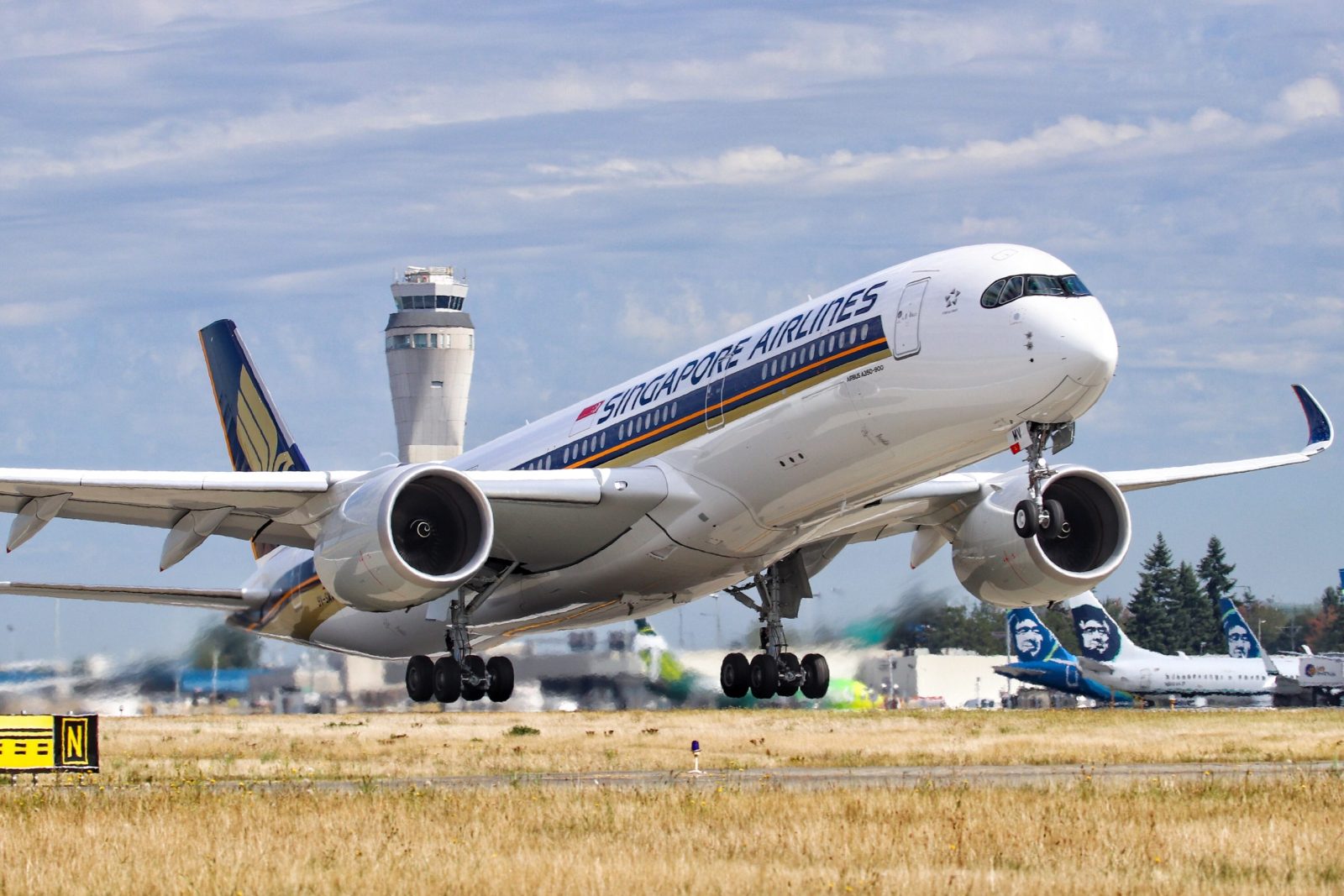
A Singapore Airlines A350 performing the inaugural flight from Seattle. (Photo: AirlineGeeks | Katie Zera)
Singapore Airlines will restart Seattle-to-Singapore flights from Seattle-Tacoma International Airport beginning in December for a short time to accommodate holiday travel from Christmas through the Lunar New Year.
The airline’s 253-seat Airbus A350-900 will depart Seattle Tacoma four times a week from December 2 to February 15, stopping momentarily in Vancouver, British Columbia, before crossing the Pacific Ocean to Southeast Asia.
In 2019, Singapore Airlines began flying nonstop from Sea-Tac to Singapore, however, the service was terminated in early 2020 owing to the coronavirus pandemic
This seasonal Seattle-to-Singapore flight, according to James Boyd, vice president of public relations for Singapore Airlines, will give customers “the opportunity to reunite with their loved ones during the holiday season,” as well as give people in Seattle and Vancouver another option for a holiday trip. According to Boyd, depending on demand, the route may be extended beyond the holidays.
Two of these weekly seasonal flights from Seattle to Singapore will be part of Singapore’s extended “vaccinated travel lane” initiative. Beginning Oct. 19, fully vaccinated tourists from the United States and a number of other countries will be able to visit Singapore without having to go through quarantine.
Travelers must be vaccinated to fly in these vaccinated travel lanes, and passengers on other Singapore Airlines flights from Sea-Tac will be quarantined for 10 days upon arrival, even if they are vaccinated, according to Boyd. So, if you’re vaccinated and want to escape the quarantine in Singapore, be sure you go on a vaccinated travel lane flight. Travelers from the United States were historically obliged to quarantine for 14 days, regardless of immunization status.
Airlines have progressively re-established international routes from Seattle, according to Perry Cooper, a spokeswoman for Sea-Tac airport. The airport has recovered 65 percent of its foreign flights from before the epidemic. Delta Air Lines resumed service to Paris on September 14, according to Cooper. In May, Icelandair resumed operations. Since July, Condor has started flying Seattle residents to Frankfurt, Germany. In July, British Airways resumed operations. According to him, WestJet will begin service to Calgary on November 4 and Air France will restart service to Paris in December.
Singapore’s vaccinated travel lane program should make it easier for vaccinated U.S. residents to visit Asia. The 14-day quarantine-upon-arrival requirement in effect until last week meant that Singapore was effectively closed to U.S. residents looking for a quick holiday trip.
Japan recently banned travel from the U.S. and many other countries, except under exceptional circumstances. The few U.S. travelers granted entry to China are forced to quarantine for 14 days. Thailand also is enforcing a 14-day quarantine for U.S. travelers.
Singapore has seen COVID-19 infections rise dramatically since the beginning of September, with the Ministry of Health reporting 3,703 new cases on Oct. 9., the highest single-day increase in cases since the beginning of the pandemic. But the number of serious cases remains low, with 83% of the country fully vaccinated.
Putu Deny Wijaya was always an aviation enthusiast by heart, growing up in Indonesia where air transport is very vital. His first love is The Queen of The Skies, serving the trunk routes between Jakarta and Denpasar. He brought along this passion with him throughout college by conducting his bachelor study abroad in the Netherlands for the purpose of experiencing a nonstop 14-hour long-haul flight. For Putu the sky's the limit when talking about aviation. He hopes that he would be able to combine his passion for aviation and knowledge of finance at the same time.
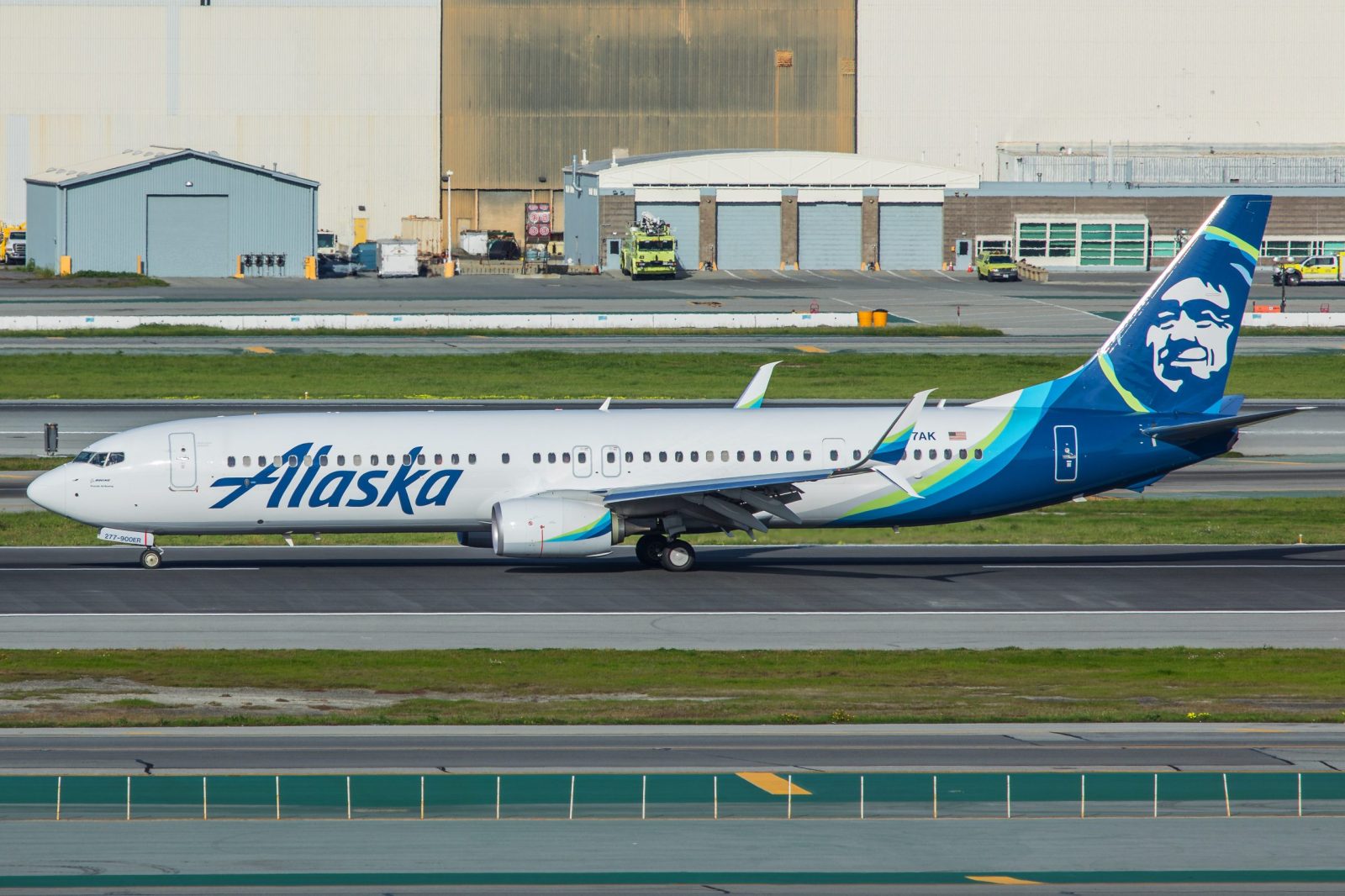
An Alaska Airlines Boeing 737-900 in San Francisco. (Photo: AirlineGeeks | William Derrickson)
The airline industry — notoriously known for being cutthroat and competitive — emerged differently and continues to rapidly evolve, compared to prior to the ongoing COVID-19 adversity. Several major carriers have started to rebound and increase flight operations, just as quickly as when they were forced to suspend flights and ground aircraft, in response to strict travel restrictions and border closures during the height of the ordeal. Alaska’s existing, firm stronghold on the west coast and current strategy for rebuilding its connectivity to recover from the effects of the COVID-19 crisis continues to lead to a gradual expansion of its route network. The carrier recently announced more flights are scheduled to operate to Ohio.
Flights from the airline’s predominant base and hub on the west coast to Cleveland are scheduled on a Boeing 737 and will operate daily starting next summer on June 16. The Seattle-based carrier also plans to add an additional flight on existing services to both Columbus, OH and Cincinnati.
“Ohio is an economic powerhouse with a vibrant cultural and corporate scene that’s underserved and primed for growth as we emerge from the pandemic,” Brett Catlin, Vice President of network and alliances, Alaska Airlines, said. “Adding Cleveland to our network furthers our investment in the Buckeye State while adding an important nonstop link between Northeast Ohio and the Puget Sound.”
The carrier — who is the newest member of the Oneworld alliance — began its first flight operations to the state in March 2019, with service to Columbus, OH. Earlier this year, in May, Alaska added flights from its hub in Seattle to Cincinnati.
Sustainable Flights
Alaska’s new flights which allow the carrier to increase its connectivity are complemented with the airline’s decision to partner with ZeroAvia — a hydrogen-electric aerospace engineering company whose primary focus is on creating zero-emission commercial aircraft. Within the partnership, the carrier will receive hydrogen-powered engines to be fitted on its regional Bombardier Q400 aircraft.
“At Alaska Airlines, we know that travel can make a big difference in people’s lives. Air travel connects us to our friends and families, helps us understand one another, and helps communities across the globe grow and thrive. But we know that to live our purpose, creating an airline people love, we must operate every day in a way that cares for both people and our planet. That’s why we’ve set out on this bold path to reduce our climate impact near and long term,” Ben Minicucci, CEO, Alaska Airlines, said, a sentiment that is accurately portrayed by the carrier’s strategy to inaugurate more than a handful of new routes while gradually embedding sustainability into daily operations.
Earlier this year in April, Alaska announced its plans for potentially reaching net-zero emissions by 2040, including five core focus areas. The carrier’s focus on sustainability will play an important role in allowing the airline to rapidly grow its operations while combatting the effects of COVID-19, to offset its carbon footprint.
There is no question that Alaska is poised to rebound from its losses after several difficult months. The carrier potentially will be closer to a complete recovery as the airline inaugurates its flights into new markets to increase revenue. The airline is contributing to sustainability that could assist in restoring normalcy and transforming the industry in a post-Covid-19 world.
Benjamin has had a love for aviation since a young age, growing up in Tampa with a strong interest in airplane models and playing with them. When he moved to the Washington, D.C. area, Benjamin took part in aviation photography for a couple of years at Gravelly Point and Dulles Airport, before dedicating planespotting to only when he traveled to the other airports. He is an avid, world traveler, having been able to reach 32 countries, yearning to explore and understand more cultures soon. Currently, Benjamin is an Air Transporation Management student at Arizona State University. He hopes to enter the airline industry to improve the passenger experience and loyalty programs while keeping up to how technology is being integrated into airports.
As of Oct. 28, 108.8 million seats have been scheduled to fly into and out of all airports in the Aena (Aeropuertos Españoles y Navegación Aérea) network — a group of airports in Spain owned by operator Aena — representing an increase of 4.2% compared to the offering for the same period in 2019, before the start of the Covid-19 crisis.
In the domestic market, the overall seat offering will increase by 9% with more than 41 million seats, while in the international market, the increase will be 1% with 67.4 million seats.
The number of scheduled movements also grew by 2.3% with more than 639,000 commercial operations.
The main airports are close to the same number of scheduled seats in 2019 and some of them register an above pre-pandemic supply increase. Among them stand out:
• Madrid – Barajas 27.2 million seats (-3%).
• Barcelona – El Prat 20.4 million seats (-3%)
• Gran Canaria 7.8 million seats (+18%)
• Tenerife South 6.4 million seats (+25%)
• Palma de Mallorca 6.6 million (+15%)
During the winter season, strong demand for warmer destinations to the Canary and Balearic Islands is clear as both markets continue to develop a progressive recovery.
Following Spain, the main international markets where airlines have added the greatest offer of seats are the United Kingdom with 12.4 million (-5%), Germany with 9.6 million (+5%) and Italy with 6.6 million (+12%).
In the intercontinental market, Latin America and the Caribbean are leading the recovery of long-haul flights, and with the White House’s announcement of the lifting of the border restrictions for vaccinated foreigners, airlines have increased their offer to the United States during the winter season. At the same time, the Asia-Pacific region continues to be the most affected by sanitary restrictions.
Overall data for the 2021-2022 winter season is positive, but the degree of uncertainty remains high. As a result, seating and movement schedules remain subject to change by airlines depending on the evolving pandemic.
This article was written by Rainer Nieves Dolande for Aviacionline.
Parker joined AirlineGeeks as a writer and photographer in 2016, combining his longtime love for aviation with a newfound passion for journalism. Since then, he’s worked as a Senior Writer before becoming Editor-in-Chief of the site in 2020. Originally from Dallas and an American frequent flyer, he left behind the city’s rich aviation history to attend college in North Carolina, where he’s studying economics.
Avianca Reveals Its New Premium, Plus and Economy Seats
An Avianca A321 prepares for its next flight at LAX. (Photo: AirlineGeeks | William Derrickson)
During the ALTA Airline Leaders Forum 2021, an event organized by the Latin American and Caribbean Air Transport Association in Bogotá, Avianca presented the three new seats: Premium, Plus and Economy, designed by Recaro Aircraft Seating (Recaro), and which will soon be available in the airline’s reconfigured fleet.
In a press release, the Colombian airline announced the new seats that Avianca’s short and medium-range aircraft will have:
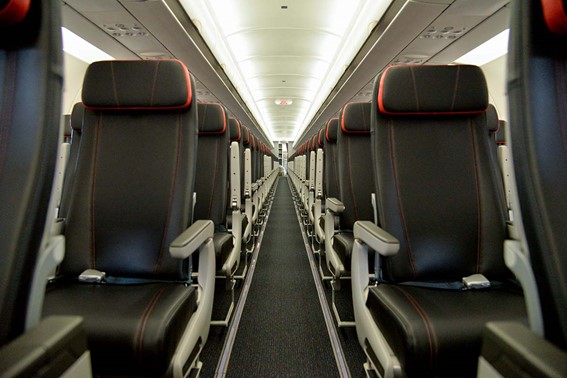
Premium: a model that Recaro developed exclusively for Avianca and that will be available for the first three rows of the aircraft. It is the widest seat for those who prefer to travel in greater comfort. Its design will feature a center console with individual compartments, plug, USB port and recline.
Photo: Avianca
Plus: available for those who prefer to be closer to the door when overflowing. Between rows 4 to 14, the design of this seat is light and comfortable, it has an independent headrest with 6 movements for greater rest, independent support for personal electronic devices, USB ports and recline.
Photo: Avianca
Economy: with a simpler layout of rows 15 to 32, the customer will have access to a better price, which will allow them to purchase other additional services and adapt their travel experience. This chair features a pre-recline, a personal electronic device holder built into the table, and USB ports.
Photo: Avianca
The new aircraft interior design also includes Airbus’ SpaceFlex, a module that optimizes space at the rear of the aircraft, combining galleys and restrooms, and which allows Avianca to increase seating capacity. According to the Colombian carrier, more than 100 Avianca experts have been working for more than a year on the redesign project, which has had the participation of great strategic allies.
Among these allies are Recaro, who is manufacturing all the new seats, one of them exclusive for Avianca, and Airbus, with whom they are making much more use of the space behind the planes thanks to SpaceFlex and who have directly accompanied the reconfiguration process. The design of the seats, defined by Recaro, reduces the weight per passenger by more than 30% in each plane and also decreases on average more than 13% in CO2 emissions for each passenger transported.
In the coming days, passengers will begin to see Plus and Economy seats on flights within Colombia. Avianca estimates that the first aircraft with the complete design will be ready during the second quarter of 2022 and that the total and final configuration of the A320 fleet will be completed by the end of 2022.
The Colombian carrier also confirmed that the 787 Dreamliner aircraft, intended for long-range flights In America and Europe, will retain the traditional executive cabin and will redesign the rest of the aircraft by adding next-generation seats and, as it is a moment of transition, customers will find aircraft that look different on the inside.
The three things Juan Pedro loves most about aviation are aircraft, airports, and traveling thousands of miles in just a few hours. What he enjoys the most about aviation is that it is easier and cheaper to travel around the world and this gives you the opportunity to visit places you thought were too far away. He has traveled to different destinations in North, Central, South America and Asia. Born, raised and still living in Perú, Juan is a lawyer, soccer lover, foodie, passionate traveler, dog lover, millennial and curious by nature.
A United Boeing 767-300 departing Berlin Tegel. (Photo: AirlineGeeks | James Dinsdale)
The month of October has been a rather busy one for United Airlines, as the great news of route expansions and travel just kept on coming much to the delight of its passengers.
From having announced its biggest-ever transatlantic network expansion to just recently unveiling a new regional shuttle service in the Northeast, United Airlines is certainly proving that it is capable of beating whatever odds the Covid-19 pandemic has dealt it with.
And the good news just keeps on coming as the Star Alliance member declared that it would be expanding its London network, by adding five new flights to London’s Heathrow International Airport, one of which will be a newly launched service.
Bulking Up for London
The new Boston-London route was previously announced for a possible launch back in February, but the consistent wave of infections in the two countries meant that the intention would have to be delayed. With better times ahead, United Airlines has decided that the time to launch the Boston-London route is now and so starting from March 2022, the new route will fly from United’s Boston hub in Logan International Airport to London’s Heathrow.
Offered as a daily non-stop service, the new route will be operated on the airline’s Polaris-featured Boeing 767-300ER, departing from Boston at 10:00 p.m and arriving in London the following morning at 09:35 a.m. Currently, United Airlines only offers seven daily flights connecting the U.S and London and this is due to an increase to 10 daily flights by December.
While Boston-London covers one of the five added flights to England’s capital city, various other routes such as Chicago-London and Newark-London will be having increased frequencies as well. And by the coming spring, the Chicago-based carrier will also be resuming flight services for its Denver-London route with the addition of a second daily flight, and will be operating using the Boeing 787-9 Dreamliner.
The bulking continues with an added sixth and seventh daily flight from Newark Liberty International Airport, which will grow to an hourly service in the evening and will once again be operating using the airline’s premium 767-300ER.
Finally, United Airlines will add a third daily flight from San Francisco International Airport and resume daily flight service connecting between Los Angeles and London. The expansion will mean that United will offer a total of 22 flights per day between the U.S and London, and more flights between New York City and London as compared to any other U.S carrier.
Focus on Premium
In regards to the London expansion, United Airlines cites that the capital city was the highest booked international destination for the airline’s business passengers in October, and will be expecting the trend to continue into the next year.
With the rise in demand for business as of late, it makes sense that a good percentage of the London expansion includes the use of the airline’s premium 767-300ER aircraft, allowing for its passengers to enjoy the Polaris features.
“For nearly 30 years, United has provided a critical link between the U.S. and London, maintaining service throughout the pandemic and strategically growing our schedule to keep our customers in these key global business centers connected,” said Patrick Quayle, senior vice president of international network and alliances at United, in a press release.
Quayle went on by saying, “London is an integral part of United’s network and we remain confident demand will continue to grow, particularly as international business travel returns in 2022.”
Whilst the intense focus on premium capacities might carry some risk due to the difference in prices when compared to a normal capacity, but United plans to allow for MileagePlus Premier members to redeem their miles or be upgraded to the premium cabins.
And considering that the airline is mainly tapping into the business group of passengers, alongside the fact that Boston-London is quite a heavily congested route, the airline is planning to further uphold its game plan by reopening the United Polaris lounges in Newark, Chicago O’Hare and Houston by the end of this year.
The remaining lounges are scheduled to reopen by early 2022 to coincide with the planned expansion, allowing for passengers to enjoy premium access, once again emphasizing United’s focus on premium services.
Fascinated by aircraft from a very young age, Charlotte’s dream was to work alongside the big birds one day. Pursuing her dream, she went on to achieve her diploma in Aviation Management and is currently working on her degree in Aviation Business in Administration with a minor in Air Traffic Management. When she’s not busy with school assignments, you can find her aircraft spotting for long hours at the airport. In Charlotte’s heart, the Queen of the Skies will always be her favorite aircraft.
U.S. Outlines Policy for ‘Safe Resumption of Global Travel’
A United 787-9 in San Francisco. (Photo: AirlineGeeks | William Derrickson)
The White House has released details on new travel policies applicable for international travel ahead of the relaxation of restrictions from 12:01 a.m. Eastern Time on Nov. 8. In an announcement titled, “A Proclamation on Advancing the Safe Resumption of Global Travel During the COVID-19 Pandemic,” President Biden stated that decisions to curb the spread of the virus would involve “science-based social health measures.” Aligning with other regions such as the European Union and the United Kingdom, President Biden acknowledged that the policy would rely ‘primarily on vaccination to advance the safe resumption of international air travel to the U.S.
In effect, “unvaccinated noncitizen nonimmigrants” would be barred from entering the U.S. “except in limited circumstances.” The circumstances whereby those who were unvaccinated would be permitted to enter would be determined by the country the individual was travelling from. The U.S. government acknowledged that not all countries have an advanced vaccination program and therefore citizens from those countries with a vaccination rate of less than 10% would be subject to additional testing.
Those non-citizens seeking to visit the U.S. from other countries would be required to be fully vaccinated with vaccines approved by the Federal Drug Administration or those designated for emergency use by the World Health Organization (WHO). Travelers would also need to undertake a Covid-19 test that meets the U.S. requirements in the three days prior to the flight departure.
For U.S. citizens and permanent residents returning to the country the same rules would apply for vaccinated individuals but those unvaccinated would need to supply a negative test taken the day before travel. However, the policy does allow for exemptions to the requirement for both citizens and non-citizens in certain special circumstances. These cases include those who are too young to receive a vaccination or who may be participants in trials for vaccines that fall out of the definition.
The Washington Post reported that the U.S. Travel Association, a trade group that represents a range of companies in the tourism industry including airlines, said the policy “provides much-needed clarity.” The task of ensuring air passengers meet the requirements of the policy will lie with airlines and Delta Air Lines chief executive officer Ed Bastian stated that initial adherence is “going to be a bit sloppy at first” and warned of possible delays for travellers.
Section 5 of the proclamation sets out the terms by which the policy would be reviewed, stating, “The Secretary of Health and Human Services shall, as circumstances warrant and no more than 60 days after the date of this proclamation and by the final day of each calendar month thereafter, recommend whether the President should continue, modify, or terminate this proclamation.”
John has always had a passion for aviation and through a career with Air New Zealand has gained a strong understanding of aviation operations and the strategic nature of the industry. During his career with the airline, John held multiple leadership roles and was involved in projects such as the introduction of both the 777-200 and -300 type aircraft and the development of the IFE for the 777-300. He was also part of a small team who created and published the internal communications magazines for Air New Zealand’s pilots, cabin crew and ground staff balancing a mix of corporate and social content.
John is educated to postgraduate level achieving a masters degree with Distinction in Airline and Airport Management. John has held the positions of course director of an undergraduate commercial pilot training programme at a leading London university. In addition he is contracted as an external instructor for IATA (International Air Transport Association) and has been a member of the Heathrow Community Fund’s ‘Communities for Tomorrow’ panel.
Sign-up for newsletters & special offers!
Get the latest stories & special offers delivered directly to your inbox