








Stories

Beijing Releases Travel For 2022 Winter Olympics

Beijing 2022 Winter Olympics Game Emblem (Photo: Olympics.com)

On Oct. 25, the Beijing Olympic Committee, along with the International Olympics Committee (IOC), released a travel policy handbook for athletes and international officials during the 2022 Beijing Winter Olympics Game. While a strict quarantine is not required for fully vaccinated individuals, international visitors will only be able to navigate freely within a closed-loop zone. International visitors may exit the zone and freely travel through China. However, the committee recommended all international travelers leave China within 48 hours after the end of their business. The handbook also stipulates social distancing requirements in the closed-loop zone, which is similar to the practice adopted by most countries.

The handbook laid out details of the steps an individual needs to take before entering the close-loop zone. Athletes and officials still need negative nucleic test results within 48 hours before departure, and all international arrivals will be at Beijing Capital International Airport. The airport has closed its international building at Terminal 3 for reconstruction since September 2021. 

Air China 777 Taxing to the runway from Beijing Capital Airport Terminal 3 (Photo: Lei Yan)

After entering the close-loop zone, an individual shall strictly follow social distancing and mask mandates. Transportations will be arranged between hotels, venues, and other training facilities, and people in the zone will not directly make contact with people outside. For athletes and officials who come and leave China, authorities will arrange charter flights to fulfill the needs as there are only a handful of commercial international flights still operating in-and-out of China. 

Beijing 2022 Winter Olympics game will open on Feb 4, 2022. The game will make Beijing the only city in the world to host both the Summer Olympics game and Winter Olympics game. The 2008 Beijing Summer Olympics Game was an unprecedented event, praised by the former president of IOC Jacques Rogge in the closing ceremony. However, with all the restrictions, it would be challenging to make the same impression for the 2022 game. 

Viewers who wish to see the game onsite may be disappointed since China is still closed to tourists. For the public in China, official says a limited number of tickets will be available online no earlier than December 2021. 

International travel in-and-out of China is already extremely limited nowadays. Besides a valid visa, you need a nucleic acid test and a serologic test for Covid-19 48 hours before taking off. After landing, you will take another set of nucleic acid tests and serologic tests, and be subject to a 14- to 28-day quarantine, depending on which city you land in China. 

A China Southern Airbus A380 on approach into Los Angeles.
(Photo: AirlineGeeks | William Derrickson)

While the world is gradually opening up as countries embrace the situation to coexist with Covid-19, China upholds its policy to eliminate the virus within its borders. During the recent Covid-19 uptick in western China, cities canceled over 90% of the flight, and the rest of the country requires people from Covid-19 hot spots to present test results upon arrival. Until Oct 24, China has administered over two billion doses of Covid-19 vaccines, and 75% of the population is fully vaccinated. However, the Chinese government is still enforcing strict social distancing and quarantine policies around the country. The aviation community in China is hoping for a slow transition to an open border, as the vaccination rate climbs over 80%. 

Lei Yan

Lei is from Inner Mongolia, China, and now lives in Guangzhou. He grew up in an aviation family, where his passion began. During his time at Penn State University, he studied Industrial Engineering specializing in operations research, and he graduated with an honor’s thesis on airport gate assignment optimization. Now, he is a Purchasing Manager with Procter & Gamble. In his free time, he enjoys flying, reading, and wandering around the city.

Air Seychelles Gears Up for Holiday Travel Boom

An Air Seychelles Airbus A320neo. (Photo: Air Seychelles)

Holiday-seeking UAE residents will have a chance to fly with Air Seychelles as the airline has introduced a seven day return trip to the Indian Ocean archipelago at a time when airlines are picking up on seasonal traffic with the launch of new routes and organizing charter flights to popular holiday destinations.

The flight will depart Dubai International Airport Terminal 1 on Friday, Nov. 27, 2021 at 8:00 a.m. local time while the returning flight will depart Seychelles on Dec. 3, 2021 at 12:45 p.m.

The convenient timings provide visitors with seven days and six nights in Seychelles at an affordable rate.

All travelers to the Indian Ocean paradise must hold a negative COVID-19 PCR certificate taken no more than 72 hours before departure regardless of vaccination status.

Visitors must also complete the mandatory Health Travel Authorization before arriving at the airport and observe existing health regulations including wearing face masks and social distancing during their visit.

‘Best Airline in the Indian Ocean

Air Seychelles has won four accolades at this year’s World Travel Awards, including the most coveted title of ‘Indian Ocean’s Leading Airline’ for the second consecutive year and ‘Indian Ocean’s Leading Airline Lounge’ for the first time in history.

The airline has also been recognized as ‘Indian Ocean’s Leading Airline – Business Class 2021’ and Indian Ocean’s Leading Cabin Crew 2021′ at the 28th edition of the annual World Travel Awards.

Sandy Benoiton, Air Seychelles acting chief executive officer said in a statement, “Winning the World Travel Awards including the title of ‘Indian Ocean’s Leading Airline’ for the second year running is definitely a remarkable achievement for Air Seychelles guests, partners and staff members.”

Victor Shalton

Victor Shalton's love for aviation can be traced to when he was 11-years-old. As a seasoned aviation writer, he takes pride in providing the best aviation coverage around the globe and is passionate about advancing his skills in the aviation space. In addition, he loves travelling, writing, arts and while his speaking engagements have taken him around the world, he is proud to call Nairobi home.

United Grows Northeast Footprint with Newark to D.C. Shuttle Service

United's CRJ-550 in its new livery (Photo: Dylan Oakes)

The clash with the persistent, ongoing COVID-19 ordeal disrupted and reconstructed the airline industry, which forced several major carriers to adjust their operations and adapt. However, with the subsequent push for vaccinations and more research for booster shots, some airlines strive to capture as much of the existing passenger travel demand — which is gradually recovering and rising to higher levels — as possible, as they continue to execute their respective plans for recovery and turning a profit while minimizing costs.

United’s climb towards recovery from the COVID-19 complication continues to lead to a broad expansion and progress as the carrier announced a brand new regional shuttle service in the Northeast, as part of its 78 percent increase in flight operations from the region — compared to the height of the ordeal. 

On Oct. 31, the notable Star Alliance carrier plans to begin a new regional shuttle service — operating nearly an hour apart — between Newark, N.J. and Washington, DC’s Reagan National Airport. United’s Bombardier CRJ-550s — operated by regional carrier GoJet — will be operating the 18 daily flight services between 6 a.m. and 10 a.m.


The carrier has also scheduled five new daily flights between New York’s LaGuardia Airport and Washington’s Dulles Airport — an accompaniment to the airline’s five existing flights already operating from Newark. In addition, at the end of the month, the Chicago-based carrier will also place its new Boeing 737 MAX 8s on 22 daily flights out of the New York City area. 

The Airline’s Northeast Stronghold

Newark is United’s primary northeast hub for flight operations from the east coast — with Dulles Airport complementing the route network — and the carrier seems to not be hesitant of making the point transparent. The carrier’s decision to unveil the regional shuttle flights follows its announcement of several new transatlantic routes.

In Summer 2022, the airline plans to fly to Amman, JO; Bergen, NO; Palma De Mallorca, ES and the Portuguese Azores, among a couple of other new destinations in United’s long-haul route network. The carrier’s network expansion is instrumental in not only maintaining Newark’s hub status but also potentially securing a speedy recovery from previous losses due to the ongoing pandemic.

Clearly, United has a strategy for overcoming the challenges and effects that mounted from the duration of the COVID-19 predicament. It is important for the airline to continue monitoring travel restrictions, as it adjusts its flight operations to accommodate the peaks in passenger travel demand.

This story was updated on Thursday, Oct. 28, 2021 at 2:05 a.m. to correct an error regarding United’s service to Amman. 

Benjamin Pham

Benjamin has had a love for aviation since a young age, growing up in Tampa with a strong interest in airplane models and playing with them. When he moved to the Washington, D.C. area, Benjamin took part in aviation photography for a couple of years at Gravelly Point and Dulles Airport, before dedicating planespotting to only when he traveled to the other airports. He is an avid, world traveler, having been able to reach 32 countries, yearning to explore and understand more cultures soon. Currently, Benjamin is an Air Transporation Management student at Arizona State University. He hopes to enter the airline industry to improve the passenger experience and loyalty programs while keeping up to how technology is being integrated into airports.

Hawaiian Resumes Regular Honolulu – Sydney Service

A Hawaiian A330-200 in Las Vegas (Photo: AirlineGeeks | William Derrickson)

The aviation industry might have started this year off to quite the rocky and uncertain start, alongside quite a number of bumps and futile plans as well. Fortunately for the industry, it might actually end this year and start the next with triumph for riding out the COVID-19 pandemic rather victoriously.

In light of the recent good news of airlines launching and resuming routes within their networks, yet another airline chips in to keep the industry going.

Hawaiian Airlines hops on the bandwagon as it recently confirmed the resumption of its five-times-weekly flight service between Honolulu’s Daniel K. Inouye International Airport and Sydney’s Kingsford Smith Airport.

Andrew Stanbury, Regional Director for Australia and New Zealand, Hawaiian Airlines,  said in a company press release, “We are thrilled to reconnect Hawaii and Australia and have been encouraged by the public’s response to Australia’s national vaccination program, enabling the reopening of borders.”

First Restoration

In March 2020, the airline previously suspended service due to travel restrictions and low demand. The new flight service resumption from Honolulu to Sydney is the first restoration of the Australia service since then.

Set to resume on December 13, flight 451 will depart Honolulu on Mondays and Wednesdays through Saturdays at 11:50 a.m., arriving in Sydney at 7:45 p.m. the next day.

Starting from December 15, flight 452 will depart Sydney on Tuesdays and Thursdays through Sundays at 9;40 p.m. and is scheduled to arrive in Honolulu at 10:35 a.m.

The flight service will be operated using the Hawaiian flag carrier’s Airbus A330-200 aircraft, which boasts 18 Premium Cabin seats, 68 Extra Comfort seats and 192 Main Cabin seats.

Leading Destination Carrier

Currently, Hawaii only allows international travelers from Japan, South Korea, Canada and French Polynesia to submit tests for the purposes of bypassing the state’s 10-day traveler quarantine.

Moreover, Hawaii only allows vaccination exemptions for those fully vaccinated against COVID-19 in the United States mainland or U.S. territories.

As for the current restrictions in Australia, only Australian citizens and returning permanent residents and their immediate family members are permitted to enter without an exemption.

This could be the reason why the restoration of service only came just after Gov. David Ige made an announcement that from November 1, Hawaii would be ready to welcome back vaccinated travelers for non-essential travel.

The Honolulu-based airline started the Honolulu to Sydney flight service more than a decade ago in May 2004 and has since maintained its position as a leading destination carrier for travel to Hawaii via New South Wales.

Besides this, Hawaiian Airlines also has a three-times-weekly service between Honolulu and Brisbane which was launched fairly recently in November 2012, but still remains paused.

With the continuous evolving of international rules and if the trend of fortunate events keeps going, the possibility of Honolulu to Brisbane, Australia being resumed might just be around the corner.

Charlotte Seet

Fascinated by aircraft from a very young age, Charlotte’s dream was to work alongside the big birds one day. Pursuing her dream, she went on to achieve her diploma in Aviation Management and is currently working on her degree in Aviation Business in Administration with a minor in Air Traffic Management. When she’s not busy with school assignments, you can find her aircraft spotting for long hours at the airport. In Charlotte’s heart, the Queen of the Skies will always be her favorite aircraft.

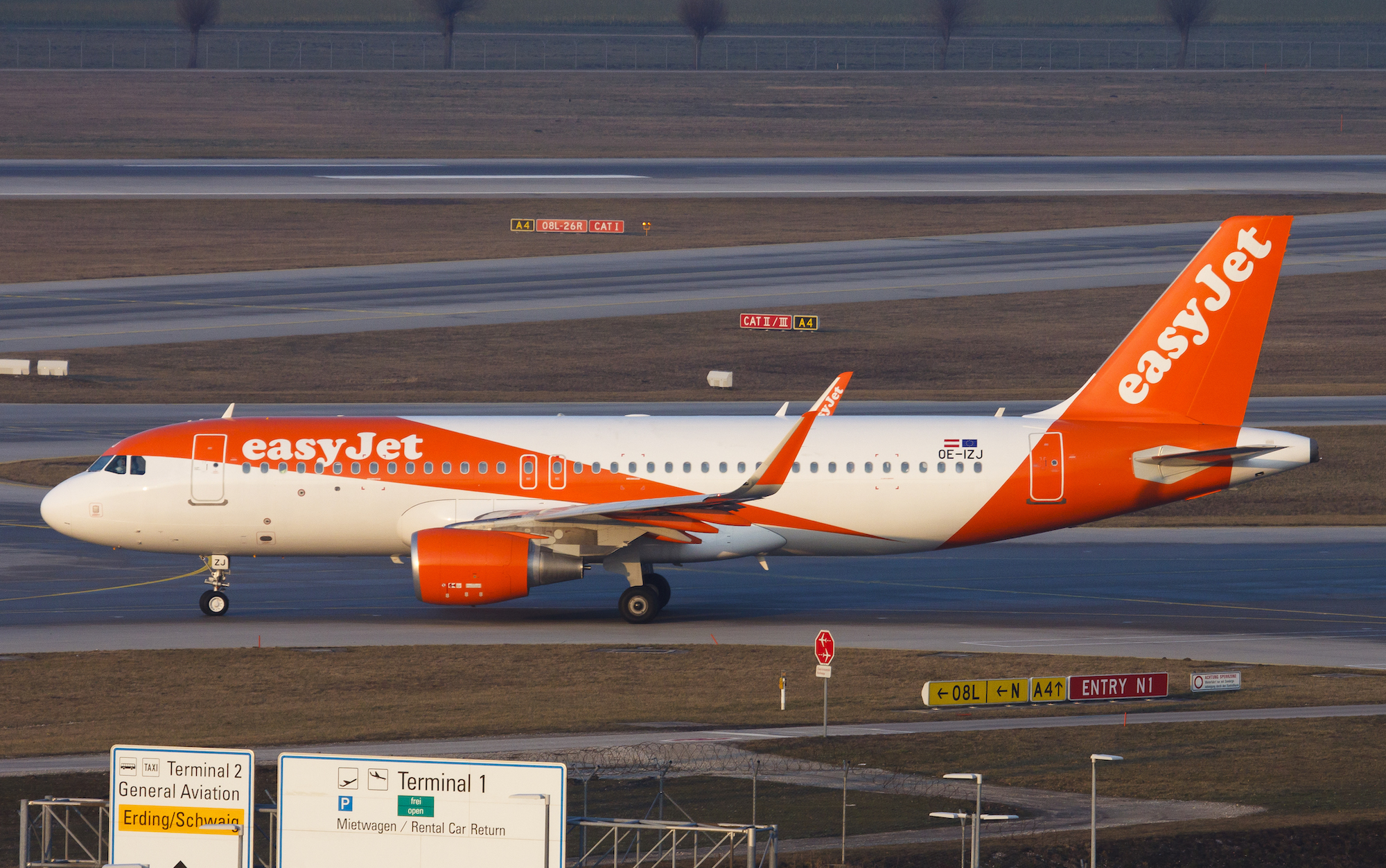
EasyJet Opens First Lounge at London Gatwick

An EasyJet A320 with Sharklets (Photo: AirlineGeeks | Fabian Behr)

One of the pillars of the low-cost airline concept, the one developed first by Southwest Airlines in the ‘60s and ‘70s, was the absence of frills and supplementary services in order to keep costs low and pass the savings on to passengers in the way of lower fares. However, especially during the past couple of decades, we have seen airlines that were born as low-cost (or no-frills) carriers “hybridize” to become more and more similar to traditional or full-service carriers. These airlines have added additional services that are intended to increase passenger satisfaction and potential revenue streams.

Last week European low-cost airline EasyJet took another step towards what can be described as “hybridization” by opening up its first lounge at their main hub at London Gatwick Airport. In cooperation with lounge operator “No1 Lounges,” the carrier opened “The Gateway by Easyjet and No1 Lounges.” This is the first-ever airport co-branded lounge created by the partnership between a budget airline and a lounge operator.

The space is intended as an area dedicated to passengers who want to work or relax in a relaxing atmosphere and can be booked as an extra service by the hour starting from 18.50 British pounds (approximately $25).

“We are delighted to be launching our very first airport lounge in partnership with No1 Lounges to serve passengers at London Gatwick” – said Rachael Smith, EasyJet’s Commercial Proposition & Innovation Director. “We’re always looking for opportunities to offer travelers more choice and great value, so we’re proud that The Gateway will be able to offer something for everyone whether it’s all the essentials for a workspace, somewhere comfortable to relax before jetting off, or to entertain the family.”

Smith continued to state: “The launch is timely as we are seeing the recovery begin in the U.K., not only for leisure travel where winter sun destinations are proving popular once again but for business travelers too, who are returning in their biggest numbers since before the pandemic. Whatever the reason for travel, we are confident that the lounge will provide the perfect destination for customers wanting to get their trip off to a perfect start.”

The undertaking is part of EasyJet’s partnership with British travel company Holiday Extras and it is possible for all passengers to book the lounge online in increments of one hour up to a maximum of three hours. The space will also be accessible to members of the Priority Pass program who will be able to use the services of the lounge starting from three hours before the departure of their flight.

Complimentary food and drinks will be available to all guests together with a selection of dishes inspired by destinations served by EasyJet from London Gatwick. There will be free WiFi as well as some armchairs for relaxation with refreshments, and families will be able to enjoy a game room aand TV den.

At the moment, EasyJet is not planning on providing lounge access to passengers purchasing their Flexi fares, those including more flexibility, a higher baggage allowance, dedicated drop bag desk, fast track at security, and a meal voucher to be used onboard. These passengers will have to reserve lounge access and pay the appropriate fees like everyone else, but it is not difficult to see how this could be a future development allowing EasyJet to further refine its premium offering in order to attract higher-yield customers.

After all, EasyJet was one of the first low-cost airlines in Europe to include in their list of destinations the main airports in Europe to be closer to the needs of business and leisure passengers; while most of its low-cost competitors like Ryanair and Wizz Air decided to stick to secondary airports in order to benefit from lower landing charges, no slot constraints and no ATC delays.

EasyJet decided from the start to serve the main European hubs like Amsterdam, Zurich, Paris Charles de Gaulle, Barcelona, and Rome Fiumicino to offer a service that would allow them to more effectively compete with full-service carriers.

Vanni Gibertini

Vanni fell in love with commercial aviation during his undergraduate studies in Statistics at the University of Bologna, when he prepared his thesis on the effects of deregulation on the U.S. and European aviation markets. Then he pursued his passion further by obtaining a Master’s Degree in Air Transport Management at Cranfield University in the U.K. followed by holding several management positions at various start-up carriers in Europe (Jet2, SkyEurope, Silverjet). After moving to Canada, he was Business Development Manager for IATA for nine years before turning to his other passion: sports writing.

Bonza Attempts to Gain Traction in Australian Market

Bonza Boeing B737-800
Artist Impression of a Bonza Boeing B737-800. (Photo: Bonza)

Australia will have a new low cost carrier next year. Subject to regulatory approval, the new airline will start selling tickets in early 2022. According to the new airline’s website, customers can expect to fly on Boeing 737-800 aircraft, meaning they can offer ulta-low prices while reducing carbon footprint. The new airline will not be serving international routes, with Bonza claiming that it exists to allow Aussies to see more of their own backyard.

But can the notoriously difficult Australian market sustain another carrier?

Australia has long been a duopoly for most mainline routes with Qantas and Virgin Australia dominating for the last two decades. The introduction of Virgin Australia, originally Virgin Blue, back in 2000 was one of the major reasons for the collapse of Australia’s previous major airline, Ansett Australia, in 2002.

Australia does have a low cost carrier by the name of Jetstar, but it is wholly owned by Qantas. Thus, the Qantas Group controls around 70% of aircraft used for passenger flights within the country.

Qantas has been accused of dirty tactics in attempts to squash competition in the past. This occurred most recently last year when Regional Express entered into the mainline market  after Virgin Australia went into voluntary administration. After previously serving only regional destinations with Saab 340s, Regional Express acquired six Boeing 737-800s to compete on major routes with Qantas. The Australian flag carrier responded by opening nine new routes previously only operated by Regional Express.

The deputy chairman, John Sharp, accused Qantas of capacity dumping, knowing they would lose money in an attempt to push Regional Express off the routes. Virgin Australia has since entered back into the market, re-establishing itself as the second mainline carrier. With most domestic borders closed for the last four months due to Covid-19, it is yet to be seen if Regional Express will be able to compete with both.

Bonza’s CEO Tim Jordan was an executive at Virgin Blue and is now attempting to successfully infiltrate the market again. However, he claims the independent start-up is not trying to take traffic away from the business carriers, suggesting that more than half of the routes flown will be uncharted territory.

Focusing on the leisure market, Bonza wants to establish routes from secondary destinations and will not be flying the golden triangle between Sydney, Melbourne and Brisbane. Given that Sydney to Melbourne was the third busiest route in the world in 2018, with the other pairings coming in at number 18 and 34, this may seem a strange decision. Industry experts have already thrown skepticism at the decision, but it would seem they are replicating the same model used very successfully in Europe by Ryanair and Wizzair.

There are many regional options for Bonza, which has already contacted 45 airports about establishing new routes. Flights to many of these locations are often served by just one airline to a major city and can cost several hundred dollars. This makes it very difficult for locals to travel quickly and affordably around the country with many resorting to long arduous drives when they want to travel.

Bonza is backed by a private U.S. firm, 777 Partners, who own an aviation leasing company and successfully launched Flair Airlines in Canada. Along with Tim Jordan at the helm, who has 25 years’ experience, most recently helping to establish FlyArystan in Kazakhstan, the airline looks to be in a solid starting position.

Australia’s newest carrier has identified a gap in the market, creating new demand on new routes. If the big boys play nice, Bonza may have a strong chance of survival.

Mark Evans

Mark has been interested in aviation since the age of eight when he first went plane spotting at Manchester Airport, England. Trips around various European airports in the following years and then to the USA as a teenager furthered his desire. This led to Mark wanting to work in the industry and at the age of twenty one was accepted to train as an Air Traffic Controller. After training and working for several years in England, Mark moved to Bahrain in the Middle East where he worked for six years. He then moved to Sydney, Australia where he resides today after twenty years in the profession. Mark's pursuit to see planes has seen him visit over 140 countries and territories, including places, like North Korea, Sudan and Iran. He has flown over 1,100 times, visited over 700 airports and can always be found researching his next trip.

Malaysia Considering Building International Airport on East Coast

A Malaysia Airlines A350. (Photo: AirlineGeeks | Ben Suskind)

According to local media, the Malaysian government is considering building a new international airport in Gebeng, Pahang, on the east coast of the Malay Peninsula. The state government will conduct an in-depth study on the new airport after the airport project was given the green light.

“There is a need to build a new airport because there is still no international airport in the east coast and this can provide better transport infrastructure facilities, revive the economy and the touism sector,” Wan Rosdy Wan Ismail, Chief Minister of Pahang, said.

Pehang owns Kuantan Airport, however, Kuantan Airport is not being allowed to expand due to the airport belonging to the Royal Air Force (RMAF).  After the new airport is launched, the existing airport would be transferred to the RMAF.

Pahang’s government didn’t reveal the size of the potential new international airport but mentioned the project included shopping malls and hotels. “This project is a long-term plan that will develop in phases until 2050,” Rosdy said.

According to Malaysia Airports Holding Bhd’s (MAHB), operator of 39 airports across the nation, the country owns three international airports on the Malay Peninsula, including Kuala Lumpur International Airport, Langkawi International Airport and Penang International Airport. The three airports are located at the west end of the Malay Peninsula. Kuala Lumpur International Airport is the gateway to the country, owning three independent runways and with a maximum capacity of 45 million passengers every year.

As a result of the successful Langkawi travel bubble, MAHB has been experiencing a recovery in travel demand from the pandemic. Meanwhile, Malaysia Airlines, the nation’s flag carrier, said its “MHholidays” package has been sold more than 100% since the travel restrictions were lifted, with further passenger recovery expected over the next few months.

Travel Restrictions Ease For International Tourists

In the meantime, the Malaysian government said the Langkawi travel bubble will be introduced to international tourists. New travel regulations are set to begin on Nov. 15.

Tourists must be fully vaccinated and book through the travel agency registered with the ministry.  “The agent will be the one who will arrange their entire journey and they will not come directly to Langkawi on their own,”  Shukri said. The Langkawi travel bubble will be conducted for three months.

Although the pandemic is far from over, Malaysia noticed that Singapore, Thailand and Indonesia have succeeded at lifting some travel restrictions to international travelers.

“We are observing what other countries are doing and see where we can fit in, try to make sure that we are not left behind,” Shukri said.

Meanwhile, Malaysia is considering resuming cross-border travel with Singapore. Before the pandemic, there was over 300,000 citizens crossing the land border everyday. Singapore- Kuala Lumper was one of the busiest air routes as well. Shukri is optimistic that the border should be by November.

Government Prepares to Takeover Garuda Indonesia Routes if it Declares Bankruptcy

A Garuda Indonesia Boeing 777 in London. (Photo: AirlineGeeks | William Derrickson)

Indonesian national carrier Garuda Indonesia may be forced into bankruptcy as it faces growing debts after months of financial difficulties due to the impact of Covid-19. The Indonesian government in response has prepared Pelita Air Service, a subsidiary of Indonesia’s Pertamina, a state-owned oil giant, to take over domestic flights within Indonesia if Garuda Indonesia files for bankruptcy.

If Garuda Indonesia fails to renegotiate leases and restructure its nearly U.S. $5 billion debt, the government is prepared to turn Pelita Air into a full-service airline helping meet domestic flight demand once the government lifts travel restrictions in the country.

The charter airline once operated scheduled flights for five years between 2002 and 2007, and now focuses on its core business of charter flights.

Garuda Indonesia’s board of directors is now weighing options on how to deal with the debt-stricken airline, including reaching deals with creditors. In just the first half of this year, the airline’s net loss has risen to more than U.S. $900 million after extended mobility restrictions curbed air travel demand.

The Indonesian government, however, has recently reopened international flights to Bali, signaling the start of plans to recover air travel in Indonesia. Despite this reopening, even if the airline manages to stabilize its financial situation, the government rules out the airline operating long-haul flights in the future.

The reason for this is the national carrier already faces has a substantial debt, which grows by about U.S. $70 million per month due to the delay in payment of loans. The carrier would need to halve its fleet to keep the business afloat.

Garuda Indonesia’s insolvency also led to several lawsuits, including those from foreign and Indonesian aircraft lessors. The airline’s board is now considering a plan to massively reduce its fleet, especially wide-body jets like the Airbus A330 and Boeing 777-300ER. The plan would remove nearly 80 aircraft from its fleet and cancel pending orders. As part of this downsizing, Garuda Indonesia would instead focus on developing its low-cost subsidiary, Citilink.

“Going forward, Garuda will stay focused on efforts to restructure its obligations and operations, as well as guarantee that flight operations for passengers and cargo run normally,” the flag carrier said in a press statement.

Earlier this month, Pelita had filed an application to upgrade its permit to be able to offer scheduled flights, in addition to the chartered flights it currently offers. Pelita has six turboprop jets as of 2019, according to its latest annual report.

Albert Kuan

Most people hate long flights or overnight layovers, but Albert loves them. The airport and flying parts of traveling are the biggest highlights of any trip for him – as this avgeek always gets a thrill from sampling different airline cabin products and checking out regional developments happening at local U.S. airports. He’s flown on almost every major carrier in the U.S. and Asia Pacific, and he hopes to try out the new A350s soon. Albert recently completed his undergraduate studies in Business Accounting at USC in Los Angeles and he is currently recruiting for a corporate analyst position at one of the U.S. legacy carriers. During his college years, he interned at LAX for Los Angeles World Airports working behind-the-scenes (and on the ramp) in public relations and accounting. Outside of writing for AirlineGeeks, he enjoys trekking the Hollywood hills, visiting new hotspots throughout SoCal, and doing the occasional weekender on Spirit Airlines.

SkyWest Experiences Mass Cancellations Following System Outage

A Skywest CRJ-200 (Photo: Alan Wilson [CC BY-SA 2.0 (http://creativecommons.org/licenses/by-sa/2.0)], via Wikimedia Commons)

SkyWest joins the growing list of airlines to suffer a widespread system outage, following a two-day fallout of a system outage that slowed the airline’s operations. The carrier experienced the same issues that plagued Spirit Airlines and Southwest Airlines in the months prior. A spokesperson for the airline said that the issue was causing an ‘internal server outage’ and that IT was dispatched to fix the issue.

Once the issue was fixed on Thursday night, the airline also dealt with the fallout of having crews and aircraft out of position. Friday’s schedule saw delays and cancellations trickle throughout the day, as operations were focused on rebalancing crew and aircraft locations. The airline is expecting all flights to be back to normal operations by this weekend.

SkyWest is one of America’s largest regional airlines, providing service across multiple aircraft types for American Airlines, Delta Air Lines, Alaska Airlines and United Airlines. The carrier’s overall fleet consists of 141 Bombardier CRJ-200s, 104 CRJ-700s, 41 CRJ-900s, and 201 Embraer ERJ-170s and ERJ-175s. The airline — headquartered in St. George, Utah — has hubs in 11 different U.S. cities ranging from Detroit to Dallas to Seattle. SkyWest specializes in short-haul flying to medium-sized cities and Essential Service routes to large hubs.

SkyWest canceled over 700 flights on Thursday and another 600 flights the following day —losing over 25% of both its Thursday and Friday schedule — as a result of the system outage. No single aircraft was extracted from the system failure, with all of SkyWest’s partners feeling some of the pain from the hefty delays.

A SkyWest representative was quick in attempting to alleviate pressure from the scenario, being quoted across various new sites as saying, “We apologize for the inconvenience. We are working to minimize the impact on Friday’s schedule and to return to normal operations as quickly as possible.”

SkyWest’s technical system issues join the difficulties that Spirit, American and Southwest experienced earlier this year.  The carriers suffered high amounts of cancellations in a short period of time. Spirit was the first notable system shutdown when the airline lost more than 40% of its schedule in August across multiple days.

The prominent ultra-low-cost carrier blamed a range of issues, with crew shortages, staff out of position and weather all crippling the carrier’s operations. Southwest would follow in early October, with the airline having a similar string of issues that caused a half-week worth of pain for the Dallas-based carrier.

Despite the airline dealing with heavy delays over the last few days, SkyWest stock has remained consistent, with a $46.93 opening on Thursday only falling to a $46.64 close on Friday.

Ian McMurtry

Although Ian McMurtry was never originally an avgeek, he did enjoy watching US Airways aircraft across western Pennsylvania in the early 2000s. He lived along the Pennsylvania Railroad and took a liking to trains but a change of scenery in the mid-2000s saw him shift more of an interest into aviation. He would eventually express this passion by taking flying lessons in mid-Missouri and joining AirlineGeeks in 2013. Now living in Wichita, Kansas, Ian is in college majoring in aerospace engineering and minoring in business administration at Wichita State University.

Aeroméxico Reports Its First COVID-19-era Positive Quarter Results

Aeromexico Boeing 787
An Aeromexico Boeing 787 Dreamliner flares for landing. (Photo: AirlineGeeks | William Derrickson)

On June 30, 2020, Aeroméxico announced the beginning of a voluntary financial restructuring process under Chapter 11 of the legislation of the U.S., which has been carried out while continuing to operate as a going concern and offering services to its clients with the same quality that characterizes it.

Despite this business decision, the Mexican flag carrier has known how to strengthen its financial position, as well as protect and preserve its operations and assets, as well as implement the necessary operational adjustments to overcome the crisis caused by the COVID-19 pandemic.

According to the financial information presented by the airline to the Mexican Stock Exchange, during the 2021 third quarter, Aeroméxico’s revenues were $655 million, an increase of 32.2% compared to the second quarter of 2021 and 27.9% below the revenues recorded in the same period of 2019.

Aeroméxico’s capacity, measured in Available Seat Kilometers (ASKs), increased 24.8% compared to the second quarter of 2021, mainly as a result of the sequential recovery in the domestic and international markets.

Compared to the third quarter of 2019, capacity decreased 26.9% derived from the negative impact of the global COVID-19 pandemic.

Revenue per ASK increased 5.9% compared to the second quarter of 2021 and decreased 1.3% against 2019.

The EBITDA registered during the third quarter of 2021 was $180 million, which represents an improvement of $87 million compared to the second quarter of 2021 and a decrease of $35 million compared to the third quarter of 2019.

Aeromexico recorded an operating income of $16 million, which represents the first quarter with operating income since the global pandemic began.

This important achievement, within the framework of the Mexican carrier’s financial restructuring process, represents an improvement of $76 million compared to the second quarter of 2021.

The cost per ASK was $67, which represented a decrease of 7.9% compared to the second quarter of 2021 and an increase equivalent to 4.0% compared to the third quarter of 2019.

The variation is mainly due to the increase in fuel costs of 0.8% and the reduction in the capacity of 26.9%.

The cost per ASK in U.S. dollars was $0.068, which represents a decrease of 6.8% compared to the second quarter of 2021 and an increase equivalent to 1.5% compared to the same period in 2019.

As of September 30, the cash balance was $930 million. Excluding restricted cash, cash was $873 million dollars.

During the quarter, the net cash flow from operating activities was positive by $60 million, accumulating two consecutive quarters with positive operating generation.

Aeroméxico’s active fleet is currently 122 aircraft, which represented an increase of 3.4% compared to the previous quarter.

Aeroméxico has successfully managed its network of destinations, ensuring that its operations generate positive cash flows.

During the third quarter, the Mexican carrier continued to see a recovery in travel demand, supported by the strengthening of its national and international network.

Juan Pedro Sanchez Zamudio

The three things Juan Pedro loves most about aviation are aircraft, airports, and traveling thousands of miles in just a few hours. What he enjoys the most about aviation is that it is easier and cheaper to travel around the world and this gives you the opportunity to visit places you thought were too far away. He has traveled to different destinations in North, Central, South America and Asia. Born, raised and still living in Perú, Juan is a lawyer, soccer lover, foodie, passionate traveler, dog lover, millennial and curious by nature.
Sign-up for newsletters & special offers!

Get the latest stories & special offers delivered directly to your inbox

SUBSCRIBE