








Stories

British Airways Forms New Codeshare With Kenya Airways

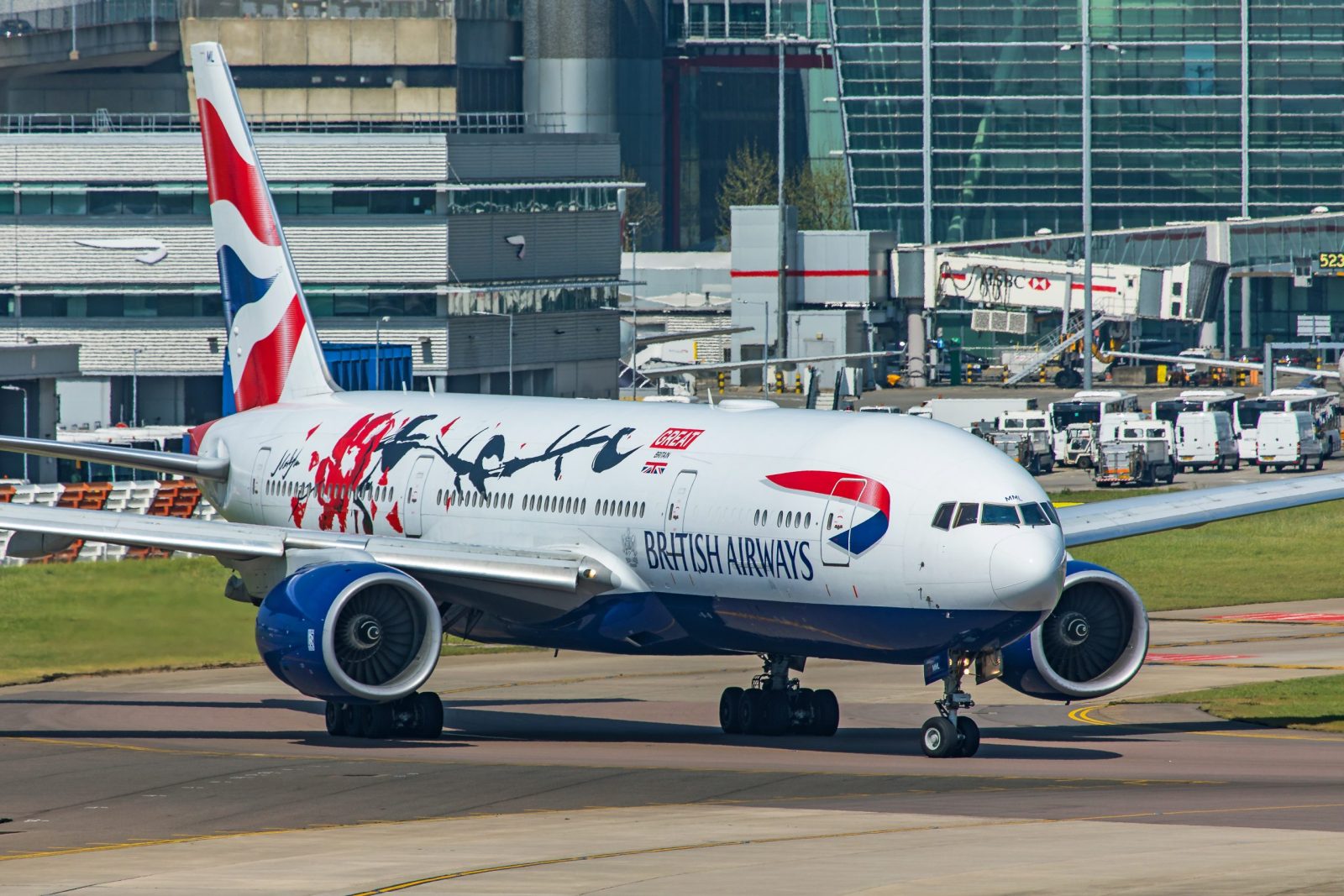
Boeing 777 at London Heathrow
A British Airways Boeing 777 at London Heathrow. (Photo: AirlineGeeks | William Derrickson)

Connectivity is considered to be the very heart of an airline’s success because what more could passengers ask for besides convenient and seamless connections to wherever they wish to go. Whilst it might currently seem impossible for any airline to fly to every available destination from its hub, but connections can still be made through codeshare agreements with various airlines.

British Airways recently announced a brand new codeshare with Kenya Airways. In the new codeshare, the Oneworld carrier plans to further link London’s Heathrow Airport to destinations across the African continent through Nairobi.

Currently, the London-based carrier operates four weekly flights to Jomo Kenyatta International Airport — located in the Kenyan capital. The long-haul flights to Nairobi are operated on a Boeing 777-200, scheduled on Tuesdays, Thursdays, Saturdays and Sundays.

From Nairobi, passengers of British Airways can then connect onwards to 20 different destinations in Central and East Africa, including Addis Ababa, ET; Douala, CM; Entebbe, UG;  Lusaka, ZM and Mombasa, KE, among several other destinations.

Christopher Fordyce, Head of Alliances, British Airways, said  “After a difficult 20 months with global travel restrictions, it’s fantastic to see travel between the UK and Africa resuming. We are really pleased to be able to offer our customers access to even more destinations across the region thanks to our new codeshare agreement with Kenya Airways, making that bucket list trip even easier to plan.”

Mutually Beneficial

Kenya Airways will also expect to connect its passengers originating in Kenya to travel onto major leisure and business hotspots across Europe. Passengers flying to British Airways’ hub at Heathrow Airport may connect to destinations in the United Kingdom and Europe, including major leisure and business hotspots.

As of right now, Kenya’s flag carrier operates a five-times-weekly flight schedule between Nairobi, KE and London — with the exception of Wednesdays and Fridays. Flights are operated on the Boeing 787-8 Dreamliner.

Julius Thairu, Chief Commercial and Customer Officer, Kenya Airways said,  “We are delighted to secure this strategic codeshare agreement with British Airways to provide our travelers with a seamless journey to and from Europe and Africa. The agreement will increase choices for thousands of passengers and will allow for smooth connectivity to a significant number of new destinations – particularly throughout Africa and Europe.”

Since codeshare agreements have been known to strengthen the connections of airlines and help in meeting passenger demands, one can be hopeful that this and other similar codeshares across the industry can help to aid the recovery of air travel. For British Airways, it is a potentially useful addition to the airline’s extensive route network and plays a crucial role in the direction towards its recovery.


Charlotte Seet

Fascinated by aircraft from a very young age, Charlotte’s dream was to work alongside the big birds one day. Pursuing her dream, she went on to achieve her diploma in Aviation Management and is currently working on her degree in Aviation Business in Administration with a minor in Air Traffic Management. When she’s not busy with school assignments, you can find her aircraft spotting for long hours at the airport. In Charlotte’s heart, the Queen of the Skies will always be her favorite aircraft.

Alaska Airlines Grows Presence In Boise

A Horizon Air Embraer E175 operating for Alaska Airlines.
A Horizon Air Embraer E175 operating for Alaska Airlines. (AirlineGeeks - Katie Zera)

The relentless Covid-19 catastrophe is quickly evolving, from when it first emerged, but simultaneously, the push for vaccinations and further research for boost shots are providing the potential light at the end of the tunnel for the airline industry. Several major airlines significantly reduced flight operations and routes, in response to the steep decline in passenger travel demand. But, the carriers are resuming flights and inaugurating new routes are just as quickly, as they all try to capitalize on the ongoing uptick and surge in leisure travel demand to crawl back toward profitability. 

Earlier this week, Alaska Airlines officially announced the launch of two new flights from Boise, building upon the airline’s focus of expanding its west coast presence and connectivity — a trend that started quite some time ago.

“We have deep roots in the Treasure Valley and our commitment to our guests in southern Idaho keeps getting stronger. Reconnecting Boise and Idaho Falls with nonstop air service will drive economic activity and enable further growth of our Boise focus city, including today’s announcement of new nonstop service to Vegas,” Brett Catlin, Vice President of network and alliances, Alaska Airlines said. 

Starting summer 2022, the Seattle-based carrier is scheduled to begin daily flight operations to both Idaho Falls, Idaho and Las Vegas on June 16. Flights to Idaho Falls will be operated on a regional Bombardier Q400 aircraft, while an Embraer E175 will operate the flights to Las Vegas.

The Airline’s Pacific Northwest Network

Alaska Airlines continues to take giant steps towards recovery, as the carrier strengthens its presence in the Pacific Northwest, outside of Seattle — its main hub and base. The airline’s upcoming new flight services from Boise play a pivotal role in allowing the airline to expand its route networks and are solely not the carrier’s new routes.

Flights from Boise to Phoenix are scheduled to operate seasonally from Nov. 19 to April 18 on an E175, and for this winter, the carrier expects to fly from Boise to 14 destinations across the western United States, after adding flights to Austin, TX and Chicago this summer.

Alaska recently celebrated its membership as the latest carrier to join the Oneworld airline alliance earlier this year. The carrier’s new flights to a variety of destinations are its attempts to add new connections and itineraries, which have come in the form of a desire to attract and leverage new international partners.

In addition, Boise is in close proximately to Alaska’s west coast hubs, which could be a huge advantage for the carrier, especially as the carrier firmly holds on to a strong partnership with American — a fellow Oneworld member. This will allow the carrier to overcome its cutthroat competitors like Delta who also has a sturdy presence in Seattle, as the notable SkyTeam carrier calls the Emerald City, a primary west coast hub. 

Evidently, Alaska’s pathway to recovery includes fortifying its existing route network while inaugurating new routes to increase its connectivity. There is no doubt that the Pacific Northwest is the airline’s home, as it continues the trend of connecting communities in the region. However, as the airline outlines its response to the evolving, ongoing predicament, it is essential for the carrier to adapt as demand warrants growth within the airline’s portfolio.

Benjamin Pham

Benjamin has had a love for aviation since a young age, growing up in Tampa with a strong interest in airplane models and playing with them. When he moved to the Washington, D.C. area, Benjamin took part in aviation photography for a couple of years at Gravelly Point and Dulles Airport, before dedicating planespotting to only when he traveled to the other airports. He is an avid, world traveler, having been able to reach 32 countries, yearning to explore and understand more cultures soon. Currently, Benjamin is an Air Transporation Management student at Arizona State University. He hopes to enter the airline industry to improve the passenger experience and loyalty programs while keeping up to how technology is being integrated into airports.

Opinion: A Look at Emirates’ Skywards Loyalty Progam

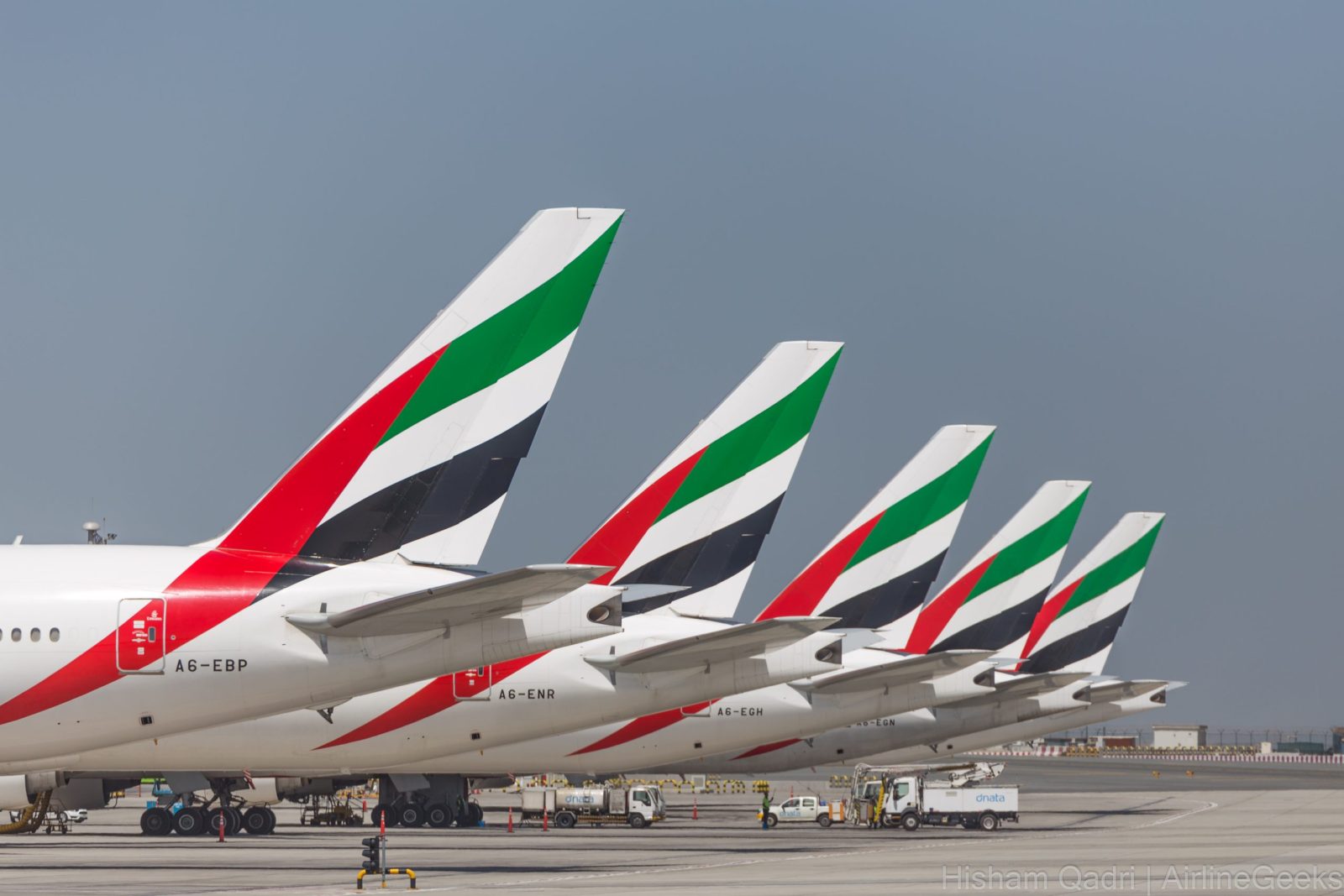
Emirates aircraft in Dubai
Emirates aircraft in Dubai. (Photo: AirlineGeeks | Hisham Qadri)

Previously we discussed Qatar Airways’ loyalty program and their plans within the United States. In
continuing with the theme of evaluating Middle Eastern airline loyalty programs, AirlineGeeks recently
had the opportunity to pick the brain of Dr. Nejib Ben Khedher, Divisional Vice President of Emirates
Skywards to really understand how the airline is leveraging its program to provide value to customers
within the United States.

Globally Emirates’ loyalty program Emirates Skywards is over 27 million members with 10% of those
members residing in the United States. The U.S. actually had the highest growth in membership within
the program up until March 2020, making the country a key focus of Emirates to invest resources in to
build value.

Even though the airline has 12 gateways spread across the country it still isn’t as ubiquitous as a
domestic carrier which is where loyalty plays an important role. Emirates connects to the world through
its hub in Dubai but Dubai is a long way from the United States and not everyone travels internationally
frequently enough to really earn points at a meaningful rate.

Partnerships with Other Institutions

The solution here according to Emirates is a multifaceted approach. The first is to partner with other
airlines, hotels, banks, retail outlets, and car rental partners. This allows members to earn and redeem
points across a multitude of channels outside of just flying with Emirates. One of the newer
developments is their partnership with Bilt, a rewards program that enables members to earn rewards
points-paying rent.

Leveraging Credit Cards

The second step was to launch a suite of credit cards in the United States and develop partnerships with
banks and their loyalty programs. Credit cards offer a variety of features from additional points
earning to elite status. This is a common strategy among airlines to build loyalty, the addition of a credit
card to the points earning portfolio earns the airline a share of the wallet and builds brand loyalty.
Customers from Capital One, Chase, Citibank, HSBC, Brex, and American Express can easily convert
points from their respective bank loyalty programs to Emirates Skywards points.

Emirates has diversified earning points in their program to the point where an everyday consumer can
regularly build up their balance but it’s not particularly helpful if people can’t spend them.

Value for Infrequent Travelers

While consumers can easily redeem points to fly on Emirates it’s not that viable for everyone for two reasons,
first is that they may not really be flying on the Emirates network that frequently and second even if
they do want to fly on the Emirates network they don’t have enough points to redeem for a flight. This is
where the final two strategies in Emirates’ approach to add value to the program come into play.

Emirates isn’t limiting the use of their points to just redeeming for flights. People may not have enough
points to redeem for a flight on the Emirates network but they can still use their points to save money
on Emirates through two features.

The first is the Cash+Miles feature where customers reduce the cash price of their flights on Emirates or flydubai by redeeming miles.

The second is their online subscription platform Skywards+. This offers members additional rewards
such as bonus miles, discounted upgrades, lounge access, and more allow customers with lower mileage
balances to stretch their miles even more.

Partnership with JetBlue

The final problem Emirates has addressed is how to appeal to a customer that really doesn’t fly Emirates
that regularly but travels domestically within the United States. This is where their partnership with JetBlue comes in. Emirates recently introduced the ability for Skywards members to redeem their miles
for economy and Mint class tickets on JetBlue, opening up a whole new avenue for members to use
their miles domestically within the United States for flights.

All in all, while the average flyer in the United States may not be too familiar with Emirates Skywards,
there is enough value in the program across the board to appeal to a variety of travelers from those who
regularly travel internationally to those who may have traveled internationally once or do so
infrequently. Many airline loyalty programs focus on rewarding the biggest spenders and often overlook
the combined value of the leisure travelers, which due to COVID is the greatest chunk of travelers.

Hemal Gosai

Hemal took his first flight at four years old and has been an avgeek since then. When he isn't working as an analyst he's frequently found outside watching planes fly overhead or flying in them. His favorite plane is the 747-8i which Lufthansa thankfully flies to EWR allowing for some great spotting. He firmly believes that the best way to fly between JFK and BOS is via DFW and is always willing to go for that extra elite qualifying mile. Hemal's opinions are his own and do not reflect those of his employer.

LAX Debuts New Remote “Economy” Parking Facility for Travelers

A view of the Los Angeles skyline, Angeles National Forest, and traffic going into LAX as we approach Hawthorne (Photo: AirlineGeeks | Joey Gerardi)

A new budget parking facility, LAX Economy Parking, opened at Los Angeles International Airport (LAX) this Tuesday, October 19. The new facility operated by Los Angeles World Airports, the airport authority for LAX, brings 4,300 new parking spots to the growing airport and will have its own dedicated shuttle bus to transport travelers to and from the airport’s central terminal area.

According to LAWA, the drive-up rate for the lot is $25 per day, however, pre-booking discounts will give drivers up to 70% off that rate. The amount of the discount will depend on the availability of spots and the amount of time booked in advance.

LAX Economy Parking, also known as LAX’s Intermodal Transportation Facility – West, is the first major aspect of LAX’s Landside Access Modernization Program (LAMP) to debut. The $5.5 billion Landside Access Modernization Program aims to relieve congestion for people traveling to and from LAX and its mobility projects include an automated people mover (APM), consolidated rental car center (ConRAC) and a connection to Metro’s K Line (Crenshaw/LAX Line). Overall, these new developments are expected to save time and enhance the traveler experience.

“LAX Economy Parking is a historic marker of progress in the midst of a once-in-a-generation transformation at the airport,” Mayor Eric Garcetti said at the LAX Economy Parking’s ribbon-cutting ceremony.

“(It brings) travelers a state-of-art facility that will help reduce congestion, enable our airport to realize its full potential and create a more seamless travel experience for millions of Angelenos and visitors.”

The $294-million facility is made up of four stories and is located half a mile away from the LAX’s Central Terminal Area. The parking structure includes smart parking features, such as automatic entry and exit, electric vehicle charging stations and a shuttle to the central terminal area. The parking facility also has green features such as energy saving lighting controls, low-flow plumbing fixtures, drought tolerant landscaping and recycled waterand dedicated parking spots for low emitting vehicles and car pools.

Until the completion of LAX’s APM, expected to be complete in 2024, dedicated shuttle buses for LAX Economy Parking will take travelers to and from the Central Terminal Area’s Arrivals Level. The future APM will originate at the airport’s future ConRAC and stop at the parking facility before arriving at the Central Terminal Area.

LAX Economy Parking will be the first parking lot at LAX to offer parking on a reservation basis. Previously, parking at LAX was only available on a first-come, first-served basis, with no reservation system available.

Albert Kuan

Most people hate long flights or overnight layovers, but Albert loves them. The airport and flying parts of traveling are the biggest highlights of any trip for him – as this avgeek always gets a thrill from sampling different airline cabin products and checking out regional developments happening at local U.S. airports. He’s flown on almost every major carrier in the U.S. and Asia Pacific, and he hopes to try out the new A350s soon. Albert recently completed his undergraduate studies in Business Accounting at USC in Los Angeles and he is currently recruiting for a corporate analyst position at one of the U.S. legacy carriers. During his college years, he interned at LAX for Los Angeles World Airports working behind-the-scenes (and on the ramp) in public relations and accounting. Outside of writing for AirlineGeeks, he enjoys trekking the Hollywood hills, visiting new hotspots throughout SoCal, and doing the occasional weekender on Spirit Airlines.

Singapore Airlines A380 Will Return To Sydney, Scoot Supports Reuniting Australians

A Singapore Airlines Airbus A380 in New York. (Photo: AirlineGeeks | Hemal Gosai)

Ever since news came of the return of Singapore Airlines Airbus A380s into service began to spread, many passengers have been patiently anticipating where the aircraft would be flying to.

For the first destination, the Star Alliance airline member had planned for Singapore-London to be the first long-haul route reinstated for the A380s, which was considered a favorite amongst passengers.

Oddly enough, there’s the schedule for the world’s shortest A380 flight that will last no more than a full hour, whereby Singapore Airlines will deploy the superjumbo on an ad-hoc basis to Kuala Lumpur.

Starting from Nov. 4, the superjumbo will be flying on a three-times-weekly and four-times-weekly basis starting November 4 till early December.

Currently, the airline uses the Boeing 737-800, or occasionally the Airbus A350-900 for this route, whereas its low-cost sister Scoot uses an Airbus A320.

While it would seem strange for Singapore Airlines to make such a move, but it might be preparatory flight services to get the A380s and the crew back on track before long-haul services are fully deployed in the coming year.

Welcome Back to Sydney

Fortunately, the superjumbos will not be stuck on short flights forever as Singapore Airlines has quite an early-Christmas surprise for its passengers, as it will be deploying its superjumbos for daily flights to Sydney.

As Singapore Airlines was the launch customer for the A380 back in 2007, it also happens that Sydney was the first destination for the A380 in its inaugural flight.

Similar to the Singapore-London route, the Singapore-Sydney route was also one of the more popular destinations amongst the national carrier’s network before it was halted in March 2020, which is what makes this surprise to be a little more nostalgic.

With the recent announcement that Australia is reopening its borders, as well as the high possibility of a Vaccinated Travel Lane with Singapore, the national carrier is foreseeing pent-up demand for the holiday season.

Under the quarantine-free travel bubble, fully vaccinated business travelers and students will be able to fly between the two countries before it gets opened up to tourists.

Starting December 1st, Singapore Airlines will resume three flight services to Sydney, using three different aircraft types as well with the likes of the Boeing 777-300ER and the Boeing 787-10 Dreamliner.

For the lone Airbus superjumbo, it gets its signature flight numbers, SQ231 and SQ222, flying daily between Singapore and Sydney. Besides the superjumbo, the 777-300ER also flies daily but the Dreamliner will only fly on Thursdays, Fridays and Saturdays.

“With the NSW and Australian border opening up from 1 November, the A380 will support even more Australians hoping to reconnect with loved ones ahead of the Christmas period,” said Singapore Airlines Regional Vice President Louis Arul in a press release.

Reuniting Loved Ones

Scoot, the low-cost sister carrier of Singapore Airlines, has also launched a series of one-way promotional fares across selected markets within its network.

These flights would include direct flights from Singapore, or connecting flights via Singapore, to either Melbourne or Sydney, with the aim of reuniting Australian citizens and permanent residents with their loved ones back in Australia.

Prior to the pandemic, Scoot was actively flying to four different Australian cities and is currently partnered with Virgin Australia to give passengers additional options to connect to and from.

As of currently, however, Scoot only flies to three of the previous four cities, with the Gold Coast still not being operated yet.

Once the Vaccinated Travel Lane between Singapore and Australia fully commences and tourists are allowed, it is extremely possible that the Singapore Airlines Group will resume and launch more flights.

Charlotte Seet

Fascinated by aircraft from a very young age, Charlotte’s dream was to work alongside the big birds one day. Pursuing her dream, she went on to achieve her diploma in Aviation Management and is currently working on her degree in Aviation Business in Administration with a minor in Air Traffic Management. When she’s not busy with school assignments, you can find her aircraft spotting for long hours at the airport. In Charlotte’s heart, the Queen of the Skies will always be her favorite aircraft.

Qantas Advances Return of A380, Resumes Boeing 787 Deliveries

A Qantas A380 in long-term storage (Photo: AirlineGeeks | William Derrickson)

Amid an expected surge in international demand from Australia, Qantas is accelerating the return of its flagship Airbus A380 to the end of March 2022 on its Sydney to Los Angeles route. In addition, the Sydney-based carrier revealed an array of resumptions to destinations in Asia and Oceania and a new connection to Delhi, India.

Initially, during the pandemic’s onset, Qantas Airways grounded the Airbus A380 with a scheduled return date of 2023. However, as Covid-19 vaccination rates began rising in Australia, the Sydney-based carrier announced the initial acceleration of the Airbus A380 return date to July 2022 for flights to Sydney to Los Angeles, with the resumption of Airbus A380 service on its London to Sydney services via Singapore by November 2022.

From March 27, Qantas Airways will place its Airbus A380 six times a week on its daily flight from Sydney to Los Angeles. Its frequencies on Tuesdays will operate on its Boeing 787-9 Dreamliner. To accommodate this schedule change, the flag carrier of Australia plans to reinstate two of its Airbus A380s from storage in Victorville, California. One of these aircraft could arrive in Sydney by the end of December to assist crew training efforts.

In a statement, Alan Joyce, CEO of Qantas, states, “Our customers and crew love flying on our flagship A380s, so news that they are will be back flying to Los Angeles again from April next year will be very welcome. The Federal Government’s support to ensure our aircraft and people are ready to resume once borders reopen has been critical.”

Moreover, an additional three Airbus A380s are scheduled to join the operation from mid-November 2022, and the remaining five Airbus A380s are slated to join its operation by early 2024. Qantas Airways will operate a total of 10 Airbus A380s, retiring two of the type earlier this year. During the aircraft’s time in storage, all Airbus A380s completed a multi-million dollar retrofit, which includes a new business class cabin and an expanded premium economy cabin, which was previously available on six of its 12 Airbus A380s pre-pandemic.

In addition, Qantas Airways is eyeing the resumption of deliveries for three Boeing 787-9 Dreamliners in storage, allowing for these aircraft to enter service several months ahead of schedule. Meanwhile, low-cost carrier subsidiary, Jetstar Australia, is removing all of its Boeing 787-8 Dreamliners from storage in Alice Springs, Australia.

International Resumptions

Last week, Qantas Airways announced the acceleration of the resumption of its services from Sydney to Los Angeles and London – via Darwin, Australia – with its Boeing 787-9 Dreamliner to Nov. 1. Now, the flag carrier of Australia will accelerate the resumption of its services to Singapore, Fiji, Thailand and South Africa. 

Specifically, Qantas’ thrice-weekly Airbus A330 services to Singapore will resume four weeks ahead of schedule on Nov. 23, with daily services by Dec. 18. Additionally, its low-cost carrier subsidiary, Jetstar Australia, will resume flights from Darwin and Melbourne to Singapore by mid-December.

Meanwhile, flights to Fiji will resume from Dec. 7, from a previous resumption date of December 19, 2021, with four weekly Boeing 737 services and additional supplemental services from Jetstar resuming mid-December. The Qantas Group plans to resume flights to Bangkok around mid-January, three months ahead of schedule, with Qantas’ five weekly Airbus A330 flights, in addition to the resumption of flights to Phuket via Jetstar’s thrice-weekly Boeing 787-8 service. Qantas’ flight to Johannesburg on its Boeing 787-9 Dreamliner will see it resume three months earlier than scheduled, with three weekly flights.

“While these flights will initially be for Australians and their families, we expect tourists from Singapore, South Africa and India to take advantage of these flights once borders reopen to international visitors, which is great news for the industry,” Joyce added.

In addition to resumptions, Qantas Airways plans to operate a Sydney-Darwin-Delhi-Sydney service on its Airbus A330-200 from Dec. 6, increasing to daily flights by Jan. 3. These flights are subject to Indian government approval and will be reevaluated, for continuation after the southern summer season — the end of March 2022. Pre-pandemic, Air India operated a nonstop flight between Delhi and Sydney, but these flights are currently suspended due to the Covid-19 pandemic.

Domestic Operations

Due to the reopening of the Victoria province — in which Melbourne is located — for vaccinated travelers, Qantas and Jetstar will bolster capacity between Sydney and Melbourne, offering up to 18 return flights a day and up to 35 return flights a day during the Christmas season.

In addition, Qantas and Jetstar will reinstate all of their 11,000 Australia-based employees, including 5000 linked to domestic operations and 6000 linked to international operations. In total, 22,000 employees will be able to return to work by the end of 2021, pushing ahead of schedule by six months.

Winston Shek

Ever since Winston was a toddler, he has always had a fascination for airplanes. From watching widebodies land at Washington Dulles to traveling the world, Winston has always had his eyes towards the skies. Winston began aviation photography in 2018 and now posts his photos occasionally on his Instagram account. He previously wrote for a blog. In his free time, Winston loves to play chess, do recreational activities, and watch sports. Looking into the future, Winston plans to service the aviation industry.

Pelita Air Service – The Airline Poised To Replace Garuda Indonesia

Pelita Air Fokker 28

The government is reportedly preparing Pelita Air Service to replace the state-owned airline Garuda Indonesia. Garuda Indonesia is facing the threat of failing to restructure after incurring debt whose value is said to have exceeded Rp 70 trillion.

PT Pelita Air Service (PAS), an airline owned by PT Pertamina (Persero) is planned to serve scheduled flights to replace PT Garuda Indonesia (Persero) Tbk. So far, the airline led by Albert Burhan is a charter airline with experience in the oil and gas sector as well as government special missions with little history of scheduled flights. However, after appointing Albert to fill the position of President Director which had been vacant for 2 years in early October, Pelita Air applied for a scheduled flight permit to the Ministry of Transportation. The airline is also widely rumored to be taking over Garuda’s domestic flights.

Albert Burhan is no stranger to the world of aviation. He is the former President Director of Citilink Indonesia and has had a long career at Garuda Indonesia. Quoted from its official website, the establishment of Pelita Air began with Pertamina’s need to support exploration, exploitation, cargo, and transportation of oil and gas and/or personnel.

Initially, in 1963, Pertamina created an air service department called Pertamina Air Service. In 1970 or 7 years later, Pertamina closed the air service department and instead established PT Pelita Air Service (PAS), an autonomous subsidiary to provide continuous flight operations.

The airline was then given a mission to carry out flight operations to serve and coordinate flight operations economically in the oil and gas industry in Indonesia through charter flights and related activities. Including transmigration activities, firefights, refugees, red cross, oil spills, aerial photography, cargo transportation.

Furthermore, Pelita Air’s services are extended to flights for VVIP, offshore, medical evacuation, seismic operations, geological survey, a helicopter pilot for hire, support and training. For decades, Pelita Air has provided flight services for several oil and gas companies in Indonesia, both foreign and domestic companies.

From 2000 to 2005, Pelita Air tried to do business with regular flights for many routes. However, in order to focus more on its main business, Pelita Air decided to concentrate on air flight charters. Regular flights were closed in 2005. Pelita Air Service has a subsidiary in the field of aircraft maintenance and repair, namely PT IndoPelita Aircraft Services.

In addition, Pelita Air also has an airstrip exclusively in Pondok Cabe, South Jakarta, which consists of hangars, warehouses and a 2,000-meter runway. Pelita Air Service operates several fleets, including rotary wing and fixed wing aircraft to pass through all of Indonesia’s terrain. Among them, ATR 42-500, ATR 72-500, CASA 212-200.

Putu Deny Wijaya

Putu Deny Wijaya was always an aviation enthusiast by heart, growing up in Indonesia where air transport is very vital. His first love is The Queen of The Skies, serving the trunk routes between Jakarta and Denpasar. He brought along this passion with him throughout college by conducting his bachelor study abroad in the Netherlands for the purpose of experiencing a nonstop 14-hour long-haul flight. For Putu the sky's the limit when talking about aviation. He hopes that he would be able to combine his passion for aviation and knowledge of finance at the same time.

United Airlines Turns Green With Q3 Profits

A United Airlines Boeing 777-200ER landing in Las Vegas. (Photo: AirlineGeeks | William Derrickson)

The air travel industry may finally be able to move past the pandemic crisis and have a less turbulent flight heading into the next year because despite the impact of various Covid-19 variants, major airliners have been seeing a great turn of profits for their third quarters.

United Airlines joins in on the green side, having reported a third-quarter profit of $473 million, indicating that the airline is definitely on the right track to achieving the range of long-term financial targets it had.

“The recovery was delayed by the Delta variant, but the United team remains focused on our long-term vision – and not getting sidetracked by near-term volatility – meaning we’re solidly on track to achieve the targets we set for 2022,” said United Airlines CEO Scott Kirby in a press release.

In hindsight, the airline reported an adjusted net loss of $329 million after excluding government aid, with operating revenue of $7.8 billion, which was just down 31.9 percent from the third quarter of 2019.

As for the total capacity for the third quarter, it was down by just 28 percent when compared to the exact quarter in 2019. And as for the capacity, United’s international capacity was also down by 39.7 percent when compared to the same quarter of 2019.

Domestically, United has been doing quite well at 82.4 percent, missing out by just a bit from the domestic load factor of 86.6 percent in the third quarter of 2019.

And considering that international travel still has volatile restrictions, the international load factor stood at a relatively impressive 65.2 percent, down from the 85.4 percent from the exact quarter in 2019. This brings the consolidated passenger load factor for the third quarter of 2021 was 76.1 percent.

Thus far, the Chicago-based carrier has resumed nonstop service on 23 domestic routes and 13 international routes as compared to the previous quarter this year, with the numbers expected to positively change soon as United recently unveiled its largest transatlantic network expansion.

Bringing Back the 777s

With international travel seeing a definite comeback, United Airlines is keen on having its Boeing 777-200s returned to active service to boost international capacity.

Powered by Pratt & Whitney engines, the airline’s massive fleet of 52 777-200s still remains grounded, but the airline is hopeful of having them be reinstated by next summer.

Should the anticipated returns of the 777s happen, then it would help increase United’s international capacity by about 10 percent in the next year as the fleet is planned to be flying at record levels to high-demand markets in Africa, Europe, India, Latin America and the Middle East.

The long-term plan was envisioned alongside United’s optimistic expectations to sell more tickets next year than it did in 2019, as Kirby said: “From the return of business travel and the planned re-opening of Europe and early indications for opening in the Pacific, the headwinds we’ve faced are turning to tailwinds, and we believe that United is better positioned to lead the recovery than any airline in the world.”

For the Passengers

Besides the news of improved sky conditions, news on the ground has been quite well for United Airlines as well as it managed to re-open several lounge locations across its domestic network.

And besides being the first U.S airline to offer economy passengers the choice to pre-order beverages and snacks, United also managed to achieve the highest ever Net Promoter Score year-to-date, with its brand-new Boeing 737 MAX 8 aircraft interior receiving the highest scores in the fleet.

The airline’s signature interior boasts onboard passenger-friendly initiatives such as seatback entertainment at every screen and additional room for carry-on baggage.

Additionally, the airline has achieved the most improved mishandled bag performance amongst mainline competitors year-to-date as well, with a 38 percent improvement over 2019.

Through all its efforts of focusing heavily on the idea of premium services and achieving milestones both in the air and on the ground, United Airlines has certainly been setting itself apart from its other major U.S carriers as a strategy for the airline to attract more potential passengers to cement future success as it continues to fly.

Charlotte Seet

Fascinated by aircraft from a very young age, Charlotte’s dream was to work alongside the big birds one day. Pursuing her dream, she went on to achieve her diploma in Aviation Management and is currently working on her degree in Aviation Business in Administration with a minor in Air Traffic Management. When she’s not busy with school assignments, you can find her aircraft spotting for long hours at the airport. In Charlotte’s heart, the Queen of the Skies will always be her favorite aircraft.

Air China Looks To Domestic Growth for Pick-Up After Modest Third Quarter

An Air China 747-8i in San Francisco (Photo: AirlineGeeks | Ben Suskind)

Air China released its 2021 third quarter earnings Wednesday, revealing 7% growth in capacity — measured in available seat kilometers (ASK) — versus the same period In 2020, remarkably lower than the 26% growth recorded in previous quarters of 2021. The decelerated pace was anticipated as China has endured multiple rounds of upticks in Covid-19 cases during the summer, the traditional peak travel season, which caused the airline’s moderate performance over the quarter.

Air China received a total of seven jets in the past quarter, including four Airbus A320neos, two A321neos and one COMAC ARJ21. Only a fraction of the airline’s delivery plan for the second half of the year was realized. The Chinese flag carrier stated in its mid-year financial report that it will receive 32 new jets in the second half of 2021 — which came on the heels of 23 deliveries during 1H 2021 — meaning the airline will have to see a substantial increase in deliveries in the current quarter if it hopes to meet that goal.

Amid the challenging performance, the airline is still devoted to expanding its network within China, wishing to soon emerge from the crisis and build a solid foundation for future growth.

Air China, China Southern Airlines and China Eastern Airlines first ARJ21s at the delivery ceremony. (Photo: COMAC)

Domestic Battle

As international travel in China is still limited, Air China is putting its hopes on China’s domestic market. Wide-body aircraft, such as the Boeing 777 and Airbus A350 XWB, are being put to use on routes in-and-out of second-tier cities throughout Chins, such as Changsha, China, Kunming, China, and Harbin, all of which have seldom seen regular service using wide-body aircraft operated by an airline that does not base in the city.

In addition to more frequent domestic wide-body aircraft services, the airline is now looking for new points of growth within its home country, and, besides continuing to invest in its Beijing headquarters and other strategic first-tier city hubs such as Shanghai and Chengdu, China, Air China is going to battle with its competitors in China’s southern province of Guangdong and western province of Xinjiang, both of which are strategic hubs of China Southern Airlines, a long-term competitor of the Air China.

New Hubs

Five Airbus A320s were transferred from Air China’s Chengdu hub to Guangzhou’s Baiyun Airport — Air China’s new hub — and internal sources shared that a number of Airbus A330 will be transferred to the hub in the coming weeks. Guangzhou is a core metropolis of the Guangdong-Hong Kong-Macau Greater Bay Area, and the city is home to over 20 million people. In 2020, Baiyun Airport ranked the largest airport in terms of passenger throughput.

Air China is hoping to gain a share in an area that is considered one of the most promising markets in the country. As China Southern doubles down its effort in Beijing, the home court of Air China, the action taken by Air China is considered a sign that competition between the two rivals is intensifying with both airlines’ networks overlapping with each other’s.

An Air China 737 MAX 8 (Photo: AirlineGeeks | Katie Bailey)

Three Boeing 737s are now based in Urumqi, China’s Diwopu Airport, the largest airport in Xinjiang’s capital city. As the largest provincial district of China, the region has strong potential markets for airlines. Occupied largely by uninhabited areas, Xinjiang has its populations centered in a number of metropolitan areas that are far apart from each other. Additionally, the region is over 3,000 kilometers away from the economic center of China located in the eastern third of the country.

China Southern has been a long-term market dominator in the region, for both intra-Xinjiang travel and cross-country routes between Xinjiang and the rest of China. Air China, as said in its joint press release with Xinjiang Airport Group, is seeking to leverage Urumqi as a strategic point in China’s belt-and-road initiative to increase the coverage of its network in West China and Middle Asia.

“Air China will closely align follow the national development strategy, and better serve the market with an extensive network and top service,” the airline said in its 2020 annual report. The flag carrier of the country is actively planning its recovery and striving to occupy more markets as the passengers are coming back to airports.

Lei Yan

Lei is from Inner Mongolia, China, and now lives in Guangzhou. He grew up in an aviation family, where his passion began. During his time at Penn State University, he studied Industrial Engineering specializing in operations research, and he graduated with an honor’s thesis on airport gate assignment optimization. Now, he is a Purchasing Manager with Procter & Gamble. In his free time, he enjoys flying, reading, and wandering around the city.

Opinion: As Borders Open, the Travel Industry Must Create A Seamless Experience for All Travelers

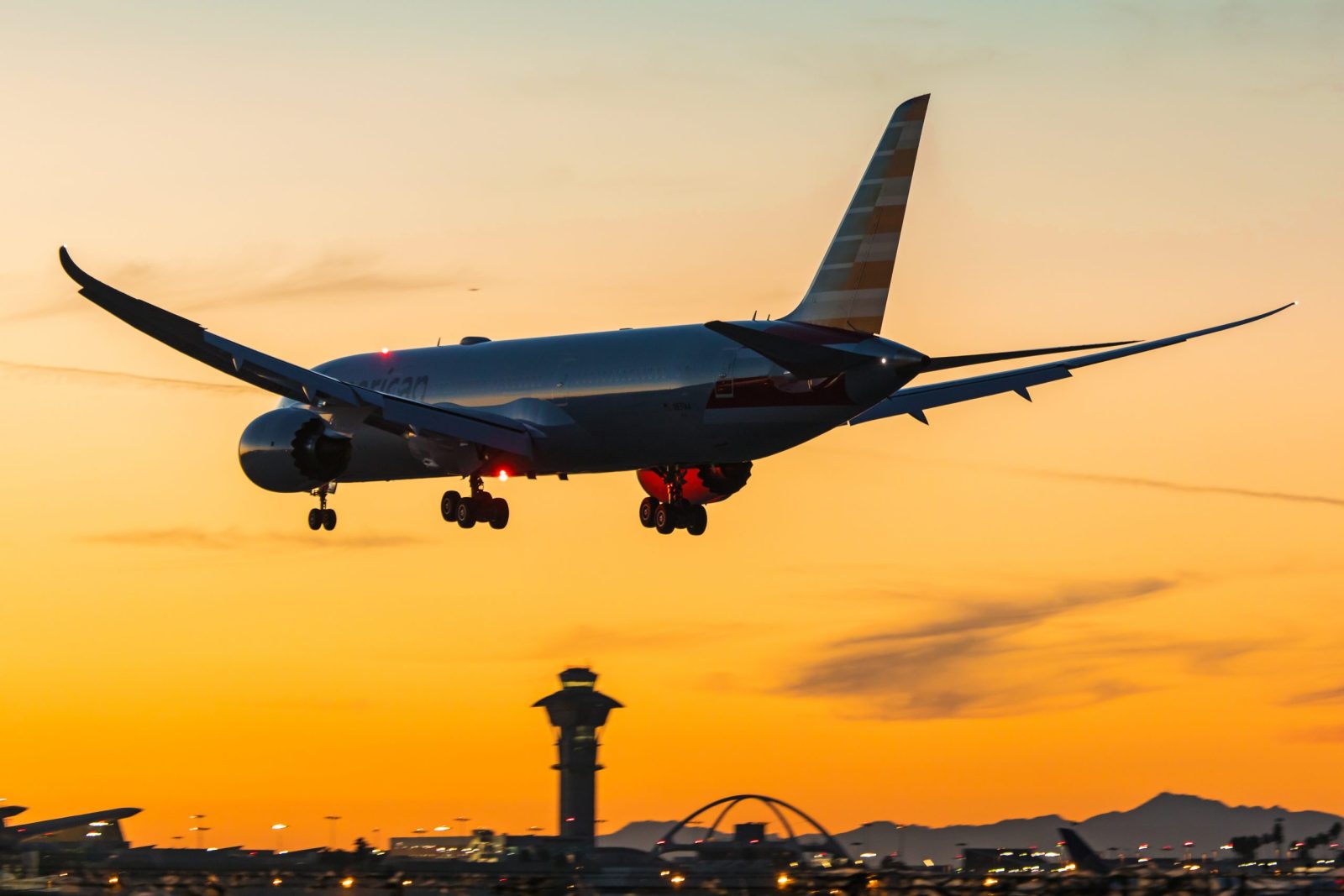
An American Airlines Boeing 787 Dreamliner on approach to Los Angeles. (Photo: AirlineGeeks | William Derrickson)

Since the beginning of the pandemic, there has been a deserved domestic focus on dealing with the immediate Covid-19 outbreaks within individual countries. This resulted in the implementation of travel restrictions and the closing of borders to non-essential international travel.

Recently Reuters reported that the U.S. will reopen its borders on Nov. 8 to fully vaccinated passengers from 33 countries.  With this in mind, I thought I would share my recent experience of travelling to Los Angeles as an international traveller.

It should be noted that the processes undertaken apply to the time period in which I traveled — late September through early October — and may have changed since. Of course, the relevant websites should be checked for the latest restrictions and requirements.

Firstly I was able to travel to the U.S. as a U.K. passport holder without an exemption as I had been in Canada for over 14 days. Departing from Montreal meant that a U.S. customs pre-clearance took place prior to boarding the aircraft so no formalities were conducted upon arrival into LAX.

To board the flight a Covid-19 test was required within three days of the day of departure. The U.S. is generous with this timeframe as other countries may stipulate a time limit for the test of 72-hours prior to the originally scheduled flight departure. This highlights the inconsistent approach passengers may encounter and can become problematic if traveling on a late-night departure, as it reduces the available time for testing.

For example, if a passenger’s flight is at 7  p.m. on a Friday, the passenger could board a flight to the U.S. with a negative test that was taken any time on Tuesday or after. For countries with a 72-hour time limit, the test may realistically only be taken from Wednesday morning. The three-day rule assists with the time available to receive test results especially if passengers opt for the allowable, and cheaper, antigen test with results in 24-hours rather than the more expensive PCR test.

Much has been made about the disparate travel restrictions that individual countries and regions have initiated in response to the Covid-19 pandemic. Airlines and tourism bodies have been advocating for a consistent, single digital approach to facilitate the efficient movement of travelers.

However, until there is an international consensus, travelers will be required to spend a considerable amount of time and do a significant amount of research to ensure compliance. For example, for this particular trip, the Covid-19 certificate issued in the province of Quebec was not deemed acceptable to U.S. authorities as it was not in English or Spanish, and the Canadian government had yet to initiate a national Covid-19 certificate or passport. Fortunately, as I had been vaccinated in the U.K., the NHS app was acceptable, and there were no issues.

All documentation — including the required vaccination status — was thoroughly checked by the airline staff. To travel to the U.S., an attestation is required for each passenger and Los Angeles county also required an online form to be completed. Thankfully an error with the names on the Covid-19 test result documentation was picked up and amended by the test provider on the day of travel. A passenger’s full name as is written on their passport is one of the requirements on the documentation, but the test provider’s website had not made this clear, and the online form did not reinforce this.

Full mask compliance was monitored and enforced within the airport and onboard the flight. Regular announcements were made to ensure that passengers understood that the mask requirement was a Transport Canada regulation. Overall the airline experience with Air Canada was a smooth and efficient process with an up-to-date informative website on entry and transit requirements and professional staff easing the concerns of passengers. The professionalism of frontline workers was evident at every step of my travels, and I am in awe of their resilience and adaptability in the face of continual change.

Unfortunately, the processes associated with the airport and accommodation experience upon arrival at LAX were not as smooth and efficient. Though the staff I dealt with were understanding and extremely helpful with all enquiries. Within the airport environment, there is considerable renovation being undertaken both inside and outside the terminals. Transport and hotel providers have amended their offerings and this resulted in confusing and at times chaotic scenes. Some would say that this has always been a hallmark of LAX operations, but my previous experience has not been as chaotic.

Due to the drop in demand in response to the pandemic airport hotels have consolidated their shuttle services and some utilise the LAX-it transport service. Unfortunately, the name-brand airport hotel I was staying at had not updated its website with this information resulting in a prolonged wait at the terminal. To add further confusion the adopted practice utilised a further ride-sharing facility from the off-site LAX-it terminal.

The particular ride-share operation was not an app on my mobile phone, and free WiFi was not available at the LAX-it off-site area. Roaming outside the U.K. with my provider comes at a cost of 2 pounds ($2.77) per minute to make calls, 1.50 pounds per minute to receive calls and 5 pounds per MB of data. Going forward, I will look to minimize this kind of issue with a change of plan, but the average traveler may not have the capability or ability to do so.

To add further inconvenience the ride-share company could not facilitate a ride with a non-U.S. mobile number, so a taxi was needed to get to the hotel. Thankfully, the hotel staff were gracious in refunding the cost of the taxi as this was something they were encountering on a more regular basis. From Nov. 8, the refunds to international travellers may become a cost that may cause a rethink to the resumption of a dedicated shuttle.

With in-person aviation industry events ramping up and general events requiring some form of proof of vaccination for attendance, the last experience I encountered further highlights the internal mindset that has crept in since the pandemic began. To attend the event, we had traveled to Los Angeles for required a Covid-19 Health Certificate on an app. Unfortunately, the app was only available through the U.S. and Canada App stores. To download it required a change of region, which is not possible if you have active subscriptions.

Tests were undertaken through a separate website and were meant to link with the app to allow efficient access to the event. Again the process was U.S.-centric and did not allow for international attendees to fulfil the attendance requirements. Proof of vaccination certificates to be uploaded was only those recognised as having been issued within the U.S. Fortunately the organisers had created a contingency plan but this had not been communicated to alleviate concerns for international event attendees.  Thankfully the contingency measures for international attendees were instigated, communicated effectively to event staff and the flow into the event was seamless and efficient.

Finally, on a personal note, it was great to be back in the U.S. and I am in no doubt that the pent-up demand for travel will see the travel industry rebound in the near future. However as the world begins to open up further to international travel the need arises for a more external, collaborative focus and strategies for those in the aviation and tourism industries to facilitate the safe return of passengers and customers and to minimise frustrations and confusion.

John Flett

John has always had a passion for aviation and through a career with Air New Zealand has gained a strong understanding of aviation operations and the strategic nature of the industry. During his career with the airline, John held multiple leadership roles and was involved in projects such as the introduction of both the 777-200 and -300 type aircraft and the development of the IFE for the 777-300. He was also part of a small team who created and published the internal communications magazines for Air New Zealand’s pilots, cabin crew and ground staff balancing a mix of corporate and social content. John is educated to postgraduate level achieving a masters degree with Distinction in Airline and Airport Management. John has held the positions of course director of an undergraduate commercial pilot training programme at a leading London university. In addition he is contracted as an external instructor for IATA (International Air Transport Association) and has been a member of the Heathrow Community Fund’s ‘Communities for Tomorrow’ panel.
Sign-up for newsletters & special offers!

Get the latest stories & special offers delivered directly to your inbox

SUBSCRIBE