








Stories

LATAM Colombia Surpasses 2019 Passenger Numbers

LATAM
A LATAM Brasil A320 taxies in São Paulo/Guarulhos. (Photo: AirlineGeeks | João Machado)

LATAM Colombia pushed ahead in its quest for a full recovery this summer, as the airline beat the number of passengers it transported during the third quarter 2019, with a total of 1,742,988 passengers moved between the 15 destinations and 25 routes handled by the airline in Colombia from July 1-Sept. 30.

With these results, the Colombian market remains one of the key countries for the LATAM Airlines Group, with a trend that has continued in recent months.

According to a press release, destinations such as Medellín and Santa Marta, Colombia, have been the ones with the greatest recovery.

In the case of Medellín, the flights to and from Santa Marta stands out. On the route, the airline transported 288% and 262% of pre-pandemic passengers on the inbound and outbound, respectively.

Routes such as Cartagena, Colombia, to Cali, Colombia and Bogotá to Pereira, Colombia, saw traffic of 139% and 132% of the passengers transported in the same period of 2019.

Other routes that performed better than those achieved during the third pre-pandemic quarter were Barranquilla to Medellín at 128%, Cali to Cartagena at 125% and Bogotá to Pereira at 121%.

The new routes inaugurated during the first half of 2021 — which seek to decentralize the operations from Bogotá — came from Cali, with flights added to Barranquilla, Medellín and Santa Marta that moved a total of more than 118,000 passengers during the quarter. New flights added from Medellín include those to Bucaramanga, Cúcuta and Montería, which transported more than 55,000 passengers during the same period.

During the first half of the year, LATAM Colombia inaugurated a total of six domestic routes and strengthened its network of destinations by increasing the frequency of routes operated from Cali and Medellín in order to decentralize its operations from Bogotá.

In addition, the Bogotá to Pasto route has maintained positive results since its launch and the Bogotá to Armenia route has moved more than 24,000 passengers since its inauguration in June.

Growing Capacity

LATAM Colombia will grow its total capacity, measured by number of seats, by 30% for the next six months with the opening of seven new domestic routes and the strengthening of its current domestic network, which will have a total of 34 routes in operation by January 2022.

According to a press release, in December, LATAM Airlines Group’s Colombian subsidiary will reach 135% of its 2019 capacity.

The reactivation of the Bogotá to Yopal route is scheduled for October, which will have four weekly flights. In December, the Colombian carrier will begin seven weekly operations on the Cali to Pasto route and three on the Cali to Montería route.

From Medellín, the new routes will operate to Pereira with seven weekly flights and to Leticia with five weekly operations. Likewise, the carrier will start a direct route from Pereira to Cartagena with seven weekly flights. Finally, in January 2022, LATAM Colombia will return to Neiva from Bogotá with seven flights a week.

Juan Pedro Sanchez Zamudio

The three things Juan Pedro loves most about aviation are aircraft, airports, and traveling thousands of miles in just a few hours. What he enjoys the most about aviation is that it is easier and cheaper to travel around the world and this gives you the opportunity to visit places you thought were too far away. He has traveled to different destinations in North, Central, South America and Asia. Born, raised and still living in Perú, Juan is a lawyer, soccer lover, foodie, passionate traveler, dog lover, millennial and curious by nature.

Flyr Adding Boeing 737 MAX To Fleet

Flyr's Boeing 737-800 (Photo: Flyr)

Having just taken to the skies for the first time in June, Norway’s new airline Flyr has decided to take yet another step in expanding its fleet in a way that is similar to that of the old Norwegian. The Oslo-based Flyr on Wednesday signed a letter of intent with Air Lease Corporation for six new Boeing 737 MAX aircraft. The Norwegian start-up airline is set to receive two directly from the Boeing factory in the first half of 2022, and the remaining four is due in 2023.

Currently, Flyr has a fleet of three Boeing 737-800s that are also leased until an estimated end date of 2026. Thus, the deliveries of all the new additions will bring the airline’s fleet total to nine.

“We are pleased that Flyr has decided to transition to the 737-8 as it continues to grow its fleet. The 737-8 will help Flyr reduce its operating costs by cutting fuel consumption and lowering noise and CO2 emissions,” said Ricardo Cavero, Vice President Europe Sales & Marketing, Boeing Commercial Airplanes in a press release.

Keeping True to Values

Despite being a relatively new start-up, Flyr has always been choosing sustainability to be a significant part of its strategy and this shows from its choice of the most climate-friendly solutions.

Additionally, Flyr is currently the only airline in Norway to pay 100% of its emissions under the EU Emissions Trading System, further showing the airline’s dedication to being responsible for the environment.

“The decision to choose the latest generation of brand-new Boeing aircraft is in line with the authorities’ goal of a more sustainable development in aviation. At the same time, we are happy to deliver on customers’ desire to fly the latest aircraft with the lowest emissions. The new aircraft type contributes on average with an emission saving of up to 14 percent compared to previous models,” said Chief Executive Officer Tonje Wikstrøm Frislid of Flyr in a press release.

It would seem that the low emissions rate of the 737 MAX seems to be the key deciding factor in the Norwegian start-up’s decision to upgrade to the aircraft type.

Preparing for Demand

Considering how Flyr is growing in popularity — the airline has also just launched three new routes to various cities in Europe, including Copenhagen, Paris and Rome — the fleet expansion will come in handy to meet the growing demands over the next couple of years.

Ambitiously, the airline also has plans to increase weekly frequencies to keep up with demand for its popular destinations such as Alicante and Malaga, Spain, which are hot spots for Norwegian tourists looking to move south for warmer weather.

With the new additions coming in towards the next summer, Flyr is seemingly going to be well-equipped with a strong fleet to support its ongoing route expansion and overall growth as an airline.

Charlotte Seet

Fascinated by aircraft from a very young age, Charlotte’s dream was to work alongside the big birds one day. Pursuing her dream, she went on to achieve her diploma in Aviation Management and is currently working on her degree in Aviation Business in Administration with a minor in Air Traffic Management. When she’s not busy with school assignments, you can find her aircraft spotting for long hours at the airport. In Charlotte’s heart, the Queen of the Skies will always be her favorite aircraft.

JSX Adds First East Coast Routes

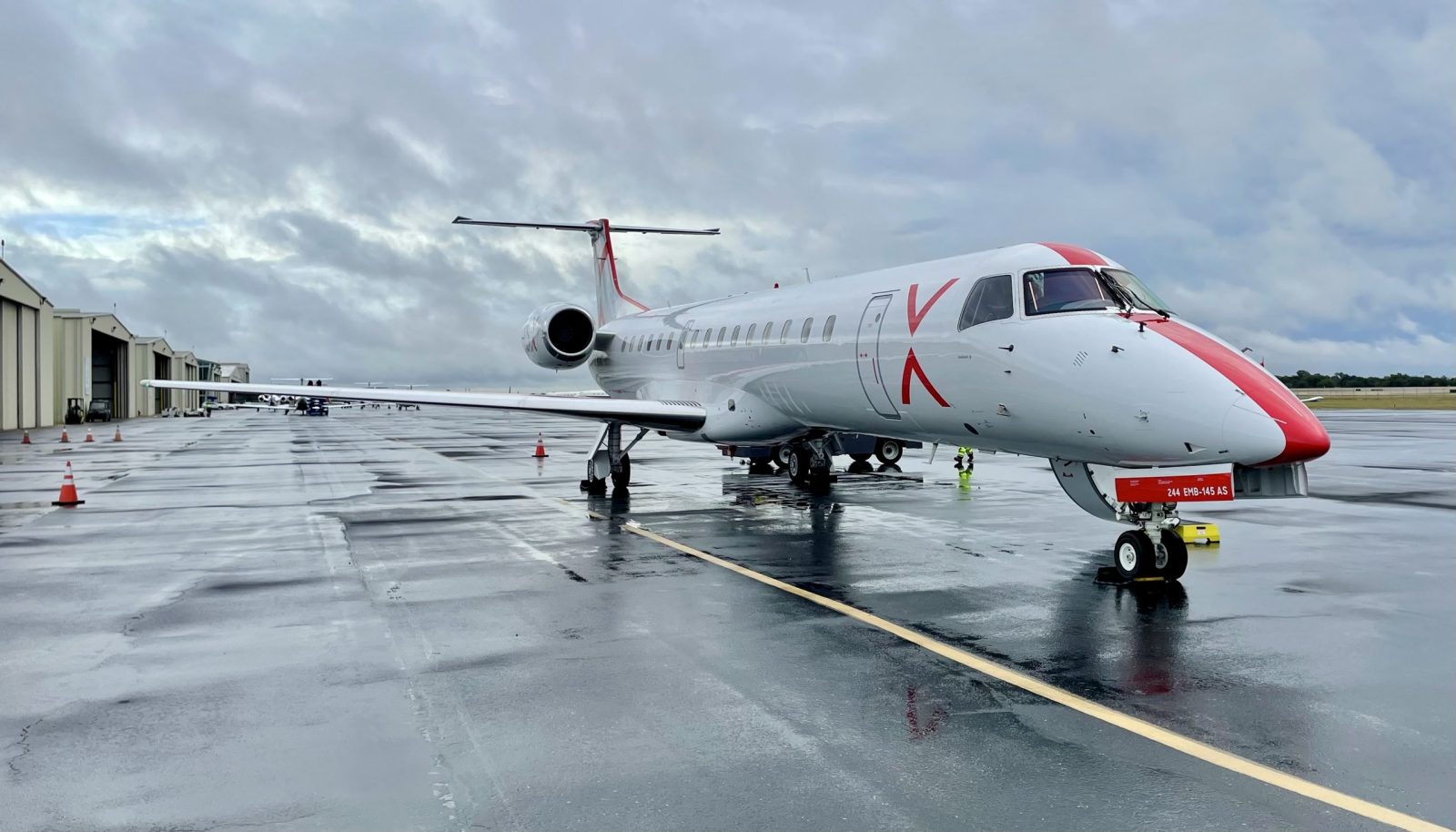
JSX Embraer jet
A JSX E-145 in Austin. The airline exclusively operates the Embraer jet. (Photo: AirlineGeeks | Mateen Kontoravdis)

JSX, the self described “hop-on jet service” announced on Tuesday that it will expand its route network with two new popular East Coast markets. The carrier will offer its short-haul private jet-like experience to the popular New York Metro area and Miami markets and will begin service just in time for the holiday season with inaugural flights scheduled for Thursday, Nov. 18.

The carrier will initially offer service from New York’s Westchester County Airport to Miami International Airport five days a week with fares starting at $749 one way. Also commencing November 18, with five flights per week, will be the airlines Miami to Dallas route.

Since its birth in April of 2016, JSX has primarily served West Coast markets, progressively expanding their network easterwardly. Prior to Tuesday’s announcement, the regional airline’s most eastern destination was Destin, Florida, served from both JSX’s Dallas and Houston locations which began in April of 2021. 

AirlineGeeks recently spoke with CEO Alex Wilcox to discuss the carrier’s recent Texas expansion with new flights to Austin and expanded services to Houston which launched at the end of September.

“Since day one, our Customers have asked JSX to serve the East Coast and I am thrilled to say that our distinctive style of flying has finally arrived. It’s no secret that demand from New York and Dallas to Florida is at an all-time high, and we are delighted to bring our hop-on jet service to these vibrant markets ahead of the busy holiday season,” states JSX CEO Alex Wilcox. “The JSX experience was created for anyone who values their time, from private jet owners and first-class fliers to families and business travelers who desire a simpler, better way to travel, and we welcome them all with open arms.”

Destinations

The carrier offers its unique service to 16 regularly-scheduled markets and several seasonal destinations across the U.S. including: Austin (AUS), Burbank (BUR), Concord/Napa (CCR), Dallas Love Field (DAL), Destin (DSI), Houston Hobby (HOU), Las Vegas (LAS), Los Angeles (LAX), Miami (MIA), Monterey (MRY), Oakland (OAK), Orange County (SNA), Phoenix (PHX), San Diego (SAN), Reno-Tahoe (RNO), and Westchester County (HPN).

The JSX route map will now include flights to the East Coast. (Photo: JSX)

The Customer Experience

JSX prides itself in providing its customers a crowd-free private jet-like experience. They do this through its distinctive aircraft configurations. Utilizing both the Embraer ERJ-135 and 145 aircraft, the carrier is able to seat 30 passengers in a 1-1 configuration onboard the ERJ-145s. Each seat has an above average 35-inches of legroom with each row featuring a leather-covered cocktail table and armrest, with power-outlets. 

Through convenience, comfortability and affordability, it is safe to say that JSX is revolutionizing the airline industry with its hop-on experience. The East Coast expansion will surely be viable for the company as both Miami and New York rank in the top ten destinations for business travellers.

Wilcox said to AirlineGeeks earlier this month, “Business travelers, more than anybody, value their time and they are willing to pay to get more of it back. That’s the one thing that we provide that the big airlines can’t. That is, the ability to get out of your car and onto the airplane within 20 minutes, basically get on and go without breaking a sweat. If you try to do that on a major airline, that airplane is long gone by the time you get to the gate.”

Chase Hagl

Chase Hagl grew up in Twin Falls, Idaho. His love and passion for Aviation landed him in Orem, Utah where he obtained a B.S. in Aviation Management with a minor in Business Management from Utah Valley University. Chase currently works as a flight attendant in Charleston, SC and is also the primary Inflight ASAP ERC representative for startup airline, Breeze Airways. His experience in the aviation industry spans back four years, working in areas including agriculture application, customer service, maintenance, and flight ops. In his free time, Chase enjoys road biking, astronomy, and flying.

Air Arabia Inaugurates Direct Flights to Uganda, Posts Profitable 1H21

An Air Arabia Airbus A320. (Photo: Air Arabia)

Air Arabia, the Middle East and North Africa’s first and largest low-cost operator, successfully launched commercial operations to Entebbe, Uganda’s capital from Sharjah, United Arab Emirates, on Oct. 10.

The five-hour, 20-minute flight landed at Entebbe International Airport on Sunday at 1:35 p.m. and was welcomed with the traditional water cannon salute and cake cutting with airport, airline and other executives.

Flights will operate three times weekly using the Airbus A320 aircraft and will depart Sharjah on Wednesdays, Fridays and Sundays at 9 a.m. and land at 1:35 p.m., while the return flight from Entebbe will depart at 2:15 p.m. and arrive at Sharjah International Airport at 9 p.m.

More Connections

Traffic between the United Arab Emirates and Uganda continues to grow steadily with this flight, as Ugandan national carrier Uganda Airlines had begun operating flights from Entebbe to Dubai a week prior, flying three weekly flights for the foreseeable future utilizing its newest Airbus A330-800neos. The addition of the new route from the Emirati low-cost carrier will intensify the competition between Entebbe and the United Arab Emirates.

The two airlines are targeting the huge exodus of Ugandans who are seeking to work in the United Arab Emirates. According to Uganda’s Ministry of Gender, Labour and Social Development, an average of 12,000 Ugandans fly to the Middle East annually in search of employment. While this only represents a few dozen travelers per day, travelers returning home and other commuters will help to fill up much of the new capacity on the route.

Air Arabia has also worked to bolster passengers’ convenience and confidence by introducing free Covid-19 insurance coverage. The insurance is automatically included as part of the booking, and no additional documents are required from passengers.

Renewed Plans

Air Arabia also recently partnered with two entities to form carriers in Pakistan and Armenia. Armenia’s new national airline — set to be launched by a joint venture company between the Armenian National Interests Fund (ANIF) and United Arab Emirates-based Air Arabia Group — will be named Fly Arna. ANIF and Air Arabia Group had announced the agreement to launch Armenia’s new national airline in July 2021.

Meanwhile, Air Arabia Group and Pakistani business conglomerate Lakson Group also announced their decision in September to form a joint venture to launch “Fly Jinnah,” Pakistan’s new airline. The proposed joint venture will see the establishment of a low-cost passenger airline serving domestic and international routes from Pakistan. 

In spite of the Covid-19’s continued impact on the aviation’s industry financial and operational performance, the low-cost operator recorded in August a profitable first half of the fiscal year, which for the airline extends from January to June.

Air Arabia posted a net profit of 44 million Dirhams ($12 million) for the first six months of the year, an increase of 126% compared to the same period in 2020. In the same period, the airline posted total revenue of 1 billion Dirhams, a 5% increase compared to the corresponding period last year.

More than 2.3 million passengers flew with Air Arabia between January and June 2021 across the carrier’s five hubs while the airline’s average seat load factor — or passengers carried as a percentage of available seats — during the first six months of 2021 stood an average at 73%, a solid number, but one it hopes to see climb in the months ahead as it expands its network and continues to grow in the face of a post-Covid-19 recovery.

Victor Shalton

Victor Shalton's love for aviation can be traced to when he was 11-years-old. As a seasoned aviation writer, he takes pride in providing the best aviation coverage around the globe and is passionate about advancing his skills in the aviation space. In addition, he loves travelling, writing, arts and while his speaking engagements have taken him around the world, he is proud to call Nairobi home.

LATAM Colombia Exceeds 2019 Passenger Numbers

LATAM
A LATAM Brasil A320 taxies in São Paulo/Guarulhos. (Photo: AirlineGeeks | João Machado)

LATAM Airlines Colombia exceeded the number of passengers moved during the third quarter of the year compared to the same period of 2019.

The carrier transported a total of 1,742,988 passengers between its 15 destinations and 25 domestic routes handled in Colombia.

With these results, the Colombian market remains one of the key countries in the LATAM Airlines Group’s strategy, with a trend that has continued to rise in recent months.

According to a press release, destinations such as Medellín and Santa Marta are the ones with the greatest recovery.

In the case of Medellín, the route to and from Santa Marta stands out, which transported 288% and 262% of pre-pandemic passengers, respectively.

For their part, routes such as Cartagena – Cali and Pereira – Bogotá moved 139% and 132% of the passengers transported in the same period of 2019.

Other routes that performed better than those achieved during the third pre-pandemic quarter were Barranquilla – Medellín with 128%, Cali – Cartagena with 125%, and Bogotá – Pereira with 121%.

The new routes inaugurated during the first half of 2021, which seek to decentralize the Bogotá operation, departed from Cali (Cali – Barranquilla, Cali – Medellín, Cali – Santa Marta), transported more than 118,000 passengers.

On the other hand, those that departed from Medellín (Medellín – Bucaramanga, Medellín – Cúcuta and Medellín – Montería), moved more than 55,000 passengers.

The Bogotá – Pasto route has maintained positive results since its launch and the Bogotá – Armenia route has mobilized more than 24,000 passengers since its inauguration in June.

During the first half of 2021, LATAM Airlines Colombia inaugurated a total of six domestic routes and strengthened its network by increasing the frequency of routes operated from Cali and Medellín in order to decentralize the operation of the Colombian capital, Bogotá.

In addition, the carrier added 3 new Airbus A320 to its fleet to leverage its growth plan projected for the second quarter, reflected in infrastructure, maintenance, human resources and supply, with which it has the objective of reaching 30% participation in the Colombian aviation market.

“Today we are more competitive and we offer more direct and convenient options to our passengers. The results prove it and that is why we celebrate exceeding the number of passengers mobilized during the third quarter of the year, compared to the results we registered in 2019. Not only is it an excellent indicator of the market recovery, but also of the results of our plan of growth projected for the second semester with which we seek to take advantage of the clear opportunities generated by the reconfiguration of the local market,” commented Santiago Álvarez, executive director of LATAM Colombia.

“The results of the third quarter are positive and the routes inaugurated during this year have contributed to invigorate the market offer, mainly benefiting passengers who today have a broader and more competitive offer leveraged by LATAM’s strategy in the country,” he concluded.

Juan Pedro Sanchez Zamudio

The three things Juan Pedro loves most about aviation are aircraft, airports, and traveling thousands of miles in just a few hours. What he enjoys the most about aviation is that it is easier and cheaper to travel around the world and this gives you the opportunity to visit places you thought were too far away. He has traveled to different destinations in North, Central, South America and Asia. Born, raised and still living in Perú, Juan is a lawyer, soccer lover, foodie, passionate traveler, dog lover, millennial and curious by nature.

Vietnam Permits Resumption of Domestic Flights

A Vietnam Airlines A350-900 in Seoul
A Vietnam Airlines A350-900 in Seoul. (Photo: AirlineGeeks | Ben Suskind)

As Vietnam reels from a recent surge in Covid-19 cases, the country is starting to see a steady decrease in daily case numbers, allowing for the slow removal of lockdown restrictions. As a result, per ch.aviation, Vietnam is permitting the resumption of domestic flights starting Oct. 10, easing restrictions that have been in place since late August.

After consulting with 20 provinces and cities on reopening plans, the Civil Aviation Authority of Vietnam (CAAV) allowed for the resumption of 10 routes by Bamboo Airways, Pacific Airlines — a Vietnam Airlines subsidiary — VietJet and Vietnam Airlines. The majority of these routes will be from Ho Chi Minh City, while three services will be resumed from Tho Xuan Airport, 45 miles away from the provincial capital of Thanh Hoa, Vietnam.

From Ho Chi Minh City, the CAAV allocated two daily frequencies to Thanh Hoa to each of Vietnam Airlines, Pacific Airlines and Bamboo Airways, in addition to one daily frequency to VietJet. To the provinces of Khanh Hoa, Phu Yenh and Binh Dinh, Vietnam, as well as the island of Phu Quoc, the CAAV granted four daily frequencies to Bamboo Airways, Pacific Airlines and Vietnam Airlines. Additionally, the government agency distributed a daily frequency to the Thau Thien Hue province to Vietnam Airlines and two weekly frequencies to the airline to fly to the Nghe An province.

Additionally, the CAAV allocated a daily frequency for flights from Thanh Hoa to the province of Khanh Hoa and Phu Quoc Island to VietJet, while allocating a daily frequency to the city of Buon Ma Thuot.

Vietnam Airlines operated the first passenger domestic flight from Ho Chi Minh City to Quy Nhon in the Binh Dinh province, utilizing the Airbus A321-200 for the quick one-hour 15-minute hop. The first flight departed as VN1394 from Ho Chi Minh City at 11:42 a.m., landing in Quy Nhon at 12:25 p.m.

In a statement, the VNA Group announced that it would fly additional daily flights from Ho Chi Minh City to Nha Trang, Quy Nhon, Thanh Hoa and Tuy Hoa via Pacific Airlines, though fleet utilization with Vietnam Airlines and its regional subsidiary VASCO remained unknown. Meanwhile, VietJet announced it would utilize all of its allocated frequencies from Ho Chi Minh City and two weekly frequencies from Thanh Hoa to Khanh Hoa and Phu Quoc Island.

In order to fly, passengers must be vaccinated or have proof of a COVID-19 recovery within the last six months. In addition, passengers will need to take a Covid-19 test 72 hours before departure and self-isolate at home for several days, with mandatory follow-up testing.

The allocated frequencies are part of a four-phase reopening strategy that will be implemented over the following months. Phase 1 is the current phase of operation, where social distancing is enforced on planes via seat spacing and frequencies may not exceed 50% of their amount from prior to Vietnam’s Covid-19 surge in April. On Oct. 20, Phase 2 commences, where seat spacing is eliminated, and frequencies will not exceed 70% of their pre-April total. Assuming both stages are successful, Phase 3 will be implemented, allowing frequencies to resume at a level equal to April 2021.

Reopening of Tourist Destinations

Amid the resumption of its domestic flights, Vietnam intends to ramp up its reopening, reopening the island of Phu Quoc — known for its pristine beaches — to foreign vaccinated tourists with a negative COVID-19 test in November 2021. Furthermore, the country plans to reopen the famous UNESCO sites of Ha Long Bay and Hoi An, in addition to the highlands city of Da Lat and the beach town of Nha Trang in December to certain approved countries of travel. It is unknown which countries will be permitted to travel into the country. Vietnam is aiming for the full reopening of its borders by June 2022.

Vietnamese carriers like Bamboo Airways are prepping for new international flights. The Hanoi-based airline plans to resume regular international operations in November, with flights to Seoul, Tokyo and Taipei. In addition, the airline is eyeing the launch of flights to the U.S. as soon as December to Hanoi and Ho Chi Minh City.

Other Southeast Asian destinations have begun the reopening of their borders, like Singapore. The country recently announced the expansion of its vaccinated travel lanes program, allowing people to skip quarantine in Singapore. Initially open to Germany and Brunei, the program will include countries like Canada, France, the United Kingdom and the U.S. However, the program is currently only available via specific Singapore Airlines flights. For example, for vaccinated U.S. travelers, Singapore Airlines flyers can only utilize the gateways of Los Angeles and New York City. However, the airline plans to boost its frequencies as a result of the new announcement.

Winston Shek

Ever since Winston was a toddler, he has always had a fascination for airplanes. From watching widebodies land at Washington Dulles to traveling the world, Winston has always had his eyes towards the skies. Winston began aviation photography in 2018 and now posts his photos occasionally on his Instagram account. He previously wrote for a blog. In his free time, Winston loves to play chess, do recreational activities, and watch sports. Looking into the future, Winston plans to service the aviation industry.

Singapore Airlines, Scoot To Launch, Resume More Flights As VTLs Grow

Up close with a Singapore Airlines A350 at Seattle-Tacoma. (Photo: AirlineGeeks | Katie Zer

The ongoing Covid-19 pandemic has left travel severely restricted in many countries, especially Singapore, where domestic air travel is not an option for airlines looking to maintain some semblance of a schedule. This has certainly left many people worldwide with pent-up excitement to book a ticket and fly towards anywhere that has its borders opened.

However, even the process of traveling itself has changed to become slightly more complicated, with various different requirements ranging from pre-departure tests, vaccination certificates and quarantine facilities necessary for travel throughout the world.

Fortunately, as global vaccination rates continue to trend upward and as different countries strategize to understand how best tolive with the virus, air travel has begun to open up a lot more under various schemes to make it as hassle-free for passengers as possible with those new restrictions.

On Saturday, the Civil Aviation Authority of Singapore made the long-awaited announcement that Singapore would be extending the Vaccinated Travel Lane (VTL) scheme to nine additional countries in the coming weeks. Matching the timing with the upcoming holiday season, the extension of the program to certain countries includes highly anticipated destinations such as Britain, Canada, Denmark, France, Italy, the Netherlands, South Korea, Spain and the U.S.

Prior to the extension of the program to those nations, Singapore previously had earlier VTLs with only Brunei and Germany. As a current result, Singapore would eventually have VTLs with 11 countries by mid-November.

Big Launch for Singapore Airlines

In rapid response to the VTLs announcement, flag carrier Singapore Airlines made the move to increase the flights designated by the airline for bringing vaccinated travelers into Singapore.

Starting in slightly more than a week’s time, these designated flights will include popular cities such as Amsterdam, Barcelona, Copenhagen, London, Los Angeles, Milan, New York, Paris and Rome.

As for Seoul, South Korea however, the VTL flight service will commence at a later date in mid-November.

The new launches will be a great addition for both Singapore Airlines and its passengers as currently, Singapore Airlines only operates VTL services from Bandar Seri Begawan, Brunei, and also from Frankfurt and Munich, Germany.

“Singapore’s expansion of the VTL arrangements to 11 countries is great news for our customers, who can now reunite with their loved ones more easily or finally go on that overseas holiday,” said Singapore Airlines Executive Vice President of Commercial Lee Lik Hsin in a press release.

Scoot to Operate Non-Stop

Following in its sister’s footsteps, low-cost carrier Scoot also made a similar announcement on resuming three-times-weekly non-stop flights between Singapore and Berlin.

Planned to operate as Scoot’s first designated VTL flight, TR735 will depart from Berlin Brandenburg Airport to Singapore’s Changi International Airport on Oct. 20.

“Scoot, the recently-crowned World’s Best Long Haul LCC, is delighted to be able to offer great-value quarantine-free travel with our new non-stop Singapore-Berlin flights. Quarantine-free travel is a welcome step toward the world we all fondly remember, where we were free to pursue our wanderlust, and enjoy new places, people and experiences with ease, ” Scoot Chief Executive Officer Campbell Wilson said in a press release.kll

In addition, Scoot also plans to increase the frequency for its non-VTL Singapore-Athens-Berlin return flights to four-times-weekly.

The low-cost carrier does not plan to just stop there, as it is currently seeking regulatory approval to operate VTL flights to South Korea as well, with a commencement date to be announced in due time.

Positive Turning Point

After an extremely harsh close to two years with the pandemic, the Singapore Airlines Group has certainly suffered through massive losses despite sourcing for financial liquidity and having received government bailouts.

But the sun may finally be shining on the horizon for the Group as the VTL scheme has already shown tremendous outpouring support within hours of the announcement, with the Singapore Airlines website experiencing crashes within the day itself.

This type of pent-up demand has been seen before when the previous travel bubbles between Singapore and Hong Kong were announced, but the excitement kept getting dashed across for both the group and passengers as it kept getting postponed due to the rise in local cases.

The airline and passengers are hoping this will not be the case for the VTL scheme as it has been seeing some great success thus far with only two countries. Considering the addition of so many popular destinations in time for the long holiday season, the demand will certainly perk up and perhaps, the group might start seeing positive financial numbers soon.

Charlotte Seet

Fascinated by aircraft from a very young age, Charlotte’s dream was to work alongside the big birds one day. Pursuing her dream, she went on to achieve her diploma in Aviation Management and is currently working on her degree in Aviation Business in Administration with a minor in Air Traffic Management. When she’s not busy with school assignments, you can find her aircraft spotting for long hours at the airport. In Charlotte’s heart, the Queen of the Skies will always be her favorite aircraft.

Opinion: Qatar Airways’ Privilege Club Has A Lot of Potential

Qatar Airways
A Qatar Airways Airbus A380. (Photo: AirlineGeeks | William Derrickson)

As the pandemic hopefully turns a corner, it is time for airlines to really get back to competing with each other. One place they’re going to have to do that is with loyalty programs, which are and will continue to be useful tools to drive repeat customers and build brand loyalty.

AirlineGeeks recently had the opportunity to pick the brains of the folks at Qatar Airways and understand their plan to Privilege Club, their frequent flyer program, to provide greater value and more relevancy to broader groups of flyers.

Recent Positive Changes

The program initially came onto my radar when they announced something nearly unheard of in the industry: they were reducing award rates. Time and time again, we see airlines constantly devalue their frequent flyer programs and make it harder for their members to redeem miles, so it was refreshing to see an airline go the other way.

The cutting of award rates is just the first of the generally consumer-friendly changes that have occurred with Privilege Club. They’ve also reduced fees and changed mileage expiration to 36 months with no activity allowing miles to be used for a longer period of time as long as there is activity on their account.

One of the other most notable additions to the program has been Student Club. It is a program that was developed during Covid-19 repatriations, and it provides a slew of benefits for students and their traveling companions. As of earlier this year, over 50,000 students have signed up for the program, which offers benefits such as special fares, complimentary wifi, and more. When students graduate they will even get a Privilege Club tier upgrade.

Strength in the U.S.

Qatar Airways really wants to redefine Privilege Club as a program that meets members’ needs and is updated and adjusted to ensure that customers get the best possible rewards for their continued loyalty during this pandemic and after. So far, they seem to be doing just that through changes to their loyalty program and changes to its operations.

The airline is flying to more and more places within the U.S. and therefore offering greater access from the U.S. to other parts of the world via Doha.

Privilege Club is useful in the U.S. as well due to Qatar Airways’ participation in the Oneworld alliance and partnerships with other airlines. Members can use Qmiles for flights alliance partners American Airlines and Alaska Airlines. JetBlue, while not part of the Oneworld alliance, is partnered with Qatar Airways through a codeshare agreement.

A lot of times, foreign airlines have relatively weak offerings when it comes to loyalty programs compared to what we’re used to in the U.S. with the programs offered by the major airlines here. Often, it’s better to redeem award tickets on a foreign carrier using the loyalty program of a U.S. carrier than it is to redeem on that foreign carrier using their own loyalty program.

There really isn’t a perfect loyalty program out there across any airline, there are ones however that really provide value. The lower award ticket costs, Student Club, and various domestic and international partnerships, however, all give Privilege Club a compelling argument as to why the program should be taken more seriously within the U.S. There’s a lot of potential here for a strong loyalty program in the years ahead.

Hemal Gosai

Hemal took his first flight at four years old and has been an avgeek since then. When he isn't working as an analyst he's frequently found outside watching planes fly overhead or flying in them. His favorite plane is the 747-8i which Lufthansa thankfully flies to EWR allowing for some great spotting. He firmly believes that the best way to fly between JFK and BOS is via DFW and is always willing to go for that extra elite qualifying mile. Hemal's opinions are his own and do not reflect those of his employer.

Air India Reunites With Tata After 68 Year Separation

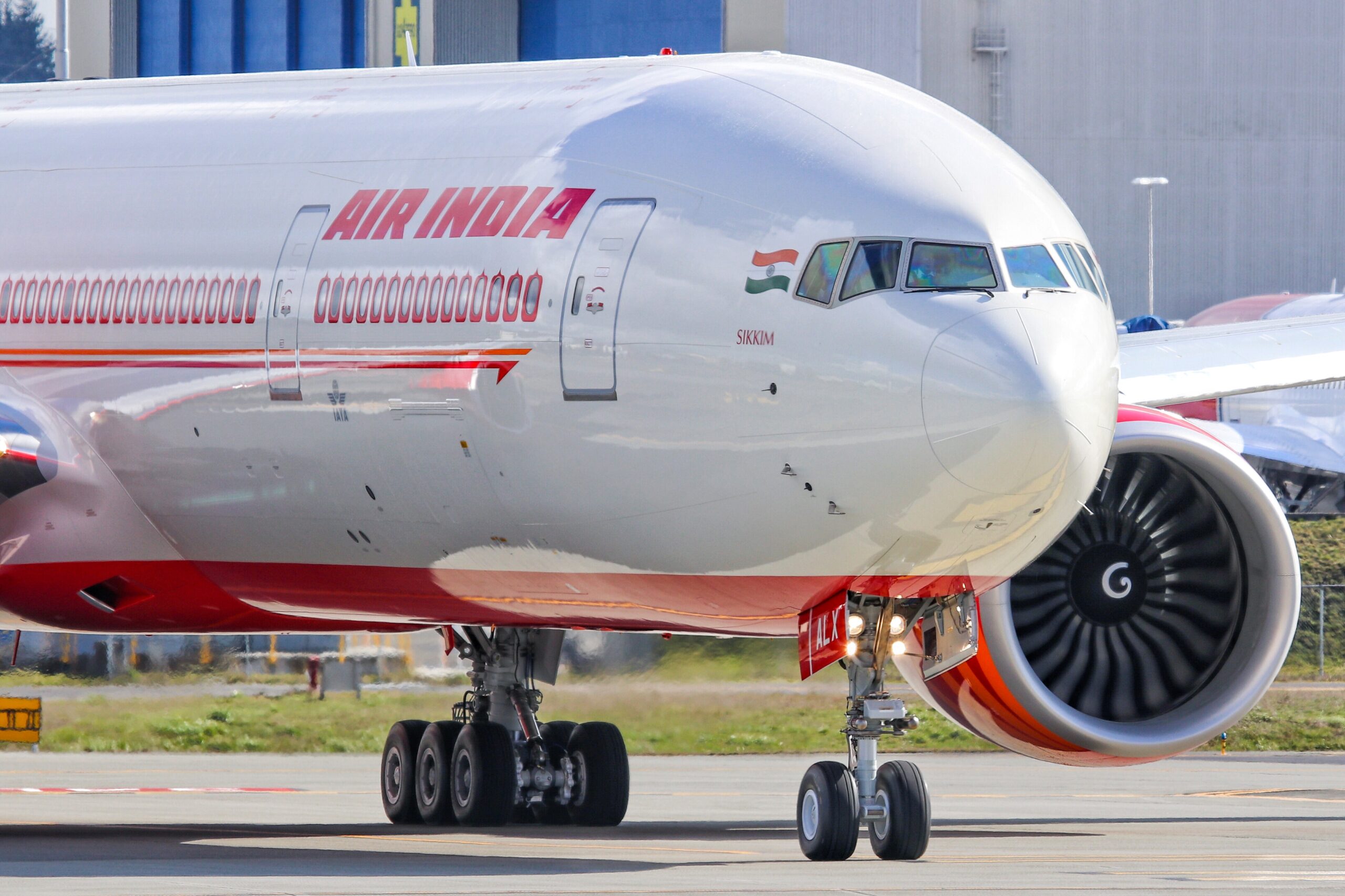
An Air India 777-300ER (Photo: AirlineGeeks | Katie Bailey)

After nearly 70 years apart, Tata and Air India are finally due to be united once again after the company won the winning bid for the flag carrier. With a $2.4 billion payout, the Indian government will surrender 100% ownership of the airline and its subsidiary Air India Express to the conglomerate after years of being separate. The airline will operate under a private investment group called Talace Pvt Ltd, which is a wholly-owned subsidiary of the Tata Sons Group.

With the deal finalized, Tata Sons Chairman N. Chandrasekaran said, “at the Tata group, we are delighted to be declared as the winner of the bid for AIR INDIA. This is a historic moment, and it will be a rare privilege for our group to own and operate the country’s flag bearer airline. It will be our endeavor to build a world-class airline that makes every Indian proud. On this occasion, I would like to pay tribute to JRD Tata, pioneer of Indian aviation, whose memory we cherish.”

Tata was the initial founder of Air India, an airline that operated under the company’s control between 1932 and 1953. Since then the government has been in charge of the airline, seeing it brought well into the jet but struggling to turn a profit as losses mounted for the flag carrier. Now, following nearly $10 billion worth of losses, the Indian government was keen on removing the airline from its list of burdens.

Tata will now get work utilizing Air India’s fleet of 117 mainline aircraft and routes that cover routes to five continents. The parent company also gains access to Air India Express’s fleet of 24 Boeing 737-800s, which operate destinations inside India as well as to Bahrain, Saudi Arabia, Singapore, and the United Arab Emirates.

Tata’s investment into Air India brings forward another airline to the company’s portfolio. The Indian firm has a stake in two other Indian carriers, with joint ventures with Singapore Airlines and Air Asia creating Vistara Air and AirAsia India, respectively. Tata Sons also has investments in metals, chemicals, financial institutions, automobiles, hotels and power. Tata traces itself back to 1868, operating for over 150 years from its Mumbai headquarters.

Tata was in a duel for the flag carrier against Ajay Singh. Singh made his name as a co-founder and taking on two separate stints as chairman for SpiceJet. He had organized a group of investors to look into acquiring the flag carrier but ultimately could not match the deal that Tata Sons could muster.

Under new management, Air India must now get to work fighting back against the onslaught of low-cost carriers that have come to dominate the Indian domestic scene. Airlines like IndiGo, SpiceJet, Go Air, Air Asia India, and Vistara have all shown strength and eaten away at Air India’s market share. But free of government control, the airline will now attempt to reverse the trend and build on its strong international presence with a domestic resolution.

Ian McMurtry

Although Ian McMurtry was never originally an avgeek, he did enjoy watching US Airways aircraft across western Pennsylvania in the early 2000s. He lived along the Pennsylvania Railroad and took a liking to trains but a change of scenery in the mid-2000s saw him shift more of an interest into aviation. He would eventually express this passion by taking flying lessons in mid-Missouri and joining AirlineGeeks in 2013. Now living in Wichita, Kansas, Ian is in college majoring in aerospace engineering and minoring in business administration at Wichita State University.

Air Belgium Replacing A340s With Delivery Of Its First A330neo

Air Belgium has taken delivery of its first Airbus A330neo registered as OO-ABG. (Photo: Airbus)

In July this year July, Air Belgium announced its decided agreement with Airbus on the order of two brand-new A330neo aircraft, with the first flight scheduled around mid-October.

The Belgian carrier has been operating with an all-Airbus widebody fleet that includes the A340-300 and the A330-200F.

As part of its fleet modernization strategy, Air Belgium plans to have the A330neo eventually replace the A340s due to the quad-jet’s fuel inefficiency that would lead to higher overall operating costs.

Aside from the fact that Air Belgium seems partial to Toulouse-based manufacturing Airbus, but with an order book of more than 1,800 aircraft from over 120 airline customers as of September 2021, the A330 retains the top spot as the most popular wide-body family aircraft thus far.

Thus, it would make sense that the Belgian carrier is keen on the new generation of the A330 given its improved economics, versatility and reliability of the A330 family.

Expressing delight in Air Belgium’s agreement with Airbus, Chief Commercial Officer and Head of Airbus International, Christian Scherer said: “We are glad that Air Belgium recognizes the productivity and flexibility advantages of the A330neo, setting it up as the best-in-class and most cost-effective aircraft for the airline’s long-haul network.”

Efficient Newcomer

On Friday (Oct 8), Airbus has managed to deliver the first of two Airbus A330neo aircraft to the full-service international carrier.

Registered as OO-ABG, the new aircraft was initially set to be manufactured for Air Berlin before the airline fell short and collapsed.

For the benefit of Air Belgium, the A330neo’s latest technologies will result in not only cost-effective solutions but eco-efficient as well without compromising on passenger comfort.

Operating on solely two engines instead of its predecessors’ four, the A330neo uses much less fuel and emits out lower emissions as well.

And similar to the airline’s A340s, the A330neo aircraft will also have a three-cabin configuration with 30 seats in Business Class, followed by 21 seats in Premium Economy and the remaining 235 seats for Economy Class.

In total, the passenger capacity of the A330neo is 286 which will definitely benefit Air Belgium financially as well as it remains devoted to long-haul and direct intercontinental flights from Belgium.

“Air Belgium is very happy and proud to present these new aircraft in Belgium. They are the most modern aircraft that will operate under the Belgian flag. We are very pleased by our experience operating the Airbus A340s, demonstrating reliability, comfort and performance. With the A330neos customers will directly benefit from even greater comfort and superior service on board, while reducing our environmental impact by 25%.” said Niky Terzakis, CEO of Air Belgium in a press release.

Departing for Mauritius

Passengers of Air Belgium will not have to wait long to fly on the newest addition to the fleet, as it will be introduced on a new route between Belgium and Mauritius on October 15.

Scheduled on a frequency of twice a week, the new aircraft is set to fly on Tuesdays and Fridays. Should the new route see progress, the airline might increase the frequencies especially when the second aircraft is delivered.

Not far from now, the second aircraft is planned to enter service by as early as the end of November, aiding the airline in reinforcing its winter destination schedule when air travel demands increase.

Charlotte Seet

Fascinated by aircraft from a very young age, Charlotte’s dream was to work alongside the big birds one day. Pursuing her dream, she went on to achieve her diploma in Aviation Management and is currently working on her degree in Aviation Business in Administration with a minor in Air Traffic Management. When she’s not busy with school assignments, you can find her aircraft spotting for long hours at the airport. In Charlotte’s heart, the Queen of the Skies will always be her favorite aircraft.
Sign-up for newsletters & special offers!

Get the latest stories & special offers delivered directly to your inbox

SUBSCRIBE

Uh-oh! It looks like you're using an ad blocker.

Our website relies on ads to provide free content and sustain our operations. By turning off your ad blocker, you help support us and ensure we can continue offering valuable content without any cost to you.

We truly appreciate your understanding and support. Thank you for considering disabling your ad blocker for this website