








Stories

Singapore Airlines, Scoot To Launch, Resume More Flights As VTLs Grow

Up close with a Singapore Airlines A350 at Seattle-Tacoma. (Photo: AirlineGeeks | Katie Zer

The ongoing Covid-19 pandemic has left travel severely restricted in many countries, especially Singapore, where domestic air travel is not an option for airlines looking to maintain some semblance of a schedule. This has certainly left many people worldwide with pent-up excitement to book a ticket and fly towards anywhere that has its borders opened.

However, even the process of traveling itself has changed to become slightly more complicated, with various different requirements ranging from pre-departure tests, vaccination certificates and quarantine facilities necessary for travel throughout the world.

Fortunately, as global vaccination rates continue to trend upward and as different countries strategize to understand how best tolive with the virus, air travel has begun to open up a lot more under various schemes to make it as hassle-free for passengers as possible with those new restrictions.

On Saturday, the Civil Aviation Authority of Singapore made the long-awaited announcement that Singapore would be extending the Vaccinated Travel Lane (VTL) scheme to nine additional countries in the coming weeks. Matching the timing with the upcoming holiday season, the extension of the program to certain countries includes highly anticipated destinations such as Britain, Canada, Denmark, France, Italy, the Netherlands, South Korea, Spain and the U.S.

Prior to the extension of the program to those nations, Singapore previously had earlier VTLs with only Brunei and Germany. As a current result, Singapore would eventually have VTLs with 11 countries by mid-November.

Big Launch for Singapore Airlines

In rapid response to the VTLs announcement, flag carrier Singapore Airlines made the move to increase the flights designated by the airline for bringing vaccinated travelers into Singapore.

Starting in slightly more than a week’s time, these designated flights will include popular cities such as Amsterdam, Barcelona, Copenhagen, London, Los Angeles, Milan, New York, Paris and Rome.

As for Seoul, South Korea however, the VTL flight service will commence at a later date in mid-November.

The new launches will be a great addition for both Singapore Airlines and its passengers as currently, Singapore Airlines only operates VTL services from Bandar Seri Begawan, Brunei, and also from Frankfurt and Munich, Germany.

“Singapore’s expansion of the VTL arrangements to 11 countries is great news for our customers, who can now reunite with their loved ones more easily or finally go on that overseas holiday,” said Singapore Airlines Executive Vice President of Commercial Lee Lik Hsin in a press release.

Scoot to Operate Non-Stop

Following in its sister’s footsteps, low-cost carrier Scoot also made a similar announcement on resuming three-times-weekly non-stop flights between Singapore and Berlin.

Planned to operate as Scoot’s first designated VTL flight, TR735 will depart from Berlin Brandenburg Airport to Singapore’s Changi International Airport on Oct. 20.

“Scoot, the recently-crowned World’s Best Long Haul LCC, is delighted to be able to offer great-value quarantine-free travel with our new non-stop Singapore-Berlin flights. Quarantine-free travel is a welcome step toward the world we all fondly remember, where we were free to pursue our wanderlust, and enjoy new places, people and experiences with ease, ” Scoot Chief Executive Officer Campbell Wilson said in a press release.kll

In addition, Scoot also plans to increase the frequency for its non-VTL Singapore-Athens-Berlin return flights to four-times-weekly.

The low-cost carrier does not plan to just stop there, as it is currently seeking regulatory approval to operate VTL flights to South Korea as well, with a commencement date to be announced in due time.

Positive Turning Point

After an extremely harsh close to two years with the pandemic, the Singapore Airlines Group has certainly suffered through massive losses despite sourcing for financial liquidity and having received government bailouts.

But the sun may finally be shining on the horizon for the Group as the VTL scheme has already shown tremendous outpouring support within hours of the announcement, with the Singapore Airlines website experiencing crashes within the day itself.

This type of pent-up demand has been seen before when the previous travel bubbles between Singapore and Hong Kong were announced, but the excitement kept getting dashed across for both the group and passengers as it kept getting postponed due to the rise in local cases.

The airline and passengers are hoping this will not be the case for the VTL scheme as it has been seeing some great success thus far with only two countries. Considering the addition of so many popular destinations in time for the long holiday season, the demand will certainly perk up and perhaps, the group might start seeing positive financial numbers soon.

Charlotte Seet

Fascinated by aircraft from a very young age, Charlotte’s dream was to work alongside the big birds one day. Pursuing her dream, she went on to achieve her diploma in Aviation Management and is currently working on her degree in Aviation Business in Administration with a minor in Air Traffic Management. When she’s not busy with school assignments, you can find her aircraft spotting for long hours at the airport. In Charlotte’s heart, the Queen of the Skies will always be her favorite aircraft.

Opinion: Qatar Airways’ Privilege Club Has A Lot of Potential

Qatar Airways
A Qatar Airways Airbus A380. (Photo: AirlineGeeks | William Derrickson)

As the pandemic hopefully turns a corner, it is time for airlines to really get back to competing with each other. One place they’re going to have to do that is with loyalty programs, which are and will continue to be useful tools to drive repeat customers and build brand loyalty.

AirlineGeeks recently had the opportunity to pick the brains of the folks at Qatar Airways and understand their plan to Privilege Club, their frequent flyer program, to provide greater value and more relevancy to broader groups of flyers.

Recent Positive Changes

The program initially came onto my radar when they announced something nearly unheard of in the industry: they were reducing award rates. Time and time again, we see airlines constantly devalue their frequent flyer programs and make it harder for their members to redeem miles, so it was refreshing to see an airline go the other way.

The cutting of award rates is just the first of the generally consumer-friendly changes that have occurred with Privilege Club. They’ve also reduced fees and changed mileage expiration to 36 months with no activity allowing miles to be used for a longer period of time as long as there is activity on their account.

One of the other most notable additions to the program has been Student Club. It is a program that was developed during Covid-19 repatriations, and it provides a slew of benefits for students and their traveling companions. As of earlier this year, over 50,000 students have signed up for the program, which offers benefits such as special fares, complimentary wifi, and more. When students graduate they will even get a Privilege Club tier upgrade.

Strength in the U.S.

Qatar Airways really wants to redefine Privilege Club as a program that meets members’ needs and is updated and adjusted to ensure that customers get the best possible rewards for their continued loyalty during this pandemic and after. So far, they seem to be doing just that through changes to their loyalty program and changes to its operations.

The airline is flying to more and more places within the U.S. and therefore offering greater access from the U.S. to other parts of the world via Doha.

Privilege Club is useful in the U.S. as well due to Qatar Airways’ participation in the Oneworld alliance and partnerships with other airlines. Members can use Qmiles for flights alliance partners American Airlines and Alaska Airlines. JetBlue, while not part of the Oneworld alliance, is partnered with Qatar Airways through a codeshare agreement.

A lot of times, foreign airlines have relatively weak offerings when it comes to loyalty programs compared to what we’re used to in the U.S. with the programs offered by the major airlines here. Often, it’s better to redeem award tickets on a foreign carrier using the loyalty program of a U.S. carrier than it is to redeem on that foreign carrier using their own loyalty program.

There really isn’t a perfect loyalty program out there across any airline, there are ones however that really provide value. The lower award ticket costs, Student Club, and various domestic and international partnerships, however, all give Privilege Club a compelling argument as to why the program should be taken more seriously within the U.S. There’s a lot of potential here for a strong loyalty program in the years ahead.

Hemal Gosai

Hemal took his first flight at four years old and has been an avgeek since then. When he isn't working as an analyst he's frequently found outside watching planes fly overhead or flying in them. His favorite plane is the 747-8i which Lufthansa thankfully flies to EWR allowing for some great spotting. He firmly believes that the best way to fly between JFK and BOS is via DFW and is always willing to go for that extra elite qualifying mile. Hemal's opinions are his own and do not reflect those of his employer.

Air India Reunites With Tata After 68 Year Separation

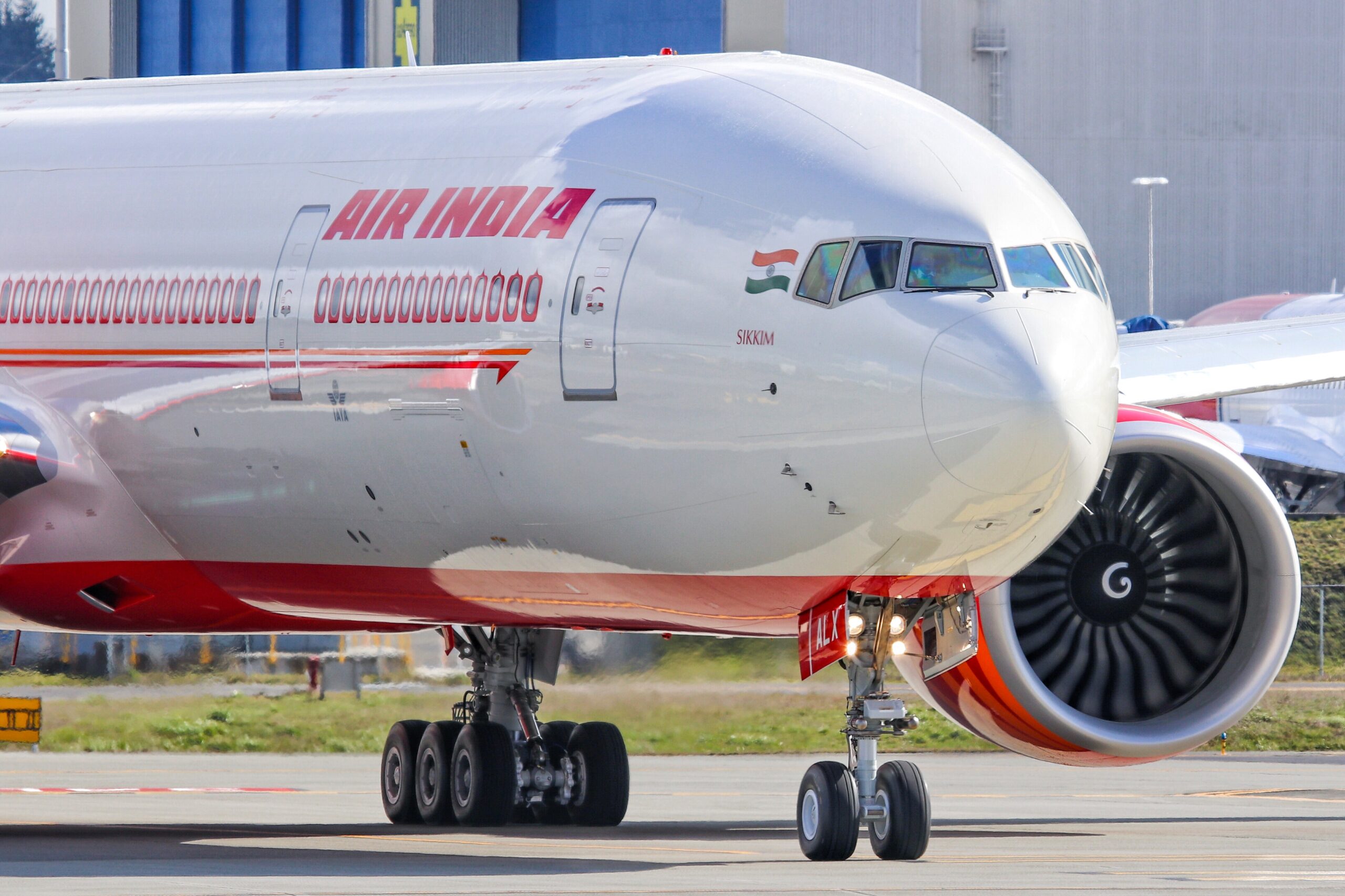
An Air India 777-300ER (Photo: AirlineGeeks | Katie Bailey)

After nearly 70 years apart, Tata and Air India are finally due to be united once again after the company won the winning bid for the flag carrier. With a $2.4 billion payout, the Indian government will surrender 100% ownership of the airline and its subsidiary Air India Express to the conglomerate after years of being separate. The airline will operate under a private investment group called Talace Pvt Ltd, which is a wholly-owned subsidiary of the Tata Sons Group.

With the deal finalized, Tata Sons Chairman N. Chandrasekaran said, “at the Tata group, we are delighted to be declared as the winner of the bid for AIR INDIA. This is a historic moment, and it will be a rare privilege for our group to own and operate the country’s flag bearer airline. It will be our endeavor to build a world-class airline that makes every Indian proud. On this occasion, I would like to pay tribute to JRD Tata, pioneer of Indian aviation, whose memory we cherish.”

Tata was the initial founder of Air India, an airline that operated under the company’s control between 1932 and 1953. Since then the government has been in charge of the airline, seeing it brought well into the jet but struggling to turn a profit as losses mounted for the flag carrier. Now, following nearly $10 billion worth of losses, the Indian government was keen on removing the airline from its list of burdens.

Tata will now get work utilizing Air India’s fleet of 117 mainline aircraft and routes that cover routes to five continents. The parent company also gains access to Air India Express’s fleet of 24 Boeing 737-800s, which operate destinations inside India as well as to Bahrain, Saudi Arabia, Singapore, and the United Arab Emirates.

Tata’s investment into Air India brings forward another airline to the company’s portfolio. The Indian firm has a stake in two other Indian carriers, with joint ventures with Singapore Airlines and Air Asia creating Vistara Air and AirAsia India, respectively. Tata Sons also has investments in metals, chemicals, financial institutions, automobiles, hotels and power. Tata traces itself back to 1868, operating for over 150 years from its Mumbai headquarters.

Tata was in a duel for the flag carrier against Ajay Singh. Singh made his name as a co-founder and taking on two separate stints as chairman for SpiceJet. He had organized a group of investors to look into acquiring the flag carrier but ultimately could not match the deal that Tata Sons could muster.

Under new management, Air India must now get to work fighting back against the onslaught of low-cost carriers that have come to dominate the Indian domestic scene. Airlines like IndiGo, SpiceJet, Go Air, Air Asia India, and Vistara have all shown strength and eaten away at Air India’s market share. But free of government control, the airline will now attempt to reverse the trend and build on its strong international presence with a domestic resolution.

Ian McMurtry

Although Ian McMurtry was never originally an avgeek, he did enjoy watching US Airways aircraft across western Pennsylvania in the early 2000s. He lived along the Pennsylvania Railroad and took a liking to trains but a change of scenery in the mid-2000s saw him shift more of an interest into aviation. He would eventually express this passion by taking flying lessons in mid-Missouri and joining AirlineGeeks in 2013. Now living in Wichita, Kansas, Ian is in college majoring in aerospace engineering and minoring in business administration at Wichita State University.

Air Belgium Replacing A340s With Delivery Of Its First A330neo

Air Belgium has taken delivery of its first Airbus A330neo registered as OO-ABG. (Photo: Airbus)

In July this year July, Air Belgium announced its decided agreement with Airbus on the order of two brand-new A330neo aircraft, with the first flight scheduled around mid-October.

The Belgian carrier has been operating with an all-Airbus widebody fleet that includes the A340-300 and the A330-200F.

As part of its fleet modernization strategy, Air Belgium plans to have the A330neo eventually replace the A340s due to the quad-jet’s fuel inefficiency that would lead to higher overall operating costs.

Aside from the fact that Air Belgium seems partial to Toulouse-based manufacturing Airbus, but with an order book of more than 1,800 aircraft from over 120 airline customers as of September 2021, the A330 retains the top spot as the most popular wide-body family aircraft thus far.

Thus, it would make sense that the Belgian carrier is keen on the new generation of the A330 given its improved economics, versatility and reliability of the A330 family.

Expressing delight in Air Belgium’s agreement with Airbus, Chief Commercial Officer and Head of Airbus International, Christian Scherer said: “We are glad that Air Belgium recognizes the productivity and flexibility advantages of the A330neo, setting it up as the best-in-class and most cost-effective aircraft for the airline’s long-haul network.”

Efficient Newcomer

On Friday (Oct 8), Airbus has managed to deliver the first of two Airbus A330neo aircraft to the full-service international carrier.

Registered as OO-ABG, the new aircraft was initially set to be manufactured for Air Berlin before the airline fell short and collapsed.

For the benefit of Air Belgium, the A330neo’s latest technologies will result in not only cost-effective solutions but eco-efficient as well without compromising on passenger comfort.

Operating on solely two engines instead of its predecessors’ four, the A330neo uses much less fuel and emits out lower emissions as well.

And similar to the airline’s A340s, the A330neo aircraft will also have a three-cabin configuration with 30 seats in Business Class, followed by 21 seats in Premium Economy and the remaining 235 seats for Economy Class.

In total, the passenger capacity of the A330neo is 286 which will definitely benefit Air Belgium financially as well as it remains devoted to long-haul and direct intercontinental flights from Belgium.

“Air Belgium is very happy and proud to present these new aircraft in Belgium. They are the most modern aircraft that will operate under the Belgian flag. We are very pleased by our experience operating the Airbus A340s, demonstrating reliability, comfort and performance. With the A330neos customers will directly benefit from even greater comfort and superior service on board, while reducing our environmental impact by 25%.” said Niky Terzakis, CEO of Air Belgium in a press release.

Departing for Mauritius

Passengers of Air Belgium will not have to wait long to fly on the newest addition to the fleet, as it will be introduced on a new route between Belgium and Mauritius on October 15.

Scheduled on a frequency of twice a week, the new aircraft is set to fly on Tuesdays and Fridays. Should the new route see progress, the airline might increase the frequencies especially when the second aircraft is delivered.

Not far from now, the second aircraft is planned to enter service by as early as the end of November, aiding the airline in reinforcing its winter destination schedule when air travel demands increase.

Charlotte Seet

Fascinated by aircraft from a very young age, Charlotte’s dream was to work alongside the big birds one day. Pursuing her dream, she went on to achieve her diploma in Aviation Management and is currently working on her degree in Aviation Business in Administration with a minor in Air Traffic Management. When she’s not busy with school assignments, you can find her aircraft spotting for long hours at the airport. In Charlotte’s heart, the Queen of the Skies will always be her favorite aircraft.

SKY Airline Relaunches Lima – Punta Cana Route

A Sky Airlines A320neo (CC-AZC) at Arequipa Alfredo Rodriguez Ballon Airport. (Photo: Sky Airlines)

Continuing with its growth plans in the region, SKY announced that it will relaunch its international route Lima – Punta Cana, Punta Cana – Lima, which will begin operating on January 3, 2022.

Despite the fact that at the end of 2019, and prior to the COVID-19 pandemic, SKY Airline announced and began operations to Punta Cana and other destinations such as Cancun and Miami, and despite the fact that as a result of the pandemic it had to suspend these flights, the Chilean low-cost carrier, has begun its plan to resume these routes, thus relaunching operations between Lima and Punta Cana.

The reopening of this route seeks Peruvian tourists to take a vacation on the main Dominican Republic tourist destination, characterized by beautiful beaches, a wide range of nature, culture and outdoor fun in an excellent tropical climate.

Before the pandemic, Punta Cana was one of the most popular vacation destinations for Peruvians. Airlines such as Copa Airlines and LATAM offered flights to this destination in the Caribbean. Today, SKY Airline joins this offer.

As SKY Airlines is a low-cost airline, the entry of its service to Punta Cana will force the rest of the competitors to adjust their fares.

It should be noted that the SKY Airline fleet is made up of modern Airbus A320NEO aircraft, which makes it more attractive for passengers to fly with this low-cost airline.

The Chilean low-cost carrier will start the sale with attractive introductory prices, ranging from $349 to travel roundtrip, with all taxes included.

These promotional prices will be valid from October 03 to 10, 2021 and are to fly from January 03 to March 31, 2022.

The flights will be operated 3 times a week, on Mondays, Wednesdays and Fridays. SKY Airline plans to transport around 4,000 passengers per month.

Before the COVID-19 pandemic, SKY Airlines offered flights to 35 destinations between Chile, Peru, Brazil, Argentina, Colombia, Mexico and the Dominican Republic.

As previously announced, SKY is currently working to become the strongest low-cost airline in South America, a difficult task in a market.

The Chilean low-cost carrier is focusing on continuing to create value for its customers, offering new routes and relaunching other destinations such as Punta Cana.

SKY Airline also restarted flights to other cities including Bogota, and Cancun, which the airline had to shutter shortly after launching in 2020 owing to the onset of the Covid-19 pandemic.

At the moment, SKY Airline is strengthening its operations from Chile and Peru, which are its main hubs in South America.

From these countries, the airline operates its flights with the newest fleet in South America, made up of Airbus A320NEO aircraft and one Airbus A321.

With this fleet, the SKY Airline reduces CO2 emissions by 30% and produces 50% less NOX.

Also, and its latest generation engines and the “sharklets” in its wings generate fuel savings of up to 15% and reduce fuel costs and flight times, and finally produce 50% less noise pollution than other aircraft.

Juan Pedro Sanchez Zamudio

The three things Juan Pedro loves most about aviation are aircraft, airports, and traveling thousands of miles in just a few hours. What he enjoys the most about aviation is that it is easier and cheaper to travel around the world and this gives you the opportunity to visit places you thought were too far away. He has traveled to different destinations in North, Central, South America and Asia. Born, raised and still living in Perú, Juan is a lawyer, soccer lover, foodie, passionate traveler, dog lover, millennial and curious by nature.

WestJet Connects Toronto to Dublin

WestJet's first aircraft in the new livery (Photo: Chris Edwards)

Starting in the coming spring, WestJet has plans to expand its network that will feature a new route that will connect its passengers from the airline’s Toronto hub to Dublin, Ireland.

Beginning on May 15 of 2022, the Canadian low-cost carrier hopes to operate a seasonal summer flight service four times a week, before increasing it to daily flights by June 2.

In announcing the new route, WestJet Chief Commercial Officer, John Weatherill said: “As demand increases, we know travelers are looking for convenient and affordable options for travel between Canada and Europe.”

He adds that the new route will also help WestJet in further solidifying both business and leisure ties between Canada and Ireland, aiding in improving connectivity between these two significant markets.

Maximizing Experience

To mark its inaugural service between Toronto and Dublin, WestJet is looking to operate the route on its Boeing 737 MAX aircraft, which will feature the airline’s newly redesigned Premium cabin.

In a two-class configuration, WestJet will be offering 12 seats in Premium and then 162 seats in Economy.

By offering improved levels of comfort and privacy, the new cabin will allow for WestJet passengers to experience an enhanced and maximizing inflight experience with wider seat configurations and better in-flight dining options.

The flight from Toronto is set to depart at 9:10 PM which then allows for passengers to arrive in Dublin at 8:45 AM the next morning.

After a turn-around of slightly more than an hour, the aircraft departs through a morning flight back from Dublin to Toronto, with the flight scheduled at 10:05 AM and arriving in Toronto at 12:40 PM on the same day.

Cutting the Competition

The new route will complement the airline’s flight service from Calgary and Halifax to Dublin, which is operated using the Boeing 787 Dreamliner as well.

Showing delight to have an additional connection between Canada and Ireland, Ambassador of Ireland to Canada, Eamonn McKee said: “Since WestJet’s inaugural transatlantic flight in 2014 from St John’s to Dublin, we have seen and welcomed the expansion of connections to Ireland through the Halifax–Dublin and Calgary–Dublin routes in 2019. I am therefore delighted to welcome this latest Westjet connection to Ireland, and have no doubt that the strong ties which bind so many people between Canada and Ireland will ensure its success for many years to come.”

And although it might be a new route offered by WestJet, but the low-cost carrier’s plan is not without competition considering that it is not the sole airline connecting Toronto and Dublin.

Other major carriers, such as Canadian flag carrier Air Canada, as well as Ireland’s national carrier Aer Lingus have been operating the route for quite some time already.

In contrast to WestJet’s plan to only use the Boeing 737MAX, Air Canada offers up a much bigger capacity for passengers by using its Boeing 787 Dreamliners, whereas Aer Lingus offers a much higher frequency and operates using its Airbus A321neo.

When comparing the scheduled timings, both Air Canada and Aer Lingus offer rather inflexible and odd schedules alongside longer turn-around times.

Overall, it would seem that the timings offered by WestJet might seem much more favorable for both business and leisure passengers, alongside the consideration that the airline is making quite a bold move to make the frequency rather high from the get-go.

With all the given factors and seeing as how WestJet has planned alongside, or even ahead of its current competitors, it would be interesting to see if the low-cost carrier could successfully turn the tables for success when its Toronto-Dublin route launches.

Charlotte Seet

Fascinated by aircraft from a very young age, Charlotte’s dream was to work alongside the big birds one day. Pursuing her dream, she went on to achieve her diploma in Aviation Management and is currently working on her degree in Aviation Business in Administration with a minor in Air Traffic Management. When she’s not busy with school assignments, you can find her aircraft spotting for long hours at the airport. In Charlotte’s heart, the Queen of the Skies will always be her favorite aircraft.

U.K. Government Cuts Travel ‘Red List’ to Only 7 Countries

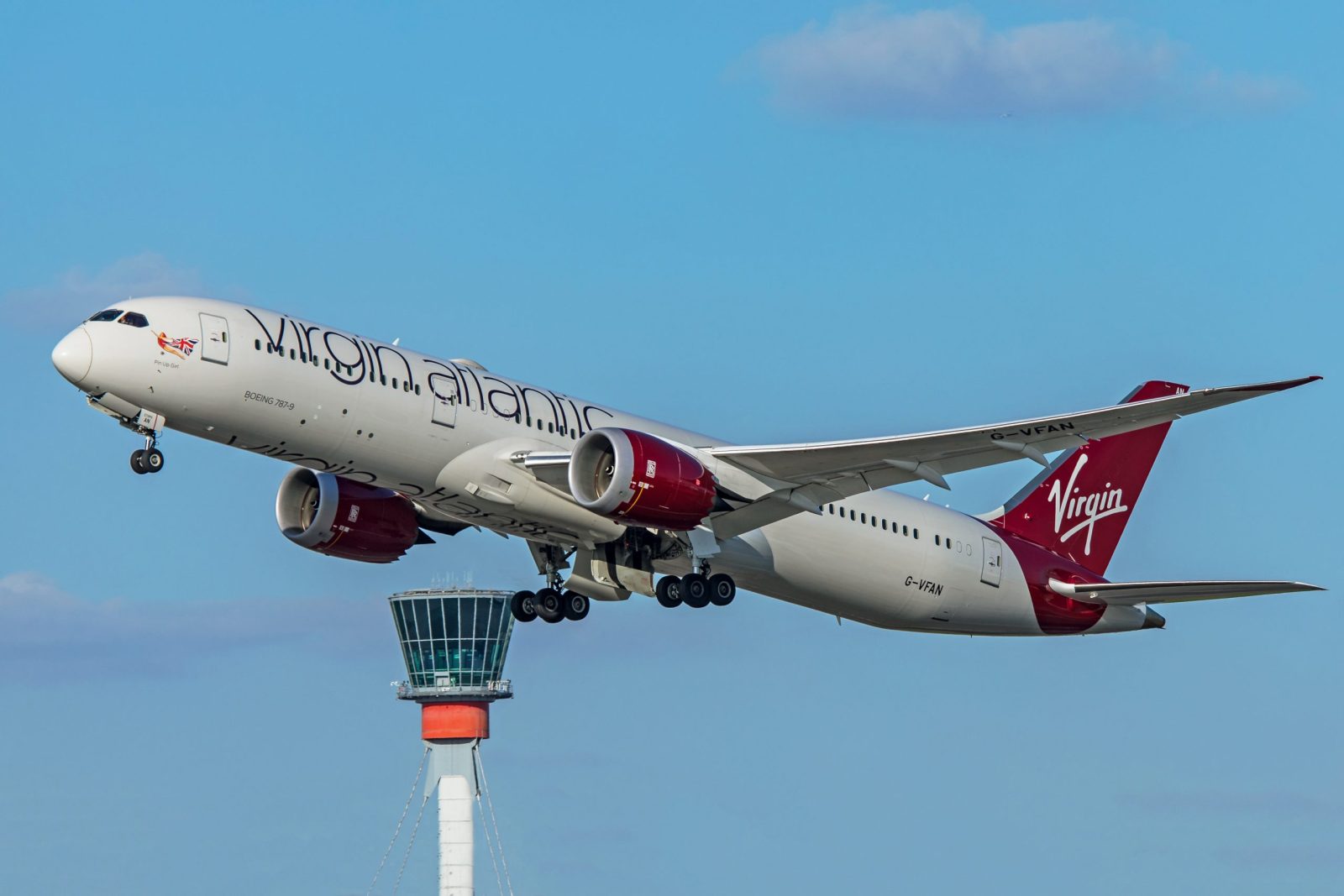
Virgin Atlantic 787-9
A Virgin Atlantic 787-9 departing London Heathrow. (Photo: AirlineGeeks | William Derrickson)

In the most dramatic indication of the reopening of international travel since the introduction of pandemic restrictions, the U.K. government announced that only seven countries will remain on the ‘red list’. The remaining countries that will require hotel quarantine upon arrival back into England are Colombia, Dominican Republic, Ecuador, Haiti, Panama, Peru and Venezuela. The devolved nations of Scotland, Wales and Northern Ireland make their own decisions in regard to health and travel so these relaxed restrictions may not apply for arrivals into these countries.

According to the U.K. government, all other countries not on the ‘red list’ will have ‘rest of world’ status and as such arriving passengers will be subject to less restrictive measures based on their vaccination status. These measures are: ‘Eligible fully vaccinated passengers and eligible under 18s returning from countries and territories, not on the red list, can do so with just a day 2 test. Other passengers who are not fully vaccinated with an authorized vaccine returning from a non-red destination must still take a pre-departure test, a day 2 and day 8 test and complete 10 days self-isolation (with the option of Test to Release on day 5).’

After earlier controversy regarding the exclusion of African and South American countries from vaccination status recognition, there have been significant changes for popular destinations. From 4 am Monday 11 October those eligible travelers vaccinated in South Africa, Brazil in addition to Hong Kong, India and over 30 other countries will have their vaccination status recognized when arriving in England.

Transport Secretary Grant Shapps said: “With (English) half-term (school holidays) and winter sun around the corner, we’re making it easier for families and loved ones to reunite, by significantly cutting the number of destinations on the red list, thanks in part to the increased vaccination efforts around the globe. Restoring people’s confidence in travel is key to rebuilding our economy and leveling up this country. With fewer restrictions and more people traveling, we can all continue to move safely forward together along our pathway to recovery.”

Dale Keller the chief executive of BAR UK (the Board of Airline Representatives) the airline trade association with over 70 member airlines in the U.K. cited the announcement as a ‘step-change in risk management for international travel’. In a series of tweets Mr Keller said that “these are really significant changes and growing confidence that the pandemic phase is finally ending.”

Airlines U.K. the industry body representing UK-registered carriers issued a statement that said: “We welcome the significant reduction of the Red list as another positive step towards normalizing air travel and reopening our sector. This builds on recent changes that have seen travel to many more countries become easier and cheaper for passengers, the progress we hope towards removing all test requirements for the fully vaccinated as soon as possible.”

However, Airlines U.K. cited concern that there needed to be further clarity with regard to the changes to Covid testing associated with travel. Previously announced a relaxation on the requirement for expensive PCR tests to lateral flow tests have been put on hold due to the lack of supply and testing capability prompting passenger hesitancy. Airlines U.K. stated: “it is disappointing for our customers to have no definitive clarity yet on when the lateral flow changes will be introduced. With the crucial October half-term just two weeks away we urgently need clarity so that passengers can plan ahead. This is the key booking period between now and Christmas, so time is of the essence.”

John Flett

John has always had a passion for aviation and through a career with Air New Zealand has gained a strong understanding of aviation operations and the strategic nature of the industry. During his career with the airline, John held multiple leadership roles and was involved in projects such as the introduction of both the 777-200 and -300 type aircraft and the development of the IFE for the 777-300. He was also part of a small team who created and published the internal communications magazines for Air New Zealand’s pilots, cabin crew and ground staff balancing a mix of corporate and social content. John is educated to postgraduate level achieving a masters degree with Distinction in Airline and Airport Management. John has held the positions of course director of an undergraduate commercial pilot training programme at a leading London university. In addition he is contracted as an external instructor for IATA (International Air Transport Association) and has been a member of the Heathrow Community Fund’s ‘Communities for Tomorrow’ panel.

Alaska, Iberia Establish New Oneworld Codeshare Agreement

Alaska Airlines Boeing 737-900 (ER) and B737-800 aircraft at LAX. (Photo: AirlineGeeks | James Dinsdale)

The ongoing, lengthy Covid-19 pandemic has posed a significant obstacle for the airline industry, as at the peak of the of its effects, several major carriers faced major disruptions in their flight operations. Many airlines faced a major decline in passenger load factors, leading to a large reduction in flight frequencies and a substantial increase in route suspensions, which inhibited growth in route networks.

However, the push for vaccinations and further scientific research in combating Covid-19 has led many carriers towards the light at the end of the tunnel as far as recovery goes. Alaska Airlines’ strategy for recovery and restoring normalcy involved joining a global airline alliance, leading to more possibilities for expansion.

After officially joining the oneworld alliance earlier this year on March 31, the Seattle-based carrier began forming codeshare agreements with other fellow members. Alaska also created a U.S. West Coast Alliance with American Airlines simultaneously when the carrier initially announced its prospective membership in early 2020. The carrier also planned to launch a partnership with Iberia, which Alaska will now intend to expand upon, in its new codeshare agreement with the Spanish carrier.

“We’re thrilled to expand our cooperation with Iberia, one of our newest partners in oneworld,” Nat Pieper, Senior Vice President of fleet, finance and alliances,  Alaska Airlines, said. “Alaska joined oneworld to efficiently link our network to the world, and this enhanced partnership with Iberia brings Europe one step closer.”

Within the new codeshare partnership, the carrier plans to allow passengers flying on Iberia to have the opportunity to connect onto the flights in its route network, further than its strongholds in Los Angeles and San Francisco. Currently, the Madrid-based airline flies to LAX and schedules seasonal service from San Francisco to its main hub in Spain. 

Middle East Connectivity

In late June, Alaska announced its proposal to launch its new codeshare agreement with Qatar Airways, from Los Angeles, San Francisco and Seattle, beginning on July 1.  The airline’s brand new codeshare provides the airline the potential opportunity to firmly hang on to its West Coast hubs.

“We’re thrilled to be a part of this evolving partnership with Qatar Airways, one of the world’s premier airlines. As international air travel resumes, it’s important to provide our guests with easier, more convenient travel options to get out and see distant places again. Qatar Airways’ nonstop flights from our hubs in Seattle, San Francisco and Los Angeles to Doha and points beyond offers our guests tremendous opportunities to visit nearly any country they want,” Ben Minicucci, Alaska Air Group CEO, said

The Doha-based carrier operates twice-daily flights to Los Angeles while flying daily flights to San Francisco and Seattle.

Exit From Transcontinental Service

Alaska expanded its presence within the airline industry through its notable decision to join the oneworld alliance and forming partnerships with the respective airlines such as Iberia, American, and Qatar Airways already. The carrier’s West Coast network continues to expand and be its primary tool for rebuilding its route network, especially from its destinations in California, Idaho, Oregon and Washington. However, the carrier will no longer have one of the most cutthroat and competitive routes in the U.S., as a part of its route map.

On Oct. 6, the carrier discontinued its flight operations between Los Angeles International Airport and New York’s John F. Kennedy International Airport, a route the carrier began serving after successfully completing its merger with Virgin America in April 2018, according to Aviation Week.

While Alaska will lose a key route which will leave a gap in its transcontinental route network, the carrier’s strategy in the West continues to make strides.

Evidently, Alaska is poised to further strengthen its membership status and presence in the oneworld alliance. The carrier remains observant of its domestic operations and adjusts them to successfully remain competitive and respond to passenger travel demand. The airline’s brand new codeshare agreements will play a significant role in determining the carrier’s future in the post-Covid-19 world as well as establishing Alaska’s primary role and reputation within the airline alliance.

Benjamin Pham

Benjamin has had a love for aviation since a young age, growing up in Tampa with a strong interest in airplane models and playing with them. When he moved to the Washington, D.C. area, Benjamin took part in aviation photography for a couple of years at Gravelly Point and Dulles Airport, before dedicating planespotting to only when he traveled to the other airports. He is an avid, world traveler, having been able to reach 32 countries, yearning to explore and understand more cultures soon. Currently, Benjamin is an Air Transporation Management student at Arizona State University. He hopes to enter the airline industry to improve the passenger experience and loyalty programs while keeping up to how technology is being integrated into airports.

British Airways A380 To Return to Service

A British Airways A380 at LAX (Photo: AirlineGeeks | Greg Linton)

During the beginnings of the Covid-19 pandemic in early 2020, British Airways grounded its Airbus A380 fleet, including 12 of the aircraft type. The potential for any change in the future seemed quite uncertain as the pandemic — and the year — went on.

Just a couple of months ago, however, the London-based flag carrier hinted at the possible return of its superjumbos when it brought back a handful of the aircraft from storage in Alice Springs, Australia and extended the maintenance contract for the A380.

Wednesday, that became a reality, as British Airways announced that its A380s would be returning to flight service much earlier than expected as border restrictions start lifting yet again. The airline plans to allow four A380s to operate starting in November, initially to various short-haul destinations in the interest of crew service familiarization.

More than likely, the A380s will be operating to help service the demand that has led to increased flight schedules to popular European cities such as Frankfurt and Madrid.

After a few more weeks and into December, the A380s’ operations will transition toward long-haul flights towards a number of U.S destinations, which will include major cities such as Los Angeles, Miami and New York.

A Bolstered Schedule

In addition to the widely welcomed news of the return of its superjumbos, British Airways also made the announcement that it was planning to operate its highest capacity schedule since March 2020, with several additional services to cities worldwide.

In an effort to capture even greater passenger demand, the airline is planning to add frequencies to sunnier destinations — such as Caribbean islands destinations, Dubai, the Maldives and Mauritius — during the winter and expectantly busy Christmas period.

And not forgetting the snow-lovers, British Airways has plans to restart flight operations to popular ski destinations such as Innsbruck, Austria; Grenoble, France and Salzburg, Austria

The airline is also planning to fly to more than 20 U.S cities this winter, with more than 240 flights per week, going beyond the reach of any other transatlantic carrier at the moment.

“This is an exciting time for British Airways and our customers as we see borders re-opening. With welcome news from the US, we are dramatically increasing flights and bringing home some of our A380s to give our customers as many options as possible. Elsewhere across our network we are also adding additional services to destinations all over the world, to ensure our customers can take advantage of a much-needed holiday,” Neil Chernoff, British Airways’ Director of Network and Alliances, said in a press release.

Back from Near Death

While the production end of the A380 and carriers such as Singapore Airlines dismantling some of their aircraft might have seemed like the final end to the new era of flying brought by the A380’s entry into service, it would seem that the A380 still has new life.

With the exception of Emirates, British Airways is one of a few airlines as of late to welcome back the A380 into their fleets, with the likes of Qatar Airways having returned the superjumbos back to service due to the grounding of some of its Airbus A350 XWBs. Another airline that will soon join in would be Australian flag carrier Qantas, which has future plans to bring back a similar handful of A380s and return them to service in the next year or so.

Perhaps as vaccination rates improve even more and as border restrictions remain flexible enough, it might change the mind of more airlines to return their superjumbos into service. Although it might also seem unlikely due to the high operating costs the aircraft carries with it, aviation enthusiasts can still hope to see more of these majestic beauties in the sky once again.

Charlotte Seet

Fascinated by aircraft from a very young age, Charlotte’s dream was to work alongside the big birds one day. Pursuing her dream, she went on to achieve her diploma in Aviation Management and is currently working on her degree in Aviation Business in Administration with a minor in Air Traffic Management. When she’s not busy with school assignments, you can find her aircraft spotting for long hours at the airport. In Charlotte’s heart, the Queen of the Skies will always be her favorite aircraft.

Takeaways from the 13th China International Air Show

The 13th China International Airshow (Photo: AirlineGeeks | Lei Yan)

After one year of delay due to the pandemic, the 13th China International Airshow Opened Sept. 28 in the southern coastal city of Zhuhai, China. After three restricted professional days and three public days, the airshow closed on Sept. 3. Compared to the previous event in 2018, this airshow was considered to be tuned-down, and that showed with regard to both commercial deals signed and viewing experience. However, the airshow is still praiseworthy, especially on the aerobatics showcase and public engagement of the airshow.

Moderate Results

After six days of showcasing Chinese new military aircraft and the latest aviation technologies, the air show closed with a relatively moderate scorecard. Major aircraft manufacturers Boeing, Airbus, Embraer and China’s COMAC did not report any new orders on the airshow. However, new partnerships were announced to fuel the further growth of their businesses in China.

Boeing announced its cooperation with Guangzhou Aircraft Manufacturing and Engineering Company (GAMECO) to expand Boeing 767-300BCF — short for Boeing Converted Freighter — production in China. Boeing has a finishing center in Zhoushan, China, and a number of Boeing 737-800BCF conversion lines in China. This is the first time Boeing brought 767-300BCF conversion lines to China.

Airbus celebrated with The Aviation Industry Corporation of China (AVIC) on the delivery of the first Airbus A320 fuselage made by AVIC, also the delivery of the 500th wing box from AVIC for the A320 family. Airbus currently owns a production facility assembling the A320 series in Tianjin, China, and AVIC is a major supplier for the A320 wing box since 2005.

COMAC, similar to Boeing and Airbus, did not report any addition of C919 orders. The manufacturer also decided not to showcase the highly anticipated jet due to the prototypes’ busy testing schedules.

Other than the major aircraft manufacturers, aviation technology providers such as Honeywell were also actively participating in the airshow.

A Praiseworthy Showcase

Although the airshow did not end with satisfying commercial results, the airshow was still a success in many aspects. The public engagements improved by significant margins compared to previous events.

This airshow was equipped with a full online airshow available on everyone’s desktop. For viewers onsite, the airshow had flight simulators and virtual reality kits to help them experience the new technology.

Furthermore, aerospace equipment also amazed viewers of the airshow. China National Space Agency (CNSA) brought the actual landing capsule and a full replica of Chang’E 5, the moon lander which retrieved 1.7KG of moon soil and returned to earth.

Finally, the aerobatic showcases were highly acclaimed by viewers. The Chengdu J-20 fighter took to the sky on professional days. The fighter is the latest fourth-generation fighter in China. The Bayi Aerobatics Team also performed fascinating stunts with Chengdu J-10 fighter, the third generation fighter that has equipped the People’s Liberation Army since the late 2000s.

The Bayi Aerobatic Team flying Chengdu J-10 fighter at 2021 China International Airshow (Photo: Lei Yan)

Commercial aircraft also attracted many eyeballs during the airshow. COMAC flew a COMAC Business Jets converted from the company’s regional jet ARJ21-700; Airbus cooperated with China Southern and brought an A350-900 to the airshow for static showcase on professional days; and China Southern painted a Boeing 737-800 with a special livery for Youth of Zhuhai, as a thank you to the city for hosting the airshow.

The 14th China International Airshow will take place in November 2022. The public is hoping for more aircraft, such as the Airbus A220, to come to the airshow, as those wishes were not fulfilled in 2021 due to Covid-19 restrictions. With the Beijing Winter Olympics coming up in February 2022, onlookers are looking for China to gradually ease restrictions on international travel, which would mean that the airshow could welcome more international partners come late-2022.

Lei Yan

Lei is from Inner Mongolia, China, and now lives in Guangzhou. He grew up in an aviation family, where his passion began. During his time at Penn State University, he studied Industrial Engineering specializing in operations research, and he graduated with an honor’s thesis on airport gate assignment optimization. Now, he is a Purchasing Manager with Procter & Gamble. In his free time, he enjoys flying, reading, and wandering around the city.
Sign-up for newsletters & special offers!

Get the latest stories & special offers delivered directly to your inbox

SUBSCRIBE