A Singapore Airlines Airbus A380 in New York. (Photo: AirlineGeeks | Hemal Gosai)
Being the largest commercial aircraft ever built certainly had it perks back then, especially when it came along with the title as the world’s first fully double-decked passenger aircraft.
The Airbus A380 came as a big hit initially, with many airlines wanting to take advantage of the higher number of passengers carried per flight with the then-new aircraft.
As the years went by however, the competition rose from Airbus itself as the manufacturing giant produced more fuel-efficient and streamlined aircraft such as the A350s, which quickly gained much more popularity compared to the A380.
And if one blow wasn’t enough, another came from Boeing as it produced an additional variant to its already popular workhorse – the B777-300ER, and also produced the fuel-efficient B787 Dreamliner.
Unexpected Retirement
The popularity of the Airbus superjumbo could not have gotten any worse, but yet it unfortunately did when the Covid-19 pandemic hit and it’s high operating cost did not seem feasible anymore.
Unexpectedly, the world’s biggest long-haul aircraft had reached the end of the runway far sooner than any airline would have anticipated, with airlines such as Air France having already retired its entire fleet.
Perhaps what was most unexpected was when Singapore Airlines – who had been the launch customer of the A380 – became the first airline to retire the aircraft prior to the pandemic in 2017.
After just a decade in service, a total of five aircraft were retired from the national carrier’s fleet, as it looked towards more fuel-efficient successors for fleet modernization.
Then came the pandemic that resulted in the airline deciding that the majority of its A380 fleet would not be returning to service.
Left for Scraps
The five previously retired A380s were flown overseas for either permanent storage or to the aircraft boneyard for scrapping, which is usually the case for retired aircraft.
For the first time in the history of Singapore Airlines though, the airline chose to scrap these two superjumbos, locally at Changi Exhibition Centre.
Accompanying the two superjumbos was a retired B777-200ER as well, registered as 9V-SQJ, which was one of the oldest aircraft type in the Singapore Airlines fleet.
The two A380s, registered as 9V-SKH and 9V-SKG respectively, were delivered in May and June of 2009. They were specially towed to the scrapping site in the late night of Monday, Oct. 4.
So why scrap these superjumbos locally, instead of the traditional send-off overseas? With the pandemic having forced the closure of some international borders, Singapore Airlines found it more economical to dismantle the aircraft in Singapore instead.
Reuse & Recycle
While it may be the end of flight service for these two A380s, it’s not the end of their usefulness as usable parts upon scrapping. Parts from the jets will be kept and inventoried as spare parts to maintains the airline’s current fleet of operating A380s.
And as part of Singapore Airlines fairly new upcycling initiative, recyclable aircraft materials such as cabin windows, furnishings, galley equipment and even seats, will all be repurposed to create unique retail products or to support numerous Singapore-based organizations.
Additionally, Singapore Airlines hopes that the initiative allows for these aircraft materials to be used as educational tools to promote awareness and engage learning in local educational institutions.
The entire scrapping project would take a number of months, and will be done so by the airline’s engineering division alongside a project management specialist.
Fascinated by aircraft from a very young age, Charlotte’s dream was to work alongside the big birds one day. Pursuing her dream, she went on to achieve her diploma in Aviation Management and is currently working on her degree in Aviation Business in Administration with a minor in Air Traffic Management. When she’s not busy with school assignments, you can find her aircraft spotting for long hours at the airport. In Charlotte’s heart, the Queen of the Skies will always be her favorite aircraft.
ATAG Takes Aggressive Approach to Net-Zero Emissions Initiative
IATA Director General Willie Walsh at the International Air Transport Association's 77th Annual General Meeting. (Photo: IATA)
The Air Transport Action Group (ATAG) issued a report taking a more aggressive approach to the industry’s net-zero emissions goal. The new goal is to get the industry to a complete net-zero carbon emissions by 2050. Prior to this declaration, the industry was set on the goal of cutting CO2 emission by half of the 2005 levels.
The Air Transport Action Group (ATAG) consists of many different organizations as well as several different aircraft and engine manufacturers. Some of these groups include the International Air Transport Association (IATA), Airlines for America(A4A), Airlines for Europe (A4E), General Aviation Manufacturers Association (GAMA), Boeing, Airbus, Bombardier, Embraer, Pratt and Whitney, Rolls Royce, and others.
In Boston at The International Air Transport Association (IATA) 77th Annual General Meeting, members of the group voted to move forward with the plan, in hopes of completely eliminating carbon dioxide emissions in the industry.
“The world’s airlines have taken a momentous decision to ensure that flying is sustainable. The post-COVID-19 re-connect will be on a clear path towards net zero. That will ensure the freedom of future generations to sustainably explore, learn, trade, build markets, appreciate cultures and connect with people the world over.” stated IATA’s Director General, Willie Walsh. “With the collective efforts of the entire value chain and supportive government policies, aviation will achieve net zero emissions by 2050.”
Founded in 1945 the IATA represents many major carriers around the globe. This includes 290 airlines throughout 117 countries. The large group represents about 82 percent of the industry’s total available seat miles.
The declaration for this ambitious goal states, “global civil aviation operations will achieve net-zero carbon emissions by 2050, supported by accelerated efficiency measures, energy transition, and innovation across the aviation sector and in partnership with governments around the world.”
To give one a perspective on just how big of a challenge this will be, the IATA looked at future projections of how many people will be traveling in the coming decades and came to the conclusion that 1.8 Gigatons of carbon will need to be abated in the year 2050 to reach the ambitious goal of net-zero emissions. With just under 30 years until 2050, it is projected that 21.2 Gigatons will be abated between now and 2050.
The Plan
Coordination between all sectors of the industry will be key to finding success with a large undertaking like this one. Coordination between the airlines, aircraft manufacturers, and engine manufacturers will help in finding solutions to more sustainable aviation fuels, new aircraft technology, better infrastructure, and more efficient operations. Willie Walsh of the IATA believes 65% of the industry’s emissions will be eliminated through more sustainable fuels, 13% through the development of new propulsion systems such as hydrogen, 3% in efficiency improvements, and the remaining 18% through capture and storage and offsets.
IATA’s website provides major milestones the industry should expect to hit in order for the industry to be successful in the endeavor:
2025: With appropriate government policy support, SAF production is expected to reach 7.9 billion liters (2% of total fuel requirement).
2030: SAF production is 23 billion liters (5.2% of total fuel requirement). ANSPs have fully implemented the ICAO Aviation System Block Upgrades and regional programs such as the Single European Sky.
2035: SAF production is 91 billion liters (17% of total fuel requirement). Electric and/or hydrogen aircraft for the regional market (50-100 seats, 30-90 min flights) become available.
2040: SAF production is 229 billion liters (39% of total fuel requirement). Hydrogen aircraft for the short-haul market (100-150 seats, 45-120 min flights) become available.
2045: SAF production is 346 billion liters (54% of total fuel requirement).
2050: SAF production hits 449 billion liters (65% of total fuel requirement).
Through this initiative, many new technologies and innovations will be developed resulting in substantial environmental benefits. Whether the industry meets its lofty ambition or not, it will still be moving in the right direction towards a better tomorrow. Walsh concludes with, “Aviation has a history of realizing what was thought to be impossible—and doing so quickly.”
Chase Hagl grew up in Twin Falls, Idaho. His love and passion for Aviation landed him in Orem, Utah where he obtained a B.S. in Aviation Management with a minor in Business Management from Utah Valley University. Chase currently works as a flight attendant in Charleston, SC and is also the primary Inflight ASAP ERC representative for startup airline, Breeze Airways. His experience in the aviation industry spans back four years, working in areas including agriculture application, customer service, maintenance, and flight ops. In his free time, Chase enjoys road biking, astronomy, and flying.
Copa Airlines’ Dreams Business Class – Flatbed Seats on a 737 MAX 9
Copa Airlines' first Boeing 737 MAX aircraft. (Photo: Copa Airlines)
Panama-based Copa Airlines has boasted one of the world’s best hubs for connections, being such a convenient springboard to major cities and destinations across Latin America. At Copa’s home base (PTY), or ‘Hub of the Americas’, bags are checked directly to their final destination and travelers simply walk to their next flight without needing to go through customs or immigration. In most cases, a security check is not even required to board the next flight.
With the return of the Boeing 737 MAX to the skies, Copa is now raising the bar for travel with its new flatbed business class product, Dreams. Dreams is the newest showstopper in business class travel in Latin America, a flatbed seat exclusive to Copa’s new, fuel-efficient 737 MAX 9 jets. Flatbed seats are a rarity on narrowbody jets like the 737, especially in Latin America, but they make sense for Copa, which flies some of the longest 737 routes in the world through Panama.
Dreams is the newest showstopper in business class travel in Latin America. The new business class seat is capable of reclining completely flat and comes complete with upsized blankets, plush pillows, noise-cancelling headphones and a 16-inch touchscreen. (Photo: Copa Airlines)Copa’s Boeing 737 MAX 9 jets currently operate on some of the airline’s longer routes which are between Panama and Montevideo (Uruguay), Buenos Aires (Argentina), Sao Paulo (Brazil), Los Angeles, and very soon, San Francisco. (Photo: AirlineGeeks | Albert Kuan)
Copa’s Dreams business class provides a more enjoyable and relaxing travel experience for travelers. The new business class seat is capable of reclining completely flat and comes complete with upsized blankets, plush pillows, noise-canceling headphones and a 16-inch touchscreen. On select routes, Dreams travelers also receive premium amenity kits, which include an eyemask, socks and moisturizers.
Copa’s Boeing 737 MAX 9 jets currently operate on some of the airline’s longer routes which are between Panama and Montevideo (Uruguay), Buenos Aires (Argentina), Sao Paulo (Brazil), Los Angeles, and very soon, San Francisco (starting October 15). More than 60 MAX jets are on order, meaning once MAX comes to be more widespread in their fleet, a seamless Dreams experience to more of South America would be possible. This is all thanks to the well-defined arrivals and departures at Tocumen Airport.
So what’s it like to fly on Dreams? On behalf of Copa Airlines, we jumped onto one of their twice-daily MAX services from Los Angeles to find out what’s it like to fly in Latin America’s latest flatbed product and connect in Copa’s ‘Hub of the Americas’. The Los Angeles – Panama City route is one of the longest in the airline’s network, just under 7 hours, and operates twice daily to and from Panama.
LAX Star Alliance Lounge
A prelude to the slumber on Dreams, travelers have access to the well-attended Star Alliance Lounge (Business Class) at LAX – now back in operation after a 16-month hiatus. Upon checking-in and clearing security screening, travelers only need to present their business class boarding pass to the lounge attendant to enter. The lounge is located on Level 6 of the Tom Bradley International Terminal, past security, near the clock tower in the central atrium area.
Copa Airlines operates two flights per day to Panama City from Los Angeles, and as they are some the last Star Alliance flights for the day, the lounge is nearly void of other travelers by the time Copa travelers complete check-in and security. (Photo: AirlineGeeks | Albert Kuan)The lounge features a relaxing, contemporary design and a well-stocked buffet. The buffet offered a sizable selection of small bites, a salad bar, desserts and multiple hot and cold foods. Liquor, wine and beer were all self-serve as well. (Photo: AirlineGeeks | Albert Kuan)
The lounge features a relaxing, contemporary design and a well-stocked buffet (under current local regulations, self-serve buffets are once again permitted). The buffet offered a sizable selection of small bites, a salad bar, desserts and multiple hot and cold foods. Liquor, wine and beer were all self-serve as well.
The lounge had plenty of individual and group seating, including outdoor seating, lots of outlets, and plenty of open space to stretch out before the flight. Flight announcements were made, however the decibel level was kept to a minimum. Periodicals and reading material are no longer stocked in the lounge however during Covid-19.
Copa Airlines operates two flights per day to Panama City from Los Angeles, and as they are some the last Star Alliance flights for the day, the lounge is nearly void of other travelers by the time Copa travelers complete check-in and security. The lounge operates until 1 AM, or until the last departure of the night. This was enough time to for me to rest and grab a quick bite and drink before walking over to my gate for boarding. Boarding began promptly an hour before departure time.
Copa Airlines’ Dreams Flatbed
The Dreams product appears only on Copa’s Boeing 737 MAX jets. These planes feature a total of 16 reclining, lie-flat business class seats, spread across four rows in a 2-2 configuration. All seats are forward-facing. In addition to the premium seats, the MAX jet also features oversized bins for carry-on luggage, quieter cabins and comfortable mood lighting to help travelers adjust and arrive in better shape.
The Dreams seat truly reclines all the way down to a lie-flat position and can be adjusted to a variety of positions to suit your comfort. If your goal is to go immediately to sleep, each Dreams seat converts into a lie-flat bed at the touch of a single button. The crew also makes sure to take care of business toward the beginning of the flight so they can let you get to snoozing right away.
The Dreams product appears only on Copa’s Boeing 737 MAX jets. These planes feature a total of 16 reclining, lie-flat business class seats, spread across four rows in a 2-2 configuration.The seat can be reclined and adjusted to different positions using the seat control panel. The seat also has two preset controls as well: upright for taxi, takeoff and landing, and fully flatbed mode when it’s time to get some shut-eye. (Photo: AirlineGeeks | Albert Kuan)the MAX jet also features oversized bins for carry-on luggage, quieter cabins and comfortable mood lighting to help travelers adjust and arrive in better shape. (Photo: AirlineGeeks | Albert Kuan)
The seat can be reclined and adjusted to different positions using the seat control panel. The seat also has two preset controls as well: upright for taxi, takeoff and landing, and fully flatbed mode when it’s time to get some shut-eye.
Overall, my nearly six-foot frame fit perfectly in all the positions and I was very comfortable being able to stretch out, watch a documentary, and eventually, fall asleep.
The shell of the seat helped provide a sense of privacy and personal space, especially when the seat was reclined all the way. Each seat also has an armrest that can be lowered or raised to allow for even more space to stretch out. This was perfect for when I wanted to sit cross-legged to watch a movie.
Above the shoulder in each seat was a reading light in addition to the overhead light. The reading light was perfect for use when I didn’t want to disturb my neighbors who were sleeping in the dark cabin. There are also intact privacy partitions in between the center armrest, as well as air nozzles above the seat for individual climate control.
The Dreams seat truly reclines all the way down to a lie-flat position, and can be adjusted to a variety of positions to suit your comfort. If your goal is to go immediately to sleep, each Dreams seat converts into a lie-flat bed at the touch of a single button. (Photo: AirlineGeeks | Albert Kuan)The shell of the seat helped provide a sense of privacy and personal space, especially when the seat was reclined all the way. Each seat also has an armrest that can be lowered or raised to allow for even more space to stretch out. (Photo: AirlineGeeks | Albert Kuan)
A compact storage nook next to each seat provides a handy space to keep your phone and other small gadgets within reach. One USB outlet and one universal power outlet is located here as well to keep your devices charged. There is also a narrow tray storage space right under the seat-back monitor which comfortably fits my laptop, glasses and other loose papers without sliding out during turbulence.
A compact storage nook next to each seat provides a handy space to keep your phone and other small gadgets within reach. One USB outlet and one universal power outlet is located here as well to keep your devices charged. (Photo: AirlineGeeks | Albert Kuan)
The Dreams seat also features adjustable lumbar support, which was especially useful for when it came time to work. This was ideal for when I wanted to provide support for my back and sit upright to get some work done on my laptop. Each seat features a retractable tray table in the center armrest large enough to accommodate a laptop and a drink sharing the same surface. There is a dedicated literature space tucked away under the center armrest as well, not obstructing any personal space.
Sleeping Comforts and Amenities
Depending on their destination, travelers flying in Dreams will surely notice the upgraded amenities onboard their Dreams flight.
Dreams travelers are given upgraded amenities consisting of noise-canceling headphones, larger pillows, soft, duvet-like blankets, as well as a sleeping kit, which includes a sleep mask and socks. Bottled water was also passed out to travelers before they fell asleep.
The sleeping kit, navy blue with light blue accents, was aesthetically pleasing. Inside were a number of standard offerings for sleeping and staying refreshed including apple-scented hand lotion, almond flavor lip balm, a dental kit, eyeshades, socks, mouthwash, and a souvenir postcard of Copa’s 737 MAX jet.
Dreams travelers are given upgraded amenities consisting of noise-cancelling headphones, larger pillows, soft, duvet-like blankets, as well as a sleeping kit. Bottled water was also passed out to travelers before they fell asleep. (Photo: AirlineGeeks | Albert Kuan)The sleeping kit, navy blue with light blue accents, was aesthetically pleasing. Inside were a number of standard offerings for sleeping and staying refreshed including: apple-scented hand lotion, almond flavor lip balm, a dental kit, eyeshades, socks and mouthwash. (Photo: AirlineGeeks | Albert Kuan)
For the aviation geek, one will notice the emblem of Copa’s “Hub of the Americas” subtlety emblazoned on the amenity bag. It is an updated, and more stylish version of the early 2000s emblem and features two inbound arrows and two outbound arrows to demonstrate that Copa’s business model is based on connecting traffic.
There’s one standard-sized lavatory for Dreams travelers at the front of the cabin. Consistent with the sleeping kits provided, the lavatory was also stocked with the same apple-scented hand lotion, in addition to apple-scented facial mist.
For the aviation geek, one will notice the emblem of Copa’s “Hub of the Americas” subtlety emblazoned on the amenity bag. It is an updated, and more stylish version of the early 2000s emblem demonstrating that Copa’s business model is based on connecting traffic. (Photo: AirlineGeeks | Albert Kuan)Consistent with the sleeping kits provided, the lavatory was also stocked with the same apple-scented hand lotion, in addition to apple-scented facial mist. (Photo: AirlineGeeks | Albert Kuan)
In-Flight Entertainment and Copa Showpass
Each Dream seat is fronted by a 16-inch touchscreen, one of the largest business-class screens in the industry, loaded with a solid selection of international movies, TV shows and music channels. A touchscreen remote is tucked away under the center armrest and was very useful for navigating the entertainment system and peeking at flight information without ever exiting a program. Nevertheless, the screen is very responsive if you chose to use your fingers to navigate.
Each Dream seat is fronted by a 16-inch touchscreen, one of the largest business class screens in the industry, loaded with a solid selection of international movies, TV shows and music channels. (Photo: AirlineGeeks | Albert Kuan)
There’s no Wi-Fi service on Copa flights, unfortunately, however, the decision to forego Wi-Fi service can most likely be explained by the number of business travelers that began dozing off once the sleep mood lighting was activated. Once the cabin lights were entirely dimmed, almost every Dreams traveler I saw had donned their eyeshades and reclined their seat to the lie-flat position for the remainder of the flight. This is how red-eye flights work!
In addition to well-known films, TV shows and artists, some of the unique highlights of the inflight entertainment system include award-winning Spanish language films and documentaries from Panama’s International Film Festival, as well as local Panamanian TV shows and music by Panamanian artists. Foreign language films and television shows are shown were either dubbed in English or shown with English subtitles.
Being an aviation and geography geek, I found the flight information system to be very detailed and entertaining. The flight map provided adjustable navigation features and different viewing modes for understanding the flight path. Connecting gate information was also provided on the screen near the end of the flight, although in Dreams, the flight attendant will come to deliver the information to you in person most likely.
In addition to well-known films, TV shows and artists, some of the unique highlights of the inflight entertainment system include award-winning Spanish language films and documentaries from Panama’s International Film Festival. (Photo: AirlineGeeks | Albert Kuan)The flight map provided adjustable navigation features and different viewing modes for understanding the flight path. Connecting gate information was also provided on the screen near the end of the flight. (Photo: AirlineGeeks | Albert Kuan)
If you’d prefer to use your own laptop or tablet, Copa also provides the same onboard entertainment system through Copa Showpass. The same wide range of films, television series, magazines, documentaries, music and flight information can also be accessed from your mobile device by connecting to the aircraft’s intranet network.
Although Copa doesn’t provide hard copies of its Panorama in-flight magazine at the moment, the magazine is still released bi-monthly and available in an e-version through the in-flight entertainment system or Copa Showpass. Panorama still features a number of high-quality articles and features, including useful information about Copa’s services, however, the eye strain and lengthy screen navigation involved with reading an e-magazine would probably discourage you from taking a peek.
Service and Safety Onboard
As with every Copa flight during Covid-19, face masks were mandatory throughout the flight except when eating or drinking. Many items onboard, including pillows and blankets, and snacks, were either sealed or individually wrapped. Copa Airlines also plays a video before takeoff explaining the biosafety measures taken before and during the flight to keep travelers safe onboard.
Service throughout the flight was first-rate, with the attentive cabin crew in good spirits and welcoming travelers individually upon being seated. The Dreams cabin has its own dedicated flight attendant, a chief purser who was able to speak both English and Spanish. Some cabin announcements were also made in Portuguese as well.
Despite being a redeye, the chief purser was readily available to take requests throughout the flight. I wasn’t asleep until much later into the flight, but she was happy to take my requests for more snacks and drinks, and even answer questions about the 737 MAX 9 we were flying on.
Service throughout the flight was first rate, with the attentive cabin crew in good spirits and welcoming travelers individually upon being seated. Despite being a redeye, the chief purser was readily available to take requests throughout the flight. (Photo: AirlineGeeks | Albert Kuan)As with every Copa flight during Covid-19, face masks were mandatory throughout the flight except when eating or drinking. Many items onboard, including pillows and blankets, and snacks, were either sealed or individually-wrapped. (Photo: AirlineGeeks | Albert Kuan)
I didn’t push the flight attendant call button for most of the flight, as a crew member seemed to also pass through the cabin every 10 minutes. A curtain and dividers provided separation from the Economy and Economy Extra cabins, but a crew member was always passing through discreetly.
The service was very professional and attentive. Each traveler was well taken care of from takeoff until landing, and upon arrival, the chief purser even came to bid farewell and see if I enjoyed the flight. She also checked on the information for my connecting flight before landing at Tocumen.
Dreams’ Food and Beverage Service
Due to the timing of my flight, only breakfast was served on the flight – served two hours prior to arrival. This was the only hot meal service during the flight, while snacks and beverages were served on request throughout the flight.
Most travelers in the business class came on board the plane ready to go into a deep slumber, however, so they didn’t really mind not having a hot meal at the beginning of the flight. if you tend to get hungry instead of sleepy during a redeye flight, I advise planning time for dinner at the Star Alliance Lounge before getting onboard, otherwise, you will only be limited to packaged snacks and beverages until arrival time nears.
Drinks were served in a glass from the galley with ice, however, snacks were still served in packages. Alcoholic beverages were limited to white and red wine, and beer; soft drinks included sparkling water, Coca-Cola and different fruit juices. (Photo: AirlineGeeks | Albert Kuan)
The breakfast order was taken prior to takeoff and each traveler was given a choice between two entrees. As I was already hungry, I opted for the choice with more protein – scrambled eggs, with hash browns and sausage.
After meal orders were taken, the chief purser came around with a snack tray laid out with a variety of packaged snacks consisting of cheese pretzels, almonds, cookies and granola bars. Drink orders were also taken, and I was advised by the chief purser to accompany the snacks with a fruit juice – which she suggested their apple juice. The apple juice was natural and had a great taste complementing the scent of the hand cream from my amenity kit. Thus it became my drink of choice for the rest of the flight, including breakfast.
Drinks were served in a glass from the galley with ice, however, snacks were still served in packages. Alcoholic beverages were limited to white and red wine, and beer; soft drinks included sparkling water, Coca-Cola and different fruit juices.
By request, I was woken up for breakfast and the chief purser verbally confirmed my breakfast choice before the meal was actually prepared. Breakfast was delivered on a single tray with sides. The main entrée came accompanied by a Greek-style yogurt, granola oats and assorted fruits. The main course of scrambled eggs was perfectly sized and not too filling.
Business class meals are now served plated on ceramic dishware, but they are still served covered. Stainless steel cutlery are also now provided, as well as a disposable cloth napkin and sanitizing wipe. (Photo: AirlineGeeks | Albert Kuan)Breakfast was delivered on a single tray with sides. The main entrée, scrambled eggs, with hash browns and sausage, came accompanied by a Greek-style yogurt, granola oats and assorted fruits. (Photo: AirlineGeeks | Albert Kuan)
Business class meals are now served plated on ceramic dishware, but they are still served covered. Stainless steel cutlery are also now provided, as well as a disposable cloth napkin and sanitizing wipe.
Ground Experience at ‘Hub of the Americas’
Tocumen Airport is one of the most convenient airports for connections if you have an onward destination. Copa’s ‘Hub of the Americas’ is fundamental to its business model and the airport is built upon offering a very simple transit experience for travelers.
Each traveler was well taken care of from takeoff until landing, and upon arrival, the chief purser also checked on the information for my connecting flight before landing at Tocumen. (Photo: AirlineGeeks | Albert Kuan)
In my case, I only needed 10 minutes to get from my arrival gate to the boarding gate for my next flight. My bags were checked directly to my final destination, and there was no need to clear security, customs or immigration at any point.
At Tocumen Airport, travelers simply walk into the international area from their arriving flight and walk over to their next boarding gate as if they were connecting from a domestic flight. I would say the only roadblocks at the Tocumen were the sizeable number of arriving travelers like me who were also rushing to their next flight.
Most flight connections are often around 90 minutes at Tocumen, and for Dreams travelers, that allows enough time to make a stop at Copa’s Copa Club to recharge before the next flight. The lounge is also accessible to Dreams travelers whose final destination is Panama as well. The Copa Club, located near Gate 130, currently only provides packaged snacks and some beverages, but it suffices for a short transit.
At Tocumen Airport, travelers simply walk into international area from their arriving flight and walk over to their next boarding gate as if they were connecting from a domestic flight. (Photo: AirlineGeeks | Albert Kuan)Most flight connections are often around 90 minutes at Tocumen, and for Dreams travelers, that allows enough time to make a stop at Copa’s Copa Club to recharge before the next flight. (Photo: AirlineGeeks | Albert Kuan)
Final Thoughts
Copa’s Dreams product is a game-changer in Latin America. It not only exceeds what is offered in business class by other Latin American carriers – such as Aeromexico and Avianca on their narrowbody jets – but also it is one of the only few flatbed business class seats in the region. If you also consider most Copa travelers connecting in Panama are flying more than 10 hours in each direction, the flatbed product definitely is a must for such a long journey.
For business travel, Copa is definitely one of the most comfortable ways to travel into Latin America. The comfortable seat, attentive service, and simple connection at Tocumen Airport definitely set it apart from the competition.
Most people hate long flights or overnight layovers, but Albert loves them. The airport and flying parts of traveling are the biggest highlights of any trip for him – as this avgeek always gets a thrill from sampling different airline cabin products and checking out regional developments happening at local U.S. airports. He’s flown on almost every major carrier in the U.S. and Asia Pacific, and he hopes to try out the new A350s soon.
Albert recently completed his undergraduate studies in Business Accounting at USC in Los Angeles and he is currently recruiting for a corporate analyst position at one of the U.S. legacy carriers. During his college years, he interned at LAX for Los Angeles World Airports working behind-the-scenes (and on the ramp) in public relations and accounting. Outside of writing for AirlineGeeks, he enjoys trekking the Hollywood hills, visiting new hotspots throughout SoCal, and doing the occasional weekender on Spirit Airlines.
EgyptAir Replaces Air Sinai on Flights to Tel Aviv After 40-Year Hiatus
The first-ever Egyptair commercial flight to Israel landed at Ben-Gurion Airport on Sunday, Oct. 3. The Egyptian national carrier will now run four weekly round-trip commercial flights between Tel Aviv and Cairo.
The flight covers a distance of just 245 miles in each direction, and is blocked at 80-85 minutes in each direction. EgyptAir will use an Airbus A220-300 for the route.
Sunday’s flight was greeted with the traditional water canon salute in celebration of the historic event.
The listing of direct flights between Cairo and Tel Aviv comes after Egyptian President Abdel-Fattah El-Sisi’s meeting three weeks ago with Israeli Prime Minister in Sharm El-Sheikh.
The two leaders discussed the latest developments concerning the peace process in the Middle East, according to various sources.
Air Sinai
Egypt was the first Arab country to establish full diplomatic relations with Israel after signing the 1979 Camp David peace treaty. Flights between the two countries have been offered by a subsidiary of Egyptair, called Air Sinai in unmarked planes without the Egyptian flag.
The history here is that in 1979 when Egypt and Israel signed a historic peace treaty, this signaled that the two countries could introduce an active civil aviation route.
However, the treaty between Egypt and Israel wasn’t entirely popular in the Arab world, so Egypt sought a rather uncommon strategy that served as a way of downplaying relations between the countries.
This marked the inception of Air Sinai in 1982 which operated flights exclusively between Cairo and Tel Aviv.
The EgyptAir subsidiary operated a fleet of two unmarked Airbus A220s that actually belonged to EgyptAir. Air Sinai operated these flights on a wet lease basis, meaning that the planes and crews were both provided by EgyptAir.
The airline also had its own code and flight numbers, rather than using the “MS” designator for EgyptAir, Air Sinai instead used “4D” as the airline code.
Eased Relations
After the Abraham Accords were signed last year and the inauguration of flights to Israel by other Arab airlines such as Emirates, Morocco, Sudan and last week Bahrain’s Gulf Air, EgyptAir decided to come into the open about its flights to Israel, as yesterday’s flight touched down at Ben Gurion Airport and was greeted like an inaugural flight on a new route.
Meanwhile, according to an economic and social development plan submitted by Egypt’s Ministry of Planning to the parliament, the country’s flag carier EgyptAir will procure nine aircraft by the end of 2023.
Egypt Today reports that eight of those will be acquired via the airline’s current lease set-up, including four that will be received in 2022.
The plan also includes the construction of a new airport terminal with capacity estimated to be four million passengers per year at Alexandria’s Borg Al Arab airport.
The civil aviation sector will be allocated $591 Million for the 2021-22 financial year
Victor Shalton's love for aviation can be traced to when he was 11-years-old. As a seasoned aviation writer, he takes pride in providing the best aviation coverage around the globe and is passionate about advancing his skills in the aviation space. In addition, he loves travelling, writing, arts and while his speaking engagements have taken him around the world, he is proud to call Nairobi home.
A Lufthansa Airbus A350-900 XWB departing from Munich. (Photo: AirlineGeeks | Fabian Behr)
The thought of the end of the pandemic brings forth a great hint of uncertainty, and passenger demand remains just as volatile as new waves of infections and border restrictions.
As airlines worldwide continue to review their portfolios, some have to consider leasing out part of their fleet to cut on cost and as an effort to raise funds.
This means that aircraft are still currently available in the leasing market at preferable low rates, allowing for more successful airlines to pounce on the chance for a lower-expensed fleet expansion.
Expecting New Members
One such airline taking advantage of the lower lease costs will be Frankfurt-based Lufthansa Group, which has a plan to speed up the modernization of its fleet. The group has signed leases for an additional four Airbus A350-900 supplied by lessors Avolon, SMBC Aviation Capital Ltd. and Goshawk.
Due to be delivered by the beginning of 2022, the inclusion of the four new members will total the Group’s A350 fleet to 21. The new jets are expected to operate with the core brand of Lufthansa to strengthen the main carrier’s premium services.
Lufthansa already has an order for 45 A350-900s from Airbus, and added an additional order of five jets in May. The airline currently operates 17 A350 jets.
The orders are part of the Group’s current long-term fleet modernization program that will see the Group taking delivery of over 170 short, medium, and long-haul aircraft within this decade alone.
Fueling the Future
According to Lufthansa, the much more fuel efficient A350s are expected to replace its predecessors, the quad-engined long-haul Airbus A340 family, and eventually, the Boeing 747 family as well.
As Chief Executive Carsten Spohr mentioned in a press release, “Fleet modernization, in my view, is one pillar to cope with sustainability challenges.”
Prior to the pandemic, the A340s took up approximately 50% of Lufthansa’s long-haul fleet, but this number has since significantly reduced due to lack of demand and eventual redundancy.
Despite demand coming back and the frequency of flights increasing, the operating cost of older aircraft types such as the A340s still prove to not be as economical as their soon-to-be successors. The twin-engined new-generation aircraft are much cheaper to operate when compared to the quad-jet ancestors, as Lufthansa reports a reduced operating cost of up to 15 percent with the A350.
“The Airbus A350 is one of the most modern aircraft of our time. Extremely fuel-efficient, very quiet and much more economical than its predecessors. Our customers appreciate not only the sustainability but also the premium flight experience with this aircraft. The lease agreements allow us to remain flexible in fleet planning and make the most of exceptional market opportunities,” Dr. Detlef Kayser, Member of the Executive Board Deutsche Lufthansa AG, said in a press release.
However, as much as the quad-jets days are numbered, Lufthansa is still reactivating aircraft such as the Boeing 747-400 to meet the current growing travel demand as it awaits the deliveries of newer aircraft.
Fascinated by aircraft from a very young age, Charlotte’s dream was to work alongside the big birds one day. Pursuing her dream, she went on to achieve her diploma in Aviation Management and is currently working on her degree in Aviation Business in Administration with a minor in Air Traffic Management. When she’s not busy with school assignments, you can find her aircraft spotting for long hours at the airport. In Charlotte’s heart, the Queen of the Skies will always be her favorite aircraft.
A joint FAA-NASA program is seeking to mitigate issues caused by long post-taxi delays. (Photo: NASA)
Does this airline experience sound familiar? Pushing back from the gate on time, you excitedly text family or friends that your flight will soon depart as scheduled.
And then it happens. Long minutes pass as your jet sits idle on the ramp until receiving taxi clearance, or stuck awaiting takeoff at the end of a long conga line. Wouldn’t it be marvelous if departing airlines could be choreographed to travel in one continuous movement from pushback to takeoff through departure climb, all the way to cruise altitude?
Well, if a joint NASA and Federal Aviation Administration (FAA) program works as tested, that smooth departure sequence will be a reality coming soon to an airport near you.
The FAA and NASA announced this week the completion of a multi-year partnership, along with airlines and airports, that tested software technologies to streamline aircraft departure scheduling. The goal was for airliners to roll seamlessly from gate pushback directly through take-off, and then into overhead flows via a continuous climb versus a traditional stair-step, all the way to cruise. Benefits reaped were reduced en route and crew duty times, fewer delays, fewer maintenance hours on aircraft and components, and a reduction in engine emissions and greenhouse gasses.
Where did the idea come from? NASA says they were inspired by the simple concept of space trajectories. Years ago, NASA successfully teamed with the FAA to evolve typical airline descent paths from their fuel-wasting stair-step profiles to today’s time and fuel-saving continuous descents. The new concept of streamlined taxi and departure climb profiles is basically that process reversed.
Evaluated over the last six years, NASA’s Airspace Technology Demonstration 2 (ATD-2) project demonstrated the benefits of a suite of airport operations tools called Integrated Arrival, Departure, and Surface (IADS) technology. Test airports were Charlotte Douglas International, Dallas Fort Worth International and Dallas Love Field.
NASA’s ATD-2 IADS System improved the surface operation efficiencies at busy airports through time-based metering of departures and improved sharing of flight operations information. ATD-2 departure metering recommends holding some departing flights a few minutes longer at the gate instead of in long departure queues at the end of the runway. Shifting departure wait time from the taxiway to the gate saved fuel, gave airlines and passengers more flexibility in the period prior to pushback, and reduced carbon emissions. As FAA Administrator Steve Dickson emphasized, “The future of flight must be more sustainable and environmentally friendly.”
The ATD-2 IADS System also couples a trajectory-based surface decision support tool with the overhead stream insertion capabilities of the en route metering decision support system. The result is more precise scheduling of surface departures into constrained overhead airspace flows, better communication between en route and tower controllers, and improved percentages hitting target departure times.
Program test results for just one airport, KCLT, yielded:
• Eight tons of CO2 greenhouse gas emissions eliminated daily.
• 275,000 gallons of fuel saved annually from reduced taxi times, the equivalent fuel burn of 185 flights between New York and Chicago by a Boeing 737.
• 916 hours of reduced delays, equivalent to shaving 15 minutes of waiting time for more than 3,600 departing flights.
In 2022, The FAA will implement IADS capabilities through the Terminal Flight Data Manager (TFDM) program, which will deploy to 89 airports, with initial deployment at Phoenix Sky Harbor International (KPHX). More advanced IADS capabilities demonstrated under ATD-2 will go to 27 of the nation’s busiest airports under TFDM. When completed, the FAA anticipates savings of more than 7 million gallons of fuel per year and the elimination of more than 75,000 tons of CO2 emissions annually.
“This air traffic scheduling technology enhances aircraft efficiency and improves dependability for passengers every day,” said NASA Administrator Bill Nelson. “I’m excited that the software NASA developed for air traffic controllers and airlines will be rolled out at airports across the country and the results will continue to be extraordinary.”
Cities and airports expected to be part of the TDFM 27-aiport rollout include Atlanta, Baltimore, Boston, Charlotte, Chicago Midway, Chicago O’Hare, Dallas-Ft. Worth, Denver, Detroit, Fort Lauderdale, Houston Bush, Las Vegas, Los Angeles, Miami, Minneapolis-St. Paul, Newark, New York JFK, New York La Guardia, Orlando, Philadelphia, Phoenix, Salt Lake City, San Diego, San Francisco, Seattle, Washington Dulles, Washington Reagan National.
Kathleen Bangs is an Aerospace Journalist of the Year overall winner who specializes in aviation safety. She is a former commercial airline pilot, airline instructor, and check airman. Kathleen can also be seen on-air covering breaking aviation news and airline events.
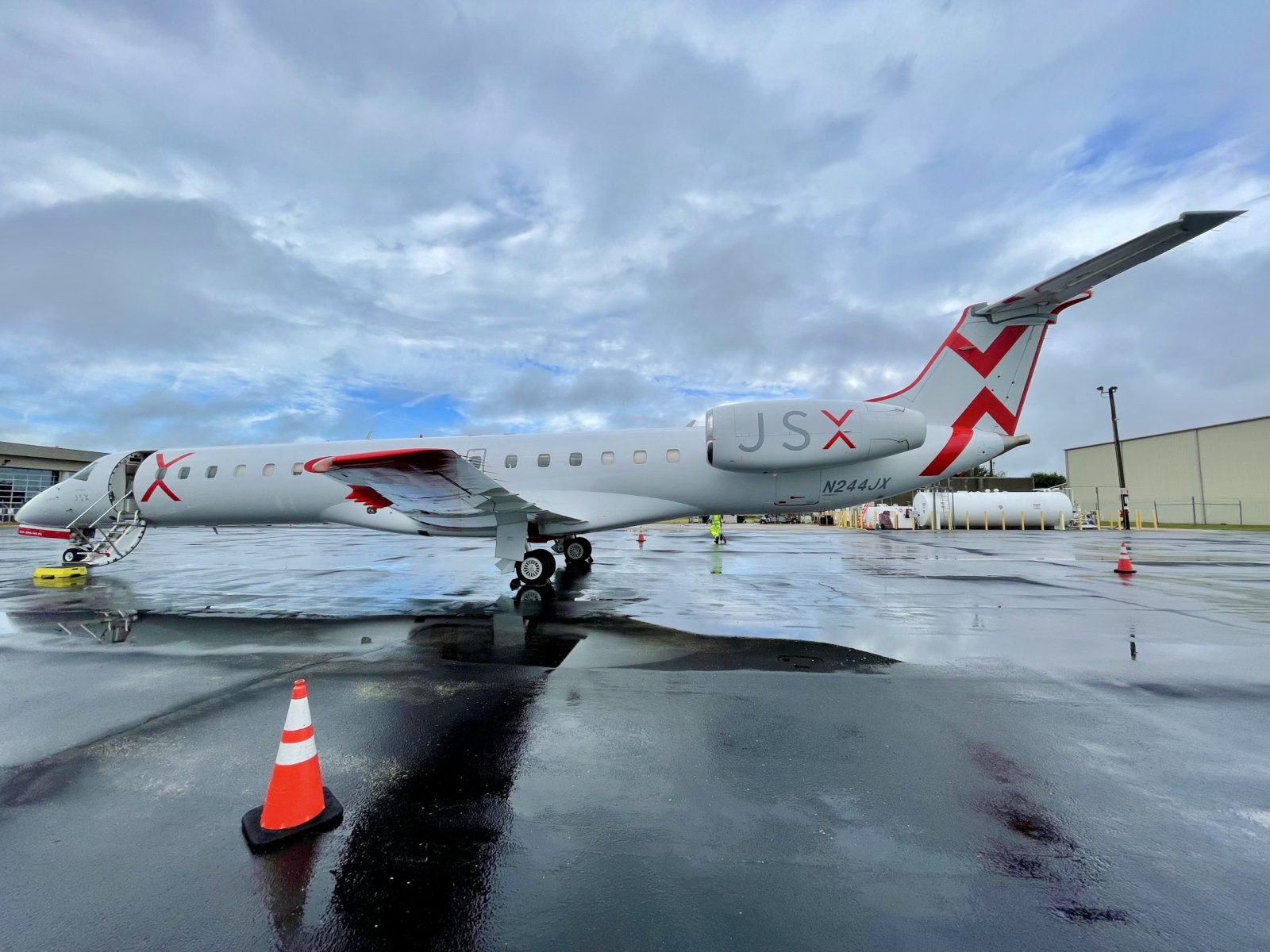
A JSX Embraer E-145 on the FBO ramp at Austin-Bergstrom International Airport. (Photo: AirlineGeeks | Mateen Kontoravdis)
There’s a unique airline attempting to gain market share on the highly competitive Austin to Dallas route. JSX is joining a long list of airlines adding new services to the growing tech hub Texas capital.
American Airlines currently flies to Dallas/Fort-Worth International Airport up to 11 times daily from Austin, while Southwest Airlines offers seven flights to Dallas’s Love Field Airport every day. Together, the two airlines offered 80,000 seats between the two Texas cities last month onboard over 480 flights.
JSX is the third airline flying the competitive route with twice-daily flights to Dallas Love Field, which began on Sept. 27. This will be the first time that Southwest faces direct competition between Love Field and Austin since 2016 when Virgin America briefly flew the route for six months. JSX offers a daily 10:00 a.m. and 5:30 p.m. departure from Austin and will fly about 1,860 seats from Austin during its first month of operations.
JSX’s CEO Details Austin Expansion
Prior to the airline’s Austin launch, AirlineGeeks spoke with JSX CEO Alex Wilcox to discuss the expansion and how the airline plans to compete among the two large competitors already flying the route. Wilcox co-founded JSX in 2016 and is a former founding executive at JetBlue.
“Business travelers, more than anybody, value their time and they are willing to pay to get more of it back. That’s the one thing that we provide that the big airlines can’t. That is, the ability to get out of your car and onto the airplane within 20 minutes, basically get on and go without breaking a sweat. If you try to do that on a major airline, that airplane is long gone by the time you get to the gate,” Wilcox said.
JSX is classified as a Part 135 carrier by the FAA, so flights are operated as public air charters. As a result, the airline is able to operate out of fixed base operators (FBOs), bypassing an airport’s main terminal.
A JSX E-145 in Austin. The airline exclusively operates the E-145 for its intra-Texas flights. (Photo: AirlineGeeks | Mateen Kontoravdis)
“I think it is pretty clear that the Austin market is ripe for picking. There are a lot of people who are frustrated with getting through the commercial terminal there because of all the new capacity that has been dumped in the market and we are excited to offer a very convenient alternative at a fraction of the cost of what it would cost to get a private jet,” Wilcox said.
Similar to Hawaiian Airlines, which first landed in Austin this past April, JSX is already seeing solid results from the perspective of bookings. Wilcox noted that Austin bookings are outperforming the airline’s initial expectations and the airline is satisfied with the fares that passengers are willing to pay for the short flight.
New flights to Austin come as JSX continues to grow its Texas base and flight schedule. The airline is also expanding on its existing flights between Love Field and Houston’s Hobby Airport, growing to four daily flights. Looking ahead, the airline plans to resume its seasonal flights to Destin, Florida next year and continue its charter flights to Lajitas, Texas from its Dallas base.
“We are looking at a couple other intra-Texas and a couple other markets that are not far from Texas as well. There will certainly be more markets and a broader operating region in the coming year,” Wilcox said.
He did not specify any specific cities the airline is looking to expand into, but the focus right now is to continue delivering on the promise to save customers time when they choose to fly JSX. Despite the evolving U.S. aviation landscape with competitors such as Avelo Airlines adding service from JSX’s Burbank, Calif. hub, the airline seems unbothered.
“JSX is focused on its customers, we are focused on the things that our customers value and that is convenience, reliability and a crowd-free travel environment. People that want those things will continue to fly on JSX and I think the rest of the industry can do whatever it wants to do, whether it’s [ultra-low-cost carriers] or full service carriers. We don’t pay a whole lot of attention to that,” Wilcox said.
Review: Flying JSX From Austin
JSX is the second airline in Austin to fly from an FBO, joining Taos Air, which first commenced flights in 2018. Prior to departure, JSX sends multiple emails reminding passengers that flights do not operate from the main terminal. Upon arriving at the Signature FBO, there is plenty of signage leading passengers to the JSX check-in counter. Within two minutes of being dropped off, I had my boarding pass in hand and was ready for my 10:00 a.m. flight to Dallas.
JSX operates from the Signature FBO in Austin. (Photo: AirlineGeeks | Mateen Kontoravdis)
The FBO’s lounge offers a spacious area for passengers to wait at. (Photo: AirlineGeeks | Mateen Kontoravdis)
Passengers who purchase a “Hop On” fare can check two bags, each up to 50 lbs, free of charge. The FBO had plenty of seating and a coffee machine as well. Within a few minutes of the aircraft arriving from Dallas, boarding commenced. There were just 11 passengers on the flight to Dallas, so we were all onboard and ready a few minutes ahead of schedule.
Onboard the recently refurbished JSX E-145. (Photo: AirlineGeeks: Mateen Kontoravdis)
Onboard the refurbished JSX E-145. (Photo: AirlineGeeks: Mateen Kontoravdis)
JSX uses its newer Embraer E-145 jets for all intra-Texas flights. These jets are a major upgrade from the Embraer E-135s used on many of the airline’s west coast routes. During the onset of the Covid-19 pandemic, the airline decided to reconfigure its E-145 jets with an elegant 1-1 configuration, maintaining a 30-seat cabin thanks to the longer length of the aircraft versus the E-135.
All seats on the right side of the aircraft have a table and all seats onboard offer 35 inches of legroom. (Photo: AirlineGeeks | Mateen Kontoravdis)
All seats on the right-hand side of the aircraft offer a large table and additional under-seat storage space. This is a convenient alternative to overhead bins, which JSX has removed from its jets in an effort to offer a more open cabin.
The configuration is very spacious and I’d easily pay to fly with this seat on a longer route that JSX operates as well.
All seats onboard have access to power ports and offer 35 inches of legroom. For comparison, full-service carriers typically offer 31-32 inches of legroom in the economy cabin.
Each seat has a full-size tray table. (Photo: AirlineGeeks | Mateen Kontoravdis)
Each seat has individual A/C vents and reading lights. If you are seated on the right side of the E-145, you have two of each. (Photo: AirlineGeeks | Mateen Kontoravdis)
Additionally, each seat has individual A/C vents and reading lights.
By 10:01 a.m., our aircraft was taxiing to runway 18L for the short hop to Dallas. The inflight service was reduced due to turbulence, but there were still multiple drink and snack options to choose from.
For such a short flight, WiFi is not a huge priority for most passengers, but the airline does operate longer flights where the option would be convenient. According to JSX, WiFi will be arriving onboard its jets this year, but the airline has not outlined any specifics at this time.
Inflight wing views on the way to Dallas. (Photo: AirlineGeeks | Mateen Kontoravdis)
Additionally, passengers can earn JetBlue TrueBlue points on all JSX flights. The airline offers 250 TrueBlue points for all flights where an “All In” fare was purchased and 150 points for flights purchased with a “Hop On” fare.
Following a brief 36-minute flight, we touched down at Love Field and parked at the Signature FBO after a short taxi. All checked bags are unloaded and available airside for passengers to pick up as they deplane.
A JSX E-145 prepares for its next flight at Dallas Love Field. (Photo: AirlineGeeks | Mateen Kontoravdis)
After a brief visit in Dallas, I was back at the airport 30 minutes prior to the return flight. Just like the morning, I had my boarding pass in hand and was ready for departure within minutes of arriving. This time, the FBO was a bit crowded as there was a full flight to Las Vegas departing prior to the Austin flight.
A few minutes prior to boarding, the airline announced a two-hour delay for the flight. While a reason was never given, the JSX staff was very kind, offered phone chargers for passengers, and regularly updated passengers on the flight’s status. Similar to the Austin FBO, there was also a complimentary coffee machine available and several vending machines.
The Dallas Signature FBO is the lounge JSX uses for all flights from DAL. (Photo: AirlineGeeks | Mateen Kontoravdis)
There’s a complementary coffee machine that passengers can use at the Dallas Signature FBO. (Photo: AirlineGeeks | Mateen Kontoravdis)
The airline had a spare jet in Dallas, so the delay ended up only lasting about an hour. An agent announced that it is the airline’s policy to purchase food for passengers if a delay lasts longer than 30 minutes. We ended up boarding our flight before the pizza arrived, but multiple passengers used the convenience of the FBO to order UberEats while we waited.
Views of downtown Dallas while departing DAL. (Photo: AirlineGeeks | Mateen Kontoravdis)
Following the small delay, 18 passengers boarded for the Austin return and we were on our way. Departing from runway 13L, we enjoyed beautiful views of downtown Dallas as we climbed to 18,000 feet.
JSX offers complementary snacks and drinks onboard all of its flights. (Photo: AirlineGeeks | Mateen Kontoravdis)
Snacks and drinks onboard the short flight to Austin. (Photo: AirlineGeeks | Mateen Kontoravdis)
Weather had improved from the morning, and once we were airborne our flight attendant began taking drink orders. JSX offers an extensive menu for such a short flight, with complimentary alcohol, coffee and sodas. There is also a snack basket with savory and sweet snacks. For a 40-minute flight, the service was beyond impressive thanks to our lovely flight attendant, Felicia.
We flew parallel to I-35, the highway connecting Austin and Dallas, for the majority of the flight, flying over seven times faster than the cars below us.
Just over 40 minutes after departing, we touched down in Austin after another pleasant flight.
A JSX E-145 prepares for its return flight to Dallas after landing in Austin. (Photo: AirlineGeeks | Mateen Kontoravdis)
JSX had been on my radar for a few years now and I was excited to see them entering the dynamic Austin market. I’ve only heard good things about the carrier and I went in with high expectations. They were met, if not exceeded during my first two flights.
The fresh and unique approach to flying that JSX employs will appeal to many people flying point-to-point as the network continues to expand. It will be interesting to see new routes join the network as the airline’s Texas and broader expansion continues.
Mateen has been interested in aviation from a very young age. He loves learning about different aspects of the industry. Mateen has been an editor for the website since early 2017. Most recently, Mateen is additionally the website’s overall strategist. In addition to writing for AirlineGeeks, Mateen is a sophomore at the University of Texas studying Human Dimensions of Organizations. You can also find him on Instagram (@Plane.Photos) where he enjoys sharing his aviation photography with thousands of people on a daily basis.
Avianca, SKY Merge, Creating Large South American Low-Cost Airline
An Avianca A320neo. (Photo: AirlineGeeks | Ben Suskind)
Avianca — the Colombian airline which in May 2020 requested to file for bankruptcy in the U.S. for the second time in 20 years — announced today a new business move that will allow it to consolidate its operation in the domestic and international market.
According to the Diario Financiero de Chile, SKY Airline CEO Holger Paulmann said yes to the merger with the Colombian carrier, with the aim of becoming the largest low-cost airline in Latin America. This comes just a few months after Avianca obtained the approval of the Bankruptcy Court of New York for the letters of commitment necessary to exit the bankruptcy process in July 2021.
The negotiations for this operation began last January, and the deal was closed 15 days ago. Paulmann will serve as a director of the new Avianca at the regional level.
It is expected that in late 2021 or early 2022, the merger procedures will begin to overcome legal, regulatory and free competition barriers. As of now, it is being reported that both airlines will retain their brands.
This plan began to develop years ago. Months before quarantines were put in place due to the Covid-19 pandemic, SKY Airline invested approximately $500 million in new Airbus A320NEO aircraft to fly longer distances, nonstop with less fuel use.
When air traffic was paralyzed in early 2020, the airline still had this debt, so Paulmann sought out opportunities to sell part of the company to seek financing, but without losing control of the firm. Paulmann offered 40% of the company, either through a bond or to a direct investor.
Several companies and investors approached SKY, among them Brazilian carrier GOL, the private equity fund Indigo Partners — which controls JetSmart — and the businessman Nicolás Ibáñez.
Those three negotiation attempts were unsuccessful until Elliot Management and Caoba, two global investment funds that specialize in investing in indebted companies, arrived. Elliot, which is an Avianca creditor, and Caoba control Avianca.
While Elliot and Caoba were negotiating with Avianca during the Chapter 11 process, they approached SKY Airline because they liked the offer to find a partner that would inject money to deal with the Covid-19 crisis and stay to invest in the long term and thus be able to expand their operations.
And it turned out. Elliot Management and Caoba have everything ready to take 40% of the Chilean firm in exchange for an injection of between $60 million and $70 million, which should also take place during October.
And once with the doors open at both airlines that require resources, the funds asked Paulmann why they should not work to merge Avianca with SKY, which precipitated the deal announced this week.
SKY will become a subsidiary of Avianca, and Paulmann will be a shareholder of the parent. In addition, the agreement dictates that he will have at least one ensured seat on the board of directors and that the SKY administration will maintain the day-to-day operations of the airline.
The three things Juan Pedro loves most about aviation are aircraft, airports, and traveling thousands of miles in just a few hours. What he enjoys the most about aviation is that it is easier and cheaper to travel around the world and this gives you the opportunity to visit places you thought were too far away. He has traveled to different destinations in North, Central, South America and Asia. Born, raised and still living in Perú, Juan is a lawyer, soccer lover, foodie, passionate traveler, dog lover, millennial and curious by nature.
NASA Awards Funding to GE Aviation and MagniX for the Development of Electric Propulsion
NASA Selects GE Aviation and MagniX for Electrified Aircraft Propulsion Development Program
GE Aviation and MagniX are the two U.S. companies awarded a combined $253 million from NASA for the development of electric aircraft propulsion (EAP) technologies for aircraft. The technology developed through this funding intends to reach consumers by 2035 and has the potential to be a major contributor to the industry-wide commitment of a net-zero emissions goal by 2050.
With a combined value of $253.4 million, NASA’s funding was split between the two companies. GE Aviation received the majority of the funding, totaling $179 million. MagniX received $74.3 million. The backing comes from NASA’s Electric Powertrain Flight Demonstration (EPFD) program; a project that falls under a larger NASA establishment known as Integrated Aviation Systems Program (IASP), a program specializing in flight-oriented, system-level research and technology development for transition to advanced aeronautic technologies into future air vehicles and operational systems.
Over the next five years, the two companies will develop and demonstrate the technology, performing both ground and flight tests.
“GE Aviation and MagniX will perform integrated megawatt-class powertrain system ground and flight demonstrations to validate their concepts, and project benefits for future [electrified aircraft propulsion] aircraft configurations,” NASA’s Gaudy Bezos-O’Connor, EPFD project manager stated. “These demonstrations will identify and retire technical barriers and integration risks. It will also help inform the development of standards and regulations for future EAP systems.”
The technologies being developed will aim to target tech for aircraft beyond general aviation, tapping into both the short-range and regional passenger aircraft markets.
Who They Are
GE Aviation is a subsidiary of General Electric and continues to be a leader in aircraft engine manufacturing and supply to consumers all around the globe. Headquartered in Evandale, Ohio, GE Aviation produces engines for the majority of commercial aircraft with a combined total of 33,000 engines in service.
“After years of maturing individual components of a hybrid-electric system – motors, generators and power converters – GE will systematically mature an integrated hybrid-electric powertrain to demonstrate flight readiness for single-aisle aircraft,” GE says. “GE will also provide guidance and data to establish standards and certification and regulatory requirements for hybrid-electric engines.”
Founded in 2009, the majority-owned by Singapore-based Clermont Group company MagniX, specializes in electric motor manufacturing for electric aircraft, already having produced its Magni350 and Magni650 electric aircraft engines. The young company has recently made the move from Redmond to Everett, Washington into a new 40,000-square-foot manufacturing building.
MagniX CEO Roei Ganzarski commented on the endeavor: “This award from NASA is a testament to the fantastic work being done every day by the team at MagniX. This program will enable the next-generation commercial aircraft. We are proud to be in the same cohort with a great company like GE.”
The industry has many companies developing technologies for electric aircraft, however, a large majority of them are targeting the air-taxi market. GE Aviation and MagniX look to develop the technology needed to break into the larger markets, capable of transporting more passengers.
Chase Hagl grew up in Twin Falls, Idaho. His love and passion for Aviation landed him in Orem, Utah where he obtained a B.S. in Aviation Management with a minor in Business Management from Utah Valley University. Chase currently works as a flight attendant in Charleston, SC and is also the primary Inflight ASAP ERC representative for startup airline, Breeze Airways. His experience in the aviation industry spans back four years, working in areas including agriculture application, customer service, maintenance, and flight ops. In his free time, Chase enjoys road biking, astronomy, and flying.
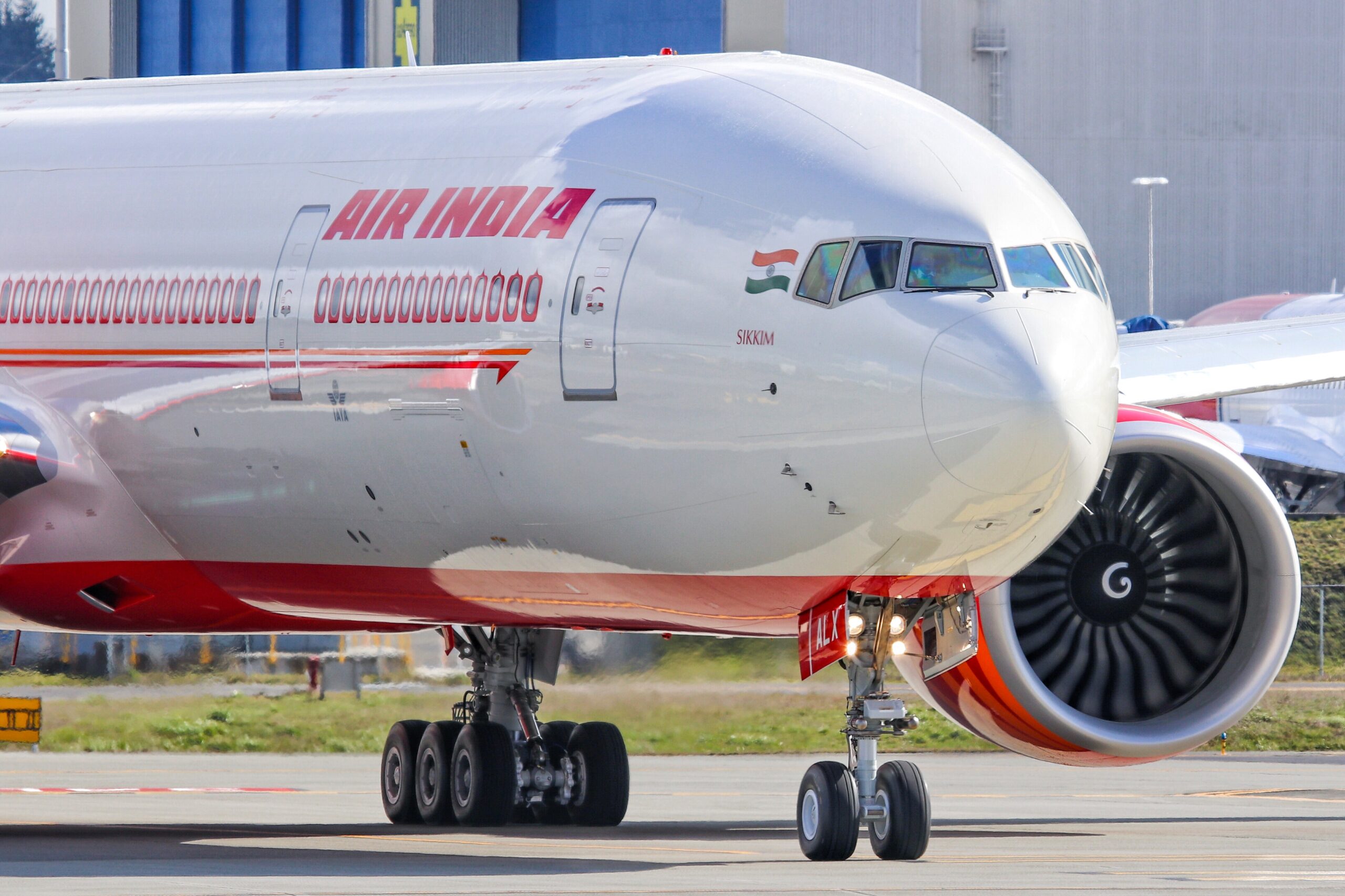
An Air India 777-300ER (Photo: AirlineGeeks | Katie Bailey)
The long and overly drawn-out saga of Air India’s privatization might come to a close soon. The Indian government has been trying since 2017 to privatize the airline but has had trouble finding a buyer of the dumpster fire of an airline.
In late 2019, the Indian government moved a significant portion of Air India’s debt into a special purpose vehicle to make the airline more attractive to potential buyers and also expressed interest in selling up to 100 percent of the airline. Both high levels of debt and the fear of government meddling after privatization scared off buyers in earlier attempts at privatization.
When 2020 rolled around it brought along COVID-19 which delayed things but things picked back up at the end of 2020 when the Indian government started requesting bids for the airline.
Earlier this month the Central Board of Direct Taxes in India said the buyer of Air India could carry forward the losses of the airline and claim up to a 30 percent tax rebate annually. This is in addition to the buyer only needing to acquire aircraft-related debt.
All of this has sweetened the deal enough that there were two bidders for Air India. The first was the Tata Group, a large Indian conglomerate. Second, was Ajay Singh, chairman and managing director of Indian airline SpiceJet. Singh while affiliated with SpiceJet is said to have expressed interest in Air India in his private capacity.
The Tata Group
The government committee overseeing the privatization is set to meet this week and they will formally recommend the winning bidder to the cabinet for approval. It’s expected that the Tata Group will emerge as the top bidder.
The interesting thing here is that the Tata Group already owns stakes in two airlines in India, Vistara and AirAsia India. The acquisition of Air India would bring the third airline into the fold, however, that probably won’t last for long. It’s very probable that the Tata Group will work to unify these airlines into a single entity if the acquisition goes through.
AirAsia India can be folded into the new single airline a little easier than Vistara can. Vistara is a joint venture between the Tata Group and Singapore Airlines, holding 51 percent and 49 percent of the company respectively. The joint venture also includes language that Vistara has exclusive rights to undertake “full-service carrier” services within the Tata Group. It’s expected however that Singapore Airlines will play along and allow Vistara to be combined.
Full Circle for the Tata Group
If the likely acquisition by the Tata Group it will almost like everything coming back full circle. Air India didn’t start as a national airline but a private airline started in 1932 going by the name Tata Air Services, the airline didn’t go by the name of Air India until 1946. The airline was started by none other than J.R.D. Tata, the Howard Hughes of the Indian aviation industry and the chairman of the Tata Group from 1938.
For decades his meticulous attention to detail made Air India a world-class airline. It set the standard for other Asian airlines. The Singaporean government in the 1970s actually looked to Air India to develop the now world-class service standards of Singapore Airlines.
Air India was nationalized in 1953 and things went smoothly for the next two decades until Tata was fired by Indian Prime Minister Morarji Desai over a petty dispute. This ultimately is what started the decline of Air India.
The airline coming back to the Tatas may just be what Air India needs to return to the glory days of the airline. The Indian government hopes to have the bidding process wrapped up by December and begin the transition of the airline to the winner. The transition will take time but there is enough there to remain cautiously optimistic.
Hemal took his first flight at four years old and has been an avgeek since then. When he isn't working as an analyst he's frequently found outside watching planes fly overhead or flying in them. His favorite plane is the 747-8i which Lufthansa thankfully flies to EWR allowing for some great spotting. He firmly believes that the best way to fly between JFK and BOS is via DFW and is always willing to go for that extra elite qualifying mile. Hemal's opinions are his own and do not reflect those of his employer.
Sign-up for newsletters & special offers!
Get the latest stories & special offers delivered directly to your inbox