










Stories

Tata Group Likely to Win Bid for Air India

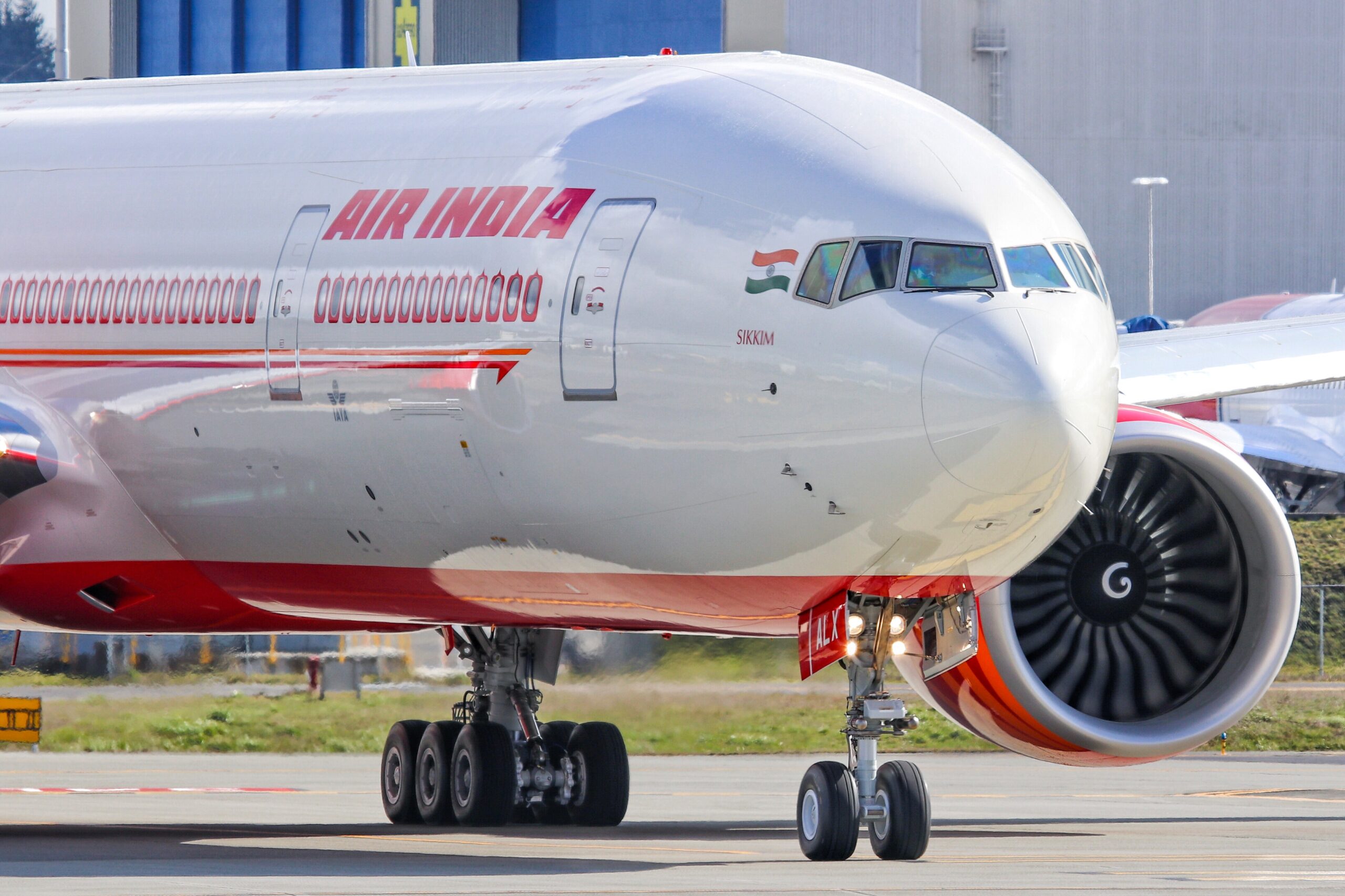
An Air India 777-300ER (Photo: AirlineGeeks | Katie Bailey)

The long and overly drawn-out saga of Air India’s privatization might come to a close soon. The Indian government has been trying since 2017 to privatize the airline but has had trouble finding a buyer of the dumpster fire of an airline.

In late 2019, the Indian government moved a significant portion of Air India’s debt into a special purpose vehicle to make the airline more attractive to potential buyers and also expressed interest in selling up to 100 percent of the airline. Both high levels of debt and the fear of government meddling after privatization scared off buyers in earlier attempts at privatization.

When 2020 rolled around it brought along COVID-19 which delayed things but things picked back up at the end of 2020 when the Indian government started requesting bids for the airline.

Earlier this month the Central Board of Direct Taxes in India said the buyer of Air India could carry forward the losses of the airline and claim up to a 30 percent tax rebate annually. This is in addition to the buyer only needing to acquire aircraft-related debt.

All of this has sweetened the deal enough that there were two bidders for Air India. The first was the Tata Group, a large Indian conglomerate. Second, was Ajay Singh, chairman and managing director of Indian airline SpiceJet. Singh while affiliated with SpiceJet is said to have expressed interest in Air India in his private capacity.

The Tata Group

The government committee overseeing the privatization is set to meet this week and they will formally recommend the winning bidder to the cabinet for approval. It’s expected that the Tata Group will emerge as the top bidder.

The interesting thing here is that the Tata Group already owns stakes in two airlines in India, Vistara and AirAsia India. The acquisition of Air India would bring the third airline into the fold, however, that probably won’t last for long. It’s very probable that the Tata Group will work to unify these airlines into a single entity if the acquisition goes through.

AirAsia India can be folded into the new single airline a little easier than Vistara can. Vistara is a joint venture between the Tata Group and Singapore Airlines, holding 51 percent and 49 percent of the company respectively. The joint venture also includes language that Vistara has exclusive rights to undertake “full-service carrier” services within the Tata Group. It’s expected however that Singapore Airlines will play along and allow Vistara to be combined.

Full Circle for the Tata Group

If the likely acquisition by the Tata Group it will almost like everything coming back full circle. Air India didn’t start as a national airline but a private airline started in 1932 going by the name Tata Air Services, the airline didn’t go by the name of Air India until 1946. The airline was started by none other than J.R.D. Tata, the Howard Hughes of the Indian aviation industry and the chairman of the Tata Group from 1938.

For decades his meticulous attention to detail made Air India a world-class airline. It set the standard for other Asian airlines. The Singaporean government in the 1970s actually looked to Air India to develop the now world-class service standards of Singapore Airlines.

Air India was nationalized in 1953 and things went smoothly for the next two decades until Tata was fired by Indian Prime Minister Morarji Desai over a petty dispute. This ultimately is what started the decline of Air India.

The airline coming back to the Tatas may just be what Air India needs to return to the glory days of the airline. The Indian government hopes to have the bidding process wrapped up by December and begin the transition of the airline to the winner. The transition will take time but there is enough there to remain cautiously optimistic.

Hemal Gosai

Hemal took his first flight at four years old and has been an avgeek since then. When he isn't working as an analyst he's frequently found outside watching planes fly overhead or flying in them. His favorite plane is the 747-8i which Lufthansa thankfully flies to EWR allowing for some great spotting. He firmly believes that the best way to fly between JFK and BOS is via DFW and is always willing to go for that extra elite qualifying mile. Hemal's opinions are his own and do not reflect those of his employer.

By Land or Sea: A Glance at Bimini Airports’ Histories

Bimini - 1989 (Credit: Cayobo via WikiCommons)

Split into two major islands, the pair of Bimini Islands has long been a quick getaway destination for vacationers across the world. While most will make the trip to Bimini by boat, seeing as how the islands are the closest Bahamian islands to the cities of Miami and Ft. Lauderdale, it is still possible to utilize flying to get to either island. With each tailored to suit a different purpose, the duo-airport location has been more than willing to accept travelers for decades.

And the biggest difference between the two airports is the location. For the island of North Bimini, the aptly named North Bimini Airport has made a home off the eastern coast of Alice Town and Bailey Town in the calm bay waters. Due to the location, seaplanes, most notably Chalks Ocean Airways, would serve North Bimini using its fleet of Grumman G-73 Mallards. The airline would serve the airport as a stopover point on service between Nassau-Paradise Island and Miami Seaplane Base. Because the Grumman had deployable solid landing gear, the airline would make use of a small concrete pad that required the aircraft to exit the water and cross the island’s main road before beginning passenger disembarking.

However, North Bimini has also been struggling to keep carriers since the collapse of Chalks in 2007. The airport concrete pad has not seen commercial use since as the airport would only really see charter aircraft in the meantime. Eventually, 2015 would bring in a scheduled commercial airline to the northern seaport. In an agreement with Resorts World, Cape Air would take on a seaplane version of the Cessna 208 and begin flights from Ft. Lauderdale-Hollywood and North Bimini. The airline would use traditional boat docks in Bimini, saving time as the aircraft did not need to leave the water to access passenger boarding doors like Chalk’s Mallards.

Cape Air would not last and eventually, Resorts World would shift their agreement to Tropic Ocean Airways. The airline currently operates flights from Bimini to both Miami Seaport Base and Ft. Lauderdale-Hollywood. Schedules prioritize using Cessna 208s similar to what Cape Air had been operating in the previous arrangement.

As for using a concrete runway, passengers are directed to South Bimini Airport which is just three miles southeast of the city bearing the same name. Runway 10-28 was originally built as a 4,400 by 100-foot asphalt runway before being granted a 900-foot extension in 2015. Upon lengthening the runway, additional enhancements would be made to allow for better operations including precision approach indicator lighting and LED lighting throughout. While the runway has seen improvement, the small airfield has relied on the same single-building airport terminal to greet travelers for decades.

Because of the hard surface, it has been easy for the island airport to find ways to lure in airlines. However, keeping those brands around has been the more challenging part for South Bimini. The airport has seen service Bimini Island Air, Bahamasair, Flamingo Air, and Elite Airways come and go. For Bahamasair and Elite, flights to Miami and Nassau for the flag carrier and Melbourne-Orlando for the Bombardier operated failed to bear fruit. Flamingo would scale back operations and rely on Western Air for connecting passengers to the Biminis. As for the airline that wore the island’s name, Bimini Island Air would fold following a FAA suspension of Part 135 operating certificate and subsequent repossessing of the airline’s Saab 340 from its lessor in 2011.

The last of these routes would be the flight from Miami to Bimini on Bahamasair, which launched service with ATR 42s in 2018. While the island has always praised additional service, the lack of consistent demand and cost restructuring of Bahamasair brought about the end of the flag carrier’s time in the islands. This has only been compounded by the effects of COVID-19, which saw the border between the United States and the Bahamas closed.

But as travel increased and the Bahamian government relaxed restrictions, South Bimini Airport would welcome Aztec Airways to the island. This time using Piper Navajo Chieftains to operate flights between the southern island and Ft. Lauderdale Executive Airport.

On top of Aztec, South Bimini is serviced by just two airlines to three destinations. For flights to other Bahamian islands, flights can be found on Western Air. The largest privatized Bahamian airline uses Embraer ERJ-145s to fly between the Bimini Islands and Nassau. Flying the other direction, Silver Airways uses ATR 42s to serve the land-based airport thrice weekly from Ft. Lauderdale-Hollywood.

Ian McMurtry

Although Ian McMurtry was never originally an avgeek, he did enjoy watching US Airways aircraft across western Pennsylvania in the early 2000s. He lived along the Pennsylvania Railroad and took a liking to trains but a change of scenery in the mid-2000s saw him shift more of an interest into aviation. He would eventually express this passion by taking flying lessons in mid-Missouri and joining AirlineGeeks in 2013. Now living in Wichita, Kansas, Ian is in college majoring in aerospace engineering and minoring in business administration at Wichita State University.

Korean Air Welcomes New AWS Data Infrastructure

A Korean Air A380 (Photo: AirlineGeeks | William Derrickson)

Earlier this week, Korean Air finished the complete shift for integrating Amazon Web Services (AWS)  – a subsidiary of Amazon that focuses on cloud computing, data storage, IT infrastructure and digital networking. In response to the evolving COVID-19 ordeal,  the Seoul-based carrier plans to use its migration towards cloud technology to adjust the airline’s operations and potentially improve customer service through the receipt of digital insights, data modeling and machine learning.  

“We are acquiring digital capabilities to lift our customer satisfaction levels to new heights, bringing us one step closer to becoming the world’s most-loved airline. We’ve completed the largest IT modernization project in the airline’s 52-year history within a short period and are shifting our focus from solving problems to creating innovation faster with AWS cloud capabilities, which is especially important as travel starts to resume,” Kenneth Chang, Executive Vice President, Korean Air, said.

In November 2018, the notable SkyTeam member initially announced its proposal to completely shift towards AWS for technological support in the airline’s website, frequent flyer program and route network. During the three-year migration period, the airline subsequently shut down its data centers, in favor of focusing heavily on integrating database management, artificial intelligence and data analytics into its daily operations and management such as the passengers and fleet. 

A team of 500 airline employees, who have basic knowledge of cloud computing and technological skills, is expected to be the airline’s chief group for supporting customer data platforms and the potential evolution for modern innovation.

Korean Air’s National Partnership For Sustainability

Prior to the flag carrier of South Korea completing its migration towards cloud computing and data collection with AWS’ Korea region, Korean Air also partnered with SK Energy – a prominent South Korean petroleum and oil refinery – to jump-start its movement towards carbon-neutral jet fuel. In early September, the airline began the partnership and purchased a month’s supply of eco-friendly, non-traditional fuel to operate a number of domestic flights.

As part of the airline’s initiative for sustainable and efficient operations, Korean Air added the Airbus A220-300 series aircraft to its current fleet of mainly widebody aircraft, except for the airline’s Boeing 737s which operate the carrier’s shorter routes. Meanwhile, Hyundai Oil Bank developed a foundation with the carrier and will formulate a proposal for biofuel manufacturing, which the carrier will eventually explore its usages.

Korean Air’s continuation to develop its initiatives for sustainability and efficiency can play a crucial role in the airline’s ability to reduce carbon emissions. The country’s largest carrier can inaugurate newer routes and expand its network, using more efficient aircraft.

It is clear that Korean Air’s response to the detrimental effects of COVID-19 on passenger travel demand and customer behavior involves technological solutions. The carrier will use this time period to maintain its capabilities to contribute to the fight against climate change.

It is essential for the airline to continue being aware of how its passengers will react to the new, comprehensive changes while also keeping an eye on how innovation involving the new AWS computing system will impact the airline’s staff and fleet. Korean Air can also be aware of data security and protection with the new infrastructure within the airline industry.

Benjamin Pham

Benjamin has had a love for aviation since a young age, growing up in Tampa with a strong interest in airplane models and playing with them. When he moved to the Washington, D.C. area, Benjamin took part in aviation photography for a couple of years at Gravelly Point and Dulles Airport, before dedicating planespotting to only when he traveled to the other airports. He is an avid, world traveler, having been able to reach 32 countries, yearning to explore and understand more cultures soon. Currently, Benjamin is an Air Transporation Management student at Arizona State University. He hopes to enter the airline industry to improve the passenger experience and loyalty programs while keeping up to how technology is being integrated into airports.

Lufthansa Cargo Welcomes New Freighters, to Retire Last MD-11F

One of Lufthansa Cargo's new Boeing 777F registered as D-AFLK. (Photo: Lufthansa Cargo)

In service since 1990, the then-modernized long-range, wide-body Boeing MD-11 was mainly known for its iconic tri-engines, winglets and advanced electronic flight instrument system. Despite its lack of commercial success, however, the MD-11 has over time been built mainly for freighter operations, becoming the MD-11F.

As the years went by, the sights of the MD-11F in the blue skies have dwindled down as fewer cargo airlines used it, with preferences to use the more favorable Boeing 777F instead. Currently, only FedEx, UPS, Lufthansa Cargo and Western Global Airlines operate the MD-11F in their operations. Soon, however, the cargo division of Lufthansa will be exiting the list as the days of the MD-11F continues to be shortly numbered.

The End of An Era

Before Boeing ceased production of the MD-11 in 2000, there were just about 200 of the aircraft built, with the last aircraft having been delivered to Lufthansa Cargo in 2001. Unfortunately, the cargo airline will soon say farewell to its last tri-jet, which also happens to be the last of the aircraft type registered in Europe as D-ALCC. To express its gratitude for more than 23 years of loyal service, Lufthansa cargo has the last tri-jet in a special farewell livery with “Farewell” and “Thank You, MD-11” stamped across its fuselage.

The last flights of D-ALCC will be rotations to Cairo, Tel Aviv, Chicago, and New York, before making its last landing at Frankfurt Airport. The final landing is scheduled for noon on October 15, 2021.

New Modern Freighters

The exit of the MD-11F paves the way for the welcoming of two Boeing 777F – registered as D-ALFJ and D-ALFK respectively – into the fleet of Lufthansa Cargo. Out of the two, D-ALFJ is an acquisition from the second-hand market and will remain as an all-white aircraft, with only an inscription on the fuselage, in an effort for Lufthansa Cargo to make the freighter’s capacity available to customers as soon as possible due to rising demand faced by the cargo industry.

On the other hand, D-ALFK is a brand-new aircraft from the Boeing facilities in Everett, Washington State and made its first touch-down in Frankfurt Airport on September 29, 2021. With a couple of new additions, the Frankfurt-based cargo airline now operates a fleet of 11 Boeing 777F aircraft, including another four aircraft operated by its sister company AeroLogic, as part of their strategic partnership.

“We are very pleased that we can now offer our customers the capacity of a total of 15 highly efficient wide-body freighters,” said Dorothea von Boxberg, Chief Executive Officer of Lufthansa Cargo, in a press release.

She also adds that Lufthansa Cargo, alongside the cargo capacities of parent airline Lufthansa, Austrian Airlines, Brussels Airlines and Eurowings Discover allows for flexibility in managing the freighters to form a dense, yet vastly global network. The new deliveries mark the completion for Lufthansa Cargo’s plans for fleet expansion, but the airline is still planning to add an additional two Airbus A321P2Fs – registered as D-AEUA and D-AEUC – from yet another sister company, Lufthansa Cityline.

With over 6.5 billion revenue tonne-kilometers and a turnover of 2,8 billion euros last year, Lufthansa Cargo was already one of the world’s leading air cargo companies. And given the timely fleet expansion to further strengthen air cargo efficiency, it definitely further highlights the cargo airline’s spot amongst the top.

Charlotte Seet

Fascinated by aircraft from a very young age, Charlotte’s dream was to work alongside the big birds one day. Pursuing her dream, she went on to achieve her diploma in Aviation Management and is currently working on her degree in Aviation Business in Administration with a minor in Air Traffic Management. When she’s not busy with school assignments, you can find her aircraft spotting for long hours at the airport. In Charlotte’s heart, the Queen of the Skies will always be her favorite aircraft.

Italy’s New Flag Carrier ITA Unveils Order of 50+ Airbus Aircraft

The Airbus A350XWB taxis at Chicago O'hare International Airport (Photo: Greg Linton)

A new era of civil aviation in Italy is set to commence, as Italy’s current flag carrier, Alitalia, is set to terminate its operations on October 15 due to its bankruptcy proceedings. In its place, Italia Trasporto Aereo (ITA) will succeed the carrier with a fresh balance sheet, 52 aircraft from its predecessor and 2800 employees.

As part of a press release at the time of the announcement, ITA released a fleet growth plan for 105 aircraft by 2025, with 81 “new-generation” aircraft in its fleet. On Thursday, it revealed a new order for 28 of these new-generation aircraft, signing a Memorandum of Understanding – MOU – with Airbus for seven Airbus A220s, eleven Airbus A320neo family aircraft and ten Airbus A330neos. 

In addition, ITA plans to lease 31 aircraft from Air Lease Corporation, including 15 Airbus A220s, two Airbus A320neos, nine Airbus A321neos and five A330-900neos. In total, the Rome-based airline will lease a total of 56 new Airbus aircraft over the course of its fleet plan, partnering with six leasing corporations – half of the leasing corporations that Alitalia cooperated with. Specifically, thirteen long-haul aircraft are expected to be leased, including the Airbus A350-900, and 43 short and medium-haul aircraft.

It is unknown which aircraft the carrier will receive first or what cabin will be featured inside. ITA expects to receive its first “new-generation” aircraft by the first quarter of 2022, maintaining its original plan. By 2025, the Italian flag carrier expects 70 percent of its fleet to be composed of new-generation aircraft, a decrease from its original estimate of 81 new-generation aircraft.

Currently, based on its current fleet composition, ITA will have a mix of a majority Airbus fleet for its launch on October 15, with 45 narrowbody aircraft and seven widebody aircraft. Per Planespotters.net, at the time of writing, the flag carrier has two aircraft registered to its name, an Airbus A320-200 and Airbus A330-200. 

Alitalia’s previous fleet enabled the usage of Embraer E175s and Embraer E195s for its CityLiner subsidiary, used for short-haul hops from Milan and Rome. In addition, Alitalia retained a sub-fleet of one Boeing 777-300ER and eleven Boeing 777-200ERs, pre-COVID, for international operations.

ITA’s Executive Chairman, Alfredo Altavilla, expressed his satisfaction with the deal, commenting: “The strategic partnership with Airbus and ALC is crucial for ITA to jumpstart our Business Plan aiming at achieving our targets of a new environmental-friendly fleet with significantly lower operating and leasing costs.  I want to thank both Christian Scherer, CCO of Airbus, and Steven F. Udvar-Házy, Executive Chairman of Air Lease Corporation, for their trust in the future of our brand-new airline.” 

Italia Trasporto Aereo’s influx of aircraft will fuel a network expansion from an initial network of 45 destinations and 61 routes to 74 destinations and 81 routes by 2025, per its original plan. Recently, ITA was approved to fly to the United States, allowing it to serve Boston, New York and Miami during the IATA winter season of 2021-2022, in addition to planned service to Tokyo’s Haneda Airport. Furthermore, ITA plans to double its long-haul offering by the summer of 2022, adding flights to Buenos Aires, Los Angeles, Rio de Janeiro and Washington D.C.

ITA’s Obstacles

Amid its order for new aircraft, Italia Trasporto Aereo still has further obstacles to hurdle, like the acquisition of the flag carrier brand, Alitalia. Per a report by AirlineGeeks in September, ITA will bid on the Alitalia brand by October 4 for at least 290 million Euros ($335.7 million), despite the brand being worth 150 million Euros ($173.7 million). Other bidders like Ryanair may try to drive up the bid price, forcing ITA to burn through its 1.3 billion Euros designated to start operations.

Furthermore, the airline needs to cooperate with unions for the 2800 employees, scheduled to come back by its launch. However, the drastic drop in employees from upwards of 10,000 is sparking protests in Rome. Per local Italian media, a protest outside of Rome’s Fiumicino Airport against Alitalia caused the cancelation of 60 percent of Alitalia flights last week.

Financially, ITA will need to make wise choices with its 3 billion Euros from the Italian government, in addition to investor money. The carrier aims to reach its break-even point by the third quarter of 2023 and have an EBIT of 209 million Euros ($246.877 million) in 2025. Additionally, its turnover is expected to reach 3,329 million Euros ($3,931 million).

Winston Shek

Ever since Winston was a toddler, he has always had a fascination for airplanes. From watching widebodies land at Washington Dulles to traveling the world, Winston has always had his eyes towards the skies. Winston began aviation photography in 2018 and now posts his photos occasionally on his Instagram account. He previously wrote for a blog. In his free time, Winston loves to play chess, do recreational activities, and watch sports. Looking into the future, Winston plans to service the aviation industry.

Denver Air Connection Announces Texas Launch Date

A Denver Air Connection Dornier 328Jet (Photo: AirlineGeeks | Joey Gerardi)

At the beginning of September 2021, the Department of Transportation (DOT)  approved the alternate service plan request by a local Colorado-based Denver Air Connection. The request was to use some of the carrier’s current flights out of Clovis, N.M. and operate flights to Dallas Ft. Worth in addition to the prior, and the best part, it is at no extra cost to the Federal Government.

Nearly three weeks after the DOT announced the approval of the alternate service plan, the airline has released the flight times and seats for booking to the general public. Flights from Dallas Ft. Worth to Clovis, N.M. will operate once daily every day of the week except Wednesdays beginning Nov. 1, 2021. This new flight schedule will affect the current flights to Denver as well, now instead of twice-daily service to Denver, they will see once-daily flights to the Mile High City every day except Tuesdays.

The carriers route map as of October 2021 (Photo: Denver Air Connection)

Dallas Ft. Worth will now be the southernmost airport that the carrier fly’s to. All flights operated out of Clovis, N.M. are currently scheduled to operate on the 30-seat Dornier 328Jet according to the DOT document, although they may occasionally swap out to the 50-seat Embraer E145 jet in order to avoid delays or cancellations due to maintenance schedules.

The way the flight scheduled lines up, it is now possible to fly between Dallas and Denver using the 30-seat Dornier Jet, as long as you don’t mind making a stop in Clovis. Five days a week, Thursdays through Mondays, you can leave Dallas Ft. Worth at 1:45 P.M. and arrive in Denver at 4:05 P.M. using the ever so rare 328Jet. That time includes a roughly one-hour stop in the previously mentioned Clovis. Flights from both Dallas and Denver to Clovis are scheduled at 1-Hour and 25-Minutes.

This will be a unique connection and just another airport that this rare jet will be visiting on almost a daily basis. Flights and Schedules are subject to change.

Joey Gerardi

Joey has always been interested in planes for as long as he can remember. He grew up in Central New York during the early 2000s when US Airways Express turboprops ruled the skies. Being from a non-aviation family made it harder for him to be around planes and would only spend about three hours a month at the airport. He was so excited when he could drive by himself, the first thing he did with his driver's license was get ice cream and go plane spotting for the entire day. He graduated from Western Michigan University in 2022 with a B.S. in Aviation Management & Operations and a Minor in Business, and currently works for a major airline in his hometown.

Boeing to Expand Converted Freight Production in China

A UPS Boeing 767F at Vienna Airport. (Photo: AirlineGeeks | James Dinsdale)

On Sept. 28, the opening day of the China International Air Show, Boeing announced its plan to open two new Boeing 767-300BCF conversion lines in cooperation with Guangzhou Aircraft Manufacturing and Engineering Company (GAMECO), a joint venture between China Southern Airlines and Hutchison Whampoa.

“It was mutually beneficial to continue building our relationship with GAMECO to provide additional conversion capacity for the 767-300BCF while supporting growth in the region,” said Peter Gao, vice president, Boeing Commercial Sales and Marketing for China.

Earlier this year, GAMECO announced it would add a new Boeing 737-800BCF conversion line, adding it to the two existing conversion lines with the Guangzhou-based company. Along with GAMECO, HAECO Shandong and Boeing Shanghai are the only two other manufacturers who have the capability to convert 737-800 aircraft. All three competitors are located in China, making the country a strategic point in Boeing Converted Freight operations. By adding the two new Boeing 767-300BCF conversion lines, GAMECO will be the only firm that has both 737 and 767 freighter conversion lines, demonstrating Boeing’s ambition and commitments to the Chinese market.

Rosy Projections

Over the conference, Boeing also shared the company’s projections for Asia’s cargo freight market moving forward.

The manufacturer said it believes a total of 1,720 new freighters will be needed to support the rapid growth from now until 2040, 520 of which would be wide-body freighters such as Boeing 767-300BCF.

The aircraft has significant advantages over its competitors when it comes to cost. It has a large number of retiring passenger Boeing 767-300s to convert, which would offer a lower cost of purchase compared to a similar capacity brand new freighter. In addition, pilots are already familiar with the aircraft, which would lower the operating cost and crew training cost for airlines that previously operated 767s.

An Amazon Prime Air 767 touching down in Miami. (Photo: AirlineGeeks | William Derrickson)

Over the past decade, Asia — and especially China — has made up significant ground in the air freight market. Fueled by the explosion of online shopping, domestic parcel transportation grew exponentially. As international passenger traffic continues to hover at a low level due to the pandemic, long-haul, wide-body freighters have been able to pick up more cargo than was originally able to fit in the passenger plane’s cargo bay.

Compared to the U.S., which has an extensive air freighter network operated by mega shipping companies such as UPS and FedEx, China still has significant growth potential in air freight. The country is building its first air cargo hub in E’zhou, China, a small city located in the center of the country. The airport will serve as the hub airport for SF Airlines, which is the largest cargo carrier in China. The company is also the sole operator of Boeing 767-300BCF in mainland China. More cargo airlines are taking off in China and Southeast Asian countries to fulfill the spiking demand from e-commerce orders. As the countries in the region continue to pursue more efficient shipping networks, freighters such as Boeing 767-300BCF will play as an essential actuator of the development of the shipping economy.

Boeing is still suffering from the aftershock from Boeing 737 MAX grounding in China, and this new strategic partnership to expand the presence of Boeing in the future growth of the Chinese economy may be the dawn of another golden age for Boeing in China.

Lei Yan

Lei is from Inner Mongolia, China, and now lives in Guangzhou. He grew up in an aviation family, where his passion began. During his time at Penn State University, he studied Industrial Engineering specializing in operations research, and he graduated with an honor’s thesis on airport gate assignment optimization. Now, he is a Purchasing Manager with Procter & Gamble. In his free time, he enjoys flying, reading, and wandering around the city.

Scoot Increases Athens-Berlin, Resumes Services

A Scoot 787 Dreamliner departs Paine Field in Washington. (Photo: AirlineGeeks | Katie Bailey)

The recent continuous rise in community Covid-19 cases in Singapore has led to an increase in calibrated safe management measures and extensive testing, alongside stringent contact tracing measures. Around the world, the Delta variant has also caused panic and led to some trepidation with regard to travel, causing certain countries to go back into lockdown and having flight services disrupted yet again.

Despite the headwinds, Singaporean low-cost carrier Scoot has continued to make positive updates to its network as it continues to grow its passenger capacity as vaccination programs gain momentum globally.

Having just reinstated its fifth freedom route between Athens and Berlin last month as an effort to hop onto the summer holiday demand between Germany and Greece, the low-cost carrier currently operates its popular flight service between Athens and Berlin three times weekly. Scoot operates the flights in between the outbound and return operations of its flight between Singapore and Athens.

Starting in mid-October however, the frequency is planned for an increase to four flights per week to further support the rising travel demand from Europe to Singapore, as well as the airline’s vast Asia Pacific network.

Eased Resumptions

Scoot also has plans to resume flight services to Phuket, Thailand in early October using its Airbus A320 aircraft as a part of the Phuket Sandbox plan whereby fully vaccinated travellers do not need to undergo quarantine requirements upon arrival. And to cater to travelers who wish to visit Saudi Arabia for the Umrah pilgrimage, Scoot also has plans to resume its flight services to Jeddah, Saudi Arabia in late October using its Boeing 787-8 Dreamliner aircraft.

Excluding the new updates to its network, Scoot currently operates low-cost flight services to Australia, China, Europe, Japan, South Korea, Taiwan, Indonesia, Malaysia, the Philippines and Vietnam.

While it might not have been as vast as pre-Covid-19 levels, but it can be said that Scoot has been making solid progress towards recovery as the low-cost carrier makes the decision of capacity increased based on the underpinning of consistently strong demand for air cargo as well.

Safety Accolades

Besides the positive network increase, Scoot has also recently added well-recognized accolades to showcase its commitment to service excellence, product leadership and having a connected network even during the pandemic.

Powered by SimpliFlying, the APEX Health Safety sets the industry standard for customer-centric Covid-19 certification, providing a validation that is designed to encourage airlines to go beyond governmental requirements to a higher standard for health safety. Scoot was awarded the organization’s highest rating.

Additionally, in a safety audit conducted by London-based research firm Skytrax, Scoot was also awarded a five-star rating for Covid-19 safety, alongside its parent company, Singapore Airlines.

The two distinguished safety audits made Scoot the first low-cost carrier to receive the highest ratings for both.

Charlotte Seet

Fascinated by aircraft from a very young age, Charlotte’s dream was to work alongside the big birds one day. Pursuing her dream, she went on to achieve her diploma in Aviation Management and is currently working on her degree in Aviation Business in Administration with a minor in Air Traffic Management. When she’s not busy with school assignments, you can find her aircraft spotting for long hours at the airport. In Charlotte’s heart, the Queen of the Skies will always be her favorite aircraft.

Air France Adds First A220 to Fleet, Announces First Destinations

Air France's first Airbus A220. (Photo: Air France)

Air France took delivery of its first Airbus A22-300 on Wednesday, welcoming an aircraft it christened “Le Bourget,” named for a French town north of Paris with close historical ties to aviation and home of Paris-Le Bourget Airport, the Air and Space Museum and the biennial Paris-Le Bourget International Air Show.

The aircraft is set to be the first of 60 of the type the airline will take delivery of in the coming years, which are set to replace the aging Airbus A318s, Airbus A319s and certain Airbus A320s the airline currently has in its fleet in addition to reducing the airline’s carbon footprint. The A220-300 is set to reduce CO2 emissions by 20%, reduce costs per seat by 10% and have a 34% reduction in noise footprint over the current generation of aircraft it will replace.

“This new aircraft with an unparalleled energy performance represents a major asset for Air France,” Air France-KLM CEO Benjamin Smith said in a statement. “To date, fleet renewal is the main source of reducing CO2 emissions, and this is why we are continuing to invest in latest-generation aircraft. We are also activating all the levers at our disposal such as sustainable fuels or eco-piloting, as part of our contribution to promoting a carbon-neutral air transport industry and positioning ourselves as a leading player of a more sustainable aviation.” The aircraft will be a major contributor to meeting the stringent emission targets imposed by both the French and Dutch governments for Air France-KLM Group’s bailout conditions in April 2020.

A New Addition

The A220-300 will be configured with 148 seats in a 3-2 configuration offering 80% of customers a window or aisle seat. In addition, windows onboard the A220 are 50% larger than those on the current Airbus A320 family.

Two travel cabins will be offered — Business and Economy. Access to Inflight Wi-Fi will be offered via Air France Connect furthermore, and access to individual USB A and C ports along with a table or smartphone holder integrated into the backrest will be provided. Air France has also installed High Efficiency Particulate Air (HEPA) filters to recycle and filter air.

“The arrival of a new aircraft is always a special occasion for an airline,” Air France CEO Anne Rigail said in the same statement. “All the Air France teams have spent over two years preparing for this moment and we are excited to see our customers discover the optimal comfort offered by this aircraft. The cabin is more spacious, brighter, and offers full Wi-Fi-connectivity, further contributing to the upmarket positioning of our offer.”

Beginning Oct. 31, the aircraft is set to begin flying to five destinations including the likes of Berlin; Milan; Venice, Italy; Barcelona and Madrid, Spain from the Air France hub at Paris Charles de Gaulle Airport. More destinations will be added onto the network during the 2021-2022 winter season including Bologna and Rome, Italy; Lisbon, Portugal and Copenhagen, Denmark. More cities, such as destinations in Africa and the Middle East, are expected to be added to the Airbus A220’s network because of the long-range capabilities of the aircraft compared to its similarly-sized predecessors.

Matteo Giardini

Originally from Italy, Matteo has spent the majority of his life living in Asia. He had his first flight when he was less than a year old on an MD-11 from Milan Malpensa to Osaka Kansai. When he was younger, airplanes would fly over his school on their way to Shanghai Pudong International Airport and he would spend much of his recess time plane-spotting. Today he is continuing with his passion for aviation and is now finishing his Master in Air Transport Management at Cranfield University in the United Kingdom.

Qatar Airways Backtracks on A380 Withdrawal, Cites A350 Issues

Qatar Airways
A Qatar Airways Airbus A380. (Photo: AirlineGeeks | William Derrickson)

Qatar Airways has revealed that it will return at least five Airbus A380s to service from this November, a complete U-turn on the company’s decision to permanently withdraw the fleet due to the effects of the Covid-19 pandemic.

Qatar Airways CEO Akbar Al Baker informed Executive Traveller of the decision citing the issues surrounding the Airbus A350 XWB, a type Qatar was forced to ground 13 of in August after airframe investigations found the fuselage had been degrading quicker than expected.

“I think by early November we’ll be starting to fly the A380s again,” Al Baker said in an interview with Executive Traveller. “At the moment we are looking at flying five, but we may have to fly all ten.”

The informal announcement of the return of the A380 comes soon after the airline took a $2.3 billion write-down on the value of the superjumbos and the Airbus A330 aircraft currently in the fleet.

The airline originally planned to retire all 16 A330s — six A330-200s and 10 A330-300s — by 2022, with the steady flow of A350s and Boeing 787 Dreamliners replacing them. However, it seems the A330 may be around in Qatari colors longer than planned to help fill the gap.

But with the A380 making a return to the skies above Doha, the routes that they will be deployed on are yet to be announced.

“Unfortunately, with the issues we are having with the Airbus A350s that have been grounded by our regulator, we have no alternative but to fly the A380s,” Al Baker said in the interview. “We have to find capacity for our passengers who need airlines to take them to their loved ones for Christmas.”

Qatar Airways A350-900 A7-AMF touching down on runway 25L at Brandenburg Airport (Photo: AirlineGeeks | James Dinsdale)

Airbus has so far delivered 34 A350-900s and 19 A350-1000s to Qatar Airways, with another 23 yet to come. But in August this year, the airline publically said it would not accept any further deliveries of the -1000 variant until Airbus fixes the problem.

“Qatar Airways expects Airbus to have established the root cause and permanently corrected the underlying condition to the satisfaction of Qatar Airways and our regulator before we take delivery of any further A350 aircraft,” Al Baker told Executive Traveller.

The return of the A380 breathes new life into the type’s existence after many operators decided to permanently withdraw the four-engine aircraft due to economical issues following the drop in air travel in 2020. So far, Emirates will return more than 50 of its flagship aircraft to active service, the airline will have 118 on its fleet list by the end of the year.

British Airways is also expected to gradually return some of the 12 A380s it has stored away sometime next year, a huge contrast to other European carriers Air France and Lufthansa deciding to mothball them completely.

Last month it was announced that Korean Air will expedite the retirement of its 10 A380s by 2026. The airline took delivery of its first A380 in 2011.

AirlineGeeks.com Staff

AirlineGeeks.com was founded in February 2013 as a one-person blog in Washington D.C. Since then, we’ve grown to have 25+ active team members scattered across the globe. We are all here for the same reason: we love deep-diving into the fascinating realm of the airline industry.
Sign-up for newsletters & special offers!

Get the latest stories & special offers delivered directly to your inbox

SUBSCRIBE

Uh-oh! It looks like you're using an ad blocker.

Our website relies on ads to provide free content and sustain our operations. By turning off your ad blocker, you help support us and ensure we can continue offering valuable content without any cost to you.

We truly appreciate your understanding and support. Thank you for considering disabling your ad blocker for this website