








Stories

Malaysia’s Aviation Industry is Seeing The Light At The End Of The Tunnel

A Malaysia Airlines 777-200 similar to the one involved in MH370 (Photo: Aero Icarus from Zürich, Switzerland [CC BY-SA 2.0 (https://creativecommons.org/licenses/by-sa/2.0)], via Wikimedia Commons)

Malaysia’s aviation industry is seeing the light at the end of the tunnel. In response to the Langkawi Travel Bubble, the domestic passenger movements in September in Malaysia have skyrocketed by 74 percent, compared to the previous month.

Earlier, the Malaysian government has rolled out the Langkawi Travel Bubble to stimulate the travel industries, allowing the citizens who have been fully vaccinated and the age over 18 to the country’s tourist hotspot.

According to Malaysia Airports Holding Bhd’s (MAHB), the operator of managing 39 airports across the country including Kuala Lumpur International Airport and its Turkish Istanbul Sabiha Gokcen International Airport, said the total passenger movements for Malaysia increased 55 percent to 458,000 passengers last month from 362,000. The domestic aircraft movement has increased by about 20 percent, compared to August.

“Local airlines also benefited from it with AirAsia recording the most aircraft movements with 176 flights and commanding the majority of the average sear factor at 64 percent during the same period,” MAHB said in a statement.

MAHB believed that the travel trend is likely to remain with the lifting of interstate and international travel in the fourth quarter of the year.

Last week, the government has achieved the aim of 90 percent of adults have been inoculated, announcing its travel restrictions will be lifted as a result. The citizens can go abroad without applying for permission from the government.

“We have to train ourselves to live with COVID, because COVID may not be eliminated fully.” Ismail Sabri, Prime Minister of Malaysia said.

Successful Vaccination Program

Following the remarkable success of the Langkawi Travel Bubble, AirAsia aims for the domestic market can reach the pre-pandemic level by late November. Bo Lingam, the president of AirAsia said the airline would reinstate 300 staff currently on furlough to operate the domestic flights.

AirAsia has reported a net loss of 1.3 billion ringgit (311.6 million) for the first half of 2021 and the passenger capacity was less than one million passengers in the first 10 months. The airline’s domestic capacity was 19 million in 2019, however, the passenger number has plummeted to 6.3 million last year.

In the meantime, Malaysia Airlines has also benefited from the Langkawi Travel Bubble. “We saw healthy forward booking reflecting customers’ confidence and strong demand for travel with Malaysia Airlines. We are happy to report that Malaysia Airlines recorded over 500% increase in our flight booking domestically, the highest booking following the reopening of Langkawi.” Group Chief Executive Officer of Malaysia Airlines, Captain Isham Ismail said.

Meanwhile, the flag carrier is trying to entice the citizens to return to the skies with a promotional fare and provided up to 50 percent discount on MHholidays Packages.

Maskless Travel Is Returning on SAS. When Could the U.S. Follow?

An SAS Airbus A350XWB (Photo: AirlineGeeks | Ben Suskind)

Scandinavian Airlines, known most commonly worldwide as SAS, made headlines this weekend as it announced that passengers traveling within Denmark, Sweden and Norway would no longer be required to wear a face mask onboard its aircraft. The move was followed by other local carriers Norwegian, Flyr, and Widerøe, the latter two of which have route networks that are much more heavily concentrated within the Nordic countries.

Masks are still required on all of the carriers’ flights to destinations outside those three countries, with the entirety of SAS’s long-haul network — in addition to the European networks of the other airlines — still falling under that umbrella.

The change came amid substantial rollbacks of restrictions within the three countries that had been implemented to curb the spread of Covid-19 within the nations’ borders. According to Reuters, Sweden has vaccinated nearly 70% of its total population, lagging slightly behind Norway and Denmark, which sit at approximately 74% and 76%, respectively. The countries’ health authorities also said they had seen a significant pullback in the number of people hospitalized for Covid-19.

“We believe the time is right now based on the infection situation in the country,” an SAS spokesperson told Norwegian media outlet TV2.

The four Nordic airlines have become an outlier in the global travel sphere, as masks have become the norm since travel began to resume in late-2020, begging the question of when the rest of the world will follow, whether weeks, months, or years into the future.

The Next Three Months

First put in place in early 2021, the Transportation Security Administration’s (TSA) originally mandated masks be used onboard aircraft and in airports until May 11. However, a further announcement in the spring extended the effective date to Sept. 13 before another release in mid-August set the new end date to Jan. 18, 2022.

As such, there is a date in place after which the potential of mask-free travel — at least for travel within the U.S. — exists. However, the odds of the mandate expiring as is currently planned are relatively unclear and likely rest on the trajectory of Covid-19 cases, related hospitalizations and vaccination numbers over the course of the three months leading up to Jan. 18.

AA B789 LAX William Derrickson (1)
An American 787 Dreamliner in Los Angeles. (Photo: AirlineGeeks | William Derrickson)

Indeed, with the current balance of power in the U.S. political system, an extension appears more likely than not as, according to the CDC, only 57% of Americans are fully vaccinated as of the time of writing, a total that lags behind Scandinavian nations when they pulled back some of their virus-related restrictions. The vaccination figure jumps to nearly 66% when including those that have received one dose of any vaccine.

U.S. airlines have not publicly endorsed a position on a mask mandate moving into 2022. Reports of unruly passengers as well as violence against flight attendants skyrocketed in 2020 and 2021 — particularly compared to pre-pandemic levels — with passengers refusing to follow crew member instructions with regard to masks contributing a significant amount to the new total. As such, crew unions — and, as an extension, airlines — may seek to have mask mandates removed as early as is feasible to keep flight attendants from being required to continue serving as enforcers in the air.

As vaccine mandates have been rolled out at most major airlines in recent weeks, in many cases as a result of an executive order requiring federal contractors to vaccinate workers, the total number of airline employees and crew that have received at least one shot has jumped, too. This could serve as another factor unions and airlines point to in order to encourage the loosening of mask-related restrictions.

However, both airlines and unions could go the opposite way as they work to maximize crew member protection from Covid-19 as they continue to interact with hundreds, if not thousands, of passengers every day.

All told, any prediction at this stage as to the future of the mask mandate in the U.S. will likely hinge on a prediction for Covid-19 case counts and hospitalization rates in the months ahead. And because U.S. airlines are unlikely to require vaccines on flights as Australian carrier Qantas is currently planning, the future of masks on travel in the U.S. continues to be, as it has been nonstop for the past 19 months, totally up in the air.

Parker Davis

Parker joined AirlineGeeks as a writer and photographer in 2016, combining his longtime love for aviation with a newfound passion for journalism. Since then, he’s worked as a Senior Writer before becoming Editor-in-Chief of the site in 2020. Originally from Dallas and an American frequent flyer, he left behind the city’s rich aviation history to attend college in North Carolina, where he’s studying economics.

Lufthansa Cargo Retires Final MD-11 Freighter

A Lufthansa Cargo MD-11 Freighter lands in Frankfurt.

Lufthansa Cargo retired its final McDonnell-Douglas MD-11 Freighter on Sunday, marking the end of a 20-year era of trijet operations for the airline. It operated legs to Cairo, Tel Aviv and Chicago before flying its last flight on Saturday, which operated under the flight number Lufthansa flight 8161, a transatlantic hop departing New York’s John F. Kennedy International Airport on Oct. 16, at 11:12 p.m. and arriving in Frankfurt at 12:03 p.m. the following day, per data from FlightRadar24.

The Lufthansa Cargo trijet scheduled for retirement is D-ALCC, a 23-year old MD-11 Freighter destined for operations with U.S.-based Western Global Airlines. D-ALCC sports a “Thank You MD-11, Farewell” sticker to commemorate the aircraft’s service and retirement, along with a thank you graphic on its forward left cargo door.

Lufthansa Cargo received its first MD-11 in June 1998, operating 19 freighters over the course of 23 years, replacing the Boeing 747-200F. As the backbone of its cargo operations through the late 2000s and early 2010s, these freighters delivered cargo through the airline’s Frankfurt, Germany hub. 

However, in 2011, Lufthansa Cargo ordered five Boeing 777 Freighters as part of an initiative to shift to a more efficient and newer two-engine widebody. As a result, the MD-11 Freighter was slowly phased out of the fleet, scheduling its retirement for December 2020. Due to the Covid-19 pandemic, increased cargo demand triggered the delay of its retirement until October 2021. Even the retirement of D-ALCC was postponed from Oct. 15 to Oct. 17 as the aircraft was scheduled on two extra runs from Frankfurt to New York.

Lufthansa Cargo retired three Mcdonnell Douglas MD-11 Freighters each in 2020 and 2021, facilitated by the entrance of four Boeing 777 freighters to the airline’s fleet. In September 2021 alone, the airline received two Boeing 777 freighters, a former Emirates SkyCargo freighter and a new Boeing 777 straight from the Boeing Everett plant.

MD-11 Freighter History

The McDonnell Douglas MD-11 program was launched by Mcdonnell Douglas in late 1986, after Mcdonnell Douglas conducted studies and trials regarding a derivative of the DC-10. The initial prototype of the aircraft was constructed in 1988, flying its inaugural flight on January 10, 1990. McDonnell Douglas received FAA certification in November of that year, allowing for the first delivery of the MD-11 to Finnair in December 1990.

In total, 200 MD-11s were built, including 131 of the passenger type — which saw orders from carriers like American Airlines, Delta Air Lines and Swissair. However, the trijet saw limited success in the passenger market, due to the MD-11’s inability to meet performance targets with its range and payload. Outside the passenger market, however, the MD-11 Freighter was engineered to reach up to 7,000 nautical miles with 28,000 kilograms of payload, instead, reaching 7,000 nautical miles with 22,000 kilograms of payload. 

These issues with payload and range affected carriers like American Airlines, which complained about range issues forcing frequent stopovers. These issues deterred carriers such as Singapore Airlines from ordering the jet, with Singapore swapping its order for MD-11s with Airbus A340s. Even after Mcdonnell Douglas attempted to resolve the range issues, new twin-engine programs like the Boeing 777 came online, drawing further orders away from the MD-11 program.

After McDonnell Douglas merged with Boeing in 1997., the focus of the MD-11 shifted to its usage as a freighter jet, due to competitive concerns with other Boeing aircraft. The aircraft saw some success with freighter operations and formed a niche, as some passenger aircraft were converted to freighters, in addition to 50 orders for a freighter type. The MD-11 Freighter became a workhorse with freighter airlines like FedEx and the United Parcel Service, in addition to long-haul freighter operations for Martinair Cargo and Lufthansa Cargo.

Only three McDonnell Douglas MD-11 operators will remain after the retirement of Lufthansa Cargo’s trijets: FedEx, UPS and Western Global. Currently, FedEx operates the most MD-11 Freighters with 59 of the type, followed by UPS with 42 of the type, per planespotters.net. Ultimately, the retirement of the Lufthansa Cargo Mcdonnell Douglas MD-11 marks the end of an era for European aviation and Lufthansa’s history.

Winston Shek

Ever since Winston was a toddler, he has always had a fascination for airplanes. From watching widebodies land at Washington Dulles to traveling the world, Winston has always had his eyes towards the skies. Winston began aviation photography in 2018 and now posts his photos occasionally on his Instagram account. He previously wrote for a blog. In his free time, Winston loves to play chess, do recreational activities, and watch sports. Looking into the future, Winston plans to service the aviation industry.

ANA Welcomes Final A380 to Fleet

All Nippon Airways' first Airbus A380 resting at Tokyo's Narita International Airport. (Photo: AirlineGeeks | Tom Pallini)

The largest carrier in Japan — All Nippon Airways — finally took delivery of its final of three Airbus A380s that will round out its fleet operating from the archipelagic nation to the Hawaiian islands. Much like its sister planes, this A380 once again graces the skies in a turtle-themed livery with different colors differentiating the three aircraft. The final aircraft comes in Sunset Orange, making it significantly different from the earlier aircraft that appeared in ANA Blue and Emerald Green.

The jet had previously been expected to be ready for service before summer 2020, but the fallout from the Covid-19 pandemic saw the airline delay delivery by at minimum six months as it restructured, parked and reorganized its long-haul fleet. Now, over 16 months later, the final Flying Honu has made itself at home in Tokyo. ANA’s aircraft arrived at Tokyo’s Narita International Airport Oct. 16 with mascots of turtles that mirror the aircraft designs there to meet the aircraft on arrival.


And in Tokyo it shall stay — the airline plans on utilizing the aircraft from its Tokyo bases at Narita and Haneda Airport to beef up its flights to Honolulu. The airline already sees heavy competition on the route, with Hawaiian Airlines and Japan Airlines putting Airbus A330s and Boeing 777s and 787 Dreamliners on the route for competition. ANA had previously relied on Boeing 787s to get the job done, with the new model increasing capacity per flight from 246 seats to 520.

The two-deck plane comes with a mix of first, business and economy class seats between the two decks. The main deck for the airline’s A380 consists of all economy seating, while premium services will move passengers to the upper level of the bi-level aircraft. Upstairs, it’s a mix, with eight first class, 56 business class seats and 73 premium economy seats giving passengers more leg room and better service than their counterparts below them.

Simultaneously, All Nippon and Airbus also announced Mixed Fleeting Flying (MFF) approval for the A380 and A320. The aircraft’s MFF requirement was approved by the Japanese Civil Aviation Bureau and marks the first time that MFF has been approved for a Japanese airline. In doing so, the approval opens the door for A320s and A380 pilots to certified for both aircraft types simultaneously.

Speaking on the success, Airbus Head of North Asia and President of Airbus Japan Stéphane Ginoux said, “We are pleased that A320 and A380 MFF operations were approved by JCAB and that ANA has become the world’s first airline to introduce it. Mixed Fleet Flying offers airlines increased flexibility and cost-efficiency and has become one of the keys to Airbus’ success. For airlines, the increase in revenue hours flown by pilots due to less standby and downtime results in a significant improvement in productivity.”

Ian McMurtry

Although Ian McMurtry was never originally an avgeek, he did enjoy watching US Airways aircraft across western Pennsylvania in the early 2000s. He lived along the Pennsylvania Railroad and took a liking to trains but a change of scenery in the mid-2000s saw him shift more of an interest into aviation. He would eventually express this passion by taking flying lessons in mid-Missouri and joining AirlineGeeks in 2013. Now living in Wichita, Kansas, Ian is in college majoring in aerospace engineering and minoring in business administration at Wichita State University.

Viva Aerobus Reports Strong September Traffic Figures, Surpassing 2019

Viva Aerobus A320 LAS William Derrickson
A Viva Aerobus A320 in Las Vegas. (Photo: AirlineGeeks | William Derrickson)

In September, Mexican ultra-low-cost carrier Viva Aerobus registered more than 1.23 million passengers carried, an increase of 27% compared to September 2019. These statistics show Viva Aerobus’s strong planning and execution in the Mexican market in recent months, which has led to a significant upward trend compared to pre-pandemic occupancy levels and a total load factor of 80%.

According to a press release, the total number of passengers transported between January and September surpassed 10.65 million, which is equivalent to growth of 21.9% compared to the 8.73 million passengers transported in the same months of 2019.

“Value Airline of the Year”

Viva Aerobus received the “Value Airline of the Year” Award at the 47th Annual Air Transport World (ATW) Aviation Industry Awards. The ATW Awards were established in 1974 with the goal of recognizing excellence in the air transportation industry, awarded to individuals and organizations distinguished by outstanding performance, innovation, and service.

In particular, the “Value Airline of the Year” Award recognizes those airlines that, in addition to having a safe and efficient operation that results in affordable rates and sustained growth; to the ones who also provide added value in their service in terms of innovation and travel experience.

According to a press release, ATW highlighted the long-term work of Viva Aerobus to transform the airline industry in Mexico by allowing more people to have access to safe and reliable air transport thanks to a service distinguished by low prices and added value from comprehensive connectivity offered by the Mexican ultra-low-cost carrier.

Recently, Viva Aerobus implemented new programs, products and policies that seek to improve the passenger experience in accordance with current priorities and needs focused on two main aspects:

  1. Provide peace of mind in the event of unforeseen events; and,
  2. Have payment facilities that take care of the affected economy of travelers after the pandemic.

A clear example is the renewed flexibility policy that made the Mexican ultra-low-cost carrier a pioneer in Mexico in terms of eliminating additional charges for changes in schedule, date or route, paying only the fare difference; as well as the development of one of the flight insurances with the widest coverage.

Viva Aerobus has also launched one of the most economical options on the market: the Zero Fare. This is a fare for those who travel light — only with a personal item such as a handbag or a backpack — and gives them an extra discount for waiving their right to carry luggage.

The Mexican ultra-low-cost carrier created a payment alternative that allows you to book the flight and then pay up to 60% of the cost of the trip, deferring the payment of the Airport Tax after having purchased the plane ticket and prior to departure of the flight.

As a result of this commitment to a passenger-focused service, Viva Aerobus has positioned itself as the first Mexican airline to exceed pre-pandemic demand levels since April 2021, maintaining more than one million passengers transported for the past 5 months.

Juan Pedro Sanchez Zamudio

The three things Juan Pedro loves most about aviation are aircraft, airports, and traveling thousands of miles in just a few hours. What he enjoys the most about aviation is that it is easier and cheaper to travel around the world and this gives you the opportunity to visit places you thought were too far away. He has traveled to different destinations in North, Central, South America and Asia. Born, raised and still living in Perú, Juan is a lawyer, soccer lover, foodie, passionate traveler, dog lover, millennial and curious by nature.

Air Canada Announces Atlantic and South American Network Expansion

An Air Canada A330-300 (Photo: Air Canada)

Air Canada has announced their Summer 2022 schedule in a further sign of positive growth and confidence as the airline industry recovers from the impacts of the pandemic. The airline’s plans for Europe, Africa, and The Middle East include year-round and seasonal services. Barcelona, Venice, Nice, Manchester, Edinburgh, and Reykjavik will see a resumption on a seasonal basis alongside Cairo, Athens, Rome and Lisbon that returned in 2021 and resume again in the spring. Copenhagen, Madrid and Milan will also see the beginning of year-round services beginning in the spring.

Mark Galardo, Senior Vice President, Network Planning and Revenue Management, said: “As we continue to rebuild our global network, Air Canada is excited to plan its return to these popular leisure destinations across Europe, Africa, and the Middle East, offering its customers to explore the world again. Our schedule will enable convenient onward travel through our Toronto, Vancouver, Montreal and Calgary hubs to and from our global destinations.” The announcement brings the total of year-round and seasonal destinations services across the Atlantic to twenty-nine.

The Canadian carrier also announced its continued commitment to the South American market with the resumption of services to Bogotá, Colombia from Montreal in December and increases in the service from Toronto from November. Service will also resume to Santiago, Chile from Toronto in January 2022, Montreal to São Paulo, Brazil in December and the expansion to a daily Toronto- São Paulo in December. The airline will operate the Airbus A330-300 on the Bogota route and the Boeing 787 to São Paulo operation. Buenos Aires will also be serviced four times a week via São Paulo.

Mr. Galardo added: “We are very excited to serve some of the largest cities in South America, offering our customers more travel options from our main hubs. By resuming services from Montreal and adding capacity from Toronto, Air Canada is demonstrating its strong commitment to the Brazilian, Argentinian, Colombian and Chilean markets. This increased presence will not only allow for greater leisure travel, but it will also help spur the economic recovery and facilitate business connections. Air Canada has a long-standing presence in Brazil, operating from Toronto for several decades, contributing to the strong business relationship between the two countries.”

Leisure travel and the visiting friends and relatives (VFR) markets are expected to be the main focus for airlines as businesses refocus on the shaping of the new travel landscape. Air Canada is expected to announce further route network expansion in the near future. Mr. Galardo concluded with a note of optimism to prospective passengers who may be wary of traveling post-pandemic. “Start planning ahead and book with confidence,” he said. “We are sincerely looking forward to welcoming you on board.”

John Flett

John has always had a passion for aviation and through a career with Air New Zealand has gained a strong understanding of aviation operations and the strategic nature of the industry. During his career with the airline, John held multiple leadership roles and was involved in projects such as the introduction of both the 777-200 and -300 type aircraft and the development of the IFE for the 777-300. He was also part of a small team who created and published the internal communications magazines for Air New Zealand’s pilots, cabin crew and ground staff balancing a mix of corporate and social content. John is educated to postgraduate level achieving a masters degree with Distinction in Airline and Airport Management. John has held the positions of course director of an undergraduate commercial pilot training programme at a leading London university. In addition he is contracted as an external instructor for IATA (International Air Transport Association) and has been a member of the Heathrow Community Fund’s ‘Communities for Tomorrow’ panel.

Singapore Airlines Is Bringing Back Its A380s

A Singapore Airlines A380 coming in to land in Los Angeles. (Photo: AirlineGeeks | William Derrickson)

The Airbus A380 has definitely had quite the rollercoaster ride during the pandemic, with bad times ranging from early retirements from some airlines to having its production stopped for good and eventually having been grounded or parked for what would seem like an eternity in storage airport.

And then by some miracle, the good times suddenly came flooding back rather consecutively as travel demand ramped up and borders kept opening worldwide, airlines such as British Airways and Qatar had brought their superjumbos back to life, and once again in what seemed like forever, these beautiful aircraft were back to flying the skies.

Remarkable Return

In what would seem like another unexpected turn of events, Singapore Airlines will be the third airline joining the growing list that is bringing the superjumbos back into operational flight service, as a non-stop return service between Singapore and London. After being grounded for slightly more than a year, the Airbus A380 will be returning to service as SQ322 from Singapore’s Changi International Airport to London’s Heathrow International Airport that is set to be launched from 18th November.

The return service is scheduled as SQ317 from London to Singapore and is currently the only confirmed flight of the A380, although there have been some other routes in store for the near future.

Coincidentally, the return of Singapore Airlines’ superjumbos is in tune with the recent Vaccinated Travel Lane scheme whereby the airline had announced the launches of several popular destinations that included the United Kingdom as well. The U.K. has always been a popular destination for both business and leisure passengers in Singapore, and the foregoing of quarantine was just the cherry on top for passengers to rack up demand for flight services between the two countries, especially as the year-end holiday season is approaching.

However, the initial Singapore-London return service will operate daily using the Boeing 777-300ER as the A380 will be deployed on more of an ad-hoc basis on short-haul services for operational requirements before the superjumbo can be cleared for long-haul passenger service. Featuring a massive total of 471 seats – including six of the famous Singapore Airlines Suites, alongside 78 Business Class seats, 44 in Premium Economy, and the remaining 343 in Economy, the superjumbo would be an ideal aircraft to meet the highly-anticipated demand from passengers for both Singapore and London.

Superjumbo Odds

As of Wednesday (Oct 13), more than 970 passes for the vaccinated travel lane have been issued to passengers in the United Kingdom as according to the Civil Aviation Authority of Singapore – which just shows how immense the demand is, and will continue growing to be. Unfortunately, Singapore Airlines’ decision to bring back the A380s might be quite a gamble despite the obvious high demand, as the Vaccinated Travel Lane scheme has a daily limit of only 3,000 passengers.

Thus, the national carrier would have to further manage the fleet operations alongside seat capacities between the different markets, as it is had also launched various other popular destinations such as Paris. Just like the Singapore-London return service, the Singapore-Paris return service was also flown using the superjumbos and was equally just as popular in its prime before the more modern predecessors Airbus A350s took over.

 Another Great Return

With what we’ve been seeing in the tides and turns of the A380s however, the odds may very well still be in its favor as the Airbus A350s might be utilized on other popular flights for Singapore Airlines. Besides the already hotlist of destinations for the Vaccinated Travel Lane scheme, Singapore Airlines has additionally launched the return of its seasonal flight services to Vancouver, Canada after more than a decade’s hiatus when the airline pulled the plug since 2009.

This return to the  Pacific Northwest will be quite different from before as the new four-times-weekly seasonal service between Singapore and Vancouver will come as a tag flight to continue onto Seattle, the United States of America.

Scheduled to commence launch from 2nd December to 15 February, the A350-900 will operate as SQ28 departing from Singapore’s Changi International Airport and arriving in Vancouver International Airport, and thereafter departing Vancouver and arriving in Seattle-Tacoma International Airport.

“With the new Singapore-Vancouver-Seattle flights and the conversion of San Francisco-Singapore to a VTL service, SIA customers can enjoy even more seamless travel options to North America during the year-end holiday season. SIA will continue to monitor the demand for air travel, and adjust its services accordingly,” said Senior Vice President Marketing Planning of Singapore Airlines, Ms. JoAnn Tan in a press release.

Additionally, Singapore Airlines will also operate SQ27 as a twice-weekly Seattle-Vancouver-Singapore service that will not be designated under the Vaccinated Travel Lane scheme to cater to passengers who are not ineligible to enter Singapore through the scheme.

While the return of Vancouver as a destination might have some new configurations, but it would certainly do well for Singapore Airlines as the combined demand for both Vancouver and Seattle would do better than just the demand for a single, and relatively far destination.

Charlotte Seet

Fascinated by aircraft from a very young age, Charlotte’s dream was to work alongside the big birds one day. Pursuing her dream, she went on to achieve her diploma in Aviation Management and is currently working on her degree in Aviation Business in Administration with a minor in Air Traffic Management. When she’s not busy with school assignments, you can find her aircraft spotting for long hours at the airport. In Charlotte’s heart, the Queen of the Skies will always be her favorite aircraft.

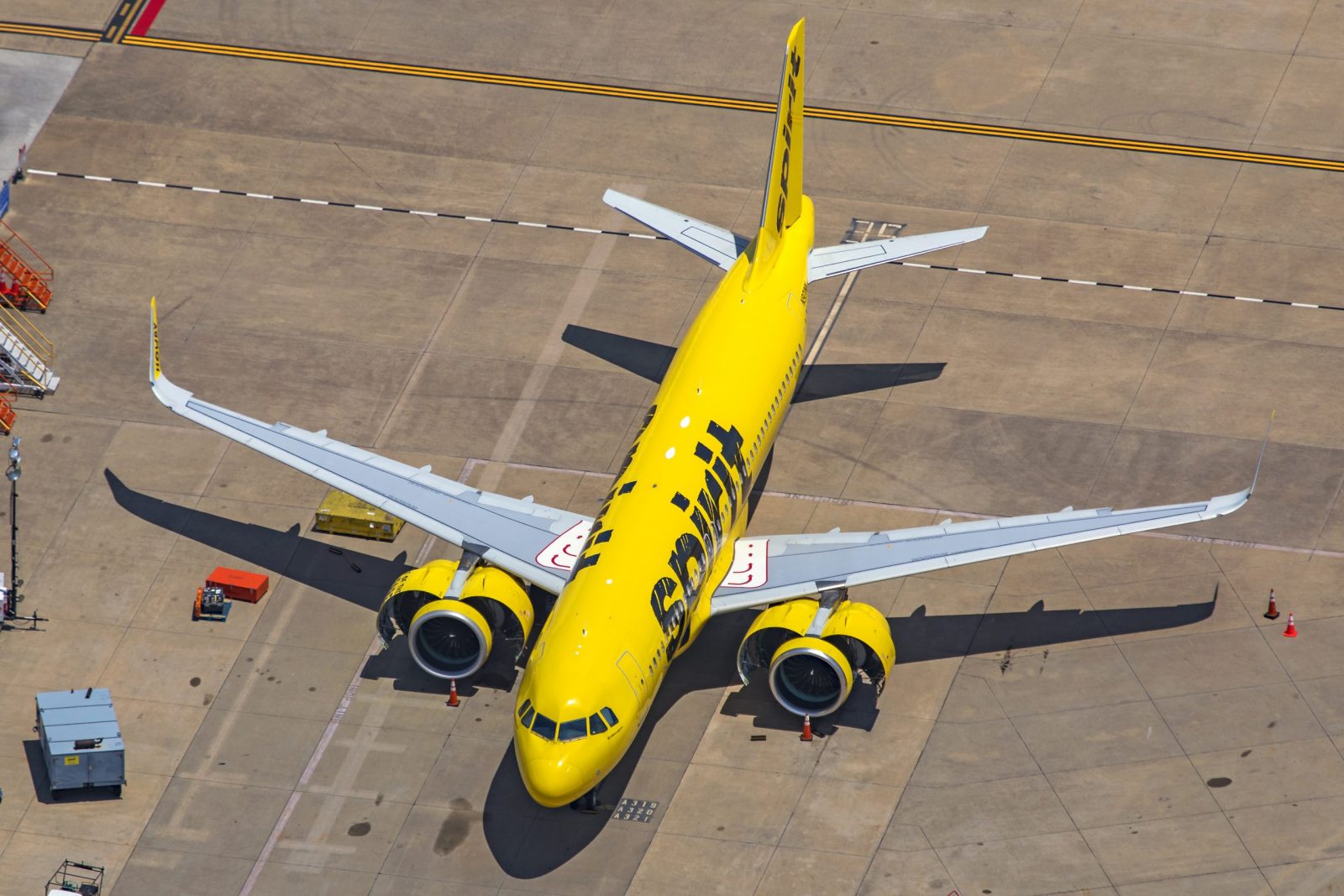
Spirit Airlines Adds Third Destination in Puerto Rico

Spirit A320neo
A Spirit A320neo. (Photo: AirlineGeeks | William Derrickson)

The persistent COVID-19 ordeal disrupted and altered the airline industry, forcing several major carriers to quickly reevaluate their current strategy and adapt to stay afloat and survive during the crisis. However, with the significant push for vaccinations and subsequent booster shots to combat the spread, some airlines see this as an opportunity to appeal to as many passengers as possible. In an industry filled with cutthroat and fierce competition for flight routes and passengers, Spirit Airlines’ notable ultra-low-cost (ULCC) and point-to-point business model — which is typically targeted towards leisure travelers and tourists — continues its broad expansion, as the carrier recently announced more flights to Puerto Rico.

The Miramar, Fla.-based carrier will soon serve three cities across the Caribbean island, once the airline inaugurates its new flights during this winter travel season. Flights from Orlando, Fla. to Ponce, Puerto Rico, will begin on Feb. 16, joining the carrier’s two other existing routes to/from San Juan and Aguadilla.

“Adding Ponce as our third market in Puerto Rico is a fantastic way to celebrate 20 years of Spirit serving the island,” John Kirby, Spirit’s Vice President of Network Planning, said. “Our new nonstop flights to Orlando provide connectivity to many high-value travel options for flying in or out of Ponce, along with serving the vibrant and growing Puerto Rican community in Central Florida.”

As the ULCC expects to strengthen and expand its presence from Orlando and other cities in the state, Spirit expects to use the mecca for leisure travel in the state of Florida, as one of the connections to the rest of its route network.

Spirit Touches Down In Miami

There is no question that Florida is known for its tourism and crowds that flock to the state year-round. Orlando has a large array of low-cost carriers such as Southwest, Frontier, JetBlue and Spirit — who all have a large presence at the airport — but Spirit recently became the latest low-cost airline to inaugurate flights to Miami, complementing its extensive, existing base in Fort Lauderdale. 

Earlier this month, Spirit began its brand new flight operations with service to nine destinations. By January, the carrier expects to operate flights to 31 destinations from Miami — 21 domestic cities and 11 international destinations. 

“Launching nonstop flights to 31 destinations right out of the gate in Miami is a huge milestone for us, and we want to share all that excitement with our Guests. Combined with our flights from West Palm Beach and our position as the largest carrier in Fort Lauderdale, we’re giving our guests more options in South Florida than ever,” Ted Christie, President and CEO of Spirit Airlines, said, a sentiment accurately portrayed by the airline’s strategy to pump hundreds of seats into Miami and expanding its presence in the region.

Spirit faces fierce competition at both airports, as Miami is a stronghold for American Airlines while the carrier goes face-to-face with JetBlue in Fort Lauderdale. However, with the carrier’s new routes on the map, Spirit has the opportunity to have the leverage it needs to potentially overcome its competitors.

In addition, in early August, Spirit experienced a sudden operational disruption, leading to hundreds of flights being canceled due to the effects of the COVID-19 predicament, weather and crew scheduling. On the other hand, the airline has the possibility to rebound and use its brand new flight routes as its pathway towards recovery.

Evidently, Spirit is preparing itself to follow its pathway towards recovering from the slump in passenger travel demand. However, as the carrier enters new, unfamiliar markets, it is essential for the airline to continue evaluating and observing its route network for connectivity.

Benjamin Pham

Benjamin has had a love for aviation since a young age, growing up in Tampa with a strong interest in airplane models and playing with them. When he moved to the Washington, D.C. area, Benjamin took part in aviation photography for a couple of years at Gravelly Point and Dulles Airport, before dedicating planespotting to only when he traveled to the other airports. He is an avid, world traveler, having been able to reach 32 countries, yearning to explore and understand more cultures soon. Currently, Benjamin is an Air Transporation Management student at Arizona State University. He hopes to enter the airline industry to improve the passenger experience and loyalty programs while keeping up to how technology is being integrated into airports.

United Airlines Reveals Biggest-Ever Transatlantic Network Expansion

A United 777-300ER at Paine Field. (Photo: AirlineGeeks | Katie Bailey)

United Airlines has been known to use cryptic social media posts to build up suspense to the reveal of big news. This year, that took the form of a video posted on the airline’s social media accounts, allowing followers to guess the new routes the airline was planning to introduce in the coming year, whereby winners who guessed correctly could win free seats to these destinations.

On Thursday, United announced those destinations as it detailed its biggest-ever transatlantic route expansion to date.

“Our expansion offers the widest range of destinations to discover – introducing new, trendy locales that our customers will love, as well as adding more flights to iconic, popular cities,” United Senior Vice President of International Network and Alliance Patrick Quayle said in a press release.

The five new destinations will be launched as non-stop services, starting on May 7 between Washington D.C.’s Dulles International Airport and Amman, Jordan’s Queen Alia International Airport. Operating year-round on a three-times-weekly schedule using the Boeing 787-8 Dreamliner, this flight will allow for United to be the only North American carrier flying direct to Amman and connecting the two capitals.

As for the second addition, United plans to add a third Portuguese destination starting on May 13 between Newark Liberty International Airport and Ponta Delgada – João Paulo II Airport, located in the Portuguese Azores. This flight — which will leave United Airlines with the most flights to Portugal of all U.S. carriers — is scheduled to operate daily using the Boeing 737 MAX 8.

In addition, beginning May 20, the airline will become the first U.S.-based airline to fly to Norway, when it adds a three-times-weekly flight to Bergen, Norway’s Flesland Airport from Newark by using the Boeing 757-200.

Then, on June 2, United will begin operating a Boeing 767-300ER from Newark to Palma de Mallorca Airport in Mallorca, Spain on a three-times-weekly schedule. The airline will become the first to operate between the U.S. and Mallorca. The route will become the carrier’s third to Spain, joining existing services to Barcelona and Madrid.

And finally on June 9, United is planning the launch a flight between Newark and Tenerife South Airport in Spain’s Canary Islands utilizing a Boeing 757-200 on a three-times-weekly schedule.

Bulking Up Old Favorites

In addition to the new launches, United will also be upping the frequency to five other destinations in anticipation of increasing travel demand. Out of these five, two will be an extension to existing services, whereas the remaining three will be new routes to destinations that are already a part of the airline’s network

“Given our big expectations for a rebound in travel to Europe for summer, this is the right time to leverage our leading global network in new, exciting ways.” said Quayle in the same press release.

Set to launch on April 23, the first of the three new routes will be between Denver International Airport and Munich Airport using the Boeing 787-9 Dreamliner. This flight will complement an existing service from Denver to Frankfurt and London, which is planned to resume in March, which will also make United the only U.S carrier to offer transatlantic service from Denver.

Then on May 6, the second new route between Chicago’s O’Hare International Airport and Milan’s Malpensa Airport will commence using the Boeing 787-8 Dreamliner. Once again, this flight will complement another existing service between Newark and Milan.

The third new route will be launched on May 6 between Dulles International Airport and Berlin’s Brandenburg Airport utilizing a Boeing 767-400ER. United will become the only U.S airline to offer direct flights between the two capitals.

As for the two increased frequencies, United will be adding a second daily flight to Dublin starting on April 23 using a Boeing 757-200, as well as a second daily flight to Rome on 26th May using a Boeing 777-200ER, with both flights out of Newark.

United also announced that it would start seven routes that were previously announced, but never made to launch due to the pandemic. These include a variety of daily flights, starting with service between San Francisco and Bangalore; Newark and Nice; as well as Chicago and Zurich. Additionally, United is beginning a second daily flight between Newark and Frankfurt and is also adding flights to Tokyo’s Haneda Airport from Washington D.C. and Newark.

Long-Term Strategies

Besides its biggest-ever transatlantic route expansion, the big reveal also marks as United’s biggest long-haul expansion since the pandemic took hold of the airline industry in March 2020.

Targeted mainly at leisure passengers for next summer, United’s strategy seems to be trying out new destinations that have never been tapped into before, allowing for the airline to face little to no competition from rival carriers.

While the risk seems to be substantial, it might be a gamble that would pay off considerably given how restricted air travel has been in recent months. Factoring in that United has various hubs across the country which will allow for hundreds of connecting opportunities, the chance exists that this huge risk might truly play in United’s favor in the long run.

Charlotte Seet

Fascinated by aircraft from a very young age, Charlotte’s dream was to work alongside the big birds one day. Pursuing her dream, she went on to achieve her diploma in Aviation Management and is currently working on her degree in Aviation Business in Administration with a minor in Air Traffic Management. When she’s not busy with school assignments, you can find her aircraft spotting for long hours at the airport. In Charlotte’s heart, the Queen of the Skies will always be her favorite aircraft.

Advanced Air Beats Boutique Air to EAS Contract for Merced

Hawthorne, Calif. based-Advanced Air has won the Essential Air Service contract for its second EAS city. The contract it won, is for the community of Merced, Calif. and won the contract over local San Francisco-based Boutique Air.

Advanced Air flights to the northern Californian city will begin on Jan. 1, 2022, and will be operating 24-weekly round trip flights to LAX and 12-weekly round trip flights to Las Vegas. With the change of the carrier from Boutique to Advanced LAX flights will remain, but they will be losing service to Sacramento.

The type of aircraft that is scheduled to operate the flights also won’t change, both Advanced and Boutique are using 8-9 seat Pilatus PC-12s according to the DOT document regarding the EAS contract. Advanced has said that its King Air would occasionally be substituted in to avoid any delays or cancellations due to regular maintenance schedules. Although not directly under their titles, Advanced Air does currently already operate PC-12’s on behalf of California-based Surf Air.

Advanced Airlines Current Route map as of Oct.2021 (Photo: Advanced Airlines)

The biggest change on the airline side of this will be location, as prior to now Advanced Air only operates out of FBO’s at the larger airports and all of its flights operate non-sterile. With this new route, the airline will be operating out of the main passenger terminals in both LAX and Las Vegas. Another change for passengers will be the codeshares or the lack of them. The current carrier, Boutique Air, has interline and baggage agreements with both United and American meaning bags can transfer through to the larger carriers’ flights. Advanced Air doesn’t have any partners at all, for now, the carrier did mention that they now have more opportunities for now that they will be operating our of LAX and Las Vegas.

Advanced Air has also made its flight schedule into Merced so that it will align with the YARTS bus. The YARTS bus is a scheduled transit system that makes pick-ups/drop off’s directly at the Merced airport terminal and will transport passengers to the Yosemite National Park.

The contract in Merced runs from Jan.1, 2022, for four years, until Dec.31, 2025. The subsidy rate will be $3,552,016 for the first year, $3,658,576 for the second year, $3,768,333 for the third year and $3,881,383 for the fourth year.

Flights and schedules are subject to change.

Joey Gerardi

Joey has always been interested in planes for as long as he can remember. He grew up in Central New York during the early 2000s when US Airways Express turboprops ruled the skies. Being from a non-aviation family made it harder for him to be around planes and would only spend about three hours a month at the airport. He was so excited when he could drive by himself, the first thing he did with his driver's license was get ice cream and go plane spotting for the entire day. He graduated from Western Michigan University in 2022 with a B.S. in Aviation Management & Operations and a Minor in Business, and currently works for a major airline in his hometown.
Sign-up for newsletters & special offers!

Get the latest stories & special offers delivered directly to your inbox

SUBSCRIBE