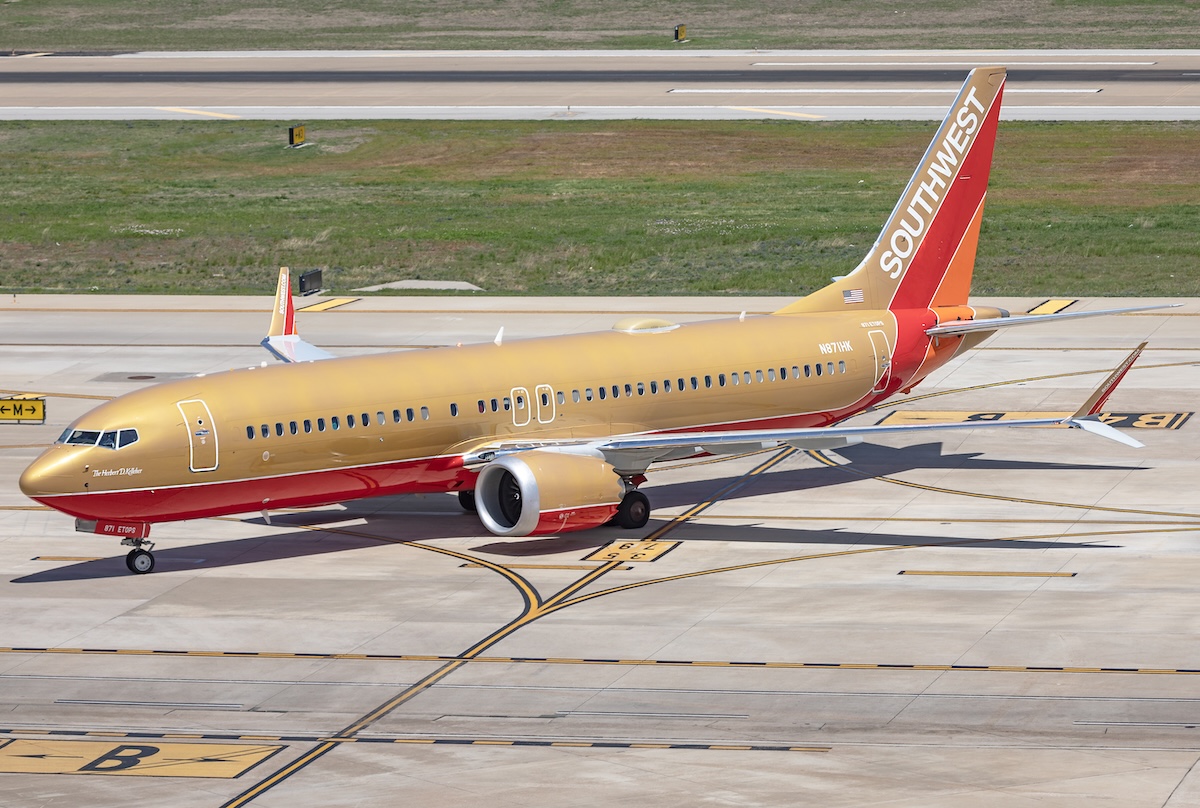
The change will go into effect Tuesday, along with new boarding procedures. The carrier first announced the transition to assigned seating in 2024 and set the Jan. 27 start date last July.
Flight 1791 – departing from Honolulu to Los Angeles Tuesday evening – will be the last to offer open seating, a spokesperson confirmed to AirlineGeeks.
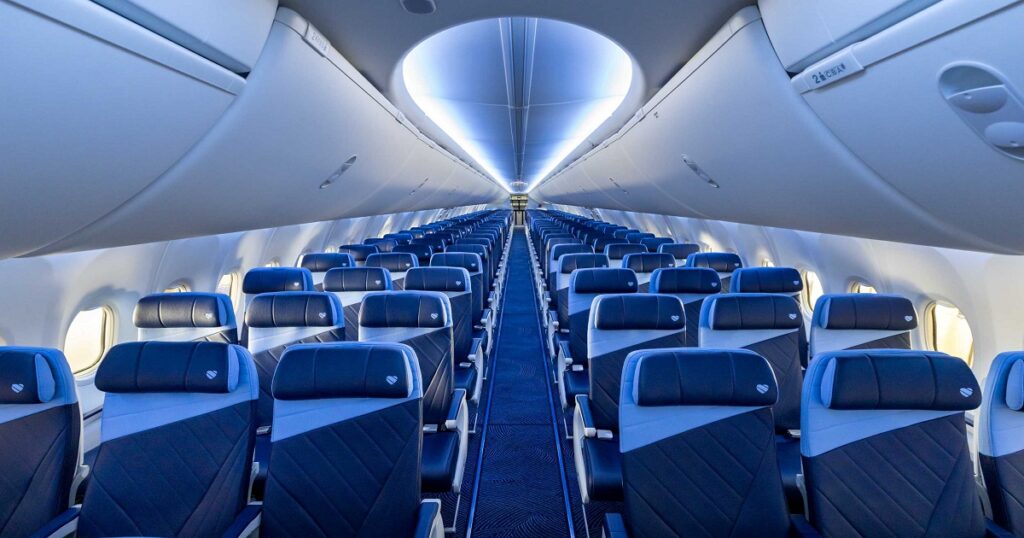
Following a cabin retrofit, Southwest has three categories of seats – Extra Legroom, Preferred, and Standard. Extra Legroom seats are located at the front of the cabin and near the exit rows, with the Preferred seats in between. Standard seats make up the back half of the cabin.
Since the installation of the Extra Legroom seats last year, passengers have been free to grab them as they board. After Monday, however, only customers who have paid in advance will get those seats.
Customers can purchase their seats in several different “fare bundles,” known as Basic, Choice, Choice Preferred, and Choice Extra. These groups dictate not only seating but also boarding order, baggage allowances, and other benefits.
Southwest’s new cabin interior. (Photo: Southwest)
The switch from open seating to assigned seating is one of several policy changes meant to increase Southwest’s profitability. In 2025, it ended the allowance of two free checked bags per passenger. Now, only qualifying A-List members get that perk.
Open seating was loved by some passengers but disliked by others. Detractors pointed to the sometimes rough and tumble scramble for seats during boarding, while others enjoyed that seats at or near the front of the cabin and window seats could be claimed without any upcharge.
Southwest has said that passengers generally prefer assigned seating and were switching to competitors that offered it.
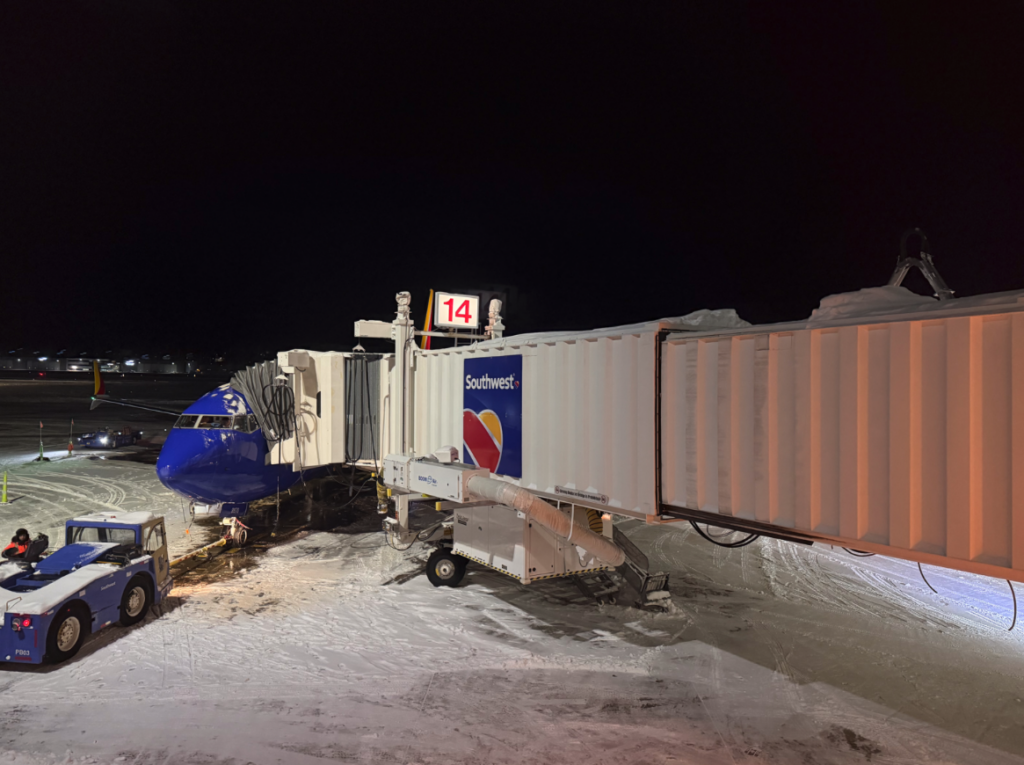
The first Southwest flight with assigned seating, pictured at Manchester-Boston Regional Airport. (Photo: Manchester-Boston Regional Airport)
The new boarding process sorts passengers into eight boarding groups. Choice Extra, A-List Preferred members, and passengers who purchase an upgrade to an Extra Legroom seat with any fare bundle will board in groups one and two. Choice Preferred and A-List members in a Preferred or Basic seat will be included in groups three to five, while Basic and Choice customers will board last in groups six to eight.
Zach Vasile is a writer and editor covering news in all aspects of commercial aviation. He has reported for and contributed to the Manchester Journal Inquirer, the Hartford Business Journal, the Charlotte Observer, and the Washington Examiner, with his area of focus being the intersection of business and government policy.
Thousands of Flights Canceled as Airports Recover from Storm
Major Northeast hubs cut close to 50% of their daily schedules.
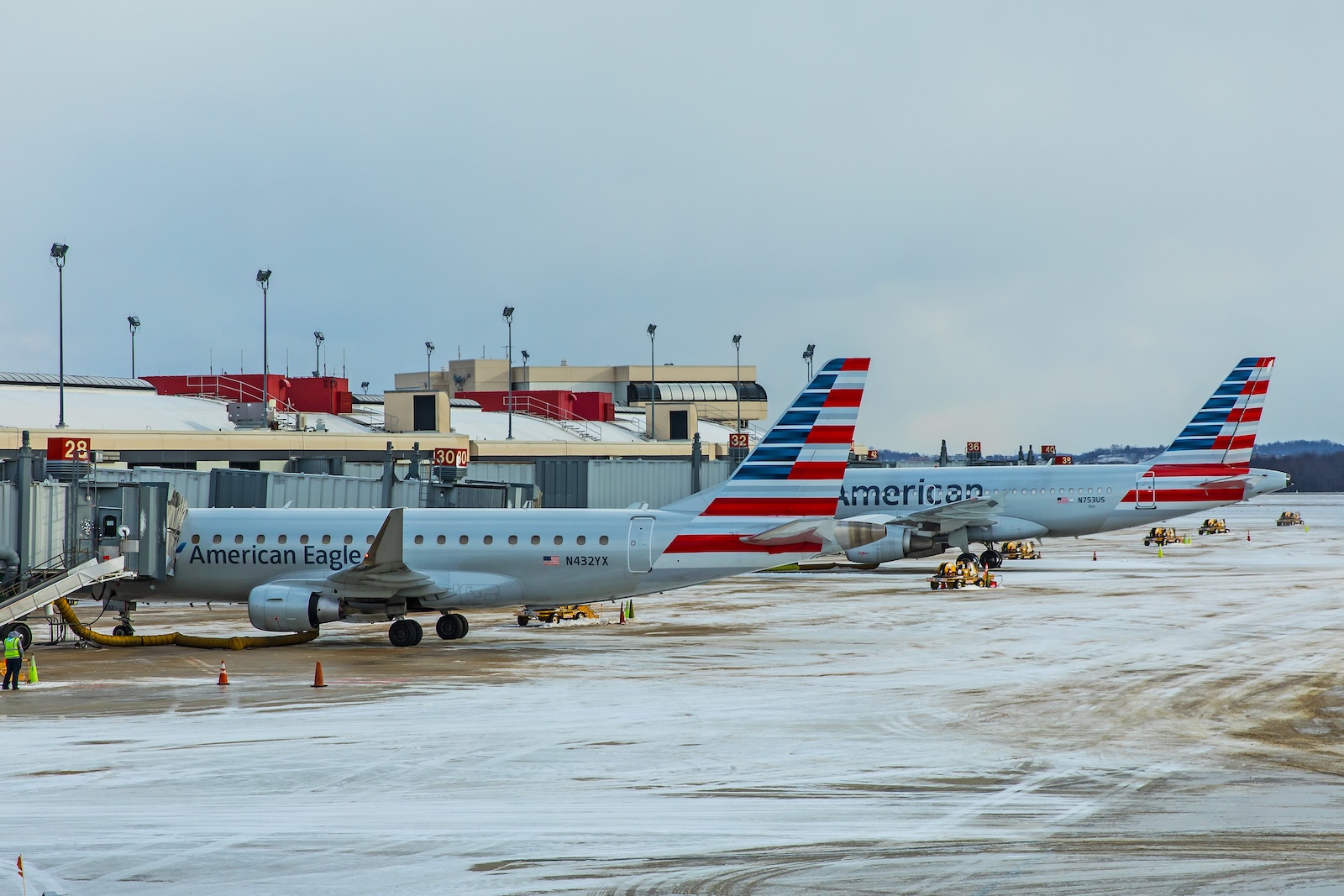
American Airlines aircraft in Pittsburgh. (Photo: AirlineGeeks | William Derrickson)
Thousands of flights have been canceled or delayed in the wake of a major winter storm that dropped heavy snow and ice across much of the country over the weekend.
According to tracking website FlightAware, about 3,900 flights to, from, and within the U.S. had been canceled as of Monday morning, and around 1,800 were delayed.
The storm’s impact was still being felt in the Northeast, where snow continued to fall into late Sunday night. 298 flights were canceled at Boston Logan, amounting to 60% of the airport’s daily schedule. Just under half of all flights were cut at New York-JFK, LaGuardia, and Newark, New Jersey.
Significant disruptions were also reported at Dallas/Fort Worth, Charlotte, North Carolina, Washington National, Washington Dulles, Nashville, Tennessee, Philadelphia, Raleigh-Durham, North Carolina, Austin, Texas, Pittsburgh, and Dallas Love Field.
Cleanup and recovery efforts have been complicated by bone-chilling cold. In parts of the Midwest, temperatures dropped well below zero.
The massive storm is estimated to have affected approximately 245 million people, from New Mexico to Maine. At its peak on Sunday, about 12,000 flights were canceled across the U.S., the highest number for a single day since the COVID-19 pandemic, according to aviation analytics company Cirium.
Zach Vasile is a writer and editor covering news in all aspects of commercial aviation. He has reported for and contributed to the Manchester Journal Inquirer, the Hartford Business Journal, the Charlotte Observer, and the Washington Examiner, with his area of focus being the intersection of business and government policy.
Qatar Airways Expands Service to South Africa
Additional flights to Cape Town, Johannesburg, and Durban will start in February and March.
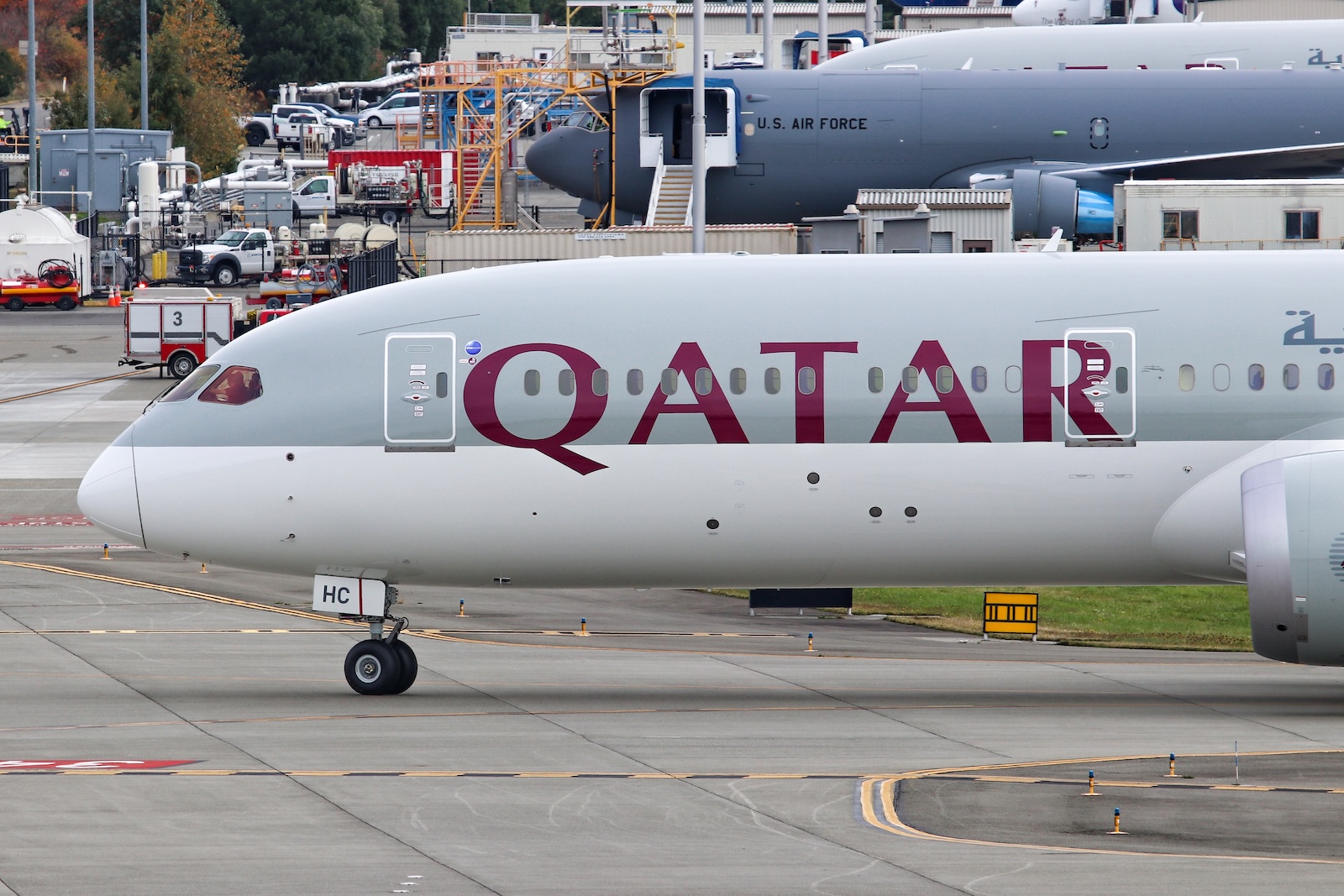
A Qatar Airways Boeing 787 Dreamliner. (Photo: AirlineGeeks | Katie Zera)
Qatar Airways will ramp up flights to South Africa starting next month.
The Doha-based carrier will offer additional frequencies to Cape Town, Johannesburg, and Durban.
The airline operates an extensive flight schedule to the country. Currently, it offers 35 flights per week to South Africa’s three major hubs.
The additional service will increase Qatar’s total weekly flights to South Africa from 35 to 42, providing greater flexibility for passengers connecting from South Africa to Qatar Airways’ network.
Starting Feb. 18, Qatar will increase service between Doha and Johannesburg from 18 to 21 per week, while flights between Doha and Cape Town will increase from 12 to 14, from Feb. 17. Starting March 5, service between Doha and Durban will grow from five to seven. This service operates via Maputo in Mozambique.
Growing African Footprint
This network growth follows a significant year for Qatar Airways in Africa in 2025, marked by collaborations with key carriers on the continent, including Air Algérie, Kenya Airways, and RwandAir.
In October 2024, the airline also entered a strategic partnership with Southern Africa’s premium carrier Airlink, in which it took a 25% equity stake.
Lorne is a South Africa-based aviation journalist. He was captivated and fascinated by flying from the day he took his first airline flight. With a passion for aviation in his blood, he has flown to destinations in all corners of the globe. Lorne has traveled extensively and lived in various countries. Drawing on his travels and passion for aviation, Lorne enjoys writing about airlines, routes, networks, and new developments.
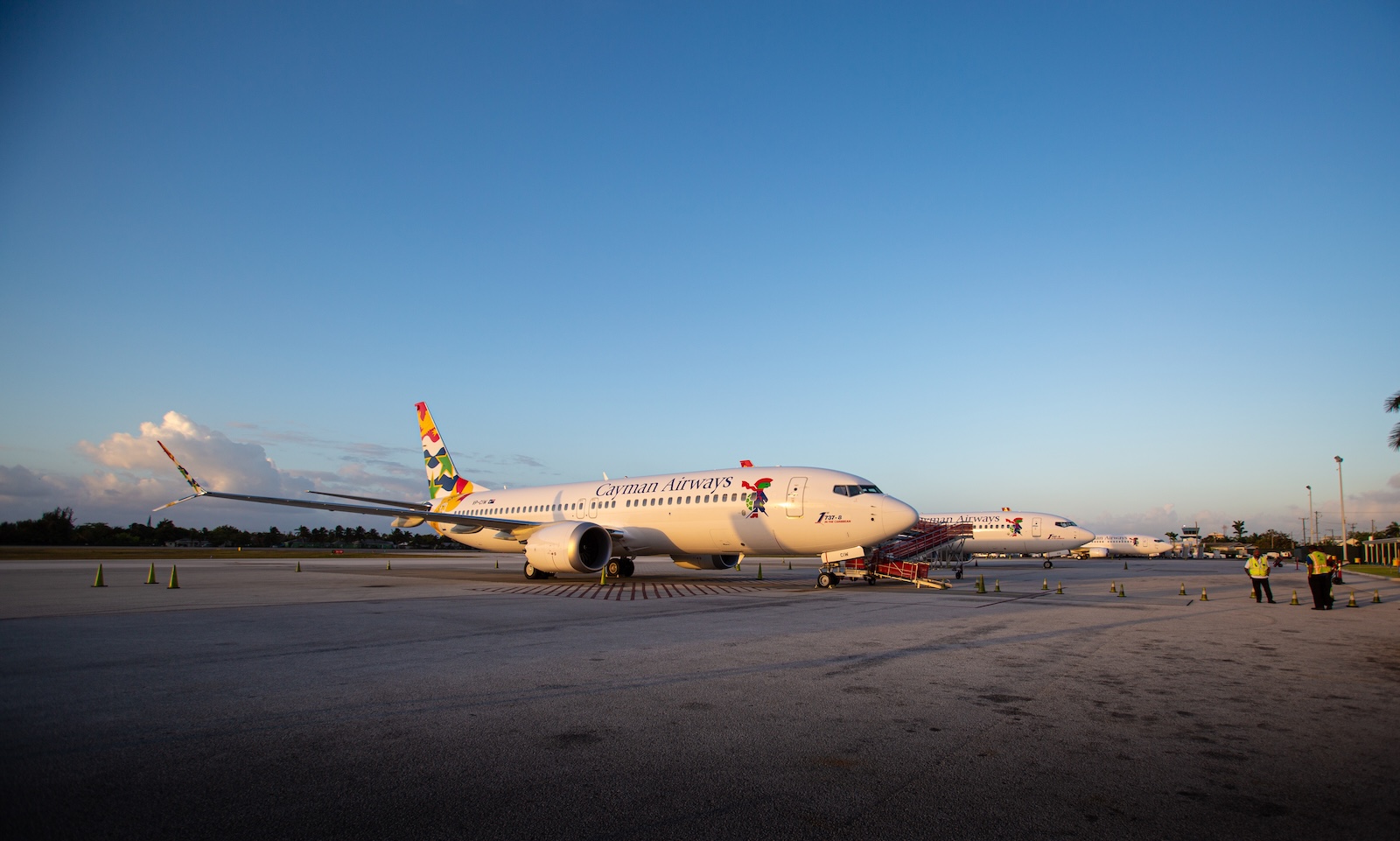
Cayman Airways plans to operate the route weekly on Sundays.
In a statement, Executive Vice President and CFO Paul Tibbets said the airline conducted data analysis in collaboration with the Cayman Islands Department of Tourism and identified Austin as one of the largest unserved U.S. markets for Cayman travel, with particularly strong demand in the summer months.
Currently, no airline connects Grand Cayman and Austin with a nonstop flight.
Cayman Airways currently flies to five U.S. cities – New York-JFK, Miami, Denver, Tampa, Florida, and Los Angeles.
Zach Vasile is a writer and editor covering news in all aspects of commercial aviation. He has reported for and contributed to the Manchester Journal Inquirer, the Hartford Business Journal, the Charlotte Observer, and the Washington Examiner, with his area of focus being the intersection of business and government policy.
Livery of the Week: JetBlue Opens Voting
The carrier commissioned three designs honoring the Dominican Republic.
A potential JetBlue livery designed by Lena Tokens. (Photo: JetBlue)
Editor’s Note: AirlineGeeks is proud to present our ‘Livery of the Week’ series. Every Friday, a team member will share an airline livery, which can be from the past, present, or even a special scheme. Some airline liveries are works of art. The complexity associated with painting around critical flight components and the added weight requires outside-the-box thinking from designers. The average airliner can cost upwards of $200,000 to repaint, creating a separate aircraft repainting industry as a result.
Have an idea for a livery that we should highlight? Drop us a line.
JetBlue is letting the public vote on a new aircraft livery honoring the Dominican Republic and Dominican culture.
The carrier commissioned three designs, all by Dominican artists, for use on an Airbus A320. Customers and fans can vote for their favorite at VotaJetBlueRD.com through Feb. 1.
“As the largest airline serving the Dominican Republic, we’re proud to introduce JetBlue’s first livery dedicated to the country, which will showcase the work of a local artist and be chosen by the community,” JetBlue President Marty St. George said in a news release. “This initiative honors the country’s vibrant culture and creative talent, while reflecting the strong bond we’ve built there for more than twenty years.”
A potential JetBlue livery designed by Los Plebeyos. (Photo: JetBlue)
The liveries feature illustrations of Dominican people, symbols, and cultural motifs, such as dominoes, tambora drums, and palm trees. They were designed by art director and muralist Willy Gómez, design collective Los Plebeyos, and illustrator Lena Tokens.
All the artists were compensated for their work, JetBlue said.
A potential JetBlue livery designed by Willy Gómez. (Photo: JetBlue)
The selected livery will be announced in February and will appear on an A320 in the spring.
Looking for a new airplane model? Head over to our friends at the Midwest Model Store for a wide selection of airlines and liveries.
Zach Vasile is a writer and editor covering news in all aspects of commercial aviation. He has reported for and contributed to the Manchester Journal Inquirer, the Hartford Business Journal, the Charlotte Observer, and the Washington Examiner, with his area of focus being the intersection of business and government policy.
Hundreds of Flights Canceled Ahead of Winter Storm
The system is expected to bring heavy snow and ice.
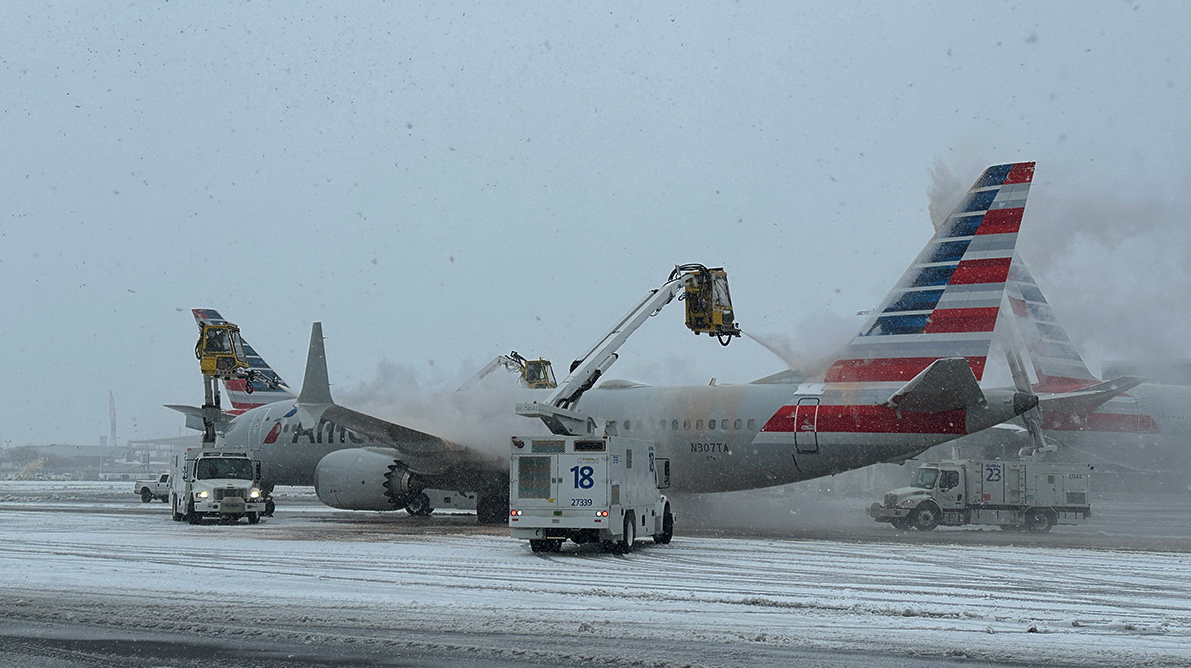
An American Airlines jet on the ramp amid winter weather. (Photo: American Airlines)
Airlines have canceled almost 1,500 flights across the U.S. for Saturday as a powerful winter storm threatens wide swaths of the country with heavy snow, ice, and freezing rain.
According to tracking website FlightAware, Dallas/Forth Worth, Dallas Love Field, and Oklahoma City reported the highest number of cancellations, with half or more of their daily schedules affected. Memphis and Nashville in Tennessee, Tulsa, Oklahoma, Little Rock, Arkansas, and Lubbock, Amarillo, and Midland in Texas are also seeing more cancellations than usual.
All of these airports sit in the path of this weekend’s winter storm, which is expected to bring heavy snow, perhaps as much as two feet, to parts of the Midwest, South, Mid-Atlantic, and Northeast between Friday and Monday. The system will likely be at its most severe in the Upper South, between Texas and Oklahoma and the Carolinas.
The National Weather Service is warning of “catastrophic ice accumulation” from the Southern Plains to the Southeast.
Extreme cold is predicted for parts of the Upper Midwest, and residents there are being advised to stay inside and keep warm.
Zach Vasile is a writer and editor covering news in all aspects of commercial aviation. He has reported for and contributed to the Manchester Journal Inquirer, the Hartford Business Journal, the Charlotte Observer, and the Washington Examiner, with his area of focus being the intersection of business and government policy.
Trip Report: Flying on the Classic 737-500
We took a trip on Air North to experience an aircraft used by only a handful of operators.
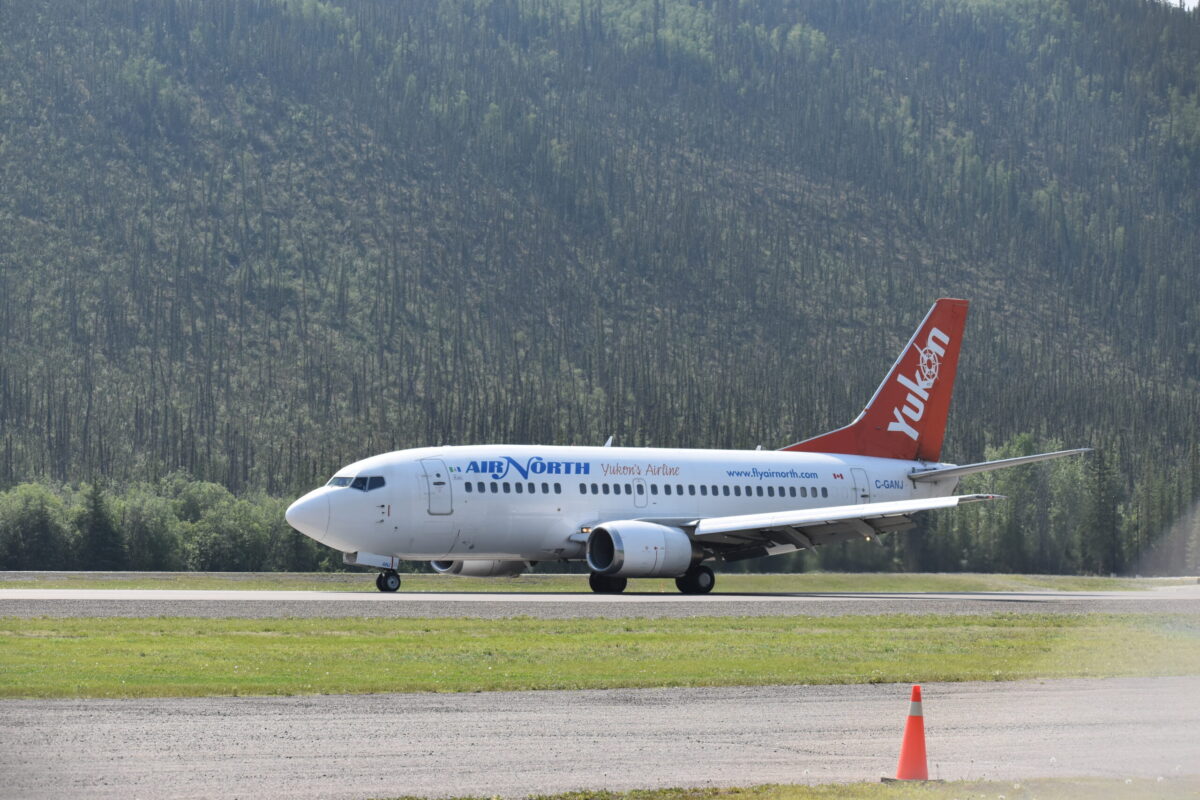
Air North's Boeing 737-500. (Photo: AirlineGeeks | Joey Gerardi)
The Boeing 737–500, with almost 400 of the aircraft in the sky since the program was launched in 1987, is the last 737 variant in the Boeing Classic series. It was a direct replacement for the 737-200, and is the second smallest Boeing 737 variant by length, only beating out its -200 predecessor, and only by a single foot.
Now seeing fewer than five operators worldwide, the aircraft type is becoming a dying breed. With BahamasAir retiring the aircraft back in October 2022, Air North, located in Canada‘s Yukon territory, is the only commercial operator of the type left in North America.
The -500 can be seen operating on the airline’s routes in the western part of Canada across the Yukon, British Columbia, and the occasional quick hop up to Dawson City from Air North’s home base in Whitehorse.
The airline operates charters pretty consistently throughout the summer from Dawson City, Yukon, to Fairbanks in Alaska. Since the carrier has to get the aircraft to Dawson City anyway, it sells tickets on the Whitehorse-to-Dawson City portion of the trip. The flight usually has a pretty low passenger load.
Being an AvGeek, of course, I had to make a special trip up to Dawson City to fly on this aircraft type.
Day of the Flight
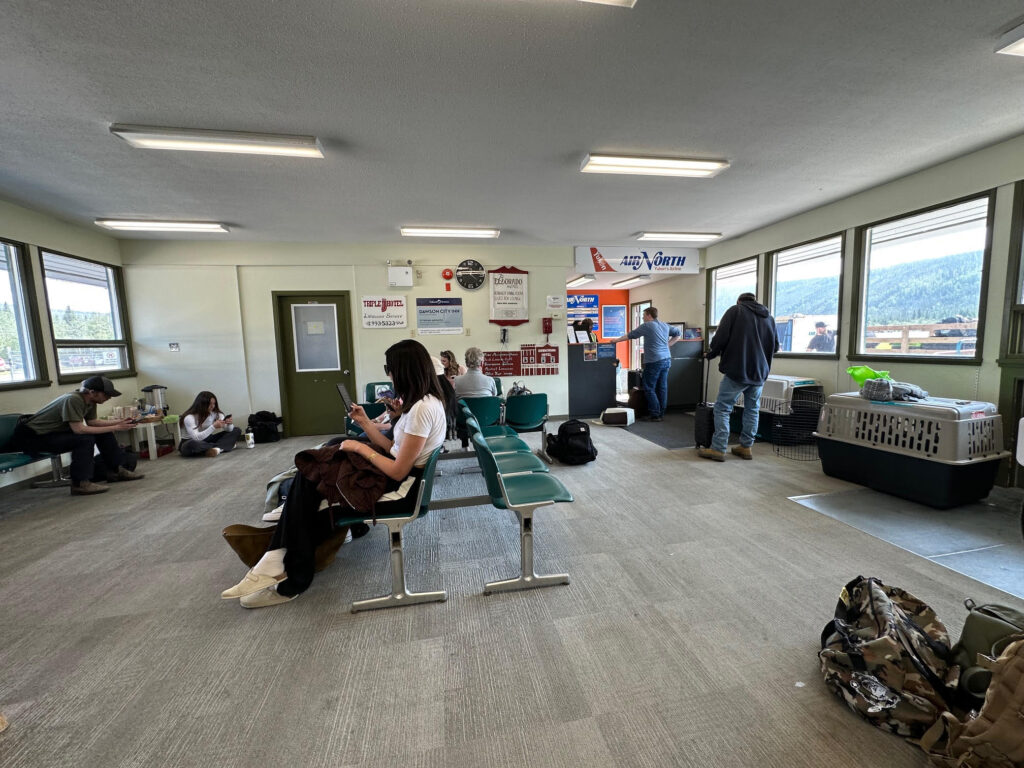
Dawson City Airport is very small, like a lot of the smaller regional airports in northern Canada. There is no security checkpoint for flights within the territory/province, meaning you only need to get to the airport in time to meet the check-in requirement for the airline.
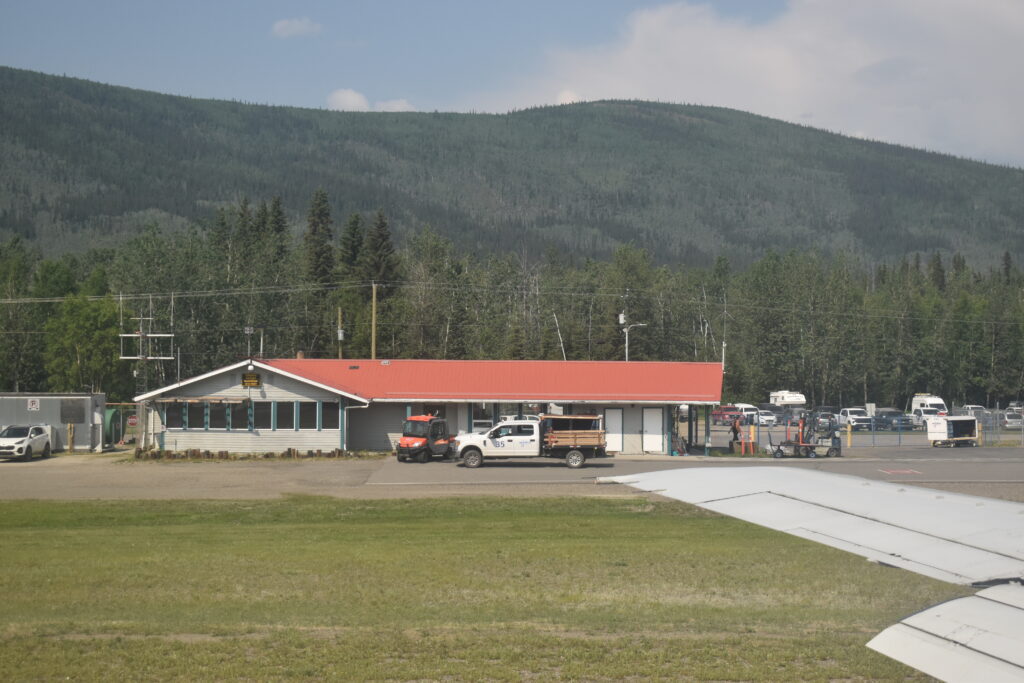
The passenger terminal in Dawson City, Yukon. (Photo: AirlineGeeks | Joey Gerardi)
The terminal usually only needs to handle the capacity of the airline’s ATR 42s, which is why the terminal in Dawson City is only about the size of a large bedroom. The good news is that during the warm summer months, a lot of people decide to sit outside in the sunshine once they’re fully checked in.
On the day of my flight, there happened to be some wildfire smoke rolling through Whitehorse, causing visibility to go to near zero and delaying the 8 a.m. flight to about the same time as my flight in the early afternoon, which made the terminal unusually busy.
The entirety of the passenger terminal in Dawson City, Yukon. (Photo: AirlineGeeks | Joey Gerardi)
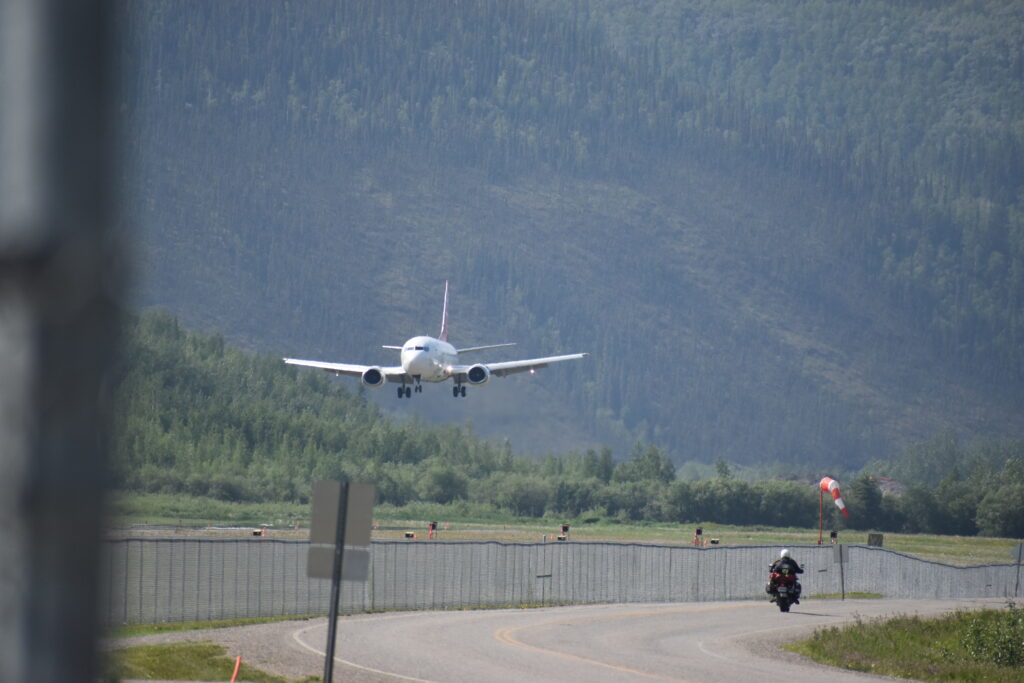
It wasn’t very long before my aircraft arrived in Dawson City after its charter flight from Fairbanks. Given the small size of the airport, there isn’t room to park a larger jet like this directly next to the terminal, so it is parked on the opposite side of the runway, and passengers are taken to it by bus.
My aircraft arriving in Dawson City, Yukon, after a charter from Fairbanks. (Photo: AirlineGeeks | Joey Gerardi)
My aircraft for this flight would be C-GANJ, a Boeing 737-500 that was originally delivered to Aer Lingus back in 1993, and flew for a handful of airlines before coming to Air North in August 2012.
I was so excited as this was the first time I’ve ever flown on a Boeing Classic aircraft, and luckily, I didn’t have to wait too long. About 15 minutes after the aircraft arrived, the agent called for boarding of the jet flight down to Whitehorse.
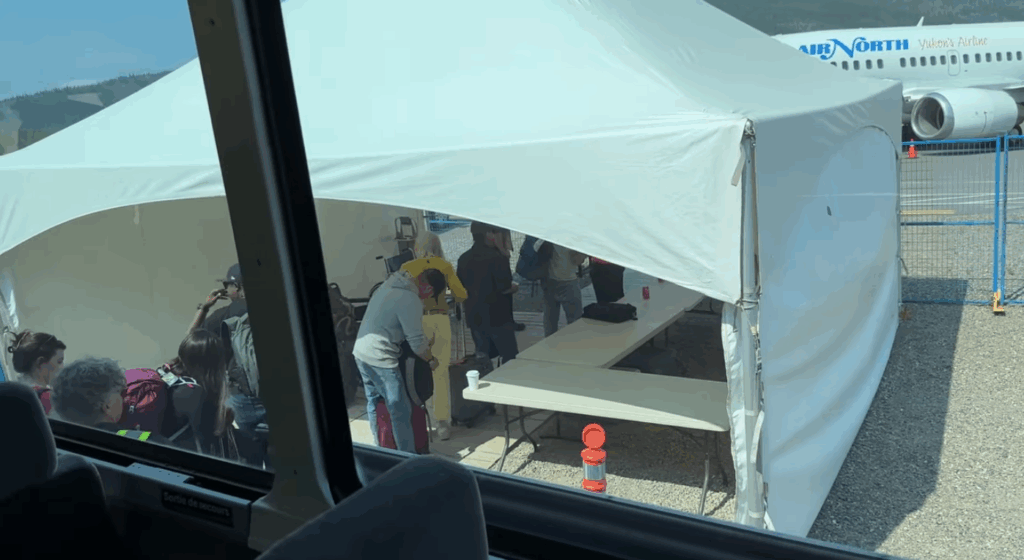
It was only about a five-minute ride from the terminal to the “satellite terminal,” which is essentially just a plastic tent with a fold-up table inside of it so the airline can check bags if needed.
Getting off the bus at the “satellite terminal” in Dawson City. (Photo: AirlineGeeks | Joey Gerardi)
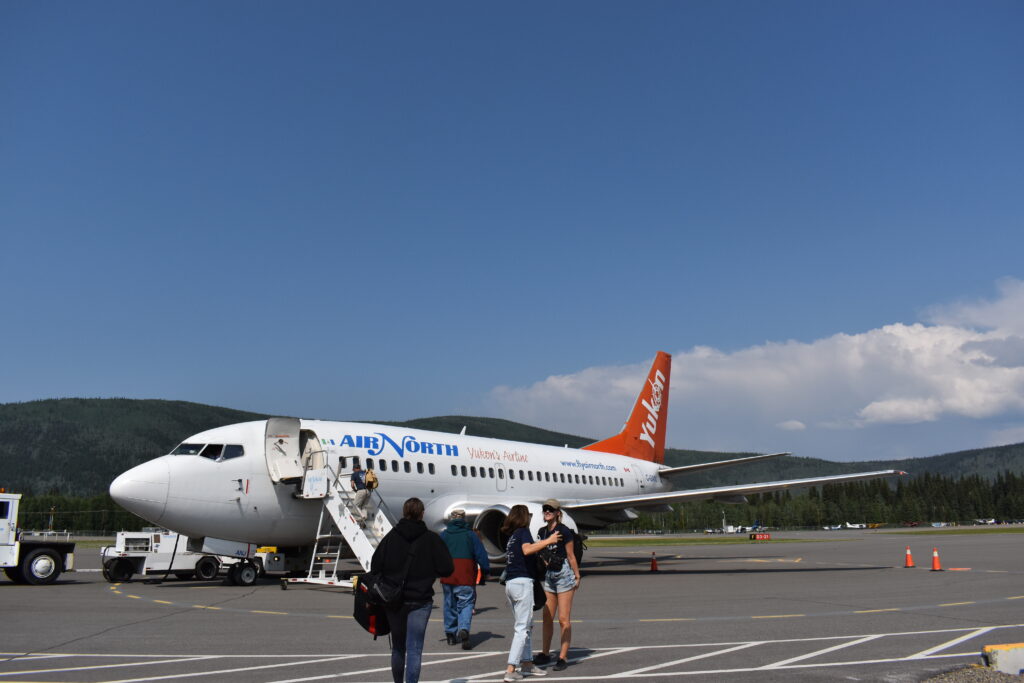
They checked our IDs one more time after getting off the bus, and we headed out to the aircraft. Out of the four 737-500s that the airline has, half of them have winglets, and half of them do not, and for this flight down to Whitehorse, I would be on one of the non-winglet aircraft.
Walking out to my Boeing Classic ride for the flight to Whitehorse. (Photo: AirlineGeeks | Joey Gerardi)
The Boeing 737-500s at Air North have a seating capacity of 122 passengers, but for these flights in and out of Dawson City, they have to weight restrict them to around 90 passengers due to the runway length and the surrounding terrain. This number can vary slightly due to weather conditions in the area, as well as runway conditions. Luckily, there was no issue with that on this flight as it was a pretty light load, with only 27 of us on board headed down to Whitehorse.
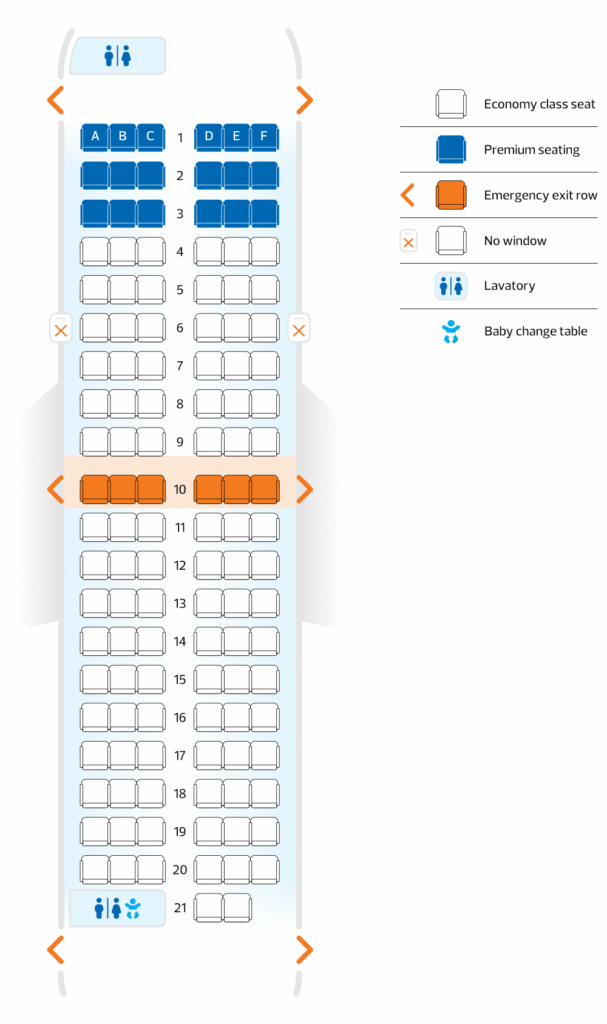
It’s always so frustrating when you book a window seat, and then you get on board, and there is no window at your seat at all, but instead a blank wall. Fortunately, that is not a problem with this airline, as on its website it specifically shows which seats have windows and which do not.
A seat map from the airline’s website showing which seats have, and do not have, windows. (Photo: Air North)
Unless you’re on one of Air North’s ATR 42 flights, the airline does offer assigned seating on all of its flights, and despite this being a very empty flight, I chose a window at the back so I could get a nice view of the flaps on the aircraft.
The view from my seat, 19A, on Air North’s Boeing 737-500. (Photo: AirlineGeeks | Joey Gerardi)
Paperwork, along with weight and balance calculations, took about 15 minutes more or so, and before I knew it, the classic GE CFM56-3C1 engines whirred to life, and we taxied out to the runway.
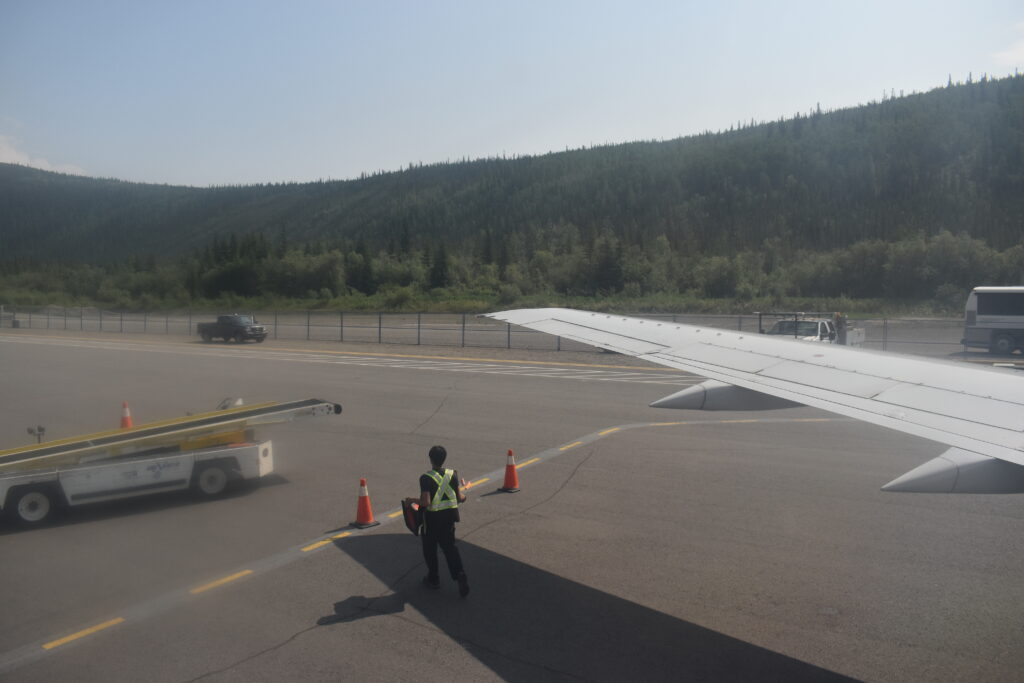
Taxiing out to the runway, past the passenger terminal in Dawson City, Yukon. (Photo: AirlineGeeks | Joey Gerardi)
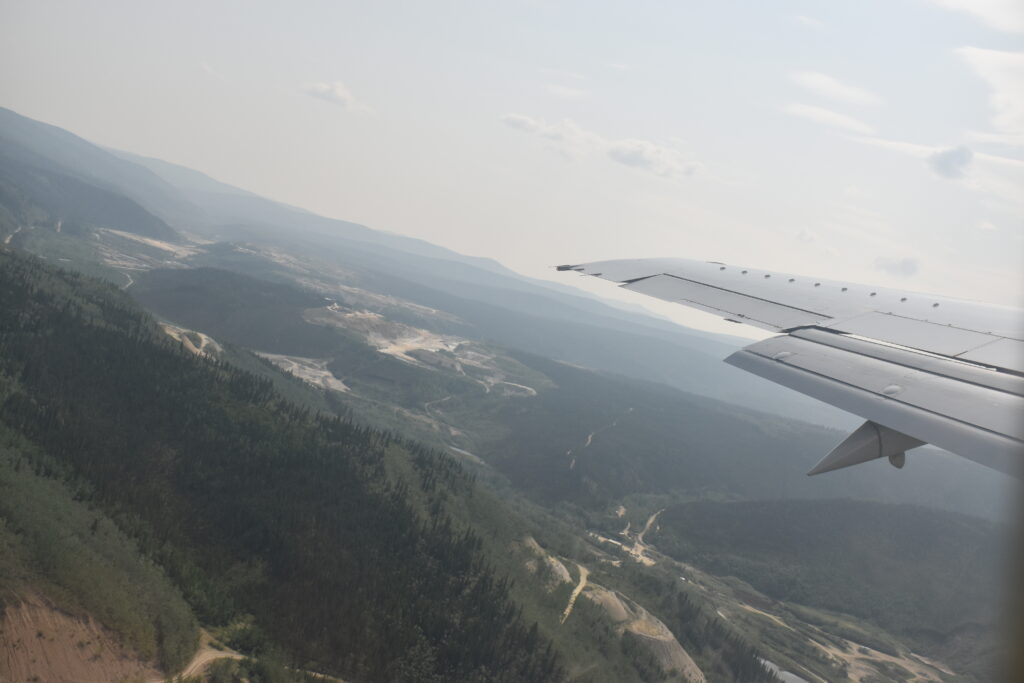
With such an empty aircraft, it didn’t take much runway for us to get into the air, and we were off. After takeoff, we made a 90-degree left bank and headed for Whitehorse while heading up to our cruising altitude.
Departing from Dawson City, Yukon. (Photo: AirlineGeeks | Joey Gerardi)
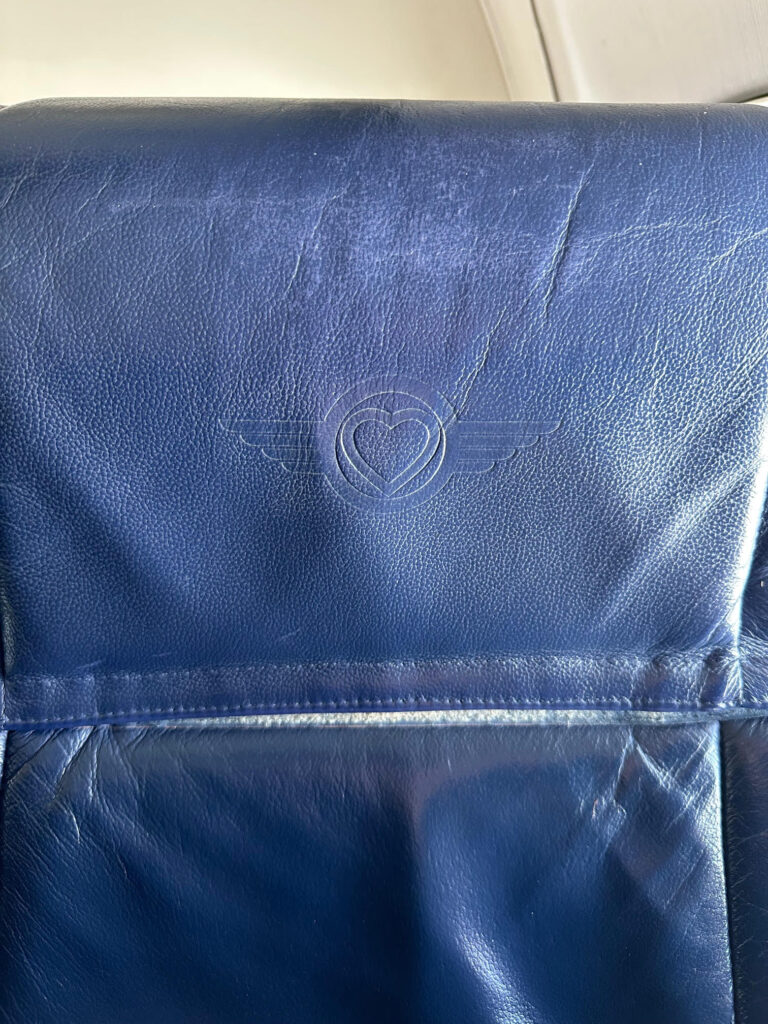
One thing I noticed was the embroidery on the seats, and it looked like the old Southwest Airlines logo. This struck me as odd, especially considering this specific aircraft tail number never flew for that airline. Southwest was the launch customer for the 737-500 back in the late 1980s, however, and it was a great AvGeek treat to see that on board.
The Southwest logo on the seats of Air North’s 737-500s. Southwest was the launch customer for the type in the 1980’s. (Photo: AirlineGeeks | Joey Gerardi)
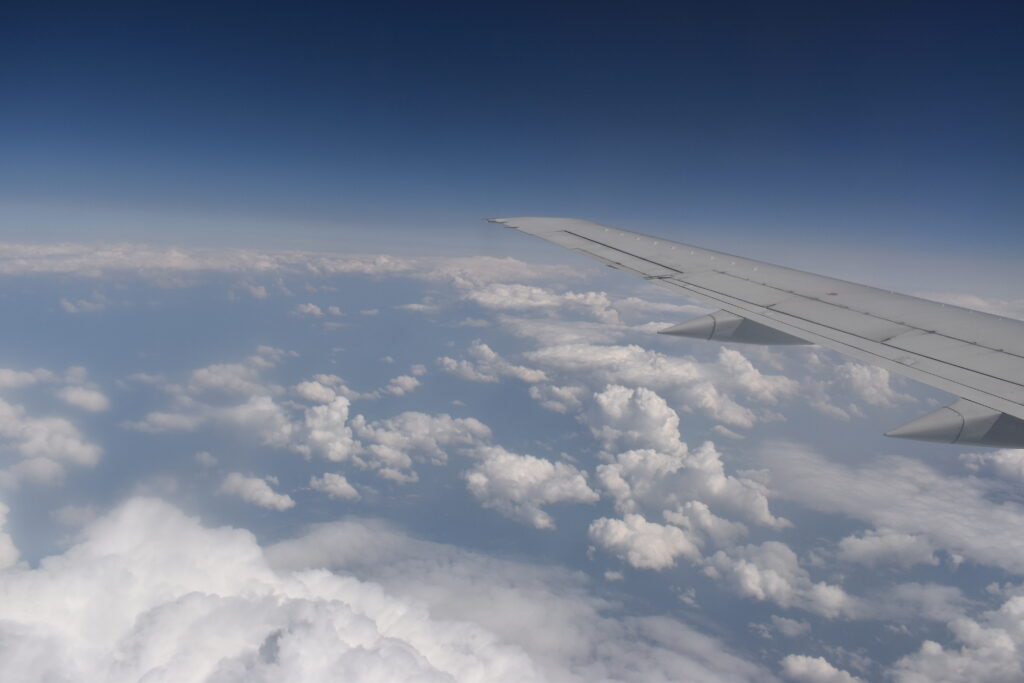
As we continued to climb, I noticed the landing light retracting back into the track fairing on the wings, which you can see better in the video of this flight found at the bottom of the article.
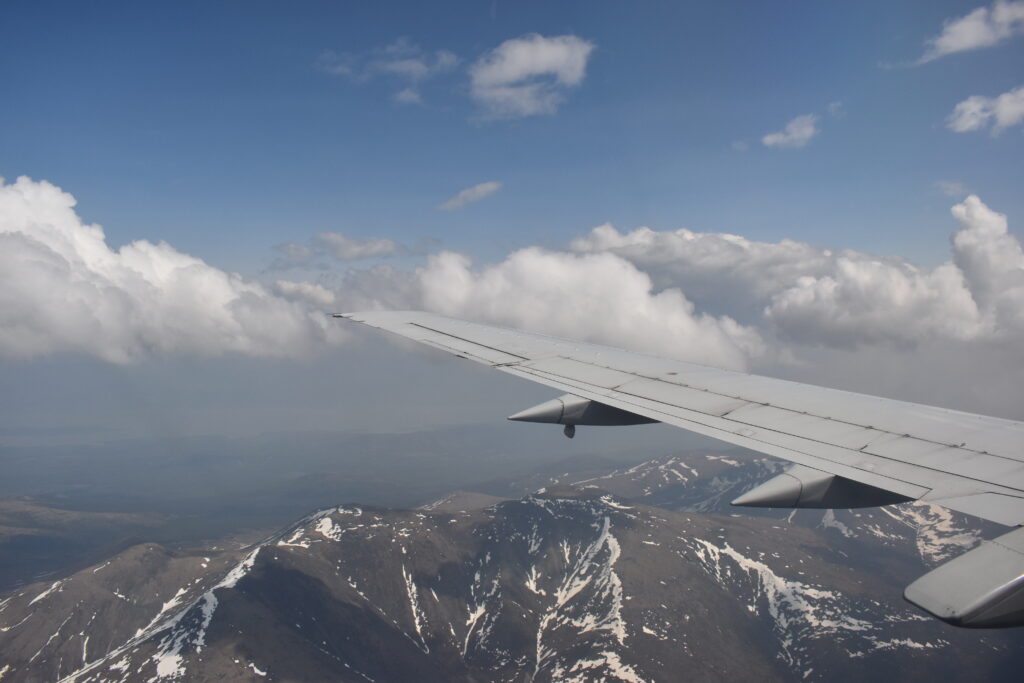
Due to the wildfires, the skies weren’t as clear as they could’ve been, but I still got a wonderful view out of the window.
Cruising towards Whitehorse. (Photo: AirlineGeeks | Joey Gerardi)
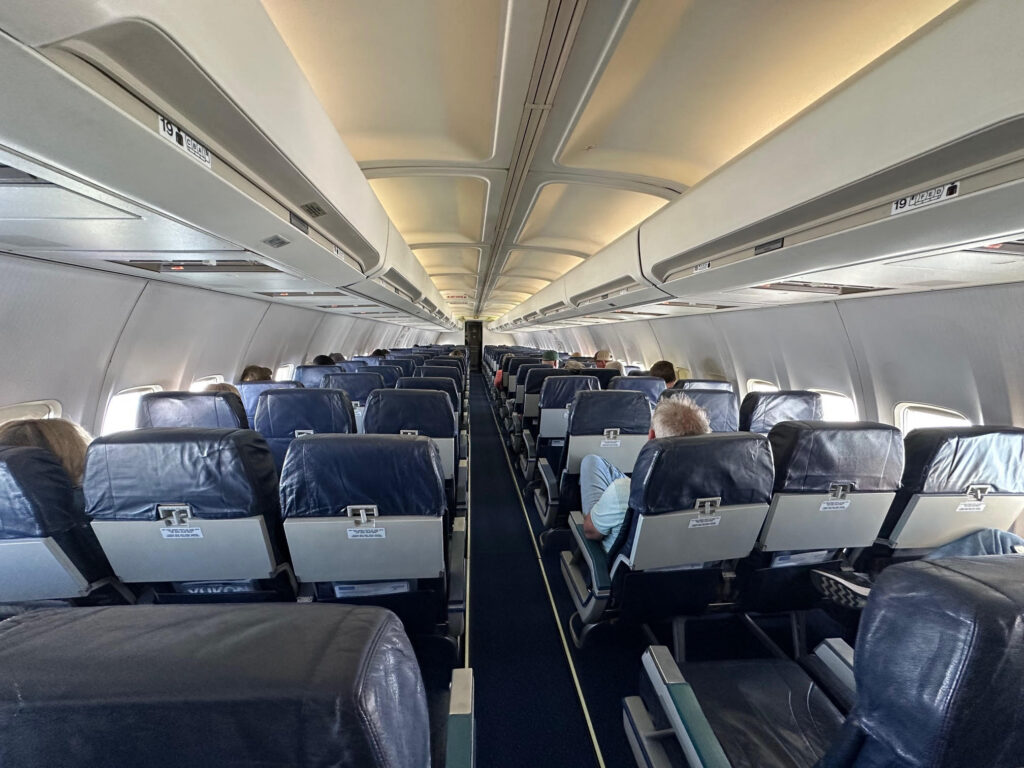
The seats had a good amount of room between them, and they were very comfortable as well, as is common with older seats on older generation aircraft.
Although this was a relatively short flight from Dawson City to Whitehorse, I’m sure the airplane would’ve been comfortable for a longer flight as well. Before Air North received its Boeing 737-800s in recent years, these -500s used to operate all of the airline’s longer flights, including the multi-hour flights from Whitehorse to Ottawa and Toronto via Yellowknife.
The passenger cabin on board Air North’s Boeing 737-500. (Photo: AirlineGeeks | Joey Gerardi)
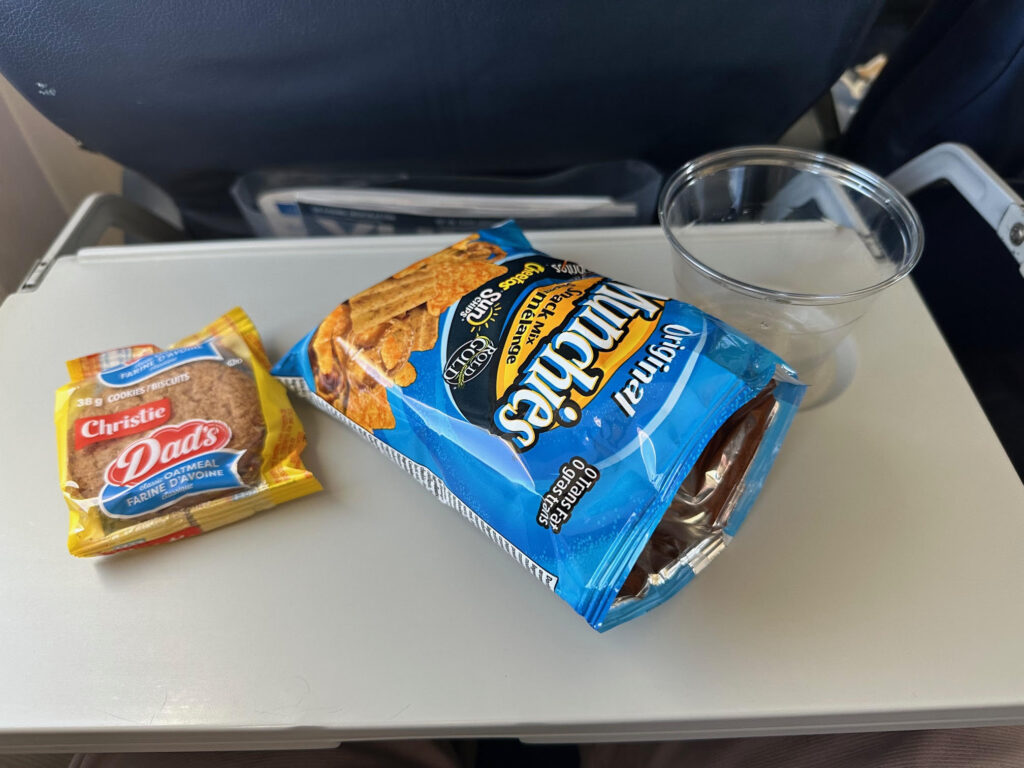
With the short flight, the flight attendants didn’t waste any time and came out with snacks as well as drinks pretty quickly. And with there being so few people on the flight, instead of pulling out the big and bulky galley carts, they came around and personally took each of our orders at our seats with a menu and a clipboard.
Snacks and drinks on my Air North flight. (Photo: AirlineGeeks | Joey Gerardi)
We made it up to our cruising altitude of 35,000 feet, or 10,668 meters, but we didn’t stay there for long and began our descent not long after.
For pretty much the rest of the flight, I sat back and enjoyed the sights and sounds of the Classic Boeing 737-500.
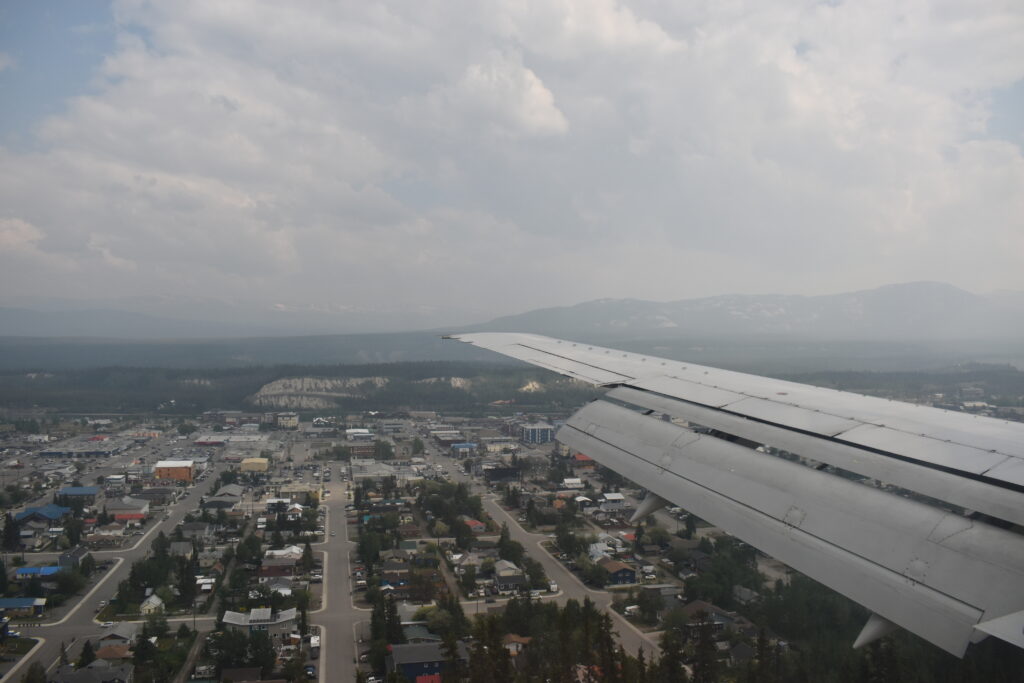
The descent into Whitehorse was quick and turbulent due to the fires in the south, so the crew cleaned up the cabin a little earlier than normal and took their seats for landing.
On our descent into Whitehorse, Yukon. (Photo: AirlineGeeks | Joey Gerardi)
As we got closer to Whitehorse, I could once again see the landing light come out of the track fairing on the wing, signaling our final approach into the capital of the Yukon. Luckily, the smoke had cleared up enough to get some rather wonderful views of the city on the final approach to the airport.
On final approach to Whitehorse, Yukon. (Photo: AirlineGeeks | Joey Gerardi)
We landed at around 2:20 p.m. local time, after a quick 41 minutes of flying time. One funny fact: the delayed ATR flight leaving around the same time as us left Dawson City before us, but we actually arrived in Whitehorse about 10 minutes before it, since we were in a jet aircraft.
With the airport being under construction at the time of my trip, we used the shorter runway for landing, and then had to back taxi on the runway to exit towards the terminal.
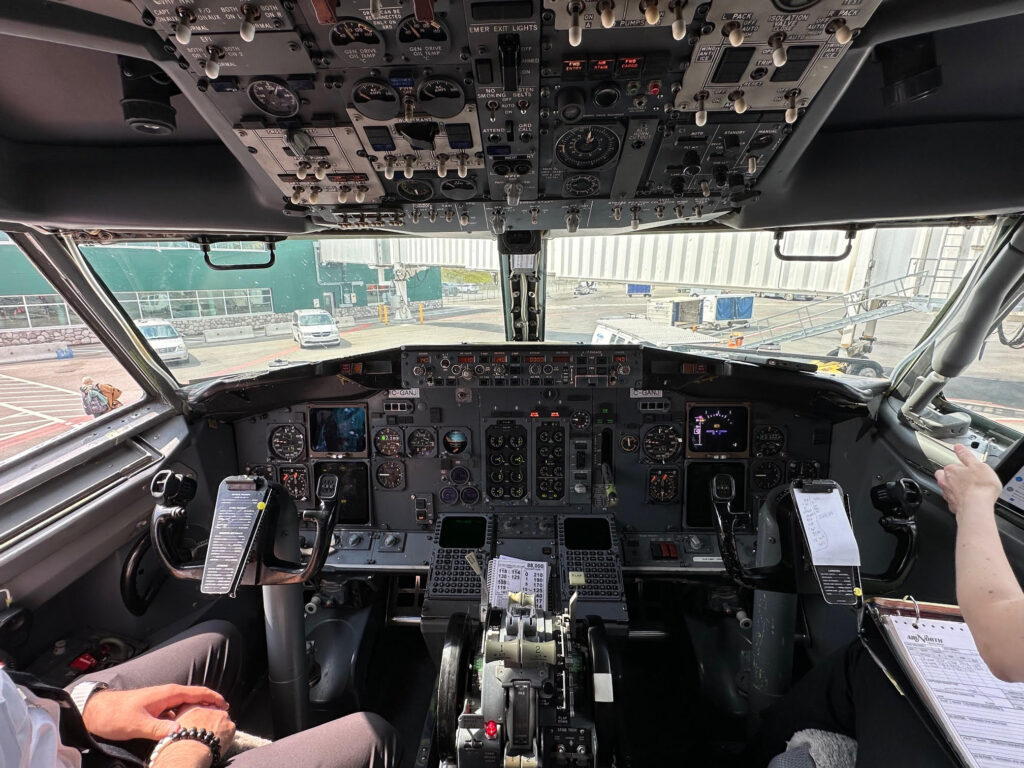
I had an absolutely fantastic time on the Boeing 737-500 aircraft, and of course, I made sure to stop by the cockpit to get some quick pictures before disembarking.
The cockpit of Air North’s Boeing 737-500. (Photo: AirlineGeeks | Joey Gerardi)
The Boeing 737-500 is one of the few classic aircraft left in the skies over North America for passenger flights, and while getting up to the Yukon might be a long journey, it is still 100% worth it as Air North is by far the easiest way of getting on the -500 if you have yet to fly on one.
Right after I landed, I had the pleasure of interviewing Air North’s CEO, Joe Sparling. The day after this, I had planned to fly on another classic aircraft, the Boeing 737-400 with Air North, but it got swapped out at the last second to another Boeing 737-500. The article for that will be out soon.
A video account of this trip report on Air North’s 737-500 can be found below.
Editor’s Note: Air North provided AirlineGeeks with a seat on this flight, but this trip report is an objective portrayal of events and is in no way swayed.
Joey has always been interested in planes for as long as he can remember. He grew up in Central New York during the early 2000s when US Airways Express turboprops ruled the skies. Being from a non-aviation family made it harder for him to be around planes and would only spend about three hours a month at the airport. He was so excited when he could drive by himself, the first thing he did with his driver's license was get ice cream and go plane spotting for the entire day. He graduated from Western Michigan University in 2022 with a B.S. in Aviation Management & Operations and a Minor in Business, and currently works for a major airline in his hometown.
Report: Spirit in Talks With Investment Firm For Potential Takeover
The carrier said late last year that it was considering a merger or sale.
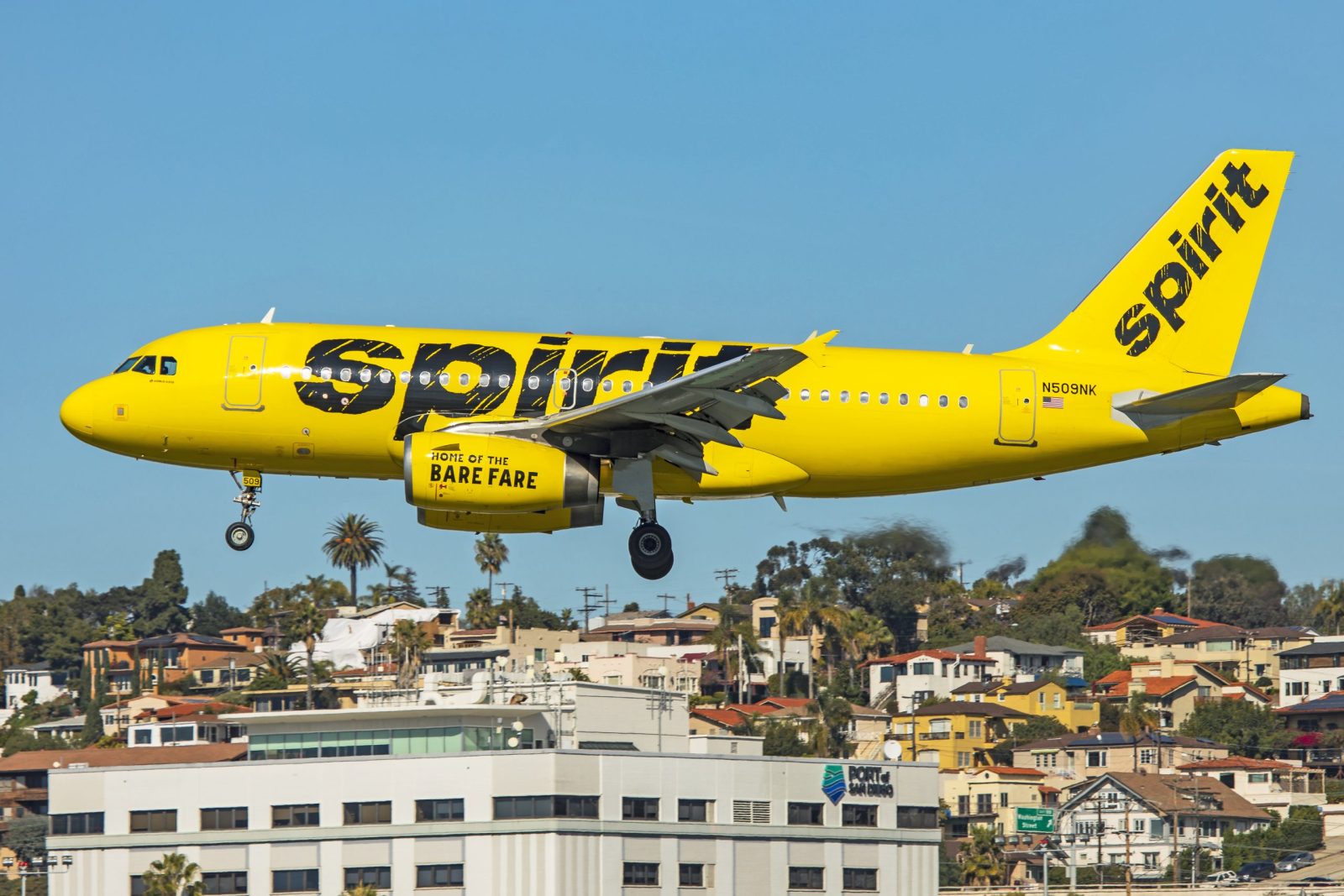
A Spirit Airlines Airbus A319 prepares for landing. (Photo: AirlineGeeks | William Derrickson)
Spirit is reportedly in talks with alternative investment firm Castlelake for a potential sale.
Citing people close to the discussions, CNBC reported Thursday that Spirit has not reached a merger agreement with fellow ultra-low-cost carrier Frontier and may agree to a takeover by Castlelake to save its business and emerge from bankruptcy.
The news channel’s sources did not discuss specifics of the potential deal, which would likely have to include Spirit’s bondholders.
Neither Spirit nor Castlelake have commented on the report.
Castlelake has approximately $33 billion in assets under management.
Last August, it expanded its presence in the aviation industry with the launch of a new lending entity, Merit AirFinance. The business will provide debt capital to airlines and leasing companies for new and used aviation assets, officials said at the time. Merit had about $1.8 billion in deployable capital when it launched.
Castlelake said it has deployed more than $5 billion to airlines and leasing companies since 2020.
About two months later, Bloomberg reported that the airline was in discussions with Frontier. The two carriers compete in the same market and have considered a linkup before, though without results.
In 2022, Frontier attempted to acquire Spirit, but Spirit’s shareholders rejected the offer. Two years later, in 2024, the carriers reportedly resumed discussions on a merger, but no deal was reached. And in January 2025, as Spirit prepared to emerge from its first stretch in bankruptcy, Frontier offered to buy the airline for about $2.1 billion in cash and stock, only to be rejected again.
Zach Vasile is a writer and editor covering news in all aspects of commercial aviation. He has reported for and contributed to the Manchester Journal Inquirer, the Hartford Business Journal, the Charlotte Observer, and the Washington Examiner, with his area of focus being the intersection of business and government policy.
American Adds New Routes from Two Hubs
Service will start in April and May, with an additional winter seasonal route launching in December.
The carrier announced Thursday that it will connect Chicago O’Hare with Allentown, Pennsylvania, Columbia, South Carolina, and Kahului, Hawaii, and Los Angeles with Cleveland, Ohio, and Washington Dulles.
“American’s new routes from Chicago and Los Angeles are just another way the airline is catering to all kinds of travelers with unmatched connectivity across the United States,” Brian Znotins, American’s senior vice president of network and schedule planning, said in a news release.
The two routes from Los Angeles will launch first, on April 7, and operate daily year-round using Boeing 737 aircraft.
American last linked Los Angeles and Washington Dulles in 2020.
On May 21, service between Chicago O’Hare and Allentown and Columbia will commence. American will operate those routes twice daily year-round with Embraer 170 jets.
Service to Kahului will start later this year, on Dec. 17. This route is seasonal, and will run daily until March 27, 2027. The airline will use a 787-8 for the flight.
Tickets for the new routes will go on sale Jan. 26.
Zach Vasile is a writer and editor covering news in all aspects of commercial aviation. He has reported for and contributed to the Manchester Journal Inquirer, the Hartford Business Journal, the Charlotte Observer, and the Washington Examiner, with his area of focus being the intersection of business and government policy.
Service between Oakland, California, and Kalispell, Montana, was removed from the airline’s schedule last week. This seasonal route was initially set to resume in June.
Las Vegas will also lose two Allegiant routes, including flights to Chattanooga, Tennessee, and Grand Forks, North Dakota. These routes are now scheduled to end on May 4.
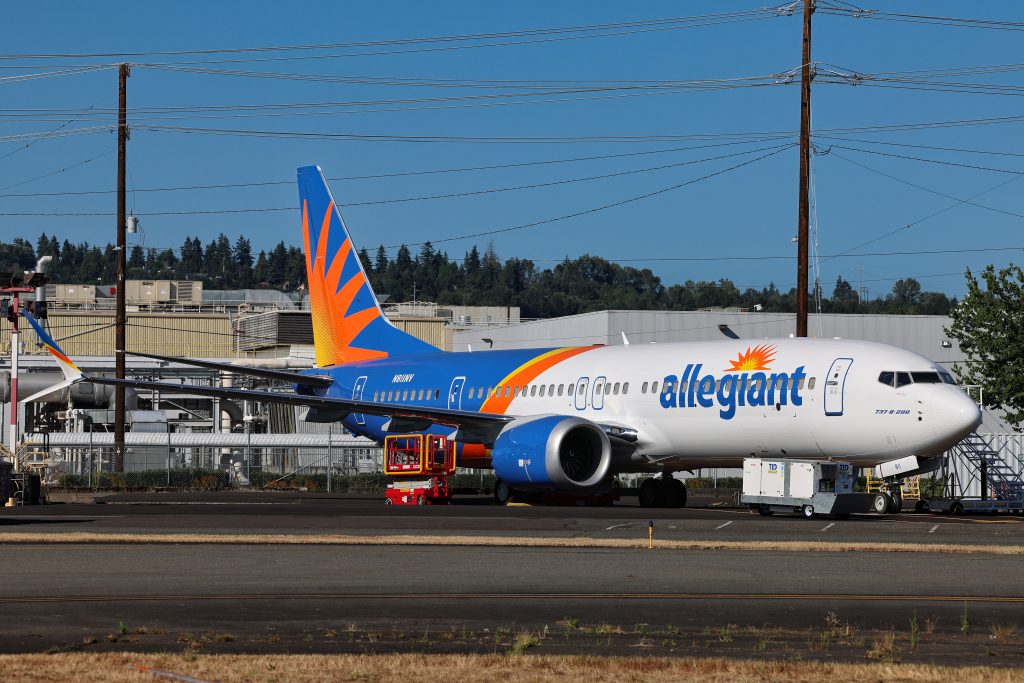
An Allegiant 737 MAX at Boeing Field. (Photo: AirlineGeeks | Katie Zera)
These network updates were included in last week’s Cirium Diio schedule update and reviewed by AirlineGeeks. An airline spokesperson did not immediately respond to a request for comment on the changes.
Finally, the airline’s service between Bellingham, Washington, and Oakland will cease on May 26.
Ryan founded AirlineGeeks.com in February 2013 and has spent more than a decade covering the airline business. His work has been featured by CNN, WJLA, CNET, and Business Insider. His aviation experience spans airport operations, Part 135 regulatory compliance, and airline crew workforce planning, along with time behind the yoke of a Cessna 172 and interviews with airline executives. Ryan now serves as Group President of Firecrown Media’s Aviation Group. He holds a B.S. in Air Transportation Management and an MBA from Arizona State University and teaches Airline Management at Embry-Riddle Aeronautical University.