




Thirty years ago this week, a small private jet crashed outside of California’s John Wayne’s airport in Santa Ana. Unfortunately, these kinds of accidents do happen but this one in particular had significant implications for both the aviation industry and a growing fast-food chain based out of California.
On December 15, 1993, an IAI Westwind business jet was preparing to land at John Wayne Airport behind a Boeing 757 when it suddenly lost control and crashed just short of the runway. The fatal flight carried none other than Rich Synder, CEO of In-N-Out, along with the chain’s executive vice president and chief operating officer Philip R. West. Both pilots, Stephen R. Barkin and John Odis McDaniel were also killed.
Synder was returning from a visit to the 93rd In-N-Out location that had just opened. Interestingly, the company had a rule barring the two executives from flying on a single aircraft at the same time, however, that was not followed.
Family Tragedy
The crash was a shock to everyone as Synder was instrumental in the growth of the In-N-Out. It was his actions that set the chain up for success that continues to this day. Rich Synder’s brother, Guy, soon took over operations of the fast food chain as the new CEO but his time at the helm was also short-lived. Guy died in 1999 due to an accidental drug overdose. The company had lost two CEOs in a span of six years.
These deaths ultimately led Esther Snyder, Rich and Guy’s mother, to take over the company. Esther successfully ran the company until her death in 2006 when Mark Taylor, former vice president of operations took over. He was the first non-Snyder to hold the position. Eventually, the role passed to Lynsi Synder, Guy Synder’s daughter. She gained control of 50 percent of the company in 2012 when she turned 30 and nearly full control at the age of 35 in 2017, making her one of the youngest female billionaires in the world. The chain now has well over 350 locations with its most recent one opening in Idaho.
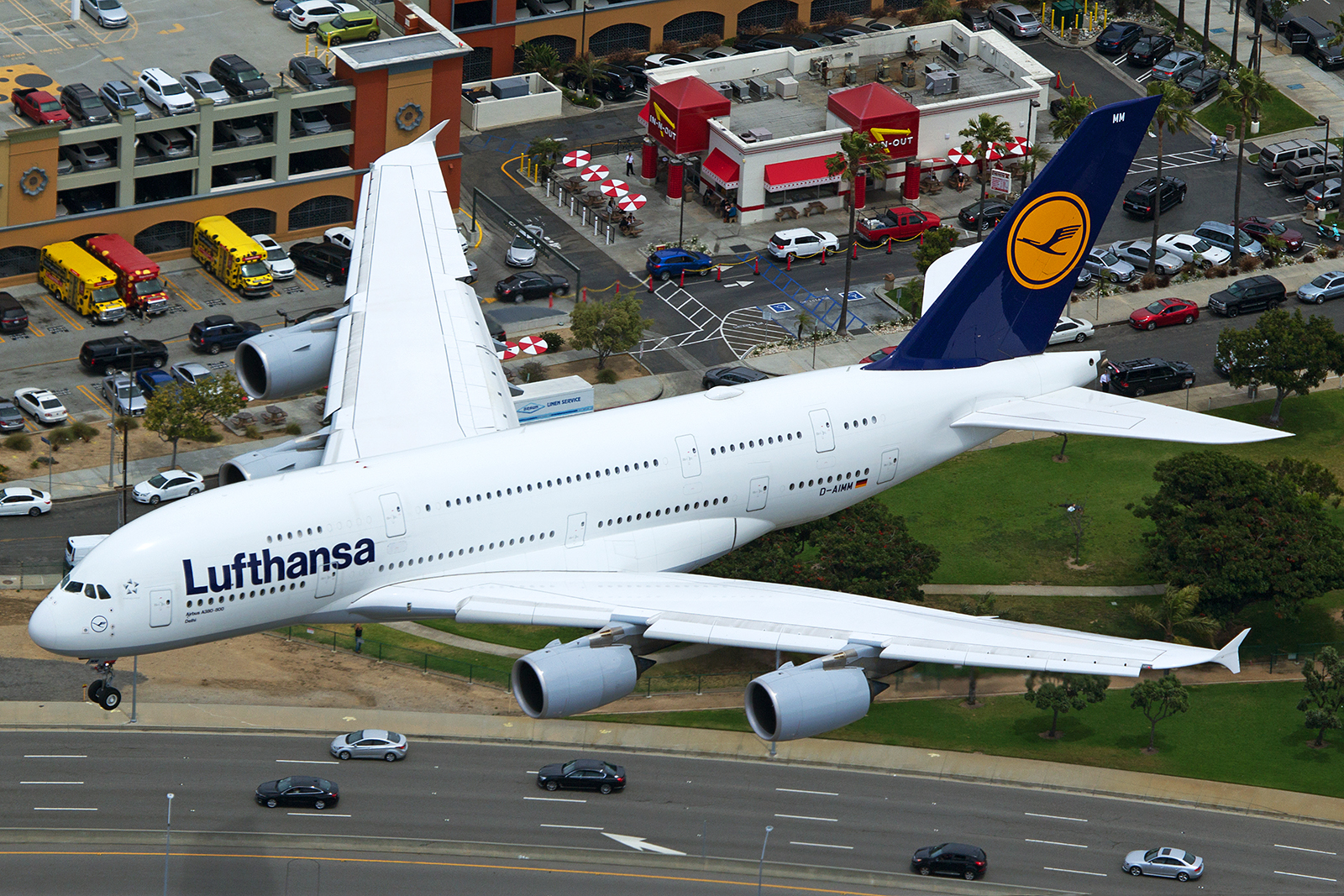
While the 1993 accident started a difficult period for the Synder family, it also resulted in aviation safety improvements around the world.
The Dangers of Wake Turbulence
An investigation into the crash determined that the business jet had lost control due to wake turbulence from the Boeing 757 that was in front of the smaller jet. Wake turbulence occurs as an aircraft wing generates lift, therefore creating horizontal vortices.
While it was known that larger aircraft could create wake turbulence at the time, more in-depth actions had yet to be taken on managing it, particularly for Boeing’s 757, which had prior issues with it due to the aircraft’s larger wing. This was not the first time a smaller jet had crashed as a result of a 757’s wake turbulence either.
In fact, the FAA had evidence from as early as 1991 that the 757 generates an unusual amount of wake turbulence, according to a Los Angeles Times article. In 1992, eight people were killed in their Cessna Citation as it was trailing a 757 in Billings, Mont.
Additional investigations were carried out and one of the tests showed that the 757 generated stronger wake turbulence than a Boeing 767, a larger widebody aircraft. The FAA issued new guidance for aircraft separation due to this with the 757 now being treated as a “heavy” jet, which requires additional consideration from air traffic controllers when operating around small to medium-sized aircraft. This designation is usually given to aircraft that have greater maximum take-off weights (MTOW), making Boeing’s 757 the only narrow-body to be considered a “heavy” aircraft.