










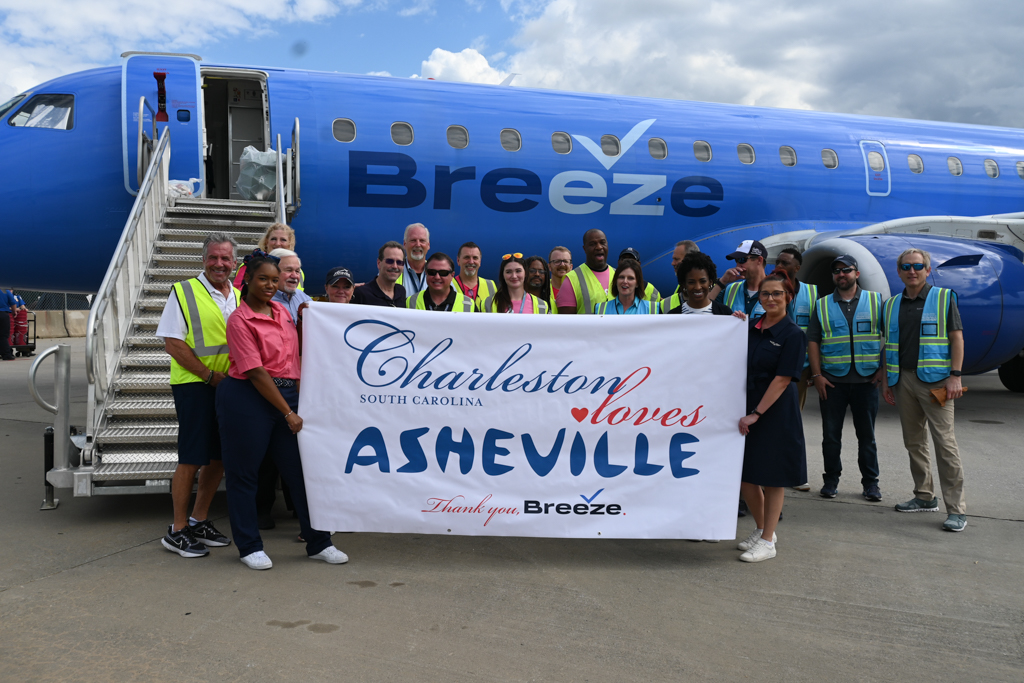

A joint effort by Breeze Airways, Charleston International Airport, and travel group Explore Charleston brought much-needed relief to the Asheville, North Carolina, region in the aftermath of Hurricane Helene.
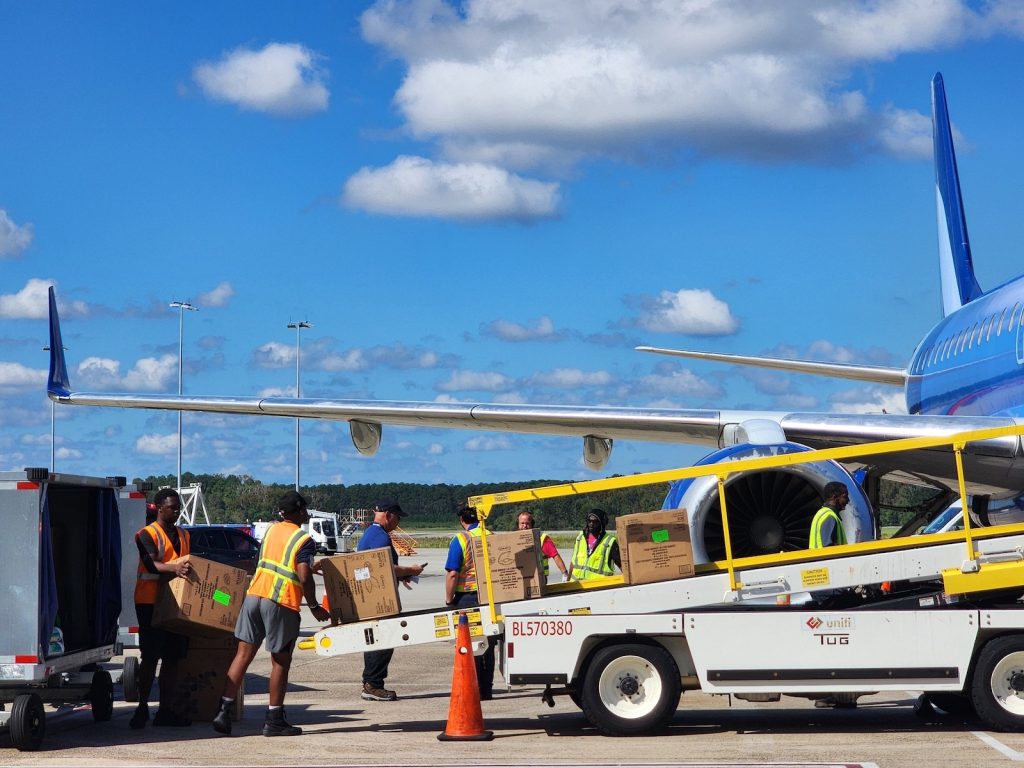
The partnership coordinated the transportation of thousands of pounds of essential supplies, including generators, propane, chainsaws, water, and other critical items, to support recovery efforts. Communities in the region are still recovering from the storm, which left thousands without electricity and killed over 220.
“Having lived through Hurricane Hugo, we respect the power of these storms and the type of damage they can do,” said Elliott Summey, executive director and CEO of Charleston International Airport, in a news release. “We were blessed to receive help from communities nationwide and are proud to stand in solidarity with our neighbors in western North Carolina during this challenging time. This collaboration underscores the spirit of community and the importance of coming together and helping those in need.”
Several private aircraft owners have banded together to fly supplies to the region, so much so that the Federal Aviation Administration (FAA) reported about 30 near-misses due to the traffic surge.
Breeze Steps Up
With its large base in Charleston, South Carolina, Breeze stepped up to aid in the recovery efforts by using one of its aircraft to move supplies. On Thursday, the carrier used an Embraer E190, which was chock-full of cargo and volunteers.
This plan came together in just 72 hours, said Chris Plunkett, Breeze’s station manager in Charleston, who was also on the flight.
“Obviously, when a call like that comes in and you have an opportunity to help, we were going to do just that,” Plunkett said during an interview with AirlineGeeks. “We’re going to see what opportunities existed. So we didn’t have a lot of time to play with, but when it all came together, it was just really something cool.”
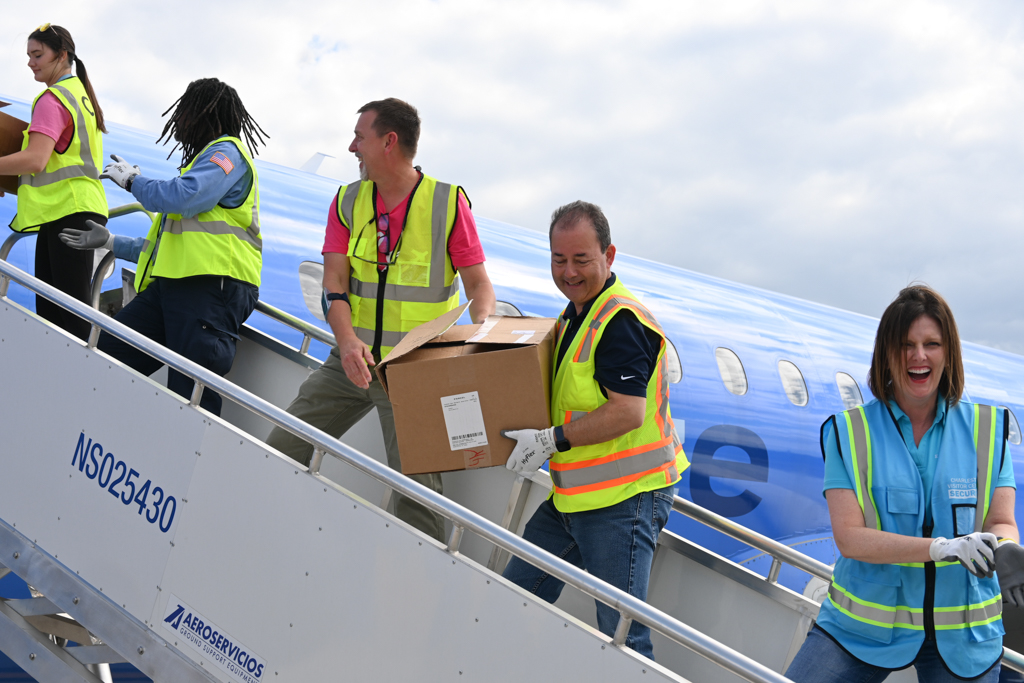
He said the airline and its partners in the effort worked with a wide array of stakeholders to make the flight possible. Those included the Transportation Security Administration and staff at the Asheville airport.
“It was nothing short of spectacular when you think about the amount of effort and logistical support that went into it in the amount of time that we had,” Plunkett added.

