










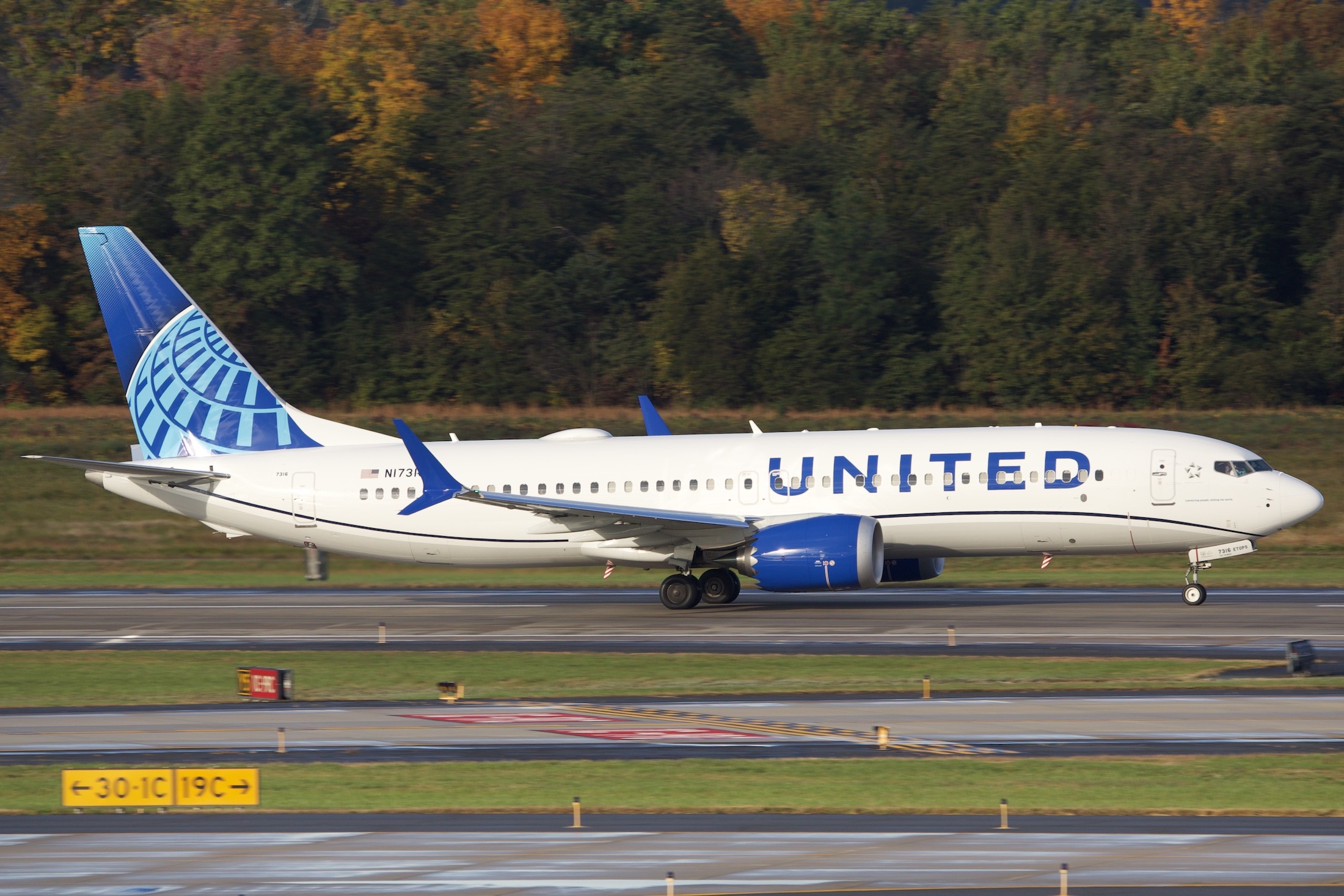


The leader of an atmospheric data collection and weather prediction company believes one of his weather balloons could be the cause of a smashed windscreen that forced a United Airlines flight to make an emergency landing last week.
United Flight 1093, operating with a Boeing 737 MAX 8, was flying from Denver to Los Angeles on Thursday when the pilots reported a cracked windscreen at cruise altitude over Moab, Utah. The flight landed safely in Salt Lake City, and the NTSB is now investigating.
While not verified by either United or the NTSB, photos circulating on social media site X show what appears to be the heavily damaged windscreen and scorch marks on the aircraft’s exterior above and around the windscreen.
The marks, combined with the aircraft’s reported cruise altitude – far higher than most birds can fly – prompted some social media users to speculate that a small meteorite or piece of space debris may have caused the damage. But on Monday, science and space YouTuber Scott Manley suggested that a weather balloon could have struck the 737 MAX.
“Here’s what the operational part of the @WindBorneWx weather balloon looks like,” Manley wrote on X. “They use sand as ballast. And here’s the plane, I now understand why the paint on the window frame looks like it’s been sand blasted.”
“It does look like WindBorne are doing all the right things, but I’m guessing the controllers just didn’t get the location information they were sharing?” he added.
John Dean, CEO of WindBorne Systems, answered Manley on X.
“Hi Scott, cofounder/CEO of @WindBorneWx here,” his post read. “Yes, I think this was a WindBorne balloon. We learned about UA1093 and the potential that it was related to one of our balloons at 11 p.m. PT on Sunday and immediately looked into it. At 6 a.m. PT, we sent our preliminary investigation to both NTSB and FAA, and are working with both of them to investigate further.”
WindBorne makes and deploys long-duration “smart” weather balloons to produce weather forecasts.
In a statement on Monday, the company said the “foreign debris object” that hit the United aircraft “was likely a WindBorne balloon.”
“WindBorne has conducted more than 4,000 launches,” the message said. “We have been coordinating with the FAA for the entire history of the company and file NOTAMs (aviation alerts) for every balloon we launch. The system is designed to be safe in the event of a midair collision. This is the purpose of the FAA Part 101 and ICAO weight limits. Our balloon is 2.4 pounds at launch and gets lighter throughout flight.”
The company also said it immediately rolled out changes to minimize time its weather balloons spend between 30,000 and 40,000 feet.
The NTSB has not commented on WindBorne’s statement.