











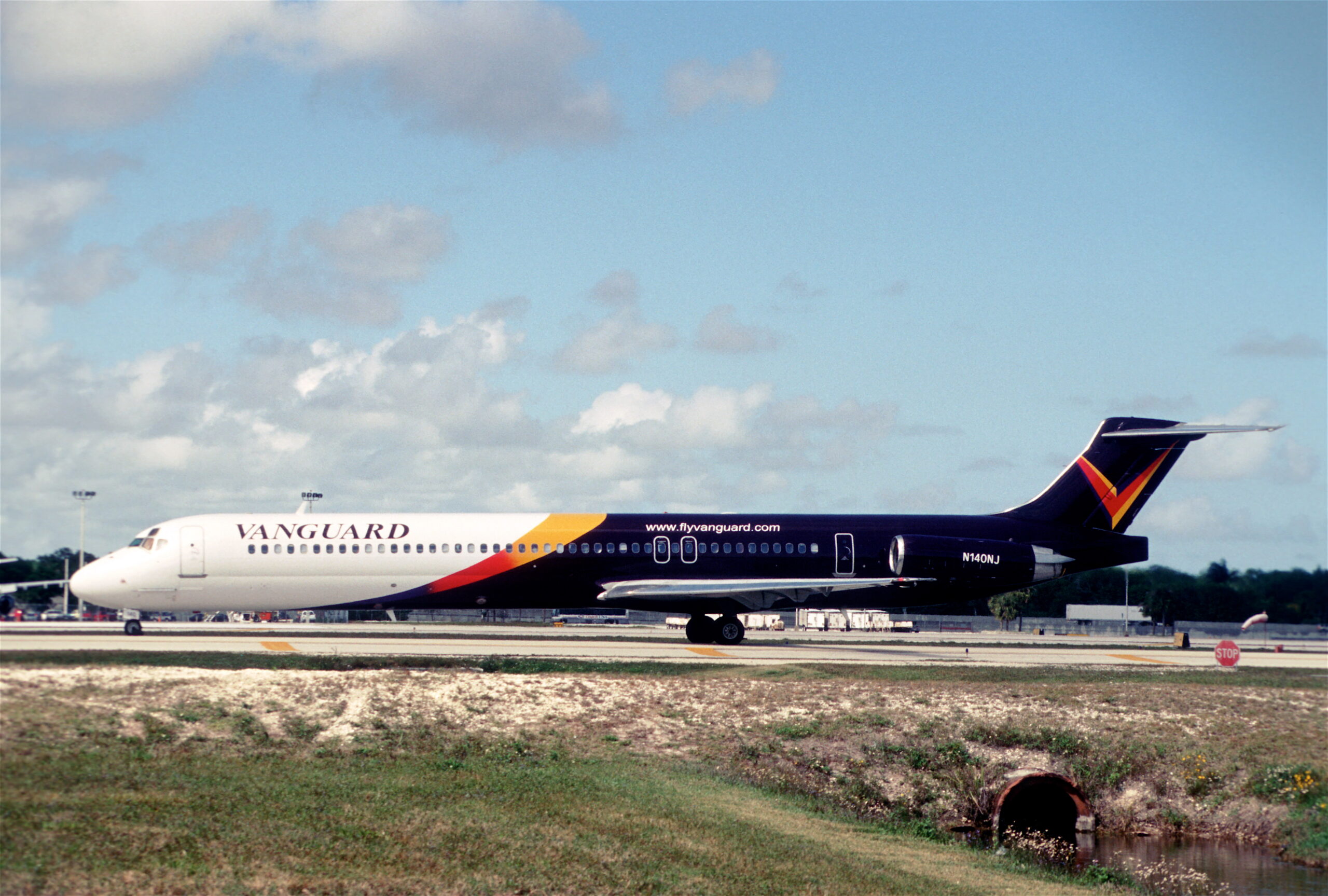


Vanguard Airlines’ main claim to fame was its ultra-low prices. It offered regular fares as low as $29, and sales sometimes drove that figure down as low as $10. While difficult to confirm, these may have been the lowest ticket prices listed by any U.S. airline during the 1990s.
By the time Vanguard came onto the scene, however, the major airlines had learned how to undercut their low-cost challengers with targeted fare reductions, and the carrier struggled to turn a profit. It took on significant debt, and while an attempted reinvention in 2000 produced some green shoots, the airline was not prepared for the steep drop in air travel after the 9/11 terrorist attacks.
A series of missteps during those critical months sealed Vanguard’s fate, and by 2002 it had ceased operations.
Beginnings
People Express veteran Bob McAdoo founded Vanguard in Kansas City in 1994.
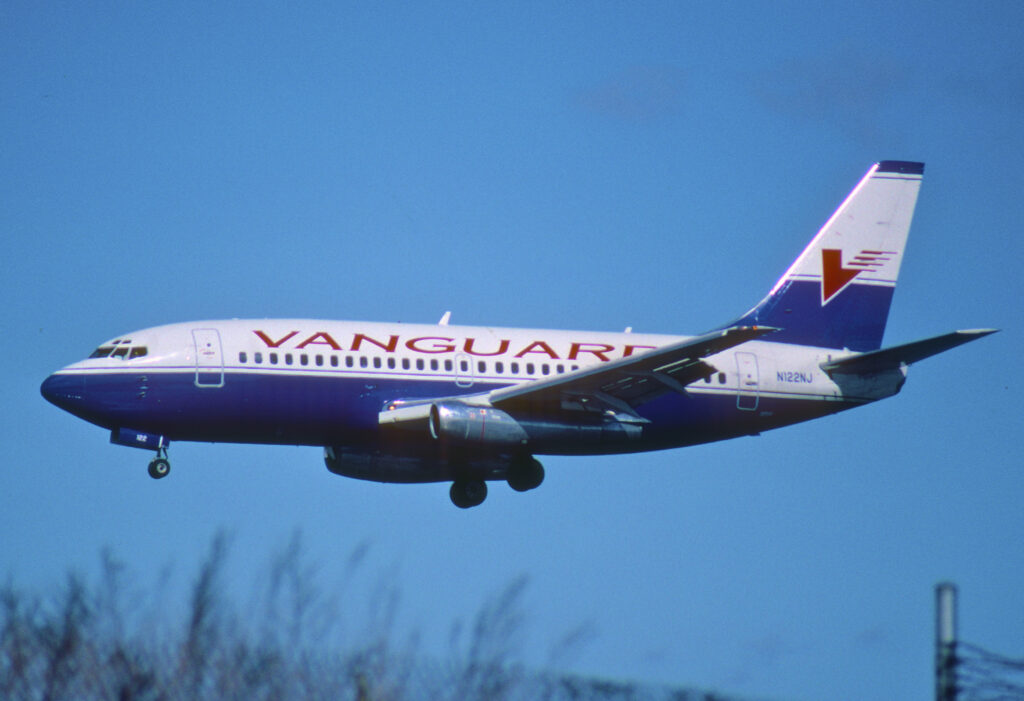
From the start, the airline’s goal was to attract customers with unbeatably low prices, and to that end all costs were tightly controlled. Vanguard leased used Boeing 727s, 737s, and McDonnell Douglas MD-80s during its run, and they were configured into a single class with few amenities.
The carrier’s operation was not quite as threadbare as some of its low-priced contemporaries, however. Aircraft were well-maintained, seats were relatively large and comfortable, and there was no charge for baggage. This made the airline’s offering plenty attractive to customers looking for the most economical ticket available, especially college students and families on vacation.
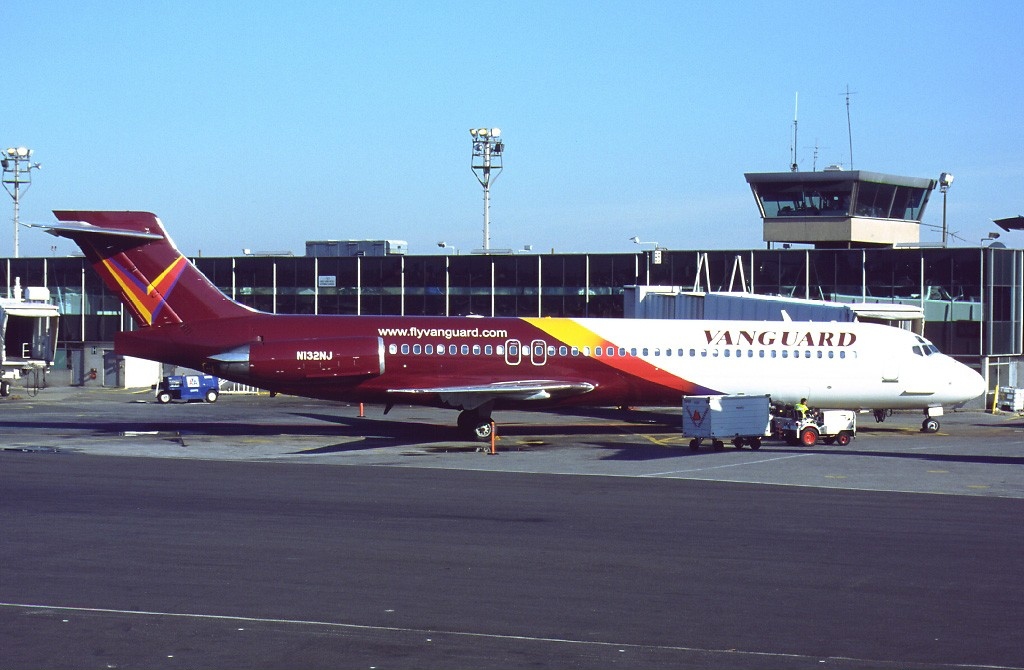
Vanguard’s earliest routes connected its Kansas City hub with destinations such as Dallas/Fort Worth, Chicago Midway, Denver, Milwaukee, Salt Lake City, and Wichita, Kansas. The airline typically entered new markets with a splash, aggressively advertising its low fares and setting off pricing wars with larger, more established competitors.
These battles were not always decided in Vanguard’s favor. In Wichita, for instance, American Airlines responded by matching Vanguard’s prices and adding flights, and in a matter of months the upstart carrier was forced to withdraw.
Still, Vanguard won points with the flying public for tending to drive down prices wherever they set up shop.
By the late 1990s, Vanguard had expanded its network to include Los Angeles, Atlanta, San Francisco, New York-JFK, Washington Dulles, Pittsburgh, and Las Vegas, among other large- and medium-sized cities. Chicago Midway became an unofficial secondary hub, with short-haul connections to Midwest and Northeast markets like Buffalo, Cincinnati, and Minneapolis/St. Paul.
Attempted Reinvention
Despite its significant network growth, Vanguard was rarely profitable on a quarterly basis, and by 1999 and 2000 executives were working to reinvent the brand.
A frequent flyer program was introduced, aircraft liveries were refreshed, and on-time performance improved. These changes required capital investments, and to cover them, ticket prices increased. Vanguard’s fares were still lower than the major airlines, but the days of $29 tickets were over for all but full-coach passengers.
The new business model worked, at least for a time. Vanguard recorded its best financial performance ever in the summer of 2001 and seemed poised for a highly profitable 2002. Plans were laid for another “opening spree,” which would have seen the carrier expand and strengthen operations in the Northeast and South.
Downturn
The terrorist attacks of Sept. 11, 2001, sapped Vanguard’s momentum and began its downward spiral. While the airline weathered the immediate aftermath as well as any U.S. operator, the sharp drop in domestic air travel between late 2001 and early 2002 erased the limited progress produced by the reinvention strategy and forced the carrier to take on debt. To keep operations stable, workers were laid off and some routes were canceled.
A combination of other factors made a full recovery increasingly unlikely. Difficulties adopting the SABRE reservation system cost the airline millions of dollars, and by 2002, Vanguard’s debt had ballooned to $80 million. As the situation worsened, credit card processors demanded greater and greater assurances that they would be protected if the airline went out of business. The surety rate reportedly imposed by these companies only pushed Vanguard further into the red.
Executives grasped for a lifeline in the form of a federal loan guarantee that would have allowed Vanguard to raise fresh capital. This plan was rejected twice by the federal government, however, leaving the airline to face a growing liquidity crisis on its own.
Vanguard reached a final breaking point in July 2002, when it filed for bankruptcy and ceased operations. According to media reports at the time, the airline made arrangements for Frontier and National Airlines to accommodate Vanguard passengers who otherwise would have been left stranded.
Despite its collapse, Vanguard played an important role in the evolution of U.S. low-cost airlines, and some elements of its strategy and business model can be seen today in carriers such as Allegiant and Spirit.