











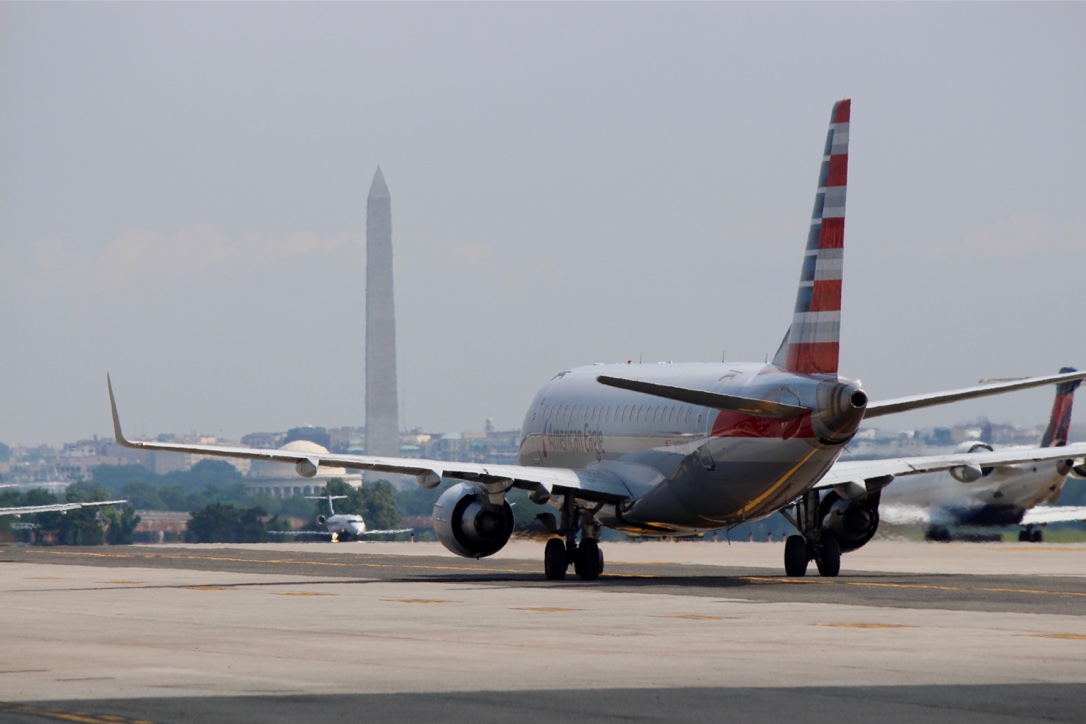


Longstanding problems with route design, air traffic control practices, and safety protocols contributed to last year’s fatal collision of a commercial jet and a U.S. Army helicopter over Washington, D.C., the NTSB said this week.
The agency capped an over eight-hour hearing Tuesday by voting to approve 74 findings and 50 recommendations to prevent similar accidents in the future. The FAA and the Army were singled out for “systemic failures” that made the airspace around Ronald Reagan Washington National Airport particularly dangerous.
“This complex and comprehensive one-year investigation identified serious and long-standing safety gaps in the airspace over our nation’s capital,” NTSB Chair Jennifer Homendy said in a statement. “Sadly, the conditions for this tragedy were in place long before the night of Jan. 29.”
American Airlines Flight 5342, operated by PSA Airlines, was approaching Washington National when it collided with a UH-60 Black Hawk helicopter over the Potomac River. All 67 people on both aircraft were killed.
The NTSB’s investigation found that the FAA’s helicopter route design in the Washington area did not provide necessary separation between helicopters and fixed-wing aircraft. The route structure at the time allowed helicopters to fly directly beneath an active approach corridor for commercial aircraft without sufficient risk mitigation measures, the agency reported.
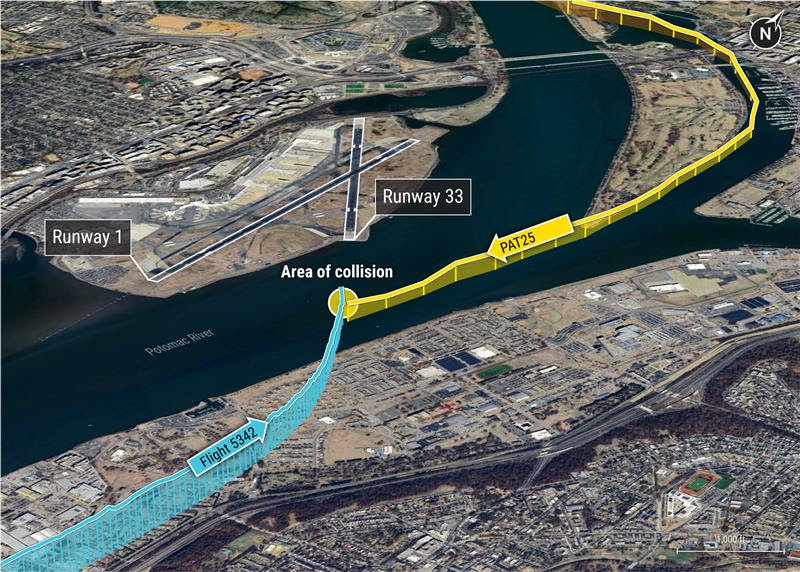
The FAA’s guidance on helicopter route altitudes and boundaries was also deficient, the NTSB found, and unclear information created space for misinterpretation. Charts for fixed-wing pilots did not depict nearby helicopter routes that intersected approach paths.
Another major point of contention since the crash has been staffing at air traffic control facilities, and investigators said high workloads contributed to the accident by reducing controllers’ focus on potential or developing problems.
The NTSB also faulted the FAA for lacking effective strategies to reduce the risk of collisions around Washington National, even though close calls between commercial aircraft and helicopters were a recurring issue in the area.
The Army was criticized for failing to identify and address hazards associated with helicopter operations in congested civilian airspace. Investigators found that the Army did not have a flight data monitoring program for helicopters operating near major airports and had only limited participation in safety reporting systems.
NTSB personnel also determined that neither aircraft was equipped with collision avoidance technology capable of providing effective alerts at the low altitude where the accident occurred. If the American flight had been equipped with an airborne collision avoidance system that used ADS-B In, the crew would have had better position information about the Army helicopter, the agency said. Such a system could have provided a first alert 59 seconds before the collision took place.
The NTSB’s recommendations – issued to the FAA, the Army, the U.S. Department of Transportation, the Department of Defense Policy Board on Federal Aviation, and the RTCA – call for reforms to helicopter route design, air traffic control procedures, data sharing and safety management systems, and collision avoidance technology.
Regulators have already implemented a number of safety measures intended to prevent military-civilian collisions at and around Washington National, with some taking effect within days of the crash. A helicopter route in the area was canceled, and new broadcasting requirements were imposed on military aircraft operating around the airport. An interim rule recently published by the FAA prohibits helicopters and powered lift aircraft from operating in certain areas around Washington National.
The NTSB is expected to issue a final report on the collision in the coming weeks.