













Hundreds of thousands of travelers remained stranded Monday as the fallout from joint U.S.-Israeli air strikes on Iran continued to grow.
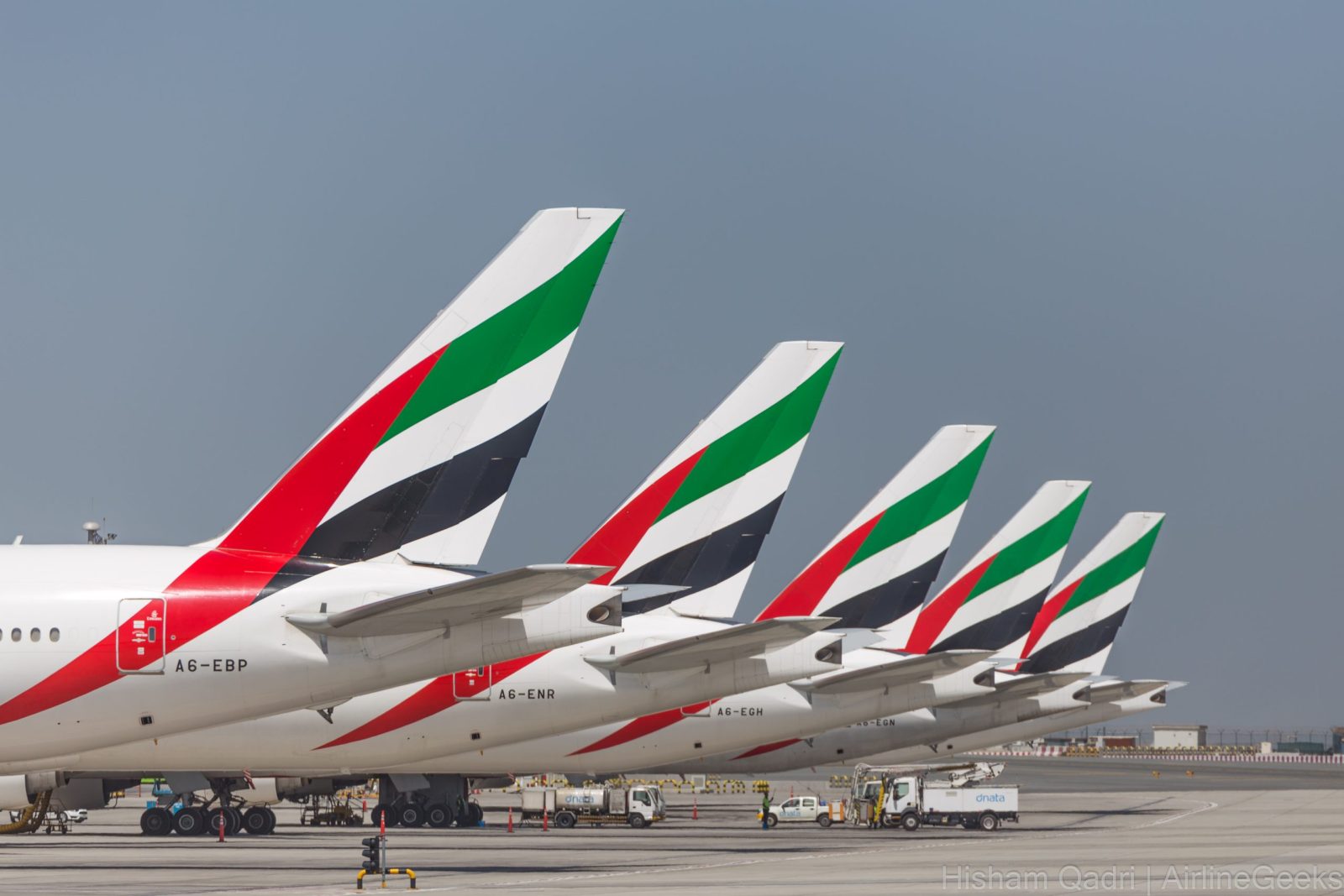
Some of the busiest airspace in the world, specifically over the United Arab Emirates, has been closed since the conflict began on Saturday morning. The UAE is home to Dubai International Airport, the busiest airport in the world in 2024 and the central hub for Emirates, and Zayed International Airport in Abu Dhabi, the main hub for Etihad. Both play a major role in connecting the Arab Gulf region, and in facilitating air travel between Europe and Asia.
Dubai International sustained damage after Iran attacked the UAE in retaliation on Saturday. Four staff members were injured.
Government officials have not said if the airport was directly struck by an Iranian missile or drone. Videos circulated online showed smoke inside a terminal and damage to the ceiling and shops on the ground floor.
Dubai Airports said that a small number of flights will resume at Dubai International and Dubai World Central-Al Maktoum Monday evening. Travelers were told not to go to either airport unless they have been directly contacted by their airline.
Israel, Iran, Qatar, Kuwait, Iraq, and Bahrain have also halted commercial flights, cutting off hubs such as Ben Gurion Airport and Hamad International Airport.
According to The Jerusalem Post, Israeli flag carrier El Al is preparing to operate “rescue flights” for Israelis stranded overseas once Ben Gurion reopens.
In nearby Jordan, civilian airspace is closed between certain hours until March 5. About half of all flights at Queen Alia International Airport near Amman have been called off.
Saudi Arabia’s airspace remains operational, though some regional traffic has been rerouted away from the country’s east. Flights from cities such as Riyadh and Jeddah are now the only way for many travelers to leave the region.
According to tracking website FlightAware, almost 2,500 flights had been canceled globally as of midday Monday. Airports in and around the Middle East saw the highest number of cancellations, with a knock-on effect evident in London, Cairo, New Delhi, and Hyderabad.
International carriers such as Delta, Lufthansa, and British Airways announced they will suspend service to destinations in Israel and the broader Middle East for the next several days. Air India said it is rerouting certain long-haul flights to Europe and North America to avoid Middle East airspace.
Air strikes aimed at Iran – and Iran’s counterattacks on Israel and U.S.-allied Gulf states – could bring on the most significant air travel disruptions since the COVID-19 pandemic, according to aviation experts. The Trump administration has signaled that operations against Iran will continue for at least four weeks.
The conflict spread to new regions late Sunday and early Monday. Hezbollah fired rockets at Israel from its bases in southern Lebanon, and Israel responded with air strikes on the suburbs south of Beirut. Lebanon’s prime minister has called on Hezbollah to stop its attacks and threatened to forcibly disarm the movement using the military.
A drone also struck a British military base in Cyprus. According to The Guardian, British Airways and EasyJet canceled flights to and from the island in response.