












Editor’s Note: AirlineGeeks is proud to present our ‘Livery of the Week’ series. Every Friday, a team member will share an airline livery, which can be from the past, present, or even a special scheme. Some airline liveries are works of art. The complexity associated with painting around critical flight components and the added weight requires outside-the-box thinking from designers. The average airliner can cost upwards of $200,000 to repaint, creating a separate aircraft repainting industry as a result.
Have an idea for a livery that we should highlight? Drop us a line.
When Southwest Airlines began operations in 1971, the airline’s livery did not feature the distinctive blue colors that adorn its jets today. Instead, the carrier adopted a livery known as Desert Gold, which embraced the brown and beige tones that were more popular at the time.
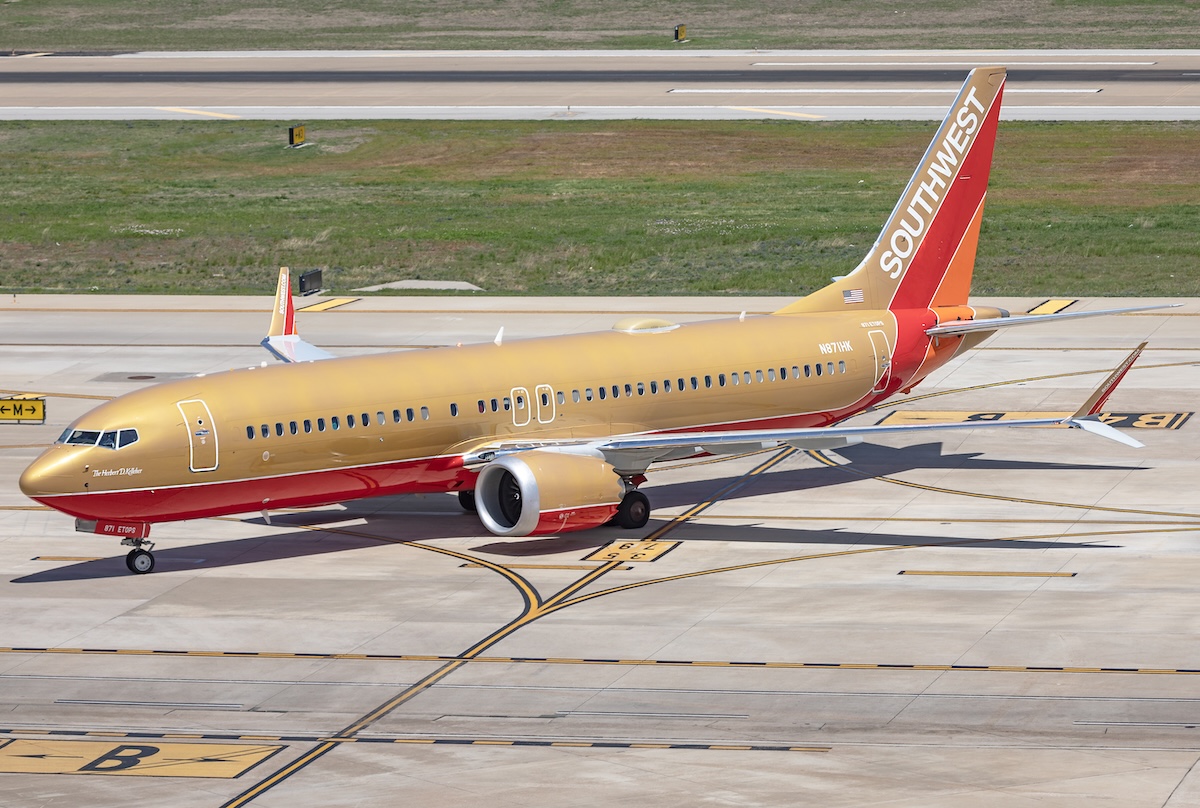
Also known as “Mustard Rocket,” Southwest’s original livery featured a primarily gold fuselage accompanied by stripes of red and orange. White pinstripes separated each color. Instead of putting its name on the front portion of the fuselage like most other airlines at the time, Southwest instead chose to paint its name on the tail.
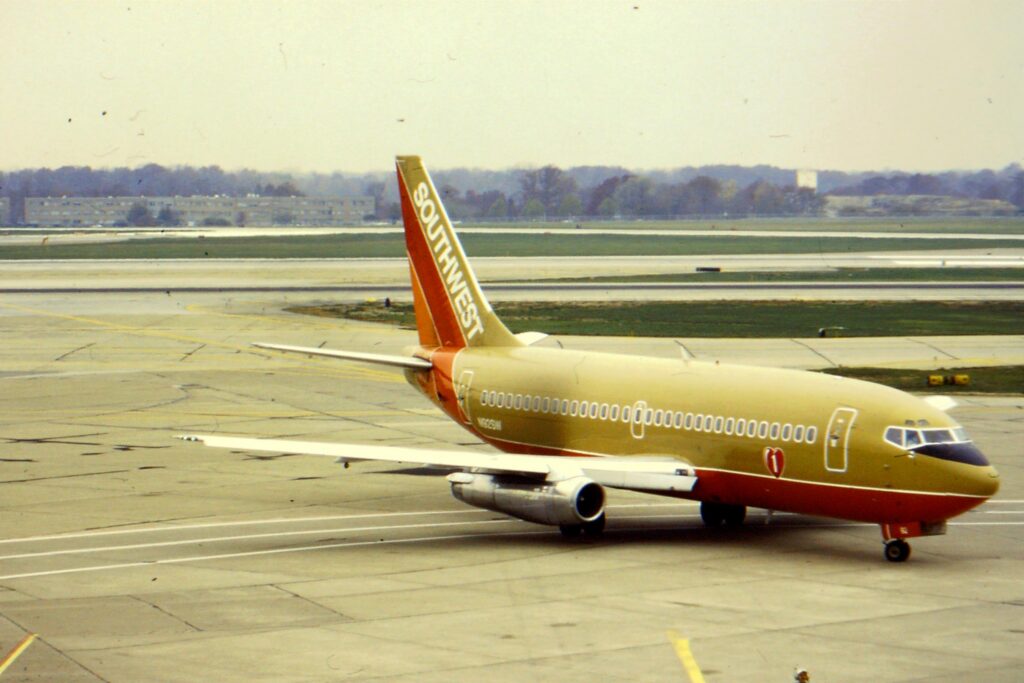
The Desert Gold livery was replaced by its Canyon Blue livery in 2001. This livery maintained the stripes of orange and red but replaced the gold portion with blue. However, the airline kept a few Boeing 737-700s painted in its Desert Gold livery, but these have all since been retired or repainted.
The retro livery currently lives on with a Boeing 737 MAX 8 registered as N871HK and named “The Herbert D. Kelleher” after co-founder and longtime CEO of the airline Herb Kelleher. This aircraft’s tail number also carries a special meaning: Southwest’s first revenue flight took place on June 18, 1971 (871) and HK is Kelleher’s initials.
Looking for a new airplane model? Head over to our friends at the Midwest Model Store for a wide selection of airlines and liveries.
