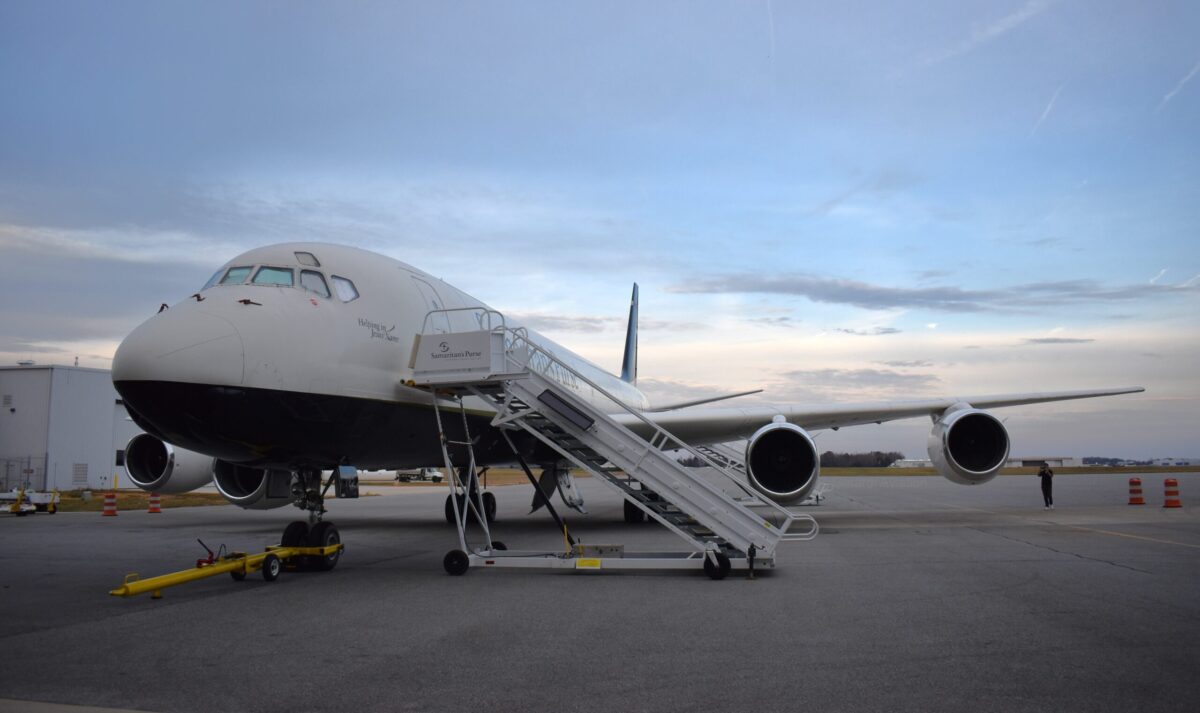
Samaritan's Purse DC-8 in Greensboro (Photo: AirlineGeeks | Joey Gerardi)
The DC-8 was a very important aircraft in aviation, but more than 50 years after its introduction, it has fallen out of favor and now operates with only three airframes active worldwide.
One of these airframes, N782SP, which is operated by Samaritan’s Purse, is the last active DC-8 with a U.S. registration and is being retired this month after many years of service, not only with the organization but also the other airlines that flew prior to that.
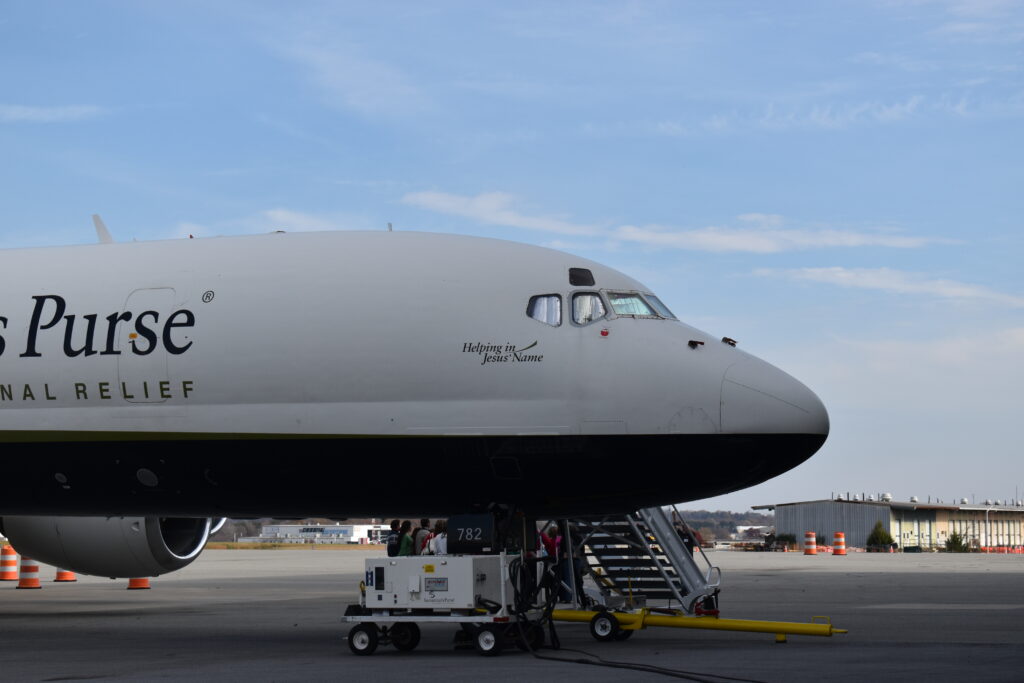
Samaritan’s Purse DC-8 in Greensboro, North Carolina (Photo: AirlineGeeks | Joey Gerardi)
With it being one of the last active DC-8s in the world, many aviation enthusiasts have wondered what fate holds for this particular airframe, hoping it would not be scrapped and it could be visited in the future.
After 10 years with the charity, the aircraft will go on its final mission on Friday, bringing over 9,000 shoebox gifts to areas devastated by Hurricane Melissa in Jamaica for Operation Christmas Child, which Samaritan’s Purse is well known for.
This will be the 219th and final mission for the DC-8.
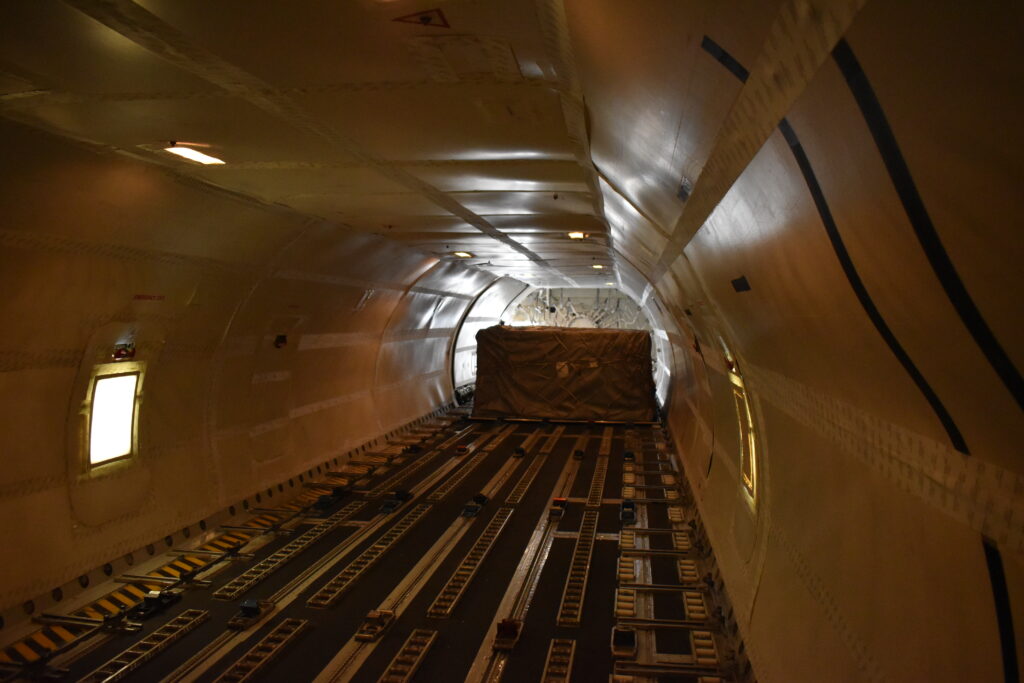
The cargo area of the Samaritan’s Purse DC-8 (Photo: AirlineGeeks | Joey Gerardi)
The retirement has been known for a while, but what wasn’t known until now is what will become of the aircraft after its final mission.
Samaritan’s Purse now says that the aircraft will not be getting scrapped and will be put on display for all to see.
On Display
Once the aircraft has completed its final mission in Jamaica on Friday, the quad-jet will fly for the last time, this time not back to Greensboro, but up to Liberty University in Virginia, where it will remain on display at the Lynchburg Regional Airport.
Liberty University has one of the largest faith-based collegiate aviation programs in North America.
The president of Samaritan’s Purse, Franklin Graham, did have something to say about the DC-8’s retirement: “For a decade, the DC-8 has helped us reach more people around the world for the Gospel—getting the right supplies and people to places devastated by disasters and crises. As the DC-8 prepares to complete its final mission, we praise God for how He has used this plane to change lives. Aviation plays a critical role in our work, and we replaced this 1968 DC-8, which has reached the end of its service life, with a 767, allowing us to transport even more supplies to people in need in Jesus’ Name.”
Along with the Boeing 767 that Graham mentioned, the charity also has a Boeing 757, both of which will be used to transport critical cargo and supplies to those in need.
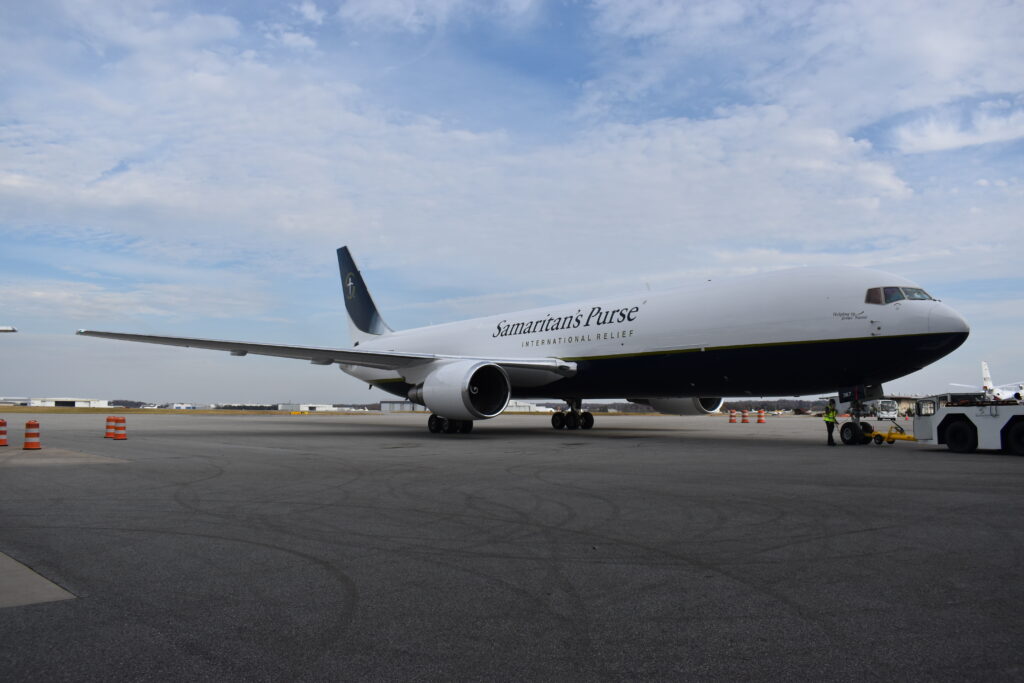
Samaritan’s Purse 767, which will take over a lot of the missions from the DC-8 (Photo: AirlineGeeks | Joey Gerardi)
AirlineGeeks had the opportunity to fly on board the DC-8 with Samaritan’s Purse a couple of weeks ago on their 218th Mission to Mission Aviation Day in Daytona Beach, Florida, at Embry-Riddle University.
With Christmas coming up, those wanting to contribute, donate, or even make a shoebox for an Operation Christmas Child can do so here.
Joey has always been interested in planes for as long as he can remember. He grew up in Central New York during the early 2000s when US Airways Express turboprops ruled the skies. Being from a non-aviation family made it harder for him to be around planes and would only spend about three hours a month at the airport. He was so excited when he could drive by himself, the first thing he did with his driver's license was get ice cream and go plane spotting for the entire day. He graduated from Western Michigan University in 2022 with a B.S. in Aviation Management & Operations and a Minor in Business, and currently works for a major airline in his hometown.
FAA Investigating Airline Compliance With Flight Reduction Order
Carriers who violated the directive could face fines of up to $75,000 per flight.
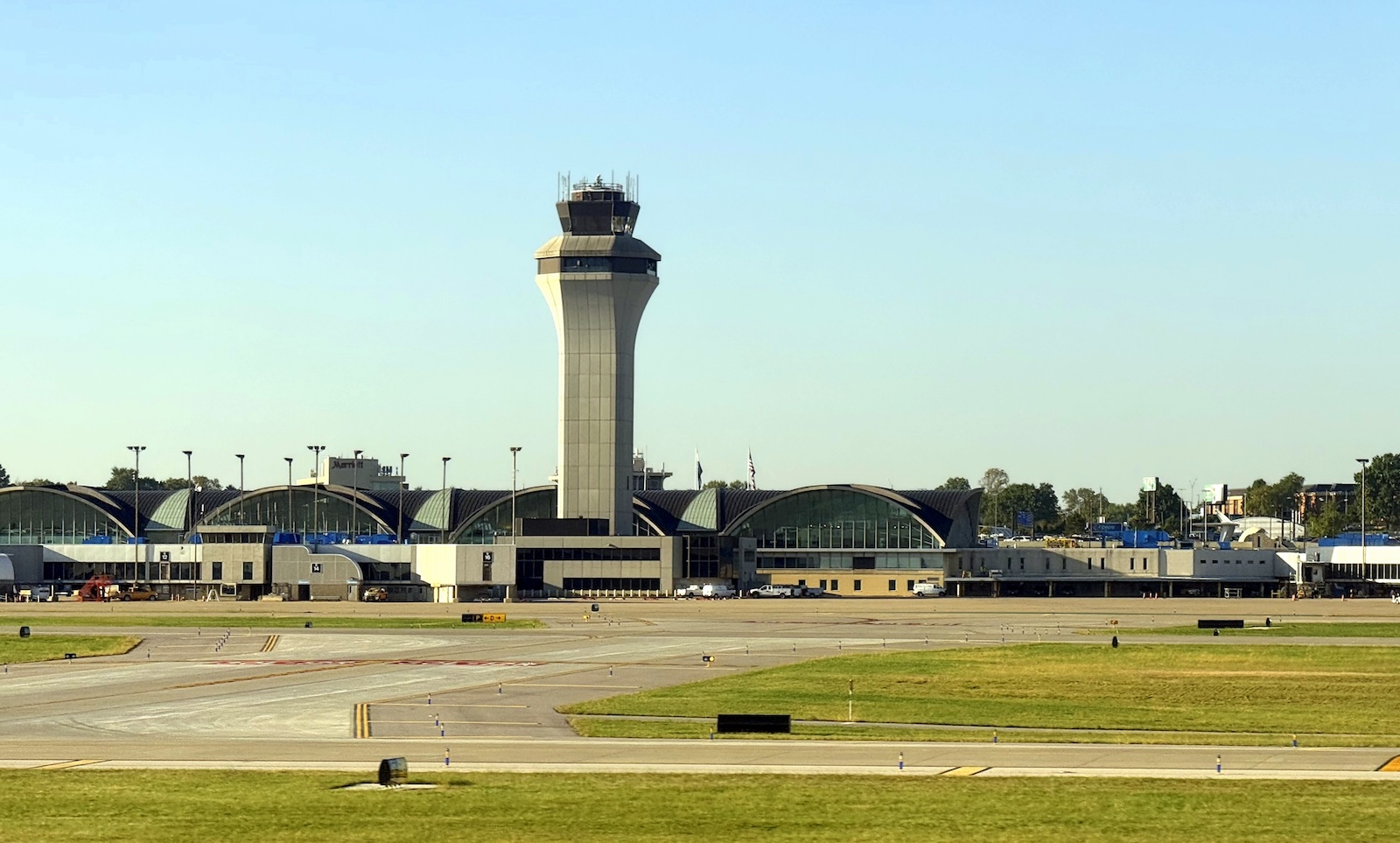
Air traffic control tower in St. Louis. (Photo: Shutterstock | ArtByArthur)
The FAA is investigating whether certain airlines violated its Nov. 7 order reducing flights at 40 of the nation’s busiest airports.
In a statement, the agency said it contacted carriers that operate more than 10 daily flights at any of the affected airports and is giving them 30 days to produce evidence that they complied with the flight reduction order. Airlines found to have violated the rule could face fines of up to $75,000 per flight that exceeded the emergency limits.
The FAA did not name any specific carriers, but the 10 daily flights criteria would include airlines like United, Delta, American, Southwest, and JetBlue, among others.
Agency officials said last month that they were looking into “reports of non-compliance by carriers,” but it was not clear at the time if a full-blown investigation would be launched.
The FAA began cutting flight traffic during the recent federal government shutdown to ease the burden on air traffic controllers working without a pay. The cuts – which targeted major airports such as Chicago O’Hare, Denver, Atlanta, Los Angeles, New York-JFK, and many more – resulted in thousands of canceled flights per day, in addition to thousands of delays.
Reductions started at 4%, rose to 6%, and were dropped entirely days after the federal government officially reopened.
Zach Vasile is a writer and editor covering news in all aspects of commercial aviation. He has reported for and contributed to the Manchester Journal Inquirer, the Hartford Business Journal, the Charlotte Observer, and the Washington Examiner, with his area of focus being the intersection of business and government policy.
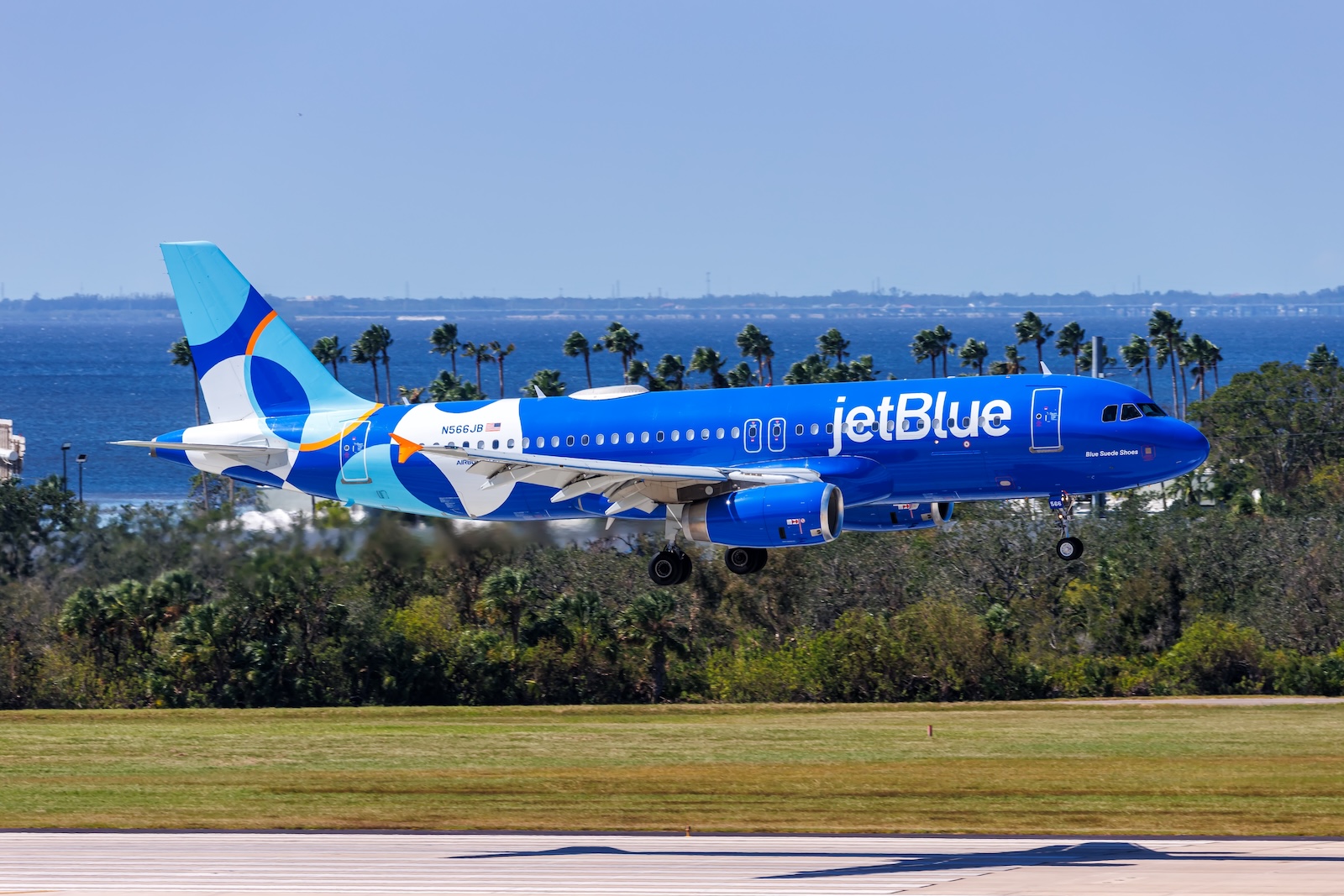
The airline said it will offer flights to six destinations it does not ordinarily serve from Fort Lauderdale: Denver; Dallas/Fort Worth; Bozeman, Montana; Reno, Nevada; Salt Lake City; and Jacksonville, Florida. JetBlue will also connect Fort Lauderdale with Portland, Maine, during the week of Patriots’ Day, which is observed in eight U.S. states, most notably in Maine and Massachusetts.
“As we continue to grow our position as the leading carrier in Fort Lauderdale, we’re excited to bring even more destinations and flexibility to our customers during one of the busiest travel periods of the year,” Dave Jehn, JetBlue’s vice president of network planning and airline partnerships, said in a news release. “From spring break favorites to special Patriots’ Day flying, these routes are another example of how we’re responding to demand and creating more opportunities for travelers to enjoy the experience that sets JetBlue apart.”
The start and end dates and frequencies of the upcoming flights are:
Bozeman to Fort Lauderdale: March 14-28, on Saturdays
Denver to Fort Lauderdale: March 12-23, daily to twice daily
Dallas/Fort Worth to Fort Lauderdale: March 12-23, daily to twice daily
Reno to Fort Lauderdale: March 14-28, on Saturdays
Salt Lake City to Fort Lauderdale: March 12-23, on Mondays, Thursdays, Fridays, Saturdays, and Sundays
Jacksonville to Fort Lauderdale: March 12-23, daily to twice daily
Portland to Fort Lauderdale: April 16-27, five times weekly
JetBlue said it plans to operate 113 daily departures and serve 46 destinations nonstop from Fort Lauderdale this winter.
Zach Vasile is a writer and editor covering news in all aspects of commercial aviation. He has reported for and contributed to the Manchester Journal Inquirer, the Hartford Business Journal, the Charlotte Observer, and the Washington Examiner, with his area of focus being the intersection of business and government policy.
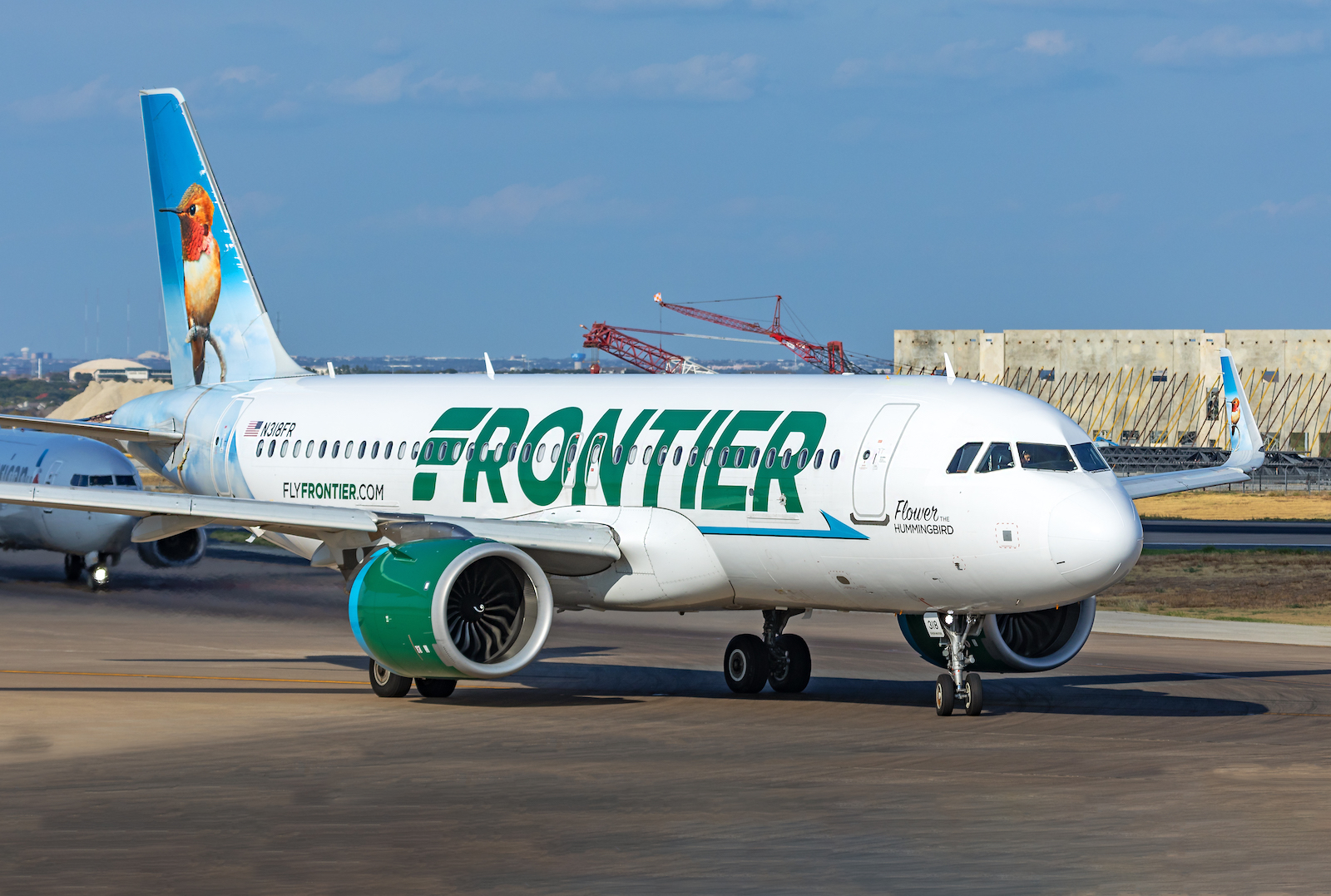
The ultra-low-cost carrier said the new connections will be up and running in time to serve customers traveling for spring break.
The start dates and frequencies of the upcoming flights are:
Nashville, Tennessee, to Phoenix: March 6, four times per week
Charlotte, North Carolina, to Cancun: March 6, three times per week
Columbus, Ohio, to Fort Lauderdale, Florida: March 8, three times per week
Chicago Midway to Cancun: March 7, weekly
Raleigh, North Carolina, to Cancun: March 7, weekly
Des Moines, Iowa, to Phoenix: March 13, four times per week
Fort Lauderdale to Indianapolis: March 6, three times per week
Fort Lauderdale to St. Louis: March 13, twice per week
Fort Lauderdale to Raleigh: April 2, four times per week
Indianapolis to Las Vegas: March 24, three times per week
Indianapolis to Phoenix: March 24, four times per week
Indianapolis to Fort Myers, Florida: March 27, twice per week
Las Vegas to Minneapolis: March 6, three times per week
Las Vegas to Memphis, Tennessee: March 8, twice per week
Las Vegas to Milwaukee, Wisconsin: March 24, three times per week
Little Rock, Arkansas, to Orlando, Florida: March 15, twice per week
Orlando to Tulsa, Oklahoma: March 13, twice per week
Orlando to Salt Lake City: April 1, daily
Orlando to Richmond, Virginia: April 2, twice per week
Memphis to Phoenix: March 15, three times per week
Milwaukee to Phoenix: March 26, twice per week
Omaha, Nebraska, to Phoenix: March 25, three times per week
Norfolk, Virginia, to Tampa, Florida: April 3, twice per week
“As we look ahead to 2026, there’s a lot to be excited about — from our expanding network to the introduction of our new First Class seats and more — and we’re thrilled to kick things off with the announcement of these new routes, giving travelers even more affordable options as they plan their spring breaks next year,” Josh Flyr, vice president of network and operations design at Frontier, said in a news release.
Flight frequencies are subject to change, the airline said.
Zach Vasile is a writer and editor covering news in all aspects of commercial aviation. He has reported for and contributed to the Manchester Journal Inquirer, the Hartford Business Journal, the Charlotte Observer, and the Washington Examiner, with his area of focus being the intersection of business and government policy.
Delta to Open New A220 Base
Move supports expected growth of A220 flying at the carrier’s Midwest hub.
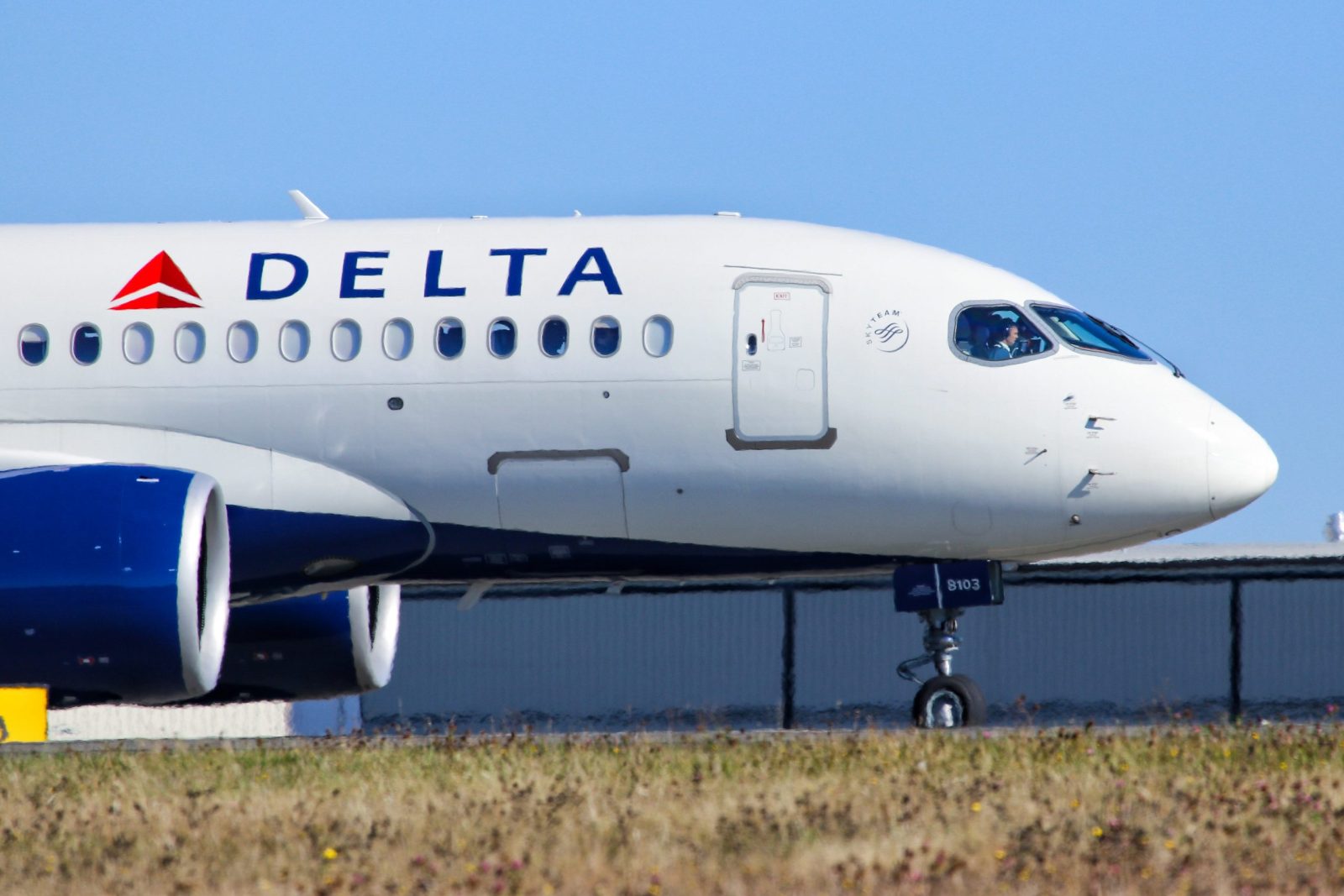
A Delta A220 at Paine Field. (Photo: AirlineGeeks | Katie Zera)
Delta will open a new pilot base for its Airbus A220 fleet in Minneapolis/St. Paul next spring, the airline confirmed to AirlineGeeks this week.
The move will position A220 flight crews locally as the aircraft’s presence in the hub expands, a spokesperson said.
“To support the continued growth of A220 flying in Minneapolis, Delta has decided to dedicate some A220 pilots to the hub starting next spring,” the spokesperson added.
The airline said it is too early to detail any additional destinations or frequencies that the A220 will operate from Minneapolis. However, the new base will allow Delta to staff its A220 flights with locally based pilots rather than drawing exclusively from other hubs.
According to Cirium Diio schedule data, the carrier plans to operate up to 51 daily A220 flights to/from Minneapolis in early 2026. The new base is slated to open in the spring.
Delta currently bases A220 crews in Salt Lake City, New York, and Seattle. As the airline continues to grow its A220 fleet over the next several years, it expects to expand the aircraft’s pilot group across all of its bases, including the new Minneapolis operation, it said.
Ryan founded AirlineGeeks.com in February 2013 and has spent more than a decade covering the airline business. His work has been featured by CNN, WJLA, CNET, and Business Insider. His aviation experience spans airport operations, Part 135 regulatory compliance, and airline crew workforce planning, along with time behind the yoke of a Cessna 172 and interviews with airline executives. Ryan now serves as Group President of Firecrown Media’s Aviation Group. He holds a B.S. in Air Transportation Management and an MBA from Arizona State University and teaches Airline Management at Embry-Riddle Aeronautical University.
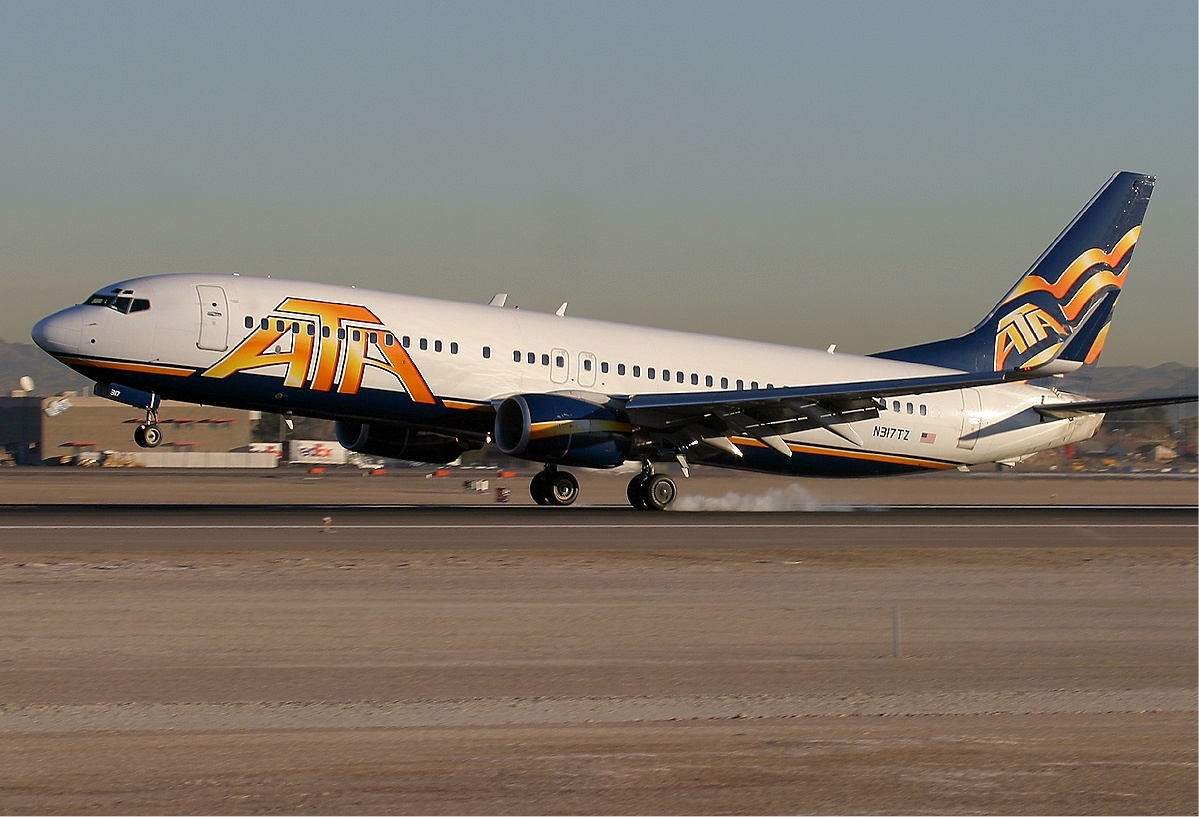
An ATA 737 in Las Vegas in 2003. (Photo: Konstantin von Wedelstaedt, GFDL 1.2 [http://www.gnu.org/licenses/old-licenses/fdl-1.2.html] or GFDL 1.2 [http://www.gnu.org/licenses/old-licenses/fdl-1.2.html], via Wikimedia Commons)
Grounded is AirlineGeeks.com’s look back at airlines that once shaped the industry but no longer take to the skies. Each story revisits a carrier that influenced routes, fleets, or fares—and explores what ultimately led to its final descent.
ATA Airlines entered the 21st century as a success story.
From its origins as a charter operator, it had grown into a regular scheduled airline with over 30 destinations, lucrative contracts with the U.S. military, and bustling hubs in Indianapolis and Chicago. In 2000, in a move befitting its new status as a major carrier in the eyes of the U.S. Department of Transportation, ATA ordered dozens of new aircraft from Boeing. If fully realized, the deal would have transformed the airline and made it competitive with the largest domestic carriers of its time.
Instead, ATA faced financial ruin on the heels of a national tragedy. The brief but sharp contraction in commercial flying after the 9/11 attacks sent the airline into a downward spiral from which it could not recover.
Beginnings
ATA grew out of the Ambassadair air travel club, formed by entrepreneur and pilot J. George Mikelsons in 1973. Air travel clubs were private organizations, a byproduct of the more tightly regulated pre-1978 airline sector, that ran flights for members, somewhat like a charter carrier. After deregulation, Mikelsons decided to make his business a proper charter service, and in 1981 Ambassadair became American Trans Air, later shortened to ATA.
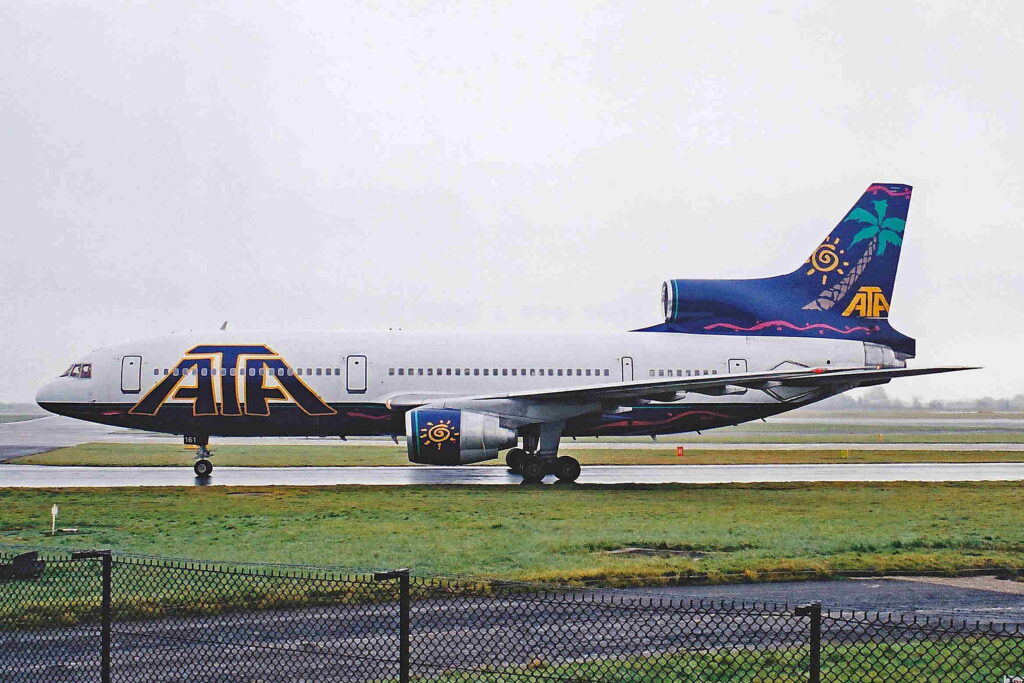
From its base in Indianapolis, ATA operated charter flights around the world, gradually building both its clientele and fleet. Ambassadair had operated Boeing 720s, but in the 1980s these aircraft were replaced by 707s, which were in turn replaced by 727s and Lockheed L-1011 TriStars. As the company continued to grow, Mikelsons reorganized ATA under a new parent company, Amtran, which went on to launch subsidiaries like ATA Leisure, ATA Training, and ATA Cargo.
In 1986, ATA became a commercial airline and commenced regular scheduled service, with its first year-round route linking Indianapolis and Fort Meyers, Florida. From that relatively modest start, the airline expanded across the U.S. and added cities like New York, Chicago, Los Angeles, and Philadelphia to its network.
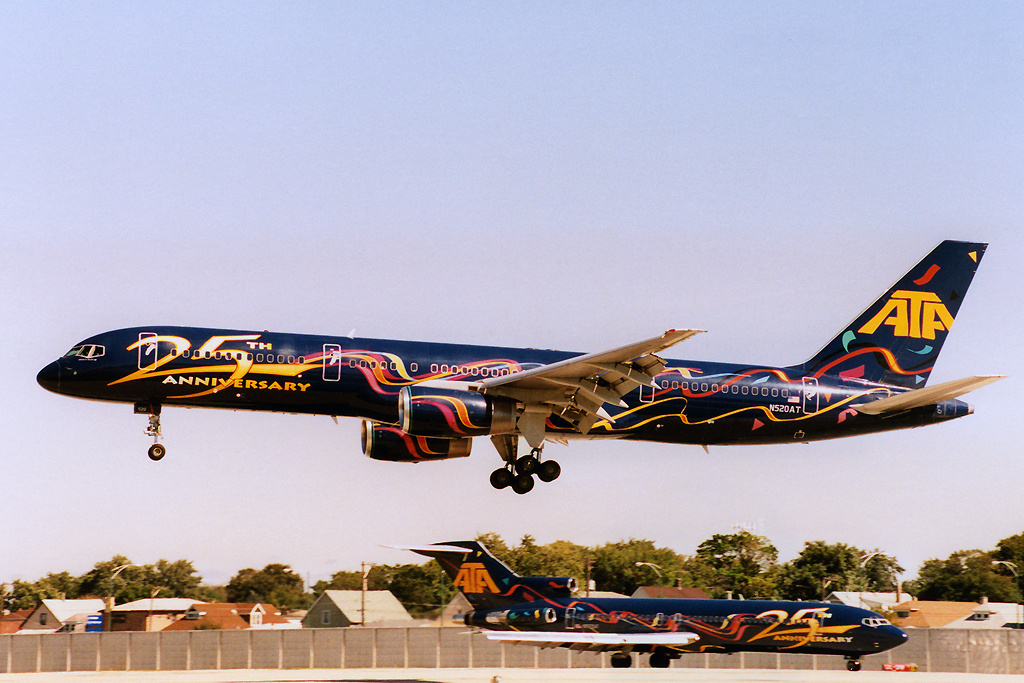
The difference-maker for ATA was the 757, which it acquired in 1989. More efficient than the carrier’s older aircraft, 757-200s helped ATA expand on the West Coast while supporting new connections between New York-JFK, Belfast, and Riga, Latvia. The type became the backbone of ATA’s fleet, and a major driver of its push into the Caribbean in the 1990s.
Military Partnership and Leisure Expansion
When the U.S. entered the Gulf War in 1991, ATA became a Pentagon contractor. It flew tens of thousands of U.S. military personnel during the conflict, and later operated charter flights for the military to bases in Italy, Turkey, and the Azores in Portugal. In 1992, the airline picked up a shuttle contract for flights between Nellis Air Force Base and the Tonopah Test Range, both in Nevada.
The working relationship between ATA and the Department of Defense would be renewed during the invasion of Iraq and the subsequent Iraq War in the 2000s.
On the civilian side, ATA increasingly pivoted into leisure travel as it added destinations in Florida, Hawaii, Mexico, and the Caribbean. The airline started offering vacation packages to entice travelers and shifted resources south while exiting some less profitable northern markets. To drive the point home, executives rolled out a new slogan – “On ATA, You’re On Vacation!” – and commissioned a palm tree-themed livery in 1996.
Underpinning this shift in focus was the development of ATA’s second hub at Chicago Midway. The airport became ATA’s main conduit for south-bound leisure travel, and a commuter service called ATA Connection, operated by Chicago Express Airlines, was launched specifically to ferry passengers from around the Midwest to the Chicago hub.
By the late 1990s, ATA felt confident enough to place its largest ever order with Boeing for 39 737-800s and 12 757-300s. The aircraft were to be positioned at Midway, where they would help expand service on popular existing routes and eventually launch new ones.
Downturn
The terrorist attacks of Sept. 11, 2001, threw the U.S. airline industry into chaos, and ATA was particularly exposed due to the high cost of the Boeing deal. As Americans eschewed air travel, the carrier’s earnings plunged, and in 2004 ATA and its parent company filed for Chapter 11 bankruptcy protection.
To survive, ATA sold some of its gates at Midway to Southwest and AirTran Airways and shrunk its presence in Indianapolis. Service cuts followed, with the airline gradually ending flights to destinations like Boston, Minneapolis, Denver, and Newark, New Jersey. ATA Connection was closed, and its assets were sold off.
Amid the bankruptcy process, ATA signed a codeshare deal with Southwest and restructured its network to complement its larger partner. This included operating point-to-point flights to Southwest’s focus cities such as Las Vegas and Phoenix.
ATA emerged from bankruptcy in 2006, though in a much diminished form. It made several attempts to return to profitability, including launching new flights to Hawaii and shifting its Bay Area operations from San Francisco to Oakland, but rising costs and downward pressure on ticket prices made a full recovery difficult.
The final blow came in 2008, when FedEx canceled its military charter contract with ATA. The collapse of yet another revenue source, combined with the rising cost of jet fuel, depleted the airline’s cash on hand, and ATA again filed for bankruptcy. This time, operations came to a final halt.
Southwest purchased some of ATA’s remaining assets, including gates at LaGuardia Airport, though it took none of the defunct airline’s aircraft or workers. Today, ATA’s trademarks and logos remain the property of Southwest.
Zach Vasile is a writer and editor covering news in all aspects of commercial aviation. He has reported for and contributed to the Manchester Journal Inquirer, the Hartford Business Journal, the Charlotte Observer, and the Washington Examiner, with his area of focus being the intersection of business and government policy.
Airbus Cuts Delivery Goal After A320 Issue
The manufacturer now expects to fulfill around 790 commercial aircraft orders this year.
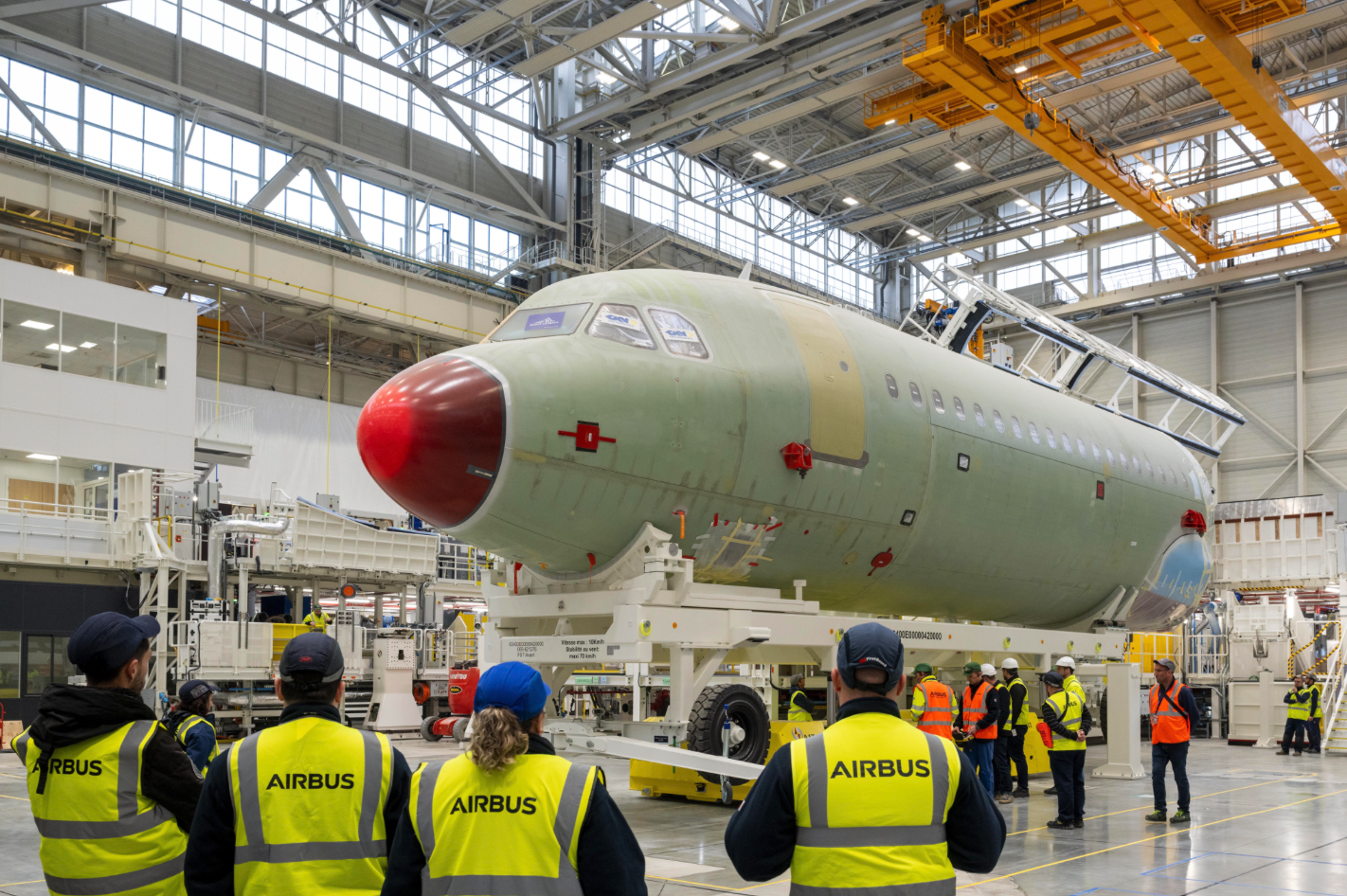
In a statement, the manufacturer dropped its delivery target from around 820 airplanes to around 790. It cited a “recent supplier quality issue on fuselage panels impacting its A320 family delivery flow.”
Airbus leaders did not adjust their financial guidance for the year and still expect adjusted earnings before interest and taxes of about €7 billion, or $8.1 billion.
The manufacturer’s aircraft orders and deliveries for November will be disclosed on Friday.
Zach Vasile is a writer and editor covering news in all aspects of commercial aviation. He has reported for and contributed to the Manchester Journal Inquirer, the Hartford Business Journal, the Charlotte Observer, and the Washington Examiner, with his area of focus being the intersection of business and government policy.
Neeleman: Spirit, Frontier ‘Need Each Other’
Airline founder says a merger could provide needed scale for both carriers.
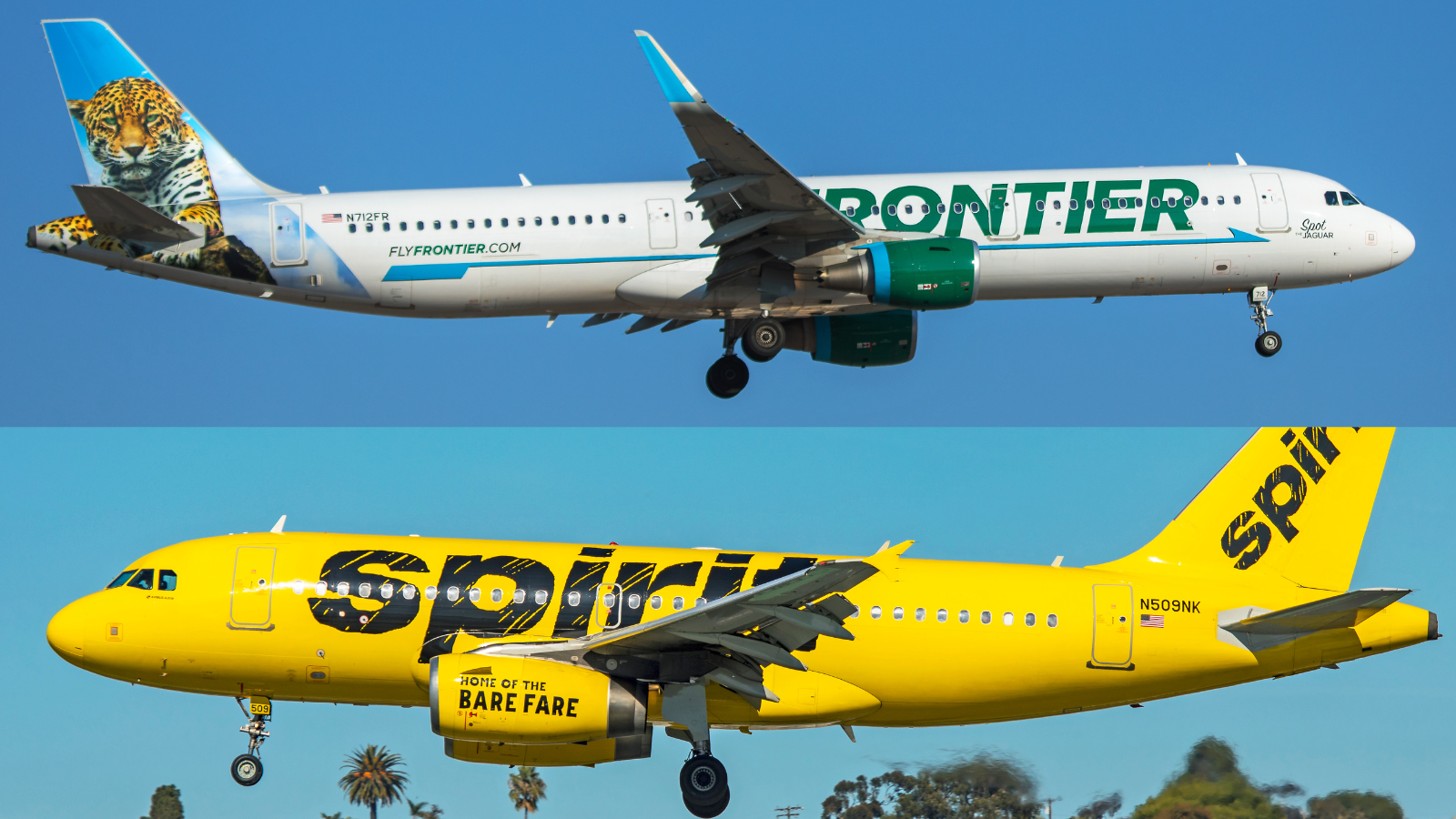
Frontier and Spirit aircraft. (Photo: AirlineGeeks | William Derrickson)
Serial airline founder David Neeleman said this week that Spirit and Frontier “need each other,” indicating the two ultra–low-cost carriers may ultimately require a merger to remain competitive.
Speaking at Skift’s Aviation Forum in Fort Worth, Texas, on Wednesday, Neeleman said the ultra-low-cost carrier model may not support both carriers independently.
“I think Spirit [and] Frontier need each other,” he said, adding that the two would benefit from shared efficiencies. “ [Frontier CEO] Barry Biffle may not say that, but I think they do …There’s room for a ULCC in the U.S., but probably not two.”
“ And so if they get together [with] cost and revenue synergies … I think they’ll probably be okay,” he continued.
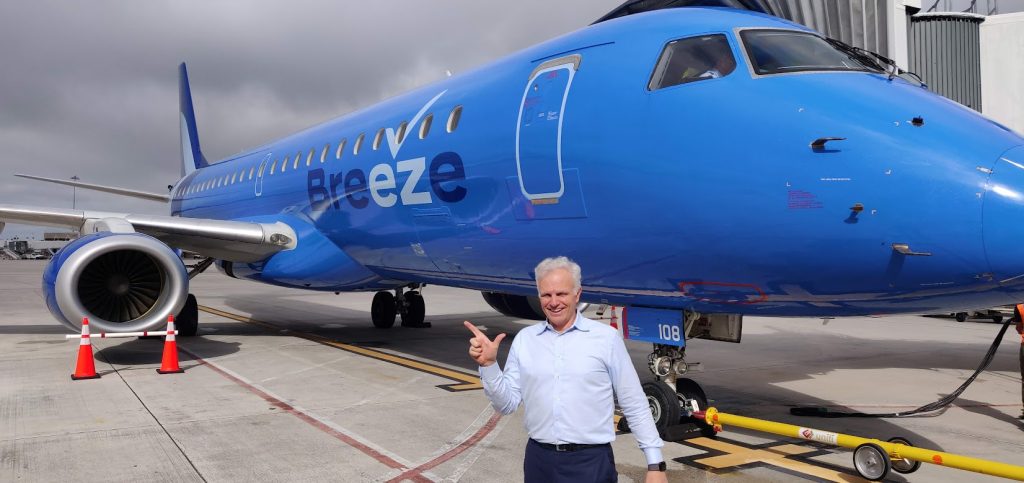
Breeze Airways CEO David Neeleman at West Palm Beach International Airport (Photo: Airlinegeeks – Vanni Gibertini)
Neeleman cited Spirit’s restructuring efforts, noting the airline has reduced pilot pay, removed aircraft from its fleet, and secured additional liquidity. “They’ve been able to cut their pilot salaries. They’ve been able to get rid of a bunch of airplanes. They got some cash from AerCap and… I assume Pratt as well,” he said.
Ryan founded AirlineGeeks.com in February 2013 and has spent more than a decade covering the airline business. His work has been featured by CNN, WJLA, CNET, and Business Insider. His aviation experience spans airport operations, Part 135 regulatory compliance, and airline crew workforce planning, along with time behind the yoke of a Cessna 172 and interviews with airline executives. Ryan now serves as Group President of Firecrown Media’s Aviation Group. He holds a B.S. in Air Transportation Management and an MBA from Arizona State University and teaches Airline Management at Embry-Riddle Aeronautical University.
In a filing with the U.S. Securities and Exchange Commission, the airline said the hit translates to approximately 25 cents of earnings per share.
Delta, like all other U.S. airlines, faced mandatory reductions in flights at 40 of the nation’s busiest airports as the shutdown cleared the one-month mark. The limits were put in place by the FAA to ease the burden on air traffic controllers, who were working without pay and whose ranks were thinned by call-outs. Demand from the flying public also softened as Americans voluntarily canceled their bookings, likely fearing long lines and delays at airports.
With operations now back to normal, Delta said travel demand is once again “healthy” and growth in bookings “has returned to initial expectations.” The carrier noted that “trends are strong” for early 2026.
Delta is the first major U.S. airline to report an estimated cost for the shutdown.
Zach Vasile is a writer and editor covering news in all aspects of commercial aviation. He has reported for and contributed to the Manchester Journal Inquirer, the Hartford Business Journal, the Charlotte Observer, and the Washington Examiner, with his area of focus being the intersection of business and government policy.
JetBlue Adds Five New Routes
Service will start in the spring of 2026 and continue year-round.
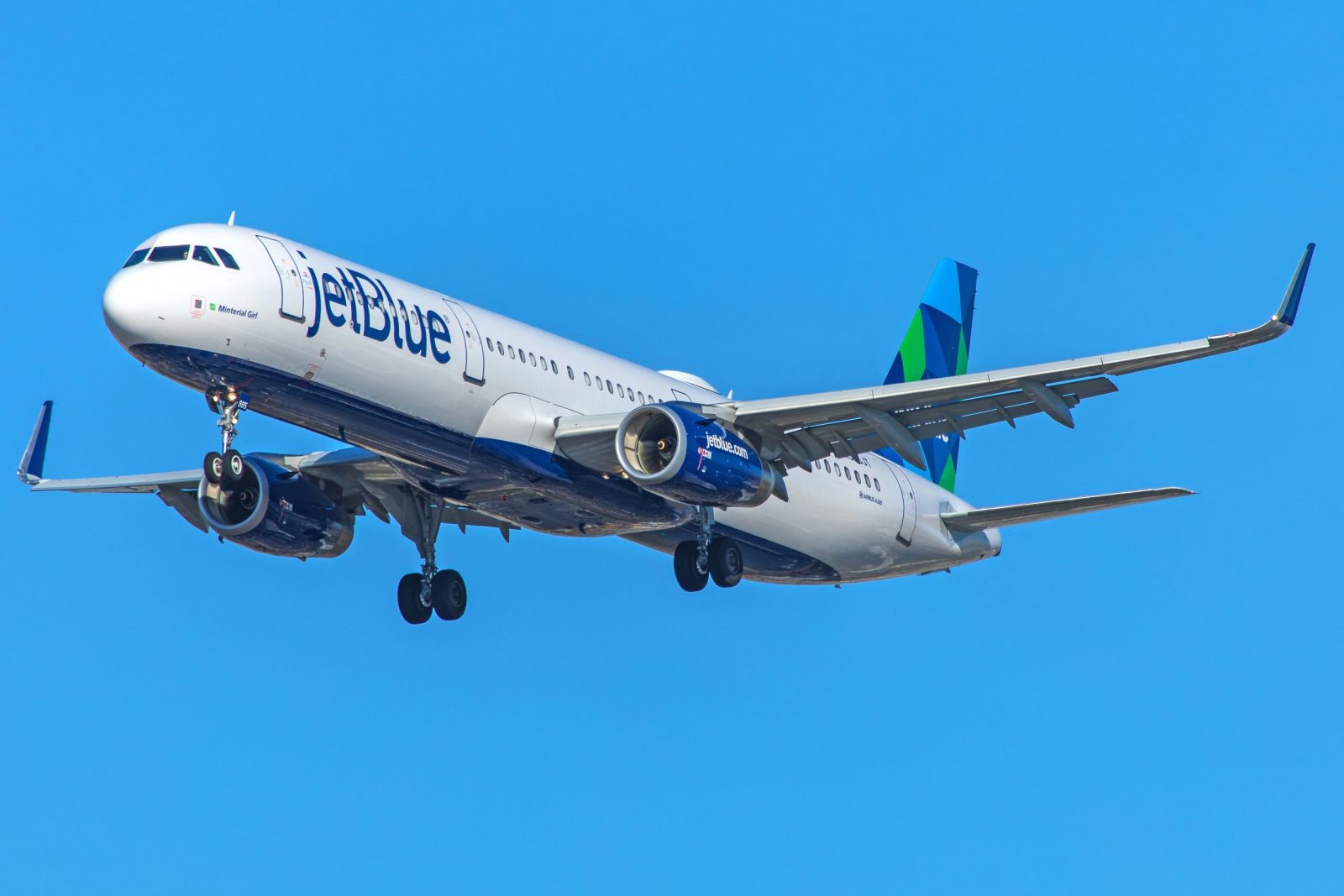
A JetBlue Airbus A321. (Photo: AirlineGeeks | William Derrickson)
JetBlue is expanding operations at its base in San Juan, Puerto Rico.
Starting in March 2026, the carrier will connect San Juan with Philadelphia; Jacksonville, Florida; Norfolk and Richmond in Virginia; and Buffalo, New York. The routes will operate year-round.
The start dates and frequencies of the upcoming flights are:
San Juan to Philadelphia: March 26; daily
San Juan to Jacksonville: March 13; on Mondays, Wednesdays, Fridays, and Saturdays
San Juan to Norfolk: March 27; on Mondays, Wednesdays, Fridays, and Sundays
San Juan to Richmond: March 26; on Tuesdays, Thursdays, and Saturdays
San Juan to Buffalo: March 27; on Mondays, Wednesdays, Fridays, and Saturdays
“Puerto Rico has shaped JetBlue’s identity for more than two decades,” JetBlue President Marty St. George said in a news release. “Our newest routes only deepen our commitment to the island and the communities that have been part of JetBlue’s story since 2002. We’re proud to continue investing in Puerto Rico and creating more travel opportunities for customers across our growing network.”
JetBlue is the largest airline in Puerto Rico, with service to and from San Juan, Aguadilla, and Ponce.
Zach Vasile is a writer and editor covering news in all aspects of commercial aviation. He has reported for and contributed to the Manchester Journal Inquirer, the Hartford Business Journal, the Charlotte Observer, and the Washington Examiner, with his area of focus being the intersection of business and government policy.
Sign-up for newsletters & special offers!
Get the latest stories & special offers delivered directly to your inbox