










A WestJet Boeing 787 Dreamliner. (Photo: AirlineGeeks | Katie Zera)
Delta, Korean Air, and Air France-KLM are officially part-owners of Canadian airline WestJet.
Alternative asset manager Onex Partners, WestJet’s parent company, said Wednesday that it sold 25% of the airline as part of a deal first announced in May.
According to Onex, Delta acquired a 15% stake in WestJet, while Korean Air took a 10% stake. Upon closing, Delta sold 2.3% to Air France-KLM.
Onex will retain 75% of WestJet, preserving its ownership and control over the carrier.
Onex and WestJet leaders said the deal will enhance international connectivity, give WestJet access to innovations produced by its new part-owners, and generate gains for investors.
A WestJet 737 at LAX. (Photo: AirlineGeeks | Ben Suskind)
“This closing marks a milestone in our airline partnerships, building on existing relationships and reflecting confidence in WestJet’s strategy, performance, and people,” WestJet Group CEO Alexis von Hoensbroech said in a statement. “We are proud to welcome our new airline shareholders and look forward to further strengthening our partnerships with their airlines to create long-term value for guests.”
In May, Onex said that Delta and Korean Air would pay $330 million and $220 million, respectively, for their stakes in WestJet, while Air France-KLM would pay Delta $50 million for its smaller share. Updated financial details were not provided Wednesday.
WestJet has had codeshare partnerships with Delta and Korean Air for close to 15 years.
Zach Vasile is a writer and editor covering news in all aspects of commercial aviation. He has reported for and contributed to the Manchester Journal Inquirer, the Hartford Business Journal, the Charlotte Observer, and the Washington Examiner, with his area of focus being the intersection of business and government policy.
Alaska Grounds Flights Over Tech Problem
Customers are advised to check the status of their flight before heading to the airport.
An Alaska Airlines Boeing 737-900 in San Francisco. (Photo: AirlineGeeks | William Derrickson)
Alaska Airlines has grounded flights nationwide due to a technology outage.
“Alaska Airlines is experiencing an IT outage affecting operations,” the carrier wrote on social media. “A temporary ground stop is in place. We apologize for the inconvenience.”
Alaska Airlines is experiencing an IT outage affecting operations. A temporary ground stop is in place. We apologize for the inconvenience. If you're scheduled to fly tonight, please check your flight status before heading to the airport.
Zach Vasile is a writer and editor covering news in all aspects of commercial aviation. He has reported for and contributed to the Manchester Journal Inquirer, the Hartford Business Journal, the Charlotte Observer, and the Washington Examiner, with his area of focus being the intersection of business and government policy.
Inside Look: American Debuts A321XLR
The airline will be the first U.S.-based carrier to operate the type.
American received its first A321XLR aircraft from Airbus on Wednesday.
Premium economy seats on American’s first A321XLR. (Photo: American Airlines)
“Designed for long journeys with comfort and style at the forefront, American is thrilled to be the first U.S. airline to operate the A321XLR,” Heather Garboden, American’s chief customer officer, said in a news release. “Whether customers are traveling from coast to coast or across the ocean, American’s newest aircraft demonstrates our commitment to providing a premium travel experience.”
The airline said it will initially use the A321XLR on transcontinental U.S. flights. The type will enter international service in the first half of 2026.
Main cabin seats on American’s new A321XLR. (Photo: American Airlines)
American’s A321XLRs have a three-class cabin layout, with high-end Flagship Suite seats installed toward the front of the aircraft. The Flagship Suites come with lie-flat seats, privacy doors, personal storage space, wireless charging ports, a cocktail tray, and a personal reading light.
Flagship Suite customers also get priority check-in, security, boarding, and baggage handling, as well as expanded in-flight dining options, amenity kits, and other perks.
A Flagship Suite seat on American’s new A321XLR. (Photo: American Airlines)
Each American A321XLR will have 20 Flagship Suite seats, 12 premium economy seats, and 123 main cabin seats.
United expects to take delivery of its first A321XLR aircraft next year, while Delta has said it will not use the type and plans to continue using widebody jets on transatlantic routes.
Zach Vasile is a writer and editor covering news in all aspects of commercial aviation. He has reported for and contributed to the Manchester Journal Inquirer, the Hartford Business Journal, the Charlotte Observer, and the Washington Examiner, with his area of focus being the intersection of business and government policy.
Air Canada Adds Four New U.S. Routes
Service will start in the spring and summer of 2026 from Billy Bishop Airport.
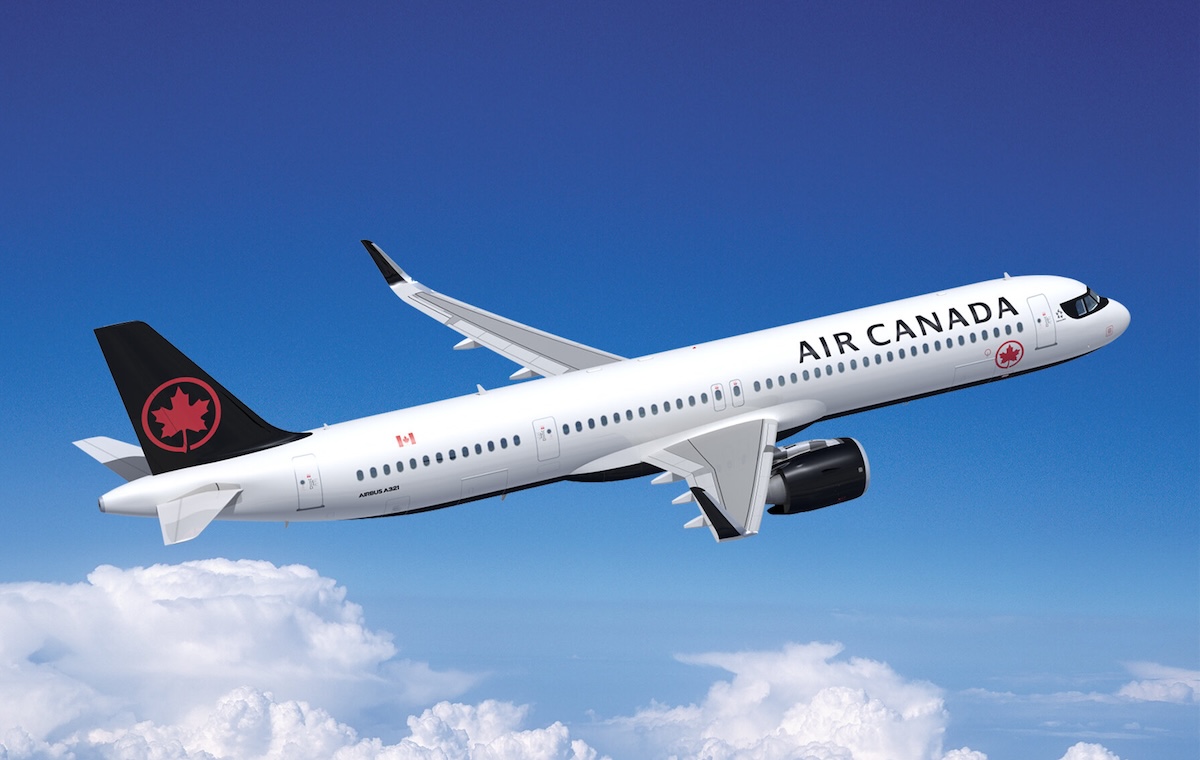
Starting March 29, 2026, Canada’s largest airline will connect Toronto and New York-LaGuardia, followed by Chicago O’Hare and Washington Dulles on June 1 and Boston on July 1.
Flights will operate four times daily to LaGuardia, three times daily to Boston, twice daily to Chicago O’Hare, and once daily to Washington Dulles.
An Air Canada Express De Havilland Dash 8-400 aircraft. (Photo: Air Canada)
All four U.S. routes will operate under the Air Canada Express brand, with aircraft and crews provided by regional partner Jazz Aviation. Jazz will fly the routes using overhauled, 78-seat Q400 turboprop aircraft.
The new routes will come online after a U.S. Customs Pre-Clearance facility opens at the airport. This will allow passengers flying to the U.S. from Canada to clear customs before departure, Air Canada leaders said.
Domestic Increases
The carrier is also increasing the frequency of existing domestic routes from Toronto to Montréal and Ottawa.
“This is our most significant expansion at Toronto Island since Air Canada first served the airport 35 years ago,” Mark Galardo, Air Canada’s executive vice president, COO, and president of cargo, said in a statement. “The new transborder routes will especially benefit our loyal customers and business travelers by creating frequent and easy connections between the heart of Canada’s financial capital and the major markets of New York, Boston, Washington, and Chicago.”
Air Canada has a much larger presence at nearby Toronto Pearson International Airport, where it operates over 600 flights per day.
Zach Vasile is a writer and editor covering news in all aspects of commercial aviation. He has reported for and contributed to the Manchester Journal Inquirer, the Hartford Business Journal, the Charlotte Observer, and the Washington Examiner, with his area of focus being the intersection of business and government policy.
Icelandair Ending Widebody Operations
The carrier will phase out its Boeing 767s ahead of schedule.
An Icelandair Boeing 767-300 (Photo: Shutterstock | Airlinephoto)
Icelandair said it will end all widebody operations by the end of 2026, retiring its Boeing 767-300 fleet earlier than planned as part of a sweeping transformation effort aimed at restoring profitability. The announcement came as part of the airline’s third-quarter 2025 financial report.
The Reykjavik-based carrier reported revenue of $585 million in the quarter, up 6% year-over-year, but net profit fell to $57 million, down nearly $12 million from the same period last year.
CEO Bogi Nils Bogason described the airline’s recent performance as part of “eight years of unsustainable financial performance,” saying the company’s immediate goal is to return to profitability next year.
“I am confident that with this focus, coupled with a strong financial position, we are well-equipped to turn the company around and deliver profits in 2026,” Bogason said.
757 Retirements
Icelandair said it will retire four Boeing 757s and one Boeing 767 by the end of this year, with the remaining widebody aircraft to follow in 2026. The company noted that the decision to end 767 operations earlier than previously scheduled supports its plan to simplify the fleet and improve cost efficiency.
Once the retirements are complete, Icelandair’s passenger operations will be entirely narrowbody.
By summer 2026, the carrier expects to operate 41 aircraft, including 21 Boeing 737 MAXs and seven Airbus A321LRs, three of which are scheduled to arrive in early 2026.
An Icelandair A321LR aircraft (Photo: Icelandair)
The airline currently has five 767s in active service. These aircraft operate on a variety of European and transatlantic routes.
With the accelerated 767 retirement, Icelandair will end more than two decades of widebody operations.
Ryan founded AirlineGeeks.com back in February 2013 and has amassed considerable experience in the aviation sector. His work has been featured in several publications and news outlets, including CNN, WJLA, CNET, and Business Insider. During his time in the industry, he's worked in roles pertaining to airport/airline operations while holding a B.S. in Air Transportation Management from Arizona State University along with an MBA. Ryan has experience in several facets of the industry from behind the yoke of a Cessna 172 to interviewing airline industry executives. Ryan works for AirlineGeeks' owner FLYING Media, spearheading coverage in the commercial aviation space.
A JetBlue Airbus A321. (Photo: AirlineGeeks | William Derrickson)
United and JetBlue launched the first phase of their “Blue Sky” partnership this week, which allows loyalty members to earn and redeem points across the carriers’ networks.
The benefit applies to members of JetBlue’s TrueBlue program and United’s MileagePlus. TrueBlue passengers will be able to earn and redeem points across United’s global network, including on flights operated as United Express, while MileagePlus members will enjoy similar benefits on most, though not all, JetBlue flights.
When searching for flights with points or miles on JetBlue or United’s websites and mobile apps, eligible customers will now see flight options across both carriers’ networks.
The Blue Sky alliance, first announced in May, envisions other forms of cooperation between the two carriers, including reciprocal passenger perks, revenue booking, and slot sharing at airports. These benefits are expected to come into effect in 2026 and 2027.
United and JetBlue aircraft. (Photo: Shutterstock |
Markus Mainka)
“With reciprocal earning and redemption now available, Blue Sky is officially taking flight,” the airlines said in a joint statement on Thursday. “We’re excited to give our loyalty members the ability to use the program of their choice when traveling across our complementary networks.”
As part of the partnership, United will reestablish its presence at New York-JFK using JetBlue’s slots at Terminal 6. The slots will allow United to operate up to seven daily round trips from the airport starting “as early as 2027,” officials said this week.
Zach Vasile is a writer and editor covering news in all aspects of commercial aviation. He has reported for and contributed to the Manchester Journal Inquirer, the Hartford Business Journal, the Charlotte Observer, and the Washington Examiner, with his area of focus being the intersection of business and government policy.
United Adds 10 Domestic Routes
The expansion includes seven year-round and three seasonal connections.
A United Airlines Boeing 737-700. (Photo: AirlineGeeks | William Derrickson)
United is adding 10 new and resuming domestic routes after securing additional gates at Chicago O’Hare earlier this year.
The airline confirmed Thursday morning that it is launching new year-round and seasonal flights, mostly targeting smaller markets in the West and Midwest.
Starting in the spring of 2026, United will connect Chicago with Santa Barbara, California; Eugene, Oregon; Paducah, Kentucky; Lynchburg, Virginia; Rochester, Minnesota; Wausau, Wisconsin; and Marquette, Michigan. Each of the routes will operate daily.
Wausau, Eugene, Paducah, and Santa Barbara were last served by the airline in 2022, according to schedule data from Cirium. The airline’s last scheduled flight between Chicago and Rochester was in 2021.
In the summer, new weekly seasonal service to St. George, Utah; Monterey, California; and Idaho Falls, Idaho, will begin. End dates for those routes were not given.
Currently, no other airline serves Santa Barbara, Eugene, Paducah, Lynchburg, St. George, or Monterey from Chicago O’Hare.
A United Express CRJ-200 arriving into Chicago O’Hare (Photo: AirlineGeeks | Joey Gerardi)
“United is already flying its busiest schedule in history at O’Hare, and now these additional gates have unlocked new opportunities to intertwine cities across the country, serve more customers in Chicago, and strengthen our hometown hub,” said Patrick Quayle, senior vice president of global network planning and alliances, in a news release.
United also said it will expand several weekend-only routes to daily service starting next summer. These destinations include Hilton Head, South Carolina; Halifax, Nova Scotia; Sun Valley, Idaho; Aruba; and Nassau, Bahamas. Additionally, West Palm Beach Florida will go from seasonal service to year-round daily service.
With the new routes factored in, United will serve 212 destinations from Chicago O’Hare in 2026. That total is up slightly from a pre-pandemic high of 208.
Zach Vasile is a writer and editor covering news in all aspects of commercial aviation. He has reported for and contributed to the Manchester Journal Inquirer, the Hartford Business Journal, the Charlotte Observer, and the Washington Examiner, with his area of focus being the intersection of business and government policy.
American to Retrofit Boeing 777-200s
The airline's oldest and largest widebody sub-fleet is slated for a facelift.
An American Boeing 777-200 (Photo: AirlineGeeks | William Derrickson)
American Airlines plans to retrofit its Boeing 777-200ER fleet, marking the next phase in its widebody cabin updates. The airline confirmed the initiative during its third-quarter earnings call this week, noting that work will focus on updating interiors and improving cabin consistency across its long-haul fleet.
The Fort Worth, Texas-based carrier operates 47 777-200ERs, which have an average age of nearly 25 years old. American is also in the process of retrofitting its larger 777-300ERs to include its new Flagship Suites product.
Flagship Suites on American’s 787-9P (Photo: AirlineGeeks | Ryan Ewing)
“We’re excited to announce that we’ll continue scaling our new Flagship product on our 777-200 aircraft,” the carrier’s CFO, Devon May, said during the call.
These aircraft will see a 25% increase in lie-flat and premium economy seats, May added, as part of a “nose to tail retrofit.” A new inflight entertainment system will also be installed.
Executives said the retrofit will introduce an updated cabin layout and align the aircraft with newer long-haul types in the fleet, including the Boeing 787-9P and forthcoming Airbus A321XLR.
Additional details, including configuration changes and a completion timeline, were not shared.
American CEO Robert Isom called the 777-200 retrofits a “big deal” during the Thursday call.
“Extending the lives of those [aircraft] and putting those into service really gives us a capital spending holiday in terms of fleet replacement,” Isom shared. “So it’s a win-win-win-win for our customers, for our company, and most certainly our investors.”
B/E Aerospace seat on American’s 777-200 fleet (Photo: Alex Navitsky)
The airline’s current 777-200 configuration includes 273 total seats with 37 in business, 24 in premium economy, and 212 in economy.
May stated that the retrofits are “something we’ve been planning on doing for a while.”
“This is an aircraft we think we can run well into the next decade,” he continued.
Premium Push
American continues to add more premium capacity to align with its competitors. Earlier this year, it took delivery of its first Boeing 787-9P, which features 51 Flagship Suites. Its first A321XLR also arrived in the U.S. on Wednesday.
“Premium continues to perform well with year-over-year premium unit revenue outpacing main cabin by five points in the third quarter,” May continued. “Capitalizing on this demand, American is continuing to invest in expanding our premium offerings across the customer journey.”
The carrier will also increase the number of first class seats on its Airbus A319 and A320 aircraft.
Ryan founded AirlineGeeks.com back in February 2013 and has amassed considerable experience in the aviation sector. His work has been featured in several publications and news outlets, including CNN, WJLA, CNET, and Business Insider. During his time in the industry, he's worked in roles pertaining to airport/airline operations while holding a B.S. in Air Transportation Management from Arizona State University along with an MBA. Ryan has experience in several facets of the industry from behind the yoke of a Cessna 172 to interviewing airline industry executives. Ryan works for AirlineGeeks' owner FLYING Media, spearheading coverage in the commercial aviation space.
A Midway Airlines Boeing 737. (Photo: JetPix via Wikimedia Commons)
The airline executives and consultants who founded Midway Airlines wanted to do for Chicago’s Midway International Airport what Southwest Airlines had done for Dallas Love Field in Texas – that is, breathe new life into what had become a “ghost town.”
Midway, nestled on the city’s southwest side, had been one of the busiest airports in the U.S. But by the mid-1970s, most of the carriers serving Chicago had shifted operations to the much larger O’Hare, leaving Midway all but deserted.
Still, local figures in the industry saw an untapped market, and in 1976, led by former Hughes executive Irving Tague, they formed Midway Airlines, taking the name of the airport they hoped to revive.
Finding a Market
Midway’s launch came at an opportune time for startups. In 1978, President Jimmy Carter signed the Airline Deregulation Act, which removed federal control over routes, fares, and other aspects of the airline industry. The law not only sped up the process for certifying new airlines but also gave them much more leeway in determining their route strategy. While Midway was formed prior to the act’s passage, it was widely viewed as the first new carrier to emerge in the post-deregulation era.
An aerial view of Chicago’s Midway Airport. (Photo: Shutterstock | Henry C Jorgenson)
Midway started operations in 1979 with a fleet of three McDonnell Douglas DC-9 aircraft. Its first destinations were Cleveland, Detroit, and Kansas City.
The carrier found immediate success marketing no-frills service to travelers in Chicago and the Midwest more broadly who wanted to avoid the bustle and congestion of O’Hare. An early selling point was that Midway Airport, its base of operations, is located about 11 miles from downtown Chicago, while O’Hare is 18 miles away, which made a noticeable difference to customers using the city’s crowded and sometimes slow-going expressways and public transit.
Within a matter of years, Midway added St. Louis, New York-LaGuardia, Omaha, Washington National, Minneapolis, Philadelphia, and Tampa, Florida, to its route network, and acquired the assets of the failed low-cost carrier Air Florida.
By 1985, the airline had 17 destinations, a fleet of 26 aircraft, and over 2,000 employees.
With profits rolling in, Midway sometimes overextended itself. It launched additional subsidiaries like Midway Metrolink, which offered all-business class flights, and Chicago Airlink, which aimed to start helicopter service between Midway Airport, O’Hare, and Meigs Field on Lake Michigan. These ventures were canceled within a matter of years.
Peak Years and Restraint
The mid- to late 1980s were a difficult time for U.S. airlines, and a number of large carriers, including Eastern Air Lines, Pan Am, and People Express, recorded heavy losses. Midway was no longer as profitable as it once had been but it still continued to expand, carefully adding service to destinations that its leaders figured would be immediately rewarding, like Las Vegas, Miami, Phoenix, St. Croix, and St. Thomas.
A Midway DC-9 in Washington, D.C. (Photo: RuthAS via Wikimedia Commons [https://creativecommons.org/licenses/by/3.0/])
The carrier’s operational peak came in 1988-1989, when it was operating over 200 flights per weekday between its mainline service and its regional Midway Connection subsidiary.
Under David Hinson, a Midway founder who took over as chairman in 1985, the airline steered clear of its much larger competitors and looked for modest growth opportunities where it always had – at the margins. Hinson summed up his approach to the industry this way: “If you are careful and prudent, you can survive and do relatively well.”
Gamble on Philadelphia
In 1989, however, Midway made a decision that flew in the face of Hinson’s golden rule. The carrier paid $210 million to take control of the insolvent Eastern Air Lines’ gates and other assets in Philadelphia, where executives saw a chance to break into a new and lucrative market. Midway was reaching the limits of its potential growth in Chicago, they reasoned, and it was as good a time as any to set up a second hub.
Midway’s bet on Philadelphia was supposed to deliver revenue of $2 billion over two years, but world events threw a wrench into the works. The U.S. entered a recession in July 1990, which hurt air travel demand and drove down ticket prices, and in August the Gulf War began, sending the price of oil soaring. Midway pulled out of Philadelphia in October of that year.
The airline struggled to overcome the substantial losses of late 1989 and 1990 and ultimately filed for Chapter 11 bankruptcy protection in the spring of 1991. A last-minute rescue effort from Northwest Airlines fizzled out, and on Nov. 13, 1991, Midway ceased operations for good.
A Midway Express 737 in Miami. (Photo: Aero Icarus via Wikimedia Commons [https://creativecommons.org/licenses/by-sa/2.0/])
Long-Term Impact
While in business for only 15 years, Midway’s impact on air travel in Chicagoland is difficult to overstate. It proved the long-term viability of Midway Airport and gave millions of local residents – particularly those on Chicago’s South Side and in the southwest suburbs – an alternative to the colossal O’Hare.
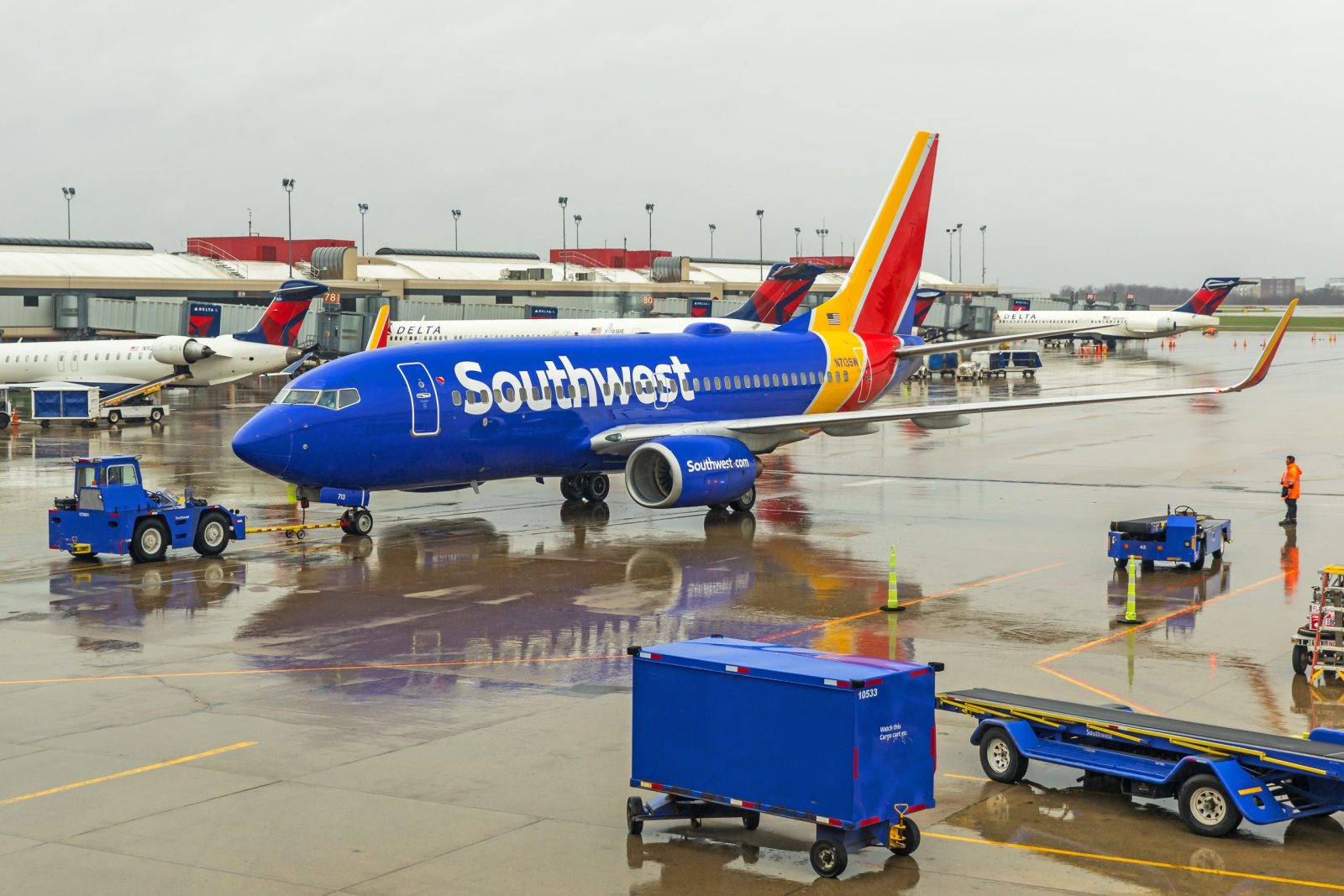
Southwest earned some local goodwill by taking over Midway’s gates and routes at Midway Airport, and hiring some former employees. Today, Southwest is the dominant airline at the airport, carrying about 90% of passengers there.
Zach Vasile is a writer and editor covering news in all aspects of commercial aviation. He has reported for and contributed to the Manchester Journal Inquirer, the Hartford Business Journal, the Charlotte Observer, and the Washington Examiner, with his area of focus being the intersection of business and government policy.
Spirit in Talks With Potential Buyers
The carrier is currently restructuring its operations under the supervision of a U.S. bankruptcy court.
A Spirit Airbus A321 (Photo: Shutterstock | Markus Mainka)
Spirit is looking at merging or selling itself to another airline and is already in talks with some potential partners.
In documents filed with the U.S. Securities and Exchange Commission, the struggling ultra-low-cost carrier said joining operations with a competitor may be the best path forward.
“The value maximizing outcome may be a merger or sale of the company; Spirit is actively working to explore all potential opportunities,” the filing stated. “The company is actively engaged in discussions with a number of interested counterparties.”
Spirit Airbus jets
(Photo: AirlineGeeks | William Derrickson)
Spirit executives say the changes are needed to “right-size” the business and create a more sustainable network.
The carrier’s long-term transformation plan calls for the elimination of all “unprofitable flying,” cutbacks in airport gate rents, advertising spend, and non-core expenses, and a brand repositioning away from “budget travelers” and toward a “value-seeking audience.” Spirit had begun to move in that direction even prior to its second bankruptcy, rolling out extra-legroom seats and other perks as it sought to become the “premium” option among budget airlines.
In the same SEC filing, Spirit said it hopes to return to annual profitability – which it has not achieved since 2019 – by 2027.
Zach Vasile is a writer and editor covering news in all aspects of commercial aviation. He has reported for and contributed to the Manchester Journal Inquirer, the Hartford Business Journal, the Charlotte Observer, and the Washington Examiner, with his area of focus being the intersection of business and government policy.
Sign-up for newsletters & special offers!
Get the latest stories & special offers delivered directly to your inbox