











Stories

Aeroitalia Loses Name Battle, Revives Air Italy Brand

The lawsuit will not see a final resolution until late in 2026, but as the court is forcing Aeroitalia to stop trading under its current name.

Aeroitalia 737
Aeroitalia 737 (Photo: Aeroitalia)

In a copyright infringement case brought by Italian flag carrier ITA Airways against the “new kid on the block” Aeroitalia, the Luthansa-controlled carrier scored an early win last week when the judge ordered Aeroitalia to stop using their name, logo, and color scheme as it is considered too similar to the old Alitalia branding.

During Alitalia’s bankruptcy procedure, ITA Airways paid around 220 million Euros (approx. $258m) to maintain ownership of Alitalia’s logo, IATA flight code AZ, and IATA accounting code 055. However, while IATA codes are currently being used for ITA Airways’ operations, the traditional red, white, and green Alitalia logo is not currently portrayed on the fuselage of its aircraft, except for an “Inspired by Alitalia” inscription on one of its newest Airbus A350-900 aircraft.

The lawsuit will not see a final resolution until late in 2026, but as the court is forcing Aeroitalia to stop trading under its current name, CEO Gaetano Intrieri has announced in an interview with Italian newspaper La Repubblica that his airline will revive the Air Italy brand.

“I registered the Air Italy trademark and chose this new name,” he told La Repubblica.

Alitalia’s first flight to Washington Dulles in 2019 (Photo: AirlineGeeks | Ben Suskind)

Air Italy was a short-lived carrier formally based in Olbia, Sardinia, that was born rising from the ashes of Meridiana with a troublesome 49% equity ownership by Qatar Airways. They operated between 2018 and 2020 with a fleet of up to 12 aircraft from their hub in Milan Malpensa Airport to 26 short- and long-haul destinations, including New York JFK, Miami, Los Angeles, and San Francisco.

The ruling is requesting Aeroitalia to adapt its name and trademark starting Jan. 1, 2026. “That’s basically the day after tomorrow – says Intrieri – The deadline is too close and impractical. This is why we are talking with ITA Airways’ lawyers to agree on an appropriate, reasonable path. The atmosphere between us and ITA is very positive.”

Air Italy Wants to Play the Slots

While Intrieri is conceding that ITA Airways has won the logo battle, he is ready to fight back with a complaint filed both to the Italian Antitrust Authority and to the EU Commission in Brussels, claiming that the procedure that assigned all the slots formerly held by Alitalia at Milan’s Linate Airport to ITA Airways was anticompetitive.

“From its first day in business, ITA Airways claimed to be a completely new company,” ITA said, in short, ‘I am not the heir of Alitalia, I do not operate as a continuity partner of Alitalia.’ So, if ITA is truly a new entity compared to Alitalia, as it claims, it had no right to inherit Alitalia’s slots at a strategic airport like Linate.”

Linate is a city airport strategically located just outside the city limits of Milan, and it is largely preferred by business passengers due to its proximity to the business center of Italy’s economic capital. Furthermore, in 2024, the subway line M4 connecting the city center with Linate Airport has been completed making the airport even more attractive to citizens and visitors alike.

Capacity at the single-runway facility has been artificially limited for almost 30 years in order to facilitate the development of Malpensa Airport, which is located almost 50 km (30 miles) north-east of Milan. Traffic is limited to 18 movements per hour, there is a 1500-kilometer (810 nautical miles) perimeter rule, and only single-aisle aircraft are allowed to operate.

“We will ask whether ITA has a dominant position at Milan Linate, as we suspect, and whether it had the legal right to receive so many slots at that airport. We believe that Alitalia’s slots should be returned to Assoclearance, the public regulator, to be redistributed equitably to all airlines, based on waiting lists.”

Vanni Gibertini

Vanni fell in love with commercial aviation during his undergraduate studies in Statistics at the University of Bologna, when he prepared his thesis on the effects of deregulation on the U.S. and European aviation markets. Then he pursued his passion further by obtaining a Master’s Degree in Air Transport Management at Cranfield University in the U.K. followed by holding several management positions at various start-up carriers in Europe (Jet2, SkyEurope, Silverjet). After moving to Canada, he was Business Development Manager for IATA for nine years before turning to his other passion: sports writing.

American, Porter Sign Codeshare Deal

American and Canada’s Porter have signed a new codeshare agreement that officials said lays the groundwork for a closer relationship between the two carriers.

Porter Embraer jet
A Porter Airlines Embraer jet. (Photo: Shutterstock | Robin Guess)

American Airlines and Canada’s Porter have signed a new codeshare agreement that officials said lays the groundwork for a closer relationship between the two carriers.

The airlines announced Monday that customers will be able to book certain trips linking connecting American and Porter flights on a single ticket. Certain destinations in the U.S. and Canada are available for codesharing immediately, and more will be added in the near future.

American said AAdvantage members will be able to earn miles for travel on Porter flights marketed under American’s code.

The partners said they “will continue to evaluate opportunities to expand this relationship further through expanded codeshare destinations and loyalty benefits.”

“Canada is one of the most popular destinations for travelers, and American is excited to partner with Porter Airlines to unlock more travel options for customers,” said Anmol Bhargava, American’s senior vice president of global alliances, in a news release. “This partnership puts customers at the forefront, and we look forward to providing even more seamless transborder travel options together.”

American will add its code to certain Porter flights from Toronto Pearson International Airport, which American serves about 25 times per day. Customers will be able to book connecting flights from Toronto Pearson to Edmonton, Halifax, Ottawa, Victoria, and Winnipeg on a single ticket.

American 737-800
An American Boeing 737-800 (Photo: AirlineGeeks | William Derrickson)

Codesharing on connections to Calgary, Charlottetown, Kelowna, St. John’s, Saskatoon, and Vancouver will be made available in the coming weeks, the airlines said.

There are also plans to add American’s code to flights between Toronto Pearson and Phoenix.

Porter will add its code to transborder and domestic U.S. flights, as well as connections from Canada and the U.S. to the Caribbean, Central America, and South America. Codesharing is now available on flights from Chicago O’Hare, Dallas/Fort Worth, Philadelphia, and Charlotte, North Carolina, and will eventually come online for Honolulu, New Orleans, Nashville, Tennessee, Portland, Oregon, Sacramento, Salt Lake City, and San Jose, California.

American and Porter asked the U.S. Department of Transportation for permission to codeshare in July. At the time, the carriers did not say which destinations would be covered by a future agreement.

Zach Vasile

Zach Vasile is a writer and editor covering news in all aspects of commercial aviation. He has reported for and contributed to the Manchester Journal Inquirer, the Hartford Business Journal, the Charlotte Observer, and the Washington Examiner, with his area of focus being the intersection of business and government policy.

Stowaway Found Dead in American 777

A stowaway was found dead in the wheel well of an American Airlines flight that arrived at Charlotte Douglas International Airport in North Carolina last week.

American 777-200
An American Boeing 777-200 in Dallas/Fort Worth. (Photo: AirlineGeeks | William Derrickson)

A stowaway was found dead in the wheel well of an American Airlines flight that arrived at Charlotte Douglas International Airport in North Carolina on Sunday.

The Charlotte-Mecklenburg Police Department said maintenance workers located the body in the Boeing 777-200’s landing gear shortly after 9 a.m. local time. The department confirmed the flight originated in Europe but did not say what country or city it took off from.

Data from Flightradar24 shows the aircraft arrived from Frankfurt on Friday. It previously flew to Madrid after spending a month at a maintenance facility in San Salvador, El Salvador.

The CMPD’s Homicide Unit is leading the investigation into the stowaway’s death.

No information about the individual, including their name or age, has been released to the public.

In a statement, American said it is working with law enforcement on the case.

“We are deeply saddened by this news and will support the Charlotte-Mecklenburg Police Department’s investigation as needed,” airport officials told ABC News. “Airport operations continue as normal.”

Stowaways on commercial airline flights are rare, but the wheel well is a common hiding spot for many, according to data collected by the Flight Safety Foundation. Hiding in an aircraft’s wheel well is extremely dangerous, as stowaways face the risk of hypoxia and hypothermia at high altitudes. The FAA suggests many stowaways are never noticed because they fall from aircraft over oceans or remote areas over land.

In January, two bodies were recovered from the landing gear of a JetBlue flight from New York to Fort Lauderdale, Florida. Investigators later determined that the stowaways were teenagers from the Dominican Republic.

Zach Vasile

Zach Vasile is a writer and editor covering news in all aspects of commercial aviation. He has reported for and contributed to the Manchester Journal Inquirer, the Hartford Business Journal, the Charlotte Observer, and the Washington Examiner, with his area of focus being the intersection of business and government policy.

Lufthansa Group To Retire Six Aircraft Types by 2028

Several widebody aircraft types will be retired in the coming years, including the A340 and Boeing 747-400. Long-term future of the A380 remains uncertain.

A Lufthansa Boeing 747-400 (Photo: Shutterstock | Markus Mainka)

Lufthansa Group announced plans to retire six widebody aircraft types from service by 2028 as part of its long-term fleet modernization and harmonization efforts.

The move is designed to simplify operations, cut costs, and support the company’s sustainability goals, executives said at the airline group’s Capital Markets Day on Monday.

The aircraft types scheduled for phase-out are the Airbus A340-600, A330-200, A340-300, Boeing 767-300, Boeing 747-400, and Boeing 777-200. According to Lufthansa, these retirements will be completed by the end of 2028, with some types exiting earlier.

For example, the A340-600, A330-200, and 767-300 are targeted for removal by 2026, while the 747-400 and A340-300 will leave the fleet by 2027.

A Lufthansa A340-600 in Munich (Photo: AirlineGeeks | Fabian Behr)

Currently, the airline group has 13 different passenger aircraft types.

By eliminating older widebody types, the company plans to reduce operational complexity across maintenance, crewing, and fleet reserves. Lufthansa executives emphasized that new aircraft deliveries will arrive in standardized specifications across the group’s airlines to improve efficiency further.

New Deliveries

The group will replace the outgoing jets with next-generation aircraft, including the Airbus A350-900 and A350-1000, Boeing 787-9, and 777X. These types are expected to comprise the backbone of the long-haul fleet by 2030, supplemented by the 747-8i and a smaller number of A330-300s and A330neos.

The A380 remains part of the future fleet plan, though its long-term role has yet to be finalized.

A Lufthansa A380
A Lufthansa Airbus A380. (Photo: AirlineGeeks | William Derrickson)

Overall, Lufthansa Group plans to take delivery of over 230 new aircraft by 2030, with widebody numbers increasing by about 20%.

Ryan Ewing

Ryan founded AirlineGeeks.com back in February 2013 and has amassed considerable experience in the aviation sector. His work has been featured in several publications and news outlets, including CNN, WJLA, CNET, and Business Insider. During his time in the industry, he's worked in roles pertaining to airport/airline operations while holding a B.S. in Air Transportation Management from Arizona State University along with an MBA. Ryan has experience in several facets of the industry from behind the yoke of a Cessna 172 to interviewing airline industry executives. Ryan works for AirlineGeeks' owner FLYING Media, spearheading coverage in the commercial aviation space.

American Axes Four-Year-Old Route

The Fort Worth, Texas-based carrier will suspend service on a route it began in 2021, a spokesperson confirmed on Monday.

American Airbus A320
An American Airlines Airbus A320 (Photo: AirlineGeeks | William Derrickson)

American will suspend service on a route it began in 2021, an airline spokesperson confirmed on Monday.

Flights between Dallas/Fort Worth and Eugene, Oregon, will not return next summer. The last service operated on Aug. 5.

This change was first flagged in Friday’s Cirium Diio schedule update.

“As part of a continuous evaluation of our network, American has made the difficult decision to discontinue service between Dallas Fort Worth (DFW) and Eugene, Oregon (EUG),” the spokesperson said in a statement. “… We’re proactively reaching out to impacted customers and apologize for any inconvenience.”

This leaves Eugene with American service to its Phoenix hub. The airline’s Dallas/Fort Worth-to-Eugene route initially operated on a year-round basis before moving to a seasonal service.

Ryan Ewing

Ryan founded AirlineGeeks.com back in February 2013 and has amassed considerable experience in the aviation sector. His work has been featured in several publications and news outlets, including CNN, WJLA, CNET, and Business Insider. During his time in the industry, he's worked in roles pertaining to airport/airline operations while holding a B.S. in Air Transportation Management from Arizona State University along with an MBA. Ryan has experience in several facets of the industry from behind the yoke of a Cessna 172 to interviewing airline industry executives. Ryan works for AirlineGeeks' owner FLYING Media, spearheading coverage in the commercial aviation space.

Iceland’s Play Shuts Down

Icelandic low-cost airline Play has abruptly shut down after roughly six years in business, it told customers on Monday.

PLAY A321neo
A PLAY Airlines A321neo (Photo: Shutterstock | Pavel1964)

An Icelandic low-cost airline has abruptly shut down.

In a statement posted on its website, Fly Play, also known as Play, said it has canceled all of its flights and is working to wind down its business.

“Dear passenger,” the message began. “Fly Play hf has ceased operations, and all flights have been canceled. We kindly advise you to check flights with other airlines. Some carriers may offer special ‘rescue fares’ considering the circumstances.”

“We are deeply sorry for the disruption this causes and thank you for your understanding,” the carrier added.

No reason for the shutdown was given, though local media reported that the airline has struggled with low ticket sales and negative publicity in recent months.

According to Ríkisútvarpið, Iceland’s public broadcaster, around 400 employees will lose their jobs.

“On this occasion the board and managers of Play emphasize that everything was tried so that the outcome would be different,” Play said in a statement to Ríkisútvarpið. “This decision is by far the most grievous in the situation and it is only taken in light of the fact that other ways were deemed exhausted. The board offers its sincere apologies to all those who suffer negative consequences because of this outcome.”

Play was based in Reykjavík, Iceland, and flew primarily to destinations in western Europe, western North Africa, and the Canary Islands. It began flying nonstop to Boston and Baltimore in 2022, but the Boston service ended earlier this month, and service to Baltimore was due to end in October.

Zach Vasile

Zach Vasile is a writer and editor covering news in all aspects of commercial aviation. He has reported for and contributed to the Manchester Journal Inquirer, the Hartford Business Journal, the Charlotte Observer, and the Washington Examiner, with his area of focus being the intersection of business and government policy.

How to Choose Pilot Sunglasses

Find the best sunglasses for your next flight. We review the top 10 aviator brands and share crucial advice on non-polarized lenses, UV protection, and fit.

Sure, they're cool, but pilot sunglasses are serve an important role in the cockpit.
Sure, they're cool, but pilot sunglasses are serve an important role in the cockpit. [Shutterstock]

For pilots, finding the perfect pair of sunglasses isn’t just about looking stylish—though that’s certainly a bonus. It’s about enhancing vision, safeguarding eyes from harsh UV rays, and ensuring comfort during long hours in the cockpit. Here, we’ve rounded up the most popular and effective pilot sunglasses on the market in 2025.

Ray-Ban Aviator Classic

Ray-Ban Rb3025 Classic Aviator Sunglasses
Ray-Ban Rb3025 Classic Aviator Sunglasses [Courtesy: Amazon]
Embrace the timeless style with Ray-Ban Aviator Classics. These sunglasses are a staple in pilot gear, celebrated for their large lenses and robust design, making them both functional and fashionable.

  • Special Features:
    • Extremely customizable
    • Comes with a durable and stylish case
  • Benefits:
    • Affordable and dependable
    • Offers great customer service
  • Disadvantages:
    • Some options lean towards style over pilot functionality
    • Standard lenses are polarized (non-polarized available on request)

Cooper Aviator Standard with Bifocals

Cooper Aviator Standard with Bifocals
Cooper Aviator Standard with Bifocals [Courtesy: Flying Eyes Optics]
For pilots who require bifocal lenses, the Cooper Aviator Standard offers unmatched comfort and practicality, designed specifically to be worn under headsets and helmets.

  • Benefits:
    • Engineered for bifocal users
    • Shatterproof, polycarbonate lenses
    • Prescription compatible

Oakley Holbrook

Oakley Holbrook Non-Polarized Sunglasses
Oakley Holbrook Non-Polarized Sunglasses [Courtesy: Sportsmans.com]
Perfect for thrill-seekers, the Oakley Holbrook sunglasses are renowned for their durability and snug fit, making them ideal for stunt pilots who need trustworthy eyewear.

  • Special Features:
    • Sheet metal frames for added durability
    • Extra large lenses
  • Benefits:
    • Trusted brand with extra durability
    • Snug fit
  • Disadvantages:
    • Require non-polarized lens selection

Coach Pilot Sunglasses

Coach Pilot Sunglasses
Coach Pilot Sunglasses [Courtesy: Bass Pro]
Designed with style in mind, Coach Pilot Sunglasses offer a first-class experience in both appearance and functionality, featuring customizable frames to match your personal style.

  • Special Features:
    • Large lens sizes
    • Various color and frame options
  • Benefits:
    • Functional and stylish
    • Reasonably priced
  • Disadvantages:
    • Some reports of the fit not being snug enough

Flight Gear Captain’s Sunglasses

Flight Gear Captain’s Sunglasses
Flight Gear Captain’s Sunglasses [Courtesy: Sporty’s]
For the budget-conscious pilot, Flight Gear Captain’s Sunglasses prioritize functionality over flair, providing ample visibility without unnecessary features at an unbeatable price.

  • Special Features:
    • Minimalistic design for maximum function
  • Benefits:
    • Affordable price point
    • Specifically designed for pilots
  • Disadvantages:
    • Lack in style

American Optical Original Pilot

American Optical Original Pilot
American Optical Original Pilot [Courtesy: Amazon]
These sunglasses have been trusted by military pilots since the 1950s, offering a practical slide-off design compatible with helmet use, and providing exceptional American-made quality.

  • Special Features:
    • Helmet-compatible slide-off design
    • Multiple lens tint options
  • Benefits:
    • Available in three lens sizes
    • Lightweight construction
  • Disadvantages:
    • Slide-off feature can sometimes be too effective

Carrera Men’s 1033

Carrera Men’s 1033
Carrera Men’s 1033 [Courtesy: Amazon]
Built by pilots for pilots, the Carrera 1033 merges practicality with style, featuring robust lenses and frames that promise superior sun protection and durability.

  • Special Features:
    • Large 63mm lenses
    • Prescription-compatible frames
  • Benefits:
    • Affordable and lightweight
    • Designed with pilot needs in mind

Serengeti Carrara Aviator Sunglasses

Serengeti Carrara Aviator Sunglasses
Serengeti Carrara Aviator Sunglasses [Courtesy: Amazon]
With an emphasis on style without compromising on performance, Serengeti Carrara Aviators are for pilots who want to look good while flying cool.

  • Special Features:
    • Titanium frame for extra durability
  • Benefits:
    • Stylish Italian craftsmanship
    • Lightweight design
  • Disadvantages:
    • Smaller lenses
    • Predominantly photochromic lenses (sensitive to heat)

Randolph Aviators

Randolph Aviators
Randolph Aviators [Courtesy: Amazon]
For pilots seeking sleek design and functionality, Randolph Aviators offer exceptional build quality and service but are priced at a premium.

  • Special Features:
    • Quick on/off slim fit
    • Large lenses
  • Benefits:
    • Robust and durable
    • Excellent customer service
  • Disadvantages:
    • Higher cost
    • Standard lenses are polarized

Understanding Pilot Sunglasses

How Do Pilot Sunglasses Work?

The essence of good pilot sunglasses lies in their ability to protect the eyes from UV rays and glare, which can be particularly strong at high altitudes. The large surface area of the lenses provides extensive coverage, reducing eye fatigue and enhancing visibility.

READ MORE: Using a Home-Based Flight Simulator

Polarization

Polarized lenses are common in casual sunglasses, but they’re not recommended for pilots. They can obscure reflections and interfere with the reading of instruments, which is crucial during flight maneuvers.

Radiation Protection

At high altitudes, UV exposure increases significantly. Therefore, pilot sunglasses should offer 100% UV protection to safeguard eyesight from potential long-term damage.

READ MORE: How Pilots Gear Up at the Majors

Lens Material

Pilot lenses are primarily made from Crown Glass, CR-39 Plastic, or Polycarbonate. While all offer solid protection, the best choice depends on the desired balance between durability, weight, and clarity.

Special Coatings

Lens coatings enhance UV protection and durability. However, avoid exposing coated lenses to excessive heat, as this can degrade the effectiveness of the coating.

Tint Options

Tints like gray, brown, and green help filter light without the unwanted effects of polarization, allowing pilots to choose based on personal comfort and visual preference.

Frames and Style

While pilots should prioritize lens functionality, frame choice often offers room to express individual style. However, frames should support large lenses to ensure effective protection.

Photochromic Lenses

Though advanced, photochromic lenses are not yet fully recommended for aviation due to their unreliability under certain flight conditions.

Conclusion

With a variety of styles and technologies available, choosing the right sunglasses can enhance both safety and style in the sky. Always prioritize lenses that cater to UV protection and optical clarity to ensure a clear and comfortable flying experience.

AirlineGeeks may earn revenue from the products available on this page and participate in affiliate programs.

Etihad Airways to Launch Palma de Mallorca Flights

UAE-based Etihad Airways will introduce scheduled nonstop service between Abu Dhabi and Palma De Mallorca in Spain in June 2026.

Etihad A320
An Etihad Airbus A320. (Photo: Shutterstock | Markus Mainka)

Etihad Airways will introduce scheduled service between Abu Dhabi and Palma De Mallorca in Spain next year.

The summer service will operate three times a week, using an Airbus A321 aircraft. Flights will launch on June 12, continuing until mid-September 2026.

“Palma de Mallorca is the perfect addition to our summer schedule,” said Etihad CEO Antonoaldo Neves in a news release. “From marinas and lively nightlife to secluded coves and historic towns, Mallorca has something for every traveler. We can’t wait to connect our guests from Abu Dhabi and across our network to this Balearic gem – the ultimate summer escape aboard our new A321LR.”

This new flight will be the only nonstop connection between the Middle East and Palma de Mallorca.

Etihad Airways has been on an expansion drive over the last year. The carrier has added numerous destinations, including Addis Ababa, Algiers, Atlanta, Hanoi, Hong Kong, Prague, Taipei, Tunis, and Warsaw.

Lorne Philipot

Lorne is a South Africa-based aviation journalist. He was captivated and fascinated by flying from the day he took his first airline flight. With a passion for aviation in his blood, he has flown to destinations in all corners of the globe. Lorne has traveled extensively and lived in various countries. Drawing on his travels and passion for aviation, Lorne enjoys writing about airlines, routes, networks, and new developments.

Atlanta Airport Loses Millions Over DEI Dispute

Hartsfield-Jackson Atlanta International Airport has reportedly lost millions in funding because it will not drop its diversity, equity, and inclusion policies.

Delta aircraft in Atlanta
Delta aircraft in Atlanta. (Photo: Markus Mainka | Shutterstock)

The busiest airport in the U.S. has reportedly lost millions in federal funding because it will not abandon its diversity, equity, and inclusion policies.

According to a report from The Atlanta Journal-Constitution, Hartsfield-Jackson Atlanta International Airport has forfeited about $37.5 million in FAA grants and could lose more because it refused to sign new grant language introduced by the Trump administration requiring recipients to disavow DEI programs.

The newspaper obtained correspondence between airport officials and the FAA on the matter, and an FAA official confirmed the $37.5 million figure.

The money was supposed to go to improvement projects at Hartsfield-Jackson, including renovations of terminal bathrooms, taxiway pavement replacement, and efforts to increase safety and sustainability.

The airport did receive $10.6 million from the FAA for airfield work earlier this year. It is not clear if this money was disbursed before or after the federal anti-DEI provisions came into effect.

Over $19 million could be made available to the airport in 2026 if it agrees to sign the grant language.

Looking At ‘Options’

Atlanta Mayor Andre Dickens told The Atlanta Journal-Constitution last week that his team was considering changes to minority inclusion and contracting programs at the airport. A spokesperson for the mayor’s office later said the city is confident it can find “alternative funding” to support the projects.

“Federal funding for the airport, while important, represents less than 10%, approximately $1 billion over the next six years, of the airport’s total capital program over the same period,” the spokesperson said. Atlanta is “currently evaluating all options to ensure alignment with our long-held values, local policy, and federal law and we are confident that the airport will be well positioned to receive federal funds in the future.”

Eliminating DEI programs is a major priority for the Trump administration. Through executive orders, the White House has banned DEI in federal agencies, terminated DEI-related grants, and obligated contractors and grantees to certify that they do not operate any programs promoting DEI.

Some cities, including New York and Boston, have challenged those orders in court.

According to WAGA-TV, Atlanta officials attempted to have the anti-DEI provisions removed from the FAA’s grant language, but were unsuccessful. The FAA gave Hartsfield-Jackson until Aug. 1 to agree to its terms, and the airport’s leaders refused, the station reported.

The FAA has not said if any other U.S. airports have lost funding for a similar reason.

Zach Vasile

Zach Vasile is a writer and editor covering news in all aspects of commercial aviation. He has reported for and contributed to the Manchester Journal Inquirer, the Hartford Business Journal, the Charlotte Observer, and the Washington Examiner, with his area of focus being the intersection of business and government policy.

Condor to Retire Boeing 757 By Early November

German airline Condor will officially retire its last remaining Boeing 757-300s between October and November, with a special “farewell flight” planned.

A Condor 757
A Condor Boeing 757 (Photo: Shutterstpck | Pavel1964)

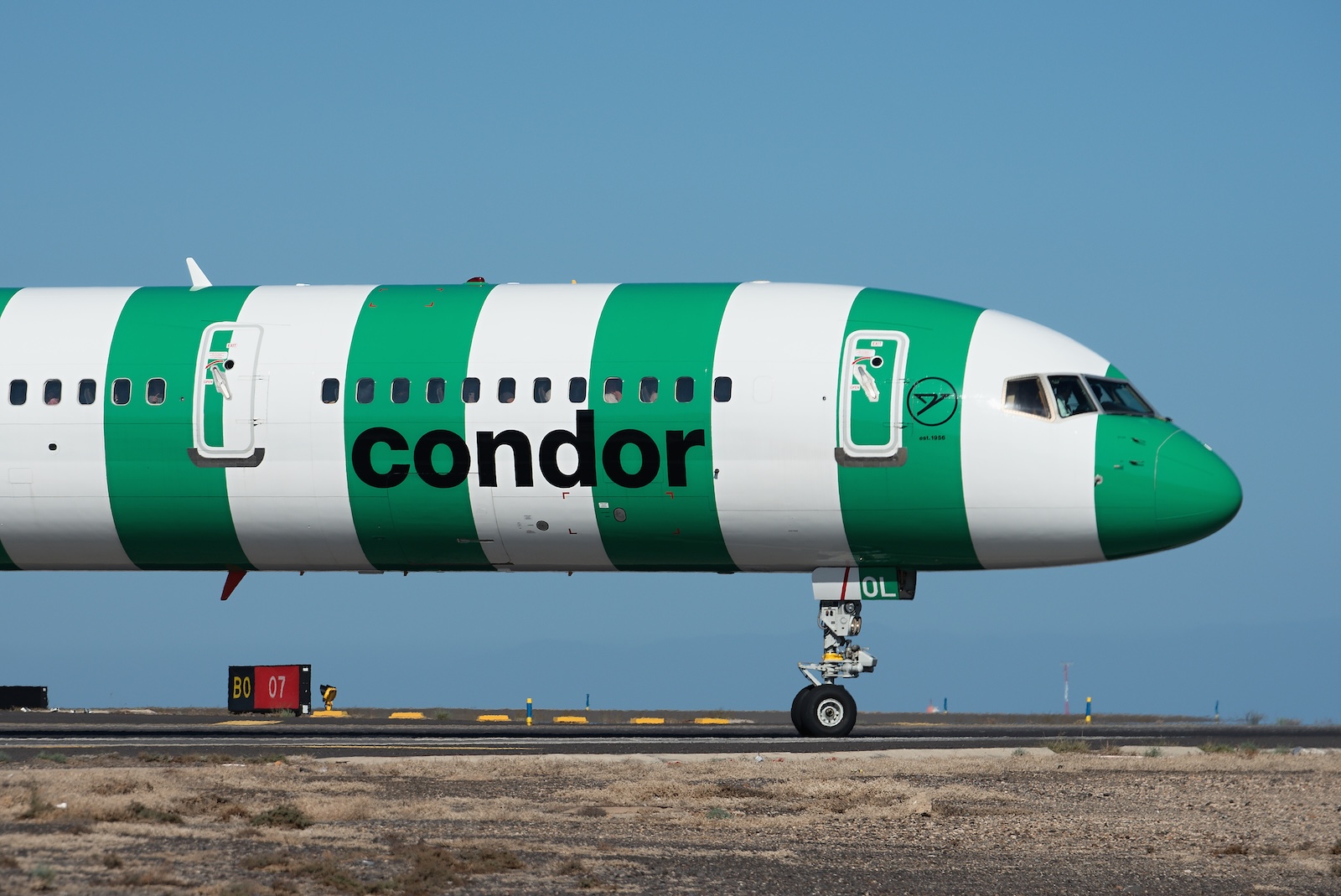
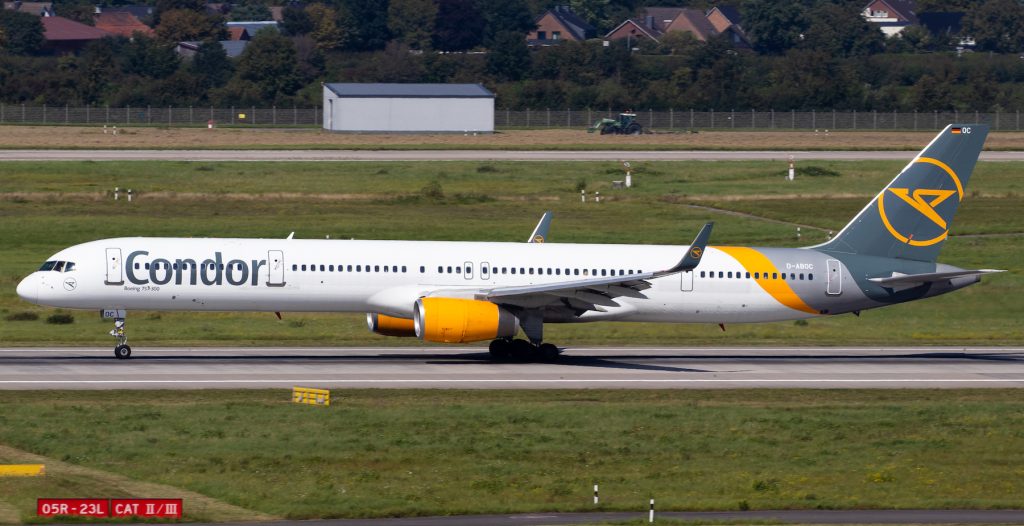
German airline Condor will officially retire its last remaining Boeing 757-300s between October and November, with a special “farewell flight” planned for Nov. 5.

The phaseout will mark Condor’s transition to an all-Airbus fleet. The 757s are expected to be replaced by Airbus A320neo- and A321neo-family aircraft.

The carrier announced plans to retire its 757s last year but had not set a firm date. The 11 aircraft are being sold to asset management company Crestone Air Partners.

“By bidding farewell to the Boeing 757, an era at Condor comes to an end,” Condor COO Christian Schmitt said in a statement. “At the same time, this marks the beginning of a new chapter with a modern, more efficient, and more sustainable Airbus fleet.”

Condor’s last 757 flight will take 75 passengers from Frankfurt to Vienna and back. The carrier is auctioning off tickets for the flight on its website.

Condor said it will continue operating six 757s until late October on routes connecting Frankfurt and Düsseldorf with popular vacation destinations like Mallorca, Spain; Hurghada, Egypt; and Fuerteventura and Gran Canaria in the Canary Islands. The last scheduled 757 services are between Düsseldorf and Mallorca on Oct. 29 and between Frankfurt and Hurghada on Nov. 2.

Zach Vasile

Zach Vasile is a writer and editor covering news in all aspects of commercial aviation. He has reported for and contributed to the Manchester Journal Inquirer, the Hartford Business Journal, the Charlotte Observer, and the Washington Examiner, with his area of focus being the intersection of business and government policy.
Sign-up for newsletters & special offers!

Get the latest stories & special offers delivered directly to your inbox

SUBSCRIBE

Uh-oh! It looks like you're using an ad blocker.

Our website relies on ads to provide free content and sustain our operations. By turning off your ad blocker, you help support us and ensure we can continue offering valuable content without any cost to you.

We truly appreciate your understanding and support. Thank you for considering disabling your ad blocker for this website