Stories

Air Canada Extends U.K. Route

Air Canada is extending its seasonal nonstop service between Ottawa and London Heathrow through the winter, opening the door to year-round connectivity.

Air Canada 787
An Air Canada Boeing 787-9 Dreamliner at London Heathrow Airport. (Photo: AirlineGeeks | William Derrickson)

Air Canada is extending its seasonal nonstop service between Ottawa and London Heathrow through the winter, opening the door to year-round connectivity for the two capital cities.

Between Nov. 2 and March 27, 2026, Air Canada will operate the Ottawa-London route three times a week, on Wednesdays, Fridays, and Sundays. This is one flight per week less than the current summer schedule.

“Air Canada continues to solidify its leadership [in] serving our country’s capital and we are excited to keep Ottawa connected to one of the world’s most important global gateways all year long,” said Mark Galardo, executive vice president, chief commercial officer, and president of cargo at Air Canada. “Customers traveling for business, corporate, and leisure from the National Capital Region and abroad will enjoy the ease and convenience of international travel options to and from Ottawa.”

Airline leaders also said the strengthened route will facilitate tourism in both directions and boost trade between Canada, the U.K., and Europe, since most Canadian cargo is transported in the belly of passenger airplanes.

The Ottawa-London route is expected to ramp back up to four times per week for the summer of 2026, which on Air Canada’s calendar starts March 28, 2026.

Air Canada paused service between Ottawa and London in 2020 during the COVID-19 pandemic. The route was reinstated in March 2025 on a seasonal basis and was initially scheduled to end in October.

Zach Vasile

Zach Vasile is a writer and editor covering news in all aspects of commercial aviation. He has reported for and contributed to the Manchester Journal Inquirer, the Hartford Business Journal, the Charlotte Observer, and the Washington Examiner, with his area of focus being the intersection of business and government policy.

Uzbekistan Airways Orders Up to 22 Dreamliners

Central Asia’s Uzbekistan Airways this week agreed to buy 14 Boeing 787-9 Dreamliners, with options for eight more, at it plans more long-haul routes.

An Uzbekistan Airways Boeing 787 Dreamliner.
An Uzbekistan Airways Boeing 787 Dreamliner. (Photo: AirlineGeeks | Katie Zera)

Uzbekistan Airways on Monday announced the largest aircraft order in its 33-year history.

In a statement, the carrier said it has agreed to buy 14 Boeing 787-9 Dreamliners, with options for eight more. The purchase is part of a broader effort to modernize Uzbekistan Airways’ widebody fleet, which consists mainly of Airbus jets.

The deal was announced on the sidelines of the United Nations General Assembly in New York.

“The Boeing 787 Dreamliner family has proven to be the cornerstone of our long-haul operations,” said Uzbekistan Airways Chairman Shukhrat Khudaikulov in a news release. “With this new contract, we are further strengthening both our airline’s and our nation’s position as a leading aviation hub in Central Asia, while providing our passengers with greater global connectivity. This step reaffirms our ambitions and strategic commitment to sustainable growth.”

A rendering of an Uzbekistan Airways 787-9.
A rendering of an Uzbekistan Airways 787-9. (Image: Boeing)

Separately, Boeing and the Uzbekistan Ministry of Transport signed a memorandum of cooperation aimed at expanding the country’s “aviation ecosystem.”

Uzbekistan Airways is the first operator of the Dreamliner in Central Asia and currently has seven 787-8s in service. These aircraft support the carrier’s nonstop routes from Islam Karimov Tashkent International Airport in Uzbekistan to destinations in Europe and East Asia, as well as New York.

The airline said its new 787-9s will be used to expand service to the U.S. and other long-haul international destinations. It did not say which potential routes are under consideration.

Zach Vasile

Zach Vasile is a writer and editor covering news in all aspects of commercial aviation. He has reported for and contributed to the Manchester Journal Inquirer, the Hartford Business Journal, the Charlotte Observer, and the Washington Examiner, with his area of focus being the intersection of business and government policy.

Avelo Suspends Service at Northeast Airport

The carrier confirmed that operations at the airport have been “seasonally suspended.” WMUR-TV reported that the last flights will take place Jan. 5.

An Avelo Boeing 737 aircraft.
An Avelo Boeing 737 aircraft. (Photo: Avelo Airlines)

Ultra-low-cost airline Avelo is suspending service at Manchester–Boston Regional Airport in New Hampshire.

The carrier confirmed to AirlineGeeks that operations at the airport have been “seasonally suspended.” WMUR-TV in Manchester reported that the last flights will take place Jan. 5, 2026.

Avelo added that it is “evaluating return dates for 2026,” suggesting service could eventually resume.

Manchester–Boston Regional Airport is located in southern New Hampshire, not far from the Massachusetts state line. Avelo currently offers flights between Manchester and Raleigh-Durham, Wilmington, and Concord – all in North Carolina – and Myrtle Beach, South Carolina.

Northern California Route Ends Early

Avelo is also expected to depart California Redwood Coast–Humboldt County Airport, also known as Arcata–Eureka Airport, sooner than initially planned.

The airline announced in July that it will close its base at Hollywood Burbank Airport in Southern California in December, ending nonstop service between Burbank and Arcata–Eureka at the same time. But Humboldt County officials said they were told last week by Avelo that flights out of Arcata–Eureka will actually end earlier, on Oct. 20.

The county said travelers will be notified about changes to their flight reservations and refund options.

Zach Vasile

Zach Vasile is a writer and editor covering news in all aspects of commercial aviation. He has reported for and contributed to the Manchester Journal Inquirer, the Hartford Business Journal, the Charlotte Observer, and the Washington Examiner, with his area of focus being the intersection of business and government policy.

Behind the Scenes at Qantas Wine Week

AirlineGeeks went behind the scenes at Qantas Wine Week in Australia, then toured the airline's Integrated Operations Centre.

Qantas Wine Week
Behind the scenes at Qantas Wine Week. (Photo: AirlineGeeks | Joey Gerardi)

Qantas Wine Week is a week-long event at the Qantas headquarters every year where a team of professional, hand-picked Qantas sommeliers sip their way through nearly 1,400 different wines. The list will eventually be narrowed down to the 300-400 labels that will be featured the following year in the airline’s first and business class cabins, as well as in Qantas-branded airport lounges around the world.

While we won’t be revealing which wines were selected or are even in the competition this year — as that remains confidential until the official unveiling in September or October — we did get a special invitation to the airline’s headquarters in Sydney, Australia, to get a behind-the-scenes look at the event, the inside of which is rarely seen by the general public. We also had the opportunity to interview the head sommelier and chairman of wine for Qantas Wine Week, Sebastian Crowtherand, and ask him some questions about the event. Any wine bottles in the photos you see have nothing to do with this year’s wine week and are past selections.

AirlineGeeks (AG): At the end of wine week, how many wines get chosen from the 1,400 that you start with?

Sebastian Crowtherand (SC):  It varies every year, to be honest with you, but it’s in the hundreds; they need quite a significant amount of wine to be able to cater for all the correct aircrat for a 12-month period of time, it’s quite a lot.

(AG):  So is it all Australian wine, or are you choosing products from other parts of the world as well?

(SC):  Yeah, so one of the great things about Qantas is that they’ve always been a huge supporter of the Australian wine industry. So, actually, 99% of what’s flown on Qantas is Australian wine; the only exception to that is champagne, which you see served in the first and business class cabins.

(AG): Speaking of the 300 wines that you choose at the end of the week, obviously, there’s not going to be 300 types of wine on every flight. How do you choose what type of wine go on what flights? Is it based on the destination? Are you going to have a different selection on flights to Dallas than, say, London or Paris? How does it work?

(SC) : Yeah, there can be some differences and a few specific reasons as to why they choose certain wines. Like for instance, to New Zealand we sometimes have some New Zealand wines on board, and that can be kind of another one of the exceptions to the Australian wine focus that Qantas has. But typically, one of the logistical things is trying to get the right wines in the right places.  With the limited amount of space they have on board, we try to work with key varieties, and in Australia, obviously, grapes like Shiraz and Cabernet for red are very important so you’ll see those on board, and for white wines, Riesling and Chardonnay are probably the two most common that we see there, but that’s not to say that occasionally there might not be Pinot Grigio, or Sauvignon Blanc, for instance. But you typically find those kinds of mainstays quite consistently.

Qantas sommeliers tasting wines. (Photo: AirlineGeeks | Joey Gerardi)

(AG):  I know this is a saying among people that, you know, drink not just wine, but alcohol on planes — ‘One on the ground is two in the air,’ and there’s a very big difference from drinking wine on the ground to when you’re drinking wine in the air in terms of not only the effect that it has on you, but the taste as well. How do you know what each wine is going to taste like here during Qantas Wine Week versus when you’re on the aircraft at 38,000 feet?

(SC):  Yeah, I think there is a difference, and you know, it’s a difference in the wine and how the wine changes, but also a difference in how we perceive things and how our taste buds are affected by being at altitude and within a cabin. I think that probably the simplest way, and the way that I’ve sort of dealt with it over the years, is that we assume that whatever tastes good on the ground, tastes good in the air, and so there may well be changes in the way that we perceive things or the way that the white wine presents, but we still think it’ll be just as delicious, based on those changes.

(AG):  Are there any wines that you reuse from year to year? Or once you use it for one year, you try not to use it the following year?

(SC):  No, we definitely don’t have that philosophy; every wine will go through the tasting process, so there’s no guarantee that one wine from one year will be selected for the following year. We do find that some wines consistently end up on the final list, highly respected brands that have been around for a long period of time with strong reputations and great wine-making teams, and so they just have a way of producing wines in a very consistent manner through vintage variation. But you know, we always see small producers coming in every year, which adds some diversity to the landscape, and that always makes it interesting.

A grouping of different red wines. (Photo: AirlineGeeks | Joey Gerardi)

(AG): Going from 1,400 to 300 is a big jump, but there are definitely more than 1,400 types of wine in the world. How do you go from the thousands that exist to the 1,400?

(SC): We send out a form to all the different producers around Australia, and we allow them to submit, it’s really an open application. So it’s open to every winery, big or small, and it gives everyone an equal opportunity. One of the great things about Qantas has been, from the very beginning, that they don’t purchase wine in huge volumes, meaning they don’t purchase just one type of wine that’ll cater for all airlines across the globe. They’ve always had a strong philosophy in trying to work with small amounts as well, so while we might buy a bigger amount from a larger winery, we also have the ability to buy smaller amounts from smaller producers too, to support those wineries and let them shine. So yeah, it’s open to everyone to submit their wine, and it’s up to them ultimately whether they want to be a part of the process, and we tend to find that there are obviously a lot of wineries that submit their wines, which is good for us because we have to see such a diversity across all the regions of Australia. We see lots of stuff from Western Australia, from Tasmania, all the way across the mainland, and up the east coast as well.

(AG):  So obviously you’re not drinking 1,400 bottles of wine. How does that process work?

(SC):  Typically, we’ll taste over a hundred wines a day across the two panels that we have running at the same time. So it’s a lot of wine, and if you were drinking each of those wines, you wouldn’t be very coherent at the end of the day, so we spit. It doesn’t sound very glamorous, but we have a little spittoon next to us, we take a smell, and a taste of each of the wines, and then we spit the wine out. You’re still able to get a really great understanding of the wine, its flavors, tannins, acidity, and how it’s made. So it’s not just about the taste, it’s very much about the structure of the wine as well, what we call the structure, so that’s the tannin and the acidity, and that’s what ultimately makes it drinkable. If you have a wine that’s too tannic, it will taste bitter, and a wine without enough acidity will be a boring drink. So we look at all the components of the wine to try and make the right decision whilst remaining sober and coherent.

Qantas sommeliers taste around 1,400 wines over the week. (Photo: AirlineGeeks | Joey Gerardi)

(AG): What does it take to become a sommelier for Qantas? Not only, you know, here during wine week, but just kind of overall for every year that you do this?

(SC): So a sommelier is, primarily, a person who works in a restaurant who buys wines. But within Qantas, they’ve developed a program which is called Sommeliers in the Sky, and that’s where hosts and hostesses can become qualified. Once they work in the business cabin, they go through a series of different levels where they get more and more education through that process, and in that, they will learn about all the different regions, not only in Australia, but internationally too, so that they understand the world of wine, not just wines domestically. And they’ll taste a lot of wine during that process too, comparing and contrasting different styles to get a really great understanding of the world.

(AG):  So most of the sommeliers are flight crew then?

(SC):  Yeah, there is a number of sommeliers that are here today who are flight staff, and so they’ve always been a great part of this process. And then we also have some sommeliers who get involved, who have worked in Neil Perry’s restaurants, who are in charge of the food, of course, as well as the wine. And myself, I worked with Neil in his restaurants for a long time, and I’ve continued on to do that now.

Inside the IOC

The Qantas Wine Week is certainly an interesting process and I’m glad we were able to ask some questions about it. However, Wine Week wasn’t the only exciting thing we had planned while we were at the airline’s headquarters. We also received a tour of the airline’s IOC, which stands for Integrated Operations Centre, and is the location where all of the planning takes place for every single Qantas flight in its system. It is truly a sight to behold with the computers and screens all around the room.

From the launching of their Kangaroo route in 1947, a multi-stop journey from Sydney to London, to inventing the business class cabin in the 1970s, and now leading the charge in ultra-long-haul flights with Project Sunrise — where it will operate the first ever scheduled nonstop from Sydney to both New York and London — the airline has truly been a leader in long-haul aviation innovation. Planning flights is always tough, and most of us in the aviation industry know that. It becomes even tougher when it is a long-haul route that spans thousands of miles. I had the opportunity to interview the head of the Integrated Operations Centre, Ben Holland, and ask him some questions.

Head of the Qantas IOC, Ben Holland, during our interview with him, and the flight map behind him. (Photo: AirlineGeeks | Joey Gerardi)

In parts of the interview, he was referring to the live flight map behind him. To see the flight map as well as the video interview, please see the video at the bottom of this article.

AirlineGeeks (AG): What goes into planning an international flight, given, you know, the many regulations and the no-fly zones around the world?

Ben Holland (BH): There’s an amazing amount that goes into planning an international flight. Have a look at the screen here, and you can see Australia. If you have a look at our comparison to the U.S., we’re a long way away, for instance, our Dallas service is around about 9,000 miles air distance from each other, and so there’s an amazing amount of work that goes into each and every day to plan each service. On the other side of things, about 9,000 miles the other direction is our Perth to London services, so this is something that we’re actually pretty used to, as this is the nature of our international operations.

(AG): You mentioned Dallas, that is your longest A380 route. But it’s also the second-longest A380 route in the world if I’m correct. What goes into planning a route like that, given it’s very close to the max range of that aircraft, especially with a full load of passengers?

(BH):  So each day on a rolling basis, we’ll look at the next day’s operation. We’ve got a flight planning system that is best in world called Constellation, and we tailor that because of our long-range nature into having a look at the weather. So if you think, it’s a 17-hour journey, we need quite accurate forecasts a day out, 30 hours out, we also need to have a look at the on-route winds, and so we need to get really finesse levels of those winds, at the grid points, typically, you’ll lose one degree of latitude and one degree of longitude as a reference point for your wind, we’ll use .25 degrees of arrest at point, we walk 30 hours out and then we’ll refine that all the way up to the point of departure.

Qantas’ Integrated Operations Centre at its headquarters. (Photo: AirlineGeeks | Joey Gerardi)

(AG):  More so with the international flights, how do you plan, God forbid, if a diversion is required, whether it’s medical or mechanical, how do you plan those diversion points, especially on long flights similar to Dallas-Sydney?

(BH): This is natural for us, we had a medical diversion in Tuvalu two weeks ago, it’s part and parcel of the nature of operations. So I fly as well, but just, for all of our crews out there, we are constantly looking at what our available airports are along the way. So we’ve set up diversion ports all through the Pacific here, and there aren’t too many, but at each point, we know the capability of the ports, we know the latest port we can go to, and we’re also in constant contact with the aircraft via satcom. So, we are only a phone call away from being able to support them with any event that they might face.

(AG):  What does the payload optimization look like specifically for that long flight, like Dallas to Sydney?

(BH):  So Dallas to Sydney, we have what we call a payload cap or a seat cap on it, and at the moment we’ve capped the A380. That’s because we haven’t been in there for a little while, and so what we’re doing is just an introductory service to make sure that we can provide a good product, and then we’ll start refining it further as we get more information. We also have a look at a rolling 2- and 12-month, we have a look at the historical forecast, and we can start to map the profiles, and then we’ll start to map the realities and what we’re seeing against those forecasts so that we can maximize the opportunity to bring everybody from the U.S. down to Australia.

(AG):  I know we briefly mentioned the diversion points, especially for the A380; there are a lot of airports that can’t handle not only the wingspan, but the weight of that aircraft. How do you kind of plan ahead of time, especially if those airports are particularly far apart?

(BH):  So we have teams downstairs that have a look at all of the available airports around the world and their capabilities. For instance, for the A380, you can see Hawaii up there, and you can see the eight [Qantas flight 8] coming out of Dallas now, that’ll swing just south of Hawaii there, so that’s one of the ports that we can go to. We keep going through the middle of the Pacific, Christmas Island, then we come down to Nadi, around about three or four hours away from the east coast of Australia, and that’s our next port, and that can handle an A380. Similarly, if we did go into there, what we can do is we can position flight crew, cabin crew, maybe even an engineer in there whilst that aircraft’s in the air to get ready to receive it and keep people going continuously along to the destination.

Ben Holland pointing at the live flight map, explaining international flight planning. (Photo: AirlineGeeks | Joey Gerardi)

(AG): What does a typical day look like for you here in the IOC?

(BH): There’s no typical days and that’s one of the things I love about the IOC. It is so dynamic, I can come in the morning, and we might have a cyclone somewhere. We might have a hurricane going through Dallas, or we might have thunderstorms. There is no typical day, but we have a fantastic team of people in here with experience anywhere from just arrived up to 47 years, and they work each and every day to try and get our customers safely and efficiently to the destination.

(AG): One last question,  I know you said every day is different. But generally speaking, what is the hardest international route to plan?

(BH): The hardest route at the moment is our services up to Europe. The air corridors from a security point of view are quite restrictive, and so we’ve only got a limited amount of options that we can route the aircraft there, so we’re on a continuous watch. But again, this is just part and parcel of what we do each and every day; we’re on a continuous watch worldwide for risks and how we can best manage them and mitigate them. So essentially and hopefully, you don’t actually know that we’re here in the background doing all of this, you can just hop on board, enjoy the great Qantas service, and come down to Australia.

Wine Tasting

After the interviews, we had a special invitation to take part in a wine tasting event right at the headquarters, which is only attended by Qantas executives, a few high-level frequent flyers, and wine makers, some of whom had wines in this year’s running. We ate some food and even did a little wine tasting of our own, and voted for our favorite. But for those wanting to find out which wines were chosen this year, you’ll have to wait a bit longer as the airline plans to announce them officially in a few months.

Taking part in our own wine tasting event, right at Qantas’ headquarters. (Photo: AirlineGeeks | Joey Gerardi)

A big thanks to Ben Holland in the IOC for answering my questions, as it’s always so interesting to see how it works behind the scenes, planning these long-haul international routes. I had a wonderful time hearing not only about the IOC from Ben, but talking with Sebastian about Qantas Wine Week as well.

A video account of these interviews, as well as Qantas Wine Week, can be found below.

Joey Gerardi

Joey has always been interested in planes for as long as he can remember. He grew up in Central New York during the early 2000s when US Airways Express turboprops ruled the skies. Being from a non-aviation family made it harder for him to be around planes and would only spend about three hours a month at the airport. He was so excited when he could drive by himself, the first thing he did with his driver's license was get ice cream and go plane spotting for the entire day. He graduated from Western Michigan University in 2022 with a B.S. in Aviation Management & Operations and a Minor in Business, and currently works for a major airline in his hometown.

Air Canada Sets Return to U.S. Airport

Air Canada announced Monday that it will resume service to a Texas city, and link Montreal with Cleveland and Columbus, Ohio.

Air Canada A220
An Air Canada Airbus A220 aircraft (Photo: AirlineGeeks | William Derrickson)

After months of cuts to transborder routes, Air Canada said Monday that it will return to one U.S. airport and expand service to two others.

Starting in May 2026, the carrier will link Toronto and San Antonio, Texas, and serve Cleveland and Columbus, Ohio, from Montreal. All three routes will operate until October 2026.

Service to San Antonio will launch on May 1 following an over six-year hiatus, per Cirium Diio schedule data. Flights will be operated by an Airbus A220-300.

Air Canada currently offers service to both Cleveland and Columbus from Toronto. The airline last served San Antonio in 2019.

Air Canada leaders said they will boost transborder capacity by 15% in the summer of 2026, bringing operations more in line with summer 2024 figures after a notably weak summer this year. They did not say which other U.S. routes will see increased flights.

Air Canada has dialed back service to U.S. markets like Detroit, Minneapolis, Indianapolis, Washington, D.C., and Tampa, Florida, in recent months amid new U.S.-imposed tariffs and rising political tensions between the two countries. U.S. customs data from earlier this year showed air and motor vehicle traffic from Canada to the U.S. are at their lowest levels since the height of the COVID-19 pandemic.

Zach Vasile

Zach Vasile is a writer and editor covering news in all aspects of commercial aviation. He has reported for and contributed to the Manchester Journal Inquirer, the Hartford Business Journal, the Charlotte Observer, and the Washington Examiner, with his area of focus being the intersection of business and government policy.

American Adds Northeast Regional Route

American Airlines confirmed to AirlineGeeks that it will begin up to three times daily service between Boston and Buffalo, New York, next year.

American Eagle jet
An American Eagle E175. (Photo: Shutterstock | Austin Deppe)

American Airlines is set to resume a short-haul route connecting New England and western New York.

The carrier confirmed to AirlineGeeks that service between Boston and Buffalo will start on March 8, 2026. Flights will operate up to three times a day using Embraer E175 aircraft.

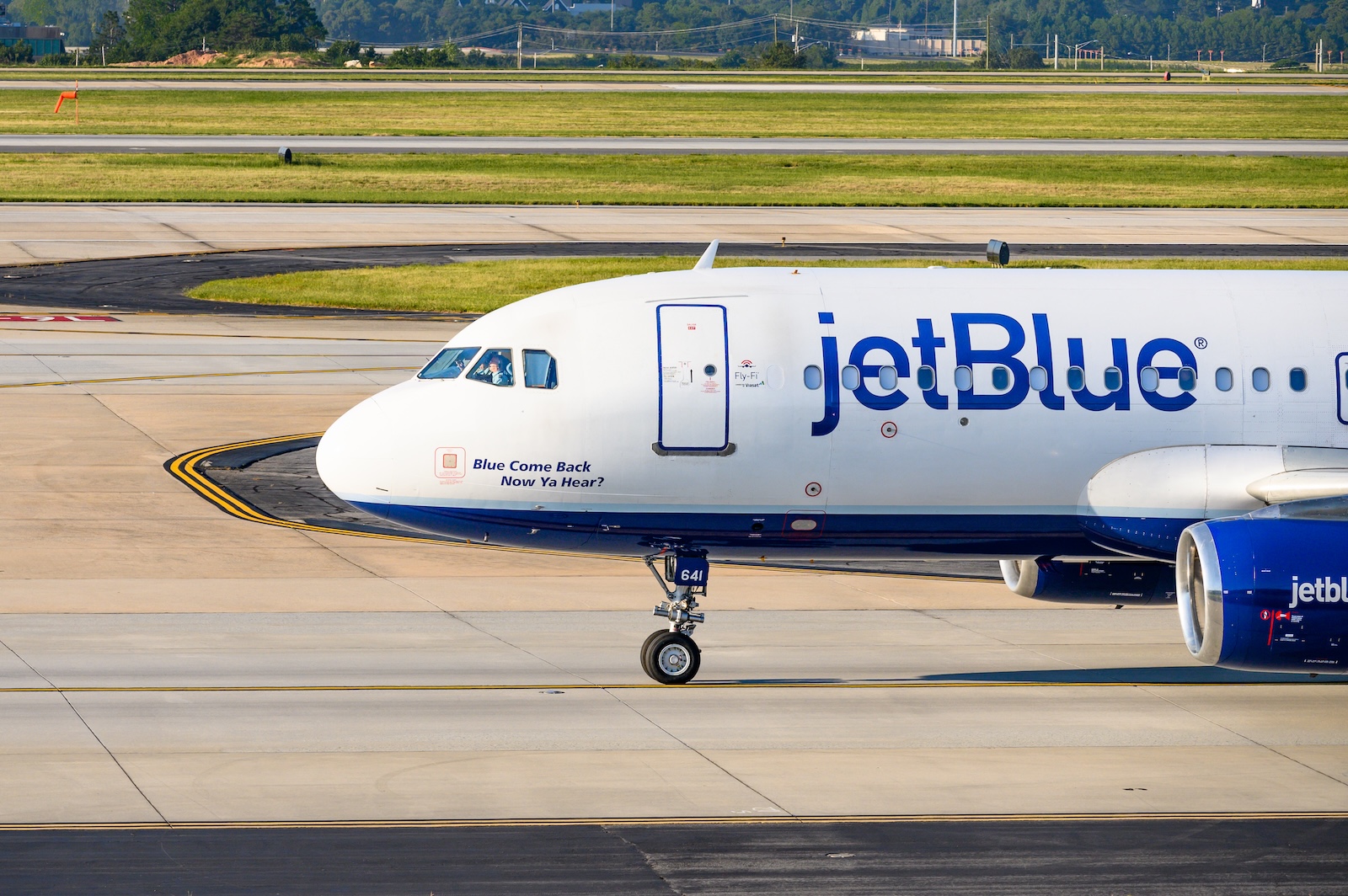
Currently, JetBlue is the only airline offering nonstop service between Boston and Buffalo. Like the coming American service, it operates three times per day.

According to Cirium Diio schedule data, American last connected Boston and Buffalo with non-stop flights in 2017.

American has added several new routes for 2026, including service between Vero Beach, Florida, and Charlotte, North Carolina, and between Miami and Bimini, The Bahamas. New routes connecting Chicago and Mexico City and Philadelphia and Santo Domingo, Dominican Republic, will start later this year.

Zach Vasile

Zach Vasile is a writer and editor covering news in all aspects of commercial aviation. He has reported for and contributed to the Manchester Journal Inquirer, the Hartford Business Journal, the Charlotte Observer, and the Washington Examiner, with his area of focus being the intersection of business and government policy.

Spirit Cutting 1,800 Flight Attendant Jobs

The ultra-low-cost carrier said the move is intended to bring staffing levels in line with its fleet size and anticipated flying schedule.

A Spirit Airbus A321
A Spirit Airbus A321 aircraft. (Photo: Shutterstock | Felipe I Santiago)

Spirit announced Monday that it will furlough approximately 1,800 flight attendants as part of its ongoing restructuring plan. The furloughs will take effect Dec. 1, 2025.

The ultra-low-cost carrier said the move is intended to bring staffing levels in line with its fleet size and anticipated flying schedule.

“As part of our ongoing restructuring, we are taking steps to align staffing with our fleet size and expected flight volume,” a Spirit spokesperson said in a statement to AirlineGeeks. “In line with this process, we have made the difficult decision to furlough approximately 1,800 Flight Attendants, effective Dec. 1, 2025. We recognize the impact of this decision on affected Team Members, and we are committed to treating them with care and respect during this process.”

Spirit has around 5,200 flight attendants in its ranks, who are represented by the Association of Flight Attendants-CWA.

“We have been able to mitigate harm for our workgroup until this point,” the AFA said in a message to members. “The problem is that the significant reduction of aircraft and flight hours requires a much higher reduction in force and the company is clear that a furlough is necessary.”

Voluntary furloughs are also being offered to Spirit flight attendants starting in November, the union stated.

“Management has also indicated, though not officially noticed [notified?] us yet, that they will be seeking changes to our contract per Section 1113 of the Bankruptcy Code. We do not have any further details on this at this time. Information will move quickly though and we encourage you to stay close to your AFA communications,” the AFA added.

The furlough announcement follows earlier cuts within the airline’s pilot group. In the past several months, it has slashed over 500 pilot jobs.

Spirit filed for Chapter 11 bankruptcy protection for the second time in a year last month. As part of this restructuring, it has cut capacity while also pulling out of 11 U.S. cities.

Ryan Ewing

Ryan founded AirlineGeeks.com back in February 2013 and has amassed considerable experience in the aviation sector. His work has been featured in several publications and news outlets, including CNN, WJLA, CNET, and Business Insider. During his time in the industry, he's worked in roles pertaining to airport/airline operations while holding a B.S. in Air Transportation Management from Arizona State University along with an MBA. Ryan has experience in several facets of the industry from behind the yoke of a Cessna 172 to interviewing airline industry executives. Ryan works for AirlineGeeks' owner FLYING Media, spearheading coverage in the commercial aviation space.

Lawsuit Filed After American 737 Fire

Passengers describe panic inside the cabin as smoke filled the aircraft, with some forced to evacuate before being rescued by ground crews.

American 737-800
An American Boeing 737-800. (Photo: AirlineGeeks | William Derrickson)

A group of passengers has filed a lawsuit against American Airlines in connection with a March 2025 engine fire that led to an emergency evacuation at Denver International Airport. The complaint, filed in a Colorado federal court last week, names 16 passengers — including two minors — as plaintiffs.

The case centers on American flight 1006, a Boeing 737-800 registered as N885NN, which departed Colorado Springs on March 13 bound for Dallas/Fort Worth. According to the filing, the aircraft experienced high engine vibrations and exhaust gas temperature issues with its right engine shortly after takeoff.

The flight diverted to Denver, where the engine ignited after landing and taxiing to the gate.

The passengers allege negligence in both the operation and maintenance of the aircraft. The complaint points to the crew’s decision to continue takeoff despite indications of engine issues, not declaring an emergency during the diversion, and proceeding to the gate rather than requesting firefighting support upon landing.

Damage to American 737-800
Damage to N885NN (Photo: NTSB)

The lawsuit states American “failed to properly follow abnormal and/or emergency checklists” and “failed to properly and orderly evacuate the aircraft,” among other claims.

Maintenance Issues

The National Transportation Safety Board’s preliminary report, released in June, cited multiple engine maintenance deficiencies. Investigators found that a fuel fitting on the right engine’s variable stator vane actuator was improperly secured, which allowed fuel to leak.

In addition, the report also noted an incorrectly fastened actuator rod and a fractured weld on the actuator linkage. Additionally, sealant was discovered blocking a thrust reverser drain line, and a fractured fan blade platform would have been visible during a pre-flight inspection.

The lawsuit further alleges failures in the carrier’s training, hiring, and supervision of its employees, along with claims of gross negligence and emotional distress.

Passengers describe panic inside the cabin as smoke filled the aircraft, with some forced to evacuate through overwing exits onto the wing before being rescued by ground crews.

The plaintiffs are seeking damages for medical expenses, emotional distress, and other losses.

N885NN returned to service in June, around three months after the incident.

Ryan Ewing

Ryan founded AirlineGeeks.com back in February 2013 and has amassed considerable experience in the aviation sector. His work has been featured in several publications and news outlets, including CNN, WJLA, CNET, and Business Insider. During his time in the industry, he's worked in roles pertaining to airport/airline operations while holding a B.S. in Air Transportation Management from Arizona State University along with an MBA. Ryan has experience in several facets of the industry from behind the yoke of a Cessna 172 to interviewing airline industry executives. Ryan works for AirlineGeeks' owner FLYING Media, spearheading coverage in the commercial aviation space.

Alaska Doubles Down in San Diego

Alaska Airlines announced this week that it will build a new, 13,000-square-foot lounge at San Diego International Airport.

Alaska 737-900ER
An Alaska Boeing 737-900ER. (Photo: Shutterstock | Robin Guess)

Alaska Airlines on Monday announced the location of its next airport lounge.

The carrier said it will build a 13,000-square-foot lounge at San Diego International Airport, one of its hub locations. The space will include reclining seats, private and quiet work areas, refreshments provided by local vendors, a full bar, and a barista station for espresso beverages.

Construction is expected to begin in early 2027.

“Our lounges are more than just a place for guests to wait for their next flight. They’re an extension of our signature hospitality and comfort that our guests experience each time they fly with us,” said Todd Traynor-Corey, Alaska’s vice president of guest products and experience, in a news release. “With our new San Diego Lounge on the horizon, we’re shaping the future of travel with spaces designed to make travel feel seamless, elevated, and welcoming.”

Airline leaders said the new lounge is just one part of a broader effort to grow Alaska’s hub at San Diego. The carrier currently serves 45 destinations nonstop from the airport. Earlier this year, it announced new connections from San Diego to Chicago O’Hare, Denver, Phoenix, and Sun Valley, Idaho.

Alaska’s first class customers flying over 2,000 miles get complimentary access to Alaska lounges. Lounge+ members get access to Alaska lounges and nearly 90 partner lounges, including the American Airlines Admirals Club.

Zach Vasile

Zach Vasile is a writer and editor covering news in all aspects of commercial aviation. He has reported for and contributed to the Manchester Journal Inquirer, the Hartford Business Journal, the Charlotte Observer, and the Washington Examiner, with his area of focus being the intersection of business and government policy.

Cathay Pacific Adds Seventh U.S. Destination

Cathay Pacific will add to its U.S. operations next year with the introduction of five weekly nonstop flights beginning March 30, 2026.

Cathay Pacific A350
A Cathay Pacific A350. (Photo: AirlineGeeks | Ben Suskind)

Cathay Pacific will add to its U.S. operations next year with the introduction of five weekly nonstop flights beginning March 30, 2026. The new service will be operated by the airline’s Airbus A350-900 aircraft, which are configured with business class, premium economy, and economy cabins.

The carrier confirmed it will return to Seattle, marking its ninth passenger destination in North America and seventh in the U.S. Flights will operate on Mondays, Tuesdays, Wednesdays, Thursdays, and Saturdays during the initial launch period between March 30 and May 31, as well as from Sept. 16 through Oct. 24. Seasonal adjustments are planned in the summer months.

According to the airline, the additional flights are intended to meet growing demand for travel between Asia and North America, particularly from the Chinese mainland and India.

Alongside the Seattle launch, Cathay Pacific will expand its recently launched service to Dallas/Fort Worth to daily flights starting October 26, 2025.

A Cathay Pacific A350 in San Francisco (Photo: AirlineGeeks | William Derrickson)

The carrier last connected Seattle and Hong Kong in March 2020. This route was short-lived, operating since March 2019.

In an April interview with AirlineGeeks, Cathay’s Chief Customer and Commercial Officer, Lavinia Lau, hinted at more U.S. service.

“We continue to see very good potential in the U.S. market, and of course, we want to expand our network as well,” she shared.

Ryan Ewing

Ryan founded AirlineGeeks.com back in February 2013 and has amassed considerable experience in the aviation sector. His work has been featured in several publications and news outlets, including CNN, WJLA, CNET, and Business Insider. During his time in the industry, he's worked in roles pertaining to airport/airline operations while holding a B.S. in Air Transportation Management from Arizona State University along with an MBA. Ryan has experience in several facets of the industry from behind the yoke of a Cessna 172 to interviewing airline industry executives. Ryan works for AirlineGeeks' owner FLYING Media, spearheading coverage in the commercial aviation space.
Sign-up for newsletters & special offers!

Get the latest stories & special offers delivered directly to your inbox

SUBSCRIBE

Uh-oh! It looks like you're using an ad blocker.

Our website relies on ads to provide free content and sustain our operations. By turning off your ad blocker, you help support us and ensure we can continue offering valuable content without any cost to you.

We truly appreciate your understanding and support. Thank you for considering disabling your ad blocker for this website