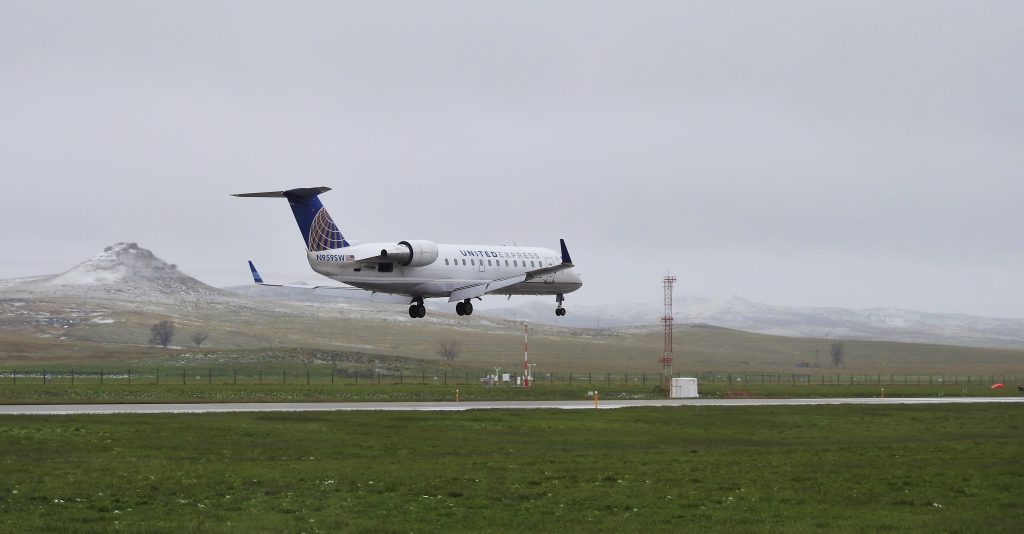










A United 737 MAX 8 (Photo: Shutterstock | Robin Guess)
United announced Thursday that it will soon replace its entire Guam-based Boeing 737-800 fleet with new 737 MAX 8 aircraft.
In a statement, the carrier said it will move 10 737 MAX 8s to Guam. The first of that group is expected to arrive in February 2026.
United’s narrowbody fleet in Guam currently serves 15 destinations, with 12 flights per day. These flights include island hopper service to Hawaii via Micronesia and the Marshall Islands and connections to Tokyo Narita, Tokyo Haneda, and Osaka.
The 737 MAX 8 will operate flights from Guam to Koror, Palau; Manila, Philippines; Saipan in the Northern Mariana Islands; Yap, Micronesia; and Taipei, Taiwan, as well as from Tokyo Narita to Cebu, Philippines; Ulaanbaatar, Mongolia; Saipan; Kaohsiung, Taiwan; and Palau.
United’s Guam-based 737 MAX 8s will have up to 166 passenger seats in total, including up to 16 United First seats. Each seat comes with a seatback entertainment screen – 13-inch for first-class, 10-inch for United Economy – and access to USB charge ports.
A United Boeing 737 MAX aircraft (Photo: AirlineGeeks | William Derrickson)
United said the aircraft’s cabins will offer larger overhead bins for storage. They will also feature the carrier’s latest interior design scheme and LED lighting.
Wi-Fi will be available for purchase. The airline said it expects to roll out Starlink connectivity across its entire fleet “within the next few years.” Starlink access will be free for all MileagePlus customers.
Lobby Upgrades
United also said it is renovating its check-in lobby at Antonio B. Won Pat International Airport near Hagåtña, Guam. The airline has already installed new, more modern check-in kiosks and is reconfiguring the lobby to make it more “customer-centric.”
“Guam is more than just a hub for us – it’s a gateway that connects communities across the Pacific and the United States,” said Sam Shinohara, United’s managing director of airport operations in the Asia-Pacific region, in a news release. “For our more than 1,000 employees based in Guam and Micronesia and the communities we serve, this investment reinforces United’s long-term commitment to supporting Guam and the region’s tourism economy.”
Zach Vasile is a writer and editor covering news in all aspects of commercial aviation. He has reported for and contributed to the Manchester Journal Inquirer, the Hartford Business Journal, the Charlotte Observer, and the Washington Examiner, with his area of focus being the intersection of business and government policy.
Delta Leaving European Airport
The carrier’s latest long-haul network shake-up comes just days after the airline axed service between New York-JFK and Brussels.
An airline spokesperson told AirlineGeeks on Thursday that it will no longer serve Geneva, Switzerland. Ishrion Aviation first flagged the news.
The New York-JFK to Geneva route will end next month.
“Delta will discontinue its nonstop service between New York-JFK and Geneva to better align with consumer demand,” the spokesperson said in a statement. “The final flight from JFK to Geneva will operate on October 19, and the return from Geneva to JFK on October 20. We apologize for any inconvenience this may cause and are reaching out directly to affected customers.”
This route began in April 2023, operating on a seasonal basis. Delta does not currently serve Geneva from any of its other hubs.
Ryan founded AirlineGeeks.com back in February 2013 and has amassed considerable experience in the aviation sector. His work has been featured in several publications and news outlets, including CNN, WJLA, CNET, and Business Insider. During his time in the industry, he's worked in roles pertaining to airport/airline operations while holding a B.S. in Air Transportation Management from Arizona State University along with an MBA. Ryan has experience in several facets of the industry from behind the yoke of a Cessna 172 to interviewing airline industry executives. Ryan works for AirlineGeeks' owner FLYING Media, spearheading coverage in the commercial aviation space.
The base, expected to open in the first quarter of 2026, will be the airline’s 12th and is projected to create more than 200 pilot and flight attendant jobs.
The base, expected to open in the first quarter of 2026, will be the airline’s 12th nationwide and is projected to create more than 200 pilot and flight attendant jobs.
“Breeze is the No. 1 carrier in RDU in terms of destinations served thanks to the growing number of Guests – both new and returning – who love our ‘Seriously Nice’ form of air travel,” said David Neeleman, the airline’s founder and CEO, in a news release. “When evaluating where to expand our base presence next, the Research Triangle was a natural fit and is a desirable location for recruiting new Team Members.”
Later this year, Breeze is slated to operate nearly 40 peak daily flights from Raleigh-Durham, according to Cirium Diio schedule data.
Ryan founded AirlineGeeks.com back in February 2013 and has amassed considerable experience in the aviation sector. His work has been featured in several publications and news outlets, including CNN, WJLA, CNET, and Business Insider. During his time in the industry, he's worked in roles pertaining to airport/airline operations while holding a B.S. in Air Transportation Management from Arizona State University along with an MBA. Ryan has experience in several facets of the industry from behind the yoke of a Cessna 172 to interviewing airline industry executives. Ryan works for AirlineGeeks' owner FLYING Media, spearheading coverage in the commercial aviation space.
A Breeze Airways Airbus A220. (Photo: Shutterstock | Markus Mainka)
Breeze has announced plans to begin international service after being certified by the Federal Aviation Administration as a U.S. flag carrier.
This marks the first such certification for a U.S. airline in more than a decade, the airline said.
The Utah-based carrier will launch seasonal flights this winter to Cancun, Mexico; Punta Cana, Dominican Republic; and Montego Bay, Jamaica, subject to government approval. Breeze will serve these destinations from six U.S. airports: Charleston, South Carolina; New Orleans; Norfolk, Virginia; Providence, Rhode Island; Raleigh-Durham, North Carolina; and Tampa, Florida.
Seven Routes
Breeze is adding seven international routes as part of its expansion into Mexico and the Caribbean. From Charleston, flights to Cancun will begin on Jan. 17, 2026, operating seasonally on Saturdays.
Service from New Orleans to Cancun starts Feb. 7, also on Saturdays, while Norfolk to Cancun begins Jan. 10, on the same weekly schedule. Providence will join the Cancun network on Feb. 14, with Saturday-only service.
Raleigh-Durham will see two new routes, with service to Punta Cana beginning March 4, on Wednesdays and Saturdays, and flights to Montego Bay starting March 5, on Thursdays and Sundays.
Finally, Tampa will gain service to Montego Bay on Feb. 11, with flights scheduled on Wednesdays and Saturdays.
Breeze’s first batch of international routes (Photo: gcmap.com)
To support the expansion, Breeze also announced a new crew base at Raleigh-Durham International Airport, its 12th nationwide. The base, expected to open in early 2026, will create more than 200 pilot and flight attendant positions.
“Becoming a U.S. flag carrier is a huge milestone for Breeze, and one that our Team Members have been working tirelessly on for the last three years,” said David Neeleman, Breeze Airways’ founder and CEO, in a news release. “We’re excited to bring the same convenience and elevated experience they love about our domestic flights to three exciting new international destinations.”
Founded in 2021, the airline currently operates a fleet of Airbus A220-300 aircraft across more than 300 year-round and seasonal routes.
Ryan founded AirlineGeeks.com back in February 2013 and has amassed considerable experience in the aviation sector. His work has been featured in several publications and news outlets, including CNN, WJLA, CNET, and Business Insider. During his time in the industry, he's worked in roles pertaining to airport/airline operations while holding a B.S. in Air Transportation Management from Arizona State University along with an MBA. Ryan has experience in several facets of the industry from behind the yoke of a Cessna 172 to interviewing airline industry executives. Ryan works for AirlineGeeks' owner FLYING Media, spearheading coverage in the commercial aviation space.
British Airways A319s taxi at London Heathrow. (Photo: Nick Morrish/British Airways)
Travel data company OAG has once again named London Heathrow the world’s most connected airport.
OAG’s 2025 “Megahub” list, which rates airports based on scheduled connections to and from international flights and number of destinations served, put the U.K.’s busiest airport at No. 1, a position it also held in 2024 and 2023.
London Heathrow offers 59,000 possible connections to 226 destinations on its busiest days. It is Europe’s busiest airport by seat capacity.
“Heathrow’s sustained dominance reflects its vital role in global travel, while Istanbul’s rapid rise shows how hubs are evolving to meet demand,” said John Grant, OAG’s chief analyst, in a news release. “Our 2025 ranking underscores the balance between established gateways and ambitious challengers worldwide, which has developed over ten years of Megahubs.”
London Heathrow led Istanbul Airport and Amsterdam Schiphol, which took spots two and three on OAG’s list, and Kuala Lumpur International Airport and Frankfurt Airport, which tied for fourth place. Seoul Incheon, Chicago O’Hare, Hartsfield-Jackson Atlanta International Airport, Tokyo Haneda, and Paris Charles de Gaulle Airport rounded out the top 10.
Chicago O’Hare International Airport. (Photo: Shutterstock | John McAdorey)
The 2024 Megahub list featured a similar top 10 with many of the same airports, though in different positions. Between 2024 and 2025, Istanbul rose from No. 8 to No. 2, Frankfurt moved from No. 10 to No. 4, and Tokyo Haneda fell from No. 3 to No. 9.
Atlanta was ranked No. 11 last year.
Consistent with its place on the international list, Chicago O’Hare was the most connected airport in the U.S., followed by Atlanta, Dallas/Fort Worth, Denver, Charlotte Douglas International Airport in North Carolina, Seattle, Boston, Detroit Metropolitan Wayne County Airport, George Bush Intercontinental Airport in Houston, and Los Angeles International Airport.
Chicago O’Hare and Atlanta tied at No. 1 on the U.S. Megahubs list last year.
Zach Vasile is a writer and editor covering news in all aspects of commercial aviation. He has reported for and contributed to the Manchester Journal Inquirer, the Hartford Business Journal, the Charlotte Observer, and the Washington Examiner, with his area of focus being the intersection of business and government policy.
Carriers Evacuate Aircraft Ahead of Powerful Storm
Hong Kong’s major airlines have moved about 80% of their aircraft out of the region as a powerful typhoon bears down on southern China.
A Cathay Pacific Airbus A350-1000. (Photo: Airbus)
Hong Kong’s major airlines have moved about 80% of their aircraft out of the region as a powerful typhoon bears down on southern China.
According to a report from Reuters, the aircraft were moved earlier this week to airports in Japan, mainland China, Cambodia, Europe, Australia, and elsewhere to avoid potential damage from hurricane-force winds and heavy rain. The airplanes may also be used for return flights after Typhoon Ragasa, the most intense tropical cyclone of the year so far, passes by.
Reuters confirmed that Cathay Pacific, Greater Bay Airlines, Hong Kong Airlines, and HK Express have relocated a portion of their passenger fleets.
Hong Kong International Airport is currently closed as the typhoon moves west across Hong Kong and Guangdong Province. It has already caused extensive flooding and landslides in the Philippines and Taiwan.
Earlier this week, Hong Kong weather experts declared a Signal No. 10 hurricane warning, the most severe in their rating system.
Typhoon Ragasa is expected to continue west through Guangdong and Guangxi before dissipating over northern Vietnam.
Zach Vasile is a writer and editor covering news in all aspects of commercial aviation. He has reported for and contributed to the Manchester Journal Inquirer, the Hartford Business Journal, the Charlotte Observer, and the Washington Examiner, with his area of focus being the intersection of business and government policy.
United Resumes Flights After Brief Ground Stop
All United flights in the U.S. and Canada were briefly grounded early Wednesday morning due to an unspecified technology issue.
It was not immediately clear Wednesday morning how many flights had been affected.
The airline said in a statement that it “experienced a brief connectivity issue just before midnight Central time on Tuesday, but has since resumed normal operations.”
United experienced a similar glitch in early August when a technology problem halted departures at its major hubs, including Chicago, Denver, Houston, and Newark, New Jersey. Passengers were not allowed to board their flights, and some faced delays getting off their landed airplanes due to backups at the gates. Just over 1,000 flights were delayed.
Zach Vasile is a writer and editor covering news in all aspects of commercial aviation. He has reported for and contributed to the Manchester Journal Inquirer, the Hartford Business Journal, the Charlotte Observer, and the Washington Examiner, with his area of focus being the intersection of business and government policy.
Fiji Airways CEO Explains How the Small Airline Punches ‘Above Our Weight’
AirlineGeeks spoke with Fiji Airways CEO André Viljoen about the airline's future plans and how it competes with larger carriers in the Pacific.
The CEO of Fiji Airways André Viljoen. (Photo: AirlineGeeks | Joey Gerardi)
Fiji Airways is a small competitor but not a weak one.
With its main hub being Nadi, Fiji, located in the South Pacific Ocean, the airline has positioned itself against large carriers like Qantas, Air New Zealand, and even U.S. airlines that fly between the U.S. and Australia and New Zealand. Despite its small size, Fiji Airways is renowned for its high-quality cabins and amazing onboard service.
As its CEO said, “We’ll show you how to run an airline.”
AirlineGeeks attended the APEX Global Aviation Expo in Long Beach, California, and while there, we had the pleasure of interviewing Fiji Airways CEO André Viljoen. He talks about this exciting time in the airline’s history, from route expansion to possible fleet expansion, and how Fiji competes against the giants across the Pacific.
AirlineGeeks (AG): So you have the A330 and the A350 currently. Do you plan to eventually go to all A350s for your widebody fleet?
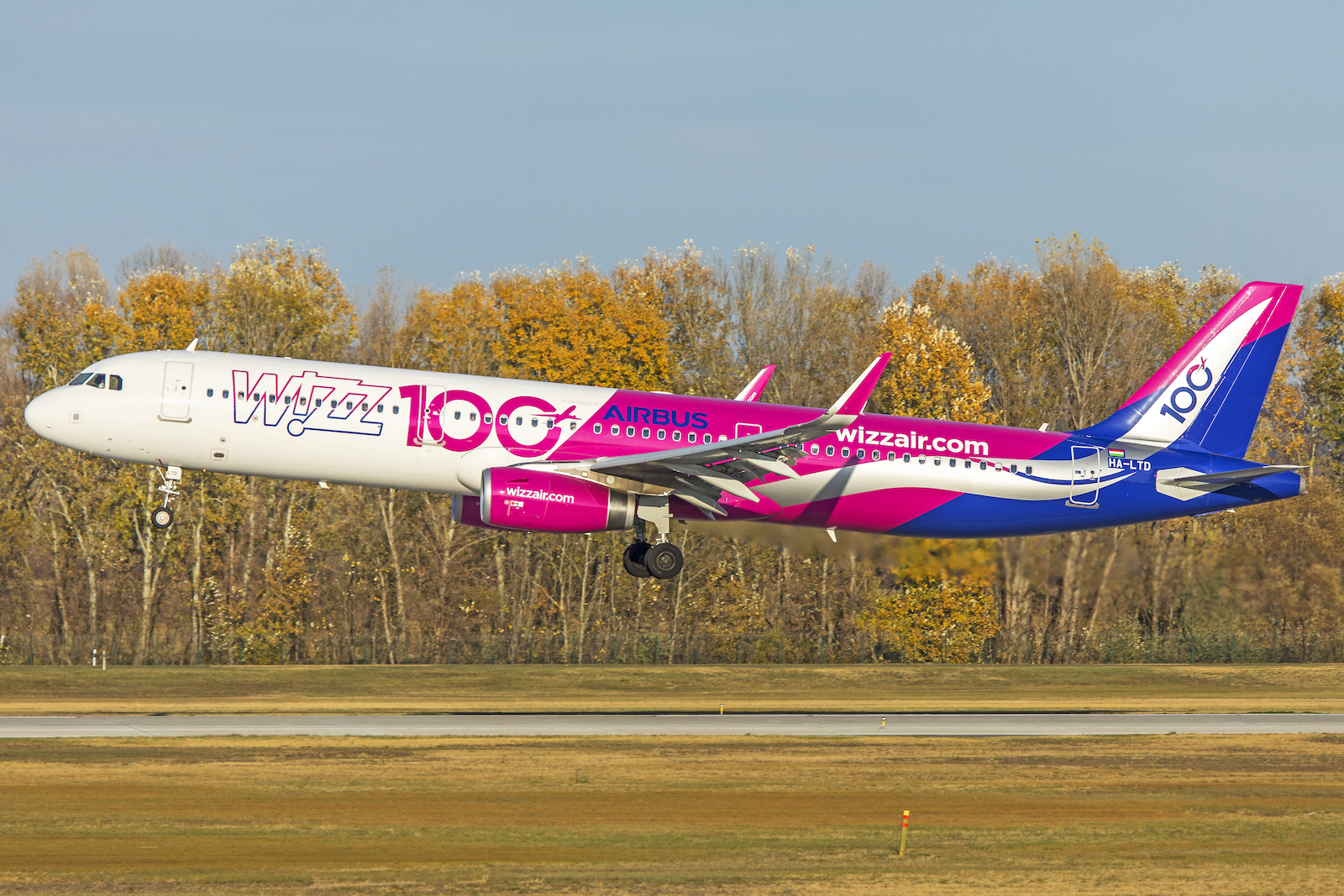
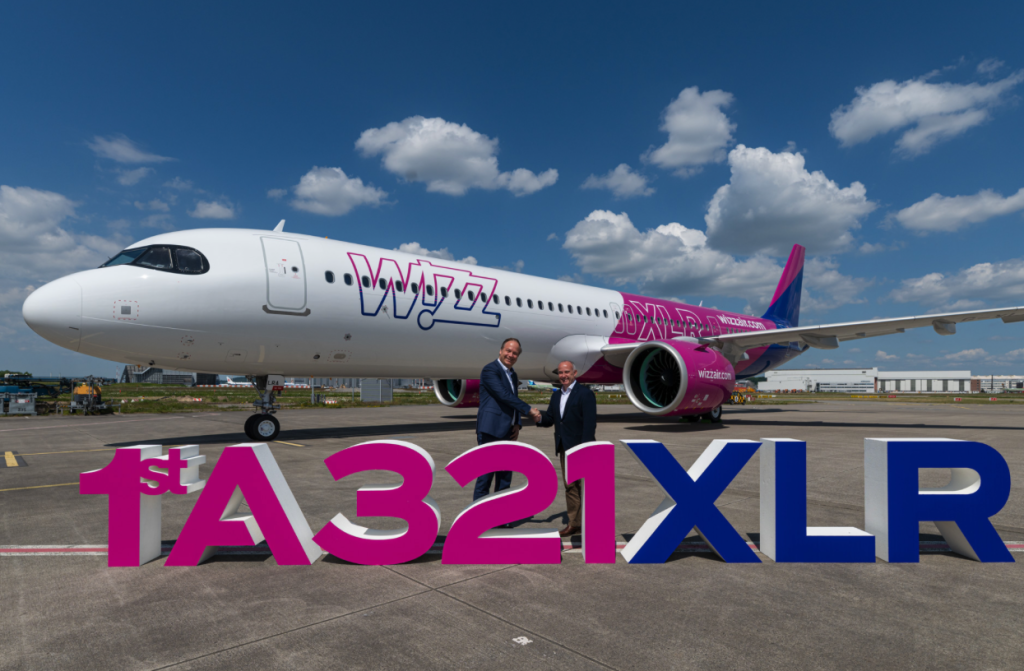
André Viljoen (AV): Not necessarily, because of where we use our A330s today on markets like Singapore, Japan, Hong Kong. We may be better off with 321XLRs, because what we find is those markets don’t have the dense demand that justifies a widebody like an A330, let alone the A350. Maybe more frequency with A321s will serve the market better.
A Fiji Airways Airbus A330 on final approach to Nadi, Fiji. (Photo: AirlineGeeks | Joey Gerardi)
(AG): Have you talked to Airbus about those A321s yet?
(AV): Yes, we have. The problem so far with it is that there’s a bit of a range issue, and you’d have some capacity reduction on the plane, and we are trying to see how to get around that, so no firm orders yet, and we are still in discussion with them. We were actually looking to replace them with 330-900neos and then we said, what are we doing? You know, if the market only has a demand for 200 seats a day, what are we doing with a 320-seat aircraft?
(AG): You have a relatively small fleet. What kind of challenges does this pose in your market?
(AV): Well, you’ve got a scale problem, you know. When you’ve got four or five of the type, and that means engineers and simulators and everything, for evey type. We’ve made it work, but it does come at a cost.
(AG): How does Fiji Airways position itself in the Pacific against larger airlines?
(AV): So you’re talking Qantas and in New Zealand, right, how do we feature against them? We take them on. Punch above our weight and come along, we’ll show you how to run an airline.
(AG): Are you looking to people to bring people into Fiji, or are you trying to create a connecting hub in the Pacific, kind of like Iceland Air in the North Atlantic?
(AV): So we want to bring people, a bulk of the people, into Fiji, but we do have a large element of connecting on our U.S. routes. This is because we’re better priced than Qantas and Air New Zealand and the American carriers in Los Angeles, but it’s also because we haven’t had the right partner in Los Angeles. Our partner is American; they’re sitting in Dallas, so now that we are flying to Dallas, we hope to see a lot less connecting traffic in Fiji.
(AG): Are you happy with the operational performance of your A350-900s?
(AV): Yes, they’ve been wonderful, absolutely wonderful.
A Fiji Airways Airbus A350-900 departing Nadi bound for Australia. (Photo: AirlineGeeks | Joey Gerardi)
(AG): Do you think you’d ever look at the A350-1000?
(AV): It’s too big for us, way too big. And also, you know, the minute you go to those extra seats, you take a reduction in cargo, and we carry 30 tons of cargo every flight. So cargo is a very important part of our business.
(AG): I’m sure you carry a lot of passengers for leisure. What issues does that create, being primarily a leisure carrier?
(AV): From a business model point of view, it’s a lousy model. We say holiday makers, they want cheap deals. Now, your business traffic will pay top dollar, so I wish we had 60% business and 40% leisure like Qantas; they smile all the way to the bank, we sweat all the way to the bank.
(AG): Given the large amount of leisure travelers, do you plan on putting a section between business and economy, or are you just going to have the two cabins?
(AV): Definitely going forward, we are looking to maybe convert some economy into premium economy, because there is a need for it, and demand.
Fiji Airways economy cabin on its A350s. (Photo: AirlineGeeks | Joey Gerardi)
(AG): How do you incorporate the values and scenery of Fiji into your airline and your cabins?
(AV): That’s the effort we’ve been making with World Class [the airline’s new cabin design]. We’ve now said, how do we bring more happiness in? Because our tourism body has worked very hard at creating happiness. Fijians are happy people, and so the country’s about where happiness comes naturally. We haven’t done a lot of happiness on board. For years now, our payoff line has been welcome to our home, and we’ve now with World Class, we changed that, and said, let’s bring more happiness to it. If the food is beautiful, if the service is friendly and nurturing, it generates happiness.
(AG): Your logo is absolutely beautiful. What does that stand for, and what does your logo mean?
(AV): The logo is called a Teteva, it’s on the tail, and it was designed by a lady in a village. They take mulberry leaves and they paint it with inks, and she created this Teteva that talks about the spirit of the country. The spirit of the country is we stand together as one and we work as one. It also talks about the spirit of, we welcome first, so each little piece of that Teteva has got a story around it. I don’t have it all here with me at the moment, but it’s beautiful.
Fiji Airways tail design on its A350s. (Photo: AirlineGeeks | Joey Gerardi)
(AG): So I saw something that said Fiji, the country itself, is trying to become carbon neutral by 2050. What is the airline doing to help get the country towards that goal?
(AV): We don’t have deep pockets for SAF (Sustainable Aviation Fuel) at this stage, but there is an initiative with our sugar corporation, ourselves, who are prepared to fund the research for them to convert the gas into SAF. Our country is new, and is being exempted, because we are a small island developing nation. We don’t have the pockets of Singapore and the U.S., you know, so we don’t have to fully comply, but we are doing our best to. The way we can do it, is simply things like every takeoff, we’ll plant a mangrove, because mangroves also stop erosion. So when you get mangroves on the coastal edges, it stops the erosion, which is the biggest problem island countries have. But more importantly, it sequesters four times the carbon than a normal tree or plant.
(AG): So we’re coming up on the one-year anniversary of your service to Dallas-Fort Worth. How has that been performing?
(AV): It’s been doing well; it takes three to four years to really develop [a route], but having an amazing partner like American has made a difference. A lot of those people going into Dallas and out of Dallas are connecting to and from American, so it’s been great.
(AG): I know you said with American a few times, but there are other American hubs that are closer to Fiji, so why Dallas?
(AV): Dallas made sense; the Dallas-Fort Worth airport did a lot to bring us there. They are happy to connect an exotic destination to the airport, and American is the same. And to the extent that they’ve let us adopt their loyalty program.
(AG): Are you looking at other destinations that American has hubs at in the United States, like Phoenix, Charlotte, or Chicago?
(AV): Not necessarily, no. We think our next opportunity could be Seattle, so it would be another oneworld partner, which is Alaska.
(AG): Are you looking at expanding into any other oneworld hubs in Asia or Australia?
(AV): We are very deep in Australia, 50% of our business, for that matter, so we want to try and find something else.
A Fiji Airways A350 in Sydney, Australia. (Photo: AirlineGeeks | Joey Gerardi)
(AG): You joined oneworld a little bit over a year ago, in June of 2024. What changes have you seen to your business and operations since then?
(AV): So first, actually, we joined officially in March of 2025; June 2024 was the announcement. But here’s the interesting part, all the one main oneworld partner members, we’ve had one-on-one bilateral relations with for years. We’ve had relations with American, Cathay, Qantas, and with British Airways. So now it should get better, but it’s been a good relationship; it’s just kind of business as normal at this point, and pushing it along a bit.
(AG): Are you looking at any other smaller islands or island nations in the Pacific to serve?
(AV): We serve them all today. We serve them, and we are their main bridge to the world, as these little island countries have no airlines.
(AG): What does the future look like for the airline in terms of growth, cabins, and improvement?
(AV): Our main problem now is to consolidate. You know, we grew substantially post-COVID, because we followed a COVID strategy of not to shut the airline down; we kept it ready for short notice to start, and when borders opened in December 2021, we were the first airline out flying, and we grew by 35% in one year. And our competitors were sleeping; it took a lot to restart the bigger airlines.
(AG): If you had unlimited funds and no government restrictions, what would you do with it?
(AV): So first off, we have no government restrictions; we just don’t have the funds. If we had more funds, we would start more destinations, we would change our A330s overnight; there’s a lot we could do. But as I said, you know, we have a government with no pockets, wish they had pockets, we are looking for the pockets.
Thank you so much to André Viljoen of Fiji Airways for sitting down and speaking with me about your airline. Fiji Airways is truly a small but mighty airline. A few hours after I conducted this interview in the conference hall of the APEX Expo, Fiji Airways won the APEX World Class award. This means the airline is now one of the top 10 airlines in the world, the smallest airline by fleet size to ever win the award, and also the first airline in Oceania to win it as well. Congratulations to them for the amazing accomplishment.
After the award ceremony was over, I headed up to LAX Airport to experience the Fiji Airways World Class service myself on a flight to Fiji. The article for that will be up in a few weeks, and a video experience of this interview can be found below.
Joey has always been interested in planes for as long as he can remember. He grew up in Central New York during the early 2000s when US Airways Express turboprops ruled the skies. Being from a non-aviation family made it harder for him to be around planes and would only spend about three hours a month at the airport. He was so excited when he could drive by himself, the first thing he did with his driver's license was get ice cream and go plane spotting for the entire day. He graduated from Western Michigan University in 2022 with a B.S. in Aviation Management & Operations and a Minor in Business, and currently works for a major airline in his hometown.
Inside the Airline Industry’s Deregulation Wish List
The airline industry is asking the federal government to slash numerous consumer protection rules, including proposals aimed at increasing price transparency.
JetBlue and Delta aircraft in Los Angeles. (Photo: Shutterstock | Markus Mainka)
The airline industry is asking the federal government to slash numerous consumer protection rules and regulations, including proposals aimed at increasing price transparency and securing refunds for passengers after delays.
In a letter to the U.S. Department of Transportation, Airlines for America, which represents the nation’s largest carriers, pushed for what it called “re-deregulation” of the industry to usher in a new “golden age” for air transportation.
“With deregulation, airlines have lowered prices while improving services, democratizing air travel for the American public,” the letter stated, referring to the initial wave of industry deregulation in the 1970s. “However, for decades, big government with its overreaching regulatory agenda – especially under the administrations of Presidents Biden and Obama – has unabashedly defied Congress’s instruction that the DOT must regulate airlines by ‘placing maximum reliance on competitive market forces and on actual and potential competition.’”
“This activist agenda has stifled innovation, capitalism, and efficiency, raised prices for consumers, and inhibited consumers’ ability to choose an airline with their wallets – the American way,” the trade group added.
The federal government should change tack, the letter argued, and radically scale back its intervention in the industry. This would involve scrapping or reversing many existing and pending policies, narrowly limiting the DOT’s powers over the airlines, and trusting market forces to improve efficiency and lower prices.
The DOT and FAA would do well to embrace President Donald Trump’s “deregulatory agenda,” Airlines for America added, including the president’s suggestion to do away with ten regulations for every new one instituted.
Deregulation Push
Among the rules A4A would like to see struck down is a Biden-era policy requiring airlines to disclose extra fees, which the former president said would discourage dishonest pricing and “junk fees.” The trade group said the mandate is unfair and anticompetitive, and argued that customers are not harmed by ancillary fees because they largely expect them.
Crowds at Hobby Airport. (Photo: Houston Airports)
Another target for the industry is the so-called “mobility aid assistance” rule, which holds airlines accountable for damage to a passenger’s mobility devices, like a wheelchair, and mandates increased training for employees on how to handle mobility equipment. A4A said that while its members are “committed to making air travel accessible to passengers with disabilities,” the policy “unlawfully exceeds” the DOT’s rulemaking authority.
Airlines for America also took aim at regulations blocking airlines from charging parents more to sit near their young children on flights and setting up a compensation regime for passengers whose flights are delayed by more than three hours. The family seating rule was a “Trojan horse” used by the “Bident/Buttigieg DOT” to reregulate airline services, the trade group complained, while the reimbursement requirement overlooks other potential causes of delays and cancellations, like air traffic control problems or noncompliant passengers.
Rather than mandate refunds or travel credits from the airlines, as a related Biden policy would have required, passengers should be encouraged to self-insure their flight or get insurance through a third party, Airlines for America said.
Most of the policies targeted by A4A have already been blocked or stalled by courts in response to lawsuits from the industry and have not yet taken effect.
The Trump administration earlier this month canceled the passenger compensation rule – which would have required airlines to pay $200 to $300 for delays of at least three hours and up to $775 for delays of nine hours or more – but has not taken a position on most of the other policies singled out by A4A.
Change in Approach
While Airlines for America is typically vocal in its defense of its members prerogatives, its letter to the DOT is unusually bold in tone and sweeping in scope, suggesting a complete reevaluation of the relationship between carriers and the regulators who oversee them.
“[The] steadfast commitment to consumers should largely be driven by competition, never regulations that exceed Congress’s mandates or the DOT’s other authorities,” the organization said. “The DOT should only regulate when there is a market failure… Airlines constantly innovate to improve their services, which the DOT has often overlooked to pursue its activist rulemaking agenda.”
Some of A4A’s proposals and recommendations – described in its letter as “deregulatory opportunities” – strike directly at the Transportation Department’s authority.
Then-President Joe Biden speaks at the AFL-CIO’s annual Tri-State Labor Day Parade in Philadelphia. (Photo: Shutterstock | OogImages)
The trade group wants an end to a major department investigation into airlines’ policies and practices launched last year under Biden. It also suggested placing a two-year statute of limitations on all DOT’s enforcement actions.
Other industry goals include revoking the DOT’s advertising guidance, minimizing airline reporting burdens, and “eliminat[ing] the prescriptive in-airport display requirements for flight disruptions.”
Somewhat atypically, A4A also asked the Transportation Department to take the airlines’ side against state attorneys general who attempt to impose rules concerning the regulation of prices, price transparency, and required services for passengers.
“Defending against these rules, many of which blatantly violate the express preemption provision, is unnecessary, costly, and likely avoidable, particularly if the DOT weighed in on the broad scope of federal preemption in the regulation of airlines,” the organization said.
“Accordingly, we urge the DOT to adopt a policy to strongly oppose state encroachment into the exclusive authority of the Federal government to regulate airlines and affirmatively challenge states’ attempts to do so.”
The Trump administration has signaled its willingness to curtail federal enforcement actions initiated by the Biden administration against several large corporations, including in the aerospace sector. In May, for instance, the Department of Justice reached a non-prosecution agreement with Boeing that helped the manufacturer avoid criminal charges in the case of two 737 MAX crashes in 2018 and 2019.
It is not clear if any of the recommendations put forward by A4A are being actively considered by the current leadership at the Transportation Department.
Zach Vasile is a writer and editor covering news in all aspects of commercial aviation. He has reported for and contributed to the Manchester Journal Inquirer, the Hartford Business Journal, the Charlotte Observer, and the Washington Examiner, with his area of focus being the intersection of business and government policy.
San Diego International Airport Opens New Terminal 1
San Diego International Airport has officially opened its new Terminal 1, replacing an increasingly outdated terminal built in the 1960s.
The terminal, also known as T1, received its first passengers Monday night. Its first full day of operations is Tuesday.
The one million-square-foot facility replaces the old Terminal 1, which was built in 1967 and gradually became inadequate for the huge crowds passing through the airport. It was closed as of Tuesday and is set to be demolished.
The new Terminal 1 has 19 gates, 13 security lanes, more spacious seating areas for passengers, an outdoor terrace, and numerous concession stands, restaurants, and stores. The interior features public art displays, wood and mosaic design flourishes, and large glass windows to capture natural light.
“We have worked very hard with our partners, our stakeholders, and the community, and we are so excited to open up and share this Terminal 1 with people arriving and departing,” airport spokesperson Nicole Hall told KPBS-TV in San Diego.
Crews began work on the new Terminal 1 in late 2021. A second phase of construction will start in about three months.
When the project is completed in early 2028, 11 more gates will come online, bringing T1’s total to 30 gates.
Airport officials have said the entire project will cost about $3.8 billion.
Zach Vasile is a writer and editor covering news in all aspects of commercial aviation. He has reported for and contributed to the Manchester Journal Inquirer, the Hartford Business Journal, the Charlotte Observer, and the Washington Examiner, with his area of focus being the intersection of business and government policy.
Sign-up for newsletters & special offers!
Get the latest stories & special offers delivered directly to your inbox