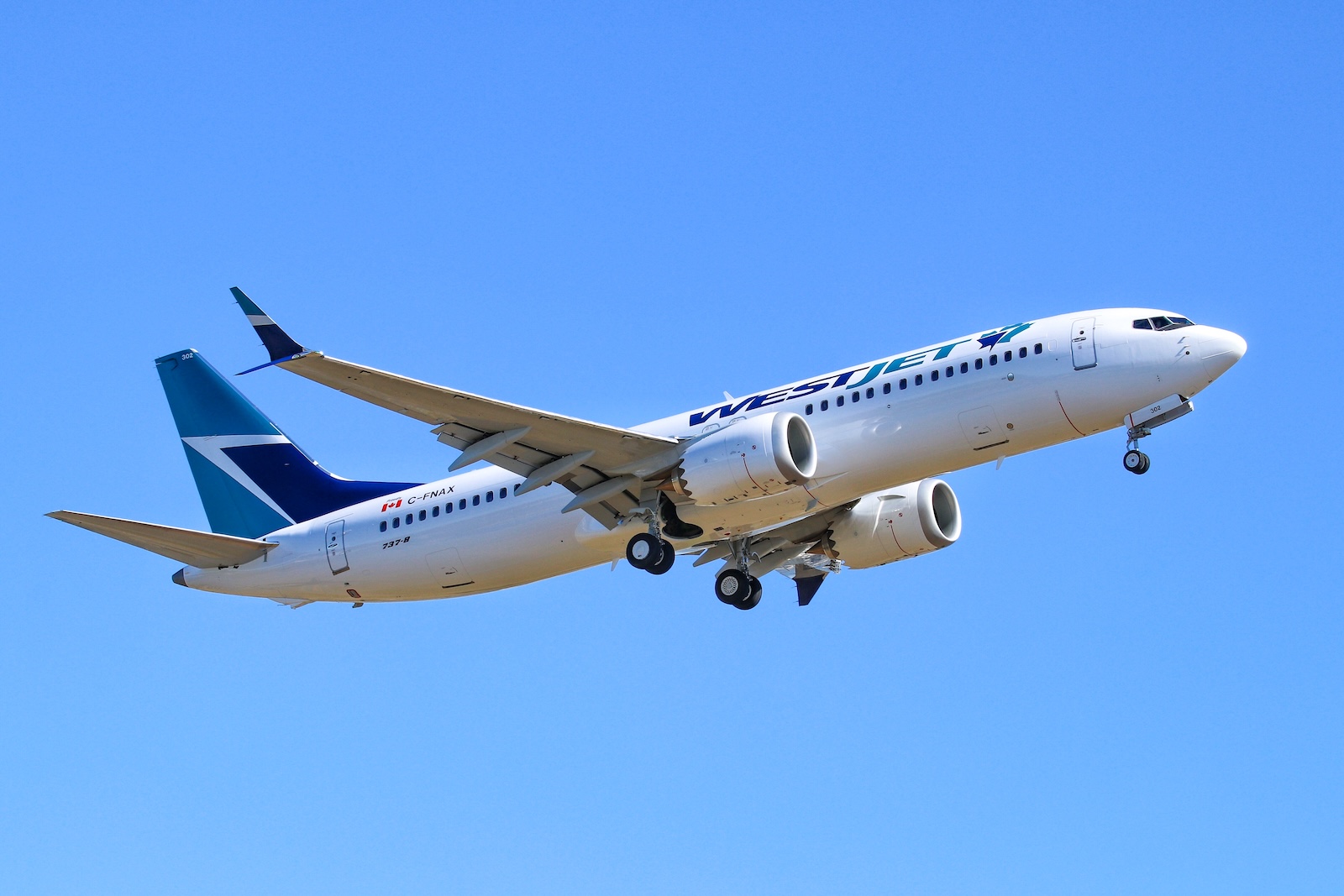
A WestJet 737 MAX 8. (Photo: AirlineGeeks | Katie Zera)
The Air Line Pilots Association is fighting a decision by Canadian airline WestJet to prohibit pilots older than age 65 from flying.
In a statement provided to AirlineGeeks, ALPA said that, should the policy take effect Nov. 1, 44 pilots would be “immediately impacted.” That number would grow to approximately 200 pilots over the next five years.
Currently, WestJet allows pilots older than 65 to fly on certain domestic routes within Canada. They cannot operate flights into U.S. airspace because the FAA’s mandatory retirement age for commercial airline pilots is 65. Canada does not have a universal mandatory retirement age for airline pilots, and the decision is left up to the individual carriers.
ALPA said the WestJet Pilots Master Executive Council filed a formal policy grievance in June and is now gathering information and working with counsel to bolster its case. An arbitrator has been appointed to hear the grievance.
The unionized WestJet pilots have also applied for an interim order that would block the airline from implementing the age cap until arbitration is finished.
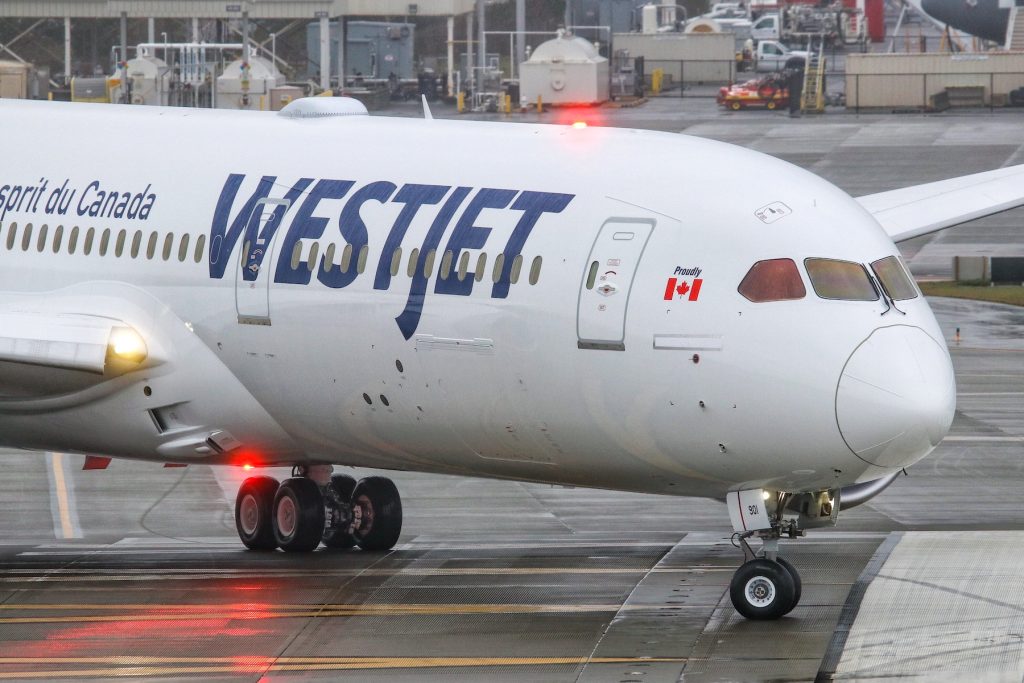
A WestJet Boeing 787 Dreamliner. (Photo: AirlineGeeks | Katie Zera)
“This decision by WestJet management will affect many of their long term dedicated employees that helped build WestJet into the respected airline it is today,” Capt. Bernie Lewall, chair of the WestJet Pilots Master Executive Council, said in a statement. “We believe WestJet should respect its workers and their rights, as protected by the collective agreement, and the Canadian Human Rights Act.”
“WestJet introduced an Age-Restricted Flying Policy, applicable to Pilots, earlier this year due to growing operational and regulatory complexities,” WestJet said in a statement. “The International Civil Aviation Organization (ICAO) regulations do not allow Pilots over age 65 from flying in international airspace including the United States.”
Age caps for commercial airline pilots have generated considerable debate over the last few years. Many countries stick to the ICAO’s standard of 65, but increasingly industry groups and individual pilots are pushing for an upward adjustment, arguing that pilots in their mid-to-late 60s who remain healthy should be allowed to keep their jobs.
An effort spearheaded by the International Air Transport Association to raise the global mandatory retirement age from 65 to 67 failed at the ICAO’s summit in Montreal last month.
Zach Vasile is a writer and editor covering news in all aspects of commercial aviation. He has reported for and contributed to the Manchester Journal Inquirer, the Hartford Business Journal, the Charlotte Observer, and the Washington Examiner, with his area of focus being the intersection of business and government policy.
Boeing, Southwest Score Industry First in Parts Authentication
The two companies, together with Aeroexchange, completed the first parts shipment using a digital airworthiness certificate.
The FAA’s Form 8130-3 certifies the airworthiness of aircraft parts and components. The form is paper-based, but recently a battery serviced at Boeing’s product repair services center in Davie, Florida, was shipped through Aeroexchange’s eARC platform using a digital version of the 8130 certificate.
Southwest received the battery at its facility in Dallas and verified its authenticity and airworthiness using the new digital system, making it the first aerospace part processed in this way.
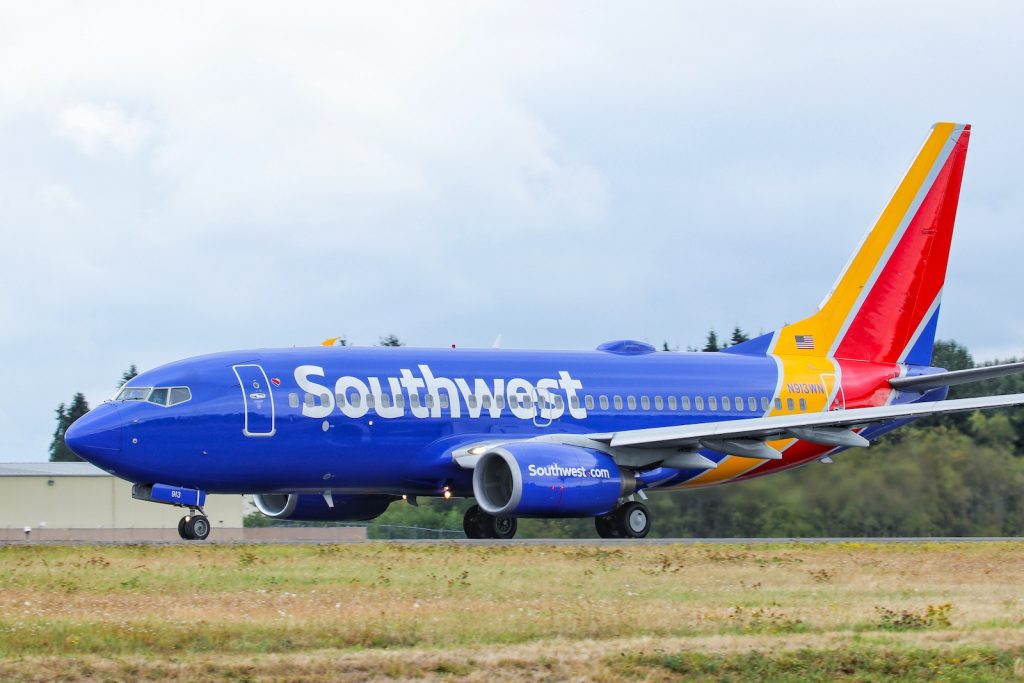
A Southwest Boeing 737-700. (Photo: AirlineGeeks | Katie Zera)
Boeing led the project to develop the digital certificate and secure authorization for its use from the FAA. The manufacturer said the technology is encrypted and secure, and can authenticate an authorized signer’s identity.
“This industry-first shipment reflects Boeing’s dedication to pursuing game-changing solutions through teamwork and partnership,” said William Ampofo, senior vice president of parts, distribution, and supply chain at Boeing Global Services, in a news release. “Together with Southwest Airlines and Aeroxchange, we are transforming how the industry ensures part authenticity and supply chain security.”
Boeing said it started developing the digital 8130 based on recommendations from the Aviation Supply Chain Integrity Coalition, which aims to prevent unapproved parts from entering the aviation supply chain. Boeing, Southwest Airlines, and Aeroxchange are all members of the organization.
Boeing said it will continue rolling out use of the digital 8130 certificate across all nine of its product repair services centers as they receive authorization from the FAA to use electronic systems for recordkeeping.
Zach Vasile is a writer and editor covering news in all aspects of commercial aviation. He has reported for and contributed to the Manchester Journal Inquirer, the Hartford Business Journal, the Charlotte Observer, and the Washington Examiner, with his area of focus being the intersection of business and government policy.
Air Botswana to Sell Three Aircraft
The airplanes were not in service and had become a drain on state resources, officials said.
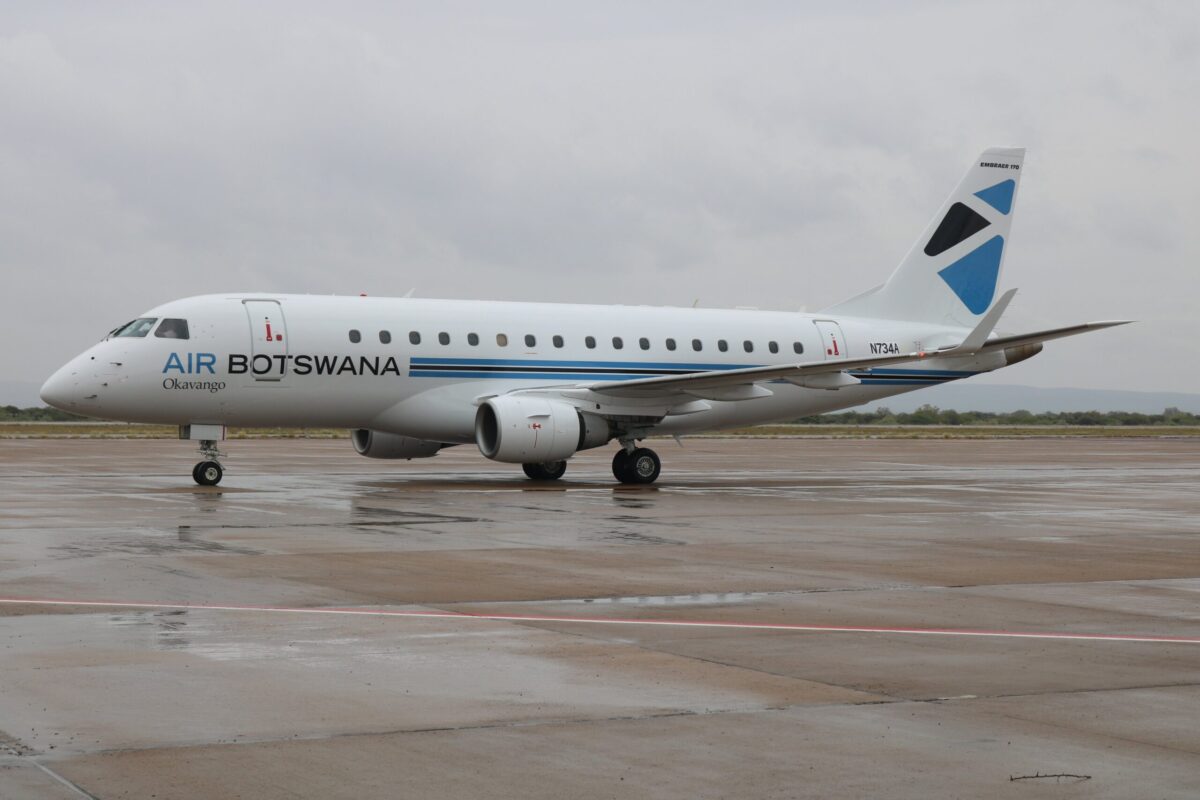
An Air Botswana Embraer E170. (Photo: Air Botswana via Wikimedia Commons)
Botswana’s national carrier, Air Botswana, will sell off three aircraft from its current fleet.
The sale includes two Embraer ERJ-145s and an E175.
This is a significant move since the airline only has six aircraft, and when the sale is completed, Air Botswana will lose half its fleet.
The aircraft have been grounded for some time and are now a drain on state resources, government officials said.
Air Botswana currently operates its flight schedule with just an Embraer E-70 and two ATR 72-600s.
From its hub in Gaborone, the carrier flies to Francistown, Maun, and Kasane in Botswana; Johannesburg, Durban, and Cape Town in South Africa; Windhoek, Namibia; Harare, Zimbabwe; and Lusaka, Zambia.
Burden on State Resources
Botswana’s President, Duma Boko, said in a televised interview that buyers for the aircraft have already been found. In the future, Air Botswana will wet-lease aircraft instead of buying them, he added.
“Instead of going out and doing wet-leases for aircraft, you go and buy aircraft, many of which are now grounded, so you’ve parked financial resources that we could otherwise have used in the industry,” he said, describing the airline’s past approach. “So these are some of the decisions that served to delay and or impede progress.”
Lack of ‘Industry Experience’
Boko put the situation down to inadequate aviation experience among previous members of Air Botswana’s management team.
“Many of them did not have industry experience, and so decisions that were taken tended to be decisions that were not informed by any real experience and/or outcomes that would help the industry,” he said.
The two ERJ-145s, received in the second half of 2024, had been operated on behalf of Air Botswana by Namibia’s charter/ACMI operator, Westair Aviation. This was because of regulatory obstacles to registering the aircraft in Botswana.
Ch-Aviation reported that Air Botswana’s pilots and engineers were also not familiar with the ERJ-145 aircraft.
The E175, received in August last year, had been grounded for over eight months. This is due to regulatory delays by Botswana’s Civil Aviation Authority regarding the approval of the E175’s manuals.
Lorne is a South Africa-based aviation journalist. He was captivated and fascinated by flying from the day he took his first airline flight. With a passion for aviation in his blood, he has flown to destinations in all corners of the globe. Lorne has traveled extensively and lived in various countries. Drawing on his travels and passion for aviation, Lorne enjoys writing about airlines, routes, networks, and new developments.
American Pilots Prepare For A321XLR
Check pilots trained over the North Atlantic using A321neo aircraft last month.
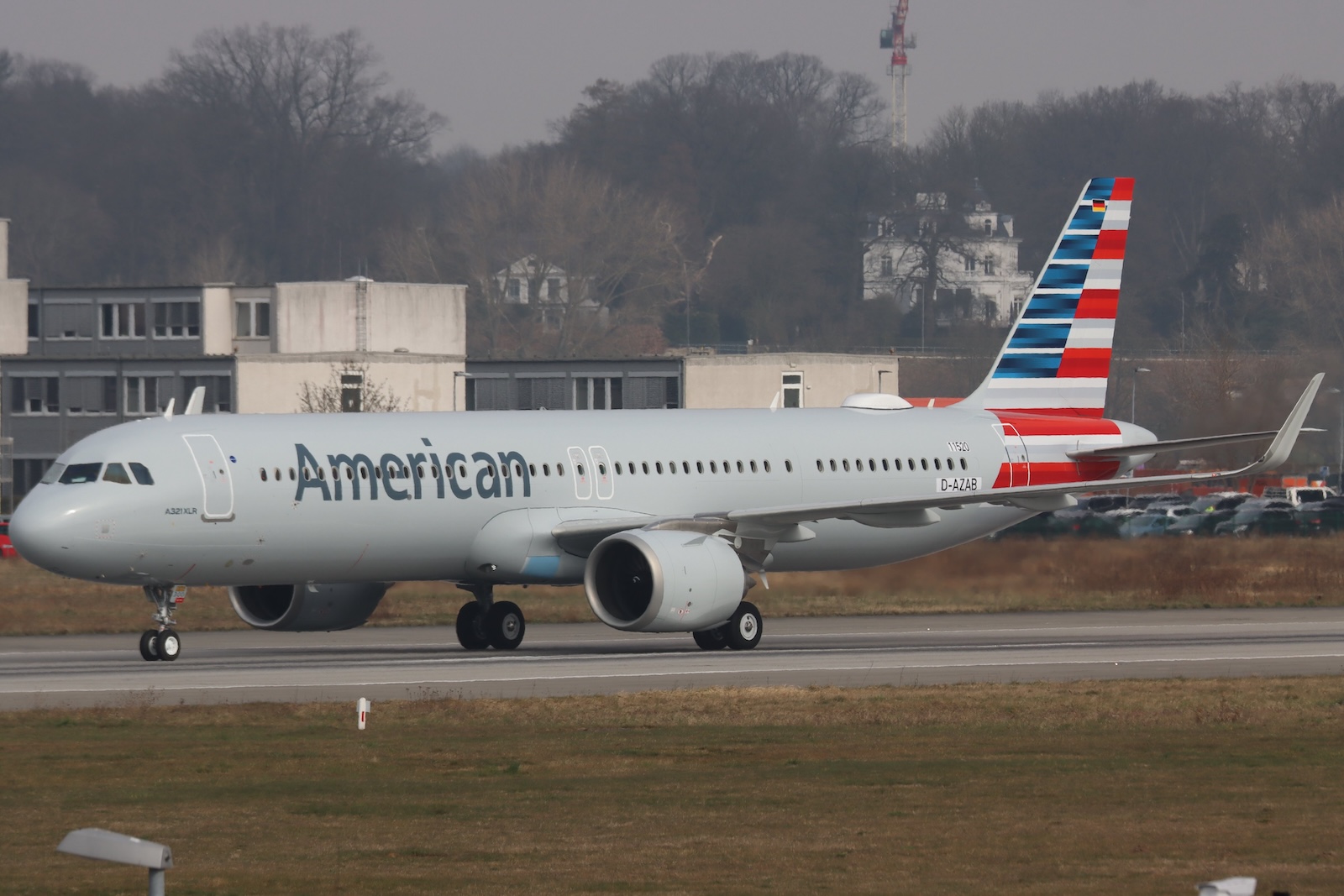
Between Sept. 4 and 25, a group of American check pilots flew 42 flights between Philadelphia and Edinburgh, Scotland, using an A321neo.
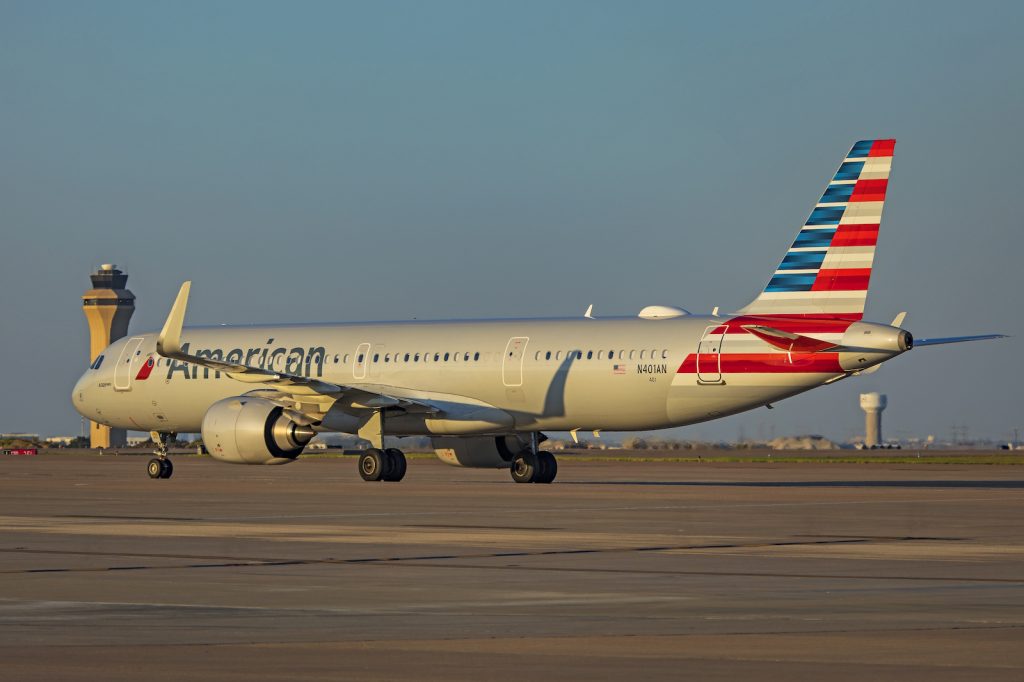
American mainly uses its A320-family aircraft on routes within the U.S. and Canada, but the A321XLR, which the airline will start operating next year, has a range of up to 4,700 nautical miles, opening up new potential destinations.
For that reason, pilots must be trained in new regions, including the North Atlantic.
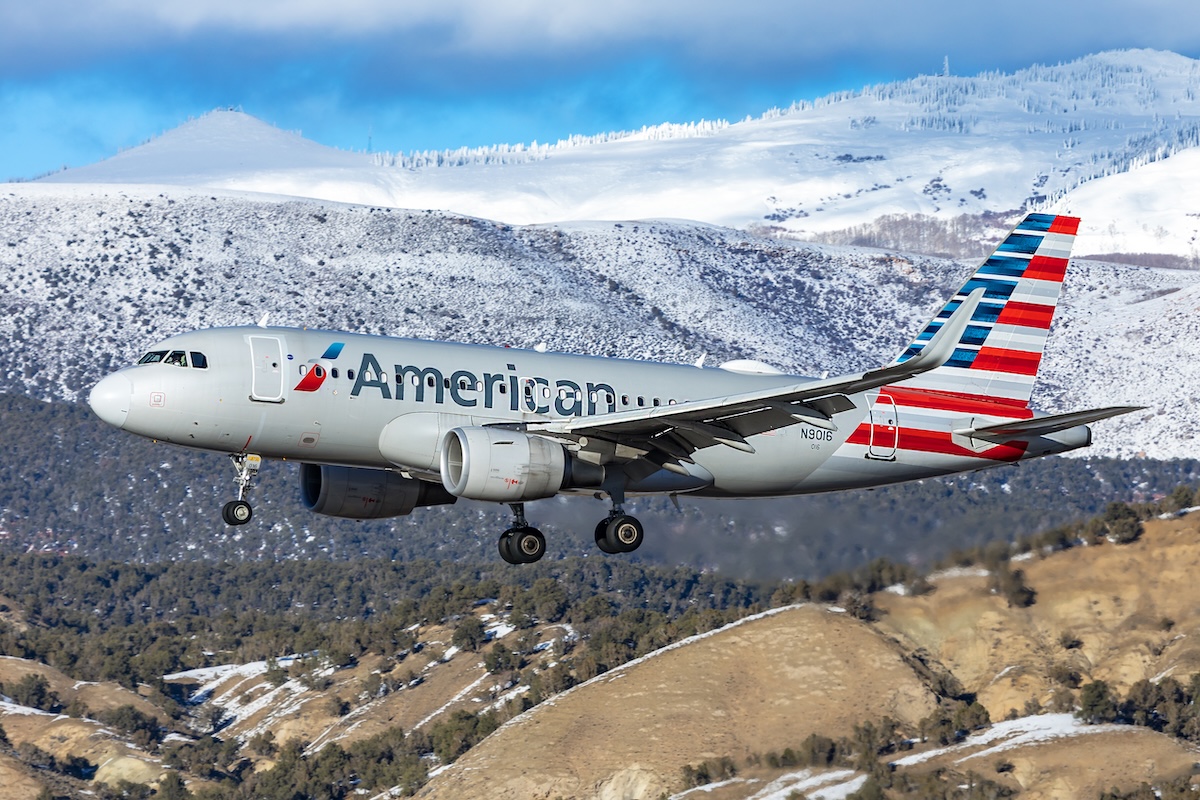
An American A321neo aircraft at Dallas/Fort Worth (Photo: AirlineGeeks | William Derrickson)
A group of eight check pilots flew with FAA inspectors so they could be trained and qualified to operate the A321 over the North Atlantic. The eight then trained the rest of the check pilot cohort, and now this larger group will start training American’s A320-family line pilots, initially from American’s New York pilot base.
The training the check pilots received focused on flight procedures unique to the North Atlantic, the use of radios different from those used on domestic flights, and suitable diversion airports in the region.
“These training flights were a huge success,” said Capt. Josh Hall, American’s A320 fleet captain, in a news release. “This effort sets us up nicely to begin training our line pilots to fly the A321XLR over the North Atlantic, and it was only made possible by the hard work and professionalism of our check pilots, the FAA, and our A320 flight training and fleet technical teams.”
The airline has not said which transatlantic routes the aircraft will serve, though more details will be shared “soon.”
Zach Vasile is a writer and editor covering news in all aspects of commercial aviation. He has reported for and contributed to the Manchester Journal Inquirer, the Hartford Business Journal, the Charlotte Observer, and the Washington Examiner, with his area of focus being the intersection of business and government policy.
Spirit Secures $475 Million Lifeline
The carrier will have immediate access to $200 million as it navigates its second bankruptcy.
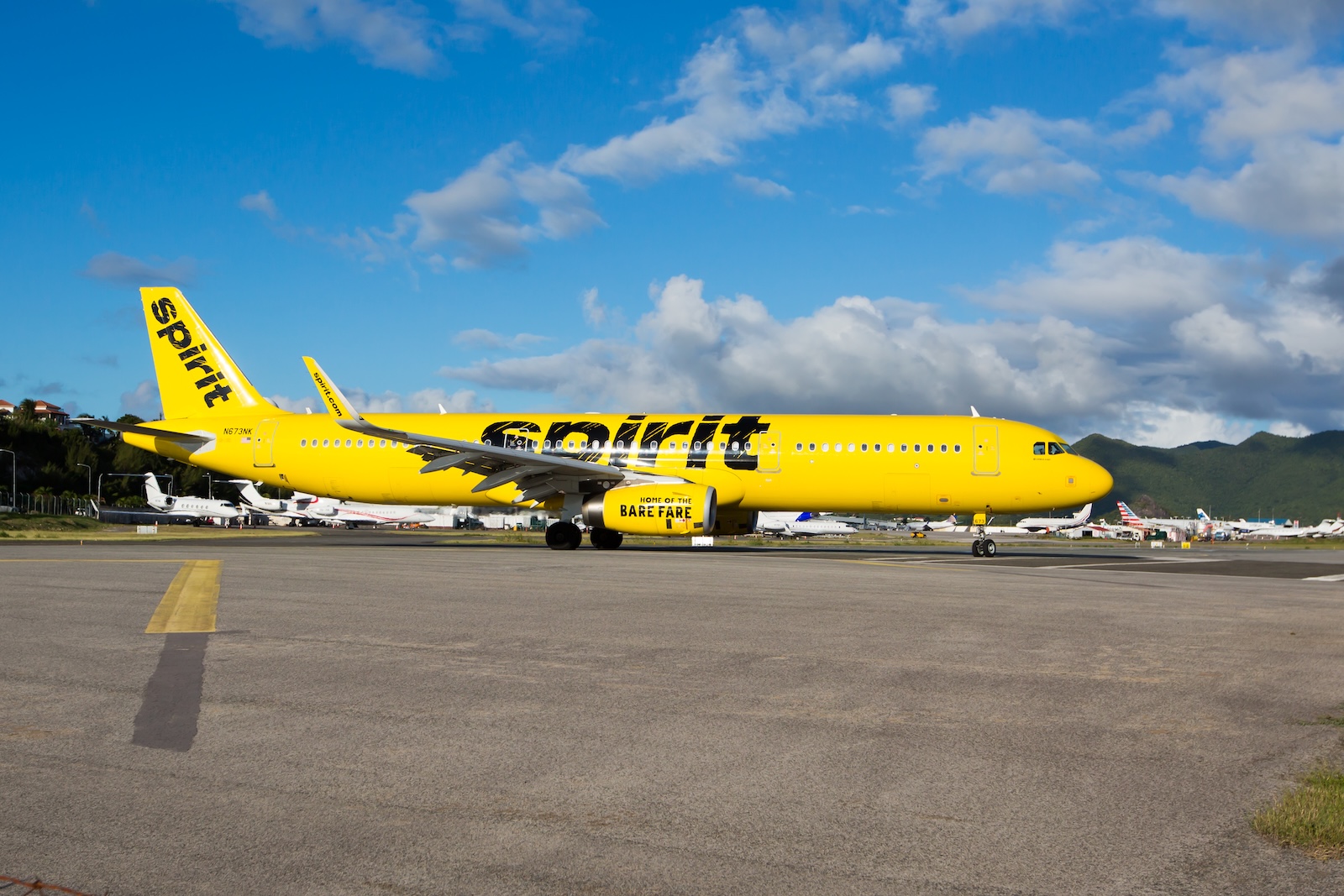
A Spirit Airbus A321. (Photo: Shutterstock | Skycolors)
Spirit on Friday unlocked a new funding source as it works to maintain normal operations during its second bankruptcy period in less than a year’s time.
The ultra-low-cost airline said it received approval from the U.S. Bankruptcy Court for the Southern District of New York for a multi-tranche debtor-in-possession financing facility of up to $475 million from its existing bondholders. Of that total, $200 million will be available immediately.
The financing arrangement was first announced in September, but Spirit needed a final ruling from the court.
Spirit has been dangerously short of liquid capital for months. The carrier reported net losses in the two quarters since its emergence from its first bankruptcy and has struggled with weak demand for domestic leisure travel.
The bankruptcy court also signed off on a deal between Spirit and aviation leasing company AerCap that will speed up the airline’s fleet modernization program and clear the way for the eventual delivery of 30 aircraft.
AerCap helped trigger Spirit’s second bankruptcy by claiming defaults on 37 aircraft in Spirit’s fleet, but as part of the new agreement, AerCap will pay Spirit $150 million, and Spirit will reject leases on 27 aircraft, freeing itself from the financial commitment.
The deal settles all disputes between the two companies.
“We are pleased to have reached another significant milestone in our restructuring, which represents continued progress toward securing a successful future for Spirit,” Spirit President and CEO Dave Davis said in a statement. “With these approvals in place, we are better equipped to build a stronger airline that delivers unmatched value to American consumers. We thank our stakeholders for their support and the Spirit team for their dedication and resilience during this process.”
Spirit filed for Chapter 11 bankruptcy protection in August after warning investors that it might not survive the year as a going concern. It has furloughed hundreds of pilots and canceled routes, and is now working with the bankruptcy court to end aircraft leases that contributed to its high debt load.
Zach Vasile is a writer and editor covering news in all aspects of commercial aviation. He has reported for and contributed to the Manchester Journal Inquirer, the Hartford Business Journal, the Charlotte Observer, and the Washington Examiner, with his area of focus being the intersection of business and government policy.
Delta, SkyWest Gain EAS Recommendation, Lose Another
While Delta and SkyWest may be ending service to one city, another opportunity presents itself.
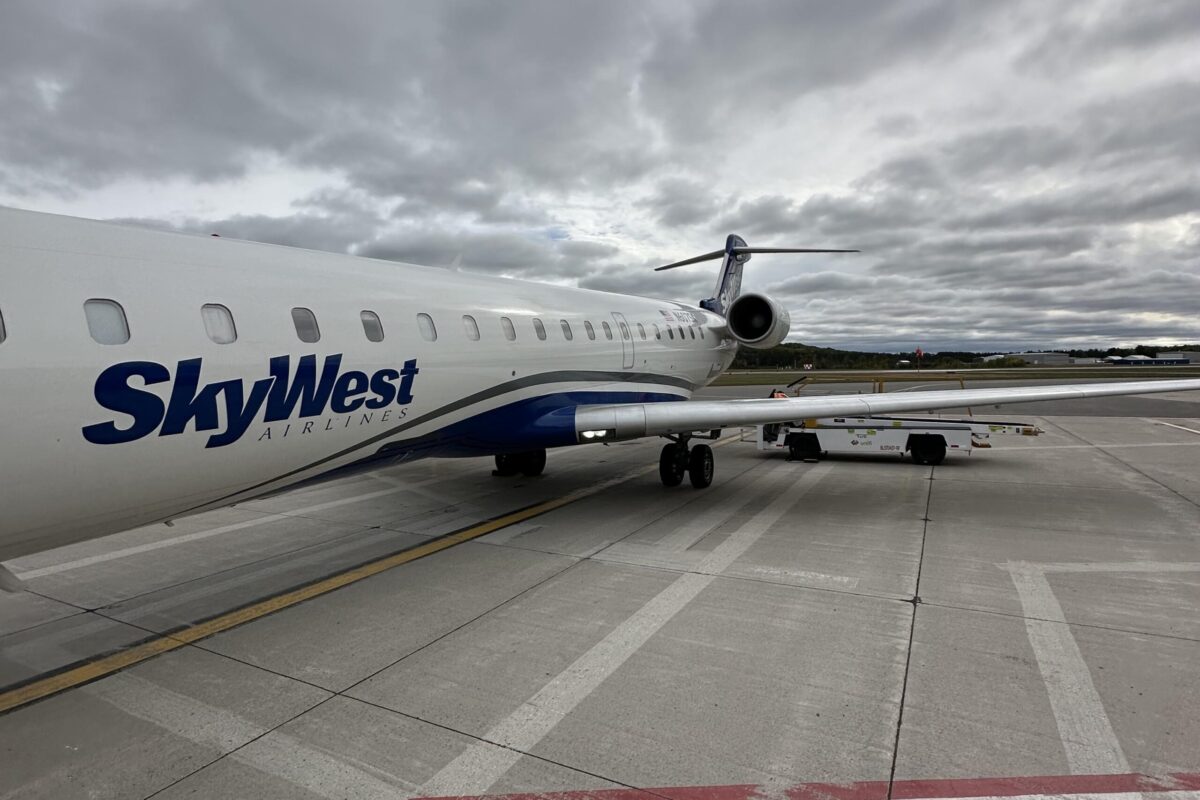
A SkyWest CRJ-550 operating to one of its many EAS communities (Photo: AirlineGeeks | Joey Gerardi)
Despite the government shutdown, communities around the country are in the midst of Essential Air Service (EAS) proposals, selections, and recommendations, with a handful of communities still waiting for the DOT to officially select their carrier for the next two-to-four years.
Two such communities in the process currently are Saranac Lake, New York, and Escanaba, Michigan, and both are nearing the same point of the process with vastly different outcomes not only for the airport and its service, but their respective communities. However, both involve the same carrier: Delta-branded SkyWest service.
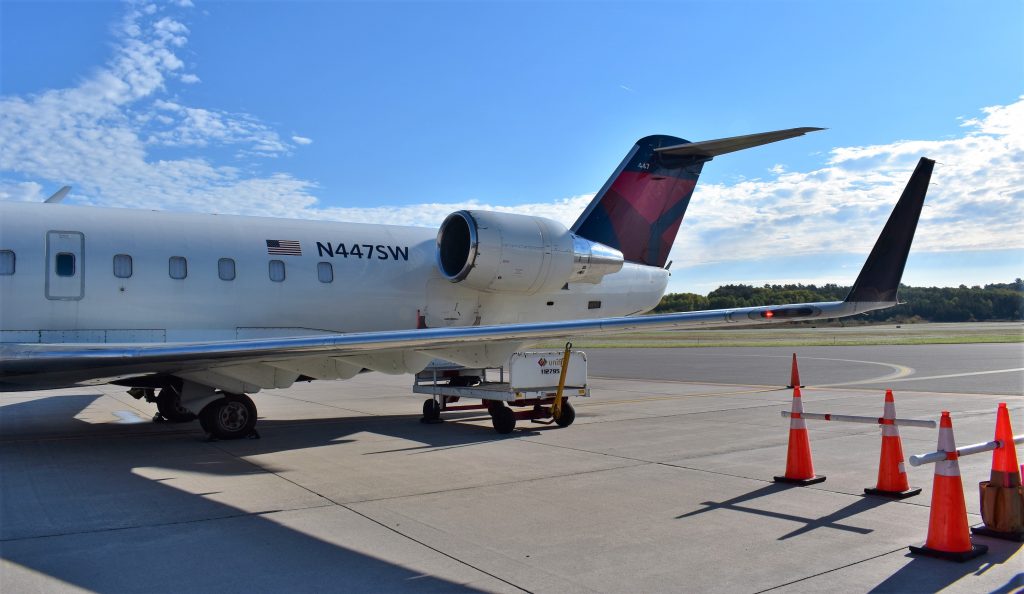
A Delta CRJ-200 (Photo: AirlineGeeks | Joey Gerardi)
One Possible Loss
Escanaba, Michigan, located in the state’s Upper Peninsula along the northern shores of Lake Michigan, has passed its community comment time period and is just waiting on a selection from the DOT. But with the government shut down, who knows how long this could take, and their current contract with SkyWest under the Delta brand is expiring on Dec. 31.
At the moment, the airport has seen virtually the same service for a long time with Delta Connection, previously Northwest Airlink, serving Escanaba from both Minneapolis/St. Paul and Detroit since 2008. First with the 34-seat Saab 340s until 2012 when the airline retired the type from the fleet, and then the 50-seat CRJ-200 from 2012 until recently when Delta retired that type from its fleet, with the aircraft serving Escanaba now being the 50-seat CRJ-550, still with one daily flight to Minneapolis and Detroit.
A Mesaba Saab 340 in Northwest Airlink colors (Photo: Cory W. Watts [CC BY-SA 2.0 (http://creativecommons.org/licenses/by-sa/2.0)], via Wikimedia Commons)
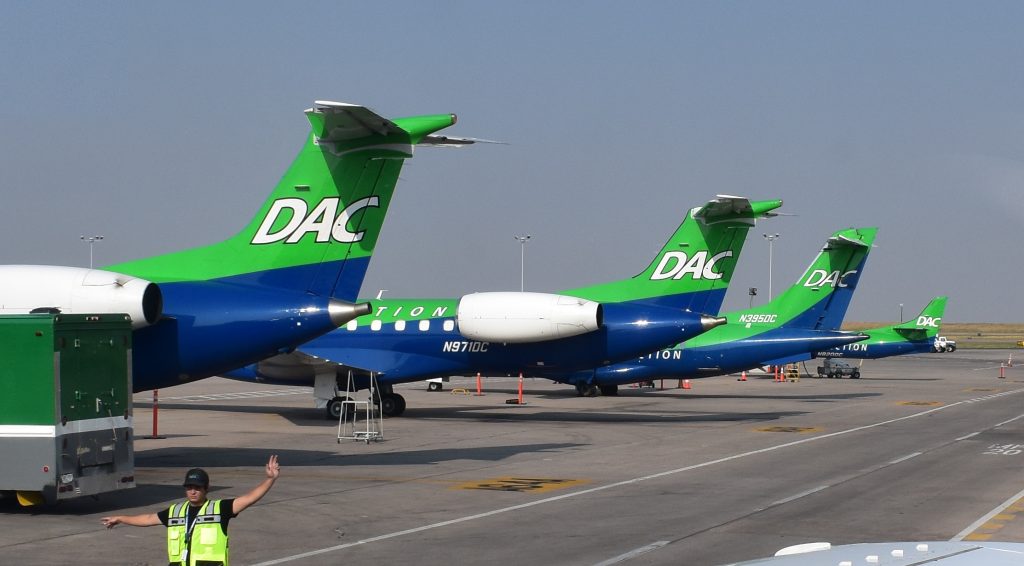
The community has recommended Colorado-based Denver Air Connection, or DAC for short, to serve the community with its 50-seat Embraer E145 jets. The reason for the new selection is the “vastly superior connectivity it offers through interline agreements and the option to serve an additional major hub.” Denver Air Connection has interline partnerships with not only Delta, but also American and United, giving the community a wide variety of service opportunities, especially being located nearly equidistant between Minneapolis, Chicago, and Detroit.
The number of yearly seats available would be identical, as both would offer 12 weekly flights to their respective destinations, and both would be on 50-seat jets, SkyWest/Delta on the CRJ-550 and DAC on the Embraer E145.
Denver Air Connection airplanes lined up in Denver. (Photo: AirlineGeeks | Joey Gerardi)
Although the community board in Escanaba, Michigan, did recommend DAC be chosen for service to the community back in the middle of August, the DOT has yet to make an official selection for the next carrier, and at this point, they are in the waiting game. Until the DOT officially selects or rejects DAC, the current carrier, SkyWest under the Delta brand, will continue to serve the community of Escanaba.
One Possible Gain
Saranac Lake, New York, is in a very different situation as far as the future of its air service than Escanaba; located in northern New York State in the middle of the Adirondack Park and appropriately named “Adirondack Regional Airport” back in 1989, the community is currently in the midst of its comment period, with it ending early next week.
The Adirondack Regional Airport in Saranac Lake (Photo: AirlineGeeks | Joey Gerardi)
Like a lot of the smaller Essential Air Service airports around the country, Saranac Lake has only ever seen service with propeller aircraft and has never seen scheduled jet service with larger regional jets. Just like Escanaba, the airline serving Saranac Lake, Cape Air, has also been there since 2008 and is deeply rooted in the community.
But unlike Escanaba, where they have had aircraft types change throughout the years, Cape Air has been flying the 8/9 seat Cessna 402s to Saranac Lake since they started 17 years ago, so the passenger numbers have stayed largely consistent over time.
Cape Air currently flies from Saranac Lake to Boston twice a day and New York-JFK once a day. The JFK service was new with the most recent EAS contract two years ago; before that, the carrier offered three daily flights to just Boston.
Saranac Lake, for the most part, has only ever received one or two applicants for EAS air service: Cape Air and Boutique Air. But this time is different: not only did they get the two applicants they always have, but they got five different airline proposals, which is unheard of for a community of this size, and gave the airport board and community members a decision they have never had to make before.
Applicants included current carrier in Saranac Lake, Cape Air, along with Boutique Air, and Saranac’s first-ever proposals that offer jets from Contour and SkyWest with a United or Delta option.
Although the community comment period is still open until early next week, in a vote from the Harrietstown Town Council, where the Saranac Lake/Adirondack Regional Airport is located, the majority, 3-2, voted to change their service to SkyWest service from Detroit under the Delta Connection brand.
AirlineGeeks did have a chance to chat with the airport manager in Saranac Lake, Corey Hurwitch, and he wanted to make an important point with this recommendation: “I really do value their [Cape Air] years of service here, I still respect them and appreciate what they’ve provided for us, and it’ll be a bittersweet change. Cape Air has been a trusted partner and has truly supported our community for nearly two decades. At the same time, I’m excited about the new possibilities and the chance to welcome Skywest’s Delta jet service to SLK.”
If the DOT selects SkyWest’s Delta-branded service for Saranac Lake, service would start with the new contract term on March 1, 2026, and it will be the first time that Saranac will not only see scheduled jet service, but it will also be the first time they will receive service from an aircraft that offers a first-class section.
The service would be 12-weekly flights onboard the airline’s 50-seat CRJ-550. Although the airline would offer fewer flights per week than Cape Air, the amount of available seats will dramatically increase from around 8.7K seats a year with Cape to just over 31K seats with SkyWest service to Detroit.
So, while one community might be losing the SkyWest and Delta name, there is a chance that the Delta brand could be entering its 11th city in New York State.
It is important to note that these are only recommendations at this point. The DOT will ultimately make the final decision.
Joey has always been interested in planes for as long as he can remember. He grew up in Central New York during the early 2000s when US Airways Express turboprops ruled the skies. Being from a non-aviation family made it harder for him to be around planes and would only spend about three hours a month at the airport. He was so excited when he could drive by himself, the first thing he did with his driver's license was get ice cream and go plane spotting for the entire day. He graduated from Western Michigan University in 2022 with a B.S. in Aviation Management & Operations and a Minor in Business, and currently works for a major airline in his hometown.
American Adds Five Routes, Extends More
The new and expanded flights are from its New York and Dallas/Fort Worth hubs.
An American Airbus A319 (Photo: AirlineGeeks | William Derrickson)
American Airlines is expanding its domestic network for the 2026 summer season with several new and extended routes. An airline spokesperson confirmed these route additions on Friday.
The carrier will launch daily service between New York–JFK and Jackson Hole, Wyoming, beginning June 18 and running through Oct. 4. The route will be operated by an Airbus A319.
American last served this route in 2022, data from Cirium Diio shows.
From its Dallas/Fort Worth hub, American is extending its seasonal service to Gunnison, Colorado, with daily flights operating from June 18 through Sept. 8, also using an Airbus A319.
East Coast Expansion
At New York LaGuardia, the airline will add several weekend routes beginning Feb. 13. Service to Jacksonville, Florida, and Savannah, Georgia, will operate Friday through Sunday using Embraer E175 and E170 aircraft, respectively.
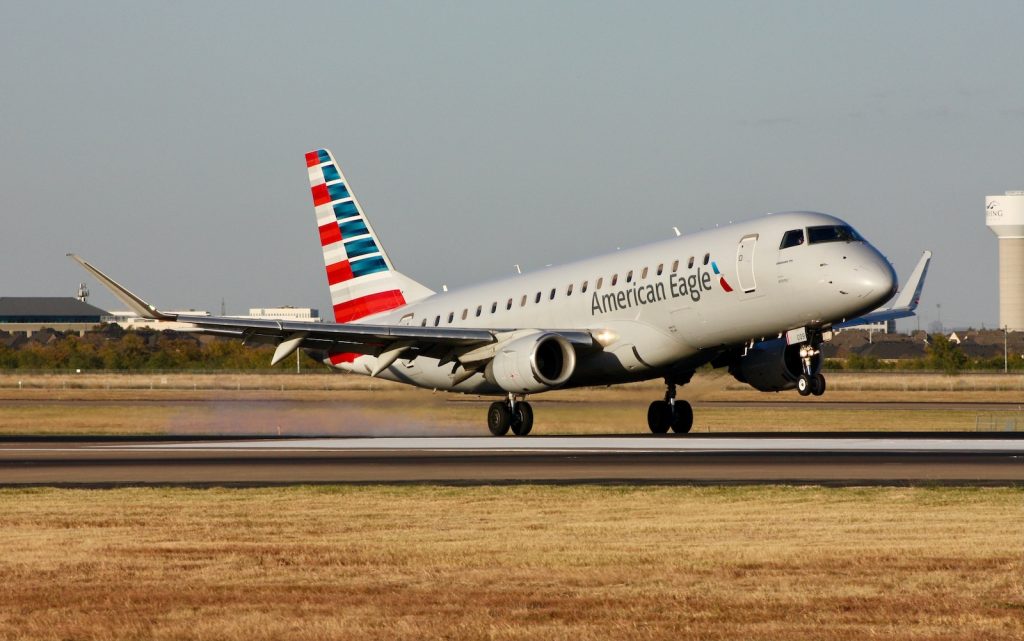
An American Eagle E175 (Photo: Shutterstock | Austin Deppe)
The carrier last linked LaGuardia to Jacksonville in 2017. LaGuardia-to-Savannah was last flown in 2021.
In addition, LaGuardia–Myrtle Beach service — previously offered on Saturdays only during the summer — will expand to Friday through Sunday operations beginning March 13, operated by an E175.
“American knows summer is a time for traveling to new destinations, making memories with friends and families, and revisiting fond favorites, and that’s why we continue to add new routes,” said Jordan Pack, American’s director of domestic network planning, in a statement. “We have now announced more than 30 new routes next summer – more than any other legacy airline – to help better connect customers to the world.”
Tickets for all routes except Dallas/Fort Worth–Gunnison will be available for purchase starting Monday, Oct. 13. Sales for the Gunnison service will begin Oct. 20.
Ryan founded AirlineGeeks.com in February 2013 and has spent more than a decade covering the airline business. His work has been featured by CNN, WJLA, CNET, and Business Insider. His aviation experience spans airport operations, Part 135 regulatory compliance, and airline crew workforce planning, along with time behind the yoke of a Cessna 172 and interviews with airline executives. Ryan now serves as Group President of Firecrown Media’s Aviation Group. He holds a B.S. in Air Transportation Management and an MBA from Arizona State University and teaches Airline Management at Embry-Riddle Aeronautical University.
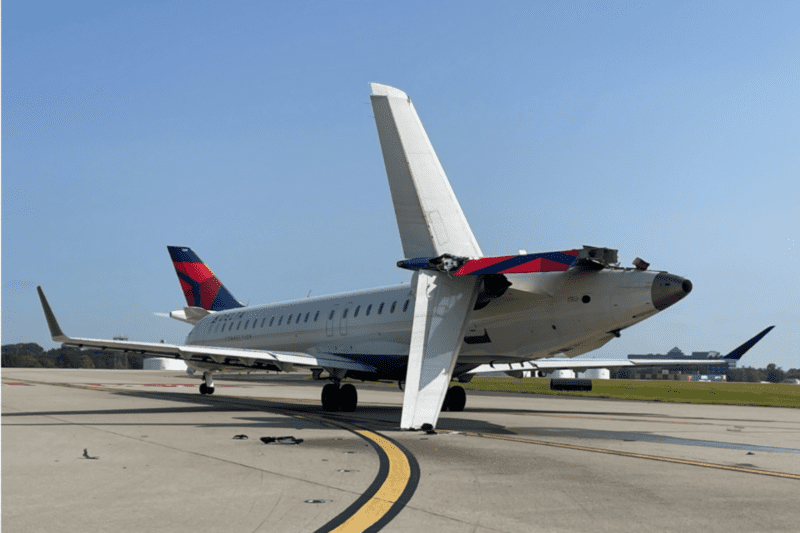
A Delta Connection CRJ-900 that was struck by an Airbus A350-900 on a taxiway in Atlanta has returned to revenue service more than a year after the incident. The regional jet, operated by Endeavor Air, resumed passenger operations this week following extensive repairs.
The collision occurred in September 2024 when the A350 contacted the parked CRJ-900’s tail section while taxiing for departure. Both aircraft sustained significant damage in the incident.
The CRJ-900 – registered as N302PQ – was towed to a maintenance facility after the collision.
According to the NTSB’s preliminary findings, there were no serious injuries among passengers or crew aboard either aircraft. The agency noted that visibility conditions at the time were normal, and the A350 was taxiing when the collision occurred.
Airborne Again
The damaged CRJ-900 had remained grounded in Atlanta since the Sept. 10 incident. On Sept. 20, 2025, it completed a test flight before ferrying to a few different maintenance facilities.
Ryan founded AirlineGeeks.com in February 2013 and has spent more than a decade covering the airline business. His work has been featured by CNN, WJLA, CNET, and Business Insider. His aviation experience spans airport operations, Part 135 regulatory compliance, and airline crew workforce planning, along with time behind the yoke of a Cessna 172 and interviews with airline executives. Ryan now serves as Group President of Firecrown Media’s Aviation Group. He holds a B.S. in Air Transportation Management and an MBA from Arizona State University and teaches Airline Management at Embry-Riddle Aeronautical University.
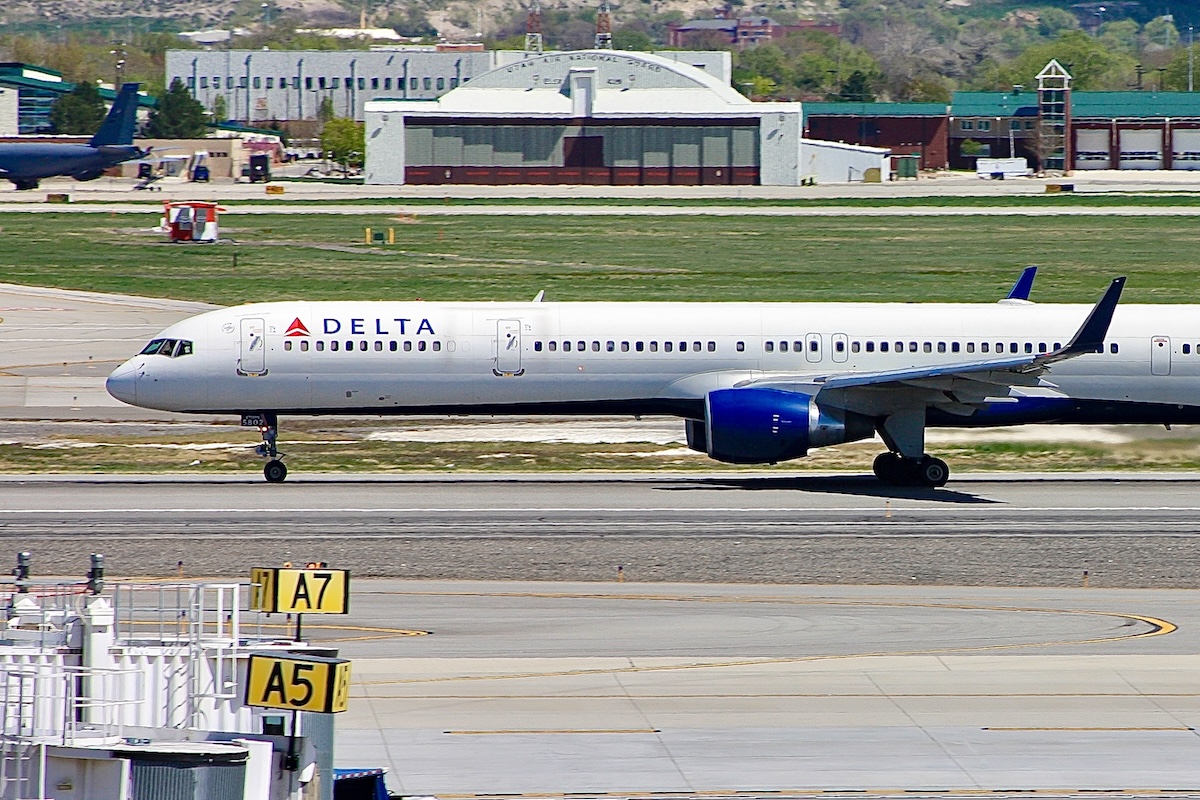
A Delta 757-300 (Photo: Shutterstock | Austin Deppe)
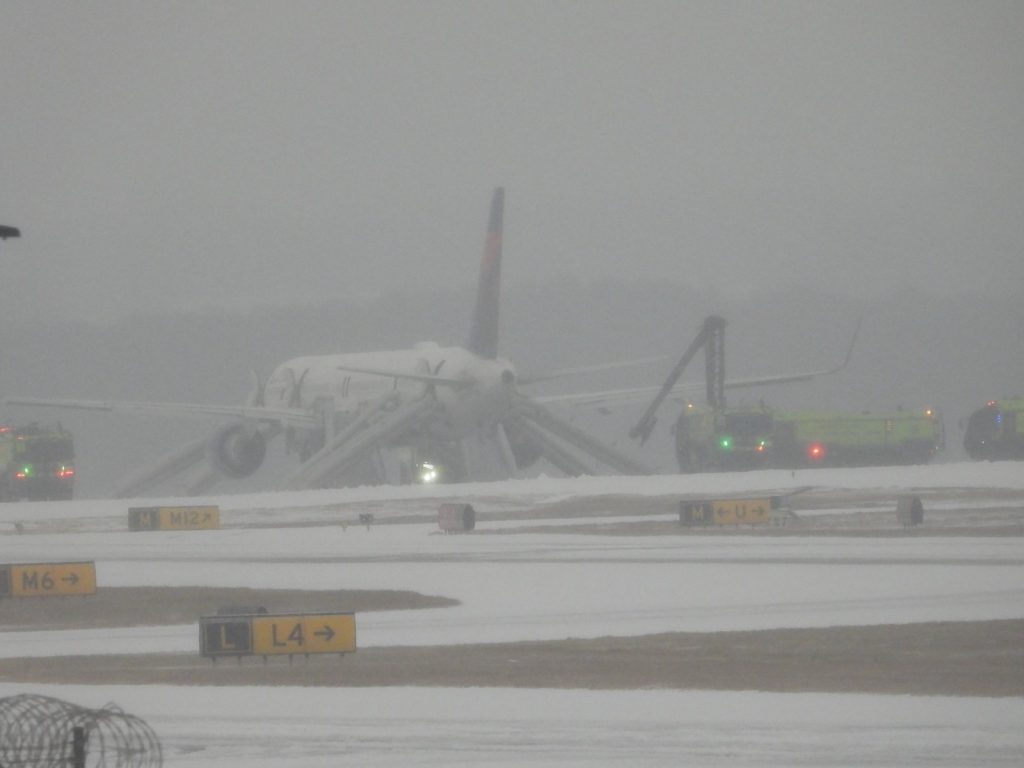
The National Transportation Safety Board has released its final report on a January 2025 rejected takeoff involving a Delta Boeing 757-300 in Atlanta. Investigators said the flight crew did not receive any fire indications in the cockpit before ordering an evacuation following a right engine failure.
According to the report, Delta flight 2668 was departing Atlanta for Minneapolis on Jan. 10 when the crew aborted takeoff at around 100 knots after noticing directional control issues. Engine indication and crew alerting system messages showed a failure of the No. 2 engine, and the captain requested assistance from airport firefighters.
A Delta 757 evacuates on the runway (Photo: Matt Cochran)
While the crew completed shutdown checklists, airport personnel on the ground and passengers reported flames near the right engine, though cockpit indicators did not confirm a fire.
The captain then initiated an emergency evacuation. Eight passengers were injured while exiting the aircraft, including one who sustained a serious back injury. The Boeing 757-300, registered N589NW, suffered minor damage, and no fire damage was reported.
Ryan founded AirlineGeeks.com in February 2013 and has spent more than a decade covering the airline business. His work has been featured by CNN, WJLA, CNET, and Business Insider. His aviation experience spans airport operations, Part 135 regulatory compliance, and airline crew workforce planning, along with time behind the yoke of a Cessna 172 and interviews with airline executives. Ryan now serves as Group President of Firecrown Media’s Aviation Group. He holds a B.S. in Air Transportation Management and an MBA from Arizona State University and teaches Airline Management at Embry-Riddle Aeronautical University.
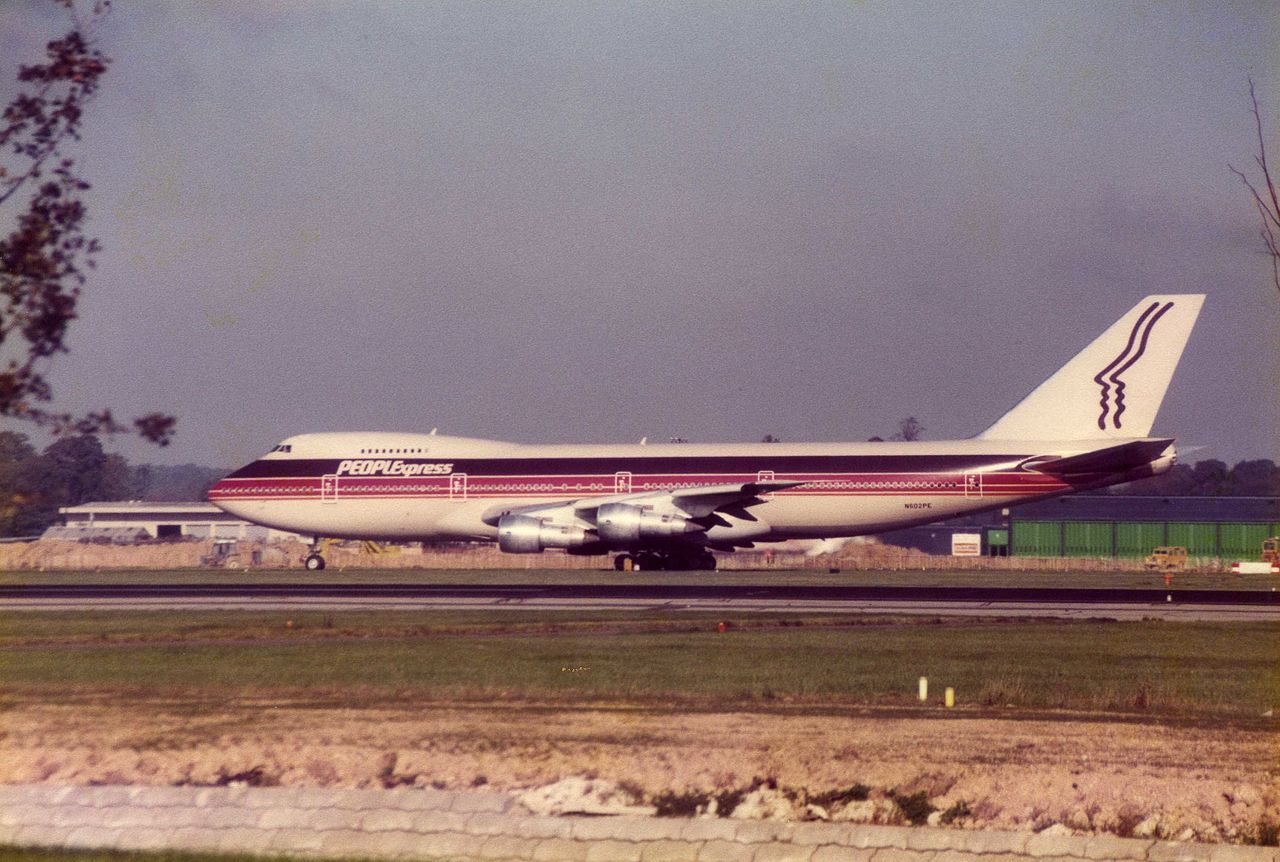
People Express Boeing 747 (Photo: MercerMJ, CC BY-SA 2.0 , via Wikimedia Commons)
Grounded is AirlineGeeks.com’s look back at airlines that once shaped the industry but no longer take to the skies. Each story revisits a carrier that influenced routes, fleets, or fares—and explores what ultimately led to its final descent.
When People Express took off in April 1981 from Newark, it did so with a simple mission: offer ultra-low fares, no frills, and maximum efficiency. Founded by former Texas International executive Don Burr, the airline aimed to transform U.S. aviation with a model of lean operations and unbundled pricing.
The first flights used three Boeing 737-100s, and tickets were sold onboard in lieu of traditional ticket desks.
Rapid Growth and Bold Ambitions
People Express expanded fast. In just a few years, it scaled its network from a handful of Northeast routes to dozens of U.S. cities and even London. The airline added Boeing 727s and 737-200s, and later 747-100s to launch transatlantic service. At its peak around 1985–86, it was carrying over four million passengers annually.
People Express also experimented with human resources innovation. Employees were cross-trained to help in multiple roles — pilots might help with baggage, ticket agents assist with ground handling, etc. — a tactic intended to reduce overhead and increase flexibility.
Cracks in the Model
But the very traits that made People Express novel also sowed vulnerabilities. As route density and fleet types multiplied, the lean system’s strain became evident. The acquisition of Frontier in 1985 brought new debt, staff, and operational complexity.
Service quality and on-time performance began to suffer, and margins tightened under fierce competition. The airline’s signature low-fare approach left little room for absorbing negative shocks. In late 1984, People Express posted a roughly $14 million operating loss in one quarter, after months of profitability.
People Express 737 (Photo: Aero Icarus from Zürich, Switzerland [CC BY-SA 2.0 (http://creativecommons.org/licenses/by-sa/2.0)], via Wikimedia Commons)
By 1986, the problems mounted: expensive debt, integration headaches, rising costs, and underperforming routes. The only viable path forward became a merger.
Merger and Aftermath
In 1986, the People Express brand was bought by Texas Air Corporation and later folded into Continental. The integration absorbed its routes, assets, and many of its employees, but People Express as a brand vanished.
In 2014, a new startup attempted to revive the name using 737-400s out of Newport News, Virginia, but the venture lasted only months before shutting down.
Though short-lived, the People Express model left a lasting imprint on the airline industry. It pushed legacy carriers to rethink pricing, schedule density, and service unbundling. The ideas of low base fares, ancillary charges, and high utilization endure in today’s ultra low-cost carriers.
Its tale also serves as caution: growth without structural resilience breeds instability. But for airline history, People Express remains a founding chapter in the democratization of air travel.
Ryan founded AirlineGeeks.com in February 2013 and has spent more than a decade covering the airline business. His work has been featured by CNN, WJLA, CNET, and Business Insider. His aviation experience spans airport operations, Part 135 regulatory compliance, and airline crew workforce planning, along with time behind the yoke of a Cessna 172 and interviews with airline executives. Ryan now serves as Group President of Firecrown Media’s Aviation Group. He holds a B.S. in Air Transportation Management and an MBA from Arizona State University and teaches Airline Management at Embry-Riddle Aeronautical University.