









Stories

Southwest Signs Interline Deal With Singapore Airlines

Tickets for connecting flights are now available for purchase.

Southwest 737
A Southwest Boeing 737 aircraft. (Photo: AirlineGeeks | William Derrickson)

Southwest this week signed an interline agreement with Singapore Airlines, opening the door to single-ticket flights via three U.S. West Coast gateways.

Interline deals allow customers of partnered airlines to book connecting flights on a single itinerary, opening up the networks of both carriers through designated gateway airports. Bags are checked through to the final destination, meaning travelers do not need to collect and recheck them during their layover.

Southwest officials said customers will be able to book connecting flights with Singapore Airlines from Los Angeles, Seattle, and San Francisco. Singapore Airlines serves all three cities from Changi Airport in Singapore.

Tickets for connecting flights are now available for purchase.

“Singapore Airlines becomes the eighth carrier in our partnership portfolio exemplified by its quality and reach,” Southwest COO Andrew Watterson said in a news release. “These carriers are facilitating access to our network for a growing global audience drawn to our improved onboard product and increasingly choosing to fly with us.”

Southwest’s other interline partners are All Nippon Airways, China Airlines, Condor, EVA Air, Icelandair, Philippine Airlines, and Turkish Airlines.

Zach Vasile

Zach Vasile is a writer and editor covering news in all aspects of commercial aviation. He has reported for and contributed to the Manchester Journal Inquirer, the Hartford Business Journal, the Charlotte Observer, and the Washington Examiner, with his area of focus being the intersection of business and government policy.

IATA: Airline Profits Will Be Cut In Half By Oil Shock

Carriers will spend $100 billion more on jet fuel this year, the trade group predicted.

IATA Director General Willie Walsh at the International Air Transport Association's 77th Annual General Meeting. (Photo: IATA)

The global airline industry’s jet fuel bill will climb by $100 billion in 2026, the International Air Transport Association said Sunday, setting the stage for a staggering 50% drop in profitability.

In remarks released during the IATA’s conference in Rio de Janeiro, director general Willie Walsh said the average price of jet fuel is expected to be 70% higher year-over-year, which would drop profits from $45 billion in 2025 to $23 billion this year.

It is a “tough” time for all airlines, Walsh continued, especially those that have not fully recovered from the COVID-19 pandemic, and those operating in and around the Persian Gulf.

Still, demand remains strong, he said, and polling suggests that many airline customers expect and are prepared to pay more for travel this summer.

Jet fuel prices shot up in March after Iran effectively closed the Strait of Hormuz in response to joint air attacks from the U.S. and Israel. About 25% of all seaborne oil passes through the strait in peacetime, as well as about 20% of the world’s liquified natural gas.

The impact has been felt by airlines around the world, especially in Europe, which is heavily reliant on oil shipped through the strait, and in Asia, where many nations outside China and South Korea lack meaningful domestic refining capabilities. In the U.S., budget airlines have been especially vulnerable to price volatility due to their already narrow margins. Attorneys representing the now-defunct Spirit Airlines have said that the increased cost of fuel was the main factor in the carrier’s May 2 collapse.

But Walsh told Bloomberg Television on Sunday that airlines are not in a state of crisis, and if anything, the sector is handling recent disruptions better than could have been expected.

“I genuinely don’t believe what we’re seeing is a crisis in the industry,” he said. “I think this is going to be a bit of a challenge, but the general economic environment I think, though weaker than it had been, is still positive. Demand for flying continues to be pretty robust, to be honest with you, despite everything we’ve seen.”

Walsh also rejected the term “stagflation” for the airlines’ current situation and said signs are positive that strong demand will continue through late 2026 and into early 2027.

Zach Vasile

Zach Vasile is a writer and editor covering news in all aspects of commercial aviation. He has reported for and contributed to the Manchester Journal Inquirer, the Hartford Business Journal, the Charlotte Observer, and the Washington Examiner, with his area of focus being the intersection of business and government policy.

Houston Man Charged With Sneaking Onto United Flight

Abdulrahman Oriyomi, 25, allegedly slipped by gate agents while they were busy helping other passengers.

A United A321neo
A United A321neo aircraft. (Photo: Shutterstock | HarrisonKim1)

A man who allegedly sneaked onto a United flight last month and tried to hide from the crew in an airplane bathroom is facing charges in Texas.

NBC News reported that Abdulrahman Oriyomi, 25, of Houston, was arrested Friday and charged with intentionally impairing or disrupting a critical infrastructure facility in connection with the May 18 incident. Charges were filed in Harris County, and Oriyomi was detained at the county processing center as of Monday morning pending a bail review.

According to court records obtained by NBC News, surveillance video reviewed by investigators showed Oriyomi had a problem with his boarding pass while attempting to clear security at George Bush Intercontinental Airport but was allowed to proceed through after speaking with officers and having his picture taken.

Later, in Terminal C, he spoke with multiple United employees and tried to board at least one flight but was turned away when his boarding pass failed to scan, the documents said.

He eventually joined the line for a United flight to Los Angeles and managed to slip past the gate agents while they were preoccupied with other passengers.

Oriyomi is believed to have hidden in one of the airplane’s bathrooms to conceal the fact that he did not have a ticket for a seat. A passenger notified a flight attendant that there was someone in the bathroom while the aircraft was taxiing, and Oriyomi was instructed to take a seat, but he continued to return to the bathroom. When asked his name, he allegedly answered, “Mr. Lopez,” which did not match any names on the flight’s manifest.

The airplane returned to the gate, all passengers and crew deplaned, and the aircraft was checked for explosives by Houston police. Authorities learned from a United customer service officer that there was a reservation under Oriyomi’s name, but it had been canceled because it was never paid for.

He was issued a warning for trespassing and was apparently not detained at the time.

Investigators later discovered that Oriyomi’s boarding pass was fraudulent, which led to the upgraded charges.

United has not publicly commented on the incident.

Zach Vasile

Zach Vasile is a writer and editor covering news in all aspects of commercial aviation. He has reported for and contributed to the Manchester Journal Inquirer, the Hartford Business Journal, the Charlotte Observer, and the Washington Examiner, with his area of focus being the intersection of business and government policy.

United CEO Backs Away from Big Mergers After American Snub

The airline is open to buying assets, Scott Kirby said, but large-scale consolidation is not in the cards.

United CEO Scott Kirby
United CEO Scott Kirby (Photo: United Airlines)

United will likely not pursue another large-scale acquisition after American Airlines rejected its overtures earlier this year, CEO Scott Kirby said Sunday.

“I think consolidation is unlikely for United,” Kirby told Reuters at the International Air Transport Association’s conference in Rio de Janeiro. “That doesn’t mean we won’t still be in the market to buy assets, but consolidation is a low probability.”

American said in April that it had no interest in merging with United after Bloomberg reported that Kirby pitched the idea of a linkup to President Donald Trump two months earlier. Kirby later acknowledged that he pursued talks with American but said the carrier declined to engage.

The proposal shocked the aviation industry, as it would have brought together two of the country’s largest commercial airlines and given the combined company a market share of just over 34%, a level of dominance not seen by any U.S. carrier in years. Analysts predicted that the U.S. Justice Department would reject the tie-up as anticompetitive, citing regulators’ decisions on much smaller attempted mergers over the past several years.

Kirby pushed back, arguing in an April 27 statement that the merger could have created more high-paying unionized jobs, hypercharged the U.S. aircraft manufacturing industry, and delivered greater value to customers. He also suggested that regulators would not have automatically dismissed the linkup in light of potential benefits to customers and worker groups.

Kirby again defended the deal to Reuters on Sunday but said it became untenable after American’s leadership called the proposal anticompetitive.

He also denied discussing with the White House the possibility of giving the U.S. government a stake in the combined company.

Neither the Justice Department nor the Transportation Department ever weighed in on the potential United-American merger, as a final deal was never filed. Trump said in April that he did not support it, and cited competition and consumer prices as the reason.

Zach Vasile

Zach Vasile is a writer and editor covering news in all aspects of commercial aviation. He has reported for and contributed to the Manchester Journal Inquirer, the Hartford Business Journal, the Charlotte Observer, and the Washington Examiner, with his area of focus being the intersection of business and government policy.

Philippine Airlines to Join Oneworld

The carrier’s entry will expand options for customers and strengthen the alliance’s presence in Southeast Asia, officials said.

Philippine Airlines
A Philippine Airlines aircraft. (Photo: AirlineGeeks | William Derrickson)

Philippine Airlines is set to join the oneworld alliance, officials announced Saturday.

The airline, often referred to as PAL, will become the alliance’s sixteenth member, and the second full member based in Southeast Asia.

PAL has its main hub in Manila and flies within the Philippines and to destinations in East Asia, Southeast Asia, Australia, the Middle East, North America, and Hawaii. Executives said the carrier’s entry into oneworld will give passengers access to a global network of nearly 1,000 destinations across 170 countries and territories.

“Becoming a member of the oneworld alliance and strengthening Southeast Asia’s representation within the group significantly brings the Philippines and the region closer to the world like never before,” PAL Holdings President Lucio C. Tan III said in a news release. “Together with our partners, we will deliver greater choice, consistent journeys, and a world-class travel experience that reflects the warmth of Filipino hospitality.”

PAL has partnerships with a number of international carriers but has never been part of a global airline alliance before. Its existing relationships with American Airlines, Hawaiian Airlines, and Cathay Pacific – all oneworld members – likely influenced its selection of oneworld over competitors Star Alliance and SkyTeam.

“Philippine Airlines’ entry into oneworld supports our long‑term strategic growth and strengthens our connectivity across key markets in the Asia Pacific region,” Robert Isom, CEO of American and chairman of oneworld’s governing board, said in a statement. “The airline has a proud heritage and will serve a critical role in our Southeast Asia network.”

Zach Vasile

Zach Vasile is a writer and editor covering news in all aspects of commercial aviation. He has reported for and contributed to the Manchester Journal Inquirer, the Hartford Business Journal, the Charlotte Observer, and the Washington Examiner, with his area of focus being the intersection of business and government policy.

Boston Logan Remote Security Checkpoint Opens to Passengers

The facility will help reduce congestion at the airport, officials said.

The Logan Airport Remote Terminal in Framingham, Massachusetts. (Photo: Landline)

The TSA and the Massachusetts Port Authority this week opened an off-airport checkpoint in Framingham, Massachusetts, that will screen passengers of select airlines ahead of their arrival at Boston Logan.

The “remote terminal,” located about 25 miles west of Logan’s location in Boston, is intended to relieve congestion and reduce security wait times at the airport. Travelers check in for their flight, drop off their bags, and clear TSA before boarding a Landline bus directly to the airside gate area at Logan.

Currently, only passengers on JetBlue or Delta flights departing between 5:30 a.m. and 4 p.m. are eligible to use the terminal.

“This pilot program is all about creating options for our travelers,” Ha Nguyen McNeill, acting administrator of the TSA, said in a statement. “Under President Trump and Secretary Mullin, TSA is constantly looking at new ways we can make the checkpoint experience smoother and faster for passengers, while our security posture remains equally strong.”

Tickets for the checkpoint are available for purchase at massport.com for $9, and children under 18 board the bus for free when traveling with a ticketed adult. Parking at Framingham is available for $7 per day.

Massport and Landline announced the Framingham terminal last month. Officials said it is the first of its kind in North America.

Zach Vasile

Zach Vasile is a writer and editor covering news in all aspects of commercial aviation. He has reported for and contributed to the Manchester Journal Inquirer, the Hartford Business Journal, the Charlotte Observer, and the Washington Examiner, with his area of focus being the intersection of business and government policy.

Livery of the Week: Horizon Air Promotes ‘Toy Story 5’

The design features familiar and new characters from the long-running franchise.

E175LR aircraft in Toy Story 5 livery. (Photo: Alaska Airlines)

Editor’s Note: AirlineGeeks is proud to present our ‘Livery of the Week’ series. Every Friday, a team member will share an airline livery, which can be from the past, present, or even a special scheme. Some airline liveries are works of art. The complexity associated with painting around critical flight components and the added weight requires outside-the-box thinking from designers. The average airliner can cost upwards of $200,000 to repaint, creating a separate aircraft repainting industry as a result. 

Have an idea for a livery that we should highlight? Drop us a line

Alaska Air Group recently unveiled its 10th aircraft livery dedicated to the Toy Story movie franchise.

As Toy Story 5 nears its premiere on June 19, Alaska regional subsidiary Horizon Air will fly a new design showcasing new-tech Toy Story characters, including Lilypad, Snappy, Atlas, and Smarty Pants.

E175LR aircraft in Toy Story 5 livery. (Photo: Alaska Airlines)

The unveiling ceremony on June 1 at Portland International Airport also gave the opportunity for Alaska to introduce the upcoming celebrations for Horizon’s 45th anniversary in September.

“I couldn’t think of a more special way to celebrate Horizon’s history with our guests than to bring out the kid in all of us,” said Andy Schneider, president and CEO for Horizon Air, in a press release. “Forty-five years of service is a meaningful milestone, and I couldn’t be prouder of our people who, each and every day, put their best foot forward to deliver the industry’s best and most caring travel experience.”

E175LR aircraft in Toy Story 5 livery. (Photo: Alaska Airlines)

The aircraft sporting the new Toy Story livery is an Embraer E175LR aircraft, callsign N659QX, powered by two GE CF34-8E engines. It was delivered new to Horizon Air on June 29, 2023, and has been with the airline ever since.

The aircraft is configured with 76 seats, the maximum allowed under the group’s scope clause preventing regional affiliates from operating larger aircraft, with 12 First Class seats, 12 Premium Economy seats, and 52 Economy seats.

Looking for a new airplane model? Head over to our friends at the Midwest Model Store for a wide selection of airlines and liveries.

Vanni Gibertini

Vanni fell in love with commercial aviation during his undergraduate studies in Statistics at the University of Bologna, when he prepared his thesis on the effects of deregulation on the U.S. and European aviation markets. Then he pursued his passion further by obtaining a Master’s Degree in Air Transport Management at Cranfield University in the U.K. followed by holding several management positions at various start-up carriers in Europe (Jet2, SkyEurope, Silverjet). After moving to Canada, he was Business Development Manager for IATA for nine years before turning to his other passion: sports writing.

For Delta Pilot, New Hong Kong Service Will Be a Homecoming

Victor Ngai will be at the controls when the carrier launches its latest transpacific route from Los Angeles.

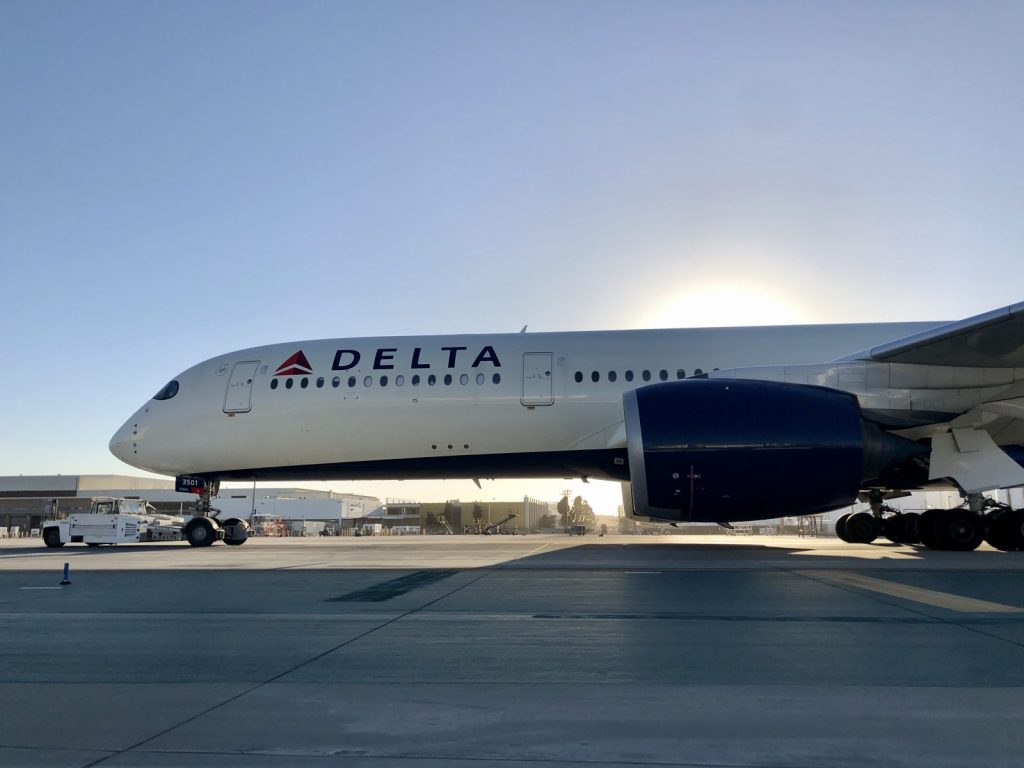
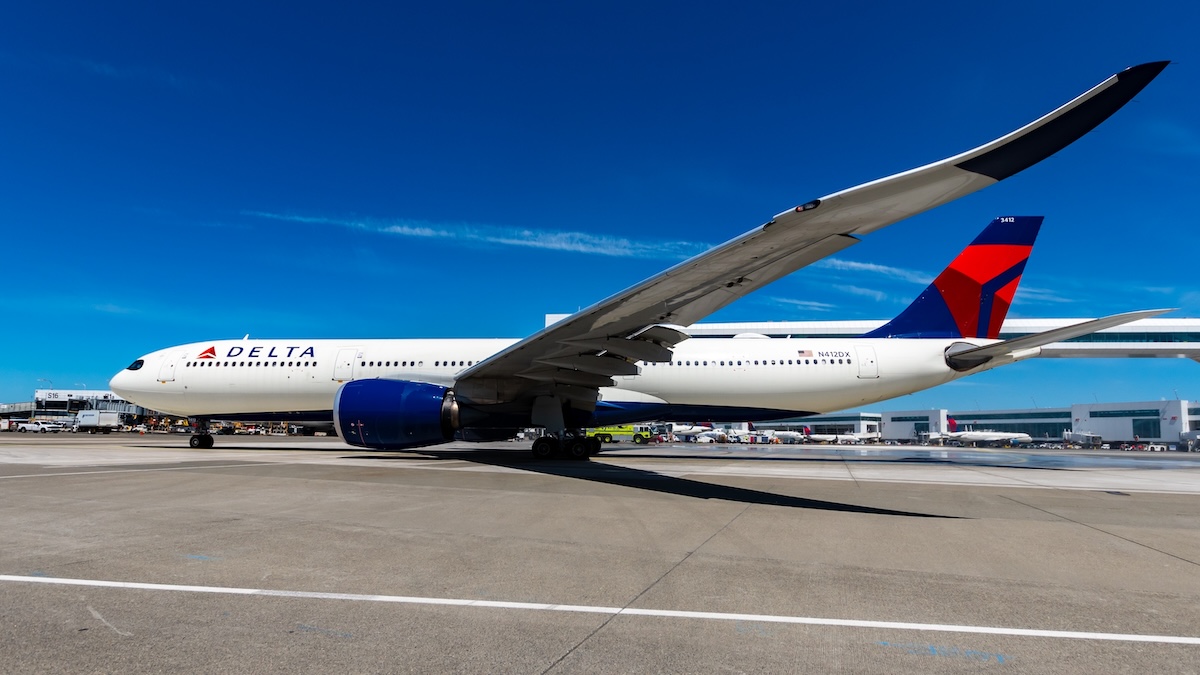
Delta A350
A Delta A350-900. (Photo: AirlineGeeks | William Derrickson)

As a boy growing up in Hong Kong, Victor Ngai attended a primary school near the now-closed Kai Tak Airport, where he watched airplanes arrive and depart. The experience inspired him to become an airline pilot, and on Saturday, things will come full circle when Ngai, now a first officer, pilots Delta’s inaugural flight from Los Angeles to Hong Kong.

“It’s quite a journey,” he said of his career so far. “I’ve always dreamt of going back and being able to fly into Hong Kong.”

Ngai moved with his family to Utah when he was in fifth grade. He finished high school in only three years and entered Embry-Riddle Aeronautical University at 17. After graduating, he worked for a few years as a flight instructor, then got a job as a commercial pilot at a Delta Connection regional carrier. He was hired by Delta in 2016, and has been with the airline ever since.

Delta announced plans to bring Hong Kong back into its international route network last year, using the Airbus A350-900. It last served the territory from Seattle in 2018.

First Officer Victor Ngai. (Photo: Delta)

When the news reached Delta’s pilots, Ngai jumped at the chance to fulfill his childhood dream. Circumstances worked in his favor, as he is now based in Los Angeles and flies the A350.

“I was pretty excited,” he said. “As soon as that news came out, I just jumped up in the air. The first person I told was my mom, and she said, ‘Finally, we can take Delta back from now on.’”

Ngai said he hasn’t spent substantial time in Hong Kong since 2018, and is interested to see how it’s changed.

He’s also enthusiastic about making the journey in an A350, which he called a “Cadillac” and said is “very well made.”

“I pinch myself every day, just being able to do this as a career,” he said.

He also highlighted Delta’s recent expansion in the Pacific, including new routes to Australia. The arrival of the airline’s first A350-1000s will support even more transpacific connections, he noted.

“I’m really excited to see what else is in store,” he said.

Victor Ngai, as an aspiring pilot, and as a first officer. (Photo: Delta)

Ngai said there will be four pilots on board the Los Angeles-to-Hong Kong flight – two captains, and two first officers. They will take turns piloting the aircraft, going three hours on, three hours off, through the roughly 14-hour service.

Inaugural Service

Delta is setting up some special perks for its inaugural flight, including a meet-and-greet with chef Jereme Leung at LAX’s Delta One lounge before departure. Officials said Leung will curate the meal on board the flight to Hong Kong and on the return service to Los Angeles.

The airline has also put together a destination guidebook for Hong Kong, advising travelers on places to visit. The booklet, which Ngai contributed to, will be placed at every seat on the flight, along with Hong Kong-themed tote bags.

Zach Vasile

Zach Vasile is a writer and editor covering news in all aspects of commercial aviation. He has reported for and contributed to the Manchester Journal Inquirer, the Hartford Business Journal, the Charlotte Observer, and the Washington Examiner, with his area of focus being the intersection of business and government policy.

Boeing Delivers Riyadh Air’s First 787s

The start-up carrier has ordered up to 72 Dreamliners.

Riyadh Air’s first two 787 Dreamliners arrive in Riyadh. (Photo: Riyadh Air)

Saudi Arabia’s Riyadh Air this week took delivery of its first two new, fully-owned Boeing 787-9 Dreamliners.

Boeing announced the deliveries early Friday after the aircraft touched down at King Khalid International Airport, Riyadh Air’s main hub.

The start-up carrier called the deliveries an important “milestone” on its path to launching full-scale commercial service.

Riyadh Air has ordered up to 72 787s, in addition to 60 Airbus A321neos and up to 50 A350-1000s.

“To see our very first custom-built 787 Dreamliner airplanes touch down in Riyadh is a historic moment for us, and a momentous day for Saudi aviation,” Riyadh Air CEO Tony Douglas said in a news release. “I couldn’t be more excited or more confident about the future and the legacy we are creating. Not only are we building an airline, we are opening a new gateway to the world from the heart of the kingdom.”

Riyadh Air is currently using a leased 787, nicknamed “Jamila,” to connect Riyadh and London, but so far those flights have been open only to airline staff and their families. That will change in July, when the route becomes fully public. One of the new 787s is expected to take over the service at that time.

Riyadh Air has said it wants to add 100 destinations by 2030, including Cairo and Jeddah.

Riyadh Air is owned entirely by Saudi Arabia’s sovereign wealth fund, known as the Public Investment Fund. It was formed three years ago as part of a broader effort by the Saudi government to diversify the country’s economy and increase tourism. It is the country’s second flag carrier, behind Jeddah-based Saudia.

Zach Vasile

Zach Vasile is a writer and editor covering news in all aspects of commercial aviation. He has reported for and contributed to the Manchester Journal Inquirer, the Hartford Business Journal, the Charlotte Observer, and the Washington Examiner, with his area of focus being the intersection of business and government policy.

NTSB: United 767 That Struck NJ Turnpike Light Pole Was Only 19 Feet Above Highway

A tractor-trailer driver was injured after debris from the falling pole hit his vehicle.

United Boeing 767
A United Boeing 767-300. (Photo: Shutterstock | Michael Derrer Fuchs)

A United Boeing 767 that struck a light pole on the New Jersey Turnpike while approaching Newark last month was coming in slow and was only about 19 feet above ground level when it crossed the middle of the highway, according to a preliminary report from the National Transportation Safety Board.

The incident made headlines in early May when video of the airplane appearing to strike the top of a tractor-trailer on the turnpike was widely shared on social media. The NTSB launched an investigation, with United, the Air Line Pilots Association, Boeing, and the FAA all participating.

Contrary to reporting at the time, NTSB investigators found no physical evidence of the aircraft’s landing gear directly striking the tractor-trailer. Instead, it appears that the falling light pole hit the truck, causing the damage seen in the video, as well as minor injuries to the driver.

United Flight 169 was arriving at Newark from Venice, Italy, on May 3 when it was instructed to land on Runway 29.

The pilot flying told the NTSB that he “got fast” while turning the airplane into a headwind and pulled the power levers back to compensate. As the 767 descended, airspeed decayed, and the first officer advised that the airplane was “slow,” and later, “still slow and a little low.” The pilot monitoring said that, while he thought the aircraft was low, he didn’t process the information fast enough to verbalize a call for a go-around.

Several members of the flight crew recalled an audible thump as they neared and went over the airport’s boundary. The flight landed safely at Newark, and there were no reports of injuries to crew members or passengers.

A graphic produced by the NTSB shows the 767 was about 19 feet AGL when it passed over the middle of the New Jersey Turnpike.

Officials said that United issued safety reminders and guidance to pilots about the approach to Runway 29 after the incident.

The NTSB is continuing to investigate.

Zach Vasile

Zach Vasile is a writer and editor covering news in all aspects of commercial aviation. He has reported for and contributed to the Manchester Journal Inquirer, the Hartford Business Journal, the Charlotte Observer, and the Washington Examiner, with his area of focus being the intersection of business and government policy.
Sign-up for newsletters & special offers!

Get the latest stories & special offers delivered directly to your inbox

SUBSCRIBE

Uh-oh! It looks like you're using an ad blocker.

Our website relies on ads to provide free content and sustain our operations. By turning off your ad blocker, you help support us and ensure we can continue offering valuable content without any cost to you.

We truly appreciate your understanding and support. Thank you for considering disabling your ad blocker for this website