Stories

American Adds Two New Destinations

American plans to add two new points to its route map. The Fort Worth, Texas-based airline announced these destinations and a batch of new routes on Thursday.

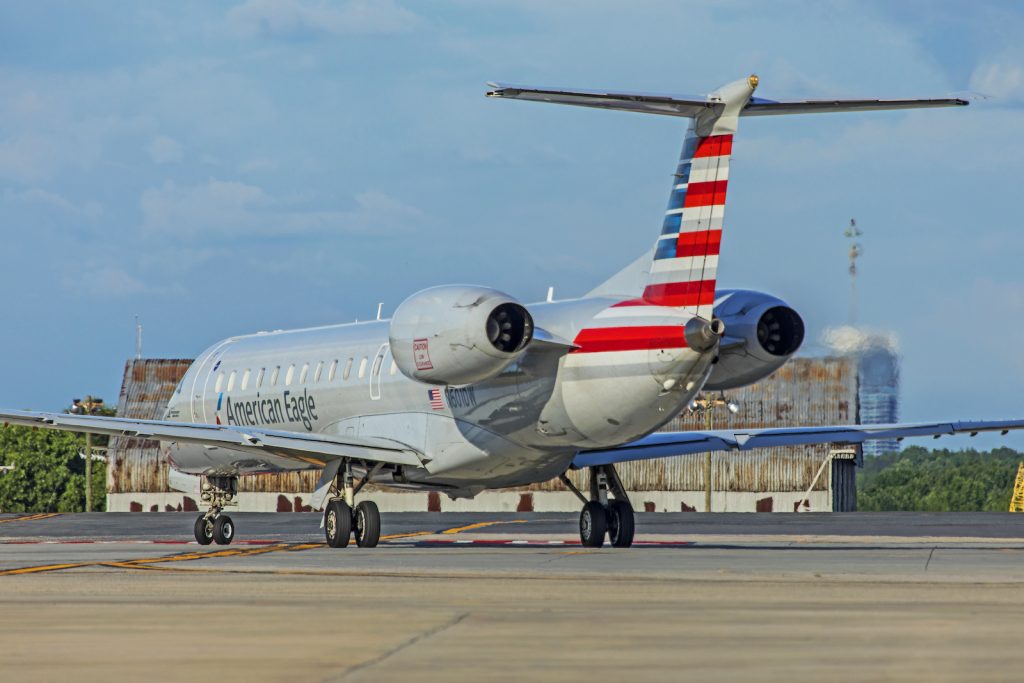
An American Eagle CRJ-700 aircraft (Photo: AirlineGeeks | William Derrickson)

American plans to add two new points to its route map this winter. The Fort Worth, Texas-based airline announced these destinations and a batch of new routes on Thursday.

Starting later this year, Sun Valley, Idaho, along with Santa Maria, California, will join the carrier’s network. American will be the second airline to regularly serve Santa Maria, along with Allegiant.

Twice-daily year-round service between American’s Phoenix hub and Santa Maria will begin on Oct. 16. Flights will be operated by a CRJ-900 aircraft.

On Dec. 18, the carrier will launch seasonal service to Sun Valley from Phoenix and Chicago O’Hare. Flights will operate on a daily basis using CRJ-700 aircraft through April 6.

American Eagle CRJ-700
An American Eagle CRJ-700 aircraft operated by SkyWest (Photo: AirlineGeeks | William Derrickson)

Alaska, Delta, and United also serve Sun Valley.

Other Routes

In addition, American plans to add more new routes this winter.

From Nov. 20 to Dec. 3 and Dec. 18 to Jan. 6, the airline will offer daily flights from Phoenix to Fort Myers, Florida, with a Boeing 737 aircraft.

American will also bolster its presence in Santa Fe, New Mexico. Between Dec. 18 and Jan. 6, the airline will link Santa Fe with Chicago O’Hare, offering daily CRJ-700 service.

Starting on Oct. 6, the carrier will add a year-round daily flight between Los Angeles and Santa Fe with a CRJ-700. American last served this market in 2021.

Ryan Ewing

Ryan founded AirlineGeeks.com back in February 2013 and has amassed considerable experience in the aviation sector. His work has been featured in several publications and news outlets, including CNN, WJLA, CNET, and Business Insider. During his time in the industry, he's worked in roles pertaining to airport/airline operations while holding a B.S. in Air Transportation Management from Arizona State University along with an MBA. Ryan has experience in several facets of the industry from behind the yoke of a Cessna 172 to interviewing airline industry executives. Ryan works for AirlineGeeks' owner FLYING Media, spearheading coverage in the commercial aviation space.

Ethiopian Expands Fleet with New Twin Otters

This acquisition introduces the 300-G model into Ethiopian’s fleet, enhancing domestic and regional connectivity, particularly in remote and underserved areas.

Ethiopian Airlines executives sign deal for new Twin Otter aircraft.
Ethiopian Airlines executives sign deal for new Twin Otter aircraft. (Photo: Ethiopian Airlines)

Ethiopian Airlines has signed a purchase agreement with De Havilland Canada for two new DHC-6 Twin Otter Classic 300-G aircraft, announced on June 17, at the Paris Air Show 2025. This acquisition introduces the 300-G model into the airline’s fleet, enhancing domestic and regional connectivity, particularly in remote and underserved areas of Ethiopia and East Africa.

Commenting on the agreement, Ethiopian Airlines Group CEO Mr. Mesfin Tasew said, “We are pleased to bring back the enhanced version of the DeHavilland Canada Twin Otter DHC-6-300G aircraft into our fleet. These versatile aircraft are designed to support tourism and offer a wide array of services, including air ambulance, airport calibration, and charter operations. Renowned for their proven reliability, the DHC-6-300G aircraft are capable of landing on airstrips unsuitable for larger aircraft models.”

The Twin Otter 300-G, equipped with amphibious landing gear, offers short takeoff and landing (STOL) capabilities, Garmin G1000 NXi avionics, and rugged reliability, making it ideal for challenging terrains and limited infrastructure. The aircraft will support multiple missions, including passenger and cargo transport, air ambulance, airport calibration, and charter services, aligning with the airline’s goals of boosting tourism, socio-economic development, and sustainability.

Ethiopian currently serves 22 domestic destinations in Ethiopia, with the Dash 8-400 double cabin aircraft. The addition of the DHC-6-300G will complement these operations as the airline works to expand its domestic reach. Ethiopian is also investing in new aviation facilities across the country to support this growth.

Victor Shalton

Victor Shalton's love for aviation can be traced to when he was 11-years-old. As a seasoned aviation writer, he takes pride in providing the best aviation coverage around the globe and is passionate about advancing his skills in the aviation space. In addition, he loves travelling, writing, arts and while his speaking engagements have taken him around the world, he is proud to call Nairobi home.

Inadequate Training at Boeing Cited as Probable Cause for Alaska Door Plug Blowout

The National Transportation Safety Board has found the probable cause for last year’s Alaska Airlines door plug blowout was Boeing’s failure to “provide adequate training, guidance and oversight” to its factory workers.

The Mid-Exit Door (MED) plug from Alaska Airlines Flight 1282
The Mid-Exit Door (MED) plug from Alaska Airlines Flight 1282. (Photo: NTSB)

The National Transportation Safety Board has found the probable cause for last year’s Alaska Airlines door plug blowout was Boeing’s failure to “provide adequate training, guidance, and oversight” to its factory workers.

An NTSB news release published Tuesday stated the organization also found the Federal Aviation Administration wasn’t effective in making sure Boeing addressed “repetitive and systemic” nonconformance issues when removing parts.

Additionally, the NTSB stated that Boeing’s voluntary safety management system was inadequate and lacked formal FAA oversight two years prior to the accident.

“The investigation found that accurate and ongoing data about overall safety culture is necessary for an SMS to be successfully integrated into a quality management system,” the release said.

Alaska Airlines flight 1282 was climbing through 14,830 feet on Jan. 5, 2024, when the left middle-exit door plug separated from the plane six minutes after takeoff. The door plug of the Boeing 737 MAX 9 was later found in a Portland-area school teacher’s back yard.

No one was killed during the incident, though several passengers later sued Alaska Airlines and Boeing for injuries sustained during the flight.

‘Safety Deficiencies’

Tuesday’s NTSB report stated that rapid depressurization in the cabin caused some passengers’ belongings to be sucked out of the airplane. The door to the flight deck swung open and injured a flight attendant, and seven other passengers were also injured.
“The safety deficiencies that led to this accident should have been evident to Boeing and to the FAA — should have been preventable,” NTSB Chairwoman Jennifer Homendy said in the release. “This time, it was missing bolts securing the MED plug. But the same safety deficiencies that led to this accident could just as easily have led to other manufacturing quality escapes and, perhaps, other accidents.”

NTSB investigators found that the unbolted plug “had moved incrementally upward during previous flight cycles” until separating from the airplane during the flight. 

The airplane – which was delivered to Alaska Airlines three months prior to the incident – had its door plug opened without required documentation in Boeing’s Renton, Washington, factory on Sept. 18, 2023, to perform rivet repair work on the fuselage.

Though Boeing procedures called for specific technicians to open or close MED plugs, none of those workers were working when it was closed the following day.

“The absence of proper documentation of the door plug work meant no quality assurance inspection of the plug closure occurred,” the NTSB release said.

The findings have led the NTSB to issue 11 new safety recommendations to the FAA and seven to Boeing, which can be read here. The NTSB stated that a final report will be published “in the coming weeks” on ntsb.gov.

AirlineGeeks.com Staff

AirlineGeeks.com was founded in February 2013 as a one-person blog in Washington D.C. Since then, we’ve grown to have 25+ active team members scattered across the globe. We are all here for the same reason: we love deep-diving into the fascinating realm of the airline industry.

QantasLink Retiring Fokker 100s

QantasLink is phasing out its aging fleet of Fokker 100 aircraft currently used by its Western Australian subsidiary Network Aviation.

QantasLink F100
A QantasLink Fokker 100 lands in Perth, Australia. (Shutterstock | LZSD photography)

QantasLink is phasing out its aging fleet of Fokker 100 aircraft currently used by its Western Australian subsidiary Network Aviation.

QantasLink, which is part of Australian flag carrier Qantas, said the F100s will be replaced by up to 14 Embraer 190s as part of a fleet renewal program. The airline is in the process of sourcing mid-life E190s and expects the first of the aircraft to arrive in late 2026.

Network Aviation, which is based in Perth, Australia, currently uses a mix of Airbus A319s, A320s, and F100s.

A QantasLink Embraer E190
A QantasLink Embraer E190 (Photo: Shutterstock | Vidit Luthra)

QantasLink officials said the introduction of the E190s will enhance the fleet’s fuel efficiency and reliability, while offering a more comfortable experience for passengers.

Earlier this month, Qantas said Network Aviation will receive four more A320s following the shutdown of Singaporean low-cost carrier Jetstar Asia, which Qantas owns a stake in. These A320s are expected to enter service for Network Aviation by the end of the year, allowing the airline to retire four F100s early.

The F100 was produced between 1986 and 1997, when Fokker went bankrupt. Though retired by major U.S. airlines, the regional jet remains popular in Australia and is flown by the flag carriers of Iran and Papua New Guinea.

Zach Vasile

Zach Vasile is a writer and editor covering news in all aspects of commercial aviation. He has reported for and contributed to the Manchester Journal Inquirer, the Hartford Business Journal, the Charlotte Observer, and the Washington Examiner, with his area of focus being the intersection of business and government policy.

Porter Adds First Routes Beyond Canada, U.S.

In a statement, Porter President Kevin Jackson said the new destinations are the airline’s first outside Canada and the U.S.

Porter Embraer jet
A Porter Airlines Embraer jet. (Photo: Shutterstock | Robin Guess)

Canada’s Porter Airlines is gearing up to launch 13 nonstop southern routes ahead of winter.

Starting this fall, the carrier will fly to Cancun and Puerto Vallarta, Mexico; Nassau in the Bahamas; Grand Cayman in the Cayman Islands; and Liberia, Costa Rica. The flights will originate at three different airports in Canada – Toronto, Ottawa, and Hamilton – and come online on different dates in November and December.

In a statement, Porter President Kevin Jackson said the new destinations are the airline’s first outside Canada and the U.S.

“This is a significant development for anyone who wants to fly with Porter to more places and experience our award-winning service that focuses on making flying enjoyable for economy travelers,” he said.

New Routes

On Nov. 5, Porter will launch service between Toronto and Cancun, running seven times a week at most. Later that month, on Nov. 14, the three-times weekly Toronto-Puerto Vallarto route will launch, and on Nov. 26, seven-times weekly service between Toronto and Nassau will begin.

The other routes will come online in December, including Toronto to Liberia (Dec. 4, three times weekly); Ottawa to Nassau (Dec. 13, once weekly); Ottawa to Puerto Vallarta (Dec. 13, twice weekly); Hamilton to Nassau (Dec. 14, twice weekly); Toronto to Grand Cayman (Dec. 16, three times weekly); Ottawa to Cancun (Dec. 17, three times weekly); Hamilton to Cancun (Dec. 17, four times weekly); Ottawa to Liberia (Dec. 17, twice weekly); Hamilton to Puerto Vallarta (Dec. 18, twice weekly); and Ottawa to Grand Cayman (Dec. 19, once weekly).

Porter will be the only airline offering service from Ottawa to Grand Cayman and Liberia, as well as Hamilton to Puerto Vallarta and Nassau.

The carrier plans to operate the new routes using the 132-seat Embraer E195-E2.

Zach Vasile

Zach Vasile is a writer and editor covering news in all aspects of commercial aviation. He has reported for and contributed to the Manchester Journal Inquirer, the Hartford Business Journal, the Charlotte Observer, and the Washington Examiner, with his area of focus being the intersection of business and government policy.

SAS Launching First Route to India in 17 Years

The airline, which serves as the flag carrier for Denmark, Norway, and Sweden, will fly five times weekly between the two cities starting June 2, 2026. 

A SAS A330 aircraft
A SAS A330 (Photo: Noah Escobar0

Scandinavian Airlines is launching a new nonstop route connecting Copenhagen and Mumbai.

The airline, which serves as the flag carrier for Denmark, Norway, and Sweden, will fly five times weekly between the two cities starting June 2, 2026.

The route will be Scandinavian’s first nonstop service to India in 17 years.

“India is a key global market — both in terms of growing demand and economic importance,” said SAS President and CEO Anko van der Werff. “With this new route, SAS contributes to strengthening Copenhagen’s role as a global hub while supporting increased connectivity between India and Northern Europe, as well as between India and North America. Mumbai is a natural next step in our strategy to link Scandinavia with one of the world’s most important regions for business and leisure travel.”

Airline officials said the Copenhagen-Mumbai flights will be timed to support smooth transfers for travelers arriving from and departing for North America, specifically New York City, Boston, and Toronto.

An Airbus A330 will operate the service.

Zach Vasile

Zach Vasile is a writer and editor covering news in all aspects of commercial aviation. He has reported for and contributed to the Manchester Journal Inquirer, the Hartford Business Journal, the Charlotte Observer, and the Washington Examiner, with his area of focus being the intersection of business and government policy.

Airline’s App Gives Countdown, Walking Directions to Connecting Flights

A new feature on United’s mobile app shows passengers how long they have to make a connecting flight and the exact route to their gate.

United 737 MAX 8
A United 737 MAX 8. (Photo: AirlineGeeks | William Derrickson)

A new feature on United’s mobile app shows passengers how long they have to make a connecting flight and the exact route to their gate.

Travelers navigating any one of United’s seven U.S. hub airports now have access to a special section of the app with a countdown clock for connecting flight departures, customized turn-by-turn directions with estimated walk times, and real-time flight status updates. The feature also lets travelers know if their connecting flight is being held for them after a close or late arrival.

United said it tested the app expansion this spring, when over 350,000 passengers used it on a trial basis.

For now, the feature is only available to passengers making connecting flights at Chicago O’Hare, Denver, Houston, Los Angeles, Newark Liberty, San Francisco, and Washington Dulles.

“We know that giving people more information, in a transparent and easy-to-understand way, can help de-stress the connecting flight experience,” said David Kinzelman, United’s chief customer officer. “Our award-winning mobile app is a game-changer during travel, and with these new features, our customers will have even more real-time details about their flight and as a result, have an even better experience flying United.”

The airline said it will continue to improve the new feature, with plans to add languages beyond English and Spanish and optional text message updates.

United in recent years has invested heavily in technology aimed at reducing missed connections. In 2019, it launched ConnectionSaver, an artificial intelligence-powered tool that detects when travelers are late arriving at the airport from a prior flight and weighs the impact of delaying a connection. The new app feature receives information from ConnectionSaver when it recommends pushing back a departure.

Zach Vasile

Zach Vasile is a writer and editor covering news in all aspects of commercial aviation. He has reported for and contributed to the Manchester Journal Inquirer, the Hartford Business Journal, the Charlotte Observer, and the Washington Examiner, with his area of focus being the intersection of business and government policy.

Delta Plans New Long-Haul Routes

Delta announced Tuesday that it is adding two brand-new routes from its Seattle hub starting next year, as it goes head-to-head with Alaska.

Delta A330-900neo
A Delta Airbus A330-900 at Tokyo Haneda Airport in Japan. (Photo: Shutterstock | Markus Mainka)

Delta announced Tuesday that it is adding new non-stop flights from its Seattle hub as it goes head-to-head with Alaska Airlines. 

A new route between Seattle and Rome will launch on May 6, 2026, running four times weekly, while service between Seattle and Barcelona will start on May 7, 2026, operating three times weekly. Delta will operate the flights using Airbus A330-900neos fitted with Delta One and Delta Premium Select seating configurations, the carrier said.

Delta A330neo
A Delta Airbus A330neo (Photo: Shutterstock | Nate Hovee)

Delta currently flies nonstop from Seattle to three destinations in Europe – London, Paris, and Amsterdam. It also serves several markets in Asia, including Taipei, Tokyo, and Seoul.

Earlier this month, Alaska announced new flights between Seattle and Rome as the carrier looks to bolster its long-haul network from the city. Rome will be the airline’s third long-haul route, joining Tokyo Narita and Seoul.

Zach Vasile

Zach Vasile is a writer and editor covering news in all aspects of commercial aviation. He has reported for and contributed to the Manchester Journal Inquirer, the Hartford Business Journal, the Charlotte Observer, and the Washington Examiner, with his area of focus being the intersection of business and government policy.

Spirit Blasts United-JetBlue Partnership

Spirit has submitted a regulatory complaint against the recently announced “Blue Sky” partnership between airlines JetBlue and United.

A Spirit A319.
A Spirit A319. (Photo: AirlineGeeks | William Derrickson)

Spirit has submitted a regulatory complaint against the “Blue Sky” partnership between airlines JetBlue and United that debuted last month.

In a complaint filed Tuesday on regulations.gov, Spirit said the joint venture “raises serious competition and public interest questions.”

It stated that similar concerns were raised about American Airlines’ and JetBlue’s currently defunct Northeast Alliance (NEA) partnership.

American has petitioned the U.S. Supreme Court to reverse a lower court’s decision to nullify the NEA for being “anticompetitive.”

Spirit’s complaint requested that the U.S. Department of Transportation extend its review period of the Blue Sky partnership for another 60 days. The carrier also cited previous regulatory comments from United supporting public access to American and JetBlue’s NEA agreements in 2021, arguing that this established “a telling precedent.”

“Based on the limited information released by United and JetBlue, the ‘Blue Sky’ partnership raises serious competition and public interest questions similar to the NEA,” the complaint stated. “Based on what is publicly available, implementation of these agreements appear to constitute an anticompetitive unfair method of competition that must be prohibited pursuant to [federal unfair competition law] or otherwise found not [to] be in the public interest.”

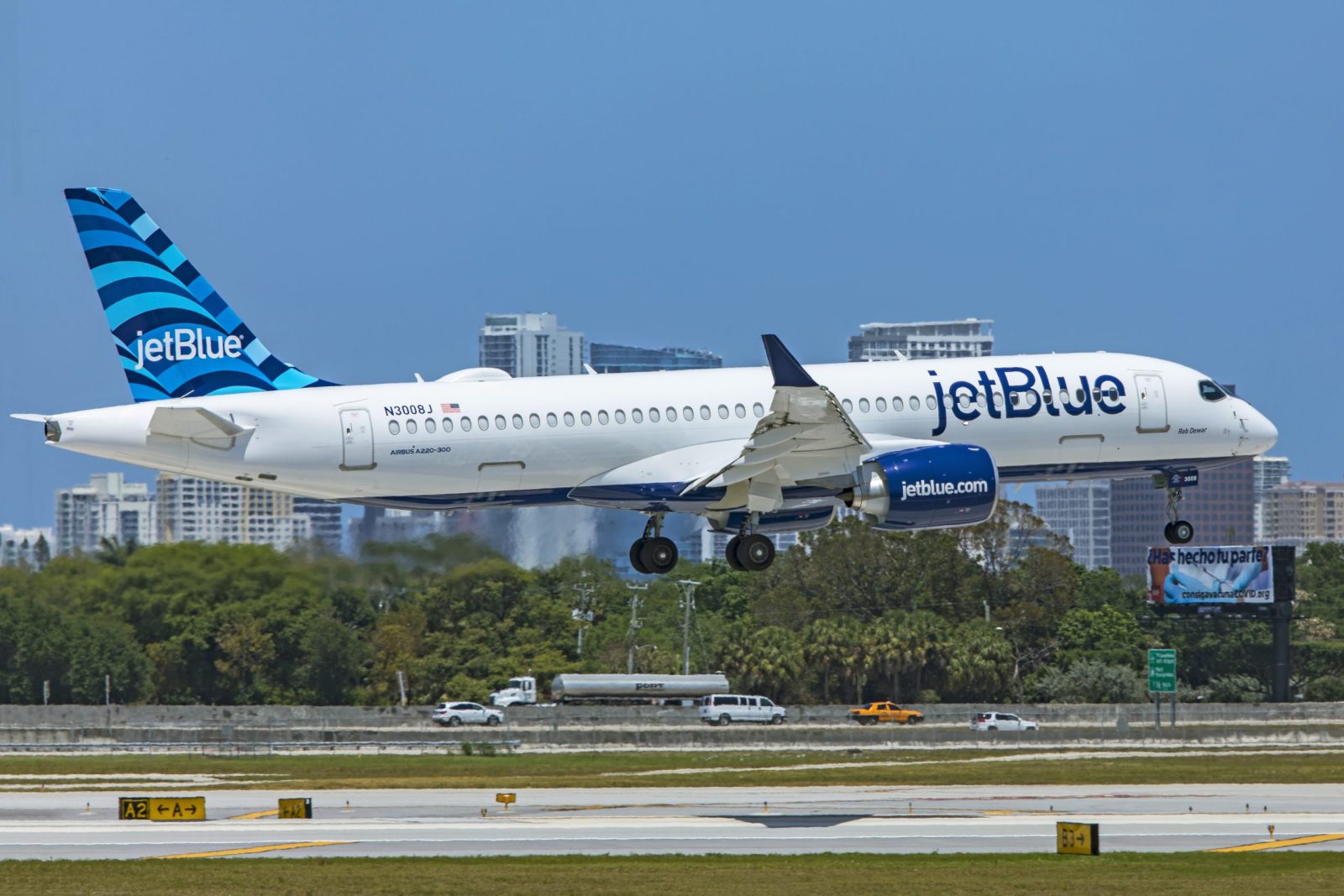
A JetBlue A320
A JetBlue A320 (Photo: Shutterstock | Markus Mainka)

Spirit alleges that the Blue Sky agreement “creates the same anti-competitive incentives present in the NEA” and would turn JetBlue into “a de facto vassal of United” despite assertions that the carriers would continue to manage prices for their networks independently.

“Finally, the tie-up also promises coordination on high-value corporate accounts and, more importantly, helps perpetuate the unchanging lack of access in both New York area and Boston airports to new entrants and limited incumbents offering competitive prices to the public,” the complaint continued. “In short, this anti-competitive tie-up involving a dominant legacy carrier will neutralize the competitive benefit of an existing low-fare competitor (JetBlue), will raise fares, and will tend to weaken other value airlines, such as Spirit and others, by siphoning off customers attracted by access to the United loyalty program.”

AirlineGeeks.com Staff

AirlineGeeks.com was founded in February 2013 as a one-person blog in Washington D.C. Since then, we’ve grown to have 25+ active team members scattered across the globe. We are all here for the same reason: we love deep-diving into the fascinating realm of the airline industry.

JSX Adding New Mexico Route

JSX said the route is being launched through a strategic partnership with the Economic Development Corporation of Lea County.

A JSX Embraer aircraft. (Photo: Shutterstock | Angel DiBilio)

JSX is adding a new nonstop flight between Dallas and Hobbs, New Mexico.

In a statement, the semi-private carrier said flights between Dallas Love Field and Lea County Regional Airport will begin Aug. 1 and operate three times weekly, on Mondays, Fridays, and Sundays.

“We take great pride in creating access to growing airports primed for expansion, and our new service to Hobbs exemplifies the value that public charter flying can bring to communities around the nation,” said David Drabinsky, JSX’s chief commercial officer.

JSX said the route is being launched through a strategic partnership with the Economic Development Corporation of Lea County, the city of Hobbs, and Lea County. Hobbs is a “high-energy regional hub” known for its oil and gas sector, horse racing, and entertainment, the carrier said, and the new service will help promote business and leisure travel there.

JSX is a public charter carrier and mainly serves destinations in the Southwest, though it also flies to Florida and New York. It operates 48 Embraer ERJ-family aircraft.

Zach Vasile

Zach Vasile is a writer and editor covering news in all aspects of commercial aviation. He has reported for and contributed to the Manchester Journal Inquirer, the Hartford Business Journal, the Charlotte Observer, and the Washington Examiner, with his area of focus being the intersection of business and government policy.
Sign-up for newsletters & special offers!

Get the latest stories & special offers delivered directly to your inbox

SUBSCRIBE

Uh-oh! It looks like you're using an ad blocker.

Our website relies on ads to provide free content and sustain our operations. By turning off your ad blocker, you help support us and ensure we can continue offering valuable content without any cost to you.

We truly appreciate your understanding and support. Thank you for considering disabling your ad blocker for this website