










Stories

How Fred Smith Built FedEx Into the World’s Largest Cargo Airline

Late FedEx founder and leader Fred Smith is remembered as a hands-on executive with an uncanny eye for aircraft deals.

Fred Smith

The rise of FedEx Corp. from a startup express carrier with a few aircraft to the largest air cargo airline in the world and facilitator of global commerce is one of the remarkable stories in American business history. Fred Smith, who founded and led the company as CEO for nearly 50 years, died Saturday at the age of 80.

Former employees said he was a hands-on executive with an uncanny eye for making aircraft deals.

“He wasn’t afraid to roll up his sleeves and get down in the details of things. Sometimes he would just leap over the chain of command to talk to the people he wanted to talk to. And he was famous for coming down, when the company was small, and watching the sort operation and talking to people,”  said Steve Fortune, who heads his own aircraft investment consulting firm and worked in the 1980s as a FedEx analyst. “He had an incredible memory, an incredible memory for names, for people and things.”

FedEx currently has 710 aircraft, including nearly 400 planes it operates on trunk routes and 310 turboprop regional aircraft operated by contractors that feed FedEx hubs with shipments from smaller cities. The mainline fleet consists of Boeing 757s (large narrowbody freighter), Airbus A300-600 (small widebody jet), Boeing 767 (medium widebody), and large MD-11s and Boeing 777s. FedEx carries more cargo traffic than any other carrier, according to the International Air Transport Association.

On its first night of service in 1973, FedEx Express delivered 186 packages from Memphis, Tennessee, to 25 cities with 14 Dassault Falcon business jets. Ron Anderson, who was vice president of aircraft acquisitions and sales at FedEx from 1974 to 1991 and is part-owner of Alpha Aviation Partners, provided a history of Smith’s fleet strategy on the Time on Wing podcast in 2023.

“Fred Smith knows more about the aircraft market than anyone in the world today,” Anderson said at the time.

Smith made one of last public appearances last month at the International Society of Transport Aircraft Trading freighter forum in Miami.

In the early days, the FedEx offices at Memphis airport resembled quonset huts, the company was losing $1 million a month, and there were only 400 employees.

A Fedex 767 in Las Vegas (Photo: AirlineGeeks | William Derrickson)

Today, the company employs more than 500,000 people around the world, connects more  than 220 countries and territories, and moves nearly $2 trillion in goods annually and more than 17 million shipments per day.

Smith acquired the Dassault Falcon aircraft from Pan Am Airlines, which was the U.S. distributor of the French-made aircraft and ordered many for its new executive jet business. By the early 1970s, Pan Am changed its mind and began selling off the twin-engine planes. Smith initially bought 23 Falcons parked in the desert, but had to first convince American businessman and Trans World Airlines (TWA) director Lester Crown to guarantee a loan to buy the planes and have them modified with a large cargo door, according to Anderson’s telling.

“The next year the value of the planes doubled with demand for corporate airplanes and no inventory, so the equity in those 23 planes helped start FedEx. We were opening three stations per week, which required someone to go negotiate an operating agreement with an airport and find a facility. So two of us flew around on a Piper Aero going to different airports,” he said.

Smith began looking for a plane to replace the Falcon and ordered 25 CL600s from Canadair in 1976. But when Congress deregulated the aviation industry and allowed planes with more than 7,5000 pounds of capacity, Smith lost interest in the CL600s and moved to get the Boeing 727. FedEx agreed to buy five of CL600s, but eventually sold four of them and made the fifth a corporate jet for the company’s executive team.

FedEx bought six Boeing 727-100s from United Airlines and two from LAN Chile in South America, followed by deals with United for seven additional aircraft and with Eastern Airlines for 14 aircraft, Anderson told the “Time on Wing” hosts.

“The economics were huge for us. The bigger an aircraft the lower the cost per pound. The yields with the Falcons carrying 6,000 pounds were fine, we made money. But the amount of money we could make with the larger airplane was exponential to us,” he said.

Fred Smith was one of the most influential business leaders in Washington, helping to push through aviation and trucking industry reforms and advocating for free trade. (Photo: FedEx)

FedEx soon began to get competition. In the mid-1970s, Emery Air Freight, an airfreight forwarder, began leasing its own cargo planes for domestic freight transport. In 1984, UPS launched its own airline to augment its ground parcel delivery service.

Smith and his executives wanted a bigger plane to support shipping demand on key routes and opted for the DC-10 over the Boeing 747-200.

“Fred’s concern was if you could fill the 747 the economics worked, but if you didn’t fill it the economics would kill you compared to the DC-10,” said Anderson.

Continental Airlines bought eight DC-10-10s with freight doors so it could be eligible to participate in the military’s Civil Reserve Air Fleet, but never used the planes as freighters. FedEx moved in and negotiated to buy four of the planes and put them on domestic routes, the former FedEx executive said.

FedEx then bought 11 DC-10-30s.

“The problem was the plane had an elevator to move the galleys up and down. In order to turn them into a full freighter you had to remove those galleys. I negotiated a deal with Transamerica while [Smith] was golfing at Pebble Beach. They got a supplemental type certificate [from the FAA] to remove the elevator and within three months we had those planes in the fleet” FedEx ended up buying eight more DC-10-30s from World Airways.

“There’s no aircraft we didn’t look at as a potential freighter,” Anderson said.

When FedEx bought Flying Tiger Line in 1988 it had about a dozen DC-8s. Flying Tigers had a tight relationship with UPS, which also operated the DC-8, so FedEx sold six of the aircraft to UPS and the rest to other operators.

By 1980, FedEx had sold 30 of the 32 remaining Dassault Falcons in the fleet. With little initial interest, FedEx painted one plane camouflage, hung fake missiles on it to resemble a Dassault fighter jet, reinstalled the passenger interior and took it to the Paris Air Show. It sold 10 aircraft at the show, including to the Portuguese and Venezuelan air forces. Later, Flight Refueling in Bournemouth, England, took 10 Falcons and converted them into target-towing vehicles for use in training fighter pilots.

Many of the Falcons are still flying, according to Anderson. One, named after Smith’s daughter Wendy, went to the Smithsonian Museum. Another plane, named after second daughter Lauren, was supposed to be donated to the FedEx museum in Memphis.

“But we had sold it, but I couldn’t tell Fred Smith that. So we re-registered one of the unsold planes as that one,” Anderson recalled.

In 1982, Anderson helped Smith set up Federal Express Aviation Services. They hired a group of software engineers to create a database for compiling data on aircraft trading activity. The unit published monthly data about the global airfleet and listings of available aircraft, which gave FedEx a leg up on deals. It also sold the data to other parties.

Smith wanted to know more about the aircraft they were purchasing, so Anderson hired some software engineers and aviation professionals to create a database on aircraft trading activity. The unit was called Federal Express Aviation Services. Fortune played a key role managing the data project, which included time-consuming retrieval of aircraft bill of sales from microfiche files at the Federal Aviation Administration and purchasing transaction data from a small Swedish company with spotters around the world. The team gradually built a list of all commercial aircraft in the world and their transaction history.

The data gave FedEx a leg up on deals, according to Anderson and Fortune. FedEx published the data each month and sold portions of it to other customers. FedEx eventually determined the unit wasn’t core to its business and sold it. The database was subsequently bought by Aviation Week, Fortune said.

Anderson left FedEx to start an aircraft brokerage business called Intrepid Aviation. Smith invested in the company with the idea that the company would buy passenger planes that would make good candidates for freighter conversion at a later time. Anderson said he eventually bought out Smith to avoid potential conflicts of interest.

In 1989, FedEx purchased cargo airline Flying Tigers.

The Fax Idea That Failed

As with any successful entrepreneur, Smith experienced failures along with the great success. In 1984, FedEx launched Zapmail, which used fax machines to expedite the delivery of documents at a time when telex machines were in fashion and fax machines weren’t ubiquitous yet. FedEx heavily invested in fax machines from NEC Corp. in Japan with the idea that people would deliver a document to a FedEx office for transmission to a FedEx office in another city where the recipient would pick it up. For high-volume users FedEx also installed Zapmailer fax machines on the premises.

The FedEx strategy was driven by an expectation that customers would pay a premium to have their documents delivered in hours instead of overnight, according to news accounts. FedEx officials also believed that by migrating document traffic from trucks and aircraft, they could significantly reduce transportation costs and then officer discounted services to increase volumes and margins.

“Needless to say, it was not a big success,” Fortune said, as companies and individuals bought fax machines of their own as the cost came down.

Editor’s Note: This story first appeared on FreightWaves

AirlineGeeks.com Staff

AirlineGeeks.com was founded in February 2013 as a one-person blog in Washington D.C. Since then, we’ve grown to have 25+ active team members scattered across the globe. We are all here for the same reason: we love deep-diving into the fascinating realm of the airline industry.

JetBlue Adding New Mint Routes

The New York-based carrier offers its Mint product on certain domestic and international flights using the Airbus A321 and A321neo.

JetBlue A321
A JetBlue Airbus A321. (Photo: AirlineGeeks | William Derrickson)

JetBlue is bringing its premium Mint offering to Orlando, Florida, for the first time.

Starting Oct. 30, the airline will offer two daily flights featuring Mint between Orlando and Las Vegas for the winter season. One of those flights will end after March 28, 2026, while the other will continue year-round.

JetBlue has not served the Orlando-Las Vegas route since 2022.

“Orlando has always been an important city to JetBlue, and we’re excited to debut Mint service in this market with flights to Las Vegas,” said Dave Jehn, JetBlue’s vice president of network planning and airline partnerships. “As we celebrate 25 years in Orlando, this marks an exciting new chapter for us and our Central Florida customers, who can now enjoy lie-flat seats, curated restaurant-style dining, and premium benefits on a new leisure route, just in time for the winter travel season.”

JetBlue currently operates over 60 daily departures to 27 destinations from Orlando.

The airline is also adding a brand-new seasonal route featuring Mint between Newark, New Jersey, and Las Vegas. Starting Jan. 5, 2026, JetBlue will operate the Newark-Las Vegas route twice daily, continuing through June 10.

JetBlue also plans to extend a seasonal Mint-equipped service between Newark and Los Angeles, originally scheduled to end in October, through Jan. 4, 2026.

The New York-based carrier offers Mint on certain domestic and international flights using the Airbus A321 and A321neo. The package includes fully lie-flat seats, sliding privacy doors, meal service, wellness kits, bedding, and other perks.

Zach Vasile

Zach Vasile is a writer and editor covering news in all aspects of commercial aviation. He has reported for and contributed to the Manchester Journal Inquirer, the Hartford Business Journal, the Charlotte Observer, and the Washington Examiner, with his area of focus being the intersection of business and government policy.

Breeze Eyes New Subsidized Route

Breeze has submitted a request to the U.S. Department of Transportation seeking approval to modify its current Essential Air Service (EAS) pattern.

Breeze A220
A Breeze A220 aircraft. (Photo: AirlineGeeks | William Derrickson)

Breeze has submitted a request to the U.S. Department of Transportation seeking approval to modify its current Essential Air Service (EAS) pattern at Ogdensburg International Airport in New York. The proposed change would adjust the airline’s current obligation to operate seven round-trip flights per week between Ogdensburg and Washington Dulles.

Under the proposal, Breeze intends to shift three of these weekly round-trip flights from Washington Dulles to Raleigh/Durham. According to the airline, this change has the support of the local community and would offer travelers from Ogdensburg greater connectivity via Breeze’s network to more than 30 destinations served from Raleigh.

Breeze began serving Ogdensburg in September 2024 after being selected under the EAS program to provide scheduled service to the northern New York airport. The airline replaced Contour.

Currently, Ogdensburg is Breeze’s only EAS market. In addition to regular flights to Dulles, it also links the airport to Orlando, Florida, though this route is not subsidized by the federal government.

The airline emphasized that the proposed adjustment will not impact the subsidy level provided under the EAS agreement, which is just over $8.8 million. While Breeze does not currently plan to return the three flights to Washington Dulles, it has requested the flexibility to do so in the future if operational needs require.

Ryan Ewing

Ryan founded AirlineGeeks.com back in February 2013 and has amassed considerable experience in the aviation sector. His work has been featured in several publications and news outlets, including CNN, WJLA, CNET, and Business Insider. During his time in the industry, he's worked in roles pertaining to airport/airline operations while holding a B.S. in Air Transportation Management from Arizona State University along with an MBA. Ryan has experience in several facets of the industry from behind the yoke of a Cessna 172 to interviewing airline industry executives. Ryan works for AirlineGeeks' owner FLYING Media, spearheading coverage in the commercial aviation space.

Qatar Airways Resumes Flights

Qatar Airways resumed flights Monday as Qatari airspace reopened following Iranian missile strikes aimed at Al Udeid Air Base.

Qatar Airways 777-300ER
A Qatar Airways Boeing 777-300ER. (Photo: AirlineGeeks | William Derrickson)

Qatar Airways resumed flights to and from its home country on Monday as the Qatari government reopened the nation’s airspace.

In a statement on X, the airline said it was deploying extra staff at its hub at Hamad International Airport in Doha to assist customers as flights restarted.

Commercial air traffic was briefly halted in the hours leading up to and following an Iranian missile attack aimed at Al Udeid Air Base near Doha, where both U.S. and Qatari forces are stationed. Nearly all the missiles fired by Iran were intercepted, Qatari officials said, and there were no casualties or injuries.

A number of other Gulf states, including Kuwait and the United Arab Emirates, gradually followed Qatar’s lead and reopened their airspace late Monday and early Tuesday as the threat of another salvo from Iran receded.

U.S. President Donald Trump said Iran provided “early notice” of its plan to target Al Udeid, which gave American and Qatari forces there time to prepare.

The ongoing conflict between Israel and Iran, which started June 13, has disrupted air travel throughout the region. Israeli airspace has been shut down for much of the last 12 days, though on Monday the country allowed a limited number of outbound flights to depart. The Israeli government has also organized repatriation flights to bring thousands of Israelis home from abroad.

Last week, United paused flights between New Jersey’s Newark Liberty International Airport and Dubai, while American temporarily suspended service between Philadelphia International Airport and Doha. Other airlines, including British Airways and Singapore Airlines, have also halted flights to and from the Gulf region as a precaution.

Zach Vasile

Zach Vasile is a writer and editor covering news in all aspects of commercial aviation. He has reported for and contributed to the Manchester Journal Inquirer, the Hartford Business Journal, the Charlotte Observer, and the Washington Examiner, with his area of focus being the intersection of business and government policy.

Turkish Exploring Minority Stake in Spain’s Air Europa

Turkish Airlines is considering taking a minority stake in Spanish low-cost carrier Air Europa, according to a report from Reuters on Friday.

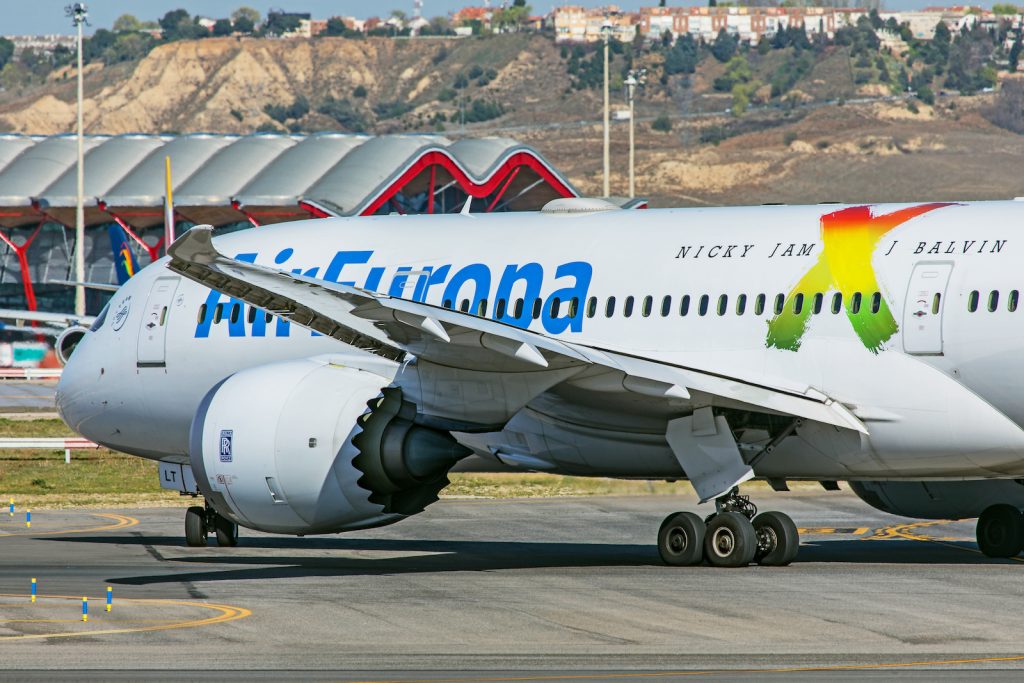
Air Europa 787
An Air Europa 787-8 in Madrid. (Photo: AirlineGeeks | William Derrickson)

Turkish Airlines is considering taking a minority stake in Spain’s Air Europa, according to a report from Reuters on Friday.

Citing two unnamed sources with knowledge of the proceedings, the outlet said Air Europa has asked interested parties to submit their bids for a roughly 20% stake in the company by early July. Both Air France and Lufthansa have been in talks with Air Europa for months, meaning they will likely participate in the process, but up until this week, there was no sign that Turkish Airlines would also enter the bidding war.

Air Europa is looking to raise cash to pay back about $546 million in loans it borrowed from the Spanish government during the COVID-19 pandemic.

In March, Spanish newspaper El Confidencial reported that Air France offered $326 million and the assumption of all debt in exchange for 51% of Air Europa. Lufthansa was in talks to acquire a 20% stake, but it is not clear if it made an offer.

According to El Confidencial, discussions with Air France and Lufthansa stalled during the spring over disagreements about Air Europa’s valuation. The Hidalgo family, which owns Air Europa through its holding company Globalia, valued the carrier at about $1.3 billion, which neither Air France nor Lufthansa accepted.

International Airlines Group, the parent company of British Airways and Spanish carrier Iberia, attempted to buy all of Air Europa last year but backed out over scrutiny from regulators. IAG already owns 20% of the airline.

If Turkish Airlines were to succeed with its bid, the carrier would become one of the very few non-European companies to own a piece of a European airline.

Air Europa is the third-largest airline in Spain, behind Iberia and low-cost carrier Vueling.

Zach Vasile

Zach Vasile is a writer and editor covering news in all aspects of commercial aviation. He has reported for and contributed to the Manchester Journal Inquirer, the Hartford Business Journal, the Charlotte Observer, and the Washington Examiner, with his area of focus being the intersection of business and government policy.

More Middle East Countries Shut Airspace as Iran Strikes at Neighbors

An Iranian missile attack on U.S. forces at Al Udeid Air Base in Qatar triggered a cascade of airspace closures across the Middle East on Monday.

Emirates aircraft in Dubai
Emirates aircraft in Dubai. (Photo: AirlineGeeks | Hisham Qadri)

An Iranian missile attack on U.S. forces at Al Udeid Air Base in Qatar triggered a cascade of airspace closures across the Middle East on Monday.

Qatar had already shut its airspace ahead of the attack, but afterward nearby Bahrain, the United Arab Emirates, and Kuwait followed suit. The UAE’s move is particularly significant because Dubai International Airport is the busiest airport by passenger traffic in the Middle East and one of the busiest in the world. A number of airlines, including United, Air Canada, British Airways, KLM, and Singapore Airlines had already temporarily suspended service to Dubai due to the escalating conflict between Israel and the U.S. and Iran.

The UAE’s move to close its airspace was first reported by The Wall Street Journal on Monday afternoon.

The Kuwaiti government released a statement shortly after the Iranian strikes.

“In the interest of the country’s security and safety, and in light of the precautionary measures taken in a number of neighboring countries, which include the closure of their airports and airspace, the State of Kuwait announces the temporary closure of its airspace as a precautionary measure, effective today until further notice,” the country’s Directorate General of Civil Aviation said.

Bahrain, an island country in the Persian Gulf, closed its airspace as a “precaution.” It hosts the U.S. Navy’s Fifth Fleet, which is active in the Gulf, the Red Sea, the Arabian Sea, and parts of the Indian Ocean.

There were reports that Saudi Arabia, Iraq, Lebanon, and Jordan had also stopped commercial flights on Monday, but their government ministries had made no formal announcements by press time.

Iran also launched missiles at American forces in Iraq at the same time it targeted Qatar. It is not clear if there were any injuries stemming from the attacks. Qatar claimed that it intercepted and destroyed the missiles before they struck Al Udeid, which is close to the capital of Doha.

The country, which is an ally of both the U.S. and Iran, condemned the attack as a violation of its sovereignty.

Airlines operating in the region have been on high alert since June 13, when Israel launched surprise airstrikes on Iran. The conflict escalated Saturday when the U.S. struck three Iranian nuclear facilities.

Zach Vasile

Zach Vasile is a writer and editor covering news in all aspects of commercial aviation. He has reported for and contributed to the Manchester Journal Inquirer, the Hartford Business Journal, the Charlotte Observer, and the Washington Examiner, with his area of focus being the intersection of business and government policy.

Southwest Pilots Can Sue Boeing Over 737 MAX Grounding

The Supreme Court of Texas has ruled that the union representing Southwest pilots can move forward with its lawsuit against Boeing.

Southwest 737 MAX jets
Southwest 737 MAX 8 aircraft. (Photo: AirlineGeeks | William Derrickson)

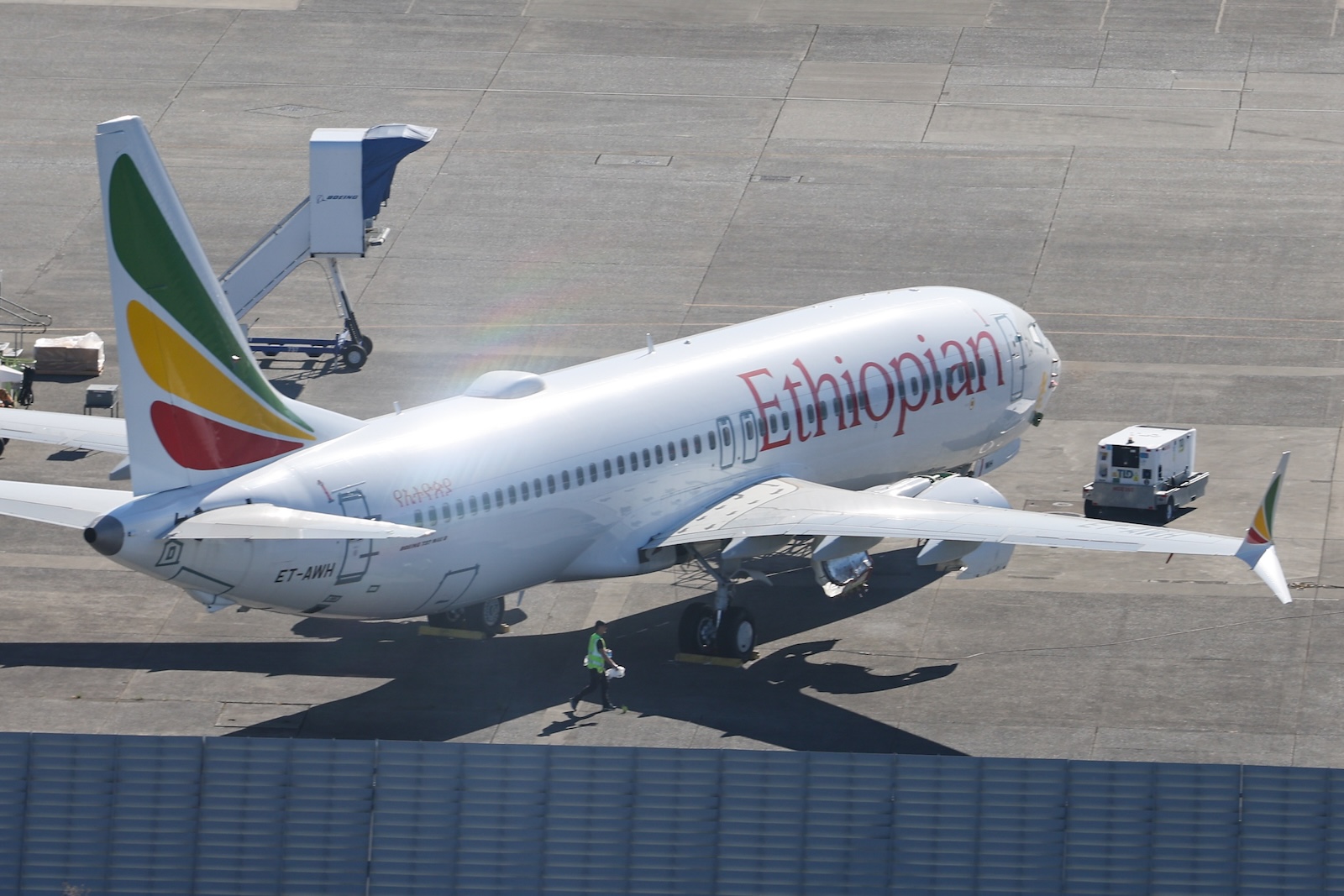
The Texas Supreme Court on Friday cleared the way for the union representing Southwest pilots to continue its lawsuit against Boeing over the company’s alleged misrepresentation of the 737 MAX before a pair of crashes killed a combined 346 people.

The court determined that the federal Railway Labor Act does not preempt the Southwest Airlines Pilots Association (SWAPA) from bringing claims against the aircraft manufacturer on behalf of its members.

Boeing argued in both state and federal court that the Railway Labor Act prevented what it called an unlawful interpretation of the union’s collective bargaining agreement. It also said SWAPA lacked “associational standing” to bring the case.

The court rejected those points but did not rule on the merits of the union’s complaint.

“We conclude that the Act does not preempt the claims and that  SWAPA  has standing to assert the claims of its members who assigned their claims to  SWAPA,” Justice Jeffrey S. Boyd wrote in a 7-2 decision. “We  do  not  address whether  those  individual  claims  can  or must  be  joined,  consolidated, severed,  or  set  for  separate  trials,  as  those  issues  are  not currently before us.”

The case was remanded to a Texas trial court.

Long-Running Case

SWAPA sued Boeing in October 2019 after the crash of Lion Air Flight 610 and Ethiopian Airlines Flight 302 forced the company to ground the aircraft worldwide. The organization said its pilots were falsely induced to fly the aircraft based on promises from Boeing that it was essentially a more fuel-efficient version of the old 737 and would not require any additional training to operate. This guidance meant pilots were not familiar with the airplane stabilization system believed to have forced both crashed flights into a nose down position that pilots could not override.

“SWAPA pilots agreed to fly the 737 MAX aircraft based on Boeing’s representations that it was airworthy and essentially the same as the timetested 737 aircraft that its pilots have flown for years,” the union said at the time. “These representations were false. Boeing’s errors cost the lives of 346 people, damaged the critical bond between pilots and passengers, and reduced opportunities for air travel across the United States and around the world.”

Southwest 737 MAX
A Southwest 737 MAX 8 in Las Vegas. (Photo: AirlineGeeks | William Derrickson)

As a result of the groundings, about 30,000 scheduled Southwest flights were eliminated, costing the airline’s pilots “in excess of $100 million” in lost compensation.

SWAPA, which has its headquarters in Dallas, represents over 11,000 Southwest pilots.

The SWAPA case is one of many legal challenges Boeing has faced since the 737 MAX crashes. The aviation giant has already paid billions in fines, settlements, and compensation related to the crashes and grounding of the aircraft, which was allowed to return to service in late 2020 after safety modifications.

Zach Vasile

Zach Vasile is a writer and editor covering news in all aspects of commercial aviation. He has reported for and contributed to the Manchester Journal Inquirer, the Hartford Business Journal, the Charlotte Observer, and the Washington Examiner, with his area of focus being the intersection of business and government policy.

Qatar Closes Airspace Amid Israel-Iran War

After a week of military strikes between Israel and Iran, Qatar is the latest country in the Middle East to shut down its airspace.

Qatar Airways 777
A Qatar Airways 777-200LR departs LAX. (Photo: AirlineGeeks | William Derrickson)

After a week of military strikes between Israel and Iran, Qatar is the latest country in the Middle East to shut down its airspace over safety concerns in the region.

A spokesperson for Qatar’s Ministry of Foreign Affairs posted on X Monday morning that air traffic would be temporarily suspended in the country “in order to ensure the safety of citizens, residents, and visitors.”

An earlier social media post by the ministry stated that advisories from embassies to their citizens in Qatar “do not reflect the existence of specific threats.”

On Sunday, Qatar Airways posted a statement on X confirming there would be schedule changes for flights to Doha as the airline continues to monitor the situation in the region.

Israel’s main international airport has been closed since its military launched a series of attacks on Iranian military sites on June 12.

Iran has since retaliated with ballistic missile strikes in Israel, and the conflict escalated further on Saturday when the U.S. deployed B-2 stealth bombers to drop bunker buster bombs on Iran’s Fordo nuclear facility.

AirlineGeeks.com Staff

AirlineGeeks.com was founded in February 2013 as a one-person blog in Washington D.C. Since then, we’ve grown to have 25+ active team members scattered across the globe. We are all here for the same reason: we love deep-diving into the fascinating realm of the airline industry.

Airline Cuts Three Florida Routes

Azul Brazilian Airlines reportedly plans to drop three routes to and from Fort Lauderdale, Florida, later this summer as it navigates bankruptcy.

Azul A330neo
Azul's first A330neo (Photo: Airbus)

Azul Brazilian Airlines reportedly plans to drop three routes to and from Fort Lauderdale, Florida, in the coming months.

According to a report from Ishrion Aviation, the carrier will end service between Fort Lauderdale and the Brazilian cities of Belo Horizonte and Manaus, as well as the Caribbean island of Curaçao. The Fort Lauderdale-Manaus route will end Aug. 9, while the routes to and from Belo Horizonte and Curaçao will end Aug. 10, Ishrion said.

After Aug. 10, Azul will operate only two flights from Fort Lauderdale, to the Brazilian cities of Belém and Campinas.

The airline only added the Curaçao route in December, when it also increased the frequency of flights to Belo Horizonte.

Azul filed for Chapter 11 bankruptcy protection in the U.S. late last month after taking on considerable debt at the height of the COVID-19 pandemic. It has agreed to work with American, United, and aircraft leasing company AerCap to reorganize its operations, including streamlining its fleet and reducing its lease obligations.

As part of the deal, Azul will get an infusion of $1.6 billion in financing, with the long-term goal of erasing over $2 billion in debt. Also included is a provision for another $950 million in equity financing once the Chapter 11 process is complete.

A spokesperson from the airline did not respond to AirlineGeeks’ request for comment.

Zach Vasile

Zach Vasile is a writer and editor covering news in all aspects of commercial aviation. He has reported for and contributed to the Manchester Journal Inquirer, the Hartford Business Journal, the Charlotte Observer, and the Washington Examiner, with his area of focus being the intersection of business and government policy.

Air India Cuts More Flights

Air India on Sunday announced cuts to its overall narrowbody network as it works to stabilize operations in the wake of a deadly crash.

An Air India Airbus A321neo
An Air India Airbus A321neo (Photo: Shutterstock | BoeingMan777)

Just days after slashing and scaling back a slew of international routes flown by Boeing 787s and 777s, Air India announced it is making cuts to its overall narrowbody network as it aims for “operational stability” in the wake of a Dreamliner crash that killed at least 270 people.

The changes, which amount to a less than 5% cut to the carrier’s narrowbody network, will remain in place until at least July 15.

“These reductions are aimed at strengthening Air India’s network-wide operational stability and minimising last-minute inconvenience to passengers,” the airline said in a social media post. “Air India apologises to the passengers affected by these curtailments and is proactively contacting affected passengers to offer re-accommodation on alternative flights, complimentary rescheduling, or full refunds as per their preference.”

Affected Routes

Three routes will be suspended completely until July 15: Bengaluru, India, to Singapore; Pune, India, to Singapore; and Mumbai to Bagdogra, India. All three are currently flown seven times a week.

Nineteen other routes will see a reduction in frequency. This includes service between Delhi and Mumbai (176 times weekly to 165 times weekly); Delhi and Kolkata (70 times weekly to 63 times weekly); Delhi and Hyderabad, India (84 times weekly to 76 times weekly); Mumbai and Kolkata (42 times weekly to 30 times weekly); and Mumbai and Goa, India (34 times weekly to 29 times weekly).

Last week, Air India announced cuts to its long-haul network, targeting flights using the 787 and 777. Because the aircraft are undergoing increased inspections, their availability for service has been reduced. Those cuts will also remain in place until at least July 15.

Air India and India’s national civil aviation authority are investigating the cause of the June 12 Dreamliner crash with the assistance of experts from the U.S. and the U.K. All but one of the 242 people on board the flight, which was bound for London Gatwick, were killed when the 787 lost altitude and hit the campus of a medical college in Ahmedabad in western India. Dozens of people on the ground were also killed.

Zach Vasile

Zach Vasile is a writer and editor covering news in all aspects of commercial aviation. He has reported for and contributed to the Manchester Journal Inquirer, the Hartford Business Journal, the Charlotte Observer, and the Washington Examiner, with his area of focus being the intersection of business and government policy.
Sign-up for newsletters & special offers!

Get the latest stories & special offers delivered directly to your inbox

SUBSCRIBE

Uh-oh! It looks like you're using an ad blocker.

Our website relies on ads to provide free content and sustain our operations. By turning off your ad blocker, you help support us and ensure we can continue offering valuable content without any cost to you.

We truly appreciate your understanding and support. Thank you for considering disabling your ad blocker for this website