Alaska Airlines has resumed operations after a technology-related glitch forced the carrier to ground all flights for about three hours late Sunday night.
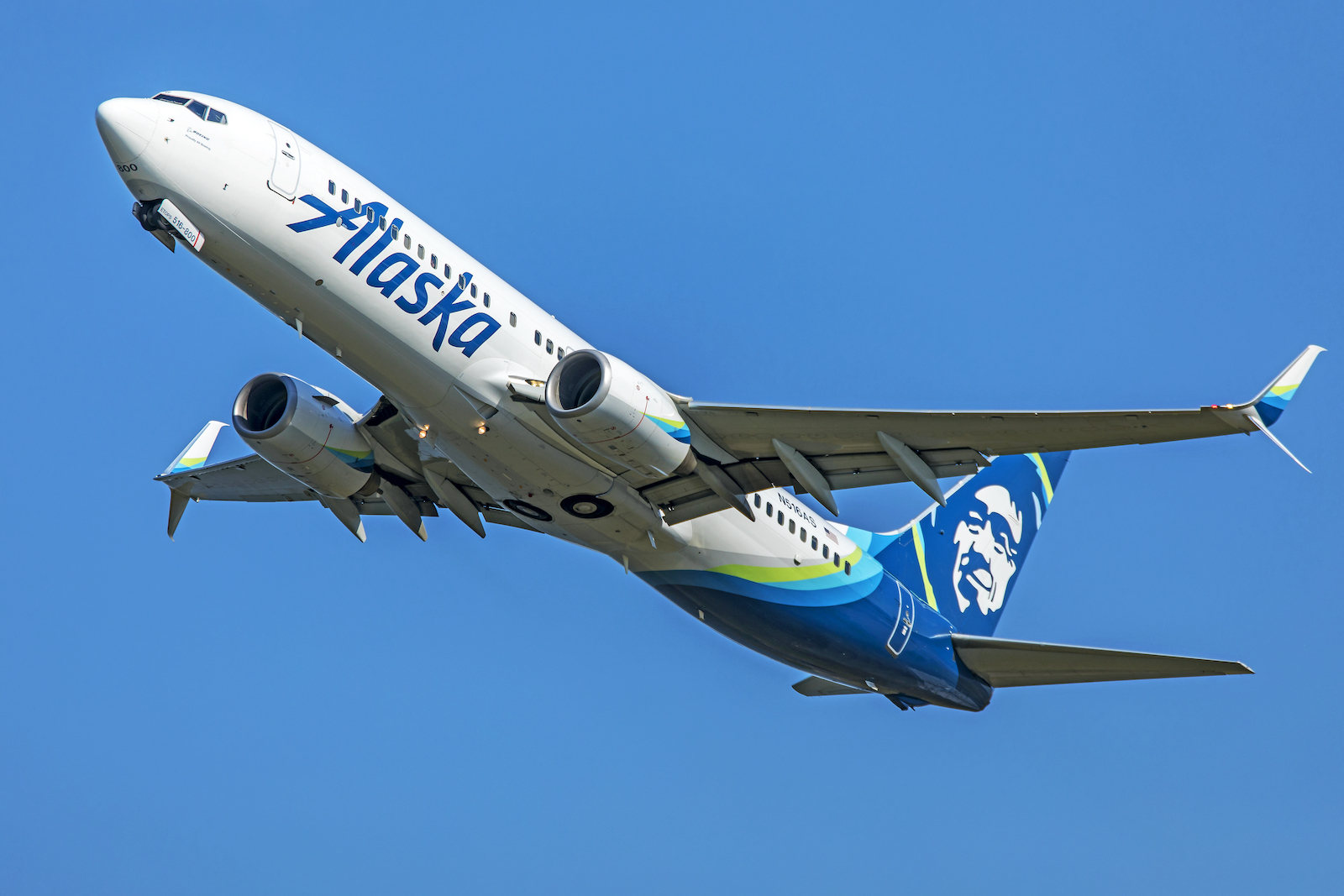
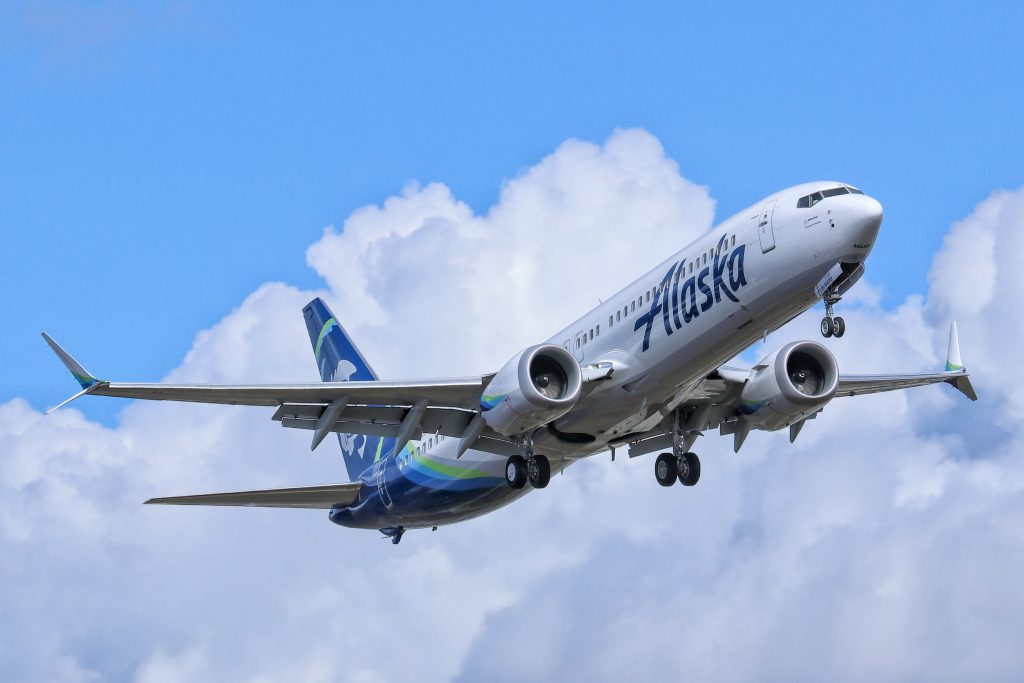
An Alaska Airlines 737-800. (Photo: AirlineGeeks | William Derrickson)
Alaska Airlines has resumed operations after a technology-related glitch forced the carrier to ground all flights for about three hours late Sunday night.
The Washington-based airline said it experienced an “IT outage that resulted in a temporary, system-wide ground stop for Alaska Airlines and Horizon Air flights” around 8 p.m. Pacific time. The stop was lifted at 11 p.m.
“As we reposition our aircraft and crews, there will most likely be residual impacts to our flights,” Alaska said. “It will take some time to get our overall operations back to normal. We apologize for the inconvenience and encourage guests to check the status of your flight before leaving for the airport.”
Horizon Air is a regional airline owned by Alaska Air Group, which also owns Alaska Airlines and Hawaiian Airlines.
Alaska did not say what caused the outage.
According to CNN, thousands of people were left temporarily stranded at Seattle-Tacoma International Airport as the airline worked to resolve the issue.
“As soon as we landed, we moved to the middle traffic lane, and they let us know there was a malfunction in the computer system,” a passenger who landed at Seattle from Nashville, Tennessee, told the network. He said he and the other passengers on his flight were allowed off the airplane after waiting for more than three hours.
Alaska was forced to ground its fleet over a year ago, in April 2024, due to a problem with the system that calculates the weight and balance of its aircraft. Months later, in September, it paused flights out of Seattle due to an unspecified technology problem that was fixed within hours.
Zach Vasile is a writer and editor covering news in all aspects of commercial aviation. He has reported for and contributed to the Manchester Journal Inquirer, the Hartford Business Journal, the Charlotte Observer, and the Washington Examiner, with his area of focus being the intersection of business and government policy.
Report: Air India Investigates Senior Pilot
ources say they heard the pilot cut off fuel switches for the Boeing 787’s engines via the aircraft’s black box recording.
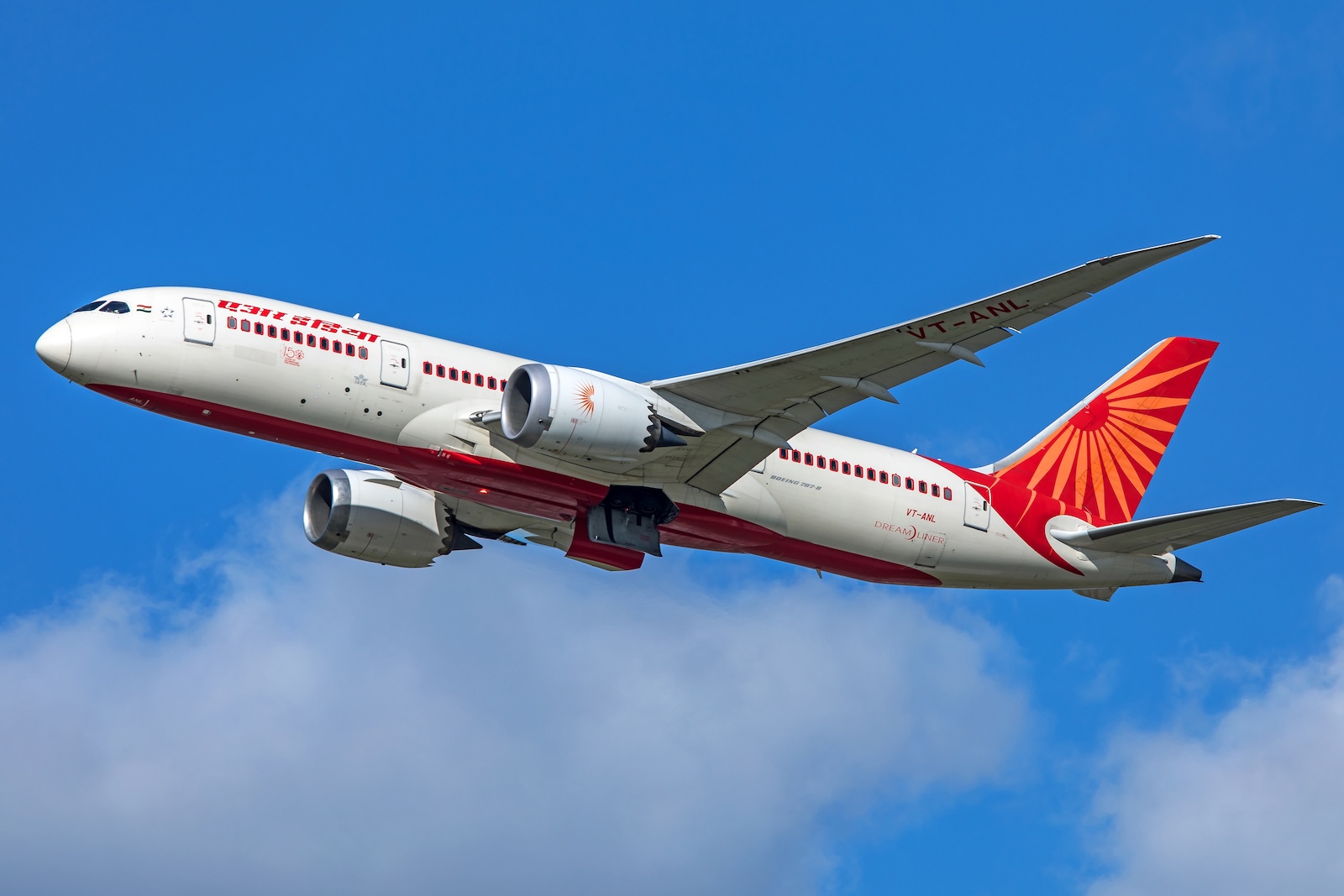
An Air India Boeing 787-8 Dreamliner. (Photo: AirlineGeeks | William Derrickson)
Investigators are looking into the actions made by a senior pilot moments before last month’s Air India crash, according to a Wall Street Journal report.
Air India flight 171 dropped from the sky during takeoff on June 12, killing all but one passenger. The incident marked the first deadly crash and total hull loss for Boeing’s 787 Dreamliner.
WSJ reported Thursday that investigative bodies probing the crash have honed in on a senior pilot in the cockpit who turned off fuel switches for both of the aircraft’s engines.
The report cited anonymous sources who claimed to have heard the black-box recording of the two pilots speaking before the incident. During that recording, the senior captain piloting the Dreamliner told his copilot he had moved switches to the “cutoff” position, which caused the other pilot to panic.
The Federal Aviation Administration ruled earlier this week that those switches were safe and functioning at the time when they were turned off.The captain, Sumeet Sabbharwal, was a veteran industry pilot. His first officer, Clive Kunder, was in his early 30s, according to WSJ.
AirlineGeeks.com was founded in February 2013 as a one-person blog in Washington D.C. Since then, we’ve grown to have 25+ active team members scattered across the globe. We are all here for the same reason: we love deep-diving into the fascinating realm of the airline industry.
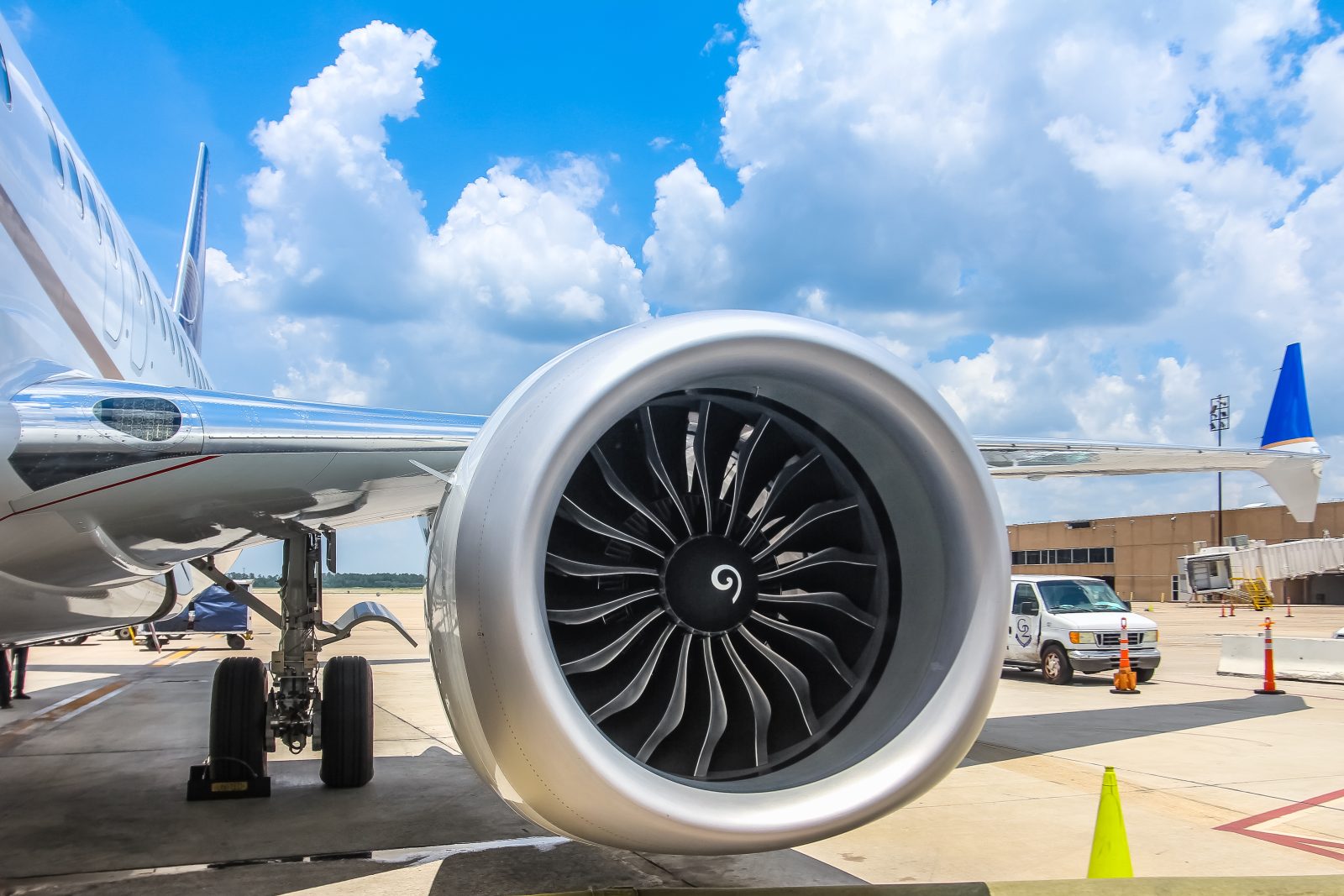
A LEAP-1B engine (Photo: AirlineGeeks | Mateen Kontoravdis)
The European Union Aviation Safety Agency (EASA) has issued a new safety warning to operators of aircraft powered by CFM International LEAP engines, warning of a potential risk of smoke contamination in the cabin and flight deck following activation of a built-in Load Reduction Device (LRD).
LEAP-1A and LEAP-1B engines, used on Airbus A320neo family aircraft and Boeing 737 MAX jets respectively, are equipped with the LRD to reduce structural loads during high fan unbalance events — such as those caused by bird strikes. When triggered, however, the LRD creates an oil leakage path that can contaminate bleed air supplied to the aircraft’s Environmental Control System (ECS), leading to smoke or fumes entering occupied areas of the aircraft.
No similar in-service events have been reported involving the Airbus A320neo family.
EASA noted that engine bleed air architecture differs between the 737 MAX and A320neo, but emphasized the importance of swift crew action in managing smoke events. If the affected engine is not shut down or isolated quickly, smoke release may continue until bleed air valves automatically close.
As a precaution, Boeing has updated its Quick Reference Handbook (QRH) and Flight Crew Operations Manual to prioritize engine fire or severe damage checklists when smoke and engine problems occur simultaneously. Airbus procedures already address similar scenarios through smoke and engine failure checklists, the agency said.
The bulletin advises operators to identify which aircraft in their fleets are equipped with LRD-enabled LEAP engines and ensure flight crews are aware of the associated risks. EASA also recommends incorporating LRD-related scenarios into recurrent pilot training programs.
Ryan founded AirlineGeeks.com in February 2013 and has spent more than a decade covering the airline business. His work has been featured by CNN, WJLA, CNET, and Business Insider. His aviation experience spans airport operations, Part 135 regulatory compliance, and airline crew workforce planning, along with time behind the yoke of a Cessna 172 and interviews with airline executives. Ryan now serves as Group President of Firecrown Media’s Aviation Group. He holds a B.S. in Air Transportation Management and an MBA from Arizona State University and teaches Airline Management at Embry-Riddle Aeronautical University.
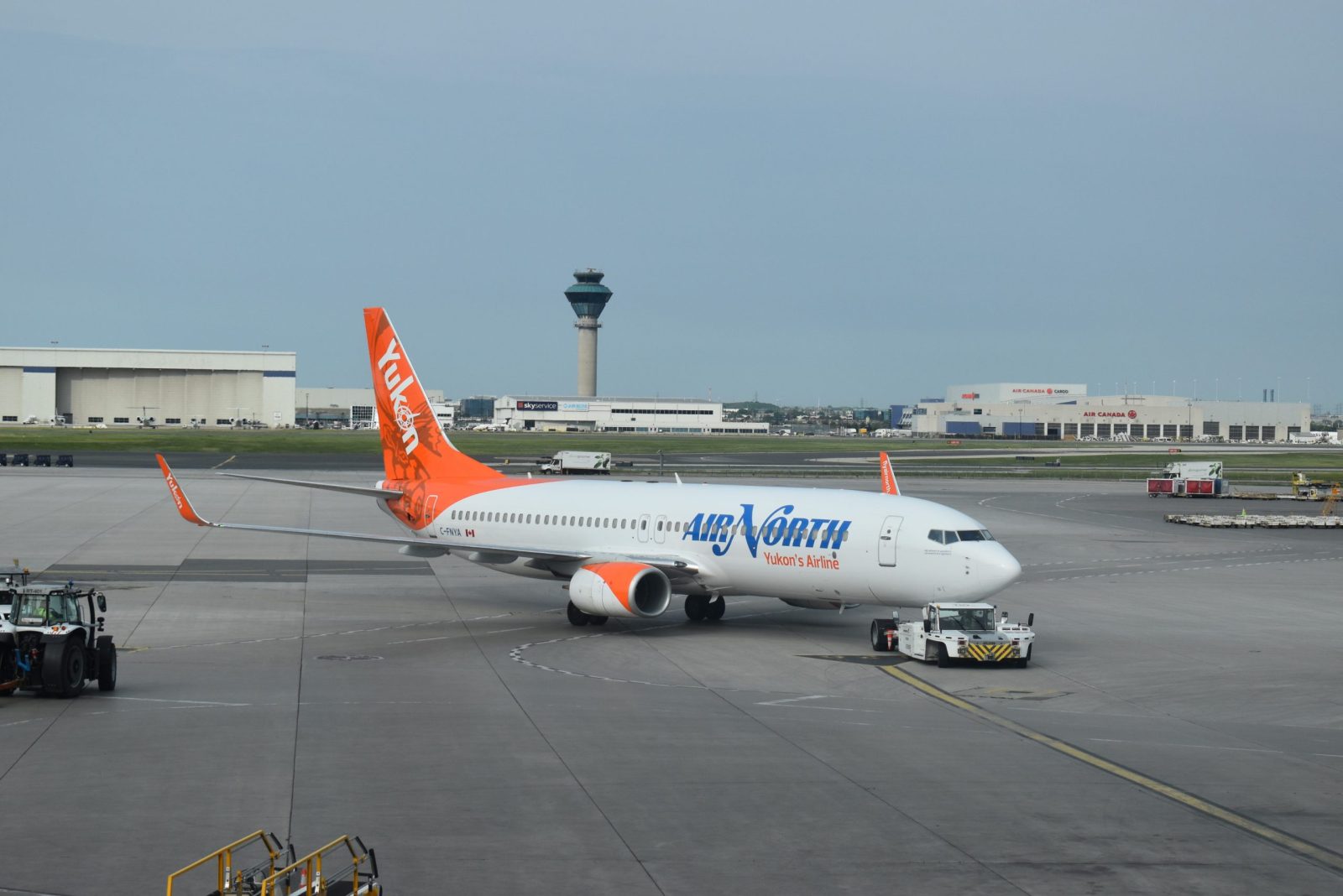
My aircraft being towed into the gate at Toronto Pearson. (Photo: AirlineGeeks | Joey Gerardi)
Air North is well known for its outstanding onboard experience, and for being one of the few airlines left in Canada that gives free meals to all passengers on every single route. For years, it has slowly been expanding from its home base in Whitehorse, Yukon, to places that make sense for Yukoners.
Back in 2022, the airline expanded flights to the country’s most populated city, Toronto, from Whitehorse with twice weekly flights during the peak summer months. However, that flight to Toronto made an intermediate stop for fuel in Yellowknife in the Northwest Territories, as they were operated on the Boeing 737-500. In the summer of 2024, the airline received its first Boeing 737-800, which boasts larger capacity and longer range.
This summer, Air North decided to convert one of those one-stop flights via Yellowknife to a nonstop flight, which began during the second week of June. We were fortunate enough to go on this inaugural nonstop flight out of Toronto on what is now the longest scheduled flight in the airline’s 48-year history. Just like the one-stop flight, this nonstop flight from Whitehorse to Toronto operates outbound one day, and then returns to Whitehorse the next day so they can use the same crew.
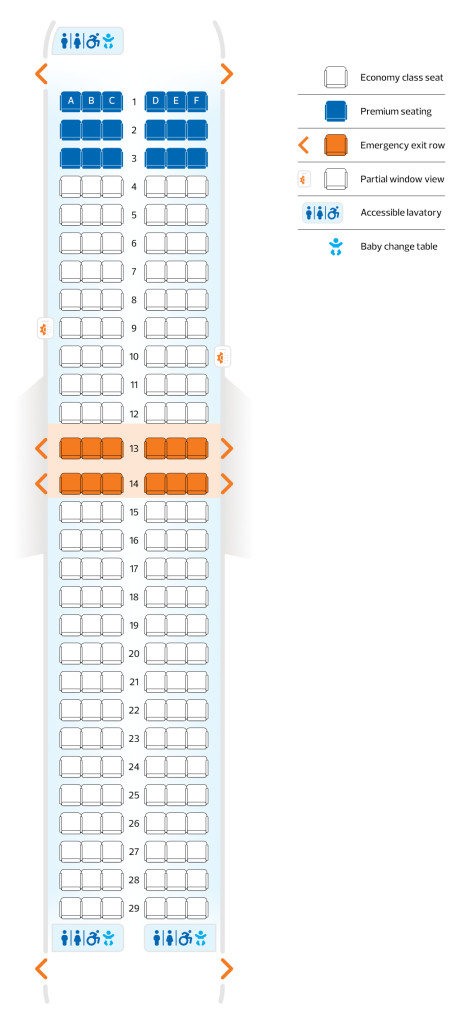
When selecting your seat on the flight, Air North does a really good job of showing which seats have windows and which don’t. As an AvGeek we all know the pain of selecting a window seat, and then getting on the plane and finding a blank windowless wall where your seat is. With Air North you avoid this, as their booking site has seat maps for every aircraft in their fleet showing what seats have windows, which don’t, and which have partial windows.
A seat map of Air North’s Boeing 737-800. (Photo: Air North)
Day of the Flight
I was already in Toronto, so I headed to the airport about three hours before departure time. With only one nonstop flight a week from Toronto to Whitehorse, you don’t want to miss it, so make sure to arrive early. Air North operates from Terminal 1 at Toronto Pearson International, and at this time of the morning there weren’t a lot of flights leaving, so security wasn’t awful.
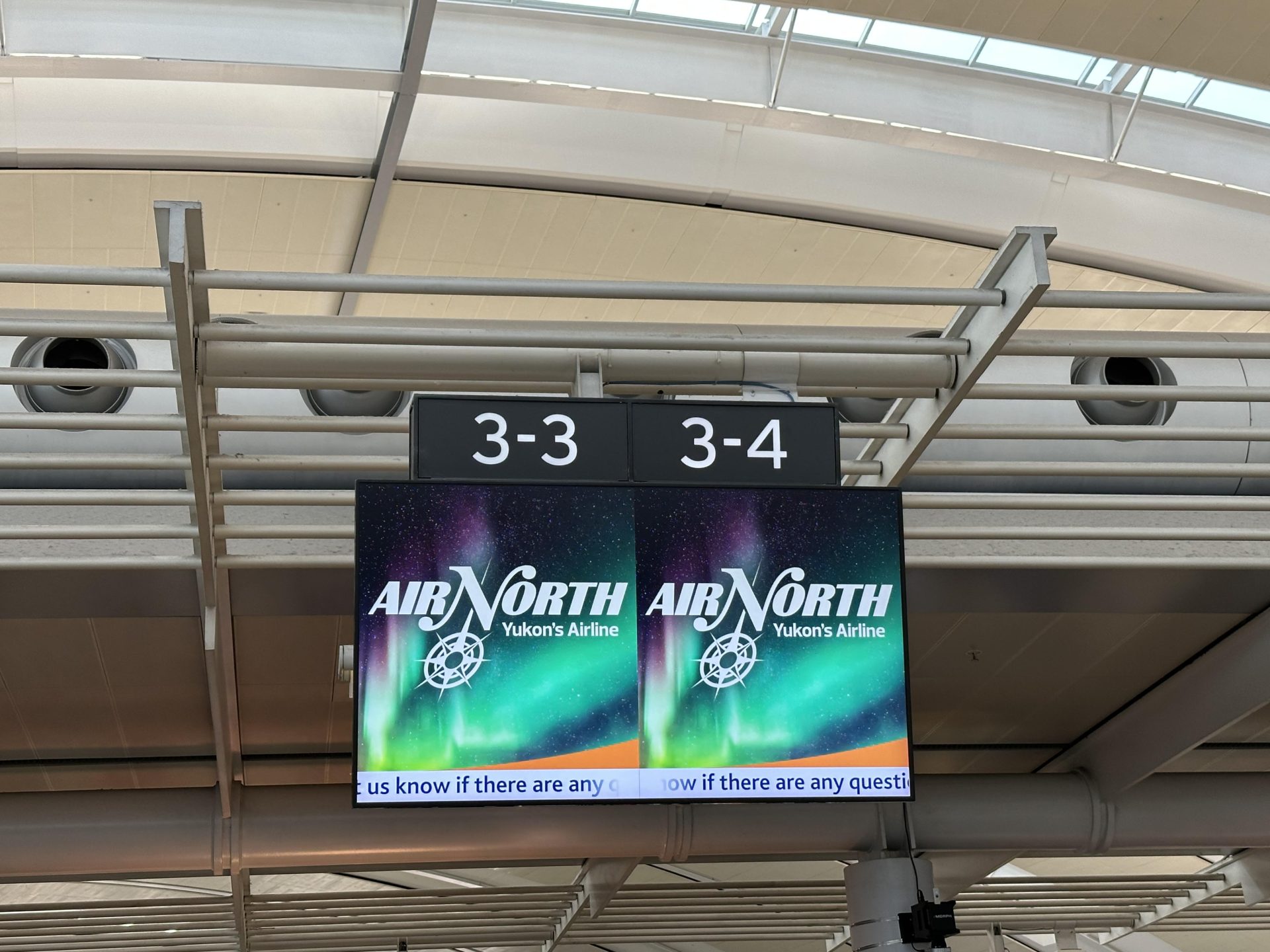
Air North’s ticket counter signs at Toronto Pearson. (Photo: AirlineGeeks | Joey Gerardi)
As mentioned, the aircraft sits at Toronto overnight, so about 1.5 hours before the flight it was towed into our departure gate. Although this was an inaugural flight, Toronto is not a new city for the airline, so there was no fanfare at the gate or on board. Even so, it was still fun being a part of this event in the airline’s history.
My aircraft for the flight up to Whitehorse would be C-FNYA, a Boeing 737-800 that was originally built in 2011 and came to Air North in October 2024, as the airline’s second Boeing 737–800. The aircraft has something interesting painted on the front of it: “Jidii nakhwats’oo gogwijiłcheii nakhwadrii ts’at tr’agwanah’in,” which is Gwich’in for “Vision the heart sees,” a phrase that was selected by the Vuntut Gwitchin First Nation, which owns 49 percent of Air North. This name is painted on the nose of both the airlines’ Boeing 737-800s.
Boarding begins about 40 minutes before departure. Since Air North boards aircraft from back to front, and because my seat was toward the front of the cabin, I was one of the last passengers on board the airplane.
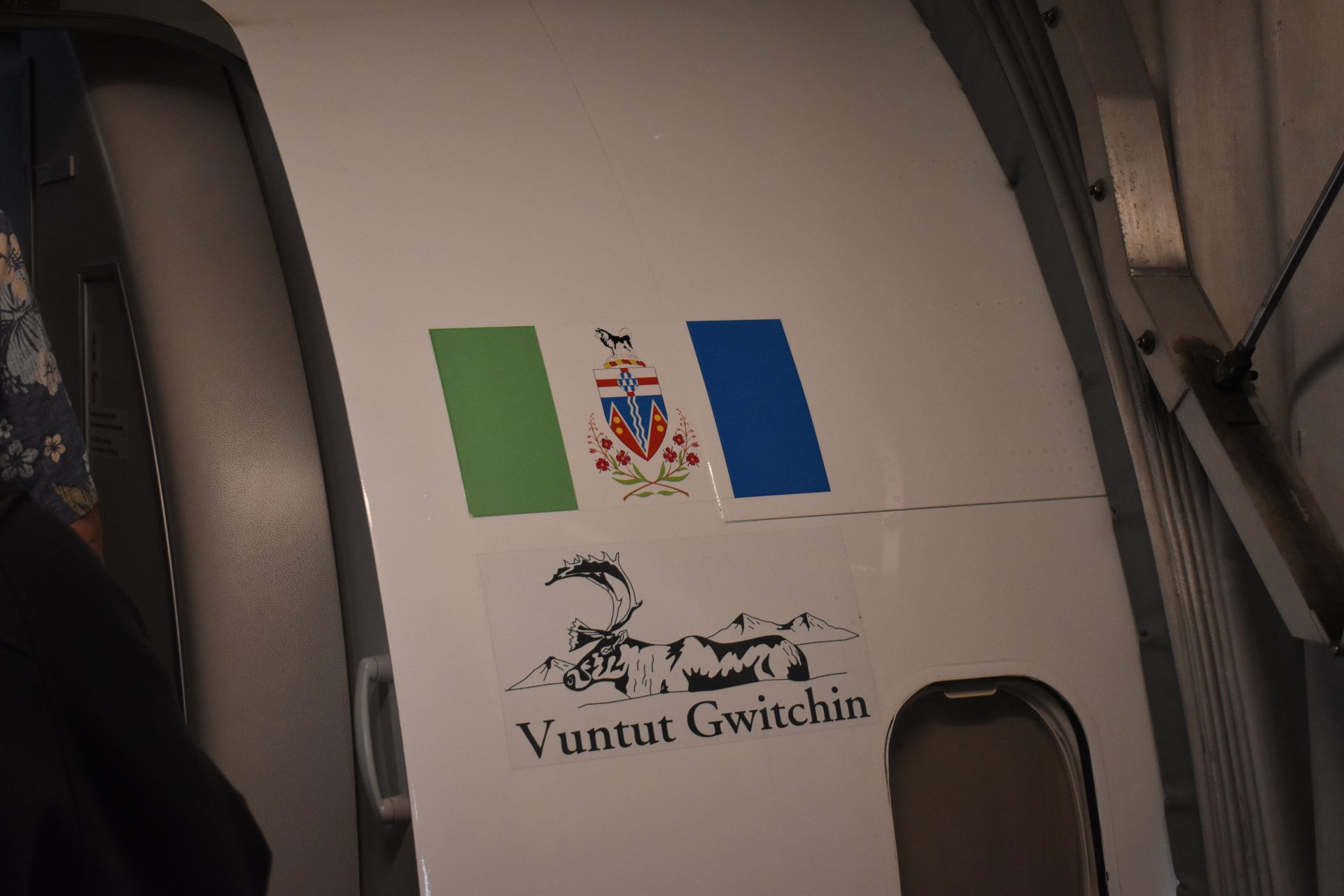
Next to the door of the aircraft was the Yukon flag, the words “Vuntut Gwitchin,” and a picture of a caribou, a symbol of survival, pride, and strength for the Vuntut Gwitchin for thousands of years.
Next to the entry door for my Air North flight. (Photo: AirlineGeeks | Joey Gerardi)
This was a Boeing Next Generation aircraft, so the cabin was newer looking, with blue mood lights along the ceiling. My seat was 5F, a window seat on the right side of the aircraft.
Start-up and pushback didn’t take very long at all, and per Canadian regulations, all of the announcements were made in English as well as French.
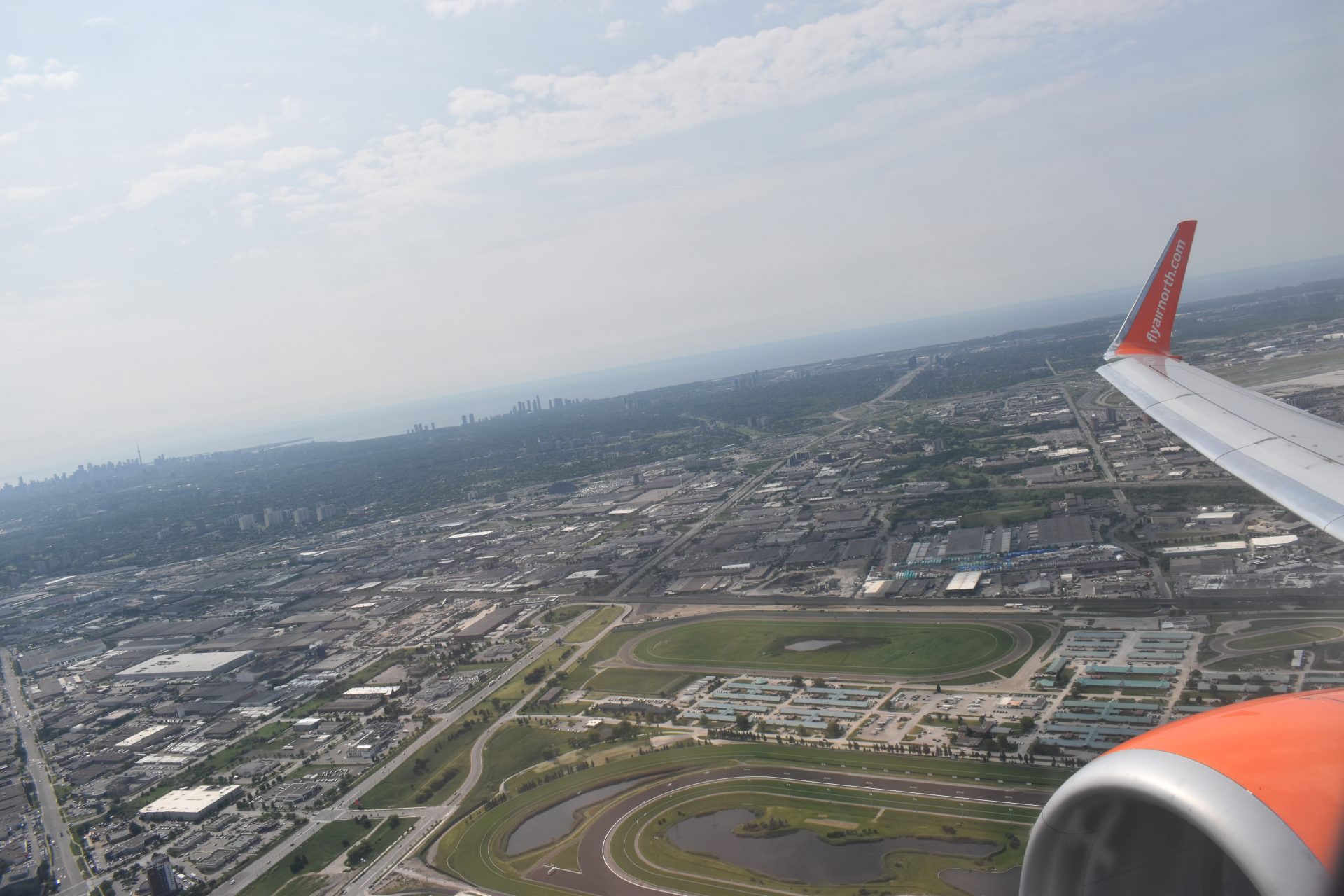
After a quick taxi to the runway, we were in the air for the long flight up to Whitehorse. It was a nice day in Toronto, and I could even see downtown in the distance.
Taking off from Toronto Pearson. (Photo: AirlineGeeks | Joey Gerardi)
It didn’t take us very long to climb up to a cruising altitude of 36,000 feet, after passing through a handful of clouds on the way up.
There was a decent amount of space on board the plane, including at my feet, even when there was a bag under the seat. In the seatback pocket, there’s a magazine as well as a sick bag and of course, a safety card. In the magazine, there is information about the aircraft in the fleet as well as the route map, which does not yet have the Toronto to Whitehorse nonstop line, though I imagine the next issue will.
In the Air
First to come out was the drink cart, and they offered many free drink options like roasted coffee, soft drinks, and juice. They also offer alcohol, but that you have to purchase. The meal choices for the main course were then explained. They had chicken Alfredo pasta, beef brisket, or tofu.
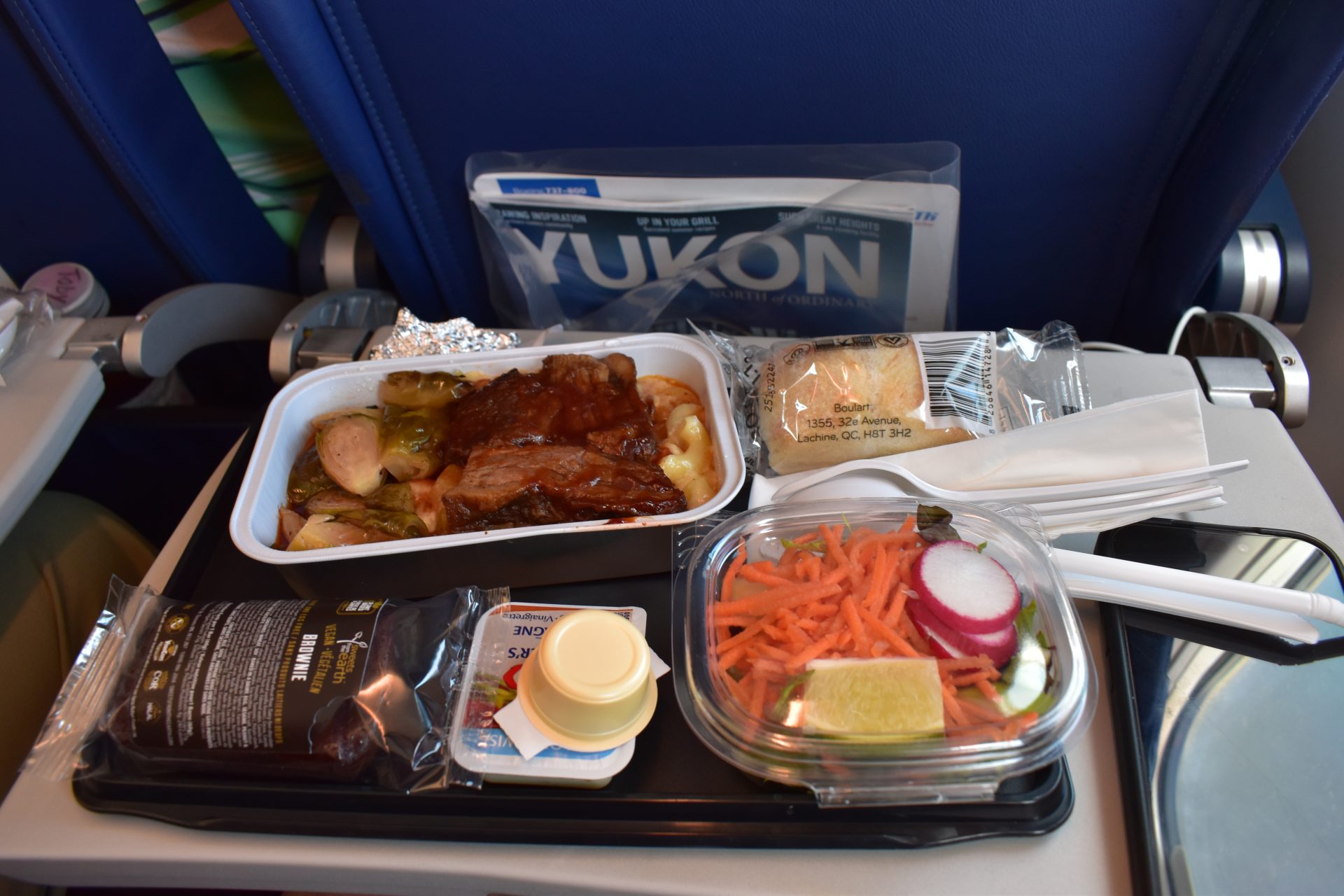
I chose the beef brisket as I was curious how an airline would prepare it. This option came with Brussels sprouts and mac and cheese, with bread and butter on the side, as well as a salad and a brownie for dessert. I will say it was nice seeing the meals being handed out using actual oven mitts, as it gave it that extra homemade touch.
My hot beef brisket meal on Air North. (Photo: AirlineGeeks | Joey Gerardi)
The food was super good, and it isn’t very often you find hot meals for all passengers, let alone with multiple options, on flights that aren’t long-haul flights with widebody aircraft.
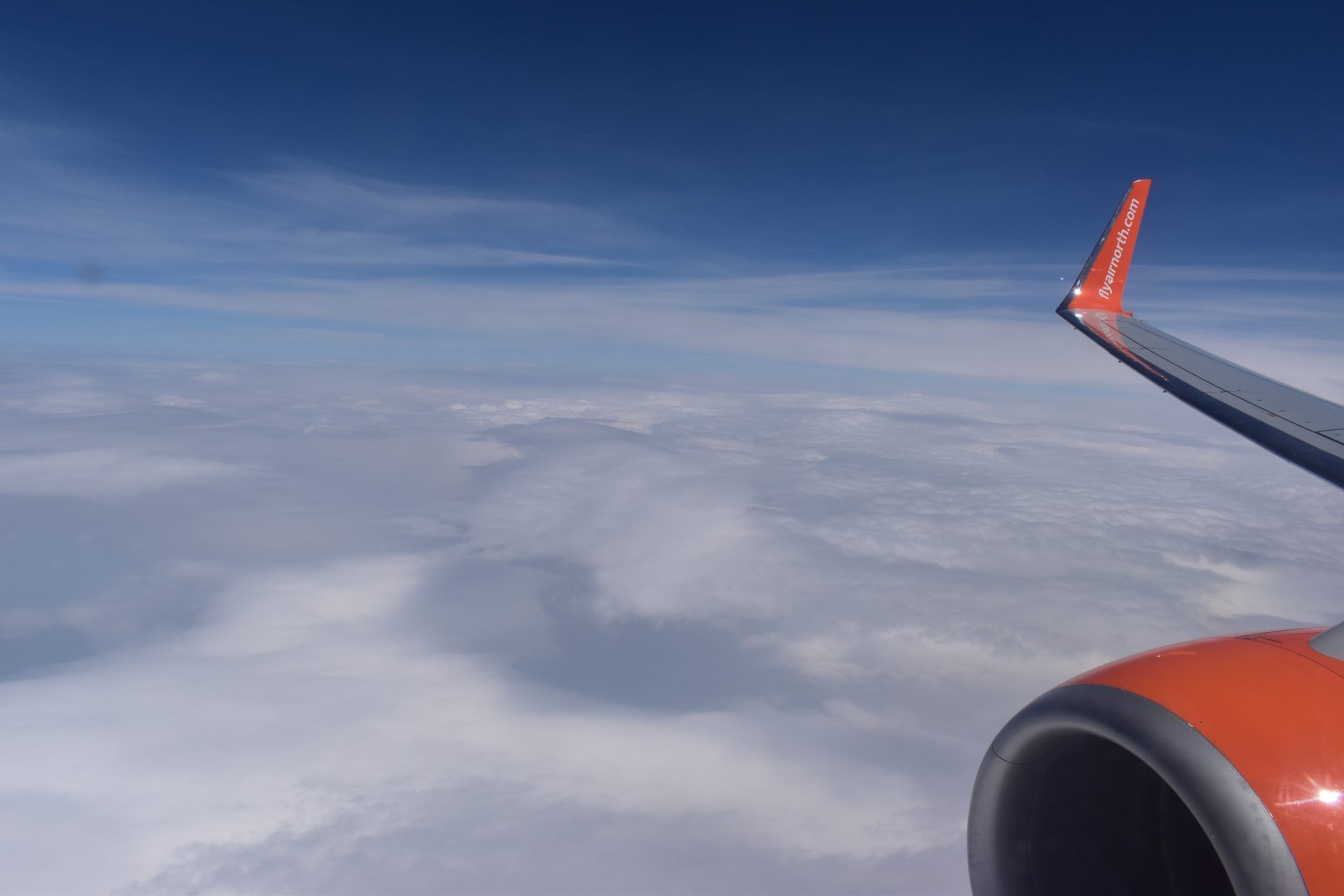
Not very long after the food was cleaned up, the sky was covered with clouds and smoke due to some fires in southern Canada. I fell asleep without realizing it, and I woke up just before starting our descent into Whitehorse.
Another thing the airline is widely known for is its warm cookies before landing. Unfortunately, I slept through it on this particular flight, but I did get one on another Air North flight I took a couple of days later, which was from Whitehorse down to Vancouver.
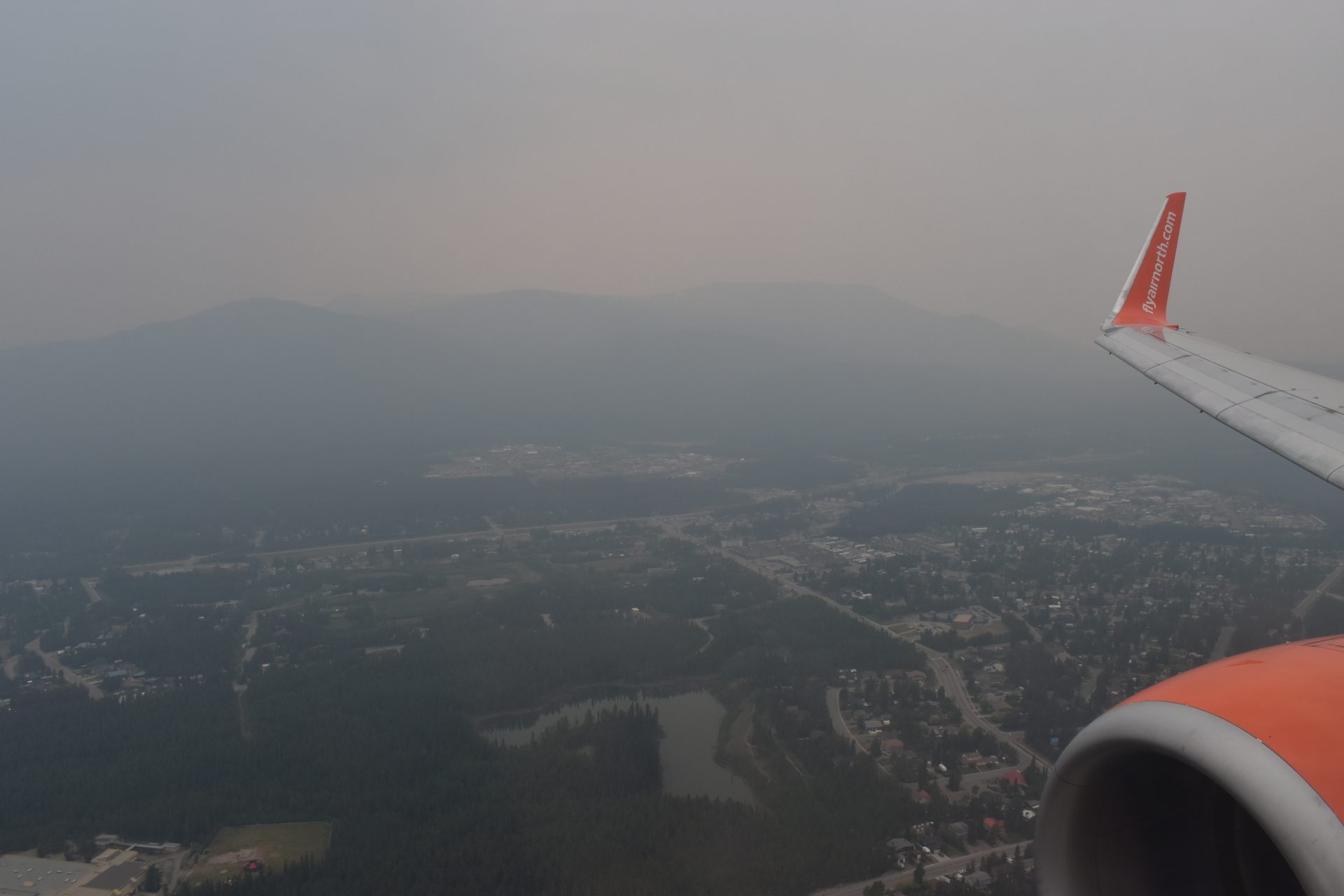
Due to the fires, the view wasn’t the greatest going into Whitehorse, but I was still able to see the outline of mountains in the distance as well as the Yukon River.
Had there been no smoke, I would’ve been treated to some beautiful views of snow-capped mountains, even in mid-June, as we are relatively close to the Arctic Circle.
Going into smoky Whitehorse. (Photo: AirlineGeeks | Joey Gerardi)
We landed just before 1 p.m., after 5 hours and 37 minutes of flying time from Toronto. The airport had a handful of construction projects going on so we used the shorter runway, and we also had to go to the end and turn around before back-taxing along the runway to get to the terminal.
Conclusion
I had an absolutely fantastic time on board this inaugural nonstop flight from Toronto to Whitehorse, and although there wasn’t any fanfare or celebration for the flight, I’m glad I got to be on board.
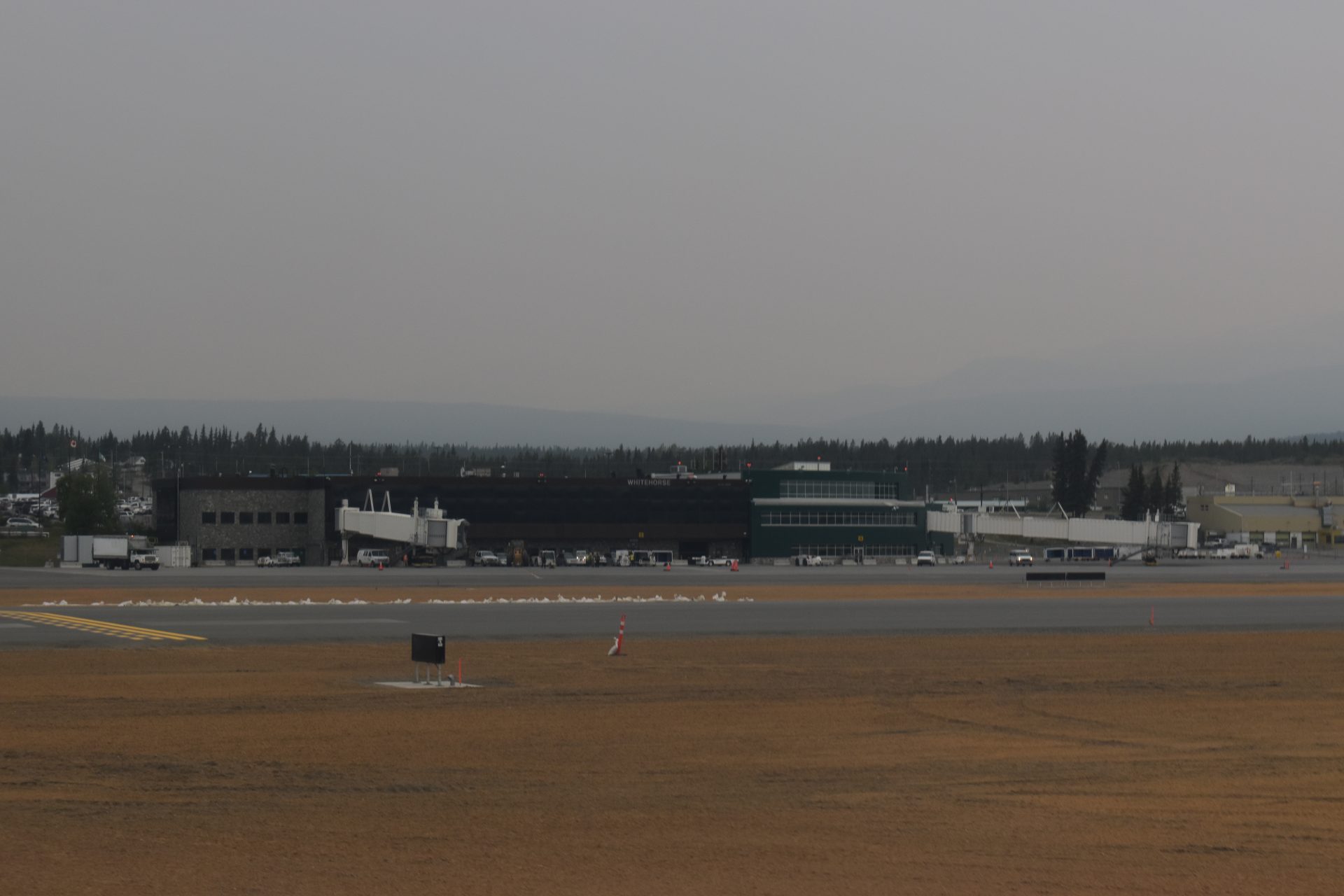
The terminal in Whitehorse. (Photo: AirlineGeeks | Joey Gerardi)
The food was fantastic, and the crew was amazing as well. I wish more airlines would have free hot meals for all passengers on longer flights that cross the country like these, as they give passengers the feeling of an elevated experience and make them want to come back.
I would like to mention that I talked to a couple people on board who had been on the flight from Toronto to Whitehorse when it stops in Yellowknife, and they were not aware they had booked themselves a nonstop flight from Toronto to Whitehorse. But they said they were very happy they did, as the stop in Yellowknife adds an hour or two to this already long journey.
The outbound flight from Whitehorse to Toronto operates on Thursdays, with the return to Whitehorse occurring on Friday.
This nonstop Toronto to Whitehorse route began in mid-June 2025 and continues until the middle of August 2025, at which point the nonstop will end for the season and will convert back to a one-stop flight via Yellowknife for the rest of the season, which ends in October. While the airline can’t say for certain, they did mention that this nonstop flight was hugely successful and they imagine it will be back again for the peak summer season next year.
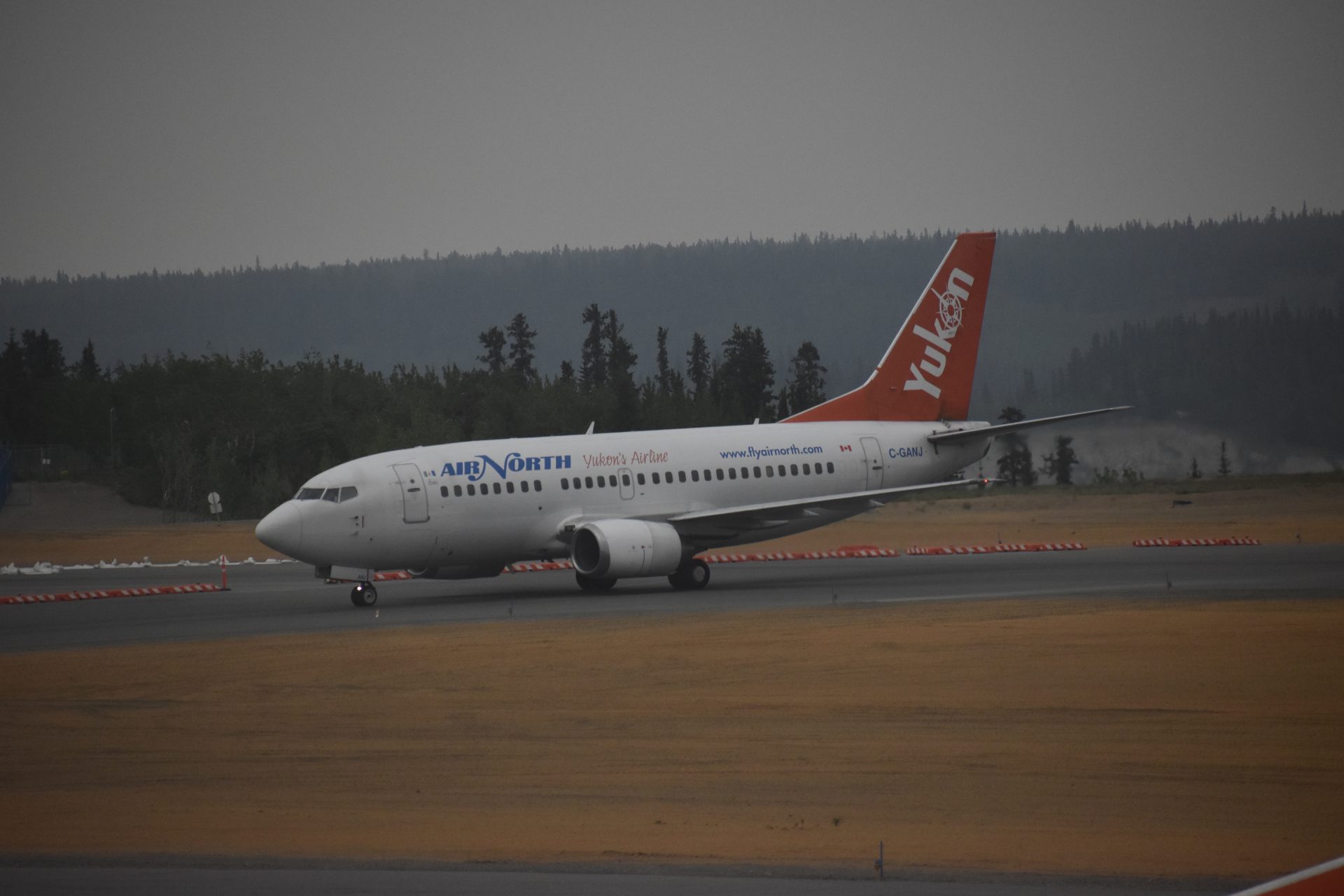
An Air North Boeing 737-500. (Photo: AirlineGeeks | Joey Gerardi)
While in Whitehorse, I was able to go on a couple more of Air North’s flights, including their classic Boeing 737–500 and ATR, along with an awesome interview with the airline’s CEO, Joe Sparling. Articles for all of these will be out in the near future.
A video account of this trip report can be found below.
Editor’s Note: Air North provided AirlineGeeks with a seat on this flight, but this trip report is an objective portrayal of events and is in no way swayed.
Joey has always been interested in planes for as long as he can remember. He grew up in Central New York during the early 2000s when US Airways Express turboprops ruled the skies. Being from a non-aviation family made it harder for him to be around planes and would only spend about three hours a month at the airport. He was so excited when he could drive by himself, the first thing he did with his driver's license was get ice cream and go plane spotting for the entire day. He graduated from Western Michigan University in 2022 with a B.S. in Aviation Management & Operations and a Minor in Business, and currently works for a major airline in his hometown.
TAAG Expands East African Reach with New Luanda–Nairobi Route
The airline will operate three weekly flights using its modern Airbus A220-300 aircraft, further enhancing connectivity between Southern and Eastern Africa.
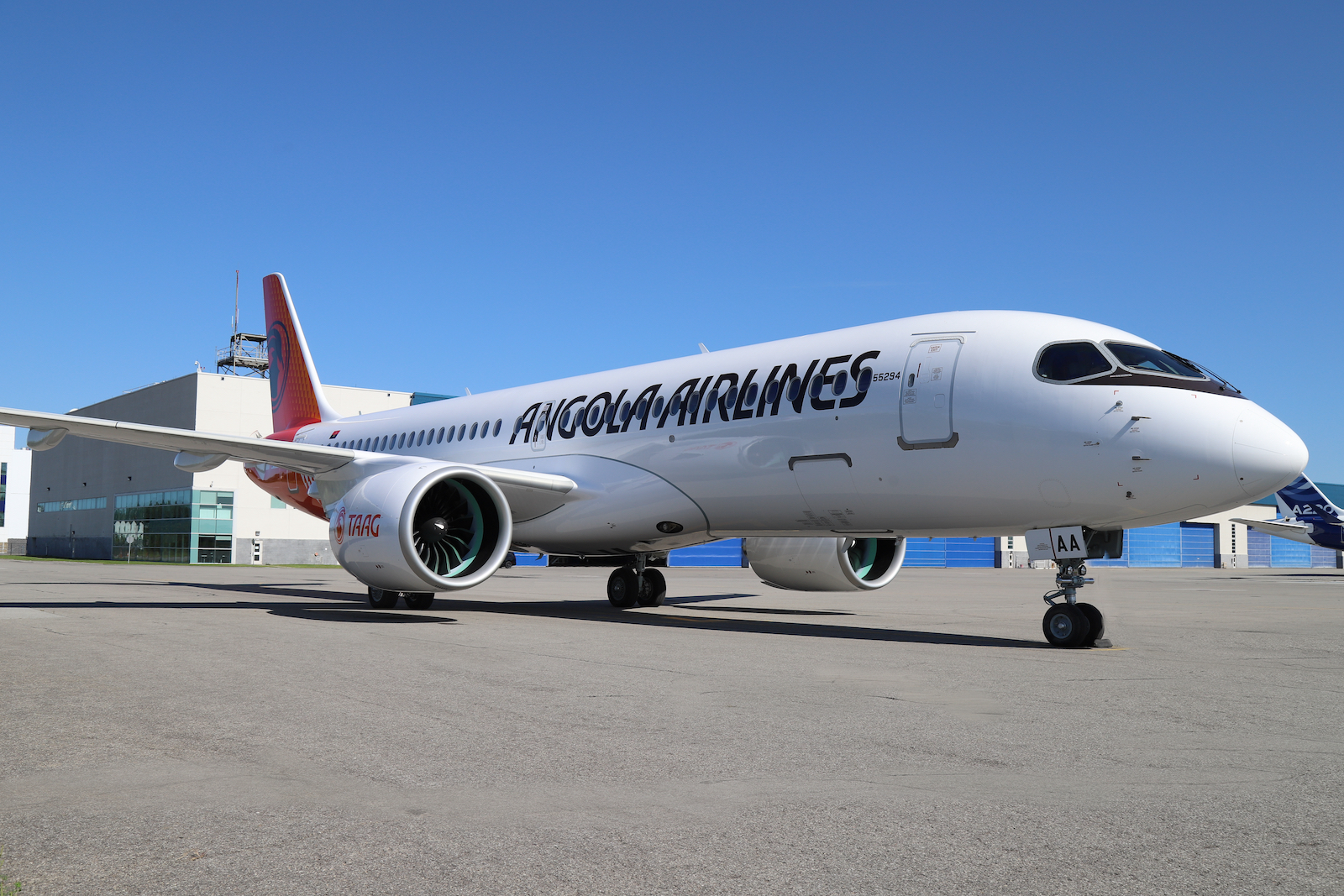
TAAG Angola Airlines has announced the launch of a new Luanda–Nairobi route, with commercial passenger services set to begin on September 1. The airline will operate three weekly flights using its modern Airbus A220-300 aircraft, further enhancing connectivity between Southern and Eastern Africa.
In a statement cited by Portuguese news outlet Publituris, TAAG described Nairobi as “a vibrant African capital where wild nature meets modern culture.” The Kenyan capital is widely regarded as a key regional hub and a critical transit point linking Africa to Asia and Europe. Kenya itself is one of the continent’s most dynamic economies, making this new route a strategic addition to TAAG’s growing network.
The airline emphasized that this expansion will boost mobility options for travelers, support bilateral trade, and strengthen diplomatic ties between Angola and East Africa.
This development follows the successful launch of TAAG’s weekly cargo service between Luanda and Nairobi, which began on April 30, 2025. Operated every Wednesday, the freighter route primarily handles flowers and perishables, capitalizing on Kenya’s position as one of the world’s largest flower exporters. With a cargo capacity of up to 18,000 kilograms per flight, the route is expected to transport as much as two million kilograms annually.
Beyond Nairobi, TAAG is also expanding its regional footprint with plans to introduce passenger flights to Pointe-Noire in the Republic of Congo and Libreville, Gabon. This follows a successful technical audit by Gabon’s civil aviation authority (ANAC Gabon), conducted in Luanda from June 9 to 13, 2025. As part of the audit, a TAAG Boeing 737 (registration D2-TBW) underwent a comprehensive review to ensure compliance with safety and performance standards.
TAAG has identified Abidjan, Côte d’Ivoire, as another potential destination, although a formal launch date has not yet been announced.
A220 Fleet Expansion
Meanwhile, TAAG’s fleet modernization strategy continues to gain momentum. In June 2025, the airline welcomed its third Airbus A220-300, registered D2-TAI. The aircraft arrived in Luanda from Montreal, with a technical stop in Faro, Portugal. This delivery is part of TAAG’s 2024–2029 Strategic Plan, which aims to enhance regional connectivity and improve operational efficiency.
Earlier aircraft deliveries include D2-TAF (MSN 55334) received in March 2025, and D2-TAA delivered in September 2024. All aircraft are configured with 137 seats—12 in business class and 125 in economy—and are powered by Pratt & Whitney PW1500G engines. These engines deliver a 25% reduction in fuel consumption and CO₂ emissions per seat compared to older models.
TAAG’s A220s are being sourced through leasing agreements with four major lessors: Air Lease Corporation (6 aircraft), Aviation Capital Group (4), Azorra (3), and Nordic Aviation Capital (2). While initial deliveries were scheduled for early 2024, the timeline was adjusted, with ongoing deliveries continuing through 2027.
Victor Shalton's love for aviation can be traced to when he was 11-years-old. As a seasoned aviation writer, he takes pride in providing the best aviation coverage around the globe and is passionate about advancing his skills in the aviation space. In addition, he loves travelling, writing, arts and while his speaking engagements have taken him around the world, he is proud to call Nairobi home.
Passengers Seeking $1B Over Alaska Blowout Settle Out of Court
Passengers who brought a $1 billion lawsuit against Boeing and Alaska over a door plug blowout on a flight in 2024 have settled with the companies out of court.
One of the attorneys representing the passengers told Oregon-based KPTV this week that the terms cannot be disclosed as part of the settlement agreement. The lawsuit was dismissed with prejudice, meaning the plaintiffs cannot file the same claim again.
Boeing built the 737 MAX 9 involved in the incident, and Alaska was the operator.
The three passengers initiated civil proceedings against the companies in March of last year, citing severe mental distress.
“They were left with a screen porch for an airplane,” attorney Jonathan Johnson told KPTV at the time. “They were left looking outside while they were flying in an airplane. Of course, at the time, they thought they were going to die in a plane crash. They were super distressed after landing.”
An Alaska Airlines 737 MAX 9 at Paine Field. (Photo: AirlineGeeks | Katie Zera)
The plaintiffs were seeking $1 billion because the door plug could have gone into the aircraft’s engine or destroyed the tail, which “could have caused the entire plane to crash and killed a whole plane-full of people,” Johnson added.
The door plug failed about six minutes into the Alaska flight from Portland, Oregon, to Ontario, California, in January 2024. The aircraft experienced a decompression, which damaged parts of the cabin interior and dropped unsecured items like cellphones, paper, clothing, and children’s toys onto the Portland suburbs below. The 737 MAX returned to the airport and landed without further incident. One flight attendant and seven passengers received minor injuries, and no one was killed.
A final report from the National Transportation Safety Board assigned ultimate responsibility to Boeing for failing to provide adequate training and oversight for its workers. The door plug was manufactured by Spirit AeroSystems, but the NTSB found it was removed from the aircraft fuselage and reinstalled with missing parts while at Boeing’s facility in Renton, Washington.
Zach Vasile is a writer and editor covering news in all aspects of commercial aviation. He has reported for and contributed to the Manchester Journal Inquirer, the Hartford Business Journal, the Charlotte Observer, and the Washington Examiner, with his area of focus being the intersection of business and government policy.
American Adds New 500-Mile Route
The flights will be operated with Embraer 175 aircraft, departing Destin in the early morning and returning late in the evening.
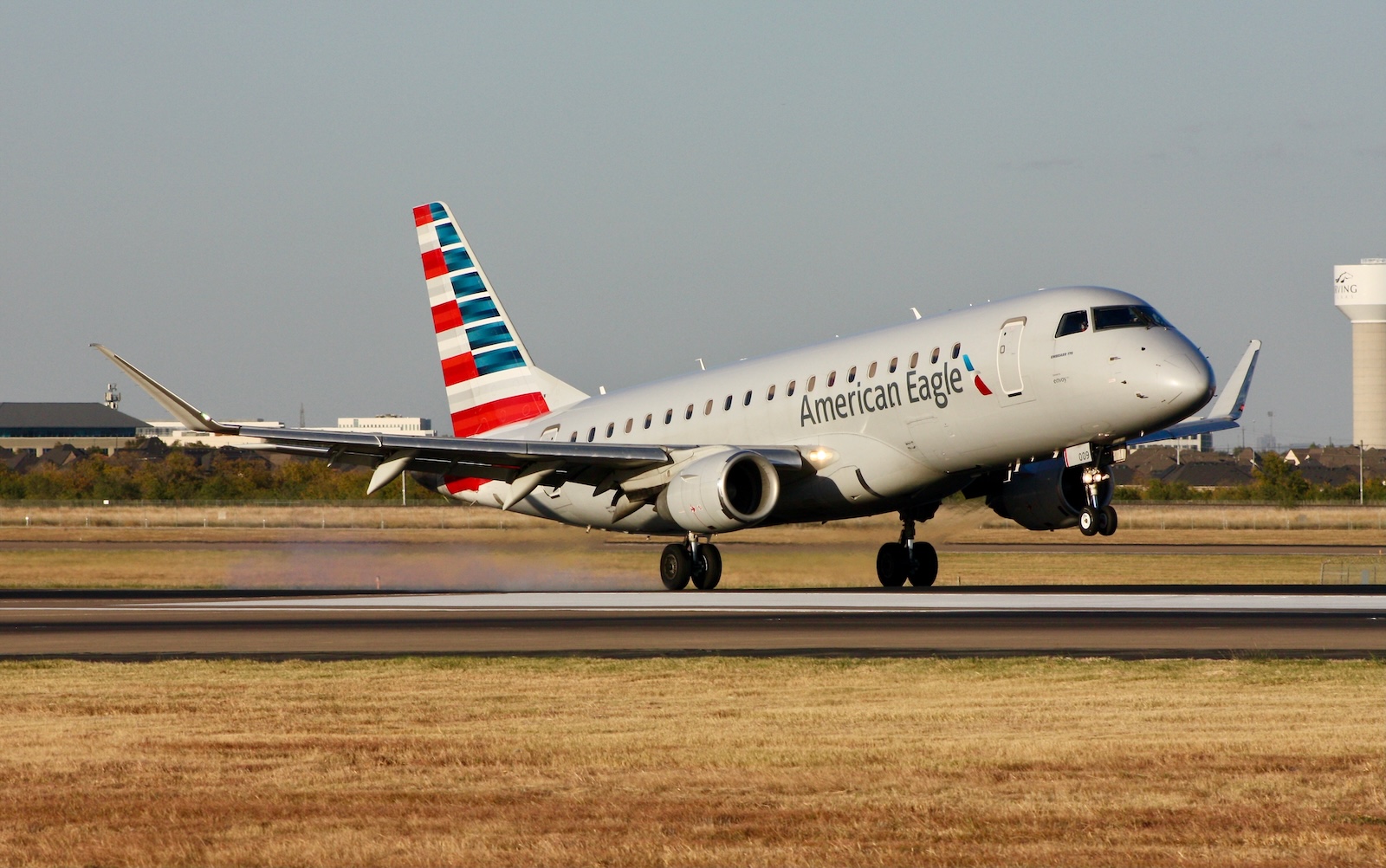
An American Eagle E175. (Photo: Shutterstock | Austin Deppe)
American is expanding its schedule at Destin-Fort Walton Beach Airport in Florida with the addition of a new nonstop route and extended year-round service on a current destination. The announcement continues the carrier’s long-standing presence at the Florida Panhandle airport.
Beginning Dec. 19, the airline will launch daily nonstop service to its Miami hub, marking a new 500-mile intrastate connection. The flights will be operated with Embraer 175 aircraft, departing Destin in the early morning and returning late in the evening.
Chicago Expansion
In addition to the new Florida service, American will expand its Chicago O’Hare route to operate year-round. The flights, which were previously offered seasonally, will now run daily throughout the winter and summer.
Jason Reisinger, American’s managing director of global network planning, said the new routes “will complement American’s existing flights to Charlotte, Dallas-Fort Worth, and Washington, D.C.”
Flights will be available for booking starting July 21, the airline said.
Ryan founded AirlineGeeks.com in February 2013 and has spent more than a decade covering the airline business. His work has been featured by CNN, WJLA, CNET, and Business Insider. His aviation experience spans airport operations, Part 135 regulatory compliance, and airline crew workforce planning, along with time behind the yoke of a Cessna 172 and interviews with airline executives. Ryan now serves as Group President of Firecrown Media’s Aviation Group. He holds a B.S. in Air Transportation Management and an MBA from Arizona State University and teaches Airline Management at Embry-Riddle Aeronautical University.
Editor’s Note: AirlineGeeks is proud to present our ‘Livery of the Week’ series. Every Friday, a team member will share an airline livery, which can be from the past, present, or even a special scheme. Some airline liveries are works of art. The complexity associated with painting around critical flight components and the added weight requires outside-the-box thinking from designers. The average airliner can cost upwards of $200,000 to repaint, creating a separate aircraft repainting industry as a result.
Have an idea for a livery that we should highlight? Drop us a line.
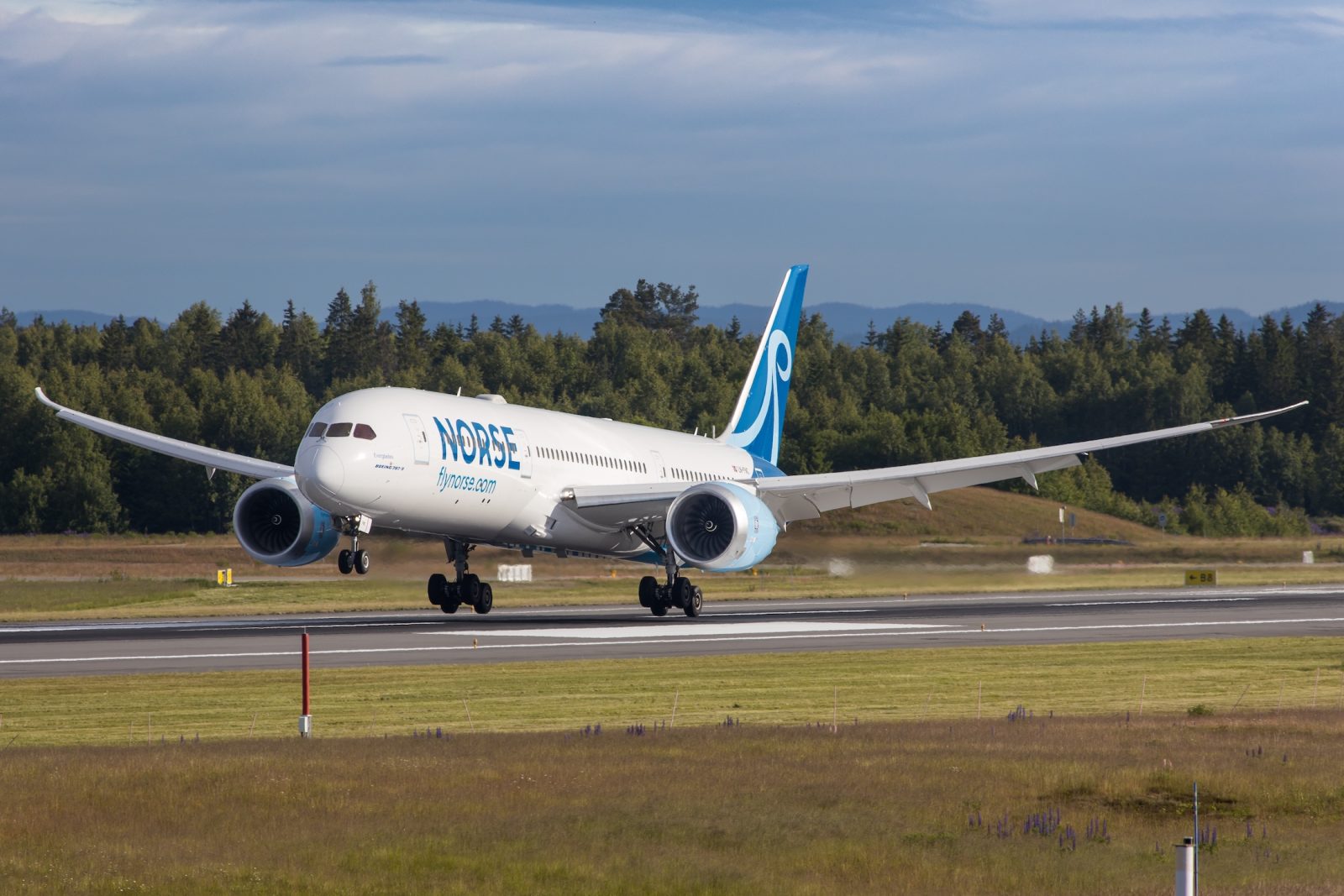
Since launching operations in 2022, Norse Atlantic Airways has stood out on the ramp with a livery that feels both modern and rooted in heritage. The Oslo-based carrier, which operates a fleet of Boeing 787 Dreamliners, combines clean Scandinavian aesthetics with branding that nods to its Viking namesake.
The most distinctive feature is the livery’s dominant use of a rich ocean blue, covering the lower half of the fuselage and the engines. It’s a shade that evokes the North Atlantic routes the airline specializes in, while providing a sharp contrast to the upper fuselage’s bright white.
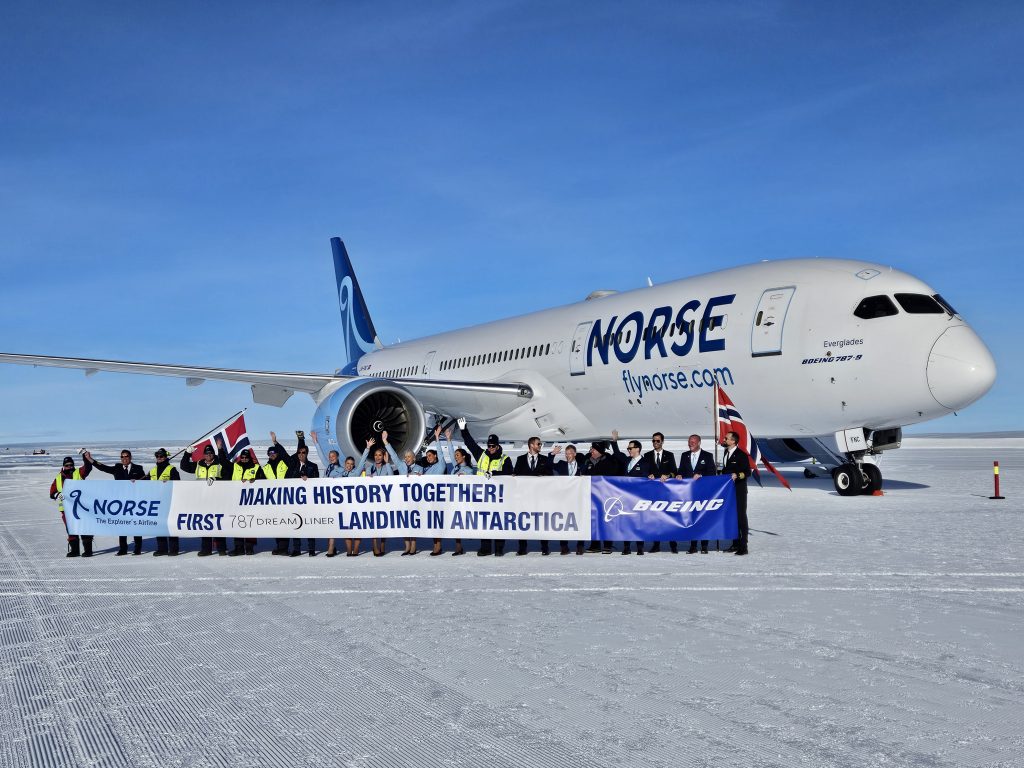
Norse’s Boeing 787 arrives in Antarctica (Photo: Norse Atlantic Airways)
Running along the forward fuselage is the airline’s name in bold, custom sans-serif type, with the stylized “O” echoing the shape of a Viking shield. The wordmark is colored in the same blue as the underbelly, creating a seamless design that blends heritage with sleek minimalism.
The tail design completes the look with Norse’s signature logo — a stylized Viking longship in white set against a blue background — giving a subtle nod to Norway’s maritime past. The winglets feature a clean blue-to-white gradient, adding a dynamic touch when viewed from the cabin or the ramp.
Compared to legacy carriers’ more conservative designs or ultra-low-cost operators’ attention-grabbing liveries, Norse strikes a balance: simple, confident, and unmistakably Nordic.
Looking for a new airplane model? Head over to our friends at the Midwest Model Store for a wide selection of airlines and liveries.
Ryan founded AirlineGeeks.com in February 2013 and has spent more than a decade covering the airline business. His work has been featured by CNN, WJLA, CNET, and Business Insider. His aviation experience spans airport operations, Part 135 regulatory compliance, and airline crew workforce planning, along with time behind the yoke of a Cessna 172 and interviews with airline executives. Ryan now serves as Group President of Firecrown Media’s Aviation Group. He holds a B.S. in Air Transportation Management and an MBA from Arizona State University and teaches Airline Management at Embry-Riddle Aeronautical University.
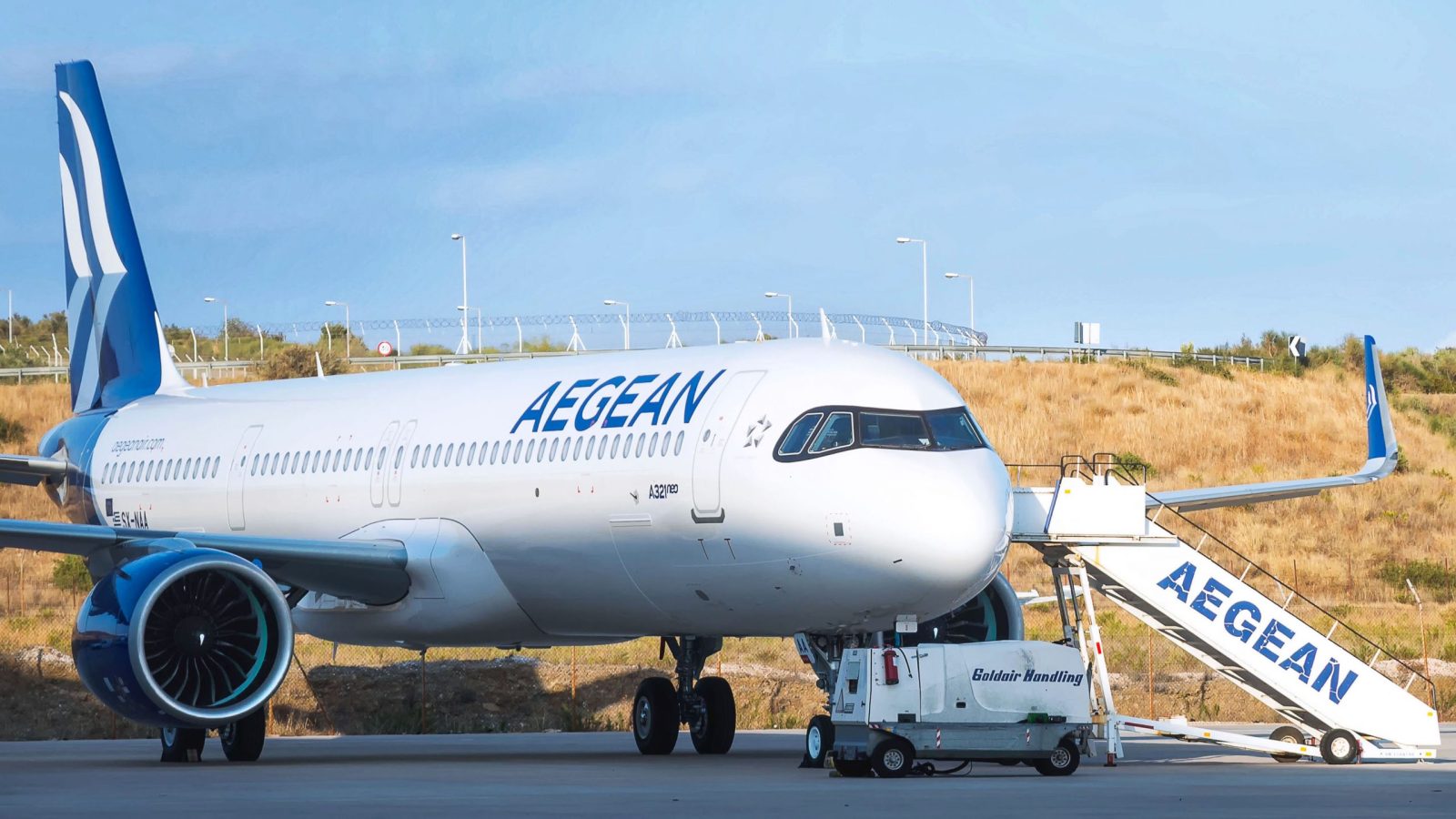
The Greek flag carrier announced Wednesday that it will take delivery of the first aircraft in December and the second in January 2026. Two months later, in March 2026, the narrowbody jets will enter service on Aegean’s first route to India, with five weekly flights between Athens and New Delhi. In May, the carrier plans to launch three weekly flights between Athens and Mumbai.
An official flight schedule for those routes will be released in September, when tickets go on sale.
Each airplane will be configured with 138 seats, including 24 business-class suites with fully lie-flat beds.
Aegean officials said the new jets will complement a separate order of A321neoLRs as the carrier works to build up its long-haul capabilities. As these aircraft enter service, additional destinations will be considered, including Bangalore, India; Seychelles; the Maldives; Nairobi, Kenya; Almaty, Kazakhstan; and Lagos, Nigeria.
“The addition of these two A321neo XLR aircraft with special configuration, in addition to the four A321neo LRs that we plan to take delivery [of] in 2027 and 2028, accelerates our access to the extremely important Indian market, but also allows for the immediate upgrade of our product and services to destinations outside the EU, longer than 4 hours in which we already operate,” said Aegean Chairman Eftichios Vassilakis in a news release. “The A321neo XLR and LR aircraft mark the beginning of a new chapter for Aegean, with new possibilities for growth but also new options for our passengers and the connectivity of our country.”
Aegean has ordered a total of 60 A320-family aircraft from Airbus, 36 of which have been delivered. In addition to the two A321XLRs and the four A321neoLRs, the carrier is still waiting to take delivery of 18 A321neos.
Most of Aegean’s route map is concentrated in Europe, but it also offers flights to destinations in the Middle East, Africa, Singapore, and Australia.
Zach Vasile is a writer and editor covering news in all aspects of commercial aviation. He has reported for and contributed to the Manchester Journal Inquirer, the Hartford Business Journal, the Charlotte Observer, and the Washington Examiner, with his area of focus being the intersection of business and government policy.
WestJet Cuts More U.S. Routes
WestJet is set to discontinue three transborder routes and the seasonal suspension of a fourth amid persistently weak demand.
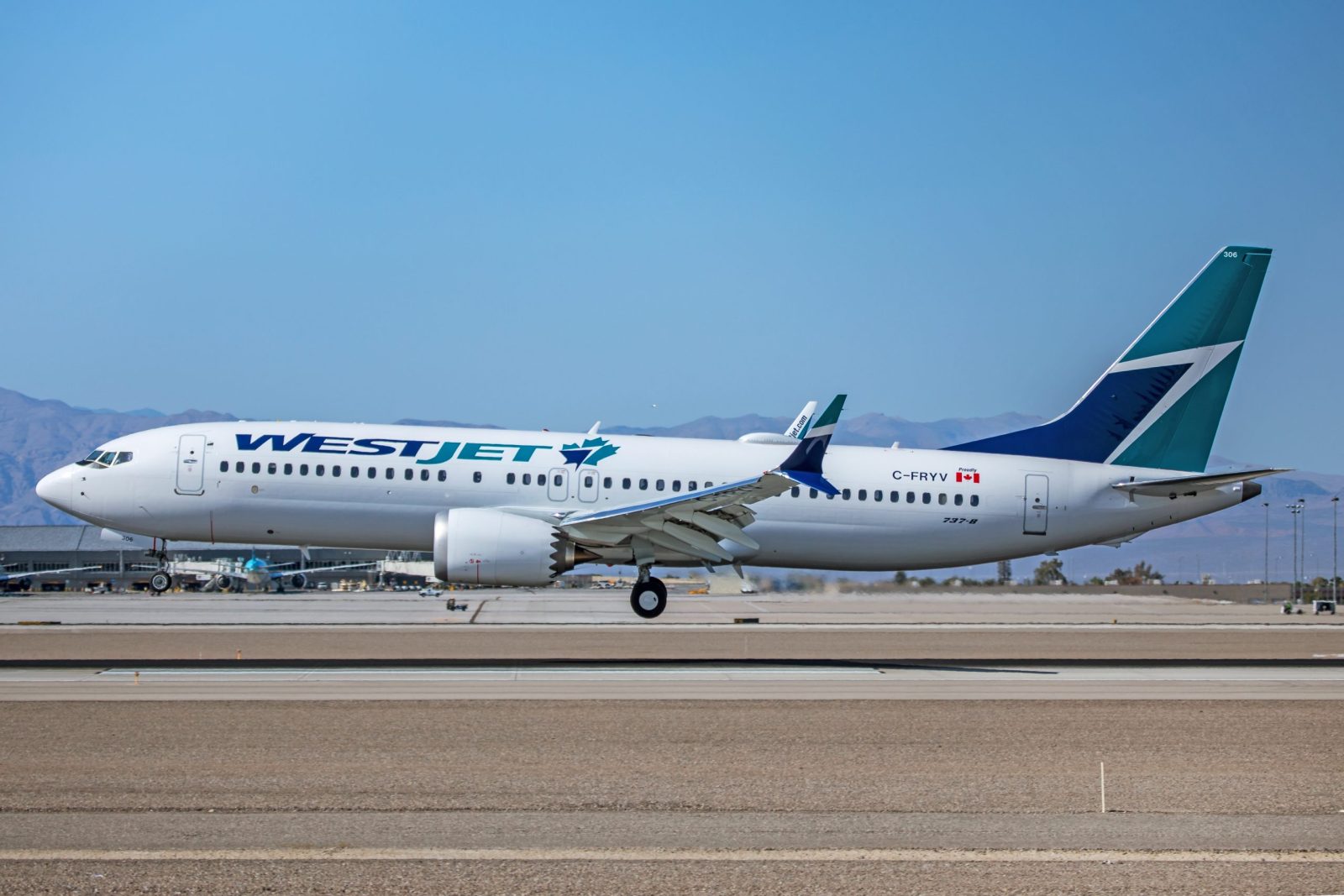
A WestJet Boeing 737 MAX 8 at Harry Reid International Airport in Las Vegas. (Photo: AirlineGeeks | William Derrickson)
WestJet is set to discontinue three transborder routes and the seasonal suspension of a fourth amid persistently weak demand for travel between Canada and the United States.
The airline will abandon its service on the Victoria–Las Vegas, Ottawa–Fort Myers, and Winnipeg–Los Angeles routes. Additionally, flights between Halifax and Orlando will be suspended and not operate during the upcoming winter season.
Ishrion Aviation first reported the network changes. The airline did not respond to AirlineGeeks’ request for comment. These routes were initially slated to be relaunched, but have since been removed from the airline’s schedule.
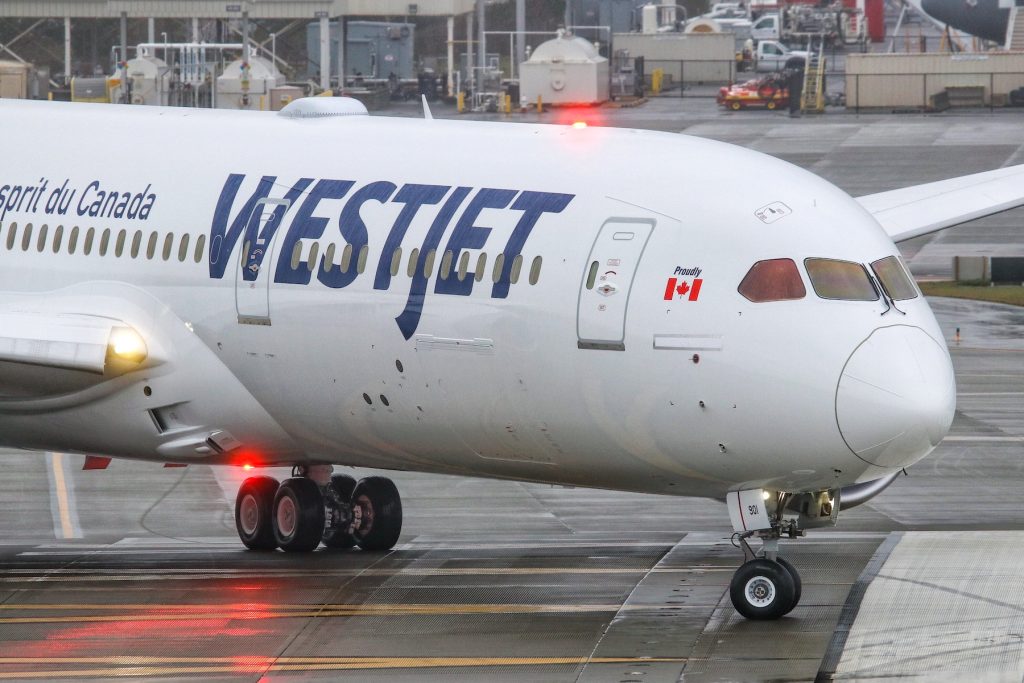
A WestJet Boeing 787 Dreamliner (Photo: AirlineGeeks | Katie Zera)
This move builds on WestJet’s earlier decision in May to suspend several U.S. routes — including Calgary–New York/LaGuardia and Vancouver–Austin — attributed to a shift in demand in transborder travel.
The airline’s decision reflects a broader downturn in Canada–U.S. travel demand. Data from OAG shows that forward bookings on Canada-to-U.S. flights for April through September fell by more than 70 percent year-over-year, with airlines reducing over 320,000 seats — about a 3.5% cut — in response.
WestJet has credited its broader restructuring efforts, pointing to increased capacity directed to other destinations such as the Caribbean, Latin America, and Europe. The airline has notably added flights to leisure destinations while reducing its U.S. footprint.
Ryan founded AirlineGeeks.com in February 2013 and has spent more than a decade covering the airline business. His work has been featured by CNN, WJLA, CNET, and Business Insider. His aviation experience spans airport operations, Part 135 regulatory compliance, and airline crew workforce planning, along with time behind the yoke of a Cessna 172 and interviews with airline executives. Ryan now serves as Group President of Firecrown Media’s Aviation Group. He holds a B.S. in Air Transportation Management and an MBA from Arizona State University and teaches Airline Management at Embry-Riddle Aeronautical University.