










Stories

Boeing Back in Business in China After Tariff Clash

Boeing has delivered its first aircraft to China since the country temporarily blocked its airlines from accepting the company’s jets.

Xiamen 737 MAX
A Xiamen Boeing 737 MAX (Photo: AirlineGeeks | William Derrickson)

Boeing on Monday made its first delivery to China in almost two months after Beijing temporarily blocked Chinese airlines from accepting the company’s jets.

According to Reuters, the aircraft, a 737 MAX 8, was flown from Seattle and landed at a Boeing facility outside Shanghai. It was painted with the colors and insignia of China’s Xiamen Airlines.

Boeing sells to a number of airlines in China, including Xiamen, Air China, Donghai Airlines, China Eastern Airlines, and China Southern Airlines. The country represents about 10% of Boeing’s order backlog, Reuters reported.

The Chinese government told the country’s airlines to stop accepting Boeing aircraft in April after President Donald Trump announced a fresh round of international tariffs, including new, higher taxes on Chinese imports. As the two countries retaliated against each other, U.S. tariffs on China climbed to 145%.

Tensions cooled as trade talks resumed, and in early May the Chinese government announced it would again allow carriers to take delivery of Boeing jets. A couple weeks later, CEO Kelly Ortberg said the company would restart shipments to China.

While Airbus outperforms Boeing in the Asia-Pacific region in general, Boeing has identified China as a key market, with its 2024 commercial outlook suggesting passenger traffic there will double by 2040. Aside from Airbus, it will also have to contend with state-owned manufacturer Comac, whose narrowbody C919 entered service with Chinese carriers in 2023. The C919 is meant to compete directly with the 737 MAX.

U.S.-China trade talks were set to enter a new phase on Monday with the start of face-to-face meetings in London. Treasury Secretary Scott Bessent and Commerce Secretary Howard Lutnick are among the officials representing the U.S.

Zach Vasile

Zach Vasile is a writer and editor covering news in all aspects of commercial aviation. He has reported for and contributed to the Manchester Journal Inquirer, the Hartford Business Journal, the Charlotte Observer, and the Washington Examiner, with his area of focus being the intersection of business and government policy.

Spirit Gets Compensation for Engine Recall

Spirit has entered an agreement that will provide compensation for the aircraft it has been forced to ground due to problems with Pratt & Whitney engines.

Spirit A320neo
A Spirit A320neo. (Photo: AirlineGeeks | William Derrickson)

Ultra-low-cost carrier Spirit is getting compensation for a manufacturing issue that has forced the grounding of some of its aircraft.

In a filing with the U.S. Securities and Exchange Commission, the Florida-based airline said it entered an agreement with International Aero Engines, which will provide a monthly credit to Spirit through the end of this year “as compensation for each Spirit aircraft unavailable for operational service due to GTF engine issues.”

IAE is an affiliate of aircraft engine maker Pratt & Whitney, which builds the geared turbofan powerplant that has caused complications for Spirit and numerous other airlines.

In 2023, Pratt issued a recall for the engines over defects that could cause cracking. Thousands of airplanes were grounded as a result. The company is inspecting and repairing the engines, and carriers like Spirit are facing long waits to get their GTF-powered aircraft back in service.

Spirit told the SEC that the deal’s impact on liquidity will be between $150 million and $195 million. As part of the arrangement, the airline has agreed to release all claims for compensation for the recall that accrue between March 26, 2024, and Dec. 31, 2025.

Road to Recovery

Spirit emerged from bankruptcy protection in March after four months of financial restructuring designed to alleviate its debt load. The carrier has struggled in the years since the COVID-19 pandemic, mainly due to increased operating expenses. In 2024, it reported a net loss of over $1 billion.

The airline has recently sought to roll back its no-frills reputation with new premium seating offerings, expanded benefits from its customer loyalty program, and a Spirit-branded debit card.

Zach Vasile

Zach Vasile is a writer and editor covering news in all aspects of commercial aviation. He has reported for and contributed to the Manchester Journal Inquirer, the Hartford Business Journal, the Charlotte Observer, and the Washington Examiner, with his area of focus being the intersection of business and government policy.

FAA Extends Restrictions at Newark

The FAA has announced it will continue to limit flights at Newark Liberty International Airport through the end of October.

Runway at Newark
Runway at Newark Liberty International Airport. (Photo: Shutterstock | EQRoy)

The FAA has announced it will continue to limit flights at Newark Liberty International Airport through the end of October. Restrictions were initially imposed after a series of high-profile radio and radar outages at the Newark TRACON facility, which controls arrivals and departures at the airport.

The airport will not exceed 34 arrivals and 34 departures per hour, for up to 77 total hourly operations. The restrictions aim to maintain safety and alleviate flight delays, the FAA says.

“The confirmed reduced rates will maintain safety while alleviating excessive flight delays at the airport due to staffing and equipment challenges,” the FAA wrote in its order. “The early completion of runway construction at the airport that added to the delays will also contribute to a more efficient operation.”

United, by far the largest airline operating at the airport, has praised the limits, saying they will “help ensure that we can safely and reliably operate the flights that remain on the schedule.” The airline has cut some of its flights out of Newark, though it plans to raise that number with the rehabilitation of Newark’s third runway nearing completion.

That runway, known as 4L/22R, has been closed since April 15. It reopened to traffic on June 2, two weeks ahead of schedule, though it is being limited to departures only until navigation equipment that aids in landing can be tested for proper calibration.

ATC Staffing and Technology

Transportation Secretary Sean Duffy said Newark is set for multiple technology upgrades after the blackouts last month. The FAA is also rushing to stabilize ATC staffing levels.

Controllers have criticized the FAA’s 2024 decision to move Newark’s TRACON controllers from the New York Approach facility to Philadelphia. Though the FAA cited low staffing levels and a low training success rate, controllers worried that Philadelphia’s lagging technology would make failures more likely and increase safety risks.

“I don’t want to over promise and under deliver, but if everything goes well, and there can be problems when you test the line, but if it all goes well, we should be able to turn over to this new fiber line at the start of July,” Duffy said.

Duffy’s plan is to finish technology upgrades in Newark by the end of October.

John McDermott

John McDermott is a commercial pilot pursuing a career in professional flight. His passion for aviation began in an Ann Arbor bookstore with a tale of enemy pilots during World War 2, and he hasn't looked back. Besides flying and writing for AirlineGeeks, John volunteers with Professional Pilots of Tomorrow and travels whenever he gets the chance.

Spirit Warns of Tariff Impact

Spirit, like other U.S. airlines, is bracing for an increase in the cost of foreign-made aircraft due to Trump's new tariffs.

Spirit A320neo jet
A Spirit Airbus A321neo aircraft. (Photo: Shutterstock | Kevin Hackert)

Ultra-low-cost carrier Spirit has warned of the impact new import tariffs could have on its ability to order new aircraft. The airline operates an all-Airbus fleet, and many of its aircraft are delivered from the manufacturer’s headquarters in France.

Since taking office in January, President Donald Trump has imposed tariffs on numerous countries, including some of the U.S.’s biggest trading partners. Some have since been rolled back or temporarily suspended.

Tariffs are currently enforced on all imports from the European Union. Trump initially called for 20%, but the rate has been temporarily reduced to 10% through early July. The tariffs are expected to return to the original 20% unless a deal is struck in the next month.

Spirit’s Order Book

Spirit has orders for nearly 100 Airbus aircraft, and 92 are set to be delivered from Europe over the next six years. It also has lease agreements for 39 A320neo and A321neo aircraft to be delivered between 2025 and 2028. Regardless of whether the next administration continues Trump’s tariff rates, that still leaves a majority of Spirit’s deliveries potentially subject to higher prices.

A brand new Airbus A320neo has a list price of $110.6 million. With a 20% tariff applied, the new cost rises to $132.72 million, adding billions of dollars to airplane costs. While it is likely Spirit received a bulk discount on close to 100 jets, the price hike is nonetheless significant, and one that Spirit will need to pass on to its customers.

A Spirit Airbus A320
A Spirit A320. (Photo: AirlineGeeks | William Derrickson)

But the price impact won’t be limited to the aircraft themselves. Also impacted are new parts required to service the fleet and keep aircraft flying. While Spirit certainly has some backlog of parts, it won’t last forever, especially if specialty parts with less backlog are required.

“The imposition of these tariffs may increase the cost of, among other things, imported new Airbus aircraft and parts required to service our Airbus fleet, which in turn could have a material adverse effect on our business, financial condition, and/or results of operations,” Spirit said in a filing with the U.S. Securities and Exchange Commission.

Recent Bankruptcy

The news comes as Spirit attempts a significant rebranding after exiting Chapter 11 bankruptcy protection. The company is trying to build a completely new image while staying fundamentally true to its low-cost roots. The goal is to be a friendlier, more accessible airline that can compete with major legacy airlines without the same price hike.

As part of its rebrand, Spirit has opened an additional service class, increased the perks of its frequent flier program, and reshaped its advertising to appear more accessible and desirable for more people.

A significant issue leading up to Spirit’s bankruptcy filing was the grounding of numerous aircraft required by engine maker Pratt & Whitney. The manufacturer found last year that a materials issue would require engines to be inspected sooner than normal, causing planes to be grounded sooner and for longer periods than Spirit anticipated.

A Spirit Airbus aircraft
A Spirit Airbus aircraft. (Photo: Shutterstock | Carlos Yudica)

Not the Only Airline

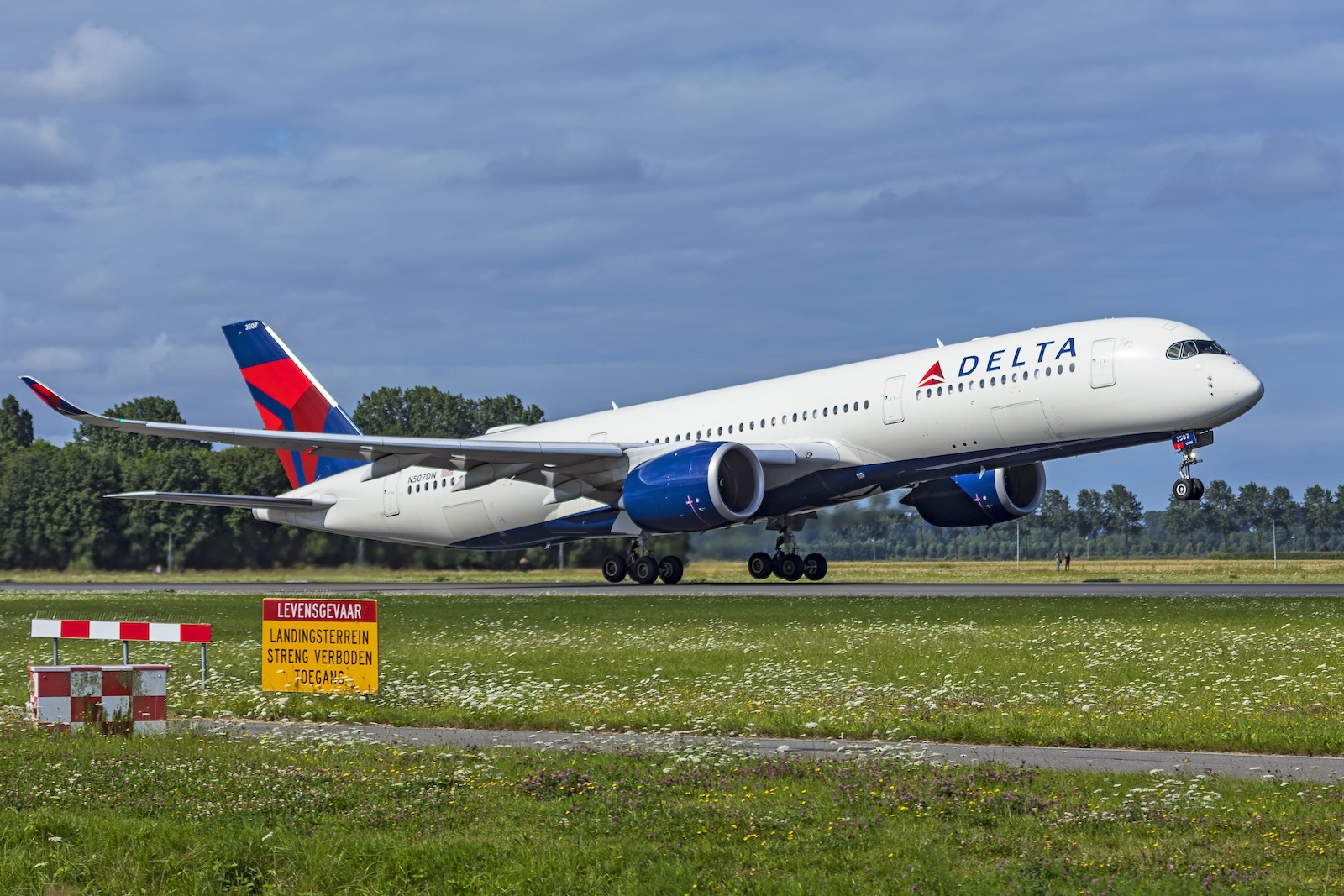
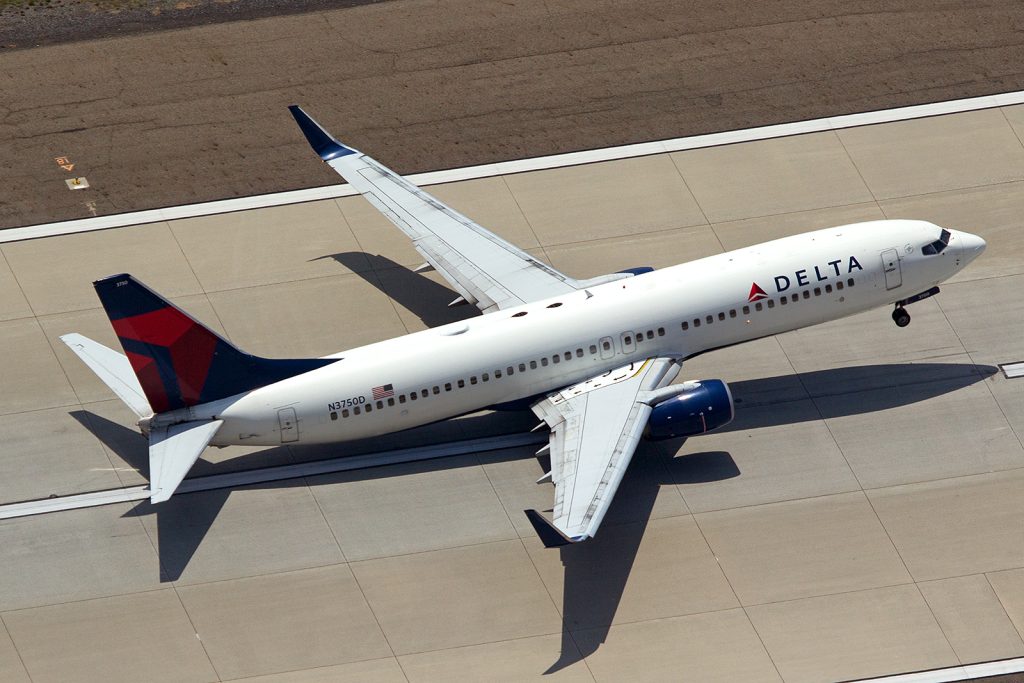
Spirit is not the only U.S. airline to reconsider its orders for foreign aircraft. Delta has warned it may stop taking delivery of foreign-made aircraft due to Trump’s tariffs. Besides a large fleet of Boeing 717s, 737s, 757s, and 767s, Delta operates a significant Airbus fleet. It is the only A350 operator in the U.S., retired its Boeing 777s during the COVID-19 pandemic, and may need to consider retiring aging 717s and 757s within the next 10 years.

Delta has already warned it will defer orders for Airbus aircraft despite orders for everything from the A220 up to A350-1000 models.

Alaska is also wary of the impact of tariffs, as it is delaying the delivery of two Brazilian-made Embraer E175s due to the increased costs.

Boeing has expressed concerns over how tariffs will impact its supply chain, which relies on materials produced around the world. The manufacturer may struggle to raise funds due to the tariffs.

Uncertain Future

Due to these risks, Spirit says that it may need to reconsider its order book.

“We may seek to postpone or cancel delivery of aircraft currently scheduled for delivery, and may choose not to purchase as many aircraft as we intended in the future,” Spirit said in a statement to Yahoo Finance, adding that the future impact of tariffs is “very much subject to change.”

John McDermott

John McDermott is a commercial pilot pursuing a career in professional flight. His passion for aviation began in an Ann Arbor bookstore with a tale of enemy pilots during World War 2, and he hasn't looked back. Besides flying and writing for AirlineGeeks, John volunteers with Professional Pilots of Tomorrow and travels whenever he gets the chance.

ITA Considering New Routes to U.S.

According to a report from Italian newspaper Corriere della Sera, ITA is considering launching nonstop routes from Rome to Newark, New Jersey, and Houston.

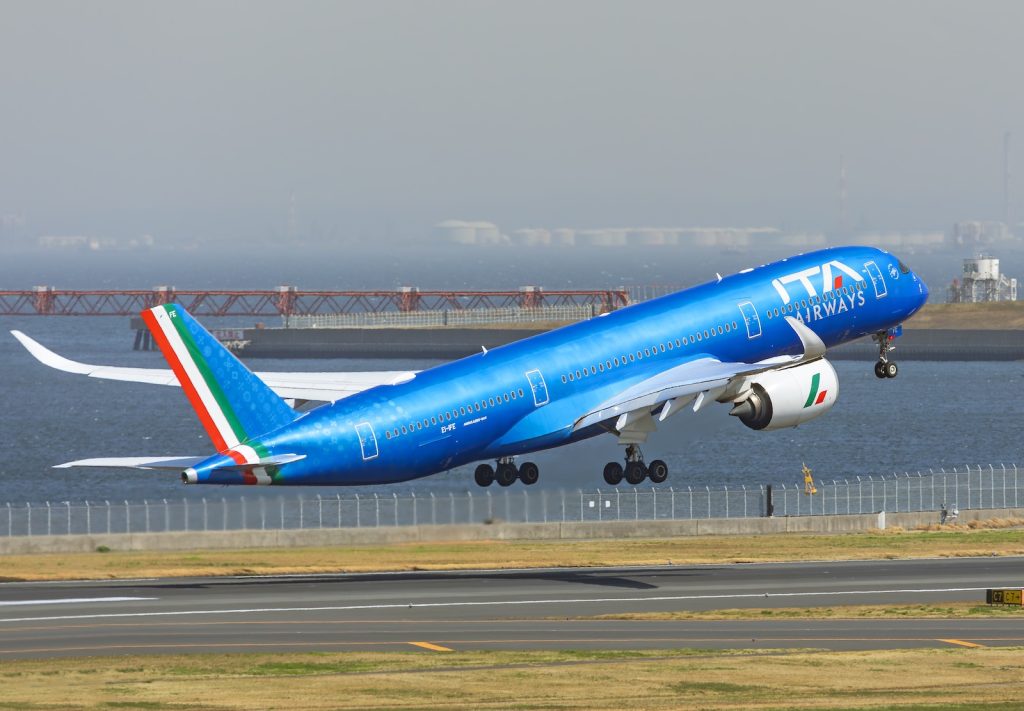
An ITA Airways A350-900. (Photo: AirlineGeeks | William Derrickson)

ITA Airways, the flag carrier of Italy, is reportedly exploring new routes to the U.S.

According to a report from Italian newspaper Corriere della Sera, ITA is considering launching nonstop routes from Rome to Newark, New Jersey, and Houston. Corriere cited individuals with knowledge of the airline’s planning; ITA declined to comment.

The report said the routes could come online in 2027. Both Newark and Houston are hubs for United, Corriere pointed out, which could help ITA’s operations when the carrier formally joins the Star Alliance next year. United is a founding member of the Star Alliance.

ITA currently flies nonstop between Rome and JFK.

ITA is also considering adding routes from Rome to Mumbai, Singapore, and Osaka, Japan, among other destinations.

The Corriere report suggested the airline is looking at expanding its network to boost profitability.

Some of the carrier’s planning hinges on geopolitical events outside its control, including the reopening of Russian airspace to Western carriers, which would allow ITA to connect with Moscow and expand service to Beijing, Hong Kong, and Shanghai.

Zach Vasile

Zach Vasile is a writer and editor covering news in all aspects of commercial aviation. He has reported for and contributed to the Manchester Journal Inquirer, the Hartford Business Journal, the Charlotte Observer, and the Washington Examiner, with his area of focus being the intersection of business and government policy.

American Looks to Cut Some Cuba Flights

American filed a motion with the DOT on Friday, requesting an expansion of its previously granted temporary dormancy waiver for certain U.S.-Cuba flights.

American A319
An American A319 landing in Miami. (Photo: AirlineGeeks | William Derrickson)

American filed a motion with the Department of Transportation on Friday, requesting an expansion of its previously granted temporary dormancy waiver for certain U.S.-Cuba flights during the summer 2025 season.

The carrier cited “deeper challenges to the rebound of U.S.-Cuba passenger demand” as the primary reason for seeking these route cuts. The request specifically targets Miami-Havana and Miami-Santiago de Cuba routes, while maintaining the relief already granted for other U.S.-Cuba destinations.

“In light of these ongoing challenges and for the purpose of more efficiently deploying its scarce aircraft, American seeks to supplement the temporary suspension of a limited number of its U.S.–Cuba services for the remainder of the summer 2025 season,” the Fort Worth, Texas-based carrier said.

American 737 (Photo: American Airlines)

This week, President Trump issued a sweeping travel ban, which included some restrictions on travel between the U.S. and Cuba.

American’s motion seeks to modify its existing waiver, which the DOT approved on March 21, to include up to three of its eight daily Miami-Havana roundtrips on Mondays, Thursdays, Fridays, Saturdays, and Sundays, as well as four of its eight daily Miami-Havana roundtrips on Tuesdays and Wednesdays.

Market Exit

The airline also requests to suspend its daily Miami-Santiago de Cuba flights on all days of the week. If approved by the agency, American will complete exit this airport, leaving it with no non-stop U.S. service.

The previous waiver already covered specific frequencies for American’s services to Camaguey, Holguin, Matanzas/Varadero, and Santa Clara, which remain unchanged in the new request.

In its filing, American argued that the requested relief is “narrowly tailored, limited to the remainder of the summer 2025 season” and would enable the airline to “better align its capacity and services with market conditions.” The carrier emphasized that the waiver would provide operational flexibility to resume services sooner should market conditions improve.

The DOT has not yet issued a decision on American’s request.

Ryan Ewing

Ryan founded AirlineGeeks.com back in February 2013 and has amassed considerable experience in the aviation sector. His work has been featured in several publications and news outlets, including CNN, WJLA, CNET, and Business Insider. During his time in the industry, he's worked in roles pertaining to airport/airline operations while holding a B.S. in Air Transportation Management from Arizona State University along with an MBA. Ryan has experience in several facets of the industry from behind the yoke of a Cessna 172 to interviewing airline industry executives. Ryan works for AirlineGeeks' owner FLYING Media, spearheading coverage in the commercial aviation space.

Trip Report: Flying Condor From Germany to Alaska

A nine-hour trip between Germany and Anchorage, Alaska, via Condor offers rich hospitality and striking views of Alaska's frozen coastline and mountains.

Condor A330neo
My Condor flight at the gate after arriving in Anchorage. (Photo: AirlineGeeks | Joey Gerardi)

Condor is a German leisure airline known for its bright, colorful striped livery, which stands out at any airport it flies to. It operates many routes throughout North America, Europe, and Asia, primarily to warm, vibrant vacation destinations where Europeans can spend their holidays.

Anchorage, Alaska, is one of Condor’s more unique destinations, and the route is quite unusual as well. The flight between Frankfurt and Anchorage is the state’s only passenger flight to the European continent, and for parts of the summer, Condor is the only one operating it, meaning the airline is the only way to fly to Europe nonstop for passengers from Alaska.

Given the uniqueness and seasonality of Condor’s Frankfurt to Anchorage flight, I decided it was an AvGeek flight worth a try. This trip also allowed us to try out the airline’s Business class cabin, which they redesigned less than three years ago in the fall of 2022.

Day of the Flight

I arrived at the airport about four hours before my flight, and upon entering the check-in area, I was greeted with four options for Condor check-in counters: Business, Premium Economy, Economy, and those passengers headed to the United States. This is because passengers headed to the U.S. aren’t able to check in online for the flight and need to see an agent when they arrive at the airport, and are also unable to use the airline’s kiosk.

As Condor does not have their own branded lounge in Frankfurt, Condor passengers in the Business cabin get access to the Lufthansa lounge. Since it is not Condor-branded, I will not go in depth about the details of the lounge, but it is worth a visit if you have the time.

After leaving the lounge, I headed to my gate for my flight. In Frankfurt, they have a handful of bus gates where they transport you out to the plane located on a remote parking stand, and because of this extra time to get out to the plane, they start and end boarding a little bit earlier, so make sure to pay attention so you don’t miss your flight.

Walking to the stairs for my Condor flight to Anchorage. (Photo: AirlineGeeks | Joey Gerardi)

Most passengers don’t like the extra hassle of getting on the bus and going up the stairs, but as an AvGeek, I absolutely love it when this occurs. My aircraft for the flight to Frankfurt is D-ANRP, an Airbus A330-900neo that was delivered directly to Condor in June of 2024, so the aircraft was roughly a year old when I took the flight, and had the Beige Beach livery.

The airline’s business class cabins on their A330-900neos are arranged in a 1-2-1 configuration, with my seat being 8K, a window on the right side of the aircraft. Waiting for me at my seat was a pillow, blanket, mattress pad for when the seat was in the lie-flat position, water, an amenity kit, and a reusable travel bag, along with noise-canceling headphones that I could borrow for the flight.

My seat over to Anchorage, 8K. (Photo: AirlineGeeks | Joey Gerardi)

Before leaving the gate/remote parking space, the crew also offered us a pre-departure beverage, which was a choice of orange juice, water, or champagne, and they also brought around our menus. We left the parking space on time, and we took off from Frankfurt am Main not long after that and turned north over Germany towards Alaska.

Taking off from Frankfurt for Anchorage. (Photo: AirlineGeeks | Joey Gerardi)

The in-flight entertainment screen (IFE) had a lot of stuff on it, including movies, TV, and even video instructions on how to use some of the seat features in the relatively new business class seats, or for people who have never sat in them before.

It also had videos of landing at different Condor destinations from the point of view of the nose gear, which was pretty cool to see, especially for the AvGeeks on the flight. There was also a digital menu with food and drink options available to all passengers, German movies, a duty-free catalog which had some AvGeek-type items like scale model airplanes and a Lego version of Condor’s A330, and of course, the in-flight moving map.

Only a small section of the IFE home page. (Photo: AirlineGeeks | Joey Gerardi)

The Business class amenity kit comes with a toothbrush, toothpaste, and socks, same as Premium Economy, but the Business one differs as it also comes with lip balm and moisturizer. The menu was very in-depth and offered three options for the main course: pork, salmon, or pasta, with the starter being the same for all of them. About 30-40 minutes after takeoff, the crew brought out the tablecloth and the opener, which was a bowl of nuts and your choice of a drink. I chose something called a Condormopolitan.

The first food they brought out for Condor Business passengers, with my Condormopolitan. (Photo: AirlineGeeks | Joey Gerardi)

Once we reached our initial cruising altitude of 38,000 feet, the pilot made an announcement with our projected route to Anchorage, which took us over northern Germany, past Iceland, toward the top of Greenland, over northern Canada, and the north coast of Alaska.

The northernmost tip of Germany. (Photo: AirlineGeeks | Joey Gerardi)

No matter what main course option you chose, the starter was the same for all of them: cream cheese chili dip, lemongrass prawns, carrot delice, green asparagus with yuzu mayonnaise, a small dish of burrata with tomato sauce and green pesto with basil, and a small chicken salad with romaine lettuce, cheese, and Caesar dressing.

You also got your choice of bread, which for me was a pretzel roll and garlic bread. Also with the meal was a small salt and pepper shaker that looked like an airplane and said Condor, which you could take home with you, and of course, I did.

The starter on my Condor flight to Alaska. (Photo: AirlineGeeks | Joey Gerardi)

After I finished the starter portion, they picked up the tray and brought around our main course choice, which for me was the pork tenderloin, which had potatoes, hollandaise sauce, and white German asparagus. I also had some Brew Dog beer, but I am not a real beer drinker and only had it because it came in a Condor-themed can, which I kept and brought home just like the airplane salt and pepper shaker.

The main course on my Condor flight to Alaska. (Photo: AirlineGeeks | Joey Gerardi)

As I enjoyed the views of the ocean below, they cleaned up the starter and the main course, and they brought around dessert, which was cheesecake with raspberry sauce, and another drink if you wanted it.

After dessert and the remainder of the food was cleaned up, and my first movie was over, I explored more of the buttons and features of the seat before the cabin lights were turned down so people could sleep. The seat did offer lie-flat mode, along with a recline feature. There was also a retractable remote with different buttons for the IFE screen, including a scroll pad similar to something you would find on a laptop. There was a small light fixture behind your head on the side of the seat, and a little bit lower than that, there was the headphone jack along with a USB-A and USB-C port, along with a power outlet.

Now three hours into the flight passing Iceland, the cabin lights were turned down, and I put my seat into the lie-flat position to get some sleep. The mattress pad they gave us wasn’t very thick, but it was definitely comfortable.

Passing near Iceland, three hours into my flight from Germany to Alaska. (Photo: AirlineGeeks | Joey Gerardi)

When I woke up after a few hours of good sleep, we were at a new cruising altitude of 40,000 feet and had about 2.5 hours left in the flight. We were passing over Prince Patrick Island in Canada, although it was cloudy, so it was kind of hard to make it out, though I could still see it.

The crew turned the cabin lights back up as they got ready to serve the pre-arrival meal. We also passed over northern Alaska, and thankfully, by this time, the clouds had cleared and I could make out the frozen coastline, which was absolutely beautiful, as I had never seen this part of the state before.

The frozen Arctic Ocean coastline in northern Alaska. (Photo: AirlineGeeks | Joey Gerardi)

For the pre-arrival meal, the starter was a salad with baby leaf lettuce, tomatoes, carrots, and Spanish dressing. The main course was pulled beef, sweet potato puree, and barbecue sauce, and the dessert was mascarpone cream on sponge cake with rhubarb, and a bread roll on the side, and of course your choice of drink.

The pre-arrival meal on my Business class Condor flight to Alaska. (Photo: AirlineGeeks | Joey Gerardi)

After my second movie was over, I spent the rest of the flight looking out at the beautiful Alaskan scenery below me. We passed over rivers and mountains along with a handful of small towns. One of the most notable things we passed was Denali, which stuck out above the clouds near the middle of the state.

Denali, sticking out above the clouds. (Photo: AirlineGeeks | Joey Gerardi)

They also handed out the customs declaration form for the U.S. to all the passengers, and the pilot went over the weather in Anchorage when we were about 45 minutes away from landing. Even though it was an over nine-hour flight from Frankfurt to Anchorage, the most beautiful scenery of the journey was definitely within the last two hours of the flight, over Alaska.

Flying over lower central Alaska, en route to Anchorage. (Photo: AirlineGeeks | Joey Gerardi)

Just before landing in Anchorage, it was cool seeing the overall flight map on the IFE screen, as before now, I have never flown that far north before.

Our overall route, just before landing in Anchorage. (Photo: AirlineGeeks | Joey Gerardi)

We passed over a few more rivers and could see the mountains in the not-so-far distance as we approached Anchorage International.

Approaching Anchorage on my Condor flight. (Photo: AirlineGeeks | Joey Gerardi)


We then landed at Anchorage at 3:10 p.m., after nine hours and 22 minutes of flying time. The timing was also unique, as Frankfurt and Anchorage are separated by 10 time zones, and because the flight was under 10 hours that means we landed nearly 40 minutes before even taking off, and you could spend the rest of the day doing whatever you want without losing any of the day.

When arriving in Anchorage, you go into the North Terminal at Ted Stevens International, as this is where the customs facility is located. After all passengers and cargo are offloaded, they tow the plane over to the South Terminal, where the rest of the flights at the airport are, and it departs from there. They do this because they don’t want to staff the entire North Terminal for TSA, shops, and otherwise for the very limited international passenger arrivals that the airport does get.

Air Canada does operate passenger flights here, but Vancouver is one of the many U.S. Pre-Clearance airports, meaning when they arrive in Anchorage, they are treated as a domestic flight, with all passengers already having cleared U.S. customs in Canada.

Anchorage Airport’s South Terminal in the distance. (Photo: AirlineGeeks | Joey Gerardi)

Conclusion

It was such a cool experience flying in Condor’s Business class cabin for the first time, and having the experience of flying over the frozen Alaskan coastline and mountain ranges was super cool to see with the clear weather. As mentioned before, this is the only route from the state of Alaska to the European continent for passengers, and Condor operates the route twice to three times a week, depending on the month, during the Alaskan tourist season in the summer months.

This year, the flights started in mid-May and are currently scheduled to operate until September, and until then, you’ll be able to see Condor’s unique livery in the state of Alaska.

A video account of the flight can be found below.

Editor’s Note: Condor provided AirlineGeeks with a seat on this flight, but this trip report is an objective portrayal of events.

Joey Gerardi

Joey has always been interested in planes for as long as he can remember. He grew up in Central New York during the early 2000s when US Airways Express turboprops ruled the skies. Being from a non-aviation family made it harder for him to be around planes and would only spend about three hours a month at the airport. He was so excited when he could drive by himself, the first thing he did with his driver's license was get ice cream and go plane spotting for the entire day. He graduated from Western Michigan University in 2022 with a B.S. in Aviation Management & Operations and a Minor in Business, and currently works for a major airline in his hometown.

Report: Nominee for FAA Head Was Investigated Over ‘Undercover Boss’ Appearance

President Donald Trump’s pick to lead the Federal Aviation Administration was previously investigated by the agency regarding his 2010 appearance on the CBS program “Undercover Boss.”

Republic CEO Bryan Bedford
Republic CEO Bryan Bedford. (Photo: Republic Airways| YouTube)

President Donald Trump’s pick to lead the FAA was previously investigated by the agency regarding his 2010 appearance on the CBS program “Undercover Boss.”

According to a Wall Street Journal report on Friday, the FAA scrutinized Republic Airways CEO Bryan Bedford for acting as a flight attendant undercover at Republic’s then-subsidiary Frontier Airlines.

During the episode, Bedford appeared to perform flight attendant duties in an attempt to check on employee morale and operations amid a merger and pay cut for workers. In one instance, he participated in a preflight safety briefing where he admittedly fumbled saying part of it.

The Journal reported that the investigation was brought up during the Senate’s vetting process for Bedford to lead the FAA. Bedford reportedly wrote in a notice to senators that Frontier later “clarified that I did not serve as a crew member on the flight,” and that he understood the FAA later dropped the matter.

Then FAA Chief Randy Babbitt told the Wall Street Journal that the investigation had closed and nothing came of it.

“To be totally candid with you, I thought it was pretty funny,” Babbitt told the Journal.

A confirmation hearing for Bedford is now reportedly scheduled for June 11.

Bedford’s nomination has been a rocky one. In March, the Air Line Pilots Association (ALPA) – a pilots union representing over 79,000 pilots in the U.S. – expressed concerns over his nomination for FAA head.

“We have concerns about the nominee’s past efforts to lower pilot training and safety standards and we look forward to hearing his assurances that he will maintain the current requirements,” said ALPA President Jason Ambrosi in an emailed statement to AirlineGeeks at the time.

Editor’s Note: This story was updated on June 7, 2025, at 9:50 a.m. ET to accurately reflect the union representing Republic pilots. 

AirlineGeeks.com Staff

AirlineGeeks.com was founded in February 2013 as a one-person blog in Washington D.C. Since then, we’ve grown to have 25+ active team members scattered across the globe. We are all here for the same reason: we love deep-diving into the fascinating realm of the airline industry.

Delta Adding More Flights to Israel

Delta announced it is expanding service between New York City and Tel Aviv, Israel, to accommodate increased demand over the winter.

Delta A330-900neo
A Delta A330neo (Photo: Shutterstock | Markus Mainka)

Delta is adding a second nonstop daily flight between New York and Tel Aviv, Israel, next winter.

The airline announced Thursday that the flight between JFK and Tel Aviv’s Ben Gurion Airport will operate from Nov. 30, 2025, through Jan. 19, 2026, to accommodate increased demand during the season. It currently flies between the two cities once a day, year-round.

Delta will operate the route using an Airbus A330-900neo with four seating options: Delta One, Delta Premium Select, Delta Comfort, and Delta Main.

Delta restarted service between New York and Tel Aviv on May 20 following an “extensive security risk assessment.” The route had been temporarily suspended due to conflicts in the region.

The airline said it is “continuously monitoring the evolving security environment and assessing operations based on security guidance and intelligence reports.”

Zach Vasile

Zach Vasile is a writer and editor covering news in all aspects of commercial aviation. He has reported for and contributed to the Manchester Journal Inquirer, the Hartford Business Journal, the Charlotte Observer, and the Washington Examiner, with his area of focus being the intersection of business and government policy.

Slew of Endeavor Flights Canceled for Inspections

Delta canceled over 150 flights on Thursday and Friday after dozens of its regional jets were taken out of service for inspections.

An Endeavor Air CRJ-900.
An Endeavor Air CRJ-900. (Photo: AirlineGeeks | William Derrickson)

Delta canceled over 150 flights on Thursday and Friday after dozens of its regional jets for Endeavor Air were taken out of service for inspections.

Around 45 aircraft were taken out of service late Thursday afternoon to perform inspections on their Wi-Fi systems. A Delta spokesperson told AirlineGeeks in an emailed statement that the inspections were “not an issue of flight safety.”

According to Delta, about 70 flights were canceled on Thursday and 90 more were canceled on Friday. The spokesperson stated that the carrier operates nearly 1,300 aircraft systemwide with more than 300 regional aircraft operated by regional partner carriers like Endeavor Air.

The recent cancellations have equated to about 8% of Endeavor’s flights.

“We apologize to customers whose Delta Connection flights, operated by our regional partner Endeavor Air, were disrupted Thursday,” the Delta spokesperson told AirlineGeeks. “Our customer service teams are working directly with customers to find alternative options to get them to their destination as quickly as possible while Endeavor’s Technical Operations teams work diligently to return aircraft to service.”

Delta stated that it will offer accommodations, vouchers, and rebooking assistance to customers impacted by the flight delays and cancellations.

Endeavor solely operates CRJ-700 and CRJ-900 aircraft under the Delta Connection brand. The regional carrier is a wholly-owned subsidiary of Delta.

According to data from Anuvu Pulse, Endeavor canceled 8% of its scheduled flights on Thursday, with nearly 22% canceled so far on Friday.

Ryan Ewing

Ryan founded AirlineGeeks.com back in February 2013 and has amassed considerable experience in the aviation sector. His work has been featured in several publications and news outlets, including CNN, WJLA, CNET, and Business Insider. During his time in the industry, he's worked in roles pertaining to airport/airline operations while holding a B.S. in Air Transportation Management from Arizona State University along with an MBA. Ryan has experience in several facets of the industry from behind the yoke of a Cessna 172 to interviewing airline industry executives. Ryan works for AirlineGeeks' owner FLYING Media, spearheading coverage in the commercial aviation space.
Sign-up for newsletters & special offers!

Get the latest stories & special offers delivered directly to your inbox

SUBSCRIBE

Uh-oh! It looks like you're using an ad blocker.

Our website relies on ads to provide free content and sustain our operations. By turning off your ad blocker, you help support us and ensure we can continue offering valuable content without any cost to you.

We truly appreciate your understanding and support. Thank you for considering disabling your ad blocker for this website