South Africa’s FlySafair to Launch Additional Route to National Park
South African budget carrier FlySafair has announced a new service enabling passengers to directly reach the iconic Kruger National Park from Cape Town.
South Africa’s budget carrier, FlySafair, has announced the introduction of a new service enabling passengers to directly reach the iconic Kruger National Park from Cape Town.
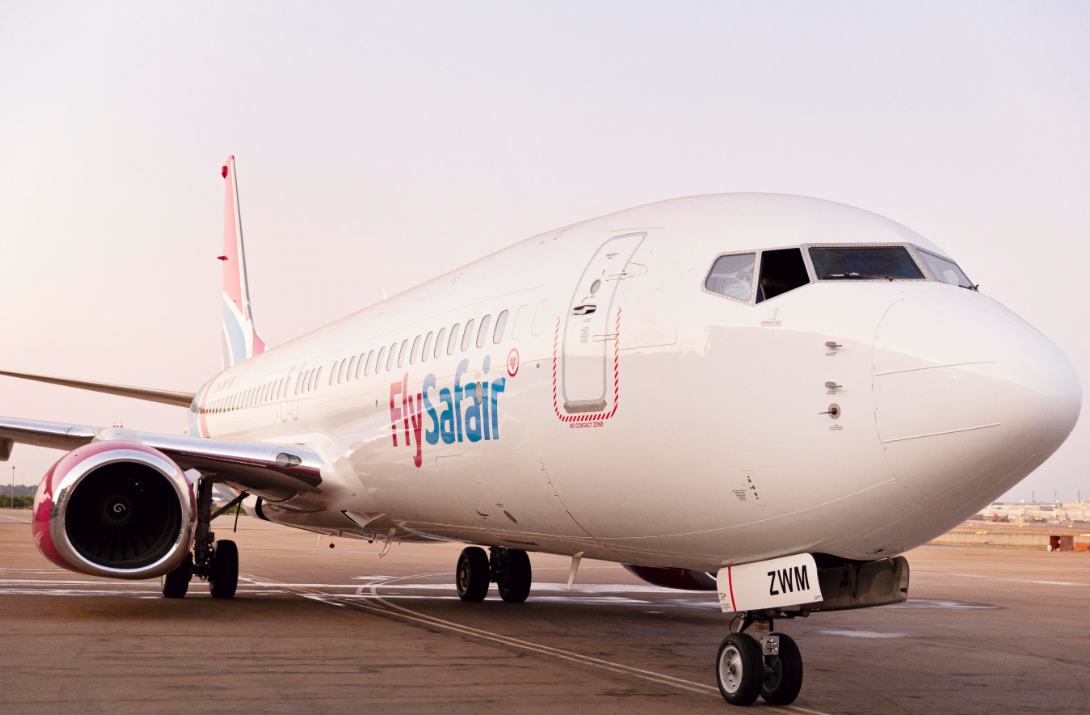
FlySafair will introduce scheduled flights between Hoedspruit and Cape Town in October. The service will be operated with a Boeing 737 aircraft.
Services will operate three times a week, on Tuesdays, Thursdays, and Saturdays. The first flight departs Cape Town on Oct. 2, 2025.
This service is FlySafair’s second route between Cape Town and the Kruger National Park region. The budget carrier introduced flights to the Kruger Park area in April of last year.
It launched flights between Cape Town and Kruger Mpumlanga International Airport (Mbombela) on April 2, 2024. This was followed by the introduction of scheduled services from Johannesburg to Kruger in August of last year.
Springboard to Kruger National Park
FlySafair is enhancing access to the central Kruger Park region and the wider Limpopo province with its new Hoedspruit service.
Hoedspruit Airport is situated adjacent to the Kruger National Park.
“Hoedspruit is a gateway to the Kruger National Park and surrounding private reserves, and we’re proud to offer travellers a more affordable and convenient way to reach this incredible region,” Kirby Gordon, chief marketing officer at FlySafair, said in a statement to BusinessTech.
Lorne is a South Africa-based aviation journalist. He was captivated and fascinated by flying from the day he took his first airline flight. With a passion for aviation in his blood, he has flown to destinations in all corners of the globe. Lorne has traveled extensively and lived in various countries. Drawing on his travels and passion for aviation, Lorne enjoys writing about airlines, routes, networks, and new developments.
Trip Report: Boston to Toronto City with Porter
Flying Porter into Toronto City isn't just an experience for AvGeeks, but for business travelers too as it's less than 20 minutes away from downtown.
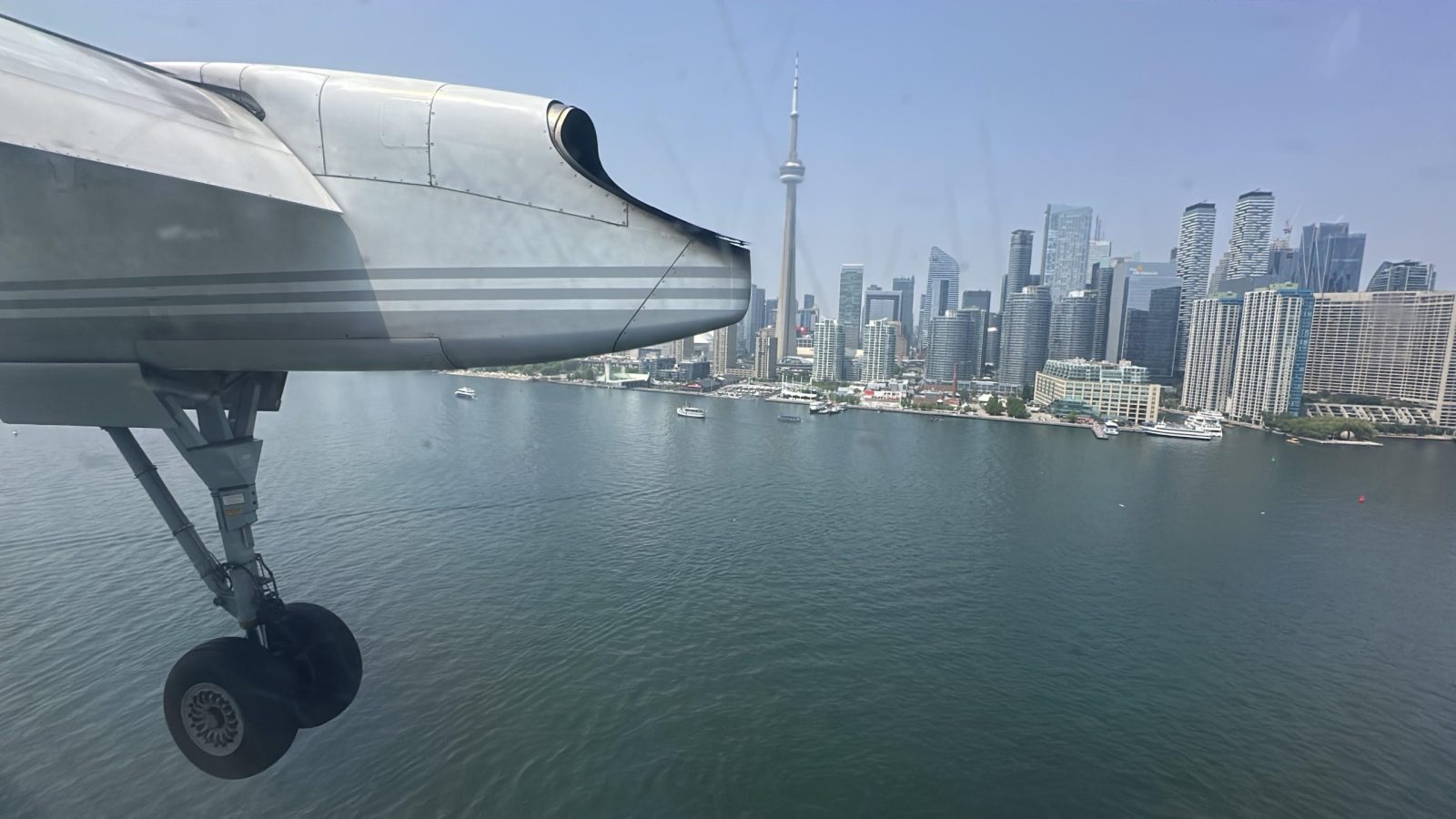
A great view of downtown Toronto just before landing at Toronto City Airport. (Photo: AirlineGeeks | Joey Gerardi)
There are certain airports that AvGeeks love flying into, some because of the terrain, others due to the difficult or thrilling approach, and others just because of the aircraft type the flight is on. One airport that is a treat flying into is Billy Bishop Airport, located on Toronto Island, and simply referred to as Toronto City Airport.
This airport has a shorter runway of 3,988 feet/1,216 meters and sits on an island next to downtown Toronto. Passengers going into the airport are treated to scenic views of the Toronto skyline close by, and the Q400s used by Porter are one of the only commercial aircraft still flying that can land on the runway, since the airport has a very strict ban on jet aircraft (except for medivac). With most airlines retiring propeller planes in favor of faster jets, this is where Porter shines.
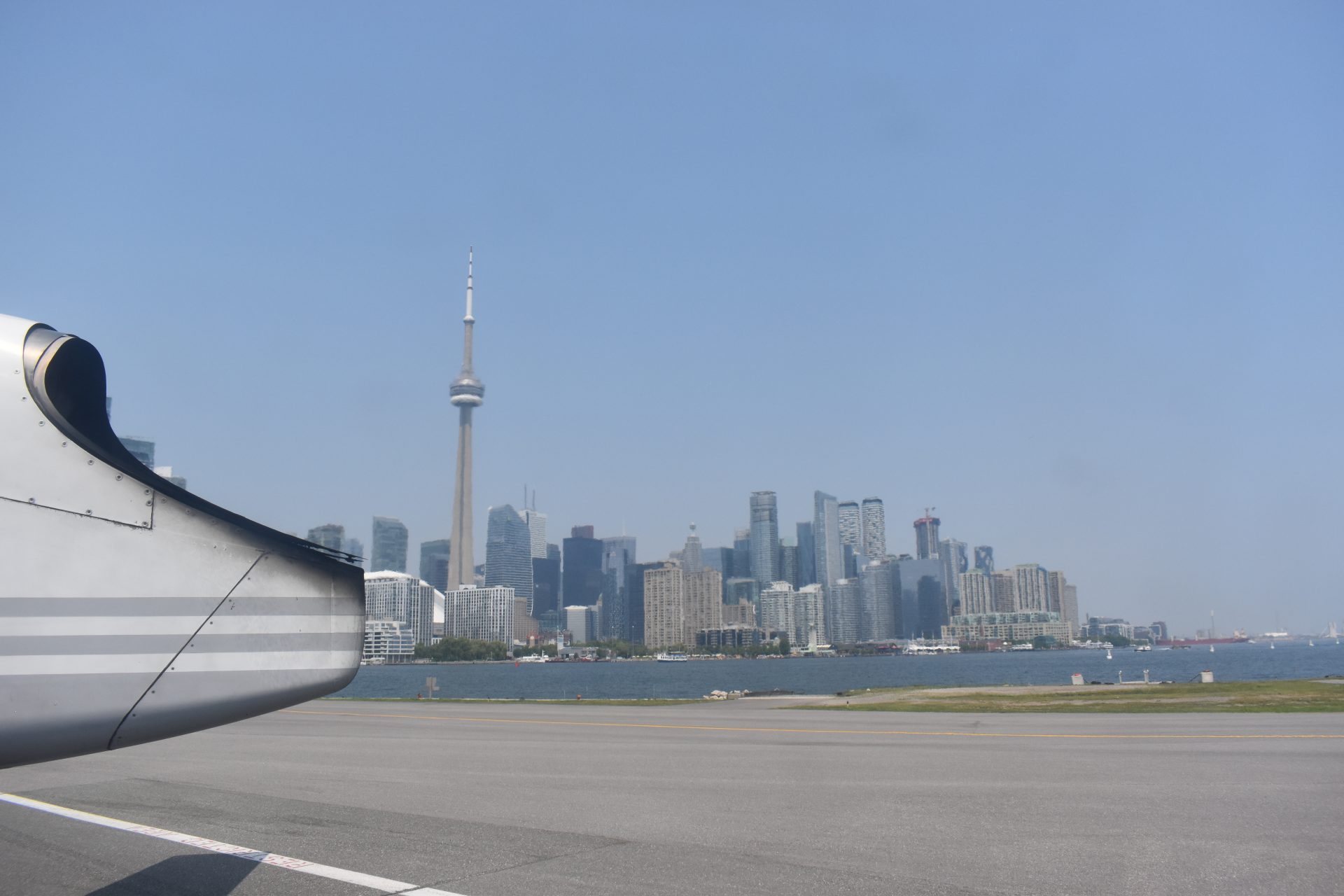
Downtown Toronto, seen from my seat on a Porter Q400. (Photo: AirlineGeeks | Joey Gerardi)
Started in 2006, Porter based its operations out of the small airport and operated a fleet of entirely propeller-driven Q400 aircraft, with the expectation of giving passengers an elevated economy experience with premium snacks and free alcoholic drinks served in glassware. This was unheard of at the time, and still to this day, as most airlines continue to look for ways to cut costs and weight from their flights.
With Toronto City Airport being in the literal shadow of downtown, it is also by far the easiest way to get to downtown Toronto by airplane, especially if you are coming from one of the cities that Porter serves from its base here at YTZ, making it the preferred airport for business travelers who need quick access to downtown Toronto.
Day of the Flight
Porter offers a handful of interline agreements with different airlines, many of which operate out of Boston, including Delta and JetBlue, which both operate a hub from the airport. All of the terminals at Boston are now connected post-security, so you won’t have to go through it again. You can walk between terminals B through E, and for Delta passengers coming from Terminal A, you just need to show a boarding pass that you just got off a Delta flight or are going to a Delta flight, and they’ll put you on a bus that connects A and E.
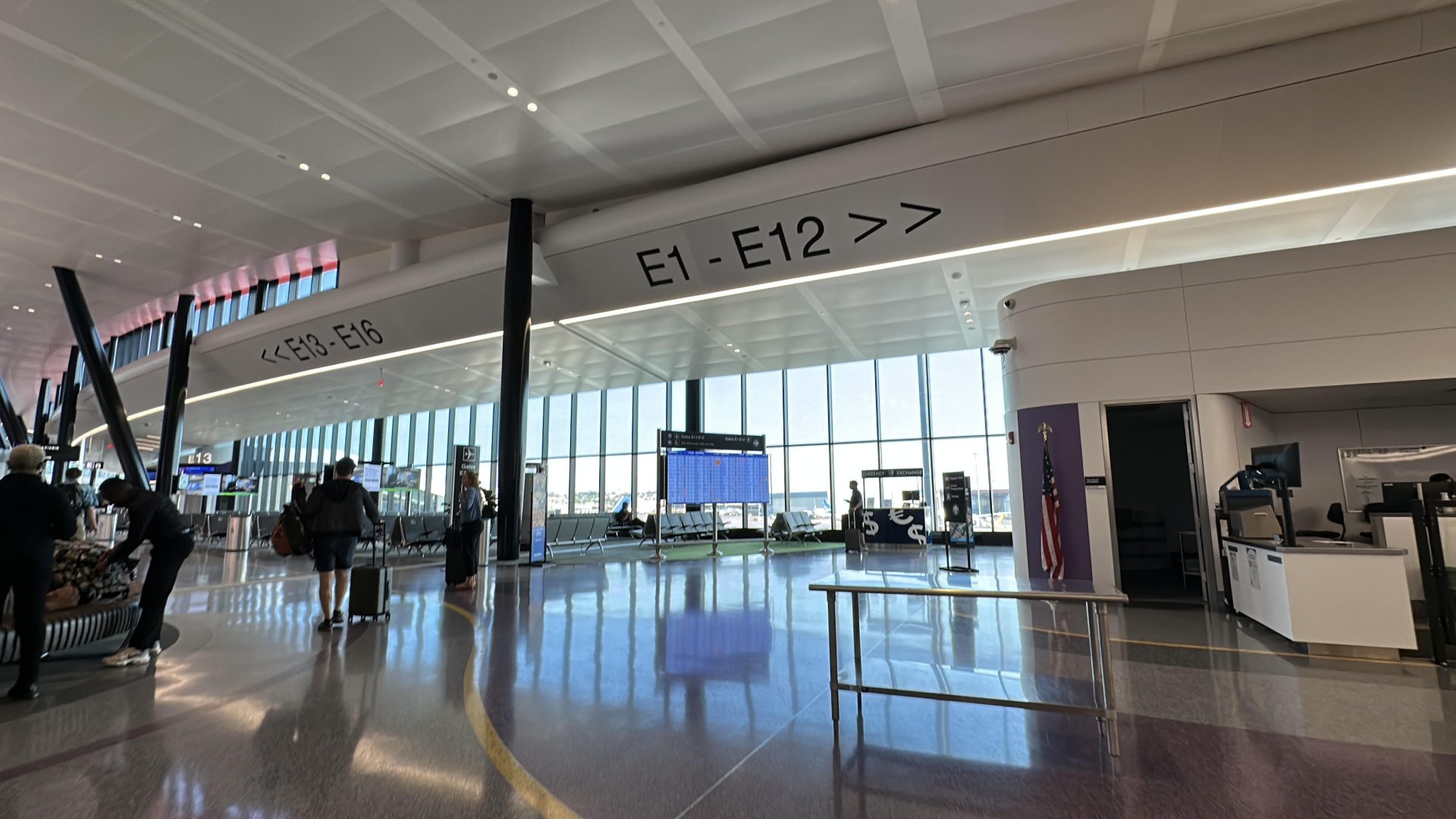
Terminal E in Boston. (Photo: AirlineGeeks | Joey Gerardi)
I arrived at the airport earlier in the day off of another flight, but I wanted to get a boarding pass, so I headed to the airline’s ticket counter, which is located in the E terminal. Porter offers three to four flights a day, depending on what day of the week it is, and I was scheduled on the flight that was going out around noon.
Even though Porter has three to four flights a day, its ticket counter is not open the entire day, so make sure to pay attention to what time it is if you do need to stop at the counter to get a boarding pass or check a bag. The airline opens its ticket counter two hours before the departure time of each flight, but if your flight is in the evening and you happen to be at the ticket counter when it opens for another flight, you are permitted to check in during that time as well.
There were not many flights going out of the international terminal at that time of the day, so the terminal, as well as the security checkpoint, was rather empty, making it a breeze to get through, especially since Porter participates in TSA PreCheck.
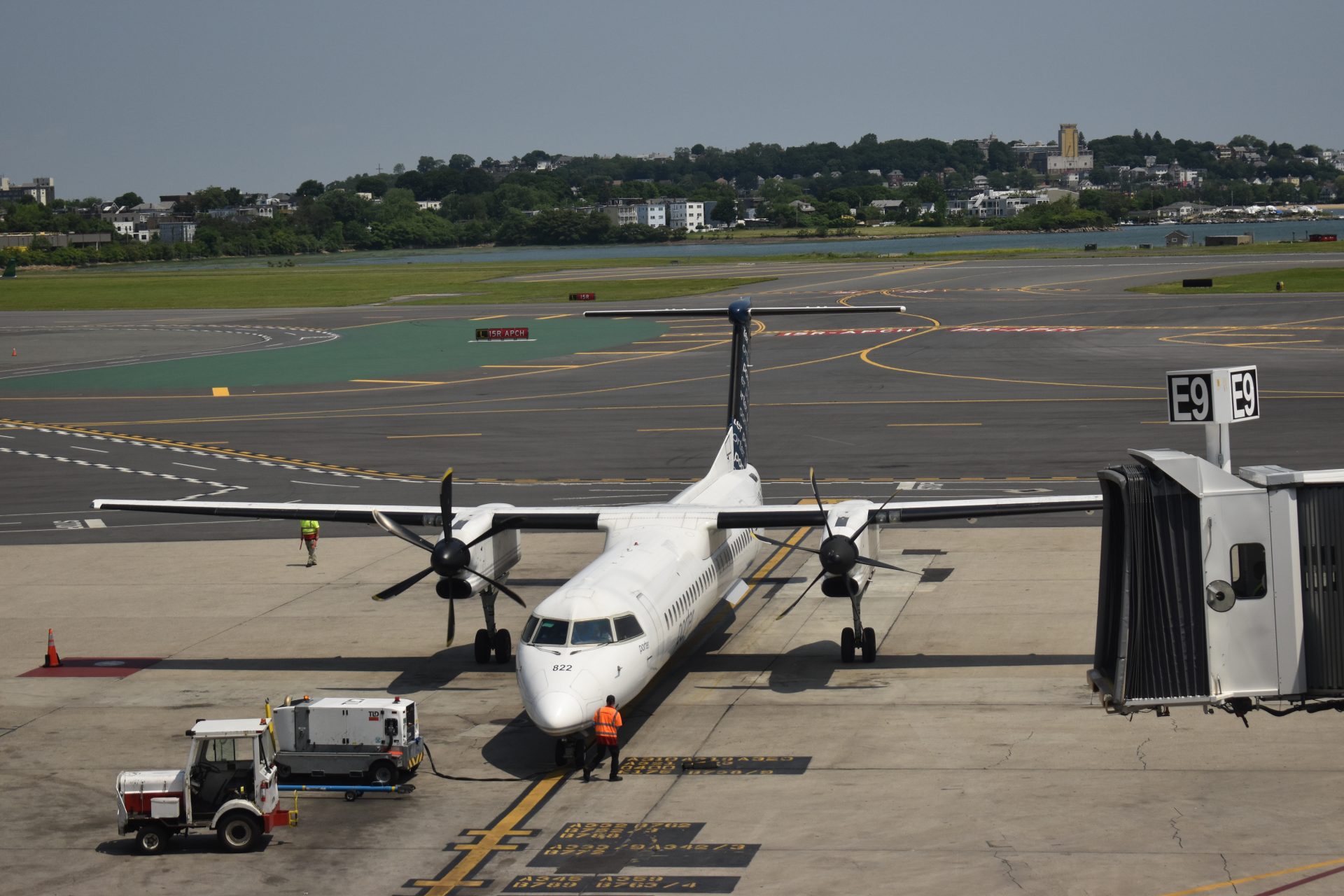
The aircraft for my flight was C-GKQB, a DeHavilland Dash-8 400, more affectionately known as the Q400. This particular aircraft was delivered directly to Porter in April 2011 and has been flying for them ever since. It’s not often you find turboprop aircraft operating in the U.S. anymore, with most airlines retiring them from their fleets, and since it’s even more rare to have one of these aircraft hooked up to a jet bridge, it was nice to see that for my flight leaving from Boston.
My aircraft for the flight up to Toronto City. (Photo: AirlineGeeks | Joey Gerardi)
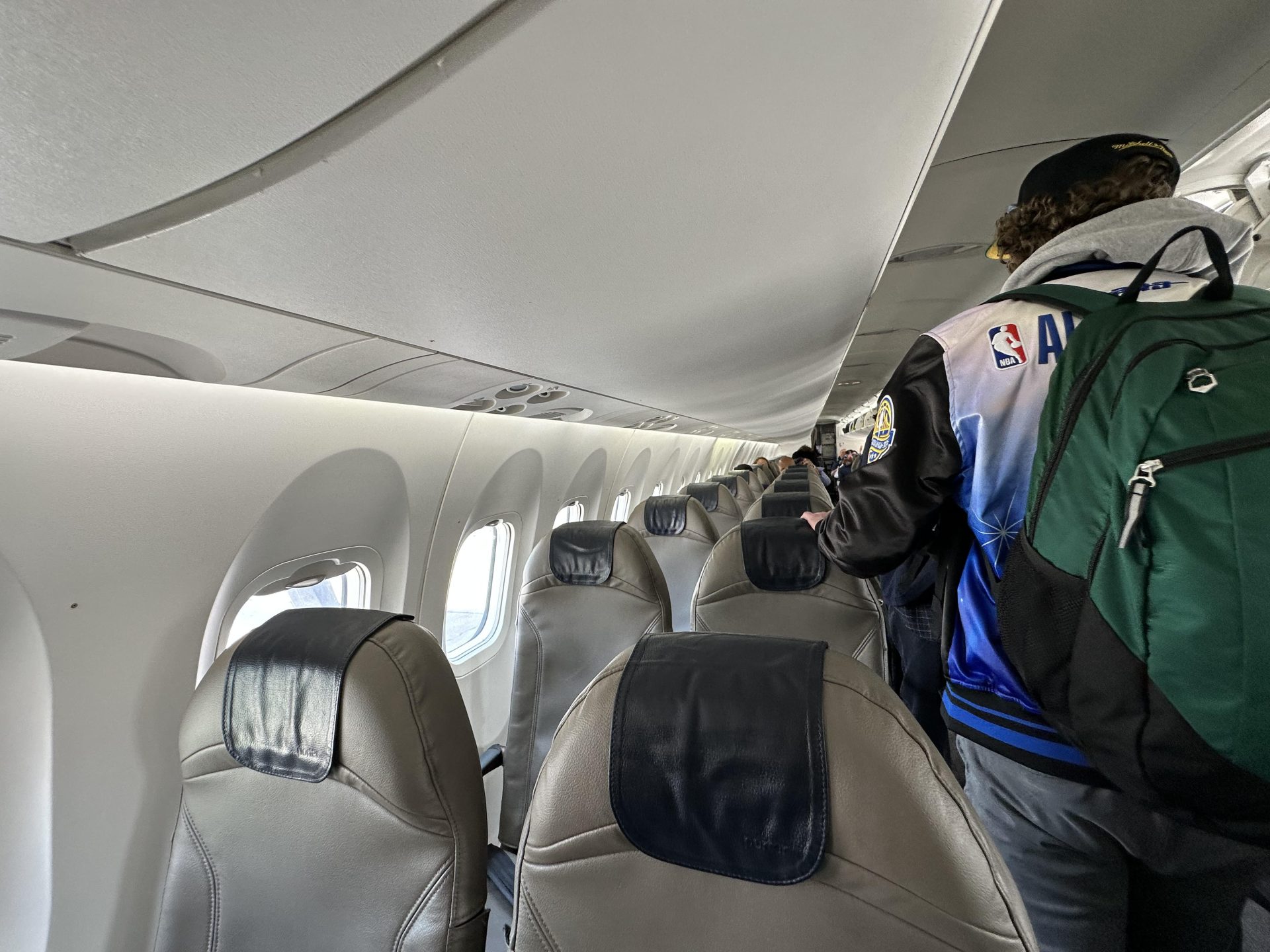
On the airlines’ Q400, the first two rows are PorterReserve, which is essentially the premium economy section with a bit of extra legroom. When it came time to board, once the PorterReserve passengers had boarded, we continued with the rest of the passengers, boarding from the back of the plane to the front.
The Porter Q400 is arranged in a 2-2 layout, with 20 rows and row 1 only having seats on the A/B side of the aircraft due to a galley closet.
The cabin of Porter’s Q400. (Photo: AirlineGeeks | Joey Gerardi)
For my seat on the flight up to Toronto City, I specifically chose a seat in the back of the aircraft on the right side, 18D. The reason I chose the back is so I didn’t have a blocked view by the engine, but I also wanted to be able to see the landing gear operations. I chose the right side because most of the time, aircraft flying into Toronto City Airport land from the east, meaning on runway 26, giving you a nice view of the city just before landing.
Just before pushback, the crew put on all of the announcements, which are automated on board. According to Canadian regulations, announcements have to be done in English and then French. Startup and pushback were super quick, and so was the taxi to the runway for takeoff. It was nice seeing the gear retract into the wings as we took to the sky towards Toronto City. During the climb out, we also passed over downtown Boston, which was cool to see as well.
Passing over downtown Boston, en route to Toronto City. (Photo: AirlineGeeks | Joey Gerardi)
All of Porter Airlines ’ Q400s have 74 passenger seats on board, and on this flight up to Toronto, there were only three or four empty seats, which is pretty good considering they operate the flight three to four times a day. There was a decent amount of leg space, especially for a Q400.
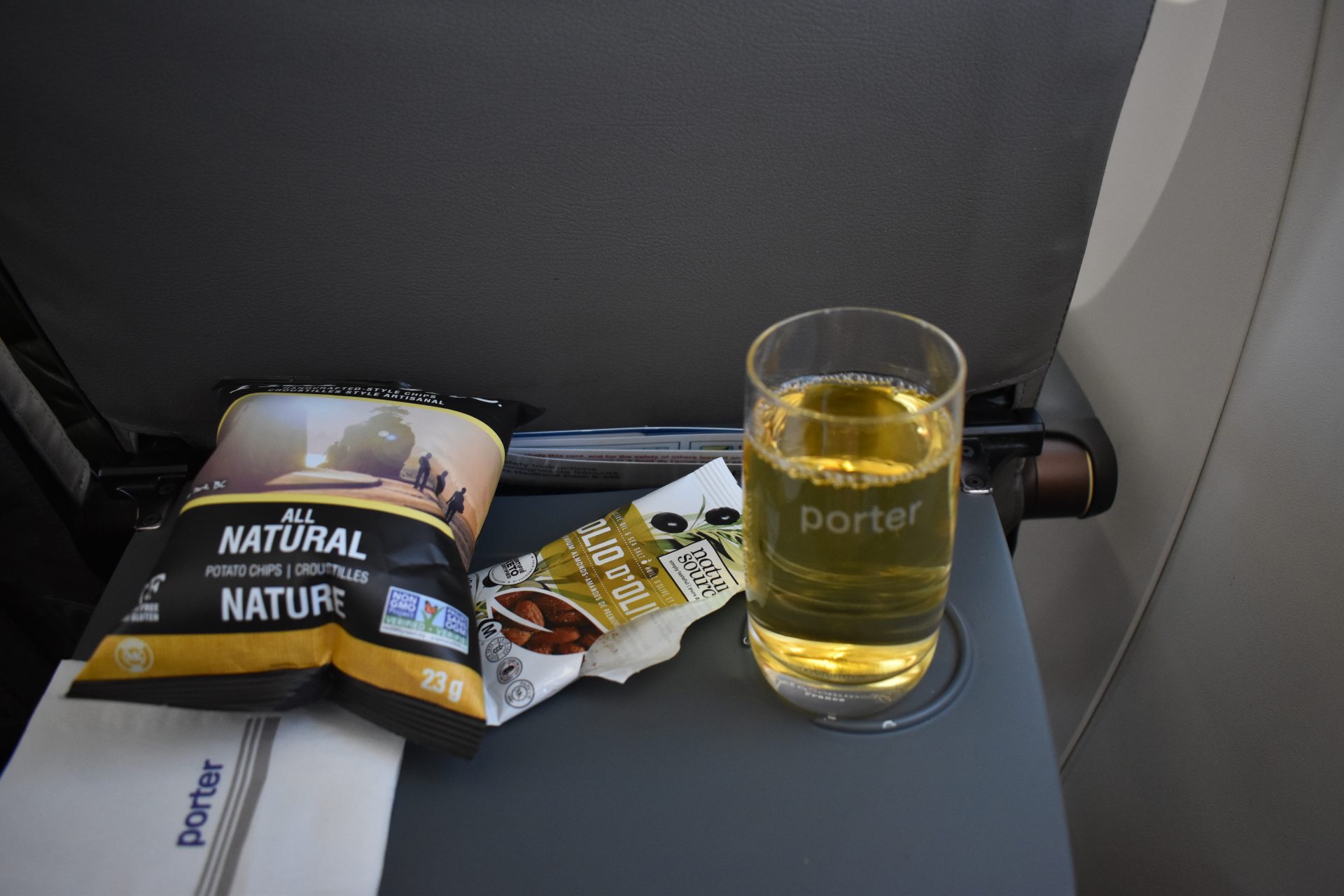
It didn’t take long for us to get up to a cruising altitude of 24,000 feet/7315.20 meters, and the crew began the in-flight beverage and snack service. One of the things Porter became known for was its elevated economy experience, including the use of glassware, which it continues to use to this day on board all of their flights, even short journeys on the turboprop Q400s.
The snack and drink service on board Porter. (Photo: AirlineGeeks | Joey Gerardi)
The seatback pocket had, of course, the safety card, a pamphlet on how to get a Porter credit card, and an in-flight magazine which had the carrier’s current route map. With no Wi-Fi or in-flight entertainment on board the airline’s Q400 aircraft, I spent the entirety of the flight looking at the view below us.
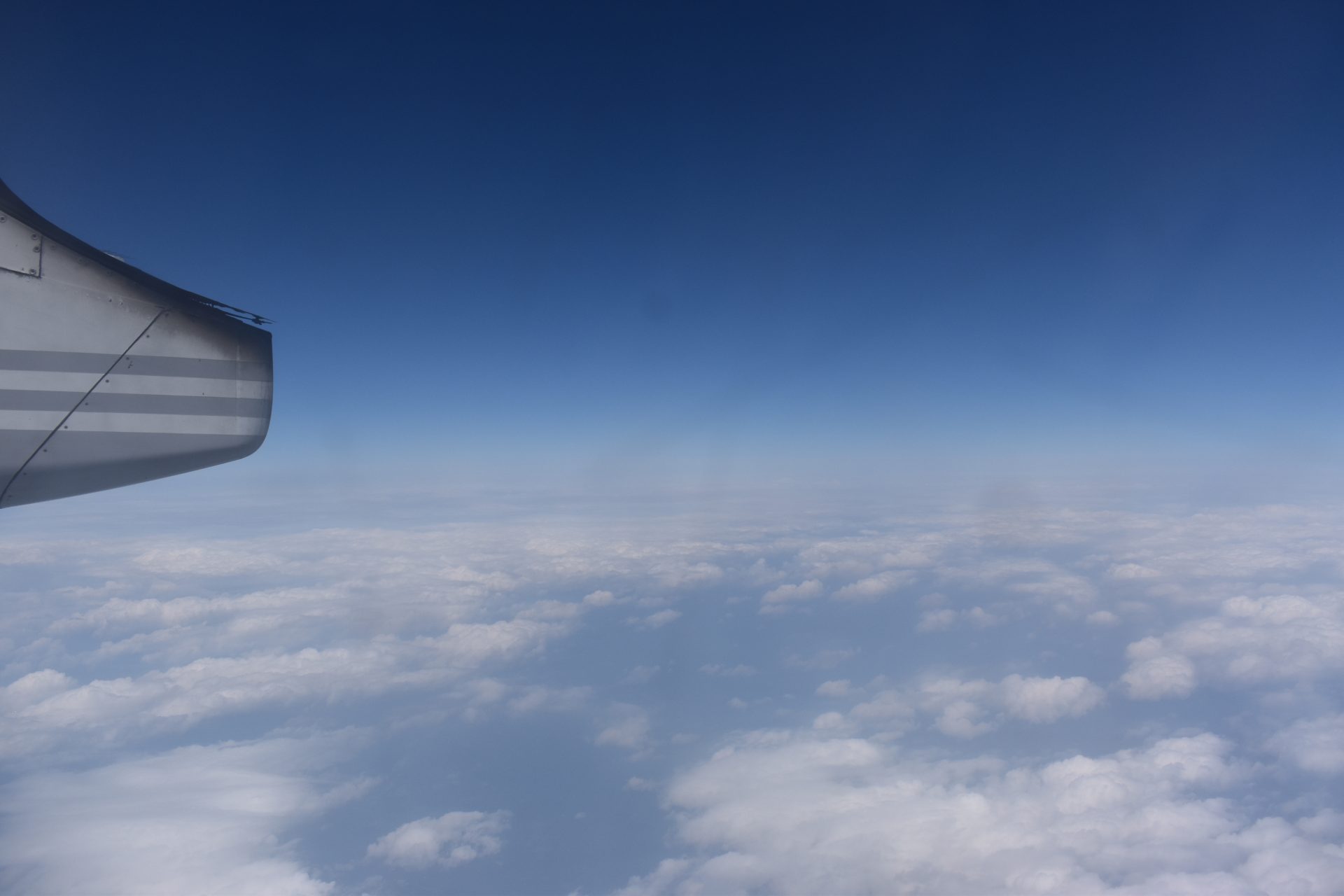
We passed over northern New York State, and then continued across Lake Ontario.
At our cruising altitude, headed to Toronto. (Photo: AirlineGeeks | Joey Gerardi)
It didn’t take very long for us to begin our descent into Toronto, and I continued to have views of the lake below, given the beautiful blue skies.
About five or so minutes before landing, the landing gear came out of the wing section, and we began our final descent into Toronto City Airport. As predicted, we did come into the airport from the east, giving me a spectacular view of downtown Toronto, including the CN Tower, just before landing.
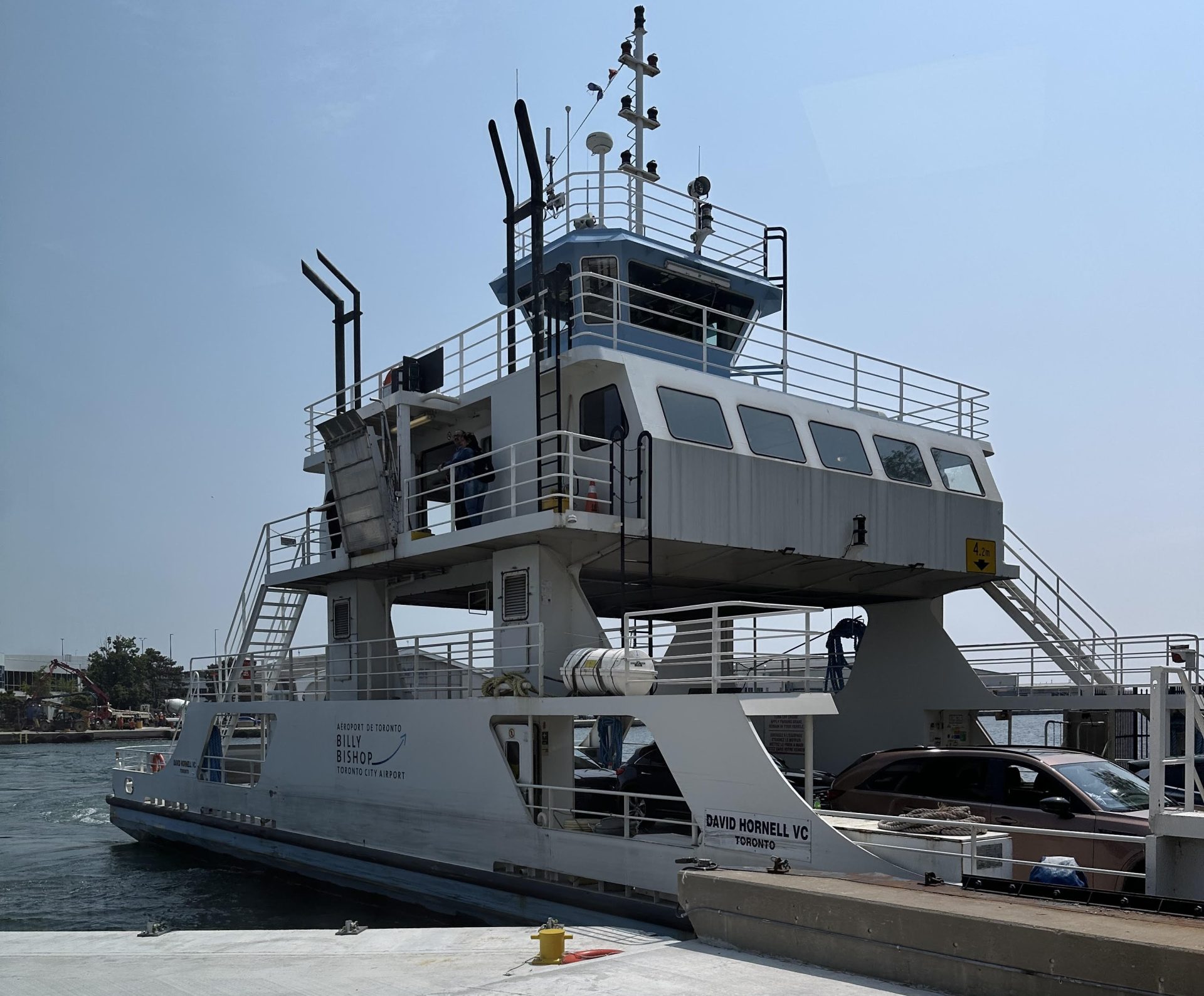
We landed at the airport just after 2 p.m., after about 1.5 hours of flying from Boston. After pulling into the gate, I got off and went through customs, which didn’t take very much time at all since I had Nexus, but even then, the regular line wasn’t very long either. Although there’s a tunnel between Toronto Island and the mainland, if you still want to take the ferry like all passengers used to before the tunnel opened back in 2015, you are still able to ride it for free.
The ferry between the mainland and Toronto City Airport. (Photo: AirlineGeeks | Joey Gerardi)
The airline also offers a complimentary shuttle from the airport to downtown Union Station for those who need to take a train or other transit to their final destination, or if you just need to get to the heart of the city.
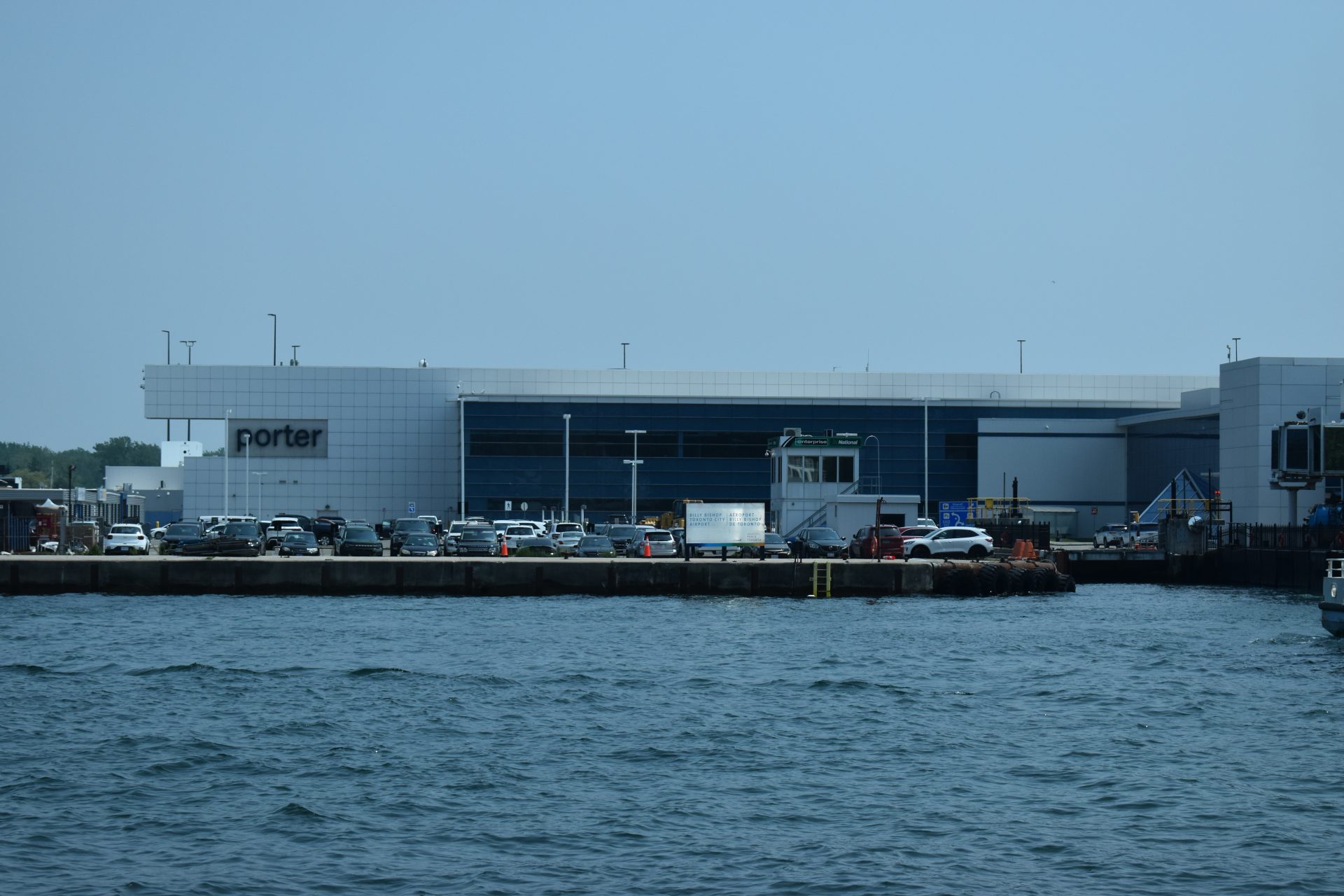
If downtown Toronto is your final destination, this airport is by far the easiest way to get there if you happen to live near one of the airports that Porter flies to from Toronto City Airport. From the time I got off the plane until I reached Union Station, it was probably only about 15 to 20 minutes, whereas if you flew into Toronto Pearson, it would probably take just that to get to baggage claim.
Toronto City Airport, on Toronto Island. (Photo: AirlineGeeks | Joey Gerardi)
The experience flying on Porter was definitely worth it, and I 100% recommend it to any AvGeek who wants the experience of landing at Toronto City/Billy Bishop Airport, and it is by far the easiest way to get to downtown Toronto by plane.
I did get to experience Porter’s Reserve seat cross-country from Vancouver to Ottawa, but that experience will be in a different article. A video experience of this Boston to Toronto City trip can be found below.
Editor’s Note: Porter provided AirlineGeeks with a seat on this flight, but this trip report is an objective portrayal of events and is in no way swayed.
Joey has always been interested in planes for as long as he can remember. He grew up in Central New York during the early 2000s when US Airways Express turboprops ruled the skies. Being from a non-aviation family made it harder for him to be around planes and would only spend about three hours a month at the airport. He was so excited when he could drive by himself, the first thing he did with his driver's license was get ice cream and go plane spotting for the entire day. He graduated from Western Michigan University in 2022 with a B.S. in Aviation Management & Operations and a Minor in Business, and currently works for a major airline in his hometown.
Senator Questions United-JetBlue Partnership
Democratic Sen. Richard Blumenthal of Connecticut said he’s concerned that a proposed partnership between United and JetBlue could harm competition and eventually reduce choices for travelers in the New York City metro area.
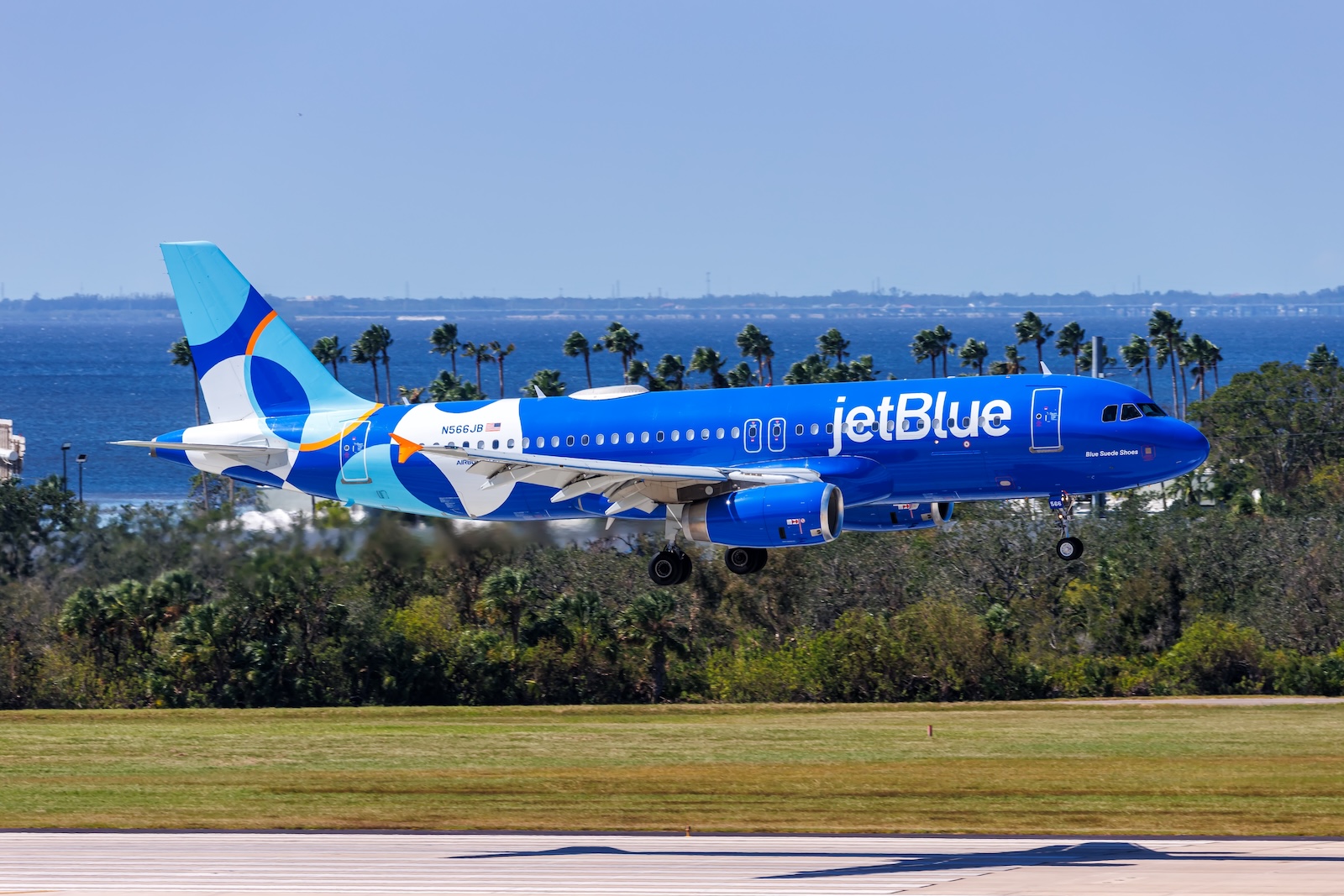
A JetBlue A320. (Photo: Shutterstock | Markus Mainka)
Democratic Sen. Richard Blumenthal of Connecticut said he’s concerned that a proposed partnership between United and JetBlue could harm competition and eventually reduce choices for travelers in the New York City metro area.
According to Reuters, Blumenthal sent a letter to United CEO Scott Kirby and JetBlue CEO Joanna Geraghty in which he asked for more details about the “Blue Sky” alliance, company records pertaining to the agreement, and information about the carriers’ future plans. Reuters said it saw the letter on Friday.
The senator wrote that he is worried about any deal “that may harm full and fair airline competition and lead to fewer and more expensive options for travelers, particularly in the New York City area.”
The United-JetBlue partnership, announced in May, allows members of the airlines’ loyalty programs to earn and redeem points or miles across both networks. Each airline will offer flights on the other’s website and mobile app.
As part of the agreement, United would resume operations at New York-JFK, while JetBlue would expand its presence at Newark Liberty International Airport in New Jersey.
Low-cost carrier Spirit came out against the Blue Sky alliance in June, arguing in a regulatory complaint that it will create “anti-competitive incentives” and turn JetBlue into “a de facto vassal of United.”
United and JetBlue rejected those claims and contend the link-up will actually increase JetBlue’s independence by making it more competitive.
JetBlue, which is based in New York City, has struggled to rebound following the COVID-19 pandemic.
The carrier attempted to expand its reach and revitalize its business with a partnership with American Airlines, billed as the “Northeast Alliance.” The arrangement would have allowed the two companies to share passengers and coordinate on routes, but a federal judge ruled against it, finding the partnership would harm competition in the industry.
JetBlue also attempted to buy Spirit, but that deal was also blocked by a federal court ruling after a trial last year.
Zach Vasile is a writer and editor covering news in all aspects of commercial aviation. He has reported for and contributed to the Manchester Journal Inquirer, the Hartford Business Journal, the Charlotte Observer, and the Washington Examiner, with his area of focus being the intersection of business and government policy.
Livery of the Week: Qatar Airways Celebrates Paris Saint Germain
Qatar Airways has become one of the most recognized brands worldwide, also thanks to its multiple sponsorships at some of the most high-profile sporting teams.
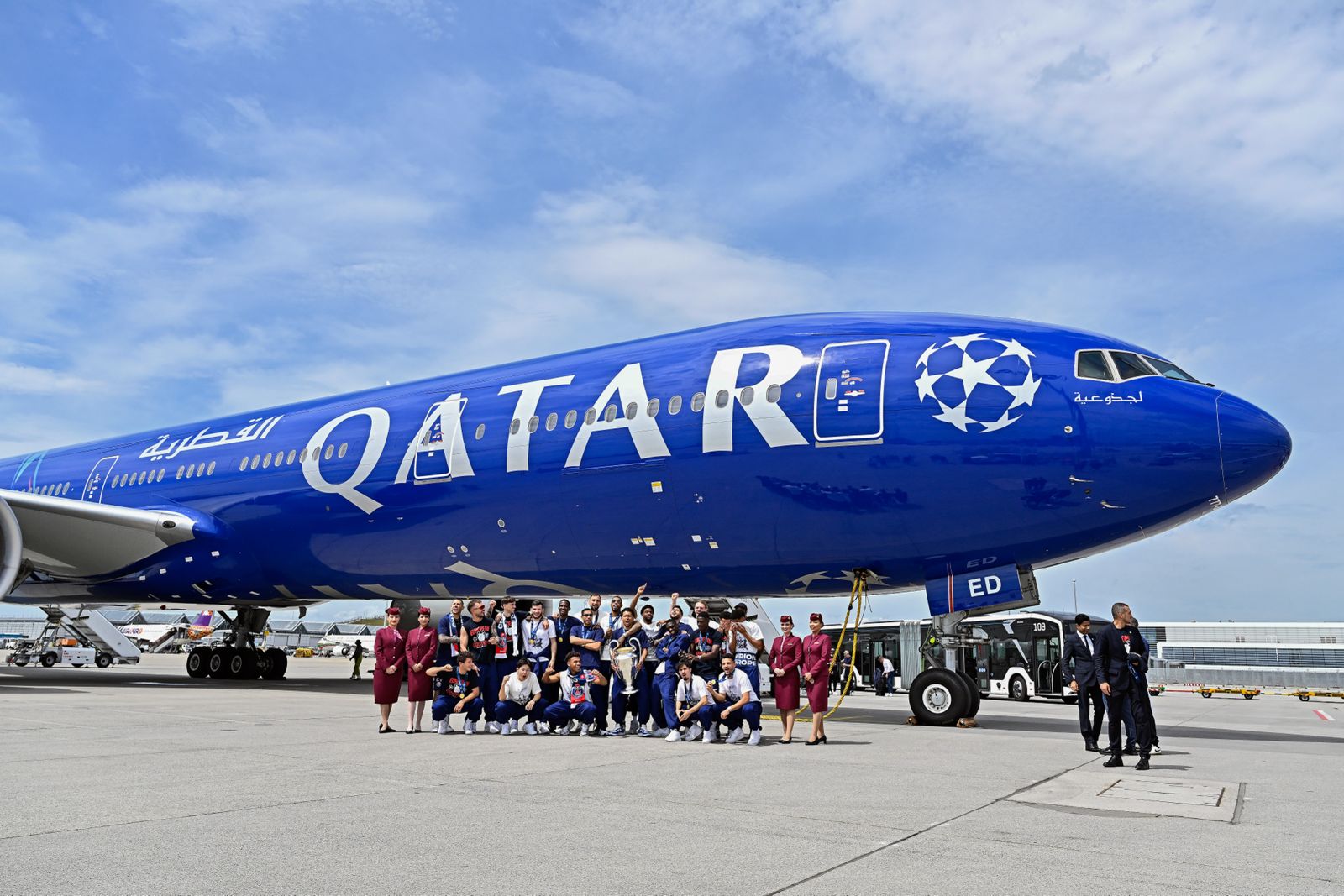
Qatar Airways Boeing 777-300 in special livery for Paris Saint Germain's UEFA Champion's League victory (Photo: Qatar Airways)
Editor’s Note: AirlineGeeks is proud to present our ‘Livery of the Week’ series. Every Friday, a team member will share an airline livery, which can be from the past, present, or even a special scheme. Some airline liveries are works of art. The complexity associated with painting around critical flight components and the added weight requires outside-the-box thinking from designers. The average airliner can cost upwards of $200,000 to repaint, creating a separate aircraft repainting industry as a result.
Have an idea for a livery that we should highlight? Drop us a line.
Qatar Airways has become one of the most recognized brands worldwide in the airline industry, also thanks to its multiple sponsorship initiatives at some of the most high-profile sporting teams or events in the world.
The Doha-based carrier currently has over a dozen active sponsorships in various sports, from some of the best soccer teams in the world such as Paris Saint Germain and FC Internazionale Milano to Formula 1 and Moto GP.
On May 31, Paris Saint Germain won the UEFA Champion’s League, the most prestigious soccer competition for clubs in Europe, defeating FC Internazionale Milano 5-0 in a very one-sided final played at the Allianz Stadium in Munich, Germany.
The UEFA Champion’s League final usually the most watched TV event of the year worldwide, with an estimated combined viewership of over 500 million people worldwide.
As the team’s main sponsor, Qatar Airways decided to celebrate the victory with a special livery on a Boeing 777-300ER aircraft that was used to carry the team and the trophy back to Paris the night after the final.
Most of the fuselage was painted in blue, the color of Paris Saint Germain, with the UEFA Champion’s League logo just between the cockpit and the front door, and the traditional “QATAR” inscription just after the door. The tailfin was left in the original Qatar Airways colors with the traditional stylized oryx logo, and so were the engines. On the rest of the fuselage, the UEFA Champion’s League logo was repeated various time, including on the part underneath the tailfin, colored in traditional Qatar Airways “Spanish purple”.
The aircraft selected for the celebration is registered as A7-BED. It was delivered new to the airline on Oct. 28, 2014, it is powered by two GE90-115B engines and is configured in a two-class configuration with 42 Business Class “Q-suites” and 312 Economy Class seats.
Looking for a new airplane model? Head over to our friends at the Midwest Model Store for a wide selection of airlines and liveries.
Vanni fell in love with commercial aviation during his undergraduate studies in Statistics at the University of Bologna, when he prepared his thesis on the effects of deregulation on the U.S. and European aviation markets. Then he pursued his passion further by obtaining a Master’s Degree in Air Transport Management at Cranfield University in the U.K. followed by holding several management positions at various start-up carriers in Europe (Jet2, SkyEurope, Silverjet). After moving to Canada, he was Business Development Manager for IATA for nine years before turning to his other passion: sports writing.
Delta Adds New International Long-Haul Route
The addition of this new service brings the number of Delta’s long-haul routes from Salt Lake City to five, including London, Paris, Amsterdam, and Seoul.
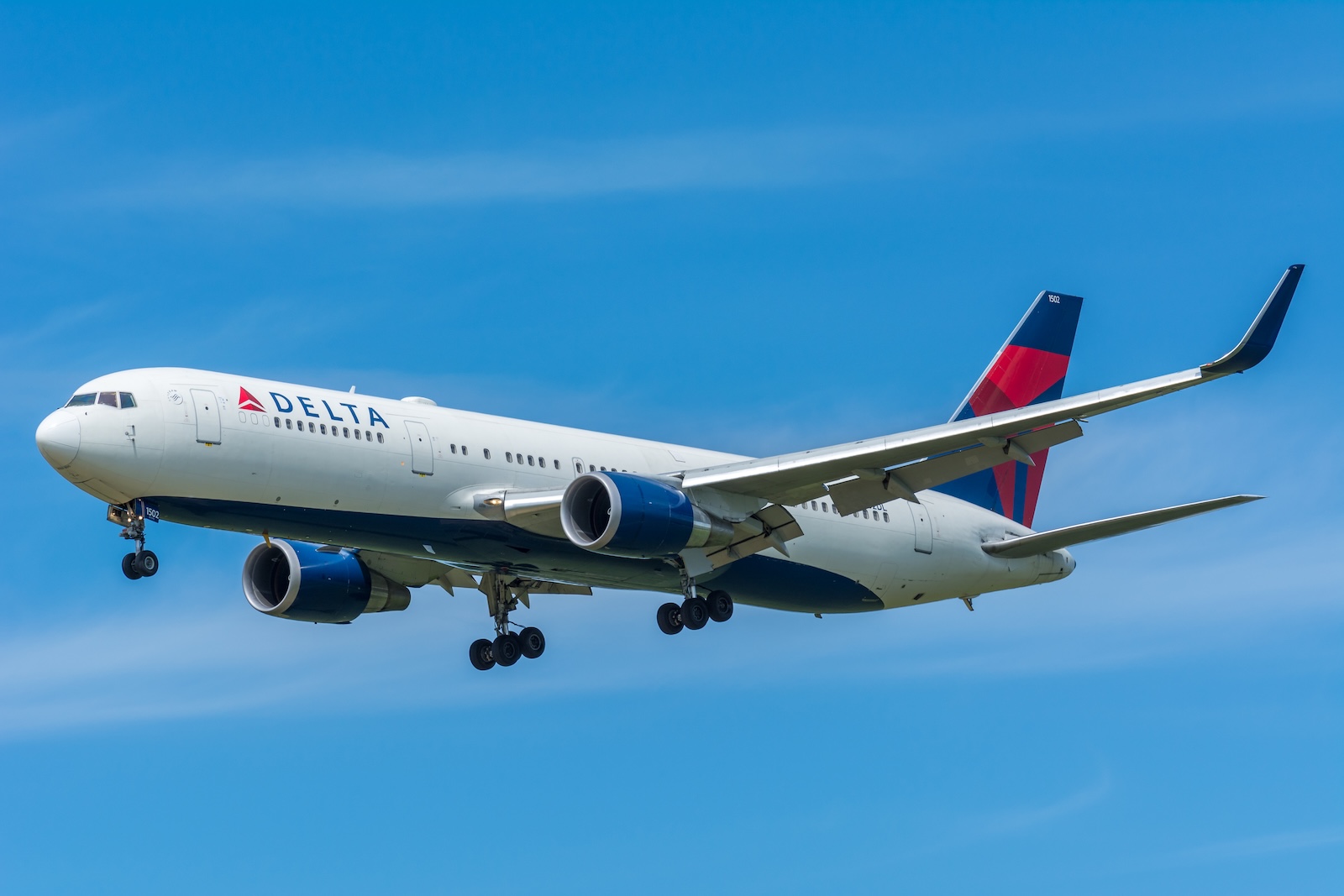
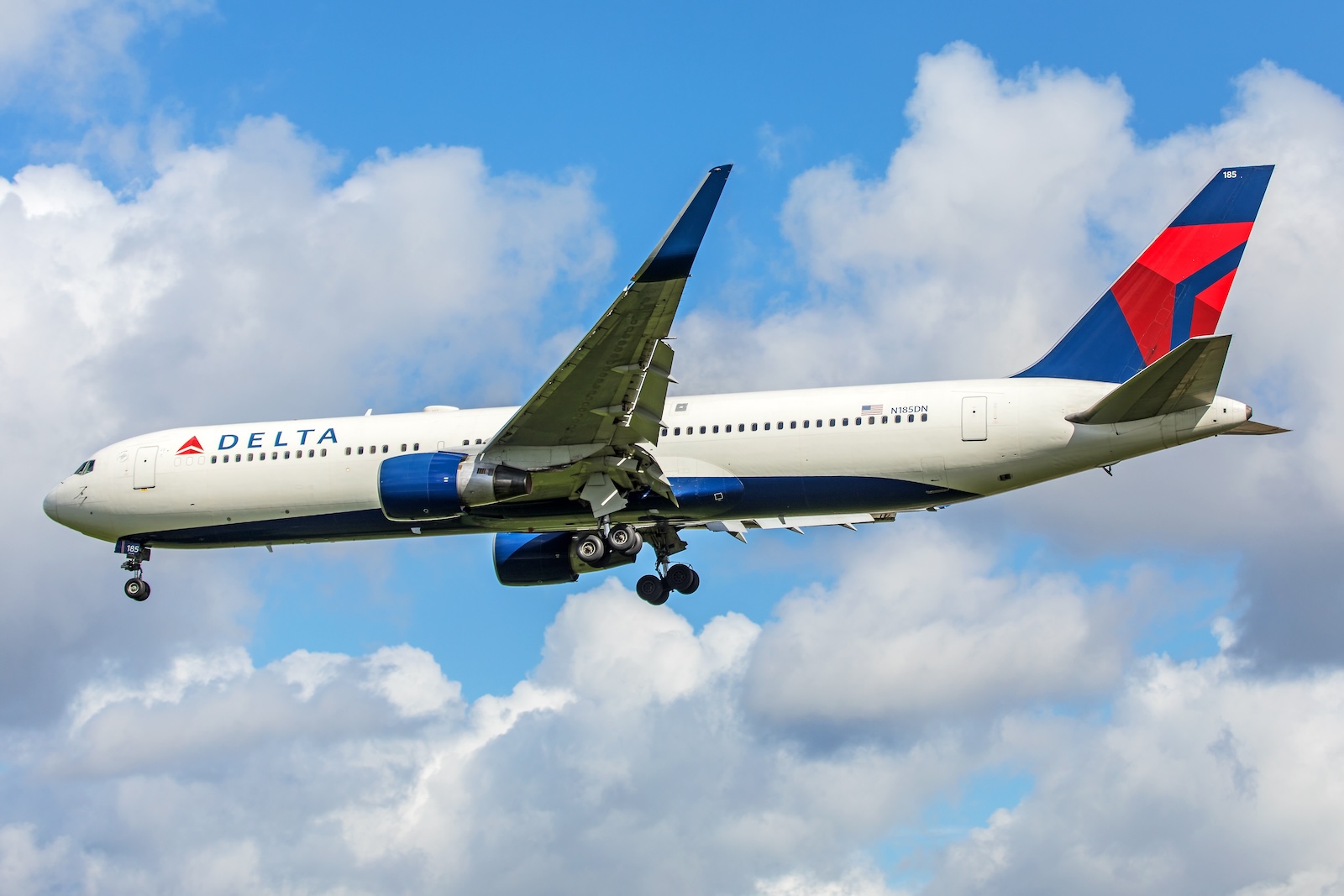
A Delta 767-300ER. (Photo: Shutterstock | Nieuwland Photography)
Delta is set to expand its South America network later this year with a brand-new route.
On Friday, the airline announced plans to connect Salt Lake City with Jorge Chávez International Airport in Lima, Peru. The new service, set to begin Dec. 4, will be the first nonstop connection between Utah and Peru.
The route will operate once per day through Jan. 25 on a Boeing 767-300ER aircraft.
According to Delta, the new route supports the carrier’s joint venture with LATAM Airlines. While LATAM does not serve Salt Lake City directly, the partnership enables passengers flying into Lima to connect to other cities across South America through LATAM’s network.
“This new route is a significant milestone for Delta and our customers in Salt Lake City and throughout the Mountain West,” said Paul Baldoni, Delta’s senior vice president of network planning, in a news release. “With this expanded connectivity through our Salt Lake City hub, we’re proud to offer a faster, more convenient way to reach Lima and other major cities across South America.”
The addition of Lima brings the number of Delta’s long-haul routes from Salt Lake City to five, including London, Paris, Amsterdam, and Seoul.
Ryan founded AirlineGeeks.com in February 2013 and has spent more than a decade covering the airline business. His work has been featured by CNN, WJLA, CNET, and Business Insider. His aviation experience spans airport operations, Part 135 regulatory compliance, and airline crew workforce planning, along with time behind the yoke of a Cessna 172 and interviews with airline executives. Ryan now serves as Group President of Firecrown Media’s Aviation Group. He holds a B.S. in Air Transportation Management and an MBA from Arizona State University and teaches Airline Management at Embry-Riddle Aeronautical University.
Pilots with Canada’s Porter Airlines have taken a major step toward joining the Air Line Pilots Association (ALPA), becoming the union's 43rd labor group.
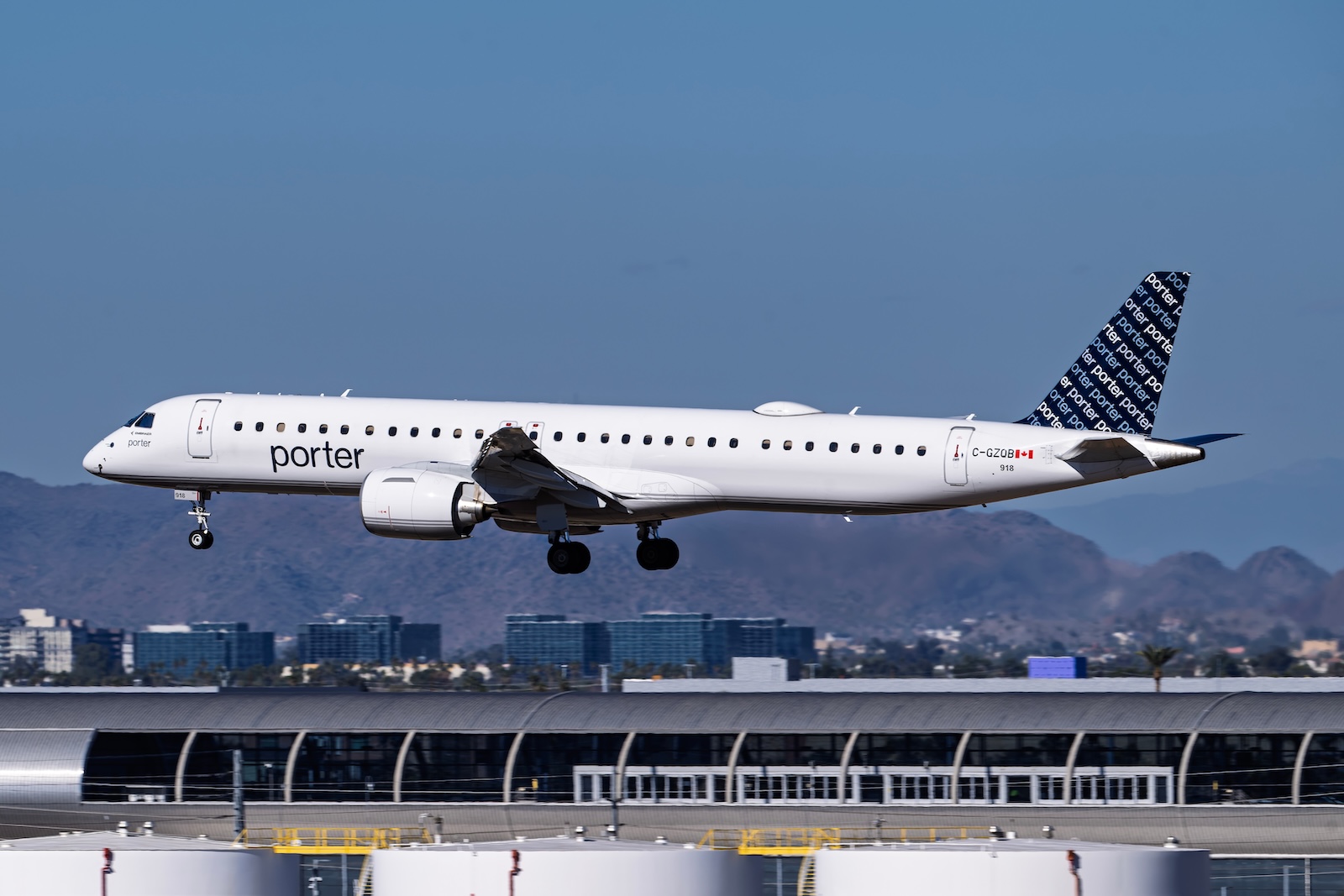
A Porter Airlines Embraer jet. (Photo: Shutterstock | Robin Guess)
Pilots with Canada’s Porter Airlines have taken a major step toward joining the Air Line Pilots Association.
In a statement, ALPA said Porter pilots recently filed membership cards with the Canada Industrial Relations Board. The CIRB will now request a response from Porter and investigate the application, which could involve interviewing pilots about their support for unionization.
Once the CIRB completes its probe, it will decide whether to grant certification, which usually takes around 30 days. If the certification goes through, Porter pilots would immediately become part of ALPA, making them the union’s 43rd pilot group.
“Welcoming the Porter pilots into ALPA will further advance the interests of commercial airline pilots and strengthen aviation safety and security,” said ALPA President Jason Ambrosi. “If certified for ALPA representation, the Porter pilots will make our ranks more than 80,000 strong, continuing the significant growth of unionized pilots in North America.”
Porter, which has its headquarters in Toronto, is Canada’s fourth-largest airline and largest non-unionized carrier. The airline has grown significantly over the past several years, adding new routes and expanding operations at Toronto Pearson International Airport and Ottawa/Macdonald–Cartier International Airport. It now flies to 45 destinations in Canada, the U.S., Mexico, and the Caribbean.
Zach Vasile is a writer and editor covering news in all aspects of commercial aviation. He has reported for and contributed to the Manchester Journal Inquirer, the Hartford Business Journal, the Charlotte Observer, and the Washington Examiner, with his area of focus being the intersection of business and government policy.
Pilot Sues United Over Forced Rehab and Termination
Veteran captain alleges he was wrongly diagnosed with alcohol dependence following a head injury and coerced into United’s substance abuse monitoring program.
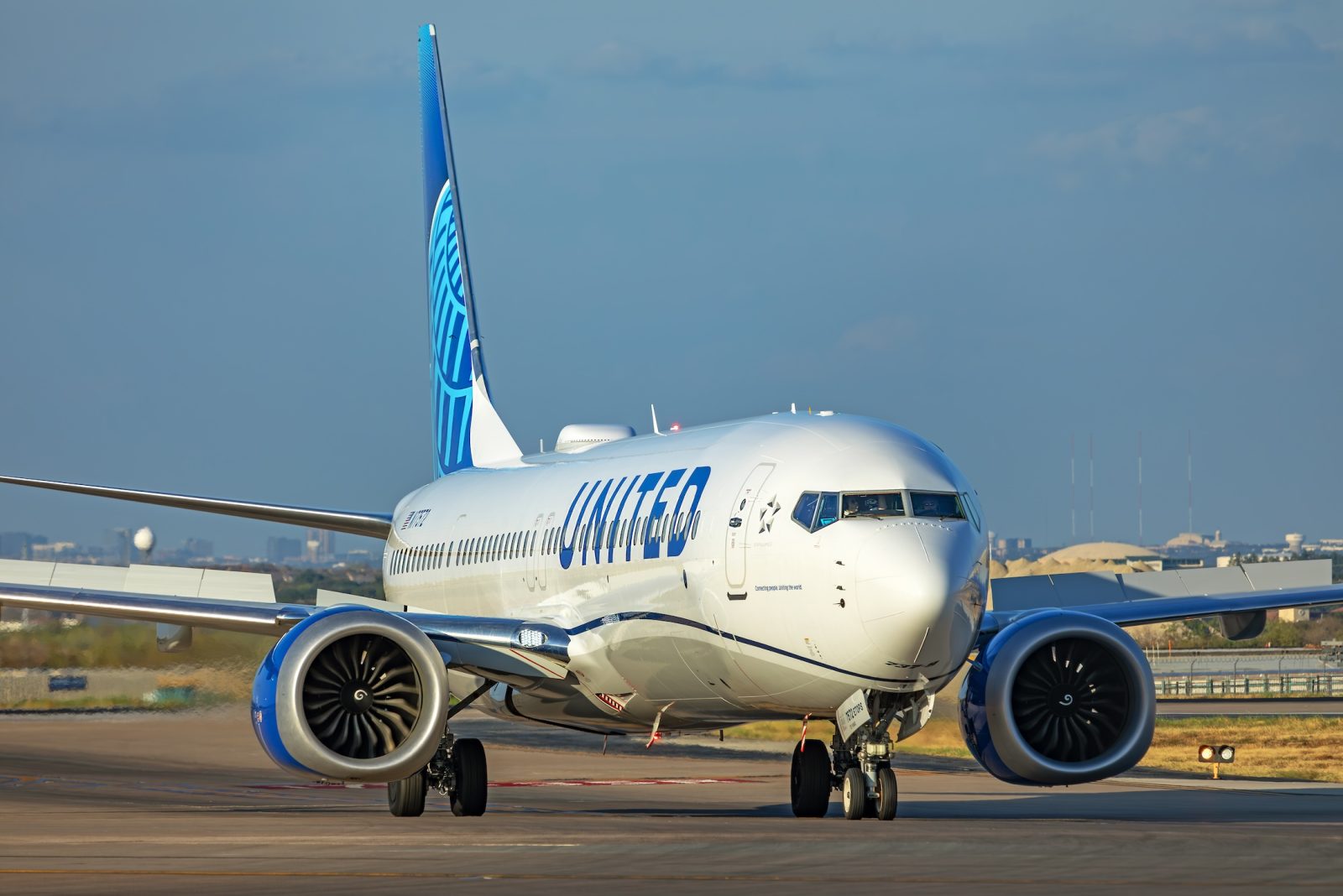
A United 737 MAX 9 aircraft (Photo: AirlineGeeks | William Derrickson)
A former United captain has filed a federal lawsuit in the U.S. District Court for the Northern District of Illinois, alleging wrongful termination and medical mismanagement following a workplace head injury.
In a 22-page complaint filed on July 3, Michael Tallon accuses United, the Air Line Pilots Association (ALPA), and Aviation Medical Examiner Dr. Robert Noven of discrimination, retaliation, and fraud. Tallon claims the defendants wrongly forced him into a substance abuse program after he suffered a head injury while on a layover in the Azores in June 2023.
According to the filing, Tallon reported signs of a concussion to both an airline manager and an ALPA representative but was not referred for evaluation under FAA-mandated head injury protocols. Instead, Tallon alleges he was pressured to admit to alcoholism and was directed into an inpatient treatment facility.
“United and ALPA forced Plaintiff into a medically unnecessary substance abuse program… despite overwhelming evidence that Plaintiff did not meet any diagnostic criteria for alcohol use disorder,” the complaint states.
Tallon says that during the process, he was told directly by a United representative: “If I hear you say one more time that you are NOT in recovery, you will be out of compliance with the program.”
He was later admitted into United’s Human Intervention Motivation Study (HIMS) program, designed for substance-dependent pilots. However, Tallon alleges that no medical professional ever formally diagnosed him with alcohol dependence.
One neuropsychologist, after reviewing his records, allegedly told him, “There is no diagnosis here. You have not been diagnosed with anything.”
Termination
Despite undergoing a month-long inpatient program, completing outpatient therapy, and receiving multiple clean evaluations, Tallon remained in the HIMS program until his eventual termination in early 2025.
The lawsuit states that “Once you have agreed to HIMS, you cannot back out,” and alleges that United’s program imposed blanket conditions not tailored to individuals’ actual medical needs.
Tallon’s complaint includes six counts, including violations of the Americans with Disabilities Act (ADA), the Rehabilitation Act, and the Employee Retirement Income Security Act (ERISA). It also accuses Dr. Noven of interfering with FAA medical certification and attempting to pressure another medical professional to change a favorable evaluation.
“Defendants’ conduct constitutes discrimination under the ADA,” the lawsuit claims, adding that the HIMS program was used in a punitive and retaliatory manner.
Tallon is seeking compensatory and punitive damages and has requested a jury trial. He is also asking the court to order changes to United’s HIMS program.
United declined to comment on the lawsuit, according to The Independent.
Ryan founded AirlineGeeks.com in February 2013 and has spent more than a decade covering the airline business. His work has been featured by CNN, WJLA, CNET, and Business Insider. His aviation experience spans airport operations, Part 135 regulatory compliance, and airline crew workforce planning, along with time behind the yoke of a Cessna 172 and interviews with airline executives. Ryan now serves as Group President of Firecrown Media’s Aviation Group. He holds a B.S. in Air Transportation Management and an MBA from Arizona State University and teaches Airline Management at Embry-Riddle Aeronautical University.
NTSB Releases Final Report on Alaska Door Plug Blowout
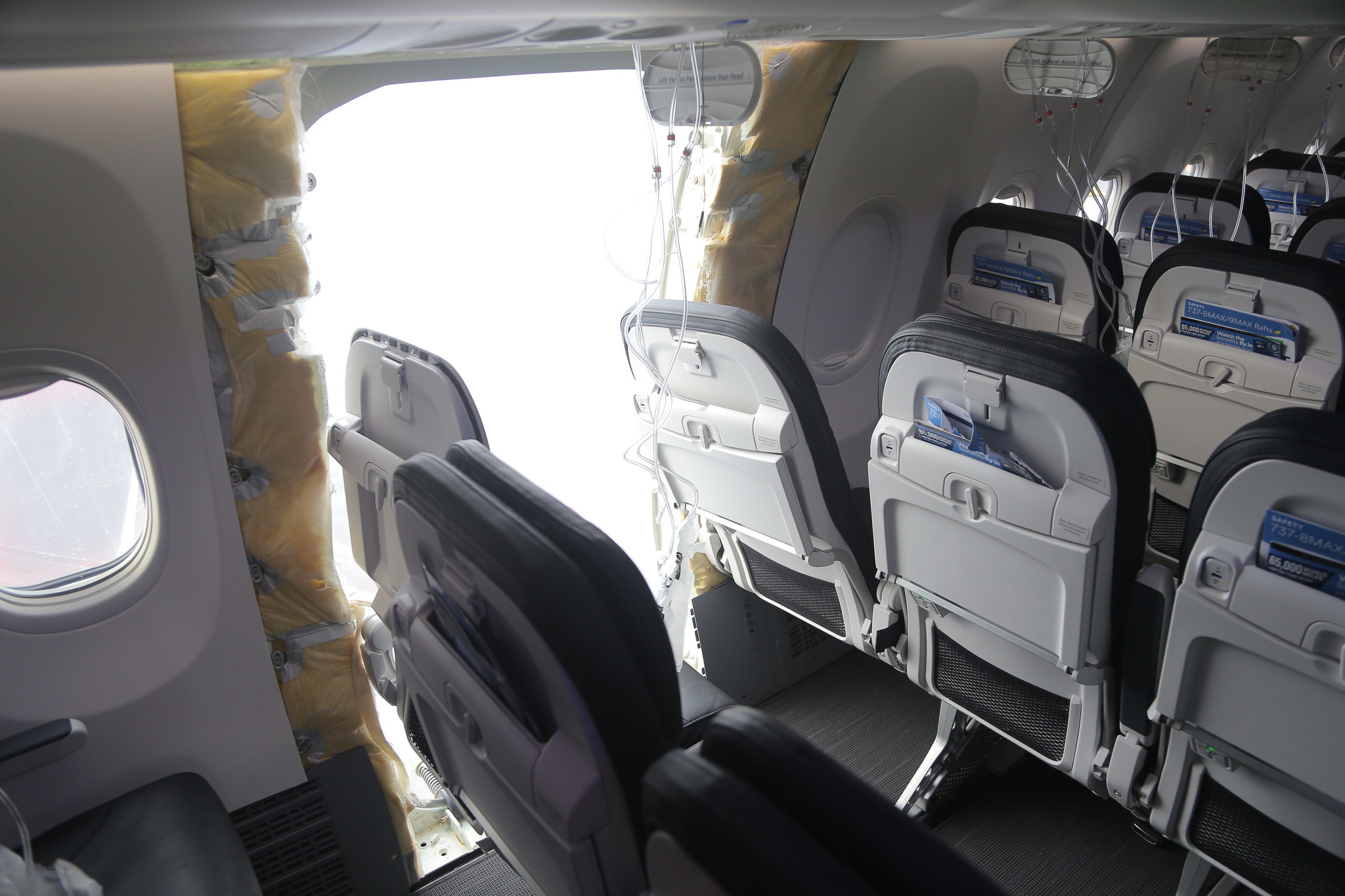
The NTSB on Thursday released its final report on a midair door plug blowout on an Alaska flight last year and assigned ultimate responsibility to Boeing.
Missing door plug after a January incident involving Alaska flight 1282 (Photo: NTSB)
The National Transportation Safety Board on Thursday released its final report on a midair door plug blowout on an Alaska Airlines flight last year and assigned ultimate responsibility to Boeing for failing to provide adequate training and oversight for its workers.
The report, which largely restated points laid out by NTSB officials at a public meeting in June, found that the left mid exit door plug at the center of the accident was missing four critical installation bolts. It faulted Boeing’s safety and quality processes for not catching the problem and failing to properly document every person who worked on the door plug and the surrounding fuselage.
The door plug failed about six minutes into an Alaska flight from Portland, Oregon, to Ontario, California, in January 2024. The aircraft experienced a decompression, which damaged parts of the cabin interior and dropped unsecured items like cellphones, paper, clothing, and children’s toys onto the Portland suburbs below. The 737 MAX 9 returned to the airport and landed without further incident. One flight attendant and seven passengers received minor injuries, and no one was killed.
The fuselage with the door plug installed was built in Kansas at Spirit AeroSystems and then brought by rail to Boeing’s Renton, Washington, plant for final assembly. The arrival inspection of the fuselage revealed a number of rivets had been improperly installed, and to make repairs, the door plug had to be removed.
It was during this rework that Boeing failed to ensure implementation of and compliance with its parts removal process, which would ensure that bolts and other hardware that had to be removed were properly reinstalled, the report states. The manufacturer did not document the individual or individuals who worked on the door plug during the repairs.
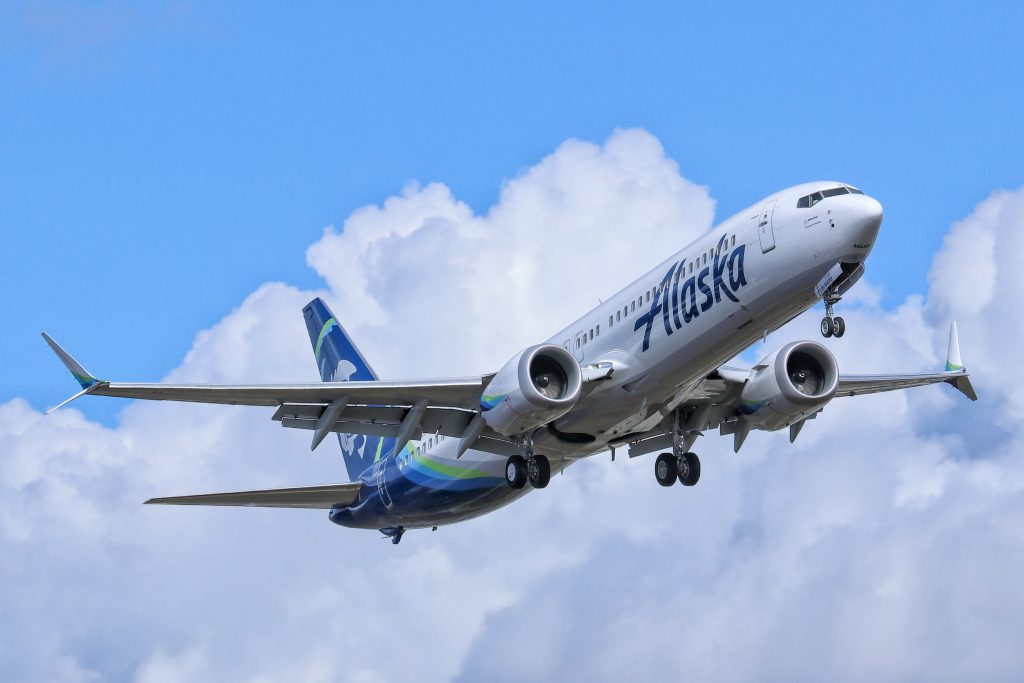
An Alaska Airlines 737 MAX 9 at Paine Field. (Photo: AirlineGeeks | Katie Zera)
NTSB investigators found that if just one of the missing bolts had been installed, the door plug would not have separated from the aircraft as it did.
‘Safety Culture’ Under Scrutiny
During its public hearing last month, the NTSB said Boeing’s system for training technicians on parts removal was somewhat informal and mostly on the job. A lack of experienced workers also played a role, since this made it harder to catch errors and properly train new personnel.
The agency issued a series of recommendations to Boeing. The manufacturer was directed to continue the certification process for a design enhancement for mid exit door plugs, revise its risk assessment process, and develop recurrent training for technicians centering on parts removal. As part of that training, the company should develop a standard to determine when parts removal is necessary and create a system for documenting removals, the NTSB said.
Separately, the FAA was faulted for “ineffective compliance enforcement,” which failed to identify and correct “repetitive and systemic nonconformance issues associated with [Boeing’s] parts removal process.”
The NTSB recommended that the FAA revise its auditing and compliance enforcement processes, better train inspectors to recognize systemic nonconformance, and extend the period for retaining audit records. It also suggested the creation of an “independent panel to conduct a comprehensive review” of Boeing’s “safety culture.” The results from that review would then be used to inform the company’s regulatory safety program, the report said.
Zach Vasile is a writer and editor covering news in all aspects of commercial aviation. He has reported for and contributed to the Manchester Journal Inquirer, the Hartford Business Journal, the Charlotte Observer, and the Washington Examiner, with his area of focus being the intersection of business and government policy.
Delta Reinstates 2025 Profit Outlook
Delta on Thursday reinstated its full-year financial guidance for investors, setting lower targets than were predicted back in January.
A Delta Boeing 767-300ER at London Heathrow. (Photo: AirlineGeeks | William Derrickson)
Delta on Thursday reinstated its full-year financial guidance for investors as CEO Ed Bastian indicated that, despite an initial slump in demand, summer travel is shaping up stronger than expected.
Delta’s new guidance for 2025 anticipates earnings per share between $5.25 and $6.25 and free cash flow between $3 and $4 billion. This is down from the airline’s first full-year forecast, which set earnings per share at $7.35. That outlook was pulled in April as the threat of U.S. tariffs, especially on Canada and Mexico, forced business and leisure travelers to reconsider their plans.
Bastian told CNBC that, after a difficult few months, bookings have largely stabilized.
“People are still traveling,” he said. “What they’ve done is they’ve shifted their booking patterns a little bit. They’re holding off making plans until they’re a little closer in to their travel dates. And so that’s shifted some of our bookings and yield management strategies.”
The airline is looking at scaling back capacity outside of high-demand periods and carrying out “surgical” cuts after the peak of the summer vacation season, Bastian added.
Delta closed the second quarter of 2025 with operating revenue of $15.5 billion, operating income of $2 billion, and earnings per share of $2.10. Revenue was up 1% over 2024.
Airline officials attributed the slightly better than expected performance to high-margin revenue streams, such as premium seats and Delta’s loyalty program. Expanded European and transpacific service boosted revenue from international operations by 2%.
Bastian told CNBC that the carrier will continue to invest in its premium products.
“Whether it’s the Delta lounges or the quality of the product on board, the premium products have had life cycles… and what we thought was state of the art six or seven years ago no longer is,” he said. “We’re continuing to upgrade and update it.”
American and Southwest also pulled their initial full-year guidance earlier this year as concerns grew about trade wars and a possible recession. United released two sets of guidance, one unchanged from its previous outlook and the other anticipating a significant economic slowdown.
Zach Vasile is a writer and editor covering news in all aspects of commercial aviation. He has reported for and contributed to the Manchester Journal Inquirer, the Hartford Business Journal, the Charlotte Observer, and the Washington Examiner, with his area of focus being the intersection of business and government policy.
Qatar Airways Becomes First Airline to Fully Equip Widebody Fleet With Starlink
Since launching its first Starlink-equipped flight in October 2024, Qatar Airways has operated more than 15,000 connected flights.
A Qatar Airways Boeing 777-300ER. (Photo: AirlineGeeks | William Derrickson)
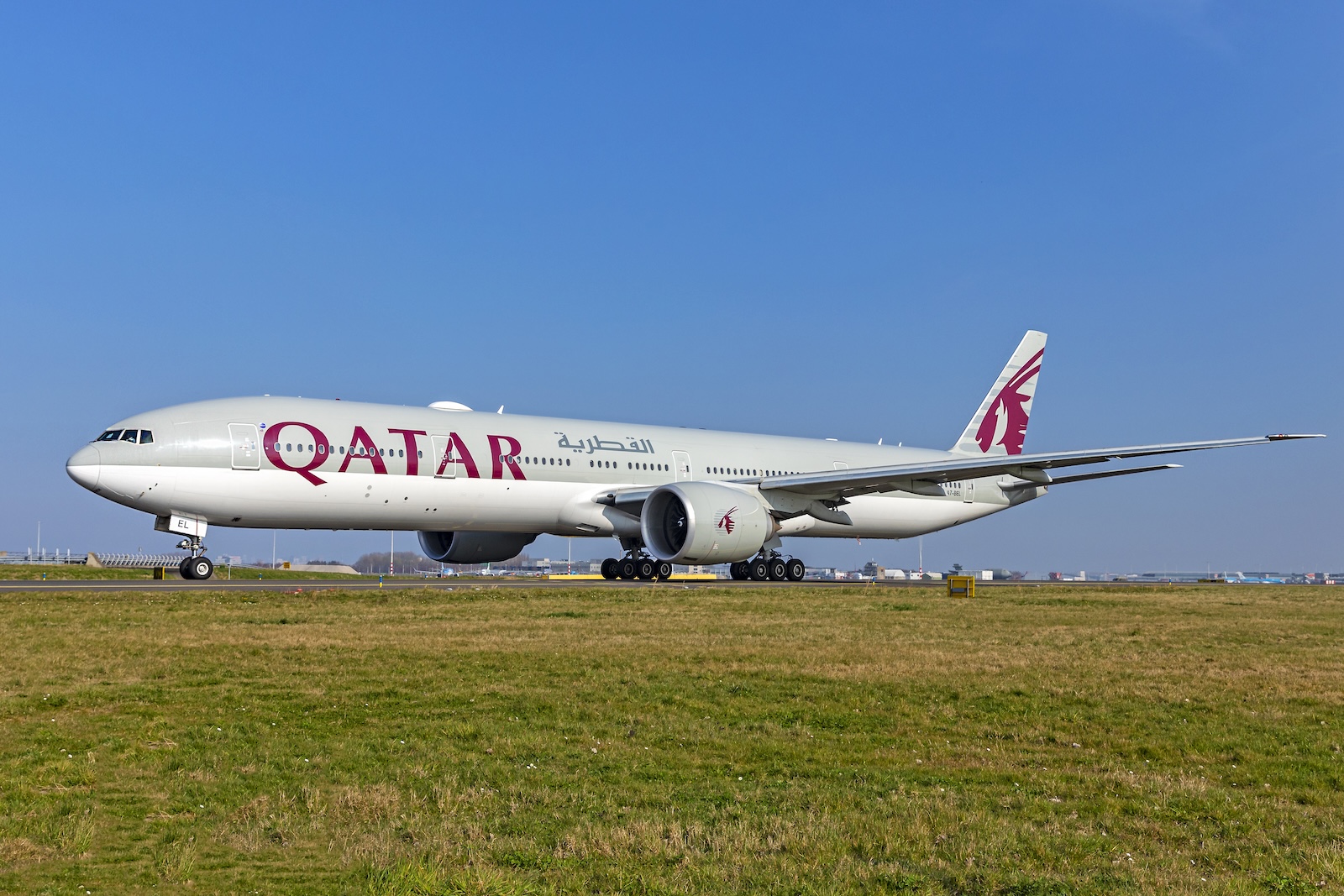
Qatar Airways has completed the installation of SpaceX’s Starlink Wi-Fi service across its fleet of 54 Boeing 777 aircraft, becoming the first airline in the world to fully equip more than 50 widebody jets with the high-speed satellite internet system. The carrier now operates the largest number of Starlink-equipped widebody aircraft globally and remains the only airline in the Middle East and North Africa to offer the service.
The installation was completed in just nine months—nearly half the time originally planned—by reducing retrofit time per aircraft from three days to 9.5 hours. The rapid execution allowed Qatar Airways to maintain uninterrupted operations throughout the rollout.
Passengers in both Economy and Premium cabins can now access complimentary, gate-to-gate Wi-Fi with speeds of up to 500 Mbps per aircraft. The airline said the connection enables uninterrupted streaming, video conferencing, gaming, and browsing—on par with or exceeding ground-based broadband services.
Qatar is now expanding the service to its Airbus A350 fleet, with plans to complete installation within the next 12 months.
Since launching its first Starlink-equipped flight in October 2024, Qatar Airways has operated more than 15,000 connected flights.
Tolga is a dedicated aviation enthusiast with years of experience in the industry. From an early age, his fascination with aviation went beyond a mere passion for travel, evolving into a deliberate exploration of the complex mechanics and engineering behind aircraft. As a writer, he aims to share insights , providing readers with a view into the complex inner workings of the aviation industry.
Sign-up for newsletters & special offers!
Get the latest stories & special offers delivered directly to your inbox