El Al says it plans to operate seven weekly flights between Miami and Tel Aviv, except on the Jewish Sabbath, observed from sunset Friday to sunset Saturday.
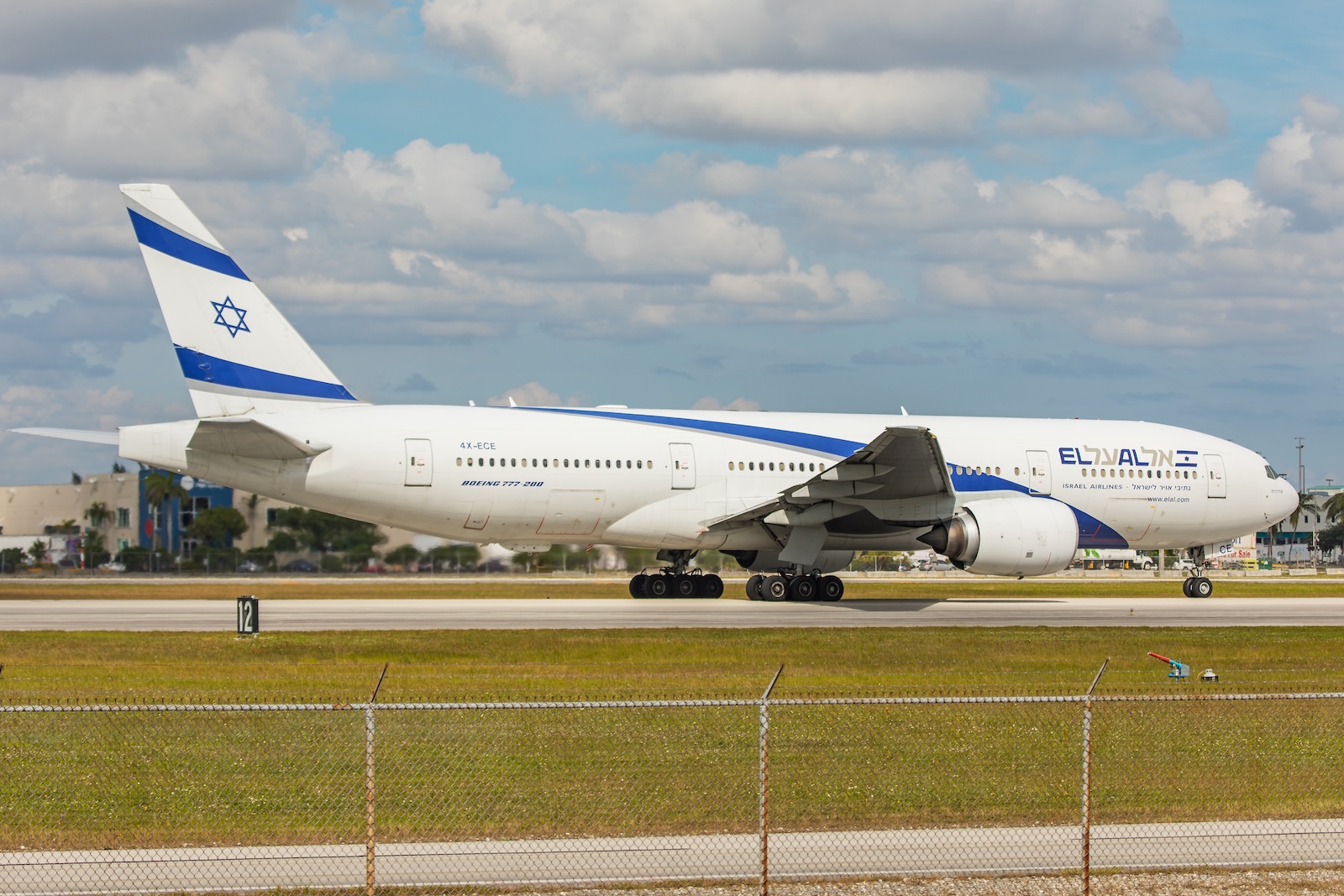
An El Al Boeing 777-200 aircraft. (Photo: AirlineGeeks | William Derrickson)
El Al plans to end service to one of its newest U.S. gateways next year.
The Israeli airline confirmed it will suspend flights to Fort Lauderdale, Florida, in April 2026. Instead, the carrier will consolidate its Florida operations in Miami, the Miami Herald reported.
The airline began serving the route between Tel Aviv and Fort Lauderdale in September 2023 with two weekly flights.
“El Al will cease operations at Fort Lauderdale and will concentrate all Florida-bound flights in Miami,” Simon Newton-Smith, El Al’s vice president for the Americas, said in a statement to the Miami Herald.
El Al says it plans to operate seven weekly flights between Miami and Tel Aviv, except on the Jewish Sabbath, observed from sunset on Friday to sunset on Saturday.
Broward County – which operates Fort Lauderdale-Hollywood International Airport – called the news “disappointing” in a statement to the Sun Sentinel. “EL AL’s service between FLL and Tel Aviv was well-received amongst the traveling public with flights consistently operating on average over 90 percent full,” a county spokesperson said.
While seasonal flights to Fort Lauderdale began in September, the airline upped its service to year-round in April 2023.
Ryan founded AirlineGeeks.com in February 2013 and has spent more than a decade covering the airline business. His work has been featured by CNN, WJLA, CNET, and Business Insider. His aviation experience spans airport operations, Part 135 regulatory compliance, and airline crew workforce planning, along with time behind the yoke of a Cessna 172 and interviews with airline executives. Ryan now serves as Group President of Firecrown Media’s Aviation Group. He holds a B.S. in Air Transportation Management and an MBA from Arizona State University and teaches Airline Management at Embry-Riddle Aeronautical University.
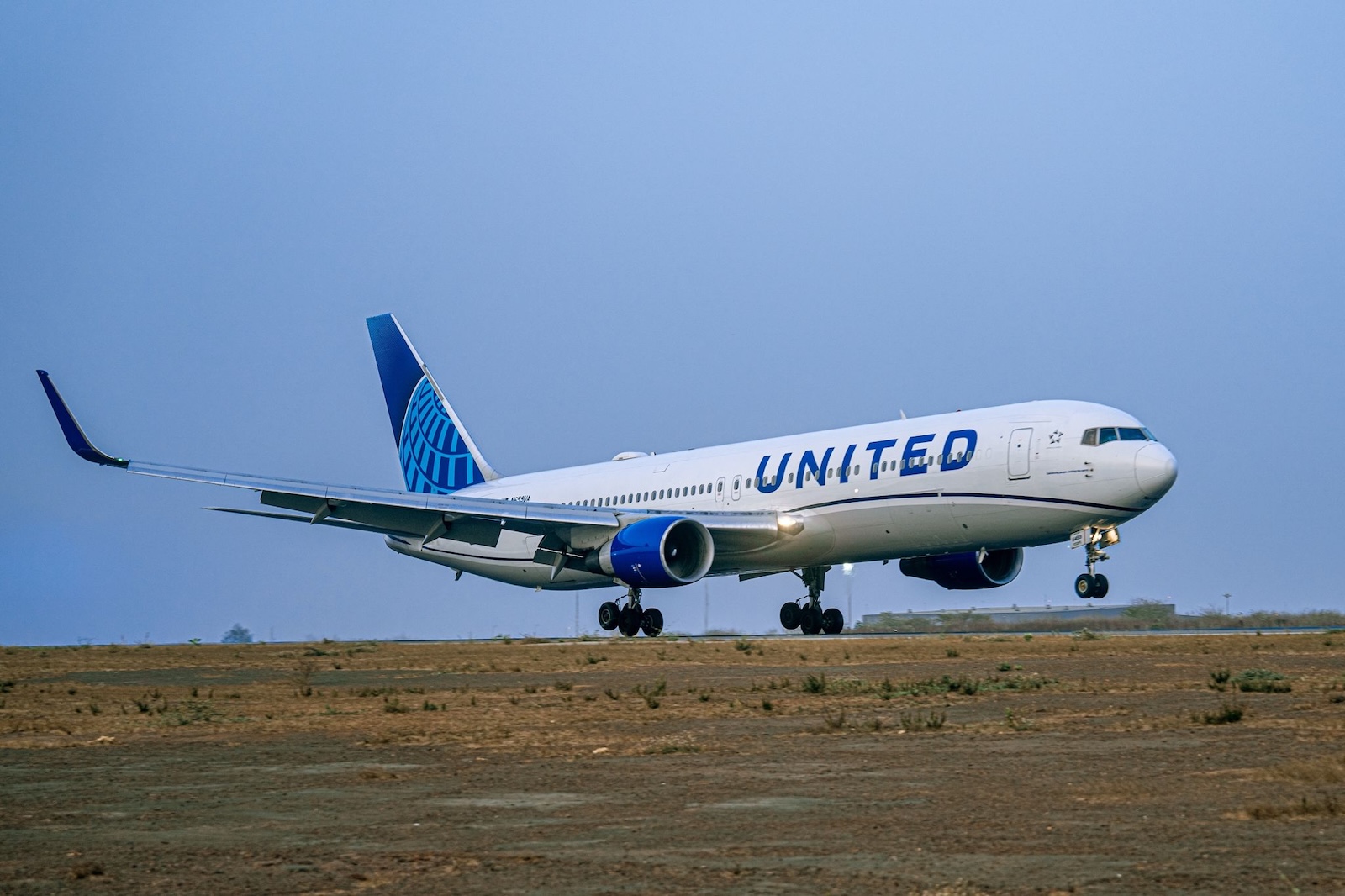
A United Boeing 767-300 lands in Dakar (Photo: United)
United has launched nonstop flights between Washington, D.C., and Dakar, Senegal in West Africa. The route will operate three times a week on a year-round basis.
The new route is United’s first-ever service between Senegal and the U.S., and the airline is now the only one in the world connecting Washington with Dakar. Dakar is United’s sixth destination in Africa.
“We are excited to launch United’s first-ever service from Senegal, further expanding our route network from Africa to the U.S.,” said Patrick Quayle, United’s senior vice president of global network planning and alliances.
Flights depart Dulles on Tuesdays, Fridays, and Sundays and arrive in Dakar the following day. Flights depart Dakar on Mondays, Wednesdays, and Saturdays and arrive in Washington the same day.
International Expansion
The service is operated with a Boeing 767-300 aircraft, featuring 30 Polaris business seats, 24 United Premium Plus seats, and 149 economy seats.
The new service between Washington and Dakar marks a significant step in United’s ongoing expansion across Africa and follows the launch of the airline’s new seasonal service between Marrakesh, Morocco and Newark in October last year.
United also flies between Cape Town, South Africa, and Newark, along with Washington Dulles; Johannesburg, South Africa and Newark; Accra, Ghana and Washington; and Lagos, Nigeria and Washington.
Lorne is a South Africa-based aviation journalist. He was captivated and fascinated by flying from the day he took his first airline flight. With a passion for aviation in his blood, he has flown to destinations in all corners of the globe. Lorne has traveled extensively and lived in various countries. Drawing on his travels and passion for aviation, Lorne enjoys writing about airlines, routes, networks, and new developments.
Qatar Airways Scraps 737 MAX 10 Order
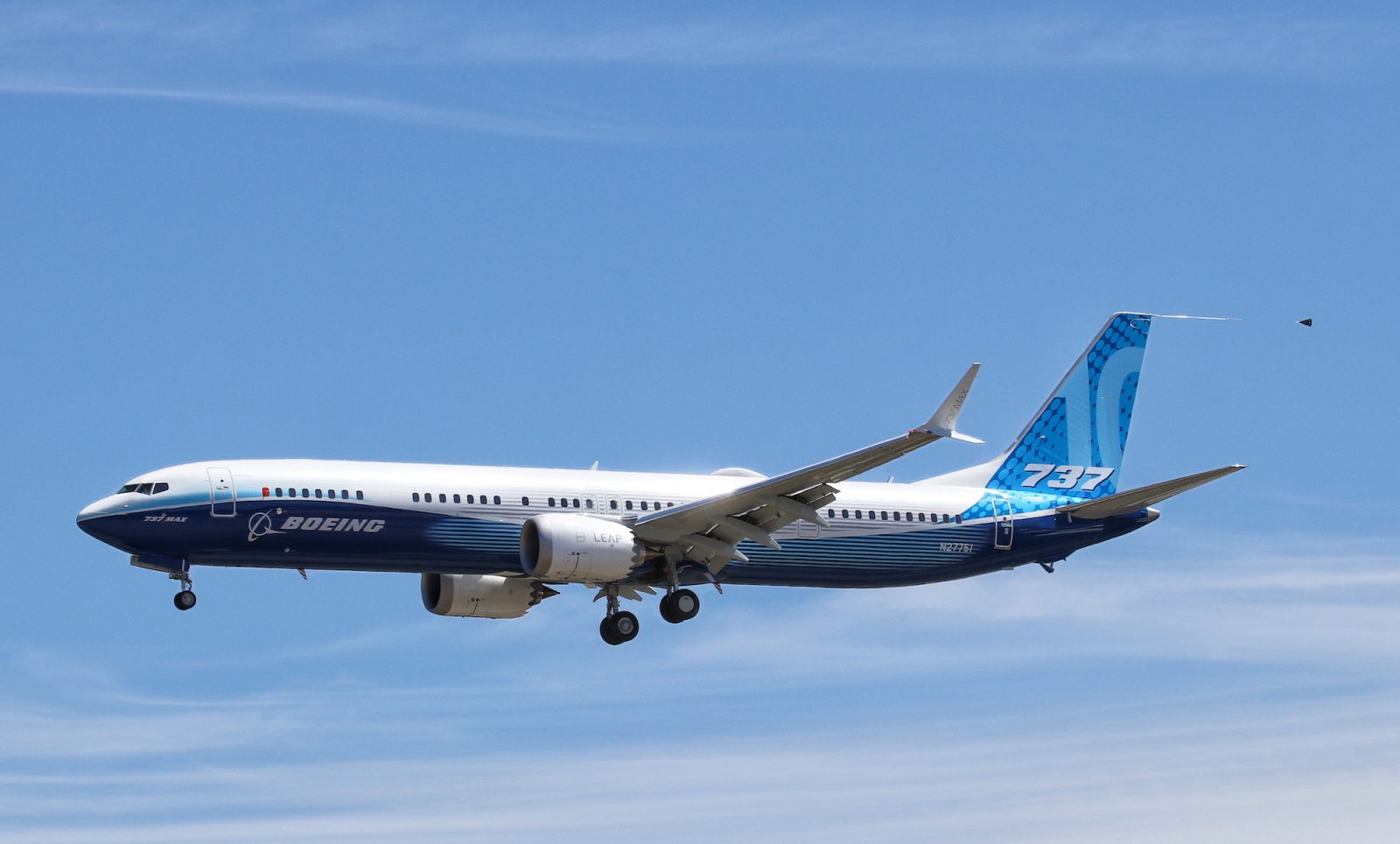
Qatar Airways has dropped its order of 25 Boeing 737 MAX 10s, placed during a 2022 dispute with Airbus that has since been resolved.
The news did not come as a complete surprise, since the outlet reported late last year that Qatar Airways was considering abandoning its 737 MAX purchase, citing unnamed sources familiar with the matter. The sources told Bloomberg that the aircraft no longer fit the airline’s fleet requirements.
Qatar Airways agreed to buy the 737 MAX 10s in 2022 during an ebb in its relationship with Airbus, which supplies the majority of the carrier’s narrowbody fleet. The airline said the surfaces of its A350s were undergoing “accelerated degradation,” grounded all 29 of its A350s, and sued Airbus over the problem. The manufacturer acknowledged quality issues with the surfaces but maintained the aircraft were still safe to fly.
As the carrier and the manufacturer fought in court, Qatar Airways said it would not take delivery of any more A350s, and Airbus in turn backed out of an agreement to supply the airline with dozens of A321neos.
The two sides reached a settlement in 2023, which allowed repairs on the A350s to move forward, restarted the A321neo deal, and eliminated the need for the 737 MAX 10s as a narrowbody alternative.
Earlier this month, Qatar Airways placed an order for 130 787 Dreamliners and 30 777-9s. The agreement includes options for an additional 50 aircraft, making its largest ever order and the largest purchase of Boeing widebody jets in the company’s history.
The scope of the order prompted Bloomberg’s Francine Lacqua to ask Al Meer if Qatar Airways was seeking to play the two major manufacturers off of each other.
“You know, for the time being, we need to focus on finalizing our agreement with Boeing,” he replied. “As you saw, we are not like other airlines where we split our orders 20 today, 20 next year. Because we are basing our order on a very solid strategy and we decided to go with the 210 aircraft order. However, it doesn’t mean that Airbus is out of the game. Our narrowbodies will continue to be Airbus.”
Qatar Airways is currently awaiting an order of 50 Airbus narrowbody aircraft, including 40 A321neos and 10 A321LRs.
Zach Vasile is a writer and editor covering news in all aspects of commercial aviation. He has reported for and contributed to the Manchester Journal Inquirer, the Hartford Business Journal, the Charlotte Observer, and the Washington Examiner, with his area of focus being the intersection of business and government policy.
United Will Require Passengers to Check In Sooner Next Month
United will soon require all passengers on domestic flights to check in at least 45 minutes before departure time, regardless of whether or not they have checked luggage.
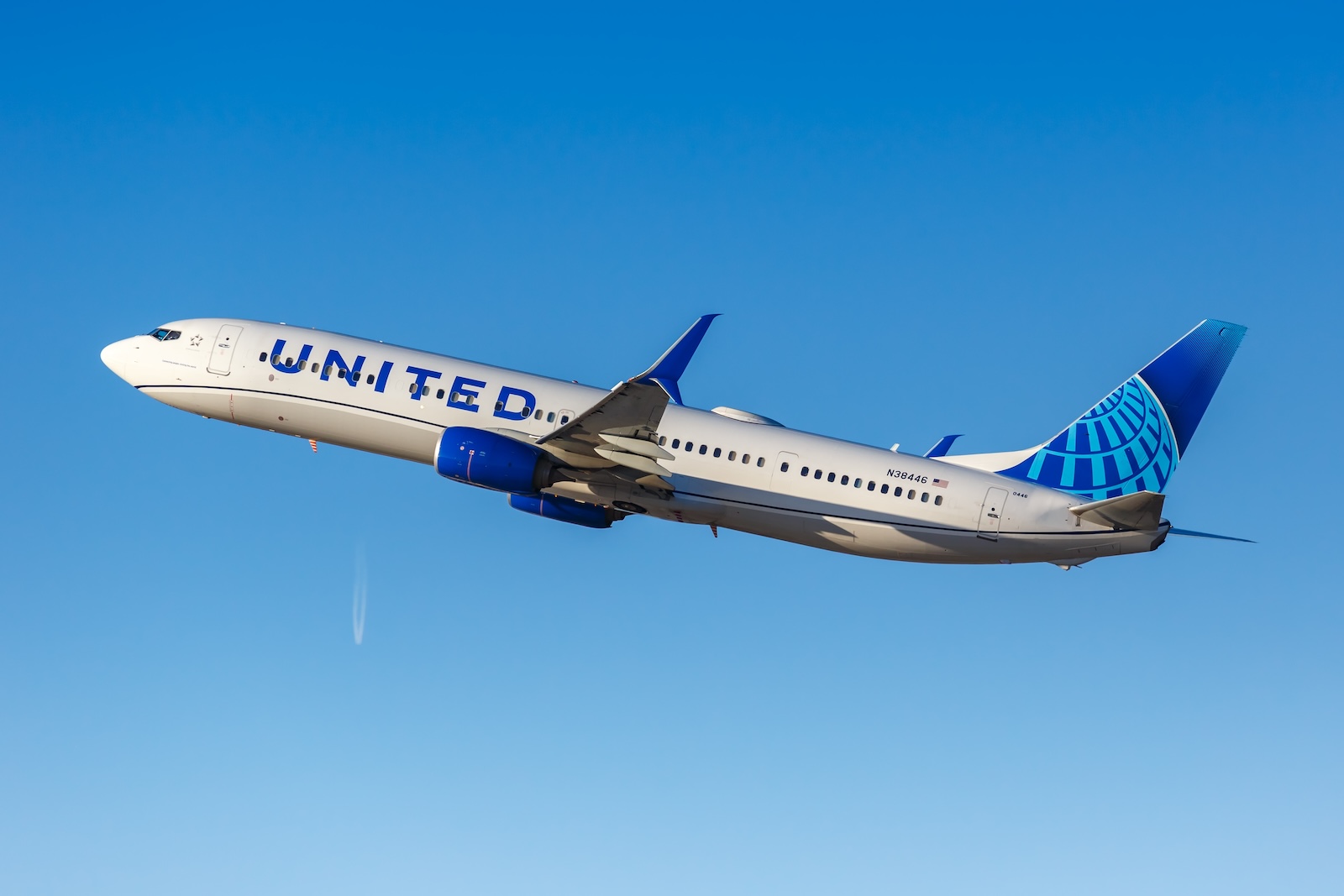
A United Boeing 737-800. (Photo: Shutterstock | Markus Mainka)
United is changing its check-in times for domestic flights ahead of the summer travel season.
The airline will now require all passengers to check in at least 45 minutes before their flight departs. That deadline already applied to travelers with checked luggage, while travelers without checked luggage had a 30-minute cutoff. Starting June 3, the 45-minute standard will apply to everyone.
In a statement, United said the change will bring consistency to the way its customers check in for flights and align with time limits used by most other carriers.
There are some exceptions to the 45-minute rule for domestic flights traveling to and from locations outside the continental U.S. Passengers flying to or from Guam, for instance, have to check in one hour before departure, while those bound for or leaving the Marshall Islands, Saipan in the Northern Mariana Islands, and St. Thomas have to check in 90 minutes before departure. A full list of special time limits for U.S. airports can be found on United’s website.
United’s check-in time for international flights will remain one hour prior to departure. There are exceptions to this rule too, however, with some destinations requiring travelers to check in up to an hour and a half in advance. According to United’s website, cities with a 75-minute check-in deadline include Amsterdam, Athens, Berlin, and Rome, while Lagos, Tel Aviv, and Toronto require a 90-minute check-in.
United said it will do what it can to help passengers who miss flight deadlines, but reserves the right to deny service.
Zach Vasile is a writer and editor covering news in all aspects of commercial aviation. He has reported for and contributed to the Manchester Journal Inquirer, the Hartford Business Journal, the Charlotte Observer, and the Washington Examiner, with his area of focus being the intersection of business and government policy.
Sun Country Shuffles Network With Route Cuts
During the first quarter of 2026, an airline spokesperson confirmed that Sun Country will pause service in two Florida markets.
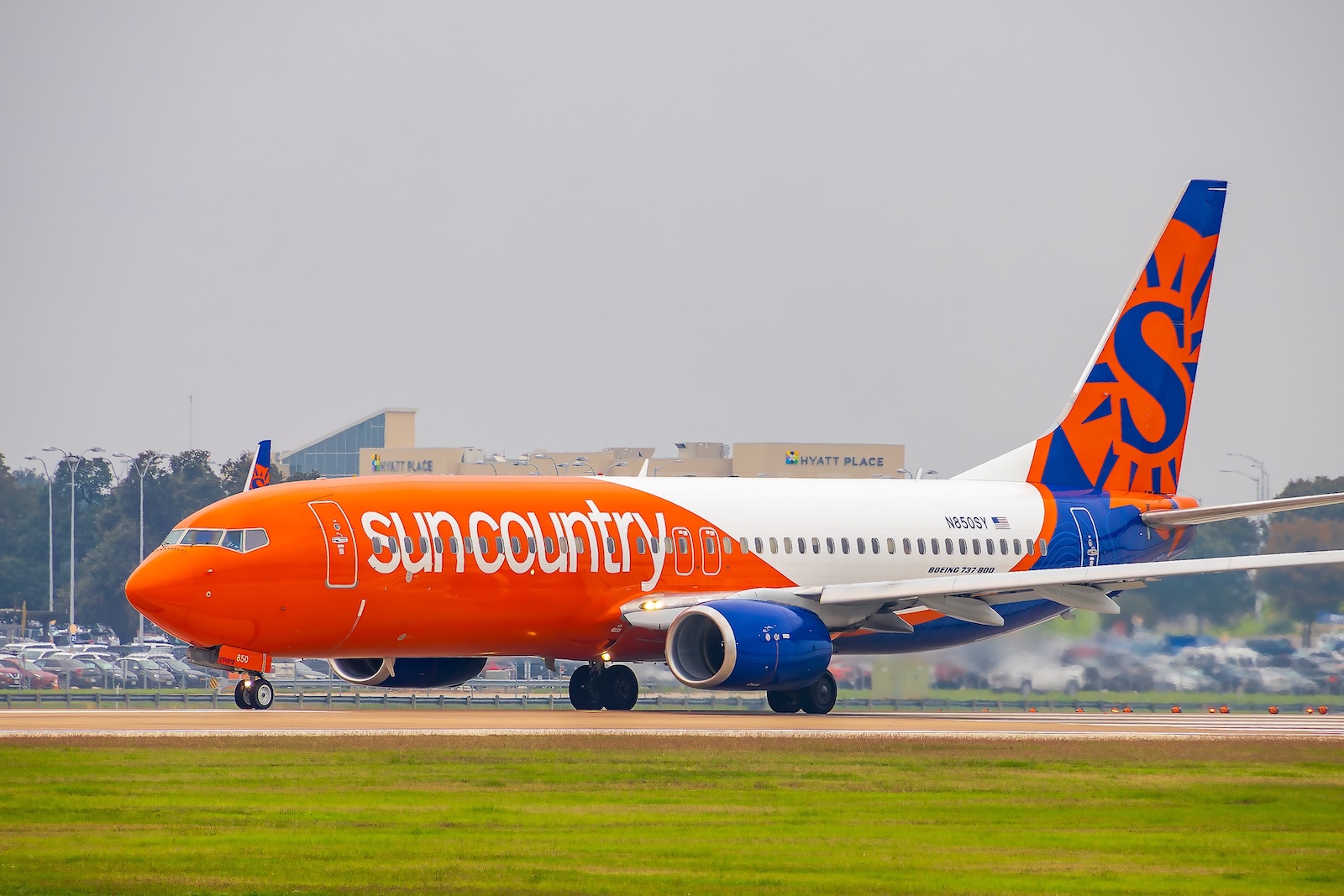
A Sun Country Boeing 737-800. (Photo: Shutterstock | lorenzatx)
Sun Country is shaking up its network with some route suspensions and additions. On Monday, the ultra-low-cost carrier extended its schedule through April 2026.
During the first quarter, an airline spokesperson confirmed that it will pause service to West Palm Beach and Melbourne, Florida. These cuts were first reported by The Network Planner.
“We continuously evaluate performance of routes and customer demand and adjust our network accordingly,” the spokesperson added.
Service from Appleton to Fort Myers will start on Jan. 30, 2026, operating twice per week and later four times weekly in March.
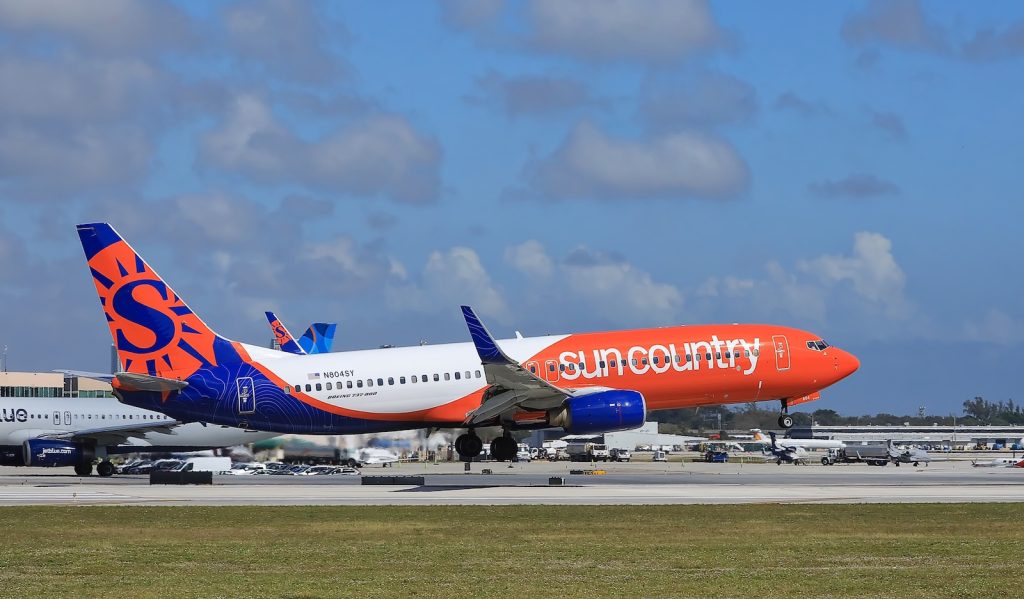
A Sun Country 737-800 (Photo: Shutterstock | Jillian Cain Photography)
This route does come at a cost, though, as the spokesperson confirmed that it will “move” the airline’s current service from Green Bay, Wisconsin, to Appleton. With this move, Sun Country will exit the Green Bay market altogether.
Ryan founded AirlineGeeks.com in February 2013 and has spent more than a decade covering the airline business. His work has been featured by CNN, WJLA, CNET, and Business Insider. His aviation experience spans airport operations, Part 135 regulatory compliance, and airline crew workforce planning, along with time behind the yoke of a Cessna 172 and interviews with airline executives. Ryan now serves as Group President of Firecrown Media’s Aviation Group. He holds a B.S. in Air Transportation Management and an MBA from Arizona State University and teaches Airline Management at Embry-Riddle Aeronautical University.
The National Transportation Safety Board has determined that a fatigue fracture in a critical nose landing gear component led to the emergency landing.
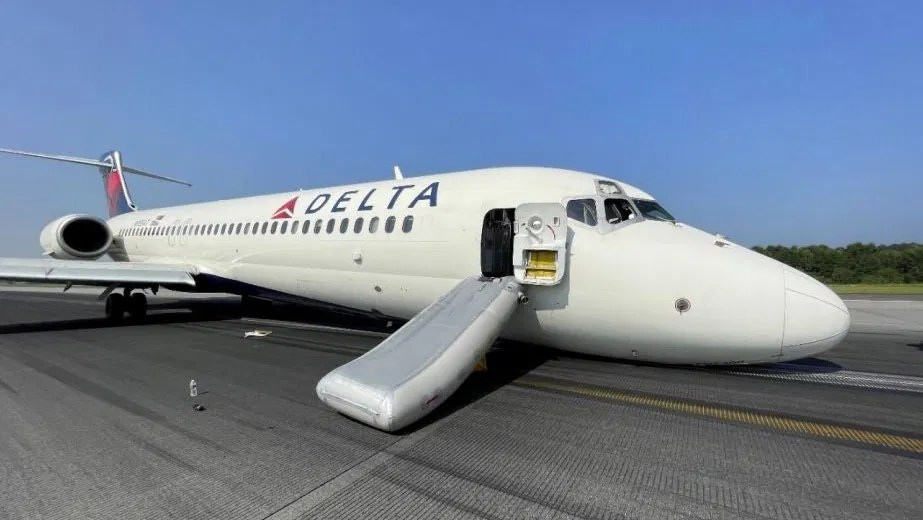
The National Transportation Safety Board has determined that a fatigue fracture in a critical nose landing gear component led to the emergency landing of Delta flight 1092 in Charlotte, North Carolina, on June 28, 2023.
Accident Description
The flight, operated by a Boeing 717-200, was approaching Charlotte Douglas International Airport when the flight crew lowered the landing gear at approximately 2,000 feet above ground level. The first officer immediately observed that the nose wheel unsafe condition light had illuminated, which was subsequently confirmed through the aircraft’s electronic instrument system.
Following standard procedures, the flight crew initiated a go-around to troubleshoot the issue and complete applicable checklists. After multiple unsuccessful attempts at both normal and manual landing gear extension, the pilots declared an emergency with air traffic control.
The crew conducted a second go-around after air traffic control confirmed the nose wheel was not visible. Having exhausted all options to extend the nose gear, the pilots proceeded with an emergency nose gear up landing. The aircraft touched down approximately 1,400 feet from the runway threshold, and the nose was lowered onto the runway at about 80 knots before coming to a stop.
Following the shutdown and evacuation checklists, and after verification from the fire chief that the area was safe, all 104 passengers and crew evacuated through the forward entry doors using emergency slides. No injuries were reported.
Findings
Post-accident examination revealed that the nose landing gear upper lock link had fractured, preventing the nose landing gear from extending properly. The NTSB’s Materials Laboratory found that the upper lock link failed due to a fatigue fracture.
The NTSB report identified “a fatigue fracture of the upper lock link that initiated along scratch features on the lower surface at the parting line of the forged aluminum component” as the probable cause of the accident.
These scratch features, consistent with tool marks from filing or grinding operations, acted as stress concentration areas for crack initiation.
The investigation revealed that once the fatigue cracks had propagated through approximately one-third of the material cross section, the upper lock link fractured in tensile or upward-bending overstress. Visible crack arrest marks indicated the overstress fracture may have occurred over several load cycles.
The NTSB also noted that Boeing/McDonnell Douglas had issued Service Bulletin 717-32-0002 on Dec. 4, 2001, following a previously reported upper lock link fracture caused by tool marks and rough surface finish. The bulletin provided instructions for inspection and modification of the affected parts.
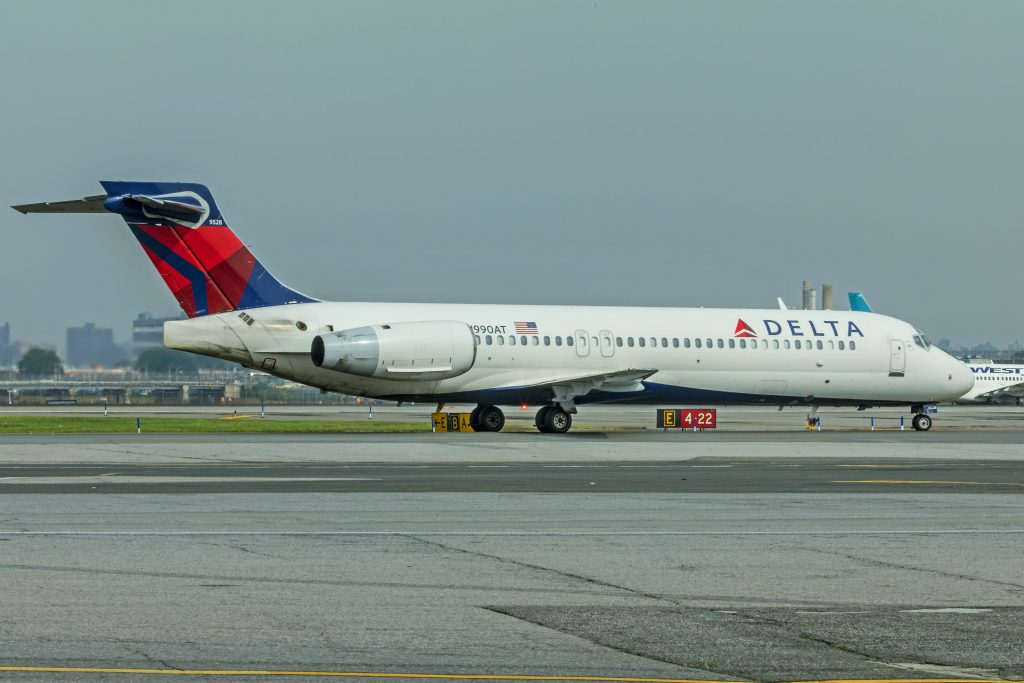
A Delta Boeing 717 aircraft (Photo: AirlineGeeks | William Derrickson)
A significant finding in the agency’s report was that the overhaul facility’s noncompliance with Service Bulletin 717-32-002 contributed to the accident. The upper lock link examined was marked with a “V” following the part dash number, indicating that Service Bulletin procedures had supposedly been performed.
Maintenance records showed that Israel Aerospace Industries (IAI) had performed the service bulletin work in June/July 2009, after the link had accumulated 17,313 flight cycles. A fatigue crack growth analysis estimated 39,059 cycles to failure, which closely matched the 41,257 total flight cycles accumulated on the upper lock link at the time of the accident.
The NTSB concluded that “fatigue cracking likely initiated early in the part’s lifecycle, and the scratches were present in the as manufactured condition, therefore it is likely that the service bulletin was not adequately complied with by IAI.”
Boeing indicated that the upper lock link experiences two major loads (extension/retraction) and several minor loads per flight cycle, with the extension load being higher due to the gravitational force component.
“Assuming major fatigue striations correspond to the extension load, fatigue cracking likely initiated early in the part’s lifecycle,” the NTSB report stated.
The investigation also noted some pitting consistent with environmental attack on the adjacent lower surface near the fracture origin, which may have contributed to increased stress concentrations caused by the scratches.
Ryan founded AirlineGeeks.com in February 2013 and has spent more than a decade covering the airline business. His work has been featured by CNN, WJLA, CNET, and Business Insider. His aviation experience spans airport operations, Part 135 regulatory compliance, and airline crew workforce planning, along with time behind the yoke of a Cessna 172 and interviews with airline executives. Ryan now serves as Group President of Firecrown Media’s Aviation Group. He holds a B.S. in Air Transportation Management and an MBA from Arizona State University and teaches Airline Management at Embry-Riddle Aeronautical University.
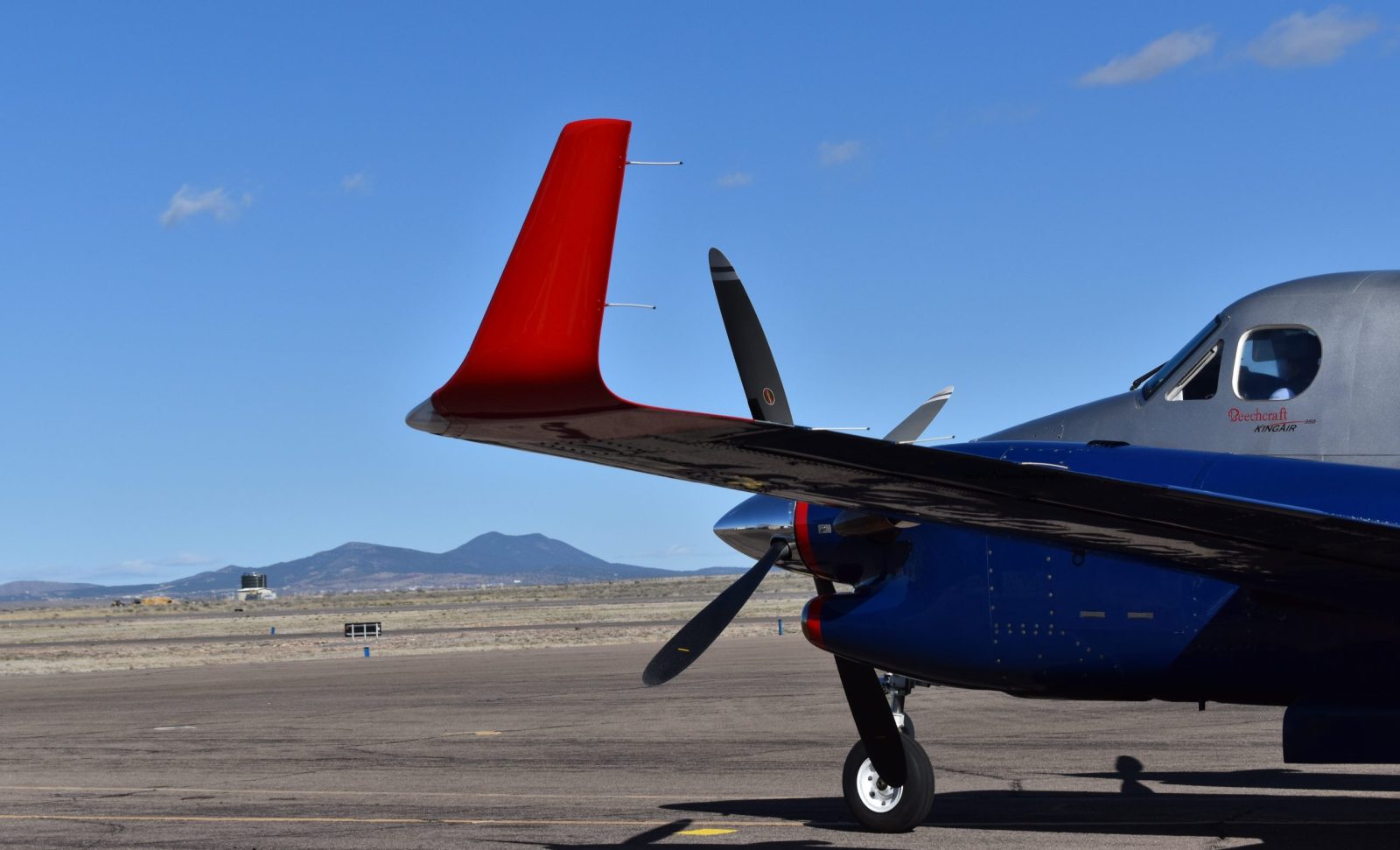
One of Advanced Air's King Air 350s (Photo: AirlineGeeks | Joey Gerardi)
Hawthorne, California-based Advanced Air has been a pioneer in starting flights to cities that haven’t had air service in a long time. It has achieved this through a handful of cities in New Mexico, utilizing various state grants, which are separate from the standard Essential Air Service (EAS) operations they already provide.
In most EAS contracts, one of the stipulations is that the airline has to have baggage agreements or codeshares with other major airlines so passengers can connect onto a larger network. Up until this point, Advanced has not yet had one of these partners.
During the middle of May, Advanced Air announced its first-ever interline agreement, which will be with Alaska Airlines. With this new interline, Advanced Air passengers can connect to/from the greater Alaska Airlines network from Advanced’s hubs in the southwestern United States, like Las Vegas, Albuquerque, Phoenix, and Oakland, California.
“This is a major step forward in making regional travel more accessible and efficient,” said Barbara Hunt, vice president of business operations at Advanced Air.
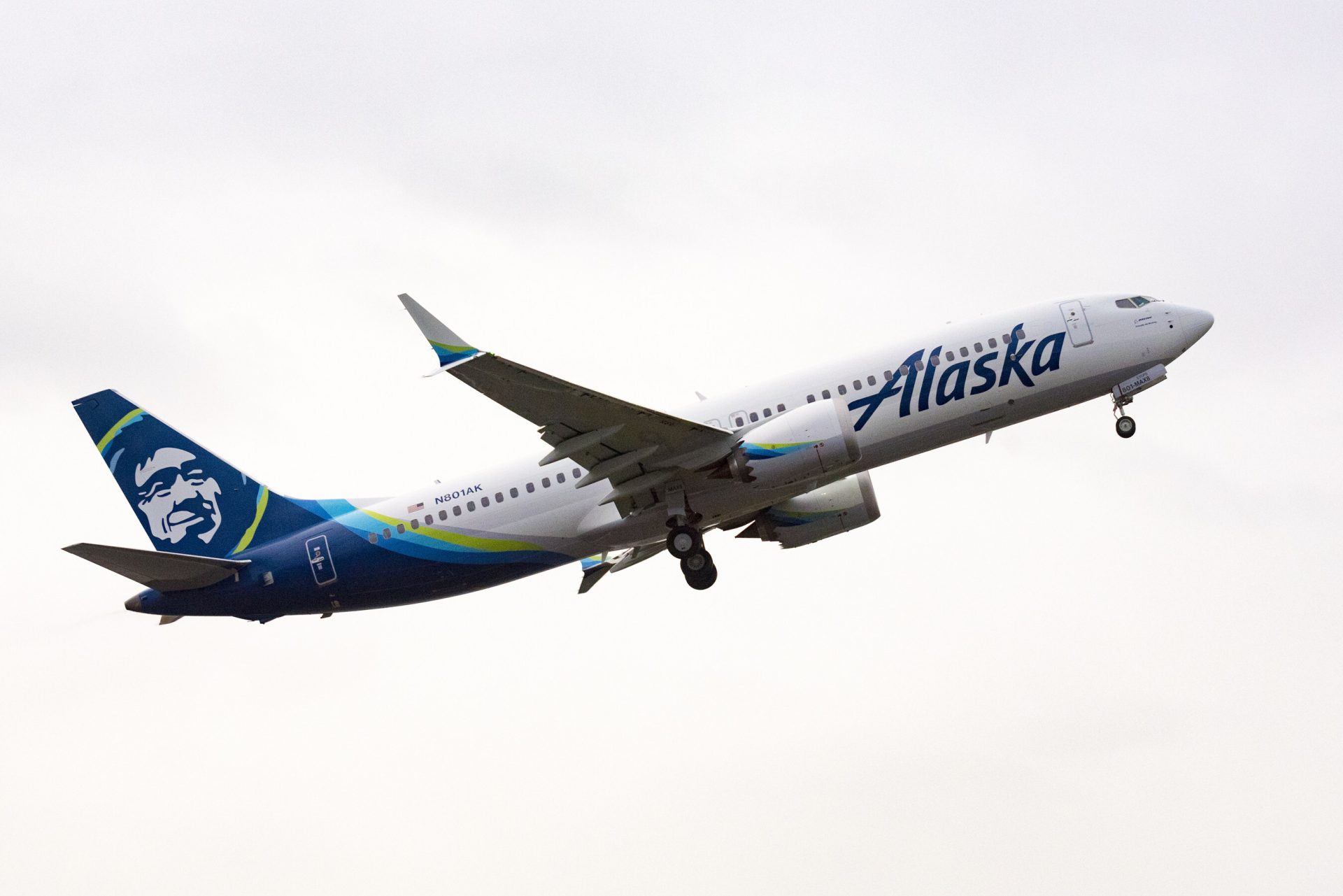
Alaska’s new 737 MAX 8 (Photo: Alaska Airlines)
Currently, the interline bookings between Advanced Air and Alaska can only be accomplished through third-party sites like Expedia or Travelocity, but will soon be available on Alaska’s website as well. Passengers can book from one of Advanced Air’s destinations to Alaska’s destinations around the country.
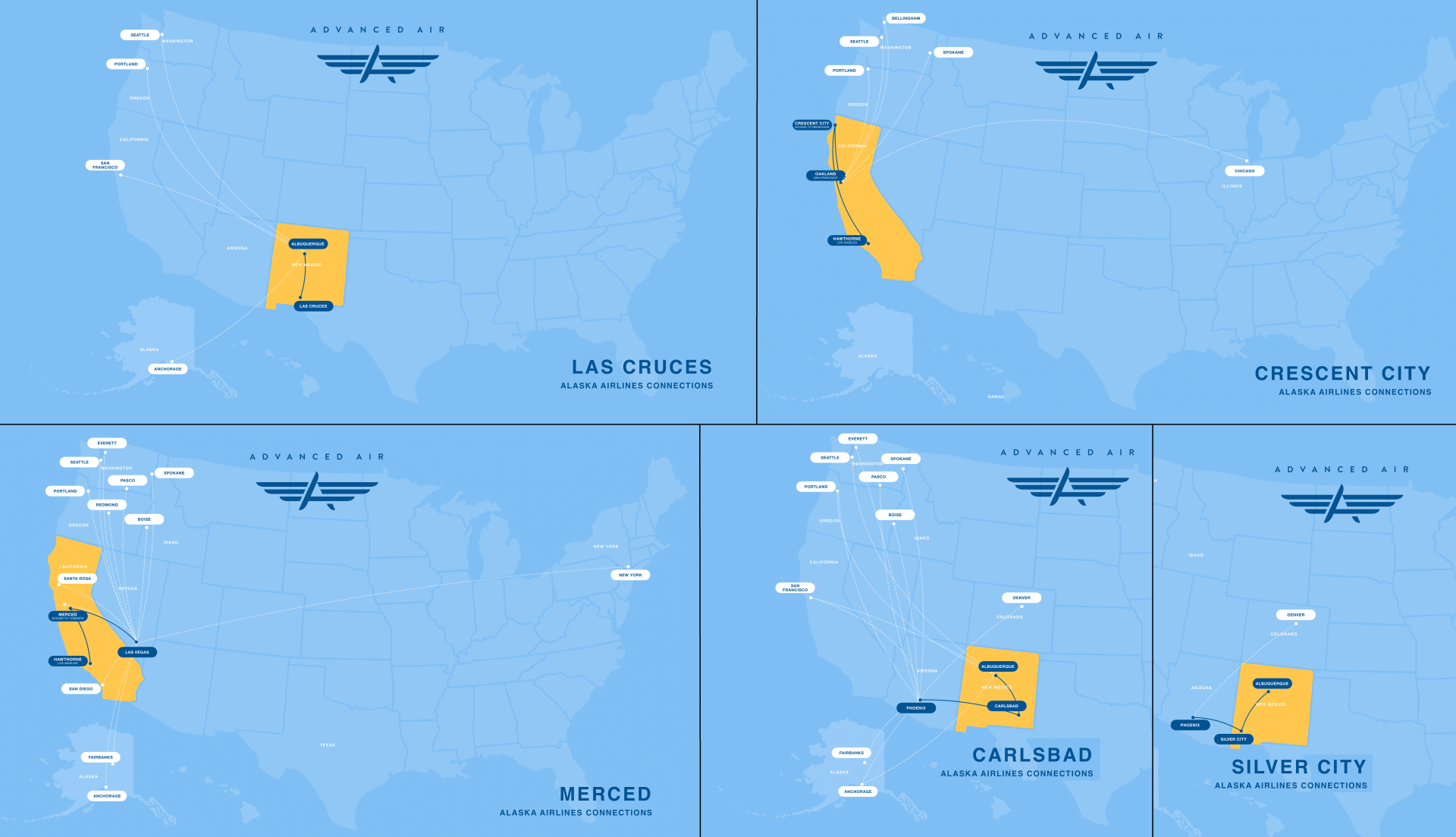
Advanced Air even made a few maps that show the current connections that are possible with this new partnership. However, these maps are just a generalization, and connectivity options between the two airlines are subject to change.
Alaska Airlines connections from Advanced Air cities (Photo: Advanced Air)
Advanced Air’s operation in Oakland is very close to an Alaska Airlines hub, with San Francisco being just across the bay. Crescent City, the community they fly to from Oakland, is an Essential Air Service city, and currently, the citizens in that community want Oakland. But, with this increased connectivity, that could change in the next round of EAS proposals, and according to Advanced Air, it is “definitely an interesting point that could factor into future planning.”
There are a few airports that they won’t offer connectivity out of for Alaska, and the main one is Hawthorne, which serves as the airline’s headquarters. This is mostly because Hawthorne is not served by Alaska Airlines and is only a couple of miles away from the much larger Los Angeles.
Joey has always been interested in planes for as long as he can remember. He grew up in Central New York during the early 2000s when US Airways Express turboprops ruled the skies. Being from a non-aviation family made it harder for him to be around planes and would only spend about three hours a month at the airport. He was so excited when he could drive by himself, the first thing he did with his driver's license was get ice cream and go plane spotting for the entire day. He graduated from Western Michigan University in 2022 with a B.S. in Aviation Management & Operations and a Minor in Business, and currently works for a major airline in his hometown.
Air Canada Axes Four U.S. Routes
In August, Air Canada’s transborder capacity will be down nearly 12% compared to the same period last year, as measured by Available Seat Miles.
In October, the airline will suspend flights between Minneapolis/St. Paul and Montreal, in addition to Indianapolis and Toronto. The last scheduled flight on these two routes will operate on Oct. 20.
Daily flights between Detroit and Montreal will end on Sept. 30, according to Cirium Diio schedule data.
Florida Cut
The Canadian flag carrier also plans to suspend service between Tampa, Florida, and Vancouver, British Columbia. The last flight in this market is scheduled to operate on Nov. 4.
A spokesperson from the airline did not respond to AirlineGeeks’ request for comment on the network changes.
In August, Air Canada’s transborder capacity will be down nearly 12% compared to the same period last year, as measured by Available Seat Miles.
Editor’s Note: Data referenced in this article was provided by aviation analytics company Cirium.
Ryan founded AirlineGeeks.com in February 2013 and has spent more than a decade covering the airline business. His work has been featured by CNN, WJLA, CNET, and Business Insider. His aviation experience spans airport operations, Part 135 regulatory compliance, and airline crew workforce planning, along with time behind the yoke of a Cessna 172 and interviews with airline executives. Ryan now serves as Group President of Firecrown Media’s Aviation Group. He holds a B.S. in Air Transportation Management and an MBA from Arizona State University and teaches Airline Management at Embry-Riddle Aeronautical University.
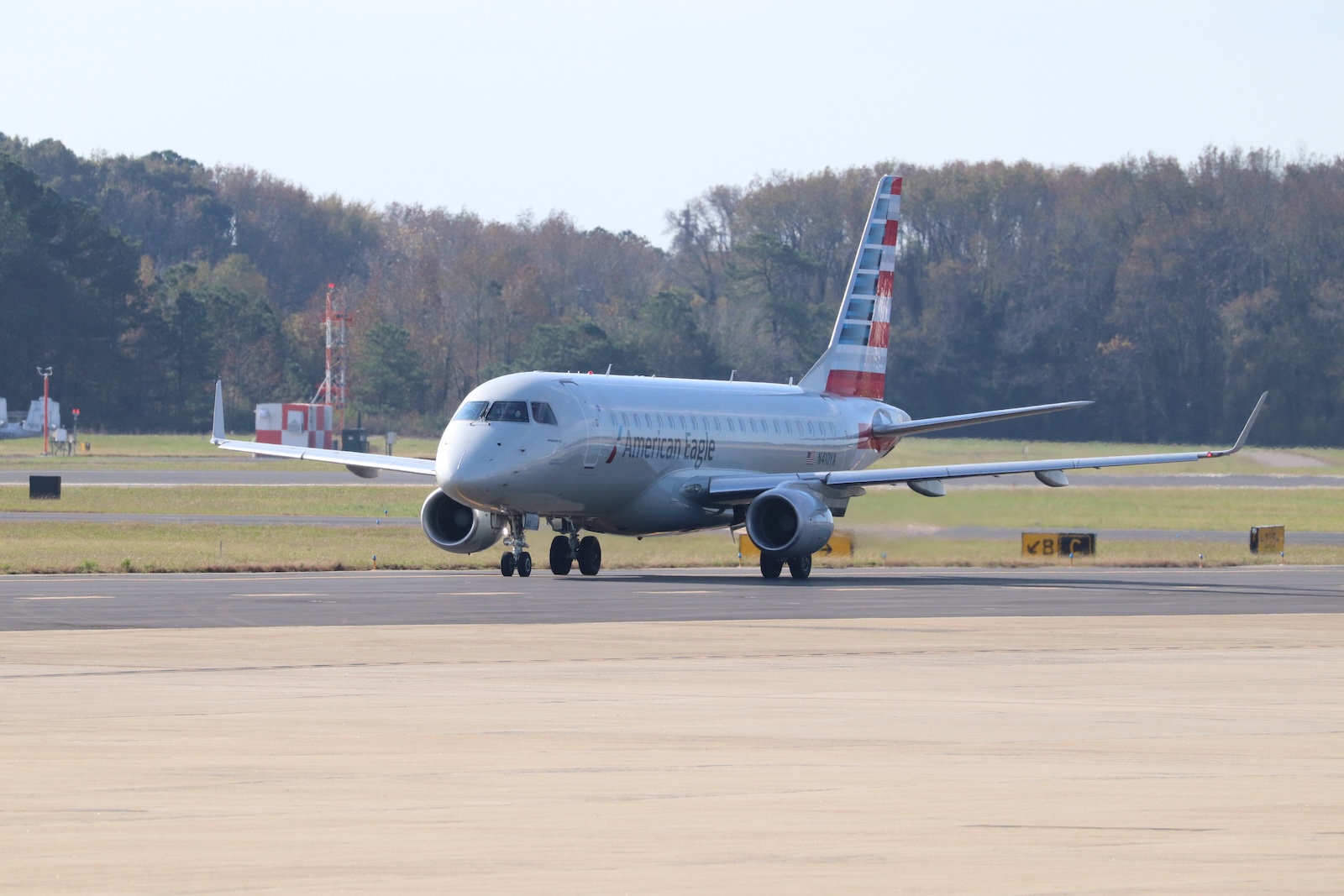
Starting on Oct. 6, the Fort Worth, Texas-based carrier will resume flights between Chicago and Chattanooga, Tennessee, a market last served by the airline in 2019. Service will operate twice daily with a Republic Airways Embraer E175 regional jet, according to Cirium Diio schedule data.
A spokesperson from the airline confirmed the route addition on Sunday. American will go head-to-head with United in this market, which links the two cities up to five times daily.
American currently connects Chattanooga with its hubs in Charlotte, North Carolina; Dallas/Fort Worth; Washington Reagan National; and seasonal flights to Miami.
Ryan founded AirlineGeeks.com in February 2013 and has spent more than a decade covering the airline business. His work has been featured by CNN, WJLA, CNET, and Business Insider. His aviation experience spans airport operations, Part 135 regulatory compliance, and airline crew workforce planning, along with time behind the yoke of a Cessna 172 and interviews with airline executives. Ryan now serves as Group President of Firecrown Media’s Aviation Group. He holds a B.S. in Air Transportation Management and an MBA from Arizona State University and teaches Airline Management at Embry-Riddle Aeronautical University.
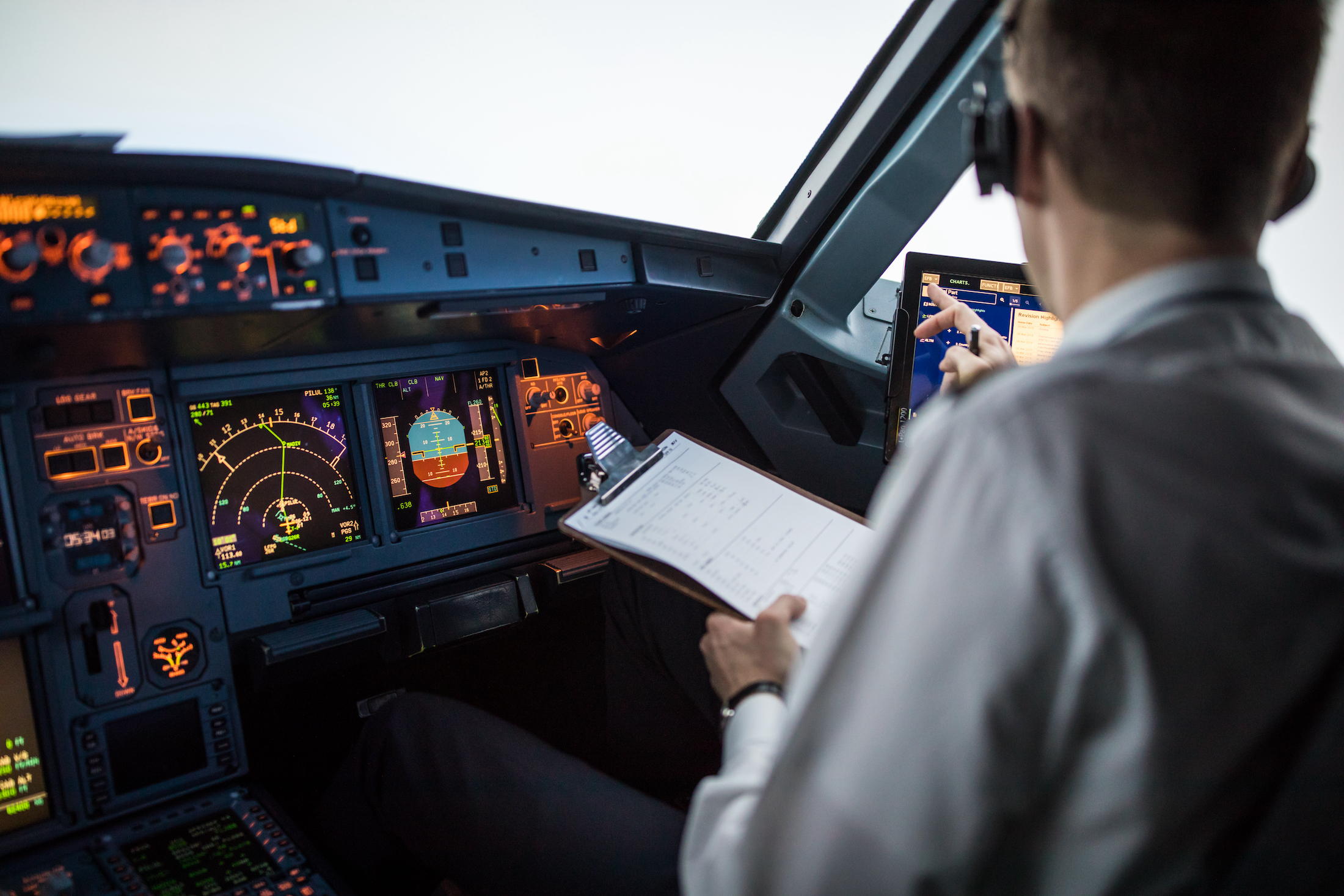
Pilot executing pre-flight procedures in a commercial airliner cockpit before takeoff. (Photo: Shutterstock | l i g h t p o e t)
As a training instructor for flight crews at a major airline, I often serve as the initial contact for our newly hired first officers as they begin their aircraft-specific training. Our students come from diverse backgrounds, including military experience, regional flying, and corporate operations, making each one unique in their own way.
Regardless of experience, one of my most frequent questions is, “How can I prepare for the majors?” With that, I always tell them that having a positive attitude, an open mind, and a strong work ethic will get them 90% there. However, several aviation products can significantly ease the transition when they arrive at the majors, so let’s take a closer look at these options now.
Please note that each airline may have its own specifications regarding equipment and uniform standards. Therefore, you should always check with your base administrative office for approval before purchasing equipment required for flight or uniform items.
Quick Look: 10 Economical and Indulgent Aviation Products to Help You Gear Up at Major Airlines
Best of: Save a little flight bag for major airline pilots
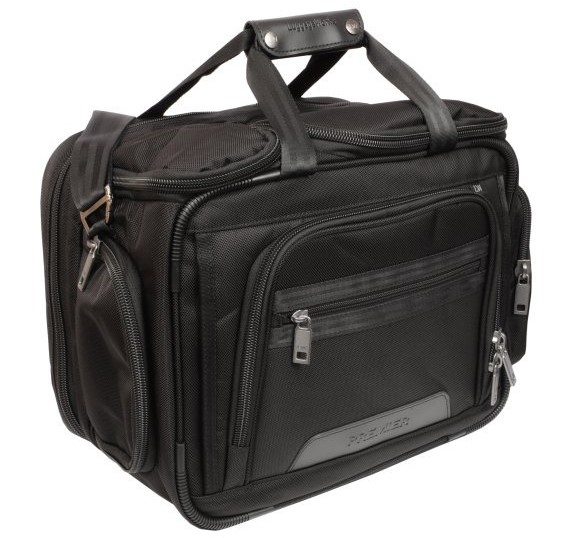
Stealth Premier Multi-Purpose Cube [Courtesy: Crew Outfitters]TheStealth Premier Multi-Purpose Cube by LuggageWorks is an all-in-one flight bag featuring various compartments for headsets, food, drinks, laptops, and iPads or tablets. It measures 16 inches by 12 inches by 9 inches and weighs 4.25 pounds. Many pilots appreciate the bag’s high-quality materials and reinforced padding, enhancing its durability. The bag includes a three-year manufacturing warranty, covering repairs or replacements for defects in material or workmanship only.
FL410P Flight Bag [Courtesy: Contrail Bags]Best of: Splurge a little flight bag for major airline pilots
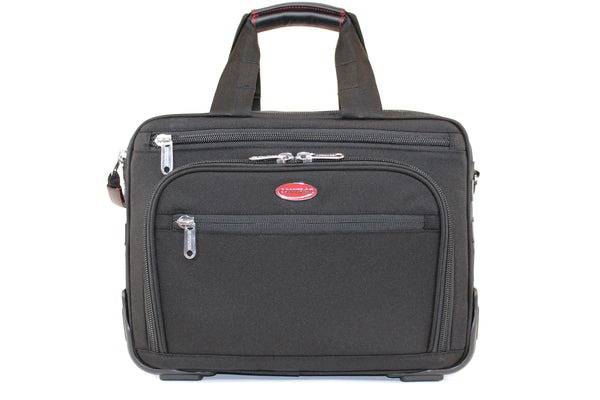
The Contrail FL410P Flight Bag is designed for aviators who like to travel with more than the necessary gear. It measures 14.25 inches by 11 inches by 8 inches and weighs 2.05 pounds. Many pilots appreciate the bag’s quality and purpose-driven design, which allows it to withstand life on the road. The bag includes a three-year manufacturing warranty that covers repairs or replacements for defects in material or workmanship only.
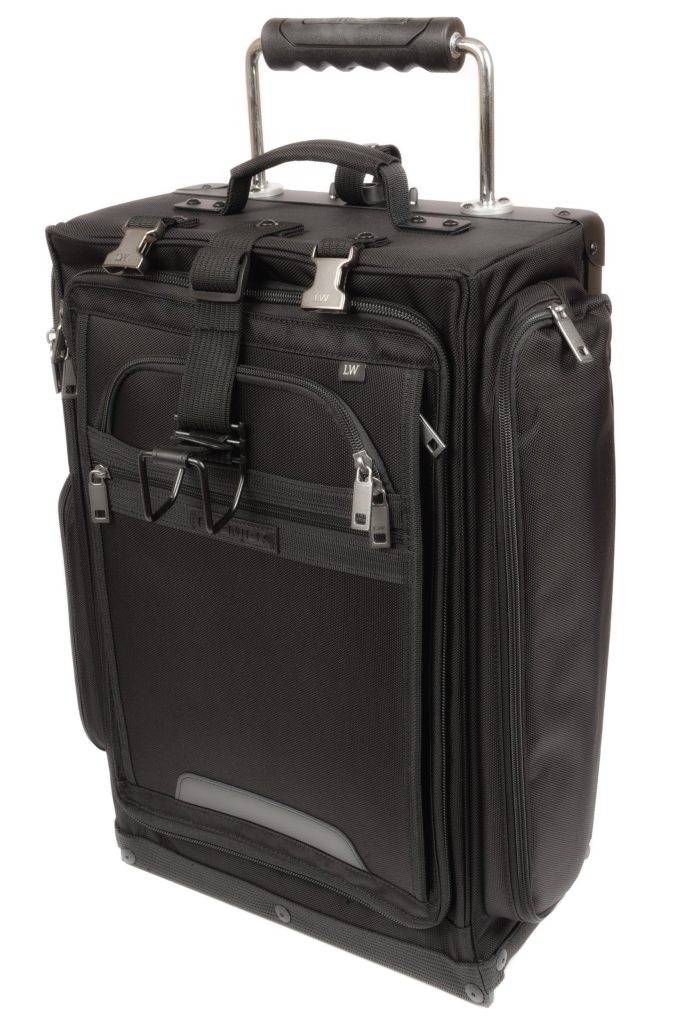
Stealth Premier 22-Inch Rolling Bag [Courtesy: Luggage Works]Best of: Save a little carry-on for major airline pilots
TheStealth Premier 22-Inch Rolling Bag by Luggageworks is known as the pilot’s choice for luggage. It measures 14 inches by 22 inches by 8 inches and weighs 12.25 pounds. Pilots appreciate the bag’s metal frame, durable hardware, and ballistic fabric shell with protective padding, ensuring it can withstand the demands of frequent travel. The bag includes a three-year manufacturing warranty that covers repairs or replacements for defects in material or workmanship only.
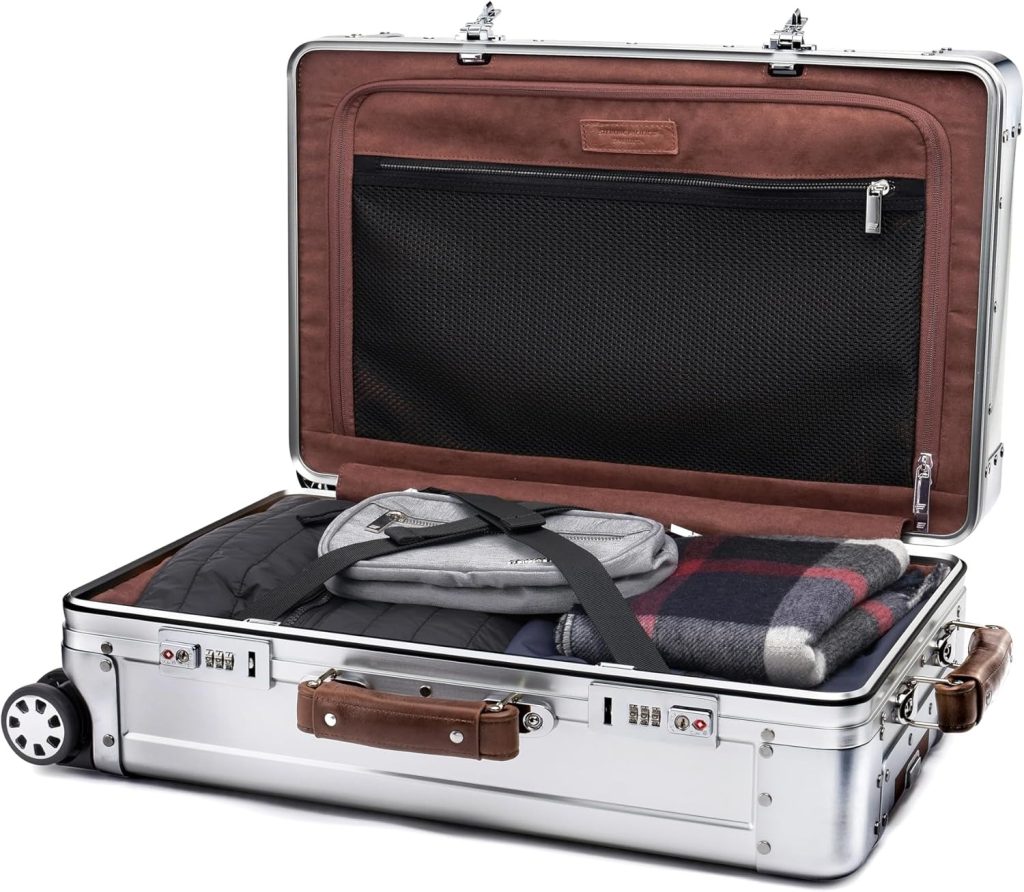
Best of: Splurge a little carry-on bag for major airline pilots
Sterling Pacific 40L Cabin Travel Case [Courtesy: Amazon]The Sterling Pacific 40L Cabin Travel Case is the ultimate carry-on choice for frequent travelers. With its lifetime warranty, lifetime repair services, and aluminum design known for its durability and lightweight properties, this suitcase can be a career-long companion for any pilot. It measures 22.5 inches by 14 inches by 9 inches and weighs 12 pounds. Pilots appreciate the carry-on’s complete aluminum design, stainless steel reinforcements, leather handles, 360-degree wheels, TSA-approved security features, and functional interior. Each travel case also comes in a stunning silver finish, perfect for any traveler seeking an elevated look with that same superior Sterling Pacific construction and lifetime warranty.
Best of: Save a little headset for major airline pilots
David Clark DC Jet-X Headset [Courtesy: Sporty’s]The David Clark DC Jet-X Headset is a modern headset designed for contemporary flight decks. It is lightweight and comfortable, offering clear audio, advanced active noise reduction (ANR), and cooling comfort, which is especially important for commercial pilots. The headset weighs 4.5 ounces, is TSO-approved, and comes with a 3-year warranty. Pilots appreciate the headset’s enhanced auto-shutoff feature, full flex boom, advanced microphone, and more.
Best of: Splurge a little headset for major airline pilots
Bose A30 Aviation Headset [Courtesy: Sporty’s]The Bose A30 Aviation Headset is among the most elite headsets on the market. It is comfortable, quiet, precise, and durable for the modern pilot. Building on the tradition of the A20, the A30 gives pilots more control over ANR performance, microphone location, and power source. The headset weighs 5 ounces, is TSO-approved, and comes with a 5-year warranty.
Best of: Save a little watch for major airline pilots
Waterbury Heritage Chronograph 39mm Stainless Steel Bracelet Watch [Courtesy: Amazon]The Waterbury Heritage Chronograph 39mm Stainless Steel Bracelet Watch combines modern functionality with timeless design for today’s pilot. This watch features a 39mm stainless steel case and a matching brushed and polished stainless steel bracelet. It includes a chronograph to track elapsed time and a black tachymeter bezel to calculate average speed. Additionally, the luminous watch hands ensure visibility in low-light conditions.
Best of: Splurge a little watch for major airline pilots
Garmin D2 Mach 1 Pro Smartwatch [Courtesy: Sporty’s]The Garmin D2 Mach 1 Pro Smartwatch features a 1.4-inch touchscreen display and up to 25 days of battery life. It houses a red and white LED flashlight with multiple intensity levels. The watch can provide pilots with aeronautical information, aviation weather, flight logging, pulse oxygen monitoring, and other features when on the go. It also includes 30+ sports apps, 24/7 health monitoring, and advanced sleep monitoring for life outside of flying.
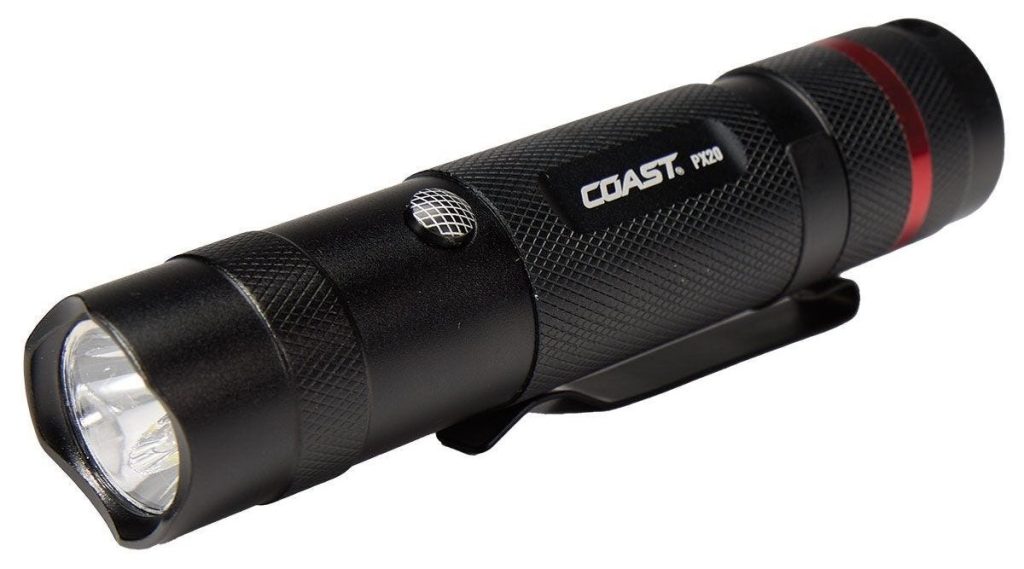
Best of: Save a little flashlight for major airline pilots
Dual Color LED Flashlight [Courtesy: Sporty’s]The Dual Color LED Flashlight by Coast is a powerful light with a compact design. It features one high-intensity red LED, which is excellent for cockpit lighting, and five high-intensity white LEDs, perfect for preflight inspections. Measuring 4.6 inches and weighing 6 ounces, it operates on 3 AAA alkaline batteries. Additionally, the flashlight includes Coast’s lifetime warranty.
Best of: Splurge a little flashlight for major airline pilots
Slayer Pro Red/White Flashlight [Courtesy: Sporty’s]The Slayer Pro Red/White Flashlight by Coast is a rechargeable, waterproof, and dust-resistant light designed with all the features pilots need in and around the aircraft. It has a spot beam with four modes (i.e., high, low, Turbo, and MoonGlow) and a separate red beam, perfect for low lighting in close proximity. It runs on a rechargeable battery, is 5.4 inches long, weighs 3.2 ounces, and comes with Coast’s lifetime warranty.
Choosing the right gear as a major airline pilot is all about balancing functionality, durability, and comfort. Here is what to consider for each item:
Flight bag considerations
When shopping forflight bags for airline pilots, consider the size and capacity of the bag. It should easily accommodate your flight essentials, such as a headset, a tablet, and personal items, while complying with cockpit space limitations. Additionally, the bag should be made from high-quality materials like nylon or leather to withstand frequent use. Furthermore, it should feature multiple compartments for effective organization and easy access to flight essentials. Finally, the bag should have padded straps and ergonomic handles for comfortable carrying.
Carry-on bag considerations
When shopping forcarry-on bags for airline pilots, consider the bag size to ensure it meets the standard carry-on storage requirements. Bags with a hard shell or reinforced fabric can effectively protect personal items. Furthermore, smooth-rolling wheels and telescopic handles are essential for easy transport. Finally, functional compartments can assist with organization and quick access to essentials.
Headset considerations
When shopping forheadsets for airline pilots, consider a headset with active noise reduction (ANR), which is crucial for reducing cockpit noise. The headset should also be lightweight, comfortable, and fit securely around the head. When selecting ear cups, it is essential to consider material breathability and seal design. Additionally, major airlines often require personal headsets to be TSO-approved and spare noise reduction headset batteries to be carried.
Watch considerations
When shopping for watches for airline pilots, consider a quartz movement watch (i.e., battery-operated) for accurate timekeeping. A watch should also be water-resistant and shockproof for longevity. Additionally, a large, clear display with easy-to-read dials allows quick readability in various lighting conditions.
Flashlight considerations
When shopping for flashlights for airline pilots, consider lights with adjustable brightness and various light modes (i.e., white and red). A flashlight with a long-lasting battery life is also essential, ensuring reliability, convenience, and safety in different environments. Additionally, a compact yet powerful device is crucial for aviation use.
No matter where you are in your airline journey, we hope you enjoyed this carefully curated list of economical and indulgent essentials to keep you soaring at the majors. Do not wait; add one of these aviation products to your virtual cart today.
AirlineGeeks may earn revenue from the products available on this page and participate in affiliate programs.
AirlineGeeks.com was founded in February 2013 as a one-person blog in Washington D.C. Since then, we’ve grown to have 25+ active team members scattered across the globe. We are all here for the same reason: we love deep-diving into the fascinating realm of the airline industry.