









Stories

RwandAir Adjusts Routes Following DRC Airspace Ban

These tensions are the result of an ongoing conflict in eastern DRC that has caused major aviation disruptions in the region.

A RwandAir A330 (Photo: Wikimedia Commons | Jeroen Stroes Aviation Photography)

As of Feb. 14, the Democratic Republic of Congo (DRC) has banned Rwandan aircraft from landing in, or overflying the DRC. As a result, RwandAir will be adjusting its network in Central and West Africa. These adjustments will mostly affect flights that previously flew through Congolese airspace.

The adjustments will be as follows:

  • Kigali – Abuja – Accra – Kigali, which has been operating since 2016, will be pulled from reservation systems for flights departing after Feb. 14.
  • Kigali – Accra will become a nonstop flight, operating once weekly using a Boeing 737-800, starting Feb. 10.
  • Kigali – Bangui will become a nonstop flight on Feb. 14. It will replace the route’s prior one-stop connection via Douala. It will run twice weekly using a Boeing 737-800.
  • Kigali – Brazzaville – Douala will be suspended as of Feb. 14.
  • Kigali – Libreville – Accra and Kigali – Libreville – Cotonou are both suspended. However, from February 14 to 28, Kigali – Libreville – Douala will operate three times weekly, replacing the old route via Brazzaville.

These tensions are the result of an ongoing conflict in eastern DRC that has caused major disruptions. The conflict is between the Congolese army and the M23 rebel group. The rebel group seized Goma International Airport in late January, closing the facility and halting both domestic and international flights.

The closure of the airport has also caused humanitarian problems. Goma International Airport is the primary international gateway for many aid groups in the region. Humanitarian organizations, the United Nations, and the World Health Organization are seeking the airport’s reopening, but there is no word on when this will occur.

This has led to a halt of relief operations, causing widespread humanitarian problems, per ch-aviation. The United Nations reports about 3,000 deaths during the days leading up to the M23 group’s capture of Goma.

“Due to the closure of DR Congo airspace to Rwandan-registered aircraft, RwandAir has rerouted affected flight paths. We are working to provide the safest and most efficient alternatives while minimising inconvenience to our passengers,” the airline said in a brief statement.

This decision stems from escalating tensions between Rwanda and the DRC, particularly over the ongoing conflict involving the M23 rebel group in eastern DRC. On Tuesday, Feb. 11, Congolese authorities announced new restrictions, prohibiting any aircraft registered in Rwanda — or registered elsewhere but based in Rwanda — from flying over or landing in the DRC. According to a Notice to Airmen (NOTAM), the restriction applies to both civilian and state aircraft, with officials citing security threats as the primary justification.

“Formal ban on overflight and landing in the territory of the Democratic Republic of Congo for all civil and state aircraft registered in Rwanda or registered elsewhere but based in Rwanda, due to the security situation linked to the armed conflict,” reads the NOTAM.

The DRC accuses Rwanda of supporting the M23 rebel group, allegedly supplying the group with arms and military personnel—allegations that Rwanda strongly denies. The conflict has led to significant disruptions, including the effective closure of Goma International Airport in eastern DRC in late January, when M23 forces advanced into the city and seized control.

Upon entering the city, M23 rebels captured Goma International Airport, reportedly seizing a Gomair ATR 72 cargo aircraft and several military helicopters. Since then, the airspace over North Kivu’s capital has been closed, halting both domestic and international flights.

According to Reuters, the airport remains closed despite calls from humanitarian organizations for its reopening to facilitate relief operations. The situation has resulted in widespread humanitarian concerns, with the United Nations reporting that approximately 3,000 people were killed in the days leading up to the capture of Goma.


Victor Shalton

Victor Shalton's love for aviation can be traced to when he was 11-years-old. As a seasoned aviation writer, he takes pride in providing the best aviation coverage around the globe and is passionate about advancing his skills in the aviation space. In addition, he loves travelling, writing, arts and while his speaking engagements have taken him around the world, he is proud to call Nairobi home.

Lawsuits Begin Following Toronto Crash

A Delta passenger has filed one of the first lawsuits against the carrier following a flight that crashed at Toronto Pearson International Airport on Monday.

Investigators examine the wreckage of Delta flight 4819. (Photo: TSB of Canada)

A Delta passenger has filed one of the first lawsuits against the carrier following a flight that crash-landed at Toronto Pearson International Airport on Monday.

Marty Lourens of Austin, Texas, was one of 76 passengers aboard Delta flight 4819 from Minneapolis to Toronto when the plane caught fire, lost a wing, and flipped over during landing.

On Friday, Austin law firm DJC Law filed an amended complaint against Delta and Endeavor on behalf of Lourens in the U.S. District Court for the Northern District of Georgia. The complaint alleges that the airlines were negligent and “breached their duty of care” for Lourens as a passenger by failing to reasonably operate the aircraft.

A copy of the amended complaint, emailed to AirlineGeeks, stated that Lourens was “violently tossed about and ended up upside down hanging from his seatbelt inside a burning plane with aviation fuel leaking onto him.”

“During the aforesaid crash and emergency evacuation, Plaintiff Mr. Lourens was seriously and permanently injured,” the claim stated.

The complaint further alleges that employees “offered inadequate assistance and instructions or directions” to Lourens while he was stuck.

Prior Maintenance Delay

A dollar amount was not specified for the damages sought by the plaintiff. Lourens’ attorney, Andres Pereira, told AirlineGeeks via email that the CRJ-900 was held for maintenance in Minneapolis before takeoff the day of the incident, though no further explanation has been given for why.

According to FlightAware data, the flight was delayed for an hour before eventually departing for Toronto. A Delta spokesperson declined to comment on the maintenance delay.

“We are committed to providing support and legal counsel to the victims of this incident, ensuring that their rights are upheld during this process,” Pereira said in a news release published by DJC Law. “We understand the trauma these passengers have experienced, and we will advocate for them as this investigation unfolds.”

All 80 people aboard the plane survived, though 21 passengers were taken to the hospital where they were eventually discharged on Thursday.

Delta has offered the passengers $30,000 each in a “no strings attached” gesture that would not impact their legal rights.

The carrier has also disputed “disinformation” regarding the qualifications of the unnamed Endeavor Air pilots on flight 4819, attesting to the experience of both the pilot and first officer involved.

AirlineGeeks.com Staff

AirlineGeeks.com was founded in February 2013 as a one-person blog in Washington D.C. Since then, we’ve grown to have 25+ active team members scattered across the globe. We are all here for the same reason: we love deep-diving into the fascinating realm of the airline industry.

Malaysia Airlines Takes Delivery of Second Airbus A330neo

Malaysia Airlines has added a second Airbus A330-900neo aircraft to its fleet this week. The jet is expected to enable additional network opportunities.

Malaysia Airlines A330neo
Malaysia Airlines' second A330neo. (Photo: Malaysia Airlines)

Malaysia Airlines has added a second Airbus A330-900neo to its fleet. The aircraft arrived in the Malaysian capital on Tuesday, after a 12-hour flight from Toulouse, France.

The arrival of the aircraft represents another step forward in Malaysia Airlines’ fleet modernization strategy. The Airbus A330-900neo is part of an order for 20 new Airbus widebody aircraft – which will replace the airline’s older A330-300 models.

Aerotime reports that Malaysia took delivery of its first new A330-900neo in November 2024. However, the aircraft encountered some technical difficulties leading to it being temporarily grounded after it operated just two scheduled services last year.

The delivery of this new aircraft is part of an agreement between Malaysia Aviation Group and aircraft lessor Avolon. Under this agreement, Avolon will lease twenty new Airbus A330neo aircraft to Malaysia Airlines.

Airguide states that the arrangement includes 10 aircraft from Avolon’s order book and an additional 10 jets acquired through a sale and leaseback agreement with the Malaysia Aviation Group.

Plans for Route Expansion

It is intended that Malaysia Airlines’ new A330-900neos will enable route expansion for the Kuala Lumpur-based airline. With these new aircraft Malaysian should be able to scale up services on existing routes as well as to launch new ones.

The aircraft are configured in a two-class layout. The A330-900neos are configured to accommodate a total of 297 passengers, with 28 seats in business and 269 seats in economy class.

Lorne Philipot

Lorne is a South Africa-based aviation journalist. He was captivated and fascinated by flying from the day he took his first airline flight. With a passion for aviation in his blood, he has flown to destinations in all corners of the globe. Lorne has traveled extensively and lived in various countries. Drawing on his travels and passion for aviation, Lorne enjoys writing about airlines, routes, networks, and new developments.

Livery of the Week: Allegiant

The sunburst, a signature element, incorporates a gradient of orange and yellow, evoking a sense of warmth and leisure travel.

An Allegiant Air Airbus aircraft.
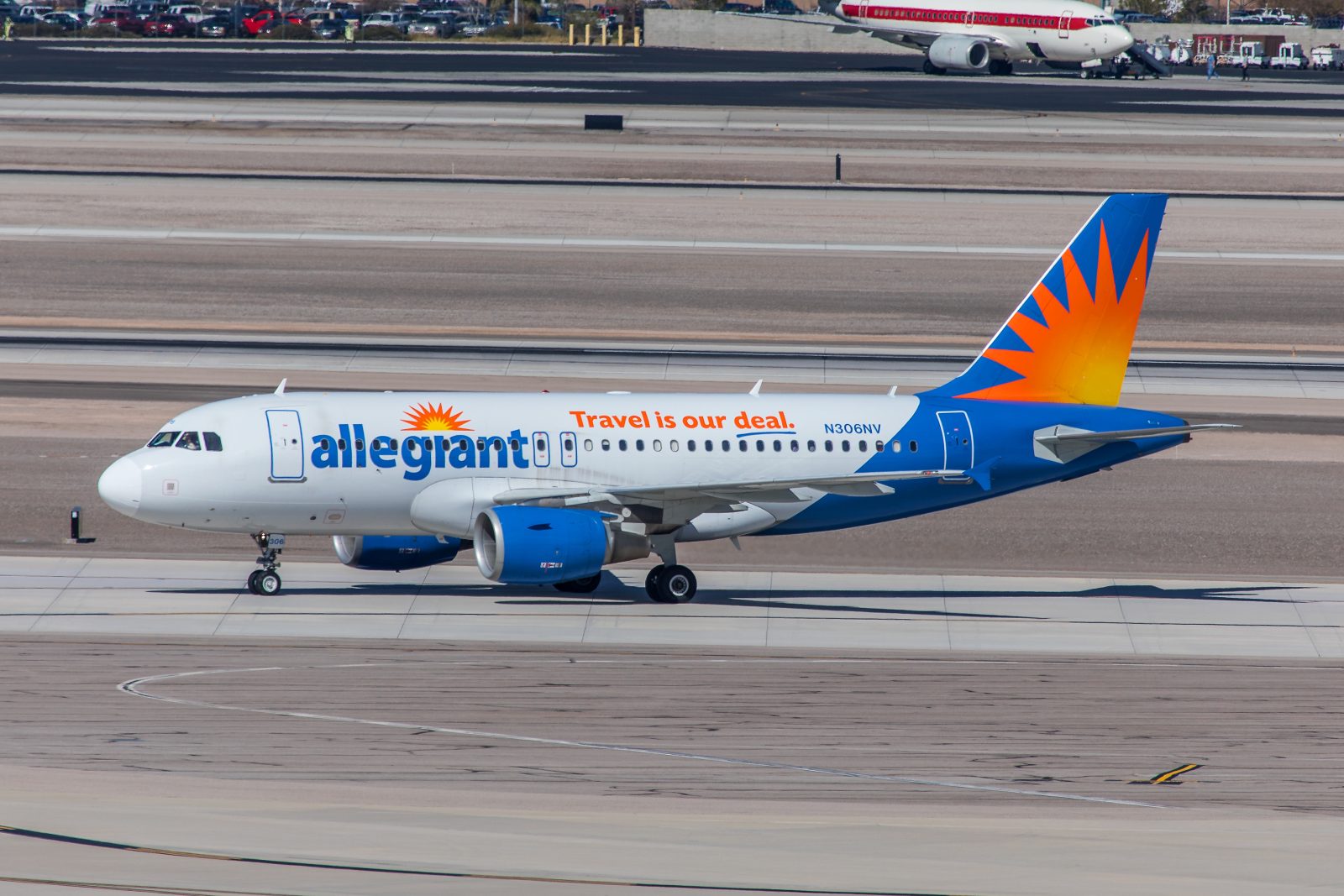
An Allegiant A319 in Las Vegas. (Photo: AirlineGeeks | William Derrickson)

Editor’s Note: AirlineGeeks is proud to present our ‘Livery of the Week’ series. Every Friday, a team member will share an airline livery, which can be from the past, present, or even a special scheme. Some airline liveries are works of art. The complexity associated with painting around critical flight components and the added weight requires outside-the-box thinking from designers. The average airliner can cost upwards of $200,000 to repaint, creating a separate aircraft repainting industry as a result. 

Have an idea for a livery that we should highlight? Drop us a line. 

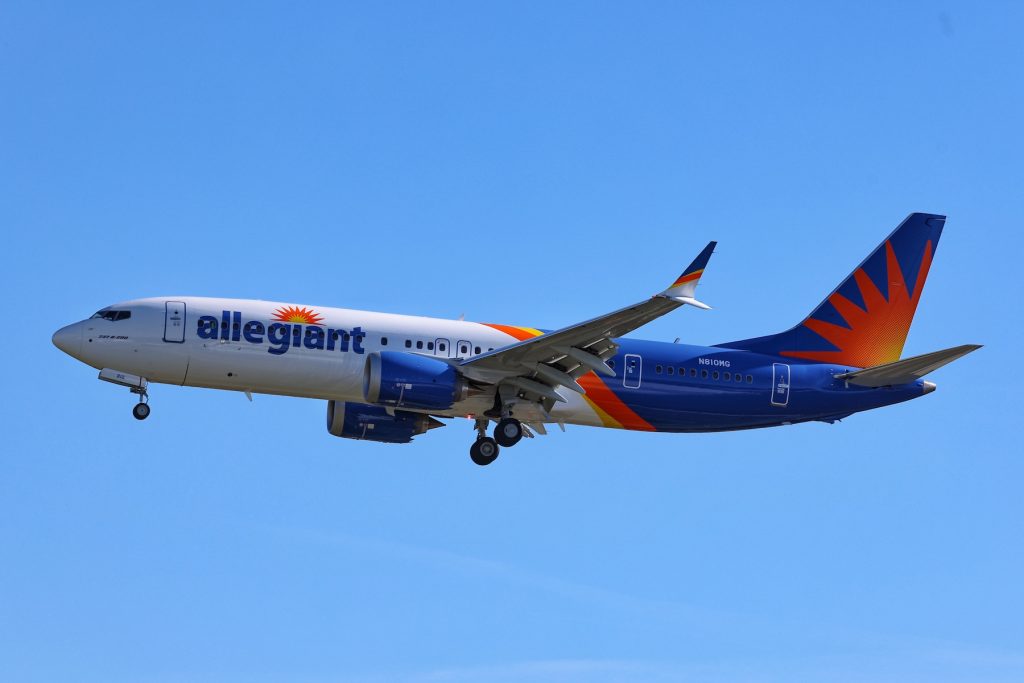
Allegiant Air’s aircraft livery is a key part of the airline’s brand identity. The standard livery features a predominantly white fuselage, accented by a vibrant sunburst design on the tail and the airline’s logo in bold, stylized lettering.

The sunburst, a signature element, incorporates a gradient of orange and yellow, evoking a sense of warmth and leisure travel.

An Allegiant Boeing 737 MAX on a test flight in Washington State (Photo: AirlineGeeks | Katie Zera)

In addition to the standard livery, Allegiant occasionally features special liveries to celebrate partnerships, events, or destinations. These unique designs often incorporate elements specific to the collaboration or theme, such as the Make-A-Wish livery featuring the foundation’s logo or the recent Sarasota-Bradenton livery showcasing local marine life.

The ultra-low-carrier operates a fleet of Airbus and Boeing aircraft.

Looking for a new airplane model? Head over to our friends at the Midwest Model Store for a wide selection of airlines and liveries.

Ryan Ewing

Ryan founded AirlineGeeks.com in February 2013 and has spent more than a decade covering the airline business. His work has been featured by CNN, WJLA, CNET, and Business Insider. His aviation experience spans airport operations, Part 135 regulatory compliance, and airline crew workforce planning, along with time behind the yoke of a Cessna 172 and interviews with airline executives. Ryan now serves as Group President of Firecrown Media’s Aviation Group. He holds a B.S. in Air Transportation Management and an MBA from Arizona State University and teaches Airline Management at Embry-Riddle Aeronautical University.

Delta Disputes ‘Disinformation’ on CRJ Pilots

Delta has pushed back on “disinformation” regarding the qualifications of the Endeavor Air pilots on flight 4819, which crashed on Monday.

Delta Connection CRJ-900
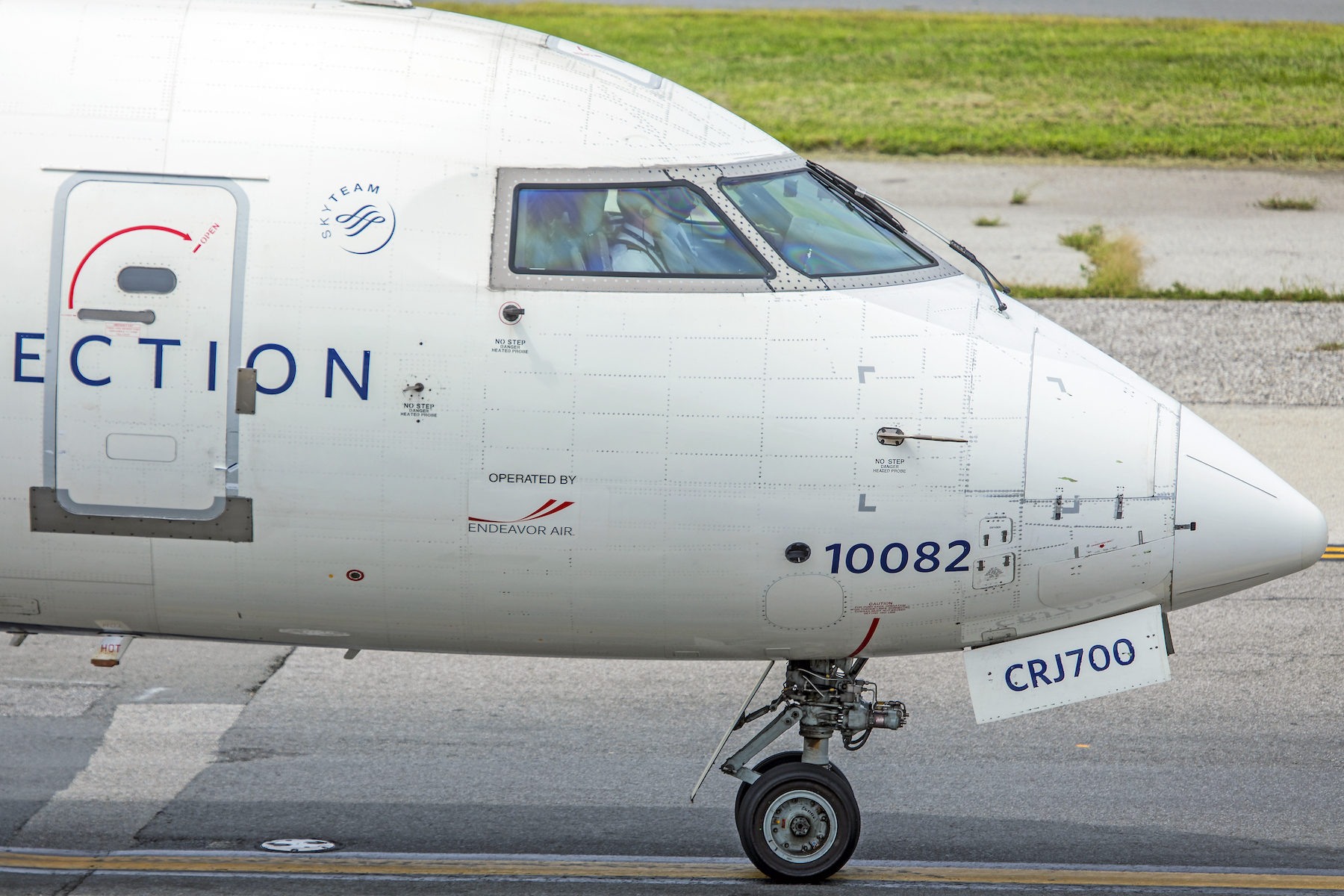
An Endeavor Air CRJ-700 aircraft at New York's LaGuardia airport (Photo: AirlineGeeks | William Derrickson)

Delta has pushed back on “disinformation” regarding the qualifications of the Endeavor Air pilots on flight 4819. A recent flurry of reports alleged that the pilots had training-related issues, which the carrier debunked.

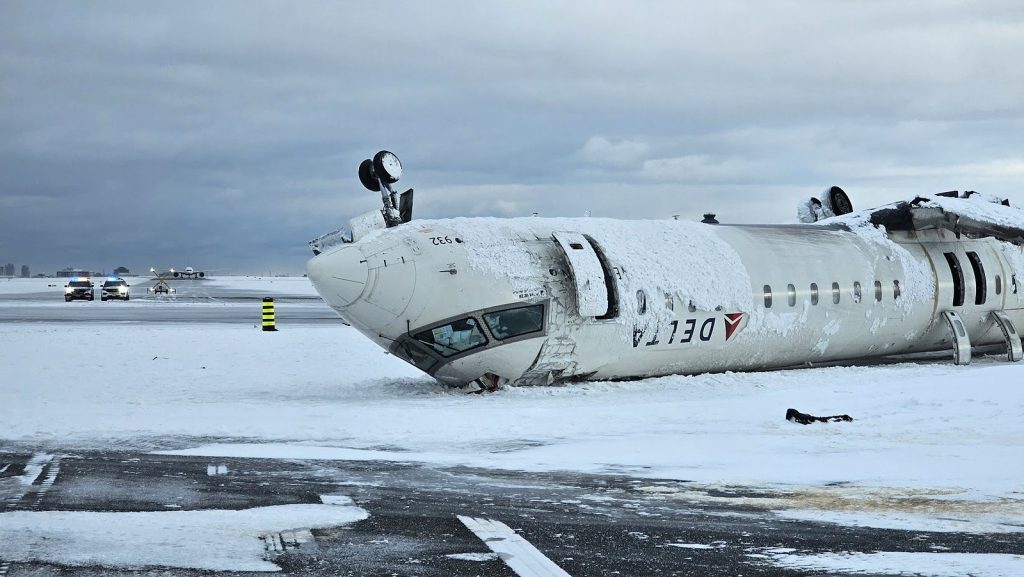
Flight 4819 crashed on Monday while attempting to land in Toronto. The CRJ-900 was carrying 80 people and came to a rest upside down next to the runway.

The wreckage of Delta flight 4819 (Photo: TSB of Canada)

Twenty-one passengers were injured, per the airline, and have all since been released from area hospitals.

An airline spokesperson said Thursday evening that some social media reports contained “false and misleading assertions about the flight crew of Endeavor Air 4819.”

Crew Background

According to the statement, the flight’s captain began his career at Mesaba Airlines, a predecessor company of Endeavor, in 2007. He has worked as an active line captain and in various training and safety positions.

“Assertions that he failed training events are false. Assertions that he failed to flow into a pilot position at Delta Air Lines due to training failures are also false,” the spokesperson stated.

The first officer was hired by Endeavor in January 2024 and completed training in April. Her flight experience exceeded the minimum requirements set by Federal Aviation Administration regulations, the spokesperson added.

Delta also pushed back on claims that she failed training events, saying they were false.

Ryan Ewing

Ryan founded AirlineGeeks.com in February 2013 and has spent more than a decade covering the airline business. His work has been featured by CNN, WJLA, CNET, and Business Insider. His aviation experience spans airport operations, Part 135 regulatory compliance, and airline crew workforce planning, along with time behind the yoke of a Cessna 172 and interviews with airline executives. Ryan now serves as Group President of Firecrown Media’s Aviation Group. He holds a B.S. in Air Transportation Management and an MBA from Arizona State University and teaches Airline Management at Embry-Riddle Aeronautical University.

Airbus Reports Strong 2024 Performance

Airbus reported a six percent revenue increase in 2024, delivering 766 commercial aircraft despite supply chain challenges.

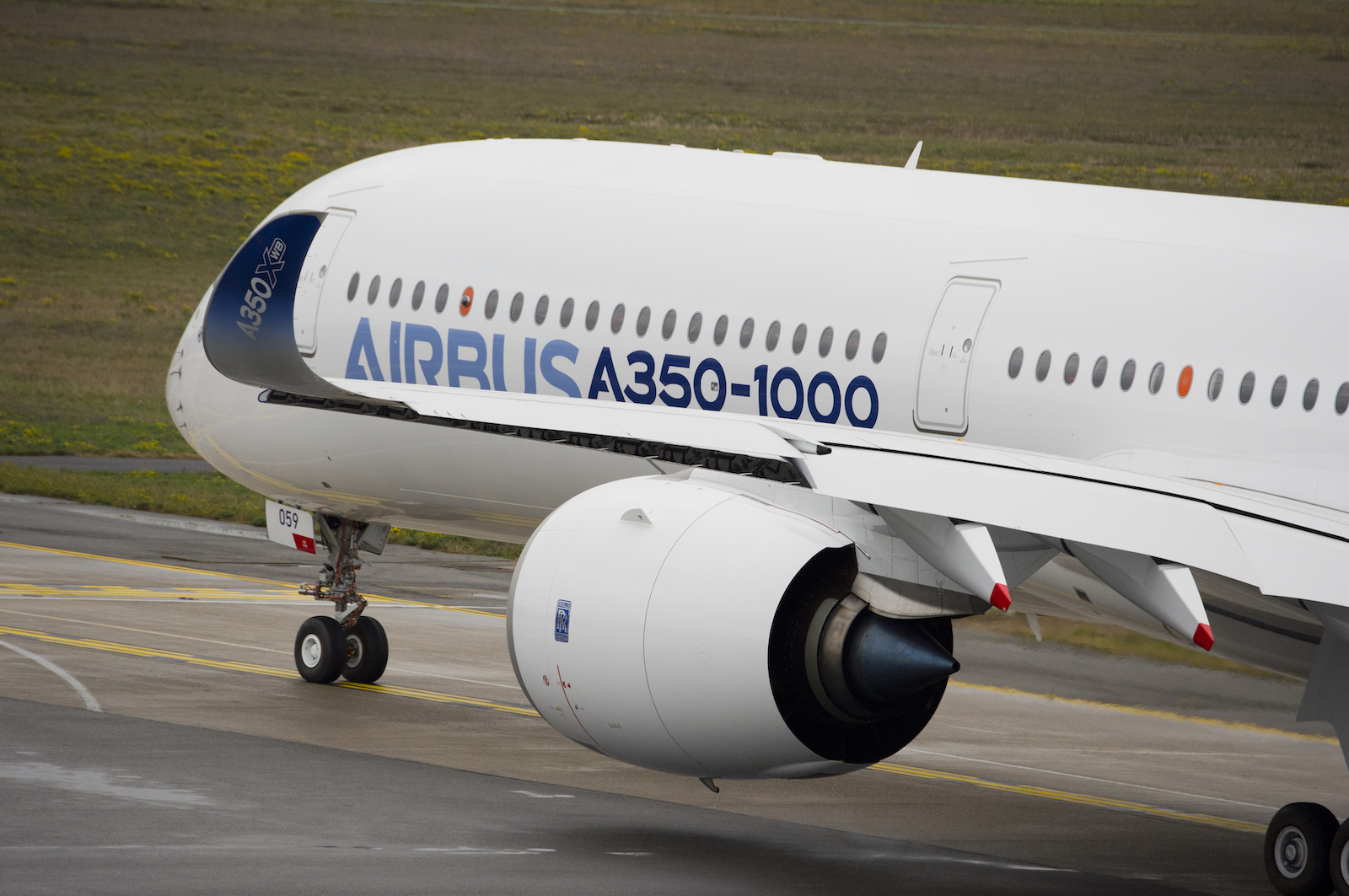
An Airbus A350-1000 aircraft (Photo: Airbus)

Airbus reported solid financial results for 2024, posting a six percent increase in revenue to €69.2 billion while delivering 766 commercial aircraft, up from 735 in the previous year. The European aerospace giant reaffirmed its long-term growth strategy, setting ambitious targets for 2025 as it works through supply chain disruptions and advances its sustainability initiatives.

Chief Executive Officer Guillaume Faury highlighted Airbus’ ability to meet its 2024 guidance despite ongoing industry challenges. The company’s commercial aircraft division remained its main revenue driver, generating €50.6 billion, reflecting increased deliveries across the A220, A320neo, A330, and A350 families. However, supply chain constraints, particularly involving Spirit AeroSystems, continued to put pressure on production, delaying the entry-into-service of the A350 freighter to the second half of 2027.

Strong Delivery Outlook for 2025

Looking ahead, Airbus plans to deliver approximately 820 commercial aircraft in 2025, marking a seven percent increase from 2024. Production ramp-ups are ongoing, with the A320 Family set to reach 75 aircraft per month by 2027, while A220 production is targeting a rate of 14 per month by 2026.

The A321XLR, Airbus’ longest-range single-aisle jet, is expected to enter service in the second quarter of 2025 following testing and certification work.

Expanding U.S. Manufacturing Footprint to Meet Demand

Additionally, Airbus is accelerating the expansion of its U.S. manufacturing footprint. The company is ramping up A320neo family production at its Mobile, Alabama, facility, responding to strong demand from North American carriers. This move aligns with Airbus’ strategy to increase localized production and mitigate supply chain risks.

Tolga Karadeniz

Tolga is a dedicated aviation enthusiast with years of experience in the industry. From an early age, his fascination with aviation went beyond a mere passion for travel, evolving into a deliberate exploration of the complex mechanics and engineering behind aircraft. As a writer, he aims to share insights , providing readers with a view into the complex inner workings of the aviation industry.

All Injured Passengers in Toronto Crash Released From Hospital

Delta confirmed that all 21 injured passengers who were aboard Endeavor Air’s Flight 4819 have been discharged from the hospital.

Investigators examine the wreckage of Delta flight 4819. (Photo: TSB of Canada)

Delta confirmed Thursday that all 21 injured passengers who were aboard Endeavor Air flight 4819 have been discharged from the hospital.

Flight 4819 flipped over while attempting to land at Toronto Pearson International Airport on Monday. A video of the incident shared on social media showed the CRJ-900 losing a wing and catching fire before flipping over.

While 21 passengers were injured and taken to local hospitals, no one was killed in the accident.

In an emailed statement sent to AirlineGeeks, Delta CEO Ed Bastian said the carrier “will continue to connect one-on-one with customers, employees and loved ones” as it moves forward to make sure their needs are met.

“The Delta and Endeavor families are grateful that all those injured Monday have been released from the hospital, and we extend our thanks to everyone who provided care to them over the past few days,” he said.

On Wednesday, the airline confirmed reports that it would be giving $30,000 to each one of the 76 passengers who were on the flight. Delta said the money is a gesture that comes with “no strings attached and does not impact rights.”

AirlineGeeks.com Staff

AirlineGeeks.com was founded in February 2013 as a one-person blog in Washington D.C. Since then, we’ve grown to have 25+ active team members scattered across the globe. We are all here for the same reason: we love deep-diving into the fascinating realm of the airline industry.

Spirit to Exit Bankruptcy

The U.S. Bankruptcy Court for the Southern District of New York has authorized Spirit Airlines’ plan to exit bankruptcy.

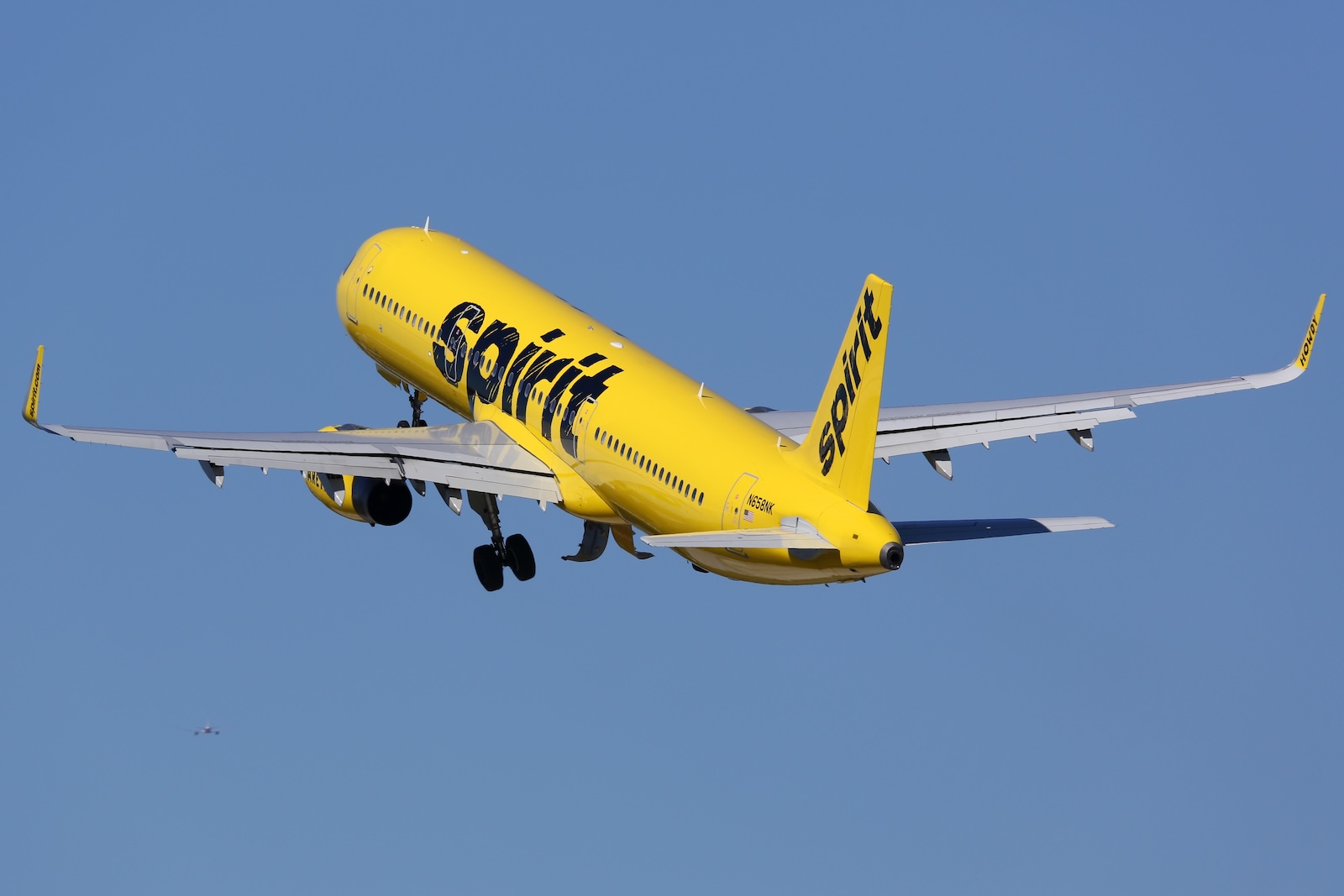
Spirit A321
A Spirit Airbus A321 (Photo: Shutterstock | Markus Mainka)

The U.S. Bankruptcy Court for the Southern District of New York authorized Spirit’s plan to exit bankruptcy on Thursday.

According to a report by Bloomberg, the airline has made a “lender-backed take-private deal” that will give control of the ultra-low-cost carrier to top bondholders. Court documents show that the group includes Citadel Advisors, Pacific Investment Management Co. and Western Asset Management Co.

Bloomberg reported that the restructuring deal approved by Judge Sean Lane on Thursday “was widely supported by Spirit lenders.”

The deal comes a little over a week after the carrier rejected Frontier’s latest offer to merge with Spirit.

The airline filed for Chapter 11 bankruptcy in November 2024 after years of quarterly losses and growing debt.

While bondholders might be happy with the new deal, shareholders have been vocal critics of the airline and its leadership. In December, over a dozen shareholders sent letters to Judge Lane lambasting Spirit CEO Ted Christie or board members for the Chapter 11 filing and for supporting a deal that would cancel their shares.

One investor went as far as to create their own website mocking the company and its CEO.

AirlineGeeks reached out to Spirit for comment.

AirlineGeeks.com Staff

AirlineGeeks.com was founded in February 2013 as a one-person blog in Washington D.C. Since then, we’ve grown to have 25+ active team members scattered across the globe. We are all here for the same reason: we love deep-diving into the fascinating realm of the airline industry.

ATP Flight School to Offer Free A320 Type Ratings

ATP Flight School has launched free quarterly Airbus A320 type rating and Airline Transport Pilot Certification Training programs for eligible alumni.

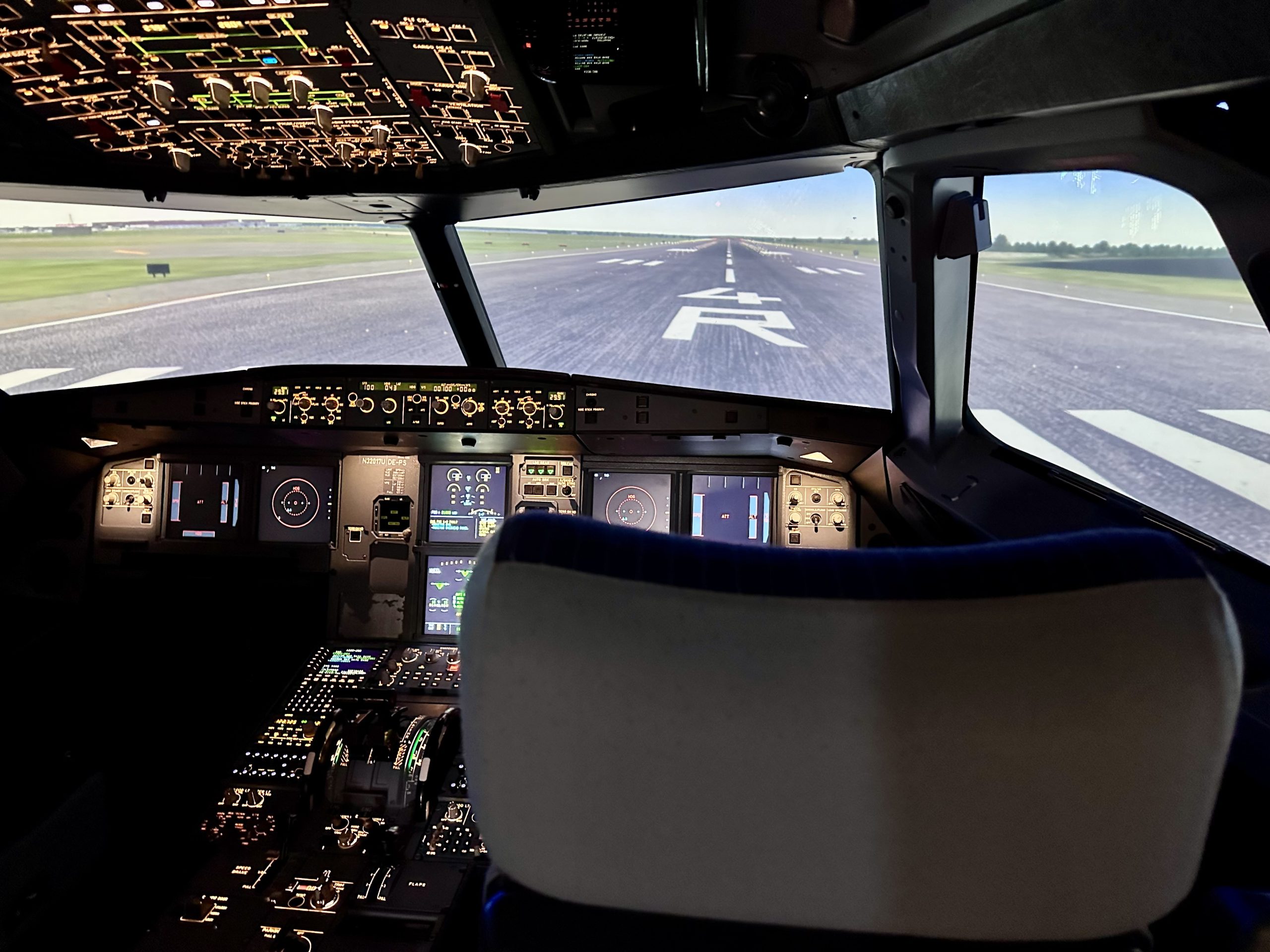
An inside look at one of ATP JETS' flight simulators at its Irving, Texas facility. (Photo: AirlineGeeks | Ryan Ewing)

ATP Flight School has launched free quarterly Airbus A320 type rating and Airline Transport Pilot Certification Training programs for eligible alumni.

The Jacksonville, Florida-based aviation academy said in an emailed news release it will randomly select alumni each quarter to receive one of these free training programs aimed at helping pilots advance their careers.

“With its Part 142 airline training center, ATP is one of the few flight schools in the nation with the capability of providing this advanced training to its alumni, and to do so at no cost,” the release stated.

Starting in March, ATP will begin randomly selecting one graduate eligible for the ATP CTP at JETS – valued at $4,295 – and one active ATP instructor eligible for the Airbus A320 type rating program – valued at $10,850.

The flight school’s ATP JETS program has over 25,000 graduates and is the largest provider of ATP CTP training in the country with facilities in the Dallas/Fort Worth area and Orlando, according to the company.

“ATP is deeply committed to the success of alumni, and what many may not realize is the substantial financial investment we make to continue supporting our students long after they graduate,” said Michael Arnold, vice president of marketing at ATP Flight School, in the release. “Through the no-cost, no-fee Alumni Association, ATP has saved alumni over $750,000 dollars by covering the cost of their Flight Instructor Refresher Course through King Schools.

AirlineGeeks.com Staff

AirlineGeeks.com was founded in February 2013 as a one-person blog in Washington D.C. Since then, we’ve grown to have 25+ active team members scattered across the globe. We are all here for the same reason: we love deep-diving into the fascinating realm of the airline industry.

Frontier Wants to Use Fewer Jet Bridges

Biffle called the ongoing transition away from jet bridges a “huge cost savings opportunity” as the airline looks to increase aircraft utilization on peak days.

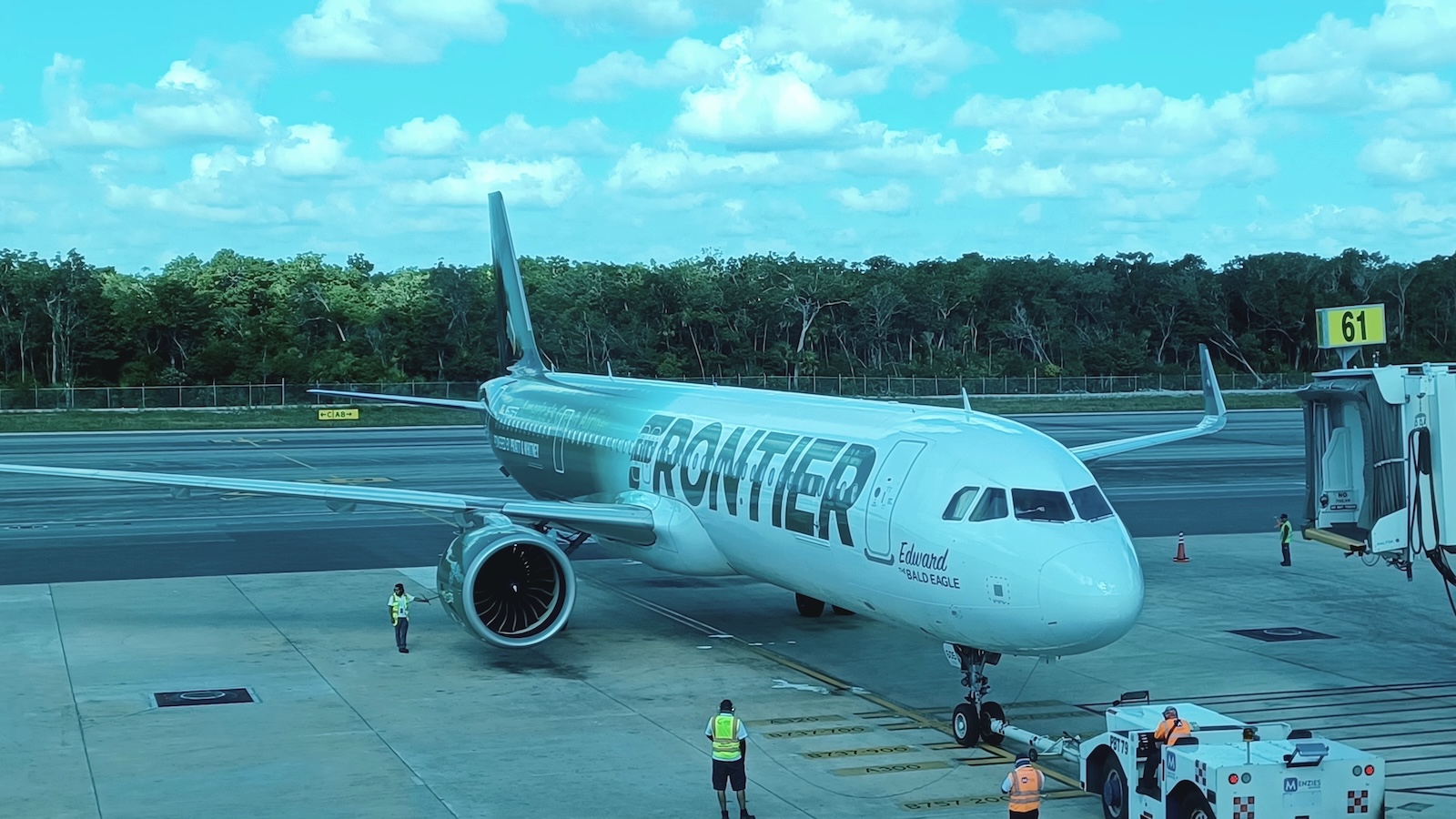
Frontier A321neo
A Frontier Airbus A321neo (Photo: Shutterstock | ACHPF)

Frontier will continue to move away from jet bridges, CEO Barry Biffle recently said. Instead, the airline is pivoting to ground loading facilities, similar to other low-cost carriers.

This transition has already started at Frontier’s Denver hub. The airport finished a $220 million expansion of Concourse A last year, which includes 14 new aircraft positions that will be used by the carrier.

“ We’ve done this before in other cities, but now we’re starting to do it at scale,” Biffle shared during an investors conference on Wednesday. “So one of the things that we’re going to do over the next few years is … to try to get as close to a hundred percent ground loading as possible.”

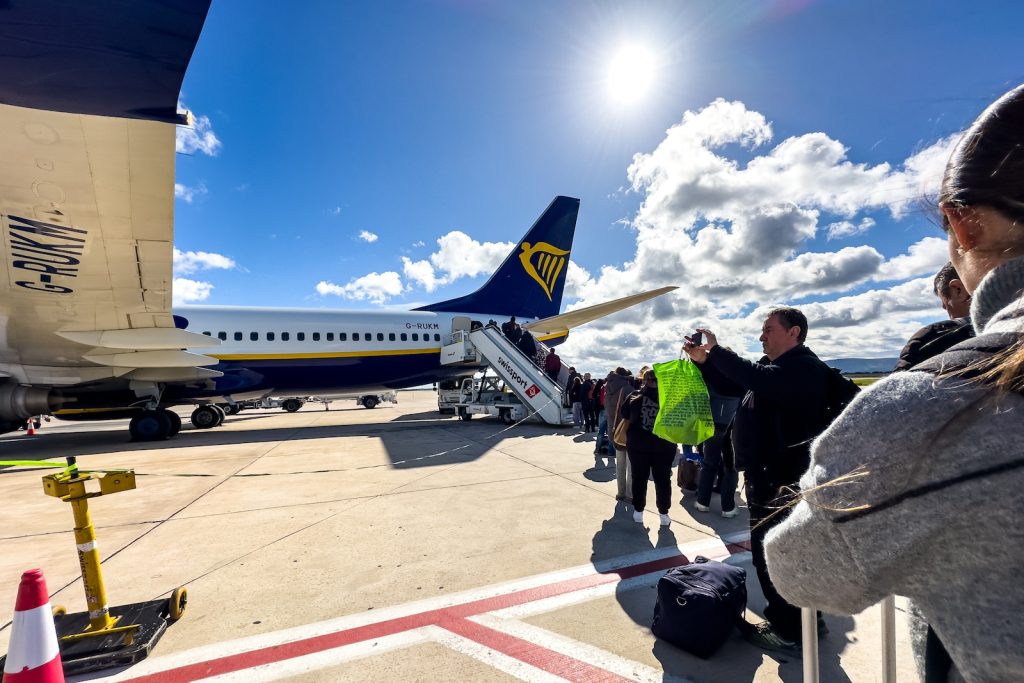
He noted the operations of other low-cost airlines, particularly in Europe, that largely don’t use jet bridges, including Wizz Air and Ryanair. Allegiant also utilizes ground boarding at many of its key bases.

People queuing while boarding a Ryanair aircraft (Photo: Shutterstock)

“ A jet bridge is just the kiss of death when you’re trying to turn an airplane really fast. If you have front and rear boarding, you literally double the speed that people get on and off the planes,” he continued.

Frontier utilizes ground loading facilities at a handful of airports, including in Austin, Texas, where it shares a terminal with Allegiant. The ultra-low-cost carrier recently added several new routes from the Texas capital.

Biffle called the ongoing transition away from jet bridges a “huge cost savings opportunity” as the airline looks to increase aircraft utilization on peak days.


Ryan Ewing

Ryan founded AirlineGeeks.com in February 2013 and has spent more than a decade covering the airline business. His work has been featured by CNN, WJLA, CNET, and Business Insider. His aviation experience spans airport operations, Part 135 regulatory compliance, and airline crew workforce planning, along with time behind the yoke of a Cessna 172 and interviews with airline executives. Ryan now serves as Group President of Firecrown Media’s Aviation Group. He holds a B.S. in Air Transportation Management and an MBA from Arizona State University and teaches Airline Management at Embry-Riddle Aeronautical University.
Sign-up for newsletters & special offers!

Get the latest stories & special offers delivered directly to your inbox

SUBSCRIBE

Uh-oh! It looks like you're using an ad blocker.

Our website relies on ads to provide free content and sustain our operations. By turning off your ad blocker, you help support us and ensure we can continue offering valuable content without any cost to you.

We truly appreciate your understanding and support. Thank you for considering disabling your ad blocker for this website