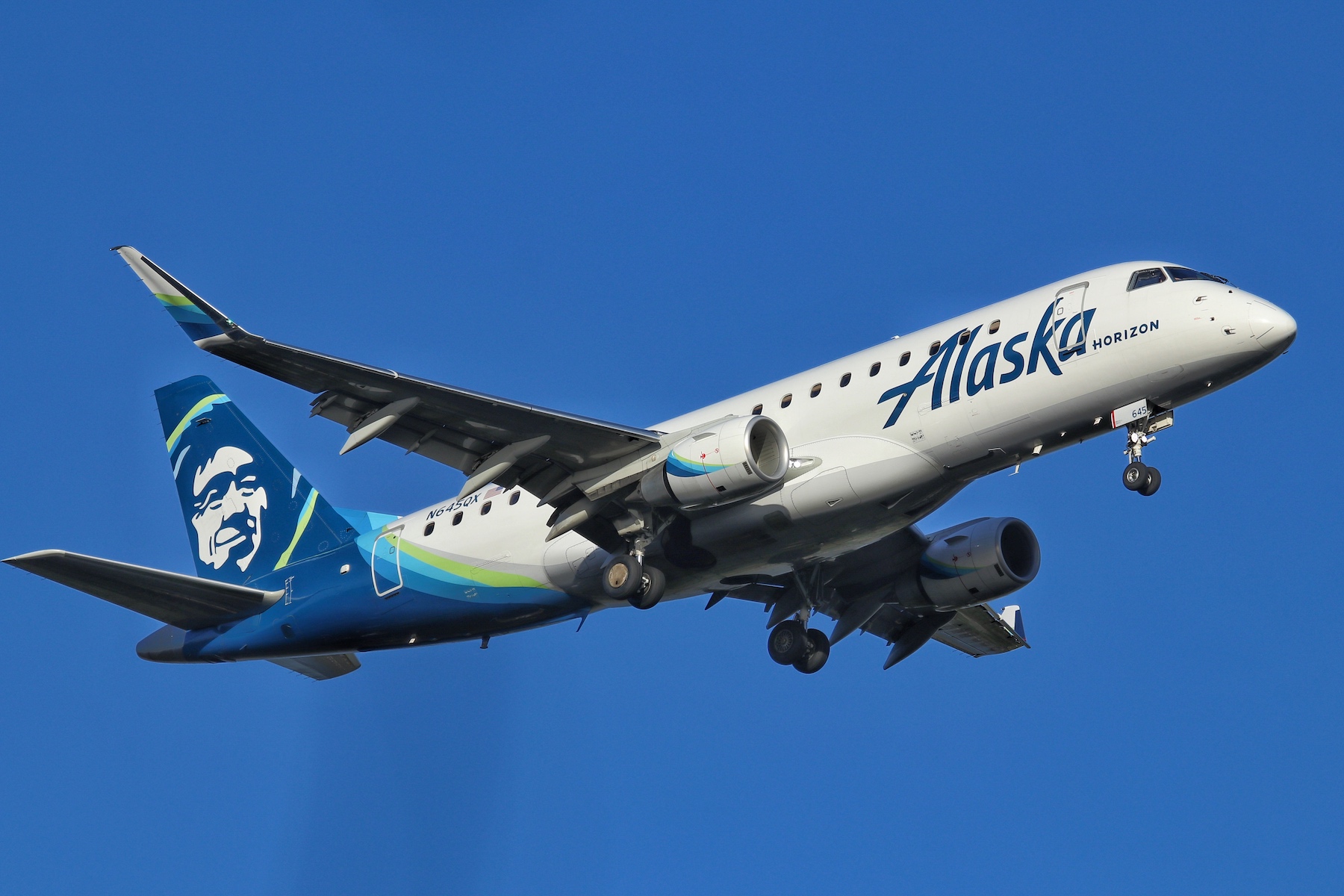
Alaska and Hawaiian aircraft in Maui. (Photo: Shutterstock / EQRoy)
The now-merged Alaska and Hawaiian duo plans to move operations at five more airports in the coming months. On Wednesday, Hawaiian announced that it moved its check-in counters and operations to Terminal 1 in San Francisco, next door to Alaska Airlines.
From San Francisco, Hawaiian operates daily flights to Honolulu and Maui on Airbus A330 and A321neo aircraft. Together, the two airlines will offer four daily flights between San Francisco and Hawaii.
The airlines’ separate systems will remain in place until 2026 when they plan to adopt a single passenger service system.
Alaska and Hawaiian check-in counters in San Francisco (Photo: Hawaiian Airlines)
More Airports Planned
Alaska and Hawaiian also plan to consolidate operations at five more airports in the near future. While San Francisco was the first relocation, Los Angeles, Sacramento and Ontario, California; Phoenix; and Las Vegas will follow.
Alaska Air Group completed its $1.9 billion purchase of Hawaiian in September. The two airlines plan to maintain separate brands but integrate into one air operator’s certificate.
Ryan founded AirlineGeeks.com back in February 2013 and has amassed considerable experience in the aviation sector. His work has been featured in several publications and news outlets, including CNN, WJLA, CNET, and Business Insider. During his time in the industry, he's worked in roles pertaining to airport/airline operations while holding a B.S. in Air Transportation Management from Arizona State University along with an MBA. Ryan has experience in several facets of the industry from behind the yoke of a Cessna 172 to interviewing airline industry executives. Ryan works for AirlineGeeks' owner FLYING Media, spearheading coverage in the commercial aviation space.
Inside Delta's new Salt Lake City pilot training center. (Photo: Delta)
Delta debuted its pilot training facility in Salt Lake City on Tuesday. The 50,000-square-foot center near Salt Lake City International Airport is the airline’s first “significant” pilot training facility since the one it opened outside Atlanta in 1968.
The new facility is set to bolster pilot training capacity and provide a more convenient location for pilots based in Delta’s Western hubs, the carrier said in a news release. It will host over 1,000 training events monthly.
“This 50,000-square-foot training center is really about the future,” said John Laughter, EVP and chief of operations, in a news release. “There’s a great opportunity to improve not only great quality of training, but quality of life, too, and have our pilots have a really great training center to come to here.”
Delta’s new Salt Lake City pilot training center (Photo: Delta)
According to Delta, the $50 million facility has room to accommodate up to four full-motion simulators. It has seven classrooms and 10 briefing rooms as well. The carrier also maintains a flight attendant training facility in Salt Lake City.
Ryan founded AirlineGeeks.com back in February 2013 and has amassed considerable experience in the aviation sector. His work has been featured in several publications and news outlets, including CNN, WJLA, CNET, and Business Insider. During his time in the industry, he's worked in roles pertaining to airport/airline operations while holding a B.S. in Air Transportation Management from Arizona State University along with an MBA. Ryan has experience in several facets of the industry from behind the yoke of a Cessna 172 to interviewing airline industry executives. Ryan works for AirlineGeeks' owner FLYING Media, spearheading coverage in the commercial aviation space.
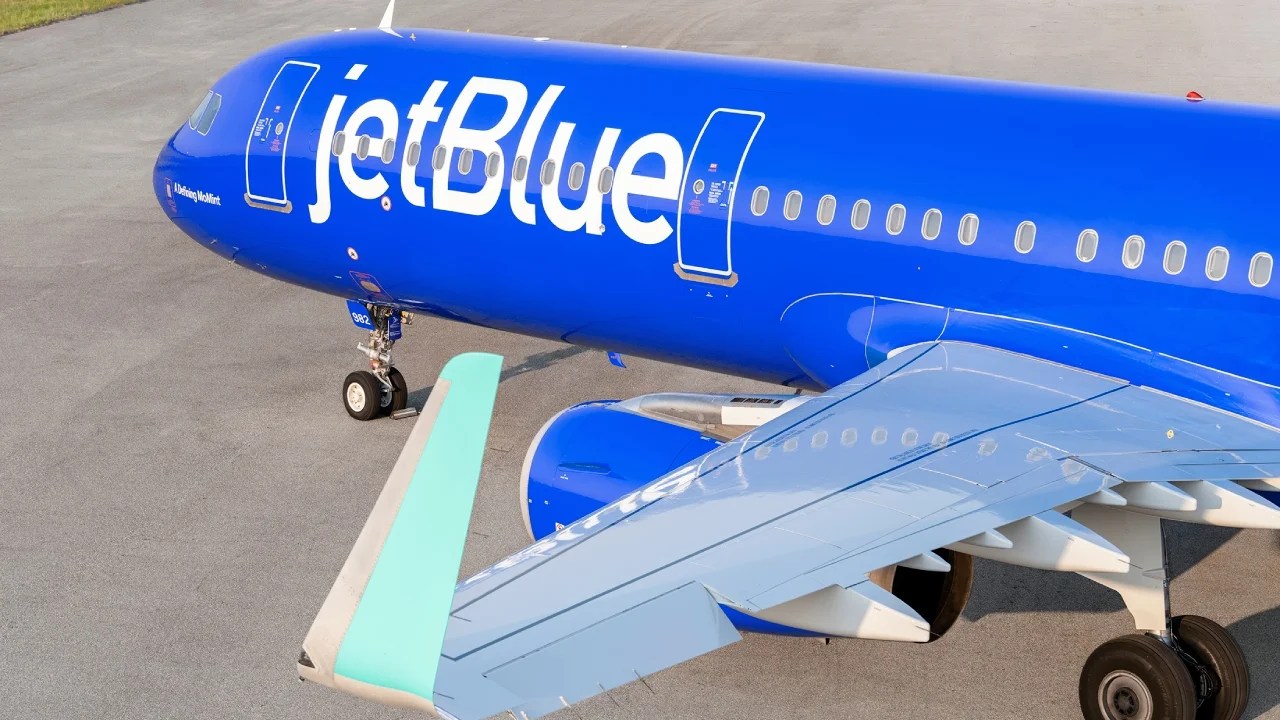
A JetBlue A321 aircraft. (Photo: AirlineGeeks | William Derrickson)
JetBlue is cutting several routes as part of its latest network shake-up. In an internal memo sent to employees on Wednesday, the carrier said it is “focused on building the best East Coast leisure network.”
In summer 2025, the New York-based carrier said it won’t operate flights from New York-JFK to London Gatwick. JetBlue’s second daily New York to Paris flight will also end.
In the memo viewed by AirlineGeeks, the carrier said the two flights “didn’t meet our financial expectations.” JetBlue is slated to announce new trans-Atlantic routes next week.
Domestic Changes
The airline will also end a handful of “unprofitable” domestic routes, including Fort Lauderdale, Florida, to Jacksonville, Florida; New York-JFK to Miami, Milwaukee, Houston and Austin, Texas; along with Westchester County, New York, to Charleston, South Carolina.
With an increased focus on the East Coast, JetBlue will also close its station in San Jose, California, which is currently served from Boston. The airline adds that San Jose is “a market where we’ve struggled.”
In addition, flights from Boston to Grenada and Phoenix along with New York-JFK to Tulum, Mexico, will only operate during the winter months.
JetBlue adds that it will “redeploy” capacity in the coming weeks. An airline spokesperson did not immediately reply to AirlineGeeks’ request for comment.
Ryan founded AirlineGeeks.com back in February 2013 and has amassed considerable experience in the aviation sector. His work has been featured in several publications and news outlets, including CNN, WJLA, CNET, and Business Insider. During his time in the industry, he's worked in roles pertaining to airport/airline operations while holding a B.S. in Air Transportation Management from Arizona State University along with an MBA. Ryan has experience in several facets of the industry from behind the yoke of a Cessna 172 to interviewing airline industry executives. Ryan works for AirlineGeeks' owner FLYING Media, spearheading coverage in the commercial aviation space.
A Spirit A320neo. (Photo: AirlineGeeks | William Derrickson)
Matthew Klein, chief commercial officer at Spirit Airlines, said Wednesday that other airline CEOs were “trying to put [Spirit] out of business” during his Senate subcommittee testimony on airline fees.
The Senate Homeland Security and Governmental Affairs Subcommittee on Permanent Investigations met with airline industry executives at five major U.S. carriers to gather testimonies on the use of “junk fees” to boost profits.
Towards the end of the nearly two-hour committee hearing, Senator and Committee Chairman Richard Blumenthal asked Klein to speak on “the elephant in the room” – the lack of competition and barriers to entry in the airline industry.
Klein said that for a long time, Spirit has had a lack of access to certain airports and was limited with gates often positioned at the far ends of the airports in which it operates.
“… [It] makes it very difficult to provide a good guest experience,” Klein said. “It makes it very difficult for us to be able to operate efficiently and effectively. It raises our costs, which then, of course, makes it harder for us to be profitable – and without being profitable we certainly can’t grow.”
“That prevented us from really reacting and being able to do a lot of things for a couple of years,” Klein said. “Now we’re trying. We’re trying to improve our guest experience.”
A Spirit Airbus A321neo aircraft (Photo: Shutterstock | Kevin Hackert)
Spirit Jabs Back
Klein also referenced the pilot shortage, which he called “manufactured” due to legacy carriers “poaching” pilots.
“Some of our legacy carrier competitors basically paid their most senior pilots to retire early,” Klein said. “That, in fact, caused the pilot shortage in the industry. Then they turned around and hired a lot of our pilots. These are pilots that are professionals, and they do a great, phenomenal job every day, but when they’re being offered a lot more money to work for somebody else, then they move to that.”
“Some CEOs have said how they’re gunning for us, they’re trying to put us out of business, they just can’t wait for that to happen,” he continued.
Klein’s comment about other airline CEOs trying to put Spirit out of business comes after statements from United CEO Scott Kirby ridiculing the business model of low-cost carriers.
Business Insider reported in June that Kirby said low-cost carriers were going out of business due to poor customer service and a “flawed” business model while on a “The Air Show” podcast.
While he acknowledged that competition was a natural part of the industry, Klein said that the rules of the game had changed – especially after the pandemic – making it difficult to compete.
“… Other airlines really like the model that we’ve created, but they’ve also created rules and barriers around how they get to control the game, and the rules can change whenever they want them [to],” Klein said. “We’re trying to play the game, and we do our best to play the game, and it’s just been difficult at times.”
AirlineGeeks.com was founded in February 2013 as a one-person blog in Washington D.C. Since then, we’ve grown to have 25+ active team members scattered across the globe. We are all here for the same reason: we love deep-diving into the fascinating realm of the airline industry.
An Airbus A321 is painted in AJet's future livery.
(Photo: Turkish Airlines)
Turkish Airlines subsidiary AJet is expanding its African network. Formerly known as AnadoluJet, AJet announced its entry into Algeria through a press release on Thursday, Nov. 28, 2024.
Starting Dec. 25, 2024, AJet will begin regular flights connecting Istanbul, Ankara, and Antalya in Turkey with Algerian destinations such as Algiers, Oran, and Constantine. As a fresh face in Turkey’s aviation scene, AJet aims to serve a total of 122 destinations worldwide.
AJet is dedicated to “strengthening cultural, commercial, and tourism ties between Algeria and Turkey,” while delivering “quality services at competitive prices,” the airline said in the release.
Ayoub Ouahabi, the general manager of AJet in Algeria and the first Algerian director appointed by Turkish Airlines, highlighted the airline’s commitment to offering “comfortable travel options” and enhancing “economic and cultural cooperation” between the two countries.
Launched in March 2024, AJet evolved from the former AnadoluJet, which was founded in 2008, to improve connectivity within Turkey’s Anatolian region. This rebranded carrier has ambitions to become the world’s largest low-cost airline, aiming for a fleet of 200 aircraft within the next decade. Currently, its fleet includes eight Airbus A320s, five A320neos, 12 A321s, 13 A321neos, 18 Boeing 737 MAX 8s, and 44 Boeing 737-800s.
Algeria’s aviation market is increasingly attracting interest from international airlines. Last week, Etihad Airways announced new flights to Algeria beginning November 2025 as part of the carrier’s broader expansion plan, which includes launching ten new routes in a single day. However, Algiers Airport quickly clarified that no agreement had been reached with the UAE-based carrier.
Victor Shalton's love for aviation can be traced to when he was 11-years-old. As a seasoned aviation writer, he takes pride in providing the best aviation coverage around the globe and is passionate about advancing his skills in the aviation space. In addition, he loves travelling, writing, arts and while his speaking engagements have taken him around the world, he is proud to call Nairobi home.
An Avelo Airlines Boeing 737-700 at Tweed-New Haven. (Photo: Avelo Airlines)
Avelo’s budding international network is set to grow again. The ultra-low-cost carrier plans to add more flights to the Caribbean next year.
On Wednesday, the airline announced new international flights from Raleigh/Durham, North Carolina. Starting on Feb. 12, Avelo will add twice-weekly service to Montego Bay, Jamaica.
Currently, Avelo only offers international flights from Bradley Airport in Connecticut to Cancun, Mexico, and Montego Bay. The carrier began its first scheduled international flights last month.
New Bases and Routes
While Avelo already has a crew base in Raleigh, it will add two more in North Carolina. The carrier says it will open new bases in Concord and Wilmington in March and April 2025, respectively.
The airline will initially position at least one Boeing 737 at each base, while also adding up to 100 new jobs.
In addition, Avelo is adding a handful of new domestic routes that are set to begin early next year, including:
Manchester, New Hampshire, to Myrtle Beach, South Carolina
Ryan founded AirlineGeeks.com back in February 2013 and has amassed considerable experience in the aviation sector. His work has been featured in several publications and news outlets, including CNN, WJLA, CNET, and Business Insider. During his time in the industry, he's worked in roles pertaining to airport/airline operations while holding a B.S. in Air Transportation Management from Arizona State University along with an MBA. Ryan has experience in several facets of the industry from behind the yoke of a Cessna 172 to interviewing airline industry executives. Ryan works for AirlineGeeks' owner FLYING Media, spearheading coverage in the commercial aviation space.
An American 737 arrives in Tulum (Photo: Government of Quintana Roo)
One of Mexico’s newest airports – Tulum – saw a large influx in air service when it opened just over a year ago in December 2023. Now, some airlines are scrubbing planned routes to the popular tourist destination in 2025.
All major U.S. carriers – including American, Delta, and United – quickly added flights from multiple hubs when the airport opened. Next week, the airport is set to see its first-ever trans-Atlantic flight on Discover Airlines to Frankfurt, Germany.
American Cuts a Route
But after less than a year, American will discontinue flights from its Charlotte, North Carolina, hub to Tulum. The route first began on March 28, 2024, with plans for year-round service.
According to the Charlotte Business Journal, Charlotte-Tulum flights will end on Feb. 13, 2025. A spokesperson from the airline confirmed the route cut, noting that it was “part of a continuous evaluation of our network.”
American still serves Tulum from Dallas/Fort Worth and Miami.
Tulum Airport’s air traffic control tower (Photo: Mara Lezama / Quintana Roo government)
United Scraps Denver Plans
Earlier this year, United planned to operate flights between Denver and Tulum. According to Aeroroutes, the airline was slated to serve the route starting on Dec. 19, 2024. However, it is no longer available on the carrier’s website.
The daily service would have joined the carrier’s flights to Tulum from Chicago O’Hare, Houston, and Newark, New Jersey. United also operates seasonal service between Los Angeles and Tulum.
Ryan founded AirlineGeeks.com back in February 2013 and has amassed considerable experience in the aviation sector. His work has been featured in several publications and news outlets, including CNN, WJLA, CNET, and Business Insider. During his time in the industry, he's worked in roles pertaining to airport/airline operations while holding a B.S. in Air Transportation Management from Arizona State University along with an MBA. Ryan has experience in several facets of the industry from behind the yoke of a Cessna 172 to interviewing airline industry executives. Ryan works for AirlineGeeks' owner FLYING Media, spearheading coverage in the commercial aviation space.
The report cited an unnamed Paris airport official who said that the carrier wouldn’t fly the Russian woman back to America on a flight scheduled for Tuesday, but would instead fly her on Wednesday. Delta did not comment on why she was not allowed to fly.
The 57-year-old woman will now be escorted by two French security officials on a Delta flight back to New York on Wednesday at 2:30 p.m. local time, the CNN report stated.
The TSA confirmed with AirlineGeeks that an individual without a boarding pass was physically screened without any prohibited items brought into the secure area of the airport and boarded the aircraft.
“The individual bypassed two identity verification and boarding status stations and boarded the aircraft, but again, did go through standard screening,” an agency spokesperson said. “TSA takes any incidents that occur at any of our checkpoints nationwide seriously. TSA will independently review the circumstances of this incident at our travel document checker station at JFK.”
The TSA said advanced technology is in place to ensure no other threats are present via its multi-layered security screening process.
“Some airports are making infrastructure investments at the checkpoint such as barriers around the ticket document checker podium, which could prevent such incidents,” the spokesperson said.
The TSA continued that it opens a civil case against any passenger when there is evidence that regulations may have been violated.
E-Gate Funding
The TSA also placed some blame on a lack of funding for screening technology, stating another solution that hasn’t been deployed yet in the U.S. are “e-gates.” Combined with TSA’s facial recognition technology, e-gates would only open to allow ticketed passengers access to a gate, the spokesperson added.
Many airports worldwide already use this technology, including several in Europe. The technology eliminates the need for a security officer to physically check documents before passengers enter the screening area.
AirlineGeeks.com was founded in February 2013 as a one-person blog in Washington D.C. Since then, we’ve grown to have 25+ active team members scattered across the globe. We are all here for the same reason: we love deep-diving into the fascinating realm of the airline industry.
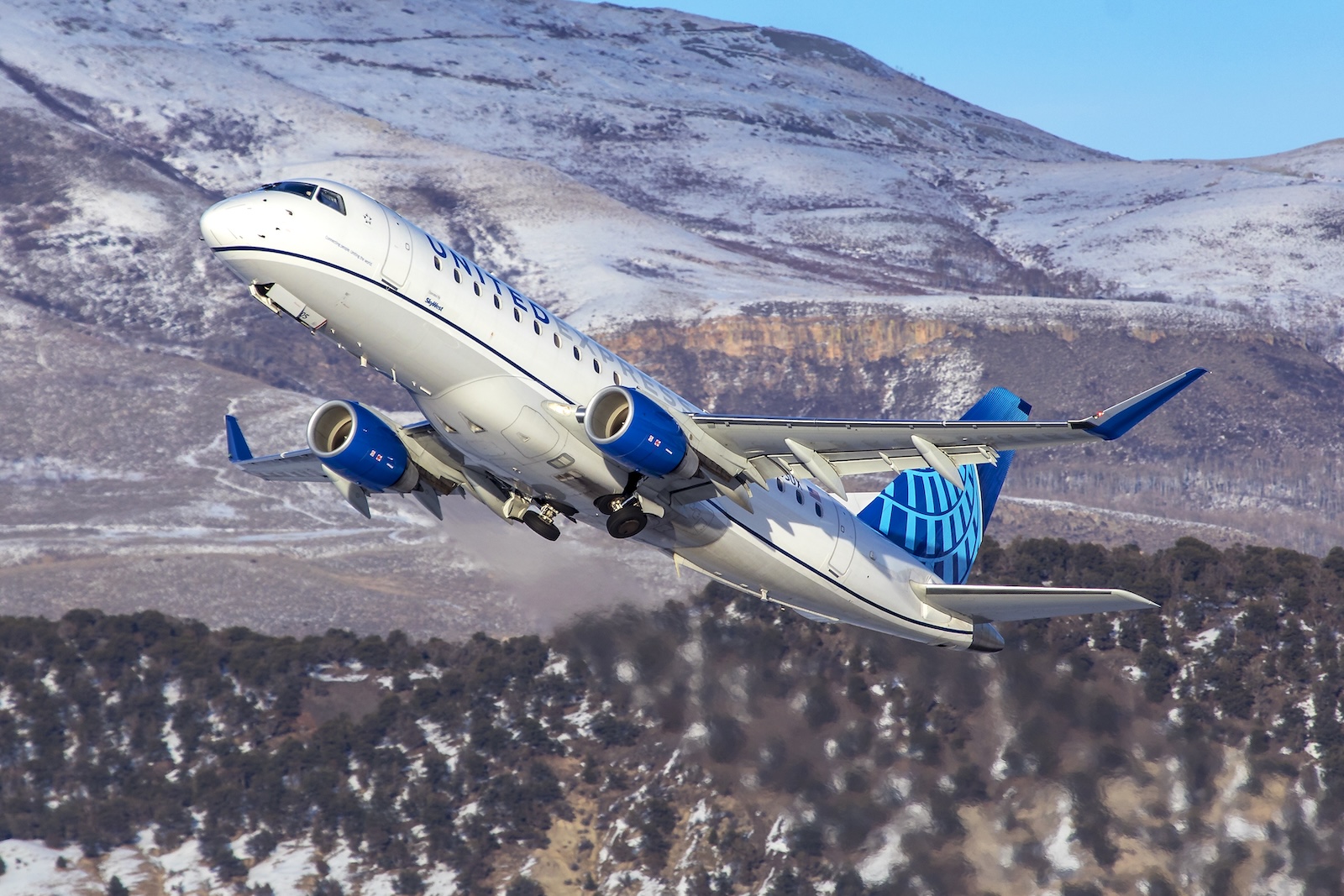
The first scheduled E175 flight to Aspen (Photo: Aspen Airport)
Aspen/Pitkin County Airport is getting new regularly scheduled Embraer E175 service starting Tuesday. For several years, the single-runway Colorado airport has been confined to CRJ-700 commercial aircraft due to space constraints.
While American, Delta, and United market flights to Aspen, regional carrier SkyWest exclusively operates commercial flights to the airport on behalf of these airlines. Under the United Express banner, SkyWest is initially deploying E175s to Aspen from United’s Denver hub.
The airport’s first scheduled E175 flight landed at 10:45 a.m. on Tuesday as United flight 5782.
In February, SkyWest will add more E175 service between Aspen, Los Angeles, and San Francisco, per Cirium Diio schedule data.
A United spokesperson said the addition of E175 service to Aspen will add “twice the number of both First Class and Economy Plus seats and more storage for roll-aboard bags.” The E175s are equipped with 12 first-class seats, an increase over the six on the CRJ-700 jets.
The airport — which sits at a nearly 8,000-foot elevation in mountainous terrain — will continue to see CRJ-700 flights on all three airlines for the foreseeable future. Aspen’s runway is just over 8,000 feet long and 100 feet wide.
Ryan founded AirlineGeeks.com back in February 2013 and has amassed considerable experience in the aviation sector. His work has been featured in several publications and news outlets, including CNN, WJLA, CNET, and Business Insider. During his time in the industry, he's worked in roles pertaining to airport/airline operations while holding a B.S. in Air Transportation Management from Arizona State University along with an MBA. Ryan has experience in several facets of the industry from behind the yoke of a Cessna 172 to interviewing airline industry executives. Ryan works for AirlineGeeks' owner FLYING Media, spearheading coverage in the commercial aviation space.
A KLM Boeing 777-200 (Photo: AirlineGeeks | William Derrickson)
Dutch flag carrier KLM has made adjustments to its schedule, reducing frequencies on its Amsterdam-Beijing and Amsterdam-Shanghai routes. As reported by Aeroroutes, the airline is reducing its daily flight to the Chinese capital to five times a week between January and March next year, and from Jan. 8, flights to Shanghai will drop from seven to six flights a week. These changes will last until March 29.
The types of equipment for the routes will remain the same, with the flights to Beijing on its Boeing 787-9s and flights to Shanghai using a mix of 777-200ERs and 777-300ERs. Overall, KLM’s capacity to the Chinese Mainland will be reduced by around 20%.
KLM Boeing 787 aircraft in Amsterdam Schiphol (Photo: KLM | Patrick Kop)
The blame has been directed toward the ‘unlevel playing field’ caused by the Russian airspace unavailability. European carriers are forced to take routes that result in on average two hours longer flying time than their Chinese counterparts, harming their competitiveness as a result.
Before the COVID-19 pandemic, KLM flew to five cities in China and had almost double its current capacity. However, the slow recovery of intercontinental travel and Russian airspace meant the market was never able to fully recover.
Virgin Atlantic, another airline that has recently withdrawn from China, is also rumored to be launching flights between London Heathrow and Seoul Incheon in the near future, after the merger of Asiana and Korean Air. Airlines from Japan and South Korea, unlikely their Chinese counterparts, do not use the Russian airspace and take similar routes as European carriers.
Anthony is an aviation enthusiast who grew up around the world from St. Louis to Singapore, and now lives in Amsterdam. He loves long-haul flying and finds peace in the sound of engine cruising. He aspires to share his passion for the sky though writing and providing another angle on the stories.
Sign-up for newsletters & special offers!
Get the latest stories & special offers delivered directly to your inbox