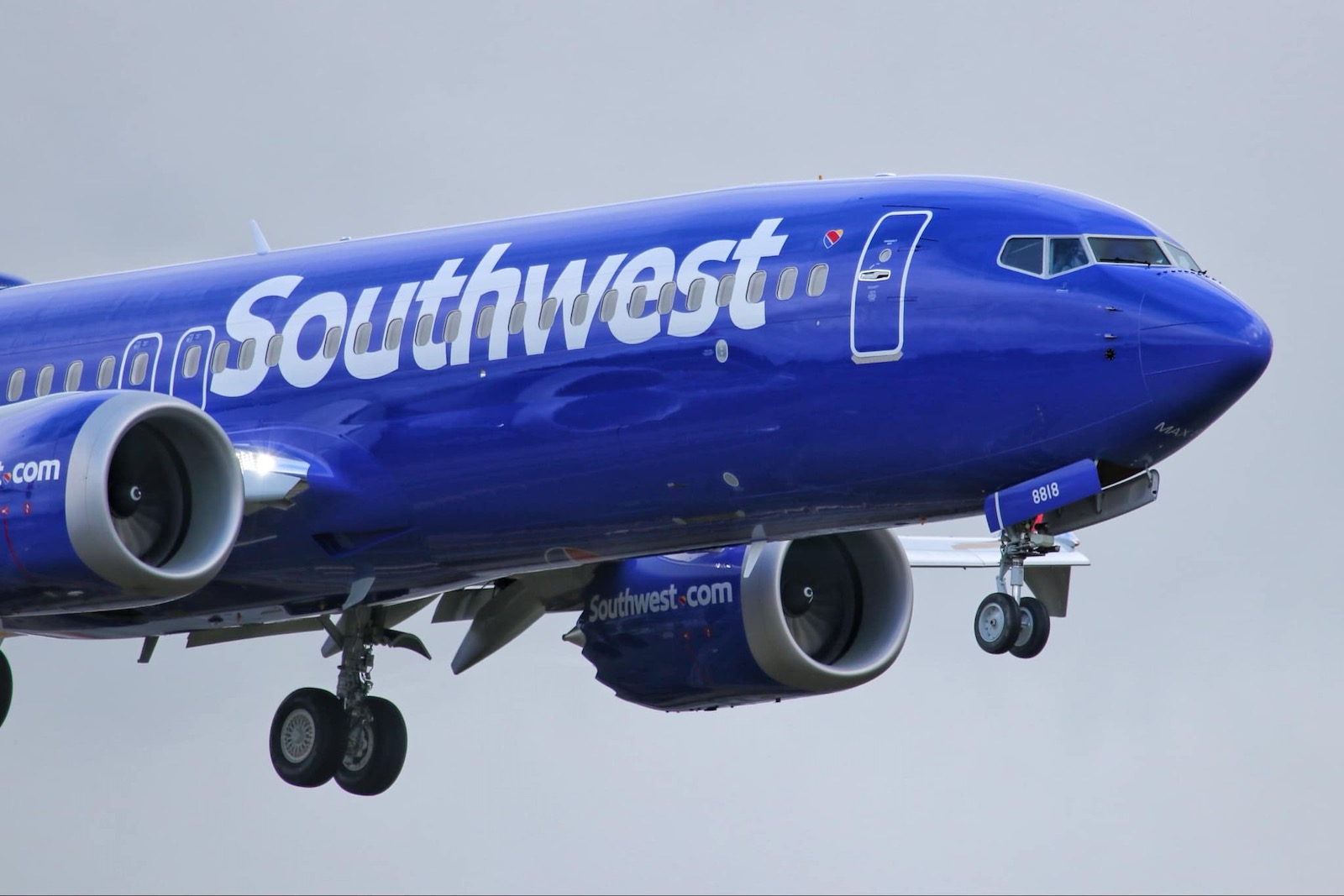
A Southwest Boeing 737 MAX 8 (Photo: AirlineGeeks | Katie Zera)
The fight between Elliott Investment Management L.P. and Southwest could come to an amicable conclusion, according to a Bloomberg report published Saturday.
The report stated that the two sides have been in talks for a possible policy agreement that would give Elliott representation but not control of the board, according to sources familiar with the matter who asked not to be identified due to the discussions being private.
Southwest and Elliott have been in a dispute since June regarding the carrier’s leadership and poor stock performance over the past few years. It’s estimated that the activist investment firm currently holds over 10% of Southwest’s common stock.
Elliott has sought influence in Southwest through public nominations for its board of directors on its “Stronger Southwest” website. The firm more recently called for a Dec. 10 special meeting to elect these eight nominees as the two sides engaged in a public back and forth on social media during Southwest’s 2024 leadership conference last week.
Elliott has also previously called for Southwest CEO Bob Jordan’s resignation, though the airline’s board has chosen to stand behind him.
Southwest spokesperson Chris Mainz told AirlineGeeks via email that the carrier would not weigh in on the Bloomberg report. AirlineGeeks reached out to Elliott for comment.
AirlineGeeks.com was founded in February 2013 as a one-person blog in Washington D.C. Since then, we’ve grown to have 25+ active team members scattered across the globe. We are all here for the same reason: we love deep-diving into the fascinating realm of the airline industry.
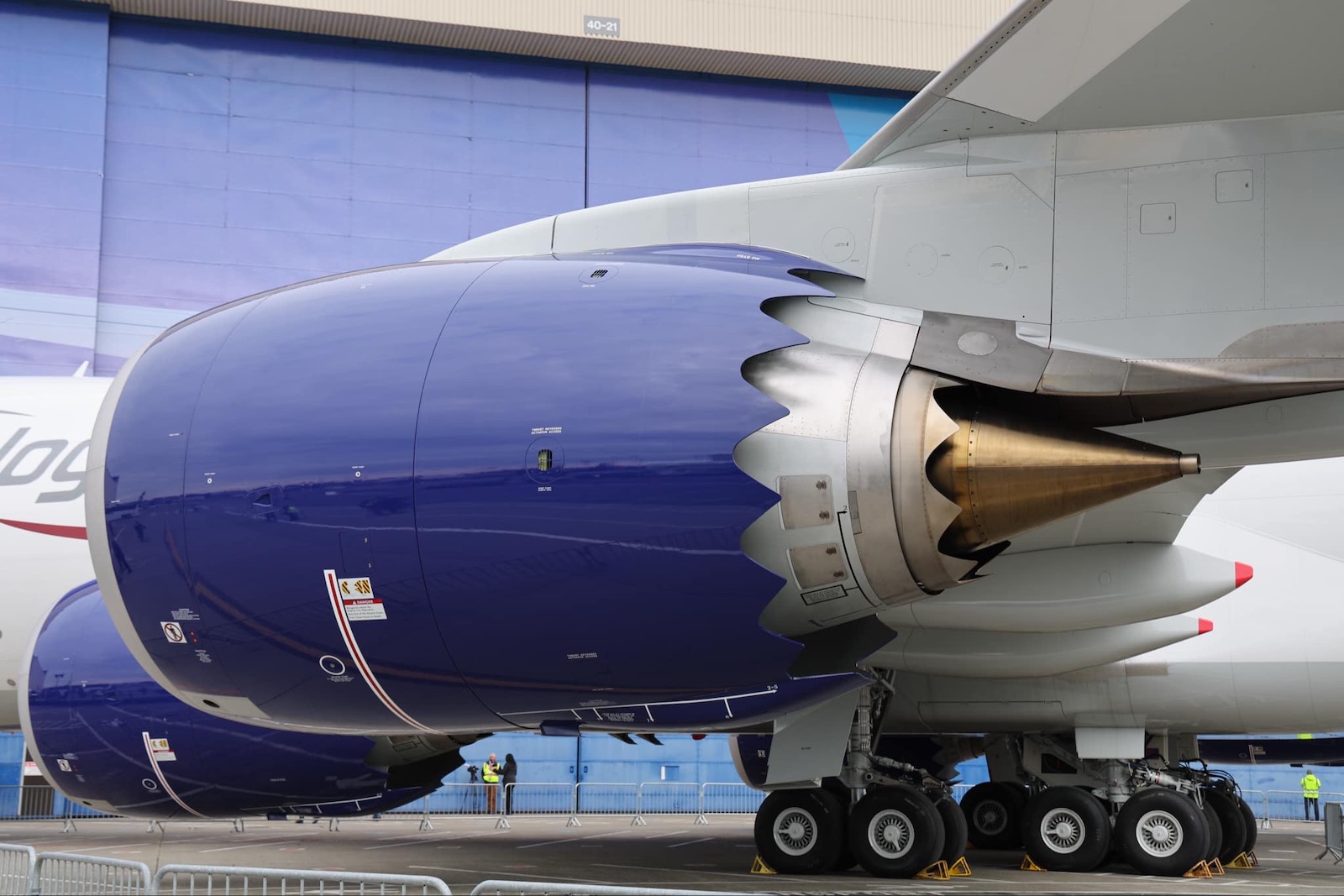
A Boeing 747-8 freighter aircraft (Photo: AirlineGeeks | Katie Zera)
The National Transportation Safety Board said an improperly installed borescope plug led to a January engine fire on an Atlas Air Boeing 747. Maintenance on the aircraft was performed just four days before the incident.
On Jan. 18, Atlas Air flight 3885 was flying between Miami and San Juan, Puerto Rico, when the crew received a fire indication in the Boeing 747-8F’s No. 2 engine at approximately 3,000 feet. An emergency was declared and the aircraft returned to Miami with no injuries reported.
No signs of an uncontained engine failure were found, the NTSB’s final report noted, though minor burn damage was reported on the GEnx engine’s thrust reverser fan duct. The aircraft returned to service nine days later on Jan. 27.
According to the agency’s report, a third-party maintenance contractor was tasked with performing a borescope inspection on the No. 2 engine, requiring the removal of a plug. Both the mechanic and inspector certified that the inspection had been completed in line with maintenance manual standards.
The removed plug was found loose in the engine cowling, which resulted in the fire.
Ryan founded AirlineGeeks.com in February 2013 and has spent more than a decade covering the airline business. His work has been featured by CNN, WJLA, CNET, and Business Insider. His aviation experience spans airport operations, Part 135 regulatory compliance, and airline crew workforce planning, along with time behind the yoke of a Cessna 172 and interviews with airline executives. Ryan now serves as Group President of Firecrown Media’s Aviation Group. He holds a B.S. in Air Transportation Management and an MBA from Arizona State University and teaches Airline Management at Embry-Riddle Aeronautical University.
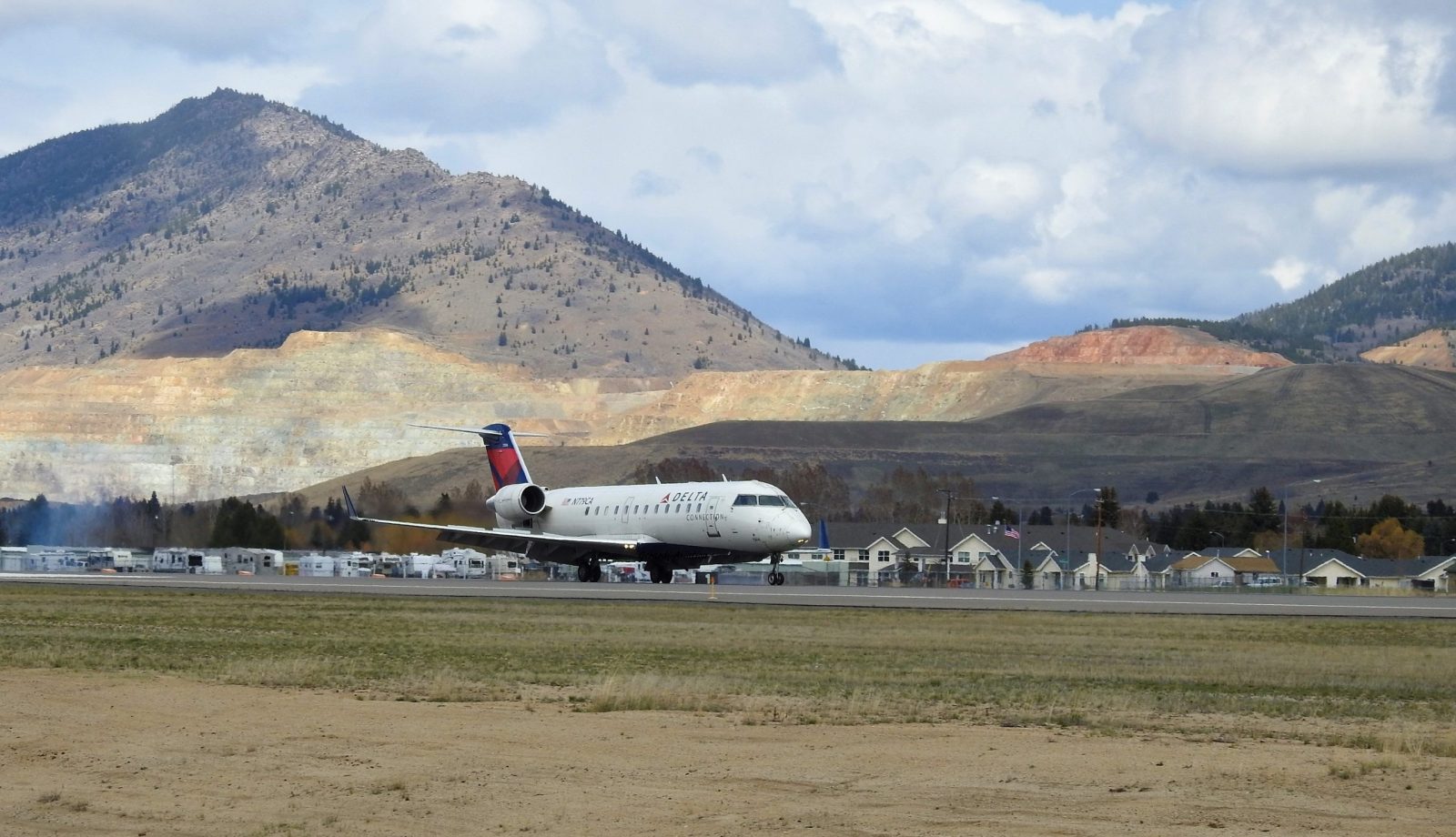
A Delta Connection CRJ-200 in Butte, Mont. (Photo: AirlineGeeks | Joey Gerardi)
The community of Butte, Montana, is set to receive more choices in air service next year. Flights to Butte are federally subsidized under the Essential Air Service (EAS) program.
In 2022, the town of nearly 34,500 was one of many small communities that felt the effects of pilot supply woes at regional airlines. SkyWest previously operated flights to both Denver and Salt Lake City but cut the Denver service citing an ongoing pilot shortage.
According to the Montana Standard, the regional airline added the Denver flights just six months before axing the service in late June 2022. Service to Denver operates under the United Express brand, while flights to Salt Lake City are branded under Delta Connection.
Butte requested a waiver from the Department of Transportation to allow SkyWest to continue serving the community under minimum EAS requirements. Later, SkyWest increased service to Salt Lake City, eliminating the need for a waiver.
Currently, the town sees 13 weekly flights to Delta’s Salt Lake City hub. Starting in January 2025, SkyWest will also resume flights to Denver.
Under the three-year contract, SkyWest will continue operating 13 round-trip subsidized flights per week, codesharing with both United and Delta. The annual subsidy rates for the contract are $6,354,635 in year one, $6,799,459 in year two, and $7,275,421 in year three.
Flights will be operated by both the CRJ-200 and CRJ-550 aircraft.
“SkyWest has provided exceptional and reliable air service to our community for over 30 years. We feel their proposal to offer service to both Salt Lake City International Airport (SLC) and to Denver International (DEN) will greatly benefit our passengers and strengthen air travel out of Butte,” said Jim Beauchamp, board chairman of the Bert Mooney Airport Authority, in a June letter to the DOT.
Ryan founded AirlineGeeks.com in February 2013 and has spent more than a decade covering the airline business. His work has been featured by CNN, WJLA, CNET, and Business Insider. His aviation experience spans airport operations, Part 135 regulatory compliance, and airline crew workforce planning, along with time behind the yoke of a Cessna 172 and interviews with airline executives. Ryan now serves as Group President of Firecrown Media’s Aviation Group. He holds a B.S. in Air Transportation Management and an MBA from Arizona State University and teaches Airline Management at Embry-Riddle Aeronautical University.
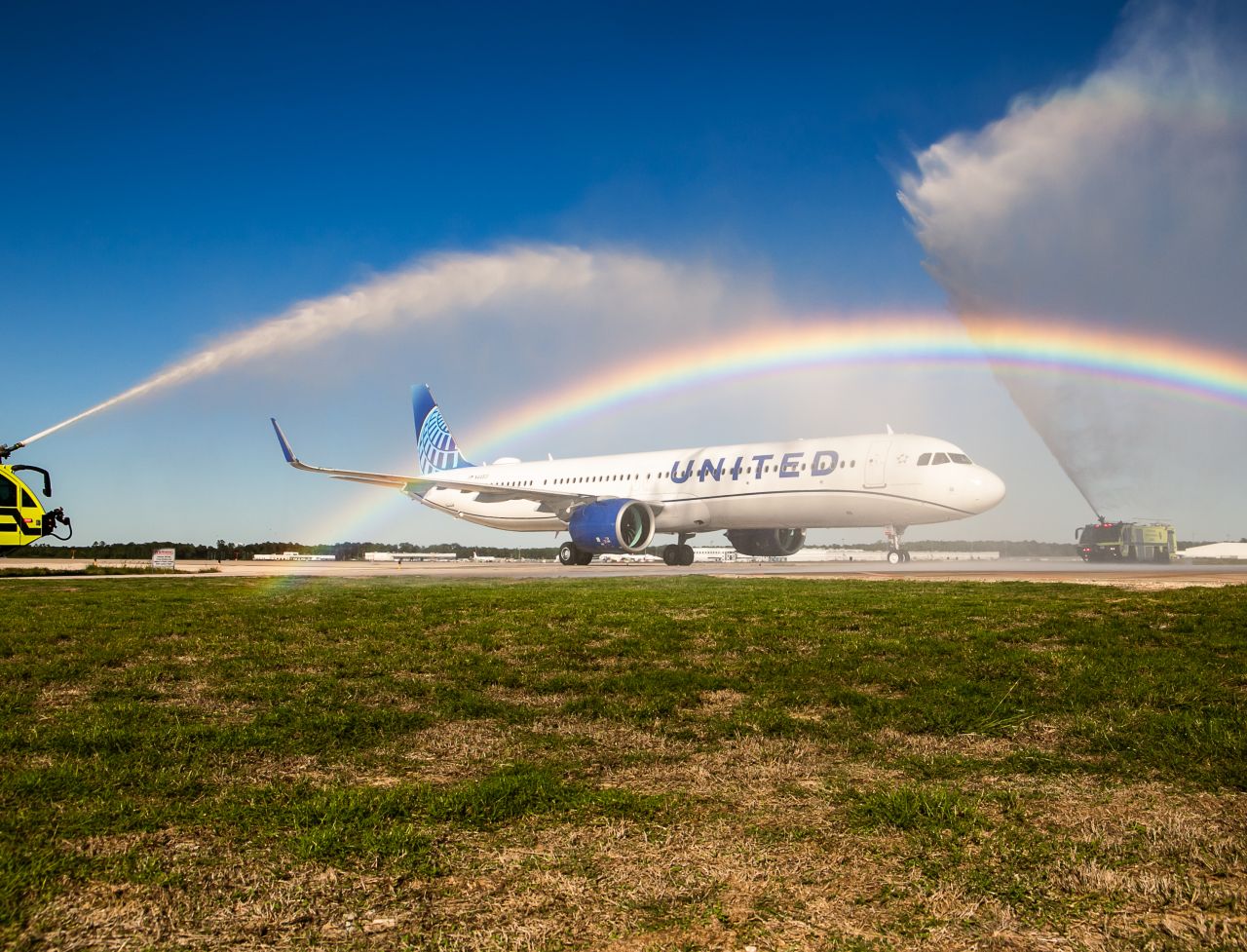
United's first A321neo arrives in Houston (Photo: United Airlines)
United has finalized its plans to lease an additional 40 Airbus A321neo aircraft.
According to FlightGlobal, United didn’t publicly name the aircraft lessors. However, one company has since revealed its part in the deal with the airline. SMBC Aviation Capital claimed they were accounting for half of the deal, with 20 aircraft set to start being delivered in 2026.
The airline expects to start receiving the first leased aircraft by the end of this year, with deliveries ending in 2027. These should tie in with the 14 new aircraft coming in from Airbus before the end of the year, and a further 26 in 2025.
United still faces uncertainty around delivery of the Boeing 737 MAX 10. The sibling to the MAX 9 and MAX 8 variants, the largest Boeing 737 model is still not certified, and won’t be until next year at the earliest.
Sam Jakobi is a young aviation journalist based in London, U.K. A lifelong Airbus fan, he has adored aviation for as long as he can remember. Sam writes articles and conducts interviews with members of the aviation community.
Allegiant’s Boeing 737 MAX Enters Revenue Service
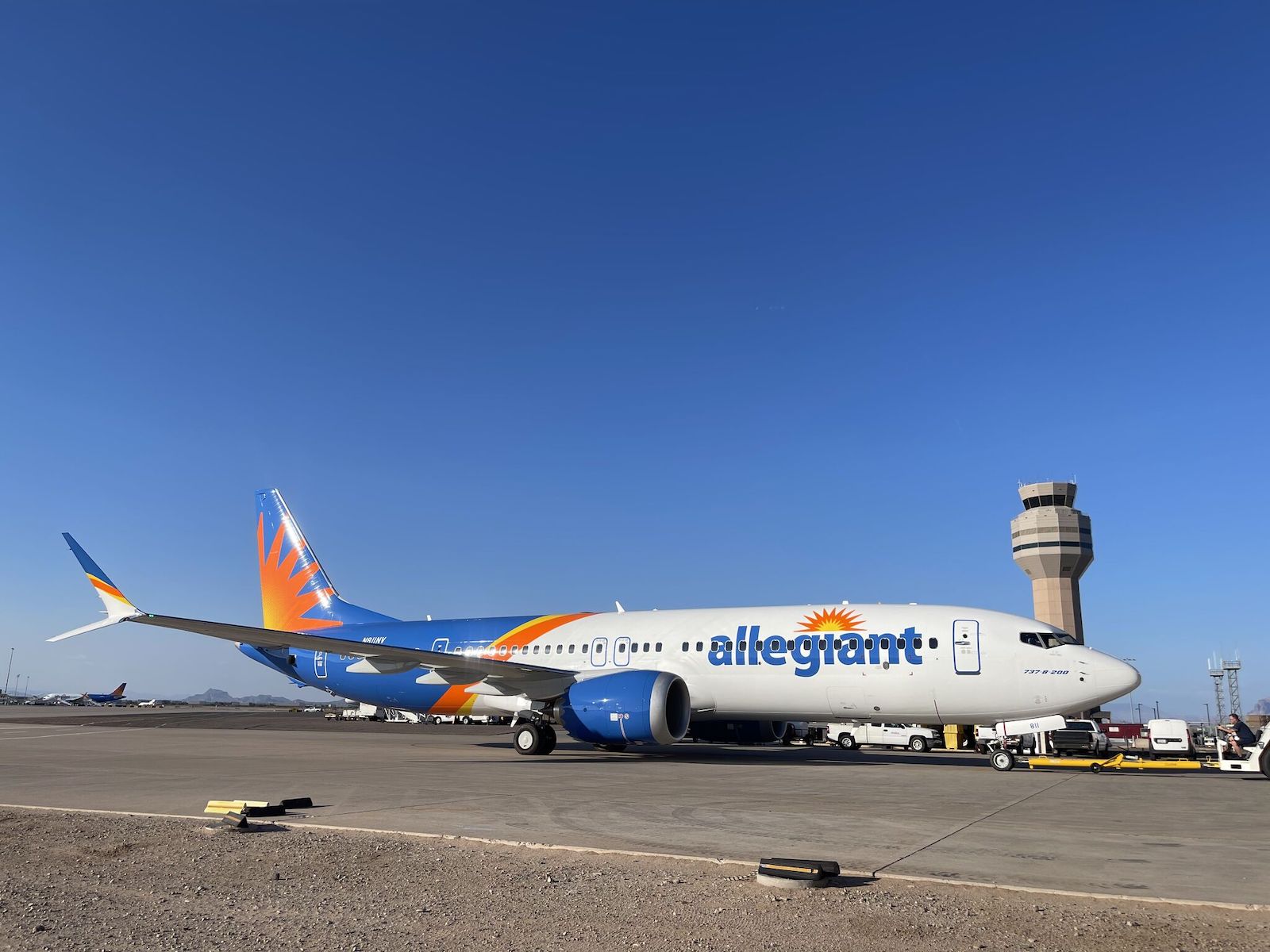
After taking delivery of its first Boeing 737 MAX aircraft on Sept. 9, the ultra-low-cost carrier (ULCC) began revenue flights with the new jet on Sunday.
For over a month, the airline has conducted a series of induction steps with its employees to familiarize them with the new aircraft. The carrier’s first and so far only 737 MAX — registered as N811NV — operated several ferry flights between Allegiant’s bases.
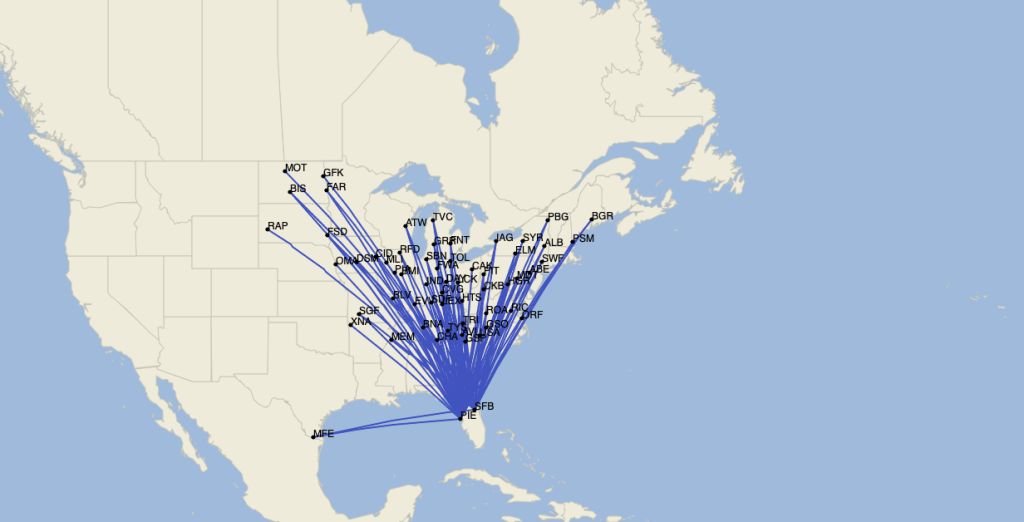
The aircraft officially began revenue service on Sunday, according to Flightradar24 tracking data and the carrier’s website. Departing from Allegiant’s Orlando-Sanford base, the aircraft is currently scheduled to serve Akron, Greenville-Spartanburg, Roanoke, and Bangor, among others.
Cirium Diio schedule data shows the airline’s 737 MAXs initially flying from its Orlando and St. Petersburg bases.
Allegiant’s initial 737 MAX routes as of March 2025 (Photo: Cirium Diio)
Allegiant faced nearly eight months of manufacturing delays at Boeing; the long-awaited jet was first slated to debut in early 2024. The airline also expected 12 new 737 MAXs this year but has since lowered its delivery estimates to four airframes.
The carrier’s first 737 is the MAX 8-200 variant, a higher-density model with 200 seats. Allegiant’s 737 MAX 8-200 can accommodate up to 190 passengers, including 21 Allegiant Extra seats with additional legroom.
In 2022, Allegiant placed its first order for the 737 MAX and now has 50 aircraft on firm order with options for 80 more. The airline retired its fleet of Boeing 757s in 2017, then the MD-80s in 2018, leaving it with just Airbus aircraft.
Ryan founded AirlineGeeks.com in February 2013 and has spent more than a decade covering the airline business. His work has been featured by CNN, WJLA, CNET, and Business Insider. His aviation experience spans airport operations, Part 135 regulatory compliance, and airline crew workforce planning, along with time behind the yoke of a Cessna 172 and interviews with airline executives. Ryan now serves as Group President of Firecrown Media’s Aviation Group. He holds a B.S. in Air Transportation Management and an MBA from Arizona State University and teaches Airline Management at Embry-Riddle Aeronautical University.
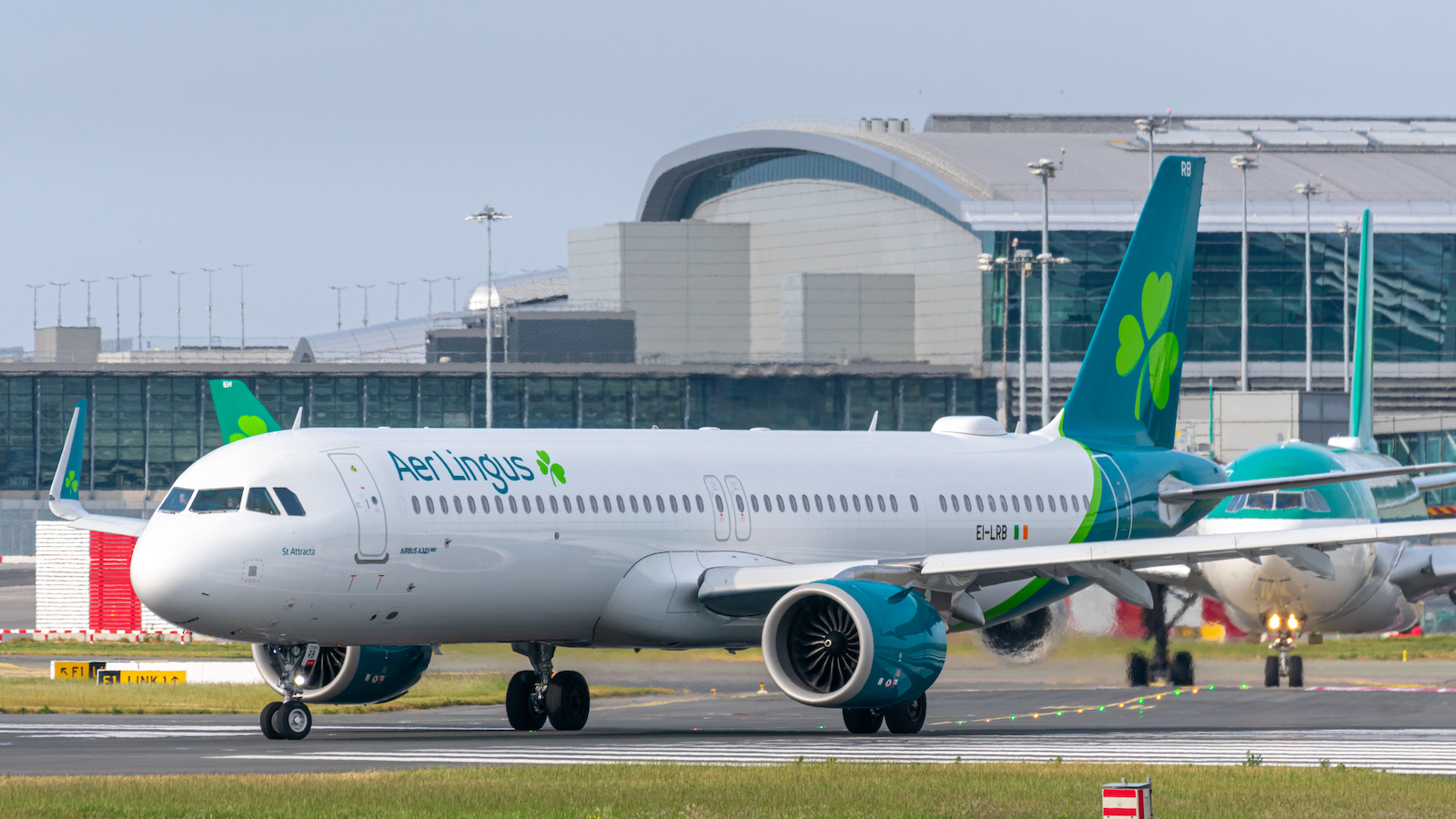
An Aer Lingus A321neo aircraft. (Photo: Shutterstock | Croatorum)
Indianapolis will see a new long-haul transatlantic route beginning in 2025. The Indiana capital last had transatlantic service between 2018 and 2020, but the route ended due to the COVID-19 pandemic.
Starting on May 3, 2025, Aer Lingus will fly between its Dublin hub and Indianapolis, presumably on an A321XLR. According to Ishrion Aviation on Twitter/X, the new route will operate four times a week on Mondays, Wednesdays, Fridays, and Saturdays. Flights have already been loaded on the airline’s website.
Indianapolis will be the Irish airline’s 18th U.S. destination. Most recently, Aer Lingus added new service between Nashville and Dublin.
With the new route, Aer Lingus fills a long-haul void in the Midwest city when Delta axed its Indianapolis-Paris route in March 2020. In 2022, the airport began offering lucrative incentives to bring back long-haul service.
Air Canada also provides international service to Indianapolis, resuming its Toronto route in May 2022. In addition, American and Southwest offer service to Cancun.
Ryan founded AirlineGeeks.com in February 2013 and has spent more than a decade covering the airline business. His work has been featured by CNN, WJLA, CNET, and Business Insider. His aviation experience spans airport operations, Part 135 regulatory compliance, and airline crew workforce planning, along with time behind the yoke of a Cessna 172 and interviews with airline executives. Ryan now serves as Group President of Firecrown Media’s Aviation Group. He holds a B.S. in Air Transportation Management and an MBA from Arizona State University and teaches Airline Management at Embry-Riddle Aeronautical University.
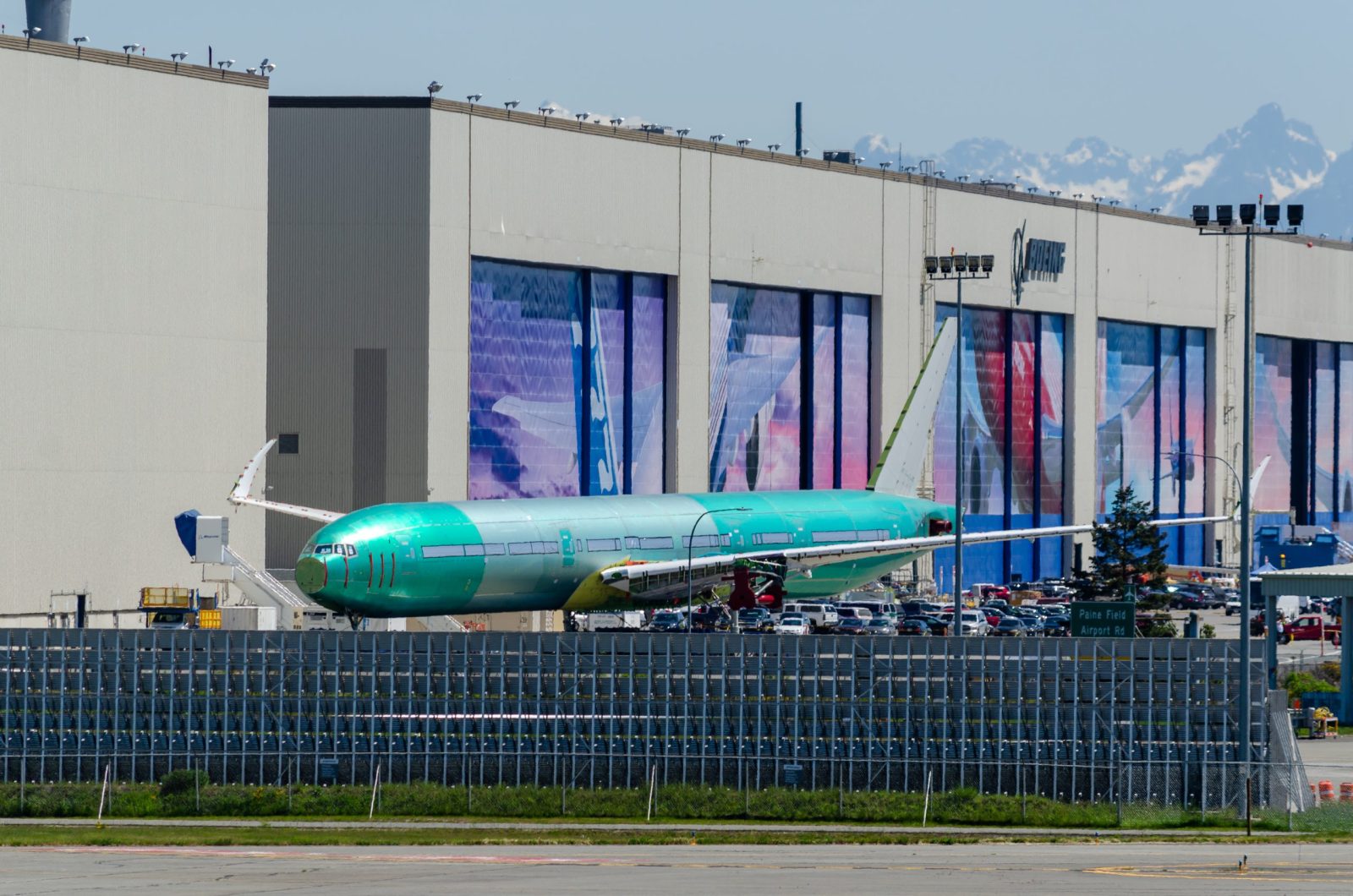
Boeing Machinists are set to vote on a new deal between the aerospace giant and International Association of Machinists and Aerospace Workers District 751. The union announced Saturday that it had reached a tentative agreement with Boeing.
The 33,000 Machinists will vote on the new agreement Wednesday. Boeing is also releasing its third-quarter earnings on the same day, which are likely to include a loss of $6 billion.
According to the union, the latest tentative deal includes 35% pay increases over four years, a five percent increase from previous offers. Boeing will also extend a $7,000 one-time bonus after the contract is signed, a $1,000 increase over the September proposal.
A number of other improvements were also included in the new deal, including retirement plan enhancements and incentive pay. Acting U.S. Secretary of Labor Julie Su helped broker the latest proposal.
Ryan founded AirlineGeeks.com in February 2013 and has spent more than a decade covering the airline business. His work has been featured by CNN, WJLA, CNET, and Business Insider. His aviation experience spans airport operations, Part 135 regulatory compliance, and airline crew workforce planning, along with time behind the yoke of a Cessna 172 and interviews with airline executives. Ryan now serves as Group President of Firecrown Media’s Aviation Group. He holds a B.S. in Air Transportation Management and an MBA from Arizona State University and teaches Airline Management at Embry-Riddle Aeronautical University.
Aeromexico is expanding its U.S. network with another route. The carrier has bolstered its transborder presence in recent months, most recently adding new service to Raleigh and Tampa along with a route between Miami and Cancun.
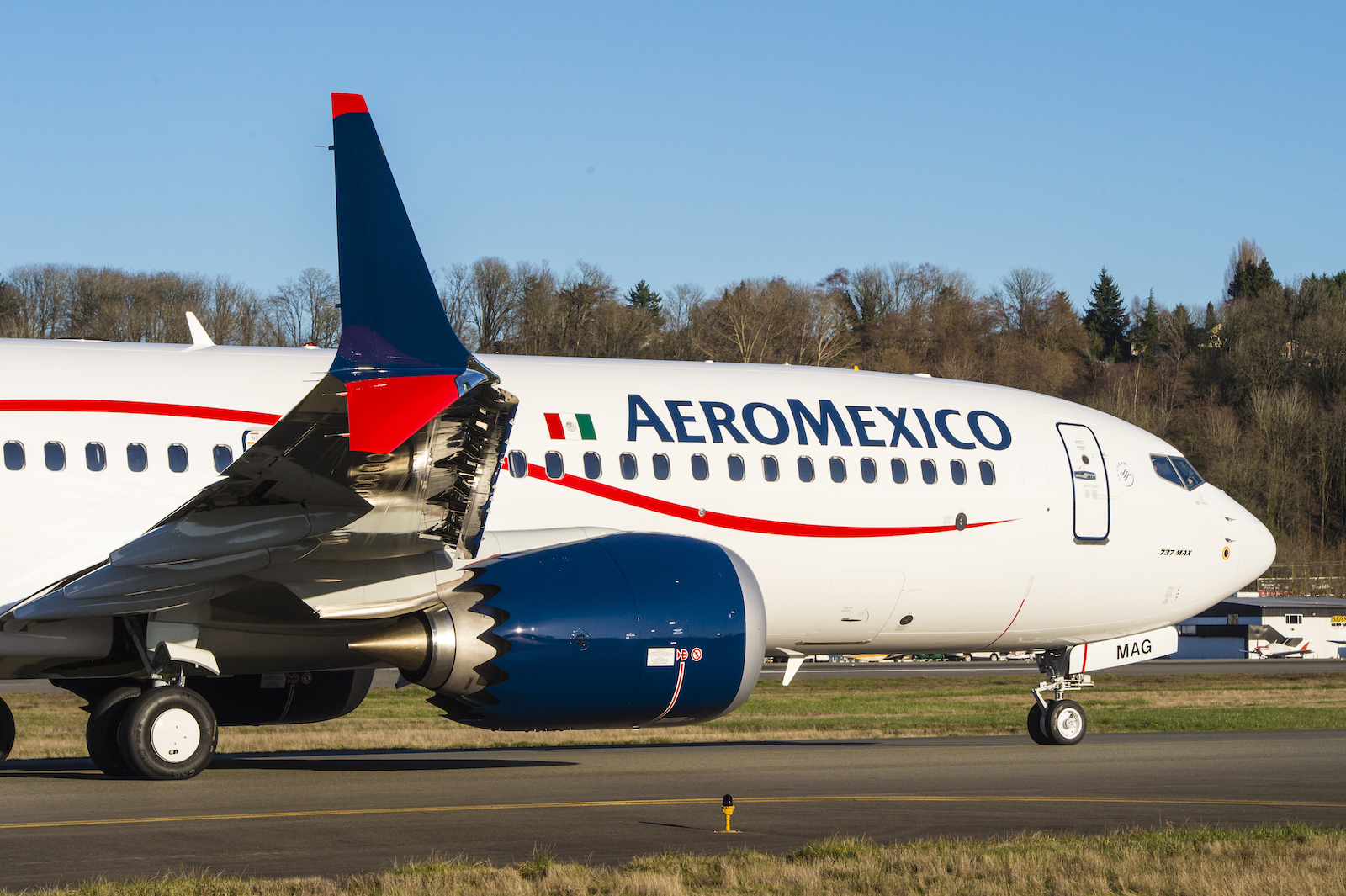
The Mexican airline is slated to serve Phoenix starting in March 2025. As first reported by Ishrion Aviation on Twitter/X and verified with Cirium Diio schedule data, the route between Mexico City and the Arizona capital will operate once daily on a Boeing 737 MAX 8.
Service will begin on March 30; flights depart Mexico City’s Benito Juárez airport at 9:55 a.m. local time, arriving in Phoenix at 12:25 p.m. The return flight leaves Phoenix at 1:51 p.m., landing back in Mexico City at 6:00 p.m.
Phoenix is the carrier’s 25th U.S. destination, but it isn’t new. Aeromexico last served the city in September 2014 with flights to Hermosillo. The airline flew the Phoenix-Mexico City route between 2005 and 2006 in addition to Guadalajara which ended in 2008.
Aeromexico will compete with American on the route, which operates twice-daily flights between its Phoenix hub and Mexico City.
Ryan founded AirlineGeeks.com in February 2013 and has spent more than a decade covering the airline business. His work has been featured by CNN, WJLA, CNET, and Business Insider. His aviation experience spans airport operations, Part 135 regulatory compliance, and airline crew workforce planning, along with time behind the yoke of a Cessna 172 and interviews with airline executives. Ryan now serves as Group President of Firecrown Media’s Aviation Group. He holds a B.S. in Air Transportation Management and an MBA from Arizona State University and teaches Airline Management at Embry-Riddle Aeronautical University.
An American Boeing 787 in Los Angeles (Photo: AirlineGeeks | William Derrickson)
Hello, and welcome to the inaugural article “Top Five Tips for Transitioning to an Airline,” under the new Lessons From the Line column. As a way of quick introduction, we, the authors of this column (Richard, Andrew, and Jolanda) have flown at the regionals and majors, domestically and internationally, in the right and left seats, Airbus and Boeing, civilian and military, and have flight instructed, served as line check pilots, worked in pilot recruiting and interviewing, as well as racking up extensive volunteer experience as pilot union representatives.
We are also the authors of The Airline Transition Manual (www.airlinetransition.org) – a complete guide to managing your airline career. Collectively we have a century’s worth of experience, and we have been graciously invited by the AirlineGeeks to share our thoughts and life lessons from the line with you.
In this first installment, we offer five tips, or recommendations if you will, to help smooth your transition into the airline industry and your new airline piloting career. So, without further ado: You have just received the phone call (or email perhaps) from an airline you recently interviewed with confirming your official status as a new hire pilot with them, and are being scheduled for new-hire pilot indoctrination and training.
Tip #1: Follow instructions.
Sounds intuitive, right? You would be surprised how many new-hire pilots merely glace at or skim over letters and email, and tune out the information given to them by various airline personnel and instructors. Read every communication thoroughly, strictly follow the instructions and guidance provided, and listen closely – especially to tasks and deadlines for completion, paperwork and document requests, and the many actions required by federal regulators as well as your new airline in order to get your new career literally off the ground.
Also, once you get to systems and aircraft training, do what your instructors tell you to do in order to be successful in the firehose-style of airline training. There are always one or two pilots in every class who make up their own program, quote online sources of information, recite downloaded gouges and seem to go out of their way not to comply with what is being not only asked of them, but actually supplied to them by the training department in order to ensure their success. It’s great to get advice and insight from friends, but it’s best to stick with official company handouts and manuals when it comes to training and testing.
Tip #2: Chair fly.
If this is a new term for you, learn it and assimilate it as a fundamental part of your airline training regimen as quickly as possible. Simply stated, chair flying is flight rehearsal. And you should do this as a matter of routine – in your bedroom, hotel room, study lounge, wherever you can sit as if in the flight deck, and methodically go through the entire flight, from engine start, to taxi-out, take-off, climb, cruise, landing, taxi-in and shut down.
Visualize the flight, talk through the procedures, and move your feet, fingers, and hands as you do so. This is not only an essential training technique of every professional pilot from NASA to the Blue Angels, but nearly every airline pilot you will encounter throughout your career. Further, you should endeavor to chair fly with your training partner. For every lesson and check event run though each checklist, practice the flows, make the callouts, simulate the profiles, and work through immediate action and emergency checklist items. Make this static version of a flight as detailed and authentic as you can. Chair fly, chair fly, chair fly. Every simulator session and early flight on the line will go infinitely more smoothly for you.
Tip #3: Stay focused.
Once the excitement of airline hiring and new pilot training starts to abate, and the weariness of training starts to creep in, you will have to remind yourself to stay engaged and remain dedicated to working through training. Moreover, when simulator sessions come to an end and the final checkride is complete is not the time to lose focus and start thinking about travel benefits – it’s actually time to double down on studying because initial operating experience (IOE) with a line check pilot (LCP) is coming up next with real passengers and cargo on board.
Keep up the chair flying, reviewing limitations, systems, the checklists, and now add airline, airport, and airspace procedures to it. Everything in the airline training pipeline happens fast – it happens even faster out on the line.
A United Boeing 737 rotating out of Washington Dulles. (Photo: AirlineGeeks | Peter Weiland)
Tip #4: Plan early.
Being an airline pilot is unlike any other profession out there. As such, it takes a while to figure out and develop strategies and routines to deal with the daily, weekly, monthly, and yearly chaos. However, planning (early and often) goes a long way to not only helping you internalize the job but also achieve work-life balance.
Everything from figuring out how you are going to commute to work (by car, air, or train?); where to park at the airport or which flights or lines to catch – especially if inclement weather is rolling in. How and when to bid a monthly flight schedule, what to do about carrying or finding food while you are out flying a four-day trip, bidding a monthly schedule, and keeping up with recurrent training (no, training never ends).
Renewing your first class medical certificate, setting up your first set of uniforms (and having items like shoes, socks, belt, etc. to go with them); then making sure everything is washed/dry-cleaned each week and ready to go again for the next trip. Also, do not forget to routinely verify that your flight kit has everything you need including crew ID, passport, certificates, company tablet, chargers, etc., and that your roller board is packed appropriately for the weather and environment you will be facing for each week’s round of trips. Also, always have a backup plan – for everything.
Tip #5: Know the contract.
Nearly every U.S. and North American airline pilot is a union member. This will likely be new to you unless you happen to come from an airline family or other unionized industry background. The document that governs your life on the line is the pilot contract. It is an agreement between the company and the pilot’s union on everything from pay and benefits to time-on and time-off. Once all initial training is over and you have caught your breath a bit, start looking at the contract on each trip and read the communications that come from your pilot group’s union representatives, which will help explain it.
Look for and review union documents on how reserve works, general work rules, monthly scheduling and vacation bidding, along with pay protections and provisions. Become familiar with the union structure and services, and get your local representatives’ contact information as soon as possible – and remember, if you have a personal or professional issue, we highly recommend that your first call or email be to your pilot group’s union; not your airline’s human resource department, not crew scheduling, and not your chief pilot’s office.
If you are going to be working for a non-union airline, you should still have access to peer support through your pilot group, and the same recommendation holds. Seek out these channels of information from pilot peers and use them as your first line of personal and professional support.
There, five tips to help your new career get off to a solid start.
If you would like more recommendations and a complete explanation on how the airline pilot profession works and how you can best manage it, pick up your physical or e-book copy of The Airline Transition Manual at www.airlinetransition.org.
Also, be sure to look for our next articles “What to Expect on Day One at an Airline” and “How to Stand Out as a New Hire Pilot” in the coming months.
AirlineGeeks.com was founded in February 2013 as a one-person blog in Washington D.C. Since then, we’ve grown to have 25+ active team members scattered across the globe. We are all here for the same reason: we love deep-diving into the fascinating realm of the airline industry.
A rendering of what a Nigeria Air aircraft could look like. (Photo: Nigeria Air)
Nigeria has officially been removed from the global aviation blacklist, with its compliance score improving to 75.5%. This significant advancement positions the country among the high-performing nations in aviation standards. The announcement was made by Festus Keyamo, Minister of Aviation and Aerospace Development, in a press release.
The improvement in Nigeria’s global aviation compliance score follows the signing of the Irrevocable De-registration and Export Request Authorisation (IDERA), which governs aircraft repossession by creditors and lessors. The Aviation Working Group (AWG) confirmed this milestone in a communication to Keyamo, noting that Nigeria’s score on the Cape Town Convention (CTC) Compliance Index has risen from 70.5% to 75.5%, effectively removing the country from the AWG’s watchlist of non-compliant nations.
Understanding the AWG and Cape Town Convention
The Aviation Working Group (AWG) and the Cape Town Convention are two interconnected entities that play crucial roles in the global aviation industry. The Cape Town Convention provides a legal framework for aircraft financing, ensuring a stable and predictable environment for investors and lessors. It establishes clear rules for registration, transfer, and repossession of aircraft, safeguarding the interests of all parties involved.
The AWG, on the other hand, is a collaborative body responsible for overseeing compliance with the Cape Town Convention. Co-chaired by industry leaders and comprising representatives from various stakeholders, the AWG plays a vital role in ensuring that countries adhere to the Convention’s provisions. It assesses countries’ compliance, promotes best practices in aviation financing, and helps resolve disputes related to aircraft financing and repossession.
In essence, the AWG serves as the guardian of the Cape Town Convention, working to ensure its effective implementation and enforcement.
Benefits of the Improved Rating
Keyamo highlighted that this new rating will facilitate greater access to dry leasing for Nigerian airlines, enabling them to lease aircraft without crew or maintenance responsibilities. This flexibility is vital for local carriers looking to expand their fleets and increase operational capacity. “This development unlocks numerous opportunities for our aviation sector,” he stated, emphasizing the expected benefits such as improved flight regularity, expansion of serviced routes, and competitive ticket pricing for passengers.
Keyamo also expressed optimism for further advancements, directing the Nigerian Civil Aviation Authority (NCAA) to align its administrative rules fully with international standards, thereby boosting confidence among global financiers and lessors.
Tolga is a dedicated aviation enthusiast with years of experience in the industry. From an early age, his fascination with aviation went beyond a mere passion for travel, evolving into a deliberate exploration of the complex mechanics and engineering behind aircraft. As a writer, he aims to share insights , providing readers with a view into the complex inner workings of the aviation industry.
Sign-up for newsletters & special offers!
Get the latest stories & special offers delivered directly to your inbox