Stories

Which U.S. Airlines Are Offering Sign-On Bonuses to New Pilots?

Even as hiring trends change, some carriers are still offering lucrative sign-on bonuses to new pilots with some nearing $200,000.

Pilot in flight deck
Pilot executing pre-flight procedures in a commercial airliner cockpit before takeoff. (Photo: Shutterstock | l i g h t p o e t)

In the early months of 2024, many airlines in the United States have made headlines for their decisions to slow or pause pilot hiring. Large carriers like American Airlines and Southwest Airlines have halted their new hire pilot classes amid a slowdown in hiring across major carriers.

However, the trend is not universal across the entire industry. Regional airlines are still in great need of new pilots after many pilots left these carriers for higher-paying positions at major airlines between 2021 and 2023.

Some of these carriers are even offering generous incentives for new hires. Here are the airlines that are currently offering sign-on bonuses to new pilots:

GoJet Airlines

GoJet currently has sign-on bonuses for both first officers and captains. New hire first officers are being offered an $18,000 sign-on bonus that will be paid daily over 24 months. GoJet also has a hiring stream for experienced first officers who are close to meeting captain requirements. These new hires are being offered a $20,000 hiring bonus, a $40,000 upgrade bonus at the time of upgrade to the left seat, and an additional $25,000 sign-on bonus if they already hold a CRJ type rating. 

Meanwhile, direct entry captains are being given a $175,000 sign-on bonus and an additional $25,000 if they have previous Part 121 experience, to be paid out over 12 months. GoJet exclusively operates Bombardier CRJ-550 jets under the United Express banner. The airline has crew bases in Chicago (ORD), Newark (EWR), St. Louis (STL), and Washington, D.C. (IAD).

United Express CRJ aircraft operated by GoJet in Newark (Photo: Shutterstock)

Air Wisconsin

Air Wisconsin is offering captain-qualified new hires a $200,000 bonus within 18 months of completing their initial operating experience. New hires will not need to sign a contract to receive this bonus. The regional carrier has crew bases in Chicago (ORD), Dayton (DAY), and Milwaukee (MKE) and operates a fleet of Bombardier CRJ-200 aircraft. Air Wisconsin flies under the American Eagle brand out of American’s Chicago (ORD) and Philadelphia (PHL) hubs.

CommuteAir

CommuteAir currently has sign-on bonuses for new first officers as well as retention bonuses for both first officers and captains. New hire first officers are being offered a $20,000 sign-on bonus and retention bonuses of $5,000 in the first year of employment and $25,000 the following year. Retention bonuses are $50,000 per year for captains. CommuteAir flies Embraer ERJ-145s for United Express, with crew domiciles in Houston (IAH) and Washington, D.C. (IAD).

A CommuteAir Embraer E145 aircraft (Photo: CommuteAir)

Endeavor Air

The Delta subsidiary is offering generous sign-on and retention bonuses to new pilots and a guaranteed career path to Delta. For experienced first officers with qualifying Part 121 or Part 135 experience, Endeavor Air is offering a sign-on bonus of $20,000 to $40,000, based on experience and up to $110,000 in retention bonuses following a Captain upgrade. 

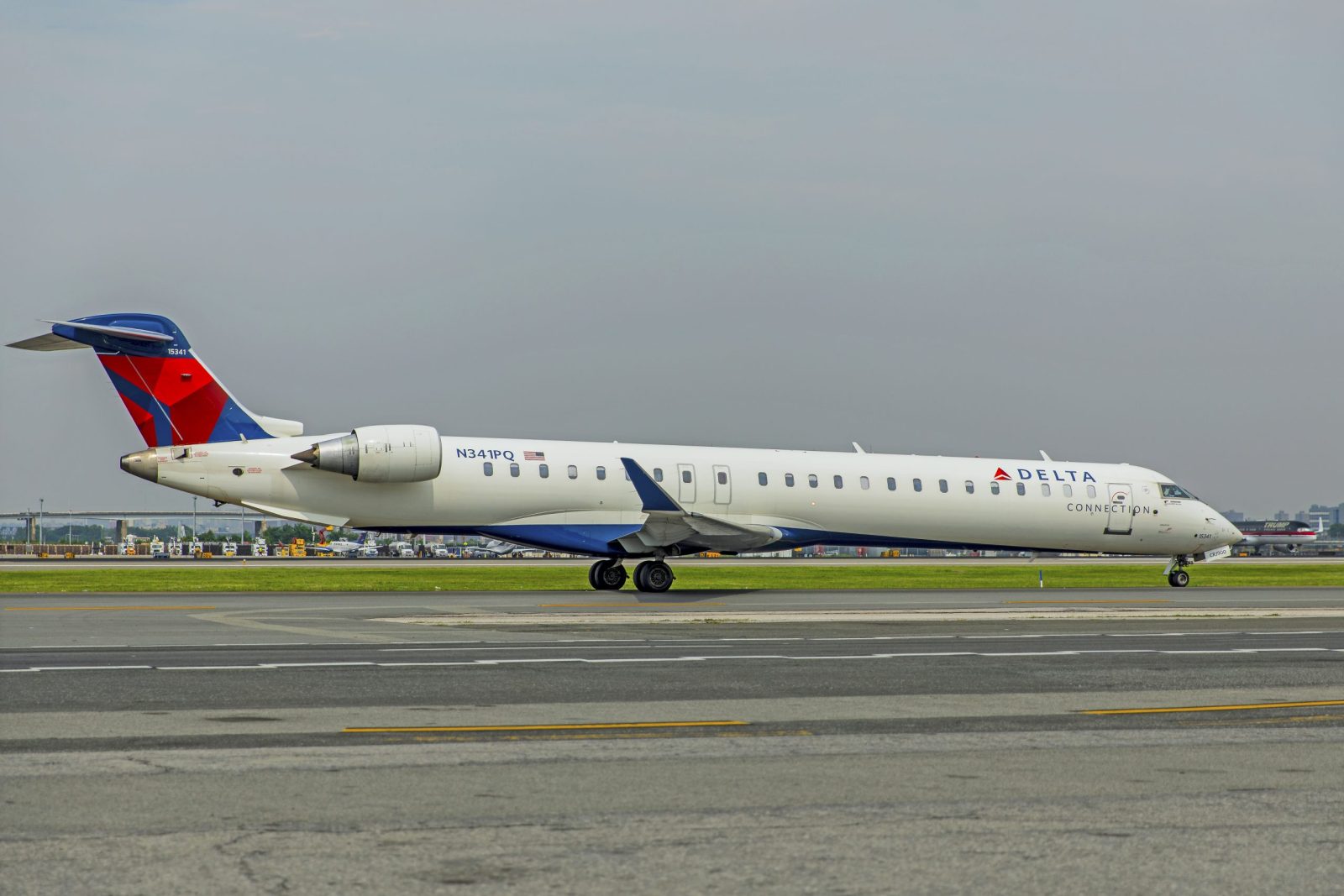
Direct entry captains are being offered a $40,000 sign-on bonus at the end of their initial operating experience and up to $110,000 in retention bonuses afterward. The retention bonuses are being provided in exchange for a commitment to remain at Endeavor during the pilots’ waiting period to advance to Delta. Endeavor pilots fly Bombardier CRJ-700s and CRJ-900s out of the airline’s hubs in Atlanta (ATL), Cincinnati (CVG), Detroit (DTW), Minneapolis (MSP) and New York (JFK and LGA). 

An Endeavor Air CRJ-700 aircraft at New York’s LaGuardia airport (Photo: AirlineGeeks | William Derrickson)

Horizon Air

Alaska Air Group subsidiary Horizon Air is offering sign-on bonuses for new first officers with FAA-approved prior qualifying time. Those with 500 to 999 hours are being offered $25,000 and those with 1,000 hours or more will receive $50,000. Horizon Air operates Embraer 175s and has crew bases in Anchorage (ANC), Boise (BOI), Medford (MFR), Portland (PDX), Spokane (GEG) and Seattle (SEA and PAE).

A Horizon Air Embraer E175 operating for Alaska Airlines (Photo: AirlineGeeks | Katie Zera)

Piedmont Airlines

Piedmont Airlines is offering sign-on bonuses for new first officers and direct entry captains. Those with 950 or more hours of qualifying time will receive a $100,000 bonus on their first paycheck. New hires with 500-949 hours of qualifying time will earn $75,000. In addition, pilots with 500 or more hours of qualifying time and a type rating for the Embraer 135/150/145 are being offered an additional $50,000 bonus. 

Piedmont is a wholly-owned subsidiary of the American Airlines Group and operates Embraer ERJ-145s under the American Eagle banner. The airline has crew bases in Charlotte (CLT), Harrisburg (MDT), and Philadelphia (PHL).

PSA Airlines

PSA Airlines currently has a $100,000 bonus for direct entry captains. The carrier is another wholly-owned subsidiary of the American Airlines Group. PSA operates Bombardier CRJ-700s and CRJ-900s under the American Eagle brand and has crew bases in Charlotte (CLT), Dallas/Fort Worth (DFW), Dayton (DAY), Philadelphia (PHL) and Washington, D.C. (DCA).

PSA aircraft in Charlotte (Photo: AirlineGeeks | William Derrickson)

Republic Airways

Republic Airways is offering up to $100,000 in sign-on bonuses to new captains. The airline flies Embraer 170 and 175 aircraft for American Eagle, Delta Connection, and United Express. Republic has bases in Boston (BOS), Chicago (ORD), Columbus (CMH), Indianapolis (IND) Louisville (SDF), New York (LGA), Newark (EWR), Philadelphia (PHL), Pittsburgh (PIT) and Washington, D.C. (DCA).

SkyWest Airlines

The country’s largest regional carrier is offering new hires with CRJ or Embraer 170/190 type ratings a $7,500 sign-on bonus. SkyWest has 20 crew bases across the country and operates Bombardier Regional Jets and Embraer 175 aircraft. The airline flies under its own charter brand and for Alaska Airlines, American Eagle, Delta Connection, and United Express. 

A SkyWest Embraer E-170 in Las Vegas. (Photo: AirlineGeeks | William Derrickson)

Looking for pilot jobs? FindaPilot.com posts new openings every day. Get a 20% discount on any plan. Just use the promo code AG20 when purchasing a plan. You’ll get a 20% discount on your first three months as a member.

Andrew Chen

Andrew is a lifelong lover of aviation and travel. He has flown all over the world and is fascinated by the workings of the air travel industry. As a private pilot and glider pilot who has worked with airlines, airports and other industry stakeholders, he is always excited to share his passion for aviation with others. In addition to being a writer, he also hosts Flying Smarter, an educational travel podcast that explores the complex world of air travel to help listeners become better-informed and savvier travelers.

Livery of the Week: Qantas’ Retro 737s

Qantas, the Australian national carrier, has a unique way of celebrating its rich history with two Boeing 737 retro designs.

A retro livery on one of Qantas' 737s (Photo: Qantas)

Editor’s Note: AirlineGeeks is proud to present our ‘Livery of the Week’ series. Every Friday, a team member will share an airline livery, which can be from the past, present, or even a special scheme. Some airline liveries are works of art. The complexity associated with painting around critical flight components and the added weight requires outside-the-box thinking from designers. The average airliner can cost upwards of $200,000 to repaint, creating a separate aircraft repainting industry as a result. 

Have an idea for a livery that we should highlight? Drop us a line

Qantas, the Australian national carrier, has a unique way of celebrating its rich history. In 2015, they unveiled a special Boeing 737-800 painted in a vintage livery, nicknaming it “Retro Roo II.” This particular design pays homage to the Boeing 707 jets that Qantas operated starting in 1959.

The “Retro Roo II” livery features a design aesthetic reminiscent of the 1960s. The aircraft boasts a predominantly white fuselage with a red cheatline running along its side.

Qantas unveiled one of two retro liveries in 2014 (Photo: Qantas)

The Qantas name is displayed in a bold, stylized font, and a small kangaroo adorns the vertical stabilizer.

This Boeing 737 with a retro twist wasn’t the first for Qantas. In fact, “Retro Roo II” followed “Retro Roo I,” a 737 unveiled in 2014 that sported the livery used from 1971 to 1984. These special liveries have proven popular, not only serving as a reminder of Qantas’ long history, but also generating excitement among aviation enthusiasts who flock to airports to catch a glimpse of these unique planes.

Looking for a new airplane model? Head over to our friends at the Midwest Model Store for a wide selection of airlines and liveries.

Ryan Ewing

Ryan founded AirlineGeeks.com in February 2013 and has spent more than a decade covering the airline business. His work has been featured by CNN, WJLA, CNET, and Business Insider. His aviation experience spans airport operations, Part 135 regulatory compliance, and airline crew workforce planning, along with time behind the yoke of a Cessna 172 and interviews with airline executives. Ryan now serves as Group President of Firecrown Media’s Aviation Group. He holds a B.S. in Air Transportation Management and an MBA from Arizona State University and teaches Airline Management at Embry-Riddle Aeronautical University.

JetBlue To Include Full-Size Carry-Ons in Basic Fares

As the airline industry in the U.S. is gearing up for its busiest summer on record, some good news for budget-conscious travelers arrived from JetBlue.

JetBlue A321
A JetBlue Airbus A321. (Photo: AirlineGeeks | William Derrickson)

As the airline industry in the U.S. is gearing up for its busiest summer on record, some good news for budget-conscious travelers arrived from JetBlue. The New York-based carrier has decided its carry-on policy for customer traveling on their cheapest fares (Basic Blue).

For all flights departing on Sept. 6, 2024 onwards, customers who have purchased Basic Blue fares will be allowed to carry onboard a full-size standard carry-on (22” x 14” x 9”) in addition to a personal item (17” x 13” x 8”).

“Carry-on bags are an important part of travel to customers, and when presented with a choice between JetBlue’s award-winning service and another carrier’s basic offering, we want JetBlue to be the easy winner,” said Marty St. George, President of JetBlue, in a press release. “We’re always looking for ways to evolve our offering in response to customer preferences. This is a win-win as we improve the customer experience and keep JetBlue competitive in our industry.”

A Departure from the ULCC Model

During the past few years, all full-service and hybrid carriers have introduced a new family of fares to compete with ultra-low-cost carriers like Spirit or Frontier for the business of the most price-sensitive customers, those who just look for the cheapest fare, no matter what the level of service is. In order to do that, these fares have been stripped of most features, like the ability to collect frequent flier miles, the possibility to change or cancel the trip, or the option to select a seat at check-in.

Some carriers also decided to reduce the carry-on allowance by limiting those passengers to a small personal item: United Airlines and, until now, JetBlue, were among those, while the other two big U.S. network carriers, American Airlines and Delta Air Lines, did not go that far and still allowed all customers, regardless of the fare purchased, to carry onboard a full-size carry-on bag.

The creation of a new fare family offering a product very similar to what ULCCs provide stemmed from the need to be competitively positioned in the ‘price grid,’ the most common output of a price search in most comparison websites. JetBlue is now departing from this approach, focusing on the concept of “value” rather than trying to match the lowest fare at all costs.

Is the ‘Small Backpack’ World Starting to Collapse?

At least in the U.S., a reality where it is considered normal to travel thousands of miles from home just with the clothes on one’s back and a small personal item fitting under the seat in front, could soon be confined to the ULCC arena if United decides to follow JetBlue’ decision.

In Europe, the big low-cost carriers Ryanair, Wizz Air, and easyJet have taken the concept one step forward by revenue managing bag fees based on demand. Traveling with a full-size carry-on or checking a bag does not have a set price any longer, but its cost varies depending on the destination, the day and time of the flight, and based on the time of booking, just like with seats.

Adding a carry-on or a suitcase to a booking can double or triple the cost of a trip, with permitted sizes varying considerably between one carrier and another, to the point that the European Parliament is considering a specific regulation to eliminate extra charges for hand baggage “on condition that such hand baggage meets reasonable requirements in terms of its weight and dimensions, and complies with applicable security requirements.”

The U.S. environment is usually more inclined to let the market decide the appropriate level of service, but this decision by JetBlue could be the first step towards a return to a still recent past.

Vanni Gibertini

Vanni fell in love with commercial aviation during his undergraduate studies in Statistics at the University of Bologna, when he prepared his thesis on the effects of deregulation on the U.S. and European aviation markets. Then he pursued his passion further by obtaining a Master’s Degree in Air Transport Management at Cranfield University in the U.K. followed by holding several management positions at various start-up carriers in Europe (Jet2, SkyEurope, Silverjet). After moving to Canada, he was Business Development Manager for IATA for nine years before turning to his other passion: sports writing.

Southwest Flight Issued Low Altitude Alert Over Oklahoma City

The low altitude incident involving Southwest flight 4069 near Oklahoma City is currently under investigation by the FAA.

Southwest 737-800
A Southwest 737-800 takes off from Los Angeles. (Photo: AirlineGeeks | William Derrickson)

The Federal Aviation Administration (FAA) confirmed on Thursday that it is investigating Southwest flight 4069 (WN4069) from Las Vegas to Oklahoma City, which was issued a low altitude alert during its approach.

The news comes after the airline is already under scrutiny for multiple incidents this year, including descending just 400 feet above the ocean in April and a ‘Dutch Roll’ incident in May.

WN4069 descended to just 525 feet above the ground during the approach to the airport. The flight, operated by one of the airline’s Boeing 737-800 aircraft (N8555Z), was eventually issued a low-altitude alert by controllers about nine miles from the airport.

According to the FAA, the incident occurred just after midnight on Wednesday. An air traffic controller alerted the flight crew after an automated warning sounded in the tower. The flight regained altitude and ultimately landed safely in Oklahoma City.

A Southwest spokesperson confirmed that the airline was in contact with the FAA.

“Southwest is following its robust Safety Management System and is in contact with the Federal Aviation Administration to understand and address any irregularities with the aircraft’s approach to the airport. Nothing is more important to Southwest than the safety of our customers and employees,” a spokesperson for the airline told ABC News.

Arya Karnik

Ever since he was a kid, Arya has been interested in aviation. With his entire family overseas, he has taken many family trips worldwide to places like the United Kingdom and India. He lives in Colorado but attends The University of Alabama, studying Computer Engineering with a minor in Computer Science. He hopes to obtain his PPL and eventually translate his engineering degree to working in operations at an airline.

American Latest to Halt Pilot Hiring

The Dallas/Fort Worth-based carrier said in a Thursday memo that it would pause pilot new hire classes through the end of this year.

American Airlines in Charlotte
An American A321 in Charlotte. (Photo: AirlineGeeks | William Derrickson)

American says it plans to cease pilot hiring for the remainder of 2024. In a memo to conditionally-hired pilots on Thursday, the airline said all new hire classes would be paused through the end of the year as it evaluates ‘commercial and talent needs.’

The carrier joins a growing list of major airlines pumping the brakes on recruitment after a record-setting period of pilot hiring. Both Delta and United have substantially scaled back their pilot hiring outlooks this year. Southwest stopped hiring new aviators altogether.

In an April briefing, American’s Vice President of Flight Operations Russ Moore initially said the carrier would only pause hiring during peak summer and winter holiday months. He added that it plans to hire roughly 1,000 fewer new aviators this year.

“In fact, we hired and trained more pilots in 2023 than we have in the history of this airline, and we did it efficiently enough that we were actually a bit ahead of where we needed to be for the summer of 2024,” Moore shared during the briefing. “This allowed us to transition from a ‘hire and train as many as you can’ approach to a more traditional approach, which in and of itself reduced our hiring targets for 2024.”

Among the reasons for the hiring slowdown are aircraft delivery delays at Boeing, Moore said. American is currently awaiting the delivery of 787-9 Dreamliner and 737 MAX jets from the embattled manufacturer.

“As part of our previously announced capacity adjustments, we are temporarily pausing new pilot class start dates for September, October and November. This decision allows us to optimize our capacity and tailor our talent growth plans to best serve the current needs of our airline,” the carrier said in a statement Thursday evening.

Last year, American hired around 2,300 pilots, according to data from FAPA. Even with the pause, Moore noted that up to 850 of the airline’s pilots retire annually over the next five years.

Editor’s Note: This story was updated on June 20, 2024 at 7:26 p.m. ET to add a statement from American.

Ryan Ewing

Ryan founded AirlineGeeks.com in February 2013 and has spent more than a decade covering the airline business. His work has been featured by CNN, WJLA, CNET, and Business Insider. His aviation experience spans airport operations, Part 135 regulatory compliance, and airline crew workforce planning, along with time behind the yoke of a Cessna 172 and interviews with airline executives. Ryan now serves as Group President of Firecrown Media’s Aviation Group. He holds a B.S. in Air Transportation Management and an MBA from Arizona State University and teaches Airline Management at Embry-Riddle Aeronautical University.

Amazon Transferring Boeing 737-800 Cargo Jets to Sun Country Airlines

Leisure carrier Sun Country Airlines will fly up to eight additional Boeing 737-800 converted freighters for Amazon under a contract extension.

Atlas Air operates eight Boeing 737-800s on behalf of Amazon Air, including this one at George Bush Intercontinental Airport in Houston. Amazon will shift the aircraft in phases to Sun Country Airlines next year. (Photo: Jim Allen/FreightWaves)

Leisure carrier Sun Country Airlines will fly up to eight additional Boeing 737-800 converted freighters for Amazon under a contract extension announced Thursday.

Minneapolis-based Sun Country has operated a dozen Amazon-supplied Boeing narrowbody cargo jets since 2020. It said its contract for providing crews, maintenance and insurance has been extended until 2030 and that it will begin operating the initial aircraft in the first quarter of 2025.

All eight aircraft are expected to be operational in Amazon’s domestic parcel network by the third quarter of 2025, increasing Sun Country’s freighter fleet to 20 aircraft. In addition to providing the aircraft, Amazon pays for many flight expenses, including fuel and is responsible for loading and unloading.

Amazon is reallocating the eight 737-800 freighters after agreeing last month to terminate its transport partnership with Atlas Air, which also lost flying business from 16 Boeing 767-300 freighters Amazon is transferring to ABX Air.

Amazon directly controls the eight 737-800s, which are leased from AerCap.

“Amazon is an extremely important customer to Sun Country and strong execution on our current cargo services positioned us well to grow our business. We look forward to continuing to provide services to Amazon into the 2030s,” said Sun Country CEO Jude Bricker in the announcement.

Sun Country’s cargo revenue in 2023 increased 10.4% year over year to $100 million even though the rest of the air cargo industry, including express air carriers, experienced downturns in aircraft utilization and revenue. The airline benefitted from Amazon gaining share in a declining domestic parcel market, where it overtook FedEx and UPS last year in total deliveries.

Sun Country, which entered the cargo space to diversify revenue in a highly competitive passenger market, and Amazon have the right to extend the amended contract through 2037. Sun Country’s stock price jumped 10% to $11.32 per share in early trading on Thursday.

Amazon relies on partner carriers to operate its network because it isn’t a pure airline with its own operating authority. Amazon’s active fleet has plateaued in the past 20 months at about 80 aircraft, according to various aircraft databases. During the peak of pandemic home shopping the fleet reached 88 aircraft.

Atlas Air Worldwide’s leasing division, Titan Aviation, continues to lease to Amazon the 16 Boeing 767-300s being placed with ABX Air.

Editor’s Note: This story first appeared on FreightWaves

AirlineGeeks.com Staff

AirlineGeeks.com was founded in February 2013 as a one-person blog in Washington D.C. Since then, we’ve grown to have 25+ active team members scattered across the globe. We are all here for the same reason: we love deep-diving into the fascinating realm of the airline industry.

United Flight Returns to Hartford After Engine Cover Incident

A United Airlines flight bound for Denver was forced to return to Bradley International Airport on Thursday morning after experiencing an in-flight incident.

A United A320 aircraft (Photo: AirlineGeeks | William Derrickson)

A United Airlines flight traveling from Hartford, Conn. to Denver was forced to return to Bradley International Airport on Thursday morning after experiencing an in-flight incident.

Abnormal Noise Prompts Return

An Airbus A320 carrying 124 passengers and five crew members reported hearing an “abnormal noise” shortly after takeoff, according to a statement from the Federal Aviation Administration (FAA). The FAA confirmed they are investigating the incident to determine the cause of the noise and ensure the safety of future flights.

United, in a separate statement, revealed that a piece of the sound-dampening outer liner, located beneath the engine cowling, was missing upon landing. This component is believed to have detached during the flight and was later found on the runway at Bradley International Airport.

The sound-dampening outer liner plays a crucial role in reducing engine noise for both passengers and those on the ground. While its detachment is not necessarily a critical safety issue, it does raise concerns about potential underlying problems with the engine itself.

Incident Adds to Scrutiny

This incident comes amidst ongoing scrutiny of United’s safety procedures by the FAA. Earlier this year, the airline faced criticism for a series of mishaps, including a detached fuselage panel during a flight and a wheel malfunction after takeoff on another aircraft. The agency and airline have been involved in an audit for several months following these incidents.

The diverted flight landed safely at Bradley International Airport.

Tolga Karadeniz

Tolga is a dedicated aviation enthusiast with years of experience in the industry. From an early age, his fascination with aviation went beyond a mere passion for travel, evolving into a deliberate exploration of the complex mechanics and engineering behind aircraft. As a writer, he aims to share insights , providing readers with a view into the complex inner workings of the aviation industry.

NBAA, FAA Clash Over New Public Charter Rules

The National Business Aviation Association (NBAA) has expressed concerns over the FAA's plan to develop new regulations for on-demand public charter carriers.

One of JSX's Embraer E145s (Photo: AirlineGeeks | Joey Gerardi)

The National Business Aviation Association (NBAA) has expressed concerns over the Federal Aviation Administration’s (FAA) plan to develop new regulations for certain on-demand public charter carriers. The NBAA argues that the proposed changes could negatively impact aviation service in small communities and questions the safety rationale behind the FAA’s decision.

The FAA’s plan, announced on Monday, applies to public charter operators regulated under FAA Part 135 safety rules and Department of Transportation Part 380 economic requirements. The NBAA has called upon the FAA to provide a data-driven explanation for the need for these changes and to engage in a meaningful dialogue with all stakeholders, particularly those most affected by the new regulations.

In a statement, NBAA President and CEO Ed Bolen said, “Safety is the top priority for business aviation, and our sector has an impeccable record of leadership in working with government agencies and other stakeholders in the development of regulations that address safety concerns and put operational needs first. The FAA’s announcement suggests an intention to sidestep both considerations.”

As the NBAA continues to engage with the FAA on the development of new public charter rules, the association says it remains committed to working with the agency to ensure that any changes are “data-driven,” address safety concerns, and consider the operational needs of the business aviation community.

The FAA says these types of public charter operators have “rapidly expanded in frequency and complexity in recent years,” noting that some appear to operate like scheduled airlines.

Ryan Ewing

Ryan founded AirlineGeeks.com in February 2013 and has spent more than a decade covering the airline business. His work has been featured by CNN, WJLA, CNET, and Business Insider. His aviation experience spans airport operations, Part 135 regulatory compliance, and airline crew workforce planning, along with time behind the yoke of a Cessna 172 and interviews with airline executives. Ryan now serves as Group President of Firecrown Media’s Aviation Group. He holds a B.S. in Air Transportation Management and an MBA from Arizona State University and teaches Airline Management at Embry-Riddle Aeronautical University.

Air France Resumes Africa Route After Three Decade Hiatus

Air France is expanding its long-haul network with a new three-times weekly route to Kilimanjaro, Tanzania starting Nov. 18, 2024.

An Air France A350-900 (Photo: Shutterstock)

Air France is expanding its long-haul network with a new route to Kilimanjaro, Tanzania starting Nov. 18, 2024. The service will operate three times a week on Mondays, Wednesdays, and Saturdays.

The flights will operate as an extension of Air France’s existing service to Zanzibar, Tanzania. Passengers will fly from Paris’ Charles de Gaulle to Zanzibar on an Airbus A350-900XWB aircraft, with onward service to Kilimanjaro International Airport. The return flights will depart Kilimanjaro and connect in Zanzibar before returning to Paris.

This new route replaces Air France’s previous service from Paris to Dar es Salaam, Tanzania, which will now be accessible via KLM with connections from Amsterdam. KLM also offers existing services to both Kilimanjaro and Zanzibar.

The new Air France service will depart Paris at 10:10 a.m. local time and arrive in Zanzibar at 9:10 p.m. The flight will then depart Zanzibar at 10:55 p.m., arriving in Kilimanjaro at 11:55 p.m. the same day. Return flights will depart Kilimanjaro at 1:25 a.m. and arrive in Paris at 8:50 a.m. the same day.

According to AeroRoutes, Air France last served Kilimanjaro nearly three decades ago in 1996.

Ryan Ewing

Ryan founded AirlineGeeks.com in February 2013 and has spent more than a decade covering the airline business. His work has been featured by CNN, WJLA, CNET, and Business Insider. His aviation experience spans airport operations, Part 135 regulatory compliance, and airline crew workforce planning, along with time behind the yoke of a Cessna 172 and interviews with airline executives. Ryan now serves as Group President of Firecrown Media’s Aviation Group. He holds a B.S. in Air Transportation Management and an MBA from Arizona State University and teaches Airline Management at Embry-Riddle Aeronautical University.

Why the U.S. Is Fining Emirates $1.8 Million

UAE-based Emirates was fined by the U.S. DOT for flying too low over Iraq when carrying the jetBlue code on certain flights.

Emirates A380
An Emirates Airbus A380. (Photo: AirlineGeeks | William Derrickson)

Dubai-based Emirates has been fined $1.8 million by the US Department of Transportation (DOT) for violating its airspace rules. The airline had violated the airspace restriction over Iraq by flying under FL320 (or 32,000 feet). The FAA has previously issued a NOTAM banning flying under this altitude in the Baghdad Information Region.

You might be wondering why Emirates, a UAE-based carrier, is being fined by the U.S. DOT. The answer lies within code-sharing. These Emirates flights also carried the JetBlue code, B6, and were marketed by the U.S. carrier, which subjected the flights to U.S. regulations.

Emirates and JetBlue’s codeshare agreement ended in 2022 (Photo: AirlineGeeks | Greg Linton)

The DOT stated in its order that “the Department prohibits foreign air carriers from carrying the code of a U.S. air carrier in airspace in which the FAA prohibits U.S. operators and airmen from flying.”

Between 2021 and 2022, 122 Emirates flights carrying the JetBlue code between Dubai and the United States were operating under FL320 at some points over Iraqi airspace. “By operating these flights in this manner, Emirates violated the conditions of its authority to operate,” the agency said.

In defense of its actions, Emirates stated that the flights were following the directions of ATC (Air Traffic Control), and non-compliance with the controllers to stay above FL 320 would have serious implications on the safety of its operations.

Not the First Time

This is not the first time Emirates has been fined for such offenses. In 2020, Emirates was fined $400,000 by the DOT for another violation. In 2019, the FAA issued a NOTAM banning overflying the Tehran Information Region. However, Emirates operated flights that carried the JetBlue code after the issuance of the ban, which resulted in a violation.

Emirates was warned against future violations in 2020 when the consent order was issued, and the DOT stated that applicable carriers are expected to “adhere to all FAA flight prohibitions while carrying a U.S. air carrier’s code, including while conducting foreign air transportation abroad.”

A Virgin Atlantic 787-9 departing London Heathrow. (Photo: AirlineGeeks | William Derrickson)

Other airlines have also suffered similar fates. Virgin Atlantic was fined for violating the NOTAM ban on the Baghdad Information Region governing Iraq in 2023. The flights carried the Delta code, therefore were bound by the rules.

Other International Security NOTAMs

There are often differing standards and requirements set out by national aviation authorities on overflying certain airspaces, and airlines typically follow the rules of their respective countries. However, things change when the code of another carrier is placed on the flights, especially if the codesharing airline comes from a country with different airspace bans.

An example of differing standards is the use of Russian airspace; the FAA issued a NOTAM prohibiting U.S. carriers from using the entire airspace since the outbreak of the Ukraine conflict, while airlines from China, India, UAE, Qatar, and several other countries are still allowed to fly over Russia. As a result, American Airlines and Alaska had to remove their codes from several flights operated by Qatar Airways and Cathay Pacific.

Anthony Bang An

Anthony is an aviation enthusiast who grew up around the world from St. Louis to Singapore, and now lives in Amsterdam. He loves long-haul flying and finds peace in the sound of engine cruising. He aspires to share his passion for the sky though writing and providing another angle on the stories.
Sign-up for newsletters & special offers!

Get the latest stories & special offers delivered directly to your inbox

SUBSCRIBE

Uh-oh! It looks like you're using an ad blocker.

Our website relies on ads to provide free content and sustain our operations. By turning off your ad blocker, you help support us and ensure we can continue offering valuable content without any cost to you.

We truly appreciate your understanding and support. Thank you for considering disabling your ad blocker for this website