Stories

Strike Averted: WestJet and Mechanics Head Back to Negotiating Table

Canada's second-largest airline is cancelling approximately 40 flights to prevent aircraft, passengers and crew from being stranded.

WestJet 787
A WestJet Boeing 787 Dreamliner. (Photo: AirlineGeeks | Katie Zera)

WestJet has announced that it will be cancelling around 40 flights in anticipation of a strike by its maintenance workers. The move comes after nine months of negotiations between the company and the union representing WestJet’s Aircraft Maintenance Engineers and other Tech Ops employees.

Cancellation Details

WestJet has cancelled approximately 40 flights this week to prepare for the potential strike. The second largest Canadian airline estimates that the cancellations will affect around 6,500 customers.

According to flight tracking website FlightAware, WestJet cancelled five flights on Tuesday. The airline has cancelled 20 flights on Wednesday as of 2:30 p.m. Eastern Daylight Time.

The Calgary-based company stated in a press release that it has proactively started cancelling and consolidating flights in order to park aircraft in an organized manner and to prevent aircraft, passengers and crew from being stranded.

Ongoing Labor Unrest

Negotiations between WestJet and the Aircraft Mechanics Fraternal Association (AMFA) – the union that represents WestJet maintenance workers – have been ongoing since September of 2023. The company issued a 72-hour lockout notice to the union on May 4, 2024, but the parties came to a tentative agreement the following day. However, employees overwhelmingly rejected the tentative agreement last week with a 97.25% “no” vote, sending the parties back to the negotiating table.

AMFA National President Bret Oestreich stated that the main factors behind the rejection were WestJet’s perceived bad-faith bargaining and the fact that the company’s final pay increase offer was more than 30 percent below the prevailing rate at other North American carriers. Meanwhile, WestJet Airlines President Diederick Pen has called the tentative agreement “generous,” pointing out that it included a take-home pay of 30 to 40 percent in the first year.

The union issued a 72-hour strike notice on June 17, 2024, meaning that a work stoppage could occur as early as Thursday. WestJet has requested that the Canada Industrial Relations Board intervene with binding arbitration. The board also has the power to prevent a work stoppage while the arbitration process takes place.

Update: On the evening of June 19, 2024, WestJet announced that it had come to an agreement with the Aircraft Mechanics Fraternal Association to return to the negotiating table and avoid a strike. Meanwhile, the Canadian Industrial Relations Board has stated that it will require additional time and information to consider WestJet’s request for arbitration.

Andrew Chen

Andrew is a lifelong lover of aviation and travel. He has flown all over the world and is fascinated by the workings of the air travel industry. As a private pilot and glider pilot who has worked with airlines, airports and other industry stakeholders, he is always excited to share his passion for aviation with others. In addition to being a writer, he also hosts Flying Smarter, an educational travel podcast that explores the complex world of air travel to help listeners become better-informed and savvier travelers.

Delta Bolsters Capacity on Longest Domestic Flight

Delta is doubling down on its new route from Boston to Honolulu, which is the longest nonstop domestic flight in the U.S.

Delta A330-300
A Delta A330-300 (Photo: AirlineGeeks | William Derrickson)

Delta is doubling down on its new route from Boston to Honolulu, which is the longest nonstop domestic flight in the U.S. The airline originally announced the new route back in February 2024.

Starting on November 21, the new Boston-Honolulu service is slated to operate daily through April 30. Initially, the Atlanta-based carrier planned to operate the new flight on a Boeing 767-300.

As first reported by AeroRoutes, the airline is now upgrading the route to an Airbus A330-300. This change will add approximately 66 additional seats in the market per day.

The airline’s A330-300s seat 282 passengers with 21 in the premium cabin. Delta’s 767-300s can accommodate up to 216 passengers with 18 premium seats.

At just over 5,000 miles, the U.S.’s longest nonstop domestic flight is also operated by Hawaiian Airlines on a year-round basis. The Honolulu-based carrier operates an Airbus A330-200 on the route.

Data from aviation analytics company Cirium shows that Delta plans to operate the A330 between Boston and Honolulu through February. The airline will then deploy a 767 on the route in late March and April.

Ryan Ewing

Ryan founded AirlineGeeks.com in February 2013 and has spent more than a decade covering the airline business. His work has been featured by CNN, WJLA, CNET, and Business Insider. His aviation experience spans airport operations, Part 135 regulatory compliance, and airline crew workforce planning, along with time behind the yoke of a Cessna 172 and interviews with airline executives. Ryan now serves as Group President of Firecrown Media’s Aviation Group. He holds a B.S. in Air Transportation Management and an MBA from Arizona State University and teaches Airline Management at Embry-Riddle Aeronautical University.

Lufthansa Selects Cape Town as First African Destination for Allegris Cabins

Cape Town is set to become the first African destination for Lufthansa’s services featuring new Allegris cabins.

Lufthansa's new business class cabin (Photo: Lufthansa)

Lufthansa has announced that its new Allegris cabins will be available on flights between Munich and Cape Town from Oct. 27, 2024.

Lufthansa’s Cape Town Services

Passengers traveling to Cape Town will have the opportunity to experience the comfort of Lufthansa’s Allegris First and Business Class cabins on flights operated by its Airbus A350 aircraft, between Munich and Cape Town. However, the Airbus A350 will also feature new seating in other classes. Lufthansa will offer new seats in Premium Economy and Economy Class on these flights.

René Koinzack, Lufthansa’s Senior Director, Sales of Southern & East Africa, Nigeria, and Equatorial Guinea, expressed his excitement about the new cabins and seating options.

“We are delighted to bring the Allegris seat cabins to Cape Town only five months after its introduction. This will mark a significant milestone for Lufthansa’s presence in the region. This new offering will enhance the travel experience for our passengers and further solidify Cape Town as a key destination in our network,” Koinzack said.

Allegris Cabins

Whether in Economy, Premium Economy, Business Class or First Class, passengers can look forward to more comfort and personal wellbeing with the new Allegris cabins. Moreover, the new suites have been redesigned from scratch and with higher partitions and closable doors that offer maximum privacy.

When reserving Allegris Business Class, travellers are able to reserve a specific seat on the aircraft during the introductory offer phase – free of charge with the classic seat reservation. This seat will provide all the amenities and comforts of the new Allegris product.

Expanding Footprint in Africa

The Lufthansa Group is a globally operating aviation group with a total of more than 300 subsidiaries and affiliated companies. Its portfolio consists of network airlines, point-to-point carriers, and service companies in the aviation sector. Major airlines within the group include Lufthansa, SWISS, Austrian, Brussels Airlines, Eurowings, and Discover Airlines.

The Lufthansa Group has an extensive global presence, with a growing number of routes in Africa. Brussels Airlines, a subsidiary of the Lufthansa Group, relaunched scheduled services between Nairobi and Brussels on June 3. The airline resumed this service after scrapping the route over nine years ago.

Tourism to Cape Town

Cape Town’s allure as a tourist destination means a growing number of international tourists visit the city each year. This has led to more airlines launching services into the city as well as various other carriers increasing the frequency of their Cape Town flights in recent times. Much of this growth can be attributed to the efforts of Cape Town’s Air Access team, a Cape Town route development project.

Lufthansa says it is committed to the African continent, providing exceptional service and a premium travel experience for passengers flying to and from Cape Town. In addition to the new Allegris cabin product, Lufthansa will increase its weekly frequencies between Cape Town and Munich, from five to seven services a week. From late October the Lufthansa Group will offer 17 flights a week to its hubs in Frankfurt (six weekly), Munich (seven weekly), and four weekly flights to Zurich, with Edelweiss.

Lorne Philipot

Lorne is a South Africa-based aviation journalist. He was captivated and fascinated by flying from the day he took his first airline flight. With a passion for aviation in his blood, he has flown to destinations in all corners of the globe. Lorne has traveled extensively and lived in various countries. Drawing on his travels and passion for aviation, Lorne enjoys writing about airlines, routes, networks, and new developments.

Kenya Airways Leads Africa in IATA’s Sustainable Aviation Fuel Initiative

Kenya Airways (KQ) has become the first African airline to spearhead the International Air Transport Association (IATA)'s SAF Registry.

Kenya Airways B7878 LHR William Derrickson (1)
A Kenya Airways 787-8 arriving at London Heathrow. (Photo: AirlineGeeks | William Derrickson)

Kenya Airways (KQ) has become the first African airline to spearhead the International Air Transport Association (IATA)’s Sustainable Aviation Fuel (SAF) Registry. This development was announced by IATA on June 2, 2024. The SAF Registry aims to accelerate the adoption of sustainable aviation fuels by providing authoritative accounting and reporting of emissions reductions from SAF.

The SAF Registry is being collaboratively developed, involving airlines, government authorities, international organizations, OEMs, fuel producers, suppliers, airports, and corporate travel management companies. KQ joins a select group of stakeholders supporting the Registry’s development, including seventeen airlines, one airline group, six national authorities, three Original Equipment Manufacturers (OEMs), and one fuel producer. The Registry is slated for launch in the first quarter of 2025.

Other airlines include: Air Canada, Air France-KLM, All Nippon Airways (ANA), American Airlines, Cathay Pacific, Delta Air Lines, DHL Group, Emirates, International Airlines Group (IAG), Japan Airlines, LATAM, Malaysia Aviation Group, Qatar Airways, SAS, Singapore Airlines, SWISS, United Airlines. National authorities selected include: Brazil-ANAC, Japan-JCAB, Kazakhstan-AAK, Malaysia-CAAM, Singapore-CAAS, Switzerland-FOCA. OEMs selected include: Airbus, Boeing, GE Aerospace while the Fuel producer chosen is World Energy.

“SAF is key to aviation’s decarbonization. Airlines want more SAF and stand ready to use every drop of it. The SAF Registry will help meet the critical needs of all stakeholders as part of the global effort to ramp-up SAF production. Governments need a trusted system to track the quality and quantities of SAF used. SAF producers need to accurately account for what has been delivered and effectively decarbonized. Corporate customers must be able to transparently account for their Scope 3 emissions. And airlines must have certainty that they can claim the environmental benefits of the SAF they purchased. The Registry will meet all these needs. In doing so, the Registry will help create a global SAF market by ensuring that airlines have access to SAF wherever it is produced, and that SAF producers have access to airlines regardless of their location,” said Willie Walsh, IATA’s Director General.

KQ achieved a groundbreaking milestone last year by becoming the first African airline to operate a long-haul flight using Sustainable Aviation Fuel (SAF) provided by Eni Sustainable Mobility. On May 25, 2023, KQ’s Boeing 787-8 Dreamliner took off from Nairobi’s Jomo Kenyatta International Airport to Amsterdam Schiphol, powered by Eni’s sustainable aviation fuel. This achievement earned Kenya Airways the “Most Impactful Breakthrough” award as part of The Sustainable Flight Challenge (TSFC) by SkyTeam.

Sustainable Aviation Fuel (SAF) is poised to play a pivotal role in the aviation industry’s ambitious goal of achieving net-zero carbon emissions by 2050 by accounting for up to 65% of the total carbon mitigation needed to achieve net-zero carbon emissions in air transportation. As part of this global effort, the newly established SAF Registry by the International Air Transport Association (IATA) is set to be a game-changer.

The SAF Registry will enable airlines worldwide to purchase SAF regardless of production location, ensuring they can claim environmental benefits for regulatory compliance. It will be neutral with respect to regulations, types of SAF, and other specificities under relevant jurisdictions. This flexibility allows it to handle diverse user requirements effectively.

In addition, IATA, as the initiator of the Registry, collaborates with certification organizations and fuel producers. Their joint efforts aim to standardize data for efficient processing within the Registry. Standardization ensures transparency, accuracy, and reliability in accounting for SAF usage and emissions reductions.

Moreover, the Registry will help airlines meet regulations such as the Carbon Offsetting Reduction Scheme for International Aviation (CORSIA) and the EU Emissions Trading Scheme, ensuring compliance with SAF mandates and providing transparency to authorities regarding emissions reductions. The SAF Registry will enforce agreed-upon accounting and reporting principles. These principles align with international protocols and industry best practices. It safeguards against double counting and double claiming, ensuring accurate tracking of SAF usage and emissions reductions. The immutability and integrity of all interventions recorded in the Registry are paramount.

Victor Shalton

Victor Shalton's love for aviation can be traced to when he was 11-years-old. As a seasoned aviation writer, he takes pride in providing the best aviation coverage around the globe and is passionate about advancing his skills in the aviation space. In addition, he loves travelling, writing, arts and while his speaking engagements have taken him around the world, he is proud to call Nairobi home.

1960s-Era Dulles Mobile Lounges to Receive $143 Million Facelift

Washington Dulles International Airport's iconic mobile lounge vehicles are slated to receive major upgrades in the coming years.

A Dulles Airport Plane Mate (Photo: Noah Escobar)

Washington Dulles Airport’s iconic mobile lounges are slated to receive major upgrades in the coming years. Alongside the airport’s $1.4 billion underground AeroTrain system, the over 60-year-old transport vehicles still move passengers between concourses and to the main customs facility.

When the AeroTrain opened in 2010, the Metropolitan Washington Airports Authority (MWAA) — which operates the airport — planned to phase out the mobile lounges. But, according to the Washington Post, the second phase of the AeroTrain’s development has not yet started.

“The infrastructure to replace the mobile lounge isn’t built yet,” Rob Yingling, an MWAA spokesperson, told the Post. “It’s going to take time.”

A Plane Mate attaches to a Boeing 787 at Dulles Airport (Photo: AirlineGeeks | Ryan Ewing)

A Hefty Price Tag

Late last year, MWAA’s board approved the plan to restoration plan, awarding the contract to Pennslyvania-based Brookville Equipment Corporation. The firm manufactures locomotives among other rail products.

Brookville will initially design two prototypes for $16.4 million. MWAA will then have the option to refurbish the entire fleet of 49 vehicles for an estimated $143 million. The cost is planned not to exceed $160 million.

The first two vehicles were transported to Brookville’s Pennsylvania facility in March and April,

“Mobile lounges and plane mates are important parts of Dulles International Airport’s operations,” said Richard Golinowski, vice president and airport manager at Dulles International Airport, in a press release. “They provide flexibility and increased capacity to move passengers around the airport while offering unique views during the ride. Built in the 60s, it’s time for a major overhaul of these iconic vehicles. We look forward to following the two prototypes through Brookville to Rehabilitate Mobile Lounge and Plane Mate Prototype Vehicles – 2 refurbishment.”

Two Different Types

First introduced when the airport opened in 1962, the lounges were designed to bring passengers directly from terminals to the aircraft. There are two types: the mobile lounges and Plane Mates.

Both models were built by the Chrysler Corporation along with the Budd Company. With flat roofs, the mobile lounges are still used to shuttle passengers between terminals. The Plane Mates, on the other hand, can be raised and lowered to attach to aircraft similar to a jetbridge.

The airport has a fleet of 19 mobile lounges and 30 Plane Mates. Each model will get an overhaul, which includes interior upgrades in addition to drive train and engine overhauls.

Ryan Ewing

Ryan founded AirlineGeeks.com in February 2013 and has spent more than a decade covering the airline business. His work has been featured by CNN, WJLA, CNET, and Business Insider. His aviation experience spans airport operations, Part 135 regulatory compliance, and airline crew workforce planning, along with time behind the yoke of a Cessna 172 and interviews with airline executives. Ryan now serves as Group President of Firecrown Media’s Aviation Group. He holds a B.S. in Air Transportation Management and an MBA from Arizona State University and teaches Airline Management at Embry-Riddle Aeronautical University.

Negotiations for American Flight Attendants Continue

American Airlines flight attendants represented by the Association of Professional Flight Attendants (APFA) will continue contract negotiations this week.

American 777-200
An American Boeing 777-200 in Dallas/Fort Worth. (Photo: AirlineGeeks | William Derrickson)

American Airlines flight attendants represented by the Association of Professional Flight Attendants (APFA) will continue contract negotiations under the supervision of the National Mediation Board (NMB) this week. The NMB’s decision comes after the union requested twice for a release from mediation, a move that could lead to a strike action.

The APFA has been negotiating a new contract with American for nearly five years. In a Friday evening update, the union said that some progress was made during last week’s sessions, but “are still apart on the final key economic areas of the agreement.”

Secretary of Transportation Pete Buttigieg and Acting Labor Secretary Julie Su joined some of last week’s talks, the APFA said. The White House is also in contact with the parties.

Mediation sessions are expected to continue into this week. Earlier this month, American offered flight attendants a 17% pay bump, but this move was rejected by the APFA board.

The NMB will continue to facilitate talks between the two parties. If an agreement isn’t reached, the NMB may eventually propose arbitration or release the union to strike after a 30-day cooling-off period.

Ryan Ewing

Ryan founded AirlineGeeks.com in February 2013 and has spent more than a decade covering the airline business. His work has been featured by CNN, WJLA, CNET, and Business Insider. His aviation experience spans airport operations, Part 135 regulatory compliance, and airline crew workforce planning, along with time behind the yoke of a Cessna 172 and interviews with airline executives. Ryan now serves as Group President of Firecrown Media’s Aviation Group. He holds a B.S. in Air Transportation Management and an MBA from Arizona State University and teaches Airline Management at Embry-Riddle Aeronautical University.

FAA Moves to Restrict Public Charter Flights

The Federal Aviation Administration (FAA) is moving to revise a regulation governing public charter operators, including JSX.

JSX Embraer jet
A JSX E-145 in Austin. The airline exclusively operates the Embraer jet. (Photo: AirlineGeeks | Mateen Kontoravdis)

The Federal Aviation Administration (FAA) is moving to revise a regulation governing public charter operators. This change comes after scrutiny of the current rules, particularly regarding carriers like JSX, that operate scheduled flights with smaller aircraft (30 seats or less) while following less stringent regulations compared to major airlines.

“Part of the safety mission of the FAA is identifying risk early on, and that’s exactly what we’re doing on public charters as usage expands,” said FAA Administrator Mike Whitaker. “If a company is effectively operating as a scheduled airline, the FAA needs to determine whether those operations should follow the same stringent rules as scheduled airlines.”

In August 2023, the FAA requested comments on the proposed rulemaking, receiving over 60,000 in less than a year. In its comment, JSX called the move “a lobbying-inspired, targeted regulatory barrier to entry, erected to protect influential parties that are prepared to fabricate safety concerns.”

Both American and Southwest along with the Air Line Pilots Association (ALPA) have pushed for changes to public charter operations like JSX, calling on the FAA to close a so-called ‘loophole.’

“Some airlines use the public charter loophole to cut costs by skirting lifesaving safety rules, but if they run similar operations as commercial scheduled airlines, then they are not operating as charter, and that’s an issue,” said ALPA President Jason Ambrosi in an August 2023 statement.

The FAA argues these changes are necessary to ensure consistent safety standards across all passenger air travel. Public charter operators currently adhere to Part 135 regulations, which are less demanding than the Part 121 rules that govern scheduled airlines. This difference applies to areas including pilot training requirements and maintenance protocols.

Opponents of the proposed changes, including JSX itself, argue that their current safety record is “excellent” and that stricter regulations would stifle innovation and potentially limit service options, especially in smaller communities. JSX says that some of its safety protocols even exceed current FAA standards.

“JSX supports the Federal Aviation Administration’s efforts to maintain the safety of civil aviation and applauds FAA Administrator Whitaker’s plans to evaluate a new operating authority for certain Part 135 operations,” the carrier said in a statement on Monday.

Small Community Air Service

JSX has repeatedly added that changes to public charter regulations would “jeopardize” service to small communities. Last year, the carrier committed to ordering over 300 hybrid-electric aircraft. The goal of these aircraft, the company says, is to deploy them in small communities.

“These airplanes are custom built for 9, 19, and 30 seats, and they’ll be much more efficient…than the planes we’re flying today. And that’s going to lower costs, and that’s going to make more of those [airports] available,” JSX CEO Alex Wilcox told AirlineGeeks in a December interview.

Noting these concerns, the FAA said in a June 17 press release that it would launch a risk assessment panel to “assess the feasibility of a new operating authority for scheduled part 135 operations in 10-30 seat aircraft.”

“At the same time, we want to look at how future innovation might cause us to think differently. Safe air travel options should be available to everyone, not limited to only those living near a major airport. We want to put a safety lens over the options of future innovation, as we work to further connect small and rural communities to open up more options for everyone at the same high level of safety,” Whitaker added in the press release.

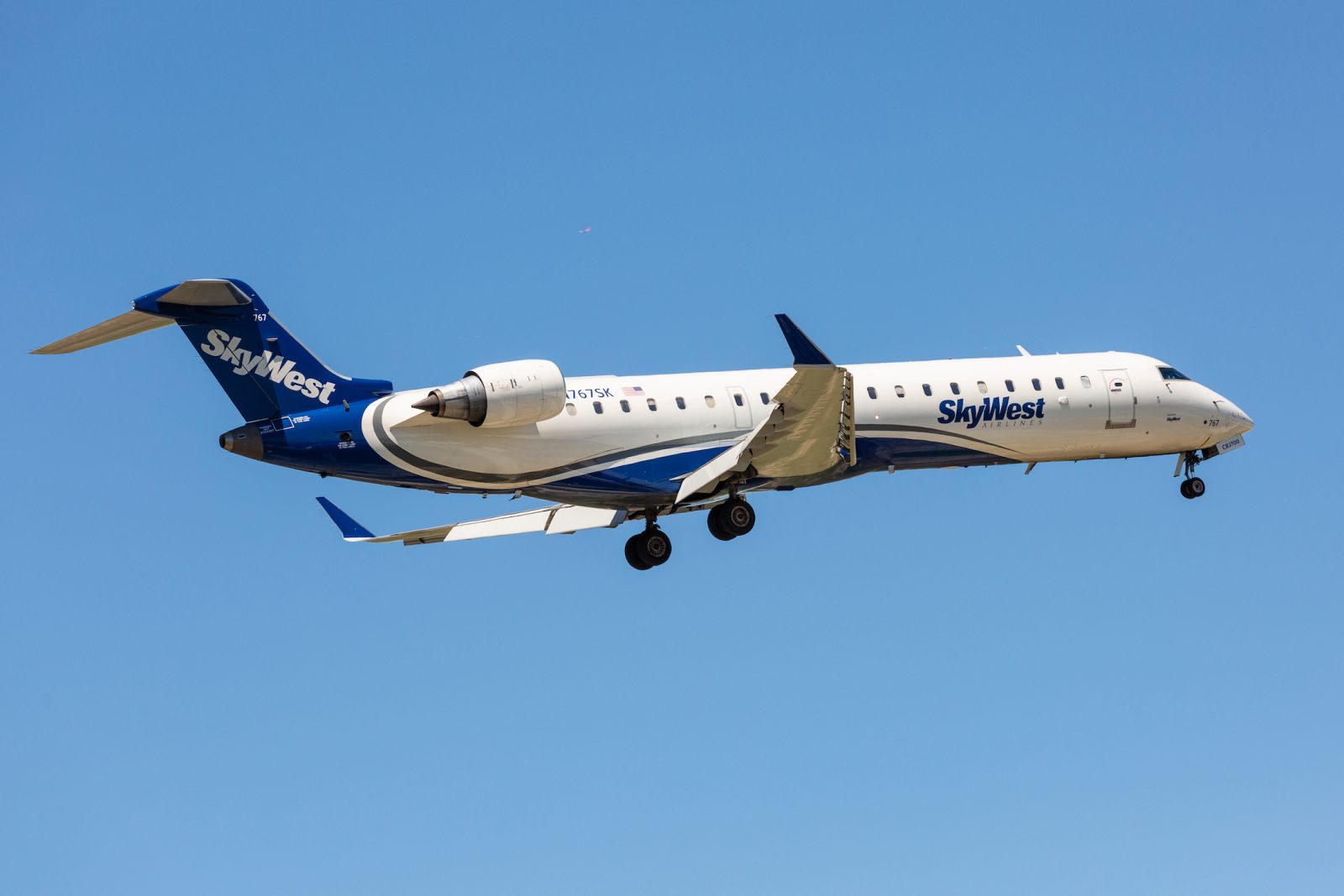
Contour Airlines, which operates public charter flights to several smaller communities, is also likely to be affected by the regulatory change. The company is part-owned by SkyWest, which has a public charter subsidiary called SkyWest Charters.

Security Concerns

Many in the industry have also expressed concerns with the security requirements of public charter operators. JSX and others are not required to screen passengers through a traditional Transportation Security Administration (TSA) checkpoint.

Former American CEO Doug Parker called these security protocols a “disaster waiting to happen” during a recent interview.

The TSA is also reviewing security requirements for these operators, including a security screening requirement for all passengers. The comment period for its proposed rulemaking ends on June 27.

Ryan Ewing

Ryan founded AirlineGeeks.com in February 2013 and has spent more than a decade covering the airline business. His work has been featured by CNN, WJLA, CNET, and Business Insider. His aviation experience spans airport operations, Part 135 regulatory compliance, and airline crew workforce planning, along with time behind the yoke of a Cessna 172 and interviews with airline executives. Ryan now serves as Group President of Firecrown Media’s Aviation Group. He holds a B.S. in Air Transportation Management and an MBA from Arizona State University and teaches Airline Management at Embry-Riddle Aeronautical University.

Trip Report: Traveling to an AvGeek Oasis in London

The British Airways Speedbird Heritage Centre is located inside the airline's Waterside complex and is a must-visit for any aviation geek.

The entrance to British Airways' Speedbird Heritage Centre, while unassuming, is the gate to a vast quantify of artifacts related to the airline's history. (Photo: AirlineGeeks | Fangzhong Guo)

British Airways is one of the few airlines that operates a museum. The British Airways Speedbird Heritage Centre is located inside the airline’s Waterside complex. It is a must-visit for any aviation geek or avid traveler when you are in London.

Booking

The museum requires advanced bookings since all visitors must register with building security. Museum staff manages all bookings via email, and their response has been very prompt in my experience. Alternatively, you can also call the centre to arrange your visit. The staff can generally accommodate any bookings between Monday and Thursday. 

You should let the staff know whether you’ll use the employee shuttle during booking. If so, you’ll receive an authorization letter for the bus the day before your visit.

Regular visits are free, although researchers needing access to some of the museum’s collections need to pay a nominal fee.

Getting There

The employee shuttle is the most convenient way to reach the museum. You can choose to depart from Terminal 5 at Heathrow International Airport or Hatton Cross bus station, which is two underground stops away from Terminal 5. I ended up riding from Terminal 5 to the campus on BA5 and returning to Hatton Cross on BA1. 

There are also bus services that reach the area. However, they arrive outside the campus, so you’ll have to trek on foot to reach reception. 

Parking is also available on-site. The lot will likely be busy during business hours since this is the airline’s active headquarters.

A set of Boeing 747 landing gears is the first thing you’ll see when entering British Airways’ campus at Waterside.(Photo: AirlineGeeks | Fangzhong Guo)

Once I arrived, I checked in with the receptionist and received a visitor’s badge. Jim from the museum came out and escorted me and one other visitor to the museum. The museum is five minutes from the front lobby and is nestled in shops and other offices. I would probably have missed it if no one was leading the way.

Vast Collection

While the museum’s entrance may be insignificant, it has a large collection of artifacts from every phase of the airline’s history.

My tour started with a brief history lesson, where I saw a myriad of aircraft models used by the airline since 1919.

The museum kept the Club World seat functional and even allows visitors to sit in it. (Photo: AirlineGeeks | Fangzhong Guo)
A Concorde seat on wheels. (Photo: AirlineGeeks | Fangzhong Guo)

In addition to the airplanes, the museum also kept an excellent record of its cabin products, ranging from loveseats on a prop plane to first-class seats on its A380s. The museum even had a Concorde seat as an office chair. 

A case full of onboard amenities from British Airways’ present and past. (Photo: AirlineGeeks | Fangzhong Guo)

In addition to the hard products, the museum is also home to a huge collection of onboard amenities over the years. A glass case filled with items from booklets to amenity kits was on display.

Drawers upon drawers of documents ranging from internal communications to inflight magazines. (Photo: AirlineGeeks | Fangzhong Guo)

Last but not least, the museum also serves as the airline’s library. There are drawers of documents and publications from the airline’s past.

The museum also has a variety of other items such as this unique advertisement for Club World, the first flat-bed seat in business class. (Photo: AirlineGeeks | Fangzhong Guo)

The Volunteers

Jim was very excited to show us Queen Elizabeth II’s signature from her visit during British Airways’ centennial celebration. (Photo: AirlineGeeks | Fangzhong Guo)

The museum is entirely run by volunteers and everyone had worked with the airline for extended periods. My guide for the first part of the tour, Keith, started working for the company in 1945 and began volunteering for the museum in 1989. He still volunteers at the museum one day a week.

Another host of my visit, Barbara, will celebrate her 50th anniversary with the company by the time this report comes out. Keith, Barbara, and Jim were all very passionate about the company and have so many stories to share with the museum visitors. It’s remarkable to see everyone staying involved with the company after retirement. They made my visit truly memorable.

Fangzhong Guo

Fangzhong grew up near an OEM airport in northeastern China, where he developed his enthusiasm for aviation. Taking upon his passion, he's now working as an aircraft interior design engineer. Besides working in the aerospace industry, Fangzhong enjoys trying out different types of airplanes and seeing how airplane interiors have evolved. So far, he's flown on over 80 types of aircraft. He also planespots in his spare time. His rarest catches included the 747 Shuttle Carrier Aircraft and AN-225.

JetBlue Continues to Wind Down Embraer E190 Operations

JetBlue is continuing to scale down operations on its remaining fleet of Embraer E190 aircraft, which are due to be replaced by the Airbus A220.

A JetBlue Embraer E190 in Boston. (Photo: AirlineGeeks | William Derrickson)

JetBlue is continuing to scale down operations on its Embraer fleet. By May 2025, the airline will no longer operate the aircraft type from its New York-JFK hub.

As first reported by Ishrion Aviation on Twitter/X, JetBlue has no more scheduled E190 flights from JFK by the middle of next year with the last day of operations slated for April 30, 2025. The aircraft will continue regular flights from the carrier’s other hub in Boston.

In 2022, the airline announced plans to accelerate the retirement of its E190 fleet to mid-2025. The aircraft — which have an average age of nearly 15 years — are being phased out in favor of the Airbus A220.

During a recent earnings call, the New York-based airline said that the E190s will be replaced on a one-for-one basis as A220s enter the fleet.

“In addition to better economics, we have already realized $70 million to-date in maintenance savings, and we now expect to realize $100 million in maintenance cost savings through the end of this year, up from the original $75 million goal we previously forecasted,” added JetBlue finance chief Ursula Hurley during the call. “Once we are through this transition period, we expect a more meaningful tailwind to our costs as we return to operating just two fleet types.”

More A220s Than E190s

According to data from AirFleets.net, JetBlue now has more A220s in service than E190s. The airline reached this milestone with the latest A220 delivery in early May.

Currently, the carrier has 28 active A220s and 27 E190s in its fleet along with A320s and A321s.

Per Cirium Diio schedule data, the airline is reducing scheduled E190 flights through 2025. In April of next year, JetBlue only scheduled 1,590 Embraer-operated flights, down from the 4,104 in April 2024.

JetBlue E190 and A220 scheduled flights (Source: Cirium Diio)

At its Orlando base, the airline has a handful of E190 flights scheduled through the end of 2024. Only a handful of cities will see JetBlue E190 service by May 2025, including Washington-DCA, Detroit, Palm Beach, and Buffalo.

JetBlue did not respond to AirlineGeeks’ request for comment.

Ryan Ewing

Ryan founded AirlineGeeks.com in February 2013 and has spent more than a decade covering the airline business. His work has been featured by CNN, WJLA, CNET, and Business Insider. His aviation experience spans airport operations, Part 135 regulatory compliance, and airline crew workforce planning, along with time behind the yoke of a Cessna 172 and interviews with airline executives. Ryan now serves as Group President of Firecrown Media’s Aviation Group. He holds a B.S. in Air Transportation Management and an MBA from Arizona State University and teaches Airline Management at Embry-Riddle Aeronautical University.

Delta Adds New Intra-Texas Route

Starting in October, the airline plans to add service between Austin and Harlingen, which is located in the southern tip of the state. 

A Delta Connection Embraer regional jet (Photo: AirlineGeeks | William Derrickson)

Delta is bolstering its operation in Central Texas with yet another route within the state. Starting in October, the airline plans to add service between Austin and Harlingen, which is located in the southern tip of Texas.

According to the latest Cirium Diio schedule update, the new route is slated to launch on Oct. 7 with daily SkyWest-operated Embraer E175 service. Delta currently serves Harlingen’s Valley International Airport seasonally from its Minneapolis/St. Paul hub.

The airline will compete directly with Southwest on the route, which operates up to two flights per day between the two cities. Harlingen also sees regular flights on American and United.

Growing in Texas

Austin to Harlingen is the third intra-Texas route for the Atlanta-based airline. Recently, Delta announced service from Austin to Midland and McAllen.

Regional carrier SkyWest, which operates these flights on behalf of Delta, also opened a new crew base in Austin earlier this month.

In Austin, Delta offers up to 50 peak-day nonstop flights to 15 U.S. airports. The airline is the third largest in the market behind Southwest and American.

Ryan Ewing

Ryan founded AirlineGeeks.com in February 2013 and has spent more than a decade covering the airline business. His work has been featured by CNN, WJLA, CNET, and Business Insider. His aviation experience spans airport operations, Part 135 regulatory compliance, and airline crew workforce planning, along with time behind the yoke of a Cessna 172 and interviews with airline executives. Ryan now serves as Group President of Firecrown Media’s Aviation Group. He holds a B.S. in Air Transportation Management and an MBA from Arizona State University and teaches Airline Management at Embry-Riddle Aeronautical University.
Sign-up for newsletters & special offers!

Get the latest stories & special offers delivered directly to your inbox

SUBSCRIBE

Uh-oh! It looks like you're using an ad blocker.

Our website relies on ads to provide free content and sustain our operations. By turning off your ad blocker, you help support us and ensure we can continue offering valuable content without any cost to you.

We truly appreciate your understanding and support. Thank you for considering disabling your ad blocker for this website