JetBlue Awarded First-Ever Essential Air Service Contract
On June 4, 2024, the DOT selected JetBlue as the next EAS carrier in the community of Presque Isle. This will be the first sort of contract for the airline.
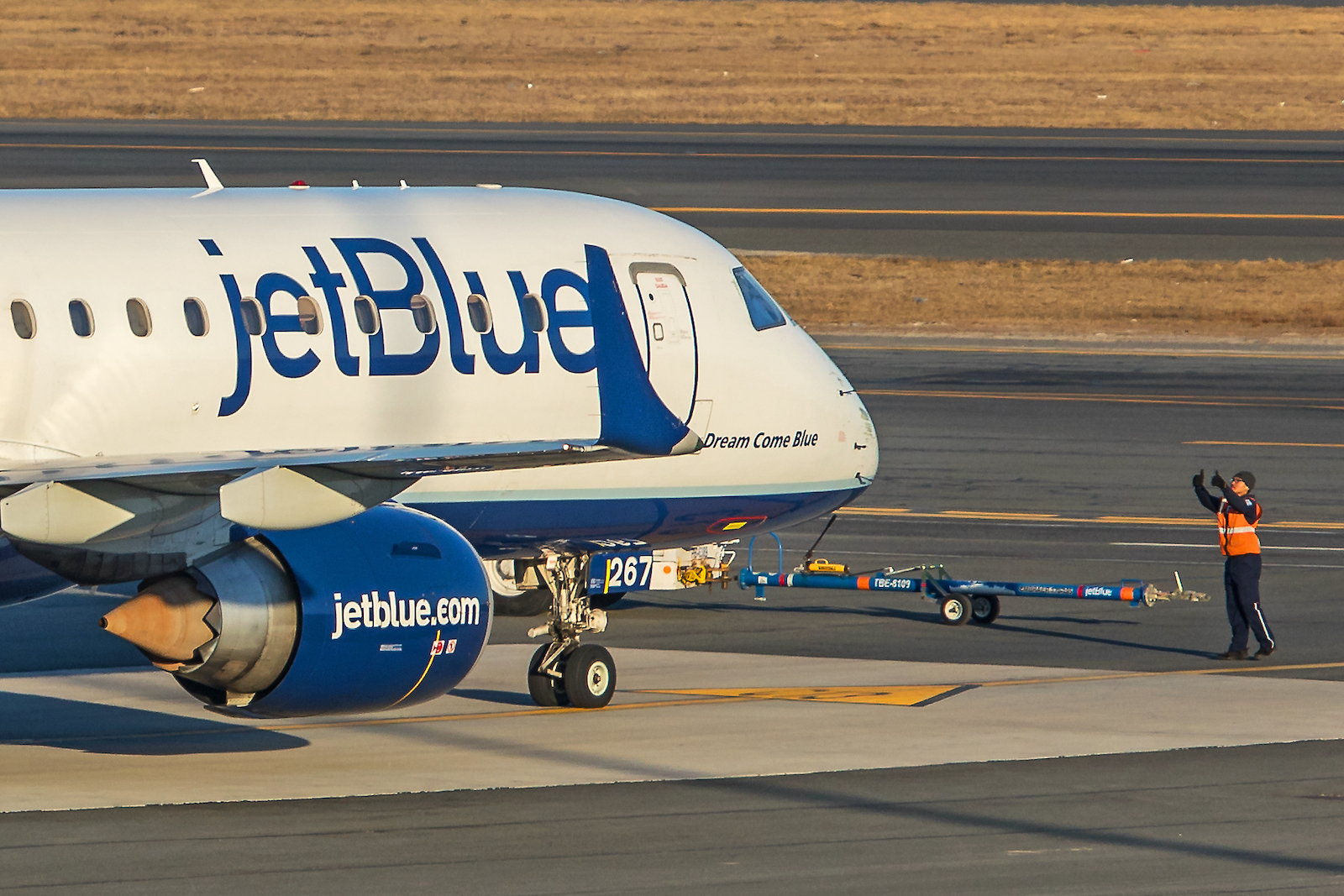
A JetBlue E190 in Boston (Photo: AirlineGeeks | William Derrickson)
After months of consideration, the U.S. Department of Transportation (DOT) officially has a new air carrier in the EAS game: JetBlue. On June 4, 2024, the DOT selected JetBlue as the next EAS carrier in the community of Presque Isle, Maine.
The contract of the current carrier, United, ended on May 31, 2024, but given the DOT didn’t come to a decision for this contract until June 4, the current carrier is required to stay until the new contract does start.
JetBlue will serve the community with the contract starting on Sept. 1, 2024, and will run for two years until August 31, 2026. The annual subsidy rate will be $10,412,703 for the first year with service being offered onboard the 100-seat Embraer E190. Service for the second year will be $11,235,581 onboard the 140-seat Airbus A220. All flights will be operated from Presque Isle to the airline’s hub in Boston.
This will also mark the first time either an E190 or an Airbus aircraft has been scheduled to fly to an EAS community. Presque Isle also becomes the first EAS community in the lower 48 to receive daily connections onboard a mainline-sized aircraft to a connecting hub. Sun Country does fly mainline-sized aircraft to the EAS community of Eau Claire, but those flights are not daily.
Given the flights were just awarded by the DOT on Tuesday, they have not yet been put on sale yet. But, the start date of the flights is just under three months away so the carrier should be putting them on sale relatively soon.
All documents pertaining to this contract can be found on regulation.gov.
Joey has always been interested in planes for as long as he can remember. He grew up in Central New York during the early 2000s when US Airways Express turboprops ruled the skies. Being from a non-aviation family made it harder for him to be around planes and would only spend about three hours a month at the airport. He was so excited when he could drive by himself, the first thing he did with his driver's license was get ice cream and go plane spotting for the entire day. He graduated from Western Michigan University in 2022 with a B.S. in Aviation Management & Operations and a Minor in Business, and currently works for a major airline in his hometown.
IndiGo Adds 10 Destinations in 2025
Following a banner year in 2023, the airline is looking to expand in less competitive markets while unveiling a new business class product.
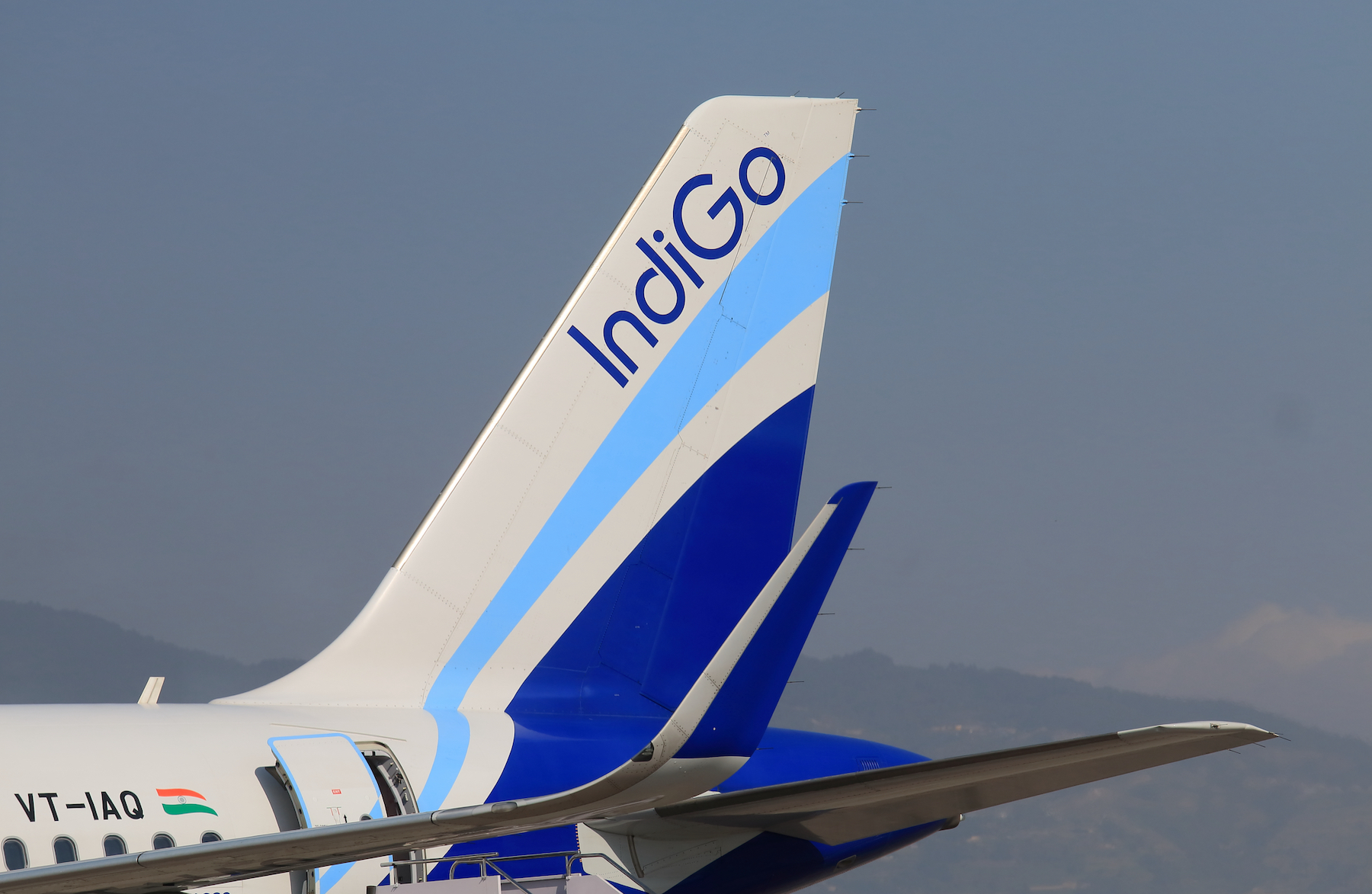
IndiGo is eyeing its next major growth opportunity following a banner year in 2023. The low-cost carrier currently operates to 88 domestic destinations and over 30 international destinations.
“With the growing desire and aspirations of Indians to fly international I think we have a great opportunity for also the more unknown places,” Pieter Elbers, CEO of IndiGo, said to Reuters.
IndiGo is aiming at international destinations. With the A321XLR, the carrier can spread its wings to Europe and farther in Asia. The airline’s European flight operations are under the auspices of codeshare partnership with Turkish Airlines. Elbers believes that Indian airlines have less than their fair share of the market. It is expected to add 10 destinations in 2025, including Mauritius and a new destination in Thailand, but Elers hasn’t gone into detail.
The carrier will go further in launching a domestic business class by the end of the year. Elbers said the new business class could entice passengers who never fly the product offering.
The Indian airline owns a fleet of more than 350 aircraft but 70 aircraft are grounded due to issues with Pratt & Whitney engines. India is best known for being one of the fastest-growing countries as IndiGo operates 2,000 daily flight operations. Last year, IndiGo shocked the aviation industry by inking a deal with Airbus for 500 A320 family aircraft.
IndiGo and Japan Airlines Sign Codeshare Partnership
Meanwhile. IndiGo and Japan Airlines have announced that they have agreed on a codeshare partnership starting later this year. Subject to government approval, Japan Airlines is expected to start codesharing on IndiGo’s domestic flights in the upcoming winter, connecting its Tokyo – India flights.
Japan Airlines currently operates daily services between Tokyo Haneda Airport and Delhi and three times a week services between Tokyo Narita Airport and Bengaluru. However, Indigo doesn’t provide services to Japan yet.
According to the agreement, Japan Airlines could expand its route map to 14 Indian cities, such as Mumbai, Chennai, Kolkata.
“The phase of the partnership expands the choices available to Japan Airlines customers for journeys to/from Japan, using IndiGo’s extensive network in India,” Abhijit DasGupta, Senior Vice President Network Planning & Revenue Management of IndiGo, said.
“With the extensive network, travellers to/from India and Japan will be able to book their flight on one ticket, and experience both IndiGo and JAL’s exceptional service,” Ross Leggett, Managing Executive Officer, Senior Vice President Route Marketing of Japan Airlines, said.
AirlineGeeks.com was founded in February 2013 as a one-person blog in Washington D.C. Since then, we’ve grown to have 25+ active team members scattered across the globe. We are all here for the same reason: we love deep-diving into the fascinating realm of the airline industry.
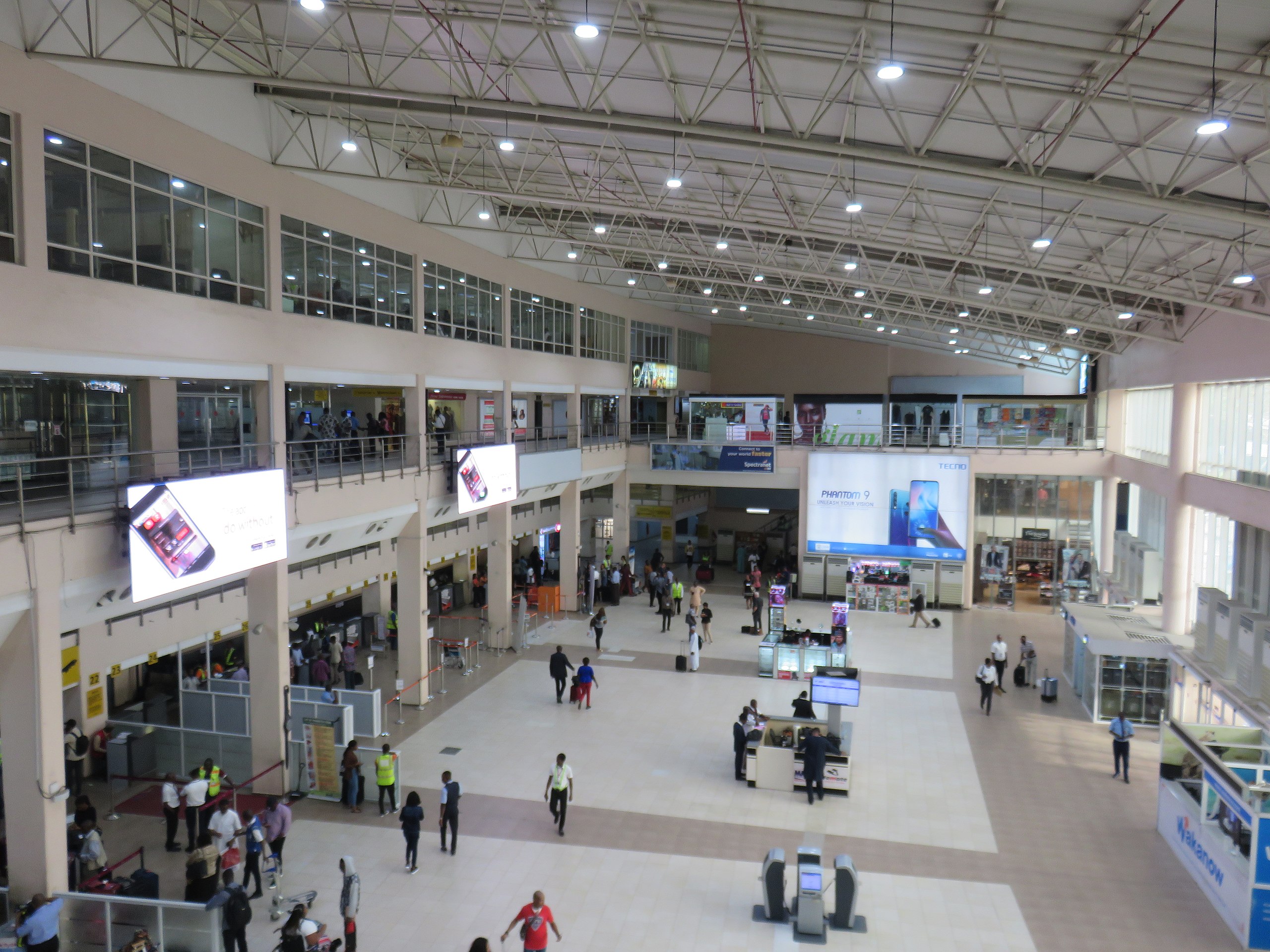
The terminal at Lagos Airport (Photo: PESP/ Wikimedia, CC BY-SA 4.0 , via Wikimedia Commons)
Nigeria has emerged as a noteworthy example in the repatriation of revenue from international airlines operating within its borders. At its peak in June 2023, blocked funds in Nigeria totaled $850 million, significantly impacting airline operations and finances. However, by April 2024, an impressive 98% of these funds have been released.
Despite this progress, airlines still faced challenges due to the devaluation of the Nigerian naira. Kamil Al-Awadhi, Vice President of the International Air Transport Association (IATA) for Africa and the Middle East, highlighted this during the IATA’s general meeting in Dubai from June 2 to 4, 2024.
Kamil Al-Awadhi expressed optimism. According to IATA, which represents over 330 members, the remaining $19 million is expected to be released soon. The blockage in Nigeria is due to the ongoing verification by the Central Bank of claims filed by commercial banks.
“We’ve done relatively really well with Nigeria. So, it kicked off in May last year when the new government stepped in. It has been extremely active, very engaged with the industry. So thankfully today we can actually close the Nigerian chapter,” added Kamil Al-Awadhi, “We’ve made significant strides with Nigeria. The government’s active engagement with the industry allows us to close this chapter.”
Willie Walsh, Director General of IATA, commended Nigeria’s efforts and emphasized the importance of reliable air connectivity. “We commend the new Nigerian government and the Central Bank of Nigeria for their efforts to resolve this issue. Individual Nigerians and the economy will all benefit from reliable air connectivity for which access to revenues is critical. We are on the right path and urge the government to clear the residual $19 million and continue prioritizing aviation,” he said.
Previously, Nigeria struggled with repatriation restrictions, leading some airlines to reduce operations. Even Emirates temporarily suspended flights to Nigeria. However, the carrier plans to resume operations on October 1.
Nigeria’s collaboration with Egypt has contributed to a 28% reduction in globally blocked funds, totaling $1.8 billion as of April 2024. Yet challenges persist in other African countries, including Algeria, CFA franc zone nations, Ethiopia, Eritrea, and Zimbabwe.
Walsh emphasized that efficient revenue repatriation is essential for airlines operating on thin margins. Access to rightfully earned revenues ensures critical connectivity and sustainable business operations.
Victor Shalton's love for aviation can be traced to when he was 11-years-old. As a seasoned aviation writer, he takes pride in providing the best aviation coverage around the globe and is passionate about advancing his skills in the aviation space. In addition, he loves travelling, writing, arts and while his speaking engagements have taken him around the world, he is proud to call Nairobi home.
A Fiji Airways A330 landing at LAX. (Photo: AirlineGeeks | William Derrickson)
Fiji Airways, the flag carrier of the Pacific nation of Fiji, will join the oneworld alliance as its 15th full member. The carrier, already a oneworld connect partner, announced the move during the IATA Annual General Meeting.
Fiji Airways will become a full oneworld member (Photo: Fiji Airways)
Previously, as a oneworld connect partner, travellers with oneworld status enjoyed limited benefits when traveling on Fiji Airways, and vice versa, and Fiji Airways had some collaborations with other oneworld carriers, such as the codeshare agreement with Finnair.
The full accession of Fiji Airways will mean that oneworld frequent fliers will be able to enjoy priority benefits and lounge access when flying the airline. It also means easier mileage and status earning for elite fliers when flying on the airline.
oneworld carriers will also benefit from its network, which can not only give access to the touristic island of Fiji but also link North America to various destinations in the Pacific. The latest member of oneworld can complement the networks of American Airlines and Qantas in the transpacific market.
Strengthening Oneworld in the Pacific
With the move, the alliance will secure its position as the dominant airline group in the Pacific region. Qantas, one of the alliance’s founding members, is the biggest airline in Australia, while its other members, including American, Cathay Pacific, Malaysia Airlines, British Airways, and Qatar Airways all boast considerable networks to the Pacific region.
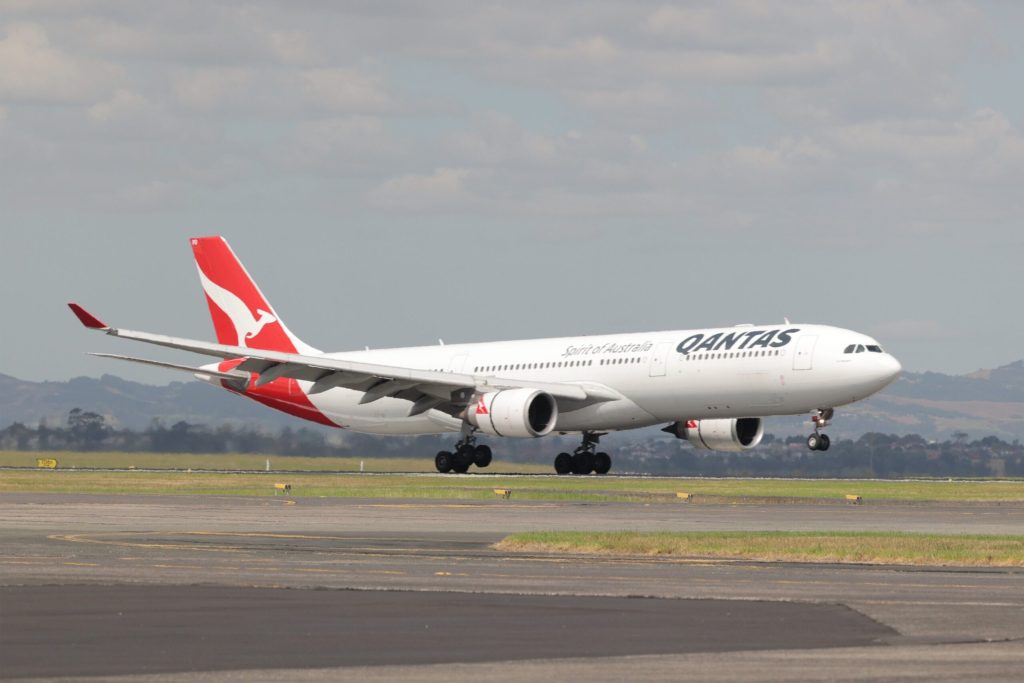
A Qantas A330 in Auckland. (Photo: Auckland Airport)
The airline has a considerable network from Nadi going to Australia and the surrounding islands, including New Zealand. It has also expanded its connections to North America in the recent decade, flying nonstop to Los Angeles, San Francisco, and Vancouver. In Asia, the carrier flies to Singapore, Hong Kong, and Tokyo.
The carrier has a fleet of Boeing 737s for medium-haul operations and a fleet of A330s and A350s for its long-haul network. The airline has a fleet of 14 aircraft, according to planespotters.com.
Growing Oneworld
The alliance will welcome Oman Air later this year, a new member announced at the IATA General Meeting in 2022. Since 2020, the alliance also saw the entrance of Alaska Airlines and Royal Air Maroc. The growth of the airline alliance has been focused on the Arab and Pacific region, where the alliance holds more dominant positions.
The alliance could also see Hawaiian Airlines joining its rank, becoming its third member in the United States, as early as the end of 2024. Several other carriers, including China Southern and MIAT Mongolian, have been rumored to become either full members or connect partners.
Anthony is an aviation enthusiast who grew up around the world from St. Louis to Singapore, and now lives in Amsterdam. He loves long-haul flying and finds peace in the sound of engine cruising. He aspires to share his passion for the sky though writing and providing another angle on the stories.
Mexico’s State-Owned Airline Orders Embraer Jets
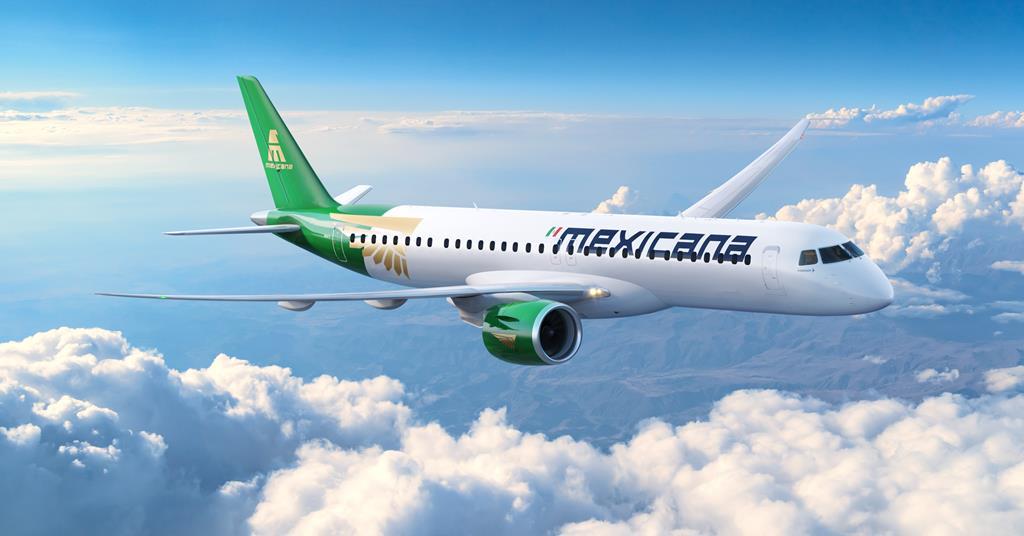
Mexicana, Mexico's state-owned carrier, announced an order for 20 Embraer E2 jets, becoming the first E2 operator in the country.
A rendering of Mexican's E2 aircraft (Photo: Embraer)
Mexicana de Aviación, Mexico’s state-owned carrier, announced an order for 20 Embraer E2 jets, becoming the first E2 operator in the country.
The order is split evenly between the E190-E2 and the larger E195-E2 models, with deliveries scheduled to begin next year. Mexicana will configure both aircraft with single-class seating, offering 108 seats on the E190-E2 and 132 seats on the E195-E2.
“We welcome Mexicana to the E2 family,” said Priscilla Doro Solymossy, VP of Sales and Marketing for Latin America and the Caribbean at Embraer Commercial Aviation in a press release. “Seeing the success and rapid growth Mexicana has achieved since it restarted operations in December 2023 has been remarkable.”
Mexicana de Aviación relaunched operations in December 2023 as part of the Olmeca-Maya-Mexica S.A. de C.V. Airport Group. The airline currently serves 18 destinations and has transported over 115,000 passengers so far.
Ryan founded AirlineGeeks.com in February 2013 and has spent more than a decade covering the airline business. His work has been featured by CNN, WJLA, CNET, and Business Insider. His aviation experience spans airport operations, Part 135 regulatory compliance, and airline crew workforce planning, along with time behind the yoke of a Cessna 172 and interviews with airline executives. Ryan now serves as Group President of Firecrown Media’s Aviation Group. He holds a B.S. in Air Transportation Management and an MBA from Arizona State University and teaches Airline Management at Embry-Riddle Aeronautical University.
The 2024 edition of the annual Aircraft Interiors Expo (AIX) was held last week from May 28-30 in Hamburg, Germany. Not only is the event a platform for suppliers and airlines to meet, but it is also an opportunity for companies to showcase their cabin interior and inflight entertainment products. Here are some highlights from this year’s event:
A High-Tech Next-Generation Business Class Suite
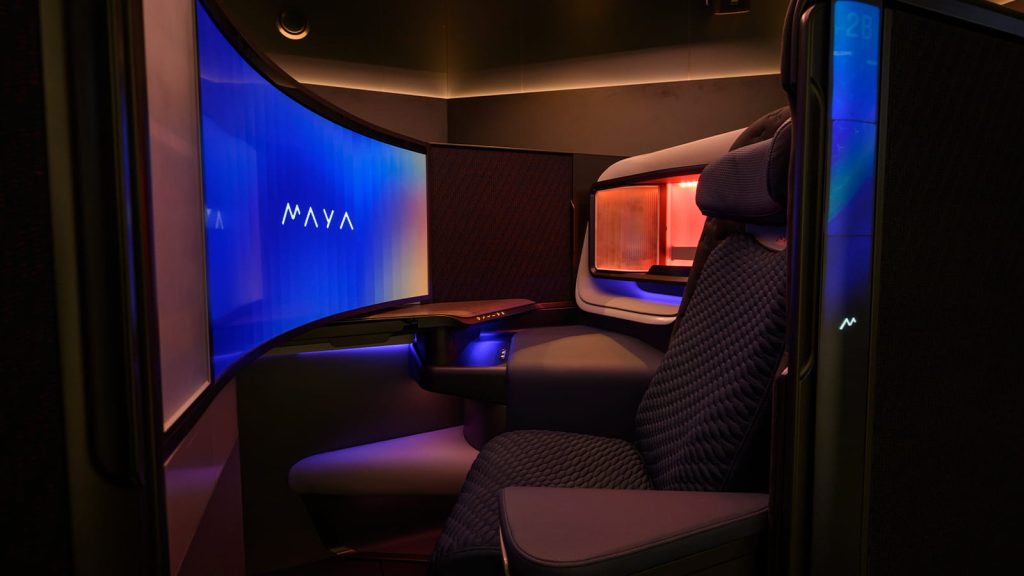
One of the biggest announcements from Hamburg last week was Panasonic Avionics’ and Collins Aerospace’s joint unveiling of MAYA, a next-generation business class concept. MAYA draws from Collins Aerospace’s expertise in design and Panasonic Avionics’ experience in technology to create a futuristic business class suite.
The suite has a seat comfort technology known as ARISE, which automatically optimizes cushion pressure, regulates environmental temperature, and reduces peak vibration disturbances. Meanwhile, the most visually captivating feature of the product is the 45-inch ultra-wide, ultra-high-definition curved screen with a headphone-less audio system. Panasonic noted that the screen is three times larger than typical business class screens and is in the same 21:9 screen format used in cinemas.
A next-generation business class suite known as MAYA, jointly unveiled by Collins Aerospace Panasonic Avionics at AIX 2024 (Photo: Collins Aerospace)
An All-Business Turboprop
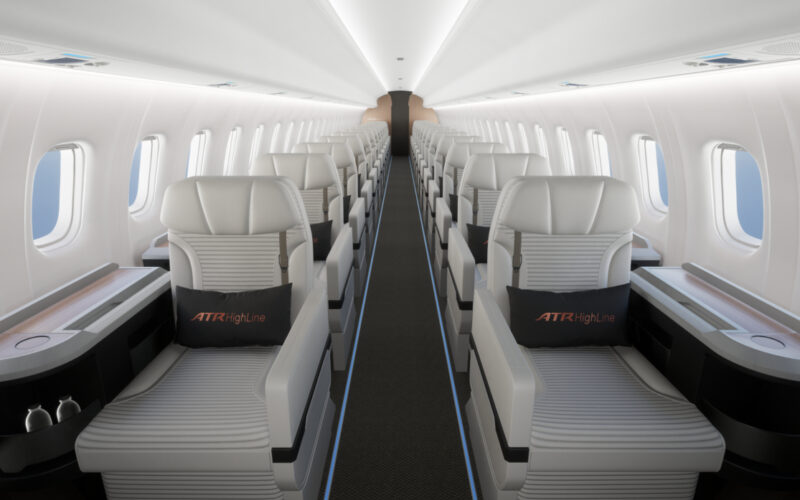
Last year, French–Italian aircraft manufacturer ATR unveiled a collection of cabin configurations for its turboprops known as ATR HighLine. Among these was an all-business class configuration. The company revealed details of the design at AIX last week.
The all-business class interior has a 1-1 configuration with seats that were custom-made for ATR by seating manufacturer Geven. Each seat will have direct window and aisle access and a width of 21.6 inches – a size rarely seen on board turboprop aircraft, which typically feature economy-only seating. Seats will also have a personal side console that serves both as a storage compartment and as a table.
Malaysia-based Berjaya Air will be the launch customer for the product. The airline will operate two ATR 72-600 with the HighLine all-business class configuration from 2025 to serve the group’s luxury hotels and resorts.
ATR’s HighLine all-business class cabin design (Photo: ATR)
The World’s Lightest Aircraft Seat: Expliseat’s TiSeat 2
French seat manufacturer Expliseat produces the world’s lightest lineup of commercial aircraft seats. The current iteration is known as the TiSeat 2 and has different variations for turboprops and larger narrowbody jets.
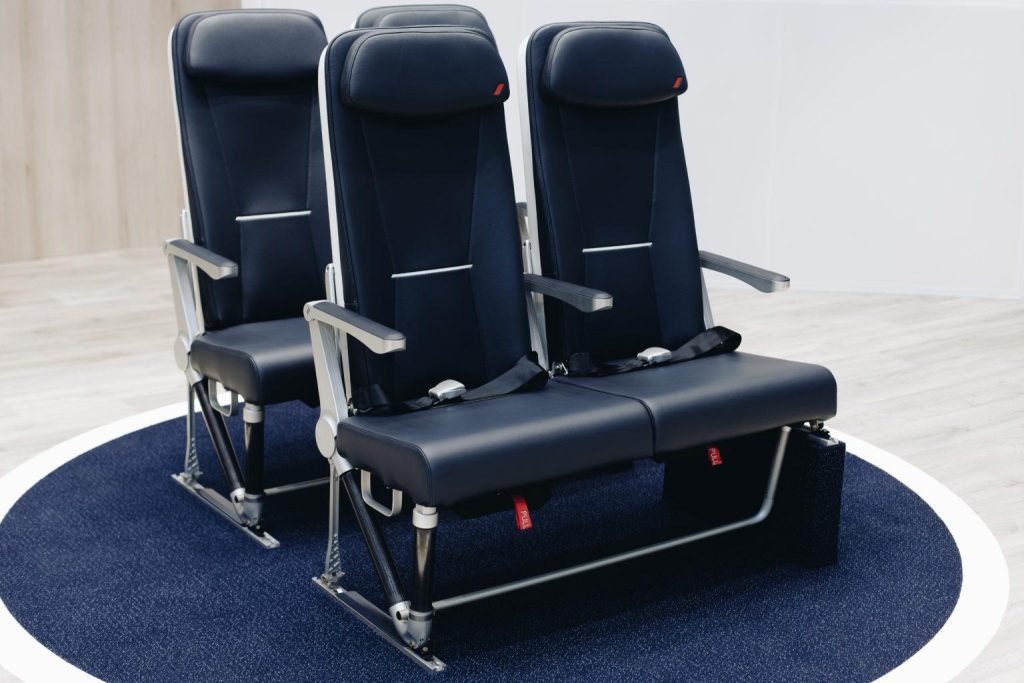
The company unveiled a third model in Hamburg, known as the TiSeat 2 X. This new product is designed for regional jets and will debut on Embraer 190s operated by Air France subsidiary HOP!. In addition to typical seat features like a tray table and literature pockets, the TiSeat 2 X will also include a personal electronic device holder equipped and USB A and C ports.
Expliseat’s TiSeat 2 X lightweight seat will debut on Air France’s regional subsidiary HOP! (Photo: Expliseat)
During AIX, Expliseat also signed a purchase agreement with Jazz Aviation to renew the cabins of 25 De Havilland Canada Dash 8-400 with the TiSeat 2 V turboprop product. The Canadian carrier operates regional flights under the Air Canada Express brand.
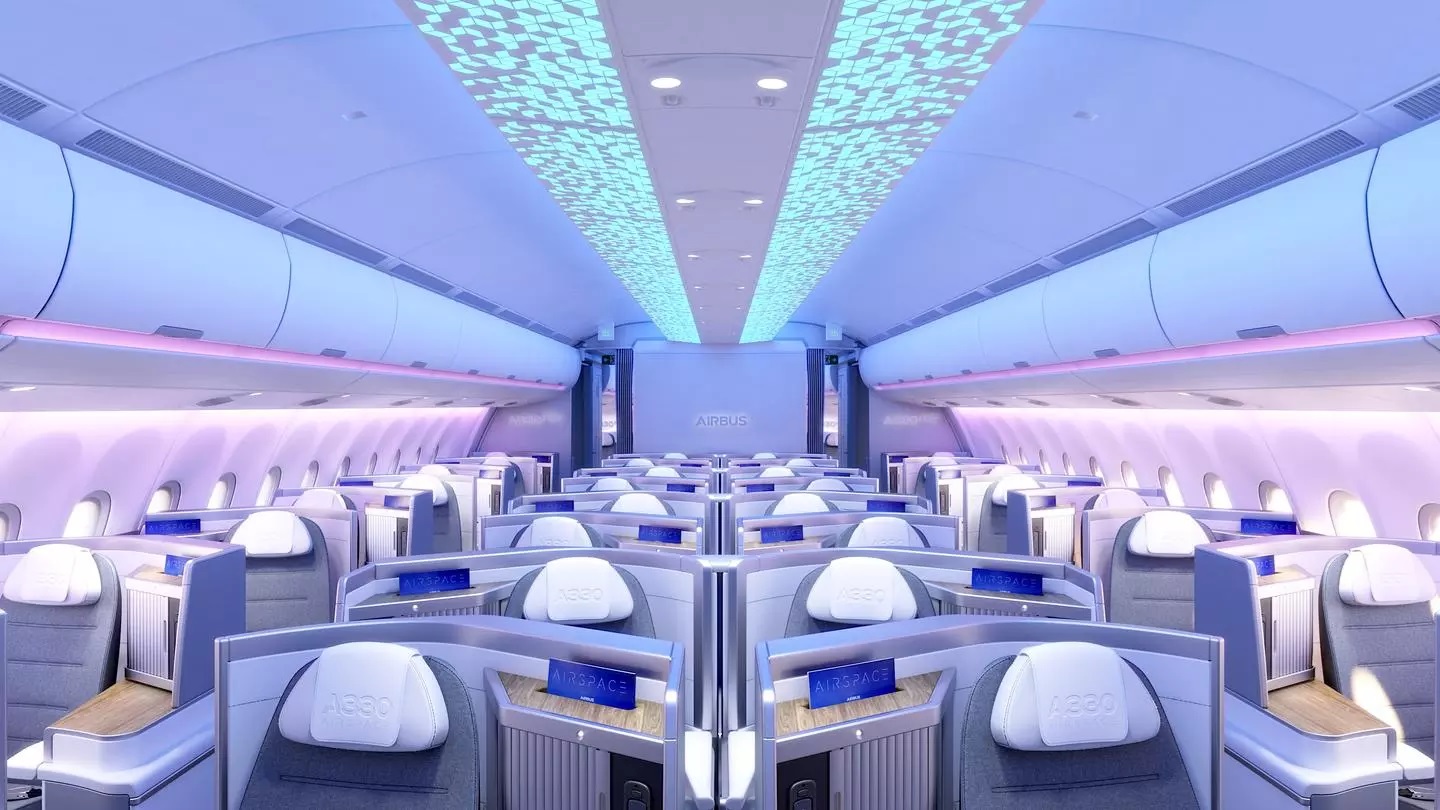
New Airspace Interior Features for the A330neo
Airbus has announced that it will be introducing enhancements to its A330neo Airspace cabin concept. The changes will bring consistency with the Airspace features seen on the A350 and A320 family.
New ceiling lighting at the second set of doors with the Airspace stencil pattern will become standard on all new A330neos delivered from Q1 of 2026. Starting in 2027, airlines will also have the option of having a new “Airspace Hero Light” in the premium cabin space between the first two sets of doors. The lighting system will be customizable with 16 million colors and a unique pattern.
The Airbus Airspace stencil lighting pattern on board an Airbus A321neo (Photo: AirlineGeeks | Andrew Chen)
There will also be a new sidewall and matching ceiling panels consistent with A250 and A320 family Airspace cabins. These elements create five millimeters of extra shoulder clearance for each window seat and 50 millimeters more foot space for passengers. The lighter weight of these panels will also provide weight savings throughout the aircraft for airlines.
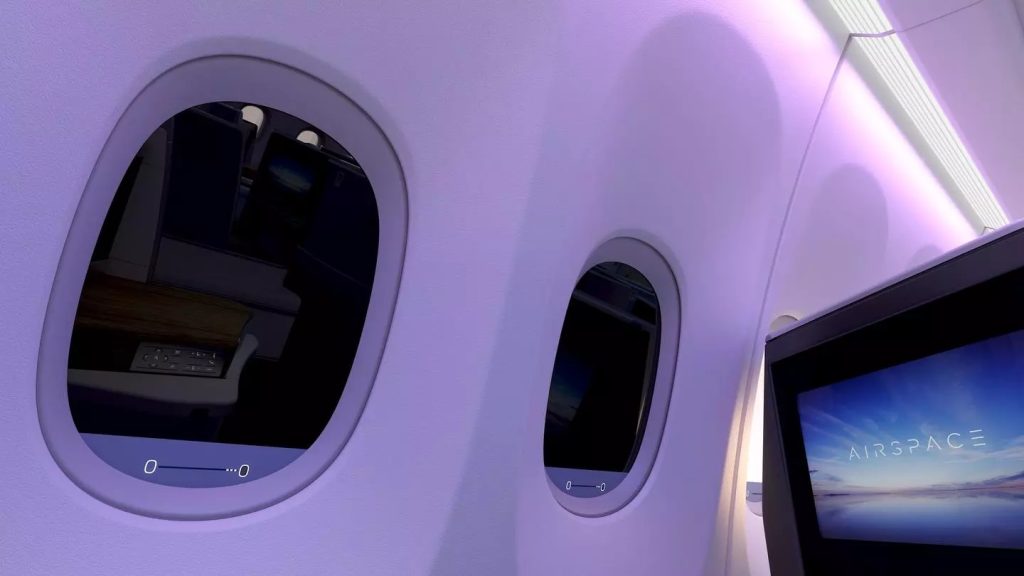
Electro-dimmable windows will also become an option on A330neos in the premium cabin area between the first two sets of doors. These windows replace traditional window shades with technology that allows passengers to adjust the level of dimming, while also having the ability to block 99.999% of visible light and the sun’s infrared energy.
Airbus Airspace electro-dimmable windows (Photo: Airbus)
Andrew is a lifelong lover of aviation and travel. He has flown all over the world and is fascinated by the workings of the air travel industry. As a private pilot and glider pilot who has worked with airlines, airports and other industry stakeholders, he is always excited to share his passion for aviation with others. In addition to being a writer, he also hosts Flying Smarter, an educational travel podcast that explores the complex world of air travel to help listeners become better-informed and savvier travelers.
World War II veterans embark on a charter flight from DFW Airport (Photo: AirlineGeeks | Ryan Ewing)
A group of 68 World War II veterans embarked on a whirlwind trip to France in recognition of the 80th anniversary of D-Day. Leaving Dallas/Fort Worth on Friday, American donated a specially-chartered Boeing 787-9 Dreamliner for the trip across the pond.
Of the veterans onboard, the oldest was 107 years old with the youngest being 96. They were also joined by six Medal of Honor recipients along with over 50 cadets and midshipmen from various service branches who accompanied the veterans.
Starting in Paris, the group will venture north over the next several days as they visit memorial sites in Normandy. The 80th anniversary of the D-Day operation is on Thursday, June 6.
American held a send-off ceremony for the veterans at its Fort Worth headquarters with actor Gary Sinise (Photo: American Airlines)
“It’s not every day that we get an opportunity to host our nation’s heroes,” said American’s Chief Operating Officer David Seymour during a send-off event at the carrier’s Fort Worth headquarters.
An Army veteran himself, Seymour added, “We fly around this world today because of what you did 80 years ago.”
Veterans from across the U.S. participated in the trip. For many, it was their first time back in France since the war.
Here at @DFWAirport where @AmericanAir is flying several World War II veterans to France on a specially-chartered 787 Dreamliner.
“Every one of us here is in your debt. You brought victory to the freedom-loving world and we thank God that you won that war. Where would the world be today if the outcome had been reversed?” said actor Gary Sinise, best known for his role as ‘Lieutenant Dan’ in the film Forrest Gump. His foundation sponsored this trip and many like it.
Ryan founded AirlineGeeks.com in February 2013 and has spent more than a decade covering the airline business. His work has been featured by CNN, WJLA, CNET, and Business Insider. His aviation experience spans airport operations, Part 135 regulatory compliance, and airline crew workforce planning, along with time behind the yoke of a Cessna 172 and interviews with airline executives. Ryan now serves as Group President of Firecrown Media’s Aviation Group. He holds a B.S. in Air Transportation Management and an MBA from Arizona State University and teaches Airline Management at Embry-Riddle Aeronautical University.
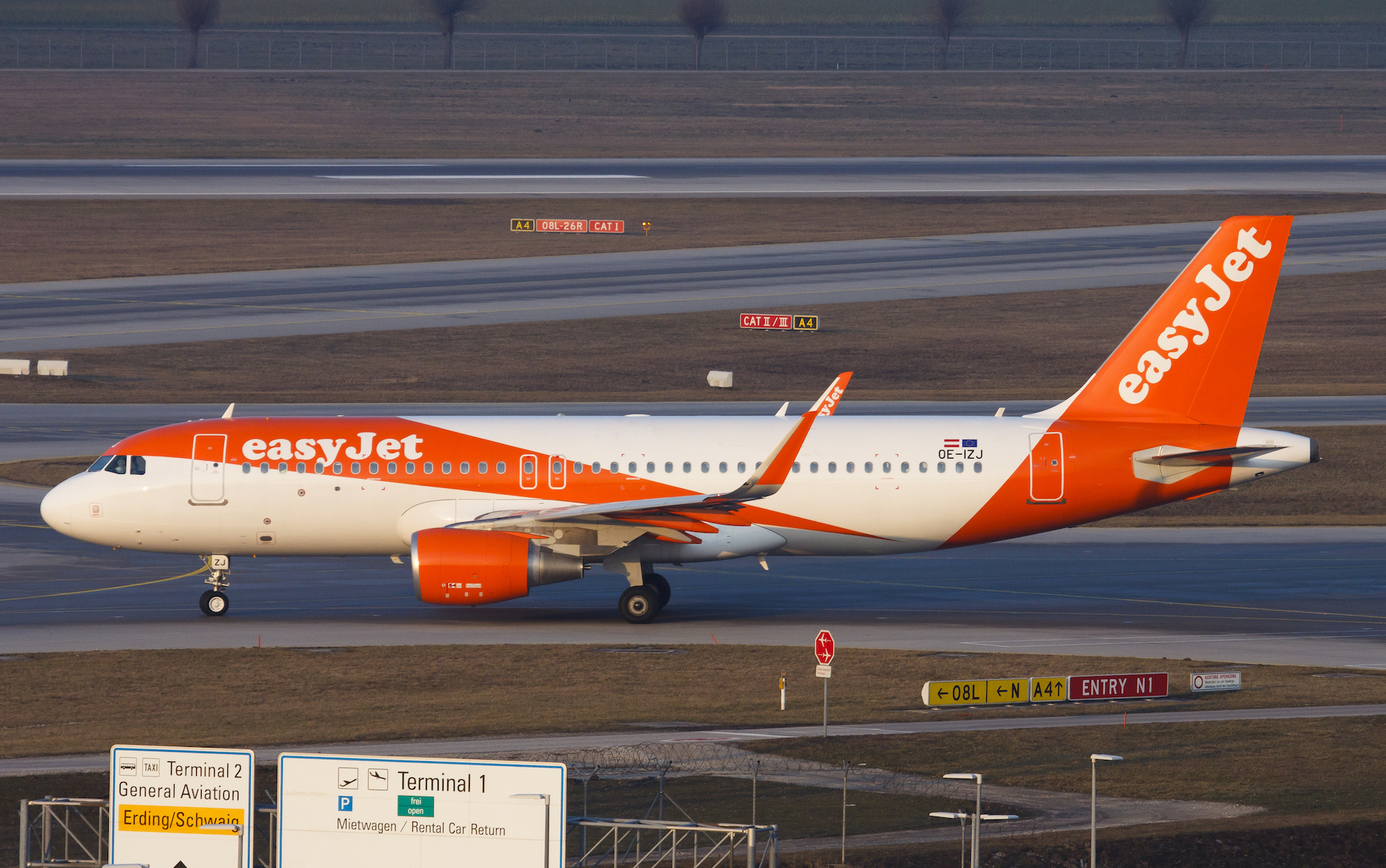
An EasyJet A320 with Sharklets (Photo: AirlineGeeks | Fabian Behr)
European low-cost carrier easyJet has recently revealed that it will commence a new route from Malta to Liverpool’s John Lennon International Airport. This comes after the airline has rapidly grown the Mediterranean island nation’s hub with flights to Amsterdam, Bristol, Basel, and Nice.
The route marks the 10th out of the carrier’s southern European hub since it started flying there in March 2008. The flights to Liverpool will operate twice weekly, departing on Tuesdays and Sundays.
Flights to John-Lennon will only increase the number of passengers who travel through the hub, with the current figures according to easyJet being over 400,000 customers annually. This only adds to the running total of passengers who have traveled with easyJet to the Mediterranean island, a number which the airline claims to be over four million.
Rather than being a seasonal route, something which is extremely prevalent for European carriers operating to warmer destinations, easyJet plans to fly to Malta all year round. The Luton-headquartered airline declared the starting date for the flights linking the two cities to be Dec. 10, 2024.
easyJet has not only continued to incorporate more destinations into its Malta base but also into its Northern England hub, having added four more for the UK’s fifth most populous city in the last year.
To the CEO of Malta International Airport, Alan Borg, the benefits of the network expansion are clear. In a press release submitted by easyJet, the CEO stated that “the addition of the Liverpool route to easyJet’s schedule will support Malta International Airport’s efforts to enhance connectivity with the United Kingdom, as this market, one of our biggest in terms of tourism, edges closer to pre-pandemic traffic levels.”
On the other side of the new flight, Paul Winfield, the aviation director of Liverpool John Lennon airport referenced easyJet’s competition on the route, namely Ryanair, and how they’ve only managed to operate 9% of all flights to Malta from the Northwest. Winfield said that he believed that this route had “significant potential to grow from here.”
Sam Jakobi is a young aviation journalist based in London, U.K. A lifelong Airbus fan, he has adored aviation for as long as he can remember. Sam writes articles and conducts interviews with members of the aviation community.
Etihad Stays Nimble With Its Fleet Plan
The Airbus A380 Superjumbo may get to stay longer in the carrier's fleet with Neves being quoted to leave them till "at least 2032."
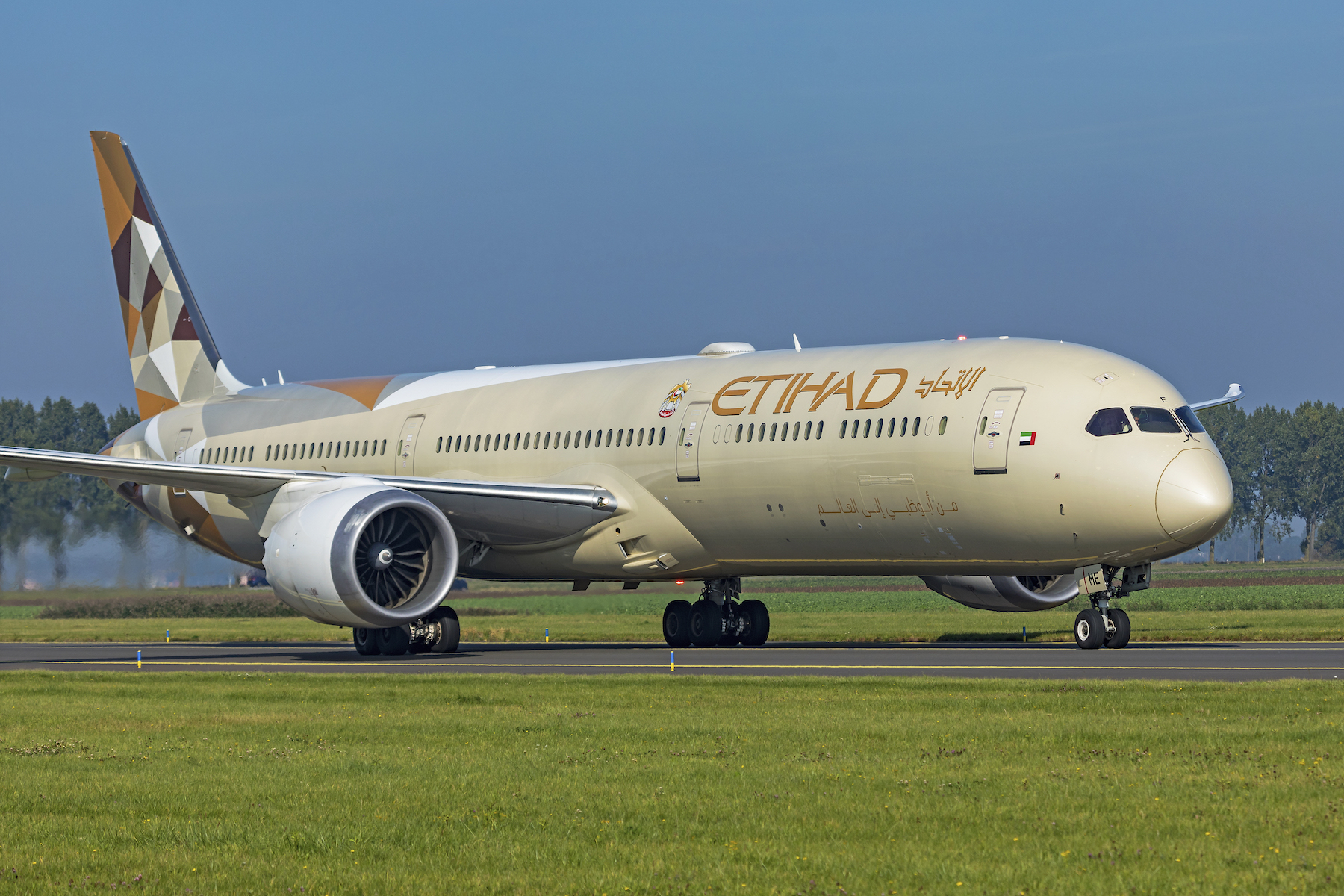
An Etihad Airways Boeing 787-10 Dreamliner. (Photo: AirlineGeeks | William Derrickson)
In a recent interview with aeroTelegraph, Etihad’s CEO Antonaldo Neves shared the company’s fleet plan for the next several years.
After a significant restructuring in 2017-2020, Etihad Airways became stronger and more resilient. The active fleet consists of more than 80 frames with an orderbook telling a growth story.
Neves outlined the goals that the future fleet should be able to support. Rather than competing directly with the Middle Eastern giants, he sees Etihad focused on the key growth areas in its region. This would mean four daily flights to most airports in neighboring countries like India, Pakistan, and countries in the GCC region, allowing for more seamless connectivity both ways.
Complementary to such expansion, the carrier would grow operations to farther points like Europe, the U.S. East Coast, or Southeast Asia to double daily. To fulfil such plans, Etihad would need “around 150 to 160 aircraft,” the CEO mentioned.
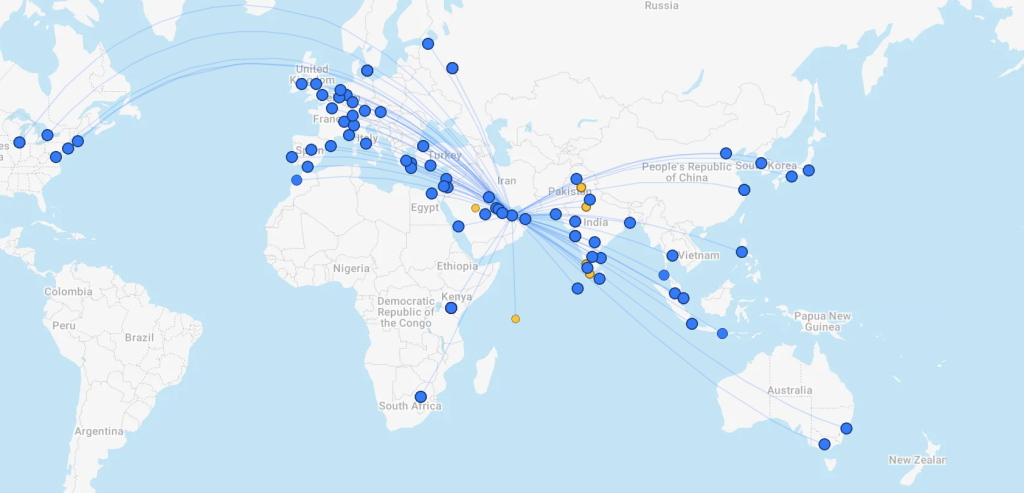
Etihad Airways network in June 2024 (Photo: flightconnections.com)
A Strong Backbone With a Nimble Spear
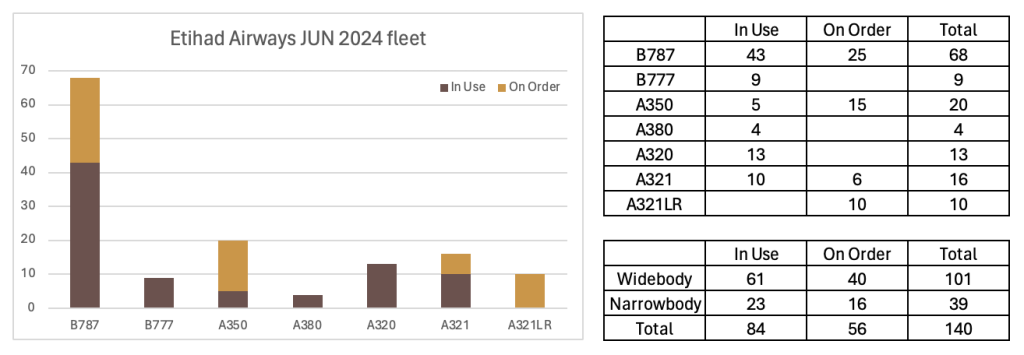
Compared to its pre-2017 fleet, Etihad acquired a significant number of Boeing 787 Dreamliners and five Airbus A350 aircraft. Those are going to be the widebody workhorses for the carrier in the coming years. Complementary to the new frames, the airline still operates Boeing 777-300s and, recently reintroduced, Airbus A380 aircraft. They are well-fitting into serving long-haul markets like the U.S. East Coast or Australia and, in the case of the A380s, also the high-density London Heathrow route.
The Airbus A380 Superjumbo may get to stay longer in the carrier’s fleet with Neves being quoted to leave them till “at least 2032.” By this time the Boeing 777-300 fleet will also need replacement.
Even though Etihad Airways was one of the first carriers to place an order in 2013 for the upcoming Boeing 777X aircraft, now the deal is restructured with the airline being able to get more Boeing 787 Dreamliners instead. This might very well be the case as the CEO doesn’t see the airline ordering back the 777Xs for at least five years now. This move would create a very strong backbone for the carrier of almost 70 Boeing 787 Dreamliners.
The exciting part of Etihad’s fleet plans lies in the narrowbody segment. The entire fleet of the carrier consists of Airbus A320 family airframes, including the A320, A321, and soon-to-be-delivered A321LR. On top of the existing A320/A321 fleet that the carrier has already reactivated, it has secured leases on six new A321neos that were intended for Bamboo Airways in Vietnam but are not being taken by that carrier.
Those are expected to arrive in Abu Dhabi as soon as June and July of this year. The 10 Airbus A321LRs will arrive more gradually with the first expected also in June 2024, according to the CEO. The entire Airbus A320 fleet with allow the carrier great flexibility from short one-hour-long GCC flights up to seven-hour-long routes in Europe and Asia.
Etihad Airways fleet in June 2024 (Photo: Filip Kopec)
Up To 40 Airbus A321LRs
From the outlined future fleet of 150 to 160 planes, Neves sats around 80 to 100 will be widebodies, while 60 to 80 will be narrowbodies, including 30 to 40 A321LRs. The current orderbook seems to be confirming the first part already, but so far there are only 10 Airbus A321LRs on order. Will that change over time? This will probably depend on the performance within the fleet.
The CEO says that the aircraft is expected to be equipped with 144 economy class seats and 16 fully flat business class seats. That will be a significant improvement over the current business class seats mounted in the carrier’s narrowbodies as they do not recline to fully flat. This is foreseen to be a setup similar to JetBlue’s Mint Suite and Mint Studio, with the first rows of seats featuring additional space.
A passionate aviation enthusiast that started off his career as an aerospace engineer, but found his true calling on the commercial side of the airline business. Now as a finance guy among avgeeks and an avgeek among finance guys, he has experience working in the Revenue Divisions of three airlines. In his spare time he enjoys traveling, but admittedly sometimes is more about the journey than the destination.
American Flight Attendants Told to Prepare for Strike Action
Despite months of negotiations and mediation, American failed to reach an agreement with the union representing its flight attendants.
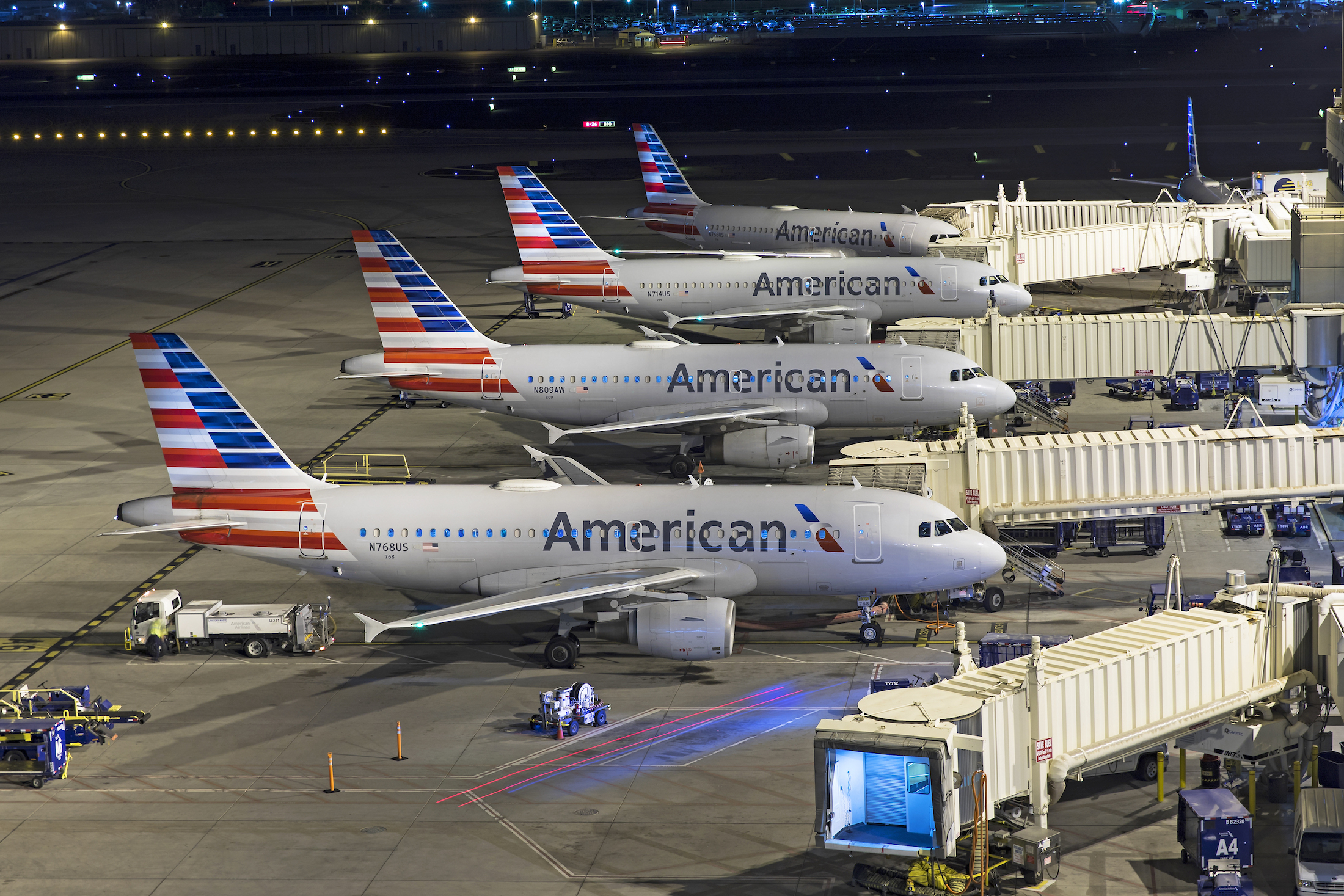
American Airbus aircraft in Phoenix (Photo: AirlineGeeks | William Derrickson)
Recently, the union representing roughly 28,000 flight attendants at American announced that the airline failed to reach an agreement after intensive contract negotiations and that as a result, members should prepare for strike action when given permission.
The Association of Professional Flight Attendants (APFA) and American had two weeks of mediation with the National Mediation Board (NMB) in Washington, D.C. The sessions were followed by three weeks of discussions in Dallas. However, the two parties failed to reach an agreement.
In a statement, according to the union, the NMB will potentially bring the airline and union back together in a so-called last-ditch effort within the next two weeks. Even so, if American and the union refuse to budge and resolve the ongoing matter, the NMB may release the flight attendants for strike action.
In the meantime, it will be up to the NMB and potentially other federal government officials to decide whether the carrier’s flight attendants can strike and not before a 30-day cooling-off period. Flight attendants were advised not to engage in illegal work stoppages and slowdowns.
Benjamin has had a love for aviation since a young age, growing up in Tampa with a strong interest in airplane models and playing with them. When he moved to the Washington, D.C. area, Benjamin took part in aviation photography for a couple of years at Gravelly Point and Dulles Airport, before dedicating planespotting to only when he traveled to the other airports. He is an avid, world traveler, having been able to reach 32 countries, yearning to explore and understand more cultures soon. Currently, Benjamin is an Air Transporation Management student at Arizona State University. He hopes to enter the airline industry to improve the passenger experience and loyalty programs while keeping up to how technology is being integrated into airports.
Sign-up for newsletters & special offers!
Get the latest stories & special offers delivered directly to your inbox