









Stories

IndiGo Contemplating First Widebody Jet Order

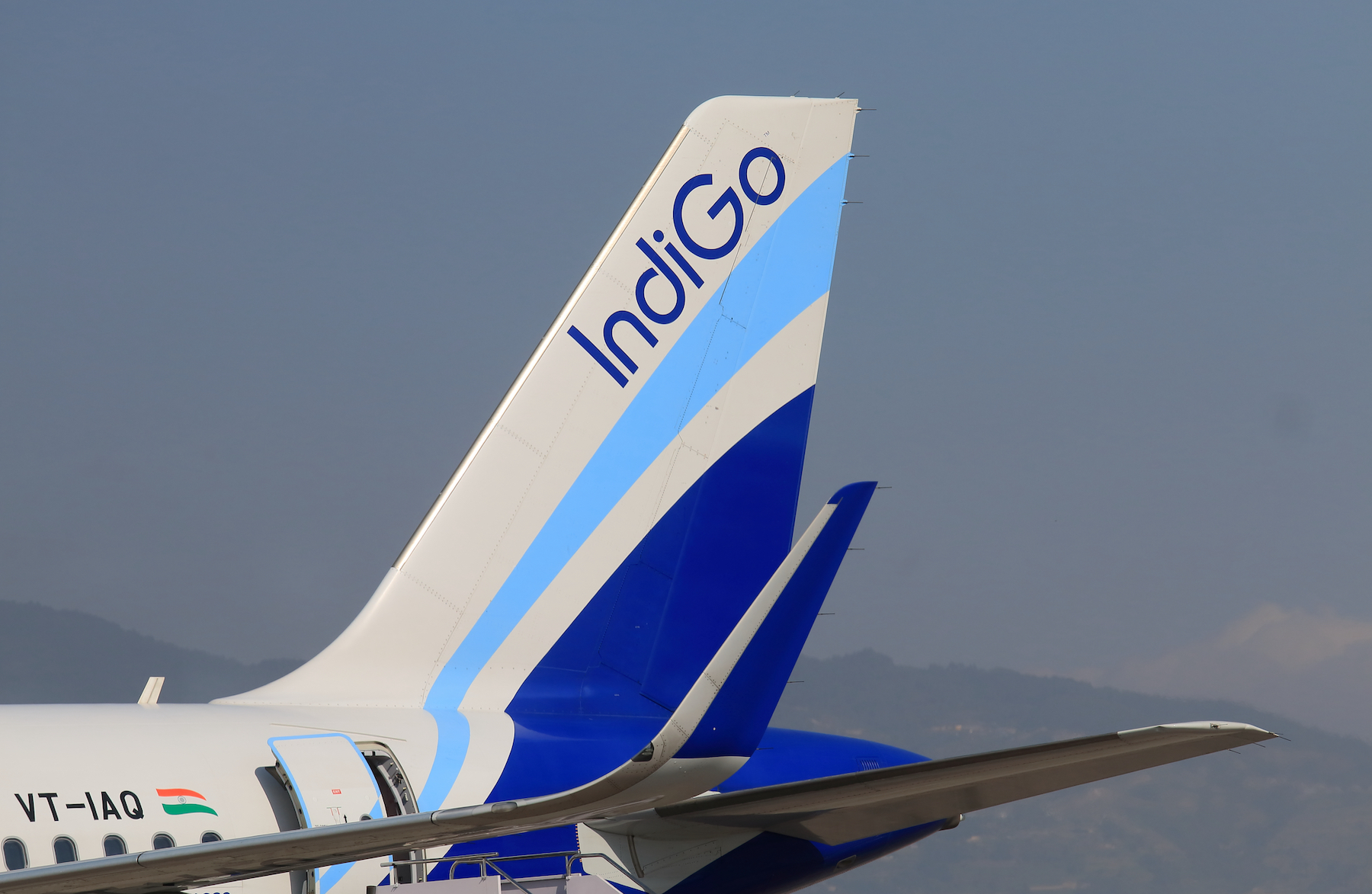
Word has come out that Indian low-cost carrier IndiGo is mulling an order for around 30 Airbus A350s, according to Bloomberg.

An IndiGo aircraft (Photo: Shutterstock)

Word has come out that Indian low-cost carrier IndiGo is mulling an order for around 30 Airbus A350s, according to Bloomberg. Widebody aircraft from Airbus recently made a comeback in the Indian market with Air India’s order for the A350 aircraft

IndiGo has played around the idea of maintaining widebody aircraft in its fleet several times in recent years, however, none reached fruition. The airline currently operates two wet-leased Boeing 777s from Turkish Airlines operating the Mumbai-Istanbul and Delhi-Istanbul routes. It might be said that, by wet leasing, IndiGo was testing out the feasibility of inducting widebody aircraft in its fleet. 

The low-cost carrier managed to carry more than 100 million passengers in 2023. The goal is to double that figure by the end of the decade. Something for which the airline has hopefully adequately planned in terms of fleet size. The Indian industry leader has huge orders placed with Airbus. Figures state that IndiGo has a backlog of 1,000 aircraft with the French manufacturer. 

The no-frills airline has maintained a fairly uniform fleet, operating Airbus A320s and A321s. Since 2017, the ATR 72 has also been inducted into the fleet. 

Why Would IndiGo Purchase Widebodies

The reason for inducting widebody aircraft is seemingly pretty straightforward: to target the impressive and ever-growing international passenger traffic to and from India. The reason the Boeing 777s were wet-leased is also the same; to tap into the lucrative India-to-Turkey traffic while not committing to operating a widebody aircraft full time. 

Keeping all the above in mind, IndiGo has all the reasons to invest in widebody aircraft to increase its stake in international traffic. However, there also have been multiple cases where low-cost carriers, when venturing into long-haul routes, end up floundering and wrapping up operations. Airlines like Laker Airways, WOW, and most recently Norwegian all operated long-haul routes with a low-cost model and ended up declaring bankruptcy at some point.

It is not necessary that by operating long-haul flights, IndiGo is putting itself in danger, however, all steps need to be taken very carefully when committing to something like inducting widebody aircraft into an airline that has exclusively operated narrowbodies. 

End of an Era: Asiana Plans to Retire Last 747

Asiana Airlines announced the retirement of its last Boeing 747-400, with plans for its final flight on March 25, 2024, marking the end of an era.

An Asiana Airlines Boeing 747 approaching Frankfurt Airport. (Photo: Shutterstock)

Asiana Airlines took to social media in late February to announce the retirement of its last Boeing 747-400 aircraft, with a scheduled date of retirement of March 25, 2024.

Asiana stated that the aircraft, with registration HL7428, will operate a single daily flight from Seoul and Taipei up until retirement. The aircraft is scheduled to fly segments OZ711 and OZ712.

Airframe History

The airframe, with serial number 28552, was delivered straight to Asiana on June 18, 1999. In its illustrious 25-year career with the airline, the airframe has traveled the world from its Seoul base, including visits to Frankfurt, New York, Los Angeles, Manila, and Hong Kong. During the COVID-19 pandemic, the airline parked this airframe in Seoul. After parking the airframe once again in May 2022, the airline redeployed the aircraft to service with flights to Changchun.

The 747-400 has had an extensive history for the airline, with the carrier receiving its first airframe in June of 1993. Since 1993, the carrier ended up operating 18 total 747-400s, at one point serving as one of the main aircraft types in the carrier’s international network.

An Asiana Boeing 747-400 (Photo: AirlineGeeks | William Derrickson)

The 747-400 reigned supreme in the 1990s and 2000s in the Asia-Pacific region. Nearly every major carrier operated the fleet type, including Qantas, Thai Airways, Air India, Air China, Singapore Airlines, Cathay Pacific, and many others. However, with the retirement of HL7428, the number of 747-400s operating in the region has significantly dwindled. The last scheduled operator is Air China.

Carriers in the region, including future merger partner Korean Air, have adopted the Boeing 747-8i, along with other higher-efficiency aircraft. Recently, Korean Air, in preparation for the merger, announced an order for 33 Airbus A350 aircraft, following the plan of its fleet renewal process.

As both Airbus and Boeing continue to announce high-efficiency aircraft, and airlines plan their fleet renewal, these four-engine aircraft will continue to be retired from commercial service. Some of these frames will find new life in the freight sector, with a conversion to become a freighter, while others will end up sitting in an aircraft boneyard, waiting to be scrapped.

Arya Karnik

Ever since he was a kid, Arya has been interested in aviation. With his entire family overseas, he has taken many family trips worldwide to places like the United Kingdom and India. He lives in Colorado but attends The University of Alabama, studying Computer Engineering with a minor in Computer Science. He hopes to obtain his PPL and eventually translate his engineering degree to working in operations at an airline.

Faulty Brake Install Blamed for Boeing 737 Overrun

Issues involving a brake replacement project are being blamed for a February overrun incident, according to a NTSB report.

American 737
An American 737-800 landing at DFW Airport. (Photo: AirlineGeeks | William Derrickson)

Issues involving a brake replacement project are being blamed for a February overrun incident, according to a preliminary National Transportation Safety Board (NTSB) report. On Feb. 10, 2024, American flight 1632, a Boeing 737-800 flying from Washington Reagan National Airport (DCA) to Dallas/Fort Worth International Airport (DFW), experienced a “brake system anomaly” during landing.

The 15-year-old aircraft – registered as N991AN – initially landed safely on runway 17L but came to a stop beyond the threshold area. There were no injuries reported among the 104 passengers and crew onboard.

“The safety of our customers and team members is our top priority and we are fully cooperating with the National Transportation Safety Board in its investigation of American Airlines flight 1632,” a spokesperson from the airline said in a statement.

Initial findings indicate that the aircraft touched down at a normal ground speed of 150 knots before departing the end of the runway at 30 knots. The agency’s preliminary report highlights potential problems with recent maintenance performed on the aircraft’s brakes.

The airline had just completed a project replacing the airplane’s steel brakes with carbon brakes four days earlier on Feb. 6. During this maintenance project, the NTSB believes that hydraulic lines connected to the brakes may have been incorrectly reattached.

According to Flightradar24 tracking data, N991AN had been at the airline’s Tulsa, Okla. maintenance facility from Feb. 1 to Feb. 7. After returning to revenue service, the aircraft completed 17 flights between Feb. 7 and Feb. 10. The aircraft returned to revenue service again over a week later on Feb. 19 following the incident.

During the landing phase, the automatic braking system malfunctioned shortly after touchdown, forcing the pilots to rely on manual braking and thrust reversers to slow the aircraft. Despite their efforts, the aircraft continued at a higher speed than expected as it neared the end of the runway.

N991AN overran runway 17L at DFW on Feb. 10, 2024 (Photo: preliminary NTSB report)

The captain – who had initially been the pilot monitoring – then deployed maximum reverse thrust and notified air traffic control. “American 1632, total brake failure, we are departing the end of runway 17L, roll crash fire rescue,” the captain told the tower in a radio transmission.

The aircraft eventually came to a stop past the 8,500-foot runway’s end but within the paved overrun area. The NTSB says its investigation into the incident is ongoing.

Editor’s Note: This story was updated on Thursday, March 21, 2024 at 4:41 p.m. ET to add a statement from the airline. 

Ryan Ewing

Ryan founded AirlineGeeks.com in February 2013 and has spent more than a decade covering the airline business. His work has been featured by CNN, WJLA, CNET, and Business Insider. His aviation experience spans airport operations, Part 135 regulatory compliance, and airline crew workforce planning, along with time behind the yoke of a Cessna 172 and interviews with airline executives. Ryan now serves as Group President of Firecrown Media’s Aviation Group. He holds a B.S. in Air Transportation Management and an MBA from Arizona State University and teaches Airline Management at Embry-Riddle Aeronautical University.

Global Airline Capacity Up 4% Compared to Pre-Pandemic Levels

Global airline capacity for Q2 2024 is up about 4% over Q2 2019 for seats on international and domestic flights, according to OAG.

Multiple aircraft
Multiple aircraft parked in Moses Lake, Wash. (Photo: AirlineGeeks | Katie Zera)

Global airline capacity worldwide in Q2 2024 has surpassed that of Q2 2019, the last “normal” year for flights pre-pandemic, according to data from OAG.

The capacity for Q2 2024 is up about 4% over Q2 2019 for seats on international and domestic flights with about 1.51 billion seats on the schedule compared to 1.45 billion seats.

United Kingdom-based airline industry data provider OAG found that the majority of regions have recovered capacity from 2019 except for South East Asia, Eastern and Central Europe, Southwest Pacific, and Southern Africa.

OAG found:

  • South East Asia had 128.7 million seats offered in Q2 2019 but only 114.2 million seats offered in Q2 2024, an 11.3% decrease.
  • Eastern and Central Europe had 59 million seats offered in Q2 2019 but only 50.9 million seats offered in Q2 2024, a 13.8% decrease.
  • Southwest Pacific had 35.7 million seats offered in Q2 2019 but only 34.9 million seats offered in Q2 2024, a 2.1% decrease.
  • Southern Africa had 10.1 million seats offered in Q2 2019 but only 8.5 million seats offered in Q2 2024, a 15.5% decrease.

The United States aviation market remains the largest in the world with 310.9 million seats scheduled for this Q2, a 6.5% increase over Q2 2019 when 291.8 million seats were offered. Of the top 10 country markets, Japan, the United Kingdom, Germany, and Indonesia haven’t recovered to Q2 2019 levels.

OAG found:

  • Japan had 53.4 million seats offered in Q2 2019 but only 49.9 million seats offered in Q2 2024, a 6.5% decrease.
  • The United Kingdom had 47.7 million seats offered in Q2 2019 but only 47.2 million seats offered in Q2 2024, a 1% decrease.
  • Germany had 42.1 million seats offered in Q2 2019 but only 35.6 million seats offered in Q2 2024, a 15.5% decrease.
  • Indonesia had 37.7 million seats offered in Q2 2019 but only 34.6 million seats offered in Q2 2024, an 8% decrease.

Germany’s global flight capacity decline can be attributed to travel pattern changes, reductions in domestic capacity, and one of the slowest long-haul market recoveries post-pandemic, OAG said. Japan relies on China for capacity and the operational challenge of Russian overflights for some airlines.

United Airlines is the top airline by capacity, up 5.7% in Q2 2024 over Q2 2019, according to OAG, while Delta Air Lines and easyJet have yet to exceed Q2 2019.

OAG found:

  • Delta had 62.7 million seats offered in Q2 2019 but only 61.9 million seats offered in Q2 2024, a 1.3% decrease.
  • easyJet had 28.9 million seats offered in Q2 2019 but only 28.5 million seats offered in Q2 2024, a 1.2% decrease.

Brinley Hineman

Brinley Hineman covers general assignment news. She previously worked for the USA TODAY Network, Newsday and The Messenger. She is a graduate of Middle Tennessee State University and is from West Virginia. She lives in Brooklyn with her poodle Franklin.

Korean Air Orders 33 Airbus A350 Aircraft

As it prepares for a merger with Asiana, Korean Air will sign a contract to purchase 33 A350 family aircraft from Airbus, valued at $13.7 billion.

A Korean Air A350 rendering (Photo: Airbus)

Korean Air announced on Thursday a new fleet expansion agreement with Airbus. The airline will sign a contract to purchase 33 A350 family aircraft, valued at $13.7 billion. The order includes 27 A350-1000s, the largest variant in the A350 family, and six A350-900s.

This move is seen as a way for Korean Air to bolster its long-term operations and prepare for the potential integration of Asiana Airlines. The A350s are known for their increased fuel efficiency and reduced carbon emissions, aligning with Korean Air’s sustainability efforts.

The A350-1000 boasts a range of up to 16,000 kilometers with a full payload, making it ideal for long-haul routes. The A350-900, with a range of 15,370 kilometers, is suited for Korean Air’s existing long-haul routes like the Seoul-New York service, the airline said in a press release.

This order is part of a larger fleet renewal initiative by Korean Air. The airline also plans to introduce 50 Airbus A321neos, 10 Boeing 787-9s, 20 Boeing 787-10s, and 30 Boeing 737 MAX 8s.

Facing regulatory headwinds, Korean Air hopes to complete its acquisition of Asiana this year, according to Air Cargo News. “Korean Air will be poised to stand shoulder to shoulder with global leading airlines. The merger will optimise our network and allow us to operate to new destinations, so that we may offer customers more choices,” the carrier’s CEO Walter Cho told employees in January.

Ryan Ewing

Ryan founded AirlineGeeks.com in February 2013 and has spent more than a decade covering the airline business. His work has been featured by CNN, WJLA, CNET, and Business Insider. His aviation experience spans airport operations, Part 135 regulatory compliance, and airline crew workforce planning, along with time behind the yoke of a Cessna 172 and interviews with airline executives. Ryan now serves as Group President of Firecrown Media’s Aviation Group. He holds a B.S. in Air Transportation Management and an MBA from Arizona State University and teaches Airline Management at Embry-Riddle Aeronautical University.

JAL Expands Fleet With 42 New Aircraft

Japan Airlines orders 42 new Airbus and Boeing aircraft to expand its international network and domestic routes with more fuel-efficient models.

A Japan Airlines Boeing 787
A Japan Airlines 787-9 departing. (Photo: AirlineGeeks | William Derrickson)

Japan Airlines (JAL) announced a significant expansion of its fleet on Thursday, placing a multi-billion dollar order for 42 new aircraft from Airbus and Boeing. The plan involves acquiring a total of 21 Airbus A350-900 aircraft from Airbus, along with 11 A321neo aircraft, and 10 Boeing 787-9 aircraft.

Specific details on the delivery schedule and total order value haven’t been disclosed, but the announcement mentions a timeframe spanning over six years, starting in the fiscal year 2027 and a catalog price of about $12.4 billion. This staggered approach allows JAL, which is Japan’s second-biggest airline, to strategically integrate the new aircraft into its operations while potentially coinciding with the retirement of older, less fuel-efficient models.

JAL Bolsters International and Domestic Fleet

The centerpiece of the order is the introduction of 21 Airbus A350-900s dedicated to international routes. These fuel-efficient wide-body aircraft boast a long range, potentially enabling JAL to expand its network to new destinations or increase frequencies on existing long-haul routes. This aligns with JAL’s stated goal of growing its international network capacity by 1.4 times by 2030.

JAL will further bolster its international fleet by adding 10 Boeing 787-9 Dreamliners, complementing its existing fleet of over 50 Boeing 787s. This mid-sized wide-body aircraft synergizes with the A350 order, offering increased fuel efficiency and range for medium to long-haul routes.

JAL isn’t neglecting its domestic network either. The order includes 11 Airbus A321neos, marking the first time JAL will operate this single-aisle aircraft. These fuel-efficient jets are ideally suited for shorter haul and higher-frequency flights within Japan, allowing JAL to optimize its domestic network and potentially introduce new regional routes within Asia. Additionally, 21 Boeing 737-800 replacements are planned, likely to be filled by the A321neo order, with deliveries starting in 2026.

Positive Signal to Rebounding Travel Sector

JAL is making a strategic move to capitalize on the rebounding aviation market. By investing substantially in new aircraft, the airline is not only positioning itself to offer a wider range of destinations and potentially improve onboard experiences but also demonstrating its continued focus on environmental responsibility. This move sends a positive sign to the aviation industry, reflecting optimism about the travel sector’s continued recovery.

Tolga Karadeniz

Tolga is a dedicated aviation enthusiast with years of experience in the industry. From an early age, his fascination with aviation went beyond a mere passion for travel, evolving into a deliberate exploration of the complex mechanics and engineering behind aircraft. As a writer, he aims to share insights , providing readers with a view into the complex inner workings of the aviation industry.

Boeing, Pratt & Whitney Held Liable for 1984 Cameroon Airlines Tragedy

Forty years later, the Wouri High Court in Douala, Cameroon on March 11, 2024, ruled that this accident is the responsibility of Boeing and Pratt & Whitney.

A Cameroon Airlines 737 (Photo: Raimund Stehmann (GFDL or GFDL ), via Wikimedia Commons)

On Aug. 30, 1984, a Boeing 737-200 belonging to Cameroon Airlines, the now-defunct Cameroonian national airline, caught fire during a taxiing phase before takeoff at Douala International Airport. Forty years later, the Wouri High Court in Douala, Cameroon on March 11, 2024, ruled that this accident is the responsibility of Boeing and Pratt & Whitney.

The State of Cameroon, represented by the Minister of State, Minister of Justice, and Keeper of the Seals, along with Cameroon Airlines in Liquidation, emerged victorious in their pursuit of justice against aviation giants Boeing and Pratt & Whitney.

The case, arising from the tragic incident dating back to 1984, centered on the catastrophic failure of a 737 aircraft registered as TJ-CBD, operating Flight 786, a scheduled domestic passenger flight from Douala International Airport, Cameroon, to Garoua via Yaoundé.

The aircraft faced its demise on runway 12/30 at Douala, as it taxied for takeoff with 109 passengers and a crew of seven onboard. The incident occurred when its number two engine suffered an uncontained compressor failure which started a fire.

Although all occupants evacuated the aircraft, two passengers lost their lives due to external fire. The aircraft was ultimately destroyed beyond repair.

Court Findings

The court findings revealed that debris released by the seventh-stage disk perforated the right wing tank, causing fuel leakage onto the engine’s hot components and the surrounding area. Sparks generated by the disk’s contact with the ground ignited the fuel, resulting in a devastating fire.

After extensive legal proceedings, presided over by Mr. Dipanda Mbia Eugène Aimé, the tribunal delivered a unanimous verdict, holding Boeing Company and Pratt & Whitney accountable for the negligence that led to the fatal accident. The court’s examination exposed critical breaches in adhering to mandatory air safety standards outlined in the 1944 Chicago Convention and the United States’ “Code of Federal Regulations” of April 6, 1970.

Boeing Company was deemed responsible for the design and conception of the ill-fated Boeing 737-200 aircraft, while Pratt & Whitney was implicated as the designer and manufacturer of the engine component that contributed to the tragedy. The court concluded that the failure to uphold stringent safety protocols jeopardized the lives of passengers and crew, constituting a serious violation of tort law.

Boeing Company and Pratt & Whitney have been jointly ordered to compensate Cameroon Airlines in Liquidation with a sum of 158,480,000,000 FCFA (approximately $254,360,400 USD), allocated to address various forms of damages incurred:

  • Aircraft Loss Damages (Replacement Cost to Date): 27,780,000,000 FCFA ($44,560,800 USD)
  • Business Interruption Damages: 127,500,000,000 FCFA ($204,120,000 USD)
  • Non-Pecuniary Damages (Reputation): 3,000,000,000 FCFA ($4,812,000 USD)
  • Legal Fees: 200,000,000 FCFA ($320,960 USD)

This ruling comes amid the ongoing scrutiny of Boeing’s safety record, particularly following the recent mid-flight incident involving an Alaska Airlines Boeing 737 MAX 9. This event has prompted a criminal investigation on the planemaker, coinciding with heightened concerns over Boeing’s safety practices in the wake of fatal crashes in 2018 and 2019.

The aircraft TJ-CBD was delivered to Cameroon Airlines in 1977, which faced operational challenges before ultimately ceasing operations in March 2008. Its role as Cameroon’s flag carrier was subsequently assumed by Camair-Co.

Editor’s Note: This story was updated on March 21, 2024 at 2:30 p.m. ET to correct an error regarding the engine fire. 

Victor Shalton

Victor Shalton's love for aviation can be traced to when he was 11-years-old. As a seasoned aviation writer, he takes pride in providing the best aviation coverage around the globe and is passionate about advancing his skills in the aviation space. In addition, he loves travelling, writing, arts and while his speaking engagements have taken him around the world, he is proud to call Nairobi home.

FAA Boosts Infrastructure Funding at 71 U.S. Airports

FAA is awarding a new batch of grants for airport infrastructure projects directed at improving safety and capacity at 71 U.S. airports.

A CRJ-900 aircraft in Charlotte (Photo: AirlineGeeks | William Derrickson)

FAA is awarding a new batch of grants for airport infrastructure projects aimed at improving safety and capacity at 71 U.S. airports, it announced Wednesday.

Projects include taxiway improvements, aircraft rescue, firefighting and snow removal equipment.

The $110 million in grants from the Airport Infrastructure Grant (AIG) program are funded by the Bipartisan Infrastructure Law enacted in 2022 that allots $15 billion over a span of five years. According to the FAA, nearly $9 billion in AIG funding has been awarded to airports.

“These grants help airports across the nation sustain and improve critical infrastructure to advance the safest, most efficient airport system in the world,” Shannetta Griffin,  FAA associate administrator for airports, said in a statement.

FAA said projects funded through the latest round of grants include:

  • $43 million for Charlotte Douglas International Airport (KCLT) in North Carolina to construct a new 6,400-foot, end-around taxiway at the Runway 18C end to increase safety and reduce air traffic delays.
  • $617,763 for Baltimore/Washington International Thurgood Marshall Airport (KBWI) in Glen Burnie, Maryland, to rehabilitate a portion of the existing Taxiway T lighting system to extend its useful life and enhance safe airfield operations during low visibility conditions.
  • $326,000 for Omak Airport (KOMK) in Washington to reconstruct 2,000 feet of the existing Taxiway A north pavement that has reached the end of its useful life.
  • $8.6 million for Gerald R. Ford International Airport (KGRR) in Grand Rapids, Michigan, to reconstruct the existing aircraft rescue and firefighting building to continue housing eligible vehicles, equipment, supplies, and personnel.
  • $1.3 million for Jamestown Regional Airport (KJMS) in North Dakota to rehabilitate an existing on-airport roadway to provide a path for aircraft rescue and firefighting trucks, airport vehicles, and ground service equipment to operate without entering airfield movement areas.
  • $881,000 for Southwest Minnesota Regional Marshall Airport/Ryan Field (KMML) in Marshall to construct a 2,470-square-foot building to store snow removal equipment.
  • $722,220 for Pocatello Regional Airport (KPIH) in Idaho to acquire a new wheel loader with ramp plow and bucket.
  • $497,484 for Walla Walla Regional Airport (KALW) in Washington to acquire replacement snow removal equipment with plow and deice distributor.
  • $448,000 for Mora Municipal Airport (KJMR) in Minnesota to acquire a replacement carrier vehicle with plow and sweeper attachments.
  • $292,000 for Marshfield Municipal Airport-George Harlow Field (KGHG) in Massachusetts to acquire replacement snow removal equipment.
  • $113,003 for Glen Ullin Regional Airport (D57) in North Dakota to acquire a new blower attachment.
  • $41,951 for Big Horn County Airport (KGEY) in Hardin, Montana, to acquire a new truck and plow equipment.

More information about airport infrastructure projects funded by the Bipartisan Instructure Law and where they are located may be found here.

Editor’s Note: This story first appeared on FlyingMag.com

AirlineGeeks.com Staff

AirlineGeeks.com was founded in February 2013 as a one-person blog in Washington D.C. Since then, we’ve grown to have 25+ active team members scattered across the globe. We are all here for the same reason: we love deep-diving into the fascinating realm of the airline industry.

Florida Start-Up Airline Looking at eVTOL Service

Airline entrepreneur Ed Wegel is starting a new airline called Air Flo, an all-Airbus A220 operator targeting the former Air Florida narrowbody network.

A Lilium aircraft rendering (Photo: Lilium)

Long-time airline entrepreneur Ed Wegel is starting a new airline called Air Flo, an all-Airbus A220 operator targeting the former Air Florida short-haul route network. As part of Air Flo’s development, Wegel says he also plans to launch a Part 135 electric vertical takeoff and landing (eVTOL) operator known as UrbanLink.

“This will allow us to move passengers efficiently between focus cities in the state [of Florida], and also provide transportation for local passengers…,” Wegel said in a Linkedin post. He added that the company will need a longer-range EVTOL, eyeing Lilium’s aircraft. For shorter-range operations, the company is looking at Eve Air Mobility.

In his Tuesday post, Wegel noted the increasingly competitive advanced air mobility (AAM) landscape. All three major U.S. carriers – including American, Delta, and United – have different commitments for eVTOL aircraft. “…we also want this technology to move passengers to the Keys and up both Florida coasts,” he added.

Wegel didn’t specify the timing for UrbanLink’s launch. Lilium expects to deliver its first six-passenger aircraft in 2026.

“The earth is only getting warmer and the need for airlines to de-carbonize and be emission neutral will become more intense,” Wegel continued. “There will eventually be a call for all short-haul flights in the U.S. to be flown by electric aircraft – Europe has gone to moving short-haul passengers onto trains – so solutions are needed and soon.”

What is Air Flo

Earlier this month, Wegel announced that he had secured funding to develop Air Flo. The scheduled airline is set to operate only Airbus A220 aircraft, which Wegel described as the “best narrowbody aircraft ever built.”

Wegel indicated that Air Flo’s network will mimic much of Air Florida’s narrowbody operations, which went bust in 1984. Air Flo expects to receive its first two A220s in 2025, Wegel shared in a different post.

LIFT Aero Group is designing the livery and branding for Air Flo. Wegel also has plans for a frequent flier program named Air Flo Comps, which he says “will be separate from the airline and we are already talking with a number of e-commerce sites and brands to create a much larger program, with Air Flo as an integral part.”

Ryan Ewing

Ryan founded AirlineGeeks.com in February 2013 and has spent more than a decade covering the airline business. His work has been featured by CNN, WJLA, CNET, and Business Insider. His aviation experience spans airport operations, Part 135 regulatory compliance, and airline crew workforce planning, along with time behind the yoke of a Cessna 172 and interviews with airline executives. Ryan now serves as Group President of Firecrown Media’s Aviation Group. He holds a B.S. in Air Transportation Management and an MBA from Arizona State University and teaches Airline Management at Embry-Riddle Aeronautical University.

NTSB Chair Calls Out Sensationalized Aviation Headlines

Amid a flurry of recent headlines around commercial aviation incidents, NTSB Chair Jennifer Homendy is speaking out against 'sensationalism.'

NTSB Chair Jennifer Homendy delivers opening remarks at the "Navigating Mental Health in Aviation" safety summit. (Photo: Leah Walton/NTSB)

Amid a flurry of recent headlines around commercial aviation incidents, NTSB Chair Jennifer Homendy is speaking out. “I’ve seen a lot of sensationalism around aviation lately,” she said in a recent Tweet.

The last few weeks have seen an uptick in news reports pertaining to commercial flights, particularly from mainstream outlets. These reports even prompted United CEO Scott Kirby to send a letter to customers saying, “Unfortunately, in the past few weeks, our airline has experienced a number of incidents that are reminders of the importance of safety.”

United has borne the brunt of the media spotlight with a slew of recent incidents, including a falling wheel from a 777-200 and a panel that went missing on a 737. The Chicago-based airline joins Boeing, which has been in the spotlight following January’s door plug blow-out on Alaska flight 1282.

In her post, Homendy touted aviation’s robust safety culture compared to U.S. roadways. “118 people will die on our roads today. Where is the outrage?” she said.

“The fact is our aviation system is the safest in the world and all of us – investigators, regulators, airlines, employees, and manufacturers – are working to make sure it stays that way. I will say it again, the riskiest part your travel day is driving,” she continued.

The Chair cautioned that the industry’s work to improve upon its strong safety culture never ends. “That does not mean we don’t have more to do to ensure safety in our skies. Our work is never done. But imagine what could happen if we were just as focused on eliminating death on our roads: we could achieve zero…together.”

Newsrooms have locked in on a wide array of incidents in commercial aviation, many of which are regular – and sometimes even daily – occurrences. The San Francisco Chronicle caught wind of a United flight that had a “mechanical problem with the plane,” but returned to the gate before departure; a common practice that seldom draws attention.

Ryan Ewing

Ryan founded AirlineGeeks.com in February 2013 and has spent more than a decade covering the airline business. His work has been featured by CNN, WJLA, CNET, and Business Insider. His aviation experience spans airport operations, Part 135 regulatory compliance, and airline crew workforce planning, along with time behind the yoke of a Cessna 172 and interviews with airline executives. Ryan now serves as Group President of Firecrown Media’s Aviation Group. He holds a B.S. in Air Transportation Management and an MBA from Arizona State University and teaches Airline Management at Embry-Riddle Aeronautical University.
Sign-up for newsletters & special offers!

Get the latest stories & special offers delivered directly to your inbox

SUBSCRIBE

Uh-oh! It looks like you're using an ad blocker.

Our website relies on ads to provide free content and sustain our operations. By turning off your ad blocker, you help support us and ensure we can continue offering valuable content without any cost to you.

We truly appreciate your understanding and support. Thank you for considering disabling your ad blocker for this website