









Stories

New Wave of U.S.-China Routes: What’s Next?

Currently, the service level between China and the U.S. is less than 20% of pre-pandemic times with the supply of seats not sufficient to meet demand.

A Hainan Airlines A330-300 in Berlin (Photo: AirlineGeeks | Fabian Behr)

On February 26, the United States Department of Transportation (DOT) released a statement indicating that U.S.-China air service can be increased from the current 70 flights per week to a combined 100 flights per week. Chinese and U.S. carriers will share the frequencies. Such an increase was lower than the market expectation. By now, all Chinese incremental frequencies have been occupied, and the U.S. side is still pending an update.

Currently, the service level between China and the U.S. is less than 20% of pre-pandemic times. The supply of seats is not sufficient to meet all travelers’ demands; hence, ticket prices are still high, and the transfer market is booming. This round of frequency increases may alleviate the situation; however, the improvement is expected to be marginal.

What’s Interesting?

In Xiamen Airlines’ submission, it will open two weekly services, MF850, between Fuzhou, China, and New York-JFK. Before the pandemic, the carrier operated this route with three weekly services. Now, however, on the return trip, the flight will fly through Europe and Central Asia and stop at Urumqi, China, to refuel.

The route design is due to the unavailability of Russian airspace and the need to leverage the strong west wind during the Northern Hampshire summer. Through this, the aircraft operating the flight will circle the planet. The flight distance and time will make the flight the longest international flight in China so far.

The Big Three of China

Before the pandemic, Air China was the largest carrier on U.S.-China routes, offering as many as 69 flights per week. Destinations included New York (both JFK and EWR), Los Angeles, San Francisco, Washington D.C., and Houston. Currently, Air China services four out of the five cities it served before the pandemic, but at a much lower frequency. As its Houston station is now permanently closed, the Houston-Beijing route is not expected to be resumed soon.

China Southern and China Eastern have similar stories to Air China. Both carriers increased existing services in this round of flight resumption. As Russian airspace is not available, overall flights are still highly concentrated on the East Coast of the United States.

An Air China 777-300ER in Los Angeles (Photo: AirlineGeeks | William Derrickson)

Other Carriers

Xiamen Airlines, Sichuan Airlines, and Hainan Airlines also have the opportunity to increase their U.S. services in this round. Xiamen Airlines went for a creative way to resume its Fuzhou-New York JFK services. Sichuan Airlines increased its existing service between Chengdu, China, and Los Angeles. Hainan Airlines added direct services between Beijing and Seattle, which is the nearest city to China in the mainland United States. Previously, Hainan Airlines was flying the Boston-Beijing flight with Seattle being the technical stop.

What About the U.S. Side?

United has submitted its plan to resume the Los Angeles-Shanghai flight with four weekly flights in August and increase to daily service by October. Before the pandemic, the Los Angeles-Shanghai route was the biggest U.S.-China route, with five daily flights operated by China Eastern and all three big U.S. carriers: American, United, and Delta.

As for Delta and American, Seattle may be the next hotspot for U.S.-China routes after Los Angeles given its proximity to China, and Delta has a strong presence there. United has firmly rejected the possibility of resuming flights between Newark and China in the upcoming quarters due to the prolonged flight distance to fly outside Russian airspace, making those routes unprofitable.

Overall, the geopolitical aspects still heavily impact U.S. and China air service. In the foreseeable future, the possibility of U.S.-China flights fully recovering to the pre-pandemic level is remote.

Lei Yan

Lei is from Inner Mongolia, China, and now lives in Guangzhou. He grew up in an aviation family, where his passion began. During his time at Penn State University, he studied Industrial Engineering specializing in operations research, and he graduated with an honor’s thesis on airport gate assignment optimization. Now, he is a Purchasing Manager with Procter & Gamble. In his free time, he enjoys flying, reading, and wandering around the city.

JetBlue Reduces Service, Cuts Flights in Network Shake-Up

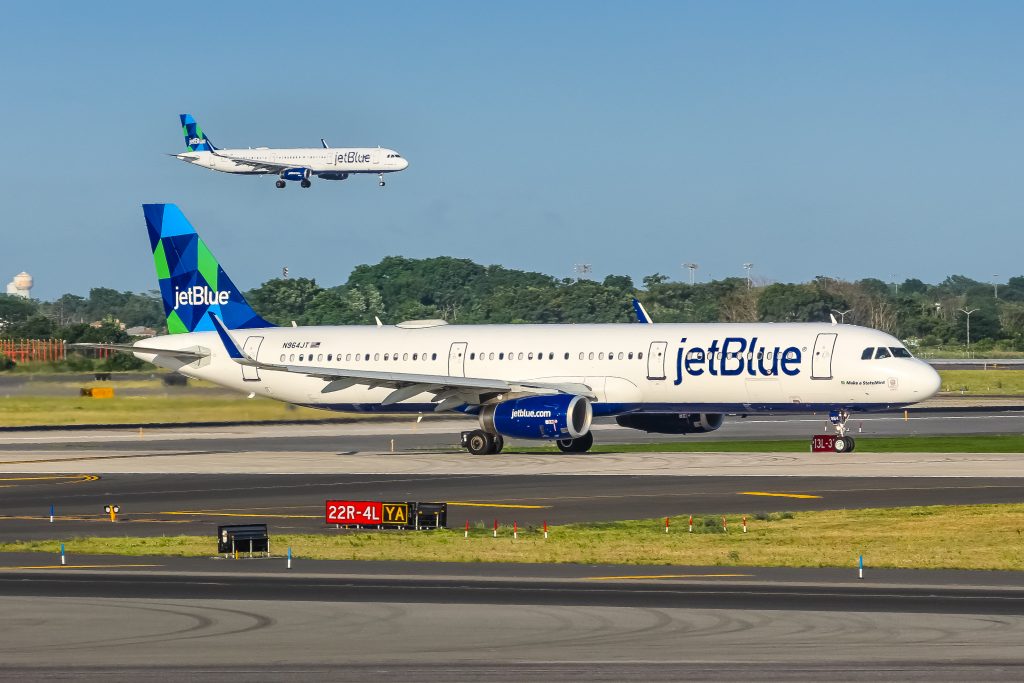
JetBlue is pulling back the throttles in several domestic and international markets, cutting service in four cities starting in June.

A JetBlue Airbus A320 taxis in Los Angeles. (Photo: AirlineGeeks | William Derrickson)

JetBlue is pulling back the throttles in several domestic and international markets. According to a CNBC report, the New York-based carrier told employees that it will bet on “bread and butter” routes as it emerges from a failed merger attempt with Spirit.

As part of the planned route cuts, much of the airline’s West Coast route network will take a hit. From Los Angeles, JetBlue says it will reduce departures from 34 to 24 per day, nixing routes to San Francisco, Seattle, Miami, Las Vegas, Reno, and Puerto Vallarta among others.

Premium-heavy transcontinental routes will become more of a focus, the carrier said in an internal memo viewed by CNBC. “With less aircraft time available and the need to improve our financial performance, more than ever, every route has to earn its right to stay in the network,” Dave Jehn, JetBlue’s Vice President of Network Planning and Airline Partnerships, told employees.

International Cuts

Starting in June 2024, the carrier plans to cut a handful of international routes to Latin America. From its Fort Lauderdale hub, the airline says it will cancel service to Bogota, Quito, and Lima.

According to Cirium Diio data, all three markets are currently served daily.

Other Domestic Cuts

Joining the West Coast service reductions, JetBlue plans to cancel service to Kansas City. In addition, flights to Austin, Nashville, Salt Lake City, and Atlanta are on the chopping block from Fort Lauderdale.

Service to Detroit will also be cut from New York-JFK. The domestic cuts from Fort Lauderdale alone account for a reduction of approximately 172 flights in June.

The route cuts are expected to take effect starting in June 2024. The airline says it is prioritizing more profitable East Coast and Caribbean flights.

Ryan Ewing

Ryan founded AirlineGeeks.com in February 2013 and has spent more than a decade covering the airline business. His work has been featured by CNN, WJLA, CNET, and Business Insider. His aviation experience spans airport operations, Part 135 regulatory compliance, and airline crew workforce planning, along with time behind the yoke of a Cessna 172 and interviews with airline executives. Ryan now serves as Group President of Firecrown Media’s Aviation Group. He holds a B.S. in Air Transportation Management and an MBA from Arizona State University and teaches Airline Management at Embry-Riddle Aeronautical University.

Airplanes Africa Limited Debuts First Aircraft Assembled in Tanzania

Tanzania has successfully assembled three aircraft at the Morogoro Regional Airport plant, located in the Morogoro region.

A Skyleader aircraft (Photo: Skyleader)

Tanzania has successfully assembled three aircraft at the Morogoro Regional Airport plant, located in the Morogoro region approximately 190km West of Dar-es-Salaam. According to The Citizen Newspaper, this facility, launched in 2021 by the Czech company Airplane Africa Limited (AAL), has produced Skyleader 600 aircraft with a passenger capacity of two to four.

“This achievement signifies a significant milestone,” declared Mussa Mbura, Director General of the Tanzania Airport Authority (TAA), during a press briefing on Monday, March 18, 2024. “The investment by AAL not only generates revenue opportunities for the government but also fosters job creation for Tanzanian citizens,” he added. Mbura also outlined plans for further expansion, noting, “Additional aircraft assembly is imminent, as evidenced by one such aircraft previously showcased at the Sabasaba industrial exhibition.”

The Morogoro plant holds a unique position as the sole AAL branch in Africa, with additional branches situated in the Czech Republic, Germany, China, and Russia. Eng Igor Stratl, the Director of the Morogoro plant, notes the benefit to Tanzania’s skilled workforce, with many technicians employed by AAL being graduates of the National Institute of Transport (NIT). He explained the company’s decision to invest in Tanzania, citing the country’s reputation for security, stability, and peace as key factors.

The Skyleader 600 is an all-metal two-seat, low-wing aircraft designed for recreational flying, pilot training, and special operations. David Grolig, AAL director, emphasized that the decision to establish an ultralight aircraft manufacturing facility in Tanzania was driven by the country’s favorable investment climate and the willingness of its people to embrace new technologies.

Airplanes Africa Limited (AAL) unveiled the first of these three aircraft assembled in Tanzania at the Tanzania International Manufacturers Expo 2023 (TIMEXPO), held at the Diamond Jubilee Hall in Dar es Salaam in October 2023. Initially, AAL is assembling only two models, namely the Skyleader 600 and 500, while the assembly of Skyleader 400 and 200 also featured in the company’s catalog is likely to occur later.

Future Use Cases

Grolig further explained that the Skyleader 600, designed to accommodate two passengers, including the pilot, is ideal for business travelers on longer journeys. “We conducted thorough research to understand the needs of business travelers who frequently undertake long-distance trips,” he said. “In response, we developed an aircraft that offers convenience for travel and facilitates attendance at various meetings outside the region before returning to the city for other activities.”

This year, the company plans to launch the Skyleader 500, an economical aircraft suited for agricultural use and other activities in rural areas. Grolig notes the affordability and low operational costs of these ultralight aircraft, making them comparable to owning a car. AAL intends to market these aircraft domestically as well as in other countries.

Victor Shalton

Victor Shalton's love for aviation can be traced to when he was 11-years-old. As a seasoned aviation writer, he takes pride in providing the best aviation coverage around the globe and is passionate about advancing his skills in the aviation space. In addition, he loves travelling, writing, arts and while his speaking engagements have taken him around the world, he is proud to call Nairobi home.

Frontier Adds New Service to New York-JFK, Resumes Newark Flights

Ultra-low-cost carrier Frontier plans to launch new nonstop service on several routes starting in May and June 2024, including to New York-JFK.

A Frontier A320neo
A Frontier Airbus A320neo. (Photo: AirlineGeeks | William Derrickson)

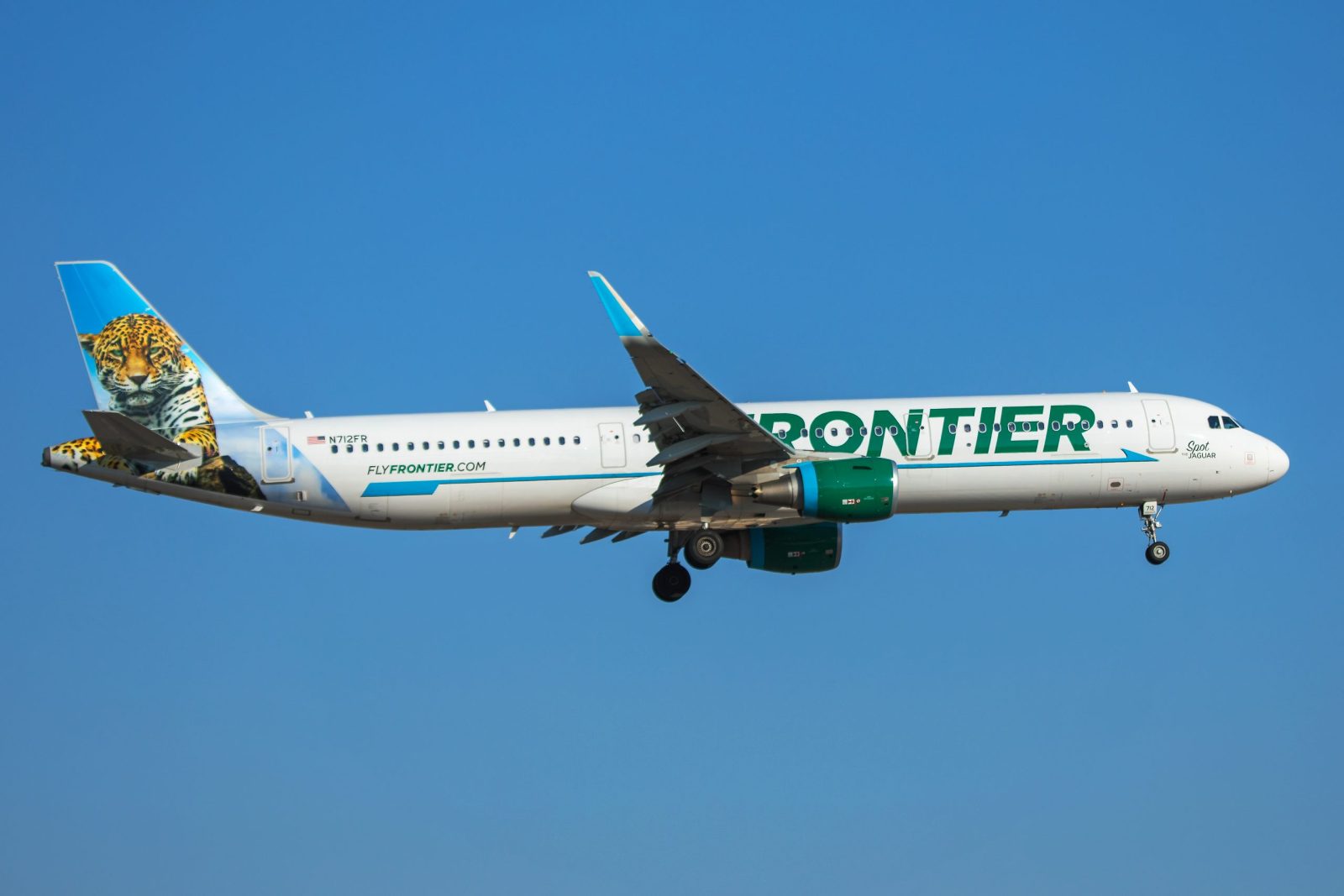
Ultra-low-cost carrier Frontier plans to launch new nonstop service on several routes starting in May and June 2024. The announcement includes the airline’s return to Newark after a two-year hiatus, with nearly twice-daily service to San Juan (SJU) starting on June 27.

The Denver-based airline will also begin its first-ever flights from John F. Kennedy International Airport (JFK) with twice-daily service to San Juan starting on June 6. Recently, Frontier opened a crew base in San Juan, which is expected to employ a total of 90 pilots and 200 flight attendants.

Frontier currently serves New York’s LaGuardia Airport with up to 16 daily flights, according to Cirium Diio data.

More New Routes

Phoenix will see the airline’s first international route from the airport, with twice-weekly service to Los Cabos, Mexico beginning on May 16. The announcement also includes new service between John Wayne Airport in Orange County, Calif. and San Francisco with four flights per week starting on July 11.

The airline recently introduced UpFront Plus, an upgraded seating option with a blocked middle seat toward the front of the cabin. The new product will become available starting on April 10, 2024.

Ryan Ewing

Ryan founded AirlineGeeks.com in February 2013 and has spent more than a decade covering the airline business. His work has been featured by CNN, WJLA, CNET, and Business Insider. His aviation experience spans airport operations, Part 135 regulatory compliance, and airline crew workforce planning, along with time behind the yoke of a Cessna 172 and interviews with airline executives. Ryan now serves as Group President of Firecrown Media’s Aviation Group. He holds a B.S. in Air Transportation Management and an MBA from Arizona State University and teaches Airline Management at Embry-Riddle Aeronautical University.

Korean Air Eyeing Airbus Widebody Order

Korean Air, South Korea's flag carrier, is in the works to order 20 Airbus A350 jets from Airbus, according to a recent Bloomberg report.

An Airbus A350-1000 in Airbus' paint scheme. (Photo: AirlineGeeks | William Derrickson)

Korean Air, South Korea’s flag carrier, is in the works to order 20 Airbus A350 jets from Airbus. An official announcement might come as early as this week, according to Bloomberg.

The Order

The order of 20 Airbus A350 aircraft comes as the carrier takes part in a fleet modernization plan. With the Korean Air merger with Asiana awaiting the U.S.’s approval, Korean Air is aiming to expand and restructure its growing fleet. According to Korean Air CEO Walter Cho, the airline will “simplify” its fleet after the merger for efficient cost of operations.

The merger will allow the airline to operate aircraft from Airbus and Boeing with a variety of engine types. As this might bring operational challenges to the carrier, Cho stated that the airline will “simplify” its fleet after the merger in an interview with the International Air Transport Association (IATA).

Future Fleet

This marks a major change for the airline since its last widebody purchase in 2019. Korean Air will be replacing its Boeing 777 aircraft of which most are over 17 years of age and some being more than 20 years old. With Korean Air’s 10th Airbus A321neo added to its fleet back on March 12, the airline ordered 20 more A321neo aircraft. As of today, Korean Air is expected to have 50 Airbus A321neos delivered.

Why the Airbus?

The airline took note of the Boeing 777X for the new fleet. According to Cho, however, as the Boeing 777X is awaiting certification, which is planned for 2025, Korean Air will put orders of Boeing aircraft on a halt.

Jeremy Kang

Jeremy is an aspiring pilot currently undergoing training, backed by nearly five years of proficient writing experience. Having lived in three countries and attending an aeronautical university, Jeremy boasts extensive exposure to the field of aviation. His journalistic proficiency and fascination for flying equips him to make meaningful contributions to the aviation community.

Air China Plans Return to South America

Starting next month, Air China plans to resume service to South America after a more than four-year hiatus with flights from Beijing to Brazil.

An Air China Boeing 787-9 in Los Angeles.
An Air China Boeing 787-9 in Los Angeles. (Photo: AirlineGeeks | William Derrickson)

Air China is resuming service to South America after a more than four-year hiatus. Starting on April 28, 2024, the carrier will add service to Sao Paulo Guarulhos (GRU) from Beijing.

According to Aeroroutes, Air China’s flight to Sao Paulo will stop in Madrid. The route is scheduled to be operated by a Boeing 787-9 Dreamliner on a twice-weekly frequency.

The resumption of service to Brazil marks Air China’s first foray back into the South American market since the COVID-19 pandemic. The airline previously operated the same routing until March 2020, per Cirium Diio data.

From May 2018 to February 2020, Air China also served Panama City in Central America via Houston (IAH) with a twice-weekly schedule. The carrier began regular service to Sao Paulo in 2006.

Recently, Chinese airlines have been on a quest to add and resume routes lost to the pandemic. Last week, a handful of state-owned airlines filed to bolster service to the U.S. in the coming months.

Ryan Ewing

Ryan founded AirlineGeeks.com in February 2013 and has spent more than a decade covering the airline business. His work has been featured by CNN, WJLA, CNET, and Business Insider. His aviation experience spans airport operations, Part 135 regulatory compliance, and airline crew workforce planning, along with time behind the yoke of a Cessna 172 and interviews with airline executives. Ryan now serves as Group President of Firecrown Media’s Aviation Group. He holds a B.S. in Air Transportation Management and an MBA from Arizona State University and teaches Airline Management at Embry-Riddle Aeronautical University.

Why Overbooking Is Good For You

Overbooking is a common airline industry practice and it is carefully crafted based on the passengers behavior. But how can it benefit the consumer?

Ryanair passengers loading on aircraft
People queuing while boarding a Ryanair aircraft (Photo: Shutterstock)

The term ‘overbooking’ sounds dreadful to those who once got denied boarding on a flight that they were scheduled to fly on. But is it really just a lottery with a prize nobody wants?

The Infinite Money Glitch

Put simply, overbooking is a trick airlines do to earn more money. They oversell the flight, meaning they sell more tickets than there are seats in the airplane. By selling the nonexistent seats they earn additional revenue without any cost. But are they really?

If too many passengers show up at the gate, there will be some people who cannot fit into the flight. The airline had already committed to the transportation service so it has to be provided. To sweeten up the inconvenience, regulators in many countries including those in the Americas and Europe, introduced rulings ordering airlines to additionally compensate the bumped passengers. That’s a cost that can be associated with taking too much risk with overselling.

The Math Behind It

There are two major components of overbooking: decrement and no-shows. The first component describes the misalignment between the peak interest in the flight and the actual departure date. Depending on the market, it is very common for flights to see the peak of their bookings a few days before departure. This is often a result of canceling a portion of the bookings that is usually allowed for the group travelers as well as canceling or rescheduling of the individual passengers that are allowed to do so in their fare rules. This phenomenon varies from market to market as more expensive long-haul flights will not see much demand at all near the departure time, for example.

The second component is connected to no-shows. Some passengers will have a booked seat on the airplane all the way till departure but never show up to board a plane. This can also happen for multiple reasons. Some passengers are allowed to change their flight plans even after the flight departs if they purchased a flexible ticket.

Other passengers may have booked a cheap ticket that had no flexibility at all but their plans changed anyway. Finally, there are some operational reasons too as a delay on another flight might mean that some passengers will miss their connection.

Overbooking components (Photo: AirlineGeeks | Filip Kopec)

Who Benefits

It seems that passengers are experiencing only the downside of the overbooking process. After all, we only see the results of it if someone in our surroundings gets denied from the flight. The truth is much more blurry.

The described decrement and no-shows are inevitable. If it wasn’t for overbooking, flights would leave not full in the majority of cases. This would cause spoilage, which is just an industry term for missed opportunity.

The economic benefit for the airlines is clear. As long as the company manages the costs associated with overbooking, it gains a few percent more revenue on the demanded flights. For an industry that is averaging a three percent profit margin, that can make or break the annual result.

The customer gains too, at least according to IATA. Overbooking can lead to lower fares and more choice. In a highly competitive field, which the airline industry definitely is, there are no free lunches. All the extra profits will eventually make their way to the customers. To compete with other carriers while staying on the edge of profitability, airlines anticipate higher profits resulting from overbooking and start booking seats from a lower entry-level price. Similarly, the carriers can afford to keep some unprofitable routes flying if those in demand can generate a bit of extra profit at the end.

Filip Kopeć

A passionate aviation enthusiast that started off his career as an aerospace engineer, but found his true calling on the commercial side of the airline business. Now as a finance guy among avgeeks and an avgeek among finance guys, he has experience working in the Revenue Divisions of three airlines. In his spare time he enjoys traveling, but admittedly sometimes is more about the journey than the destination.

Frontier Introduces UpFront Plus Seating

Denver-based ultra-low-cost carrier (ULCC) Frontier Airlines is introducing a new seating option for flights. 

A Frontier A320
A Frontier A320 in Phoenix (Photo: AirlineGeeks | William Derrickson)

Denver-based ultra-low-cost carrier (ULCC) Frontier Airlines is introducing a new seating option for flights.  UPFront Plus becomes Frontier’s fourth seating option, joining Premium, Preferred, and Standard.

The new seating options provide passengers with a guaranteed empty middle seat in the first two rows of the aircraft. This ensures more comfort, extra legroom, as well as a quick exit after landing, the carrier says.

The option to upgrade to UpFront Plus started on March 12, 2024 for flights on April 10, 2024 and onwards. Currently, the upgrade will cost $49 for each passenger per flight segment once bought by March 20, 2024. After this introductory phase is complete, UpFront Plus will be priced based on demand.

Barry Biffle, CEO of Frontier stated in a press release, “Frontier is all about choice and giving consumers the flexibility to customize their travel to suit their individual needs and preferences.” UpFront Plus is a great option for those who want expanded personal space and extra comfort.” Mr. Biffle also expressed that “With the recent introduction of our new Biz Travel For Less program, UpFront Plus seating will also provide an affordable upgrade option for those traveling on business seeking additional space,”

Frontier’s Recent Updates

In January 2023, Frontier announced new routes being added to its schedule just in time for the summer season. This expansion also follows the airline’s growing crew bases in various cities.

In the fourth quarter of 2023, the airline reported total operating revenues of $891 million. Frontier also added four new A321neo to its fleet size in the quarter and achieved a 99.5 percent completion factor. Over the last few months, the low-cost carrier announced the opening of four crew bases in Cincinnati, Chicago, Cleveland, and Suan Juan, Puerto Rico.

For the fourth quarter in 2024, the airline also reported 105 available seat miles (“ASMs”) per gallon, which was three percent higher than the comparable 2022 quarter.

Tarik Dixon

Based in Kingston, Jamaica, Tarik grew up being fascinated with the daily operations of airports and airlines. Overtime his interest turned into the economics surrounding the aviation industry and how the industry facilitates growth in local sectors and promotes connectivity with regional neighbors.

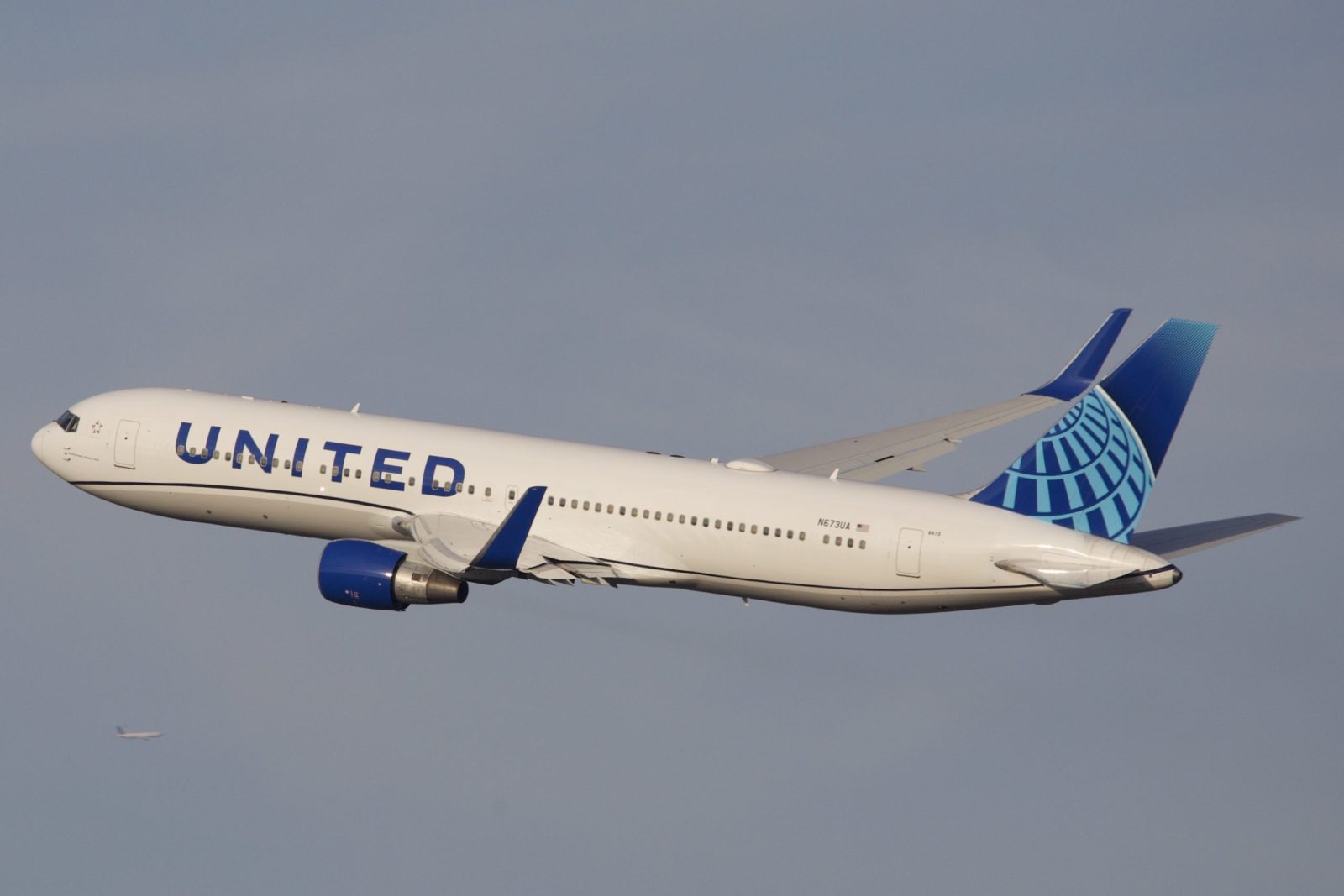
United Nearing Deal for Additional Airbus Aircraft

Working with Airbus, United is nearing a deal for at least 36 A321neo aircraft. This comes as Boeing continues to have delays in delivering 737 MAX jets.

United Airbus A321neo. (Photo: AirlineGeeks | Andrew Chen)

United is reportedly planning to secure over 36 Airbus A321neo aircraft through lessors. As first reported by Bloomberg with information from sources familiar with the transaction, the new deal could have United shifting its fleet focus away from predominantly Boeing to a larger mixed fleet with Airbus aircraft. 

These reports complement the already strong order book the Chicago-based carrier has with Airbus. The major carrier has 130 A321neos on order, which are currently being delivered. United’s CEO Scott Kirby has publicly stated the carrier is looking for options to build the future fleet without 737 MAX 10 jets. The airline currently has 277 of the 737 MAX 10 on order with options for 200 more.

At the moment, it is unclear what the carrier will do with these slots, but they could be switched to other variants of the MAX such as the MAX 8 and MAX 9. 

United Airlines’ Airbus A321neos have adjustable LED mood lighting (Photo: AirlineGeeks | Andrew Chen)

Kirby had previously flown to Toulouse, France earlier this year to meet with Airbus leadership. This was rumored to be over an order for additional A321neo aircraft. To increase United’s buy-in, the manufacturer went to other customers offering buybacks for A321neo delivery slots to offer to United. 

Outside Implications

With delays in delivery from Boeing, United has had to look into new options to continue the implementation of its United Next plan. The carrier is focused on offering an enhanced customer experience, which has a foundation of adding 800 new aircraft to the fleet by 2032. 

There are implications outside of the direct limitation in deliveries. The carrier has announced a scaled-back approach to pilot hiring, citing delivery delays and putting a pause on new hire classes in May and June. Initially set to receive 80 Boeing 737 MAX jets this year, the carrier is now anticipating 21 less than the initial plan.

Zach Cooke

Zach’s love for aviation began when he was in elementary school with a flight sim and model planes. This passion for being in the air only intensified throughout high school when he earned his Private Pilot Certificate. He then attended Embry-Riddle Aeronautical University, earning his certificates and ratings to later flight instruct and share his passion for aviation with others. He now resides in the North East living out his dream as an airline pilot.

Livery of the Week: Lufthansa’s 747 Retro Jet

Lufthansa, the German flag carrier, dons a touch of nostalgia on one of its Boeing 747-8i aircraft, honoring the airline's long-standing history.

A Lufthansa 747-8i in a retro paint scheme (Photo: AirlineGeeks | Fabian Behr)

Editor’s Note: AirlineGeeks is excited to launch our ‘Livery of the Week’ series. Every Friday, a team member will share an airline livery, which can be from the past, present, or even a special scheme. Some airline liveries are works of art. The complexity associated with painting around critical flight components and the added weight requires outside-the-box thinking from designers. The average airliner can cost upwards of $200,000 to repaint, creating a separate aircraft repainting industry as a result. 

Have an idea for a livery that we should highlight? Drop us a line

Lufthansa, the German flag carrier, dons a touch of nostalgia on one of its Boeing 747-8i aircraft. This special livery harkened back to a bygone era of aviation, honoring the airline’s long-standing history.

The Boeing 747-8i, registration D-ABYT, sports a design reminiscent of Lufthansa’s earlier 747 aircraft. The aircraft featured a prominent crane, the airline’s symbol, on a dark blue tail. The fuselage displayed the airline’s name in a bold, classic typeface.

Lufthansa’s 747-8i in a retro livery (Photo: AirlineGeeks | Noah Escobar)

This retro design wasn’t an exact replica though. Modern aircraft construction utilizes composite materials, making a true bare metal finish – a common feature in older liveries – impractical. To compensate, Lufthansa opted for a painted grey underbelly, offering a close homage to the original look.

A Lufthansa 747-8i lands at Washington Dulles International Airport (Photo: AirlineGeeks | Craig Fischer)

Other Retro Liveries

The Boeing 747-8i with the retro livery wasn’t Lufthansa’s first foray into the past. In 2005, to celebrate its 50th anniversary since postwar operations, the airline introduced a retro design on an Airbus A321. This particular A321, registration D-AIDV, continues to fly in the commemorative livery.

First unveiled in 2015, the retro Boeing 747-8i served as a reminder of Lufthansa’s long and storied journey in the airline industry. The carrier has a long history with the Queen of the Skies, too, operating the 747-100, 747-200, 747-400, and 747-8i series.

Looking for a new airplane model? Head over to our friends at the Midwest Model Store for a wide selection of airlines and liveries.

Ryan Ewing

Ryan founded AirlineGeeks.com in February 2013 and has spent more than a decade covering the airline business. His work has been featured by CNN, WJLA, CNET, and Business Insider. His aviation experience spans airport operations, Part 135 regulatory compliance, and airline crew workforce planning, along with time behind the yoke of a Cessna 172 and interviews with airline executives. Ryan now serves as Group President of Firecrown Media’s Aviation Group. He holds a B.S. in Air Transportation Management and an MBA from Arizona State University and teaches Airline Management at Embry-Riddle Aeronautical University.
Sign-up for newsletters & special offers!

Get the latest stories & special offers delivered directly to your inbox

SUBSCRIBE

Uh-oh! It looks like you're using an ad blocker.

Our website relies on ads to provide free content and sustain our operations. By turning off your ad blocker, you help support us and ensure we can continue offering valuable content without any cost to you.

We truly appreciate your understanding and support. Thank you for considering disabling your ad blocker for this website