Indian Airlines Directed to Comply With New Rules Affecting Disrupted Flights
The Directorate General of Civil Aviation (DGCA) of India has issued new rules to airlines with regard to the handling of fog-induced flight disruptions.
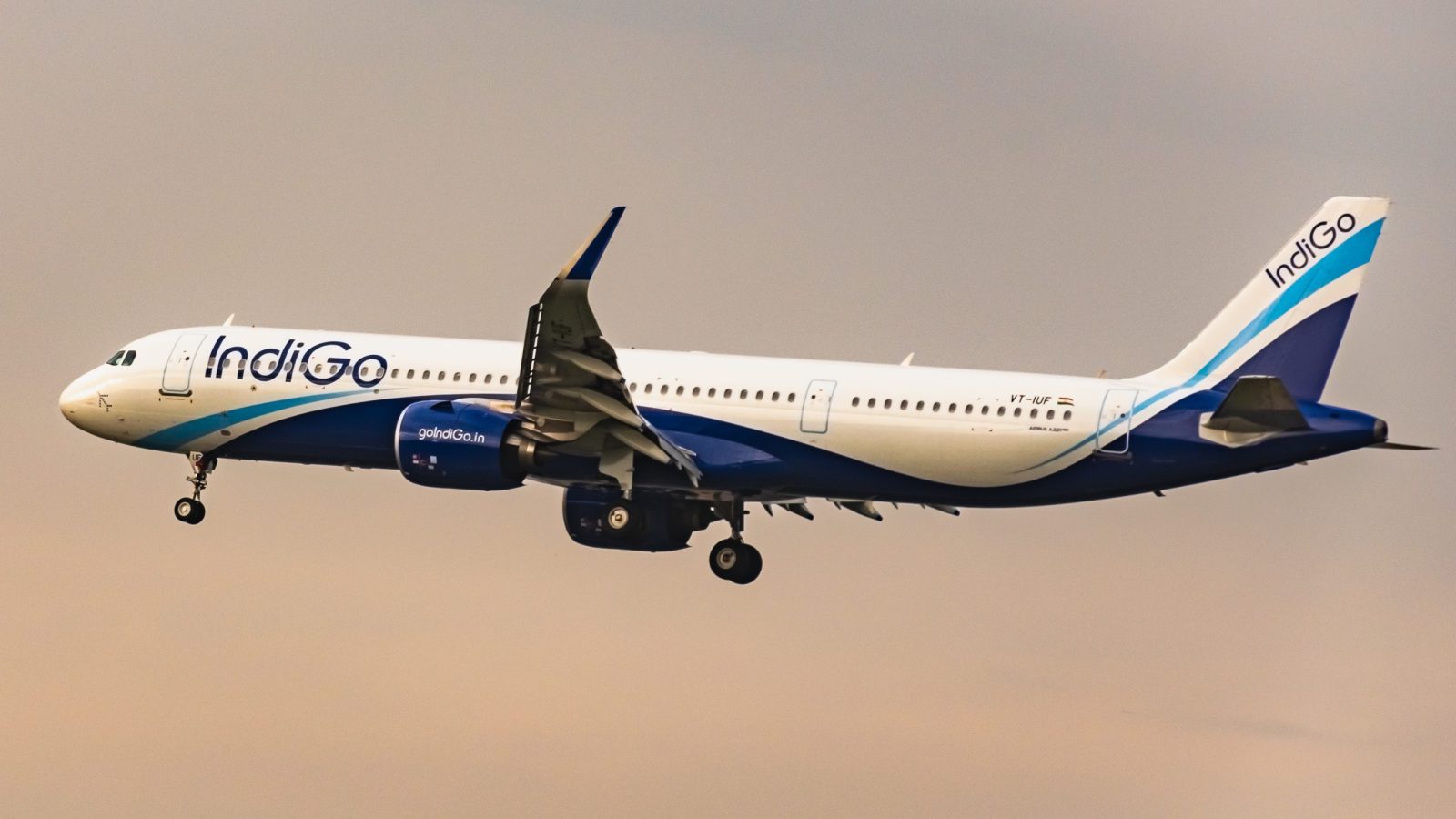
An IndiGo Airbus A321neo at Delhi Airport. (Photo: AirlineGeeks | Vihaan Kushwaha)
The Directorate General of Civil Aviation (DGCA) of India has issued new rules to airlines with regard to the handling of fog-induced flight disruptions. This comes after the impact to passengers of several days of flight delays and cancellations due to dense fog across the country and follows a DGCA SOP (standard operating procedure) for airlines to give ‘real-time updates on flight delays.’
Indian Aviation Minister Jyotiraditya Scindia stated: “One of the things that we have done in those SOPs is that we have instructed airlines that if they think the flight will be delayed by more than three hours, they must treat that flight as canceled. So, this question of six-hour delays and eight-hour delays should now become a thing of the past.” The Times of India reported that some flights had been delayed by as much as 17 hours due to the dense fog.
According to the BBC, Delhi’s Indira Gandhi International Airport (DEL) was seriously affected by the fog brought about by cold weather in northern areas of the country. DEL is the hub for India’s largest carrier IndiGo as well as national carrier Air India and though fog is not an unusual seasonal occurrence at the airport it was compounded this year by ‘parking shortages due to grounded aircraft and a runway being shut for maintenance.’ On Monday morning alone, 333 flights at DEL and 129 flights at Hyderabad’s Rajiv Gandhi International Airport (HYD) had been delayed.
Operational ‘War Rooms’
The new rules regarding fog-induced flight disruptions require airlines to set up ‘war rooms’ to deal with passenger issues. Carriers must also report any incidents related to fog and other ‘adverse weather conditions.’ The Business Standard reported the aviation minister as saying that the government will take “very strict” action for violations of the new rules.
Passengers had been critical of the lack of communication from airlines and at airports during the prolonged weather event. The BBC reported that passenger frustration boiled over to an alleged assault against an IndiGo co-pilot with the assailant being arrested and later released on bail.
Many other passengers across the country posted their frustrations on social media including high profile celebrities. Accounts ranged from the emotional toll of not getting home to family, to being locked in an airbridge without access to food, water and sanitation.
“In terms of cancellations and delays, in terms of the war rooms that I have asked every airline to set up at every airport, in terms of informing passengers on SMS, email or WhatsApp — all these SOPs are being monitored by the DGCA on a thrice-daily basis,” Scindia added.
John has always had a passion for aviation and through a career with Air New Zealand has gained a strong understanding of aviation operations and the strategic nature of the industry. During his career with the airline, John held multiple leadership roles and was involved in projects such as the introduction of both the 777-200 and -300 type aircraft and the development of the IFE for the 777-300. He was also part of a small team who created and published the internal communications magazines for Air New Zealand’s pilots, cabin crew and ground staff balancing a mix of corporate and social content.
John is educated to postgraduate level achieving a masters degree with Distinction in Airline and Airport Management. John has held the positions of course director of an undergraduate commercial pilot training programme at a leading London university. In addition he is contracted as an external instructor for IATA (International Air Transport Association) and has been a member of the Heathrow Community Fund’s ‘Communities for Tomorrow’ panel.
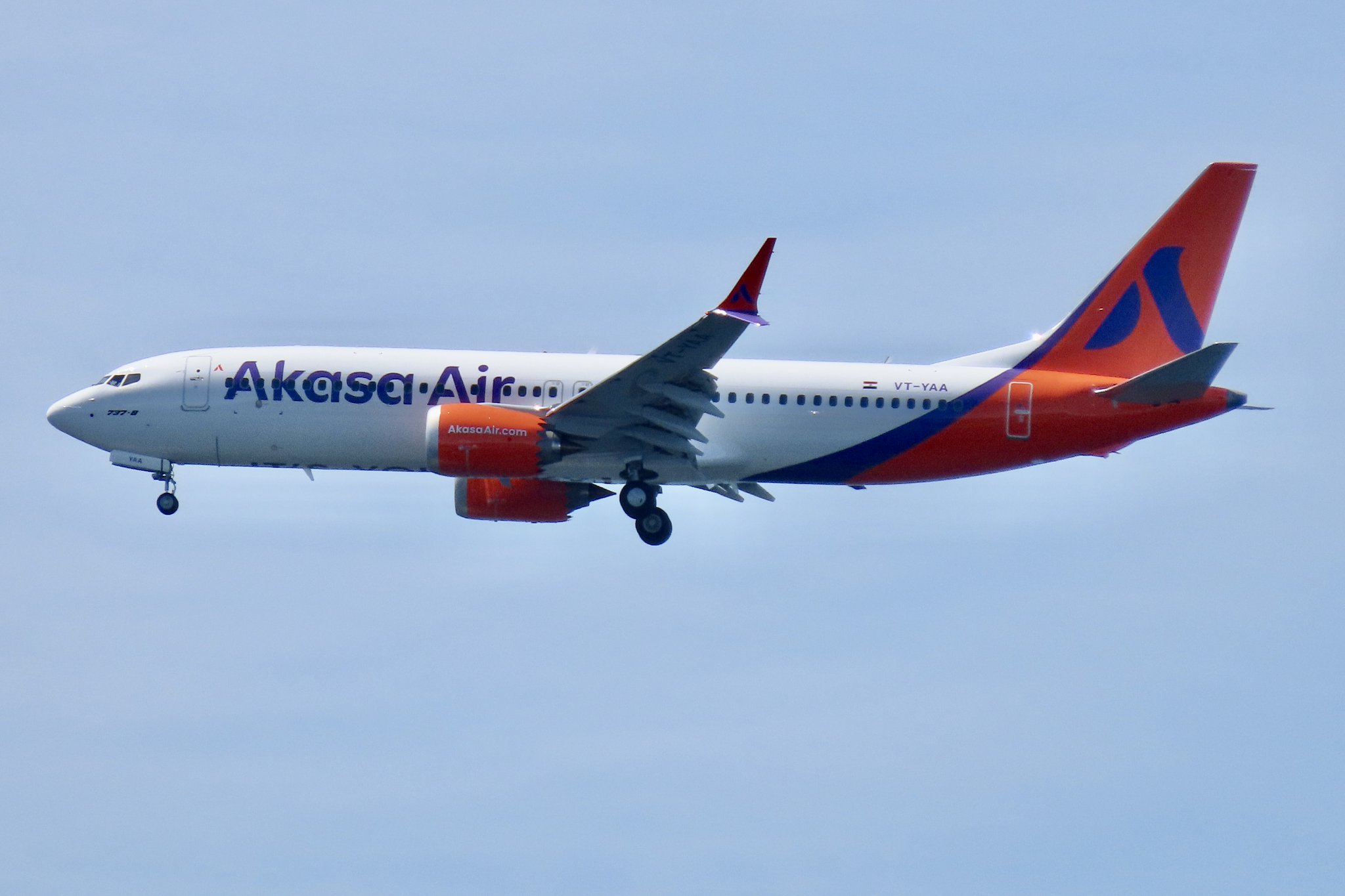
An Akasa Air Boeing 737-8 MAX (Photo: bfi_watch_ca350 (CC BY-SA 4.0 DEED), via Wikimedia Commons)
In a major win for Boeing, India’s Akasa Air has placed an order for 150 Boeing 737 MAX aircraft. The announcement signals the first Boeing 737 MAX order since the door plug blowout and subsequent decompression event on an Alaska Airlines Boeing 737-9 MAX in early January.
Details: Akasa Air’s Boeing 737 MAX Order
Akasa Air has placed a firm order for 150 Boeing 737 MAX aircraft, in a deal that was revealed at the WINGS India 2024 airshow in Hyderabad. The purchase consists of the high-density Boeing 737-8-200 variant and the Boeing 737-10 MAX.
The order will add to the 54 Boeing 737 MAX jets that the airline already has on Boeing’s order book. Founded in 2021, the Mumbai-based airline operates an all-Boeing fleet of 22 Boeing 737 MAX aircraft to approximately 15 destinations in India. The carrier’s fleet currently consists of 21 Boeing 737-8 MAX aircraft and a single Boeing 737-8-200 MAX jet.
“This large and historic aircraft order puts Akasa on a path of becoming one of the top 30 leading airlines in the world by the turn of this decade,” Akasa’s Founder and Chief Executive Officer, Vinay Dube, said at the airshow.
“Akasa’s remarkable growth testifies the sheer promise that India holds as an aviation market, and we are thrilled to be a part of this journey,” Dube added.
A Show of Confidence in Boeing
Public opinion and regulator confidence in the Boeing has dropped significantly since the latest Boeing 737 MAX incident. On January 5, 2024, an a door plug on an Alaska Airlines Boeing 737-9 MAX blew out shortly after takeoff, leading to an explosive decompression and a subsequent grounding of the aircraft type. Akasa’s order does not include the Boeing 737-9 MAX.
The fallout from the latest incident added to residual distrust in the aircraft type among some travelers left over from two fatal Boeing 737 MAX crashes in 2018 and 2019. These fatal incidents led to a yearslong worldwide grounding of the 737 MAX.
While Akasa’s latest order was quietly finalized last month, the announcement is still a major confidence boost for Boeing. Speaking to Reuters, Akasa’s Chief Legal, Regulatory and Strategic Relations Officer, Priya Mehra, said that the airline felt “very confident” about the Boeing 737 MAX.
“This milestone demonstrates the strength of our partnership with Akasa Air and is a testament to the capabilities of the 737 MAX family to further the airline’s operational priorities,” said Stephanie Pope, Boeing’s Chief Operating Officer, in a press release. “The efficiency and versatility of the 737-10 and 737-8-200 will support Akasa Air’s expansion to meet soaring demand for air travel in the region for many years to come.”
Andrew is a lifelong lover of aviation and travel. He has flown all over the world and is fascinated by the workings of the air travel industry. As a private pilot and glider pilot who has worked with airlines, airports and other industry stakeholders, he is always excited to share his passion for aviation with others. In addition to being a writer, he also hosts Flying Smarter, an educational travel podcast that explores the complex world of air travel to help listeners become better-informed and savvier travelers.
An Alaska Airlines 737 MAX 9. (Photo: AirlineGeeks | Katie Zera)
Four more passengers aboard Alaska Airlines Flight 1282 are suing the air carrier along with Boeing for allegedly endangering them by allowing the Boeing 737 Max 9 to fly on January 5. According to the lawsuit filed Tuesday in Superior Court in Seattle, the airline was aware of problems with the aircraft’s pressurization system.
There were 177 on board when the aircraft lost a door plug while climbing through 16,000 feet and experienced explosive decompression, resulting in a door-sized hole on the left side of the fuselage. The accident happened 13 minutes after takeoff from Portland International Airport (KPDX) in Oregon. The aircraft was bound for Ontario, California.
The four passengers are represented by Mark Lindquist, a Seattle-area personal injury attorney who also represented the families of dozens of victims after the 2018 and 2019 fatal crashes involving the Boeing 737 Max 8.
The airliner that became Flight 1282 was delivered to Alaska Airlines in October 2023. Prior to the Flight 1282 blowout, three different flight crews noticed issues with the aircraft pressurization system and wrote it up after receiving warning lights. The system has a triple redundancy. The first and second systems are activated by computer. The third system requires manual activation. The FAA allows the aircraft to fly with warnings from the system because of the triple redundancy.
In response to the maintenance write-ups, Alaska Airlines pulled the aircraft from overwater operations but allowed it to fly over land.
According to Lindquist, Alaska Airlines is also named as a defendant.
“Alaska Airlines management decided the subject plane was not safe to fly over the ocean but was somehow safe enough to fly over land,” Lindquist said. “[This] risky decision [endangered passengers]. There’s no reasonable way for an airline executive to explain to the jury how they thought the plane was not safe to fly over the ocean but was safe to fly over land.”
At the time of the blowout, the airplane was still climbing, and all the passengers were still wearing their seat belts. The flight back to Portland was terrifying, Lindquist alleged, as the “passengers did not know if the plane could continue to fly while depressurized with a gaping hole in the fuselage.”
The seats directly next to the door plug were unoccupied, although a 15-year-old boy sitting close to it had his shirt torn from his body by the force of the decompression, and loose objects in the cabin, such as cellphones and stuffed animals, were sucked out into the night sky.
The airplane returned safely to Portland, where some passengers were treated for non-life-threatening injuries. Alaska Airlines swiftly grounded its fleet of 737 Max 9s, and within hours the FAA made the grounding a countrywide event.
“It took the FAA three months and a second crash to ground the Max 8,” Lindquist said, “so it’s good to see this quick action. Lessons were learned by the FAA, if not Boeing.”
According to information Lindquist sent to FLYING, the passengers aboard Flight 1282 described hearing “a loud bang and blare as a door plug blew out of the fuselage and the plane rapidly depressurized. This shocking blowout caused intense fear, distress, anxiety, trauma, physical pain, and other injuries to plaintiffs and fellow passengers.”
Lindquist added that Boeing “has long been on notice of quality control issues” and faced allegations the company “puts profits ahead of safety.”
The lawsuit alleges that “Boeing delivered a plane with a faulty door plug that blew out of the fuselage at 16,000 feet and air masks that apparently did not function properly. Plaintiffs feared the gaping hole in the fuselage, rapid depressurization, and general havoc was a prelude to the plane’s destruction and their own likely death.”
According to Lindquist, “Some passengers were sending what they thought would be their final text messages in this world.”
One plaintiff wrote, “Mom our plane depressed. We’re in masks. I love you.”
The lawsuit charges three counts: one count of negligence against Boeing, one count of strict product liability against Boeing under Washington state’s Product Liability Act of 1981, and one count of negligence against Alaska Airlines.
A few days after the Max 9 incident, Boeing CEO Dave Calhoun referred to the blowout as a “quality escape,” which Lindquist cited in the lawsuit. Calhoun explained “quality escape” was “anything that could potentially lead to an accident.” The lawsuit alleges the CEO thus admitted “a mistake” by Boeing.
In the Max 8 disasters, Boeing initially denied responsibility. “It’s encouraging to see the CEO step up this time and recognize the importance of accountability,” Lindquist said.
The Investigation
The door plug was recovered in the backyard of a Portland high school teacher. The door has been shipped to the NTSB lab in Washington, D.C., for study. Investigators want to know if the four bolts designed to hold the door in place failed, or if they were mistakenly left out of the aircraft at assembly.
“Though it’s too soon to know for sure what exactly went wrong, we do know Boeing is ultimately responsible for the safety of their planes, and Alaska Airlines is ultimately responsible for the safety of their passengers,” Lindquist said.
NTSB investigators locate missing plug door from Alaska flight 1282 (Photo: NTSB)
After the aircraft returned to Portland, passengers were offered other flights to get to their destination of Ontario, California. In addition, the airline sent an email to each passenger offering them $1,500 each. According to Lindquist, many passengers were offended by both the amount and lack of a personal touch.
“While all the passengers have some things in common, their injuries are different based on where they were seated, their individual reactions, and how they are faring,” Lindquist said. “Each passenger is an individual with individual interests.”
FLYING reached out to both Alaska Airlines and Boeing for comment. Boeing replied that it had nothing to add, and Alaska Airlines stated that it does not comment on pending litigation.
On Wednesday morning, Alaska Airlines CEO Ben Minicucci sent an explanatory email to its customers to update them on the situation.
Minicucci apologized to the passengers of Flight 1282 and also to customers whose travel plans have been upset by the grounding of the Max 9. The model makes up 20 percent of Alaska Airlines’ fleet.
“Since Alaska Airlines and the FAA have grounded these aircraft, that means we are canceling between 110 to 150 flights every day,” said Minicucci, adding that because of the cancellations he has asked the reservations team to notify customers as soon as possible.
“Our reservations team is working around the clock to accommodate people on other flights. To all who’ve been impacted by these interruptions, I am sorry. When you make plans, you put your trust in us, and we haven’t been able to deliver over the past week.”
About the Inspections
According to Minicucci, the inspections of the aircraft began on Saturday, January 13, and are a joint effort by the airline, FAA, and Boeing. The information gathered will be compiled by Boeing and the FAA to determine the appropriate next steps in order to return the Max 9 fleet safely back to service.
“At this time we do not yet know how long this process will take, but we will keep you updated as much as we can,” Minicucci said. “Aviation safety is based on having multiple levels of quality control and safety assurance, much like system redundancies that are built into an aircraft for operational safety together.”
In addition, Alaska Airlines is having its quality and audit team begin a thorough review of production, quality, and control systems, including vendor oversight.
“They will partner with our maintenance team on the design of enhanced processes for our own quality control over aircraft and Boeing,” Minicucci said. “And starting this week, we will have our own quality oversight of Alaska aircraft on the Boeing production line, adding more experienced professionals to the teams that validate work and quality on the production line for the 737.”
Editor’s Note: This story first appeared on FlyingMag.com.
AirlineGeeks.com was founded in February 2013 as a one-person blog in Washington D.C. Since then, we’ve grown to have 25+ active team members scattered across the globe. We are all here for the same reason: we love deep-diving into the fascinating realm of the airline industry.
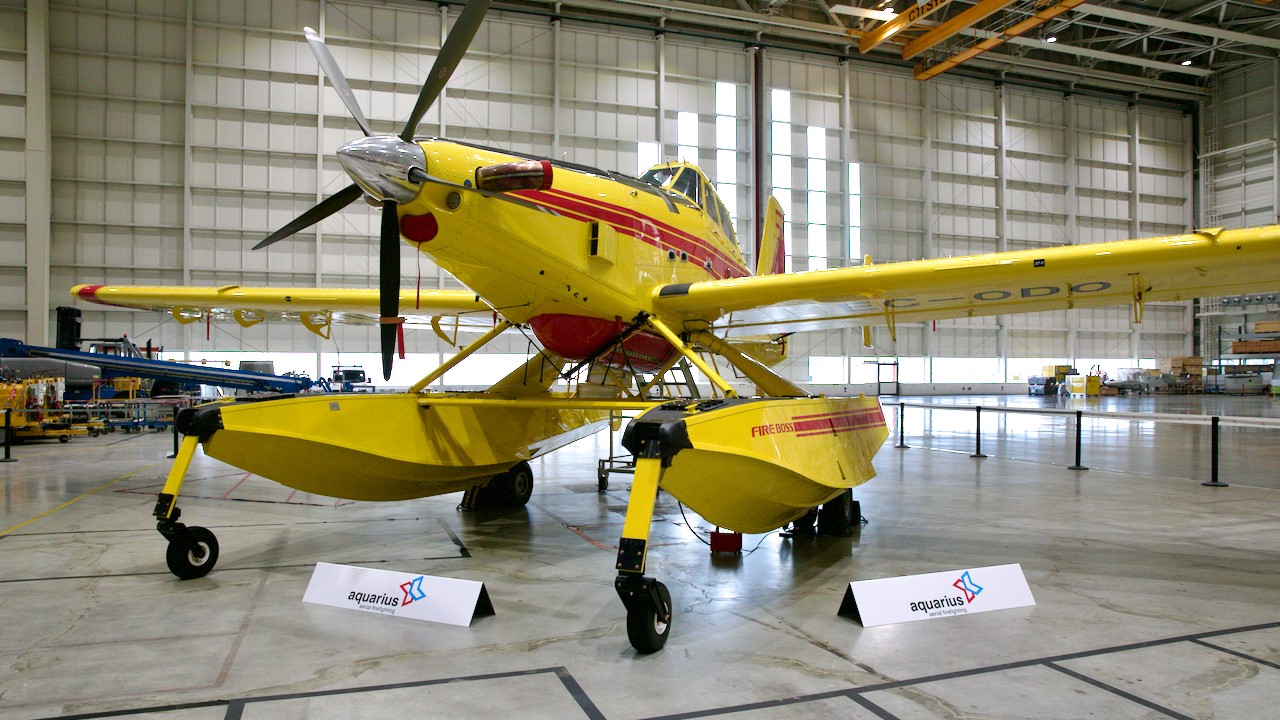
Cargolux is establishing a fleet of 12 Air Tractor AT-802 Fire Boss aircraft that can drop retardants on wildfires. (Photo: Cargolux)
Freighter operator Cargolux, the eighth-largest all-cargo operator by traffic, is diversifying with a new firefighting business line.
The Luxembourg-based airline announced Friday that the new venture, called Aquarius Aerial Firefighting, will operate a fleet of 12 Air Tractor AT-802F Fire Boss aircraft. The single-engine air tankers, a mix of single and double-seaters, will be acquired over a three-year period. The first three aircraft have already been delivered and are expected to be deployed in May.
Cargolux is investing $72 million in the new aircraft, said spokeswoman Moa Sigurdardottir. The firefighting division will have about 40 to 45 employees.
Cargolux, which operates 30 Boeing 747 freighters, also offers third-party maintenance services for 747s at its home base. Firefighting represents a good opportunity because there is a shortage in Europe, and other regions, of aerial capacity to drop water and retardants on forest fires.
Wildfires have exploded in number and intensity across North America and Europe during the past five years, fueled by extreme weather patterns and global warming.
“Over the past years, we have witnessed wildfires becoming a growing global issue that requires a rapid response. Not only do such fires emit significant amounts of CO2 but they pose a significant danger to lives and livelihoods. As a responsible corporate citizen I see it as our responsibility to help tackle this problem. I look forward to Aquarius Aerial Firefighting becoming an integral part of the solution,” said Cargolux CEO Richard Forson in a news release.
The Fire Boss tanker is designed to attack wildfires while they are still small and contain their spread. Its agility allows it to operate in terrain – mountain areas, narrow flight corridors and urban-rural interface zones – where larger aircraft can’t maneuver, or effectively impact a fire, according to the Olney, Texas-based manufacturer. The tanker is able to come in low and slow to pinpoint the drop of water or flame retardant.
The Fire Boss can be configured with an amphibious water scooper, allowing the plane to resupply from nearby water sources and make more drops. Powered by a Pratt & Whitney PT6A-67AG turbine engine, the plane can hit top speeds of 200 mph.
Sustainable Aviation Fuel
Cargolux’s shareholders are Luxembourg flag carrier Luxair, Henan Civil Aviation Development and Investment Co. in China, and two state-controlled Luxembourg banks. The government of Luxembourg owns 8.3% of the airline.
In 2022, the company generated a record profit of $1.6 billion.
Meanwhile, Cargolux has committed to a long-term purchase agreement with Norsk e-Fuel for sustainable aviation fuel, the companies announced Wednesday.
Norsk e-Fuel is building a production facility in Mosjøen, Norway, and will start to provide fossil-free fuels to the aviation industry after 2026. Norsk e-Fuel is made by capturing carbon dioxide and using electricity from renewable sources.
Cargolux will also provide capital support for construction of two more facilities by 2030.
Editor’s Note: This story first appeared on FreightWaves.
AirlineGeeks.com was founded in February 2013 as a one-person blog in Washington D.C. Since then, we’ve grown to have 25+ active team members scattered across the globe. We are all here for the same reason: we love deep-diving into the fascinating realm of the airline industry.
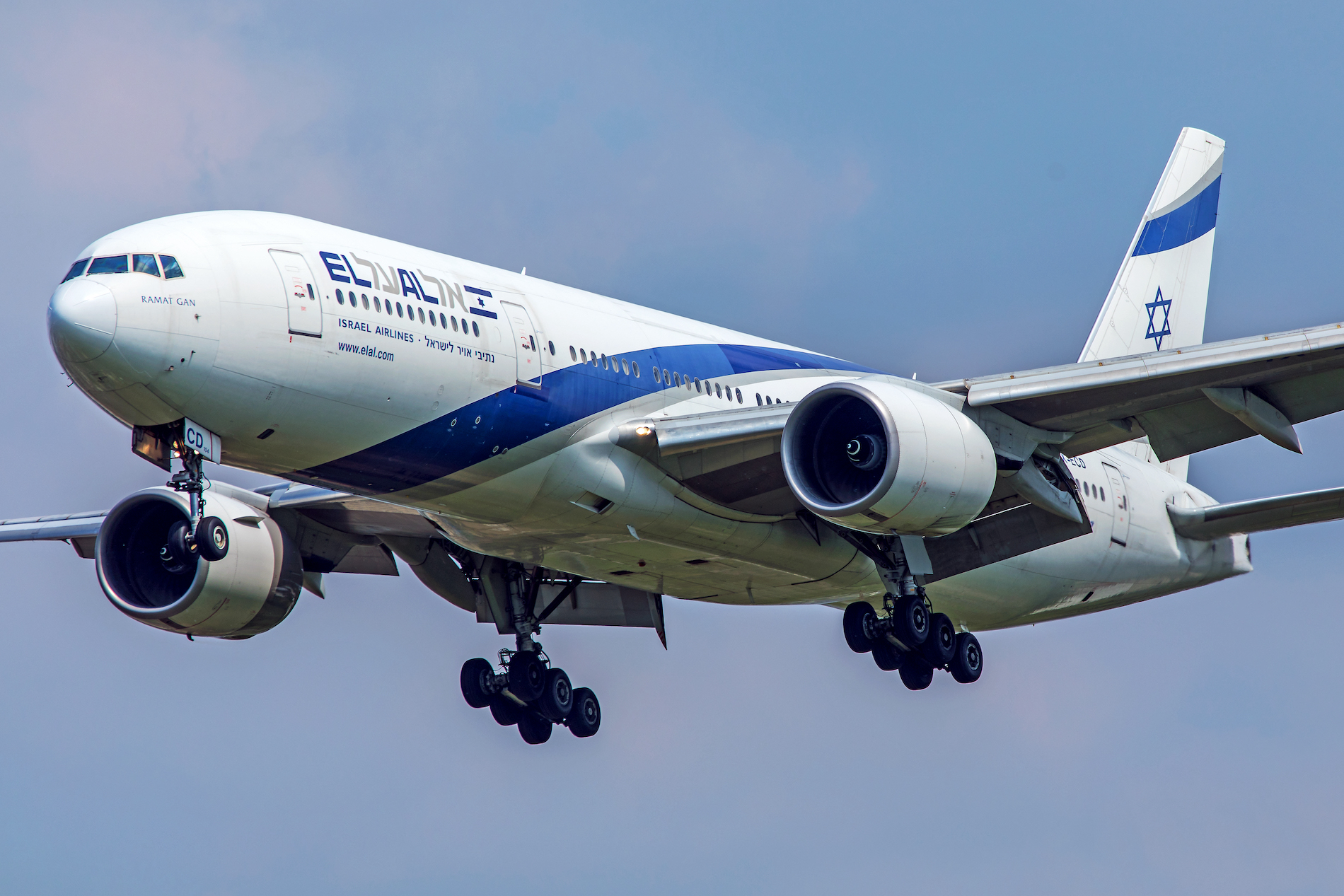
An El Al 777-200 in London. (Photo: AirlineGeeks | William Derrickson)
El Al Israel Airlines filed schedule changes for the planned resumption of service to Delhi and Mumbai, with a restart date of Oct. 27, 2024, after initially announcing plans to resume service in March 2024.
El Al will operate flights between Tel Aviv and Delhi twice weekly, using its Boeing 777-200ER aircraft. On Wednesdays, flight LY079 will depart from Tel Aviv at 9:30 a.m. and arrive in Delhi at 6:30 p.m. In the opposite direction, flight LY070 will leave Delhi at 8:30 p.m. and reach Tel Aviv at 11:50 p.m.
On Sundays, flight LY079 will depart from Tel Aviv at 6:55 a.m. and arrive in Delhi at 3:55 p.m. Similarly, flight LY070 will leave Delhi at 5:55 p.m. and arrive in Tel Aviv at 9:15 p.m.
Mumbai will have four weekly services from Tel Aviv, operated by El Al using its Boeing 737-800 and 737-900ER aircraft. On Sundays and Mondays, flight LY071 departs from Tel Aviv at 10:15 p.m. and arrives in Mumbai at 7:00 a.m. the next day, using the Boeing 737-800. On Mondays and Tuesdays, flight LY072 departs from Mumbai at 12:00 p.m. and arrives in Tel Aviv at 2:50 p.m., operated by the Boeing 737-900ER.
On Thursdays, flight LY073 takes off from Tel Aviv at 12:05 a.m. and lands in Mumbai at 8:50 a.m., utilizing the Boeing 737-800. On the return, flight LY074 departs from Mumbai at 11:00 p.m. and arrives in Tel Aviv at 1:50 a.m. the next day with its Boeing 737-800 aircraft.
Finally, on Fridays, flight LY073 departs from Tel Aviv at 12:05 a.m. and lands in Mumbai at 8:50 a.m., operated by the Boeing 737-900ER. Flight LY074 follows the same route, departing from Mumbai at 11:00 p.m. and arriving in Tel Aviv at 1:50 a.m, also utilizing the Boeing 737-900ER.
The carrier previously served Delhi until December 2019 and Mumbai until March 2020, cutting the route during the COVID-19 pandemic.
Ever since he was a kid, Arya has been interested in aviation. With his entire family overseas, he has taken many family trips worldwide to places like the United Kingdom and India. He lives in Colorado but attends The University of Alabama, studying Computer Engineering with a minor in Computer Science. He hopes to obtain his PPL and eventually translate his engineering degree to working in operations at an airline.
Frontier to Open Puerto Rico Crew Base
Frontier Airlines has announced the opening of its 13th crew base in San Juan, Puerto Rico, providing job openings and a positive economic impact.
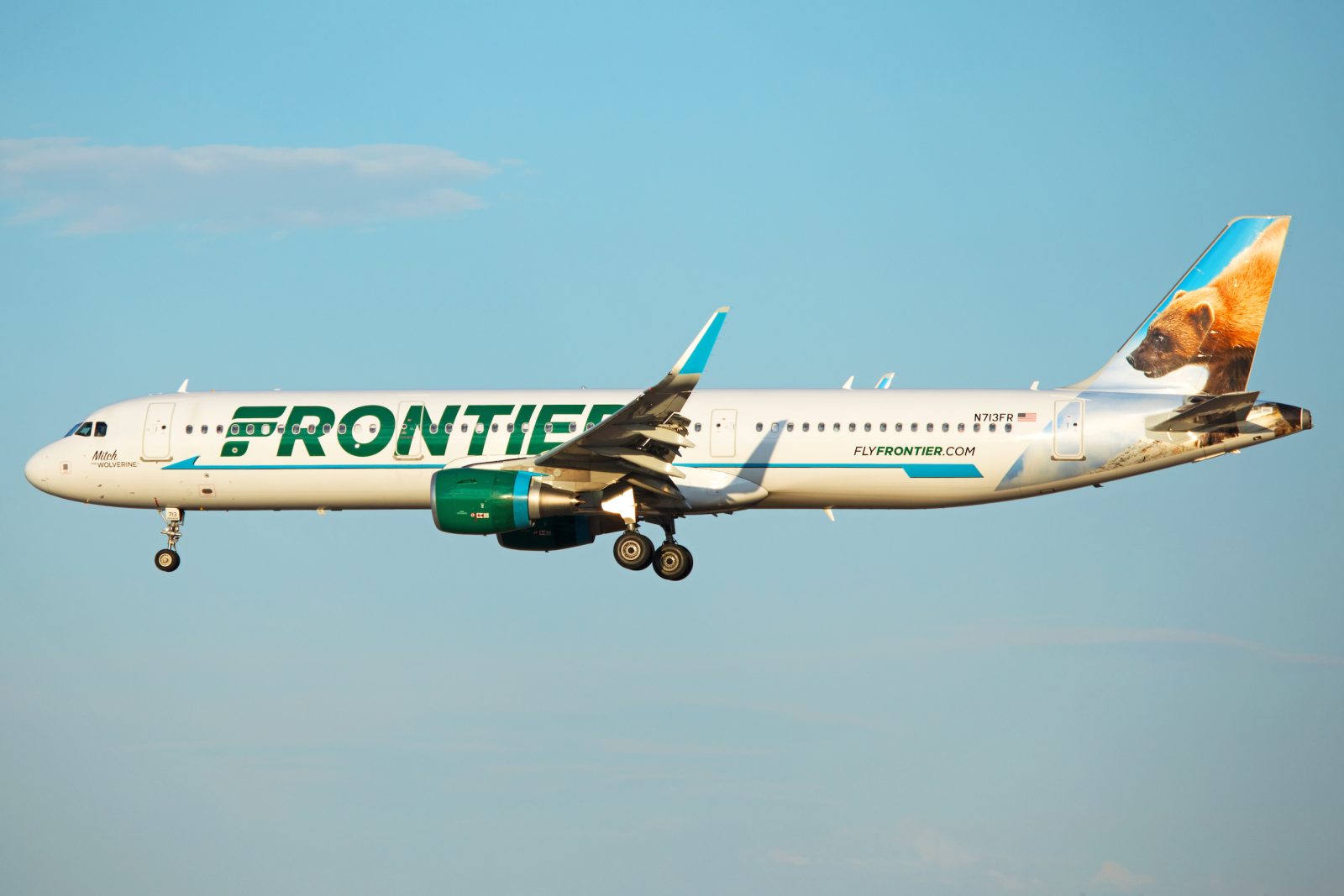
A Frontier A321 in Las Vegas (Photo: AirlineGeeks | William Derrickson)
Ultra-low-cost carrier Frontier Airlines has continually expanded crew bases across its network over the past quarters. Most recently, the Denver-based carrier has announced its easternmost base in the network, San Juan, Puerto Rico (SJU). The new crew base will be open to flight attendants and pilots, becoming the carrier’s 13th crew base spread across North America.
The opening of the new base will have slots for 90 pilots and 200 flight attendants. San Juan will have slightly more positions than the previously announced base opening in Cincinnati and slightly less than those announced for the split Chicago base.
The ULCC has begun transitioning to a flying schedule of out-and-back or day trips for the company’s flight crews. This removes overnights from schedules and aims to have crews begin and end their days in base. This type of flying necessitates the need for a large number of crew bases due to Frontier having a vast route network. Thus to ease this transition from traditional multi-day trips, the carrier has rapidly expanded the number of crew bases to assist.
Frontier currently operates 14 nonstop routes from San Juan as far west as Dallas and Chicago. The carrier has service from two other cities on the island to Orlando as well.
Economic Impact
Frontier Airlines CEO Barry Biffle believes the new base will have a positive impact on the community stating “Our base will provide significant economic impact and new jobs for Puerto Ricans. A crew base also helps support smooth flight operations – benefiting customers flying to and from the island who will have access to a wide variety of destinations, including a number of underserved markets, as we continue to grow our Puerto Rico operations.” The opening of the base is anticipated to generate $84 million locally and establish a foundation for continued growth according to the carrier.
The base is slated to open in June of this year. The carrier joins Silver Airways as the only 121 operators to have a crew base in San Juan.
Zach’s love for aviation began when he was in elementary school with a flight sim and model planes. This passion for being in the air only intensified throughout high school when he earned his Private Pilot Certificate. He then attended Embry-Riddle Aeronautical University, earning his certificates and ratings to later flight instruct and share his passion for aviation with others. He now resides in the North East living out his dream as an airline pilot.
Delta Details Retirement Plan for Boeing 767 Fleet
Delta is looking to retire its fleet of 767-300ER aircraft by 2030, the airline's President Glen Hauenstein said in a Q4 2023 earnings call.
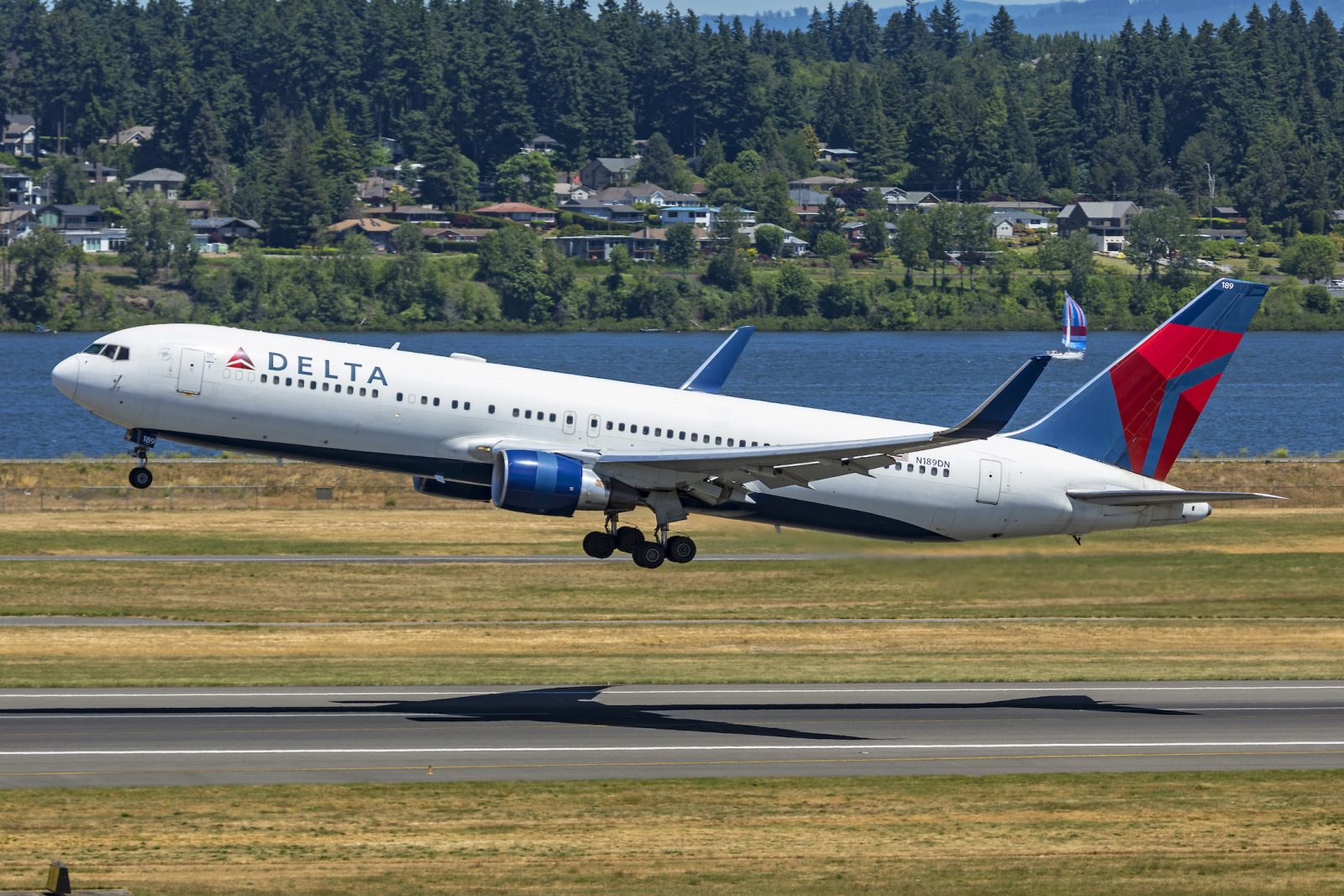
A Delta 767-300. (Photo: AirlineGeeks | William Derrickson)
Delta is looking to retire its fleet of 767-300ER aircraft by 2030, the airline’s President Glen Hauenstein said in a Q4 2023 earnings call. According to data from AirFleets.net, the Atlanta-based airline currently has 45 767-300ERs in service along with 21 767-400s.
Last week, Delta placed an order for up to 40 new Airbus aircraft, including the A350-1000. The airline already has approximately 28 A350-900s in service.
While the larger A350-1000s won’t directly replace the 767s, the airline expects to use the new aircraft as part of an overall fleet modernization effort. The average age of a Delta 767-series aircraft is 26 years old, per AirFleets.net data.
Removal From Long-Haul
As part of the phase-out plan, Delta intends to remove the 767-300ERs from international long-haul service first. “It was our intent to have them out of international long haul by 2028 and retired by 2030,” Hauenstein said during the earnings call.
According to Cirium Diio data, the airline has 2,355 flights scheduled on its 767-300 fleet in June 2024. Delta uses the type on a variety of long-haul routes and domestic flights.
The 767-400’s Future
Delta’s fleet of the larger 767-400 variant is expected to continue operating into the 2030s. There are only 38 active 767-400ERs worldwide, according to data from ch-aviation.
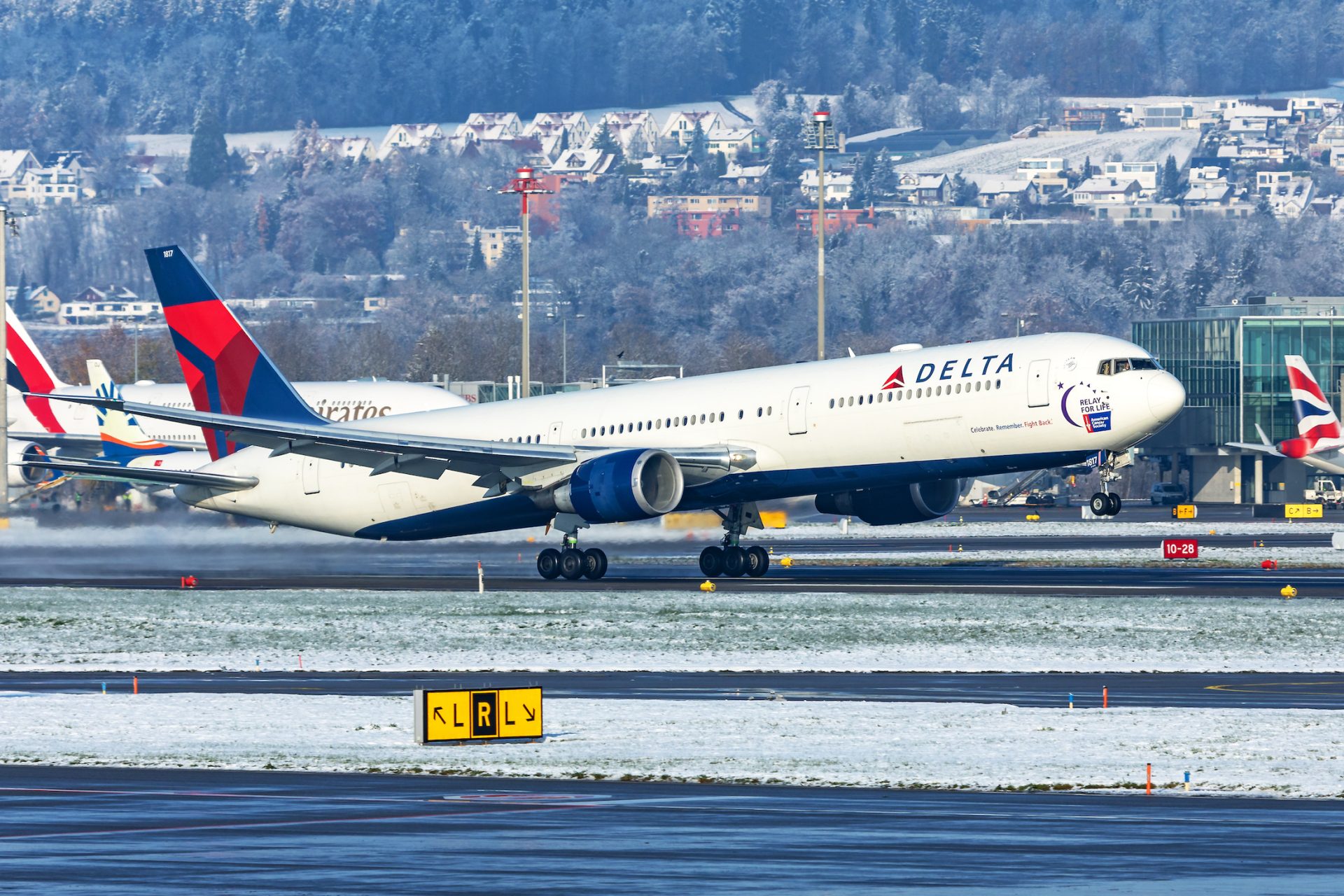
A Delta 767-400 (Photo: AirlineGeeks | William Derrickson)
“As we move through 2025…through the back half of the decade, we expect to retire the 767-300s through that period of time on a pretty consistent basis as you step through while continuing to fly the -400s,” Delta’s Chief Financial Officer Dan Janki added during the earnings call.
Similar to its -300 counterpart, the 767-400 operates a wide array of routes within Delta’s network, including long-haul and domestic. The type is slated to operate 1,080 Delta flights in June 2024.
Ryan founded AirlineGeeks.com in February 2013 and has spent more than a decade covering the airline business. His work has been featured by CNN, WJLA, CNET, and Business Insider. His aviation experience spans airport operations, Part 135 regulatory compliance, and airline crew workforce planning, along with time behind the yoke of a Cessna 172 and interviews with airline executives. Ryan now serves as Group President of Firecrown Media’s Aviation Group. He holds a B.S. in Air Transportation Management and an MBA from Arizona State University and teaches Airline Management at Embry-Riddle Aeronautical University.
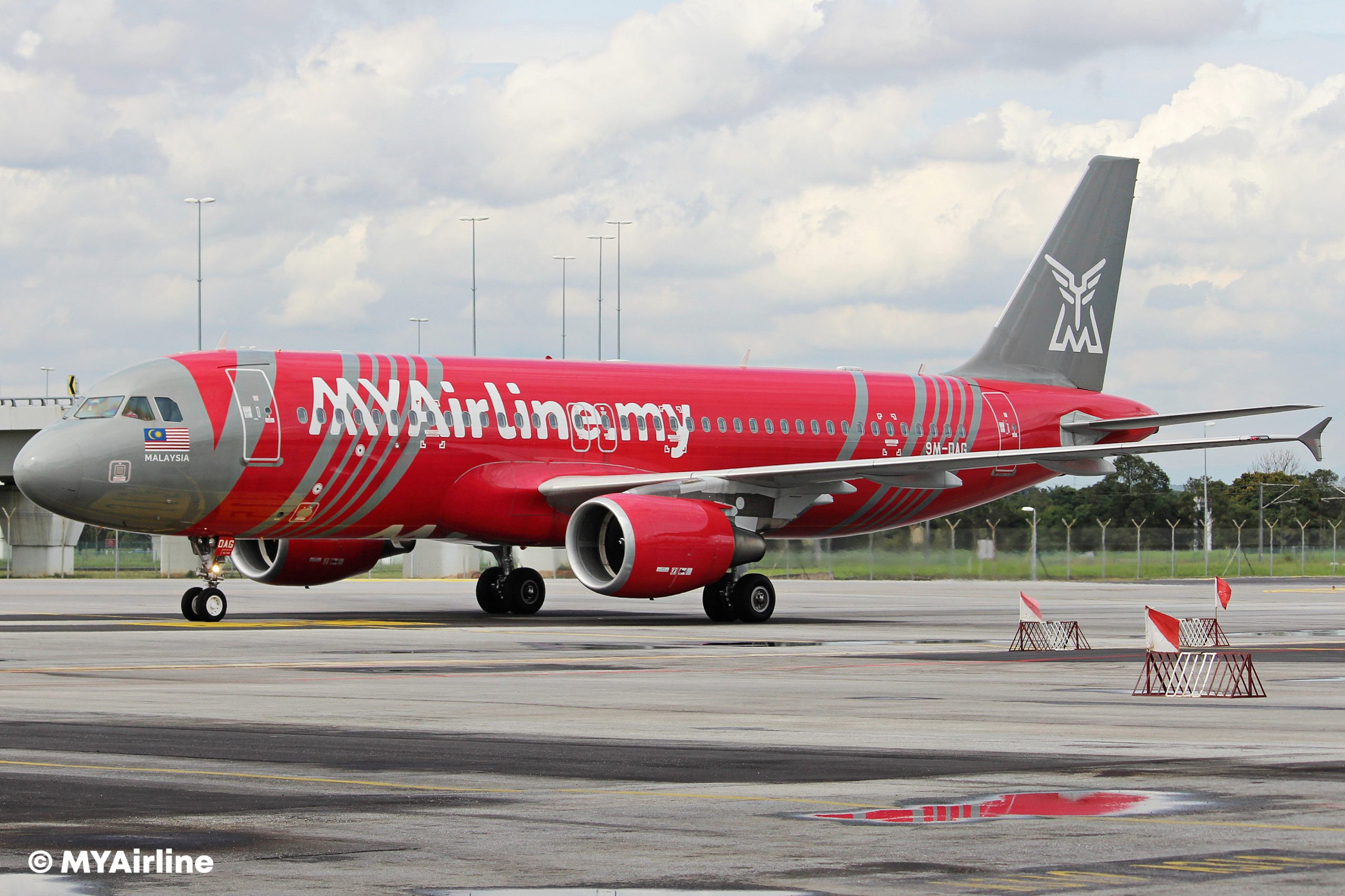
After three months of suspending its services, Malaysia’s MYAirline is paving the way for resuming its operations by the middle of 2024. According to local media, MYAirline has inked a sale and purchase agreement (SPA) at the end of 2023 with an investor from the Middle East.
“There are a few conditions that will be imposed if they want to restart operations. They must make sure all their passengers are refunded and they must make sure whatever (is owed) to their staff must be paid,” Anthony Loke, Malaysia’s Transport Minister, said.
The identity of the white knight and other details haven’t been revealed at the moment. Under the regulation in Malaysia, a Malaysian carrier needs to be held at a 51% stake in the business by its citizen.
The troubled airline is believed to have applied for a conditional Air Service Licence (ASL) from the Malaysian Aviation Commission (MAVCOM). The application for ASL needs 90 days to process. Afterwards, the airline could apply for an Air Operator Certificate from the Civil Aviation Authority of Malaysia (CAAM).
In Malaysia, a carrier that owns two aircraft or helicopters for scheduled operations is eligible to apply for an Air Operator Certificate (AOC). Loke also stated the airline needs to comply with the terms for safety.
MYAirline abruptly ceased operation in October after launching its service for ten months. It came after failing to secure a new investor. Earlier, the carrier clarified that its ASL and AOC have been suspended and not revoked. In addition, 900 employees and 117,000 passengers were fallen behind with their salaries and refunds.
Moreover, the refund processes are far behind. As of January 8, a total of 4,304 consumers were assisted with refunds through the chargeback process.
Door Plug Was Made In Malaysia?
Meanwhile, the struggling airline has been facing a setback. AirAsia, its main rival, has bolstered its fleet by leasing four of MYAirline’s previous aircraft. The low-cost carrier launched its services in December 2022 operating domestic and regional services with nine leased Airbus A320s. It is believed the stiff competition cost MYAirline as a result. The airline held only 10% of the domestic market share.
On the other hand, Loke has declined to comment on the Alaska Airlines Boeing 737 MAX 9 incident. It was reported by the New Straight Times that the door plug found in Portland was inscribed with ‘Made in Malaysia.’
“We have not received any information and that is not under my purview. I cannot comment on it as that report was merely from a public eyewitness, If there is any official report on this, then we will look into it.” Lok said.
Lok further said the CAAM will look into the incident if the U.S. could provide additional information.
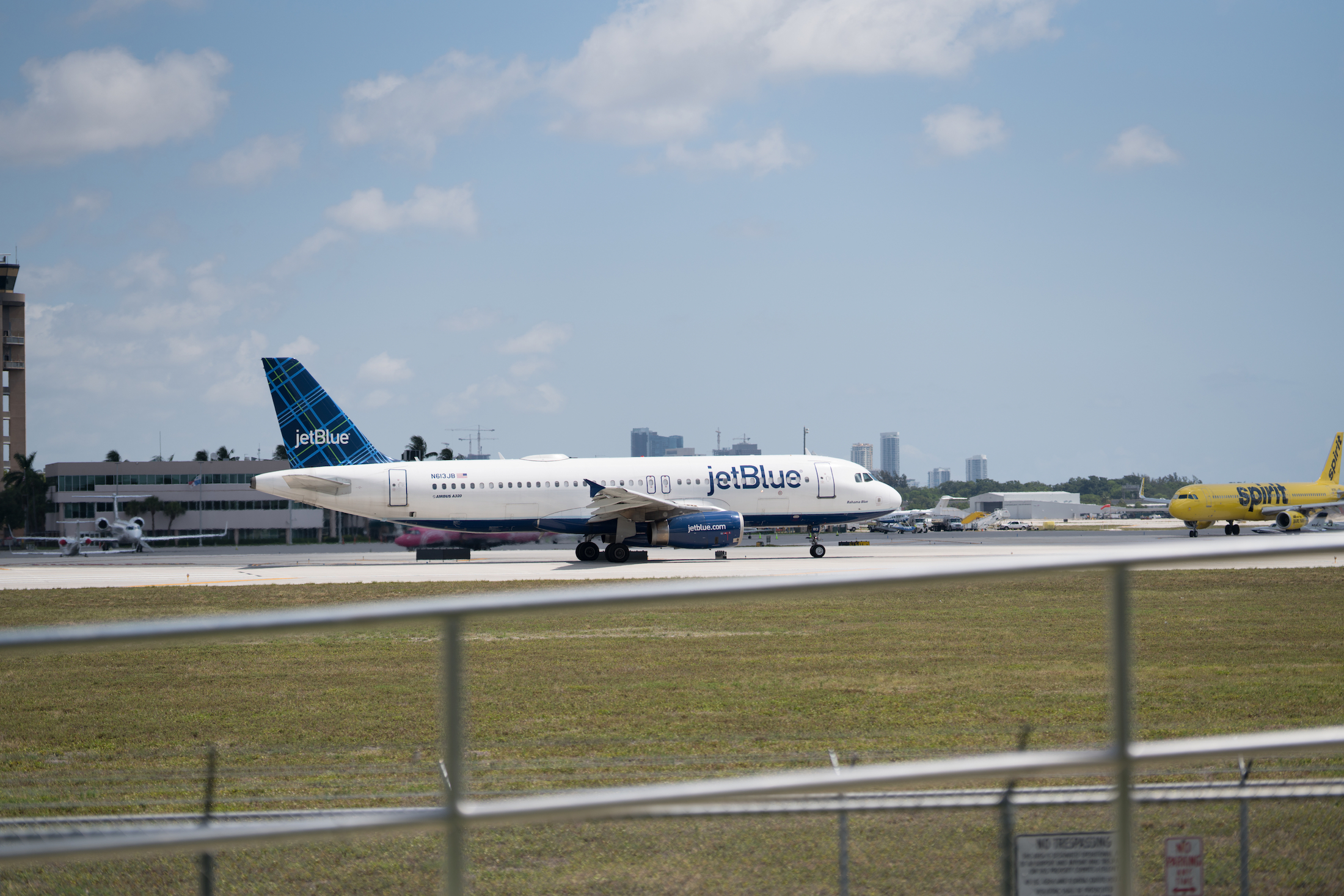
JetBlue and Spirit aircraft in Fort Lauderdale. (Photo: Shutterstock)
JetBlue Airways has responded to a federal judge’s Tuesday decision to block its merger with Spirit Airlines. Judge William Young agreed with the Justice Department’s argument that removing Spirit Airlines would reduce customer choice and competition, thus limiting competition and raising prices.
“We disagree with the U.S. District Court’s ruling. We continue to believe that our combination is the best opportunity to increase much needed competition and choice by bringing low fares and great service to more customers in more markets while enhancing our ability to compete with the dominant U.S. carriers,” JetBlue and Spirit said in a joint statement.
“JetBlue’s termination of the Northeast alliance and commitment to significant divestitures have removed any reasonable anti-competitive concerns that the Department of Justice raised,” the airlines continued, adding they are “reviewing the court’s decision and…evaluating our next steps as part of the legal process.”
JetBlue will owe Spirit $400 million if the deal is blocked by regulatory bodies, adding to the carrier’s incentive to succeed with this merger. The carrier believes that the merger will allow it to compete more directly with the big four U.S. carriers by expanding its fleet and earning it slots in various lucrative airports virtually overnight.
JetBlue has gone from a true low-cost carrier to an airline loved by passengers for its comfortable aircraft and relatively generous amenities. When the carrier adds a new destination, prices in that market tend to drop naturally because of JetBlue’s presence, a phenomenon known as the “JetBlue effect.”
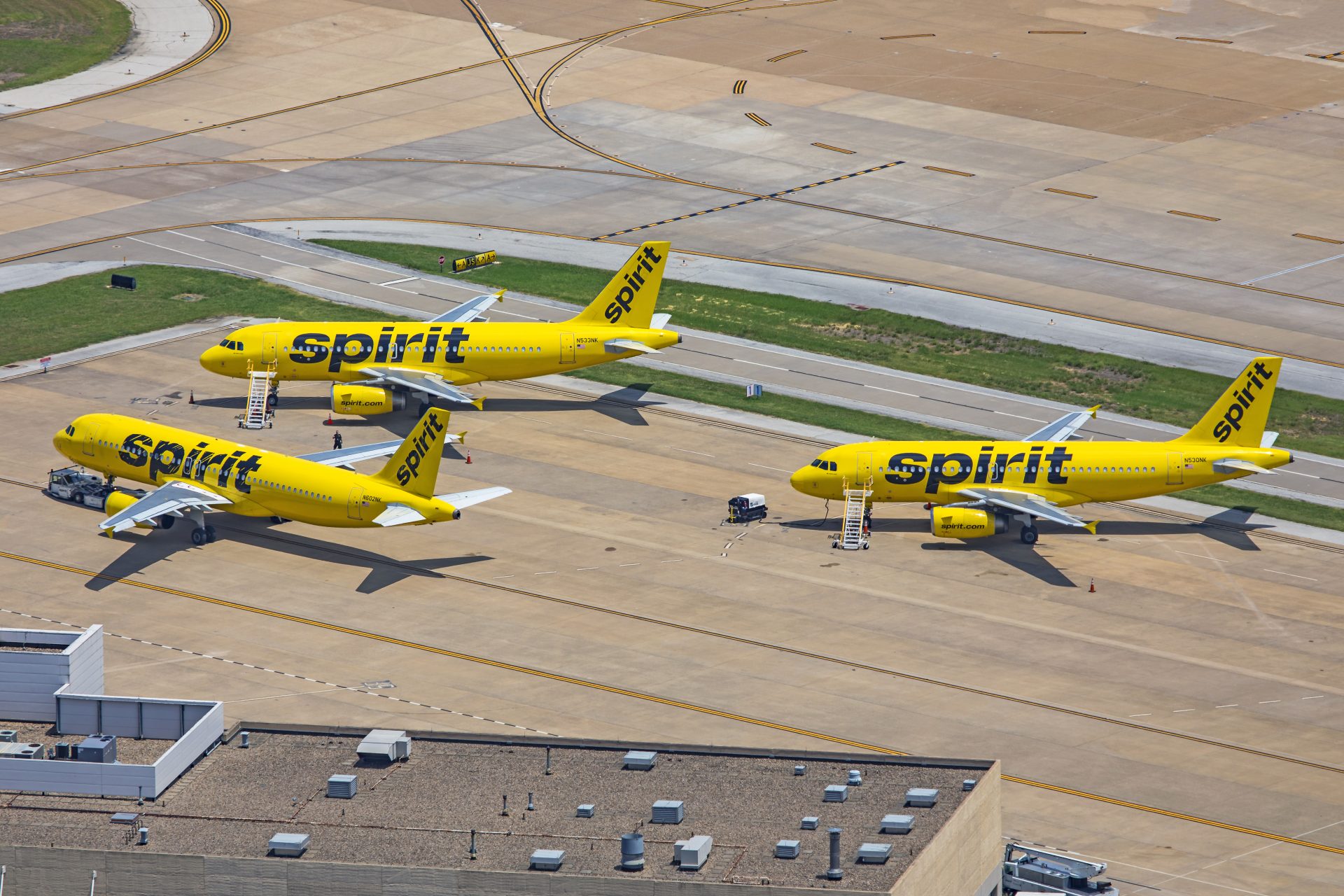
Spirit Airlines Airbus jets parked on the ramp. (Photo: AirlineGeeks)
Spirit’s stock prices have dropped 60% since the merger was blocked this morning. The carrier has been struggling in recent months and completely paused new hire training for flight crews last fall. The failure of this merger could signal future trouble for company stakeholders, who may be concerned about the short-term future of the company considering the headwinds it and other ultra-low-cost airlines have lately faced.
“Spirit is a small airline. But there are those who love it,” Judge Young wrote in his ruling. “To those dedicated customers of Spirit, this one’s for you.”
JetBlue and Spirit have yet to announce what their next step will be. A legal appeal may be likely, but the two carriers could also pursue a codeshare or interline agreement that sends passengers from one carrier to the other. This might give JetBlue the ability to increase its marketing and publicity in select new markets without needing to spend money on buying or refurbishing planes or securing slots. It could also allow JetBlue to attract more passengers to its transatlantic flights by giving passengers a direct line to cheaper alternatives to mainline carriers.
John McDermott is a commercial pilot pursuing a career in professional flight. His passion for aviation began in an Ann Arbor bookstore with a tale of enemy pilots during World War 2, and he hasn't looked back. Besides flying and writing for AirlineGeeks, John volunteers with Professional Pilots of Tomorrow and travels whenever he gets the chance.
Judge Blocks JetBlue, Spirit Merger
In a big win for President Joe Biden’s Justice Department, a federal judge has blocked the merger between JetBlue Airways and Spirit Airlines.
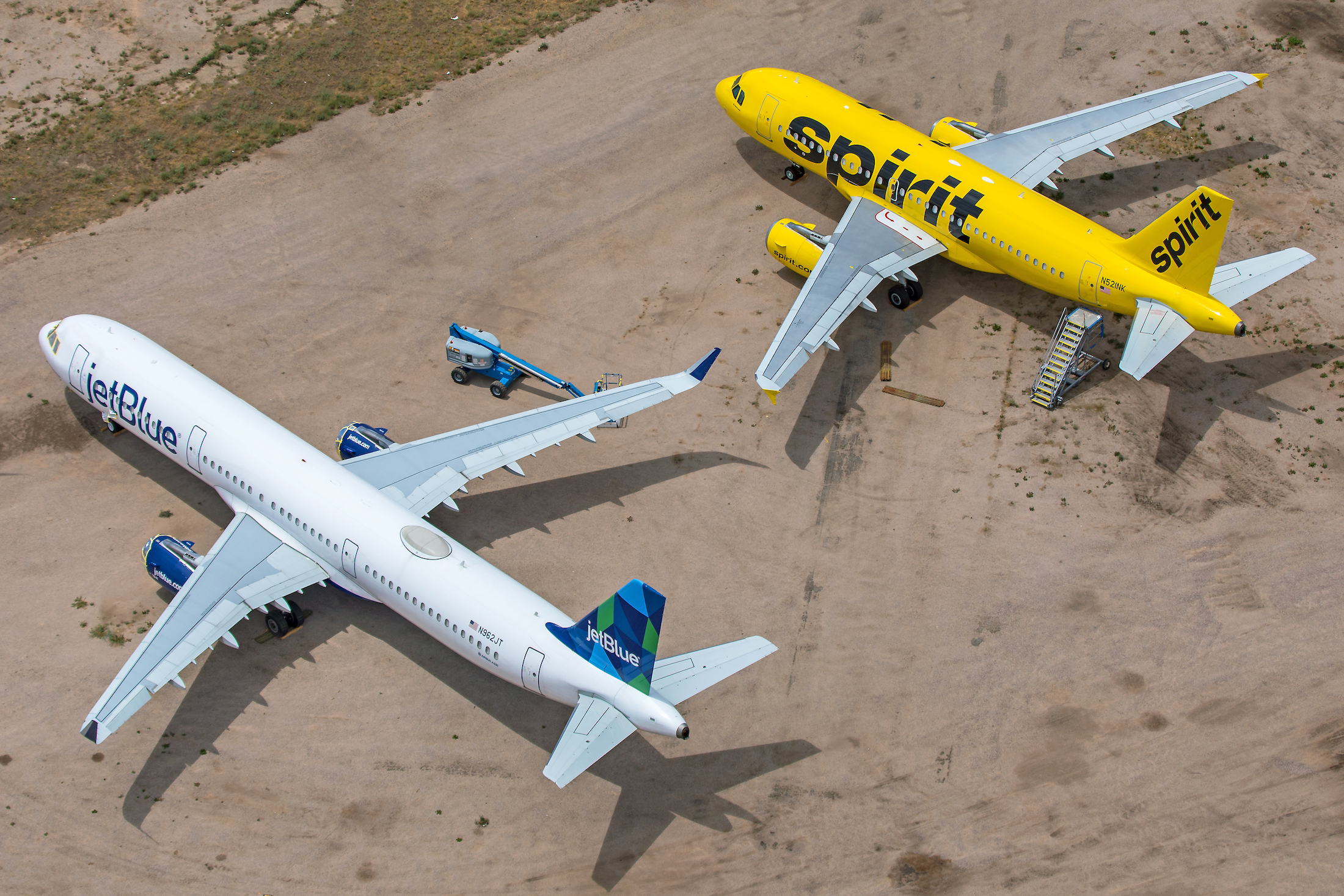
JetBlue and Spirit aircraft (Photo: AirlineGeeks | William Derrickson)
In a big win for President Joe Biden’s Justice Department, a federal judge has blocked the merger between JetBlue Airways and Spirit Airlines. The Justice Department sued to block the merger soon after it was announced, arguing that it was anticompetitive and would drive up prices.
The $3.8 billion merger would have resulted in the country’s fifth-largest airline. JetBlue would have entirely absorbed Spirit, rebranding its airplanes and using its slots across the country for rapid expansion.
Judge’s Findings and the Clayton Act
“In light of the foregoing Findings of Fact and Conclusions of Law, it is hereby ordered that the Defendant Airlines, their agents, servants, employees, and all persons acting in concert with either of them, are permanently enjoined from executing the proposed merger as agreed on July 28, 2022,” wrote Judge William Young on Tuesday.
Judge Young found this merger would violate the Clayton Antitrust Act of 1914, which prohibits price discrimination and focuses greatly on mergers and acquisitions. Specifically, Judge Young mentions in his 113-page decision a section that prohibits mergers and acquisitions “where in any line of commerce or in any activity affecting commerce in any section of the country, the effect of such acquisition may be substantially to lessen competition” in an effort to prevent a trend towards monopoly “before the customer’s alternatives disappear.”
“The parties need not be each other’s closest competitors to raise a threat to competition; being close competitors is enough for an acquisition to result in upward pricing pressure,” Young wrote in his decision. “The loss of Spirit’s influence on JetBlue as a head-to-head competitor would likely result in less competition to both discipline the prices and spur the innovation of JetBlue as a smaller, maverick -– more competitive — market participant. “
The Importance of Independent Brands
For its own part, Spirit has been flying for decades. Despite having a somewhat volatile reputation with the American public, Spirit has profited greatly by selling rock-bottom base fares and charging extra for bags, drinks, snacks, and even, in some cases, checking in with an agent at the airport. Spirit competes with Frontier Airlines, the other major ultra-low-cost carrier in the United States.
“The loss of Spirit’s innovation, in particular, would be a loss for all consumers in the national scheduled airline passenger market. A reduction in product innovation resulting from an acquisition is a cognizable harm to competition,” Judge Young wrote in his decision.
“In eliminating Spirit from the marketplace, the proposed transaction would, by definition, dampen Spirit’s disruptive force,” Young continued.
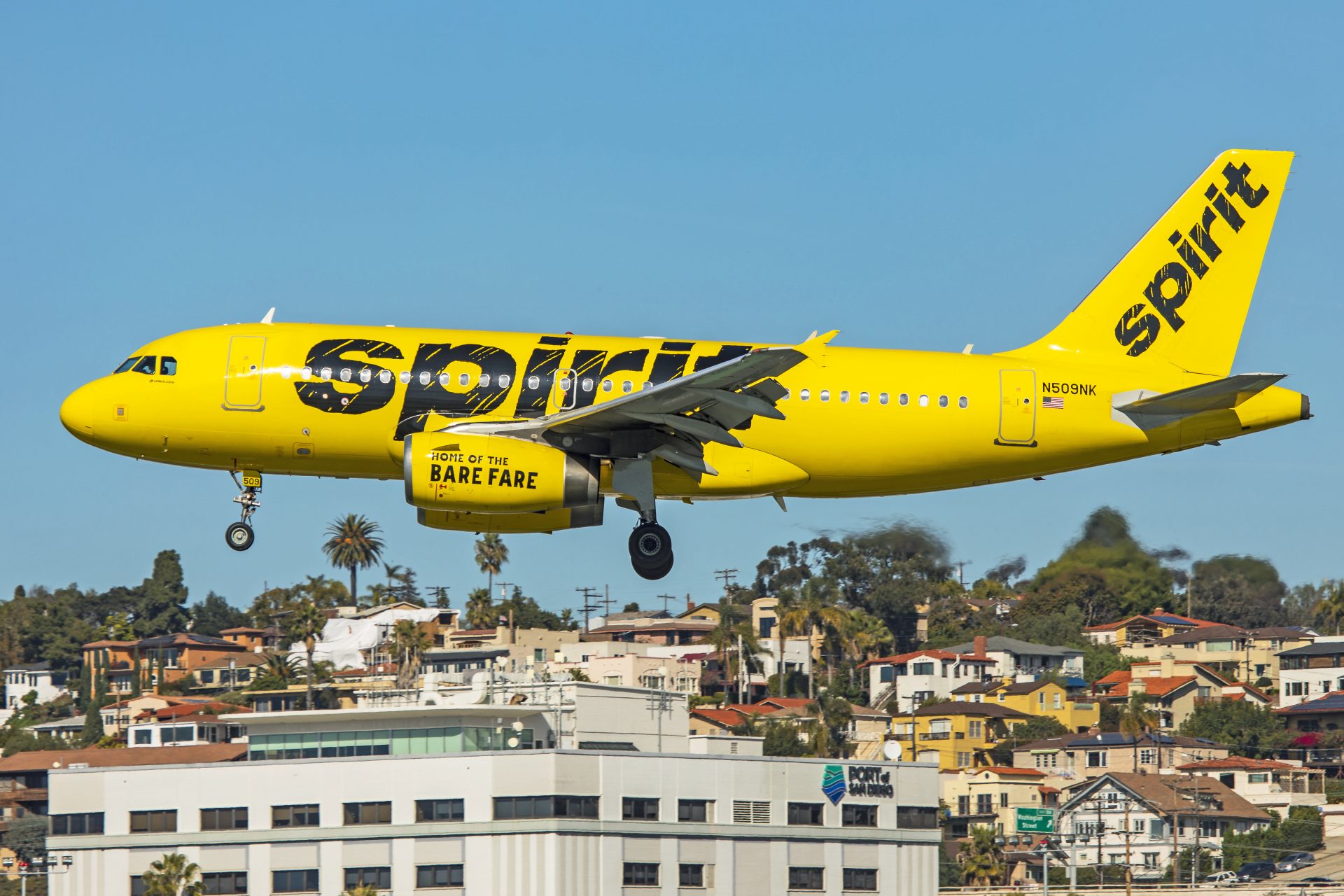
A Spirit Airlines Airbus A319 prepares for landing. (Photo: AirlineGeeks | William Derrickson)
It seemed for a moment that there would have been a way for JetBlue to make some concessions – namely giving up lucrative slots on the East Coast – to make the deal happen; those slots would have most likely gone to Frontier. In December, Judge Young said that he would entertain a deal that saw JetBlue making concessions to allow the merger but that he was at the time unsure how much of its current operation JetBlue would need to sacrifice for the merger.
Still, it seems that the major sticking point for Judge Young was the reduction of choice in the American aviation landscape. Young wrote that the elimination of product options that consumers value “is a cognizable harm to competition.”
Ultimately, Young decided, “The Government has demonstrated that consumers value Spirit flights as a unique, economical product option. The removal of Spirit as an option for consumers, therefore, would constitute a cognizable harm.”
JetBlue’s Rebuttal
While Young says that JetBlue can innovate better because of Spirit’s competition, JetBlue says that this deal is necessary for it to have the aircraft and slots to challenge the established big four carriers – American, Delta, United, and Southwest – which collectively control 80% of the US airline market. Without this merger, per JetBlue, customers suffer from a lack of choice more than they would from price increases if the deal goes through.
JetBlue also argued that, though losing Spirit would cause price increases for a time, inevitably another new carrier would replace it and bring costs back to where they once were. JetBlue further argued that the potential entry of new competitors into the market may be considered when a judge determines whether a merger will substantially lessen competition, adding that they need not prove that a competitor will enter the same markets Spirit would leave or when for their argument to be considered.
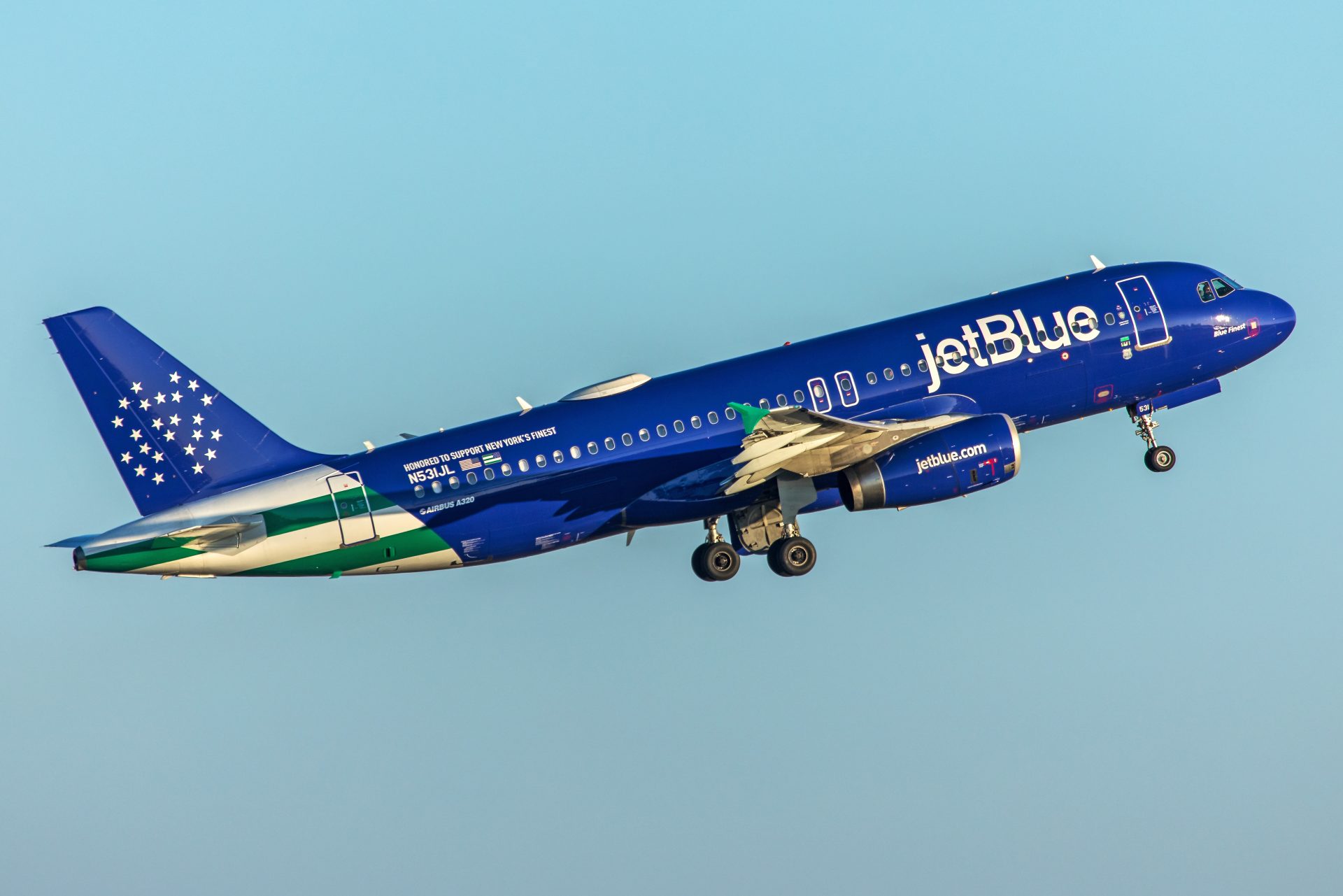
A JetBlue Airbus A320 climbing out from Boston. (Photo: AirlineGeeks | William Derrickson)
There is a question, though, whether such an entry would be “timely” enough to offset the impacts of Spirit’s disappearance from the market. It often takes years for new airlines to start up from nothing to a full airline, and most airline startups do not succeed long-term in the U.S.
That does not mean that such is impossible. Avelo Airlines and Breeze Airways, two low-cost airlines that focus on serving underrepresented cities with nonstop routes to popular destinations, launched during the COVID-19 pandemic and are on the verge of turning their first profits.
Still, though, both carriers fill a niche market with no previous competition that allows them an advantage. Any replacement for Spirit would need to compete directly with Frontier, Allegiant, Sun Country, and others before it comes close to being the same size and having the same loyalty that Spirit does, making its path to growth difficult.
Perhaps Spirit’s disappearance would allow innovation from other airlines already in business. Allegiant’s business model and route structure, though close, does not directly match Spirit’s.
JetBlue’s Recent Snubs
This is not the first time that JetBlue has lost out on a potentially lucrative merger. Alaska beat it to buying Virgin America, another carrier that would have solved JetBlue’s inability to get a foothold on the West Coast. Though JetBlue has a handful of routes to the U.S. West Coast and Europe, a large majority of its flights are concentrated on the East Coast, and all outside of that region connect to the East Coast, meaning the airline cannot compete meaningfully with any other company apart from eastern routes.
This is also not the first time in recent months that the Justice Department has come for JetBlue. The carrier’s codeshare with American Airlines, dubbed the Northeast Alliance, was struck down in late 2023 because, once again, the Biden administration claimed it was anticompetitive. JetBlue decided not to appeal the decision to focus on its deal with Spirit, meaning the airline is now out of two lucrative deals within months.
The Merger’s Legal Future
At the time of writing, neither JetBlue nor Spirit has commented on Tuesday’s decision. What impact the loss of both of these deals will have on JetBlue’s future is unclear.
JetBlue does have an additional incentive to appeal: it will owe Spirit $400 million if the deal cannot clear regulatory hurdles. Such a payment would constitute a big break for the ultra-low-cost carrier, which in recent months has been hit hard by economic slowdown.
The Justice Department has focused greatly on antitrust cases under President Joe Biden, taking aim at other companies such as Amazon and Google. This prioritization of taking down big brands is likely the fundamental reason why the Justice Department wanted this case to go to trial instead of settling out of court, which both JetBlue and Spirit were ready to do.
“JetBlue’s plan would eliminate the unique competition that Spirit provides—and about half of all ultra-low-cost airline seats in the industry—and leave tens of millions of travelers to face higher fares and fewer options,” the Justice Department alleged in its lawsuit last March.
Past and Future Airline Mergers
The Justice Department does not have much precedent in the 21st century for taking airline merger cases to trial; in fact the federal government has not rejected an airline merger in 20 years. The merger between American Airlines and US Airways in 2013 narrowly avoided trial. Southwest and AirTran also merged in 2013 without one, as did United and Continental in 2010 and Delta and Northwest in 2008.
This decision calls into question whether the original merger Spirit had with Frontier would have gone through either. In both cases, there would have only been one major ultra-low-cost airline remaining in the U.S. market. Spirit would have disappeared from some key destinations, and its competition would have disappeared in other markets where it was the only challenger to mainline companies, thus increasing prices.
Equally in question now is the future of a proposed merger between Alaska Airlines and Hawaiian Airlines. The Justice Department would most likely argue for price increases caused by that deal, but the fact that the two brands would remain separate – and that their route networks are largely complimentary of each other – means that the number of airlines in the U.S. would not change, at least publicly.
That allows Alaska to make a stronger case against any anticompetitive argument that the Justice Department could make based on brand loyalty, which Judge Young specifically mentioned in the JetBlue/Spirit case. With independent brands still in operation, Alaska would allow passengers to continue having at least the illusion of choice, not to mention many in the traveling public might not notice any difference once Hawaiian was purchased and would continue flying as normal.
A stronger example is the international market – Hawaiian would continue competing with international and domestic brands alike, and it would maintain brand loyalty from both Hawaiian natives who have known the brand for decades as well as international vacationers who are either already familiar or who will make the correlation between the name of the state and the airline.
Hawaiian said immediately after its proposed deal with Alaska that it is open to other offers. JetBlue has yet to make any statement about Hawaiian, and it is unlikely that it will. A merger with Spirit makes sense for JetBlue because the two airlines have nearly identical fleet commonality. Spirit also has the exact slots that would allow JetBlue to expand in a way that makes sense.
However, adding widebody Airbus A330s, aging Boeing 717s, and a trans-Pacific route network does not match the way that JetBlue has been expanding in recent years. Hawaiian also does not have the number of airport slots on the West Coast that would be beneficial to JetBlue.
John McDermott is a commercial pilot pursuing a career in professional flight. His passion for aviation began in an Ann Arbor bookstore with a tale of enemy pilots during World War 2, and he hasn't looked back. Besides flying and writing for AirlineGeeks, John volunteers with Professional Pilots of Tomorrow and travels whenever he gets the chance.
Sign-up for newsletters & special offers!
Get the latest stories & special offers delivered directly to your inbox