










Stories

Livery of the Week: EgyptAir

The Egyptian flag carrier’s design blends a modern blue palette with one of the country’s most recognizable ancient symbols.

An EgyptAir Boeing 787-9 Dreamliner
An EgyptAir Boeing 787-9 Dreamliner (Photo: AirlineGeeks | Katie Zera)

Editor’s Note: AirlineGeeks is proud to present our ‘Livery of the Week’ series. Every Friday, a team member will share an airline livery, which can be from the past, present, or even a special scheme. Some airline liveries are works of art. The complexity associated with painting around critical flight components and the added weight requires outside-the-box thinking from designers. The average airliner can cost upwards of $200,000 to repaint, creating a separate aircraft repainting industry as a result. 

Have an idea for a livery that we should highlight? Drop us a line

EgyptAir’s standard livery is centered on a deep blue tail carrying the airline’s stylized Horus emblem, giving the carrier one of the more culturally distinctive standard liveries in commercial aviation. The logo represents Horus, the ancient Egyptian sky deity, which has long served as a central symbol in the airline’s branding.

The aircraft’s fuselage remains primarily white, creating a clean backdrop for the airline’s dark blue titles along the forward section. A flowing blue cheatline runs beneath the cabin windows toward the rear of the aircraft, tying the fuselage visually to the tail and helping unify the design across different aircraft types.

The most recognizable feature of the livery is the falcon-headed Horus mark on the tail. EgyptAir adopted Horus as its logo because of the figure’s association with the sky and sun, making it a natural fit for an airline identity. The symbol gives the design a clear connection to Egypt’s history without requiring a more elaborate or heavily themed paint scheme.

An EgyptAir A321 aircraft
An EgyptAir A321 aircraft (Photo: Shutterstock)

EgyptAir applies the livery across its mixed fleet, including Boeing 737-800s, 787-9 Dreamliners, and other mainline aircraft. While proportions vary depending on aircraft type, the core elements — the white fuselage, blue tail, and Horus branding — remain consistent throughout the fleet.

Compared with more experimental modern liveries, EgyptAir’s design takes a restrained approach. Rather than relying on gradients, large fuselage graphics, or special typography, the airline uses a straightforward layout anchored by a single historic emblem. That simplicity has helped the livery remain recognizable even as the carrier has modernized its fleet over time.

Looking for a new airplane model? Head over to our friends at the Midwest Model Store for a wide selection of airlines and liveries.

Ryan Ewing

Ryan founded AirlineGeeks.com back in February 2013 and has amassed considerable experience in the aviation sector. His work has been featured in several publications and news outlets, including CNN, WJLA, CNET, and Business Insider. During his time in the industry, he's worked in roles pertaining to airport/airline operations while holding a B.S. in Air Transportation Management from Arizona State University along with an MBA. Ryan has experience in several facets of the industry from behind the yoke of a Cessna 172 to interviewing airline industry executives. Ryan works for AirlineGeeks' owner FLYING Media, spearheading coverage in the commercial aviation space.

Delta Adds Flights, Expands Capacity for College Football Season

The carrier released a full list of temporary and upgraded connections, running from August to November.

Delta A320
A Delta Airlines Airbus A320 in Boston. (Photo: AirliineGeeks | William Derrickson)

Delta is expanding its schedule this fall to accommodate demand from college football fans.

The carrier said Friday that it will operate one-off roundtrip flights to and from airports near major games. It also plans to temporarily add flights and swap in larger aircraft on routes to game-day destinations that it already serves.

In total, Delta will add over 40 flights and nearly 10,000 seats, according to Amy Martin, the airline’s vice president of network planning.

The carrier said it is targeting not only college towns but also cities with significant alumni populations. Temporary flights will depart on Fridays and return on Sundays. Most of the destinations are in the Midwest, South, and West.

Games highlighted by Delta – and likely to draw some of the biggest crowds – include Clemson at LSU (Sept. 5), Notre Dame vs. Wisconsin at Lambeau Field (Sept. 6), Ohio State at Texas (Sept. 12), Texas at Tennessee (Sept. 26), USC at Florida (Oct. 10), and Alabama at LSU (Nov. 7).

A full list of temporary and expanded flights is available on Delta’s website.

Zach Vasile

Zach Vasile is a writer and editor covering news in all aspects of commercial aviation. He has reported for and contributed to the Manchester Journal Inquirer, the Hartford Business Journal, the Charlotte Observer, and the Washington Examiner, with his area of focus being the intersection of business and government policy.

Alaska Raises Checked Bag Fees

The carrier cited higher fuel prices and an “uncertain global environment.”

An Alaska Airlines 737 MAX 9
An Alaska Airlines 737 MAX 9. (Photo: AirlineGeeks | Katie Zera)

Another major U.S. airline is increasing its checked bags fees.

Citing the recent surge in jet fuel prices, Alaska Airlines said a new baggage fee schedule will go into effect for tickets booked on or after Friday.

“Due to ongoing volatility in fuel prices and an uncertain global environment, Alaska Airlines is increasing its checked baggage fees for travel on North American Alaska Airlines and Hawaiian Airlines flights,” the carrier said in a statement on its website. “Fees are increasing $5 for the first checked bag and $10 for the second checked bag.”

The price for a first checked bag will climb from $40 to $45, while the price for a second bag will rise from $45 to $55. The fee for a third checked bag is set to go up $50, from $150 to $200.

Alaska is also canceling its $5 discount for customers who pay their baggage fees online at least four hours before their flight.

“Atmos Rewards status members and eligible cardholders of an Atmos Rewards Visa or Hawaiian Airlines Mastercard will continue to enjoy their current baggage benefits,” the airline added. “There are no changes to our Huaka‘i or Club 49 programs.”

Airlines around the world are hiking ticket prices and adding fees and surcharges in an attempt to at least partially offset spending on jet fuel. The price of aviation fuel has doubled in most regions since the start of the conflict in Iran, mainly due to the closure of the Strait of Hormuz and Iranian attacks on oil infrastructure in Arab Gulf countries.

Within the last two weeks, United, Delta, American Airlines, Southwest, and JetBlue have all raised their fees for checked bags, mostly by $10 or less for a first and second checked bag.

Zach Vasile

Zach Vasile is a writer and editor covering news in all aspects of commercial aviation. He has reported for and contributed to the Manchester Journal Inquirer, the Hartford Business Journal, the Charlotte Observer, and the Washington Examiner, with his area of focus being the intersection of business and government policy.

Middle East Airspace Reopens Following Ceasefire

The restart of civilian flights could help ease transportation bottlenecks in the region.

Emirates aircraft in Dubai
Emirates aircraft in Dubai (Photo: Emirates)

Airspace is gradually opening up across the Middle East following Tuesday’s ceasefire between the U.S., Israel, and Iran.

Syria, Iraq, and Bahrain each reopened their airspace on Wednesday, while Israel lifted restrictions on flights into and out of Ben Gurion International Airport. All four countries closed or partially closed their airspace following the start of the conflict in Iran in late February, forcing the cancellation of thousands of flights and creating headaches for airlines that fly over the region.

As of Thursday, Iranian and Kuwaiti airspace remain closed to commercial air traffic.

The United Arab Emirates and Qatar, which like Kuwait have been targeted in Iranian missile and drone attacks, resumed limited flight operations in March.

U.S. airlines paused flights to Israel when the fighting began; it is not clear if the full reopening of Ben Gurion will prompt them to restore service in the near term. On March 28, Delta said it has suspended service from New York-JFK and Atlanta to Tel Aviv through Sept. 5. A planned connection from Boston, originally set to launch in October, was “delayed until further notice.”

While the U.S., Israel, and Iran have agreed in principle to stop attacks, both sides have been accused of violating this week’s ceasefire, and flights could be grounded once again if negotiations break down.

Zach Vasile

Zach Vasile is a writer and editor covering news in all aspects of commercial aviation. He has reported for and contributed to the Manchester Journal Inquirer, the Hartford Business Journal, the Charlotte Observer, and the Washington Examiner, with his area of focus being the intersection of business and government policy.

Contour to Resume Former Route, Launch Another

Both connections will come online in June.

Contour Airlines ERJ-135
A Contour Airlines ERJ-135. (Photo: Contour)

Contour Airlines will bring back a route from central Georgia and add an entirely new one later this spring, officials announced Thursday.

On June 9, the regional carrier will reconnect Middle Georgia Regional Airport near Macon with Baltimore. Contour will offer a morning service to Baltimore three times weekly, on Mondays, Wednesdays, and Fridays, and afternoon service daily.

The carrier previously linked Macon and Baltimore, but in 2025 service was switched to Washington Dulles.

Also on June 9, flights between Middle Georgia Regional Airport and Fort Lauderdale, Florida, will commence. This route will operate four times weekly, on Tuesdays, Thursdays, Saturdays, and Sundays.

“We’ve heard from travelers across Middle Georgia who have been asking for the return of Baltimore service, as well as new options to Florida,” Contour President Ben Munson said in a news release. “We’re proud to deliver on both. These additions not only restore a valuable connection to Baltimore, but also open the door to one of the country’s most popular leisure destinations. This is a meaningful step forward in our continued investment in Macon.”

Contour plans to operate the two routes with 30-seat regional aircraft.

The airline has been gradually adding short-haul connections over the past few weeks, including between Beckley, West Virginia, and Myrtle Beach, South Carolina, and between Page, Arizona, and Las Vegas.

Zach Vasile

Zach Vasile is a writer and editor covering news in all aspects of commercial aviation. He has reported for and contributed to the Manchester Journal Inquirer, the Hartford Business Journal, the Charlotte Observer, and the Washington Examiner, with his area of focus being the intersection of business and government policy.

American Eyes Potential Start Date for Venezuela Flights

The carrier expects to be the first U.S. airline to reconnect Miami and Caracas.

American Eagle E175
An American Eagle E175. (Photo: Shutterstock | Ryken Papy)

American Airlines could resume flights to Venezuela within the month, officials said Thursday.

In a planning update, the carrier said that once all the necessary regulatory approvals are in place and security checks complete, service to the Venezuelan capital, Caracas, could restart as soon as April 30. This is not a firm launch date, however, and American’s timeline could be pushed back for any number of reasons.

“American was the first airline to announce plans to restart service to Venezuela, and we are encouraged by the progress we’ve made with both governments,” Nate Gatten, American’s executive vice president of American Eagle, corporate real estate, and government affairs, said in a news release. “We are grateful for the efforts of U.S. Transportation Secretary Sean Duffy, U.S. Secretary of State Marco Rubio, and the entire administration to help us reconnect the U.S. with Venezuela. Our return wouldn’t be possible without this strong partnership.”

American plans to offer daily nonstop service between Miami and Caracas using Embraer E175 aircraft. It will operate the route through one of its subsidiaries, Envoy Air.

The carrier also plans to connect to Maracaibo, also via Miami.

Relations between Washington and Caracas have normalized somewhat since the January ouster of Venezuelan President Nicolás Maduro. That same month, the Transportation Department canceled a 2019 order banning U.S. passenger and cargo flights to and from Venezuela, and in March the department approved American’s planned service from Miami.

Zach Vasile

Zach Vasile is a writer and editor covering news in all aspects of commercial aviation. He has reported for and contributed to the Manchester Journal Inquirer, the Hartford Business Journal, the Charlotte Observer, and the Washington Examiner, with his area of focus being the intersection of business and government policy.

American Becomes Fifth U.S. Airline to Raise Checked Bag Fees

The carrier is the last of the Big Four to implement price hikes for baggage.

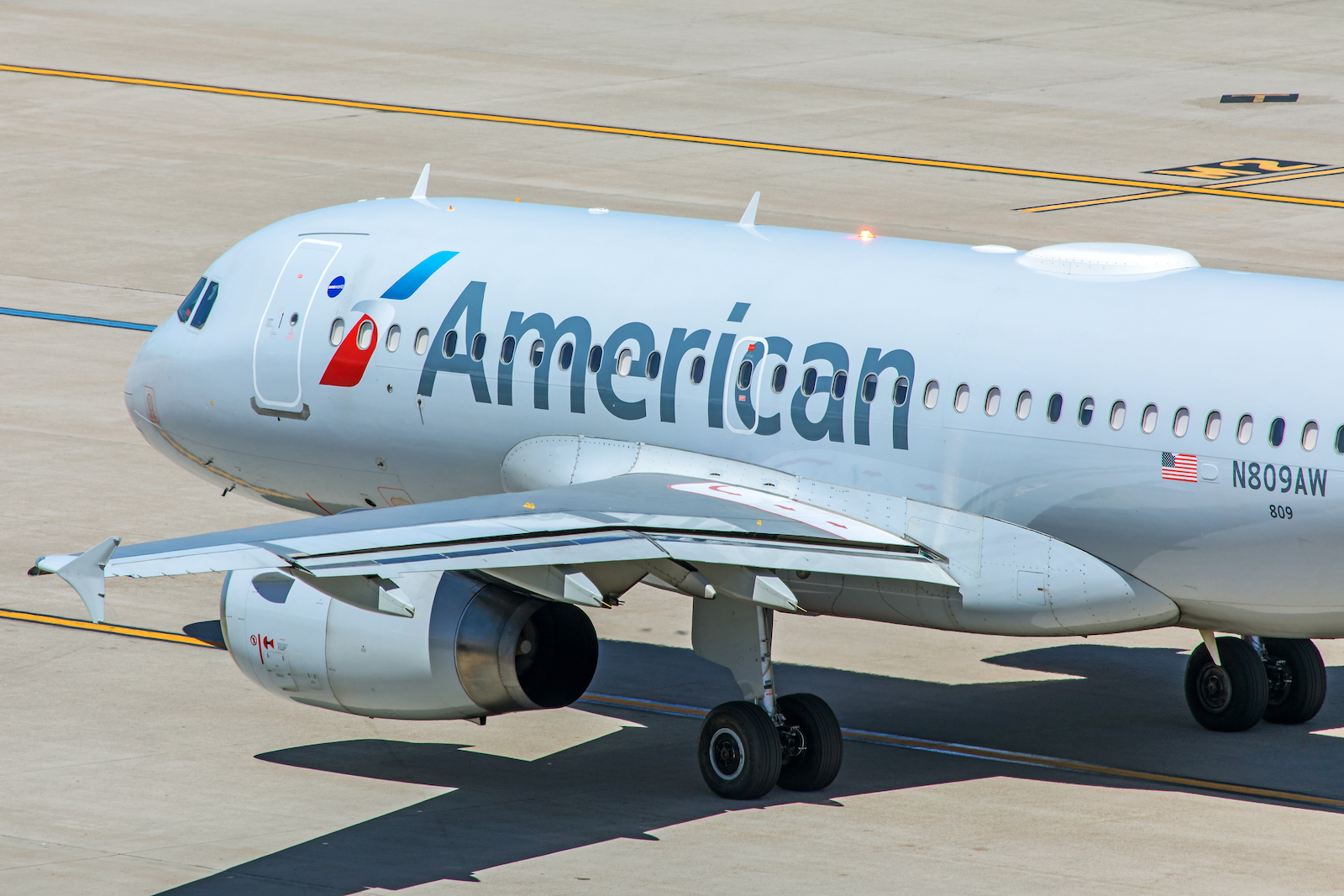
American A321
American A321 at Reagan National. (Photo: Ryan Ewing)

American on Thursday joined its major U.S. competitors in raising fees for checked bags.

In a statement on its website, the carrier said checked bag prices will increase for domestic flights and some short-haul international flights, specifically to Canada, Mexico, most of the Caribbean, most of Central America, and Guyana. Fees will increase by $10 each for first and second checked bags, and by $50 for a third.

The price for a first checked bag is now $50, though American provides a $5 discount if the fee is paid in advance online. The price for a second checked bag is now $60, though with the pay-online discount it would be $55.

The change goes into effect on Thursday.

American did not give a reason for the price hikes, but they are almost certainly connected to the recent surge in energy costs. The price of jet fuel globally has more than doubled since the start of the conflict in Iran in late February, and though oil prices dropped on Tuesday on news of a ceasefire, it could take weeks, months, or even years for prices to return to pre-war levels.

United, Delta, Southwest, and JetBlue have all raised fees for checked bags within the last two weeks.

Zach Vasile

Zach Vasile is a writer and editor covering news in all aspects of commercial aviation. He has reported for and contributed to the Manchester Journal Inquirer, the Hartford Business Journal, the Charlotte Observer, and the Washington Examiner, with his area of focus being the intersection of business and government policy.

Delta CEO Says High Fuel Prices Could Transform U.S. Airline Industry

Ed Bastian alluded to potential mergers and bankruptcies for carriers that cannot produce a return on investment for their owners.

Delta 767-400
A Delta 767-400. (Photo: AirlineGeeks | William Derrickson)

Delta’s top executive believes higher jet fuel prices could prompt a new wave of reform and consolidation across the U.S. airline industry.

During the carrier’s first-quarter earnings call on Wednesday, CEO Ed Bastian took a question about the sector’s broader outlook as energy costs eat away at many airlines’ margins.

“You have a considerable portion of the industry that has not returned its cost of capital, has not made a profit in years,” he said. “And going back over the last decade, when we saw consolidation happen, we forget what drove consolidation. What drove consolidation was higher fuel prices back in 2009, 2010, 2011. And we were the leaders in that with the acquisition of Northwest in 2008. So I anticipate higher fuel prices will cause much more significant structural reform than we’ve seen over this period.”

The last major crisis to confront the airline industry, the COVID-19 pandemic, was a “different animal,” Bastian said, because no carrier was “strong enough to engage in the type of rationalization that was necessary.” But this time around, conditions could be more favorable for a major shakeup, he noted.

“As we look forward to building a healthier business for the future, there’s a number of business models that I think their owners are going to start questioning whether they continue to commit capital, and however that plays out, it’s going to be a benefit to Delta,” Bastian said.

The topic of mergers and acquisitions in the airline industry has recently reentered the news cycle, and there is growing speculation that some budget airlines will have to partner up to survive the rapidly changing business environment.

Last month, Semafor reported that JetBlue is exploring a possible sale. The outlet named three potential partners for the New York-based low-cost airline – United, Alaska Airlines, and Southwest. A linkup with any one of these airlines would have a transformative effect on the industry, provided it can pass muster with regulators.

JetBlue has not recorded a full-year net profit since 2019.

Earlier this week, U.S. Transportation Secretary Sean Duffy said the Trump administration is open to the idea of mergers in the air transportation sector, even if they involve one of the Big Four.

The president “loves to see big deals happen,” Duffy told CNBC, though he added that any potential merger would still have to be scrutinized for its potential impact on prices and industry competition.

Zach Vasile

Zach Vasile is a writer and editor covering news in all aspects of commercial aviation. He has reported for and contributed to the Manchester Journal Inquirer, the Hartford Business Journal, the Charlotte Observer, and the Washington Examiner, with his area of focus being the intersection of business and government policy.

United Express E175 Returns to Airport After Engine Alert

The Embraer E175 was bound for Savannah, Georgia.

A United Express Embraer E175 operated by Republic Airways
A United Express Embraer E175 operated by Republic Airways. (Photo: Shutterstock | oasisamuel)

A United Express flight was forced to turn back to Washington Dulles on Tuesday after the crew reported a warning of possible engine trouble.

Mesa Airlines Flight 6321 was en route to Savannah, Georgia, when the crew “reported a left engine fire indicator light,” according to the FAA. The flight turned around and landed back at Dulles around 10:15 a.m. local time.

The aircraft involved is an Embraer E175 regional jet.

No injuries to the passengers or crew were reported.

According to WJLA-TV, the passengers were switched to another airplane and departed Washington again about three hours later.

The FAA said it is investigating the incident.

Zach Vasile

Zach Vasile is a writer and editor covering news in all aspects of commercial aviation. He has reported for and contributed to the Manchester Journal Inquirer, the Hartford Business Journal, the Charlotte Observer, and the Washington Examiner, with his area of focus being the intersection of business and government policy.

American Shows Off New World Cup Livery

The design will be seen leading up to and during the tournament this summer.

Tim Howard and Thierry Henry pose in front of a Boeing aircraft with American's new World Cup-themed livery. (Photo: American Airlines)

American Airlines is celebrating the upcoming FIFA World Cup with a special livery.

The carrier showed off the new design at a soccer-themed celebration in Miami on April 2.

The livery, applied to a Boeing 737-800, includes a dark blue-light blue color scheme, a graphic of the golden World Cup trophy, and the lettering “FIFA World Cup 26.”

The aircraft will be operating and visible through the tournament this summer, officials said.

American is the official North American airline supplier for the World Cup, together with Qatar Airways, FIFA’s global airline partner. The livery includes a small logo decal as a nod to the Doha-based carrier.

A still from a video released by American Airlines showing the World Cup livery in daylight. (Credit: American Airlines)

American has also applied World Cup decals to over 1,460 aircraft, representing the majority of its fleet.

The U.S., Canada, and Mexico are jointly hosting the 2026 World Cup, which runs from June 11 to July 19. Matches will be played in cities such as New York, Los Angeles, Dallas, Atlanta, Toronto, and Mexico City, and millions are expected to travel to North America to attend.

Zach Vasile

Zach Vasile is a writer and editor covering news in all aspects of commercial aviation. He has reported for and contributed to the Manchester Journal Inquirer, the Hartford Business Journal, the Charlotte Observer, and the Washington Examiner, with his area of focus being the intersection of business and government policy.
Sign-up for newsletters & special offers!

Get the latest stories & special offers delivered directly to your inbox

SUBSCRIBE

Uh-oh! It looks like you're using an ad blocker.

Our website relies on ads to provide free content and sustain our operations. By turning off your ad blocker, you help support us and ensure we can continue offering valuable content without any cost to you.

We truly appreciate your understanding and support. Thank you for considering disabling your ad blocker for this website