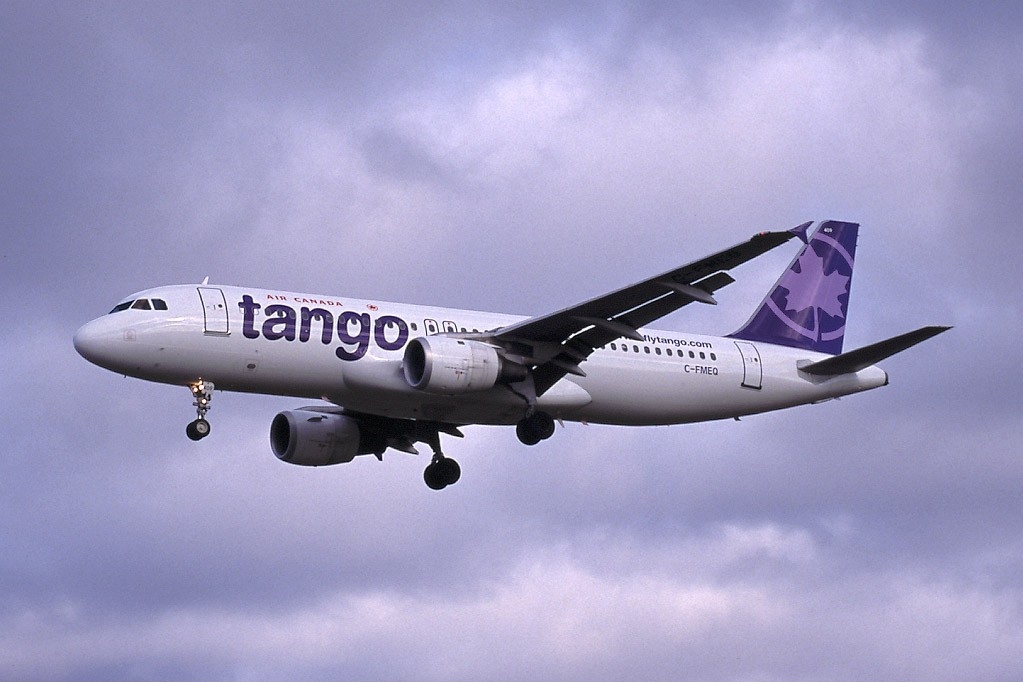
An Air Canada Tango Airbus A320-200 in 2001. (Photo: John Davies (GFDL 1.2), via Wikimedia Commons)
In the early months of 2001, low-cost competition was heating up in Canada. WestJet had started operations a few years ago in 1996 and was growing quickly. Discount airline Canada 3000 had been a charter operator in Canada for many years but began offering scheduled flights in May of 2001. The world was also seeing a rise in low-cost carriers, with the founding of airlines like easyJet and Frontier Airlines in the late 1990s. Amid these developments, Air Canada made its first foray into the low-cost market with the launch of Air Canada Tango, also known as Tango by Air Canada.
Tango was a new brand offered by Air Canada and was the carrier’s attempt to offer a no-frills product for budget-conscious travelers. The company had already been struggling prior to the September 11th attacks, and the events of that tragic day only reinforced the need to reduce costs. Tango was formally announced on October 10, 2001.
“Prior to September 11, Air Canada had stated its intention…to move towards providing more low fare capacity in response to clearly changing consumer preferences and a rapidly slowing level of business travel,” said Robert Milton, then-President and Chief Executive Officer of Air Canada in the press release introducing Tango. “In the post-September 11 world of depressed demand, a move in this direction is all the more necessary, as we need to aggressively promote all consumer incentives that encourage and stimulate travel. As a result, we are introducing Tango by Air Canada to stimulate the market, reduce costs and above all, to enable customers to tailor their ticket price to their own pocket book and tastes.”
Milton went on to describe the concept behind the new brand. “Tango is targeted at those customers who, instead of a full service, mainline product, would like to buy simply a seat, and then add on, on a fee-basis, the extras that appeal to them, such as seat assignment, food and beverages, and audio-visual entertainment.” While this type of unbundled offering is the norm today, it was a relatively new concept back in 2001. This was a time where airline reservations typically included checked luggage, seat selection and an onboard meal in economy class on some airlines.
Tango’s Initial Product
Instead of launching new routes with the Tango brand, Air Canada chose to introduce Tango primarily on a series of existing domestic routes. Tango flights would supplement existing mainline operations, with the airline acknowledging that it expected Tango to draw some traffic from mainline Air Canada flights. However, the company was confident that the demand existed for both mainline and Tango flights, hoping that Tango would draw in travelers who would have otherwise flown on other low-cost carriers. Tango flights began on Nov. 1, 2001.
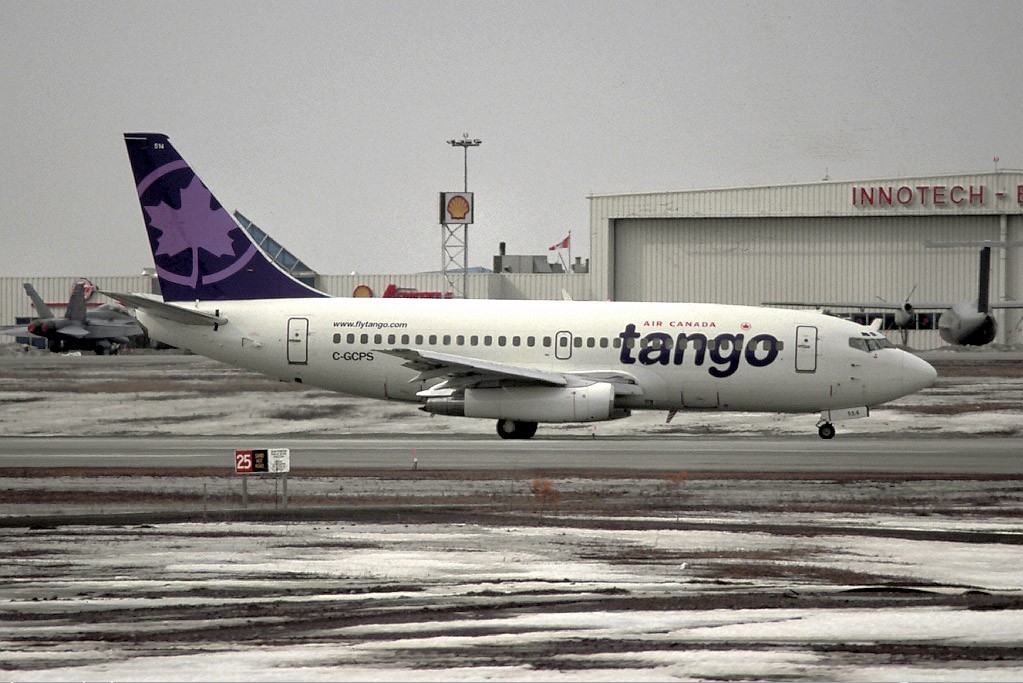
Air Canada’s initial announcement stated that Tango would have 13 Airbus A320 aircraft configured with 159 economy class seats. All but one aircraft were existing Air Canada aircraft that were reassigned from the mainline fleet. A single A320, registered as C-GJUL, came from Canadian charter airline Skyservice Airlines. Between 2002 and 2003, nine Air Canada Boeing 737-200s were also reassigned to the Tango fleet. These aircraft were configured with 117 economy class seats. Within a year though, most of Tango’s Boeing 737s had been sent to Zip, Air Canada’s new low-cost subsidiary.
An Air Canada Tango Boeing 737-200 in 2002. (Photo: John Davies (GFDL 1.2), via Wikimedia Commons)
The initial Tango network consisted largely of high-traffic domestic routes. Flights were offered between Toronto and Canadian cities like Vancouver, Calgary, Winnipeg and Halifax. Tango also had flights between other Canadian city pairs like Montreal – Edmonton, Ottawa – Calgary and Halifax – Winnipeg. Just seven months after its launch, Tango celebrated its one-millionth passenger in June of 2002.
While many aspects of the Tango travel experience would be considered commonplace today, travelers were faced with new concepts and innovations at the time. The airline exclusively offered electronic ticketing, thereby eliminating paper tickets. Passengers could book separate fare classes on the two portions of a round-trip ticket, something that was typically not possible. During the carrier’s flights, snacks, beverages and headphones were available for purchase.
By the summer of 2002, Tango was offering flights to 23 Canadian destinations. That fall, it introduced flights to its first destinations in the United States: Orlando, Fort Lauderdale and Las Vegas. However, by the summer of 2003, Air Canada had begun winding down Tango’s operations. The low-cost brand’s network had shrunk, with only 15 Canadian cities and two American destinations listed on the schedule for the summer season that year.
Tango’s Demise
On Aug. 14, 2003, Air Canada announced a significant change to the Tango concept that would signal the end of Tango as a separate airline brand. Air Canada had a new fare structure and the lowest fare class would be named Tango. Tango aircraft would be reintegrated back into the mainline fleet, but the unbundled fare concept would live on with Tango fares. While the low-cost airline was going away, it appeared that Tango did not fail. Instead, the concept was so successful that it was rolled out across the entire airline. The idea behind Tango would remain the same, even though it was now a fare class instead of its own airline: low fares with additional charges for add-ons like seat selection, checked baggage and snacks.
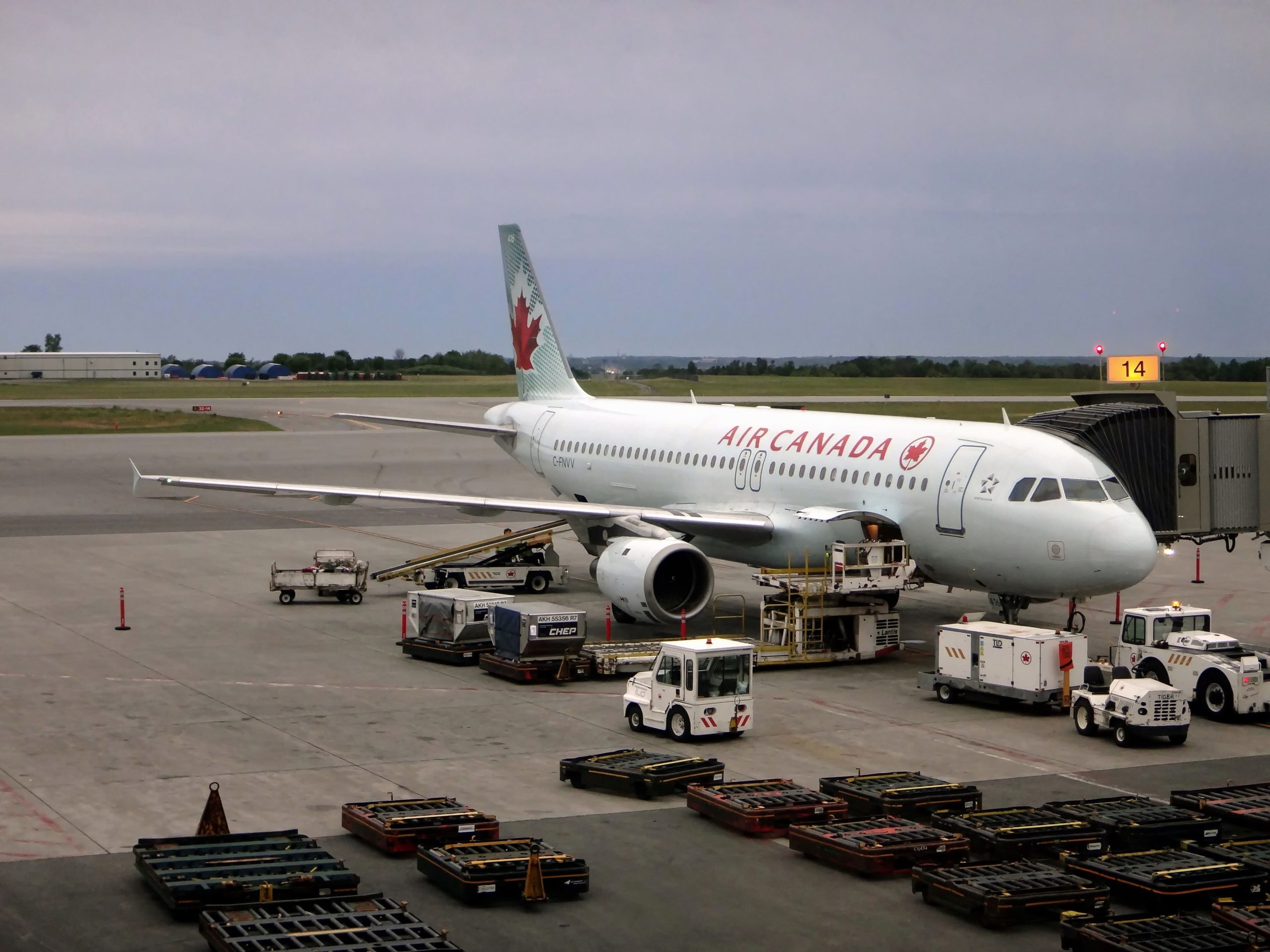
The Tango name lived on until Air Canada renamed the fare class to Standard in 2018. The carrier also introduced an even lower fare class known as Basic. By early 2004, all Tango aircraft had been returned to Air Canada’s mainline and charter operations, except for one Airbus A320 which went to USA 3000 south of the border. While some of Tango’s aircraft are now flying with other airlines or have been stored or scrapped, a few of the Airbus A320s that once flew for Tango are still in active service with Air Canada today.
An Air Canada Airbus A320-200 registered as C-FNVV in 2016. This aircraft was once part of the Tango fleet and remains in service with Air Canada Jetz as of August 2023. (Photo: AirlineGeeks | Andrew Chen)
Andrew is a lifelong lover of aviation and travel. He has flown all over the world and is fascinated by the workings of the air travel industry. As a private pilot and glider pilot who has worked with airlines, airports and other industry stakeholders, he is always excited to share his passion for aviation with others. In addition to being a writer, he also hosts Flying Smarter, an educational travel podcast that explores the complex world of air travel to help listeners become better-informed and savvier travelers.
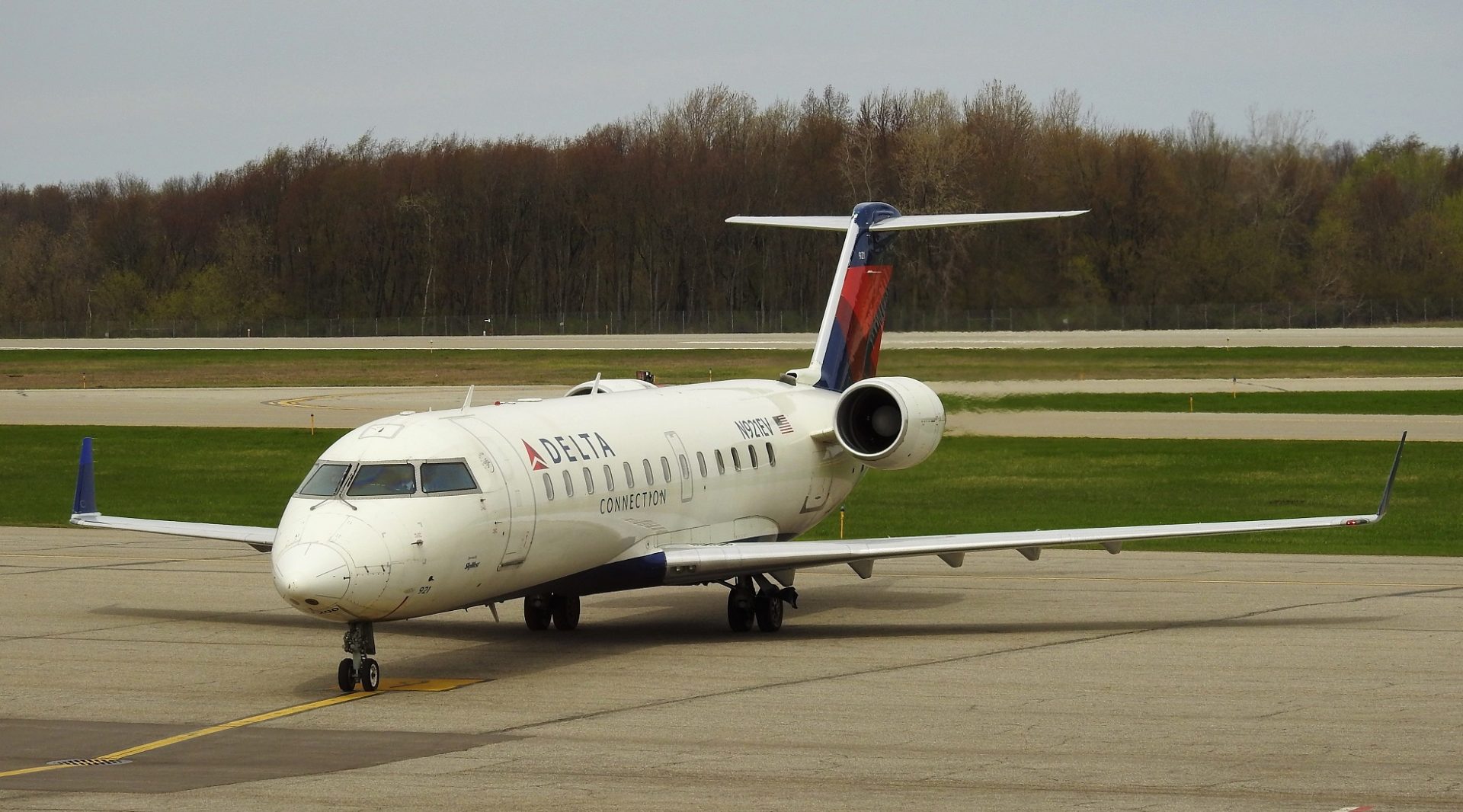
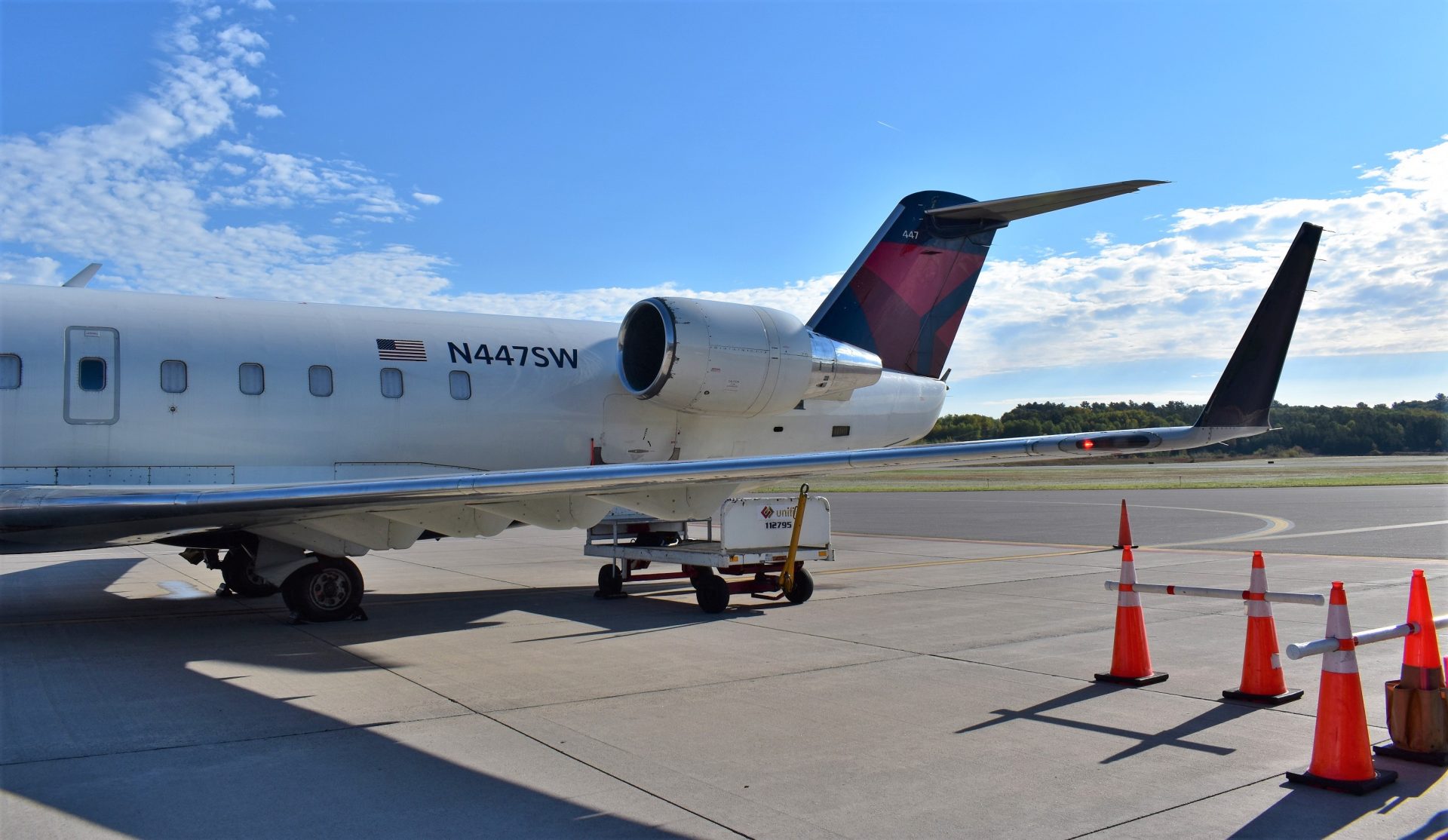
A Delta Connection CRJ-200 in Minneapolis/St. Paul (Photo: AirlineGeeks | Joey Gerardi)
Back in late April of 2023, Delta’s wholly-owned subsidiary Endeavor Air retired its last CRJ-200 and sent the aircraft off with joyous fanfare at the regional carrier’s bases with parties in Atlanta, Detroit, and Minneapolis. This made SkyWest the final operator of Delta Connection branded CRJ-200 service in the airline’s system, but that is about to change come this Fall and early Winter.
A Delta Connection CRJ-200 in Lansing (Photo: AirlineGeeks | Joey Gerardi)
Utah-based SkyWest, the largest regional carrier in the U.S., has expressed its intent to change the aircraft servicing all of the Essential Air Service communities that it operates to on behalf of the Delta Connection brand. On August 1, 2023, SkyWest posted individual documents for each community expressing that “Delta Air Lines has established a requirement that SkyWest Airlines operate a dual-class aircraft in communities where we operate Delta Connection service.” These documents are publicly available on Regulations.gov.
With this document, the following cities will be affected; Alpena, Pellston, Sault Ste. Marie, Escanaba, and Iron Mountain, all of which are in Michigan; Brainerd, Bemidji, Hibbing, and International Falls in Minnesota; as well as Rhinelander, Wis.; Aberdeen, S.D.; Cedar City, Utah; and Butte, Mont. making it 13 EAS communities getting a change.
All of the cities mentioned will be switching to CRJ-700 or CRJ-900 service; this comes as Delta implemented a new requirement that it does not want any single-class airline service under the Delta banner. The change from the CRJ-200 to the CRJ-700 or CRJ-900 will take place sometime in October for all of the cities except Rhinelander, Wis. which has already started CRJ-900 service, and Cedar City, Utah which will start sometime in December.
A Delta Connection CRJ-200 in Butte, Mont. (Photo: AirlineGeeks | Joey Gerardi)
Communities Speak Out
AirlineGeeks did try to reach out to a few of these airports on the list, but most of them did not immediately comment. But we did manage to get a hold of one of the communities that will be affected by these changes. Ryan Bachelor, the Airport Manager in Pellston, Mich., was willing to speak with us about this change in aircraft type in his community:
AirlineGees (AG): Do you think this capacity increase to a larger aircraft will cause the airline to decrease frequencies there in Pellston?
Ryan Bachelor (PLN): So with the frequencies, you know with the pilot shortages I am not really 100% sure, but this aircraft upgrade was a directive from Delta, they want to have dual-class products at every airport they serve. I am not sure what the frequency will end up being yet, but a larger plane will mean they can bring in more people to the area, so that is good.
(AG): You briefly mentioned it already, but what prompted Delta to make this change to the larger aircraft?
(PLN): I don’t know the exact terminology of the request, but Delta is trying to operate dual class products, so economy and first class, in every single market that they fly to, even smaller markets in the Essential Air Service program. SkyWest operates for Delta here in our location, and Delta wants them to move to a larger aircraft by I believe October.
(AG): Is there anything that you will need to change at your airport, aircraft parking or terminal-wise, to accommodate a larger aircraft?
(PLN): So, we are working closely and we have a really good relationship with TSA and we have to develop an alternate means of compliance in the security category until we can take a look at the long-term impact since we are going to be receiving larger aircraft long-term.
(AG): Do you think this increase in seats will benefit your community or hurt it with an overabundance of capacity?
(PLN): I think it will benefit us, Pellston has a pretty high demand for more seats and I think that bringing in the larger aircraft, especially during our unsubsidized season (May through October) will be very beneficial for our enplanements.
Some Cities Remain
There are two EAS communities with SkyWest under the Delta brand that are missing from this list; West Yellowstone, Mont., and Moab Utah. This is due to the fact that West Yellowstone is seasonal and only receives airline service from May until October, and Moab will be receiving a new airline come Fall 2023.
Depending on when in October the switch happens, we could still be three-to-four months out from the move away from the CRJ-200 at the SkyWest EAS communities under the Delta Connection brand, and a lot could happen at that time as the aviation industry can change rapidly. And with one city remaining until December, Cedar City, Utah, we could have just a single CRJ-200 route under the Delta brand for the last two months of service if the majority of them do switch in October 2023 as the document reads.
In the posted document, SkyWest has also said that “There is no request for a change in subsidy, weekly frequencies, or service to the hub designated in the EAS contract.” But this is for the current contract and it is expected that some aspects will change the next time each community comes up for rebidding.
A Delta CRJ-200 in Iron Mountain (Photo: AirlineGeeks | Joey Gerardi)
But, if the changes reflected in these documents do hold true for the next few months and don’t change, we will see the final Delta Connection CRJ-200 flight from its Detroit and Minneapolis/St. Paul hubs sometime in October. And, a final Delta CRJ-200 flight in December between Cedar City, Utah, and Salt Lake City, the latter of which will become the airline’s final hub to see CRJ-200 service under the Delta brand and livery.
The change to the CRJ-700 or CRJ-900 is not yet reflected on Delta’s booking website but is expected in the next couple of weeks as both airlines work out the details for the mass move away from one of the unanimously hated aircraft in the skies. And while it was hated by most travelers, the CRJ-200 is what connected many people in these small communities and entered them into the jet age, thus moving away from small turboprop aircraft.
AirlineGeeks actually took a trip and connected in one of the affected communities on a Delta CRJ-200, Iron Mountain, Mich., of which the trip report can be found here.
Joey has always been interested in planes for as long as he can remember. He grew up in Central New York during the early 2000s when US Airways Express turboprops ruled the skies. Being from a non-aviation family made it harder for him to be around planes and would only spend about three hours a month at the airport. He was so excited when he could drive by himself, the first thing he did with his driver's license was get ice cream and go plane spotting for the entire day. He graduated from Western Michigan University in 2022 with a B.S. in Aviation Management & Operations and a Minor in Business, and currently works for a major airline in his hometown.
Lufthansa Regional Part 2: Returning to Munich With Air Dolomiti
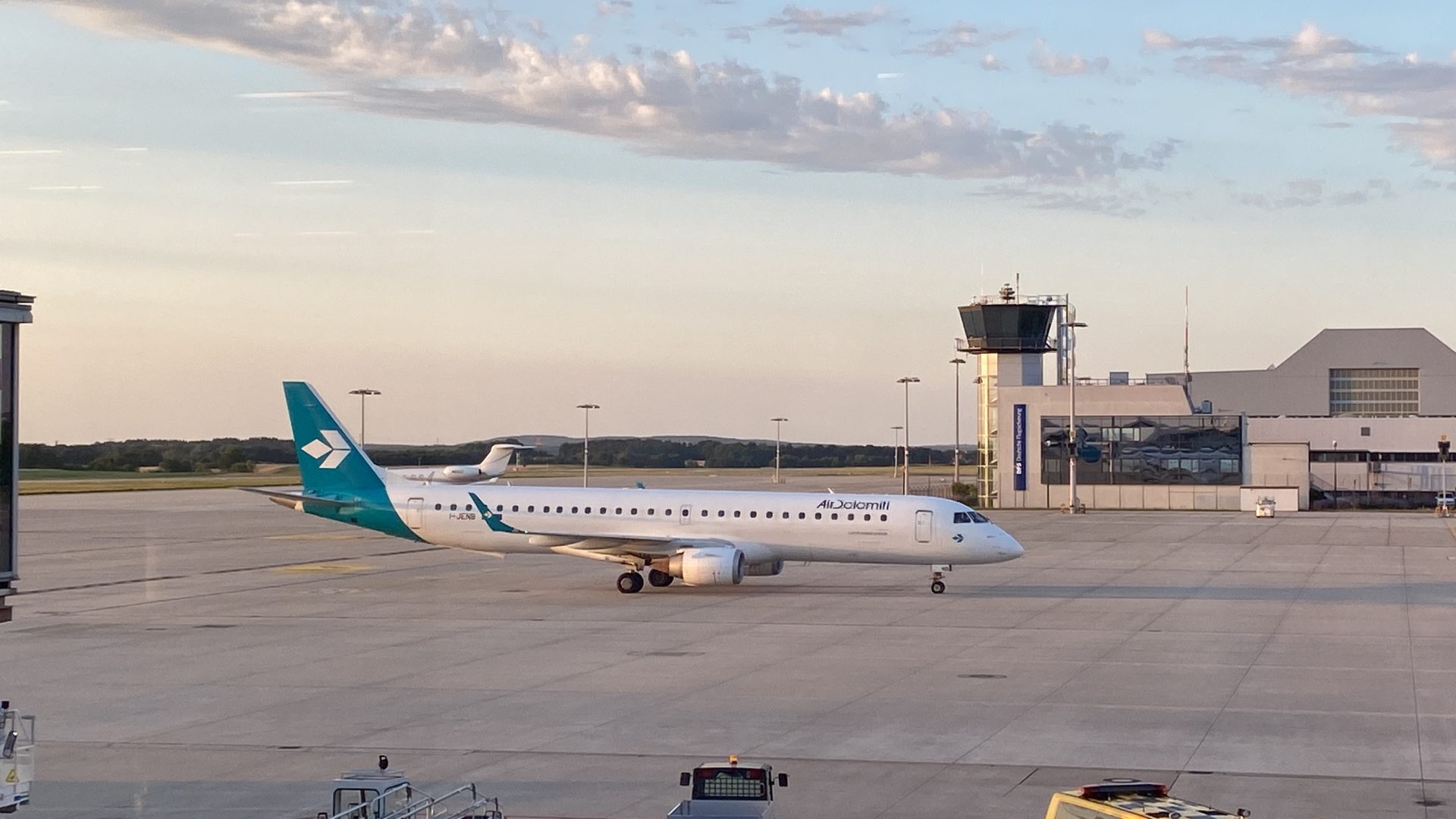
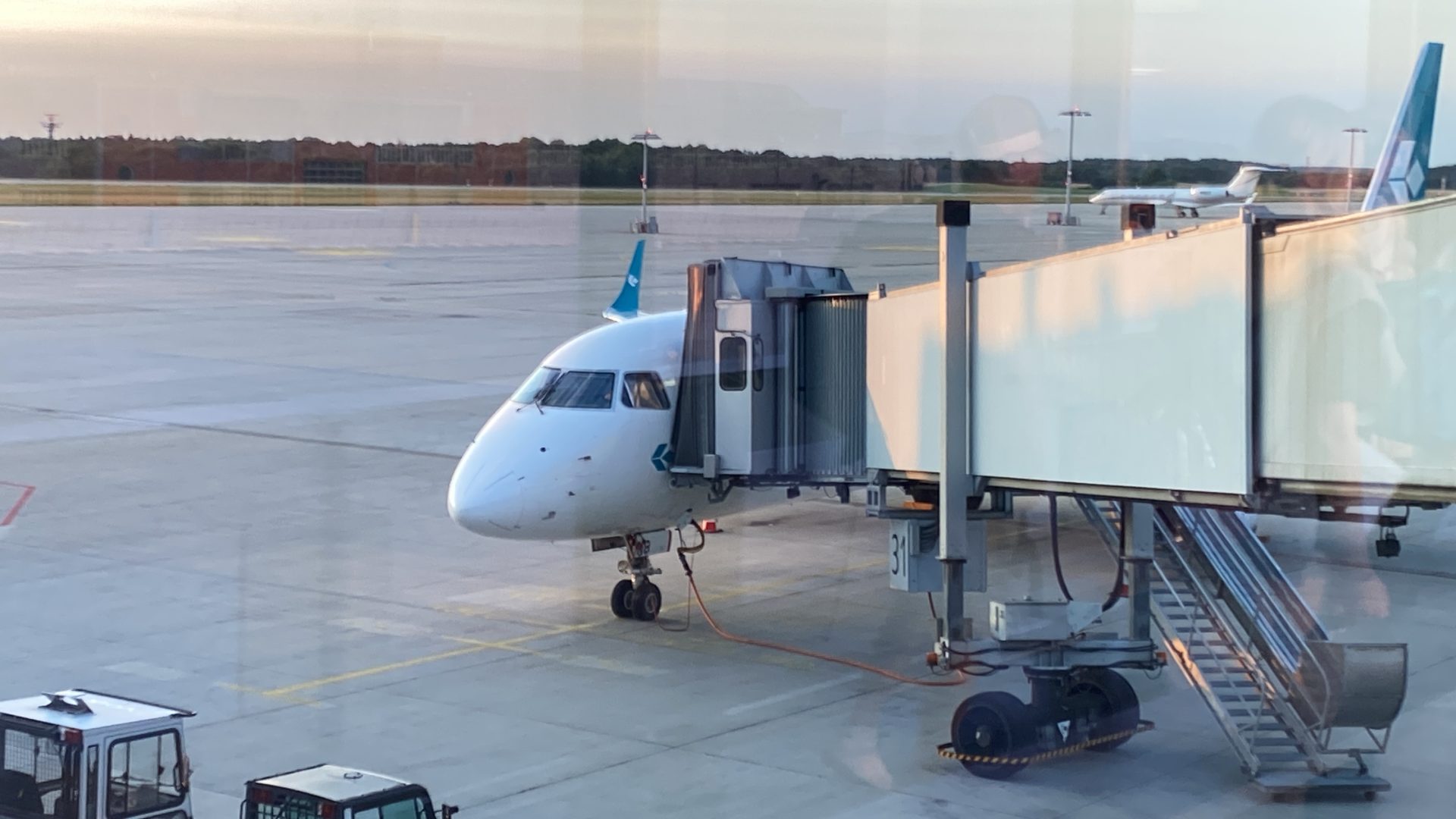
Our Air Dolomiti Embraer E190 after arriving in Dresden.
(Photo: AirlineGeeks | John McDermott)
Last week, I wrote an article on my experience with Lufthansa CityLine as part of my exploration into how Lufthansa Regional brands compare with mainline Lufthansa. While CityLine is well-integrated into the Lufthansa fleet, there is another Lufthansa Regional carrier that is more unique, and it’s an airline that many might not know is associated with Lufthansa at all.
Air Dolomiti is an Italian airline that flies the Embraer E190 to destinations across Italy, Germany, and Europe. Founded in 1989 in Italy, the airline launched operations with flights between Verona, Italy and Munich.
About Air Dolomiti
The airline started working closely with Lufthansa in the 1990s. The Lufthansa Group acquired a 26% stake in the airline in 1999, eventually increasing its share to 100% in 2003. As of 2023, the carrier operates a fleet of 19 Embraer E190s and E195s, and additional aircraft are set to be transferred to the airline from Lufthansa CityLine.
Air Dolomiti is a special case when it comes to regional airlines. It’s a hybrid of two business models. It’s not quite a standalone airline because it flies routes just for Lufthansa Regional as a Lufthansa Group Subsidiary; however, the airline also markets flights independent of those it flies for Lufthansa and operates some services, especially within Italy, without cooperation with Lufthansa.
Rare is it for an airline to be invested in both codeshared regional flights and independent operations. Though some regional airlines might operate on behalf of multiple mainline carriers, such as SkyWest or Republic in the United States, and others do so largely independently, such as the now-defunct Flybe, rare is it to have both.
Some regional airlines, such as Silver Airways in Florida, operate independently but have codeshares or interline agreements with major carriers. However, Silver Airways does not operate any flights strictly on behalf of United, rather allowing passengers to book Silver Airways flights on United’s website just as United passengers can use the same website to book flights operated by Lufthansa as well.
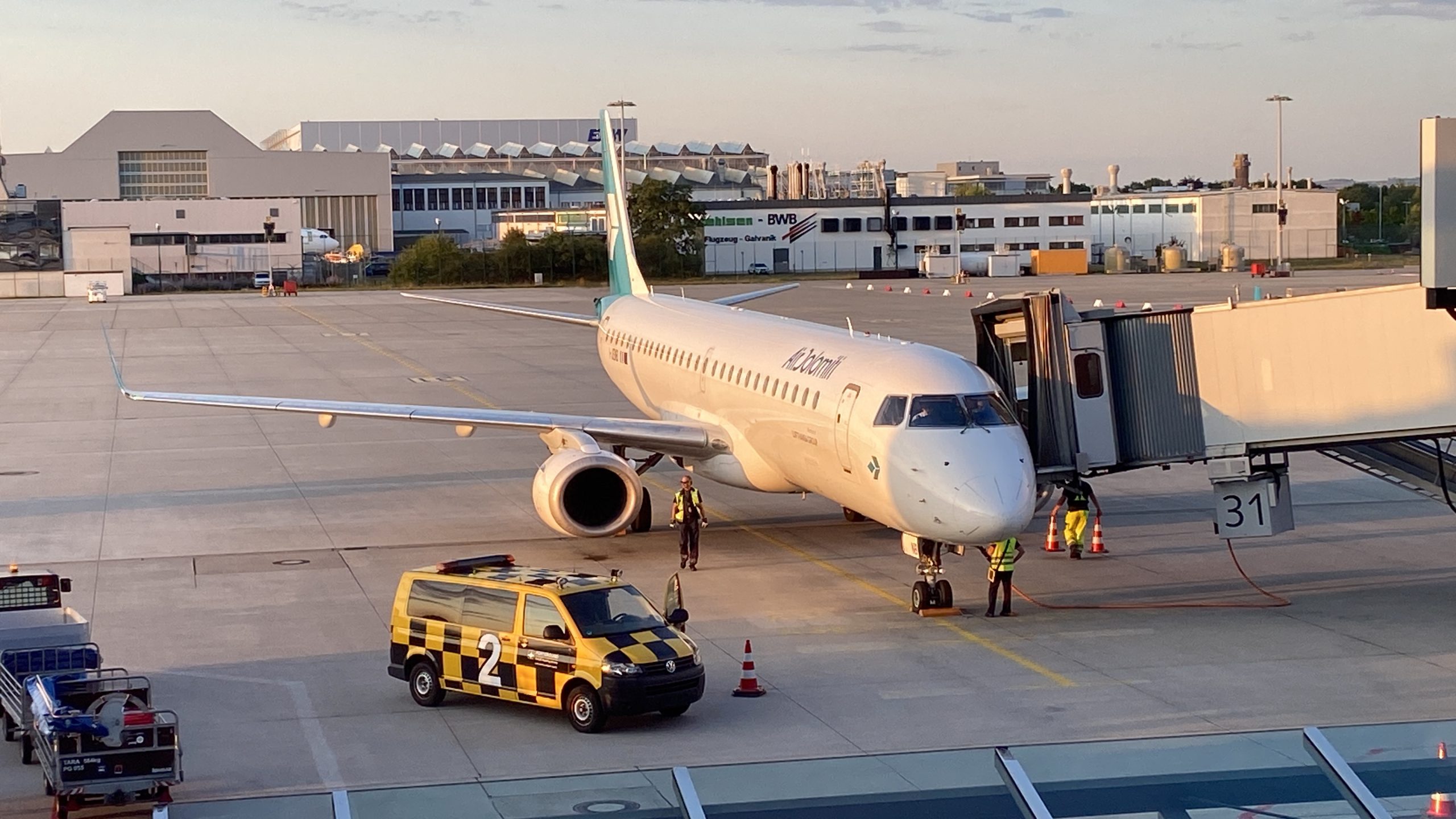
Our aircraft pulling into the gate from Munich. (Photo: AirlineGeeks | John McDermott)
Air Dolomiti stands alone as an airline that both operates within Lufthansa Group under Lufthansa Regional, which is branding that the group no longer uses publicly, while simultaneously selling their own independent flights. Other carriers within Lufthansa Group also operate their own serves independently, but they usually don’t fly on Lufthansa’s behalf as well.
Air Dolomiti’s hubs are both in Germany, with one in Frankfurt and the other in Munich. The carrier has focus cities in Italy as well: Florence and Verona. However, the reliance on German airports for hubs is a reminder that Lufthansa has ultimate authority over where this airline flies, which crews it hires, and which routes it prioritizes.
Most of Air Dolomiti’s destinations are in Italy, however. In that sense, it is still very much an Italian airline, and occasionally on my flight, I could see some Italian identity flare to life. The airline has a few connections to other European countries outside of Germany and Italy as well.
Air Dolomiti doesn’t even paint their planes in Lufthansa’s livery. All have in-house colors, likely to make it easier for the airline to deploy the aircraft on flights they brand as their own. It might have been a mistake I made had I not known about Air Dolomiti’s relationship with Lufthansa.
Airport Experience in Dresden
I was excited to try out Air Dolomiti when I returned to Dresden’s airport a few days after flying CityLine. As I arrived, I was struck by how empty the airport was. Substantial effort was put into building it. With a large glass wall, a high ceiling, and large walls, the checkin hall feels modern, open, and bright. I felt like I was entering an airport with dozens, if not hundreds, of flights per day.
Instead, at about 18:00, there were only four flights leaving for the rest of the evening. Air Dolomiti was flying two aircraft in and out, one flight to and from Frankfurt and the other two and from Munich, while Helvitic Air was flying to Switzerland. Ryanair would have a flight leaving for London close to midnight.
Lufthansa’s check-in line was desolate, with only a few passengers arriving for flights. Since two were going out, I figured that my flight would not be full; either that or Germans don’t arrive to the airport as early as I do.
The security line was also quiet, with only a couple passengers in front of me. Only one line was being used as well. After my trip, I learned that the airport had reduced security capacity by 50% for some reason. Air Dolimiti’s website recommended passengers allow extra time to get through, but based on my experience, none was needed. I’ve taken longer to get through TSA PreCheck lines at O’Hare than it took me to get through Dresden’s line as a non-German speaker.
The security area opens to a small common area with a single cafe and one duty-free shop. I got a croissant at the cafe – it was alright – and some chocolate and gum in duty free. Then, I made my way to explore the gate area.
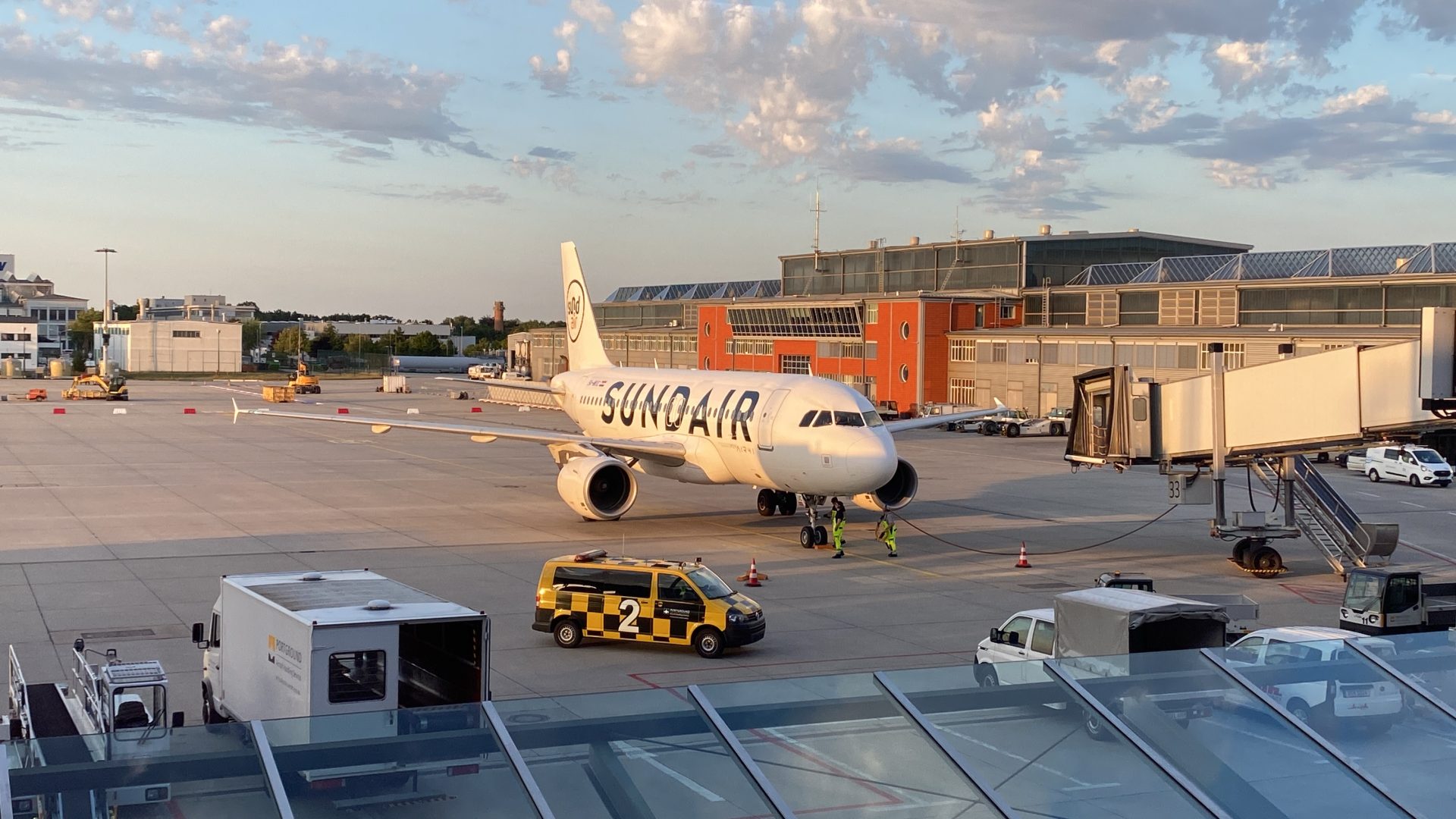
Sundair, a German charter operator, is one of the few airlines with scheduled flights out of Dresden. (Photo: AirlineGeeks | John McDermott)
It was not hard to tell that this airport was built for many more flights than it handles. Why this is I’m not sure. Perhaps some politicians wanted to build a fancy new airport to attract new airlines or prove they had accomplished something grand. Though there were 12 gates at the airport, I never saw more than 2 in use at one time.
About half of the gates were for international departures, as there were passport checks blocking entry to the waiting area. Besides flights around Germany and the European Union, Dresden also gets flights to Turkey and Egypt. Most other flights from the airport are to Spain or Greece, though, besides Lufthansa Group services, there are flights to the Netherlands and Switzerland as well.
Flight Delay
After exploring a bit and capturing pictures of the Helvitic aircraft arriving from Zurich, I found the departure board in the terminal and noticed that our flight was delayed by 40 minutes. Originally scheduled for about 20:30, it was now scheduled for 21:10. I checked to see if I had gotten correspondence from Lufthansa, who I had booked the ticket through, but none was there. Thus, though I didn’t know quite what was going on, I figured I was committed to wait what was at the time two hours before departure.
Waiting on my flight turned out to be a tedious task. Though Air Dolomiti made plenty of announcements about the Frankfurt flight, which was also delayed roughly 40 minutes, we did not hear anything about our flight for over an hour after I first noticed the delay. Tracking the inbound aircraft was tough, as FlightAware hadn’t linked the inbound flight to our outbound aircraft, so it was a while before I even knew that a plane was on the way to pick us up.
An Air Dolomiti flight prepares to depart for Frankfurt on Lufthansa’s behalf. (Photo: AirlineGeeks | John McDermott)
When there finally was an announcement for our flight, it was short and simple: just that the flight was delayed 40 minutes and would depart at 21:10. After the Frankfurt flight left, about an hour before our new departure time, even the gate agents left the area. Thus, with little information and nobody to talk to if needed, we were left to sit in the gate area and wait for updates.
Despite the limited information, our aircraft did eventually show up, with enough time to prepare for our new departure slot. I never noticed anyone getting off the aircraft, so I figured that the plane must have flown in empty from Munich to work our flight. I wonder if there was a mechanical issue on another aircraft that canceled the inbound flight and lead the airline to bring in a new plane and crew from base to work our flight back to Munich.
Onboard Experience
Regardless, we finally got our second announcement about the flight: that it was time for boarding. Preboarding was called first, and the regular boarding groups were called soon after. Groups were again used for this flight, as they were with CityLine. As noted last time, Lufthansa mainline does not prioritize groups for boarding its own planes.
In fact, before a Lufthansa international flight, a gate agent once told me that boarding groups are uniquely an American thing. I’m not sure what purpose boarding groups use on these regional flights, but I’m intrigued by the fact that they exist in the first place.
I was in boarding group 3, so I was able to board soon after general boarding was called. The boarding process went smoothly. I enjoyed the few moments I had with a glass jetbridge before the sides became the traditional metal.
Air Dolomiti’s cabin immediately struck me as more modern than the CRJ900’s that CityLine flew. The E190 felt newer, well-kept, and more sleek than the CRJ900 I had flown a couple days earlier.
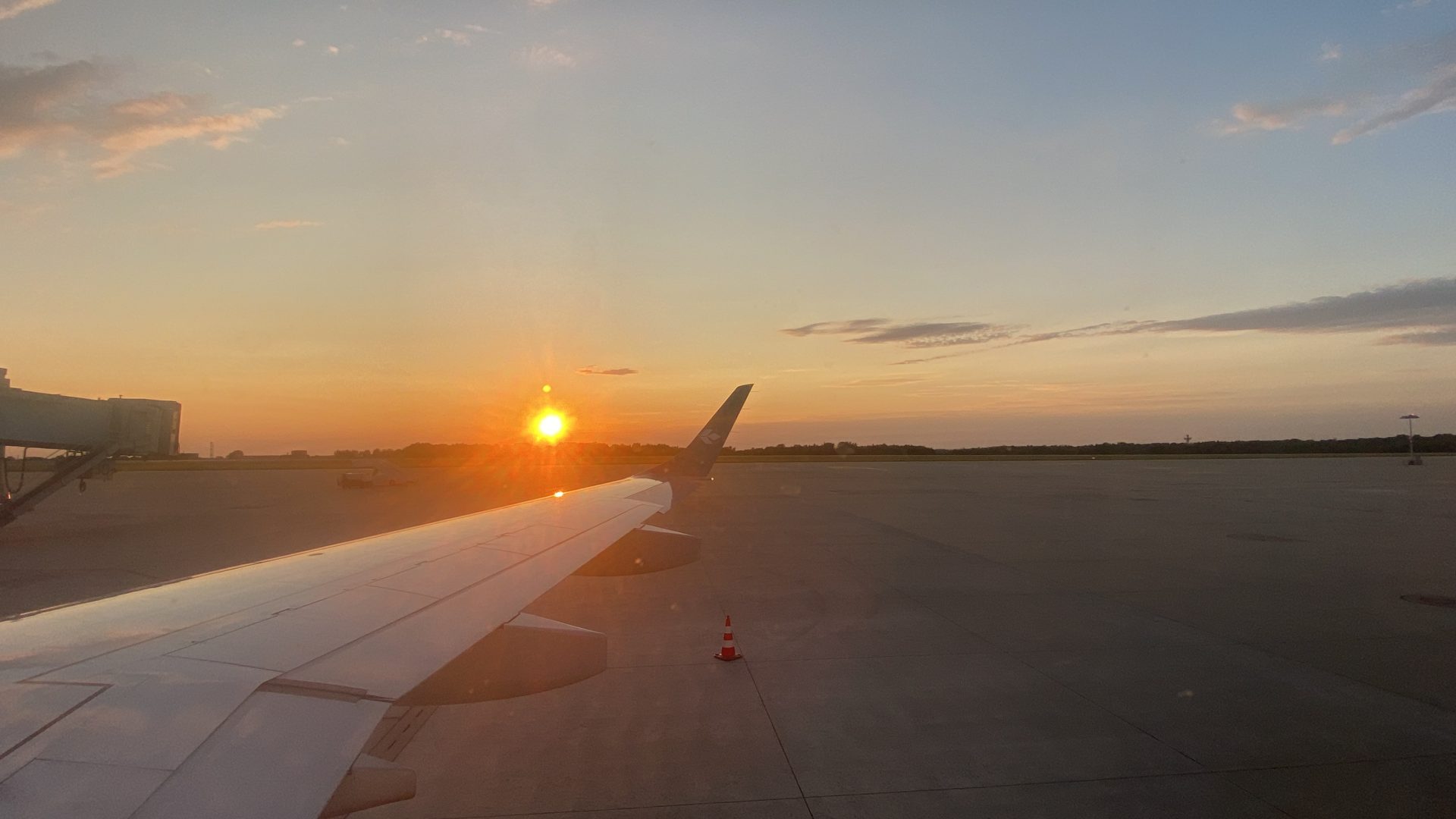
The sun began to set as we waited to depart Dresden. (Photo: AirlineGeeks | John McDermott)
I would learn soon, however, that the seats were not quite as comfortable as CityLine’s were. Neither were close to business-class-level padding, but on Air Dolomiti, I could almost feel the shape of the medal beneath the fabric covering the seat. It felt like the seats on ultra-low-cost carriers are described as: bare bones with no padding.
For a flight of this length, this isn’t something I worried about; I could easily survive 45 minutes in this seat with no problem. However, it might be a different story if I was in the seat for hours. Maybe my next trip in Germany should be to try Air Dolomiti on a longer flight to see how the extra time in a thin seat treats me.
That said, Air Dolomiti’s seats were certainly not as uncomfortable as a ULCC’s. On the one hand, the legroom was much better than what I’d expect on Frontier, Spirit, Ryanair, or eastJet. It wasn’t as generous as CityLine’s, but it was certainly manageable.
I also had the seat next to me empty once again. This flight, maybe due to its timing later at night, wasn’t quite as filled as my outbound flight from Munich to Dresden, making for a spacious and comfortable ride that more than made up for the thin seat.
We waited on the aircraft for a few minutes before pushback. Likely due to carrier standard operating procedures, I think we boarded earlier than we needed to with our passenger load. The cabin crew came by with shortbread cookies as we waited for pushback. It was a nice touch after the delay, and I wondered if there would be additional service in the air or if they simply decided to serve the snack early.
We pushed back right on time to make our new departure time of 21:10. A short taxi later and we were in the air.
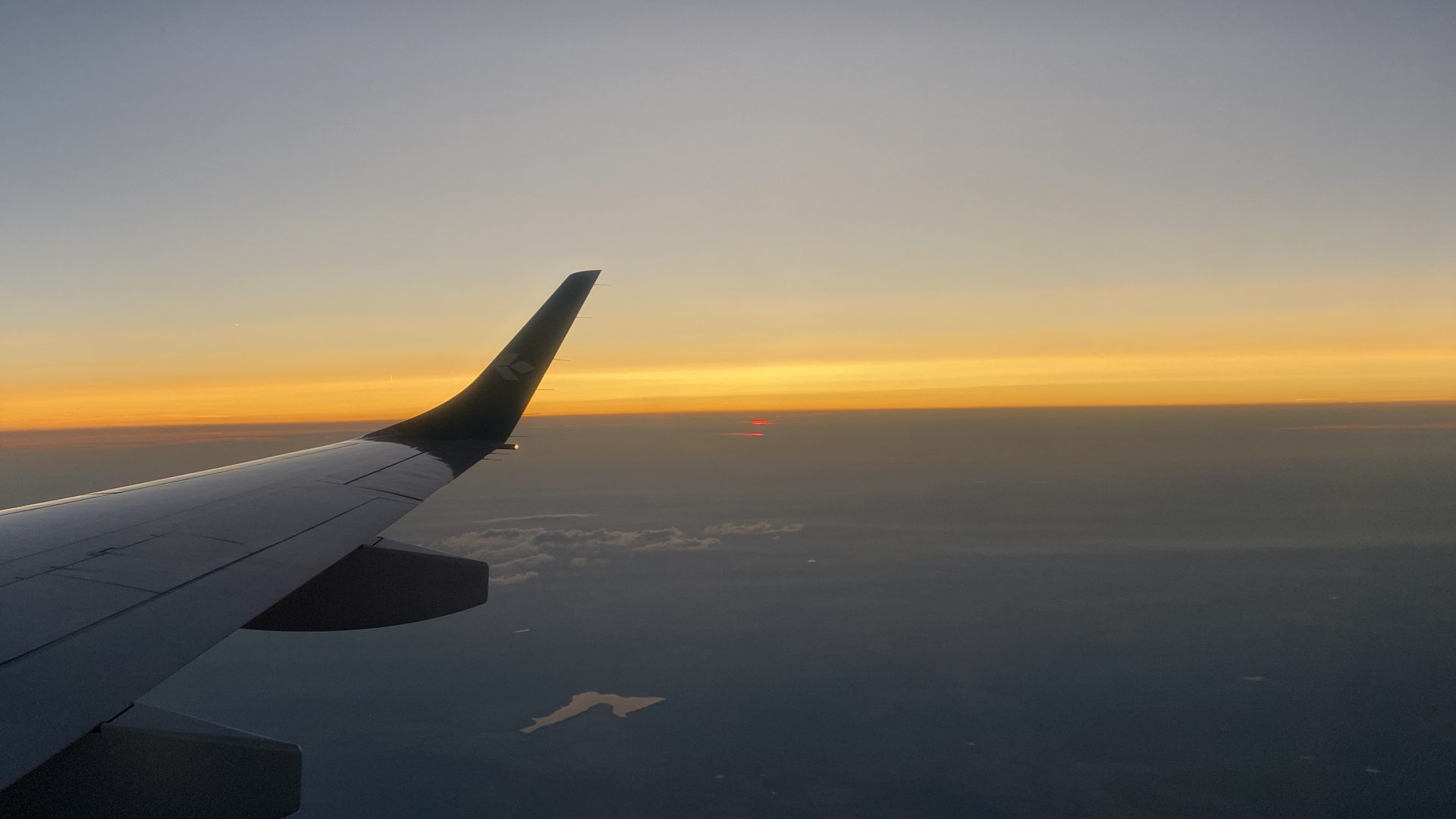
The sun continued to set as we made our way towards Munich. (Photo: AirlineGeeks | John McDermott)
The flight itself was uneventful. The crew came by with a water bottle, but there were no more snacks, so the cookie we received on the ground must have been what they otherwise would have given…the equivalent of the piece of chocolate on the Lufthansa-branded flights.
Otherwise, the cabin crew only came through to make safety checks on occasion during cruise and just before landing. Few announcements were made throughout the flight – only the standard welcome/goodbye, preflight safety briefing, and post-departure and pre-arrival info on electronic device use. Mostly, I sat back to enjoy the views of the setting sun out the window.
Conclusion
We arrived in Munich after about 50 minutes in the air. Our landing was firm – I think one of the airline’s new cadet pilots was flying based on the uniform I noticed during boarding – but we made it to the gate safely.
I enjoyed my flight with Air Dolomiti all together. Though I didn’t appreciate how little communication there was on the delay, I’m glad that the airline stuck to the new departure time. I also enjoyed flying on the Embraer E190 for the first time, and I got to try a new onboard snack I hadn’t tried before.
Air Dolomiti’s place in the Lufthansa Group is unique. It serves a purpose that isn’t held by many other airlines around the world. I’m excited to give the airline another shot on a longer trip to get to know how they fare on a more substantial service.
Look out for a final conclusion on my Lufthansa Regional trip next week.
John McDermott is a commercial pilot pursuing a career in professional flight. His passion for aviation began in an Ann Arbor bookstore with a tale of enemy pilots during World War 2, and he hasn't looked back. Besides flying and writing for AirlineGeeks, John volunteers with Professional Pilots of Tomorrow and travels whenever he gets the chance.
Inside Look on the Landline Bus Company with CEO David Sunde
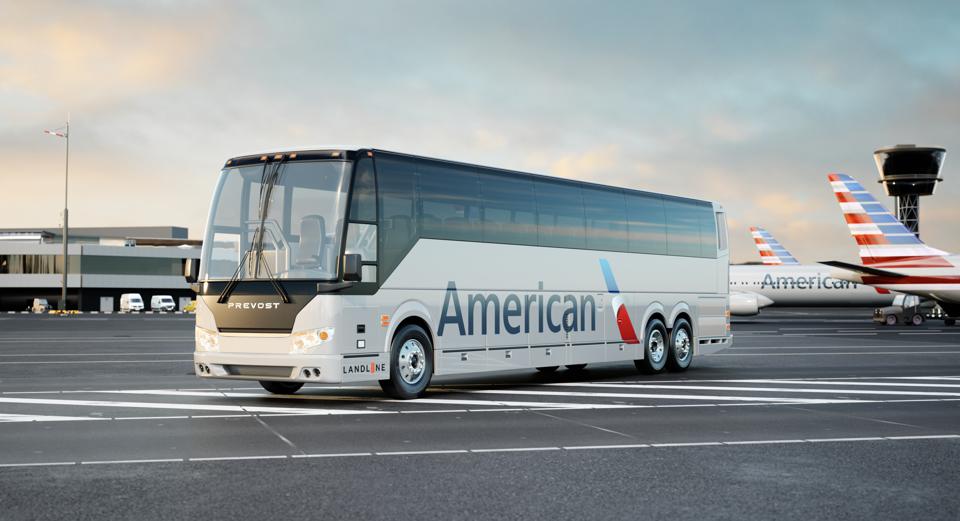
An American-branded Landline bus. (Photo: Landline)
Landline has recently announced that it has gained approval from TSA for its airside-to-airside motor-coach operations from Allentown/Bethlehem, Pennsylvania (ABE), and Atlantic City, New Jersey (ACY) to Philadelphia International Airport (PHL).
The new approval will mean that passengers will clear TSA security at either Allentown or Atlantic City, board a bus to Philadelphia, and enjoy a seamless connection at Philadelphia airport with the bus arriving into an airside gate.
About Landline
Landline operates a fleet of buses and currently partners with three US-based airlines, namely American, United, and Sun Country, to provide connections from smaller cities to bigger hubs. Its services operated for American to and from Philadelphia are the only ones with TSA approval to operate from airside to airside at the moment.
AirlineGeeks sat down with the CEO and founder of Landline, David Sunde, to learn more about his business and his vision for the airline networks.
AG: To start with, what does Landline do?
Sunde: Landline is the leading provider for multi-modal connectivity to global airlines. We enable airlines to add connections to ground transportation, in the same way they connect airplane to airplane.
AG: Okay. I understand that you came from a network planning background, working for major airlines. So what’s the story behind Landline and how did this idea formulate?
Sunde: Yeah, I mean, I started Landline with a co founder, Ben Munson, and we were both network planners, both had exposure to the regional business, and, you know, kind of understood even pre kind of pilot shortage in the U. S. that just the continuation of sort of sub 50 seat jet flight operations are gonna be really challenging.
I mean, pilots aside, there’s just no new aircraft technology really under 76 seats available. And so if nothing else, airplanes, we’re just gonna time out of service. And I think we both just have a belief that, at the end of the day, airlines are passenger transportation systems. There’s no law of physics that says an airline has to operate an airplane. It just comes down to like seats and how much those seats cost to produce holding a certain level of customer satisfaction constant.
So we just believe that if you could make the experience similar for the customer, at the end of the day, an airline is just trying to put seats in the network and move people as efficiently as possible from point A to point B. And if you kind of make a list of the things you have to do to make a bus an equivalent customer experience, I think you’d find that that’s exactly what Landline does.
It’s maybe a slightly different way of thinking, but my view of the world is very much that as we move into the future, the idea that airlines are airplane operators is something that’s going to be in decline. And the idea that airlines are door to door transportation companies is going to be on the increase.
You can see the change happening in their loyalty programs, you know, working with people like Landline, you know, the interest in kind of the, EV tolls, all these things indicate to me that the future is a lot more about being a travel company than it is an aircraft operator. And so that’s really the change that we want to be part of facilitating.
I see. I totally agree with your point of view. I think they’re working with a lot of other modes of transport trains included and buses to kind of facilitate that and also just so that they are able to reach a larger network. And that’s what airlines are all about.
On the TSA-Approved Airside-to-Airside Services
AG: The recent airside-to-airside TSA approved transportation is still a fairly new concept to many people. Could you briefly describe how it works?
Sunde: There are two parts to it. There’s how you book it, which is exactly how you book a connecting flight itinerary. Let’s say that you lived in Atlantic city, and you wanted to fly to Los Angeles. You would go on Google flights, Expedia or AA.com, or anywhere you would conventionally buy airline tickets. You would type in Atlantic City as your origin, LAX as your destination.
Then you’d see a connecting flight itinerary populated in the search results provided by American Airlines. There’s 2 flights, a flight from Atlantic City to Philly, and then Philly to Los Angeles. On the day of travel, you’d show up at the Atlantic City airport. You have a boarding pass for your Atlantic City to Philly flight. You clear security, check your baggage. But when you get to gate 7 at the Atlantic City airport, instead of a plane waiting to take you to Philadelphia, it’s a luxury motor coach.
And the concept, is that it is in every way a connecting flight. We actually just think of ourselves as a different aircraft type if you’ll allow me to say that on airlinegeeks.com.
It’s meant to emulate in every way connected between two airplanes. So when you arrive at the Philadelphia airport on the motor coach, you clear through the perimeter fence and you’re taken to a gate in the F concourse, where you can make a 40 minutes connection to your flight.
AG: When the news came out, one of the first things that’s going to come up in people’s mind is the security aspect. So what is being done to ensure that it is secure and the same TSA standard is maintained in the bus environment?
Sunde: From a security perspective, there’s really two things. One, we have a fairly comprehensive system that we worked on with the TSA for more than a year. To ensure that while the motor-coach has been in transit, none of the doors, windows and emergency exits have been opened while it drives on the highway.
Because you want to prove that you’ve had positive control over the passengers and their bags throughout the duration of the journey. You want to ensure there have been no unexpected stops. There’s, of course, a search that goes on before the vehicle enters the tarmac to make sure that there’s no unwanted physical cargo on the outside of the vehicle.
The second thing I’d say is there’s kind of a big, you know, safety valve or a safety button, if you will, in the sense that if anything doesn’t look right, or if the airport or TSA is uncomfortable with a specific arrival, we can always just take the passengers to the landside of the airport and re-screen their bags in Philadelphia if we wanted to. It’s obviously not our preference, but there’s kind of a built in backup plan here that everyone knows is available if anything seems a miss with an arrival.
AG: Speaking of connecting time, air travel hasn’t been the most reliable lately. There are a lot of delays and cancellations but using a bus is not going to avoid all of those. There’s still going to be delays. So what is Landline doing to prevent the unpredictable factors and ensure that the services are reliable?
Sunde: Sure. I would just say, in general, there’s less extreme volatility in ground transportation. Like, I mean, the air transportation business in general is extremely reliable. But I think you’ve seen this summer. When it does kind of go sideways, it can really be an extreme event, especially on the East coast where there’s so many airspace constraints.
So at Landline, we have the same problems. They’re just not quite as extreme. Like we don’t have to deal with air traffic control delays because we are operating on highways. We’re not subject to any third-party kind of metering with the number of arrivals and departures. We do have traffic, but so do taxiways at airports.
And, I’m sure you know that airlines have complicated planning and data analytics procedures that forecast the amount of block time that every flight should have. Depending on the time of the day you leave, the block time is going to be different. It’s no different at landline, the block time on the o6:25 AM departure out of Atlantic city is going to be longer than the 3 PM so we can account for traffic.
Exactly. So you’re accounting for traffic and everything. It’s kind of like me opening Google maps. There’s traffic, it takes longer.
Yes, there’s pretty few places where that’s not a safe way to go. And remember, if you do get stuck in traffic, you probably, considering most of our customers are previously driving themselves, would have been stuck in that traffic in your car. At least now, you’re in the system so we can communicate with American that you’re going to be late and there’s going to be an accommodation made for you.
On Landline’s Future
AG: Yeah, it’s a really good point. Um, so as for the service, as of now, it’s only Allentown and L. A. City to Philadelphia. That’s right. Looking to expand that service with American Airlines. And if other, on top of the American Airlines, I’m aware that you’re also partnered with United and with Sun Country. So are you looking to expand the service in any of those 2 ways?
Sunde: So it’s our partners really are the ones making the capacity planning decisions. We’re really hopeful that we can prove ourselves as a great provider of secure multimodal connectivity over the next few months to TSA. I think that’s our goal, and I think we’re confident that if we do that, there’s a lot of markets in the U.S. where this makes a lot of sense.
On Landline’s Service and Customer Experience
AG: So, as of now for all of your buses are 35 seaters for the TSA-approved services. Are you looking to change it up and operate buses with smaller or bigger capacity like airlines do for different demand?
Sunde: Yeah, we operate 35 seats for American. In other parts of our network, we operate vehicles up to 48 seats, with the same vehicle type, just a different LOPA, or configuration. In Minnesota, we still do operate 12-seat passenger vans. So it depends on the market. I guess short answer to your question is yes, we are open to all different types of vehicles. It doesn’t have to be speed buses.
AG: Okay. And, as we are AirlineGeeks, we have questions about, perhaps if you would, provide different classes on these buses. As I’m aware, right now, you only have one class, basically, people get on the bus, all economy or all business, if it will depends on how you look at it. But American’s network has different classes that’s being offered. There’s business, there’s economy, and business is pretty much on every single one of their planes. And as passengers are going to their network, connecting, would you see yourself maybe adding another class or perhaps have some sort of differentiation between different seats?
Sunde: Yeah, for sure. I mean it would be totally up to our partners, but we’re definitely capable of it. We have mocked up multi-class cabins before, just like an E-Jet or a large RJ with an offset aisle moving from a two-to-one to a two to two. So it’s definitely possible. I think we’re just in the early days of like demonstrating that this is a great concept. So I think people will get more creative with it as we grow and get more experienced.
AG: And could you be offering any onboard services in the future, such as a ‘bus attendant’, if you will, for the passengers?
Sunde: Yeah, we actually have a little fun history in our first year of operation and we did have bus attendants pre-covid. But we ultimately determined it was it’s a little bit different to walk up and down the aisle on a vehicle than an airplane. So we probably wouldn’t go back to that for just for safety purposes. Our vehicles now have a self-service galley in the back that is available for our partners to stock if they so choose.
AG: So what I’m getting is that you’re really flexible is what you can do in terms of capacity and services. It’s just up to your partners, the airlines, to decide what they want.
Sunde: That’s right. I think our customers work with us because we’re a team of almost exclusively ex-airline operators, so we have a lot of familiarity and understanding with what airlines are looking for in their partners, and that means we can have this conversation. We can talk about LOPAs and we can talk about kind of capability in a way that a lot of ground transportation providers can’t.
United’s CEO, whose company also partners with Landline, said that ‘we don’t have enough pilots to fly all the planes and the 50-seaters are at the bottom of that pile, and markets that rely on 50-seaters are the ones that are going to lose service.’ Landline has the potential to play a major role in these markets with its similar capacity and significantly lower cost of service.
One of CommutAir’s Embraer E145XR aircraft at Washington Dulles Airport. (Photo: AirlineGeeks | Craig Fischer)
The declining popularity of smaller regional aircraft is evident. Delta plans to phrase out their 50-seater CRJ200 entirely by the end of the summer of 2023, and nearly half of Embraer E-145s are parked or out of service as of June 2023.
AirlineGeeks brought up Landline’s potential to relieve stress on airlines caused by pilot shortages, and here is what CEO David Sunde said:
AG: Another issue that’s being talked about is a pilot shortage across the industry, which impacts the capacity that airlines have and can offer. Do you think Landline is a solution to the issue and what can Landline do differently?
Sunde: Absolutely. I mean, I think it’s more than just like a pilot shortage. I think if you look at it, the entire aviation supply chain is just constrained, right? Airports are constrained. Staffing at airports is constrained. The manufacturers are all having troubles delivering the number of aircraft that airlines have ordered.
So I think the whole supply chain is still emerging from like a post-COVID world, or maybe catching up to the incredible resurgence of demand. So whatever the constraint is, we provide something that kind of exists outside of that supply chain, and we provide seats that could be quickly added or subtracted when needed.
On the Industry
AG: I see. So we mentioned just now about Landline being one of the leading. In fact, as far as we’re concerned, one of the only providers of such connectivity and obviously right now the most outstanding, but do you expect more competition in this business?
Sunde: You know, it’s always hard to say. To be honest with you, I don’t think about it a lot because, one, like I mentioned earlier, our biggest competitor already exists, which is you driving yourself, and the market size of people who drive themselves to the airport, even in a city, you know, as small as St. Cloud or Rochester, Minnesota or Duluth, is huge. It’s thousands of people per day. So maybe there will be a competitor at some point at the end of the day. It’s a huge market. I think it’s bigger than any airline probably appreciates.
And that’s entirely what we’re focused on is getting people out of their car because we’d much rather stimulate a really large new sector of the business that could support a lot of different operators than to try to take from others.
Anthony is an aviation enthusiast who grew up around the world from St. Louis to Singapore, and now lives in Amsterdam. He loves long-haul flying and finds peace in the sound of engine cruising. He aspires to share his passion for the sky though writing and providing another angle on the stories.
Bamboo Airways became the first Vietnam carrier to launch the flight operation to Chinese city of Lijiang, operating three charter flights a week from Hanoi to the Chinese tourist hotspot. The new flight could shorten the traveling time from four hours or above to two hours.
The airline said the new flight could meet travel demand and deepen the cooperation between the two countries in various fields. The charter flight could pave the way for launching other regular direct flights between Vietnam and China in the future. China was the second market of Vietnam’s tourism with over 700,000 arrivals in the first seven months of 2023.
Bamboo was the first private airline in the country. It was founded in 2017 and launched its operation in 2019. The airline was determined to expand its route map by launching its services to the U.K., Europe and Australia in the first phase. The senior management had high hopes for Bamboo, with the aim of owning a fleet of 100 aircraft by 2030 if conditions allow.
However, Bamboo missed the mark and experienced a severe turbulence in the recent months, reporting a loss of VND17.6 trillion dong ($747.8 million) for 2022.
Management Reshuffle
After weeks of announcing the financial report, Hideki Oshima, the chairman of the airline, and Nguyen Minh Hai, the CEO of the airline, and other two Board of Directors (BOD) have stepped down after only one month at the helm. Le Thai Sam and Nguyen Ngoc Trung were appointed to the new chairman and CEO respectively. Bamboo said the management shakeup is part of its ongoing restructuring plan.
In addition, Bamboo denied the rumor of bankruptcy, mentioning that it would maintain stable operation and implement drastic restructuring and reform initiatives. It doubled down on expanding the flight network and optimizing every resource, and the passengers could benefit from the restructuring.
The Civil Aviation Association (CAA) of Vietnam weighed in on the rumor and revealed that had not received the information and could not comment on the issue of which Vietnamese airlines go bankrupt.
“We understand that Vietnamese airlines face many post-pandemic difficulties just like other airlines in the world. Aviation authorities are always providing them with support,” Dinh Viet Thang, the director of CAA said.
But the “ongoing comprehensive restructuring progress” could leave some passengers behind. Earlier, the carrier announced that it would adjust the flight schedules and frequencies of some routes schedule from August, believing the plan could optimize resources allocation and improve operational efficiency.
The struggling airline apologized to the affected passengers but didn’t provide more details, emphasizing that it will continue operating its current fleet, including Boeing 787-9 Dreamliner, Airbus A320 family, and Embraer aircraft to serve the passengers.
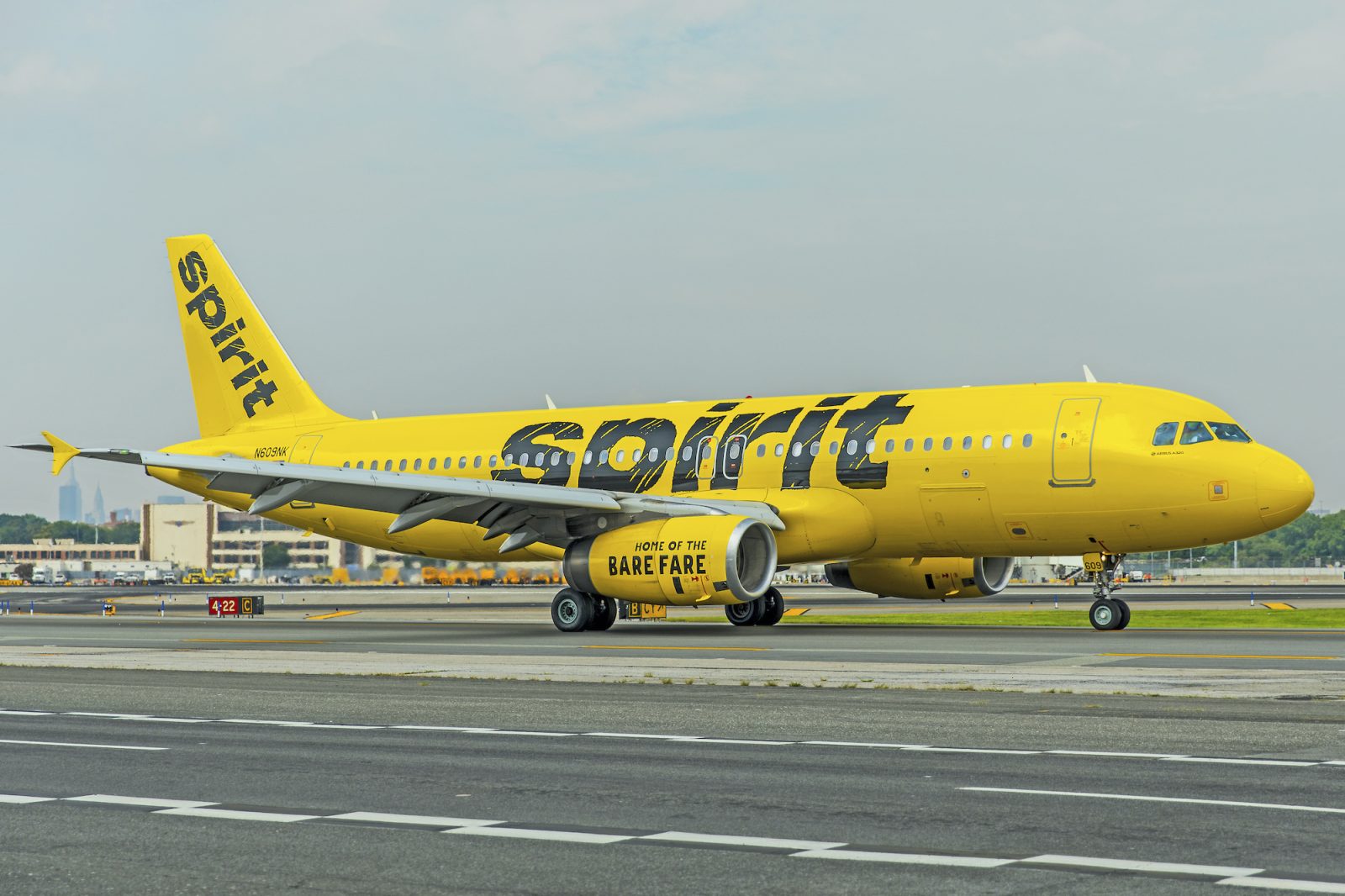
A Spirit A320 in New York. (Photo: AirlineGeeks | William Derrickson)
Spirit Airlines has added four new routes to be launched in September. According to Cirium data, the carrier will connect Chicago with Charlotte, and Nashville with both Miami and Boston, all new routes, in addition to reconnecting Miami and New Orleans.
Only one of the routes will operate daily. Chicago and Charlotte will be connected seven days per week, though with slightly different times on Sundays and Thursdays. Nashville and Boston will be connected nearly daily, flying every day except Saturday, while flights between Nashville and Miami will operate on Sundays, Wednesdays, Thursdays, and Saturdays.
Flights between Miami and New Orleans will operate on two schedules: it will fly on Sundays and Thursdays as well as on Wednesdays and Saturdays, with one flight out and one flight back each day with slightly different departure and arrival times on each set of days.
For the most part, these flights fit well into Spirit’s business model flying passengers to leisure and vacation destinations across the United States. The Nashville-Miami route will launch just in time to fly Tennessee residents to warm, sunny Florida for the winter. Boston is popular for its historical significance, and New Orleans attracts a wide variety of tourists for its own historical significance and party atmosphere all year round.
The route between Chicago and Charlotte stands out for a unique reason, though: neither place is a prime American leisure destination. In addition, both are hubs for legacy carrier American Airlines, with Chicago being one of the airline’s large midwest hub and Charlotte pandering to connecting transatlantic traffic to the U.S. and flying passengers from the northern to the southern tips of the East Coast.
Spirit has an operating base in Chicago, but its closest East Coast bases are either Atlanta or Atlantic City. At the time of writing, the route from Chicago to Atlanta has 13 frequencies daily, of which 9 are on American and the other four on United.
A Spirit A319 in Las Vegas (Photo: AirlineGeeks | William Derrickson)
Competing with the Majors
Spirit will then be competing directly with two major legacy airlines on a route currently only served by those legacy carriers. Though Spirit already has a significant presence in Charlotte, many of its routes are to the same leisure or travel destinations it’s familiar with: to Boston, Fort Lauderdale, Las Vegas, Miami, and Orlando on the East Coast as well as Los Angeles. Many of those connections will also certainly have competition from the likes of American and United, but they serve a different market; those flights are more likely to be filled by passengers truly looking for a cheap flight for their vacation, while the Chicago-Charlotte flight will likely be more focused on business travelers.
Spirit does have other flights from Charlotte that connect major American Airlines hubs – Miami, Dallas/Fort Worth, and New York – but Miami and New York pander to Spirit’s customer base and Dallas/Fort Worth is an operating base for Spirit. New York also sees millions of annual tourists who might look for cheaper flights on a discount carrier.
Still, Spirit believes there is a reason it can compete with American and United between Chicago and Charlotte. Having an ultra-low-cost carrier on the route will prove good for consumers, as American and United may be forced to lower its economy prices to be more competitive.
Adding an extra low-cost flight to Charlotte as a whole may have the same effect beyond the airport as well. Since Spirit has a base there where passengers can continue on to other cities, passengers flying from Charlotte on American or United itineraries connecting through O’Hare to another destination Spirit flies to further west may also see lower prices.
Spirit is building a notable presence in Charlotte, so perhaps it may become a base for the airline down the line. However, for the time being, the carrier is attempting to disrupt yet another market dominated by full-service legacy airlines.
This story was updated on Tuesday, Aug. 1, 2023 to replace Nashville with Boston in the first paragraph.
John McDermott is a commercial pilot pursuing a career in professional flight. His passion for aviation began in an Ann Arbor bookstore with a tale of enemy pilots during World War 2, and he hasn't looked back. Besides flying and writing for AirlineGeeks, John volunteers with Professional Pilots of Tomorrow and travels whenever he gets the chance.
Royal Air Maroc (RAM), the national carrier of Morocco, is set to embark on a journey of expansion and modernization with the acquisition of 10 new aircraft. The strategic move comes as part of RAM’s ambitious plan to become a global airline, quadrupling its fleet by 2038 in order to strengthen the airline’s position in the African aviation landscape as well as bolster its capacity to cater to the surging travel demand.
According to reports by TELQUEL, RAM recently finalized the purchase of 10 jets, following extensive discussions with industry giants Boeing and Embraer. The orders were meticulously structured, combining both direct purchases and leasing contracts with an option to purchase, according to the media outlet.
The new aircraft additions to the RAM fleet include four Boeing 787 Dreamliners, comprising two 787-8 and two 787-9 models, and four 737 MAX 8 aircraft. This move aligns with the airline’s vision to enhance its long-haul capabilities and provide passengers with a world-class travel experience. In conjunction with Embraer, RAM secured an agreement for two E190s, although specific details on whether they are from the E1 or E2 family were not disclosed.
Beyond the orders already confirmed, Royal Air Maroc is actively negotiating with Boeing for a potential second deal. This prospective agreement involves an additional seven 737 MAX 8s and three additional Dreamliners, signaling the airline’s commitment to bolstering its fleet with modern and efficient aircraft.
Undoubtedly, these acquisitions will play a pivotal role in realizing RAM’s overarching growth strategy for 2037. The airline aims to increase its fleet size from the current 50 aircraft to an impressive 200 by 2038, significantly boosting its passenger capacity from 7.3 million to 31.6 million. By doing so, RAM seeks to become a dominant player in the global aviation market and fortify its position as one of the leading carriers in Africa.
A new era of growth for Royal Air Maroc. July 11, 2023, in Rabat, marked a historical moment for our company. The Head of Government and our CEO signed a Program Contract, paving the way for a visionary development plan over the next fifteen years. pic.twitter.com/4y4kWNdq7t
RAM’s expansion plan not only underscores its commitment to meeting the evolving needs of travelers but also supports the Moroccan government’s broader agenda to strengthen the nation’s tourism sector. With a target of attracting 17.5 million tourists by 2026 and a visionary goal of 67 million visitors by 2037, Morocco is well on its way to becoming a thriving tourism destination.
While RAM’s expansion plans are grand, the airline remains committed to financial stability and prudently managing its resources. To ensure the financing of new aircraft acquisitions, Royal Air Maroc relies on an annual contribution from the state, which will be adjusted based on financial requirements. A monitoring committee appointed by the head of government will assess the need for capital increases on an annual basis, ensuring precise planning, financial stability, and the success of RAM’s transformation.
The deliveries of the new aircraft are expected to commence between September 2023 and January 2024, which suggests that they may be second-hand models in some cases.
Victor Shalton's love for aviation can be traced to when he was 11-years-old. As a seasoned aviation writer, he takes pride in providing the best aviation coverage around the globe and is passionate about advancing his skills in the aviation space. In addition, he loves travelling, writing, arts and while his speaking engagements have taken him around the world, he is proud to call Nairobi home.
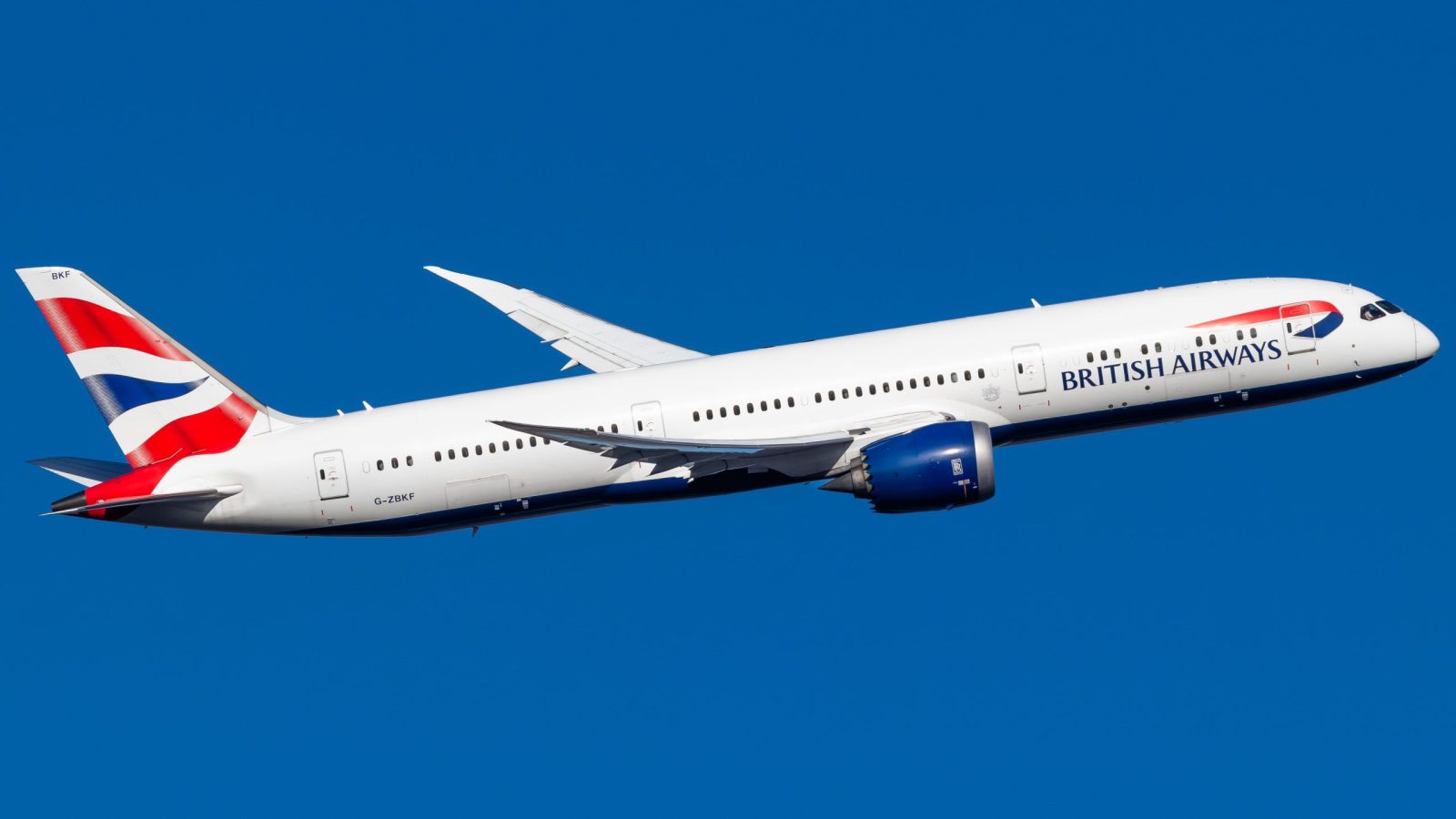
A British Airways Boeing 787-9 Dreamliner (Photo: AirlineGeeks | James Dinsdale)
The International Airlines Group (IAG) has delivered an astounding turnaround by posting a record operating profit for the first half of 2023 (1H23). The parent company of British Airways, Iberia, Vueling, LEVEL, and Aer Lingus achieved a €1.26 billion ($1.39 billion) result for 1H23. A contrast to the same period last year when the consortium reported a loss of €446 million ($492 million). The second quarter of 2023 was particularly profitable for the group, with the Spanish airlines outperforming expectations. Iberia reported its highest-ever quarterly profit of €307 million ($339 million).
IAG chief executive officer Luis Gallego said, “Our strong profits since the start of the year are helping to fund investment for our customers, and to improve our balance sheet by reducing debt.” The group reduced debt by €2.8 billion ($3.09 billion) in the six months since the end of 2022, when the debt level was €10.4 billion ($11.48 billion).
The consortium’s capacity levels were at 94% of 2019 levels for 1H23 as measured by available seat kilometers (ASK). IAG forecast that British Airways is expected to “return to pre-pandemic levels of non-premium capacity in 2024; longhaul capacity by 2025; and premium capacity by 2026,” with Gallego saying the group is trying to return to pre-pandemic levels by the end of 2023.
The remainder of 2023 appears to be looking positive for IAG, with Gallego stating, “Customer demand remains strong across the Group, particularly for leisure travel, with around 80% of passenger revenue for the third quarter already booked.”
Bookings for the final quarter of the year are sitting around the 30% level, which the group noted is “typical for this time of year.”
Mindful of the chaos that impacted European airline operations over the summer holiday period in 2022, including British Airways’ Heathrow hub, Gallego said that “Our airlines have put in place plans to support operations during the busy summer period.”
The report noted that 4,000 staff were hired in the first half of 2023 mainly to support ground operations. To supplement fleet operations, the group is wet leasing four Finnair A320s, one Air Belgium A330, and three Avion Express A320s. This is in addition to 11 new aircraft deliveries the group received in the first half of the year and a further 19 that will enter service by the end of 2023.
However, the half-yearly report does express some words of caution for the future, stating, “We continue to be mindful of wider uncertainties that might affect the full year. This includes the potential impact of geopolitical and macroeconomic volatility on the price of fuel and consumer confidence, as well as the impact of external factors on the operating environment, such as strikes. Our Cargo business continues to be impacted by a weak market.”
John has always had a passion for aviation and through a career with Air New Zealand has gained a strong understanding of aviation operations and the strategic nature of the industry. During his career with the airline, John held multiple leadership roles and was involved in projects such as the introduction of both the 777-200 and -300 type aircraft and the development of the IFE for the 777-300. He was also part of a small team who created and published the internal communications magazines for Air New Zealand’s pilots, cabin crew and ground staff balancing a mix of corporate and social content.
John is educated to postgraduate level achieving a masters degree with Distinction in Airline and Airport Management. John has held the positions of course director of an undergraduate commercial pilot training programme at a leading London university. In addition he is contracted as an external instructor for IATA (International Air Transport Association) and has been a member of the Heathrow Community Fund’s ‘Communities for Tomorrow’ panel.
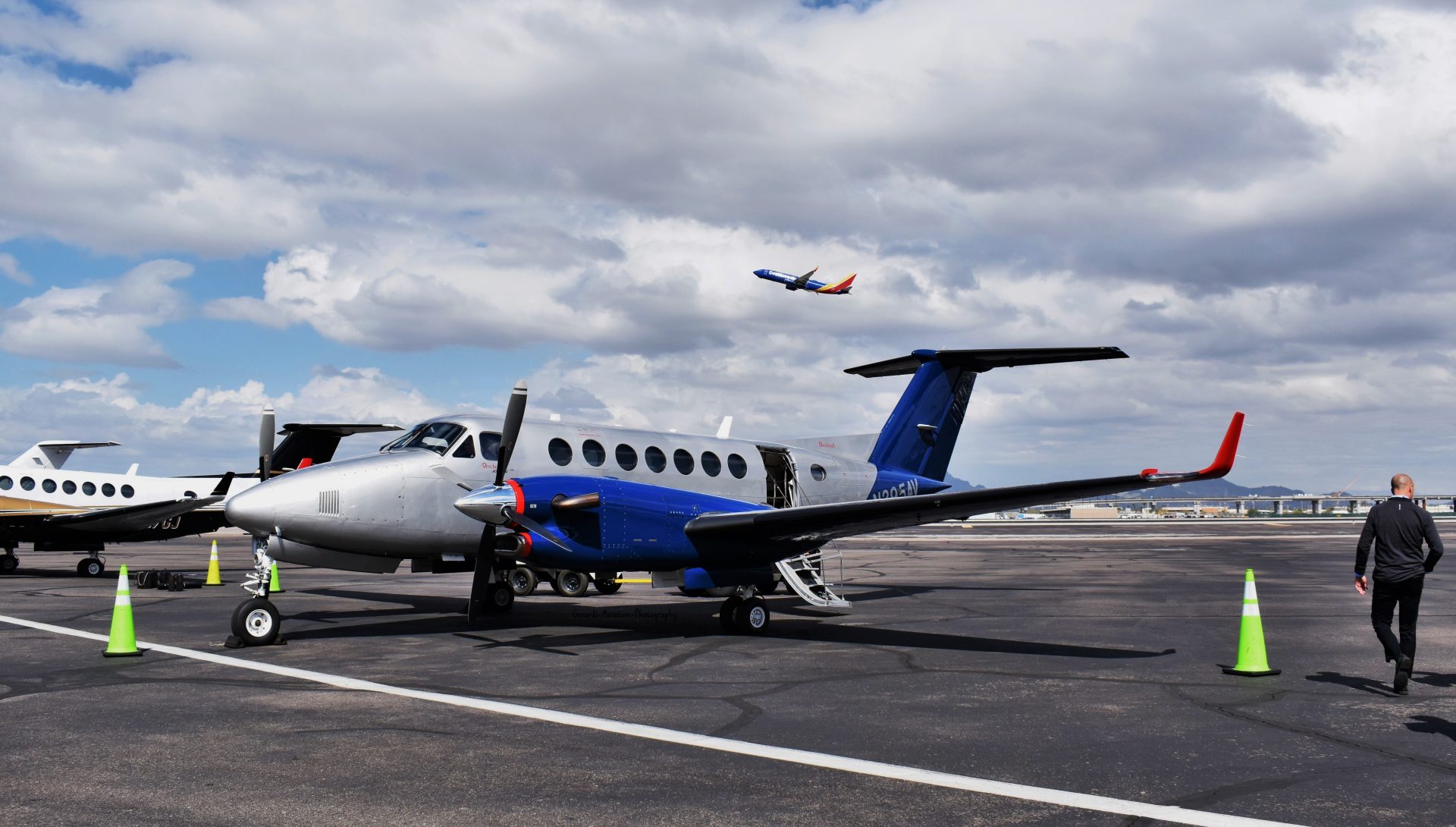
One of Advanced Air's Super King Air 350's (Photo: AirlineGeeks | Joey Gerardi)
Hawthorne, California-based airline Advanced Airlines has just been awarded its third Essential Air Service contract. While three may not seem like a lot compared to the mass number of contracts that carriers like SkyWest have, it is still growth for an airline that only a few years ago had only a single EAS community and not many routes.
The contract Advanced has won is for the New Mexican city of Carlsbad. Flights are contracted to begin on Nov. 5, 2023 and lasting at least until the contracts expiration two years from now on Oct. 31, 2025. The subsidy amount for the airline will be $5,205,254 for the first year and $5,517,570 for the second year.
At the moment, Advanced Air operates two EAS contracts in addition to the newly awarded Carlsbad, N.M.: Silver City, which is also located in New Mexico, and Merced in California.
An Advanced Air King Air 350 at Phoenix Sky Harbor (Photo: AirlineGeeks | Joey Gerardi)
Currently, the airport is served by San Francisco-based Boutique Air, using 8-seat Pilatus PC-12s to Albuquerque 12 times weekly and Dallas Ft. Worth six times a week. With Advanced, Carlsbad will be getting a very slight increase in capacity as well as a destination change; Advanced Air will be using their King Air 350s, which seat 9 passengers, versus Boutique’s 8-seat aircraft.
A Boutique Air Pilatus PC-12 (Photo: AirlineGeeks | Joey Gerardi)
From Carlsbad, N.M., Advanced will still be serving Albuquerque 12 times a week, but instead of six weekly flights to Dallas, the airline will be operating seven weekly flights to Phoenix Sky Harbor. This means Advanced will have roughly 10 extra seats a week than its predecessor in Carlsbad. This is not a lot more by any means, but any extra seats are improvement for EAS communities.
While this is great for Advanced Air and is a win for them, EAS contracts being awarded to a new airline mean that there is an airline loosing a destination, in this case Boutique Air. This will bring the San Francisco-based airline down to just two EAS contracts, each with one route. Boutique flies between Pendleton, Ore. and Portland, Ore., and it is the only airline in Massena, N.Y. , which it will soon only connect to Boston.
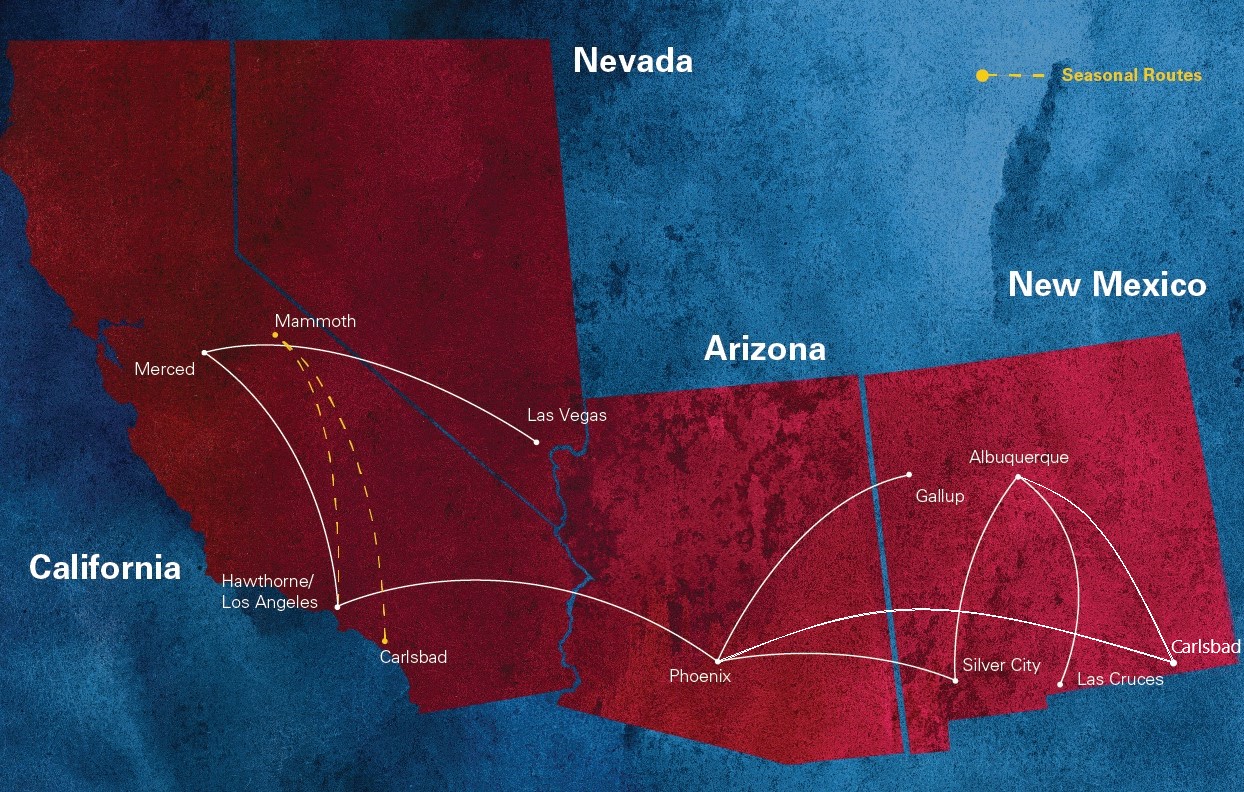
Advanced Air is showing their commitment to New Mexico and is now the largest carrier in the state by number of destinations served. With the addition of Carlsbad, N.M., this will have them serving five cities in the state. They have a hub in Albuquerque, and they also serve Silver City, which was their original EAS city in 2019; Gallup, which they started in August of 2022; and Las Cruses, which they began flying to in January of 2023.
an approximation of what the airlines route map will look like once they add Carlsbad, N.M. (Photo: Advanced Air & AirlineGeeks)
Carlsbad, N.M. to Phoenix will become the carrier’s longest route by distance at 457 miles, and will be roughly 30 miles longer than Boutique Air’s current flight to Dallas Ft. Worth. This will be one of the longer EAS routes being served on a propeller aircraft. Advanced Air will also be the only airline to ever serve two Carlsbad Airports simultaneously, as they also fly to Carlsbad, Calif. and operate service to Mammoth Lakes on board 30-seat Dornier 328Jets.
One could theoretically fly between both Carlsbad Airports on Advanced Air, although it would take multiple days and at least four flights.
One of the Advanced Airlines-operated Dornier 328Jets at McClellan-Palomar Airport in Carlsbad, Calif. (Photo: AirlineGeeks | Joey Gerard)
The Carlsbad, N.M. contract was only awarded to Advanced Air a few days ago, on July 27th, and they have yet to publish it on their booking platform or even announce the new city to their network. But an announcement is expected in the coming weeks, as it is still pretty early on in the announcement process.
All data and information and maps were obtained through public information, either on the carrier’s website or Regulations.gov.
Joey has always been interested in planes for as long as he can remember. He grew up in Central New York during the early 2000s when US Airways Express turboprops ruled the skies. Being from a non-aviation family made it harder for him to be around planes and would only spend about three hours a month at the airport. He was so excited when he could drive by himself, the first thing he did with his driver's license was get ice cream and go plane spotting for the entire day. He graduated from Western Michigan University in 2022 with a B.S. in Aviation Management & Operations and a Minor in Business, and currently works for a major airline in his hometown.
New Potential Buyers Admitted To Piaggio Aerospace
The sale process of Piaggio Aero Industries and Piaggio Aviation, which both operate under the Piaggio Aerospace brand, is ongoing. These companies are currently under extraordinary administration and are among the most important Italian aircraft production companies. However, they have faced financial and corporate challenges for several years due to questionable choices and poor investments.
A bit of history
The company Piaggio was established in 1884 by Rinaldo Piaggio in Sestri Ponente (Genoa), Northern Italy. Initially, their main focus was on manufacturing railway equipment. However, in 1915, they acquired Officine Aeronautiche Francesco Oneto and started producing materials for the aeronautical industry.
During the 1920s and 1930s, Piaggio produced several aircraft that set records. After World War II, Piaggio’s history took a significant turn when they patented a motorcycle in 1946 that would go on to become a symbol of Italian culture and national identity around the world – the Vespa.
The production of motorcycles and aircraft continued until 1964 when the two divisions were split into separate companies. In the 1980s, the design of the P.180 Avanti became very popular, but the company experienced a crisis in the 1990s. After about 20 years, in 2014, Mubadala Development Company, the sovereign fund of the Abu Dhabi government, acquired Piaggio Aero Industries entirely. As a result, it became Piaggio Aerospace.
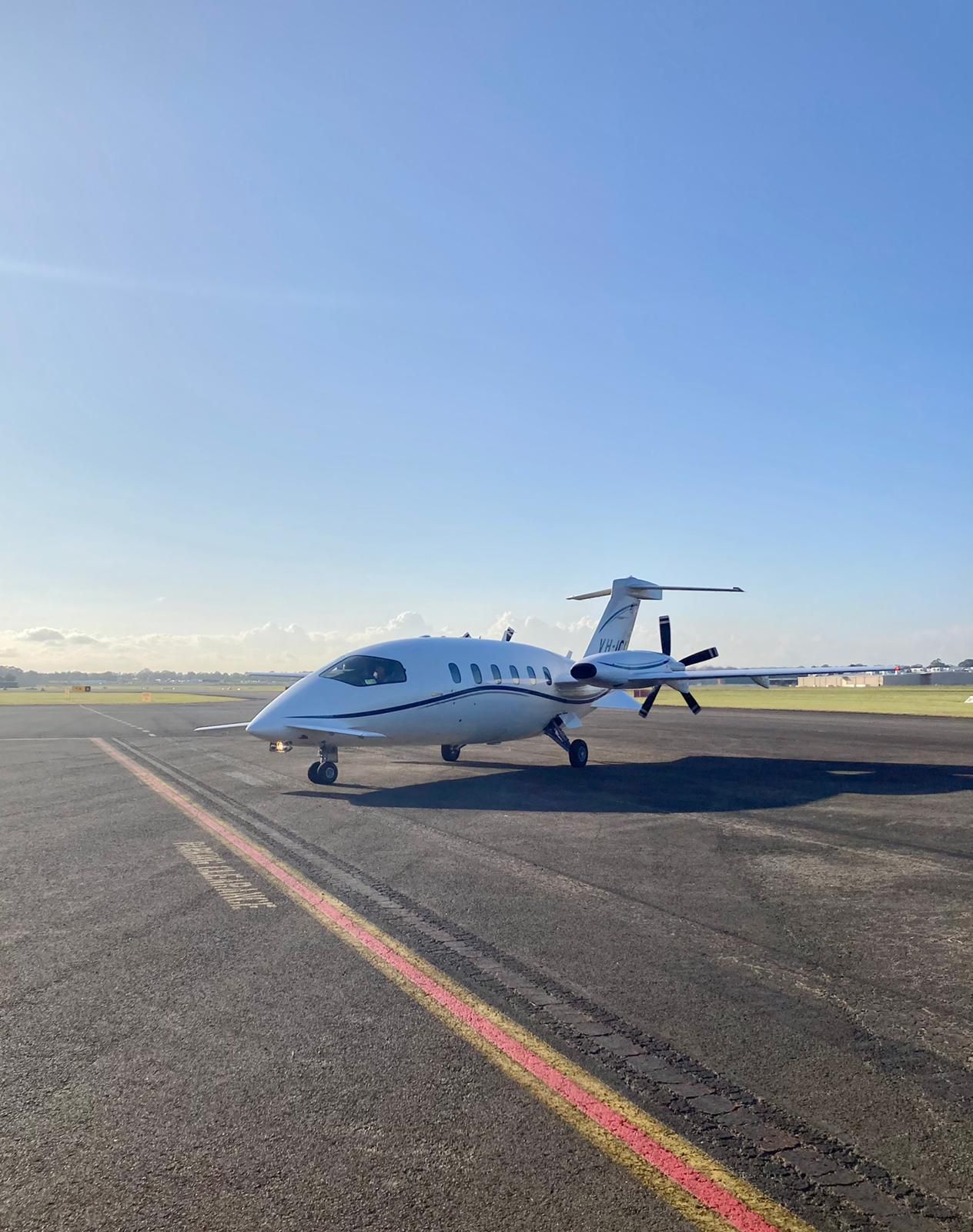
Piaggio P180 Avanti at Lake Macquarie Airport. Photo: Matt Hall
In August 2016, the company revealed a new strategy to shift its attention toward producing drones for the military market. To achieve this, the company had to reduce its workforce by half. However, in November 2018, the Abu Dhabi fund sought exceptional administration for the company due to disagreements with the Italian government.
The current situation
Two companies operate under the Piaggio Aerospace brand under extraordinary administration – Piaggio Aero Industries and Piaggio Aviation. The Extraordinary Commissioners in charge of the two companies have granted 13 interested players access to the Data Room while keeping their identities confidential.
The Extraordinary Commissioners ensured that companies or consortia with a strong industrial background and a declared interest in acquiring the company were present. These entities are primarily from Italy or other parts of Europe. The commissioners aim to suggest a candidate’s name to the Italian Ministry of Business and Made in Italy in the fall to finalize a binding agreement by year-end.
Potential buyers will have access to plant visits and the Data Room until the end of August. This will provide them with valuable information to evaluate the value and potential of the companies. At this point, binding offers will be requested. These offers must ensure a long-term strategy that preserves the company’s brand, skills, and employment, as established by the extraordinary commissioners.
Vincenzo graduated in 2019 in Mechanical Engineering with an aeronautical curriculum, focusing his thesis on Human Factors in aircraft maintenance. In 2022 he pursued his master's degree in Aerospace Engineering at the University of Palermo, Italy. He combines his journalistic activities with his work as a Reliability Engineer at Zetalab.